L’UE face aux impérialismes de Pékin, de Moscou et de Washington

Source: The Conversation – France in French (3) – By Jean-Pierre Darnis, Full professor at the University of Côte d’Azur, director of the master’s programme in “France-Italy Relations”. Associate fellow at the Foundation for Strategic Research (FRS, Paris) and adjunct professor at LUISS University (Rome), Université Côte d’Azur

La Chine poursuit sans cesse son ascension, la Russie livre une guerre meurtrière sur le territoire européen et les États-Unis de Donald Trump affichent ouvertement leur mépris à l’égard de l’Union européenne. Et pourtant, celle-ci offre une capacité de résistance remarquable, ce qui confère une force spécifique à son modèle démocratique.


Dans le contexte international actuel, les analyses qui décrivent un triomphe de l’impérialisme dont l’Europe serait fatalement la victime font florès. La guerre en Ukraine et les opérations coup-de-poing de Donald Trump auraient consacré le retour de la force comme pivot des relations internationales, un instrument dont l’Union européenne (UE) serait dépourvue. L’UE ferait face à un dilemme : soit elle devient elle aussi une puissance, soit elle est vouée à disparaître.

Cette représentation se base sur une lecture classique des relations internationales qui décrit la réalité du monde comme un état d’anarchie interétatique. Or cette projection réaliste, souvent critiquée car susceptible d’engendrer des effets négatifs, est parfois prolongée au point de proclamer l’inutilité fondamentale d’une UE déclinante qui devrait s’effacer pour laisser place aux États-nations susceptibles de faire un choix de camp – une description que l’on retrouve dans la récente Stratégie de défense nationale américaine où l’UE est souvent vilipendée.

Il convient cependant de questionner ces différents éléments.

Bien évaluer les dangers chinois et russe

Cette vision sombre qui semble faire le constat fataliste que la force l’a définitivement emporté sur le droit a pour premier défaut d’alimenter la propagande des acteurs qui estiment que l’existence de l’Union européenne n’a guère de sens du fait de sa prétendue impuissance. De tels propos étaient déjà depuis longtemps exprimés de façon récurrente par le pouvoir russe ; ils le sont désormais également par celui des États-Unis.

Ensuite, il faut revenir sur la représentation actuelle d’un monde dominé par les puissances impérialistes. Les États-Unis, la Chine et la Russie seraient les trois États impériaux qui chercheraient à établir des sphères de puissance, une vision géographique porteuse d’un déterminisme négatif pour l’Europe. Or il faut insister sur les différences fondamentales qui existent entre ces différentes entités.

La Chine apparaît comme concentrée avant tout sur les aspects économiques et technologiques de la puissance, qui doivent lui permettre de maintenir les gains qu’elle tire des échanges globaux. Il s’agit certainement d’une recherche de maximisation de ses propres intérêts mais dont la portée et les finalités restent discutées par les spécialistes. D’un point de vue européen, la relation avec Pékin est certes problématique mais semble gérable par les instruments classiques de l’Union. Très justement méfiante à l’égard d’un régime politique chinois totalitaire qui exprime de façon ouverte son néo-impérialisme, l’UE a jusqu’ici suivi les États-Unis sur la voie d’une politique d’endiguement. Le cycle actuel de distanciation transatlantique pourrait remettre en cause de façon partielle cet agenda, alors que les Européens se doivent de diminuer leur dépendance à l’égard des États-Unis.

Le cas russe est différent : nous avons ici une claire manifestation d’impérialisme militaire classique dans lequel une vision historique et idéologique sous-tend les velléités de conquête territoriale. Malgré leurs faiblesses et un système institutionnel peu efficace en matière de mise en œuvre de la force, les Européens n’ont pas failli dans leur soutien à l’effort militaire ukrainien, au-delà de la condamnation politique de l’agression russe. L’Ukraine, qui se bat pour maintenir un destin autonome et européen, a réussi à contenir l’armée russe.

L’impérialisme du Kremlin peut continuer à nourrir des conflits et demander des efforts ultérieurs en matière de réarmement voire de combats, et ce d’autant plus si la garantie de sécurité américaine disparaît, mais il est aussi très clair que les Européens ne veulent pas passer sous la coupe de la Russie et n’entendent pas non plus céder des territoires. Il s’agit donc d’un problème important et douloureux mais dont l’analyse reste nette : l’Union européenne n’est pas un ventre mou qui serait à prendre par les armées du Kremlin.

La vision de l’impérialisme chinois et de l’impérialisme russe comme facteurs qui pourraient atomiser l’UE doit donc être relativisée. Il ne s’agit pas de nier la réalité des dangers et défis liés à ces deux contextes, mais de rappeler que l’Union reste en capacité de gestion.

Le cas spécifique de l’administration Trump

Le troisième impérialisme, celui des États-Unis, apparaît comme plus problématique. Tout d’abord les velléités d’annexion du Groenland constituent un scénario original de conquête territoriale aux dépens de l’UE, en menaçant la souveraineté du Danemark. Plus globalement, la dégradation du respect du droit international de la part des États-Unis vient potentiellement remettre en question l’alliance transatlantique, qui se basait sur une acceptation de l’hégémonie américaine de la part des Européens en échange non seulement d’une protection militaire incarnée par l’OTAN mais également d’un consensus sur la défense des valeurs de liberté.

L’adoption des logiques de la puissance par la seconde présidence Trump vient rompre cet accord tacite. Les Européens doivent désormais gérer une phase délicate, celle d’un découplage avec les États-Unis, en évitant que cela ne dégénère en conflit. En d’autres termes, le rapport entre Union européenne et États-Unis, s’il est ramené à un simple calcul d’intérêts de type réaliste, perd une dimension essentielle, celle d’une convergence politique et idéologique qui, depuis la Déclaration d’indépendance américaine de 1776, constituait le fondement de la relation, un soubassement nécessaire pour les échanges de biens et de services, en particulier pour les données.

L’administration Trump commet l’erreur de croire que la suprématie provenait de la puissance, qu’elle soit militaire, économique ou technologique. En réalité, l’alliance est nettement plus productive que la domination et cette rupture entraînera probablement un affaiblissement de l’attractivité, et donc de la puissance, américaine, ce qui pourrait par ailleurs accroître les tensions internes et externes. Il suffit par exemple de penser aux conséquences potentielles d’une baisse de l’immigration hautement qualifiée sur une économie américaine essentiellement basée sur la capacité d’innovation technologique.

L’Arlésienne de l’Europe-puissance

L’une des caractéristiques principales de l’UE réside dans sa solidité : on a constaté au travers des crises que l’UE était capable non seulement de résister à un contexte négatif (crises financières, Covid) mais également de se renforcer.

L’UE est un millefeuille institutionnel souvent difficile à lire. Ce dispositif mixte, à la fois intergouvernemental et fédéral, fait preuve d’une remarquable résistance car il est le fruit d’une série de compromis qui, une fois adoptés, restent ancrés dans la vie politique européenne. Il est donc particulièrement difficile de défaire ce qui a été fait au sein de l’Union, comme illustré par le Brexit. De plus, le modèle institutionnel alambiqué de l’Union – le processus démocratique mixte entre Parlement, Conseil et Commission – renforce les institutions, ce qui constitue aussi une source de résistance face aux pressions externes.

L’UE s’est construite comme une non-puissance, une création politique qui a mis au centre de son projet l’extension des marchés et la croissance : les fonctions militaires sont depuis le début de l’intégration jalousement conservées par les États membres. Ce refus d’une Europe-puissance traduit l’une des caractéristiques fondamentales de l’Union, celle d’être née comme entité politique de remédiation qui permette de tourner la page des très meurtriers conflits intra-européens, objectif désormais acquis.

Il convient donc aujourd’hui de ne pas l’oublier lorsqu’on réclame une montée en puissance d’une série d’institutions qui n’ont pas été programmées pour cela. Les différentes souverainetés nationales expriment des traditions divergentes en termes d’emploi des forces armées : il apparaît donc politiquement difficile de mettre en place une armée européenne, alors que des coalitions à géométrie variable, déjà en place dans le cas du potentiel dispositif de garantie de sécurité de l’Ukraine ou bien lorsqu’il s’agit d’envoyer des soldats au Groenland en soutien du Danemark, permettent d’envisager une montée en puissance des appareils militaires au niveau européen, ce qui illustre bien que les États membres ne sont pas dénués d’instruments.

Ici encore, il convient de ne pas appliquer une lecture simpliste de la puissance européenne, selon laquelle l’impossibilité d’organiser un monopole collectif unique de la force au niveau européen signifierait la fin de l’Union elle-même. L’Union est en train de montrer que, lorsqu’elle est contrainte par une pression extérieure, elle trouve les ressources communes pour résister.

L’Union européenne illustre le paradoxe d’une croissance institutionnelle qui ne peut être appréhendée en suivant les critères classiques des États et tire sa force d’un processus original à la fois d’extension territoriale (les différents élargissements) et de création de souverainetés européennes qui viennent renforcer celles nationales, le tout au service d’un compromis social-démocrate qui reste un modèle.

L’UE, pôle d’attraction face aux impérialismes ?

Il existe donc une sous-évaluation intrinsèque de l’Union, une représentation de faiblesse qui est amplifiée par les descriptions trop géopolitiques du globe. L’UE n’est pas faible, même si elle n’est pas une puissance, et constitue un remarquable compromis de souveraineté démocratique et de progrès.

Le contexte global actuel n’en reste pas moins particulièrement difficile et menaçant, et ce d’autant que le jeu international est troublé par les actions à l’emporte-pièce de la présidence américaine. Lors du récent forum de Davos, le premier ministre canadien Mark Carney a évoqué une vision de pôle démocratique capable de résister aux empires. C’est certainement dans ce sillage d’une association avec des pays comme le Royaume-Uni et le Canada que doit s’inscrire la stratégie de résistance d’une Union qui peut avoir l’ambition nécessaire de rester organisée autour de l’État de droit, face aux périls impérialistes. Ce qui doit être un facteur non seulement de compétitivité, mais aussi d’espoir pour ceux qui, par exemple aux États-Unis, luttent pour le maintien de la démocratie.

The Conversation

Jean-Pierre Darnis ne travaille pas, ne conseille pas, ne possède pas de parts, ne reçoit pas de fonds d’une organisation qui pourrait tirer profit de cet article, et n’a déclaré aucune autre affiliation que son organisme de recherche.

ref. L’UE face aux impérialismes de Pékin, de Moscou et de Washington – https://theconversation.com/lue-face-aux-imperialismes-de-pekin-de-moscou-et-de-washington-274236
« Pays développés » et « pays en développement » : des notions caduques ?

Source: The Conversation – France in French (3) – By Thomas Melonio, Directeur exécutif « Innovation, stratégie et recherche », Agence Française de Développement (AFD)

Thomas Melonio, chef économiste et directeur exécutif à l’Agence française de développement (AFD), a récemment publié avec Rémy Rioux, directeur général de l’AFD, et Jean-David Naudet, chargé de recherche au sein de cette même organisation, Au-delà de la « dichotomanie » (2025), une étude qui interroge la pertinence de deux notions centrales de l’aide publique au développement : celles de « pays développés » et de « pays en développement ».

Cette manière de classer les pays structure encore aujourd’hui notre compréhension des inégalités mondiales, de l’aide internationale et des grandes politiques globales. Mais est-elle encore justifiée à l’heure où les trajectoires économiques, sociales et politiques des pays sont de plus en plus diverses et imbriquées ? Entretien.


The Conversation : Pouvez-vous revenir sur l’histoire de la dichotomie « pays en développement/pays développés » ?

Thomas Melonio : Ces notions apparaissent vers la fin des années 1950 et le début des années 1960, au moment où se structure la politique de solidarité internationale et de développement. Dans les années précédentes, celles de l’immédiat après-guerre, les grandes institutions internationales, dites de Bretton Woods, c’est-à-dire le Fonds monétaire international et la Banque mondiale, avaient fait leur apparition ; mais elles aidaient prioritairement les pays déjà développés. Historiquement, le premier bénéficiaire d’un prêt de la Banque mondiale, c’est la France !

Un petit peu plus tard, au milieu des Trente Glorieuses, période de croissance rapide notamment en Europe, mais aussi au Japon, s’impose cette distinction entre deux groupes de pays – une distinction qui va donner naissance à un certain nombre de politiques publiques. Il est vrai que, à cette époque, il y a, schématiquement un groupe de pays riches, un groupe de pays pauvres… et pas beaucoup de pays au milieu. Dès lors, il apparaît assez logique d’organiser des transferts – un peu comme on peut le faire au sein de l’Union européenne ou bien, à l’intérieur de la France, entre régions.

Certes, il y a toujours eu une catégorie de pays en transition, notamment le bloc soviétique qui était en quelque sorte à l’extérieur de l’un comme de l’autre de ces deux groupes, et qu’on ne savait pas bien comment classifier dans cette nomenclature. Mais ce bloc était isolé géopolitiquement ; dès lors, ce n’était pas déterminant pour les politiques mondiales de développement.

La politique commerciale et, plus tardivement, la politique climatique seront donc édifiées autour de cette distinction entre pays développés et pays en développement. On le retrouve à l’OMC, où des mesures plus favorables ont été obtenues par des pays dits en développement – et il y a peu, c’était encore le casde la Chine, qui vient tout récemment de renoncer à ce statut privilégié.

Aujourd’hui, ces notions sont-elles encore d’actualité ?

T. M. : Les catégories anciennes ont vieilli, c’est certain. Mais l’idée de solidarité ou d’action humaniste internationale reste plus que jamais d’actualité. La question est de savoir dans quels pays cette action de solidarité humaniste doit s’appliquer. À mon sens, aujourd’hui, elle doit essentiellement être dirigée vers les pays les moins avancés (PMA), c’est-à-dire les pays les plus pauvres et les plus vulnérables, qui sont au nombre de 45. Les autres pays dits émergents doivent continuer de faire l’objet d’opérations de coopération internationale, mais cette coopération ne relève ni du vocable ni des instruments financiers de l’aide publique au développement.

Le concept de « Sud global », qui s’est imposé ces dernières années, reflète-t-il une vraie unité ?

T. M. : Je vois une très grande hétérogénéité parmi les pays que l’on associe au « Sud global » ; dès lors, j’ai du mal à y trouver une forte substance. Pour autant, il est difficile de contester la capacité ou la volonté d’un pays de s’auto-définir comme il le souhaite. Pour un pays donné, dire que l’on relève du Sud global, c’est une démarche assez politique. Mais quand bien même on la trouve insuffisamment substantielle, elle a sa réalité du fait même de sa propre déclamation. Deuxième chose : si on devait trouver une substance concrète dans le Sud global, on peut constater qu’il y a eu la formation d’institutions financières : la Nouvelle banque de développement, qui est la banque des BRICS, la Banque asiatique d’investissement pour les infrastructures, créée à l’initiative de la Chine en 2016, et plus récemment la Banque de l’organisation de la sécurité de Shanghai. Il y a donc quand même déjà trois banques qui revendiquent une appartenance au Sud global, ce qui confère à cette notion une réalité.

L’apparition de ces structures témoigne d’une contestation des règles de fonctionnement de la mondialisation. Certains pays émergents, insuffisamment représentés par rapport à leur poids démographique au sein du FMI ou de la Banque mondiale, vont faire porter leurs efforts sur ces questions financières ; d’autres, parfois les mêmes, vont plutôt cibler le Conseil de sécurité des Nations unies. Pour des pays comme l’Inde ou comme le Brésil, l’objectif principal de l’affirmation du Sud global est plutôt l’obtention d’une place au sein du Conseil de sécurité. De manière générale, ce qui est commun à tous les pays du Sud global, c’est la volonté d’obtenir plus de place dans les mécanismes de décision.

N’y a-t-il pas un risque, quand on utilise toutes ces toutes ces notions – qu’il s’agisse de pays en développement, de pays développés, de Sud global, de PMA… – d’avoir une vision monolithique de chacun de ces pays pris individuellement, alors qu’ils sont tous travaillés par de très fortes inégalités sociales et économiques ?

T. M. : C’est quelque chose qu’il faut avoir à l’esprit, en effet ; mais je veux d’abord souligner que dans les PMA, la très grande majorité de la population vit dans la précarité. Certes, il y a, là aussi, des gens qui sont riches, mais même si une vaste redistribution interne était mise en place, la pauvreté serait quand même endémique. La situation est un peu différente en ce qui concerne les pays à revenu intermédiaire ; c’est souvent dans ces pays que les inégalités sont les plus fortes – je pense par exemple à l’Afrique du Sud, au Brésil, ou encore au Mexique. On observe également une progression des inégalités en Chine et en Inde.

Une fois qu’on a dit cela, se pose la question de la façon d’agir depuis l’extérieur. Il faut être lucide : un acteur extérieur, comme l’AFD, ne peut agir seul pour la réduction des inégalités dans ces grands pays. Il faut y construire des coalitions. A travers la coopération technique ou le financement, on peut contribuer à cette réduction, parce qu’on va cibler des quartiers pauvres ou des populations pauvres, via tel ou tel programme. Mais on ne va pas changer les équilibres politiques ou territoriaux dans un État. Depuis l’extérieur, on peut accompagner des dynamiques nationales, dès lors qu’il y a une volonté locale. Mais si la volonté n’est pas là, on ne crée pas un arbitrage politique totalement différent depuis l’extérieur.

Vous expliquez que c’est une erreur de toujours vouloir tout nomenclaturer ; mais est-ce que ce n’est pas quand même nécessaire pour pouvoir agir ? À trop entrer dans le détail, ne risque-t-on pas de se retrouver incapables de mettre des mots sur des réalités ? Comment éviter ces deux écueils : être trop schématique ou au contraire trop détaillé ?

T. M. : Notre article s’ouvre par une sorte de pirouette où nous disons que le monde se sépare en deux catégories : ceux qui divisent le monde en deux, et ceux qui ne le font pas. Au-delà de la plaisanterie, il y a un intérêt certain à essayer d’identifier des zones cohérentes, par exemple distinguer les pays qui ont plus de moyens de ceux qui en ont moins, ou les pays qui ont une plus forte responsabilité climatique historique de ceux qui en ont moins. En soi, il faut schématiser pour organiser les politiques publiques.

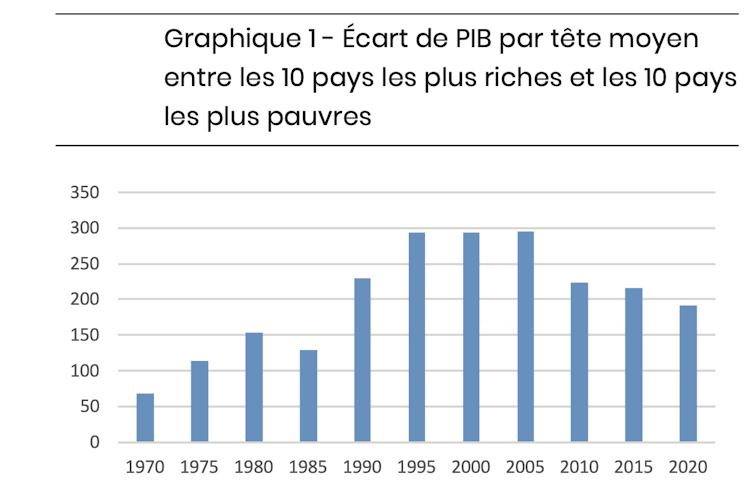
Écart de PIB par tête moyen entre les dix pays les plus riches et les dix pays les plus pauvres.
Calculs des auteurs, Fourni par l’auteur

Il y a toujours des formes de schématisation. Le problème, c’est quand cette schématisation produit du blocage, quand on fige dans le temps des catégories qui, à un moment donné, ne correspondent plus au monde réel. Par exemple, il est anormal que du côté des émetteurs de finance climat, on ne trouve ni la Chine ni les pays du Golfe, parce qu’on a fixé la liste dans les années 1990. On se retrouve aujourd’hui avec une problématique de partage du fardeau du changement climatique et avec des catégories qui sont mal définies parce que le processus de classification ne prévoyait pas son actualisation régulière.

Deuxième exemple : l’aide publique au développement (APD). En France, on se demande pourquoi une partie de notre APD est destinée à des pays comme la Chine, l’Inde ou l’Indonésie. En réalité, on ne les aide pas puisqu’on leur octroie des prêts à des taux dits « à conditions de marché », un peu comme une banque le fait avec ses clients, ce qui dégage un excédent financier. Si entre deux pays il y a un emprunt qui est dans le bénéfice de chacun, cela ne relève plus vraiment de l’APD, mais de la recherche de bénéfices mutuels. Mais formellement, on l’appelle encore aide, alors même que cela ne correspond pas à la réalité de nos relations avec ces pays. La catégorisation existante finit par rendre une politique publique trop peu lisible, peu explicable, propice aux manipulations ou à la désinformation.

Le risque, ce sont ces catégories qui sont figées dans le temps et qui, 15 ans, 20 ans, 30 ans après leur définition, produisent des effets négatifs dans le monde réel. Il faut donc régulièrement revisiter ces catégories. Sinon, on risque d’affaiblir le multilatéralisme par une mauvaise caractérisation des pays de la planète.

Avec l’administration Trump au pouvoir à Washington, l’aide internationale apparaît plus mal en point que jamais…

T. M. : Certes, mais il faut tout de même souligner qu’il y a eu une évolution. J’appelle cela Trump 2.2. Je m’explique : il y a eu Trump 2.1, c’était Elon Musk à la tête du DOGE, des coupes franches dans toutes les dépenses publiques, et notamment celles relatives à l’aide internationale. Et Trump 2.2, c’est plutôt la ligne Marco Rubio qui semble l’emporter sur la ligne Elon Musk. Marco Rubio, a notamment annoncé un programme important de coopération dans le domaine de la santé avec le Kenya. Si Washington, qui agit ouvertement au nom de la défense de ses intérêts nationaux, fait des annonces importantes sur une question comme la coopération internationale en matière de santé avec le Kenya, alors on comprend que même dans un logiciel très nationaliste, il y a quand même des familles de pensée différentes : ceux qui pensent qu’il ne faut rien, absolument rien faire à l’international, uniquement défendre ses entreprises ; et d’autres qui vont essayer de défendre d’autres formes de coopération… même si la perspective est de se protéger soi-même ou de défendre ses propres intérêts à travers des partenariats internationaux.


Propos recueillis par Grégory Rayko.

The Conversation

Thomas Melonio est directeur exécutif au sein de l’AFD et également administrateur de l’IRD.

ref. « Pays développés » et « pays en développement » : des notions caduques ? – https://theconversation.com/pays-developpes-et-pays-en-developpement-des-notions-caduques-272307

La fresque du Bon Berger découverte à Iznik : aux origines de l’iconographie chrétienne

Source: The Conversation – in French – By Marie Chaieb, enseignant-chercheur en théologie patristique, UCLy (Lyon Catholic University)

Une rare fresque datant du IIIᵉ siècle représentant Jésus en Bon Pasteur a été mise au jour lors de la découverte d’un tombeau près d’Iznik, en Turquie. Elle nous permet de mieux saisir comment s’est formée l’iconographie symbolique des premiers chrétiens.


La région d’Iznik, l’ancienne Nicée, (Turquie) a été mise à l’honneur récemment par le voyage du pape Léon XIV. Mais elle reste sur le devant de la scène avec la découverte d’un tombeau paléochrétien du IIIᵉ siècle très bien conservé contenant cinq squelettes (dont un nourrisson). Les magnifiques fresques de ce tombeau ont d’emblée attiré l’attention et posent la question des critères artistiques choisis par les chrétiens à cette date haute, et à une période où l’Empire intensifie le rythme des persécutions.

Une riche iconographie symbolique

Des campagnes de fouilles régulières avaient déjà mis au jour dans la même région un premier tombeau daté du IVᵉ siècle, époque du concile de Nicée). Dans ce premier tombeau, les paons, symboles d’éternité, étaient mis en valeur : deux paons à la queue traînante, et deux paons faisant la roue ; dans le nouveau tombeau découvert, qui est antérieur, le « motif » principal est la figure d’un jeune homme, imberbe, portant sur ses épaules une des cinq chèvres représentées, sur un fond champêtre de hautes herbes.

Rapidement, les archéologues ont mis en relation cette fresque avec « le Bon Pasteur », une catégorie iconographique qui repose sur la désignation de Jésus comme un berger attentif à son troupeau.

Dans les Évangiles, Jésus lui-même se présente en effet sous ce vocable (cf. Jn 10, 14, « Je suis le bon berger, et je connais mes brebis, et mes brebis me connaissent ») et propose à ses disciples le modèle du bon berger dans la parabole de la brebis égarée (Luc 15, 3-7).


À lire aussi :
Quand l’archéologie raconte les grands faits et les petits gestes de notre histoire commune


Comment ce motif est-il devenu un motif funéraire ?

Utiliser le motif du « bon berger » en contexte funéraire n’est pas rare : les illustrations les plus célèbres traversent les siècles et tout l’Empire, depuis le célèbre Bon Berger de la catacombe de sainte Priscille au IIᵉ siècle, jusqu’au mausolée de Galla Placidia (Ravenne, Vᵉ), en passant par des sarcophages variés tout autour du bassin méditerranéen.

Motif paisible et réconfortant, surtout lorsqu’il est rapproché du Ps 22 :

« Le Seigneur est mon berger : je ne manque de rien. Sur des prés d’herbe fraîche, il me fait reposer. Il me mène vers les eaux tranquilles et me fait revivre »

Ce motif est employé en contexte funéraire pour symboliser la proximité du bon pasteur avec ses brebis, l’accueil du fidèle défunt auprès du Christ et le repos dans la paix ; il exprime la foi en une vie avec lui après la mort. Mais ce motif véhicule aussi un intéressant message au regard de l’insertion du christianisme dans la culture de son temps.

Un exemple d’enculturation de la foi chrétienne dans la culture antique

Effectivement, durant les quatre premiers siècles de l’expansion du christianisme, les artistes chrétiens ont créé finalement peu de motifs originaux : le motif du poisson illustre bien cette créativité à partir du mot ichtus qui signifie « poisson » en grec, dans lequel ils ont avec ingéniosité repéré les initiales en acrostiche de « Jésus-Christ, fils de Dieu Sauveur ». Puis au IVᵉ siècle, viendra le motif du chrisme associé à la fin des persécutions et encore plus tard celui de la croix.

Mais aux IIᵉ et IIIᵉ siècles, le plus souvent, les artistes chrétiens ont simplement représenté des scènes de l’Évangile (il est donc faux de dire que les chrétiens n’avaient pas le droit de représenter des images, comme on l’entend dire parfois), ou bien ont réutilisé des motifs païens existants dans lesquels ils ont perçu un lien possible avec leur foi. C’est le cas en particulier pour notre motif du Bon Pasteur.

Deux sources principales d’inspiration pouvaient les guider à propos de ce motif : les représentations d’Hermès « kriophore » d’une part, et les « tableaux » représentant Orphée charmant les animaux de sa lyre. C’est Pausanias, dans sa Description de la Grèce (9.22.1–2), qui explique le cas d’Hermès (Mercure) :

« Ce premier surnom lui fut donné, dit-on, parce qu’il détourna de la ville une maladie contagieuse, en portant un bélier autour des murs ; c’est pour cela que Calamis a fait la statue de Mercure portant un bélier sur ses épaules. »

Le motif étant déjà chargé d’une dimension de salut, les artistes chrétiens y ont perçu l’avantage d’un symbolisme en résonance avec leur foi, capable de « parler » aussi bien à un chrétien que de faire percevoir l’espérance chrétienne à un païen. Le mythe d’Orphée fait aussi écho au contexte funéraire puisque c’est après avoir perdu son épouse Eurydice qu’il se retire dans la nature sauvage, auprès des animaux. Il est le plus souvent entouré d’animaux dangereux (lions, panthères, tigres…) rendus inoffensifs par le pouvoir apaisant de sa cithare. Les artistes chrétiens y voyaient une facile convergence avec les prophéties d’une fin des temps réconciliée :

« Le loup habitera avec l’agneau, le léopard se couchera près du chevreau, le veau et le lionceau seront nourris ensemble… » (Is 11, 6).

Superposer les deux images leur permettait d’« habiter » de leur foi des motifs courants mais aussi de parler à leurs contemporains à travers le langage des symboles. C’est d’ailleurs toujours le cas du paon, dans le tombeau plus tardif, voisin de celui qui nous intéresse. Symbole funéraire connu depuis les Étrusques, le paon est étroitement lié à la mort dans l’antiquité : sa chair réputée imputrescible exprime une espérance de renaissance et d’immortalité, que les chrétiens n’ont pas hésité à accueillir… alors qu’il n’y a pas de paon dans la Bible.


À lire aussi :
Les premiers moines chrétiens étaient… des Égyptiens


En période de persécution, ce phénomène est riche de sens. Il permet de dire quelque chose du positionnement des chrétiens dans leur monde. Et du langage symbolique qu’ils partagent avec leur temps. Car il serait trop limité de conclure qu’ils s’emparent de symboles païens pour en faire des symboles chrétiens. Ces symboles sont aussi les leurs culturellement. Au-delà de la question de l’emprunt, cette utilisation des symboles d’Hermès et d’Orphée est fondée sur leur conviction que, malgré les persécutions, un dialogue est possible avec leurs contemporains.

The Conversation

Marie Chaieb ne travaille pas, ne conseille pas, ne possède pas de parts, ne reçoit pas de fonds d’une organisation qui pourrait tirer profit de cet article, et n’a déclaré aucune autre affiliation que son organisme de recherche.

ref. La fresque du Bon Berger découverte à Iznik : aux origines de l’iconographie chrétienne – https://theconversation.com/la-fresque-du-bon-berger-decouverte-a-iznik-aux-origines-de-liconographie-chretienne-273722

Aerial lidar mapping can reveal archaeological sites while overlooking Indigenous peoples and their knowledge

Source: The Conversation – USA – By Christopher Hernandez, Assistant Professor of Anthropology, Loyola University Chicago

An aerial lidar survey can ‘see’ beneath the forest canopy. Photodisc via Getty Images

Picture an aircraft streaking across the sky at hundreds of miles per hour, unleashing millions of laser pulses into a dense tropical forest. The objective: map thousands of square miles, including the ground beneath the canopy, in fine detail within a matter of days.

Once the stuff of science fiction, aerial lidar – light detection and ranging – is transforming how archaeologists map sites. Some have hailed this mapping technique as a revolutionary survey method.

Yet when used to scan Indigenous lands and ancestral remains, this powerful technology often advances a more troubling, extractive agenda. As an archaeologist who has worked with lidar and collaborated with people who live in areas that have been surveyed from the sky, I’m concerned that this technology can disempower and objectify people, raising an ethical dilemma for the field of archaeology.

The darker side of lidar

Lidar is a remote sensing technology that uses light to measure distance. Aerial systems work by firing millions of laser pulses per second from an aircraft in motion. For archaeologists, the goal is for enough of those pulses to slip through gaps in the forest canopy, bounce off the ground and return to the laser source with enough energy to measure how far they traveled. Researchers can then use computer programs to analyze the data and create images of the Earth’s surface.

3D scan-type image showing bumps, paired with a topographical map of a hilly landscape
Visualization of surface topography, left, rendered from the aerial lidar scan of Puerto Bello Metzabok in Mexico. The cross-section image, right, is composed of the individual points collected during the aerial scan, which reveal the forest canopy, ground surface and potential archaeological remains.
Christopher Hernandez

The power of this mapping technology has led to a global flurry of research, with some people even calling for the laser mapping of the entire landmass of Earth. Yet, in all the excitement and media buzz, there are important ethical issues that have gone largely unaddressed.

To rapidly map regions in fine detail, researchers need national but not necessarily local permission to carry out an aerial scan. It’s similar to how Google can map your home without your consent.

In archaeology, a point of debate is whether it is acceptable to collect data remotely when researchers are denied access on the ground. War zones are extreme cases, but there are many other reasons researchers might be restricted from setting foot in a particular location.

For example, many Native North Americans do not trust or want archaeologists to study their ancestral remains. The same is true for many Indigenous groups across the globe. In these cases, an aerial laser scan without local or descendant consent becomes a form of surveillance, enabling outsiders to extract artifacts and appropriate other resources, including knowledge about ancestral remains. These harms are not new; Indigenous peoples have long lived with their consequences.

A highly publicized case in Honduras illustrates just how fraught lidar technology can be.

La Mosquitia controversy

In 2015, journalist Douglas Preston sparked a media frenzy with his National Geographic report on archaeological work in Honduras’s La Mosquitia region. Joining a research team that used aerial lidar, he claimed the investigators had discovered a “lost city,” widely referred to in Honduras as Ciudad Blanca, or the White City. Preston described the newly mapped settlement and the surrounding area as “remote and uninhabited … scarcely studied and virtually unknown.”

While Preston’s statements could be dismissed as another swashbuckling adventure story meant to popularize archaeology, many pointed out the more troubling effects.

Miskitu peoples have long lived in La Mosquitia and have always known about the archaeological sites within their ancestral homelands. In what some call “Christopher Columbus syndrome,” such narratives of discovery erase Indigenous presence, knowledge and agency while enabling dispossession.

carved stone objects on the dirt
Artifacts excavated in January 2016 from the Ciudad Blanca site in Honduras.
Orlando Sierra/AFP via Getty Images

The media hype led to an expedition that included Juan Orlando Hernández, then-president of Honduras, pardoned of drug trafficking by U.S. President Donald Trump in 2025. Expedition members removed artifacts from La Mosquitia without consulting or obtaining consent from Indigenous groups living in the region.

In response, MASTA (Mosquitia Asla Takanka–Unity of La Moskitia), an organization run by Moskitu peoples, issued the following statement:

“We [MASTA] demand the application of international agreements/documents related to the prior, free, and informed consultation process in the Muskitia, in order to formalize the protection and conservation model proposed by the Indigenous People.” (translation by author)

Their demands, however, seem to have been largely ignored.

The La Mosquitia controversy is one example from a global struggle. Colonialism has changed somewhat in appearance, but it did not end – and Indigenous peoples have been fighting back for generations. Today, calls for consent and collaboration in research on Indigenous lands and heritage are growing louder, backed by frameworks such as the United Nations Declaration on the Rights of Indigenous Peoples and the International Labour Organization’s Convention 169.

men focused on rocky bare dirt
Metzabok community members, including Felipe Solorzano Solorzano, right, conduct excavations as part of the Mensabak Archaeological Project.
Christopher Hernandez

A collaborative way forward

Despite the dilemmas raised by aerial lidar mapping, I contend it’s possible to use this technology in a way that promotes Indigenous agency, autonomy and well-being. As part of the Mensabak Archaeological Project, I have partnered with the Hach Winik people, referred to by outsiders as Lacandon Maya, who live in Puerto Bello Metzabok, Chiapas, Mexico, to conduct archaeological research.

landscape with water in the foreground, forest along the shore and white clouds in blue sky
The protected forest of Puerto Bello Metzabok.
Christopher Hernandez

Metzabok is part of a UNESCO Biosphere Reserve, where research often requires multiple federal permissions. Locals protect what, from a Hach Winik perspective, is not an objectified nature but a living, conscious forest. This land is communally owned by the Hack Winik under agreements made with the Mexican federal government.

Building on the the Mensabak Archaeological Project’s collaborative methodology, I developed and implemented a culturally sensitive process of informed consent prior to conducting an aerial laser scan.

In 2018, I spoke via Whatsapp with the Metzabok community leader, called the Comisario, to discuss potential research, including the possibility of an aerial lidar survey. We agreed to meet in person, and after our initial discussion, the Comisario convened an “asamblea” – the public forum where community members formally deliberate matters that affect them.

interior view of a couple dozen people on chairs watching a presenter
Joel Palka presents the archaeologists’ proposal in the asamblea.
Christopher Hernandez

At the asamblea, Mensabak Archaeological Project founder Joel Palka and I presented past and proposed research. Local colleagues encouraged the use of engaging images and helped us explain concepts in a mix of Spanish and Hach T’an, the Hach Winik language. Because Palka is fluent in Hach T’an and Spanish, he could participate in all the discussions.

Critically, we made sure to discuss the potential benefits and risks of any proposed investigation, including an aerial scan of the community.

The Q&A portion was lively. Many attendees said they could see a value in mapping their forest and the ground beneath the canopy. Community members viewed lidar as a way to record their territory and even promote responsible tourism. There was some hesitation about the potential for increased looting due to media attention or when the federal government released some of the mapping data. But most people felt prepared for that possibility thanks to decades of experience protecting their forest.

In the end, the community formally gave its consent to proceed. Still, consent is an ongoing process, and one must be prepared to stop at any point should the consenting party withdraw permission.

people along the shoreline of a body of water lifting a stone object
Hach Winik guarding their forest and engaging in excavations.
Christopher Hernandez

Aerial lidar can benefit all parties

Too often, in my experience, archaeologists remain unaware – or even defensive – when confronted with issues of Indigenous oppression and consent in aerial lidar research.

But another path is possible. Obtaining culturally sensitive informed consent could become a standard practice in aerial lidar research. Indigenous communities can become active collaborators rather than being treated as passive objects.

In Metzabok, our aerial mapping project was an act of relationship-building. We demonstrated that cutting-edge science can align with Indigenous autonomy and well-being when grounded in dialogue, transparency, respect and consent.

The real challenge is not mapping faster or in finer detail, but whether researchers can do so justly, humanely and with greater accountability to the peoples whose lands and ancestral remains we study. Done right, aerial lidar can spark a true revolution, aligning Western science and technology with Indigenous futures.

The Conversation

Christopher Hernandez received funding from the National Science Foundation (grant number SPRF 1715009) for the lidar work in Puerto Bello Metzabok.

ref. Aerial lidar mapping can reveal archaeological sites while overlooking Indigenous peoples and their knowledge – https://theconversation.com/aerial-lidar-mapping-can-reveal-archaeological-sites-while-overlooking-indigenous-peoples-and-their-knowledge-261332

Afghan migrants stranded in Pakistan after the US suspends refugee resettlement

Source: The Conversation – USA – By Mehr Mumtaz, PhD Candidate in Sociology, The Ohio State University

Afghan refugees hold placards during a protest in Islamabad, Pakistan, on Feb. 26, 2023. AP Photo/Rahmat Gul

In January 2025, Seema received an email from the International Organization for Migration saying that her flight from Pakistan to the United States, which she and her family were booked on after months of extensive interviewing and background checks by U.S. Citizenship and Immigration Services, had been canceled.

“We had sold our TV and refrigerator,” her husband, Samir, told me during an interview for my dissertation project on Afghan migration to America after the 2021 U.S. military withdrawal from Afghanistan. “We had told our landlord that we were vacating our apartment. Then it was all canceled.”

The U.S. withdrawal in August 2021 triggered a rapid political collapse that left millions of Afghan civilians in limbo. As the Taliban swept across the country and reclaimed power, Afghans who had worked alongside U.S. forces and international NGOs faced immediate danger.

Women, minorities and human rights advocates feared the loss of basic freedoms and possible Taliban reprisals. With evacuation pathways unclear and protections unevenly applied, panic spread as families tried to escape before they were cut off entirely.

Seema, Samir – pseudonyms to protect their identity – and their children are among tens of thousands of Afghan refugee families who immediately fled to neighboring Pakistan in late 2021 on the U.S. government’s recommendation for Afghans to process their immigration cases in third countries. However, many Afghans soon encountered Pakistan’s mass deportation campaign, underway since 2023, as they awaited U.S. resettlement.

Following the fall of Kabul in 2021, President Joe Biden directed the federal government to launch Operation Allies Welcome and other immigration pathways in an effort to resettle Afghans who had worked for U.S. forces and were at risk of being targeted by the Taliban. Beginning in early 2025, however, the U.S. refugee system retreated from the commitments U.S. leaders once made to protect Afghan civilians.

The costs of suspension

Until recently, some Afghans waiting in Pakistan hoped they would eventually be resettled in the United States through the few humanitarian pathways still open to them. However, that hope has dimmed.

The suspension of U.S. refugee resettlement during the first days of Donald Trump’s second presidency, along with additional immigration restrictions issued after the November 2025 shooting of National Guard personnel in Washington, D.C., have frozen the processing of all Afghan cases – including those already approved.

The Trump administration has justified these measures as necessary to protect U.S. safety and national interests.

For families like Seema’s, U.S. policy decisions have left them insecure and abandoned. As a scholar focused on international migration, I believe Seema’s story highlights a common thread among many Afghans stranded in Pakistan: Many of those who supported the U.S. are questioning the worth of the U.S.’s decades-long mission for promoting security, democracy and human rights in Afghanistan.

Exposed to the Taliban’s retaliation, regional deportation regimes and a collapsing refugee protection system, Afghans are holding the U.S. and other international governments responsible for abandoning them.

Caught between abandonment and deportation

Trained as a gynecologist, Seema worked at a private clinic in Afghanistan. And alongside her husband Samir, she served as managing director of an organization that led U.S.-funded projects for women and children.

“We took two projects from the U.S. Embassy,” she told me. “We established a resource center, bought computers, gave girls internet access and trained them in digital literacy.”

Several men dressed in military gear stand guard.
Many Afghans stranded in Pakistan fear being targeted by the Taliban, pictured here in December 2024, if they are forced to return to Afghanistan.
AP Photo/Saifullah Zahir

That work, funded and promoted by the U.S. government, made Seema and Samir targets. Even before 2021, they received threats from the Taliban. After the Taliban takeover in 2021, the threats escalated.

Fearing for their lives, they fled their home and attempted but failed to enter the Kabul airport multiple times during the chaotic U.S. evacuation in 2021. They ultimately escaped to Pakistan.

In Pakistan, a former colleague at the U.S. embassy recommended Seema for a Priority 2 visa – an immigration pathway created specifically for Afghans who supported U.S.-funded programs.

But when she and Samir tried to follow up with the U.S. Embassy in Pakistan in 2022, they received no response. A few months later they learned that changes to the U.S. Refugee Admissions Program in early 2022 likely caused their referral to be lost.

As U.S. processing stalled, Pakistan’s stance toward Afghan refugees hardened. Since late 2023, the Pakistani government has accelerated deportations under its “Illegal Foreigners’ Repatriation Plan” that targets both undocumented Afghans and those who once held legal refugee status. More than 1 million Afghans have already been deported.

Human rights groups warn that these removals violate the principle of nonrefoulement, which prohibits returning people to countries where they face serious harm. Under Taliban rule, women’s rights, employment opportunities and personal safety in Afghanistan have been systematically diminished.

Yet while Pakistan deports, the U.S. and other countries where Afghan refugees had once been able to resettle, including Germany, continue to close their doors.

A promise made, then suspended

In 2024, the U.S government accepted Seema’s refugee resettlement case, which she submitted in late 2022 with the assistance of SHARP, a local organization in Pakistan that works to protect Afghan refugees amid the country’s intensifying immigration crackdown. After several rounds of interviews, background checks, biometrics and medical exams, she and her family were told they would soon leave for the U.S.

Then the cancellation email arrived.

Seema and her family fear for their safety and their children’s future. Their children can no longer go to a school in Pakistan, as many Pakistani schools refuse to enroll Afghan students.

Several women in a room hold placards.
Afghan refugees hold placards during a gathering in Islamabad, Pakistan, on July 21, 2023. Hundreds of Afghan refugees facing extreme delays in the approval of U.S. visas were protesting in Pakistan’s capital.
AP Photo/Rahmat Gul

Police raids across major cities have also forced Afghan families to stay indoors, afraid to work or move freely. With no stable income, Seema and Samir struggle to meet basic needs.

“When I came to Pakistan, I was 40 years old,” Samir said. “Now I’m 44. Four years of my life have gone waiting for the U.S. case.” His voice hardened with anger. “We worked with the U.S. for 20 years. We fought terrorism. We supported democracy. What was the benefit?”

For decades, the U.S. government relied on the critical leadership of Afghan civilians like Seema and Samir to promote peace, security and women’s empowerment.

These partnerships were not symbolic. They were deeply embedded in everyday Afghan life.

With a smile on her face, Seema said that before 2021 “it never crossed my mind to leave Afghanistan because we were helping people in our country.”

Seema now fears being forced to return to Afghanistan, where her work and identity place her at grave risk of being targeted by the Taliban. Her request is modest. “At least let those whose cases were approved, whose flights were booked, resettle in the U.S.,” she said.

Her plea echoes across Pakistan, where thousands of Afghan families remain stranded.

Their lives now hinge on policy choices that will determine whether the United States honors the obligations it made during two decades of intervention that reshaped Afghan lives and livelihoods.

The Conversation

Mehr Mumtaz receives funding from the Russell Sage Foundation Dissertation Grant, and the Mershon Center for International Security’s Graduate Research Grant.

ref. Afghan migrants stranded in Pakistan after the US suspends refugee resettlement – https://theconversation.com/afghan-migrants-stranded-in-pakistan-after-the-us-suspends-refugee-resettlement-273680

Colorado has emergency domestic violence shelters in only half its counties, leaving survivors without safe housing options

Source: The Conversation – USA – By Kaitlyn M. Sims, Assistant Professor of Public Policy, University of Denver

People fleeing domestic violence often face housing obstacles. iStock/Getty Images

Only 33 of Colorado’s 64 counties have an emergency shelter program specifically for survivors of domestic violence. In the greater Denver area, which includes Adams, Arapahoe, Broomfield, Denver, Douglas and Jefferson counties, there are only five shelter programs for survivors.

I study the policies and programs that serve survivors of domestic violence. In 2020, I created the most up-to-date registry of domestic violence shelter programs in the U.S. These programs are hugely impactful for their clients, but not every survivor in need is able to find an open shelter bed. In fact, most U.S. counties lack a specific shelter for victims of domestic violence.

One in three women in the United States experience intimate partner violence in their lifetime. Every day, thousands of survivors are not able to get the housing assistance they need at existing programs due to funding and resource limitations, according to the annual Domestic Violence Counts Report.

Domestic violence survivors regularly cite safe and secure housing as one of their most pressing needs. Women who experience intimate partner violence are four times as likely to be housing unstable as women who have not been abused by a partner.

Yet, housing-insecure survivors face a startling lack of options for safe places to turn. One of the most well-known and longest-standing service options are what are known as emergency domestic violence shelters. These front-line service providers can house survivors safely for between 30 and 60 days. In addition to emergency housing, shelter programs often offer complementary services such as counseling and legal aid. But these shelters are limited, and so is affordable housing.

Limited housing for survivors

The biggest arm of the federal social safety net for long-term housing is the Housing Choice Voucher, often called Section 8. These vouchers help low-income, disabled and elderly beneficiaries to rent housing up to a predefined fair market amount.

With a voucher, households pay about 30% of their income in rent, and the voucher covers the remainder. For domestic violence survivors who need long-term housing, subsidized housing vouchers can provide support beyond a short-term shelter stay. Long-term housing helps set up survivors for successful and affordable independent living.

In many U.S. communities, however, demand for vouchers is far greater than supply. Roughly half of people who ultimately receive a voucher wait at least two years to get one. In Colorado, the average wait time was 14 months as of 2024. Most public housing authorities in Colorado open their waitlists for only a few days each year, leaving potential applicants waiting months just to get in line.

Even when service providers such as shelter advocates or housing navigators have access to money, it can be difficult to spend on behalf of their clients. High housing costs and landlord bias against survivors can make it challenging to place survivors in long-term housing that survivors can afford in the long run, even when they do have a Housing Choice Voucher.

In Denver, the fair market rent defined by the Department of Housing and Urban Development for a two-bedroom apartment is US$2,089. In order to afford that apartment independently without being rent burdened – defined by the U.S. Census Bureau as spending no more than 30% of total household income on rent – a survivor would need to earn $6,963 per month, or more than $83,000 per year. For a single-income household, this would mean earning more than $40 per hour while working full time.

For housing-insecure victims of domestic violence, many of whom are fleeing with children, this is an untenable housing cost. In a survey of 3,400 residents at 215 emergency domestic violence shelters conducted by researchers at the University of Connecticut and the National Resource Center on Domestic Violence, 78% had a child under age 18 and 68% had a child with them in the shelter. The same survey found that the majority of sheltered residents had, at most, a high school education.

Barriers to safe housing

When there isn’t an emergency shelter in their area, or if the local shelter is full, many domestic violence shelter programs are still able to offer survivors nonresidential services such as legal assistance and safety planning. Nonshelter programs like the Rose Andom Center in Denver also support survivors who need help connecting to resources, but their ability to support victims at risk of homelessness beyond a few days is limited.

Other types of housing supports introduce new problems for survivors. Emergency homelessness shelters often have restrictions to entry. The restrictions include not allowing clients to bring all of their belongings or requiring sobriety. Many of these organizations, including the Denver Rescue Mission, are open only to men or women without children and operate only overnight, leaving folks with nowhere to go during the day.

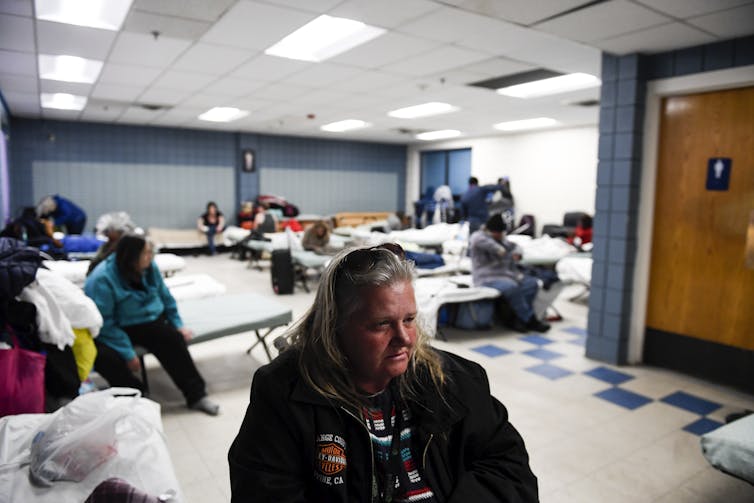
A woman sits in a room of other people on cots.
Shelters for people experiencing homelessness are an option for people fleeing domestic violence but are a short-term solution.
Aaron Ontiveroz/The Denver Post via Getty Images

Domestic violence service providers may be able to pay for a survivor to stay in a hotel for a few days, but hotels can be unsafe, unclean and retraumatizing. For example, hotels lack the kinds of security systems and cameras that are common at emergency domestic violence shelters to prevent abusers from contacting survivors staying there.

Survivors of domestic violence also face the same general housing challenges as those not fleeing violence: an affordability crisis in rentals, necessary time to find a place, and security deposits and moving costs. Yet the nature of domestic violence means these challenges are more intractable.

For example, survivors who share custody of children with their abusers must get permission from the child’s other parent, and often the court, in order to move. Domestic violence makes it more likely that survivors will have a history of evictions, making finding housing even more challenging.

With limited shelter availability and long waits for long-term housing assistance such as Section 8, housing-insecure survivors of domestic violence can find themselves with few safe, stable options. This can mean that survivors looking to separate from their abusers are not able to leave – subjecting them, and their children, to further violence.

The Conversation

Kaitlyn M. Sims receives funding from the Wisconsin Department of Children and Families, the Arnold Ventures Foundation, and the Institute for Humane Studies.

ref. Colorado has emergency domestic violence shelters in only half its counties, leaving survivors without safe housing options – https://theconversation.com/colorado-has-emergency-domestic-violence-shelters-in-only-half-its-counties-leaving-survivors-without-safe-housing-options-271168

EPA’s new way of evaluating pollution rules hands deregulators a sledgehammer and license to ignore public health

Source: The Conversation – USA (2) – By Janet McCabe, Visiting Professor, Indiana University McKinney School of Law and O’Neill School of Public and Environmental Affairs, Indiana University

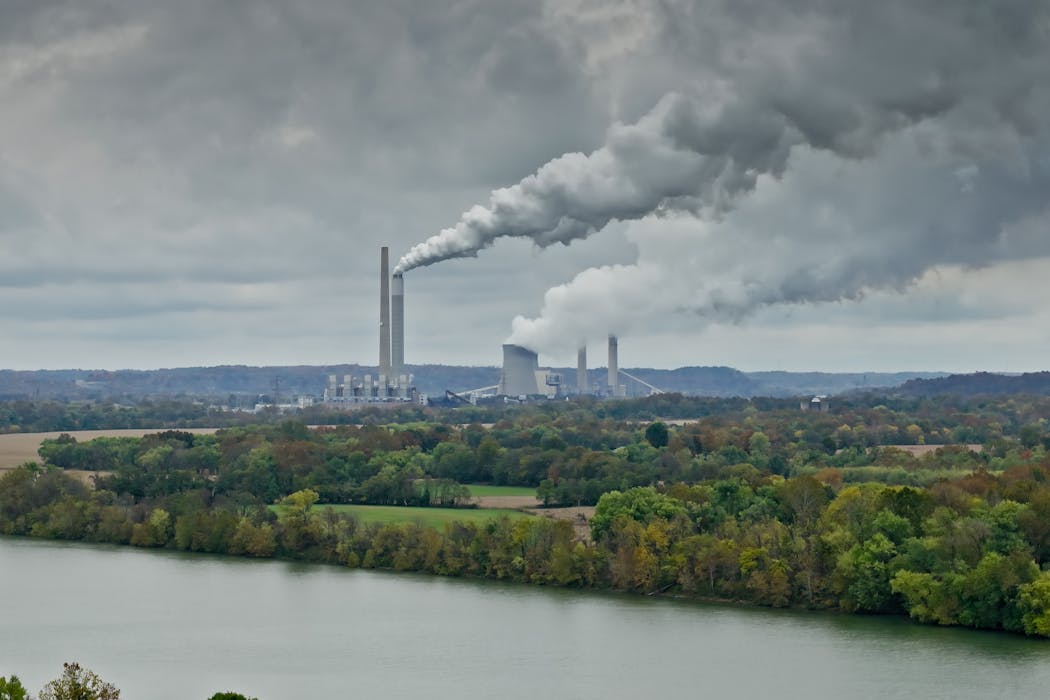
Two coal-fired power plants near Cheshire, Ohio, are known for their air pollution. Halbergman/E+ via Getty Images

When I worked for the Environmental Protection Agency in the 2010s as an Obama administration appointee, I helped write and review dozens of regulations under the Clean Air Act. They included some groundbreaking rules, such as setting national air quality standards for ozone and fine particulate matter.

For each rule, we considered the costs to industry if the rule went into effect – and also the benefits to people’s health.

Study after study had demonstrated that being exposed to increased air pollution leads to more asthma attacks, more cardiovascular disease and people dying sooner than they would have otherwise. The flip side is obvious: Lower air pollution means fewer asthma attacks, fewer heart problems and longer lives.

To use this information in making decisions, we needed to have a way to compare the costs of additional pollution controls to industry, and ultimately, to consumers, against the benefits to public health. A balanced approach meant putting a dollar value on health benefits and weighing them against the seemingly more easily, though not always accurately, predicted costs of complying with the regulations.

We were able to make these decisions because environmental economists since the 1980s have developed and continually improved robust methodologies to quantify the costs to society of air pollution’s effect on human health, such as workdays lost and hospital visits.

Now, however, the Trump administration is dropping one whole side of that cost-benefit equation. The EPA wrote in January 2026 that it will stop quantifying the health benefits when assessing the monetary impact of new pollution regulations and regulation changes involving pollutants that contribute to ozone, or smog, and fine particulate matter, known as PM2.5.

The result leaves government decision-makers without a way to clearly compare regulatory costs to health benefits. It will almost certainly lead to an increase in harmful pollution that America has made so much progress reducing over the decades.

Cost-benefit rules go back to Ronald Reagan

The requirement that agencies conduct a thorough cost-benefit analysis dates back to President Ronald Reagan’s efforts to cut regulatory costs in the 1980s.

In 1981, Reagan issued an executive order requiring cost-benefit analysis for every economically significant regulation. He wrote that, to the extent permitted by law, “Regulatory action shall not be undertaken unless the potential benefits to society for the regulation outweigh the potential costs to society.”

Chart shows economy growing 321% while emissions of common pollutants fell.
Comparison of growth areas and declining emissions, 1970-2023.
EPA

In 1993, President Bill Clinton issued another executive order, EO 12866, which to this day governs federal agency rulemaking. It states: “In deciding whether and how to regulate, agencies should assess all costs and benefits of available regulatory alternatives. … Costs and benefits shall be understood to include both quantifiable measures (to the fullest extent that these can be usefully estimated) and qualitative measures of costs and benefits that are difficult to quantify, but nevertheless essential to consider.”

Quantifying human health benefits

In response to these directives, environmental economists have generated rigorous, peer-reviewed and data-driven methods and studies to inform both sides of the cost-benefit equation over the past four decades.

Estimating costs seems like it would be relatively straightforward, even if not always precisely on the money. Industry provides the EPA with predictions of costs for control technology and construction. Public review processes allow other experts to opine on those estimates and offer additional information.

For a system as complex as the power grid, however, it’s a lot more complicated. Starting in the 1990s, the EPA developed the Integrated Planning Model, a complex, systemwide model used to evaluate the cost and emissions impacts of proposed policies affecting power plants. That model has been improved and updated, and has repeatedly undergone peer review in the years since.

On the health benefits side, in 2003, EPA economists developed the Environmental Benefits Mapping and Analysis Program, which uses a wide range of air quality data to assess changes in health effects and estimates the monetized value of avoiding those health effects.

For example, when the EPA was developing carbon pollution standards for power plants in 2024, it estimated that the rule would cost industry US$0.98 billion a year while delivering $6.3 billion in annual health benefits. The benefit calculation includes the value of avoiding approximately 1,200 premature deaths; 870 hospital and emergency room visits; 1,900 cases of asthma onset; 360,000 cases of asthma symptoms; 48,000 school absence days; and 57,000 lost work days.

The EPA has used these toolsets and others for many regulatory decisions, such as determining how protective air quality standards should be or how much mercury coal-fired power plants should be permitted to emit. Its reports have documented continual refinement of modeling tools and use of more comprehensive data for calculating both costs and benefits.

Not every health benefit can be monetized, as the EPA often acknowledges in its regulatory impacts assessments. But we know from years of studies that lower levels of ozone and fine particles in the air we breathe mean fewer heart attacks, asthma cases and greater longevity.

The Trump EPA’s deregulation sledgehammer

The U.S. EPA upended the practice of monetizing health costs in January 2026. In a few paragraphs of a final rulemaking about emissions from combustion turbines, the EPA stated that it would no longer quantify the health benefits associated with reduced exposure to ozone and PM2.5.

The agency said that it does not deny that exposure to air pollution adversely affects human health, including shortening people’s lives. But, it says, it now believes the analytical methods used to quantify health benefits from reduced air pollution are not sufficiently supported by the underlying science and have provided a false sense of precision.

As a result, the EPA decided it will no longer include any quantification of benefits, though it will consider qualitative effects.

Understanding the qualitative effects is useful. But for the purposes of an actual rule, what matters is what gets quantified.

The new decision hands a sledgehammer to deregulators because in the world of cost-benefit analysis, if an impact isn’t monetized, it doesn’t exist.

What does this mean?

Under this new approach, the EPA will be able to justify more air pollution and less public health protection when it issues Clean Air Act rules.

Analysis of new or revised rules under the Clean Air Act will explain how much it would cost industry to comply with control requirements, and how much that might increase the cost of electricity, for example. But they will not balance those costs against the very real benefits to people associated with fewer hospital or doctor visits, less medication, fewer missed school or workdays, and longer life.

Costs will easily outweigh benefits in this new format, and it will be easy for officials to justify ending regulations that help improve public health across America.

I know the idea of putting a dollar value on extra years of human life can be uncomfortable. But without it, the cost for industry to comply with the regulation – for reducing power plant emissions that can make people sick, for example – is the only number that will count.

The Conversation

Janet McCabe worked in the U.S. EPA Office of Air and Radiation from 2009 to 2017 and was EPA’s deputy administrator from 2021 to 2024. She is a volunteer with the Environmental Protection Network.

ref. EPA’s new way of evaluating pollution rules hands deregulators a sledgehammer and license to ignore public health – https://theconversation.com/epas-new-way-of-evaluating-pollution-rules-hands-deregulators-a-sledgehammer-and-license-to-ignore-public-health-274457

Americans want heat pumps – but high electricity prices may get in the way

Source: The Conversation – USA (2) – By Roxana Shafiee, Environmental Fellow, Center for the Environment, Harvard University; Harvard Kennedy School

Workers install an air-source heat pump at a home in Charlotte, Vt. Robert Nickelsberg/Getty Images

Heat pumps can reduce carbon emissions associated with heating buildings, and many states have set aggressive targets to increase their use in the coming decades. But while heat pumps are often cheaper choices for new buildings, getting homeowners to install them in existing homes isn’t so easy.

Current energy prices, including the rising cost of electricity, mean that homeowners may experience higher heating bills by replacing their current heating systems with heat pumps – at least in some regions of the country.

Heat pumps, which use electricity to move heat from the outside in, are used in only 14% of U.S. households. They are common primarily in warm southern states such as Florida where winter heating needs are relatively low. In the Northeast, where winters are colder and longer, only about 5% of households use a heat pump.

In our new study, my co-author Dan Schrag and I examined how heat pump adoption would change annual heating bills for the average-size household in each county across the U.S. We wanted to understand where heat pumps may already be cost-effective and where other factors may be preventing households from making the switch.

Wide variation in home heating

Across the U.S., people heat their homes with a range of fuels, mainly because of differences in climate, pricing and infrastructure. In colder regions – northern states and states across the Rocky Mountains – most people use natural gas or propane to provide reliable winter heating. In California, most households also use natural gas for heating.

In warmer, southern states, including Florida and Texas, where electricity prices are cheaper, most households use electricity for heating – either in electric furnaces, baseboard resistance heating or to run heat pumps. In the Pacific northwest, where electricity prices are low due to abundant hydropower, electricity is also a dominant heating fuel.

The type of community also affects homes’ fuel choices. Homes in cities are more likely to use natural gas relative to rural areas, where natural gas distribution networks are not as well developed. In rural areas, homes are more likely to use heating oil and propane, which can be stored on property in tanks. Oil is also more commonly used in the Northeast, where properties are older – particularly in New England, where a third of households still rely on oil for heating.

Why heat pumps?

Instead of generating heat by burning fuels such as natural gas that directly emit carbon, heat pumps use electricity to move heat from one place to another. Air-source heat pumps extract the heat of outside air, and ground-source heat pumps, sometimes called geothermal heat pumps, extract heat stored in the ground.

Heat pump efficiency depends on the local climate: A heat pump operated in Florida will provide more heat per unit of electricity used than one in colder northern states such as Minnesota or Massachusetts.

But they are highly efficient: An air-source heat pump can reduce household heating energy use by roughly 30% to 50% relative to existing fossil-based systems and up to 75% relative to inefficient electric systems such as baseboard heaters.

Heat pumps can also reduce emissions of greenhouse gases, although that depends on how their electricity is generated – whether from fossil fuels or cleaner energy, such as wind and solar.

Heat pumps can lower heating bills

We found that for households currently using oil, propane or non-heat pump forms of electric heating – such as electric furnaces or baseboard resistive heaters – installing a heat pump would reduce heating bills across all parts of the country.

The amount a household can save on energy costs with a heat pump depends on region and heating type, averaging between $200 and $500 a year for the average-size household currently using propane or oil.

However, savings can be significantly greater: We found the greatest opportunity for savings in households using inefficient forms of electric heating in northern regions. High electricity prices in the Northeast, for example, mean that heat pumps can save consumers up to $3,000 a year over what they would pay to heat with an electric furnace or to use baseboard heating.

A challenge in converting homes using natural gas

Unfortunately for the households that use natural gas in colder, northern regions – making up around half of the country’s annual heating needs – installing a heat pump could raise their annual heating bills. Our analysis shows that bills could increase by as much as $1,200 per year in northern regions, where electricity costs are as much as five times greater than natural gas per kilowatt-hour.

Even households that install ground-source heat pumps, the most efficient type of heat pump, would still see bill increases in regions with the highest electricity prices relative to natural gas.

Installation costs

In parts of the country where households would see their energy costs drop after installing a heat pump, the savings would eventually offset the upfront costs. But those costs can be significant and discourage people from buying.

On average, it costs $17,000 to install an air-source heat pump and typically at least $30,000 to install a ground-source heat pump.

Some homes may also need upgrades to their electrical systems, which can increase the total installation price even more, by tens of thousands of dollars in some cases, if costly service upgrades are required.

In places where air conditioning is typical, homes may be able to offset some costs by using heat pumps to replace their air conditioning units as well as their heating systems. For instance, a new program in California aims to encourage homeowners who are installing central air conditioning or replacing broken AC systems to get energy-efficient heat pumps that provide both heating and cooling.

Rising costs of electricity

A main finding of our analysis was that the cost of electricity is key to encouraging people to install heat pumps.

Electricity prices have risen sharply across the U.S. in recent years, driven by factors such as extreme weather, aging infrastructure and increasing demand for electric power. New data center demand has added further pressure and raised questions about who bears these costs.

Heat pump installations will also increase electricity demand on the grid: The full electrification of home heating across the country would increase peak electricity demand by about 70%. But heat pumps – when used in concert with other technologies such as hot-water storage – can provide opportunities for grid balancing and be paired with discounted or time-of-use rate structures to reduce overall operating costs. In some states, regulators have ordered utilities to discount electricity costs for homes that use heat pumps.

But ultimately, encouraging households to embrace heat pumps and broader economy-wide electrification, including electric vehicles, will require more than just technological fixes and a lot more electricity – it will require lower power prices.

The Conversation

Roxana Shafiee does not work for, consult, own shares in or receive funding from any company or organization that would benefit from this article, and has disclosed no relevant affiliations beyond their academic appointment.

ref. Americans want heat pumps – but high electricity prices may get in the way – https://theconversation.com/americans-want-heat-pumps-but-high-electricity-prices-may-get-in-the-way-273981

Even when people’s rights are ignored, understanding the law can keep protesters engaged

Source: The Conversation – USA (2) – By Heidi Reynolds-Stenson, Associate Professor of Sociology, Criminology and Anthropology, Colorado State University Pueblo

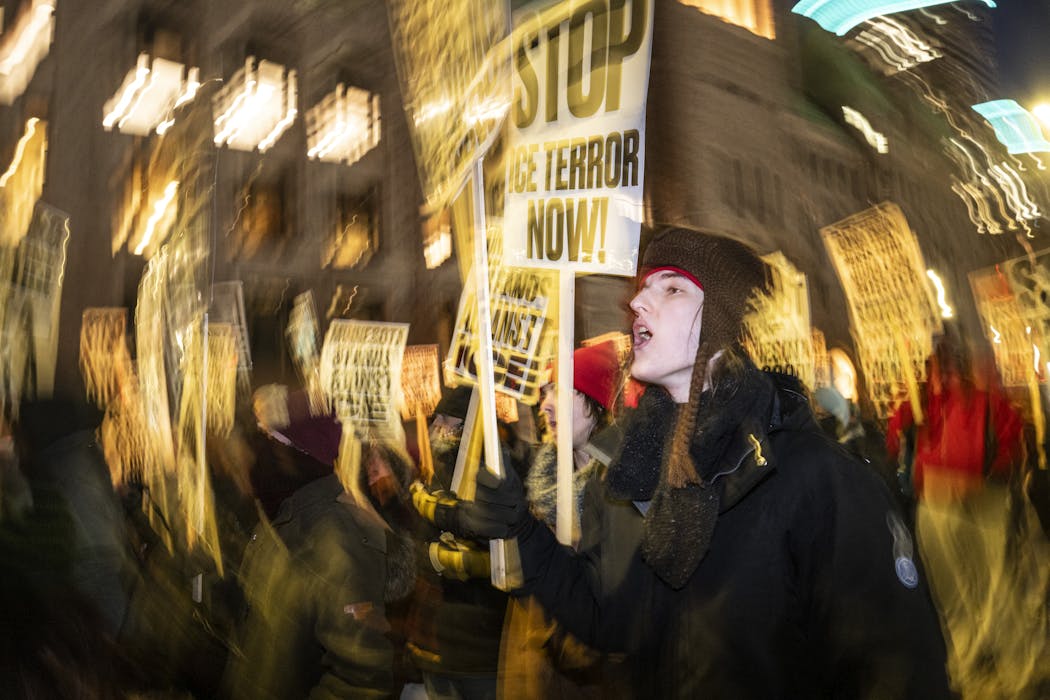
A group of anti-Immigration and Customs Enforcement protesters march in downtown Minneapolis on Jan. 27, 2026. Roberto Schmidt/AFP via Getty Images

There’s been a rise of know-your-rights training sessions in response to the Trump administration’s aggressive immigration enforcement tactics. This has included local public officials and organizations sharing online information over the past few months about what to do if Immigration and Customs Enforcement or other federal agents knock on your door, among other scenarios that involve immigration law enforcement.

Knowledge is power, the adage goes. But learning the letter of the law has its limits, legal rights experts have noted, if law enforcement officers do not follow the law. The Associated Press reported on Jan. 21, 2026, that ICE distributed an internal memo authorizing ICE officers to forcibly enter someone’s private home with only an administrative warrant – not one signed by a judge, as the Fourth Amendment requires.

Amy Lieberman, education editor for The Conversation U.S., spoke with Heidi Reynolds-Stenson, a scholar of social movements and protest policing, to understand the role education can play in Minnesota’s ongoing anti-ICE protests and how legal training’s limits are becoming clear.

People sit on a bench near a sign in Spanish that says 'Conozca sus derechos'
A ‘know your rights’ sign in Spanish is posted outside of a cafe in Chicago in November 2025.
Erin Hooley/Associated Press

What role is education playing in fueling Minnesota’s anti-ICE protests?

I think it is a really unique moment. There is discussion in the news nationwide about legal observing and know-your-rights training sessions. This kind of legal support and education has been part of social movements for a long time, but have never, perhaps, been in the spotlight on the level that they are right now after the January killings of ICE observers Renee Nicole Good and Alex Pretti.

A coordinated way of offering legal support to protesters grew out of 1960s and ‘70s civil rights protests. Legal support for protesters became even more organized during the student-led anti-Vietnam War movement around this same time. The first time there was an organized, mass legal defense of protesters was for the Stop the Draft Week in 1967, when a group of lawyers and law students began working in coordination with activists.

Since then, community organizers, lawyers, law students and others have developed strategies for offering legal support to protesters. That includes legal observers. Legal observers can be lawyers, law students or others trained not to protest, but to independently observe, take notes on and photograph or video incidents at protests, like law enforcement arresting or assaulting someone.

We see, over time, that the way people organize and offer legal support to protesters has become more and more sophisticated. More and more people have knowledge about their civic and legal rights. Other forms of legal support, such as jail and court solidarity, in which individual people who are arrested make collective decisions to support one another, have become more common.

Now, people are also learning about more than their First Amendment rights – they are learning about the rights of immigrants and of anyone who is interacting with ICE and Border Patrol officers. That intensifies the complexity of what people need to know.

Altogether, there is a complex system of legal support in place that has been shown to be very effective at preventing activists from disengaging after experiences of state repression.

What does your own research show regarding how education can shape protests?

In my own research, when activists had experiences of repression – when they were arrested at protests, as has happened in Minneapolis, or experienced police violence, like being sprayed with chemical irritants – legal education was a major determining factor on whether they continued to be involved in the protest movement.

Another deciding issue was whether or not protesters were being helped by pro bono lawyers or there were legal observers present to make protesters feel more confident going into a certain situation.

As people become more educated about their rights and more prepared for the potential risks of protesting, that can make them more confident about going to a protest in the first place and more likely to continue in that work.

We know that, in reality, the rights people learn about are not always respected, at protests or in other situations. So, it is one thing to say that you have a right to do something, like to protest, or not let ICE or Border Patrol agents into your home without a judicial warrant.

It is another thing in practice, especially in the current moment that we are in, in which immigration enforcement officers have increasingly shown disregard for people’s rights. But it is still important for people to be aware that those rights exist.

What role do legal observers play in influencing protest movements?

Legal observers can play a critical role in collecting independent, neutral information about law enforcement actions at protests that can be used if there is a civil suit or a criminal case coming out of a protest.

Legal observing can also, in theory, deter officers who are policing protests, since they know they are being watched and data is being collected on their actions, including potential rights violations.

Three people, as seen from behind, stand and hold hands in front of a large memorial on a street that has flowers.
People on Jan. 28, 2026, gather at a makeshift memorial where Alex Pretti was shot dead by federal immigration agents in Minneapolis.
Roberto Schmidt/AFP via Getty Images

How can education serve as a means of self-defense at protests?

Education is the most powerful weapon for people involved in protest movements – that is, knowledge and understanding of what their rights are as well as the risks. Equally important is collecting bail fund money before someone is actually arrested, having a network of people ready to do the work after a protest to defend arrested activists, and holding law enforcement officers accountable for violating people’s rights. Protesters or observers can then know that if they are arrested or injured by law enforcement officers, that people are already there ready to help them.

In my view, the level of disrespect that federal immigration officers are currently showing to people exercising their rights to protest and to film and otherwise monitor public officials is unprecedented. But it has always been the case that just because a legal right exists, it does not mean that it is followed by law enforcement or the government more broadly. Then, and now, it has always been organized groups of individuals who make those rights real through exercising them and working to hold those accountable who violate them.

The Conversation

Heidi Reynolds-Stenson receives funding from the William T. Grant Foundation.

ref. Even when people’s rights are ignored, understanding the law can keep protesters engaged – https://theconversation.com/even-when-peoples-rights-are-ignored-understanding-the-law-can-keep-protesters-engaged-274489

America is falling behind in the global EV race – that’s going to cost the US auto industry

Source: The Conversation – USA (2) – By Hengrui Liu, Postdoctoral Scholar in Economics and Public Policy, The Fletcher School, Tufts University

Trucks and SUVs dominate U.S. auto sales and set the tone for the Detroit Auto Show in January 2026, while overseas EV sales are booming. Bill Pugliano/Getty Images

At the 2026 Detroit Auto Show, the spotlight quietly shifted. Electric vehicles, once framed as the inevitable future of the industry, were no longer the centerpiece. Instead, automakers emphasized hybrids, updated gasoline models and incremental efficiency improvements.

The show, held in January, reflected an industry recalibration happening in real time: Ford and General Motors had recently announced US$19.5 billion and $6 billion in EV-related write-downs, respectively, reflecting the losses they expect as they unwind or delay parts of their electric vehicle plans.

The message from Detroit was unmistakable: The United States is pulling back from a transition that much of the world is accelerating.

Highlights from the Detroit Auto Show, starting with V-8 trucks, by the Detroit Free Press’ auto writer.

That retreat carries consequences far beyond showroom floors.

In China, Europe and a growing number of emerging markets, including Vietnam and Indonesia, electric vehicles now make up a higher share of new passenger vehicle sales than in the United States.

That means the U.S. pullback on EV production is not simply a climate problem – gasoline-powered vehicles are a major contributor to climate change – it is also an industrial competitiveness problem, with direct implications for the future of U.S. automakers, suppliers and autoworkers. Slower EV production and slower adoption in the U.S. can keep prices higher, delay improvements in batteries and software, and increase the risk that the next generation of automotive value creation will happen elsewhere.

Where EVs are taking over

In 2025, global EV registrations rose 20% to 20.7 million. Analysts with Benchmark Mineral Intelligence reported that China reached 12.9 million EV registrations, up 17% from the previous year; Europe recorded 4.3 million, up 33%; and the rest of the world added 1.7 million, up 48%.

By contrast, U.S. EV sales growth was essentially flat in 2025, at about 1%. U.S. automaker Tesla experienced declines in both scale and profitability – its vehicle deliveries fell 9% compared to 2024, the company’s net profit was down 46%, and CEO Elon Musk said it would put more of its focus on artificial intelligence and robotics.

Market share tells a similar story and also challenges the assumption that vehicle electrification would take time to expand from wealthy countries to emerging markets.

In 39 countries, EVs now exceed 10% of new car sales, including in Vietnam, Thailand and Indonesia, which reached 38%, 21% and 15%, respectively, in 2025, energy analysts at Ember report.

In the U.S., EVs accounted for less than 10% of new vehicle sales, by Ember’s estimates.

U.S. President Donald Trump came back into office in 2025 promising to end policies that supported EV production and sales and boost fossil fuels. But while the U.S. was curtailing federal consumer incentives, governments elsewhere largely continued a transition to electric vehicles.

Europe softened its goal for all vehicles to have zero emissions by 2035 at the urging of automakers, but its new target is still a 90% cut in automobiles’ carbon dioxide emissions by 2035.

Germany launched a program offering subsidies worth 1,500 to 6,000 euros per electric vehicle, aimed at small- and medium-income households.

In developing economies, EV policy has largely been sustained through industrial policies. In Brazil, the MOVER program offers tax credits explicitly linked to domestic EV production, research and development, and efficiency targets. South Africa is introducing a 150% investment allowance for EV and battery manufacturing, giving them a tax break starting in March 2026. Thailand has implemented subsidies and reduced excise tax tied to mandatory local production and export commitments.

Shoppers in China check out cars with large prices on the top.
Low prices from Chinese automakers such as BYD helped the EV industry take off, not just in China but globally. A car priced at 99,800 yuan is just over US$14,000. These were at an auto show in Yantai, in eastern China, in April 2025.
Stringer/AFP via Getty Images

In China, the EV industry has entered a phase of regulatory maturity. After a decade of subsidies and state-led investment that helped domestic firms undercut global competitors, the government’s focus is no longer on explosive growth at home.

With their domestic market saturated and competition fierce, Chinese automakers are pushing aggressively into global markets. Beijing has reinforced this shift by ending its full tax exemption for EV purchases and replacing it with a tapered 5% tax on EV buyers.

Consequences for US automakers

EV manufacturing is governed by steep learning curves and scale economies, meaning the more vehicles a company builds, the better it gets at making them faster and cheaper. Low domestic production and sales can mean higher costs for parts and weaker bargaining power for automakers in global supply chains.

The competitive landscape is already changing. In 2025, China exported 2.65 million EVs, doubling its 2024 exports, according to the China Association of Automobile Manufacturers. And BYD surpassed Tesla as the world’s largest EV maker in 2025.

The U.S. risks becoming a follower in the industry it once defined.

Some people argue that American consumers simply prefer trucks and hybrids. Others point to Chinese subsidies and overcapacity as distortions that justify U.S. industry caution. These concerns deserve consideration, but they do not outweigh the fundamental fact that, globally, the EV share of auto sales continues to rise.

What can the US do?

For U.S. automakers and workers to compete in this market, the government, in our view, will have to stop treating EVs as an ideological matter and start governing it like an industrial transition.

That starts with restoring regulatory credibility, something that seems unlikely right now as the Trump administration moves to roll back vehicle emissions standards. Performance standards are the quiet engine of industrial investment. When standards are predictable and enforced, manufacturers can plan, suppliers can invest in new businesses, and workers can train for reliable demand.

Governments at state and local levels and industry can also take important steps.

Focus on affordability and equity: The federal clean-vehicle tax credit that effectively gave EV buyers a discount expired in September 2025. An alternative is targeted, point-of-sale support for lower- and middle-income buyers. By moving away from blanket credits in favor of targeted incentives – a model already used in California and Pennsylvania – governments can ensure public funds are directed toward people who are currently priced out of the EV market. Additionally, interest-rate buydowns that allow buyers to reduce their loan payments and “green loan” programs can help, typically funded through state and local governments, utility companies or federal grants.

Keep building out the charging network: A federal judge ruled on Jan. 23, 2026, that the Trump administration violated the law when it suspended a $5 billion program for expanding the nation’s EV charger network. That expansion effort can be improved by shifting the focus from the number of ports installed to the number of working chargers, as California did in 2025. Enforcing reliability and clearing bottlenecks, such as electricity connections and payment systems, could help boost the number of functioning sites.

Use fleet procurement as a stabilizer for U.S. sales: When states, cities and companies provide a predictable volume of vehicle purchases, that helps manufacturers plan future investments. For example, Amazon’s 2019 order of 100,000 Rivian electric delivery vehicles to be delivered over the following decade gave the startup automaker the boost it needed.

Treat workforce transition as core infrastructure: This means giving workers skills they can carry from job to job, helping suppliers retool instead of shutting down, and coordinating training with employers’ needs. Done right, these investments turn economic change into a source of stable jobs and broad public support. Done poorly, they risk a political backlash.

The scene at the Detroit Auto Show should be a warning, not a verdict. The global auto industry is accelerating its EV transition. The question for the United States is whether it will shape that future – and ensure the technologies and jobs of the next automotive era are in the U.S. – or import it.

The Conversation

The authors do not work for, consult, own shares in or receive funding from any company or organization that would benefit from this article, and have disclosed no relevant affiliations beyond their academic appointment.

ref. America is falling behind in the global EV race – that’s going to cost the US auto industry – https://theconversation.com/america-is-falling-behind-in-the-global-ev-race-thats-going-to-cost-the-us-auto-industry-274422