Petit guide du management toxique : comment faire fuir vos salariés en 6 leçons

Source: The Conversation – France (in French) – By George Kassar, Full-time Faculty, Research Associate, Performance Analyst, Ascencia Business School

Si la gestion de la performance n’est pas mise en œuvre de manière adéquate, elle peut devenir un formidable outil pour démotiver, épuiser et pousser au départ vos collaborateurs. PeopleImages.comYuri A/Shutterstock

La recherche en gestion de performance offre une gamme complète de pratiques managériales toxiques à appliquer sans modération pour faire fuir les talents les plus précieux. Si ces conseils sont à prendre au second degré, ces pratiques restent bien réelles dans la gestion quotidienne de certains managers.


Qui a dit que la principale ressource d’une entreprise, et son véritable avantage concurrentiel, résidait dans ses employés, leur talent ou leur motivation ?

Après tout, peut-être souhaitez-vous précisément vider vos bureaux, décourager durablement vos collaborateurs et saboter méthodiquement votre capital humain.

Dans ce cas, la recherche en gestion de performance vous offre généreusement tout ce dont vous avez besoin : une gamme complète de pratiques managériales toxiques à appliquer sans modération pour faire fuir les talents les plus précieux.

En fait, la gestion de la performance, issue des pratiques de rationalisation au début du XXe siècle, est devenue aujourd’hui un élément clé du management moderne. En théorie, elle permet d’orienter l’action des équipes, de clarifier les attentes et de contribuer au développement individuel. En pratique, si elle n’est pas mise en œuvre de manière adéquate, elle peut également devenir un formidable outil pour démotiver, épuiser et pousser au départ vos collaborateurs les plus précieux.

Voici comment :

Management par objectifs flous

Commencez par fixer des objectifs vagues, irréalistes ou contradictoires. Surtout, évitez de leur donner du sens ou de les relier à une stratégie claire, et évidemment ne pas leur assurer les ressources appropriées. Bref, adoptez les « vrais » objectifs SMART : Stressants, Mesurés arbitrairement, Ambigus, Répétés sans contexte, Totalement déconnectés du terrain !

Selon les recherches en psychologie organisationnelle, cette approche garantit anxiété, confusion et désengagement parmi vos équipes, augmentant significativement leur intention de quitter l’entreprise.


Abonnez-vous dès aujourd’hui !

Chaque lundi, recevez gratuitement des informations utiles pour votre carrière et tout ce qui concerne la vie de l’entreprise (stratégie, RH marketing, finance…).


Le silence est d’or

Éviter toute forme de dialogue et de communication. Ne donnez jamais de feedback. Et si vraiment vous ne pouvez pas l’éviter, faites-le rarement, de manière irrégulière, strictement détachée du travail, et portez-le plutôt sur une critique de la personne. L’absence d’un retour d’information régulier, axé sur les tâches et exploitable, laisse les employés dans l’incertitude et les surprend au moment de l’évaluation et mine progressivement leur engagement.

Plus subtilement encore, c’est la manière dont vos employés interprètent vos intentions, et le feedback que vous leur donnez, qui compte le plus. Attention, lorsqu’il est perçu comme ayant une intention constructive, il risque de renforcer la motivation à apprendre et l’engagement. Mais lorsque ce même feedback est perçu comme incité par des intérêts personnels du manager (attribution égoïste), il produit l’effet inverse : démotivation, repli et départ.

« Procès » d’évaluations de performance

Organisez des entretiens annuels où vous ne relevez que les erreurs et oubliez totalement les réussites ou les efforts invisibles. Soyez rigide, critique, et concentrez-vous uniquement sur les faiblesses. Prenez soin de vous attribuer tout le mérite lorsque l’équipe réussit – après tout, sans vous, rien n’aurait été possible. En revanche, lorsque les résultats ne sont pas à la hauteur, n’hésitez pas à pointer les erreurs, à individualiser la faute et à rappeler que « vous aviez pourtant prévenu ».

Ce type d’évaluation de performance, mieux vaut le qualifier de procès punitif, garantit une démotivation profonde et accélère la rotation des équipes.


À lire aussi :
Détruire une carrière professionnelle, nouvelle forme de harcèlement moral


Compétition interne poussée à l’extrême

Favorisez une culture de rivalité entre collègues : diffusez régulièrement des classements internes, récompensez uniquement les meilleurs, éliminer systématiquement les moins bien classés, dévaloriser l’importance de la coopération, et laisser la concurrence interne faire le reste. Après tout, ce sont les caractéristiques essentielles de la « célèbre » méthode que Jack Welch a popularisée chez General Electric.

Si vous remarquez un possible élan de motivation à court terme, ne vous inquiétez pas, les effets de la « Vitality Curve » de Jack Welch seront, à terme, beaucoup plus néfastes que bénéfiques. La féroce concurrence interne vous sera un excellent outil de détruire la confiance entre coéquipiers, de créer une atmosphère toxique durable et d’augmenter le nombre de départs volontaires.

Ignorez le bien-être : surtout, restez sourd

Nous avons déjà établi qu’il fallait éviter le feedback et tout dialogue. Mais si, par malheur, un échange survient, surtout n’écoutez pas les plaintes ni les signaux d’alerte liés au stress ou à l’épuisement. Ne proposez aucun soutien, aucun accompagnement, et bien sûr, ignorez totalement le droit à la déconnexion.

En négligeant la santé mentale et en refusant d’aider vos employés à trouver du sens à leur travail – notamment lorsqu’ils effectuent des tâches perçues comme ingrates ou difficiles – vous augmentez directement l’éventualité de burn-out et d’absentéisme chronique

De plus, privilégiez systématiquement des primes de rémunération très variables et mal conçues : cela renforcera l’instabilité salariale des employés et tuera ce qui reste d’engagement.

L’art d’user sans bruit

Envie d’aller plus loin dans l’art de faire fuir vos équipes ? Inspirez-vous de ce que la recherche classe parmi les trois grandes formes de violence managériale. Il s’agit de pratiques souvent banalisées, telles que micro-gestion, pression continue, absence de reconnaissance ou isolement, qui génèrent une souffrance durable. Ces comportements, parfois invisibles mais répétés, finissent par user les salariés en profondeur, jusqu’à les pousser à décrocher, mentalement puis physiquement jusqu’à rupture.


Évidemment, ces conseils sont à prendre au second degré !

Pourtant, les pratiques toxiques décrites ici restent malheureusement bien réelles dans la gestion quotidienne de certains managers. Si l’objectif est véritablement de retenir les talents et d’assurer le succès durable d’une entreprise, il devient indispensable d’orienter la gestion de la performance autour du sens, de l’équité et du développement authentique du potentiel humain.

The Conversation

George Kassar ne travaille pas, ne conseille pas, ne possède pas de parts, ne reçoit pas de fonds d’une organisation qui pourrait tirer profit de cet article, et n’a déclaré aucune autre affiliation que son organisme de recherche.

ref. Petit guide du management toxique : comment faire fuir vos salariés en 6 leçons – https://theconversation.com/petit-guide-du-management-toxique-comment-faire-fuir-vos-salaries-en-6-lecons-260438

Faux experts, vrais influenceurs : un défi pour les marques

Source: The Conversation – France (in French) – By Damien Chaney, Professor, EM Normandie

Certains consommateurs, forts de leur expérience avec un type de produit, se perçoivent comme experts au point de se sentir légitimes pour diffuser leur avis tout en rejetant toute information nouvelle. Ce phénomène de dogmatisme acquis peut poser de sérieux problèmes aux marques, notamment sur les réseaux sociaux.


Dans l’un de ses sketchs, l’humoriste Fabrice Éboué évoque un certain Dédé, l’idiot du village, figure comique des conversations de comptoir. Les habitués du bistrot se moquent de lui pour ses affirmations péremptoires, que Dédé défend avec une conviction absolue. Pourtant, ce Dédé a peut-être passé du temps à consulter des sites – pas toujours les plus fiables –, à échanger sur des forums avec d’autres passionnés – pas toujours les plus compétents –, jusqu’à se forger un fort sentiment d’expertise. Si la figure de Dédé amuse, elle inquiète davantage lorsqu’avec les réseaux sociaux, comme l’évoque Fabrice Éboué, les Dédés de différents villages se regroupent, diffusent leurs convictions, et finissent par devenir une voix influente.

Dans une version moins caricaturale, le Dédé 2.0 existe bel et bien : il s’exprime sur les forums, publie des avis tranchés, et se présente comme connaisseur. En effet, certains consommateurs s’estiment hautement compétents sur un type de produit ou une marque, convaincus d’avoir atteint un niveau de connaissance tel qu’ils n’auraient plus rien à apprendre – et qu’ils sont légitimes pour donner leur avis. Ils adoptent alors une posture dogmatique. Ne ressentant pas le besoin de mettre à jour leurs connaissances, ces consommateurs peuvent diffuser des informations erronées, décrédibiliser un produit, et semer le doute chez d’autres acheteurs potentiels.

Nous avons étudié cette forme acquise de dogmatisme et ses effets pour les marques. Quels sont les ressorts de ces discours ? Quelles sont les conditions qui les favorisent ? Pour cela, nous avons étudié plusieurs marchés où l’on trouve des passionnés, tels que le sport, le whisky ou encore les jeux vidéo.


À lire aussi :
Marketing sur les réseaux sociaux : à chaque produit son influenceur…


Une norme sociale qui légitime le ton dogmatique

Pour évaluer si le discours dogmatique est perçu comme acceptable, une étude pilote a été menée suivant le protocole suivant : des participants lisaient un commentaire tranché d’un internaute sur une plate-forme spécialisée en jeux vidéo. Selon les cas, l’auteur du commentaire était présenté comme expert ou novice.

Résultat : lorsque le commentaire venait d’un expert, il était perçu comme plus acceptable. Les propos affirmés, voire fermés, étaient moins questionnés. La perception d’expertise joue ici le rôle d’un amplificateur de dogmatisme. Autrement dit, l’expertise perçue confère un droit implicite à l’intransigeance.

Pour aller plus loin, quel profil de personnes adopte davantage ces postures fermées ? Quelles sont leurs motivations ? Le protocole suivi pour identifier les comportements consistait à demander aux participants de remémorer deux situations liées à une discipline sportive : l’une où ils se sentaient compétents, l’autre où ils se percevaient comme novices. Pour chaque situation, ils évaluaient leur propre ouverture d’esprit : leur capacité à envisager d’autres idées, à accepter la contradiction, etc.

Le résultat est que l’ouverture d’esprit diminue significativement dans la situation où le participant se sent expert. Il devient moins attentif, moins curieux, moins réceptif. Ce n’est pas la compétence réelle qui entraîne ce biais, mais le sentiment de compétence. Pour les entreprises, cela signifie que certains consommateurs peuvent devenir imperméables à l’innovation simplement parce qu’ils se croient déjà bien informés.

Gare au faux expert sûr de lui

La relation entre connaissance subjective (ce que l’individu pense savoir) et connaissance objective (évaluée par un quiz) a été ensuite mesurée. Pour cela, le marché du whisky a été retenu. La raison ? Il est relativement propice aux croyances bien ancrées, par exemple l’idée qu’un whisky plus vieux est forcément meilleur.

Résultats : plus la connaissance subjective est élevée, plus la personne se montre dogmatique. Mais surtout : plus la connaissance objective est faible, plus le phénomène s’amplifie. Le dogmatisme atteint son maximum chez ceux qui se croient experts, sans l’être vraiment. À l’inverse, quand les deux niveaux sont élevés, le dogmatisme recule. Cette figure du « faux expert sûr de lui » est particulièrement problématique pour les marques.


Abonnez-vous dès aujourd’hui !

Chaque lundi, recevez gratuitement des informations utiles pour votre carrière et tout ce qui concerne la vie de l’entreprise (stratégie, RH marketing, finance…).


Gare au sentiment d’expertise

Dernière dimension évaluée par notre étude : les intentions de bouche à oreille, autrement dit, les intentions de partager un avis sur un sujet. Les participants devaient indiquer leur envie de partager un avis dans trois cas : un produit pour lequel ils se sentent experts, un autre pour lequel ils ne s’estiment pas compétents, et une catégorie neutre.

Résultat : plus les participants se sentent experts, plus ils souhaitent s’exprimer. Le sentiment d’expertise accroît l’intention de prise de parole. Et lorsqu’ils sont perçus comme experts, leurs propos ne sont que rarement remis en cause. Cela fausse la dynamique d’opinion collective. Les pseudo-experts les plus visibles dans les communautés ne sont pas toujours les mieux informés – ni les plus ouverts.

Ils peuvent entretenir des représentations erronées d’un produit, figer des standards ou nuire à l’acceptation d’innovations. À l’heure où les réseaux sociaux façonnent les perceptions et les comportements d’achat, cette prise de parole biaisée est un enjeu stratégique pour les entreprises.

Que peuvent faire les marques ?

Ces travaux invitent les entreprises à identifier les profils dogmatiques dans leurs communautés et à ajuster leurs stratégies de communication. Voici quelques pistes :

  • Proposer des ressources accessibles (FAQ, infographies, actualités sur le produit) pour favoriser une information fiable et actualisée ;

  • Développer des partenariats avec des influenceurs capables de remettre leurs connaissances à jour, d’engager le dialogue et d’intégrer la contradiction ;

  • Différencier deux grands types de consommateurs : ceux fermés d’esprit et ceux ouverts d’esprit.

Ludo Salenne 2020.

Les premiers doivent être ciblés par des messages simples, directs et validés par des figures perçues comme expertes, afin de renforcer leur sentiment de confiance. Il est également stratégique de les fidéliser via des programmes valorisant leur engagement passé, car ils changent rarement d’avis une fois convaincus.

Les consommateurs ouverts d’esprit sont davantage réceptifs aux contenus éducatifs et immersifs qui nourrissent leur curiosité et leur envie de comprendre, comme des comparatifs ou des formats narratifs. Pour renforcer leur engagement, il faut privilégier les interactions, les témoignages utilisateurs, et les expériences participatives ou communautaires.

Il ne faut pas se moquer de Dédé

L’étude révèle que l’expertise perçue, quand elle est surévaluée, peut devenir un piège : elle légitime un discours dogmatique, limite l’ouverture à l’innovation et favorise la diffusion d’informations biaisées. Les marques ne doivent pas se limiter à l’identification des consommateurs parlant le plus fort – encore faut-il comprendre comment ils se positionnent cognitivement.

Favoriser des communautés où la compétence rime avec l’humilité, où l’on sait et où l’on écoute, est sans doute l’un des défis communicationnels les plus importants des années à venir. Car si les Dédés numériques ne sont pas tous malintentionnés, ils peuvent parfois, à force de certitudes mal fondées, faire beaucoup de bruit… et tromper bien des consommateurs.

The Conversation

Les auteurs ne travaillent pas, ne conseillent pas, ne possèdent pas de parts, ne reçoivent pas de fonds d’une organisation qui pourrait tirer profit de cet article, et n’ont déclaré aucune autre affiliation que leur organisme de recherche.

ref. Faux experts, vrais influenceurs : un défi pour les marques – https://theconversation.com/faux-experts-vrais-influenceurs-un-defi-pour-les-marques-258653

Cape Town’s sewage treatment isn’t coping: scientists are worried about what the city is telling the public

Source: The Conversation – Africa – By Lesley Green, Professor of Earth Politics and Director: Environmental Humanities South, University of Cape Town

Urban water bodies – rivers, lakes and oceans – are in trouble globally. Large sewage volumes damage the open environment, and new chemicals and pharmaceutical compounds don’t break down on their own. When they are released into the open environment, they build up in living tissues all along the food chain, bringing with them multiple health risks.

The city of Cape Town, South Africa, is no exception. It has 300km of coastline along two bays and a peninsula, as well as multiple rivers and wetlands. The city discharges more than 40 megalitres of raw sewage directly into the Atlantic Ocean every day. In addition, large volumes of poorly treated sewage and runoff from shack settlements enter rivers and from there into both the Atlantic and the Indian Oceans.

Over almost a decade, our multi-disciplinary team, and others, have studied contamination risks in Cape Town’s oceans, rivers, aquifers and lakes. Our goal has been to bring evidence of contaminants to the attention of officials responsible for a clean environment.

Monitoring sewage levels in the city’s water bodies is essential because of the health risks posed by contaminated water to all citizens – farmers, surfers, and everybody eating fish and vegetables. Monitoring needs to be done scientifically and in a way that produces data that is trustworthy and not driven by vested interests. This is a challenge in cities where scientific findings are expected to support marketing of tourism or excellence of the political administration.

Our research findings have been published in multiple peer-reviewed journals. We have also communicated with the public through articles in the media, a website and a documentary.

Cape Town’s official municipal responses to independent studies and reports, however, have been hostile. Our work has been unjustifiably denounced by top city officials and politicians. We have been subject to attacks by fake social media avatars. Laboratory studies have even received a demand for an apology from the political party in charge of the city.

These extraordinary responses – and many others – reflect the extent to which independent scientific inquiry has been under attack.

We set about tracking the different kinds of denial and attacks on independent contaminant science in Cape Town over 11 years. Our recently published study describes 18 different types of science communication that have minimised or denied the problem of contamination. It builds on similar studies elsewhere.

Our findings show the extent to which contaminant science in Cape Town is at risk of producing not public knowledge but public ignorance, reflecting similar patterns internationally where science communication sometimes obfuscates more than it informs. To address this risk, we argue that institutionalised conflicts of interest should be removed. There should also be changes to how city-funded testing is done and when data is released to citizens. After all, it is citizens’ rates and taxes that have paid for that testing, and the South African constitution guarantees the right to information.

We also propose that the city’s political leaders take the courageous step of accepting that the current water treatment infrastructure is unworkable for a city of over 5 million people. Accepting this would open the door to an overhaul of the city’s approach to wastewater treatment.

The way forward

We divided our study of contaminant communication events into four sub-categories:

  • non-disclosure of data

  • misinformation that gives a partial or misleading account of a scientific finding

  • using city-funded science to bolster political authority

  • relying on point data collected fortnightly to prove “the truth” of bodies of water as if it never moves or changes, when in reality, water bodies move every second of every day.

We found evidence of multiple instances of miscommunication. On the basis of these, we make specific recommendations.

First: municipalities should address conflicts of interest that are built into their organisational structure. These arise when the people responsible for ensuring that water bodies are healthy are simultaneously contracting consultants to conduct research on water contaminants. This is particularly important because over the last two decades large consultancies have established themselves as providers of scientific certification. But they are profit-making ventures, which calls into question the independence of their findings.

Second: the issue of data release needs to be addressed. Two particular problems stand out:

  • Real-time information. Water quality results for beaches are usually released a week or more after samples have been taken. But because water moves all the time every day, people living in the city need real-time information. Best-practice water contamination measures use water current models to predict where contaminated water will be, given each day’s different winds and temperatures.

  • Poor and incomplete data. When ocean contaminant data is released as a 12-month rolling average, all the very high values are smoothed out. The end result is a figure that does not communicate the reality of risks under different conditions.

Third: Politicians should be accountable for their public statements on science. Independent and authoritative scientific bodies, such as the Academy of Science of South Africa, should be empowered to audit municipal science communications.

Fourth: Reputational harm to the science community must stop. Government officials claiming that they alone know a scientific truth and denouncing independent scientists with other data closes down the culture of scientific inquiry. And it silences others.

Fifth: The integrity of scientific findings needs to be protected. Many cities, including Cape Town, rely on corporate brand management and political reputation management. Nevertheless, cities, by their very nature, have to deal with sewage, wastes and runoff. Public science communication that is based on marketing strategies prioritises advancing a brand (whether of a political party or a tourist destination). The risk is that city-funded science is turned into advertising and is presented as unquestionable.

Finally, Cape Town needs political leaders who are courageous enough to confront two evident realities. Current science communications in the city are not serving the public well, and wastewater treatment systems that use rivers and oceans as open sewers are a solution designed a century ago. Both urgently need to be reconfigured.

Next steps

As a team of independent contaminant researchers we have worked alongside communities where health, ecology, livestock and recreation have been profoundly harmed by ongoing contamination. We have documented these effects, only to hear the evidence denied by officials.

We recognise and value the beginnings of some new steps to data transparency in Cape Town’s mayoral office, like rescinding the 2021 by-law that banned independent scientific testing of open water bodies, almost all of which are classified as nature reserves.

We would welcome a dialogue on building strong and credible public science communications.

This study is dedicated to the memory of Mpharu Hloyi, head of Scientific Services in the City of Cape Town, in acknowledgement of her dedication to the health of urban bodies of water. Her untimely passing was a loss for all.

This article also drew on Masters theses written by Melissa Zackon and Amy Beukes.

The Conversation

Lesley Green has received funding from the Science for Africa Foundation; the Seed Box MISTRA Formas Environmental Humanities Collaboratory; and the Science For Africa Foundation’s DELTAS Africa II program (Del:22-010).

Cecilia Yejide Ojemaye receives funding from the University of Cape Town Carnegie DEAL Sustainable Development Goals Research Fellowship and the National Research Foundation for the SanOcean grant from the South Africa‐Norway Cooperation on Ocean Research (UID 118754).

Leslie Petrik received funding from National Research Foundation for the SanOcean grant from the South Africa‐Norway Cooperation on Ocean Research (UID 118754) for this study.

Nikiwe Solomon received funding at different stages for PhD research from the Water Research Commission (WRC) and National Institute for Humanities and Social Sciences (NIHSS), in collaboration with the South African Humanities Deans Association (SAHUDA). Opinions expressed and conclusions arrived at are those of the author and are not necessarily to be attributed to the WRC, NIHSS and SAHUDA.

Jo Barnes and Vanessa Farr do not work for, consult, own shares in or receive funding from any company or organisation that would benefit from this article, and have disclosed no relevant affiliations beyond their academic appointment.

ref. Cape Town’s sewage treatment isn’t coping: scientists are worried about what the city is telling the public – https://theconversation.com/cape-towns-sewage-treatment-isnt-coping-scientists-are-worried-about-what-the-city-is-telling-the-public-260317

Astronomers have spied an interstellar object zooming through the Solar System

Source: The Conversation – Global Perspectives – By Kirsten Banks, Lecturer, School of Science, Computing and Engineering Technologies, Swinburne University of Technology

K Ly / Deep Random Survey

This week, astronomers spotted the third known interstellar visitor to our Solar System.

First detected by the Asteroid Terrestrial-impact Last Alert System (ATLAS) on July 1, the cosmic interloper was given the temporary name A11pl3Z. Experts at NASA’s Center for Near Earth Object Studies and the International Astronomical Union (IAU) have confirmed the find, and the object now has an official designation: 3I/ATLAS.

A diagram of the Solar System out to Jupiter detailing the path of interstellar object 3I/ATLAS.
The orbital path of 3I/ATLAS through the Solar System.
NASA/JPL-Caltech, CC BY-NC

There are a few strong clues that suggest 3I/ATLAS came from outside the Solar System.

First, it’s moving really fast. Current observations show it speeding through space at around 245,000km per hour. That’s more than enough to escape the Sun’s gravity.

An object near Earth’s orbit would only need to be travelling at just over 150,000km/h to break free from the Solar System.

Second, 3I/ATLAS has a wildly eccentric orbit around the Sun. Eccentricity measures how “stretched” an orbit is: 0 eccentricity is a perfect circle, and anything up to 1 is an increasingly strung-out ellipse. Above 1 is an orbit that is not bound to the Sun.

3I/ATLAS has an estimated eccentricity of 6.3, by far the highest ever recorded for any object in the Solar System.

Has anything like this happened before?

An artist's impression of the first confirmed interstellar object, 1I/'Oumuamua.
An artist’s impression of the first confirmed interstellar object, 1I/‘Oumuamua.
ESO/M. Kornmesser, CC BY

The first interstellar object spotted in our Solar System was the cigar-shaped ‘Oumuamua, discovered in 2017 by the Pan-STARRS1 telescope in Hawaii. Scientists tracked it for 80 days before eventually confirming it came from interstellar space.

The interstellar comet 2I/Borisov, imaged by the Hubble Space Telescope.
NASA, ESA, and D. Jewitt (UCLA), CC BY-NC

The second interstellar visitor, comet 2I/Borisov, was discovered two years later by amateur astronomer Gennadiy Borisov. This time it only took astronomers a few weeks to confirm it came from outside the Solar System.

This time, the interstellar origin of 3I/ATLAS has been confirmed in a matter of days.

How did it get here?

We have only ever seen three interstellar visitors (including 3I/ATLAS), so it’s hard to know exactly how they made their way here.

However, recent research published in The Planetary Science Journal suggests these objects might be more common than we once thought. In particular, they may come from relatively nearby star systems such as Alpha Centauri (our nearest interstellar neighbour, a mere 4.4 light years away).

Two bright stars of the Alpha Centauri triple star system.
Alpha Centauri A and Alpha Centauri B, from the triple star system Alpha Centauri.
ESA/Hubble & NASA, CC BY

Alpha Centauri is slowly moving closer to us, with its closest approach expected in about 28,000 years. If it flings out material in the same way our Solar System does, scientists estimate around a million objects from Alpha Centauri larger than 100 metres in diameter could already be in the outer reaches of our Solar System. That number could increase tenfold as Alpha Centauri gets closer.

Most of this material would have been ejected at relatively low speeds, less than 2km/s, making it more likely to drift into our cosmic neighbourhood over time and not dramatically zoom in and out of the Solar System like 3I/ATLAS appears to be doing. While the chance of one of these objects coming close to the Sun is extremely small, the study suggests a few tiny meteors from Alpha Centauri, likely no bigger than grains of sand, may already hit Earth’s atmosphere every year.

Why is this interesting?

Discovering new interstellar visitors like 3I/ATLAS is thrilling, not just because they’re rare, but because each one offers a unique glimpse into the wider galaxy. Every confirmed interstellar object expands our catalogue and helps scientists better understand the nature of these visitors, how they travel through space, and where they might have come from.

A swarm of new asteroids discovered by the NSF–DOE Vera C. Rubin Observatory.

Thanks to powerful new observatories such as the NSF–DOE Vera C. Rubin Observatory, our ability to detect these elusive objects is rapidly improving. In fact, during its first 10 hours of test imaging, Rubin revealed 2,104 previously unknown asteroids.

This is an astonishing preview of what’s to come. With its wide field of view and constant sky coverage, Rubin is expected to revolutionise our search for interstellar objects, potentially turning rare discoveries into routine ones.

What now?

There’s still plenty left to uncover about 3I/ATLAS. Right now, it’s officially classified as a comet by the IAU Minor Planet Center.

But some scientists argue it might actually be an asteroid, roughly 20km across, based on the lack of typical comet-like features such as a glowing coma or a tail. More observations will be needed to confirm its nature.

Currently, 3I/ATLAS is inbound, just inside Jupiter’s orbit. It’s expected to reach its closest point to the Sun, slightly closer than the planet Mars, on October 29. After that, it will swing back out towards deep space, making its closest approach to Earth in December. (It will pose no threat to our planet.)

Whether it’s a comet or an asteroid, 3I/ATLAS is a messenger from another star system. For now, these sightings are rare – though as next-generation observatories such as Rubin swing into operation, we may discover interstellar companions all around.

The Conversation

Kirsten Banks does not work for, consult, own shares in or receive funding from any company or organisation that would benefit from this article, and has disclosed no relevant affiliations beyond their academic appointment.

ref. Astronomers have spied an interstellar object zooming through the Solar System – https://theconversation.com/astronomers-have-spied-an-interstellar-object-zooming-through-the-solar-system-260422

We don’t need deep-sea mining, or its environmental harms. Here’s why

Source: The Conversation – Global Perspectives – By Justin Alger, Associate Professor / Senior Lecturer in Global Environmental Politics, The University of Melbourne

Potato-sized polymetallic nodules from the deep sea could be mined for valuable metals and minerals. Carolyn Cole / Los Angeles Times via Getty Images

Deep-sea mining promises critical minerals for the energy transition without the problems of mining on land. It also promises to bring wealth to developing nations. But the evidence suggests these promises are false, and mining would harm the environment.

The practice involves scooping up rock-like nodules from vast areas of the sea floor. These potato-sized lumps contain metals and minerals such as zinc, manganese, molybdenum, nickel and rare earth elements.

Technology to mine the deep sea exists, but commercial mining of the deep sea is not happening anywhere in the world. That could soon change. Nations are meeting this month in Kingston, Jamaica, to agree to a mining code. Such a code would make way for mining to begin within the next few years.

On Thursday, Australia’s national science agency, CSIRO, released research into the environmental impacts of deep-sea mining. It aims to promote better environmental management of deep-sea mining, should it proceed.

We have previously challenged the rationale for deep-sea mining, drawing on our expertise in international politics and environmental management. We argue mining the deep sea is harmful and the economic benefits have been overstated. What’s more, the metals and minerals to be mined are not scarce.

The best course of action is a ban on international seabed mining, building on the coalition for a moratorium.

The Metals Company spent six months at sea collecting nodules in 2022, while studying the effects on ecosystems.

Managing and monitoring environmental harm

Recent advances in technology have made deep-sea mining more feasible. But removing the nodules – which also requires pumping water around – has been shown to damage the seabed and endanger marine life.

CSIRO has developed the first environmental management and monitoring frameworks to protect deep sea ecosystems from mining. It aims to provide “trusted, science-based tools to evaluate the environmental risks and viability of deep-sea mining”.

Scientists from Griffith University, Museums Victoria, the University of the Sunshine Coast, and Earth Sciences New Zealand were also involved in the work.

The Metals Company Australia, a local subsidiary of the Canadian deep-sea mining exploration company, commissioned the research. It involved analysing data from test mining the company carried out in the Pacific Ocean in 2022.

The company has led efforts to expedite deep-sea mining. This includes pushing for the mining code, and exploring commercial mining of the international seabed through approval from the US government.

In a media briefing this week, CSIRO Senior Principal Research Scientist Piers Dunstan said the mining activity substantially affected the sea floor. Some marine life, especially that attached to the nodules, had very little hope of recovery. He said if mining were to go ahead, monitoring would be crucial.

We are sceptical that ecological impacts can be managed even with this new framework. Little is known about life in these deep-water ecosystems. But research shows nodule mining would cause extensive habitat loss and damage.

Do we really need to open the ocean frontier to mining? We argue the answer is no, on three counts.

How does deep-sea mining work? (The Guardian)

1. Minerals are not scarce

The minerals required for the energy transition are abundant on land. Known global terrestrial reserves of cobalt, copper, manganese, molybdenum and nickel are enough to meet current production levels for decades – even with growing demand.

There is no compelling reason to extract deep-sea minerals, given the economics of both deep-sea and land-based mining. Deep-sea mining is speculative and inevitably too expensive given such remote, deep operations.

Claims about mineral scarcity are being used to justify attempting to legitimise a new extractive frontier in the deep sea. Opportunistic investors can make money through speculation and attracting government subsidies.

2. Mining at sea will not replace mining on land

Proponents claim deep-sea mining can replace some mining on land. Mining on land has led to social issues including infringing on indigenous and community rights. It also damages the environment.

But deep-sea mining will not necessarily displace, replace or change mining on land. Land-based mining contracts span decades and the companies involved will not abandon ongoing or planned projects. Their activities will continue, even if deep-sea mining begins.

Deep-sea mining also faces many of the same challenges as mining on land, while introducing new problems. The social problems that arise during transport, processing and distribution remain the same.

And sea-based industries are already rife with modern slavery and labour violations, partly because they are notoriously difficult to monitor.

Deep-sea mining does not solve social problems with land-based mining, and adds more challenges.

The sun sets on the mining vessel Hidden Gem in Rotterdam, South Holland, Netherlands, 2022.
Hidden Gem was the world’s first deep-sea mineral production vessel with seabed-to-surface nodule collection and transport systems.
Photo by Charles M. Vella/SOPA Images/LightRocket via Getty Images

3. Common heritage of humankind and the Global South

Under the United Nations Convention on the Law of the Sea, the international seabed is the common heritage of humankind. This means the proceeds of deep-sea mining should be distributed fairly among all countries.

Deep-sea mining commercial partnerships between developing countries in the Global South and firms from the North have yet to pay off for the former. There is little indication this pattern will change.

For example, when Canadian company Nautilus went bankrupt in 2019, it saddled Papua New Guinea with millions in debt from a failed domestic deep-sea mining venture.

The Metals Company has partnerships with Nauru and Tonga but the latest deal with the US creates uncertainty about whether their agreements will be honoured.

European investors took control of Blue Minerals Jamaica, originally a Jamaican-owned company, shortly after orchestrating its start up. Any profits would therefore go offshore.

A man holding a nodule from the deep sea stands on the dock with a ship labelled The Metals Company behind him.
Australian Gerard Barron is Chairman and CEO of The Metals Company, formerly DeepGreen.
Carolyn Cole / Los Angeles Times via Getty Images

A wise investment?

It is unclear whether deep-sea mining will ever be a good investment.

Multiple large corporate investors have pulled out of the industry, or gone bankrupt. And The Metals Company has received delisting notices from the Nasdaq stock exchange due to poor financial performance.

Given the threat of environmental harm, the evidence suggests deep-sea mining is not worth the risk.

The Conversation

Justin Alger receives funding from the Social Sciences and Humanities Research Council of Canada.

D.G. Webster receives funding from the National Science Foundation in the United States and various internal funding sources at Dartmouth University.

Jessica Green receives funding from the Social Sciences and Humanities Research Council of Canada.

Kate J Neville receives funding from the Social Sciences and Humanities Research Council of Canada.

Stacy D VanDeveer and Susan M Park do not work for, consult, own shares in or receive funding from any company or organisation that would benefit from this article, and have disclosed no relevant affiliations beyond their academic appointment.

ref. We don’t need deep-sea mining, or its environmental harms. Here’s why – https://theconversation.com/we-dont-need-deep-sea-mining-or-its-environmental-harms-heres-why-260401

Ageing bridges around the world are at risk of collapse. But there’s a simple way to safeguard them

Source: The Conversation – Global Perspectives – By Andy Nguyen, Senior Lecturer in Structural Engineering, University of Southern Queensland

The Story Bridge, with its sweeping steel trusses and art deco towers, is a striking sight above the Brisbane River in Queensland. In 2025, it was named the state’s best landmark. But more than an icon, it serves as one of the vital arteries of the state capital, carrying more than 100,000 vehicles daily.

But a recent report revealed serious structural issues in the 85-year-old bridge. These included the deterioration of concrete, corrosion and overloading on pedestrian footpaths.

The findings prompted an urgent closure of the footpath for safety reasons. They also highlighted the urgency of Brisbane City Council’s planned bridge restoration project.

But this example – and far more tragic ones from around the world in recent years – have also sparked a broader conversation about the safety of ageing bridges and other urban infrastructure. A simple, proactive step known as structural health monitoring can help.

A number of collapses

In January 2022, the Fern Hollow Bridge in Pittsburgh, Pennsylvania, in the United States collapsed and injured several people. This collapse was caused by extensive corrosion and the fracturing of a vital steel component. It stemmed from poor maintenance and failure to act on repeated inspection recommendations. These problems were compounded by inadequate inspections and oversight.

Three years earlier, Taiwan’s Nanfang’ao Bridge collapsed. Exposure to damp, salty sea air had severely weakened its suspension cables. Six people beneath the bridge died.

In August 2018, Italy’s Morandi Bridge fell, killing 43 people. The collapse was due to corrosion in pre-stressed concrete and steel tendons. These factors were worsened by inspection and maintenance challenges.

In August 2007, a bridge in the US city of Minneapolis collapsed, killing 13 people and injuring 145. This collapse was primarily due to previously unnoticed problems with the design of the bridge. But it also demonstrated how ageing infrastructure, coupled with increasing loads and ineffective routine visual inspections, can exacerbate inherent weaknesses.

A technology-driven solution

Structural health monitoring is a technology-driven approach to assessing the condition of infrastructure. It can provide near real-time information and enable timely decision-making. This is crucial when it comes to managing ageing structures.

The approach doesn’t rely solely on occasional periodic inspections. Instead it uses sensors, data loggers and analytics platforms to continuously monitor stress, vibration, displacement, temperature and corrosion on critical components.

This approach can significantly improve our understanding of bridge performance compared to traditional assessment models. In one case, it updated a bridge’s estimated fatigue life – the remaining life of the structure before fatigue-induced failure is predicted to occur– from just five years to more than 52 years. This ultimately avoided unnecessary and costly restoration.

Good structural health-monitoring systems can last several decades. They can be integrated with artificial intelligence techniques and bridge information modelling to develop digital twin-based monitoring platforms.

The cost of structural health monitoring systems varies by bridge size and the extent of monitoring required. Some simple systems can cost just a few thousand dollars, while more advanced ones can cost more than A$300,000.

These systems require ongoing operational support – typically 10% to 20% of the installation cost annually – for data management, system maintenance, and informed decision-making.

Additionally, while advanced systems can be costly, scalable structural health monitoring solutions allow authorities to start small and expand over time.

A model for proactive management

The design of structural health monitoring systems has been incorporated into new large-scale bridge designs, such as Sutong Bridge in China and Governor Mario M. Cuomo Bridge in the US.

But perhaps the most compelling example of these systems in action is the Jacques Cartier Bridge in Montreal, Canada.

Opened in 1930, it shares design similarities with Brisbane’s Story Bridge. And, like many ageing structures, it faces its own challenges.

A steel bridge seen at sunset.
Opened in 1930, the Jacques Cartier Bridge in Montreal, Canada, shares design similarities with Brisbane’s Story Bridge.
Pinkcandy/Shutterstock

However, authorities managing the Jacques Cartier Bridge have embraced a proactive approach through comprehensive structural health monitoring systems. The bridge has been outfitted with more than 300 sensors.

Acoustic emission monitoring enables early detection of micro-cracking activity, while long-term instrumentation tracks structural deformation and dynamic behaviour across key spans.

Satellite-based radar imagery adds a remote, non-intrusive layer of deformation monitoring, and advanced data analysis ensures that the vast amounts of sensor data are translated into timely, actionable insights.

Together, these technologies demonstrate how a well-integrated structural-health monitoring system can support proactive maintenance, extend the life of ageing infrastructure – and ultimately improve public safety.

A way forward for Brisbane – and beyond

The Story Bridge’s current challenges are serious, but they also present an opportunity.

By investing in the right structural health monitoring system, Brisbane can lead the way in modern infrastructure management – protecting lives, restoring public confidence, preserving heritage and setting a precedent for cities around the world.

As climate change, urban growth, and ageing assets put increasing pressure on our transport networks, smart monitoring is no longer a luxury – it’s a necessity.

The Conversation

Andy Nguyen receives funding from the Queensland government, through the Advance Queensland fellowship. He is on the executive committee of Australian Network of Structural Health Monitoring.

ref. Ageing bridges around the world are at risk of collapse. But there’s a simple way to safeguard them – https://theconversation.com/ageing-bridges-around-the-world-are-at-risk-of-collapse-but-theres-a-simple-way-to-safeguard-them-260005

Polémica científica: ¿y si las cinco grandes extinciones masivas no fueron tales?

Source: The Conversation – (in Spanish) – By Gianluca Marino, Profesor Titular de Universidad, Universidade de Vigo

La gran extinción del Cretácico-Paleógeno, la era de los dinosaurios, ocurrió hace 66 millones de años. Denis-S/Shutterstock

La historia evolutiva de la vida en la Tierra no ha sido gradual ni continua. A lo largo de cientos de millones de años, ocurrieron grandes catástrofes que provocaron la desaparición rápida y global de muchas especies.

Estos episodios, conocidos como extinciones masivas, ocurrieron en periodos muy breves si los comparamos con la escala del tiempo geológico. En esos momentos, la diversidad de seres vivos disminuyó mucho más de lo habitual: especies de distintos grupos y ecosistemas desaparecieron, dejando una huella profunda en la historia de la vida.

Durante los últimos 540 millones de años, un periodo llamado Eón Fanerozoico, los paleontólogos han identificado cinco grandes extinciones masivas, conocidas como las “Cinco Grandes”. Además, hay un debate sobre una sexta extinción masiva que podría estar ocurriendo hoy, producida por la acción humana y a los rápidos cambios en el clima y el ambiente.

Las Cinco Grandes se relacionan con perturbaciones ambientales graves, como el calentamiento global, la acidificación de los océanos y/o la pérdida de oxígeno en el agua. Curiosamente, estos mismos fenómenos están ocurriendo en las últimas décadas, afectando a los ecosistemas de distintas regiones del planeta.

Sin embargo, en los últimos años se ha empezado a cuestionar la idea de que esas extinciones afectaron de manera similar a los ecosistemas marinos y terrestres. Nuevas investigaciones han puesto en duda que las Cinco Grandes hayan sido realmente masivas en todos los ambientes por igual.

Recreación de un fósil encontrado en la formación Daye, en el Sur de China, que data de hace 250,8 millones de años.
Dinghua Yang, Haijun Song/Agencia Sinc, CC BY

¿Qué es una extinción masiva?

En condiciones normales, las especies aparecen y desaparecen poco a poco. Este proceso ocurre a un ritmo llamado “tasa de extinción de fondo”. Pero las extinciones masivas rompen ese equilibrio. En ellas, más del 75 % de las especies desaparecen en un periodo geológicamente corto, a veces en solo decenas de miles de años.

Aunque los tiempos exactos y los criterios para definirlas siguen en debate, se han reconocido como extinciones masivas cinco grandes crisis bióticas. Las Cinco Grandes ocurrieron al final de los periodos Ordovícico, Devónico, Pérmico, Triásico y Cretácico.

La más grave fue la del final del Pérmico, hace unos 250 millones de años. En ese evento desaparecieron hasta el 96 % de las especies y cerca de la mitad de las familias de invertebrados marinos. Cambió por completo la vida en la Tierra.

Causas desencadenantes y letales

Una extinción masiva suele tener una causa principal que la inicia y desencadena mecanismos “letales” que provocan la desaparición de las especies.

Entre las causas principales están las grandes erupciones volcánicas. Por ejemplo, las erupciones de grandes provincias ígneas involucran varios millones de kilómetros cúbicos de magma, como las que ocurrieron al final del Pérmico. También el impacto de asteroides, como el que marcó el fin del Cretácico y la extinción de los dinosaurios. Incluso, alteraciones causadas por la propia biosfera, como en la extinción del Devónico.

Los mecanismos “letales” incluyen la falta de oxígeno en los océanos (desoxigenación), el calentamiento global y la acidificación del agua de los océanos. Estos efectos están relacionados con grandes desequilibrios en el ciclo del carbono del planeta.

¿Puntos de inflexión o crisis temporales?

Dentro de la comunidad científica aún se debate sobre la naturaleza de estos eventos. ¿Fueron puntos de inflexión decisivos que cambiaron la vida para siempre? ¿O solo crisis temporales seguidas de una recuperación y diversificación?
En cualquier caso, representan momentos clave para entender cómo la vida en nuestro planeta responde a los “estresores ambientales”. Además, ofrecen pistas importantes para enfrentar los retos actuales de la biodiversidad.

¿Fueron realmente masivas?

En los últimos años, Hendrik Nowak, de la Universidad de Nottingham, y Spencer Lucas, del Museo de Historia Natural de Nuevo México, han investigado en qué medida las extinciones masivas afectaron por igual a los ambientes marino y terrestre, y si estos eventos ocurrieron simultáneamente en ambos.

Para la extinción masiva del final del Pérmico, Nowak recopiló datos sobre la diversidad global de plantas terrestres y encontró que, aunque la diversidad vegetal disminuyó, no hubo un evento de extinción masiva como tal en tierra.

Por su parte, Spenser Lucas revisó toda la evidencia disponible para determinar si las desapariciones masivas marinas estuvieron acompañadas por extinciones simultáneas en tierra, pero encontró poca evidencia de que los eventos fueran igualmente grandes y sincronizados, salvo posiblemente en la extinción del final del Cretácico.

El refugio de los supervivientes

Refugio entre ruinas: desenterrando la flora perdida que escapó a la extinción masiva de finales del Pérmico.
Science, CC BY

Nuevos datos del noroeste de China muestran que durante la gran extinción del final del Pérmico, algunas plantas terrestres lograron sobrevivir. En zonas bajas y húmedas, el clima se mantuvo estable, sin lluvias extremas ni sequías.

Estas “zonas refugio” funcionaron como balsas salvavidas en medio de la tormenta, permitiendo que plantas y ecosistemas terrestres resistieran la crisis. Una hipótesis interesante sugiere que gracias a estos “escapes seguros” pudo darse la rápida expansión y diversificación de la flora de la era Mesozoica.

Falta de evidencia

La falta de extinciones masivas terrestres podría deberse al escaso registro fósil y a que los organismos terrestres son más resistentes a la extinción, lo que subraya la importancia de seguir investigando.

Independientemente de si estos eventos fueron realmente masivos o no, el estudio de las Cinco Grandes proporciona información valiosa sobre la resistencia y resiliencia de los ecosistemas marinos y terrestres frente a condiciones ambientales adversas. Además, nos ayuda a entender cómo la vida se recupera tras una crisis y las escalas temporales involucradas.

Al analizar las Cinco Grandes, los científicos podemos estimar con qué rapidez surgen nuevas especies y cuánto tiempo tarda la naturaleza en recuperar su biodiversidad y los servicios que nos ofrece.

The Conversation

Gianluca Marino pertenece al Centro de Investigación Mariña de la Universidade de Vigo (CIM-UVigo) y recibe financiación del Ministerio de Ciencia e Innovación a través del proyecto “NOVel Approaches to decipher MonsOOn dyNamics” (CNS2023-145305)

ref. Polémica científica: ¿y si las cinco grandes extinciones masivas no fueron tales? – https://theconversation.com/polemica-cientifica-y-si-las-cinco-grandes-extinciones-masivas-no-fueron-tales-259062

¿Pueden las personas mayores salir al fresco en la ciudad? El hábito rural centenario que urge recuperar

Source: The Conversation – (in Spanish) – By Joan Tahull Fort, Profesor de sociología de la educación, Universitat de Lleida

En las noches de verano, todavía se pueden encontrar escenas familiares en muchos pueblos de España: vecinos mayores sacando sillas a la calle, charlando al fresco mientras cae el sol y de noche. Una imagen que remite a tiempos más comunitarios, de vínculos sociales más cercanos y humanos.

Sin embargo, esta práctica, sencilla pero valiosa, se ha ido perdiendo en las ciudades, donde el individualismo, las altas temperaturas y la falta de espacios adaptados condenan a muchas personas mayores a vivir los meses de verano en condiciones de soledad.

Mientras en zonas rurales esta costumbre se mantiene –no sin desafíos, como ocurre en Santa Fe (Granada), donde la policía avisa de que puede ser ilegal–, en las ciudades “tomar el fresco” es casi una reliquia. ¿Qué ocurre con quienes envejecen en la ciudad?

Una sociedad urbana cada vez más individualista

El individualismo que caracteriza a las sociedades contemporáneas tiene un impacto especialmente visible en el entorno urbano. Las ciudades, con su ritmo acelerado y sus relaciones impersonales, generan una paradoja: millones de personas viviendo juntas, pero muchas sintiéndose solas.

Para las personas mayores, esta desconexión social puede afectar a su bienestar. Según datos del INE, más de dos millones de personas mayores de 65 años viven solas en España, y la mayoría de ellas son mujeres. En las ciudades, la combinación de viviendas reducidas, escasa vida vecinal y una movilidad progresivamente limitada convierte la vejez en una etapa especialmente vulnerable.

Una estación crítica para la salud y la vida social

Las olas de calor recurrentes, en ciudades como Madrid, Barcelona o Sevilla, no solo suponen un riesgo físico (golpes de calor, deshidratación, empeoramiento de enfermedades crónicas…), también limitan aún más las posibilidades de encuentro social. Salir a la calle puede convertirse en una actividad peligrosa. Las aceras arden, los bancos públicos no tienen sombra y muchos centros sociales cierran o reducen su actividad. Las viviendas, muchas de ellas antiguas y sin sistemas de ventilación o refrigeración adecuados, se convierten en hornos.

En este contexto, la interacción social disminuye cuando más se necesita. Isabel, de 83 años, lo explica así: “En invierno salgo a caminar al menos un poco, voy al mercado, me cruzo con la gente. Pero en verano… si no me llama mi hija por teléfono, puedo estar tres días sin hablar con nadie”.

Del fresco rural al calor urbano: una pérdida cultural

La tradición de “salir al fresco” no es una simple costumbre, es una red social en sí misma. Esta práctica no solo sirve para refrescarse, sino que cumple una función comunitaria: informarse, escuchar, compartir, cuidar…

En los pueblos, tomar el fresco es un espacio de relaciones intergeneracionales, transmisión de saberes, compartir y construir una identidad colectiva. En las ciudades, sin embargo, el entorno urbano ha desplazado esta costumbre. El cemento, la ausencia de sombra y la circulación constante de vehículos hacen inviable sacar una silla a la calle y conversar con los vecinos.

El fresco urbano actualmente es con el aire acondicionado privado y el aislamiento. Paradójicamente, cuando esta costumbre se mantiene, incluso en los pueblos, puede entrar en conflicto con la regulación, como ocurre en la localidad granadina de Santa Fe. La advertencia de la policía a los vecinos puso de manifiesto cómo incluso las tradiciones más comunitarias pueden entrar en conflicto con las normativas modernas.

Algunas soluciones

Frente a este panorama, algunas iniciativas en las ciudades buscan reconectar a las personas mayores con su entorno, especialmente en verano. Una de las más relevantes es el proyecto global “Ciudades Amigables con las Personas Mayores” de la Organización Mundial de la Salud (OMS), del que forman parte varias ciudades españolas.

Barcelona, por ejemplo, ha diseñado itinerarios seguros con sombra y bancos cada pocos metros para fomentar el paseo incluso en verano. También ha puesto en marcha campañas como “Radars”, que conecta a personas mayores con sus vecinos y comercios para crear una red informal de apoyo.

En Lleida, el ayuntamiento ha habilitado “refugios climáticos” –espacios públicos con temperatura controlada– especialmente pensados para personas mayores, donde además se promueven actividades culturales y de socialización.

Madrid ha desarrollado el Plan de actuación ante episodios de altas temperaturas (2025), dirigido a personas vulnerables, incluyendo a personas mayores que se encuentran en situación de soledad durante los meses de verano. Se organizan visitas a domicilio o actividades en centros culturales con aire acondicionado y transporte adaptado para quienes tienen movilidad reducida.

Algunos pueblos como Almadén –4 900 habitantes–, en la provincia de Ciudad Real, han organizado para estos días, al caer la tarde, unas sesiones de charlas distendidas entre los vecinos y su regidora bajo el nombre “Ven a tomar el fresco con la alcaldesa”. Se anima a los vecinos a llevar su propia butaca a los diferentes emplazamientos del municipio donde conversarán.

Pero, más allá de estas iniciativas, es urgente repensar cómo queremos vivir y envejecer. Las soluciones deben ser urbanas, pero también sociales y culturales. Recuperar prácticas como el “salir al fresco” no es mirar al pasado con nostalgia, sino repensar el presente con sensatez.

La soledad no deseada en las personas mayores no es una consecuencia inevitable del envejecimiento, sino del tipo de sociedad y ciudades que estamos construyendo. El verano, con su calor extremo y los cambios en las rutinas, expone con más claridad estas deficiencias. Pero también puede ser una oportunidad para actuar.

Habilitar espacios de sombra, revitalizar plazas y calles como lugares de encuentro, fomentar las relaciones vecinales y fortalecer las redes comunitarias son condiciones necesarias para una ciudad más digna, habitable y equitativa.

Volver a tomar el fresco, en una versión urbana y adaptada al siglo XXI, podría ser una de las claves para combatir el aislamiento estival. Porque en el fondo, más que el calor, lo que más pesa es la ausencia de alguien con quien compartirlo.

The Conversation

Joan Tahull Fort no recibe salario, ni ejerce labores de consultoría, ni posee acciones, ni recibe financiación de ninguna compañía u organización que pueda obtener beneficio de este artículo, y ha declarado carecer de vínculos relevantes más allá del cargo académico citado.

ref. ¿Pueden las personas mayores salir al fresco en la ciudad? El hábito rural centenario que urge recuperar – https://theconversation.com/pueden-las-personas-mayores-salir-al-fresco-en-la-ciudad-el-habito-rural-centenario-que-urge-recuperar-258777

Lecturas adolescentes: ¿vale cualquier libro?

Source: The Conversation – (in Spanish) – By Gemma Lluch, Catedràtica de Filologia Catalana de la Universitat. ERI-Lectura. Departament Filologia Catalana, Universitat de València

CarmenRM/Shutterstock

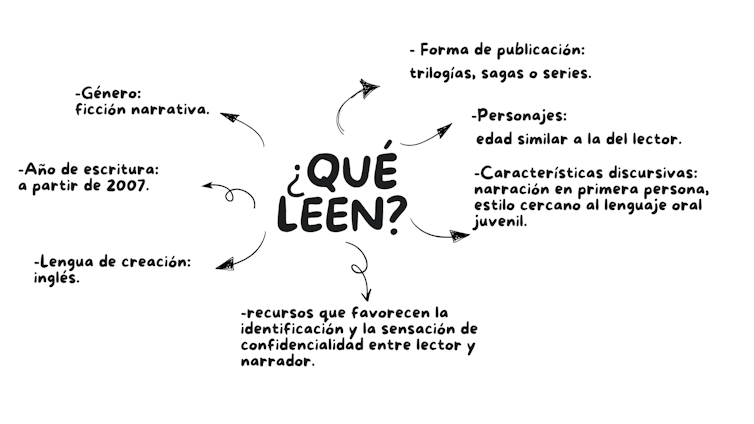
La literatura para jóvenes lectores (una etiqueta que en el mundo editorial se conoce con la frase inglesa “young adult” o YA) es un mercado en crecimiento. Los libros que más leen en las bibliotecas públicas de España repiten este patrón narrativo: son libros contemporáneos, publicados sobre todo después de 2007; una mayoría de ellos traducidos del inglés y en forma de largas sagas o trilogías; y protagonizados por personajes adolescentes, que narran sus peripecias en primera persona y con un estilo coloquial, muy parecido al que usan sus lectores en la vida real.

Los jóvenes leen libros escritos para ellos con un lenguaje muy coloquial y cercano, que narran peripecias en primera persona de corte fantástico, romántico o de aventuras.
Gráfico con las características principales del tipo de libros que más leen los adolescentes en España, con datos del informe de bibliotecas de todo el país.
Elaboración propia a partir de un estudio.

Títulos como Invisible, Wonder o las novelas de Blue Jeans captan la atención de los jóvenes lectores. Se trata de lecturas que abordan temas actuales y conflictos propios de la adolescencia y son espejos de su realidad, documentan sus vivencias y acompañan sus procesos de autoafirmación.

Invisible, por ejemplo, ha superado las 50 ediciones desde su publicación en 2018; autoras y autores españoles como Laura Gallego, Care Santos o Blue Jeans mantienen una presencia constante en las estanterías y en las preferencias lectoras. No son solo libros populares: son referentes emocionales y culturales para su generación.


Leer más:
Joana Marcús, escritora: “Sin la comunicación con mis lectores en las redes sociales, hay libros que no sé cómo habrían terminado”


Una experiencia de lectura audiovisual

Desde el fenómeno Harry Potter, ha crecido el interés por relatos con estructuras narrativas más elaboradas, como las que propone el experto estadounidense Christopher Vogler en El viaje del escritor. Son historias que incorporan tramas secundarias, personajes complejos y mundos ricos en detalles, como en Percy Jackson, Reina roja, Los juegos del hambre o After.

La mayoría utilizan un narrador en presente y generan una experiencia de lectura casi audiovisual: el lector no solo lee, sino que “ve” la historia desarrollarse ante sus ojos. Esta inmersión narrativa refuerza el vínculo emocional con los personajes y la trama.

Estos universos se expanden con secuelas, precuelas o reinterpretaciones, como ha ocurrido con la fantasía épica iniciada por El señor de los anillos y revitalizada por Harry Potter. Así, los adolescentes no solo buscan una buena historia, sino revivir una experiencia lectora que los atrape. El criterio para elegir un nuevo libro es claro: “me engancha”.

Cultura anglosajona homogenea

Parece que eligen libremente sus lecturas, pero esta autonomía revela una tendencia: la homogeneidad. Se repite un solo género (la ficción narrativa) y unas estructuras, predominan los mismos temas y se impone la cultura anglosajona contemporánea.

En realidad, el funcionamiento de elección se asemeja al de los algoritmos de redes sociales, plataformas audiovisuales o tiendas digitales: más de lo mismo. Las recomendaciones refuerzan sus gustos previos y les proponen lecturas que reflejan (o idealizan) la vida que tienen o desean. Así, la experiencia lectora se convierte en un bucle de confirmación afianzado en el atractivo que provoca la familiaridad de lo conocido, más que en una oportunidad de descubrimiento.

Cuando el bibliotecario media

En contraste con la repetición de patrones en la lectura autónoma, los espacios mediados (como los clubes de lectura) ofrecen una experiencia distinta. El lector especializado selecciona las obras siguiendo criterios como los premios literarios, el reconocimiento crítico, el prestigio del autor o las recomendaciones especializadas.

Los jóvenes acceden a textos que van más allá de la narrativa juvenil dominante: se abren a nuevos géneros literarios, a obras escritas en otros tiempos, desde otras culturas y con estilos diversos. Así, la lectura se convierte en una oportunidad para descubrir nuevas voces, ampliar perspectivas y enriquecer su formación literaria y personal.


Leer más:
Literatura en secundaria y bachillerato: mucho más que una lista de obras y autores


Enseñar literatura o enseñar a leer literatura

A partir de los datos, ¿el criterio para seleccionar los libros en el centro escolar debe basarse en el “me gusta” del alumnado? Y si es así, ¿de qué alumnado hablamos?

La escuela no es solo un espacio de transmisión de contenidos, sino un lugar de formación y de equidad, donde se nivela (o debería nivelarse) el capital cultural que cada estudiante trae de casa.

En este contexto, las asignaturas de Lengua y Literatura no solo enseñan literatura: deberían enseñar a leer literatura. No es lo mismo, como explican los expertos: la clase de literatura puede ser un espacio donde descubrir que las palabras escritas en otro tiempo pueden hablar de nosotros y de nuestro mundo.

Cómo ayudar a los jóvenes a disfrutar del patrimonio literario propio.
Elaboración propia.

No se trata solo de transmitir un canon o enseñar a hacer análisis, sino ampliar la capacidad de comprensión y disfrute de la lectura. Esta debe ser guiada: se trata de acompañar, mostrar caminos, ayudar a superar obstáculos y enseñar a hacerlo de forma autónoma. Guiar la lectura implica invitar, sugerir y enseñar estrategias interpretativas.

Todas las lecturas no son iguales

Que la lectura literaria educa emocional y socialmente no es solo una intuición del docente: estudios recientes https://onlinelibrary.wiley.com/doi/10.1111/lit.70006 revelan que, a través de la ficción, los adolescentes experimentan tanto empatía afectiva (sentir lo que sienten los personajes) como cognitiva (comprender sus pensamientos y motivaciones). Concluyen que la lectura voluntaria no debe limitarse al placer, sino que debe incluir beneficios como la empatía, el crecimiento personal y la conexión social.


Leer más:
¿Es lo mismo leer un clásico adaptado que en versión original?


Dos años antes, un estudio longitudinal demostró que no toda lectura por placer tiene efectos positivos a largo plazo. Las conclusiones muestran que la lectura acumulada de literatura clásica y contemporánea se asocia con una mayor conducta prosocial y un mejor ajuste social; mientras que la lectura de ficción narrativa repetitiva, por sí sola, no predice estos beneficios.

Gozar del patrimonio literario: un derecho

Acompañar a todos los estudiantes (con o sin capital cultural) en su acceso a la literatura, en su derecho a gozar de su patrimonio literario, no consiste únicamente en elegir una serie de obras, sino en ofrecer enfoques de lectura distintos. No basta con opiniones o impresiones personales: hace falta ejercer una mediación, ofrecer un contexto y desplegar estrategias que permitan al alumnado acceder a su riqueza estética, histórica y cultural.

Los datos muestran que el lector adulto tiende a consumir mayoritariamente ficción narrativa basada en patrones repetitivos. Por eso, es en la escuela donde debe forjarse el derecho a leer y disfrutar de obras más exigentes, escritas en catalán, euskera, gallego, castellano y otras lenguas curriculares.

Estas obras no solo cuentan historias: nos narran quiénes somos, nos conectan con nuestras raíces y nos ayudan a comprender el mundo desde múltiples perspectivas.

The Conversation

Gemma Lluch no recibe salario, ni ejerce labores de consultoría, ni posee acciones, ni recibe financiación de ninguna compañía u organización que pueda obtener beneficio de este artículo, y ha declarado carecer de vínculos relevantes más allá del cargo académico citado.

ref. Lecturas adolescentes: ¿vale cualquier libro? – https://theconversation.com/lecturas-adolescentes-vale-cualquier-libro-254720

Ecos neokantianos en la España de la Restauración

Source: The Conversation – (in Spanish) – By Gerardo Bolado Ochoa, Historiador de la Filosofía Española, Universidad de Cantabria

Cartel en Berlín que muestra y cita al filósofo alemán Immanuel Kant (“¡Ten el valor de usar tu propio entendimiento!”). Shutterstock

Poca fortuna tuvo Immanuel Kant en la España del siglo XIX. El rechazo acompañó con frecuencia a su filosofía crítica, porque negaba a la razón humana su pretendida capacidad de conocer el fondo metafísico de la realidad y de fundar sobre ese conocimiento una moral universal.

Una excepción señalada, en ese pobre panorama kantiano, la representó el hispanocubano, de ascendencia cántabra, José del Perojo Figueras (Santiago de Cuba, 1850 – Madrid, 1908).

Retrato de un hombre mayor sentado y mirando a cámara.
Retrato de José del Perojo.
Wikimedia Commons

Perojo disponía de una excelente formación, conseguida de manera un tanto autodidacta y sin graduarse en ninguno de los centros en que estudió: ni en la Universidad de Madrid, donde conoció entre 1869 y 1872 el auge del krausismo, ni el curso 72-73 en el Colegio de Francia, ni el 73-74 en Heidelberg (Alemania), cuando se imbuyó de los planteamientos del primer movimiento neokantiano, en particular los de Kuno Fischer y Wilhelm Wundt.

Fischer sostenía que Kant había abierto una nueva época en la historia del pensamiento, al convertir el conocimiento humano, la voluntad moral y el juicio reflexivo en el objeto de la filosofía. Wundt, por su parte, concebía la filosofía del futuro como una ciencia primera, ocupada de los principios y métodos de las ciencias, y de su unificación.

En su estudio del hombre, estos neokantianos se basaban en los resultados de la antropología evolucionista y la psicología fisiológica.

Perojo hizo suyos esos planteamientos y defendió que la filosofía de la voluntad de Schopenhauer era de inspiración kantiana. Pero rechazó por metafísico y contrario al progreso el pesimismo schopenhaueriano, que condena a la infelicidad todos los esfuerzos de la voluntad humana, sometida supuestamente a los designios de una voluntad universal.

Introducir a Kant en la cultura española

De vuelta en España, en 1875, Perojo promovió un proyecto neokantiano de modernización filosófico-científica de la cultura española. Invirtió a tal fin su fortuna familiar en una empresa cultural, la Revista Contemporánea y su editorial, que orientó a la difusión de filosofía y ciencia occidental, y a la edición castellana de sus autores y textos clásicos. Desarrolló además una intensa actividad intelectual, de la que son exponente sus influyentes Ensayos sobre el movimiento intelectual en Alemania.

La suya era una personalidad práctica, emprendedora y partidaria del progreso, que su mentalidad positiva asociaba con el desarrollo científico. Impulsó su reforma frente al krausismo, porque representaba a su juicio un espiritualismo metafísico, sibilítico y masónico, incapaz de alentar el movimiento científico que necesitaba la nación española.

Los krausistas habían prestado escasa atención a la filosofía kantiana. Defendían que Kant había planteado, pero no resuelto, la problemática de la nueva filosofía. La solución buscada se encontraba según ellos en el sistema del alemán Karl Krause. Pero, debido a sus dificultades terminológicas, no habían conseguido adaptarlo al pensamiento y la lengua española.

Ese sistema idealista mantenía una concepción metafísica, en la que una entidad superior, pero inmanente al mundo, se combina e interacciona en él, convirtiéndolo en una vasta realidad espiritual. En ella la razón descubre un ideal de humanidad que nuestra especie debe realizar a través de la educación y la reforma democrática de las instituciones.

Portada de la Crítica de la razón pura en español.
Traducción de la Crítica de la razón pura de Kant hecha por Perojo.
Wikimedia Commons

En la Segunda Cuestión Universitaria de 1875, importantes miembros de la Escuela Krausista fueron separados de sus cátedras por defender la libertad de enseñanza. Esto comprometió hasta mediados los años 80 su predominio en la Universidad Central. La puesta en marcha de la Institución Libre de Enseñanza (1876-1939), les permitió sin embargo continuar su benemérita labor pedagógica e institucionista, ordenada al perfeccionamiento personal y social de la especie humana.

El proyecto de Perojo se interrumpió en 1879 debido a la quiebra de su empresa cultural y a su precaria posición académica. Pero no fue vano, pues aportó el punto de vista neokantiano a los debates filosófico-científicos de comienzos de la Restauración. También nos dejó traducciones, como su versión directa de la primera parte analítica de la Crítica de la razón pura. Además, su empresa cultural fue un precedente de La España Moderna, de Lázaro Galdiano, o de la Revista de Occidente, de Ortega y Gasset, a las que bien pudo inspirar.


Leer más:
Cien años de la ‘Revista de Occidente’, gozosa contemplación de las ideas y del arte


La política y la pedagogía

En los años 80, el neokantiano Perojo se reinventó como publicista y político en las filas del Partido Liberal-Fusionista de Sagasta. Su nueva posición le permitió convertir periódicos como la Gaceta Universal o La Opinión en espacios desde los que difundir sus puntos de vista intelectuales. Personalmente se inclinaba a un liberalismo socialdemócrata no exento de elitismo.

Precisamente, sus Ensayos sobre política colonial (1885) son una refundición de artículos y conferencias. En ellos analiza la idiosincrasia de la colonización española y propone convertir España en un Estado intercontinental y sus colonias en regiones autónomas de ultramar.

En 1908, el último Perojo difundió la exposición más completa de sus planteamientos neokantianos en la recopilación de conferencias y contribuciones periodísticas titulada Ensayos sobre la educación. Kant y sus seguidores, Johann F. Herbart y Johann G. Fichte, inspiraron en esos ensayos su programa regeneracionista de educación nacional. Frente a la mera instrucción, esta visión pedagógica insistía en la formación de la voluntad y el carácter como centro de la acción humana.

Perojo falleció ese mismo año. Era entonces una personalidad política independiente dentro de la compleja tendencia conservadora denominada maurismo, y una figura en el mundo de la comunicación, como propietario y director del semanario gráfico Nuevo Mundo y su editorial. Su deceso fue noticia en toda la prensa española.

El joven Ramiro de Maeztu dejó escrito sobre él en su necrológica:

La muerte de Perojo en estos momentos es una desgracia nacional. Lo digo pesando escrupulosamente las palabras y a la persona que las dice… ha muerto en el punto preciso en que sus grandes dotes intelectuales iban a ser fecundas para España, y cuando más podíamos esperar los españoles de sus actividades.

(Nuevo Mundo, 29-10-1908)

Pese a este temprano fallecimiento, el legado de Perojo no quedó sepultado por la pretendida ruptura con la restauración que protagonizó la generación del 14; en particular, un joven Ortega y Gasset familiarizado con las ideas éticas y pedagógicas de los neokantianos de Marburgo.

Estudios monográficos recientes evidencian la existencia de conexiones de Perojo y su obra con autores como el propio Ortega o la pedagoga María de Maeztu que explican mejor la historia cultural e intelectual de España en el siglo XX.


Este artículo surge de la colaboración con la Fundación Ignacio Larramendi, institución centrada en desarrollar proyectos relacionados con el pensamiento, la ciencia y la cultura en Iberoamérica con el objetivo de ponerlos a disposición de todo el público.

Más información aquí.


The Conversation

Gerardo Bolado Ochoa no recibe salario, ni ejerce labores de consultoría, ni posee acciones, ni recibe financiación de ninguna compañía u organización que pueda obtener beneficio de este artículo, y ha declarado carecer de vínculos relevantes más allá del cargo académico citado.

ref. Ecos neokantianos en la España de la Restauración – https://theconversation.com/ecos-neokantianos-en-la-espana-de-la-restauracion-257300