¿Por qué cuando subimos una montaña hace más frío?

Source: The Conversation – (in Spanish) – By Ibai Ieltxu Rico Lozano, Profesor en el Grado en Geografía y Ordenación del Territorio de la EHU / Glaciólogo / Guía de Montaña UIAGM, Universidad del País Vasco / Euskal Herriko Unibertsitatea
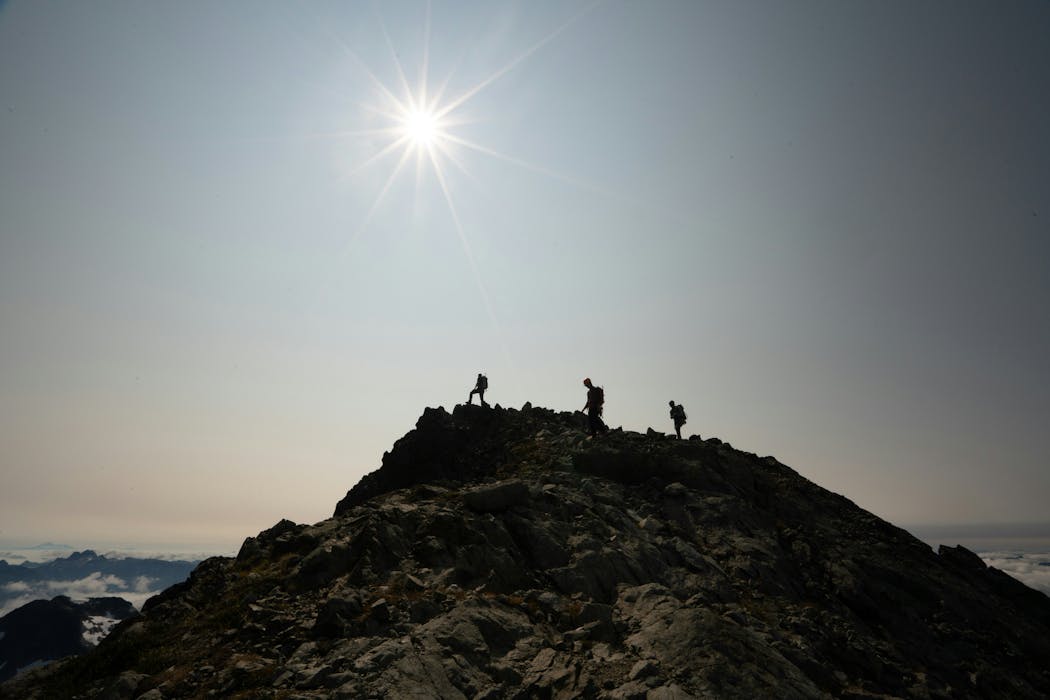
Cuanto más subimos, más cerca del Sol estamos. Entonces, ¿por qué hace más frío? Peter Fitzpatrick / Unsplash., CC BY

Este artículo forma parte de la sección The Conversation Júnior, en la que especialistas de las principales universidades y centros de investigación contestan a las dudas de jóvenes curiosos de entre 12 y 16 años. Podéis enviar vuestras preguntas a tcesjunior@theconversation.com


Pregunta formulada por el curso de 3º de la ESO de Aranzadi Ikastola. Bergara (Gipuzkoa)


Imagínate que estás escalando una montaña en el Himalaya. Si miras hacia abajo, a lo lejos, ves frondosos bosques; mientras que si miras hacia arriba, ves cada ves más nieve y más glaciares. Cuanto más asciendes, más notas cómo baja la temperatura. ¿Te ha pasado alguna vez? Tal vez te has dado cuenta de que ocurre incluso en verano y en días soleados…

A primera vista puede parecer extraño: al subir, estamos ligeramente más cerca del Sol, así que ¿no debería hacer más calor? Sin embargo, la realidad es justo la contraria. Para entender por qué, necesitamos conocer mejor cómo se calienta la atmósfera, qué es la presión del aire y cómo se comportan los gases.

¿Cómo se calienta el aire realmente?

Empecemos descartando una idea muy común. Aunque al subir una montaña nos alejamos del centro de la Tierra, la diferencia de distancia al Sol es mínima. La Tierra está a unos 150 millones de kilómetros del Sol, y una montaña de varios kilómetros de altura no cambia nada a esa escala. Por tanto, el descenso de temperatura no se debe a estar “más lejos” o “más cerca” del Sol.

Otra clave fundamental es entender que el aire no se calienta directamente por el Sol. La radiación solar atraviesa la atmósfera casi sin calentarla y llega hasta el suelo. El suelo absorbe esa energía y luego la emite en forma de calor (radiación infrarroja), haciendo que suba la temperatura del aire que está en contacto con él.
Por eso, el aire más caliente suele encontrarse cerca de la superficie terrestre y no en las capas altas de la atmósfera.

La presión atmosférica y la densidad

La atmósfera es una mezcla de gases que tienen masa y, por tanto, peso. A nivel del mar, el aire soporta el peso de toda la columna de aire que tiene encima, lo que produce una alta presión atmosférica.
A medida que subimos en altitud, hay menos aire por encima, así que la presión disminuye. Esto hace que el aire sea menos denso, es decir, que sus moléculas estén más separadas.

Y resulta que la densidad del aire es clave para la temperatura. Cuando las moléculas de un gas están más juntas, chocan más entre sí y pueden transferir mejor la energía térmica. En cambio, cuando están más separadas, almacenan menos energía térmica.

El enfriamiento adiabático

Hemos visto, entonces, que cuando una masa de aire asciende, la presión externa disminuye. Como consecuencia, el aire se expande. Al expandirse, el gas realiza trabajo (empuja el aire que lo rodea) y utiliza parte de su energía interna para ello. El resultado es una disminución de la temperatura, incluso, aunque no se pierda calor hacia el exterior. Este proceso se llama enfriamiento adiabático y es uno de los mecanismos más importantes de la meteorología.

En términos aproximados, cuando el aire asciende sin intercambiar calor con el entorno y si que se produzca condensación, su temperatura desciende unos 9,8 °C por cada 1 000 metros (es lo que se llama gradiente adiabático seco).

Sin embargo, en la atmósfera real, lo habitual es que, durante el proceso de ascenso, se condense parte del vapor de agua que existe. En este caso, el descenso medio es de unos 6,5 °C por cada 1 000 metros, lo que se conoce como gradiente térmico vertical.

Menos efecto “manta” en altura

El aire actúa como un aislante térmico. Cuanto más denso es, mejor retiene el calor. En las zonas bajas, la atmósfera funciona como una especie de manta que impide que el calor del suelo se escape rápidamente al espacio.

En las montañas, al haber menos aire, este efecto es mucho menor. El calor se pierde con mayor facilidad, especialmente, durante la noche. Esto explica por qué las temperaturas nocturnas en alta montaña pueden ser extremadamente bajas.

El papel del suelo, la nieve y el viento

El tipo de superficie también influye. En las montañas, es frecuente encontrar roca desnuda, suelos pobres o nieve. La nieve tiene un alto albedo –medida de la capacidad de una superficie para reflejar la radiación solar–. Es decir, refleja gran parte de la radiación solar que recibe. Así, al reflejar más energía y absorber menos, el suelo se calienta poco y transmite menos calor al aire.

Por otro lado, en altura, suele haber más viento debido a las diferencias de presión y a la ausencia de obstáculos. El viento no reduce la temperatura real del aire, pero sí aumenta la pérdida de calor del cuerpo humano al eliminar la capa de aire caliente que rodea la piel. Esto provoca una sensación térmica de frío mayor, aunque los grados sean los mismos.

¿Existen excepciones?

Sí. En algunas situaciones se produce una inversión térmica, en la que el aire frío queda atrapado en los valles y el aire más cálido se sitúa por encima. En estos casos, puede hacer más frío abajo que en lo alto de la montaña. Sin embargo, estas situaciones son temporales y no cambian la regla general.

Lo habitual es que haga más frío al subir una montaña y, como hemos visto, esto ocurre porque la atmósfera se comporta de forma diferente con la altura: la presión disminuye, el aire se expande y se enfría, hay menos capacidad para retener calor y el suelo aporta menos energía térmica. Un excelente ejemplo de cómo las leyes de la física y la química influyen directamente en nuestra vida cotidiana.


La Cátedra de Cultura Científica de la Universidad del País Vasco colabora en la sección The Conversation Júnior.


The Conversation

Ibai Ieltxu Rico Lozano no recibe salario, ni ejerce labores de consultoría, ni posee acciones, ni recibe financiación de ninguna compañía u organización que pueda obtener beneficio de este artículo, y ha declarado carecer de vínculos relevantes más allá del cargo académico citado.

ref. ¿Por qué cuando subimos una montaña hace más frío? – https://theconversation.com/por-que-cuando-subimos-una-montana-hace-mas-frio-273527

‘Tecnoestrés’ en la universidad: ser hábil con la tecnología no lo es todo

Source: The Conversation – (in Spanish) – By José Luis Serrano, Profesor Titular de Tecnología Educativa, Universidad de Murcia

BongkarnGraphic/Shutterstock

Imaginemos a un universitario cualquiera: abre el portátil para revisar una tarea, pero antes debe atender mensajes del grupo de clase, tres correos de la plataforma institucional y una notificación de cambio en la fecha de entrega. Nada de esto requiere gran habilidad digital, pero sí una atención que se fragmenta a cada paso. Al final del día, la sensación no es de incompetencia, sino de saturación.

Lo que está detrás de este fenómeno es el llamado tecnoestrés, que describe el malestar que surge cuando la tecnología supera nuestra capacidad de gestionarla. Tiene que ver con la sensación de que la tecnología pide más de lo que uno puede sostener.

Cinco grandes estresores

¿Qué está produciendo este desajuste? Conviene detenerse en los grandes estresores. La tecnoinvasión aparece cuando lo académico se cuela en los espacios personales, y la tecnosobrecarga, cuando las demandas digitales llegan más rápido de lo que puede procesarse.

También influye la tecnocomplejidad –cuando las herramientas resultan más confusas de lo esperado– y la tecnoincertidumbre, fruto de cambios constantes, a lo que se suma la tecnoinseguridad, el temor a que la tecnología falle. El conjunto explica buena parte del tecnoestrés universitario.


Leer más:
Estrategias de intervención para mejorar la salud mental de los jóvenes universitarios


Tecnoestrés y competencias digitales

El tecnoestrés no depende de cuánto sabe usar alguien la tecnología. Algunas investigaciones cuestionan esta relación.

En nuestra reciente tesis publicada encontramos altos niveles de competencia digital según el marco europeo DigComp 2.2 y también altos niveles de autoeficacia, una variable tradicionalmente vista como protectora frente al estrés. Aun así, vimos que el tecnoestrés se mantenía en niveles moderados, sin ningún efecto amortiguador por parte de las competencias adquiridas.

Dicho tecnoestrés puede darse incluso en personas con dominio técnico. El problema no está tanto en “saber usar” la tecnología, sino en la relación emocional, cognitiva y organizativa que establecemos con ella.

Saber parar

En nuestro proyecto de ayuno digital, la mayoría del alumnado no logró completar el reto, sobre todo al intentar romper hábitos de comunicación muy arraigados.

Un uso automático y omnipresente de la tecnología (es decir, no deliberado y esporádico) hace que dejar de usar móviles u ordenadores, estar sin conexión, produzca incomodidad. El ayuno digital funciona, en este sentido, como un espejo: hace visible lo que en la rutina pasa desapercibido y muestra hasta qué punto la relación con la tecnología no depende de la habilidad, sino de la dificultad para detenerse, cambiar el ritmo y recuperar margen de control.


Leer más:
La salud mental de los universitarios empeora: así podemos ayudar


Responsabilidad de todos

Quizá estemos atribuyendo en exceso la responsabilidad al estudiante y olvidando el papel de la universidad. No es solo un problema individual, sino también de contexto. Incluso los estudiantes más hábiles sufren desgaste cuando el ecosistema digital multiplica plataformas, fragmenta la atención y exige disponibilidad constante.

La dispersión de recursos y la necesidad de consultar varias aplicaciones para no perder información elevan la carga cognitiva, mientras que la sensación de estar siempre localizable alimenta el conocido como FOMO académico.

La multitarea permanente dificulta la concentración y acelera la fatiga mental : quienes más dominan la tecnología suelen asumir más tareas digitales y, paradójicamente, se exponen más al desgaste.

A esto se suma un uso intensivo de herramientas que no siempre se traduce en aprendizaje significativo, por lo que puede aumentar el riesgo de tecnoestrés.

Aprender a gestionar, no solo a usar

Otro aspecto clave para entender por qué incluso los estudiantes más competentes lo sufren es el desfase entre la “competencia digital” oficial y el uso real que hacen de la tecnología. Los marcos institucionales suelen medir habilidades técnicas: navegar, seleccionar información… Sin embargo, estas categorías no capturan la complejidad emocional, temporal y organizativa del trabajo digital cotidiano.

Como señalamos en nuestro estudio, la competencia digital se evalúa como un conjunto de destrezas, pero no como capacidad de sostener prácticas tecnológicas en contextos exigentes, saturados y altamente interdependientes.

Este desfase hace que muchos estudiantes, pese a sentirse competentes, se vean desbordados por la gestión simultánea de recursos, la presión académica, las decisiones continuas y la dificultad para sostener el ritmo de trabajo. El tecnoestrés se explica, pues, por una evaluación incompleta del papel de la tecnología en la vida académica.

Del individuo al ecosistema

Los resultados de las diferentes investigaciones comentadas coinciden en un punto clave: el foco no debe ponerse únicamente en las habilidades individuales, sino en cómo está configurado el ecosistema digital de la universidad. Pedir autorregulación al alumnado es insuficiente cuando las plataformas se multiplican, los mensajes se solapan y la comunicación carece de límites claros.

Por eso proponemos pasar de una mirada centrada en las competencias técnicas a una perspectiva centrada en el bienestar digital. Esto implica cuestionar prácticas institucionales y revisar protocolos de comunicación, por ejemplo.

La respuesta, pues, debe combinar cambios institucionales y prácticas personales. Las universidades pueden diseñar entornos digitales más simples, coordinados y respetuosos con la atención humana.

No se trata de usar menos tecnología, sino de usarla sin que nos desborde. Cuando el entorno ayuda y los hábitos acompañan, el tecnoestrés pierde espacio.

The Conversation

Las personas firmantes no son asalariadas, ni consultoras, ni poseen acciones, ni reciben financiación de ninguna compañía u organización que pueda obtener beneficio de este artículo, y han declarado carecer de vínculos relevantes más allá del cargo académico citado anteriormente.

ref. ‘Tecnoestrés’ en la universidad: ser hábil con la tecnología no lo es todo – https://theconversation.com/tecnoestres-en-la-universidad-ser-habil-con-la-tecnologia-no-lo-es-todo-270326

Ronald se abre una cuenta en Vinted y hace de su armario una microempresa

Source: The Conversation – (in Spanish) – By Elisa Baraibar Diez, Profesora de Organización de Empresas, Universidad de Cantabria

Kamil Zajaczkowski/Shutterstock

Empieza a hacer frío en Londres y Ronald planea dedicar el fin de semana al cambio de armario. Aprovechará para sacar lo que ya no usa y pensará en qué necesita para la nueva temporada. ¿A que se reconoce en esta situación? Seguro que puede visualizar varias prendas que ya no le valen, ya no le gustan o que simplemente quiere retirar.

Marion, la mujer de Ronald, le recomienda descargarse una app de compra-venta de segunda mano. Un rato después, Ronald ya tiene una cuenta y está subiendo una foto y las características de un abrigo que ya no le vale. Enseguida recibe mensajes y responde a posibles compradores sobre el largo del abrigo y de las mangas, sobre el estado de la prenda. Al día siguiente encuentra a un comprador, negocia el precio, concreta un envío, imprime la etiqueta y envuelve el abrigo cuidadosamente. ¡Ha conseguido su primera venta!

Londres, 1931

Viajemos ahora en el tiempo. En 1931, los habitantes de Londres no se planteaban hacer un cambio de armario (si acaso, recuperar y cepillar el abrigo del año anterior), no tenían impresora y no existían las plataformas digitales. Ronald, de apellido Coase, era profesor de la London School of Economics y estaba sentando las bases de la teoría que, en 1991, le serviría para ser galardonado con el Premio Nobel de Economía “por su descubrimiento y aclaración de la importancia de los costes de transacción y los derechos de propiedad para la estructura institucional y el funcionamiento de la economía”.

Coase, uno de los economistas más influyentes del siglo XX, provocó una pequeña revolución al preguntarse por la existencia de las empresas. Esta pregunta la materializó en su obra The Nature of the Firm (1937), donde explicaba que una empresa se crea cuando consigue reducir los costes de funcionamiento que existen en el mercado. ¿Y qué tiene que ver todo esto con vender un abrigo a través de una app?

Segunda mano: sostenibilidad y segundas oportunidades

Según establecía Coase en otro libro posterior, The Problem of Social Cost (1960):

“Para llevar a cabo una transacción de mercado es necesario descubrir con quiénes se desea negociar, informar a las personas de que se desea negociar (y en qué condiciones), llevar a cabo negociaciones que conduzcan a un acuerdo, redactar el contrato, realizar la inspección necesaria para asegurarse de que se cumplen las condiciones del contrato, etcétera”.

No hay que tener muchos abrigos vendibles en el armario para intuir lo tremendamente complicado (o poco rentable) que resultaba vender una sola de esas prendas (en el mercado) antes de la existencia de plataformas de compra-venta de ropa de segunda mano.

Si antes uno se planteaba: ¿dónde podría encontrar a alguien que quiera justo el modelo, la talla, el estilo y el color de mi prenda? Ahora, estas apps reducen el coste de búsqueda de información con filtros como talla, marca, precio, e incluso estilo o ubicación. Gracias a la tecnología, los potenciales compradores han llegado al abrigo en un par de clics.

Negociar con conocimiento

Casi por arte de magia, también se ha reducido otro problema clásico en la economía: el de la información asimétrica (el comprador o el vendedor cuenta con más información que el otro al momento de negociar). Esa diferencia informativa ahora es bastante menor.

Al tener que subir fotografías desde varios ángulos y tener que realizar descripciones de todas las prendas, marcando también cuál es su estado actual, la información existente se acerca al equilibrio. Además, las valoraciones previas de compradores y vendedores (las estrellas que aparecen junto al perfil), así como los comentarios y reseñas en el historial, también ayudan a conocer cómo son los usuarios en la aplicación.

Aunque en la app hay grandes perfiles negociadores (y regateadores), los costes de negociación también se ven reducidos con las opciones de realizar ofertas automáticas al comprar varias prendas, dar precios cerrados y aceptar o rechazar directamente una nueva oferta. Negociar es mucho más rápido y eficiente. Finalmente, la transacción se materializa en unos clics aunque el comprador esté a kilómetros de distancia.

Antes, vender una prenda a una persona desconocida podría ser arriesgado por una cuestión de confianza. Aunque en las plataformas de compra-venta puede haber transacciones que acaban en estafa, es la empresa la que absorbe esos costes relacionados con el contrato y el cumplimiento al integrar los pagos, gestionar el envío y tener la posibilidad de reclamar ante cualquier eventualidad.

Así, un armario se convierte en una microempresa y, a través de estas plataformas, se concretan muchas transacciones que antes eran demasiado costosas de realizar para un particular.

La prenda perfecta para el aula

Para estudiantes de economía, de empresas o de relaciones laborales, aplicaciones como Vinted no solo son magníficos paradigmas emprendedores sino también ejemplos perfectos para hablar de los costes de transacción.

Solo hay que preguntar: ¿por qué usáis una aplicación para vender lo que no queréis y no vais a un mercadillo o ponéis mensajes en el tablón de la facultad, o en los postes de la ciudad? La respuesta suele tener que ver con la comodidad, la facilidad, la rapidez. Es decir, con reducir los costes de transacción. Y entonces, sin darse cuenta, están comprendiendo a Coase.

Cuando suba su siguiente prenda o busque una bufanda de un determinado color o unas zapatillas de una determinada marca, o negocie el precio de un bolso o deje una valoración a su comprador o vendedor, recuerde que no está solo haciendo hueco en sus armarios: está siendo el protagonista de una lección de economía.

The Conversation

Elisa Baraibar Diez no recibe salario, ni ejerce labores de consultoría, ni posee acciones, ni recibe financiación de ninguna compañía u organización que pueda obtener beneficio de este artículo, y ha declarado carecer de vínculos relevantes más allá del cargo académico citado.

ref. Ronald se abre una cuenta en Vinted y hace de su armario una microempresa – https://theconversation.com/ronald-se-abre-una-cuenta-en-vinted-y-hace-de-su-armario-una-microempresa-273285

Leer ‘Hamlet’ con los ojos con los que se escribió ‘Hamnet’

Source: The Conversation – (in Spanish) – By Patricia García Santos, Doctoranda en Literaturas en Lengua Inglesa, Universidad de Córdoba

Un fotograma de la adaptación cinematográfica de _Hamnet_. Universal Pictures

¿Qué ocurre cuando una novela contemporánea mira hacia atrás para imaginar el dolor que dio origen a una de las tragedias más famosas de la historia de la literatura?

Maggie O’Farrell, autora de Hamnet (2020), abre su obra con la siguiente nota histórica:

“En la década de 1580, una pareja que vivía en Henley Street, Statford-upon-Avon, tuvo tres hijos: Susanna, y más tarde, los gemelos Hamnet y Judith.

El niño, Hamnet, murió en 1596, a la edad de once años.

Alrededor de cuatro años después, su padre escribió una obra llamada Hamlet”.

A partir de ahí, la escritora reimagina la vida familiar de ese niño, de sus hermanos y de su madre, Agnes, mientras William Shakespeare aparece de fondo, dedicado a la escritura en Londres.

Un hombre se ríe charlando con unos niños alrededor de una mesa.
Fotograma de Hamnet, la adaptación cinematográfica de Chloé Zhao.
Universal Pictures

De un niño a una obra eterna

Para Italo Calvino, autor de Por qué leer los clásicos (1991), los clásicos son aquellos libros a los que nunca se llega por primera vez: no se leen, se releen. Pero tampoco se trata solo de volver a ellos y releerlos, sino de reinterpretarlos. Así ocurre en el caso de Hamnet.

Hamlet, una de las obras más conocidas de William Shakespeare, narra la historia del príncipe homónimo a quien el fantasma de su padre le encomienda que vengue su muerte, porque ha sido asesinado por su tío.

La novela de O’Farrell relee esta tragedia como una poderosa transformación del dolor por la pérdida de un ser querido en una obra de arte capaz de trascender los límites de la mortalidad. Hamnet propone que lo que Shakespeare consiguió con Hamlet, de forma consciente o inconsciente, fue otorgarle a su hijo la vida que no pudo tener: el niño no llegó a habitar como hombre el mundo que sí conocería la obra literaria que heredó su nombre.

La propia novela recuerda en sus primeras páginas, citando a Stephen Greenblatt, uno de los grandes biógrafos de Shakespeare, que “Hamnet y Hamlet son en realidad el mismo nombre, completamente intercambiables en los registros de Stratford en los siglos dieciséis y diecisiete”. Mismo nombre, misma pérdida, misma herida, pero distintas miradas ante un único acontecimiento.

Una nueva forma de ver el dolor

Hamnet no reescribe Hamlet: lo relee y lo desplaza. Ambas obras parten de una pena idéntica: la pérdida de un hijo a la corta edad de once años. Pero la forma en que esa herida se articula narrativamente es radicalmente distinta.

En Hamlet, el dolor se convierte en discurso y en conflicto político, y su representación es pública, ya que el duelo del príncipe Hamlet se despliega en la corte de su padre, ante el reino, y ante el espectador. En Hamnet, en cambio, el dolor no se verbaliza de manera explícita ni se exhibe, sino que vive en los silencios y en los gestos cotidianos, en la persistencia de la vida familiar a pesar de su ausencia. Esta experiencia de duelo se focaliza principalmente en la novela a través de la figura de la madre. Donde Shakespeare convierte la pérdida en tragedia pública, O’Farrell la transforma en una elegía narrativa situada en el ámbito íntimo y doméstico.

Un hombre sentado delante de unos papeles con una mujer de pie a su lado.
Fotograma de Hamnet con Jessie Buckley y Paul Mescal como Agnes y William Shakespeare.
Universal Pictures

En Hamlet encontramos el dolor convertido en mito, mientras que Hamnet reimagina la vida del autor para devolver el mito a su origen, a la herida vivida en el espacio de lo cotidiano. En ambas obras, el dolor actúa como motor creativo y nace de un mismo punto de partida: una tragedia familiar en la Inglaterra de finales del siglo XVI, cuando un joven dramaturgo en ciernes afronta la muerte de un hijo mientras persigue el éxito profesional y artístico que permita sostener a la familia que ha dejado atrás para conseguirlo.

Como sugiere Stephen Greenblatt, para comprender cómo Shakespeare utilizó su imaginación para transformar la vida en arte es necesario que nosotros también usemos la nuestra. Hamnet es precisamente ese ejercicio de imaginación contemporánea que sugiere Greenblatt: no explica lo que pasa en Hamlet, sino que imagina el dolor que dio origen a su escritura. Allí donde el teatro convirtió una pérdida íntima en un mito central del canon literario, la novela devuelve ese mito a la experiencia humana que hizo posible su existencia.

Esta forma de imaginar la vida de Shakespeare para comprender su obra ya había sido explorada previamente en otras creaciones culturales como Shakespeare in Love (1998), cuyo guion, firmado por Tom Stoppard, proponía una ficción biográfica para explorar el trasfondo emocional de Noche de reyes, ligándola a la experiencia vital del joven dramaturgo.

Adaptación cinematográfica

Este diálogo entre Hamnet y Hamlet cobra aún más actualidad con el estreno de la adaptación cinematográfica de la primera de ellas. La transformación de la novela en imagen invita a las audiencias contemporáneas no solo a revivir la narrativa de O’Farrell, sino también a reconsiderar cómo el dolor y la imaginación siguen siendo potentes fuerzas culturales.

Así, la película dirigida por Chloé Zhao no solo es un hito cinematográfico del que ya se están haciendo eco los grandes medios y premios de la industria, sino también una oportunidad para reflexionar sobre cómo recontextualizamos los clásicos y cómo estos siguen informando las artes hoy.

Tal vez por eso Hamlet sigue siendo un clásico en el sentido que definía Italo Calvino: una obra que nunca se agota, que siempre se relee y que genera nuevos discursos cada vez que alguien se atreve a mirarla con ojos nuevos.

The Conversation

Patricia García Santos recibe fondos de la ayuda predoctoral PRE2023/PID2023-148878NB-C21 del Ministerio de Ciencia, Innovación y Universidades. Esta ayuda está asociada al proyecto de investigación Transparencia, Opacidad y Resistencia en la Literatura Contemporánea en Lengua Inglesa de la Universidad de Córdoba.

Paula Martín-Salván no recibe salario, ni ejerce labores de consultoría, ni posee acciones, ni recibe financiación de ninguna compañía u organización que pueda obtener beneficio de este artículo, y ha declarado carecer de vínculos relevantes más allá del cargo académico citado.

ref. Leer ‘Hamlet’ con los ojos con los que se escribió ‘Hamnet’ – https://theconversation.com/leer-hamlet-con-los-ojos-con-los-que-se-escribio-hamnet-274136

Blaming ‘wine moms’ for ICE protest violence is another baseless, misogynist myth

Source: The Conversation – Canada – By Darryn DiFrancesco, Assistant Professor, School of Nursing, Faculty of Human and Health Sciences, University of Northern British Columbia

Following the recent shooting of Renee Good by an agent for Immigration and Customs Enforcement (ICE) in the United States, the Donald Trump administration’s latest narrative suggests that “deluded wine moms” are to blame for the violence in ICE-related demonstrations in Minneapolis and across the country.

This mother-blaming is nothing more than an old trick with a new spin.

Organized gangs of ‘wine moms’

Earlier this week, a Fox News columnist wrote that “organized gangs of wine moms” are using “antifa tactics” to “harass and impede” ICE activity. In the opinion piece, he claimed that “confusion” over the what constitutes civil disobedience is what “got 37-year-old Renee Good killed.”

Similarly, Vice-President J.D. Vance called Good a “deranged leftist” while a new acronym, AWFUL — Affluent White Female Urban Liberal — has appeared on social media.

In framing protesters like Good, a mother of three, as confused, aggressive and “delusional,” this narrative delegitimizes and pathologizes maternal activism. This strategy aims to divert blame from the U.S. government and its heavy-handed approach to immigration while also drawing on a centuries-old strategy of blaming mothers for social problems.

What makes a ‘wine mom?’

The term “wine mom” emerged over the last two decades as a cultural symbol of the contemporary white, suburban mother who turns to a nightly glass of wine (or two) to cope with the stresses of daily life.

The archetype goes back much further, reflected in literature, film and television characters, such as the wily Lucille Bluth of Arrested Development.

A clip from ‘Arrested Development’ featuring Lucille Bluth’s fondness for boozing.

Yet, this motif is less light-hearted than assumed: a recent systematic review reveals a strong link between maternal drinking and stress, especially for working mothers.

While it would be easy to view problematic drinking as another example of maternal failure, it is important not to. Here’s why.

Mother-blame in history

Throughout history, mothers have found themselves in the midst of what American sociologist Linda Blum calls a “mother-valor/mother-blame binary.”

When behaving in accordance with socially acceptable and desirable parameters — that is with warmth, femininity and selflessness — mothers are viewed as “good.” When mothers violate these norms, whether by choice, circumstance or by virtue of their race or class position, they’re “bad mothers.”

Mother-blame ultimately reflects the belief that mothers are solely responsible for their children’s behaviour and outcomes, along with the cultural tendency to blame them when things go wrong. Yet, as Blum points out, “mother-blame also serves as a metaphor for a range of political fears.”

Perhaps the most striking example of this is the suffrage movement, which represented a direct challenge to patriarchal notions that women belonged in the domestic sphere and lacked the intelligence to engage in political discourse.

Suffragettes in the United Kingdom — many of them mothers — occasionally used extreme tactics, such as window-smashing and arson, while women in the U.S. obstructed traffic and waged hunger strikes.

These activists were framed as threatening to not only the establishment, but also to families and the moral fabric of society.

Ironically, despite the fact that women’s entry into politics led to increased spending and improved outcomes related to women, children, families and health care, scholars have found that mother-blaming was as common after the women’s movement as it was before.

Contemporary mother-blame

Beyond political matters, contemporary mother-blame is rampant in other domains.

Mothers have been blamed for a wide variety of their children’s psychological problems, including anxiety, depression and inherited trauma. In media and literature, mothers are often blamed for criminality and violence, reflecting the notion that “mothers make monsters.”
When children struggle in school, educators and administrators may blame the mother. Mothers risk being called “too passive” if they don’t advocate for their children or “too aggressive” when they do.

Similarly, the “crazy woman” or “hysterical mother” is a well-known trope in custody law, and mothers may be blamed even when their children are abused by others. Mass shootings? Mom’s failure. The list goes on.

By setting up mothering as a high-stakes endeavour, the cultural norm of mother-blame also serves to “divide and conquer.”

In my sociology research, I found that mothers on Facebook worked to align themselves with like-minded “superior” mothers, while distancing themselves from perceived “inferior” mothers. This feeds into the cultural norm of “combative mothering,” which pits mothers against each other.

An old trick with a new spin

The “wine mom” narrative builds on this historical pattern of mother-blame. It is meant to trivialize, delegitimize, divide and denigrate mothers who are, in fact, well-organized and motivated activists concerned for their communities.

While there are legitimate concerns around maternal drinking as a coping mechanism, the “wine mom” label has begun to represent something different. Mothers are reclaiming the title to expand their cause.

As @sara_wiles, promoting the activist group @redwineblueusa stated on Instagram: “They meant to scare us back into the kitchen, but our actual response is, ‘Oh, I want to join!’”

We should acknowledge that rather than causing societal problems, mothers have a long history of trying to fix them, even if imperfectly. Mothers like Renee Good are no exception.

The Conversation

Darryn DiFrancesco does not work for, consult, own shares in or receive funding from any company or organisation that would benefit from this article, and has disclosed no relevant affiliations beyond their academic appointment.

ref. Blaming ‘wine moms’ for ICE protest violence is another baseless, misogynist myth – https://theconversation.com/blaming-wine-moms-for-ice-protest-violence-is-another-baseless-misogynist-myth-273786

What a US military base lost under Greenland’s ice sheet reveals about the island’s real strategic importance

Source: The Conversation – UK – By Gemma Ware, Host, The Conversation Weekly Podcast, The Conversation

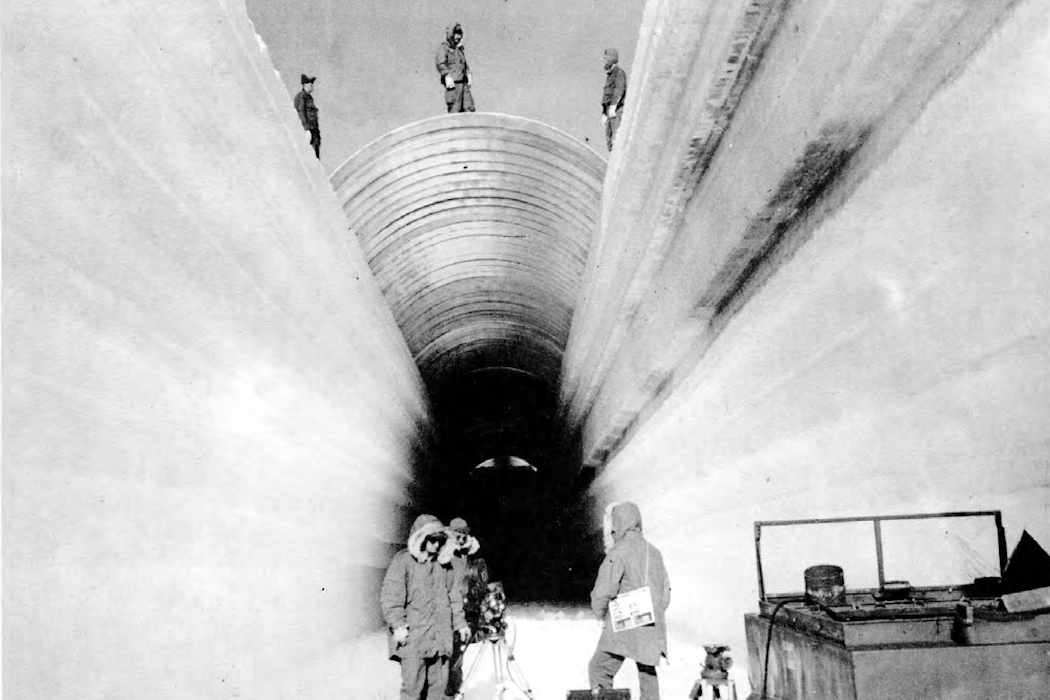
U.S. Army Corps of Engineers via Wikimedia Commons

In the summer of 1959, a group of American soldiers began carving trenches in the Greenland ice sheet. Those trenches would become the snow-covered tunnels of Camp Century, a secret Arctic research base powered by a nuclear reactor.

It was located about 150 miles inland from Thule, now Pituffik, a large American military base set up in north-western Greenland after a military agreement with Denmark during world war two.

Camp Century operated for six years, during which time the scientists based there managed to drill a mile down to collect a unique set of ice cores. But by 1966, Camp Century had been abandoned, deemed too expensive and difficult to maintain.

Today, Donald Trump’s territorial ambitions for Greenland continue to cause concern and confusion in Europe, particularly for Denmark and Greenlanders themselves, who insist their island is not for sale.

One of the attractions of Greenland is the gleam of its rich mineral wealth, particularly rare earth minerals. Now that Greenland’s ice sheet is melting due to global warming, will this make the mineral riches easier to get at?

In this episode of The Conversation Weekly podcast, we talk to Paul Bierman, a geologist and expert on Greenland’s ice at the University of Vermont in the US. He explains why the history of what happened to Camp Century – and the secrets of its ice cores, misplaced for decades, but now back under the microscope – help us to understand why it’s not that simple.

Listen to the interview with Paul Bierman on The Conversation Weekly podcast. You can also read article by him about the history of US involvement in Greenland and the difficulty of mining on the island.

This episode of The Conversation Weekly was written and produced by Mend Mariwany and Gemma Ware. Mixing by Michelle Macklem and theme music by Neeta Sarl. Gemma Ware is the executive producer.

Newsclips in this episode from New York Times Podcasts, the BBC and NBC News.

Listen to The Conversation Weekly via any of the apps listed above, download it directly via our RSS feed or find out how else to listen here. A transcript of this episode is available via the Apple Podcasts or Spotify apps.

The Conversation

Paul Bierman receives funding from the US National Science Foundation and the University of Vermont Gund Institute for Environment

ref. What a US military base lost under Greenland’s ice sheet reveals about the island’s real strategic importance – https://theconversation.com/what-a-us-military-base-lost-under-greenlands-ice-sheet-reveals-about-the-islands-real-strategic-importance-274067

Quand les morts quittent les cimetières : nouvelles pratiques funéraires en pleine nature

Source: The Conversation – France (in French) – By Pascaline Thiollière, architecte (M’Arch), enseignante et chercheuse sur les ambiances et approches sensibles des espaces habités, Ecole d’architecture de Grenoble (ENSAG)

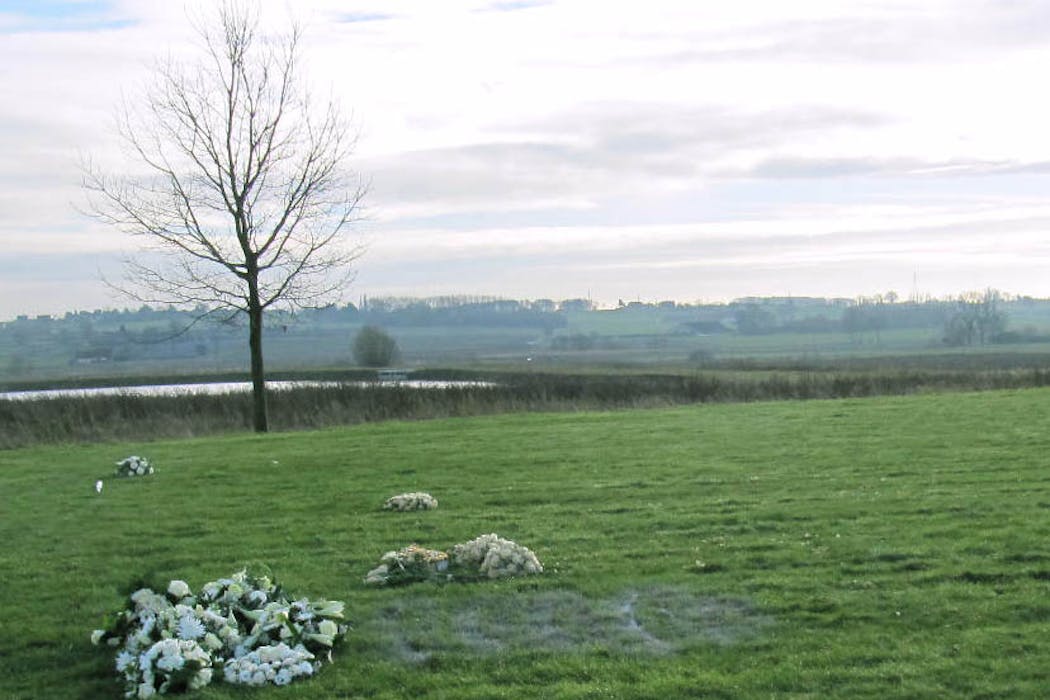
Une dispersion de cendres à Courtrai, en Belgique, dans le cimetière conçu par B. Secchi. Fourni par l’auteur

À bas bruit et hors de portée du marché du funéraire se développent des pratiques qui déplacent les morts et leur mémoire à l’extérieur des cimetières dans des espaces bien réels, au plus près des valeurs et des façons de vivre dont témoignaient les défunts de leur vivant.


Lorsque les espaces et les pratiques funéraires sont évoquées dans les médias ou dans le débat public français, c’est souvent aux approches des fêtes de la Toussaint, pour relater des évolutions en cours dans la gestion des funérailles et des cimetières, et pour mettre en lumière des services, objets, techniques ou technologies dites innovantes. Il était ces dernières années beaucoup question de l’écologisation des lieux et techniques funéraires (cimetière écologique, humusation/terramation, décarbonation des produits funéraires) et de la digitalisation du recueillement et de la mémoire (deadbots, gestion post-mortem des volontés et des données numériques, cimetières et mémoriaux virtuels, télétransmission des cérémonies). Mais discrètement, d’autres pratiques voient le jour.

Avec la crémation devenue majoritaire dans de nombreux territoires français, la dispersion des cendres dite « en pleine nature » se révèle très importante dans les souhaits et de plus en plus dans les faits. Pourtant, beaucoup méconnaissent le cadre légal et pratique de son application. Cet article dévoile les premiers éléments d’une enquête en cours sur ces pratiques discrètes qui témoignent d’une émancipation créative face à la tradition contraignante de la tombe et du cimetière.

Des cimetières de moins en moins fréquentés

Le cimetière paroissial du Moyen Âge qui plaçait la communauté des morts au plus près de l’église et de ses reliques, dans la promesse de son salut et de sa résurrection, était un espace multifonctionnel et central de la vie et de la ville.

Le cimetière de la modernité matérialiste et hygiéniste est déplacé dans les faubourgs, puis dans les périphéries de la ville et se marginalise petit à petit des fonctions urbaines. Il devient, comme le dit Foucault, « l’autre ville, où chaque famille possède sa noire demeure », puis s’efface dans l’étalement urbain du XXᵉ siècle.

À l’intérieur des murs d’enceinte qui deviennent souvent de simples clôtures, les aménagements pour gagner de la place se rationalisent, le mobilier d’un marché funéraire en voie d’industrialisation et de mondialisation se standardisent. Les morts y sont rangés pour des durées de concessions écourtées au fil des décennies, sous la pression d’une mortalité en hausse (génération des baby-boomers) et de la saturation de nombreux cimetières urbains.

Dans les enquêtes régulières sur « Les Français et les obsèques » du Centre de recherche pour l’étude et l’observation des conditions de vie (Credoc), les Français montrent peu d’affection envers leurs cimetières qu’ils jugent trop souvent démesurés, froids et impersonnels. Alors qu’ils étaient encore 50 % en 2005, seulement un tiers des Français de plus de 40 ans continuent vingt ans plus tard à les fréquenter systématiquement à la Toussaint. Pour les Français de moins de 40 ans, ils sont encore moins souvent des lieux de sens et d’attachement.

Cette désaffection des cimetières, pour beaucoup synonymes d’enfermement tant matériel que mental, explique en partie l’essor de la crémation et de la dispersion des cendres. Les dimensions économiques et écologiques de ces options funéraires viennent renforcer cette tendance et s’exprime par la volonté de ne pas être un poids pour ses descendants (coût et soin des tombes) et/ou pour la planète (bilan carbone important de l’inhumation avec caveau et/ou monuments), et illustre la proposition de garder l’espace pour les vivants et le vivant.

La crémation gagne du terrain

La crémation était répandue en Europe avant sa christianisation et a même été conservée marginalement en périodes médiévales dans certaines cultures d’Europe du Nord. Elle se pratiquait sur des bûchers à foyer ouvert. Sa pratique, telle que nous la connaissons aujourd’hui en foyer fermé, a été rendue possible par la technique et l’essor du four industriel au XIXᵉ siècle, et par la plaidoirie des crématistes depuis la Révolution française jusqu’à la fin du XXᵉ siècle où la pratique va définitivement s’instituer.

Si les fragments calcinés étaient conservés communément dans des urnes, c’est avec l’apparition d’une autre technique industrielle dans le crématorium que la dispersion a pu être imaginée : la crémulation, c’est-à-dire la pulvérisation des fragments sortant du four, permettant d’obtenir une matière plus fine et moins volumineuse. Cette matière aseptisée par le feu et homogénéisée par le crémulateur peut alors rejoindre d’autres destinations que les urnes et le cimetière.

En 1976, un nouveau texte de loi insiste sur le fait que les cendres doivent être pulvérisées afin que des ossements ne puissent y subsister, effaçant ainsi ce qu’il restait de la forme d’un corps. Cette nouvelle matérialité peut alors se fondre discrètement dans nos lieux familiers, les morts se retrouvent inscrits dans nos paysages privilégiés, et leur souvenir cohabiter avec les activités récréatives et contemplatives qui prennent place dans les espaces naturels non aménagés.

Dispersions, disséminations

Alors que de nombreux Français pensent cette pratique interdite, son cadre légal et la notion de « pleine nature » ont été précisés en 2008 et en 2009. Ce cadre relativement souple permet de disperser les cendres en de nombreux espaces publics (sauf sur la voie publique) à distance des habitations et zones aménagées (parcs naturels, forêts, rivières, mers éloignées des côtes), plus difficilement dans des espaces privés avec la contrainte d’obtenir l’accord du propriétaire d’un droit d’accès perpétuel, ce qui peut poser des difficultés au moment des ventes de biens.

La « pleine nature » correspond aujourd’hui à une proportion d’un quart à un tiers des destinations des cendres des défunts crématisés. À travers un appel à témoignages anonymes en ligne ouvert dans le cadre d’une recherche en cours depuis 2023, une cinquantaine de micro-récits de dispersion ont été rassemblés et constituent un premier corpus pour appréhender ces pratiques discrètes et peu documentées. Ces récits inédits révèlent l’émergence de nouvelles manières de rendre hommage aux défunts et de donner du sens à la mort et à la vie dans des mondes contemporains en crise.

Le milieu du funéraire et de l’accompagnement du deuil se montre réservé face à cette pratique donnant lieu à des sépultures labiles en proie aux éléments, sans traces tangibles identifiant les défunts et sans garantie de se transmettre au fil des générations, parfois difficilement accessibles, isolant ces morts des autres morts.

Faisant écho de craintes parfois avérées de rendre les deuils plus difficiles, les professionnels doivent pourtant reconnaître que malgré ces nouvelles contraintes et en en connaissant les impacts, une grande majorité de ceux qui ont opté pour la dispersion des cendres de leurs proches reconduiraient le choix de la dispersion. Celui-ci procure en effet pour beaucoup le sentiment de satisfaction d’une promesse tenue, car ces destinations en pleine nature sont le souhait des vivants et se déroulent par là même souvent sans conflit au sein de l’entourage des défunts, dans une ambiance de sérénité, d’un chagrin joyeux, dans les plis de paysages et de territoires intimes aux défunts et à leurs proches.

De manière assez naturelle découlent de ces gestes et territoires de dispersion des prises pour imaginer des suites, des revisites, des retrouvailles sous forme de balades discrètement ritualisées, de pique-niques et baignades mémorielles, des façons de reconfigurer et d’entretenir les liens avec les défunts dans ces territoires familiers.

La diversité des lieux, des configurations sensibles et des éléments en jeu dans les dispersions renouvelle les possibles en termes de gestes et d’actes d’hommage envers les défunts, lors de la dispersion comme après, imbriquant la mémoire du mort dans des souvenirs de moments de vie partagés.

Les mises en gestes de la dispersion partiellement décrites dans les témoignages et rejouées dans le collectif de chercheurs pour en révéler des parts implicites montrent aussi des moments de flottement, des maladresses, des surprises et des improvisations qui se dénouent souvent avec des rires. Ce sont autant de marges dans lesquelles peuvent s’engouffrer des marques de la singularité des personnes en jeu, manœuvrer avec audace les acteurs pour s’approprier ces moments importants et en faire des lieux d’individuation, un premier pas actif sur le chemin du deuil.

Avec la dispersion des cendres, le lieu de nos morts n’est plus l’espace autre, l’autre ville des noires demeures, mais l‘espace même qui accueille nos moments de vie, là où nos beaux souvenirs avec eux font gage d’éternité. La suite de l’enquête permettra d’affiner les contours et les potentialités de ces pratiques.


Cet article est publié dans le cadre de la série « Regards croisés : culture, recherche et société », publiée avec le soutien de la Délégation générale à la transmission, aux territoires et à la démocratie culturelle du ministère de la culture.

The Conversation

Pascaline Thiollière ne travaille pas, ne conseille pas, ne possède pas de parts, ne reçoit pas de fonds d’une organisation qui pourrait tirer profit de cet article, et n’a déclaré aucune autre affiliation que son organisme de recherche.

ref. Quand les morts quittent les cimetières : nouvelles pratiques funéraires en pleine nature – https://theconversation.com/quand-les-morts-quittent-les-cimetieres-nouvelles-pratiques-funeraires-en-pleine-nature-272086

Mark Carney invoked Thucydides at Davos – what people get wrong about this ancient Greek writer’s take on power

Source: The Conversation – UK – By Neville Morley, Professor in Classics, Ancient History, Religion, and Theology, University of Exeter

In his speech to this year’s World Economic Forum at Davos, Canadian prime minister Mark Carney mourned the demise of international cooperation by evoking an authority from ancient Greece.

“It seems that every day we’re reminded that we live in an era of great power rivalry, that the rules-based order is fading, that the strong can do what they can, and the weak must suffer what they must. And this aphorism of Thucydides is presented as inevitable, as the natural logic of international relations reasserting itself.”

Journalists and academics from Denmark, Greece and the United States have quoted the same line from the ancient Greek historian when discussing Donald Trump’s demand for Greenland. It is cited as inspiration for his adviser Stephen Miller’s aggressive foreign policy approach, not least towards Venezuela.

In blogs and social media, the fate of Gaza and Russia’s invasion of Ukraine have been interpreted through the same frame. It’s clearly difficult to contemplate today’s world and not react as W.H. Auden did to the collapse of the old order in 1939: “Exiled Thucydides knew.”

The paradox of the “strong do what they can” line is that it’s understood in radically different ways. On the one hand, it’s presented as a description of the true nature of the world (against naive liberals) and as a normative statement (the weak should submit).

On the other hand, it’s seen as an image of the dark authoritarian past we hoped was behind us, and as a condemnation of unfettered power. All these interpretations claim the authority of Thucydides.

That is a powerful imprimatur.

Thucydides’ insistence on the importance of seeking out the truth about the past, rather than accepting any old story, grounded his claim that such inquiry would help readers understand present and future events.

As a result, in the modern era he has been praised both as the forerunner of critical scientific historiography and as a pioneering political theorist. The absence of anything much resembling theoretical rules in his text has not stopped people from claiming to identify them.

The strong/weak quote is a key example. It comes from the Melian dialogue from Thucydides’ History of the Peloponnesian War. In 416BC, an Athenian force arrived at the neutral island of Melos and demanded its surrender. The Melian leaders asked to negotiate, and Thucydides presents a fictional reconstruction of the subsequent exchange.

The quote comes from the beginning, when the Athenians stipulated that they would not claim any right to seize Melos, other than the power to do so, and conversely would not listen to any arguments from principle. “Questions of justice apply only to those equal in power,” they stated bluntly. “Otherwise, such things as are possible, the superior exact and the weak give up.”

Within modern international relations theory, this is sometimes interpreted as the first statement of the realist school of thought.

Scholars like John Mearsheimer claim that Thucydides identified the basic principle of realist theory that, in an “anarchic” world, international law applies only if it’s in powerful states’ strategic interest, and otherwise might makes right. The fate of the Melians, utterly destroyed after they foolishly decided to resist, reinforces the lesson.

But these are the words of characters in Thucydides’ narrative, not of Thucydides himself. We cannot simply assume that Thucydides believed that “might makes right” is the true nature of the world, or that he intended his readers to draw that conclusion.

The Athenians themselves may not have believed it, since their goal was to intimidate the Melians into surrendering without a fight. More importantly, Thucydides and his readers knew all about the disastrous Athenian expedition to Sicily the following year, which showed the serious practical limits to the “want, take, have” mentality.

So, we shouldn’t take this as a realist theoretical proposition. But if Thucydides intended instead simply to depict imperialist arrogance, teach “pride comes before a fall”, or explore how Athenian attitudes led to catastrophic miscalculation, he could have composed a single speech.

His choice of dialogue shows that things are more complicated, and not just about Athens. He is equally interested in the psychology of the “weak”, the Melians’ combination of pleading, bargaining, wishful thinking and defiance, and their ultimate refusal to accept the Athenian argument.

This doesn’t mean that the Melian arguments are correct, even if we sympathise with them more. Their thinking can be equally problematic. Perhaps they have a point in suggesting that if they give in immediately, they lose all hope, “but if we resist you then there is still hope we may not be destroyed”.

Their belief that the gods will help them “because we are righteous men defending ourselves against aggression”, however, is naive at best. The willingness of the ruling clique to sacrifice the whole city to preserve their own position must be questioned.

The back and forth of dialogue highlights conflicting world views and values, and should prompt us to consider our own position. What is the place of justice in an anarchic world? Is it right to put sovereignty above people’s lives? How does it feel to be strong or weak?

It’s worthwhile engaging with the whole episode, not just isolated lines – or even trying to find your own way through the debate to a less bad outcome.

The English political philosopher Thomas Hobbes, introducing his classic 1629 translation, noted that Thucydides never offered rules or lessons but was nevertheless “the most politic historiographer that ever writ”. Modern readers have too often taken isolated quotes out of context, assumed that they represent the author’s own views and claimed them as timeless laws. Hobbes saw Thucydides as presenting complex situations that we need to puzzle out.

It’s remarkable that an author famed for his depth and complexity gets reduced to soundbites. But the contradictions in how those soundbites are interpreted – the way that Thucydides presents us with a powerful and controversial idea but doesn’t tell us what to think about it – should send us back to the original.


Looking for something good? Cut through the noise with a carefully curated selection of the latest releases, live events and exhibitions, straight to your inbox every fortnight, on Fridays. Sign up here.


The Conversation

Neville Morley does not work for, consult, own shares in or receive funding from any company or organisation that would benefit from this article, and has disclosed no relevant affiliations beyond their academic appointment.

ref. Mark Carney invoked Thucydides at Davos – what people get wrong about this ancient Greek writer’s take on power – https://theconversation.com/mark-carney-invoked-thucydides-at-davos-what-people-get-wrong-about-this-ancient-greek-writers-take-on-power-274086

America’s next big critical minerals source could be coal mine pollution – if we can agree on who owns it

Source: The Conversation – USA (2) – By Hélène Nguemgaing, Assistant Clinical Professor of Critical Resources & Sustainability Analytics, University of Maryland

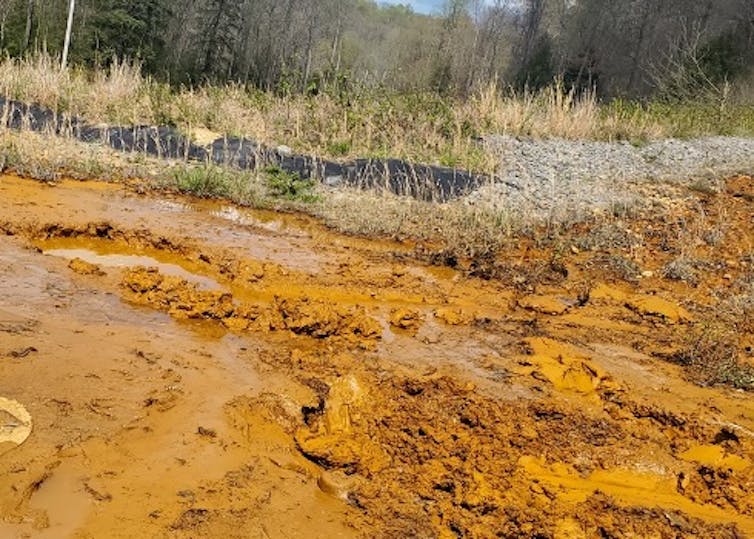
Acid mine waste turns rocks orange along Shamokin Creek in Pennsylvania.
Jake C/Wikimedia Commons, CC BY-SA

Across Appalachia, rust-colored water seeps from abandoned coal mines, staining rocks orange and coating stream beds with metals. These acidic discharges, known as acid mine drainage, are among the region’s most persistent environmental problems. They disrupt aquatic life, corrode pipes and can contaminate drinking water for decades.

However, hidden in that orange drainage are valuable metals known as rare earth elements that are vital for many technologies the U.S. relies on, including smartphones, wind turbines and military jets. In fact, studies have found that the concentrations of rare earths in acid mine waste can be comparable to the amount in ores mined to extract rare earths.

Scientists estimate that more than 13,700 miles (22,000 kilometers) of U.S. streams, predominantly in Pennsylvania and West Virginia, are contaminated with acid mine discharge.

A closer look at acid mine drainage from abandoned mines in Pennsylvania. Pennsylvania Fish and Boat Commission.

We and our colleagues at West Virginia University have been working on ways to turn the acid waste in those bright orange creeks into a reliable domestic source for rare earths while also cleaning the water.

Experiments show extraction can work. If states can also sort out who owns that mine waste, the environmental cost of mining might help power a clean energy future.

Rare earths face a supply chain risk

Rare earth elements are a group of 17 metals, also classified as critical minerals, that are considered vital to the nation’s economy or security.

Despite their name, rare earth elements are not all that rare. They occur in many places around the planet, but in small quantities mixed with other minerals, which makes them costly and complex to separate and refine.

A mine and buildings with mountains in the background.
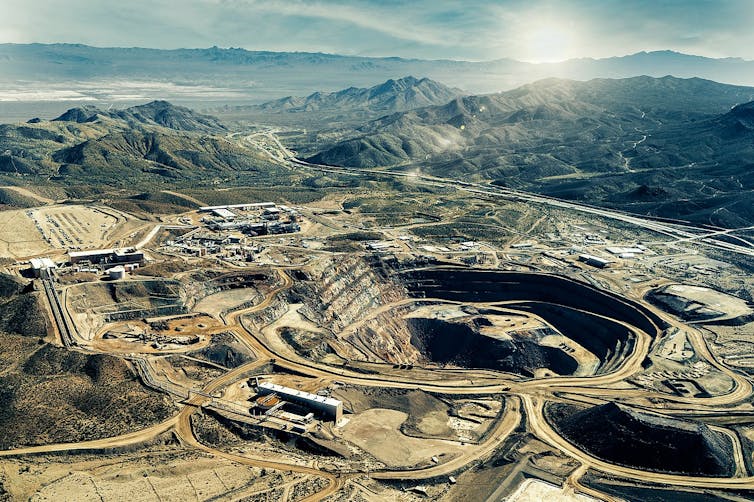
MP Materials’ Mountain Pass Rare Earth Mine and Processing Facility, in California near the Nevada border, is one of the few rare earth mines in the U.S.
Tmy350/Wikimedia Commons, CC BY-SA

China controls about 70% of global rare earth production and nearly all refining capacity. This near monopoly gives the Chinese government the power to influence prices, export policies and access to rare earth elements. China has used that power in trade disputes as recently as 2025.

The United States, which currently imports about 80% of the rare earth elements it uses, sees China’s control over these critical minerals as a risk and has made locating domestic sources a national priority.

The U.S. Geological Survey has been mapping locations for potential rare earth mining, shown in pink. But it takes years to explore a locations and then get a mine up and running.
USGS

Although the U.S. Geological Survey has been mapping potential locations for extracting rare earth elements, getting from exploration to production takes years. That’s why unconventional sources, like extracting rare earth elements from acid mine waste, are drawing interest.

Turning a mine waste problem into a solution

Acid mine drainage forms when sulfide minerals, such as pyrite, are exposed to air during mining. This creates sulfuric acid, which then dissolves heavy metals such as copper, lead and mercury from surrounding rock. The metals end up in groundwater and creeks, where iron in the mix gives the water an orange color.

Expensive treatment systems can neutralize the acid, with the dissolved metals settling into an orange sludge in treatment ponds.

For decades, that sludge was treated as hazardous waste and hauled to landfills. But scientists at West Virginia University and the National Energy Technology Laboratory have found that it contains concentrations of rare earth elements comparable to those found in mined ores. These elements are also easier to extract from acid mine waste because the acidic water has already released them from the surrounding rock.

Metals flowing from acid mine waste make a creek look orange.
Acid mine drainage flowing into Decker’s Creek in Morgantown, West Virginia, in 2024.
Helene Nguemgaing

Experiments have shown how the metals can be extracted: Researchers collected sludge, separated out rare earth elements using water-safe chemistry, and then returned the cleaner water to nearby streams.

It is like mining without digging, turning something harmful into a useful resource. If scaled up, this process could lower cleanup costs, create local jobs and strengthen America’s supply of materials needed for renewable energy and high-tech manufacturing.

But there’s a problem: Who owns the recovered minerals?

The ownership question

Traditional mining law covers minerals underground, not those extracted from water naturally running off abandoned mine sites.

Nonprofit watershed groups that treat mine waste to clean up the water often receive public funding meant solely for environmental cleanup. If these groups start selling recovered rare earth elements, they could generate revenue for more stream cleanup projects, but they might also risk violating grant terms or nonprofit rules.

To better understand the policy challenges, we surveyed mine water treatment operators across Pennsylvania and West Virginia. The majority of treatment systems were under landowner agreements in which the operators had no permanent property rights. Most operators said “ownership uncertainty” was one of the biggest barriers to investment in the recovery of rare earth elements, projects that can cost millions of dollars.

Not surprisingly, water treatment operators who owned the land where treatment was taking place were much more likely to be interested in rare earth element extraction.

A map shows many acid mine drainage sites, largely in the column from the southwest to the northeast.
Map of acid mine drainage sites in West Virginia.
Created by Helene Nguemgaing, based on data from West Virginia Department of Environmental Protection, West Virginia Office of GIS Coordination, and U.S. Geological Survey

West Virginia took steps in 2022 to boost rare earth recovery, innovation and cleanup of acid mine drainage. A new law gives ownership of recovered rare earth elements to whoever extracts them. So far, the law has not been applied to large-scale projects.

Across the border, Pennsylvania’s Environmental Good Samaritan Act protects volunteers who treat mine water from liability but says nothing about ownership.

A map shows many acid mine drainage sites, particularly in the western part of the state.
Map of acid mine drainage sites in Pennsylvania.
Created by Helene Nguemgaing, based on data from Pennsylvania Spatial Data Access

This difference matters. Clear rules like West Virginia’s provide greater certainty, while the lack of guidance in Pennsylvania can leave companies and nonprofits hesitant about undertaking expensive recovery projects. Among the treatment operators we surveyed, interest in rare earth element extraction was twice as high in West Virginia than in Pennsylvania.

The economics of waste to value

Recovering rare earth elements from mine water won’t replace conventional mining. The quantities available at drainage sites are far smaller than those produced by large mines, even though the concentration can be just as high, and the technology to extract them from mine waste is still developing.

Still, the use of mine waste offers a promising way to supplement the supply of rare earth elements with a domestic source and help offset environmental costs while cleaning up polluted streams.

Early studies suggest that recovering rare earth elements using technologies being developed today could be profitable, particularly when the projects also recover additional critical materials, such as cobalt and manganese, which are used in industrial processes and batteries. Extraction methods are improving, too, making the process safer, cleaner and cheaper.

Government incentives, research funding and public-private partnerships could speed this progress, much as subsidies support fossil fuel extraction and have helped solar and wind power scale up in providing electricity.

Treating acid mine drainage and extracting its valuable rare earth elements offers a way to transform pollution into prosperity. Creating policies that clarify ownership, investing in research and supporting responsible recovery could ensure that Appalachian communities benefit from this new chapter, one in which cleanup and clean energy advance together.

The Conversation

The authors do not work for, consult, own shares in or receive funding from any company or organization that would benefit from this article, and have disclosed no relevant affiliations beyond their academic appointment.

ref. America’s next big critical minerals source could be coal mine pollution – if we can agree on who owns it – https://theconversation.com/americas-next-big-critical-minerals-source-could-be-coal-mine-pollution-if-we-can-agree-on-who-owns-it-272029

Health and competence are shaping Trump’s presidency. What about his predecessors?

Source: The Conversation – Canada – By Ronald W. Pruessen, Emeritus Professor of History, University of Toronto

One year into U.S. President Donald Trump’s second term, questions about his health and competence are as pervasive as the gilt sprawling through the Oval Office.

These questions grew even louder following his rambling speech this week at Davos, where he repeatedly referred to Greenland as Iceland, falsely claimed the United States gave the island back to Denmark during the Second World War and boasted that only recently, NATO leaders had been lauding his leadership (“They called me ‘daddy,’ right?”).


Read more:
Trump’s annexation of Greenland seemed imminent. Now it’s on much shakier ground.


Do swollen ankles and whopping hand bruises signal other serious problems? Do other Davos-like distortions and ramblings — plus a tendency to fall asleep during meetings — reveal mental decline even more startling than Joe Biden’s in the final couple of years of his presidency?

This is not the first time in White House history that American citizens have had concerns about the health of their president — nor the first time that historians like me have raised questions.

The experiences of Trump’s predecessors remind us of the dangers inherent in the inevitable human frailty of the very powerful.

Presidents with physical health issues

Frailty can entail crises in physical health like William Henry Harrison’s 1841 death from pneumonia 32 days after his inauguration or Warren G. Harding’s heart attack and death in 1923.

Frailty can also involve weaknesses in brain function, which impact the capacity for analysis and problem-solving.

Bodily trauma can have obvious effects on presidential competence. Sometimes it’s a temporary impact, as with Dwight D. Eisenhower’s 1955 heart attack and recovery. But sometimes it’s permanent: Woodrow Wilson never recovered his capacities after an October 1919 stroke, with White House leadership languishing for 18 months under his wife’s gatekeeping until his death.

In other cases, the effect of physical ailments on competence was less clear — and therefore debatable. Franklin D. Roosevelt’s heart problems during the Second World War grew serious enough to contribute to his April 1945 death. Did they also compromise his mental capacities during the controversial Yalta Conference?


Read more:
By VE Day in 1945, Stalin had got what he wanted in Poland – now Putin may get what he wants in Ukraine


Did John F. Kennedy’s undisclosed Addison’s disease and medication regimes affect his ability to navigate major challenges like the Cuban Missile Crisis or Vietnam?

Mental health concerns

There have also been debates about the possible competence consequences of the behavioural tendencies and mental health conditions of several American presidents:

• Did Abraham Lincoln’s bouts of deep depression affect leadership capacities during multiple Civil War crises, including the Union defeat at Chancellorsville in May 1863 or during cabinet conflicts?

• Did Theodore Roosevelt’s impulsivity help shape what even his secretary of state once privately called the “rape” of Colombia in order to build the Panama Canal? (Harvard psychologist and philosopher William James said Roosevelt was “still mentally in the Sturm und Drang period of early adolescence”).

• Did Richard Nixon’s periodically high stress levels and alcohol consumption influence his decision-making on the Cambodian incursion of 1970 or the Watergate crisis?


Read more:
Supreme Court’s ruling in Trump v. United States would have given Nixon immunity for Watergate crimes — but 50 years ago he needed a presidential pardon to avoid prison


Questions and concerns about Trump’s physical and mental health, then, aren’t unique — even if the causes for concern are far more numerous than they were for previous presidents.

The impact of physical health on competence seems the less urgent of worrisome issues. While the Trump presidency as a whole has been notoriously prone to dishonesty, exaggeration and avoidance, the current medical team seems to be offering reasonable transparency.

Tests have been identified — for example, an October 2025 CT scan to assess potential heart issues — and relatively non-alarming diagnoses have been offered (“perfectly normal” CT scan results; common “chronic venous insufficiency” is responsible for swollen ankles).

More troubling is Trump’s mental health — both his full cognitive capacities and his psychological profile.

Cognitive issues?

In 2018 and 2025, Trump was given the Montreal Cognitive Assessment (MoCA) a screening tool for possible dementia. Despite the president’s claim to having “aced” the test, his score has not been revealed.

Numbers matter here. Out of a maximum 30 points, scores below 25 suggest mild to severe cognitive issues.

Of equal importance, the MoCA provides no insight into markers of mental competence, like reasoning and problem-solving. Well-established test batteries cover such ground (the Wechsler Adult Intelligence Scale is widely used), but Trump has not likely worked through any. (Neither, to be sure, have any predecessors — though none have raised the concerns so evident in 2026.)

Unofficial diagnoses of personality characteristics also fuel debate about Trump’s competence and mental health. The scale of the president’s ego is a prime example of concern.

Psychological issues?

On one hand, in the absence of intensive in-person assessment, psychiatrists are understandably reluctant to apply the label of “narcissistic personality disorder” (NPD) as defined by the American Psychiatric Association’s Diagnostic and Statistical Manual of Mental Disorders (DSM). On the other hand, many observers are also understandably struck by how Trump’s behaviour matches the DSM’s checklist of symptoms for the disorder.

The president clearly displays the grandiose sense of self-importance seen as a primary marker. Trump’s “I alone” and “I could shoot someone on Fifth Avenue” boasts of earlier years have grown exponentially by 2025-26. He’s depicted himself as pope or “King Trump” bombing protesters.

More serious are his endless and false claims that he won the 2020 presidential election, that he has the right to torch constitutional norms like “due process” that are enabling ICE abuses in Minneapolis and elsewhere, and that he can disregard the need for congressional approval on policies like reducing cancer research and other health programs.

Trump’s declaration that only “my morality” will determine his defiance of international laws and standards (as in threats to Greenland and Canada and his actual invasion of Venezuela) are also deeply troubling, especially given serious questions about that morality in terms of the Jeffrey Epstein files.

Psychiatrists also associate NPD with a sense of open-ended entitlement. Comic examples emerge: rebranding the (now) “Donald J. Trump and John F. Kennedy Center,” his lack of embarrassment in relishing the absurd FIFA Peace Prize or María Corina Machado’s surrender of her Nobel Peace Prize.

Brazenness

Trump’s willingness to trample upon rights within the U.S. and his apparent eagerness to disrupt and dismantle the building blocks of the post-Second World War international order are also possible signs of psychological problems.


Read more:
Venezuela attack, Greenland threats and Gaza assault mark the collapse of international legal order


He is equally brazen in fostering the wealth of his family and friends: for example, accepting emoluments like multi-million dollar donations for a White House ballroom that will surely be given Trump branding (to compete with the Lincoln Bedroom?) and using Oval Office prestige to turbo-charge massive real estate and financial ventures.

The Trump family’s World Liberty Financial cryptocurrency enterprise “earned” more than $1 billion in 2025, after all.

Against the backdrop of the looming mid-term elections, Trump’s ever-compounding ego and appetites remain of burning concern — along with his overall physical health and mental competence. Other presidents faced similar questions even without the current storm of scandals and extremes.

Will Trump relish the distinction of leaving his predecessors in the dust on this front too?

The Conversation

In the past, Ronald W. Pruessen has received funding from the Social Sciences and Humanities Research Council of Canada.

ref. Health and competence are shaping Trump’s presidency. What about his predecessors? – https://theconversation.com/health-and-competence-are-shaping-trumps-presidency-what-about-his-predecessors-273880