Approximately 34% of U.S. fourth grade students without disabilities and 72% of students with disabilities scored below basic reading levels in 2024. Anna Maslennikova/iStock/Getty Images Plus
Recently, I worked with a group of elementary teachers in Iowa to select new reading textbooks and software. They wanted new materials to improve their district’s stagnant reading scores.
After several days of reviewing materials from a state-approved list, one of the teachers asked me, “Will any of these help my students learn to read?”
I said, “I think so, but I don’t know.”
The teacher looked disappointed. But my answer reflects a hard truth about what reading scholars like me understand about the best ways to teach people to read and boost their literacy. Although research suggests that elementary teachers should focus on helping students learn the sounds of speech, phonics, reading fluency, vocabulary and reading comprehension strategies, there is little evidence on how well these skills are packaged into the textbooks used in classrooms.
I am a professor of special education at the University of Iowa and the former director of the Iowa Reading Research Center.
I help schools across the country adopt new textbooks and software to improve their students’ reading and writing. Currently, I’m working with colleagues on a review of how elementary school teachers use new reading textbooks to improve their students’ literacy skills.
There is a crowded marketplace of reading textbooks and software for schools to purchase, and it is often difficult to determine which one is better than the others. As a result, schools may end up purchasing new, expensive materials that do little to improve reading skills.
Many elementary school students, including those with reading disabilities such as dyslexia, struggle to learn to read.
On the 2024 National Assessment of Educational Progress, a broad measure of reading development given to fourth grade students in every state, approximately 34% of students without disabilities and 72% of students with disabilities scored below basic levels. This means they displayed difficulty with multiple foundational reading skills and were reading below grade level.
The fact that many young students struggle to read at grade level is not a new problem. For the past 30 years, reading performance across the U.S. has remained largely unchanged.
Since 1992, the average NAEP reading score for fourth graders has varied by only a few points. In fact, NAEP scores for most students in fourth grade, the only elementary school grade measured by the NAEP, have declined since the COVID-19 pandemic.
Since 2019, a total of 42 states, including Californiaand Tennessee, have passed legislation intended to help students read better by training teachers to use evidence-based reading instruction. This means schools across the country are adopting new approaches to teach reading and using new textbooks.
For example, Louisiana in 2021 and Iowa in 2024 passed legislation that provided teachers with additional training, in addition to giving them state-approved reading textbooks that align with key areas of reading development, such as phonics and reading comprehension strategies.
As a result of these policies, reading scores are improving in some states. However, a substantial number of students across the country are still reading below grade level.
For example, Louisiana had a significant increase in fourth grade reading scores on the 2024 NAEP, rising from 55% of fourth grade students scoring basic or above in 2019 to 60% in 2024. However, 40% of fourth grade students still scored below basic, meaning they were reading below grade level.
Iowa had minimal increases in the reading proficiency of its students in 2024 statewide assessments, rising from 73% to 74% of sixth graders reading proficiently. Most elementary grades’ reading levels stayed the same from the prior year, with approximately 65% to 69% of students reading proficiently.
Despite this large number of students reading at grade level, nearly 70% of students with disabilities were reading below grade level in 2024.
To improve the scores of those still reading below grade level, new research that I and colleagues are doing is looking at the quality of reading textbooks promoted on state-approved lists.
New textbooks aren’t necessarily better
Reading textbooks play a pivotal role in how reading is taught. These textbooks have distinct daily lessons in which specific reading skills and content are taught, such as specific letter sounds or words. Textbooks not only include paper-based materials for students but also online apps and websites, as well as lesson plans for teachers.
There are a variety of textbook publishers and textbooks, and each textbook differs on what reading skills are taught and how often they are taught. For example, a recent review found textbooks differ drastically on the amount of time given for students to learn the sounds of speech. This time difference matters, as students’ reading performance suffered when too little or too much time was spent on learning the sounds of speech.
More than 36 states publish a list of approved reading textbooks, often referred to as high-quality instructional materials. States differ on which textbooks they consider to be of high quality, but they typically rely on the opinion of reading experts. Two popular nonprofit organizations that provide detailed reports on how reading experts rate textbooks include EdReports and The Reading League.
Despite using expert opinion to determine quality, ineffective textbooks still make it onto state-approved lists. A 2025 study by the Tennessee Reading Research Center found mixed effects for teachers who used state-approved textbooks to teach reading. In the study, students with dyslexia improved their reading on some measures, but overall their reading remained significantly lower than their peers.
Once a state promotes a reading textbook as high quality, it is likely to remain a staple in schools. Most states do not have systems in place to monitor which reading textbooks are used in schools and their potential effects on student reading performance.
Once a school adopts a textbook, it is likely in place for years. Adopting a new one is a time-consuming and expensive process. It can take several years to train staff and several hundred thousand dollars to pay for materials and training.
I think that we ultimately need scholars who research how kids learn to read to closely collaborate with schools as they use new reading textbooks, and then measure whether student reading performance improves. This will help them determine which reading textbooks improve student reading scores. The results of this research can then be shared with other schools across the U.S. that are considering new textbooks. Schools could then make informed decisions on which textbooks to purchase.
Without this kind of research, states may promote ineffective textbooks and leave schools with a confusing choice on which textbooks to use.
Shawn Datchuk consults to several curriculum companies, including Learning Without Tears, Heggerty, and Dyslexico. He receives funding from the Department of Education, Office of Elementary and Secondary Education.
Source: The Conversation – in French – By Xavier Bonnet, Directeur de Recherche CNRS à l’UMR 7372 en biologie et écologie des reptiles, Centre d’Etudes Biologiques de Chizé; La Rochelle Université
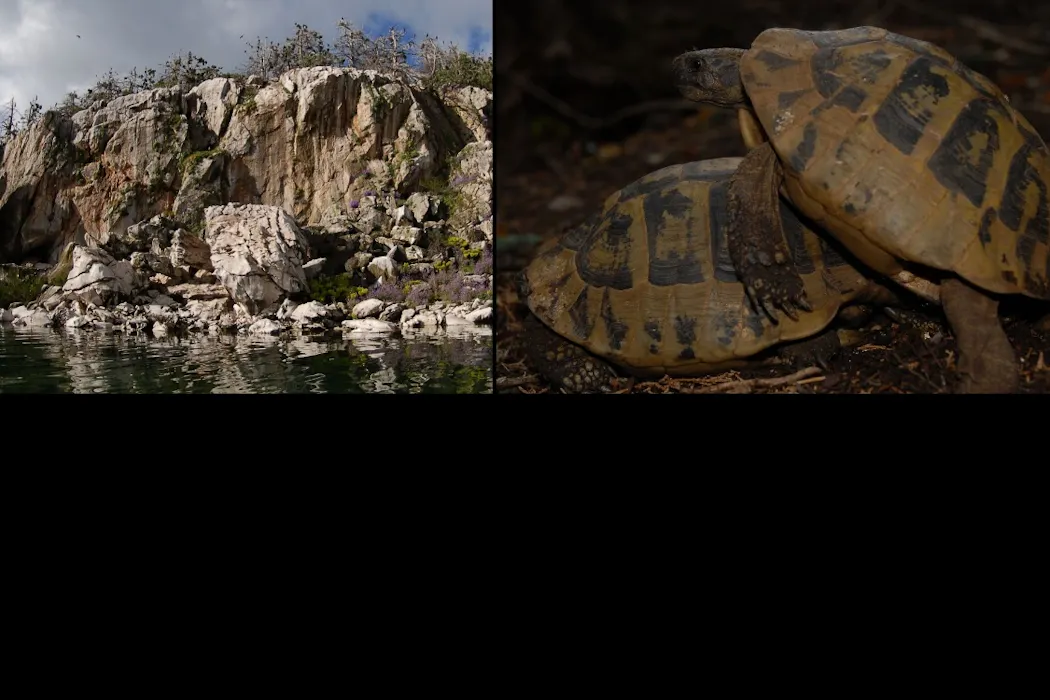
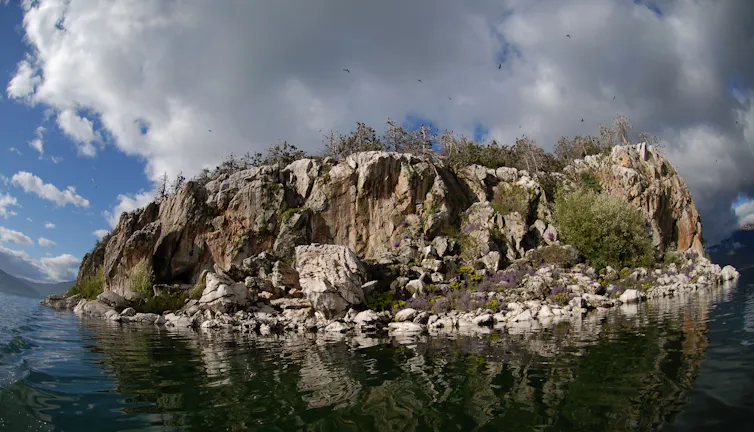
L’île de Golem Grad, en Macédoine du Nord, grouille de tortues d’Hermann. Pourtant, les prévisions estiment que la dernière femelle de l’île pourrait s’éteindre en 2083. Fourni par l’auteur
Sur l’île protégée de Golem Grad, en Macédoine du Nord, les tortues d’Hermann sont en train de s’autodétruire. En cause : la brutalité des mâles, qui épuisent les femelles et les poussent régulièrement du haut des falaises. De ce fait, on compte aujourd’hui cent mâles pour une seule femelle capable de pondre. Cette situation est l’unique exemple de suicide démographique à l’état sauvage connu à ce jour.
Les populations animales de grande taille qui vivent dans des environnements favorables, stables et protégés n’ont aucune raison de s’éteindre. À moins qu’une catastrophe, telle qu’un incendie dévastateur, la destruction de leur habitat ou une surexploitation, n’anéantisse tous les individus ou affaiblisse la population, la rendant vulnérable aux maladies et à d’autres perturbations et aléas.
À l’abri des falaises escarpées qui bordent l’île de Golem Grad, sur le lac Prespa, en Macédoine du Nord, les tortues d’Hermann orientales (Testudo hermanni boettgeri) grouillent sur le plateau boisé. Elles se prélassent au soleil le matin, pâturent dans les prairies et se reposent, se courtisent ou s’accouplent en poussant de petits cris aigus. De prime abord, rien ne semble mettre en danger cette population.
Golem Grad, île de 18 hectares, abrite un lac perché à 850 mètres d’altitude et, sur son plateau, une forêt de genévriers grecs qui atteignent facilement 10 mètres de haut ainsi que de nombreux reptiles, serpents, lézards et oiseaux. Les falaises abruptes sont particulièrement dangereuses pour les tortues femelles lorsqu’elles sont harcelées par les comportements sexuels violents des mâles. Fourni par l’auteur
Comme pour d’autres espèces à longue durée de vie, un taux de survie élevé des adultes est essentiel au maintien des populations. Sur Golem Grad, les adultes n’ont pas de prédateurs, car ni les sangliers, les chiens, les rats ou les humains ne vivent sur cette île strictement protégée. Le climat méditerranéen d’altitude est également clément pour les reptiles.
Tous ces facteurs expliquent probablement l’extraordinaire densité de population d’environ 50 individus par hectare, la plus élevée connue pour les tortues. C’est d’ailleurs la facilité d’observation des tortues qui est à l’origine du suivi de terrain mis en place depuis 2008, fruit d’une collaboration scientifique fructueuse entre la Macédoine du Nord, la Serbie et la France. Ce programme de suivi à long terme a reçu le label SEE-Life du CNRS en 2023.
Mais les apparences sont trompeuses : cette population est dans un état critique. Les nombreuses données démographiques, comportementales, physiologiques et expérimentales recueillies pendant près de vingt ans montrent que, bien que très active sur le plan sexuel et reproducteur, cette population est en train de se suicider !
Le suicide démographique
Le suicide démographique est un processus théorique, étrange et contre-intuitif. Les conditions de son existence sont particulières. Pour une espèce donnée, il faut imaginer une population à forte densité où les accouplements violents menacent la survie des femelles. Cela conduirait progressivement à un déséquilibre du sex-ratio (proportion de mâles et de femelles dans une population), un excès de mâles, aggravant la pression sur des femelles toujours moins nombreuses et toujours plus harcelées, ce qui finirait par déclencher un cercle vicieux menant à la disparition des femelles et, à terme, à l’extinction.
Les systèmes d’accouplement coercitifs et violents sont courants dans la nature. Généralement, les mâles harcèlent les femelles jusqu’à obtenir l’accouplement, les blessant parfois. Dans certains cas, ces comportements peuvent entraîner la mort des femelles, comme chez les éléphants de mer, les moutons sauvages, les écureuils gris, les loutres, les cerfs, les grenouilles rousses, les drosophiles, les humains… Toutefois, de telles issues fatales ne profitent pas aux mâles qui n’auront pas de descendance si la femelle meurt lors de l’accouplement. Ces comportements sont ainsi mal adaptatifs et restent marginaux.
Différents mécanismes de régulation bloquent également l’émergence d’un cercle vicieux ou vortex d’extinction. Les femelles peuvent déployer un large éventail de stratégies d’évitement et de défense, telles que se cacher, rechercher la protection d’un mâle dominant ou former des alliances.
Par ailleurs, les mâles les plus violents produisent en général moins de descendants que ceux qui épargnent les femelles, leurs traits comportementaux ont donc moins de chance de persister au cours du temps. En outre, lorsqu’ils sont en surdensité, les mâles ont tendance à immigrer, ce qui relâche la pression sur les femelles. Ainsi, les conflits entre les sexes dans les systèmes d’accouplement coercitifs sont résolus par des équilibres efficaces, sans escalade.
Cependant, de rares expériences impliquant des animaux étudiés en captivité ont montré que les mâles peuvent avoir un fort impact négatif sur les populations lorsque le sex-ratio et la densité de population sont artificiellement biaisés et augmentés. Chez une crevette japonaise, l’excès de mâles réduit la fécondité des femelles tout comme les occasions de s’accoupler. Chez le lézard vivipare, les mâles en surnombre deviennent agressifs ce qui diminue la fécondité comme la survie des femelles.
Dans les conditions naturelles, la réalité écologique, comportementale et évolutive des populations est plus complexe : les femelles peuvent s’enfuir, par exemple, et il n’y a aucune raison pour que le sex-ratio et la densité de population atteignent des extrêmes.
Aucun suicide démographique n’avait jusque-là été observé dans la nature. Les tortues de Golem Grad, qui scient la branche sur laquelle elles se tiennent, apportent ainsi le premier exemple qui défie la règle : les mâles sont en train d’éliminer les femelles !
Qu’est-ce qui dérègle la population de Golem Grad ?
Quelques éléments sur les comportements sexuels et une comparaison avec une population témoin sont utiles pour comprendre ce qui se passe à Golem Grad.
Chez les tortues terrestres, le système d’accouplement est coercitif : les mâles poursuivent les femelles, les cognent, les mordent parfois jusqu’au sang et, en ce qui concerne les tortues d’Hermann orientales, les piquent au niveau du cloaque avec leur longue queue pointue jusqu’à ce qu’elles capitulent.
Pour arriver à monter sur la femelle, le mâle insiste longtemps en la poursuivant, lui mordant les pattes et la cognant, jusqu’à ce qu’elle capitule. Fourni par l’auteur
Comme les tortues d’Hermann abondent en Macédoine du Nord, nous avons donc pu étudier une autre population très dense située sur les bords du lac à 4 kilomètres de l’île. Génétiquement très proche de celle de Golem Grad, elle vit dans un environnement protégé et sans falaise. Les femelles sont grandes, lourdes (beaucoup pèsent entre 2,5 kg et 2,9 kg) et très fécondes comme le montrent les radiographies. Un peu plus nombreuses que les mâles, elles résistent efficacement à leurs assauts intermittents. Aucun problème démographique n’y a été détecté, les projections démographiques suggèrent un accroissement de la population.
Avec l’extrémité cornée de leur queue, les mâles utilisent piquent le cloaque des femelles et finissent régulièrement par les blesser (Golem Grad). Fourni par l’auteur
Mais à Golem Grad, la situation est bien différente. Sur le plateau, plus de 700 mâles adultes patrouillent à la recherche de la quarantaine de femelles adultes. Par ailleurs, si les conditions physiologiques et environnementales ne sont pas adéquates, une femelle tortue d’Hermann peut très bien ne pas pondre d’œufs après un accouplement. Si elles sont, par exemple, trop maigres et trop stressées, les femelles n’arrivent à accumuler de réserves dans les follicules ovariens et les œufs ne se développent pas.
Il y a donc en réalité plus de 100 mâles par femelle capable de pondre. Pourtant, l’étude des nouveau-nés et des juvéniles montre que le sex-ratio n’est pas biaisé à la naissance. Les mâles en surnombre agissent souvent en meute de trois à huit. Ils harcèlent les femelles à longueur de journée, les blessent et se couchent à côté d’elles le soir, prêts à recommencer le lendemain. Les femelles n’ont pas beaucoup de répit ni assez de temps pour s’alimenter. Elles sont maigres (très peu dépassent 1,6 kg, le maximum étant 1,75 kg) et produisent, quand elles le font, deux fois moins d’œufs que celles de la population témoin.
Ne pouvant fuir, elles sont régulièrement acculées sur le bord des falaises, les mâles insistants les poussent dans le vide. Un GPS avec un accéléromètre installé sur une femelle a ainsi enregistré sa chute de plus de 20 mètres,le 18 juillet 2023 ; elle est morte brisée en deux avec ses trois œufs.
Cette femelle vivait sur le plateau, elle a été victime d’une chute de plus 20 mètres. Elle a probablement été poussée par des mâles insistants. Les femelles de moins en moins nombreuses sont de plus en plus harcelées, ce qui met en place un cercle vicieux ou « suicide démographique » (terme à ne pas confondre avec les dérives complotistes portées par l’extrême droite). Fourni par l’auteur
Depuis le début de l’étude, nous identifions toutes les tortues retrouvées mortes sur le terrain où les carapaces se conservent longtemps. Parmi les femelles décédées, 22 % ont fait une chute mortelle, cette proportion est de 7 % chez les mâles.
Avec des collègues britanniques, nous avons également mis au point une horloge épigénétique, mesurant l’âge des individus grâce à une prise de sang. Les plus vieux mâles ont plus de 60 ans, la plus vieille femelle 35 ans. Ces résultats sont cohérents avec les analyses morphologiques, de croissance et démographiques. Le taux de survie est anormalement bas chez les femelles, et ce problème est causé par la brutalité des mâles.
Le vortex d’extinction
Au fil du temps, la baisse du nombre des femelles adultes et de leur fécondité freine le recrutement. Nous avons ainsi pu identifer sur le terrain 45 femelles adultes en 2009, puis 37 en 2010, 20 en 2024 et seulement 15 en 2025.
Or, il faut environ quinze ans à une femelle pour atteindre l’âge adulte. Frustrés par le manque de partenaires sexuels, les mâles s’accouplent donc avec d’autres mâles, des cadavres, des pierres et des femelles immatures. Ils impactent ainsi précocement leur survie et aggravent le problème démographique. Il est possible de modéliser le fonctionnement de la population en intégrant les paramètres ci-dessus. Il est aussi possible de faire des prédictions.
La dernière femelle pourrait mourir en 2083, les mâles persisteront des décennies, car ces tortues peuvent vivre plus de quatre-vingts ans, puis finiront par mourir à leur tour. Il s’agit d’une prédiction, peut-être que la population actuellement au bord de l’extinction va se redresser, même si nous ne voyons pas comment. Si le rythme de vie très lent des tortues nous a offert la chance d’observer un vortex d’extinction dans la nature, et donc de vérifier une théorie étrange, c’est surtout le suivi de terrain intensif qui nous a apporté les données et l’inspiration.
Xavier Bonnet a bénéficié du soutien de SEE-Life CNRS.
Source: The Conversation – UK – By Bamo Nouri, Honorary Research Fellow, Department of International Politics, City St George’s, University of London
Let’s begin with a simple question that rarely gets a straight answer: what would victory over Iran actually look like? In Washington and Jerusalem, the answers tend to sound definitive: eliminate Iran’s nuclear capability, break its regional power, perhaps even force political change at the top. It’s the language of decisive war, the kind with a clear endpoint.
But shift the perspective to Tehran, and the definition changes completely. Victory, for Iran, is survival. That asymmetry shapes the entire conflict. In wars like this, the side that needs less to claim success often has the advantage – and, right now, Iran needs far less.
There is no denying the military imbalance. The US and Israel can strike with extraordinary precision and reach. They have demonstrated that repeatedly – targeting infrastructure, leadership and strategic assets.
But tactical success has yet to translate into political outcome. Iran’s state hasn’t fractured. Its governing system remains intact, and its networks – military, regional, ideological – continue to function. Even its most sensitive capabilities, including nuclear expertise, remain resilient.
The deeper miscalculation lies in assuming Tehran is playing the same game as Washington. It isn’t. Iran is not trying to defeat the US or Israel outright. It is trying to outlast them, complicate their objectives and raise the cost of progress until it becomes unsustainable.
This logic is visible in how the conflict has unfolded. The battlefield extends beyond direct confrontation into shipping lanes, energy markets and regional alliances. Disruptions in the Strait of Hormuz are not incidental – they are pressure points with global consequences.
Iran’s strategy is not about dominance but entanglement. It doesn’t need battlefield superiority if it can draw its adversaries into a conflict that is too costly to resolve and too complex to conclude.
When wars stall, the instinct is to escalate: more bombing, strikes on energy infrastructure, even, in extremis, “boots on the ground”. The assumption is that more force will finally produce a different outcome.
But Iran is not a passive target. It has already shown a willingness to retaliate across the region, including against Saudi Arabia, the United Arab Emirates, Qatar, Kuwait, Bahrain, Oman, as well as targets in Jordan and Iraq. Strikes on Iran’s energy systems would not stay contained – they would invite retaliation against these same states, widening the conflict.
There is another constraint: American is estimated to have already used up around 45% to 50% of key missile stockpiles, including roughly 30% of its Tomahawk missile inventory. So the stark reality is that escalation is no longer just about willingness, but capacity — and in any wider war, the question may not be how far the US can go, but how much it has left.
The consequences would also extend beyond the battlefield. Iran’s response would be sustained attacks on neighbouring countries, on their power, fuel, and water systems, rendering parts of the region increasingly unlivable as temperatures soar over summer. Huge numbers of people would be forced to leave, risking another large-scale displacement crisis.
Even then, the core reality remains unchanged. Iran is built for endurance – any ground campaign would likely become prolonged and attritional. More importantly, escalation misses the point – the problem is not a lack of force, but the absence of a political objective that force can realistically achieve.
Compounding the problem is a quieter but equally significant reality; the US and Israel do not appear to be fully aligned in their end goals. Israel’s posture suggests a pursuit of maximal outcomes – deep, possibly irreversible weakening of Iran’s system, if not outright regime collapse. The US, by contrast, appears to oscillate between coercion, containment and negotiation.
These are not just differences in emphasis – they are differences in strategy. Wars fought without a shared definition of victory rarely produce victory at all. What they produce instead is sustained military activity without strategic convergence – constant movement, but little progress toward resolution.
No conclusion in sight
At some point, it becomes necessary to describe things as they are. This is no longer a war moving toward a decisive conclusion. It is a conflict settling into a pattern – strikes followed by pauses, ceasefires that hold just long enough to prevent collapse, and negotiations that advance just enough to avoid failure.
And those ceasefires tell their own story. Their repeated extension reflects not progress, but constraint. Washington, under Donald Trump, has strong incentives to keep talks alive, avoid deeper escalation, and end the war sooner rather than later. The alternatives – regional war or global economic shock – are far harder to manage. That dynamic gives Tehran leverage. It does not need to concede quickly when delay itself strengthens its position.
Time, in this sense, is not neutral. The longer the conflict drags on, the more it intersects with the most sensitive pressure points of the global economy. Energy markets are stressed, with supply routes under strain and reserves tightening. Industries that depend on stable fuel flows – aviation, shipping, manufacturing – are increasingly exposed.
What began as a regional conflict has morphed into systemic risk. Even limited disruption can ripple outward, affecting prices, supply chains and political stability. The longer the stalemate persists, the greater the cumulative strain and the closer it edges toward a broader economic shock.
Who really holds the advantage?
In purely military terms, the answer is obvious: the US and Israel retain overwhelming superiority. But wars are not decided by capability alone. They are decided by how goals, costs, and time interact.
In that equation, Iran’s position is stronger than it appears. It has set a lower threshold for success, demonstrated a higher tolerance for prolonged pressure, and shown an ability to impose costs beyond the battlefield. Most importantly, it does not need to win. It only needs to prevent its adversaries from achieving their aims. So far, it has done exactly that.
Which brings us back to the original question: can the US and Israel win this war? If winning means forcing Iran into submission or fundamentally reshaping its strategic posture, the answer is increasingly difficult to avoid – they cannot.
What they can do is continue. Manage the conflict, contain its spread and shape its margins. But that is not victory. It is endurance.
The real danger is not defeat, but the persistence of a belief that just a little more pressure, a little more escalation, or a little more time will produce a different result. If that belief is wrong, then this is not a war on the verge of being won. It is a war that cannot be won at all. A forever war.
The authors do not work for, consult, own shares in or receive funding from any company or organisation that would benefit from this article, and have disclosed no relevant affiliations beyond their academic appointment.
We’re delighted to announce that The Conversation Prize for writers is back for another year.
This annual competition invites academics and researchers to bring their work to life for a wider audience. It’s an opportunity to turn your research, expertise and insights into a compelling longform story that also has the potential to be developed into a bestselling nonfiction book. Whether you’re exploring new findings, re-examining established ideas, or sharing unique perspectives from your field, the prize celebrates clear, engaging writing that connects specialist knowledge with the world beyond academia.
In addition to a £1,000 prize for the winning article and online publication with The Conversation Insights, our partners Faber and The Curtis Brown Group will again be offering mentorship to develop your book from a book editor and a literary agent.
The Conversation Prize is an amazing opportunity to raise the profile of your research and access new audiences for your work. The support from the lovely people at Curtis Brown and Faber was amazing – they gave me fantastic practical advice on how to develop my work. If you’ve got an interesting idea, a new angle or a piece of research that deserves to be more widely known, this is the competition for you.
Yvonne Reddick, reader in English literature and creative writing at the University of Central Lancashire, and a runner up in the competition for Mountains of Fire – her moving account of what hillwalking with her father taught her about the origins of oil exploration – said:
Entering the writers’ prize was life-changing. I met my agents, Sabhbh Curran and Elliot Prior, and they have helped me to shape the project I know I was born to write. Sharing our research with a wide audience is increasingly important given today’s focus on impact, engagement and knowledge exchange – but the prize also brings the utter joy of sharing your work in The Conversation and beyond.
Nicholas Carter, lecturer in physical geography at the University of Oxford, and a runner up in the competition for his article on how lichens are bringing stones to life, said:
The writers’ prize proved pivotal in securing me both wonderful representation and a book deal for ‘Living Stone’ with Penguin Viking, while opening doors to other work opportunities along the way.
Submissions will be in the form of a 2,000-word article written for a non-academic audience and in the following subject areas: History, Arts + Culture, Business + Economy, Education, Environment, Health, Politics + Society, Science + Technology or World. As part of your submission, we’d also like you to include an idea for a trade nonfiction book on your article subject. Please pitch your proposed book idea in 350 words or less and explain why you’re the right person to write this book.
The competition will close on Sunday 5th July at 11.59pm BST.
To enter, please email your 2,000-word article, plus the following information, to uk-prize@theconversation.com:
Name
Institution
Country
Email
Telephone no.
Your book idea [max 350 words]
Please provide a brief summary of a trade nonfiction book idea based on your article. Tell us why this topic deserves a deeper dive and why it would appeal to an audience of non-academic readers.
About you [max 100 words]
Tell us a little about you – your current role, your area of expertise and any relevant research to your book idea. Why would you be the right author for this book?
Please disclose any conflicts of interest that should be mentioned in relation to your article or book idea.
[Pdf] – please read carefully.
You can find out more about what we’re looking for [Pdf].
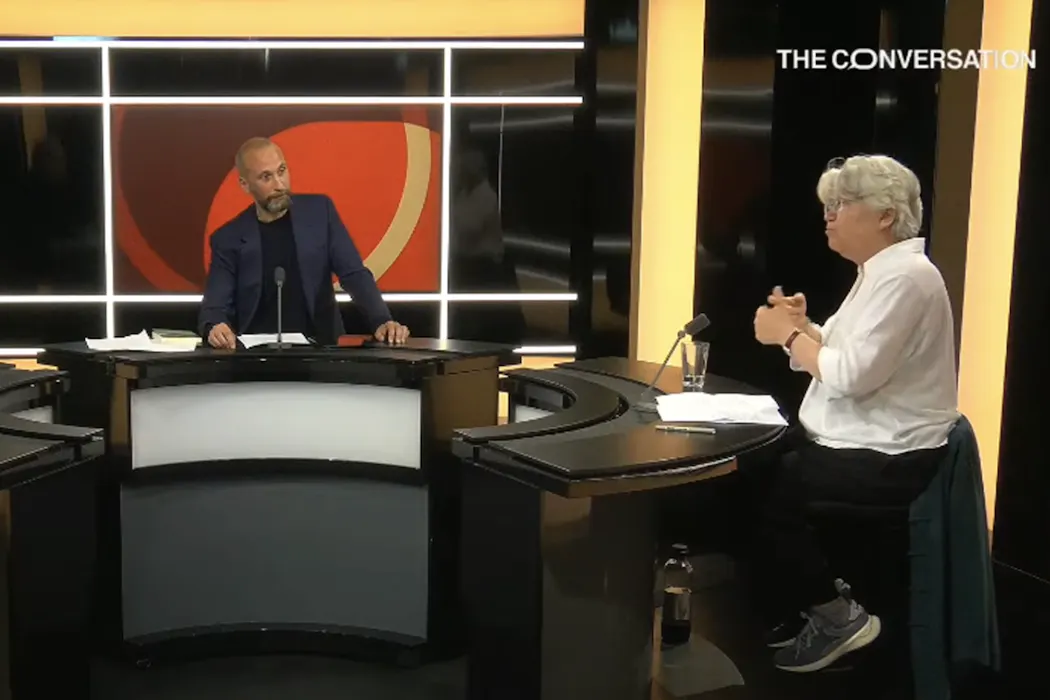
La Grande Conversation recevait Dominique Méda, sociologue du travail et professeur à l’Université Paris Dauphine.
Pourquoi travaillons-nous ? Cette Grande Conversation (l’émission mensuelle de The Conversation et CanalChat en partenariat avec l’Académie des sciences) avec la sociologue Dominique Méda, professeure à l’Université Paris Dauphine, revient sur les multiples fonctions du travail : source de revenu, mais aussi d’identité, de reconnaissance sociale, de structuration du temps et de sens.
Pourquoi le travail continue-t-il d’occuper une place aussi centrale dans nos vies, alors même qu’il est souvent associé à la fatigue, à la frustration ou à la souffrance ? C’est le paradoxe qu’explore Dominique Méda dans son livre _Le travail. Pourquoi travaillons-nous ?_, en revenant sur ce que le travail nous apporte au-delà du revenu : une identité, une reconnaissance, une place dans la société, mais aussi une manière de structurer le temps et de donner sens à l’existence.
Mais de quel travail parle-t-on exactement ? Pourquoi certaines activités choisies librement nous permettent-elles de nous épanouir, quand des tâches proches deviennent pénibles dès lors qu’elles s’exercent sous contrainte ? Pourquoi les métiers les plus utiles restent-ils souvent les moins reconnus ? Et comment repenser le travail à l’heure où les jeunes s’en détournent, où les conditions se dégradent et où les frontières entre activité, emploi, engagement et soin deviennent plus floues ?
On April 15, United States Secretary of Defense Pete Hegseth led a prayer session at the Pentagon. But instead of quoting from any recognised canon of sacred scripture, Hegseth’s prayer sounded unmistakably like Samuel L. Jackson’s “Jules”, a hitman character from Quentin Tarantino’s iconic 1994 film Pulp Fiction.
In his interrogation of white-collar criminal Brett, Jules delivers a heavily embellished monologue that draws from, and expands on, Ezekiel 25:17. The scene climaxes, in typical Tarantino style, with the brutal murder of Brett and his colleagues.
Hegseth’s version, which he said was recited by the Sandy 1 Combat Search and Rescue (CSAR) mission in Iran, deviates only slightly from Jackson’s monologue.
The biggest difference in this case is the symbolism. The target here is not a bunch of college kids with a briefcase they shouldn’t have, but the nation of Iran. Hegseth is the mobster and the American military are the hitmen on a violent but “divinely sanctioned” war.
The tone has changed, too. While Jackson’s monologue is highly dramatic, stylised, and imbued with more than just a little irony, Hegseth’s reframe renders it serious and devotional.
Leaving aside the cognitive dissonance of an avowedly “Christian” administration conflating Tarantino with scripture, this moment speaks to a rather unsettling relationship between Trump, pop culture and religion.
As president, he has continued to tap into pop culture dialogues. He uses the power of social media and AI to promote his brand and policies, while weighing in on the culture wars.
On May 4 of last year (Star Wars Day), Trump posted an image on X of himself as a muscular Jedi, via the official White House account. However, he seems unaware that by brandishing a red lightsaber he is actually representing himself as a Sith Lord, the epitome of evil in the Star Wars universe.
In October, he posted an AI-generated video of himself in Top Gun mode, pouring what appeared to be faeces on protesters attending a No Kings rally.
He also took advantage of the buzz surrounding the Catholic Church’s 2025 conclave, and the popular film of same name, by posting an AI image of himself as the Pope.
By using the shared texts, cultural energy and narratives of pop culture, Trump is able to slam his opponents, take advantage of a polarised political context, and whip up support from his base.
These moments allow his administration to shape public conversation and draw attention back to them, sometimes with the explicit disapproval of the content creators involved. Responding to Trump’s Star Wars post, Mark Hamill (the actor who played Luke Skywalker) said the post was: “proof this guy is full of Sith”.
Bigger than Jesus?
Trump’s supporters have historically viewed his engagement with popular culture as humorous, cheering on their hero in the White House. But detractors sense a darker side. Each of these moments symbolically elevates the Trump administration, often at the expense of others.
The May 4 post is a case in point. The target here is the “radical Left” and Trump is raised to the rank of Jedi master (or Sith Lord). In the Top Gun video, Trump demonstrates his disdain for citizens exercising their democratic right to protest.
What connects these examples is the hubris of the administration, centred around its seemingly charismatic leader. Trump’s engagement with contemporary culture has shifted from relatively harmless cameos to putting himself at the centre of a Manichaean battle of good versus evil. Using both pop culture and religious references, he frames himself as a divine figure, fighting a cosmic war for the soul of the universe.
The most recent (and most on-the-nose example) of Trump’s hubris came earlier this month. As part of his continuing war of words with Pope Leo XIV, he posted an AI photo depicting himself as Jesus.
Here, he elevates himself beyond the union of ecclesiastical and political power to the highest possible authority figure in Christianity.
In doing so, he parallels the Ancient Roman emperors who conceived of themselves as “sons of God” and demanded allegiance and worship from their subjects (often at the tip of a blade).
The emperor cult of the Roman Empire is still very much alive in Trump’s America.
In these entanglements of pop culture, religion and politics, the MAGA movement sends a clear message to anyone with a ear to listen: this is our Master Jedi, our Maverick, our Messiah, even, and he will respond with “great vengeance and furious anger” against his enemies.
Brent Keogh does not work for, consult, own shares in or receive funding from any company or organisation that would benefit from this article, and has disclosed no relevant affiliations beyond their academic appointment.
Source: The Conversation – Global Perspectives – By Joyce Siette, Associate Professor | Deputy Director, The MARCS Institute for Brain, Behaviour and Development, Western Sydney University
Over recent weeks, speculation has grown about US President Donald Trump’s erratic behaviour during the US-Israel war on Iran.
The claim of frontotemporal dementia in particular has stuck. This form of dementia can affect judgement, empathy, language skills and impulse control.
Trump’s critics say frontotemporal dementia explains his escalating threats, profanities and tendency to ramble.
But is frontotemporal dementia really the answer?
Diagnosing someone with this condition from afar is not only irresponsible – it’s impossible. It may also inadvertently give Trump an “out” for offensive but intentional behaviour, while increasing stigma for those who live with dementia.
What is frontotemporal dementia?
Frontotemporal dementia describes a group of neurodegenerative disorders that mostly affect the frontal and temporal lobes of the brain. These are regions involved in behaviour, personality, language and decision-making.
Unlike dementia due to Alzheimer’s disease, frontotemporal dementia rarely begins with memory loss. Instead, early symptoms involve changes in social conduct, emotional regulation or language abilities.
There are several variants. The most common is behavioural-variant, which presents as a gradual decline in how a person behaves, interacts with others and expresses their personality.
Frontotemporal dementia is rare. Each year, around two or three out of 100,000 people are diagnosed with frontotemporal dementia worldwide. At any time, roughly nine out of 100,000 people live with the condition.
How is it diagnosed?
Diagnosis is complex and cannot rely on observation alone.
To make a diagnosis, a multidisciplinary team of clinicians will examine the person’s personal and medical history. This includes information from family members, neurological examinations and formal cognitive testing to consider possible diagnoses.
Brain imaging, such as MRI or PET scans, are used to identify changes in the structure and function of the brain. In some cases, genetic testing may be used when family history suggests inherited risk.
A “possible” diagnosis requires someone to demonstrate at least three of six core features. These are:
disinhibition
apathy
loss of empathy
compulsive behaviour
hyperorality (excessive tendency to examine objects using the mouth)
loss of executive functions, the set of cognitive abilities that underpin our ability to plan and make decisions.
But that is only the beginning. To reach a “probable” diagnosis, there must be imaging evidence as well as clear changes in a person’s ability to function independently in daily activities.
A “definite” diagnosis can only be confirmed through genetic testing or brain changes linked to disease. This can only happen after death because it requires physically examining the brain itself.
Even with these criteria, frontotemporal dementia remains one of the most challenging diseases to diagnose accurately. Its symptoms often overlap with psychiatric disorders such as bipolar disorder and schizophrenia, and its presentation varies widely between people.
Diagnosing frontotemporal dementia – or any form of dementia – is a complex process. Any “diagnosis” made without meeting the person, or looking at clinical evidence, is just speculation.
But there are other dangers in blaming controversial actions on dementia, such as Trump’s recent threat to wipe out “a whole civilisation” if Iran did not comply with US demands.
First, attributing behaviour we don’t like to dementia reduces accountability for intentional actions.
We know frontotemporal dementia affects brain regions that control impulse and social understanding. It does not explain political extremism, strategic decision-making or ideological conviction – especially where it has been longstanding.
Second, it further stigmatises those who live with the condition, reinforcing the idea that people with dementia are erratic, dangerous or morally compromised.
This stigma remains a major barrier to effective dementia care and prevention. Misconceptions can delay diagnosis, discourage families from seeking help, and make people with dementia feel more isolated.
In frontotemporal dementia, where changes in personality are already misunderstood, the risk of mischaracterisation is particularly acute.
The ethics of restraint
Humans are driven to make sense of troubling events. This negativity bias that has served us well in evolution. But it creates an asymmetry worth noting.
When leaders behave admirably, their actions are rarely attributed to neurological health. But when behaviour is troubling, the impulse to medicalise it can be strong. This selective framing turns diagnosis into a rhetorical tool rather than a clinical question.
The health of political leaders is a legitimate public concern. But there is a difference between evidence-based reporting (grounded in disclosed medical information) and speculative diagnosis based on observation from a distance.
Medical professionals have long recognised this boundary. Ethical guidelines warn against diagnosing individuals without examination, in part because doing so undermines trust in both medicine and the media.
Speculation about dementia may feel like a way of making sense of behaviour that is difficult, unsettling or even morally questionable. But it is a poor substitute for clinical rigour.
For those living with frontotemporal dementia, it risks turning a serious neurological disease into a casual metaphor that explains little and harms a lot.
Joyce Siette receives funding from the National Health and Medical Research Council.
Paul Strutt does not work for, consult, own shares in or receive funding from any company or organisation that would benefit from this article, and has disclosed no relevant affiliations beyond their academic appointment.
Source: The Conversation – Global Perspectives – By Romain Fathi, Associate Professor, School of History, ANU / Chercheur Associé at the Centre d’Histoire de Sciences Po, Australian National University
The United States under President Donald Trump and the European Union have a complicated relationship. On one hand, European countries and the US have built some of the strongest alliances since the end of the second world war. On the other, since the start of Trump’s second term in 2025, they have openly clashed on significant issues: tariffs, NATO contributions, Palestinian statehood, Israel’s interventionism, Ukraine support levels and Greenland’s sovereignty.
Trump’s sudden war on Iran is the latest of these clashes, but it is distinctive because it is shaking the world’s economy. The US war on Iran, alongside Israel’s war on Lebanon, is accelerating a notable reshaping of European alliances and strategic thinking about the union’s future.
The EU has more than 450 million inhabitants, and its GDP is nearly on par with that of the US or China. Despite its polymorphic nature, and in fact perhaps because of it, it is a world player that can exercise considerable sway over international affairs.
European leaders are now attempting to drive a lasting ceasefire, and perhaps even peace, between the US and Iran, with the aim of reopening the strait of Hormuz as soon as possible.
A non-UN/NATO sanctioned conflict
EU countries believe in the rules-based order and international institutions. This is not only because of their democratic constitution and values, but also because they offer them better protection than “might makes right”.
Trump’s unilateral war on Iran sits well beyond international conventions. It was neither sanctioned by a UN mandate or resolution, nor approved by NATO. As a result, European leaders have refused to contribute.
Spain and Italy have outwardly refused to allow US weapon-carrying planes bound for the Iran conflict to use their bases. Meanwhile, France is taking a more case-by-case approach in authorising or declining use of its airspace as part of operations linked to the conflict.
Spain, Italy, Germany, France and the United Kingdom have also refused to send direct military support to contribute to Trump’s war. However, France and the UK are willing to deploy within a peace or maritime security framework once the war is over.
Europe united, at last?
Trump’s war on Iran has accelerated a much deeper, more significant process: the coordination of European leaders on central issues such as European strategic independence in defence, diplomacy and energy.
Since Trump’s return to the Oval Office, there has been a subtle but important diversification of the EU’s diplomatic and military agreements with regional partners. Six such agreements have been signed by the EU, followed by a dozen more bilateral agreements of its member states with other countries.
This greater European coordination is being validated and reinforced by the war in Iran. The global disruption in the production and circulation of petro-based products generated by the near total closure of the Straight of Hormuz is prompting urgent European responses.
On April 17, in Paris, UK and French leaders Keir Starmer and Emmanuel Macron, flanked by their German and Italian counterparts Friedrich Merz and Giorgia Meloni, co-presided over a conference on navigation in the Strait of Hormuz. They were joined by 49 other countries, with more than half of the EU’s member states present alongside representatives of EU institutions and international organisations.
The meeting proposed the “full, immediate, and unconditional reopening of the Strait of Hormuz”. The leaders agreed to start planning, from London next week, a neutral mission to guarantee safety and free passage in the strait.
The war in Iran and Trump’s criticisms of the pope have ruptured Trump’s relationship with Meloni, whose electoral base has grown worried about the US president’s unpredictability.
A shifting tide
For a time, Trump and the MAGA movement had worked hard, and somewhat successfully, to drive a wedge between European leaders. They supported the far right in Germany, Viktor Orbán in Hungary, and Meloni in Italy.
But, just three days before Meloni arrived in Paris, Orbán faced an enormous electoral defeat. During the 16 years of his iron-fist rule in Hungary, the pro-Russian Orbán had been a critic of Europe, creating considerable headaches for the EU by blocking a range of initiatives and providing sensitive information to his friend Vladimir Putin. His replacement by a more moderate leader, Péter Magyar, has sparked significant hope in European chancelleries for greater unity.
The internal divisions that Trump relied on to deal with Europe are eroding.
Furthermore, his threats to acquire Greenland only months ago were met by immediate European reactions such as putting a commercial agreement with the US on ice, launching operation “Arctic Endurance”, and affirming Danish and European sovereignty. The EU has once again shown its ability to resist Washington’s pressures and affirm its strategic autonomy.
Where now for Europe?
These episodes in national and international affairs have prepared the ground for a more united approach to the current crisis. European leaders, so often hampered by divisions exacerbated by Russia and the US, are now in a unique position to weigh in on the current Iran crisis and the shock it is delivering to the global economy.
Besides greater diplomatic integration of European member states, the current crisis is also a catalyst for the European Commission to accelerate its efforts to limit consumption of fossil fuel, safeguard supply networks and accelerate the electrification of Europe’s economies through nuclear and renewables.
Paradoxically, the Iran and Hormuz crises have – as Russia’s invasion of Ukraine did in 2022 – driven further European integration. This renewed faith in a European voice is happening both between member states and between European institutions such as the European Parliament, the European Commission and the Foreign Affairs Council.
This rapprochement between European leaders is starting to yield outcomes beyond the Iranian crisis. Visiting Polish Prime Minister Donald Tusk on April 20, Macron declared he was “reasonably optimistic” for a “new era in Europe”, starting with more support for Ukraine, previously vetoed by the departed Orban.
The significant disruptions created by Trump’s attack on Iran may well have the side effect of a more autonomous and sovereign Europe. Despite the tensions between the US and European states, all have an interest in a peaceful Iran – and Ukraine.
Romain Fathi does not work for, consult, own shares in or receive funding from any company or organisation that would benefit from this article, and has disclosed no relevant affiliations beyond their academic appointment.
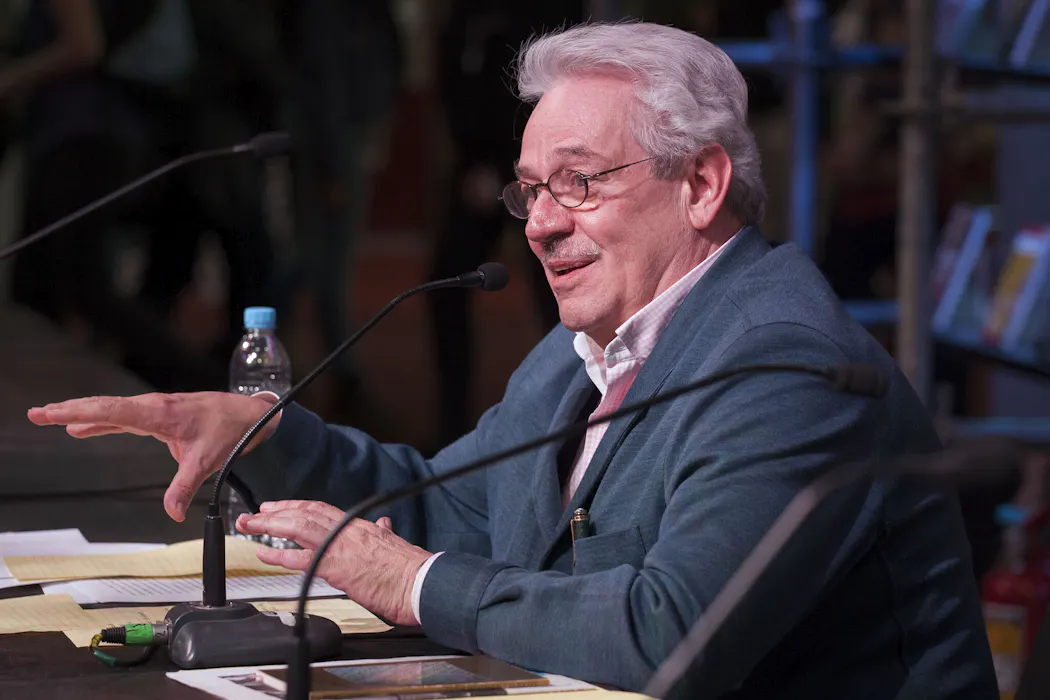
Gonzalo Celorio impartiendo la conferencia ‘La literatura de la Ciudad de México’ en la 41a Feria Internacional del Libro de Buenos Aires en mayo de 2015. Antonio Nava / Secretaria de Cultura, CC BY-SA
Que a Gonzalo Celorio (México, 1948) se le otorgue el Premio Cervantes 2025 no es sólo un reconocimiento a una trayectoria de autor y humanista, es la celebración de una manera de entender la literatura como destino y como arte de la memoria.
Gonzalo Celorio es un hombre de letras “integral”. Así lo califica el jurado del Cervantes. Y estamos de acuerdo. Es narrador, ensayista, hombre de teatro, filólogo y promotor cultural. Pero, sobre todo, es un gran lector y erudito: “nada humano le es ajeno”. Sus conocimientos van más allá de la literatura escrita en español. Sus intereses lo han llevado a conocer de historia, antropología y otras ciencias humanas.
Una obra que abarca géneros y culturas
Gonzalo Celorio ocupa un lugar importante en la literatura contemporánea no sólo por la amplitud y densidad de su obra, sino por la conciencia profunda con la que ha sabido entretejer su historia personal con la de una vasta geografía histórica y cultural que abarca países como España, México, Cuba y Nicaragua. En su escritura, la experiencia individual se dilata hasta volverse memoria compartida, y la memoria, a su vez, se vuelve una forma de conocimiento.
Es autor de las novelas Amor propio (1992), Y retiemble en sus centros la tierra (1999), así como de la trilogía titulada irónicamente “Una familia ejemplar”, integrada por Tres lindas cubanas (2006), El metal y la escoria (2014) y Los apóstatas (2020). En ella despliega una mirada crítica, a la vez lúcida y entrañable, sobre los vínculos familiares y las fisuras de la memoria. Construye una épica familiar que abarca varias épocas y territorios.
Varios de sus libros han sido traducidos al inglés, francés, italiano, portugués, griego y chino, lo que da cuenta de su proyección internacional.
La lengua como memoria
La obra de Gonzalo Celorio se alza como un espacio donde el lenguaje deja de ser sólo un instrumento de comunicación y se convierte en sustancia viva. Su escritura no sólo narra: respira, recuerda, interroga. Hay en ella una convicción profunda de que las palabras no nombran el mundo desde fuera, sino que lo engendran desde dentro. Su conocimiento del idioma le valió ser elegido director de la Academia Mexicana de la Lengua. También tiene vínculos oficiales con la Real Academia Española y con las academias cubana y nicaragüense.
En sus escritos, el español encuentra una de sus modulaciones más sensibles. Su voz no sólo cuenta anécdotas, sino que recuerda por todos nosotros. Y en ese acto de recordar vuelve a fundar –con delicadeza y hondura– un mundo.
De hecho, una de las claves de su obra se encuentra en la tensión entre recordar y dejar atrás. El autor ganador del Premio Cervantes 2025 así lo dijo con sencillez cuando se encontró con la prensa tras el anuncio del galardón: “Escribo fundamentalmente para olvidar”. Y enseguida reconoció la paradoja: “mis novelas son memorísticas”.
Celorio posee una memoria prodigiosa, a la menor provocación recita poemas de decenas de autores clásicos, o páginas completas de novelas. Esto revela una relación íntima, física y corpórea con el idioma. Así se vio en 2004, durante el homenaje internacional al autor argentino Julio Cortázar, en la Universidad de Guadalajara. Allí, Celorio y el escritor Eduardo Casar maravillaron al público escenificando de memoria el capítulo 68 de la novela Rayuela, escrito en “gíglico” (lenguaje inventado). Fue una sesión inolvidable.
Para Gonzalo Celorio, la literatura no es sólo una manera de dar salida a sus recuerdos, sino también una forma de vida. Así, confesó también que escribía “por una necesidad apremiante”.
La escritura del ganador del Premio Cervantes 2025 puede entenderse como una poética de la narración: un modo de concebir el lenguaje como ritmo, como resonancia, como espacio de condensación simbólica donde se insinúa lo esencial. Cada palabra parece elegida no sólo por su significado, sino por su peso y su música.
En este cruce de memoria y lenguaje, de narración y poesía, la obra de Gonzalo Celorio se vuelve una interrogación constante sobre la posibilidad de decir el mundo sin agotarlo. Su voz narrativa no se impone: se despliega, se demora, escucha. Y en esa escucha encuentra su forma más honda de verdad.
¡Enhorabuena, Gonzalo Celorio!
¿Quiere recibir más artículos como este?Suscríbase a Suplemento Cultural y reciba la actualidad cultural y una selección de los mejores artículos de historia, literatura, cine, arte o música, seleccionados por nuestra editora de Cultura Claudia Lorenzo.
Dulce María Zúñiga Chávez no recibe salario, ni ejerce labores de consultoría, ni posee acciones, ni recibe financiación de ninguna compañía u organización que pueda obtener beneficio de este artículo, y ha declarado carecer de vínculos relevantes más allá del cargo académico citado.
Retrato de Luis García Montero.Instituto Cervantes
“Creo que quieres hablar de Lorca”, me dice Luis García Montero cuando nos conectamos para la entrevista. “De Lorca, de la importancia de la literatura y del español en el mundo”, contesto, brevemente, para introducir los temas que vamos a tratar. “Pues yo te cuento mi vida y a partir de ahí me vas diciendo, porque en mi caso se relaciona todo”, responde, sonriente.
Desde 2018, Montero es el director del Instituto Cervantes, el organismo público español que busca la promoción del idioma y de la cultura hispana en todo el mundo. Pero también es catedrático de Literatura Española en la Universidad de Granada, ensayista, crítico y, sobre todo, poeta. Precisamente, ser esto último ha definido su vida y, sobre todo, su relación con el autor de Romancero gitano, de cuyo asesinato se cumplen 90 años este 2026.
En 2016, publicó el libro Un lector llamado Federico García Lorca en el que repasaba las lecturas del autor. En él, partía de la base de que “Todos nosotros somos, en esencia, aquello que leemos”. Hoy habla precisamente de eso, de aquello que leemos.
Nací en 1958 en Granada y él fue el primer poeta al que leí. Mis padres tenían un salón de las visitas al que teníamos prohibida la entrada mis hermanos y yo. Pero me colé un día y encontré en la biblioteca las obras completas de Lorca. Tuve la suerte de abrirlo por un poema que se ajustaba a mis ojos y a mi edad: la canción de los lagartos. Y yo, niño de barrio, que me pasaba el día cazando lagartos y lagartijas a la orilla del río Genil, me quedé impresionado. Era la historia de dos lagartos que se enamoraban, que se casaban y que tenían su vida privad: ¿qué hacía yo matando lagartos si estas criaturas formaban familias?
Ayuda mucho la literatura para ponernos en la piel de personas con las que no interactuamos en el día a día. O lagartos, en este caso.
Poco después un profesor del colegio me regaló el libro que Ian Gibson había publicado sobre la guerra civil española en Granada y el asesinato de Lorca. Y me di cuenta de que cuando caminaba por la ciudad, iba pasando por lugares que tenían que ver con su vida. Entonces, de manera muy natural, se unió mi amor por la literatura a Federico García Lorca y a la toma de conciencia de los vínculos que hay entre la literatura y la vida. Cuando me matriculé en la Universidad, me enteré de que estaba organizando un homenaje a Federico a los 40 años de su muerte, en junio de 1976. Y decidí que iba a ir al homenaje, que se hacía en el edificio del rectorado de la Universidad y después en Fuente Vaqueros, el pueblo donde él había nacido.
Entiendo que era el primero que se hacía.
Sí, el primero que se hacía en público en Granada después de la muerte. Recuerdo que, en el trayecto en autobús hasta Fuente Vaqueros, se veían muchas furgonetas de la policía. El entonces ministro de Gobernación del final del franquismo, Fraga Iribarne, había intentado prohibirlo, pero era tanta la presión que había dicho: “Bueno, no se prohíbe pero solo se deja media hora”. Entonces, el 5 de junio de 1976, Manuel Fernández Montesinos, sobrino de Federico García Lorca, salió ante toda la gente reunida y dijo: “Después de 40 años de silencio, nos dejan media hora de libertad”. Y así empezó un homenaje que para mí fue muy emocionante. Al acabar yo me acerqué al poeta Blas de Otero y le dije: “Don Blas, por gente como usted, yo estoy aquí”. “Estar aquí” significaba estoy en un acto político, en un homenaje a Lorca frente al poder de la dictadura y en un acto poético. Él me acarició la cabeza y me dijo: “Muchacho, espero que algún día puedas perdonarme”.
¿Le ha perdonado?
No solo le perdono, sino que le estoy muy agradecido. Hemos tenido la suerte de vivir un momento de España muy positivo y en medio de todas las dificultades no se nos puede olvidar nunca lo que se ha conseguido. Afortunadamente, la España de 2026 ya no es la España de 1976.
¿Qué le ha dado la poesía?
Me ha enseñado algunas cosas que son fundamentales. La primera, intentar ser dueño de la propia conciencia. Yo creo que un poema es un diálogo con la propia intimidad, hable de política, de amor o de cualquier cosa. Para mí, la poesía supuso comprender que luchar por la democracia no era votar cada cuatro años, sino participar en una transformación. Y eso lo aprendí en Antonio Machado, que modernizar la poesía no es buscar palabras raras, sino transformar la educación sentimental, porque a la educación responden las palabras. ¿Qué digo cuando digo “soy yo”? ¿Qué digo cuando digo “soy hombre”? ¿Qué digo cuando digo “te quiero” o cuando digo “libertad”? La libertad puede ser el respeto a la conciencia individual contra cualquier tipo de poder autoritario. Hoy, por desgracia, se utiliza mucho la palabra libertad como la ley del más fuerte, ya sea invadir un país, provocar un genocidio o poner en duda la justicia internacional. La poesía ayuda a pensar las palabras.
Ha dicho: “Considero que importa la defensa y la definición de un significado no mercantilista de la palabra utilidad”. ¿Para qué es útil la literatura?
La literatura me parece un buen remedio contra un momento que ha conseguido convertir al tiempo en una mercancía de usar y tirar. Y eso tiene para mí dos peligros graves. El tiempo de usar y tirar intenta borrar la memoria: lo importante es el presente. Pero yo soy escritor porque leí a Lorca, alguien que había vivido antes que yo, y heredé su manera de sentir. Quien cancela la memoria lo que acaba cancelando es la posibilidad de pensar un futuro distinto. Y la otra cosa que me ha enseñado la literatura es que hace falta tiempo para hacernos dueños de nuestra propia conciencia. Vivimos en un mundo que nos invita a decir lo que pensamos sin pensar lo que decimos. Y por eso existen el fanatismo, los bulos.
Luis García Montero y Almudena Grandes en un acto de la Feria Internacional del Libro de Guadalajara en 2017. Diario de Madrid, CC BY
Hubo hace unos meses una discusión entre quienes decían que leer hacía mejor persona y quienes no. Me gusta mucho lo de que la literatura ayuda a intentar ser dueño de la propia conciencia.
Joan Margarit, un poeta estupendo, decía que si uno escribe, existe el poema, pero hasta que no llega un lector y no habita el poema, no existe el hecho poético. Si yo escribo un poema de amor, pues está muy bien, pero el hecho poético se da cuando el lector deja de pensar en mi novia para pensar en su propia vida. El que escribe, escribe para que su historia no sea solo una confesión biográfica, sino algo que represente a la condición humana, y que el que lea se sienta identificado con esa historia.
En la historia de la cultura contemporánea no hay mejor metáfora del contrato social que la lectura. El amor ya no es el amor del autor sino el mío. Y mi propio amor comprende que tiene mucho que ver con lo que siente el otro. Defiendo la lectura como un espacio de construcción de las experiencias individuales hacia las ilusiones colectivas y el reconocimiento de la propia libertad como una capacidad de reconocerse en el otro, de dialogar.
Tenemos proyectos políticos donde se defiende un nosotros que autoritariamente quiere borrar las experiencias privadas y, por otra parte, hay un predominio del individualismo que corta cualquier reconocimiento de cuáles son los valores colectivos que nos han podido hacer triunfar. Por eso me gusta tanto decir que la mejor metáfora que yo he sentido del contrato social es cuando aprendí a mirar a unos lagartos con los ojos de García Lorca.
Ha batallado contra el elitismo cultural. ¿Cómo podemos hacer para que no se asocie la cultura a una clase social concreta y que todo el mundo pueda acceder a ella y elegir a qué quiere dedicar su tiempo?
Ese debate se puede abordar desde distintas perspectivas. Yo soy partidario de la educación pública porque creo que una sociedad construye su sentimiento de comunidad en la igualdad de la educación y esta es fundamental para que cada uno sea dueño de su propia conciencia. En ese sentido, a mí el elitismo de lo privado que quiere establecer ofertas para unos pocos me parece un peligro para la democracia. Otra cuestión que me parece importante tener en cuenta es que vivimos en una sociedad que ha comprendido que la gente culta es más difícil de manipular. Por ello, hay toda una corriente de opinión que está intentando sustituir la cultura por el entretenimiento. Interesa generar ofertas que den risas, que diviertan, pero que no enseñen a pensar.
Pero estos peligros también generan trampas. Porque… ¿acaso no es tramposo cuando la gente que apuesta por la cultura dice que lo importante es lo que es elitista? ¿Cuando se dice que la gente que se divierte y entretiene es tonta? Entonces, ¿qué tengo que hacer yo? ¿Confundir la calidad con aquello que entendemos cuatro? Siempre recuerdo que cuando García Lorca leía el “Responso a Verlaine” de Rubén Darío, al llegar a un verso que decía “Que púberes canéforas te ofrenden el acanto” se reía y decía: “Qué maravilla, solo entiendo el que”. Del mismo modo que hay que estar atentos a un populismo que rebaja calidad a la cultura, hay también que huir de la trampa de creer que la calidad hay que unirla con la dificultad, con aquello que convierte a la poesía, por ejemplo, en un dialecto para que hablen los poetas, pero que no entienda ni dios.
Esta accesibilidad al conocimiento entronca con su labor al frente del Instituto Cervantes.
Como heredero de Lorca defiendo la cultura democrática representada en los libros e intento estar a la altura como director del Instituto. Cuando explicamos nuestro trabajo insistimos una y otra vez en que enseñar un idioma no es solo enseñar un vocabulario. Las líneas de trabajo que tenemos apoyan los valores del feminismo, la democracia, la defensa de la libertad ante las viejas dictaduras, los pensamientos reaccionarios y las nuevas formas de dictadura… Por ejemplo, nos emociona que, en algunos países islámicos, el Instituto Cervantes sea un centro de reunión donde las mujeres puedan quitarse el velo y tomarse un café mientras estudian español, o darle la mano a su novio. También nos emociona que en los centros de Estados Unidos se defienda el español como lengua de herencia mientras Donald Trump genera discursos de odio contra el mundo hispano. Creo que defender los valores de la igualdad tiene mucho que ver a la hora de conformar una imagen de una España democrática que quiere resistir frente al deterioro de los derechos humanos que está sufriendo el mundo.
Luis García Montero en un evento del Instituto Cervantes. Instituto Cervantes
El español es un idioma en expansión.
En el último anuario del Instituto Cervantes se registraron más de 520 millones de hablantes de español como lengua materna y casi 630 millones si sumamos los que han aprendido español. Ese horizonte internacional es muy importante a la hora de defender el multiculturalismo. En un idioma con tantos millones de hablantes y con tanto territorio, a veces se ha tenido tentación de ser imperialista. En ese sentido, todos los trabajos del español desde el Instituto Cervantes parten de una premisa: en España somos el 9 % de los hablantes del idioma y participamos en la convivencia de una comunidad donde la diversidad es lo natural.
Esa idea, mi patria es mi idioma, culturalmente tiene ahora mucha importancia. En los anuarios del Instituto Cervantes comprobamos hasta qué punto la extensión de la cultura española tiene que ver con las dinámicas de la música hispana o de las telenovelas en español. Por ejemplo, todo lo que hizo Bad Bunny para reivindicar la presencia del español y lo hispano en la cultura internacional ha tenido mucha repercusión. Está muy bien tener un idioma mayoritario, pero la unidad se basa siempre en el respeto a la diversidad. La música latina y la narrativa latina han optado por un camino que me parece acertado. Nuestro idioma, que es muy fuerte y tiene muchos vínculos comunes, puede respetar la diversidad sin perder la unidad. De manera que es muy importante comprender la importancia que la cultura popular tiene a la hora de defender un idioma y de consolidar una comunidad no solo desde la barrera de lo académico sino también desde la cultura que está en la calle.
También ha dicho que el español tiene que ser una lengua de ciencia y tecnología.
Eso es muy importante porque se trata de contextualizar el idioma. El idioma está en movimiento. Y aunque cada vez hay mayor número de hablantes de español, no se puede confundir el orgullo con la autocomplacencia. No nos basta ser el idioma de Mario Vargas Llosa o de Cervantes, ahora es muy importante participar en toda la investigación científica y la transformación tecnológica. En ese sentido, potenciar el acuerdo entre universidades para favorecer la investigación del uso del español en la ciencia es fundamental. De hecho, una de nuestras colaboraciones en la próxima Cumbre Iberoamericana va a ser una reunión de universidades donde se analice el español como lengua de ciencia.
Pero, además, es fundamental en todo lo que significa la inteligencia artificial. Primero, porque la IA supone ahora un ámbito de comunicación donde, si no está bien cuidado, el idioma se deteriora. Está muy bien que las máquinas hablen español, pero siempre que se hable un español cuidado y que no suponga una degradación. Y en segundo lugar, esa degradación tiene muchos matices, porque no es simplemente que yo haga una pregunta y me conteste una máquina en un español torpe. Es que las máquinas están programadas y en sus respuestas pueden generar sesgos. Y a lo mejor se extiende la idea de que el mal español es el español que no se habla como se habla en Madrid o en Bogotá. Nosotros hemos hecho un decálogo ético del español y la IA porque queremos trabajar para que el lenguaje de la tecnología defienda los valores democráticos que queremos preservar en el idioma.
En Un velero bergantín escribió que por cada novela contemporánea deberíamos leer cuatro clásicos. En honor al Día del libro, ¿qué novela contemporánea recomienda en español y qué cuatro clásicos?
Pues acabo de leer Coloquio de invierno, de Luis Landero. En medio del invierno, hay una serie de personas que se guarecen en un refugio rural para escapar de la tormenta Filomena, y empiezan a contarse su vida. Yo me acordé, claro, de Boccaccio, y de cómo se reúnen y se cuentan la vida en el Decamerón. También me acordé de El coloquio de los perros de Cervantes, de cómo los seres humanos aprenden a reconocerse cuando son capaces de escuchar al otro.
Y, aunque solo sean tres, voy a citar al poeta por el que hemos empezado. La gente debería leer Poeta en Nueva York, el libro que escribió García Lorca en 1929 en Nueva York, en medio de la crisis de Wall Street, cuando comprendió que el capitalismo norteamericano iba a provocar la Segunda Guerra Mundial y se subió al edificio Chrysler, y desde allí gritó hacia Roma para protestar contra el papa, que había llegado a un acuerdo con Benito Mussolini y estaba empezando a colaborar con el fascismo. ¿Y qué es lo que reivindicó Lorca? El amor, la capacidad de amar. Es una buena manera de pensar en lo que está ocurriendo ahora en el mundo.
¿Quiere recibir más artículos como este?Suscríbase a Suplemento Cultural y reciba la actualidad cultural y una selección de los mejores artículos de historia, literatura, cine, arte o música, seleccionados por nuestra editora de Cultura Claudia Lorenzo.