El reto de reducir el desperdicio alimentario en los hospitales

Source: The Conversation – (in Spanish) – By María Torrejón-Ramos, Professor of Business Organisation, Universidad Rey Juan Carlos

Kzenon/Shutterstock

El desperdicio alimentario es un tema de máxima preocupación a nivel mundial por su impacto en el medio ambiente, la economía y en la salud de las personas. En la Unión Europea (UE) se desperdician 88 millones de toneladas de alimentos por año, lo que se traduce en la abrumadora cantidad de 173 kg por persona.

Se estima que dicho desperdicio puede tener unos costes asociados a la pérdida de alimentos de 143 000 millones de euros anuales. Además, no podemos olvidar el impacto que supone en nuestro planeta, contribuyendo a la emisión de gases de efecto invernadero, el deterioro de la biodiversidad y a la contaminación.

No en vano, la reducción del desperdicio alimentario está incluida en varias de las metas de algunos de los Objetivos de Desarrollo Sostenible (ODS). Es el caso de la meta 12.3 del ODS 12 (Producción y Consumo Responsables) para disminuir a la mitad el desperdicio de alimentos; el ODS 2 (Hambre Cero) con las metas 2.1 y 2.2 de garantizar acceso a una alimentación sana y suficiente; el ODS 3 (Salud y Bienestar) al promover dietas saludables que previenen enfermedades; el ODS 6 (Agua Limpia y Saneamiento) y el ODS 7 (Energía Asequible y No Contaminante) al optimizar el uso de recursos hídricos y energéticos y el ODS 13 (Acción por el Clima) al reducir las emisiones de gases de efecto invernadero derivadas de la pérdida y el desperdicio de alimentos.

El desperdicio de alimentos en hospitales

El desperdicio de alimentos en los hospitales es un problema que está menos estudiado. A pesar de que estos establecimientos también son grandes generadores de este tipo de desperdicio, no suelen ser conscientes de cuánto se tira ni de los costes que esto supone.

Estudios recientes, como el que hemos publicado en Gaceta Sanitaria, ponen de manifiesto esta problemática. Algunos datos extraídos de artículos científicos son abrumadores. Por ejemplo, en Portugal, un trabajo estimó que el 35 % de la comida servida en un hospital se desperdicia. Otros autores observaron que el desperdicio del plato principal varió según el área: 72,6 % en pediatría, 47,5 % en medicina interna y 46,9 % en oncología. Esto evidencia diferencias según el servicio hospitalario.

Otro estudio estimó que los hospitales turcos usaron en 2018 unos 8 600 GWh (3,3 % del consumo eléctrico nacional) y generaron 49 000 toneladas de residuos alimentarios, equivalentes al 1 % de su consumo energético anual.

Además, investigaciones más recientes muestran poca variación en las cifras de desperdicio hospitalario. Por ejemplo, en 2025, se publicaron datos en los que se evidencia el 31,4 % de desperdicio de alimentos en 16 hospitales del Líbano.

Algunos estudios refuerzan estos datos. Una revisión apunta que, en Europa, los hospitales y otros establecimientos relacionados con el sistema de salud generan unos residuos alimentarios que varían entre el 6 y el 65 % del desperdicio total.

Entre las causas del problema se encuentran unos sistemas ineficientes de pedidos y entrega de alimentos, raciones inadecuadas, una presentación de los platos que puede resultar poco apetecible y la baja apetencia de los pacientes, derivada de su estado de salud. En especial, aquellos en estado crítico podrían no consumir los alimentos servidos en su bandeja y, debido a las estrictas pero necesarias medidas sanitarias, estos no podrían ser reutilizados.

Estrategias para reducir el despilfarro

A través de la gestión de los desperdicios de los hospitales se puede ayudar a reducir su impacto ambiental, social y económico. Por ejemplo, los responsables de estas instalaciones pueden educar sobre hábitos saludables y fomentar el bienestar social a través de una cultura organizacional enfocada en la sostenibilidad. También se pueden buscar acciones para mejorar tanto el rendimiento como el bienestar del personal.

En España, ya se están implementando iniciativas innovadoras para reducir el desperdicio de alimentos. Un ejemplo es la colaboración del Hospital de Fuenlabrada (Madrid) con la aplicación Too Good To Go, permitiendo vender el excedente de comida del final del día en lugar de desecharlo. Además, se están adoptando medidas como la personalización de los platos para los pacientes, asegurando así un mejor aprovechamiento de los alimentos.

En Australia observaron que implementar el servicio de habitaciones disminuyó el desperdicio en platos del 30 % al 17 %. En España, un artículo científico del año 2022 mostró cómo identificando los platos más desperdiciados e introduciendo cambios concretos (nuevas recetas, más variedad…) se puede reducir significativamente el desperdicio de algunos alimentos como el pollo (de 35,7 % a 7,2 %) o el pescado (de 29,5 % a 12,8 %). Por lo tanto, acciones específicas y bien dirigidas pueden marcar la diferencia.

Además, los restos de comida de un hospital podrían transformarse en productos útiles, como hidrogeles para impresión 3D y bioestimulantes para plantas. De esta forma, los residuos alimentarios se convierten en recursos dentro de una economía circular.

Nueva propuesta para la gestión circular

Hemos propuesto un modelo de gestión de los recursos orientado a servir como guía para la reducción del desperdicio alimentario: el Modelo Circular de la Triple C.

Si bien es cierto que los hospitales no siempre pueden reutilizar recursos debido a las estrictas normas sanitarias, el modelo propone aplicar principios de economía circular para aprovechar mejor lo que se tiene, así como el uso de las tecnologías de la información y la comunicación, lo que podría mejorar tanto la sostenibilidad como el bienestar de pacientes y personal.

Si los responsables de la gestión cuentan con mecanismos de coordinación y canales de comunicación fluidos tanto con los pacientes como con el personal sanitario, sería posible replantear la forma en la que se administra la alimentación.

Asimismo, fomentar la colaboración entre todos los actores implicados promueve una mayor responsabilidad compartida en la reducción del desperdicio y la pérdida de alimentos.

Cuando hablamos de los actores implicados nos referimos, por una parte, al personal sanitario –médicos, enfermeros y técnicos, entre otros–, cuya participación es esencial para implementar prácticas sostenibles. También deben considerarse los proveedores de alimentos, que desempeñan un papel fundamental en la cadena de suministro. Asimismo, las instituciones deben crear marcos regulatorios que impulsen la cooperación de todos los actores, mientras que las universidades, como aliadas estratégicas, fomentan colaboraciones interdisciplinarias desde la investigación para mejorar continuamente este ámbito.

El Modelo Circular de la Triple C pretende animar a los investigadores a trabajar codo con codo con las instituciones de salud y a impulsar la colaboración entre distintas disciplinas. La idea es clara: implantar políticas públicas que nos acerquen al cumplimiento de los Objetivos de Desarrollo Sostenible de la Agenda 2030.

Los beneficios son importantes, ya que se puede mejorar la salud de los pacientes, además de cuidar del planeta y de reducir costes en los hospitales. El desperdicio de alimentos no es un dato más: es una llamada de atención sobre un problema que nos involucra a todos.

The Conversation

Las personas firmantes no son asalariadas, ni consultoras, ni poseen acciones, ni reciben financiación de ninguna compañía u organización que pueda obtener beneficio de este artículo, y han declarado carecer de vínculos relevantes más allá del cargo académico citado anteriormente.

– ref. El reto de reducir el desperdicio alimentario en los hospitales – https://theconversation.com/el-reto-de-reducir-el-desperdicio-alimentario-en-los-hospitales-262812

Moda litúrgica en tiempos líquidos: del Jubileo al desfile de Dolce & Gabbana

Source: The Conversation – (in Spanish) – By Sandra Bravo Durán, Socióloga y Doctora en Creatividad Aplicada, UDIT – Universidad de Diseño, Innovación y Tecnología

La cantante Cardi B. en la gala MET dedicada a la exposición ‘Heavenly Bodies’ en la que se exploraba la relación entre la moda y la religión. Sky Cinema/Shutterstock

En este Jubileo 2025, Roma acoge a millones de peregrinos que buscan reencontrarse con lo trascendente. Pero mientras la ciudad se convierte en escenario de espiritualidad, también lo es de expresión estética.

El reciente desfile de Dolce & Gabbana en el Castillo de Sant’Angelo –con su pasarela alfombrada en amarillo y una colección de Alta Sartoria inspirada en la sastrería eclesiástica– ha reactivado un debate que no es nuevo: el vínculo entre religión y moda.

¿Puede la moda ser una vía legítima de exploración espiritual? ¿O trivializa lo que para muchos es profundamente sagrado?

Lejos de reducir este fenómeno a provocación, conviene observarlo con mayor profundidad. Porque lo que ocurre en la pasarela puede leerse no solo como espectáculo, sino como una forma contemporánea de reinterpretar símbolos que llevan siglos construyendo sentido.

Moda y religión: un diálogo tan antiguo como el poder

Aunque parezcan opuestas, moda y religión comparten más de lo que creemos. Ambas codifican el cuerpo, organizan lo visible y construyen comunidad. Tienen reglas, autoridades, símbolos, calendarios y vestimentas rituales. Como señaló el sociólogo francés Pierre Bourdieu, la ropa no es solo adorno, sino capital simbólico. Y eso lo entendió la Iglesia antes que nadie.

Durante siglos, el catolicismo desarrolló uno de los sistemas visuales más potentes de Occidente. Su archivo textil es vasto y sofisticado: los colores litúrgicos –púrpura para la penitencia, blanco para la pureza, rojo para el martirio o dorado para la gloria– siguen apareciendo en colecciones de moda sin necesidad de cita. La sotana, la tiara papal, el velo o el incensario se han convertido en signos reconocibles y reutilizables por diseñadores y marcas.

Del Vaticano al front row

En 2018, la Met Gala y la exposición Heavenly Bodies, del Instituto del Traje del Metropolitan Museum of Art, dieron visibilidad global a esta convergencia. La muestra reunió más de 150 piezas de alta costura –de Versace, Balenciaga, Gaultier o Dolce & Gabbana– junto a ornamentos litúrgicos cedidos por el Vaticano. Rihanna apareció vestida como un papa barroco, Zendaya como Juana de Arco y los mosaicos bizantinos se convirtieron en estampado.

Este diálogo no es nuevo. Jean Paul Gaultier reinterpretó túnicas inspiradas en la Virgen María, Alexander McQueen convirtió la pasarela en liturgia gótica y Simone Rocha explora lo ritual con encajes, velos y siluetas que remiten a lo sacro. Para muchos diseñadores, la religión no es solo inspiración formal, sino un archivo simbólico cargado de densidad emocional e histórica.

La moda, en ese gesto, no solo copia: resignifica. Y lo hace en una cultura crecientemente estetizada, donde lo espiritual también se vuelve experiencia visual.

Jubileo 2025: religión, moda y el anhelo de lo eterno

El desfile de Dolce & Gabbana en este año jubilar no es una coincidencia. En tiempos de aceleración, ansiedad climática, pérdida de referentes y crisis institucional, muchas personas buscan anclajes simbólicos que devuelvan una cierta solemnidad o sentido. La religión ofrece precisamente eso: narrativas estructuradas, rituales compartidos y promesas de trascendencia.

Aunque la práctica religiosa haya perdido peso en ciertos sectores, su lenguaje visual mantiene una potencia simbólica indiscutible. Lo sagrado retorna –no siempre como fe, pero sí como gesto cultural– en pasarelas, redes sociales como Instagram y Tik Tok (#christiancore, #biblicalfashion), diseño o publicidad. No es devoción, sino búsqueda. Un intento de dotar de profundidad a una cultura marcada por la fugacidad.

El desfile romano de Dolce & Gabbana es algo más que lujo: es un síntoma de que, incluso en los espacios más estetizados, persiste la necesidad de relato, ritual y liturgia emocional.

Nuevos contextos y sensibilidades

Más allá de la alta costura, ha crecido el #modestfashion, un movimiento global impulsado por mujeres musulmanas, cristianas y judías que integran su fe en su forma de vestir. Lejos de ser una imposición, muchas lo viven como una elección consciente: una expresión espiritual, estética y ética a la vez.

Aquí, la moda no busca transgredir ni apropiarse, sino acompañar. Marcas como Nike o Uniqlo han respondido a esta sensibilidad con colecciones específicas, y plataformas como ASOS ya incluyen una categoría de ropa modest. Incluso hay semanas de la moda especializadas –las Modest Fashion Weeks– en Estambul, Londres o Dubái.

Cubrirse no es sumisión, sino elección identitaria. Como explica la socióloga Joanne Entwistle, el cuerpo vestido es un espacio de negociación social y personal. Y ahí, fe, estilo y autoafirmación pueden convivir.

Entre la fe y el espectáculo

Se acusa a menudo a la moda de superficial, pero ha sido históricamente vehículo de transformación y expresión cultural. El filósofo y sociólogo francés Gilles Lipovetsky la definió como el espejo más preciso de la modernidad: obsesionada con lo nuevo, atrapada en lo efímero. Y quizá por eso, cuando se cruza con lo sagrado, lo hace buscando algo que la excede: solemnidad, arraigo y sentido.

En una cultura donde todo es contenido, la religión conserva algo inusual: profundidad. Una cruz bordada no es solo ornamento: es signo. El dorado no es solo tendencia: es símbolo de gloria. El desfile, en su teatralidad, imita el ritual. Y los diseñadores acceden, incluso sin fe, a un imaginario que sigue operando como archivo emocional compartido.

La estética litúrgica en este Jubileo no es solo una moda más. Es síntoma de una necesidad: en una cultura de la inmediatez, vestir lo sagrado es un acto de conexión intergeneracional; un modo de recordar que no todo caduca.

Entre bordados litúrgicos y telas solemnes, lo que se teje es el deseo de continuidad en un mundo que, por momentos, parece deshilacharse.

The Conversation

Sandra Bravo Durán no recibe salario, ni ejerce labores de consultoría, ni posee acciones, ni recibe financiación de ninguna compañía u organización que pueda obtener beneficio de este artículo, y ha declarado carecer de vínculos relevantes más allá del cargo académico citado.

– ref. Moda litúrgica en tiempos líquidos: del Jubileo al desfile de Dolce & Gabbana – https://theconversation.com/moda-liturgica-en-tiempos-liquidos-del-jubileo-al-desfile-de-dolce-and-gabbana-262175

‘Hacer el agosto’: cereales, verano y lenguaje

Source: The Conversation – (in Spanish) – By Javier del Hoyo Calleja, Catedrático de Universidad (área de Filología Latina), Universidad Autónoma de Madrid

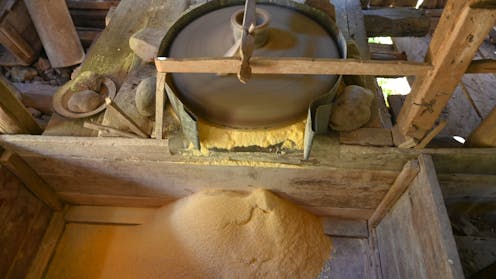
Una piedra de molino tritura los granos de trigo. Ajdin Kamber/Shutterstock, CC BY

Julio y agosto son dos meses abrasadores en el hemisferio norte, pero gracias a ellos ha vivido durante siglos la Europa agrícola. En ellos se lleva a cabo la cosecha de los cereales de secano, algo tan importante para la vida y la economía de los pueblos mediterráneos.

Estas cosechas nos han legado infinidad de palabras, a veces en forma de preciosas expresiones y metáforas. Por ejemplo, “hacer el agosto”, símbolo de los pingües beneficios que percibe el agricultor ese mes, y por extensión los que se embolsa un vivales que en cualquier mes del año redondea sus cuentas corrientes. Una expresión que significa algo completamente distinto de aquel “agostar” un terreno por el excesivo calor que abrasa los cultivos.


Leer más:
¿Verano o estío? Palabras para una estación calurosa


Viví los veranos de mi niñez en un molino de agua en la provincia de Burgos, donde veía cómo desde la mañana venían los agricultores de los pueblos vecinos trayendo sus remolques llenos de grano, todo tipo de grano: cebada, centeno, avena, trigo… Estas palabras cotidianas y sencillas guardan el secreto de muchas otras que usamos en castellano sin ser conscientes de su relación.

Cebada: del alimento o cebo al orzuelo

Muy común era la cebada. Si cebada en latín se dice hordeum, muy distante de cómo se expresa en nuestra lengua, del diminutivo (hordeolum) nos ha quedado el “orzuelo”, que semeja un minúsculo granito de cebada bajo los párpados. Y el nombre de la cebada, ¿de dónde viene? Del fin que se le daba a este cereal, el de cebar a los animales; todavía en italiano cibo significa comida o alimento en general, nuestro “cebo”.

Por cierto, que el Diccionario de la Real Academia Española ofrece “forúnculo” como sinónimo o palabra afín de orzuelo, que proviene de furunculum, “ladronzuelo”, diminutivo de fur, “ladrón”. Así llamamos a ese tallo secundario de la vid que se comporta como un ladrón, pues roba la savia furtivamente al tallo principal. De ahí pasó más tarde al cuerpo humano por su forma análoga.

Centeno, ciento por uno

Interesante también es el centeno (secale cereale, “cereal que se siega”). Su nombre en español responde a aquella parábola evangélica en la que Cristo decía que de la semilla que caía en tierra buena, unos darán treinta, otros sesenta y otros el ciento por uno (centenus). Había un sentir tradicional en la Antigüedad que indicaba que el centeno era el cereal más fecundo; o sea, que llegaba a dar el ciento por uno.

Avena, alimento y flauta

Y también llegaban remolques de avena, del latín avena, ahora tan de moda en los desayunos por sus propiedades y porque, según algunos expertos, podría ser incluida en la dieta sin gluten. Con la caña endurecida de la avena se hacían elementales flautas, como un caramillo (nombre que procede de calamellus, diminutivo de cálamo, “cañita”).

Espelta, inmolaciones y emolumentos

Más raro de encontrar entonces era la espelta o trigo espelta (Triticum spelta), el primero de los cereales que cultivó el hombre. También conocida como “escanda mayor”, es un cereal similar al trigo que se utilizó mucho en la Roma clásica. Con sus granos molidos (mola) y mezclados con sal, se hacía una pasta, la salsa mola, que se colocaba en el cuello de las víctimas antes de ser sacrificadas a los dioses.

A partir de ahí surgió el verbo inmolar y la inmolación, aunque ni los yihadistas suicidas que se inmolan por una causa, ni los ejecutivos que entregan su tiempo libre inmolándose por la empresa se espolvoreen salsa mola en la espalda. Y de la actividad de la molienda conservamos los emolumentos, es decir, la “retribución pagada al molinero por moler el grano”, aunque se utilice hoy para un sueldo o paga en general.

Trigo, trilla, trizas y triturar

Sin duda el rey de los cereales era el trigo, que proviene de un latino frumentum triticum (“triturado”), y cuya voz tiene que ver a su vez con el trillo y con triturar, entre otros muchos términos. Eso indica que se abandonó el sustantivo latino que lo designaba, frumentum, mantenido todavía en el italiano actual, frumento, y permaneció la finalidad del cereal, es decir, ser molido, triturado, para alimento.

De la misma raíz conservamos “triza”, algo en lo que terminamos después de un día de mucho trabajo, es decir, destrozados, hechos trizas. De esa misma raíz podemos tener el corazón contrito y atrito, triturado y destrozado por el peso de la culpa ante un delito o un pecado.

Y también nos llegan detrimento y detrito (del verbo latino detero), que equivaldría a quebranto.

Del trigo al bronceado

Hemos hablado del trillo (también la trilla), del latín tribulum, un instrumento que los jóvenes han visto quizás en paradores y hoteles elegantes convertido en mesa con un cristal encima, que trituraba la espiga en las eras separando el grano de la paja. Y en efecto, ya lo han adivinado ustedes, de aquí provienen también tribulación y atribulado, es decir, atormentado o triturado por dentro.

Sólo mucho más tarde, y ya desde el propio español, surgió el color trigueño de una persona, que hoy día diríamos bronceado, pero que se obtiene hoy de manera muy diferente al origen de la palabra. No son lo mismo diez horas trabajando bajo el sol, que dan ese color trigueño al labriego, que diez horas tumbado en la playa o en la hamaca.

The Conversation

Javier del Hoyo Calleja no recibe salario, ni ejerce labores de consultoría, ni posee acciones, ni recibe financiación de ninguna compañía u organización que pueda obtener beneficio de este artículo, y ha declarado carecer de vínculos relevantes más allá del cargo académico citado.

– ref. ‘Hacer el agosto’: cereales, verano y lenguaje – https://theconversation.com/hacer-el-agosto-cereales-verano-y-lenguaje-262527

Irregular migrants in Europe face obstacles to exercising legal rights – where they have them

Source: The Conversation – France – By Clare Fox-Ruhs, Part-Time Assistant Professor, Robert Schuman Centre for Advanced Studies, European University Institute

It is said that a true measure of any society is how it treats its most vulnerable members. To what extent, however, does this litmus test extend to the irregular migrants among us – namely, those who live and/or work in host communities without the legal right to reside? What does it take to be a “member” of society to whom protection is owed?

These are key questions facing all major migrant-receiving countries. Moreover, the choices our national governments make in relation to regulating the rights of irregular migrants matter for all of us. These choices affect our schools, our workplaces, our healthcare and eldercare settings, and our streets. Everyone is implicated, for this is what it means to live in society.

The first step in problem-solving around the issues related to irregular migration is to better understand the conditions of irregular migrants and the current responses of national governments. To this end, we at the European University Institute, Uppsala University and the University of Zagreb developed IRMIGRIGHT – Europe’s first database of the social and labour rights of irregular migrants. Unrestricted public access to the database will be available in the second half of 2026.

Using the data we compiled, we constructed a novel set of indicators that allow us to measure and compare the nature of irregular migrants’ rights in 16 different social and labour fields across the 27 EU member states and the UK. Our recently published results of this analysis reveal important differences in the types of rights that irregular migrants can claim by law in European countries, and they show significant variation in the quality of those rights cross-nationally.


A weekly e-mail in English featuring expertise from scholars and researchers. It provides an introduction to the diversity of research coming out of the continent and considers some of the key issues facing European countries. Get the newsletter!


Our research shows that European governments typically legislate to provide irregular migrants with a small set of basic rights. On the social side, these rights include access to emergency healthcare, maternity care and compulsory education for children. In labour terms, irregular migrants most commonly enjoy the right to recover a portion of unpaid wages (the UK and Bulgaria are the only countries in which they do not) and to be assured basic health and safety standards in the workplace. The range of services or benefits included in these rights is, in most cases, equal to those of citizens.

By contrast, it is only in a small minority of European countries that irregular migrants can exercise rights to emergency subsistence-level income support and temporary shelter – even in cases of extreme need. Routine income support payments and access to long-term social housing are virtually non-existent for irregular migrants under national laws.

The more established EU member states (the “EU 15”) typically offer better protections than the newer, post-enlargement member states. However, Denmark, Greece, Ireland and the UK break with this trend by providing weaker rights protections for irregular migrants.

Obstacles to meaningful rights

Amid the patchwork of protection and exclusion of irregular migrants in the rights frameworks of European countries, perhaps the bigger story is the widespread presence of obstacles to meaningful rights enjoyment. What our research shows is that it is one thing for an irregular migrant to have a right by law in a host country, but quite another to have a right that is provided in terms that enable the migrant to freely exercise that right.

Our findings show that even among the “best-performing” European countries such as Spain, France, Finland, Belgium and Sweden, irregular migrants face multiple “cost” barriers to enjoying their rights. Some of these costs are financial. Irregular migrants might have access to a variety of healthcare and education rights, but where the user costs of services associated with these rights exceed costs charged to citizens, irregular migrants might be priced out of services altogether.

User costs for irregular migrants vary cross-nationally: for instance, the UK charges 150% of National Health Service costs for certain maternity and specialised treatments, whereas the Netherlands treats irregular migrants on the same basis as citizens in regard to all healthcare for which these migrants are eligible. Costs may be waived, but the very presence of high costs can be enough to stop individuals from seeking even emergency or medically necessary care.

Prohibitive financial costs can also deter irregular migrants from exercising rights that they ought to be able to enjoy by law. There is no right without a remedy, yet our research finds that only around 50% of legal “rights” for irregular migrants are accompanied by some form of legal aid for them to exercise those rights.

Arguably, the cost that weighs most heavily on irregular migrants in exercising their legal rights is that of becoming visible to law enforcement authorities and facing potential immigration detention and deportation.

This rights obstacle can be reduced by “firewalls” – laws or policies that prevent service providers and state officials from reporting to immigration enforcement authorities those irregular migrants who, for example, use hospitals, schools and social services, or seek labour justice. It is striking, however, that only a handful of European countries offer such firewalls in regard to social rights (mostly healthcare), and that no country provides a firewall for irregular migrants to pursue their labour rights following workplace exploitation, abuse or injury.

Defining our societies

All in all, the picture of irregular migrants’ rights across Europe suggests that we have some way to go in guaranteeing fundamental and realisable rights that apply to all persons regardless of immigration status. The comparative country data we have compiled provide a new opportunity for European societies to hold up a mirror to themselves and ask if they are satisfied with the reflection. Do the rights that irregular migrants enjoy under the law speak to the values, norms and aspirations of host societies, or is it time for a health check?

Irregular migrants will inevitably remain of our societies, however well national governments succeed in limiting immigration and however we choose to set the boundaries of societal membership. By promoting and protecting irregular migrants’ core rights to necessary healthcare, emergency subsistence-level income and shelter, freedom from labour exploitation, and compulsory education for children, countries can realise their shared European ideals while simultaneously building healthier communities for all.


Our development of IRMIGRIGHT is part of the international “PRIME” project that analyses the conditions of irregular migrants in Europe. PRIME is funded by the European Union Horizon Europe programme.

The Conversation

Clare Fox-Ruhs ne travaille pas, ne conseille pas, ne possède pas de parts, ne reçoit pas de fonds d’une organisation qui pourrait tirer profit de cet article, et n’a déclaré aucune autre affiliation que son organisme de recherche.

– ref. Irregular migrants in Europe face obstacles to exercising legal rights – where they have them – https://theconversation.com/irregular-migrants-in-europe-face-obstacles-to-exercising-legal-rights-where-they-have-them-263075

Expressing gratitude isn’t necessary, but a little appreciation may still go a long way

Source: The Conversation – Canada – By Lara B Aknin, Distinguished Professor of Social Psychology, Simon Fraser University

Gratitude statements like “Thanks! You are so kind!” and “Thank you! What you did was really helpful,” are common when someone receives assistance from another person. Such expressions of gratitude and appreciation have long been thought to encourage the helper to do kind things again in the future. But do they?

In contrast to past research, our new findings published in the Journal of Experimental Social Psychology suggest that gratitude does not always promote future helping.

Our research was conducted using a new approach called a Registered Report. It required that the design of our experiment, along with our hypotheses and analytic plans, were vetted by experts before we started. This new best practice in science increases rigour and transparency.

Expressions of gratitude

We conducted two large pre-registered experiments and found mixed results. In the first experiment, more than 600 university students recorded a short video to welcome a new student (played by a member of our research team) to campus.

In response to this kind act, we sent participants one of three randomly assigned pre-recorded videos. Some participants received a video in which the new student expressed gratitude for the participant’s kind act: “Thank you! What you did was very kind.”

Other participants received a video in which the new student expressed gratitude for the participant’s kind character: “Thank you! You are very kind.”

Finally, some participants in a control condition received a video of the new student acknowledging that they had received the recording, but with no expression of gratitude at all.

Afterwards, all participants were invited to write up to five brief notes to welcome other new students to university, which we treated as a measure of future helping behaviour.

Reception and kindness

By sending participants one of the three video replies, we were able to test two important questions about gratitude. Does receiving an expression of gratitude, regardless of whether it mentions your kind act or kind character, lead to more helping in the future compared to not receiving gratitude? Also, does the content of the gratitude matter — in other words, do some gratitude notes lead to more helping in the future than others?

To find out, we compared how many welcome notes participants wrote across the three video conditions provided. We found no differences across conditions, which suggests that receiving a gratitude expression and its contents may not impact future helping.

These results were in contrast to our predictions and past work by others.

Written expressions

Welcoming new students is one way to be kind, but there are many other ways to help. So, we conducted another experiment to test the same key questions. Does receiving a gratitude expression increase future helping behaviour? And does the content of the gratitude message matter?

This time, however, we used written thank-you messages instead of videos and measured helping in the form of donations.

Over 800 adults recruited online completed an innocuous survey that provided an opportunity to complete an initial kind act of donating to charity. Two days later, participants were invited back to complete a second survey that began with what we told participants was a thank-you letter from the charity they supported — participants received one of three letters we had created for the purposes of our study.

As in the first study, some participants were thanked for their kind act: “Thank you! Your generous donation was very kind.” Other participants were thanked for their kind character: “Thank you! You are very kind and generous.”

Once again, some participants did not receive a message of thanks, but were informed that their donation had been received. Participants completed a few other questions and were then given the opportunity to help again by deciding how much, if any, of an additional one-dollar bonus they would like to donate to a new charity.

We compared donations across the three conditions and found that people who received a thank-you note gave more money than people who received a simple message that their donation was received. Donation levels did not differ between the two types of gratitude expressions. People thanked for their kind act gave roughly as much (42 cents) as people who were thanked for their kind character (42 cents), which was higher than the 34 cents given by people in the control condition.


Read more:
When you’re grateful, your brain becomes more charitable


Everyday importance

While we did not see significant differences in help provided by people who were thanked for their kind action or character, this does not mean that people should stop saying thanks. Expressing gratitude can make the person expressing appreciation feel good and strengthen social relationships.

There may be less reason to stress over how exactly you express your appreciation to others. Past research has shown that many people are uncertain about how to properly and eloquently relay their gratitude.

Unfortunately, these worries can reduce the likelihood of someone sharing a simple but heartfelt statement of appreciation and our work reinforces this same underlying idea.

Exactly what is said when expressing thanks may be less important than communicating appreciation.

Kelton Travis, an honours undergraduate student in psychology at Simon Fraser University, co-authored this article.

The Conversation

Lara B Aknin receives funding from the Social Sciences and Humanities Research Council of Canada.

Anurada Amarasekera, Kristina Castaneto, and Tiara A Cash do not work for, consult, own shares in or receive funding from any company or organisation that would benefit from this article, and have disclosed no relevant affiliations beyond their academic appointment.

– ref. Expressing gratitude isn’t necessary, but a little appreciation may still go a long way – https://theconversation.com/expressing-gratitude-isnt-necessary-but-a-little-appreciation-may-still-go-a-long-way-262779

Tanzania’s independence leader Julius Nyerere built a new army fit for African liberation: how he did it

Source: The Conversation – Africa (2) – By Michelle Moyd, Associate Professor, Department of History, Michigan State University

Tanzania has long enjoyed a reputation as a peaceful country. In contrast to most of its neighbours, this east African nation of 67 million people has largely avoided large-scale violence within its borders.

That didn’t seem likely in the early years after independence from Britain in December 1961. A little over two years into independence – in January 1964 – the founding president, Julius Nyerere, faced two political crises. The first started on 12 January 1964 in the form of the Zanzibar Revolution. Weeks of violence and destruction by Afro-Shirazi Party members followed. As many as 16,000 Zanzibaris were killed or forced into exile.

Then the country’s military, the Tanganyika Rifles, mutinied. Its soldiers were incensed over inadequate pay, loss of privileges, and poor prospects for upward mobility. A rattled Nyerere needed British military support to quell the mutiny. He ordered the arrests of its leaders, and effectively dismantled the entire force.

Nyerere then faced the dilemma of leading a new nation-state with no army and few resources to build one. His socialist agenda (Ujamaa, in Kiswahili) had prioritised other aspects of nation-building, especially education and public health. Nonetheless, with assistance from the Organisation of African Unity (OAU) and the willingness of some of its member states to provide troops, the Tanzania People’s Defence Force was established in September 1964.

In his new book, Ujamaa’s Army: The Creation and Evolution of the Tanzania People’s Defence Force, 1964-1979, Charles G. Thomas, a scholar of post-colonial African military history, skilfully narrates this complex and absorbing history. The book covers the formation and transformations of the defence force through the new nation’s first 15 years as it shed its connections to the colonial past and charted a new path.

Unlike other writing on African armies – particularly the body of work on colonial armies – this one does not centre rank-and-file troops. Instead, Thomas’s analysis is based on rich interviews with high-ranking officers who led and moulded the force in its first two decades. This has enabled him to offer a top-down view of the construction of the army.

A rocky start

Nyerere undertook the work of unifying Tanganyika and Zanzibar in the first few months of 1964 with an eye to the region’s security. The Zanzibar revolution and the Afro-Shirazi Party’s Marxism had called attention to the island as a potential Marxist outpost. Violence against the island’s ruling party and those perceived as wealthy elites seemed to bolster this perception. In the context of the cold war, this fuelled western fears of Zanzibar becoming the “Cuba of east Africa”. An influx of Soviet and Chinese military advisers to Zanzibar made western powers nervous.

Nyerere and foreign minister Oscar Kambona worked with Afro-Shirazi Party leader Abeid Karume to unify Tanganyika and Zanzibar to reassure westerners.

The rollout of the defence force in September 1964 thus included members of the Zanzibari People’s Liberation Army. This signalled that the initial 1,000-man army would serve the larger interests of socialist Tanzania.

A regional role

Throughout the 1960s, Tanzania became, alongside Zambia, Botswana, Lesotho, Angola and Mozambique, a supporter of southern African liberation struggles. The OAU formally recognised this group of nations as the “frontline states” in 1975.

Nyerere convinced the OAU Liberation Committee to set up its headquarters in Dar es Salaam in 1963 because Tanganyika was already hosting many southern African exiles. Also, conflicts in neighbouring states, such as Mozambique, were spilling over into Tanganyika. It became the nerve centre for coordinating African liberation efforts.

Liberation organisations from across southern Africa also established offices in Dar es Salaam. These included the African National Congress and the Pan-Africanist Congress from South Africa; the People’s Movement for the Liberation of Angola (MPLA); Zimbabwe African People’s Union (Zapu) and Zimbabwe African National Union (Zanu); South West Africa People’s Organisation (Swapo) from Namibia; and Mozambique Liberation Front (Frelimo).

The Tanzanian defence force took on a key role in frontline liberation struggles. In 1964 it established the Special Duties Unit, which provided a logistics pipeline to serve liberation armies.

The defence force also established training camps for liberation armies within Tanzania. And it took on a protective and support function in southern Tanzania, where Frelimo’s operations against the Portuguese embroiled communities.

Tanzania’s involvement in struggles against the white settler states of southern Africa intensified in the late 1960s and early 1970s. After Portugal retreated from its colonies, Nyerere sent the defence force to help stabilise the new Frelimo government in Mozambique against the South African- and Rhodesian-backed guerrilla force Renamo.

At the same time, the book explains, Tanzania was contending with the disruptive politics and threatening military actions of its northern neighbour, Uganda.

Uganda gained independence from Britain in 1962. In 1971 Idi Amin seized power in a military coup that ousted Uganda’s first president, Milton Obote.

Amin and Nyerere antagonised each other personally, politically and militarily for the next eight years.

In 1972, Amin bombed Tanzanian border cities in retaliation for Nyerere’s support of the invasion of Uganda by Obote supporters in 1972. In 1978, Uganda annexed the Kagera Salient across its south-western border with Tanzania. In 1979, Tanzania invaded Uganda and ousted Amin from power.

The Tanzanian defence force remained in Uganda for nearly two years, providing security as the new government attempted to re-establish services and governance for post-Amin Uganda.

Catalyst for new inquiries

Thomas’s sustained research is based in large measure on hard-won connections with defence force officers. He also used alternative sources rather than relying heavily on Tanzanian, British and US archives. Canadian military archives, for example, showed how Tanzania’s forces benefited from Canadian training and resources.

OAU archival materials helped with understanding the Tanzania People’s Defence Force as part of African solidarity efforts against apartheid and colonialism.

The book also paints a clear picture of Nyerere’s role in Africa’s postcolonial politics. It shows him as a shrewd negotiator and a “pragmatic pluralist” in a fraught cold war world, where there were many competitors for military aid, but few sources to provide it to a country seeking a non-aligned position. His decision to form the Tanzania People’s Defence Force, and his encouragement of its role in supporting liberation struggles, helped Tanzania stand apart from its neighbours.

The Conversation

Michelle Moyd does not work for, consult, own shares in or receive funding from any company or organisation that would benefit from this article, and has disclosed no relevant affiliations beyond their academic appointment.

– ref. Tanzania’s independence leader Julius Nyerere built a new army fit for African liberation: how he did it – https://theconversation.com/tanzanias-independence-leader-julius-nyerere-built-a-new-army-fit-for-african-liberation-how-he-did-it-246688

Abdulrazak Gurnah: searching for signs of Zanzibar’s most famous writer, all I found was trinkets and tourists

Source: The Conversation – Africa – By Tinashe Mushakavanhu, Assistant Professor, Harvard University

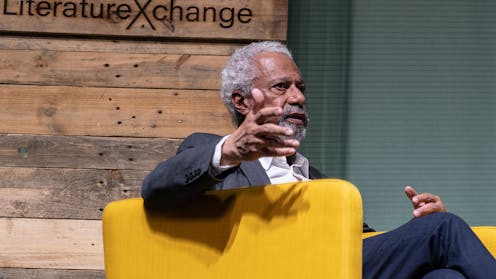
Nobel Prize-winning author Abdulrazak Gurnah in Denmark in 2025. Hreinn Gudlaugsson/Wikimedia Commons

Zanzibar has long been an island of arrivals for traders, sailors, slaves and, more recently, waves of tourists. I arrived as a wedding guest and a reader of the Zanzibar born novelist Abdulrazak Gurnah, in search of the literary and emotional landscapes that shape his fiction. For a week, I was part of the tourist economy of this east African island, passively complicit in its curated pleasures.

For all its beautiful images on social media, Zanzibar is a site of difficult memory. It was once a central node in the Indian Ocean slave trade, so its past is carved into the coral-stone buildings that reflect a complex fusion of Swahili, Indian, Arab and European influences in architecture and town planning.

An island outcrop with buildings.
Zanzibar’s tourist attraction Stone Town from the air.
Wegmann/Wikimedia Commons, CC BY-SA

A visit to the Old Slave Market was sobering. You cannot look away once you’ve seen it. And yet, Zanzibar is now overlaid with carefully packaged experiences: boutique hotels with infinity pools, beach picnics with imported champagne, stalls of “African” art mass-produced for western eyes. The art has become so generic that it hurts. All the curio markets on the island look the same.

Even the language has been commodified. Everyone is selling something. Everyone is searching. “Jambo,” (Hello) say mostly young men offering one service or another. “Hakuna matata.” (No worries.) “Pole pole.” (No rush.) These cheerful Kiswahili phrases made famous by the likes of the Lion King movie are repeated like slogans and feel soulless.

Most of the cars on the roads operate as taxis with stickers that say: Private Hire. The tuk tuks, three-wheeled tricycles, weave in and out of traffic because movement is an act of constant negotiation, part of a tourist infrastructure that operates as a regulated service.

A black and white photo of a bustling market street lined by old buildings.
The tourist markets of Stone Town.
Rod Waddington/Flickr/Wikimedia Commons, CC BY-SA

Amid the hum of engines and the ceaseless choreography of traffic, I kept searching not just for respite from the heat or wifi or good coffee, but for something literary. I was looking for the celebrated writer Abdulrazak Gurnah. Not the man (he hasn’t lived in Zanzibar for decades), but the essence of his writing, informed by this place: the ache of exile, the weight of history, the restless question of belonging he grapples with.

Gurnah is not just a writer I’ve read; he examined my doctoral dissertation at the University of Kent, where he taught for many years until his retirement. He is an important part of my intellectual development.

As a scholar of African literature, I engage deeply with the traditions, debates and histories that Gurnah’s novels illuminate, so my attempt to map his legacy in Zanzibar carried both personal and professional significance.

Absence of literary memory

Gurnah was born here, on this island of contradictions. He left following the Zanzibar Revolution of 1964, a violent outbreak of anti-Arab violence in postcolonial Africa. He was a teenager when he moved to England as a refugee, and has lived there ever since.

I expected, perhaps foolishly, to see a plaque with his name. A mural. Something. But there was nothing, even in Stone Town, where the past feels pressed into every narrow alley. This historical capital is an indecipherable tangle of markets, bathhouses, former colonial offices and palaces. I asked about bookshops at every turn. Locals looked puzzled, amused. “Why?” one asked. “You want to read on holiday?” That is because I can’t imagine a beach without a book.


Read more:
Abdulrazak Gurnah: what you need to know about the Nobel prize-winning author


Eventually, I found Gurnah’s famous novels in a souvenir shop that mostly sold skin-care products. They sat beside cookbooks and Swahili language guides. The only other meaningful literary encounter came via the mainland: a newly published Tanzanian literary journal, Semi za Picha, sent by ferry.

That little package was the most precious thing I took away from Zanzibar. It’s described as “a film journal” and edited by Jesse Gerard Mpango and Dismas Sekibaha, who are members of an audio-visual collective, Ajabu Ajabu, based in Dar es Salaam.

It’s not that Zanzibar lacks intellectual life. There is a State University. A global centre for Swahili Studies. Museums and Unesco heritage sites.

But there are no visible monuments to literature. There is no street named after Abdulrazak Gurnah. And yet, his imagination haunts the island. Reading his fiction made me more aware of the surfaces I was treading on, all the stories hiding under sand and souvenirs here, or submerged in the waters of the Indian Ocean.

Gurnah’s novels are known for their moral precision and speak to the legacies of colonialism and displacement along the Swahili coast. His characters often inhabit spaces between languages, continents and allegiances. In many ways, the disjuncture Gurnah explores, especially the fraught layering of history, is what unfolded before us.


Read more:
Why the work of Abdulrazak Gurnah, the champion of heartbreak, stands out for me


We criss-crossed Zanzibar by car, drove through villages with crumbling schools and no paved roads in search of the perfect beach. Then the ocean would appear, in its glimmering glory, and there were always many people taking pictures, as if the world was just a beautiful pose. But there’s something repugnant about turning people’s homes into backgrounds for entertainment. In our swimsuits, we were trespassing through communities, not just beautiful landscapes.

Zanzibar is not local anymore. It is a mesh of immigrants and itinerants: its service industry jobs are all occupied by people from many places. Local Tanzanian hotel staff, Kenyan chefs, French and South African restaurateurs, Belgian and German landlords. Whether you’re walking, or sitting at the beach, you can hear a babel of languages: Arabic, Chinese, Dutch, French, Hebrew, Italian, Shona, Swahili, Zulu.

A row of wood-carved African masks, all similar.
African masks at the island’s many tourist shops.
Djordje Markovic/Wikimedia Commons, CC BY-SA

Maybe my search for Gurnah and for literature was a search for an ethical place to stand. In Zanzibar, billboards of Tanzanian president Samia Suluhu Hassan are prominently displayed, projecting an image of calm authority. Once welcomed as a reformer, Hassan now faces growing criticism over alleged human rights abuses. But beneath the façade lies a more contested reality.

Zanzibar is a semi-autonomous archipelago with its own president and parliament, yet remains politically tethered to the mainland of Tanzania. This union has long been marked by tension over power, identity and representation as many Zanzibaris continue to assert a distinct cultural and political identity.

At the wedding, we didn’t speak of any of this. There was music, speech-making and laughter. This island, beautiful and bruised, is the backdrop of the absurdity of overtourism. And I still can’t get over the fact that in Zanzibar I could find no bookshops.

The Conversation

Tinashe Mushakavanhu does not work for, consult, own shares in or receive funding from any company or organisation that would benefit from this article, and has disclosed no relevant affiliations beyond their academic appointment.

– ref. Abdulrazak Gurnah: searching for signs of Zanzibar’s most famous writer, all I found was trinkets and tourists – https://theconversation.com/abdulrazak-gurnah-searching-for-signs-of-zanzibars-most-famous-writer-all-i-found-was-trinkets-and-tourists-262886

Fela and food: how Lagos restaurants are serving up the music star’s legacy

Source: The Conversation – Africa – By Garhe Osiebe, Research Fellow, Rhodes University

In Lagos, Nigeria’s commercial and creative capital, food is doing something unusual. It’s keeping alive the spirit of a musician.

Fela Anikulapo-Kuti, one of Africa’s most influential artists, was the architect of Afrobeat (not to be confused with today’s Afrobeats, which was born from it).

Fela pioneered his politically charged, musically expansive sound in the early 1970s by blending jazz, highlife, funk and Yoruba rhythms. He paired these with lyrics that took aim at corruption, oppression and postcolonial disillusionment. His songs were as much rallying cries as they were works of art.


Read more:
Fela Kuti is more famous today than ever – what’s behind his global power


Today, dishes named after Fela’s protest anthems – and restaurant soundscapes steeped in Afrobeats – are making dining in Lagos a journey through African music history.

As a musicologist involved in African Studies, I research the legacy of Fela Kuti and how it manifests in new forms today, in music, political life and even food. I first raised Fela’s legacy in food in a 2022 article for the book that accompanied a major exhibition in France called Fela Anikulapo-Kuti: Rébellion Afrobeat.

For me the new Lagos trend raises a question: do these culinary tributes preserve the radical edge of Fela’s art – or do they dilute it by commercialising it?

From protest songs to plated specials

In May 2025, The Afrobeat opened at EbonyLife Place, a high-profile entertainment and hospitality complex in Lagos. It markets itself as

The world’s first restaurant dedicated to celebrating Africa’s vibrant music genre.

The Afrobeat offers not just meals but a fully curated cultural experience. Yet it was not the first to blend food and Fela.

That distinction belongs to Kuti’s Bistro, launched in 2019 by the family of Seun Kuti, Fela’s youngest son. It’s currently closed for diners but still delivers meals.

Positioned as a pan-African eatery, the bistro’s dining area was steeped in Afrobeat imagery and sound, with walls adorned in Fela-inspired art. Its dishes draw on regional African culinary traditions, from Nigerian staples to cross-continental flavours.

Like so many restaurants in Lagos today, its playlist was dominated by Afrobeats, the electronically driven pop music now dominant across west Africa and its diasporas. Afrobeats owes much to Fela’s pioneering spirit.

The menu is where the homage becomes striking. Meals at Kuti’s are named after some of Fela’s most famous songs: breakfast plates called Yanga, starters like Shakara, hearty mains such as Feast for Nation, Roforofo Fight, and I No Be Gentleman. Even desserts bear provocative titles like Trouble Sleep Yanga Wake Am and Expensive Shit.

These are not just playful references. They’re a way of transforming Fela’s work into living memory.


Read more:
The daughters and sons of Fela in African Pop


The pairing of food and music creates a layered cultural experience. The textures and spices of the food evoke place and tradition; the music anchors the experience in a living, evolving sound. Diners are invited to consume Fela’s legacy with all their senses: sight, sound, smell, taste, and even memory.

In this way, these restaurants function as more than dining spaces. They are cultural archives. They stage a performance of history and identity every time a plate leaves the kitchen.

Preserving or packaging the radical?

Still, the shift from protest anthem to menu item raises questions.

Can a song like Expensive Shit, originally a razor-sharp satire on state harassment, retain its political bite when it is served as a dessert on a polished ceramic plate? Does turning Roforofo Fight into a main course preserve its cultural meaning? Or does it risk reducing it to a quirky marketing hook? This tension is not unique to Fela’s legacy.

Around the world, radical art often undergoes a process of “heritagisation” and commodification. It becomes a celebrated cultural product, sometimes losing the confrontational edge that defined it.

Yet this transformation does not necessarily strip away its significance. It can create new pathways for engagement. For younger diners, who may know Fela only as a name in music history or a face on a T-shirt, a menu item can become a spark of curiosity. It might prompt a search for the original song, leading to a deeper encounter with his music and the politics behind it.

A legacy that adapts

Fela’s artistic and political vision was always about creating spaces where African identity could be expressed on its own terms.

In the 1970s and 80s, that space was his nightclub, the Afrika Shrine, where music, conversation and resistance flowed freely. In 2025, it might be a restaurant table in Lagos, where I No Be Gentleman arrives as a sizzling platter of suya-spiced beef.

These spaces also speak to the adaptability of Fela’s legacy. His music has inspired entire genres; his persona has been invoked in theatre, literature, political protests, art exhibitions, films, and now dining.

Each iteration, like the opening of the New Afrika Shrine in 2000, reinterprets him for new audiences, keeping his name and ideas in circulation.


Read more:
Detty December started as a Nigerian cultural moment. Now it’s spreading across the continent – and minting money


Today’s blending of food and music illustrates how cultural memory works in Africa. Artistic legacies can be preserved not just through direct performance, but through symbolic transformation into other mediums; mediums that engage the senses, draw on tradition, and thrive in the global marketplace.

The Afrobeat-themed restaurants of Lagos are not just curiosities for tourists or novelties for locals. They are living experiments in how to honour a cultural icon while making him relevant to the present.

Whether these spaces ultimately radicalise or simply entertain, they ensure that Fela Anikulapo-Kuti remains part of the city’s sensory landscape; not only heard, but tasted. And in a rapidly changing Lagos, that may be one of the most enduring tributes possible.

The Conversation

Garhe Osiebe does not work for, consult, own shares in or receive funding from any company or organisation that would benefit from this article, and has disclosed no relevant affiliations beyond their academic appointment.

– ref. Fela and food: how Lagos restaurants are serving up the music star’s legacy – https://theconversation.com/fela-and-food-how-lagos-restaurants-are-serving-up-the-music-stars-legacy-262994

Don’t write off the Putin-Trump summit just yet – its outcome might confound critics

Source: The Conversation – Global Perspectives – By Peter Rutland, Professor of Government, Wesleyan University

The Alaska summit is the first time the two leaders have met face-to-face since 2019. AP Photo/Alexander Zemlianichenko, Pool, Mark Schiefelbein, File

Like many such confabs before it, the Aug. 15, 2025, Alaska red carpet rollout for Russian President Vladimir Putin is classic Donald Trump: A show of diplomacy as pageantry that seemingly came out of nowhere, replete with vague goals and hardened expectations about the outcome from Trump supporters and opponents alike before the event has even taken place.

Trump is seemingly trying to dial down expectations, billing the summit as a “feel-out meeting” with the Russian leader to try to reach a diplomatic solution to the more than 3-year-old Russian war in Ukraine.

The event follows a recent period where Trump had become more critical of Putin’s role in continuing the war, giving the Russian leader a 50-day deadline to end the war or else face new U.S. sanctions. Trump subsequently reversed course on military support for Ukraine and stepped up weapons shipments. However, he has always made it clear that his priority is to restore a good relationship with Russia, rather than save Ukraine from defeat.

Trump’s track record of admiration for Putin, and the summit format that excludes both Ukraine and its European allies, has provided ample fodder for critics of U.S. policy under Trump.

Military scholar Lawrence Freedman expressed a common critical refrain in expressing fears that Trump will concede Putin’s core demands in Ukraine in return for a ceasefire. Likewise, CNN’s international security editor, correspondent Nick Paton Walsh, said “it is hard to see how a deal emerges from the bilateral that does not eviscerate Ukraine.” Indeed, few mainstream establishment commentators in the U.S. or European capitals are supporting Trump’s initiative, though Anatole Lieven, at the anti-interventionist Quincy Institute, was one of the few giving at least a lukewarm endorsement.


Read more:
This isn’t how wars are ended − a veteran diplomat explains how Trump-Putin summit is amateurish and politically driven


Meanwhile, in Moscow, despite Trump’s vague talk of a “land swap” that implies Ukraine could regain some lost territory, the uniformly pro-government Russian press is already hailing the upcoming summit as a victory for Putin and a “a catastrophe for Kyiv”,“ as the MK newspaper declared.

Still, as a long-time observer of Russian politics, I believe it would be premature to write off the summit as an exercise doomed to fail. Respected Russian émigré journalist Tatyana Stanovaya, for one, has argued that the meeting offers the “first more or less real attempt to stop the war.” And there are several important developments that mainstream commentary has overlooked in arguing against prospects for the Alaska summit.

What has changed?

Despite Trump’s repeated pledge to end the war in Ukraine, there has been no progress to that end thus far. Trump’s earlier efforts to broker a ceasefire, in February and April, were both rebuffed by Putin.

But since then, a number of factors have shifted that could allow Trump some leverage in talks this time around.

Seven months into his second term, Trump appears flush with confidence and has shown more willingness to project power to advance American interests.

In June, he joined Israel’s airstrikes against Iran, Russia’s biggest ally in the Middle East. On Aug. 8, he hosted the presidents of Armenia and Azerbaijan at the White House to sign a historic peace deal – a huge diplomatic defeat for Russia, which historically has dominated the politics of the south Caucasus region.

Trump’s ongoing global trade war is also alarming for Russia. On Aug. 7, Trump slapped punitive new tariffs on 90 countries that failed to make deals before his deadline. Trump has shown himself willing to use American power to bully trade partners who cannot effectively retaliate — such as Brazil, Canada, Switzerland and now India.

Indeed, Trump noticed that India bought US$80 billion of Russian oil last year — more than China. On Aug. 6, the same day that Trump announced the Alaska meeting, he imposed 50% tariffs on India, which will not come into effect for 21 days unless India cuts back on imports of Russian crude.

That creates real leverage for Trump against Putin should he want to use it in Alaska. With the Russian economy under strain and with global oil prices falling, Russia risks losing critical revenue from selling oil to India. That could conceivably be the tipping point for Putin, persuading him to halt the war.

Why it still may not be enough

As significant as those shifts could be, there are still several grounds for skepticism.

First, India may ignore Trump’s oil sanction. Key Indian exports to the U.S., such as iPhones and pharmaceuticals, are exempt from the 50% tariff, and they account for about $20 billion of India’s $80 billion annual exports to the U.S.

Second, the global oil market is highly adaptable. Russian oil not bought by India could easily be picked up by China, Turkey, Italy, Malaysia and others. Even if Russia lost $10 billion to 20 billion as a result of the India sanctions, with overall government revenue of $415 billion a year, that would not derail Moscow’s ability to wage war on Ukraine.

Firefighters wade through rubble.
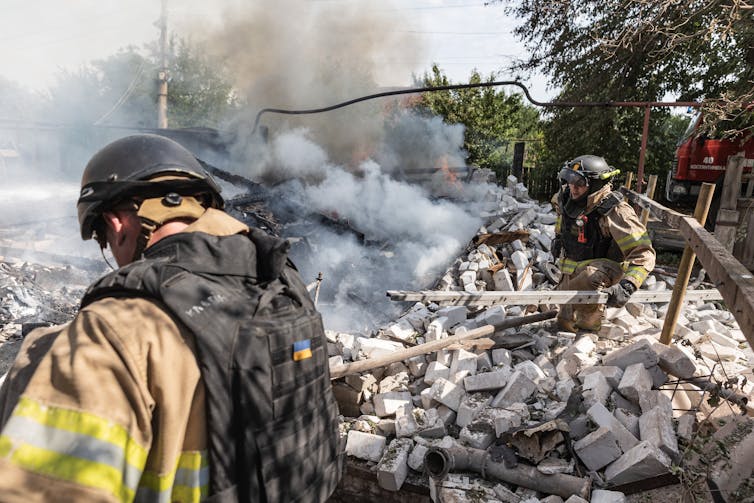
Ukrainian firefighters work to put out fires stemming from Russian artillery shelling of the city of Kostiantynivka, a sign of the nearly constant toil of the conflict.
Photo by Diego Herrera Carcedo/Anadolu via Getty Images

The devil in the details

It remains unclear what Trump actually wants to achieve in Alaska. The details of the deal he is trying to persuade Putin to accept are unclear. For the Trump administration, the basic idea for ending the conflict appears to be land for peace: an end to military action by both sides and de facto recognition of the Ukrainian territory currently occupied by Russian forces.

One glaring problem with this formulation is that Russia does not control all the territory of the four Ukrainian provinces that it claims. They occupy nearly all of Luhansk, but not all of Donetsk, and only 60% of Zaporizhzhia and Kherson. If Russia insists on taking all of Donetsk province, for example, Ukraine would have to hand over about 2,500 square miles (6,500 square kilometers), with 200,000 people, mainly in the cities of Kramatorsk and Slovyansk.

It is hard to imagine President Volodymyr Zelenskyy agreeing to such a concession.

Yet it is equally hard to see Putin giving up his claim to all four provinces, which were formally incorporated into the Russian Federation in October 2022. In a June 2024 speech to the Russian foreign ministry, Putin laid out his most thorough analysis of the “root causes” and course of the conflict. He stated that the legal status of the four provinces as part of Russia “is closed forever and is no longer a matter for discussion.”

Clearly, the territorial question is the biggest hurdle facing any would-be peacemaker, including Trump.

Other issues, such as Ukraine’s request for security guarantees, or Russia’s demands for the “denazification” and “demilitarization” of Ukraine, could be dealt with later through negotiation and third-party mediation.

There are other factors that play into the chances of peace now.

Both Ukrainian and Russian societies are tired of a conflict that neither of them wanted. But at the same time, in neither country does most of the public want peace at any price.

If Trump can persuade Putin to agree to give up his claims to the entire territory of the four provinces in Ukraine’s east, that would be a substantial concession – and one that Zelenskyy may be well-advised to pocket. Putin would also expect something in return — such as the lifting of international sanctions and restoration of full diplomatic relations with the U.S. Then Putin could fly back to Moscow and tell the Russian people that Russia has won the war.

If such a deal transpires in Alaska, Trump would then face the challenge of persuading Ukraine and Europeans to accept it.

However, given Putin’s apparent confidence that Russia is winning the war, it remains unlikely that he will be persuaded by anything that Trump has to offer in Anchorage.

The Conversation

Peter Rutland does not work for, consult, own shares in or receive funding from any company or organization that would benefit from this article, and has disclosed no relevant affiliations beyond their academic appointment.

– ref. Don’t write off the Putin-Trump summit just yet – its outcome might confound critics – https://theconversation.com/dont-write-off-the-putin-trump-summit-just-yet-its-outcome-might-confound-critics-262933

Child malnutrition is a sign of conflict to come: Nigerian study links climate change, food and violence

Source: The Conversation – Global Perspectives – By Marina Mastrorillo, Senior Economist, CGIAR

The pathway from climate change to violent conflict is not simple. There are the obvious immediate effects of global warming like water scarcity and crop failure. But beyond these, climate stress can pave the road to violence through indirect channels – a gradual rise in food insecurity and growing social tensions that set the stage for more armed violence.

We are a team of researchers who investigate the links between climate change, food systems and conflict. We set out to explore the relationship between climate variability, child malnutrition and violent conflict.


Read more:
Climate and mortality rates in Kenya, Mali, and Malawi: what we found


Our study focused on Nigeria. The country has faced rising temperatures, recurrent droughts, and one of the highest burdens of food insecurity and conflict in Africa. Its northern and north-eastern regions in particular have fragile agrifood systems, limited public services, and ongoing insecurity. This makes them especially vulnerable to the impacts of climate shocks.

In north-eastern Nigeria, 8.8 million people are threatened by a nutrition crisis. About 12,000 children in the Lake Chad area suffer from acute malnutrition as a result of resource depletion, climate change and insecurity.

For our research, we used household data from the Nigeria demographic and health surveys and combined this with information on climate and conflict. We applied a system of equations to separate the role child malnutrition plays in climate-related conflict from other factors that aren’t easily observed but which contribute to shape the climate-conflict link.

From this, we found that rising temperatures don’t immediately trigger violence. Instead, they set off a chain reaction: heat stress on the planet over time stresses food systems. As crops fail and household incomes fall, the youngest and most vulnerable are often the first to show signs of distress and become malnourished.


Read more:
The Lake Chad Basin is a security nightmare. 5 guidelines for finding solutions


Climate change contributes to higher rates of acute child malnutrition, or wasting. This is where children have very low weight for their height, usually because of sudden food shortages or illness. Wasting is one of the clearest signs that a child is not getting enough to eat.

In Nigeria, formal safety nets are limited. This means that the social strain of malnourished communities can become a powerful driver – or justification – for engaging in violence, mostly as a desperate alternative source of income or safety. People who aren’t getting the food they need may be increasingly inclined to support or be recruited by armed groups to ensure food security, shelter and physical protection.

One of the study’s key contributions is its use of child malnutrition indicators to trace the indirect effects of climate stress on conflict. Our research shows that acute malnutrition – especially wasting – is an early warning signal of social breakdown in fragile settings.


Read more:
Malnutrition among children is rife in Nigeria. What must be done


We recommend that systems that give early warnings of conflict should analyse nutrition in climate change-affected areas and use the levels of malnutrition as a way to predict potential conflict. Taking nutrition into account is a practical way to anticipate and prevent violence before it erupts.

Malnutrition as a hunger signal

Think of climate-driven conflict like a tangled web. We’ve managed to trace one clear thread – malnutrition – and show how it is linked to violence. But even after accounting for that thread, the web still holds tight. That’s because other forces, like economic shocks, migration, or institutional breakdown, are still tugging at the system.

We carefully mapped the indirect role of malnutrition through a method that helps identify how one factor (climate stress) affects another (conflict) through an intermediate pathway (malnutrition), while also taking other factors into account. This enabled us to calculate the contribution of malnutrition to climate related conflict.

We examined how shifts in climate affect child malnutrition in Nigeria – specifically wasting, stunting and underweight – and how these, in turn, relate to violent outbreaks. Among the various indicators, wasting stood out.


Read more:
11 million Nigerian children are going hungry: how this hurts their health and what needs to be done


Severe wasting is responsible for one in five deaths among children under the age of five globally, making it one of the leading threats to child survival. Because wasting reflects short-term nutritional stress, it can act as an early warning sign that communities are struggling to cope with climate shocks.

This finding is particularly relevant in farming communities where people depend on predictable weather to grow food and earn a living.

This offers a new way to think about climate, peace, and security. It’s about how weather changes unfold through daily meals, children’s diets and household decisions, sometimes quietly but no less dangerously.

Turning data into defence

Our study will improve the accuracy of current estimates of indirect impacts of climate change on conflict, because it looks at how these impacts are mediated by food and nutrition security outcomes.

Integrating malnutrition data into early warning systems, investing in nutrition-sensitive climate adaptation, and targeting support to the most vulnerable regions can reduce both human suffering and the risk of conflict.


Read more:
Extreme weather is disrupting lives in southern Africa: new policies are needed to keep the peace


Today, headlines focus on armed groups and battlefield dynamics, which is understandable. But we risk overlooking the quieter patterns beneath the surface.

The next crisis may not start with a bullet but with starvation.

We gratefully acknowledge the collaboration and support of Anna Belli, a junior professional officer at the Office of the Chief Economist at the Food and Agriculture Organisation and lead author of this research, Antonio Scognamillo, economist in the Agrifood Economics and Policy Division, and Ada Ignaciuk, chief editor of the State of Food Security and Nutrition at the Food and Agriculture Organisation.

The Conversation

Marina Mastrorillo works for The Alliance of Bioversity and CIAT of CGIAR. She receives funding from the CGIAR Trust Fund (https://www.cgiar.org/funders/) through the CGIAR Climate Action and Food Frontiers and Security Science Programmes.

This research was supported by the CGIAR Climate Action and Food Frontiers and Security Programmes, with funding from the CGIAR Trust Fund.

Chun Song works for The Alliance of Bioversity and CIAT of CGIAR. She receives funding from the CGIAR Trust Fund (https://www.cgiar.org/funders/) through the CGIAR Policy Innovation Program.

Grazia Pacillo works for The Alliance of Bioversity and CIAT of CGIAR. She receives funding from the CGIAR Trust Fund (https://www.cgiar.org/funders/) through the CGIAR Climate Action and Food Frontiers and Security Science Programmes. This research was supported by the CGIAR Climate Action and Food Frontiers and Security Science Programmes, with funding from the CGIAR Trust Fund.

Victor Villa works for the Alliance of Bioversity International and CIAT, which is part of CGIAR. He receives funding from the CGIAR Trust Fund (https://www.cgiar.org/funders/) through the CGIAR Science Programmes on Climate Action and Food Frontiers and Security.

– ref. Child malnutrition is a sign of conflict to come: Nigerian study links climate change, food and violence – https://theconversation.com/child-malnutrition-is-a-sign-of-conflict-to-come-nigerian-study-links-climate-change-food-and-violence-262359