Freud would have called AI a ‘narcissistic insult’ to humanity – here’s how we might overcome it

Source: The Conversation – UK – By Antje Jackelén, Senior Advisor and Systematic Theologian., Lund University

AI can deal a fateful blow to human self-understanding. Stokkete/Shutterstock

In 1917, Sigmund Freud described three “narcissistic insults” that had been caused by science. These were moments of scientific breakthrough that showed humans that we are not as special as we once believed.

The first came with astronomer Nicolaus Copernicus’s discovery%5D) that we are not at the centre of the universe, because the sun rather than the Earth is at our solar system’s centre. It was followed by two more: the loss of humanity’s position as “the crown of creation” through Charles Darwin’s theory of evolution, and the loss of sovereignty over our own selves through the discovery of the power of the unconscious. The latter was Freud’s own work and, according to him, the toughest one of all.

Had Freud heard of artificial intelligence (AI), I believe he would have been prompted to add a fourth. The cosmological, biological and psychological insults have now been followed by the intellectual. AI deals a fateful blow to our human self-understanding.

As a theologian, I’m particularly interested in the implications of this threat for our sense of spirituality. Generally speaking, humanity has coped quite well with the first three “narcissistic insults” described by Freud. But what cures are available for the wound of this most recent development?

1. Changing the language of AI

Even though the range and achievements of AI are breathtaking, the term “artificial intelligence” could be questioned to quell the damage it presents to our self-image. “Co-intelligence” may be more adequate, indicating that, for example, large language models should be used only as complementary to our own mental resources. This language softens the harshness.

2. Questioning the intelligence of AI

Some researchers have questioned the intelligence of AI by pointing out that a large language model merely is “a stochastic parrot”. This suggests that AI seems to have a deep understanding of what it conveys, but in reality, it’s just a system that combines linguistic patterns it has encountered in its extensive training data, based on probable associations, without any actual grasp of meaning.

“We are not going to be AI’s stupid pets,” wrote cognitive scientist Peter Gärdenfors. Rather than fearing AI, we should be fearful of ourselves, because, seduced by AI, we could give up the fruits of the Enlightenment.

Focusing on the differences between human intelligence and its artificial counterpart makes us understand that as long as collective human intelligence can judge the plausibility of AI output, the insult can be handled.

3. Speaking of ‘intelligences’ rather than intelligence

Instead of a single phenomenon, human intelligence can be understood as a variety of intelligences: artistic, personal and moral. They all come together in a mode of intelligence that is intuitive, socially embedded and holds special importance for spirituality – the opposite of a stochastic parrot.

Humans seek and find meaning even beyond ordinary reality, whereas AI is stuck in the “here”, in the profane. When a large language model creates nonsensical or inaccurate outputs, this is called a hallucination. Artificial intelligence hallucinates, human intelligence transcends.

In view of this integration of intelligences in humans, AI is inferior to human intelligence – at least for now.

Yes, but …

These attempts to address the insult of AI recognise that it functions differently from human intelligence. Unlike humans, AI has its identity in computation and statistics. But that does not mean that we need not fear. The speed, volume and complexity of data processing by AI can reach levels that render this difference irrelevant, because the output will count, rather than the way it is achieved.

Say I suffer from massive fear of death and my partner is too affected to be of any help, while my AI assistant shares advice that I experience as caring and valuable. Would it then matter what I call this thing (example one), whether it is indeed intelligent (example two) or how many intelligences it represents (example three)?

Experienced usefulness is likely to trump philosophical questions about the intelligence of AI systems. So what now?

Wavering between techno-messianism (AI will save us and the planet) and techno-dystopia (AI is the end of humanity) is an understandable reaction to the intellectual insult. Yet, uncritical embrace is socially irresponsible, and panic often leads to irrational actions or apathy.

AI development is quicker than adaptation of social and legal systems – especially when the law follows democratic principles. In the haze of this dilemma, transparency gets lost, lines of responsibility become blurred, consequences strike unexpectedly and unevenly. AI will change the way we think about knowledge, work, communication and integrity. It will create winners and losers in the labour market. Social unrest may arise. Without critical humanistic reflection, it’s possible that AI will fail to contribute to a good society for all.

In response, all sectors of society must cooperate. Technical and legal expertise is not enough. It is in civil society that existential questions are asked, and answers sought not only in calculations about power and economics or in legal and technical intricacies, but also in the cultural, philosophical and theological sources from which humanity has drawn orientation over centuries.

The hallmarks of western modernity – individualism, consumerism and secularism – will not suffice in face of AI’s narcissistic insult. Instead, human qualities such as relationality, transcendence, fallibility and responsibility are key.


Looking for something good? Cut through the noise with a carefully curated selection of the latest releases, live events and exhibitions, straight to your inbox every fortnight, on Fridays. Sign up here.


The Conversation

Antje Jackelén does not work for, consult, own shares in or receive funding from any company or organisation that would benefit from this article, and has disclosed no relevant affiliations beyond their academic appointment.

ref. Freud would have called AI a ‘narcissistic insult’ to humanity – here’s how we might overcome it – https://theconversation.com/freud-would-have-called-ai-a-narcissistic-insult-to-humanity-heres-how-we-might-overcome-it-255802

Why the Arthur’s Seat burn is a cautionary tale for the UK’s wildfire management strategy

Source: The Conversation – UK – By Elliot David Convery-Fisher, Research Fellow in the Socio-Ecology of Fire Management, Royal Botanic Garden Edinburgh

For the tenth time this year, a wildfire warning covers most of Scotland. The latest alert came after a recent, and not the first, gorse fire on Arthur’s Seat, Edinburgh’s iconic ancient volcano that draws millions of visitors every year. Fire crews think human activity caused the fire. This is exactly the kind of incident that triggers our instinct to find someone to blame.

But with over 41,000 hectares already burned across Britain in 2025 (an area larger than the Isle of Wight) pointing the finger misses the point. News reports focus on who lit the spark, but Arthur’s Seat was primed to burn: flammable gorse has flourished since sheep stopped grazing the slopes. The real question isn’t who started this fire, but why we are caught off guard when fires happen in the wrong places.

This isn’t just an Edinburgh problem. Millions of Britons live near fire-prone landscapes, from Dorset heathlands to the Scottish Highlands.

My colleagues and I work with national parks in southern Africa to understand how they manage this challenge. The challenges I see in South Africa mirror what Britain now faces because of climate change: how to keep people and infrastructure safe when fire an unavoidable part of our reality.

Research shows that climate change has made the UK’s risk of ideal conditions for wildfires six times higher. While ignition sources haven’t changed much – most UK fires still start from human activity like discarded cigarettes or campfires – the conditions that allow fires to spread have transformed. Warmer, wetter winters create more plant growth and therefore fuel, which turns bone-dry during hot, dry spells.

bonfire remains in empty field
So many wildfires start as a result of discarded cigarettes or smoking remains of campfires.
Simon Collins/Shutterstock

Fire is a natural and vital feature of many landscapes globally. In fire-adapted ecosystems it can clear invasive species while promoting native grasses, reduce the buildup of dead vegetation that fuels dangerous blazes and create some of our most iconic places where plants and animals thrive.

The problem isn’t fire itself, but where, when and how it happens. Over 1.8 million British homes now sit within 100m of countryside edges – exactly where most wildfires occur. During one of Britain’s biggest wildfires on a North Yorkshire moor in 2018, flames nearly reached homes and critical infrastructure: the trans-Pennine railway, M62 motorway, major power lines and drinking water reservoirs. Another recent fire in the same area was close to a ballistic missile base.

I have interviewed fire managers in South Africa, where humans have worked with fire for millennia. Their approach suggests a fundamentally different relationship with fire, understanding fire as part of a landscape’s natural processes. Instead of treating every fire as a crisis, they study how fire behaves – when it helps ecosystems, when it threatens communities, and how to work with these patterns rather than against them.

Take Cape Town as an example, where fire authorities publish daily risk ratings that residents check like weather forecasts. High-risk days mean banned barbecues and closed trails. When safe, fire crews deliberately burn mountain slopes in small sections – having the right fires at the right times to prevent catastrophic ones. Property owners in Cape Town form neighbourhood fire protection associations to support each other and the emergency services during unplanned fires, creating a coordinated response network.

The UK is catching on

The UK government is reviewing its wildfire management strategy, focusing on prevention, collaboration and risk reduction. Landowners are also taking a more proactive approach. The Cairngorms national park in Scotland approved the UK’s first comprehensive wildfire management plan in June 2025, introducing seasonal fire management plans and setting up community groups to communicate fire risk and response. Fire services in the Cairngorms now use drones for real-time aerial mapping and off-road vehicles to fight fires in tough terrain.

However, we are still playing catch up. Fire services recorded 286 wildfires between January and April 2025. That’s over 100 more than the same period in 2022’s record year. Yet services receive little dedicated wildfire funding.

Britain could learn from South Africa’s holistic approach. Starting with the need to understand our own landscapes first. What role does fire play in our landscapes? How can we safely manage fire risk in different landscape types? Which of our ecosystems and places might actually benefit from carefully managed fire?

Edinburgh could start by studying Arthur’s Seat as Cape Town studies Table Mountain – not to implement identical solutions, but to understand how fire behaves in this specific landscape. This means researching how gorse burns, whether controlled burns could reduce dangerous fuel loads, and how visitors can safely coexist with proactive fire management.

The lesson isn’t to transplant South African methods to British soil, but to embrace their comprehensive approach to understanding fire. Every landscape is different. What works on Cape Town’s fynbos shrubland won’t necessarily work on Scottish moors. But the principle of studying fire as a part of the landscape rather than simply an emergency to suppress could transform how Britain manages its growing fire risk.

Fire isn’t the enemy. Poorly understood, unmanaged fire is. Climate change guarantees greater fire risk. Britain’s choice is clear: continue reacting with shock to each blaze, or develop our own integrated understanding of how fire works in British landscapes. The Arthur’s Seat fire was a warning shot. The question is whether we’ll heed it.


Don’t have time to read about climate change as much as you’d like?

Get a weekly roundup in your inbox instead. Every Wednesday, The Conversation’s environment editor writes Imagine, a short email that goes a little deeper into just one climate issue. Join the 45,000+ readers who’ve subscribed so far.


The Conversation

Elliot David Convery-Fisher works for the Royal Botanic Gardens Edinburgh and the University of Edinburgh. He receives funding from UK International Development through the Biodiverse Landscapes Fund project ‘Achieving Sustainable Forest Management through Community Protected Areas in Madagascar’ (ecm 62237).

ref. Why the Arthur’s Seat burn is a cautionary tale for the UK’s wildfire management strategy – https://theconversation.com/why-the-arthurs-seat-burn-is-a-cautionary-tale-for-the-uks-wildfire-management-strategy-263065

Pierre Poilievre wins Alberta byelection — but he’s got a long road ahead to broaden his base

Source: The Conversation – Canada – By Sam Routley, PhD Candidate, Political Science, Western University

Conservative Leader Pierre Poilievre will return to Parliament, this time as the new member for the Alberta riding of Battle River-Crowfoot.

With more than 80 per cent of the popular vote in a byelection, Poilievre has managed to pass the first significant test of his leadership following the Conservative Party’s federal election loss in April. The victory not only signals ongoing support from the riding’s voters but, more importantly, restores the legitimacy and platform that the Office of the Leader of the Official Opposition provides.

But the scope of this success should not be overstated. This victory isn’t a noteworthy accomplishment, nor does it indicate a comeback for the Conservatives. Rather, success here was the bare minimum; the start of a much longer journey back to prominence for the Conservatives.

Safest possible riding

Battle River-Crowfoot, which comprises a predominantly rural part of southeastern Alberta, is one of the safest seats for the Conservatives in the country. Although there are variations over time, a Conservative candidate within the last few decades could have, regardless of the particulars of the election period, expected at least 70 per of the vote. Just this year, the party’s candidate — Damien Kurek — won almost 83 per cent of the vote.

But although there has been little change in the riding over time, byelections can often produce novel, unpredictable and counterintuitive results. Unlike Canada-wide contests, local communities are subject to the near constant attention of parties, leaders and the national media.

Byelections also generally have smaller rates of voter turnout and engagement — it’s rare to see more than a third of them turn out. This means that short-term and localized dynamics can have a bigger impact on the results, especially if they can be mobilized.

In fact, minor parties and independent candidates perform generally better in byelections.

Were there any localized dynamics that could have hurt Poilievre? Apart from some reports of grumbling within the Conservative camp, media coverage focused on residents who expressed skepticism that Poilievre — having been an urban politician for the last two decades — was capable (let alone willing) to voice the specific needs of the community.

In fact, this byelection has come at a moment of rising separatist sentiment in Alberta.


Read more:
What if Alberta really did vote to separate?


Voting for party over leader?

With all this said, though, none of it proved to matter in the results. No serious challenge to Poilievre really materialized, even with 216 other names on the ballot. Instead, by winning 80 per cent of the vote, the Conservative leader has accomplished what amounts to a typical result for the party.

Voters, it seems, did not turn out for Poilievre’s leadership in large numbers as much as they have maintained their support for the party. For now, that’s enough for Poilievre.

He’s shown his ability to mobilize support among voters, and now can turn to his next challenge of surviving the mandatory leadership review in January.

In the months following the federal election in April, the federal Conservatives have been at something of a standstill. Alongside the slow summer months and the soul-searching that follows every election defeat, the party has yet to determine how to adjust to Canada’s new political environment.

While Poilievre — who may or may not still be leader in a year — has focused on communities in Battle River-Crowfoot, the political centre of gravity has shifted to Prime Minister Mark Carney.

In his fifth month in the job, Carney maintains considerable public confidence, whether it comes to ongoing negotiations with the United States or in his expressed support for many of the policies that have been long promoted by the Poilievre Conservatives.

Historically, the Conservatives have quickly replaced their leaders. Poilievre’s predecessors, Andrew Scheer and Erin O’Toole — despite publicly expressing intentions to stay on — were quickly pushed out of their jobs following the formation of Liberal minority governments under Justin Trudeau.

The months ahead

What seems to make Poilievre’s situation different, though, is that no clear or popular successor has appeared, especially someone who can combine the support of party members, elites and unaffiliated voters in the same way he has. In the coming months, he will be able to use his platform in the House of Commons to make this point even more apparent.

No honeymoon lasts forever. Even while Carney now has the support of the Canadian public, there are several tensions and deep-seated challenges within his stated goals that are bound to lead to future problems.


Read more:
Is Mark Carney turning his back on climate action?


The discontents Poilievre has managed to tap into have been, at best, temporally satiated in the wake of the byelection win. And Carney’s coalition remains a defensive one, consisting of just one cohort of Canadian voters who are divided in terms of age, region, education level and income. This is all part of a voter realignment that is increasingly shaping the country’s politics.

What remains unclear is what challenges Carney will face in the months ahead and how the Conservatives will pivot to take advantage of them.

Will the party, for instance, maintain the libertarian-flavoured populism of the last few years? Or will it, like its international peers, embrace a program that’s, among other things, more economically interventionist, pro-worker and concerned with national culture?

Already, the party has explored a more restrictive stance on immigration, has taken the side of striking Air Canada workers and offered substantive alternative to Carney’s “elbows up” nationalism.

We’ll have to wait until the leadership review in January to see.

The Conversation

Sam Routley does not work for, consult, own shares in or receive funding from any company or organisation that would benefit from this article, and has disclosed no relevant affiliations beyond their academic appointment.

ref. Pierre Poilievre wins Alberta byelection — but he’s got a long road ahead to broaden his base – https://theconversation.com/pierre-poilievre-wins-alberta-byelection-but-hes-got-a-long-road-ahead-to-broaden-his-base-262191

Hype and western values are shaping AI reporting in Africa: what needs to change

Source: The Conversation – Africa (2) – By Sisanda Nkoala, Associate professor, University of the Western Cape

News media shape public understanding of artificial intelligence (AI) and influence how society interacts with these technologies. For many people, especially those who have not sought more knowledge about AI elsewhere, media platforms are a primary source of information.

This is particularly significant in Africa, where historical and socioeconomic contexts like colonial legacies and uneven technology transfer shape how AI is understood and adopted.

Consequently, the way African news media represent and frame AI carries weight in shaping broader public discourse.

To explore how African media report on AI, we, as media researchers, analysed 724 news articles about AI from 26 English-speaking African countries. These were published between 1 June 2022 and 31 December 2023. We looked at how these publications contributed to the hype about AI – exaggerated excitement, inflated expectations, and often sensationalised claims about what artificial intelligence can do.

Hype is often contrasted with the notion of something called an AI winter. This is a period of diminished interest and investment in AI technologies. It’s a cyclical trend that has been seen since AI’s inception in the 1950s. It manifests in exaggerated language, overly optimistic or pessimistic views and significant investments in AI.

Our study examined how AI was portrayed in African news media – whether it was exaggerated or overly optimistic. Media portrayal can influence policy, investment and public acceptance of new technologies. For example, in Germany it was found that positive media coverage of different fuels changed public perception in a positive way.

Our findings show a clear pattern in placement and authorship of articles. The most common placement of AI articles (36%) was in the technology section of publications, followed by general news (24%) and then the business section (19%). This shows that these publications mostly talk about AI as a practical tool that can solve problems and create economic opportunities. They highlight its usefulness and potential benefits, rather than exploring its social or ethical implications. Discussion of issues like employment, inequality and cultural values was largely missing.

African journalists, news entities and content creators contributed some 29% of the articles. But western-based news entities (21%) and journalists (5%) had a considerable influence. Global news agencies like AFP (15%) and Reuters (6%), along with tech news providers like Research Snipers (13%), frequently wrote these pieces.

Only a small proportion of articles (4%) were written by researchers. This suggests that the voices of those directly engaged in AI research and development in Africa were muted. But they are crucial for a locally informed understanding.

To sum up the patterns:

  • practical benefits of AI are emphasised at the expense of social and ethical conversations

  • African perspectives on how AI should be developed and used are often overlooked in favour of a western, business-focused viewpoint.

What words are used to describe AI?

We also analysed the words used most frequently. The frequent mention of Google, Microsoft and ChatGPT reflects the dominance of western tech giants in the AI landscape. Words like “he” and “his” appeared disturbingly frequently, while feminine pronouns weren’t among the top words. This indicates a bias towards male perspectives.

The scarcity of terms like Africa, African and African countries suggests that the coverage seldom regards specific African needs and challenges. This overlooks Africa’s growing AI ecosystem.

We found three main themes around AI in African news:

  • AI’s transformative potential, for example for agriculture, administration, healthcare and economic growth

  • concerns about AI’s potential negative effects, the unknown and disruptive nature of AI

  • articles that offered a more balanced view and useful information, aiming to demystify AI tools and explain developments.

What this means for Africa

The dominance of technical and economic framing, often by western voices, might steer policy decisions towards uptake without adequate local consultation or ethical oversight. This might lead to policies that mirror global hype rather than community-specific needs.

The overemphasis on “tools” and “solutions” risks overlooking the broader effects of AI on employment, inequality and cultural values.

The lack of Afrocentric terms in the reporting contributes to a symbolic exclusion, where Africa’s specific needs and opportunities are marginalised.

Towards a more inclusive AI narrative

To encourage a more responsible and locally relevant AI journalism in Africa, African journalists and researchers should be empowered to report on and analyse this technology.

The range of voices should expand to include local researchers, policymakers and communities experiencing AI’s effects firsthand. This means balancing coverage of AI’s economic potential with sustained attention to its social, cultural and ethical implications. African media can resist one-dimensional hype and create a more inclusive and socially responsible conversation around AI.

The Conversation

Sisanda Nkoala receives funding from the National Research Foundation and from the University of the Western Cape. She is a public representative on the South African Press Council and the Western Cape convenor of the South African National Editors Forum.

Musawenkosi Ndlovu receives funding from National Research Foundation of South Africa.

Tanja Bosch receives funding from the National Research Foundation as a SARChI Chair. She is a board member of Media Monitoring Africa.

Trust Matsilele does not work for, consult, own shares in or receive funding from any company or organisation that would benefit from this article, and has disclosed no relevant affiliations beyond their academic appointment.

ref. Hype and western values are shaping AI reporting in Africa: what needs to change – https://theconversation.com/hype-and-western-values-are-shaping-ai-reporting-in-africa-what-needs-to-change-262551

Young South Africans don’t bother with elections: would lowering the voting age make a difference?

Source: The Conversation – Africa (2) – By Dirk Kotze, Professor in Political Science, University of South Africa

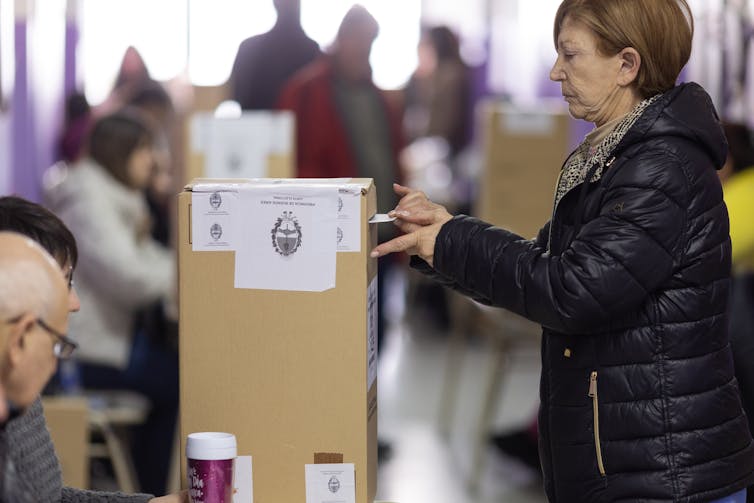
South Africa is due to hold local government elections in 2026. In the last election in 2021, only 15% of the eligible voters aged 18 to 21 registered for the election. In view of this, it’s worth considering whether the minimum voting age of 18 years should be reduced to increase participation.

What are the main driving forces for such a consideration? Based on international comparisons, how advisable would it be? What would be some of the implications of such a change for elections in South Africa?

The South African constitution does not state explicitly that the voting age is 18 years, but it is implied. Section 1(d) entrenches the constitutional principle of universal adult suffrage. Section 19(3) says “every adult citizen has the right (a) to vote in elections of any legislative body and (b) to stand for public office”.

The legal description of an adult is found in South African common law. At the age of 18 years, a person becomes legally an adult or reaches the age of majority.

The South African Electoral Act, as amended in 2003, provides that a person can register as a voter at the age of 16 years but the name can be placed on the voters’ roll only once the applicant becomes 18 years old.

South Africa’s current dispensation is currently the same as those of most countries in the world.

The United Arab Emirates is the state with the oldest minimum voting age: 25 years. In the following states it is 21 years: Singapore, Lebanon, Oman, Kuwait, Samoa and Tonga. Three of them (plus the UAE) are in the Middle East. All seven of these are very small states and the majority of them are not democratic.

By far the majority of state entities (202 in total) use 18 years as the minimum voting age. Indonesia, North Korea and Greece, on the other hand, decided on 17 years as the voting age, while in Brazil, Argentina and Ecuador it is 16 years.

Lowering of the voting age is not an uncontested idea. A number of considerations can be presented as its pros and cons. The general contention is that if a larger proportion of the population elects their public representatives, it would enhance public trust in elections. But, in South Africa at least, that is offset by young people’s lack of enthusiasm in elections.

For the moment, a change in the voting age would most possibly not add major advantages to South Africa’s electoral dynamics, because it would not necessarily increase the number of voters or change the outcome of elections.

Main considerations

Voting for a political candidate is one of the most important decisions a citizen of a state can make. What determines sound decision-making?

A person should understand what the decision is about: what the issues are and what the options and their implications are. The question therefore is: at what age would a person make rational voting decisions?

In the era of populism, fake news and manipulation, a voter should be a person who can think independently, who can distinguish between reliable and misleading information and be strong enough not to be manipulated.

A voter should also have a vested interest in the future of their country and therefore participate in voting to determine what is in the best interest of that country. An illustration of this point is the 26th amendment of the American constitution in 1971 when the voting age was reduced from 21 to 18 years. The decision was influenced by the apparent contradiction that 18-year-old American citizens were drafted to fight in the Vietnam war while they were still excluded from voting.

But how well a person is informed about politics or the issues in a country isn’t determined by age. Especially in the era of easily accessible internet information and the different forms of social media. This implies that knowledge of the issues or politics in general is not a sufficient motivation for lowering the voting age.

The critical factor is how that information is used to take an informed and rational decision.

The rationale of why minors need guardians who must assist them in decision-making is that they do not have yet the life experience and judgement abilities to take the responsibility for a decision on their own. Voting is an individual and independent action and therefore no assistance in the decision-making process can be allowed.

Implications

Do 16- or 17-year-old people have a different attitude towards elections or politics in general than 18-year-olds?

In the absence of survey data, an informed guess is: no.

Adding them would not necessarily change the outcomes of elections. The minority Economic Freedom Fighters party in South Africa is the only one that has a strong appeal to young voters. But it has been losing support.

How many new registered voters could be added by 16- and 17-year-old newcomers? Statistics SA provides figures only for the age bracket 15-19, which is slightly more than 9% of the total population. The age group 16-17 years therefore might be around 3%-4% of the population. Given the trends of low voter registration among the young eligible voters, the percentage it would add to the total might therefore be quite small.

If the 16-17-year bracket were to be added to the electorate, the total number of eligible voters would increase but because the rate of registration as voters is in decline, the total percentage of registered voters would most possibly decrease. Young eligible voters are proportionally less likely to register than their older counterparts.

With a decline in the voting age, voter turnout based on the number of registered voters might not decrease dramatically. The main difference would be seen in the voter turnout as a percentage of the eligible voters, because of the low level of young eligible voters who are willing to register as voters.

Probably an unintended consequence of a 16-year voting age is that school pupils would be eligible voters during the last two or three years of their school studies. This has the potential to politicise schools, especially during election times. Political parties might insist on campaigning at schools.

At the same time, it would be an opportunity for more concentrated civic and voter education of a captured audience. Following this argument, a registered voter who complies with the constitution’s section 47 could stand as a candidate and be elected as a public representative in a legislature.

For now, the chances are slim that the voting age will change at a time when several other electoral reform processes are in the pipeline affecting the electoral system, party funding and even electronic voting.

The Conversation

Dirk Kotze does not work for, consult, own shares in or receive funding from any company or organisation that would benefit from this article, and has disclosed no relevant affiliations beyond their academic appointment.

ref. Young South Africans don’t bother with elections: would lowering the voting age make a difference? – https://theconversation.com/young-south-africans-dont-bother-with-elections-would-lowering-the-voting-age-make-a-difference-262818

Cameroon’s conflict is part of a bigger trend: negotiations are losing ground to military solutions

Source: The Conversation – Africa (2) – By Jacqui Cho, PhD Fellow, swisspeace Mediation Program, University of Basel

In central Africa, a violent conflict has been unfolding for nearly eight years. What began in 2016 as peaceful protests by lawyers and teachers against the increasing “francophonisation” of the legal and education systems in Cameroon’s anglophone regions quickly escalated into an armed conflict between separatist groups and government forces.

It has come at a devastating human cost. With both sides of the civil war using education as a weapon, over 700,000 children have been forced out of school since 2017. By October 2024, the conflict had resulted in more than 6,500 deaths and displaced over 584,000 people internally. More than 73,000 have been forced to seek refuge in neighbouring Nigeria.

Yet Cameroon’s government has refused meaningful negotiations. Though a key party to a conflict that remains unquestionably unresolved, Yaoundé insists that the situation is under control. In practice, it has pursued a dual strategy of military repression paired with a façade of dialogue. Behind the scenes, it has quietly stalled and derailed authentic efforts for peace.

Why has Yaoundé been able to avoid a peace settlement with so little international backlash? I sought answers as part of my PhD research in mediation, focused on the conflict in Cameroon.

In an era of revived rivalry between great powers, Cameroon has learned to navigate and exploit the interests of competing global actors. Western governments, eager to keep Cameroon within their sphere of influence and fearful of growing Russian and Chinese engagement, have not applied pressure for peace. Pushing hard for negotiations would risk jeopardising relations with Yaoundé – an outcome western capitals are keen to avoid.

Cameroon’s case reveals a broader trend. Across Africa and beyond, the post-cold war norm of resolving political conflicts through negotiation is losing ground. In its place, a militarised approach is becoming increasingly common. Global powers are tolerating, even encouraging, forceful approaches. This is particularly true when the regimes in question serve, or help protect, their respective strategic interests. This shift is quietly reshaping the rules of conflict resolution, with serious implications for peace and democracy.

Calculated defiance of dialogue

Between 2019 and 2022, Switzerland attempted to facilitate peace talks between the Cameroonian state and various separatist groups. The process failed, largely due to the Cameroonian government’s aloofness and lack of commitment. When the Swiss initiative was quietly shelved, there was little international backlash.

Cameroon’s ability to walk away from the facilitation effort, while escalating military operations, was a result of its diplomatic manoeuvring within the Franco-Russian rivalry. By signing a military deal with Russia in April 2022, Cameroon signalled to France and others that it had diplomatic options. This move reportedly shifted France’s stance to one of allowing Yaoundé to do as it pleased, as long as it remained within the French sphere of influence. The French president’s visit to Cameroon just months afterwards reinforced the idea that strategic relationships would take precedence over conflict resolution or democratic norms.

Cameroon has also cultivated a circle of “quiet enablers” over decades. Its strong relations with states as diverse as the US, China, Israel and Japan have similarly provided tacit support as Yaoundé took a more militarised approach and have shielded it diplomatically.

Global drift towards force

The anglophone crisis in Cameroon illustrates a troubling global development. While negotiated settlements were the dominant, or preferred, model for resolving conflicts in the post-cold war era, today that model is under threat.

This challenge to the norm of negotiated settlements stems from various sources. On the one hand, changes within so-called liberal western states, particularly since the “global war on terror”, have led to a renewed emphasis on security, sometimes at the expense of liberal democratic principles. This has generated greater tolerance for authoritarian regimes and tacit acceptance of the use of force.

On the other hand, rising powers like Russia and China are promoting alternative models of conflict management. They favour approaches that empower strong states to maintain peace, even through the use of force. Russia, for example, views its military engagements in Syria as a form of “peacemaking”. It prioritises order over justice. China’s model for peace similarly focuses on building a strong central state.

African states are far from passive observers in this evolving landscape. Drawing on experiences from the eras of empire and the cold war, African states are looking to further their own interests both domestically and internationally.

It’s not just global powers objectifying Africa. It is also about African actors strategically playing the game because they benefit.

Elections and the stakes for democracy and governance

With a presidential election looming in October 2025, the stakes for Cameroon’s democracy, governance and peace could not be clearer. At the age of 92, President Paul Biya has formally announced his candidacy for an eighth term.

Opposition parties describe a system already rigged against them, with reported incidents of harassment and intimidation. The ongoing conflict in the anglophone areas is expected to make voting harder, if not impossible. This is a situation that will likely favour Biya.

The regime’s ability to defy calls for dialogue is emboldened by geopolitical cover and a fragmented opposition. It raises the risk of a militarised status quo being mistaken for stability. Everyday violence, kidnappings, and killings – especially in rural areas – have become normalised, with little international outcry. The regime continues to pursue its strong-arm tactics without concerns about international repercussions.

Dangerous precedent

The case of Cameroon’s anglophone crisis is emblematic of a broader, worldwide struggle between a negotiations-oriented model and a militarised approach to ending violent political conflicts. The erosion of the norm of negotiated settlement, coupled with the increased agency of African states to withstand external pressure, brings an additional challenge to an already difficult process of encouraging conflict parties to come to the table.

Cameroon shows how global silence and strategic use of the geopolitical environment can give rise to and legitimise conflict resolution through brute force. Without a renewed commitment to inclusive dialogue and political settlements, the precedent being set today may shape the conflict management of tomorrow across Africa and beyond.

The Conversation

Jacqui Cho’s research has been funded by the Swiss National Science Foundation under Grant Number 100017_197543 and the Excellent Junior Researchers Grant from the University of Basel.

ref. Cameroon’s conflict is part of a bigger trend: negotiations are losing ground to military solutions – https://theconversation.com/cameroons-conflict-is-part-of-a-bigger-trend-negotiations-are-losing-ground-to-military-solutions-261697

Podemos modificar el cerebro (y la salud mental) usando luces que parpadean

Source: The Conversation – (in Spanish) – By Francisco Javier Ávila Gómez, Profesor Contratado Doctor, fisica aplicada (área de óptica), Universidad de Zaragoza

DC Studio/Shutterstock

¿Se puede estimular el cerebro a través de la visión? Esa fue la pregunta que motivó nuestro estudio publicado recientemente en Journal of Imaging, donde se demuestra que la estimulación visual intermitente puede modular la actividad cerebral, un marcador de plasticidad funcional. Esta se puede entender como la capacidad que tiene el cerebro para cambiar su estructura y adaptarse durante la vida. Gracias a esto, nuestras neuronas pueden eliminar las que no usamos o fortalecer las conexiones que nos permiten el aprendizaje, la memoria o recuperarnos de lesiones como, por ejemplo, la pérdida del habla tras sufrir un ictus.

La buena noticia es que la plasticidad no es exclusiva de la edad infantil, sino que el cerebro en la edad adulta sigue reorganizando sus conexiones. Su estudio, sin embargo, suele requerir de técnicas complejas y costosas, en ciertos casos, invasivas.

El método: confrontar al sistema visual

La estimulación luminosa intermitente consiste en exponer al observador a una luz que parpadea a una frecuencia determinada. Mientras tanto, se mide la actividad cerebral mediante electroencefalografía (EEG) y es comparada con la actividad en condiciones normales.
Si durante la estimulación, se observa una respuesta conocida como potenciales evocados visuales, entendemos que ha habido una respuesta en la corteza cerebral a través del sistema visual debida al estímulo parpadeante: una mayor respuesta implica mayor excitabilidad y, por tanto, plasticidad funcional.

Frecuencia crítica de fusión

La clave está en la frecuencia del parpadeo de la luz. Nuestro sistema visual presenta dos vías principales, que transmiten la información desde la retina hacia el cerebro, conocidas como vías “parvocelular” y “magnocelular”. De forma resumida, la primera es sensible a alta resolución espacial (detalles finos) y cambios temporales lentos. La segunda responde a baja resolución espacial y cambios temporales rápidos. Ambas funcionan de forma complementaria.

Sin embargo, a veces, el movimiento es tan veloz que nuestro sistema visual no puede procesar la velocidad (como un parpadeo muy rápido), o la calidad de imagen se degrada tanto que no podemos percibir detalles pequeños (como ocurre con las cataratas, o la conducción en un día de niebla). En estos escenarios, nuestro sistema visual alcanza el límite de resolución dando lugar a un fenómeno conocido como “sumación” espacial y temporal. Es decir, nuestro cerebro “suma” las señales que recibe para generar una respuesta.

En el caso de la visión espacial, se traduce en una mancha borrosa. En el caso temporal, una luz parpadeando a una frecuencia muy alta se percibe como una luz estática sin ningún tipo de parpadeo. Esta frecuencia en el sistema visual se encuentra generalmente por encima de los 30 Hz y se conoce como frecuencia crítica de fusión.

En estos límites espacio-temporales de la visión, las vias parvo y magnocelulares juegan un papel compensatorio: Si disminuye la resolución espacial, aumenta la temporal, y viceversa. .

En nuestro cerebro, existen ventanas de sensibilidad cortical donde la estimulación con ciertas frecuencias inducen la respuesta neuronal, mientras que otras pueden inhibirla o incluso ser inocuas.

Estimular el cerebro sin terapias invasivas

Las neuronas no se activan de forma aleatoria: lo hacen siguiendo patrones oscilatorios –repetitivos– de actividad eléctrica. Estas oscilaciones son de muy baja amplitud, del orden de microvoltios en humanos. El análisis de los patrones de ondas, es una gran herramienta de investigación en la Neurofisiología para evaluar cómo funciona el encéfalo. En la mayoría de las patologías de la corteza cerebral se observan ondas disminuidas.

Estas ondas de la actividad eléctrica cerebral se detectan mediante EEG y, según su frecuencia de oscilación, se clasifican como ondas alfa, theta, delta, beta y gamma. En nuestro estudio, comprobamos que todas se pueden modular mediante estímulos visuales. Presentamos a los participantes estímulos visuales basados en un LED parpadeante controlado por un miniordenador de bajo coste (Arduino) y encontramos que, al estimular la visión a la frecuencia critica de fusión con luz verde, se producía una reducción significativa de las ondas de alta frecuencia beta y gamma.

Sin embargo, al disminuir la cantidad de luz emitida mediante difusores de luz translúcidos, el carácter compensatorio de las vias magno y pavo celular se ve comprometido. Esta confrontación nos sirvió para detectar un mecanismo de respuesta antagónico en la actividad cerebral: se encontró un aumento significativo de la actividad neuronal de las ondas beta y gamma.

Mapas de actividad cortical para iluminación a la frecuencia crítica con luz verde (derecha) y cuando el sistema parvocelular se penaliza mediante filtros ópticos.
F. J. Ávila et al.

Desórdenes mentales y neurológicos

La sincronización neuronal de ondas de la frecuencia beta y gamma está relacionada con la función cognitiva y la percepción, mientras que la pérdida de sincronización en la banda gamma se asocia con enfermedades como Alzheimer, autismo y esquizofrenia.

Además, la activación excesiva de ondas beta puede generar ansiedad y estrés, mientras que su inhibición puede conducir a depresión severa y deterioro cognitivo.

Electro-encefalograma de ondas gamma en un sujeto sano en condiciones de reposo (curva roja) y mientras se aplica el estimulador visual (curva azul).
F. J. Ávila et al.

Por ello, las ondas cerebrales de alta frecuencia son importantes bio-marcadores de la salud mental.

Electro-encefalograma de ondas gamma en un sujeto sano en condiciones de reposo (curva roja) y mientras se aplica el estimulador visual (curva azul).
F. J. Ávila et al.

¿Una terapia basada en pulsos de luz?

Nuestro experimento fue simple, pero sus implicaciones pueden ser profundas: una breve estimulación visual puede cambiar, al menos temporalmente, la actividad cerebral. Esa capacidad de cambio es lo que hemos llamado neuroplasticidad visual.

Si logramos afinar esa relación, podríamos restaurar la plasticidad perdida, sin necesidad de intervenciones invasivas, para reactivar una red neuronal dormida.

The Conversation

Francisco Javier Ávila Gómez no recibe salario, ni ejerce labores de consultoría, ni posee acciones, ni recibe financiación de ninguna compañía u organización que pueda obtener beneficio de este artículo, y ha declarado carecer de vínculos relevantes más allá del cargo académico citado.

ref. Podemos modificar el cerebro (y la salud mental) usando luces que parpadean – https://theconversation.com/podemos-modificar-el-cerebro-y-la-salud-mental-usando-luces-que-parpadean-261284

Chikungunya: what UK travellers should know about this mosquito-borne virus

Source: The Conversation – UK – By Paul Hunter, Professor of Medicine, University of East Anglia

All of the Chikungunya cases in England were associated with travel to regions which have had ongoing outbreaks of the virus. nechaevkon/ Shutterstock

The UK’s Health Security Agency has advised overseas travellers to take precautions to avoid contracting the potentially severe mosquito-borne virus, Chikungunya.

This warning was issued in response to recently published data, which shows that during the first six months of this year, there have been 73 reported cases of Chikungunya virus in England. Only 27 cases were reported during the same time last year. All of these infections were associated with travel to regions which have had ongoing outbreaks of Chikungunya virus, including Sri Lanka, India and Mauritius.

Chikungunya is a viral infection caused by the Chikungunya virus, which is almost always spread by Aedes mosquitoes. These mosquitoes usually breed in standing water, which means they generally live close to human populations. Unlike the mosquitoes that spread malaria, Aedes mosquitoes bite during the day.

A person infected with Chikungunya virus will usually start experiencing symptoms about four to eight days after the bite. The illness usually starts with a sudden high temperature, typically alongside severe joint pain. Other symptoms may include joint swelling, muscle pain, headache, nausea, fatigue and rash. Joint pain usually lasts a few days but can last for weeks, months and, in rare cases, years.

The infection is usually mild and almost all people recover without needing medical treatment. However, joint pain when it occurs can be very severe and can last long after the initial illness. Deaths from Chikungunya virus are rare. When they do occur, it’s usually in people over 60 years of age, or those who have other health conditions such as hypertension, heart disease and diabetes.

There is no treatment for the infection. Treatments, when needed, are limited to those which control the infection’s associated symptoms – such as fever or joint pain. Drugs such as paracetamol or ibuprofen would be used for joint pain.

Preventative measures are the most important step a person can take to avoid contracting Chikungunya virus.

There are currently two vaccines available which prevent Chikungunya. The UK currently recommends these vaccines are considered for people travelling to regions with active outbreaks or for long term visitors to regions which have had active transmission of the virus in the past five years.

There are two vaccine options in the UK: Vimkunya and IXCHIQ. Vimkunya can be offered to people aged 12 years and over. IXCHIQ vaccine can only be offered to people aged 18 to 59 years old. The use of IXCHIQ vaccine was recently suspended for people aged 65 years and over because of possible serious side-effects in this age group.

The other important preventative measure is avoiding mosquito bites – even during the day – by using insect repellents and wearing loose fitting clothing that cover most exposed skin.

A woman sprays bug repellent on her bare forearm.
Preventing mosquito bites will protect you from contracting Chikungunya.
SeventyFour/ Shutterstock

But the best way to reduce risk is by controlling mosquito populations. The most effective and sustainable measures for doing this are those which reduce breeding sites close to home – such as covering water containers and removing objects where water can collect, such as old tyres.

Evidence for the effectiveness of other measures at preventing Chikungunya, such as chemical or biological treatments, is not strong.

Safe travels

Over the past couple of years, there have been increasing reports of Chikungunya infections in Africa, South America, South East Asia and China. So it’s not surprising that Chikungunya virus infections have been increasing in England in returning travellers who had visited these regions.

What is particularly worrying is that we’re now seeing outbreaks of locally-transmitted Chikungunya infections in several parts of France and Italy. Although such outbreaks are not new – in fact, we’ve seen outbreaks in Europe in six out of the past 20 years – what is new is the number of localised outbreaks we’re seeing. This year, 27 clusters of localised transmissions have been recorded mainly in the south of France and northern Italy. Infection rates are still increasing.

France is clearly at risk for imported Chikungunya as Reunion Island in the Indian Ocean, one of its overseas territories, has been experiencing a particularly severe outbreak with 47,500 cases and 12 deaths between August 2024 and May this year. Reunion is a popular tourist destination particularly for French tourists. It is likely that many of the clusters we are seeing in France would be traced back to a returning traveller.

This summer’s heatwaves have been particularly severe and prolonged and this could be further increasing the risk of local transmission in Europe after an infection has been brought back. Work on dengue fever, a similar mosquito-borne infection, shows that for localised transmission to occur, you generally need daily temperatures of around 30°C to 35°C for several weeks.

The most likely explanation for the increase in Chikungunya in UK residents is the general global increase with travellers picking it up abroad. And if the outbreaks in France and Italy continue to spread, this could mean an even greater number of UK travellers might pick up Chikungunya virus.

It’s unlikely the UK will see localised transmission – though not impossible. We would need the very hot weather to continue for longer than we are seeing in the UK.

The best advice to remain safe from Chikungunya, and the similar but more lethal dengue fever, is to avoid mosquito bites. This is especially important for people over 60 or those who have existing medical problems.

If you’re planning on travelling to a region where there is an active Chikungunya outbreak, it’s advised you speak to your doctor about getting vaccinated. Where Chikungunya virus is present, use insecticides on exposed skin and wear loose fitting clothes that cover arms and legs.

The Conversation

Paul Hunter consults for the World Health Organization. He receives funding from National Institute for Health Research and has received funding from the World Health Organization and the European Regional Development Fund

ref. Chikungunya: what UK travellers should know about this mosquito-borne virus – https://theconversation.com/chikungunya-what-uk-travellers-should-know-about-this-mosquito-borne-virus-263296

Face à la crise écologique, que peut la poésie ?

Source: The Conversation – in French – By Sébastien Dubois, Professor, Neoma Business School

Et si la littérature n’était pas un simple refuge face à la catastrophe écologique, mais un outil de transformation collective ? De l’épopée antique aux dizains de Pierre Vinclair, la poésie contemporaine explore un nouvel imaginaire. Une cérémonie poétique pour refonder nos catégories de pensée.


La littérature a, dès ses origines, voulu penser ensemble la nature et la politique. C’est notamment le cas du genre de l’épopée, comme l’Iliade, l’Odyssée ou, plus tard, l’Énéide. L’épopée cherche à travers les personnages qui représentent des choix politiques à fonder ou refonder la cité. Ainsi, dans l’Odyssée, le combat entre les prétendants qui veulent le pouvoir et Ulysse, le roi d’Ithaque qui doit faire valoir sa légitimité. L’épopée antique s’intègre dans une cosmologie, une vision de la nature, des dieux et des hommes, alors homogène. Le poète Frédéric Boyer a d’ailleurs intitulé sa traduction des Géorgiques, de Virgile, le Souci de la terre : pour les Anciens, la politique est dans la nature.

La poésie contemporaine renoue avec cette tradition, pour imaginer une autre vie politique face à la crise écologique. C’est le cas du poète Pierre Vinclair, dont je parlerai plus longuement dans cet article, mais aussi (par exemple) de Jean-Claude Pinson et Michel Deguy. Que peut dire, et faire, la littérature, la poésie, dans la grande crise écologique qui est la nôtre ? Deux choses essentielles : agir sur nos catégories de pensée, refonder un nouvel imaginaire, par exemple notre conception des relations entre nature et culture ; et inventer de nouvelles formes d’échanges et d’action collective pour donner vie à ce nouvel imaginaire. Il ne saurait donc être question de (seulement) célébrer la Nature ni de (seulement) dénoncer l’impasse actuelle, mais de (re)créer un ordre affectif et collectif.

Les sciences sociales ont assez montré combien nos représentations transformaient notre vie collective : les modèles d’action politiques (le capitalisme, le communisme, la social-démocratie, etc.) sont autant des idées que des pratiques sociales. Plusieurs livres de Pierre Vinclair, poète français né en 1982, tracent une voie pour créer du sens « face à la catastrophe ».

Le pouvoir de la littérature : changer les catégories de pensée

Pierre Vinclair a publié deux livres qui abordent directement la question écologique, un livre de poésie, la Sauvagerie (2020), et un essai, Agir non agir (2020).

La Sauvagerie est une série de 500 poèmes, inspirés sur la forme par l’œuvre d’un grand poète de la Renaissance, Maurice Scève, qui publia sa Délie en 1544. La Sauvagerie a paru dans « Biophilia », la collection que la maison d’édition Corti consacre « au vivant au cœur d’éclairages ou de rêveries transdisciplinaires ».

Une série de dizains (dix vers décasyllabiques rimés) se consacre aux espèces animales les plus menacées. Pierre Vinclair recourt à la métaphore de la cuisine, pour expliquer sa poétique : ses dizains qui rassemblent une vaste érudition littéraire et scientifique cherchent à faire déguster au lecteur un « plat vivant ». Pour entrer en cuisine, rien de mieux que de lire, et relire, un dizain ; par exemple celui consacré à une espèce d’albatros, Diomedea Amsterdamensis, qui vit dans l’océan Indien. La figure de l’albatros rappelle immédiatement Baudelaire, où l’oiseau symbolisant le poète plane dans le ciel (les albatros ne se posent presque jamais) mais une fois à terre ne peut rien contre la cruauté des hommes qui l’agacent avec un briquet. Voici le dizain de Pierre Vinclair :

« Souvent, pour s’amuser, trois hommes violent
un albatros, gros oiseau indolent
coincé dans les ralingues des palangres
où l’attire une fish facile (avec aplomb,
le poète semblable au pêcheur dont les lignes
piègent des vivants, en a lancé vers l’internet
et lu : albatros – the female proceeds to receive
anal, while jacking off sb with both hands)
l’oiseau sombre, comme un plomb dans la mer
acorant son poussin abandonné. »

Le poète est une espèce menacée comme toutes les espèces le sont, et un « pêcheur contre les pêcheurs » ; l’albatros, lui aussi une espèce menacée, est pareillement poète : la métaphore est réversible. Le poème joue sur les signifiants, puisqu’en argot américain l’albatros est une position sexuelle – le dizain porte le numéro 69. La pornographie est donc la menace qui écartèle Diomedea amsterdamensis, piégé en pourchassant les poissons dans les palangres de la pêche industrielle. Un drame se joue : l’oiseau sera-t-il sauvé ?

Dans le dernier vers, il sombre, et accuse d’abord ses tortionnaires, et le poète qui ne l’a pas sauvé mais donne à voir, à sentir, le drame ignoré d’un oiseau. En somme, l’oiseau invite les lecteurs à son procès, le nôtre, pour meurtre et pornographie ; notre désir viole l’ordre du monde, le viol de la femelle ne donnera naissance à rien, le poussin abandonné va mourir et l’espèce avec lui.

La poésie est une pensée non pas philosophique ou scientifique, avec des concepts, mais avec figures (ici l’oiseau, les pêcheurs, le poète, les navires-usines, le désir, la pornographie). Elle n’est pas sans ordre, elle est tenue par la versification, la prosodie, l’architecture de la langue.

La poésie, ou la cérémonie improvisée

La poésie (et Vinclair) pense aussi l’organisation de la vie collective face à la catastrophe. Le moyen poétique, c’est l’épopée parce que celle-ci cherche justement à faire vivre un changement politique, on l’a vu. La Sauvagerie est donc une épopée du monde « sauvage ». Mais nous sommes modernes ; l’épopée sera donc fragmentaire puisque nous n’avons plus de récit qui garantirait l’unité du monde comme en avaient les Anciens Grecs. La Sauvagerie est une épopée collective pour Gaïa, le nom que donne le philosophe Bruno Latour à la nature pour sortir de la dichotomie mortifère entre nature et culture. Gaïa englobe aussi bien humains que non-humains dont le destin est commun.

« La Sauvagerie » de Pierre Vinclair
_“La.
Pierre Vinclair/Bibliophilia

Il faut alors d’autres modes d’action collective, et Vinclair a invité d’autres poètes qui écrivent aussi des dizains, se commentent, dans une sorte d’atelier de peintres de la Renaissance. La Sauvagerie est donc une œuvre collective, et Vinclair invite dans cet atelier tous ceux qui veulent contribuer à la refondation de notre vie imaginaire et sociale, des artistes aux scientifiques. La catastrophe en cours nous oblige à repenser, réorganiser, notre vie symbolique mais aussi nos moyens d’agir. Le poète ouvre les portes d’une maison (de mots, nous habitons le langage comme le langage nous habite) où le lecteur peut rencontrer le(s) poète(s), d’autres lecteurs, des albatros, Baudelaire, des pêcheurs, des navires-usines, dans une architecture (une forme), un théâtre commun parce que la vie sociale est une dramaturgie : c’est donc bien une « cérémonie improvisée », un rite, où le sujet « délaisse ses contenus propres, se laisse posséder par les gestes d’un mort servant de médium » pour recréer le sens.

Cette cérémonie convoque humains et non-humains dans un espace et un lieu commun pour célébrer justement ce que nous avons en commun, dont aussi, point capital pour Vinclair, les morts, afin de reconstruire la chaîne des générations et de la vie (pour tous les êtres vivants). Le poème organise cette cérémonie pour sortir ensemble de ce que l’anthropologue Philippe Descola appelle le « naturalisme » : l’idée, moderne, où le monde n’est que matière, et par là, matière à notre disposition, à l’exploitation, jusqu’à la catastrophe. Le grand poète romantique allemand Hölderlin interrogeait : « À quoi bon des poètes en temps de détresse ? » La réponse vient : à ça, justement.

The Conversation

Sébastien Dubois a reçu des financements du Ministère de la Culture.

ref. Face à la crise écologique, que peut la poésie ? – https://theconversation.com/face-a-la-crise-ecologique-que-peut-la-poesie-262382

La toile d’araignée : merveille d’ingénierie naturelle depuis 400 millions d’années

Source: The Conversation – in French – By Ella Kellner, Ph.D. Student in Biological Sciences, University of North Carolina – Charlotte

Une araignée orbiculaire se repose au centre de sa toile dans un verger. Daniela Duncan/Moment/Getty Images

Elles peuvent inquiéter ou être balayées d’un revers de la main : les toiles d’araignées sont en réalité des merveilles d’ingénierie naturelle. Leur architecture, aussi variée qu’ingénieuse, répond à des fonctions précises : capturer des proies, protéger des œufs, amortir une chute ou fournir des repères sensoriels. Observer ces fils de soie, c’est plonger dans 400 millions d’années d’évolution et de créativité biologiques.


Vous êtes-vous déjà retrouvé nez à nez avec une toile d’araignée lors d’une promenade dans la nature ? Ou avez-vous déjà balayé des toiles d’araignée dans votre garage ?

Si oui, alors vous connaissez déjà les toiles orbitulaires, qui sont régulières, géométriques, et qui sont emblématiques d’Halloween ; et les toiles en réseau désordonné, qui sont celles que l’on trouve dans nos garages et dans nos caves. Ce ne sont là que deux exemples d’architectures de toiles d’araignées. Une toile est toujours spécialement adaptée à l’environnement de l’araignée et à la fonction qu’elle doit remplir.

Si de nombreuses araignées utilisent leurs toiles pour attraper des proies, elles ont également développé des façons inhabituelles d’utiliser leur soie, par exemple pour envelopper leurs œufs ou pour se créer des filins de sécurité qui les rattrapent lorsqu’elles tombent.

En tant que scientifique spécialiste des matériaux qui étudie les araignées et leur soie, je m’intéresse à la relation entre l’architecture des toiles d’araignées et la résistance des fils qu’elles utilisent. Comment la conception d’une toile et les propriétés de la soie utilisée affectent-elles la capacité d’une araignée à capturer son prochain repas ?

Aux origines des toiles

La soie d’araignée a une longue histoire évolutive. Les chercheurs pensent qu’elle est apparue il y a environ 400 millions d’années.

Ces araignées ancestrales utilisaient la soie pour tapisser leurs repaires, pour protéger leurs œufs vulnérables et pour créer des chemins sensoriels et des repères afin de se déplacer dans leur environnement.

Pour comprendre à quoi pouvaient ressembler les toiles d’araignées anciennes, les scientifiques s’intéressent à l’araignée lampadaire.

Cette araignée vit dans les affleurements rocheux des Appalaches et des Rocheuses, aux États-Unis. Elle est une parente vivante de certaines des plus anciennes araignées à avoir jamais tissé des toiles, et elle n’a pratiquement pas changé depuis.

Une araignée noire et brune camouflée sur un rocher recouvert de mousse, avec une toile circulaire et plate autour d’elle, collée au rocher
Une araignée lampadaire dans sa toile caractéristique, tissée dans les insterstices des rochers.
Tyler Brown, CC BY-SA

Bien nommée en raison de la forme de sa toile, l’araignée lampadaire tisse une toile dont la base étroite s’élargit vers l’extérieur. Ces toiles comblent les fissures entre les rochers, où l’araignée peut se camoufler contre la surface rugueuse. Il est difficile pour une proie potentielle de traverser ce paysage accidenté sans se retrouver piégée.

Diversité des toiles

Aujourd’hui, toutes les espèces d’araignées produisent de la soie. Chaque espèce qui tisse des toiles crée sa propre architecture de toile, parfaitement adaptée au type de proie qu’elle mange et à l’environnement dans lequel elle vit.

Prenons l’exemple de la toile orbiculaire. Il s’agit d’une toile réalisée à partir d’un centre de manière circulaire, avec un motif régulier de rayons et de cercles concentriques. Elle sert principalement à capturer des proies volantes ou sauteuses, telles que les mouches et les sauterelles. Les toiles orbiculaires se trouvent dans les zones ouvertes, comme à la lisière des forêts, dans les herbes hautes ou entre vos plants de tomates.

Image d’une araignée noire tissant une toile irrégulière
Une veuve noire construit des toiles d’araignée tridimensionnelles.
Karen Sloane-Williams/500Px Plus via Getty Images

Comparez-les à des toiles en réseau désordonné, une structure que l’on voit le plus souvent près des plinthes dans les maisons, dans les caves ou greniers. Bien que l’expression « toile en réseau désordonné » soit couramment utilisée pour désigner toute toile d’araignée poussiéreuse et abandonnée, il s’agit en fait d’une forme de toile spécifique généralement conçue par les araignées de la famille des Theridiidae.

Cette toile a une architecture en 3D complexe, donnant un aspect fouillis. Les fils sont collants et tendus dans toutes les directions, notamment vers le bas, où ils sont maintenus fixés au sol sous une forte tension. Ces fils agissent comme un piège collant à ressort pour capturer des proies rampantes, telles que les fourmis et les coléoptères. Lorsqu’un insecte entre en contact avec la colle à la base du fil, la soie se détache du sol, parfois avec une force suffisante pour soulever le repas dans les airs.

Regardez une araignée à dos rouge construire les fils à haute tension d’une toile d’araignée et piéger des fourmis qui ne se doutent de rien.

Les araignées bizarres

Imaginez que vous êtes un naïf scarabée, qui rampe entre les brins d’herbe, et que vous vous retrouvez sur un sol recouvert d’une toile de soie tissée de manière très dense. Alors que vous commencez à avancer sur ce paillasson d’un genre particulier, vous avez juste le temps d’apercevoir huit yeux braqués sur vous depuis un entonnoir de soie, avant d’être happé et avalé tout cru.

Ce type d’araignée à toile en entonnoir bâtit des constructions horizontales au sol, qu’elle utilise comme une extension de son système sensoriel. L’araignée attend patiemment dans son abri en forme d’entonnoir. Les proies qui entrent en contact avec la toile créent des vibrations qui alertent l’araignée : un mets délicieux est en train de marcher sur le paillasson, et il est temps de lui sauter dessus.

Une araignée brun clair face à l’appareil photo, entourée d’une toile en forme d’entonnoir
Une araignée à toile en entonnoir jette un œil hors de sa abri situé au niveau du sol.
sandra standbridge/Moment via Getty Images

Les araignées sauteuses sont des tisserandes à part, puisqu’elles ne tissent pas de toiles. Elles sont connues pour leurs couleurs variées, vives ou iridescentes, et leurs danses nuptiales élaborées, qui en font l’une des arachnides les plus attachantes. Leur aspect mignon les a rendues populaires, notamment grâce à Lucas the Spider, une adorable araignée sauteuse animée par Joshua Slice. Dotées de deux grands yeux frontaux qui leur permettent de percevoir les distances, ces araignées sont de fantastiques chasseuses, capables de sauter dans toutes les directions pour se déplacer et de bondir sur leur prise.

Mais que se passe-t-il lorsqu’elles se trompent dans leur calcul ou, pis, lorsqu’elles doivent échapper à un prédateur ? Les araignées sauteuses attachent un fil à leur point de départ avant de s’élancer dans les airs, comme une sorte de corde de rappel. Si le saut rate, elles peuvent remonter le long du filin et réessayer. Non seulement ce filin de sécurité en soie leur permet de ressauter, mais il les aide également dans leur saut. Le fil leur permet de contrôler la direction et la vitesse de leur saut en plein vol. En modifiant la vitesse à laquelle elles libèrent la soie, elles peuvent atterrir exactement où elles le souhaitent.

Une araignée brune aux reflets verts en plein vol, attachée à une feuille derrière elle par un fin fil de soie
Une araignée sauteuse utilise un filin de sécurité en soie pour effectuer un saut risqué.
Fresnelwiki/Wikimedia, CC BY-SA

Pour tisser une toile

Toutes les toiles, de la toile orbiculaire à la toile d’araignée d’apparence désordonnée, sont construites selon une série d’étapes fondamentales distinctes.

Les araignées à toile orbiculaire commencent généralement par construire une prototoile. Les scientifiques pensent que cette construction initiale est une phase exploratoire, pendant laquelle l’araignée évalue l’espace disponible et trouve des points d’ancrage pour sa soie. Une fois que l’araignée est prête à construire sa toile principale, elle utilise la prototoile comme échafaudage pour créer le cadre, les rayons et la spirale qui l’aideront à absorber l’énergie des proies qui se prennent dedans et à les capturer. Ces structures sont essentielles pour garantir que leur prochain repas ne déchire pas la toile, en particulier les insectes tels que les libellules, qui ont une vitesse de croisière moyenne de 16 km/h. Une fois sa toile terminée, l’araignée orbiculaire retourne au centre de la toile pour attendre son prochain repas.

Une araignée brun pâle au centre de sa toile orbulaire en spirale
Une araignée des jardins européenne construit une toile orbulaire en deux dimensions.
Massimiliano Finzi/Moment via Getty Images

Un seul type de matériau ne permettrait pas de fabriquer toutes ces toiles d’araignée. En fait, les araignées peuvent créer jusqu’à sept types de fibre soie différente, et les araignées tisserandes les fabriquent toutes. Chaque type de fibre a des propriétés chimiques, physiques et mécaniques adaptées à la fonction recherchée, servant à un usage spécifique dans la vie de l’araignée (toile, cocon, câble d’ancrage, fil de détection, filet de capture, etc.). C’est dans les glandes séricigènes que sont produites les fibres de soie, et chaque type de glandes produit un fil de soie particulier avec une fonction spécifique.

Les araignées orbiculaires entament le tissage de leurs toiles par la fabrication d’un fil porteur très résistant. Quant à la spirale pour piéger les insectes, construite en partant du centre vers l’extérieur, elle est constituée d’une soie extrêmement élastique. Lorsqu’une proie se prend dans la spirale, les fils de soie se déforment sous l’impact. Ils s’étirent pour absorber l’énergie et empêcher la proie de déchirer la toile.

La « colle d’araignée » est un type de soie modifiée, dotée de propriétés adhésives. C’est la seule partie de la toile d’araignée qui soit réellement collante. Cette soie collante, située sur la spirale de capture, permet de s’assurer que la proie reste collée à la toile suffisamment longtemps pour que l’araignée puisse lui administrer sa morsure venimeuse.

Apprendre à observer les architectes arachnides

Les araignées et leurs toiles sont incroyablement variées. Chaque espèce d’araignée s’est adaptée à son environnement naturel pour capturer certains types de proies. La prochaine fois que vous verrez une toile d’araignée, prenez le temps de l’observer plutôt que de la balayer ou d’écraser l’araignée qui s’y trouve.

Remarquez les différences dans la structure de la toile et voyez si vous pouvez repérer les gouttelettes de colle. Observez la façon dont l’araignée est assise dans sa toile. Est-elle en train de manger ou y a-t-il des restes d’insectes qu’elle a peut-être empêchés de s’introduire dans votre maison ?

L’observation de ces architectes arachnides peut nous en apprendre beaucoup sur le design, l’architecture et l’innovation.

The Conversation

Ella Kellner ne travaille pas, ne conseille pas, ne possède pas de parts, ne reçoit pas de fonds d’une organisation qui pourrait tirer profit de cet article, et n’a déclaré aucune autre affiliation que son organisme de recherche.

ref. La toile d’araignée : merveille d’ingénierie naturelle depuis 400 millions d’années – https://theconversation.com/la-toile-daraignee-merveille-dingenierie-naturelle-depuis-400-millions-dannees-263234