Blocking exports and raising tariffs is a bad defense against industrial cyber espionage, study shows

Source: – By William Akoto, Assistant Professor of Global Security, American University
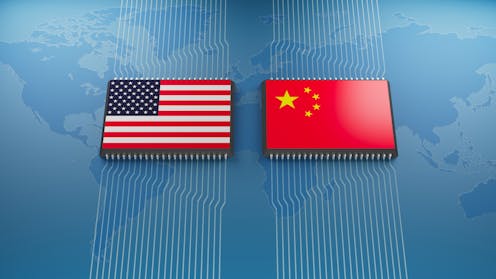
Cutting off China’s access to advanced U.S. chips is likely to motivate Chinese cyber espionage. kritsapong jieantaratip/iStock via Getty Images

The United States is trying to decouple its economy from rivals like China. Efforts toward this include policymakers raising tariffs on Chinese goods, blocking exports of advanced technology and offering subsidies to boost American manufacturing. The goal is to reduce reliance on China for critical products in hopes that this will also protect U.S. intellectual property from theft.

The idea that decoupling will help stem state-sponsored cyber-economic espionage has become a key justification for these measures. For instance, then-U.S. Trade Representative Katherine Tai framed the continuation of China-specific tariffs as serving the “statutory goal to stop [China’s] harmful … cyber intrusions and cyber theft.” Early tariff rounds during the first Trump administration were likewise framed as forcing Beijing to confront “deeply entrenched” theft of U.S. intellectual property.

This push to “onshore” key industries is driven by very real concerns. By some estimates, theft of U.S. trade secrets, often through hacking – costs the American economy hundreds of billions of dollars per year. In that light, decoupling is a defensive economic shield – a way to keep vital technology out of an adversary’s reach.

But will decoupling and cutting trade ties truly make America’s innovations safer from prying eyes? I’m a political scientist who studies state-sponsored cyber espionage, and my research suggests that the answer is a definitive no. Indeed, it might actually have the opposite effect.

To understand why, it helps to look at what really drives state-sponsored hacking.

Rivalry, not reliance

Intuitively, you might think a country is most tempted to steal secrets from a nation it depends on. For example, if Country A must import jet engines or microchips from Country B, Country A might try to hack Country B’s companies to copy that technology and become self-sufficient. This is the industrial dependence theory of cyber theft.

There is some truth to this motive. If your economy needs what another country produces, stealing that know-how can boost your own industries and reduce reliance. However, in a recent study, I show that a more powerful predictor of cyber espionage is industrial similarity. Countries with overlapping advanced industries such as aerospace, electronics or pharmaceuticals are the ones most likely to target each other with cyberattacks.

Why would having similar industries spur more spying? The reason is competition. If two nations both specialize in cutting-edge sectors, each has a lot to gain by stealing the other’s innovations.

If you’re a tech powerhouse, you have valuable secrets worth stealing, and you have the capability and motivation to steal others’ secrets. In essence, simply trading with a rival isn’t the core issue. Rather, it’s the underlying technological rivalry that fuels espionage.

For example, a cyberattack in 2012 targeted SolarWorld, a U.S. solar panel manufacturer, and the perpetrators stole the company’s trade secrets. Chinese solar companies then developed competing products based on the stolen designs, costing SolarWorld millions in lost revenue. This is a classic example of industrial similarity at work. China was building its own solar industry, so it hacked a U.S. rival to leapfrog in technology.

China has made major investments in its cyber-espionage capabilities.

Boosting trade barriers can fan the flames

Crucially, cutting trade ties doesn’t remove this rivalry. If anything, decoupling might intensify it. When the U.S. and China exchange tariff blows or cut off tech transfers, it doesn’t make China give up – it likely pushes Chinese intelligence agencies to work even harder to steal what they can’t buy.

This dynamic isn’t unique to China. Any country that suddenly loses access to an important technology may turn to espionage as Plan B.

History provides examples. When South Africa was isolated by sanctions in the 1980s, it covertly obtained nuclear weapons technology. Similarly, when Israel faced arms embargoes in the 1960s, it engaged in clandestine efforts to get military technology. Isolation can breed desperation, and hacking is a low-cost, high-reward tool for the desperate.

If decoupling won’t end cyber espionage, what will?

There’s no easy fix for state-sponsored hacking as long as countries remain locked in high-tech competition. However, there are steps that can mitigate the damage and perhaps dial down the frequency of these attacks.

One is investing in cyber defense. Just as a homeowner adds locks and alarms after a burglary, companies and governments should continually strengthen their cyber defenses. Assuming that espionage attempts are likely to happen is key. Advanced network monitoring, employee training against phishing, and robust encryption can make it much harder for hackers to succeed, even if they keep trying.

Another is building resilience and redundancy. If you know that some secrets might get stolen, plan for it. Businesses can shorten product development cycles and innovate faster so that even if a rival copies today’s tech, you’re already moving on to the next generation. Staying ahead of thieves is a form of defense, too.

Ultimately, rather than viewing tariffs and export bans as silver bullets against espionage, U.S. leaders and industry might be safer focusing on resilience and stress-testing cybersecurity firms. Make it harder for adversaries to steal secrets, and less rewarding even if they do.

The Conversation

William Akoto does not work for, consult, own shares in or receive funding from any company or organization that would benefit from this article, and has disclosed no relevant affiliations beyond their academic appointment.

ref. Blocking exports and raising tariffs is a bad defense against industrial cyber espionage, study shows – https://theconversation.com/blocking-exports-and-raising-tariffs-is-a-bad-defense-against-industrial-cyber-espionage-study-shows-258243
What is reconciliation − the legislative shortcut Republicans are using to push through their ‘big, beautiful bill’?

Source: – By Linda J. Bilmes, Daniel Patrick Moynihan Senior Lecturer in Public Policy and Public Finance, Harvard Kennedy School

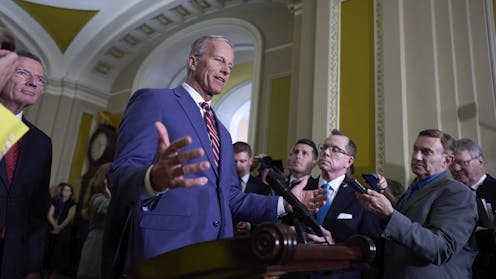
Senate Majority Leader John Thune speaks with reporters about the reconciliation process to advance President Donald Trump’s spending and tax bill on June 3, 2025. AP Photo/J. Scott Applewhite

The word “reconciliation” sounds benign, even harmonious.

But in Washington, D.C., reconciliation refers to a potent legislative shortcut that allows the party in power to avoid opposition and enact sweeping changes to taxes and spending with a simple majority vote. Democrats used the process to pass the Inflation Reduction Act in 2022. Reconciliation helped Republicans pass large tax cuts in 2017.

Reconciliation is also at the heart of the current budget debate, as Senate Republicans rush to advance their version of the “One Big Beautiful Bill Act,” also known by its acronym OBBBA, which passed the House in May 2025.

I served as assistant secretary of Commerce for management and budget during the Clinton administration, when my colleagues and I helped forge bipartisan legislation that balanced the federal budget and produced surpluses over four years, from 1998 to 2001. We were even able to pay off some debt.

But since 2001, the country’s fiscal situation has deteriorated significantly. And the reconciliation process has strayed from its original purpose as a mechanism to promote sound fiscal policy. Instead, it is now used to pass partisan legislation, often without regard to its economic impact on future generations of Americans.

Reconciliation 101

The reconciliation process was created by the Congressional Budget Act of 1974, which was overwhelmingly supported by both parties. It was designed to align policy goals with budget targets to help rein in deficits.

The rules specify that a bill using the reconciliation process must pertain directly to budgetary or fiscal matters, cannot change Social Security, Medicare or the budget process itself, or deliberately extend deficits beyond a 10-year window. As part of the process, the parliamentarian goes through each element of the bill and determines whether it meets the requirements, removing any that don’t.

This caused the One Big Beautiful Bill Act to hit a snag in the Senate on June 25, 2025, after the parliamentarian ruled several major parts of it couldn’t be included as written, such as an effort to crack down on efforts by states to get more Medicaid funds and a limit on student debt repayment options.

In the Senate, reconciliation has special procedural advantages. Debate is limited to 20 hours. Conveniently for the party in power, the final bill can pass with a simple majority of 51 votes. This avoids the usual 60-vote threshold needed to overcome a filibuster.

Over its 50-year history, 23 reconciliation bills have become law.

Reconciliation on rise as budget process breaks down

Over time, reconciliation has become the dominant method for enacting major tax and spending legislation, as the regular congressional budget process has broken down.

Since 1974, there have been multiple government shutdowns, near-shutdowns and short-term, stopgap “continual resolutions” instead of annual budgets, accompanied by rising deficits and national debt.

With few other tools at its disposal, Congress has used reconciliation to push through many pieces of major economic legislation, including the 2001 and 2003 tax cuts under President George W. Bush, the 2017 tax cuts during President Donald Trump’s first term, and the American Rescue Plan in 2021 and the Inflation Reduction Act in 2022 during the Biden administration.

However, reconciliation has significant flaws. Because debate is limited, senators often vote on bills over 1,000 pages long with little time to review the details. And once tax cuts are enacted under reconciliation, it is devilishly hard to get rid of them.

Given the compressed timelines and lack of transparency inherent in such huge, messy spending bills, it is fairly easy for lawmakers to slip in earmarks, tax loopholes and other extraneous items that that don’t get removed by the parliamentarian.

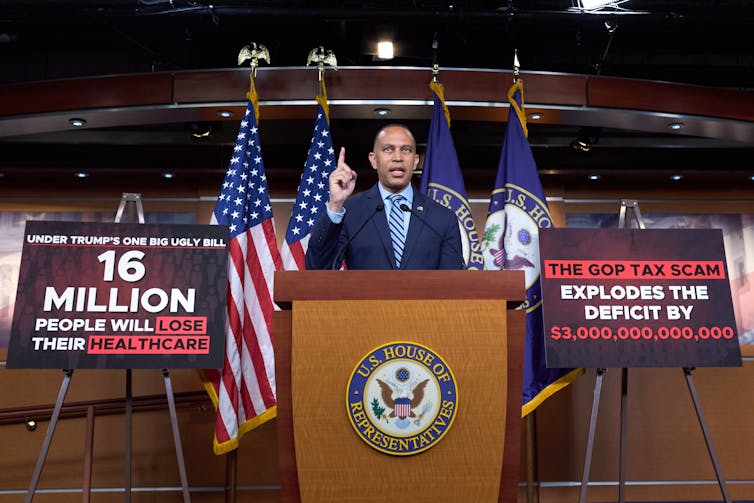
a Black man points the ceiling as he stands in front of a lectern and two poster boards
House Minority Leader Hakeem Jeffries argues Republicans’ spending and tax bill will ‘explode the deficit.’
AP Photo/J. Scott Applewhite

What’s in the bill?

At the heart of the One Big Beautiful Bill Act, passed by the House, is an extension of President Trump’s tax cuts from his first term, which would otherwise expire at the end of 2025, according to the procedural rules for reconciliation.

But it also includes multiple new tax cuts – such as an end to taxes on overtime and tips and lower estate taxes – introduces new Medicaid work requirements and repeals various energy credits. In line with the Trump administration’s policies, the bill slashes federal funding for education, Medicaid, public housing, environmental programs, scientific research and some national park and public land protection programs. It also boosts defense spending.

The bill would sharply worsen the nation’s fiscal outlook, according to analyses by the nonpartisan Congressional Budget Office and other organizations.

Currently, the national debt exceeds US$36 trillion, according to the U.S. Treasury, and net interest payments account for some 16% of federal revenue, based on the Congressional Budget Office’s projections for 2025.

In its analysis, the Congressional Budget Office – which was also created by the 1974 act – said the House-passed version would increase deficits by more than $3.1 trillion over the next decade. The overwhelming share of this cost comes from the permanent extension of individual tax cuts initially enacted in 2017.

According to the Congressional Budget Office’s analysis, by 2035 households earning at least $1 million would receive an average annual tax cut of about $45,000. Most middle- and lower-income households would receive a cut of less than $500 per year, if anything.

The costs of reconciliation

A number of Senate Republicans have questioned some aspects of the reconciliation package. Since they hold only a 53-47 majority, and with all Democrats expected to vote “no,” they need to use reconciliation to pass their version.

Although it differs from the House version in many ways, the Senate version still favors tax cuts for high-income households and large corporations.

Senate Republicans also employ a flawed accounting gimmick to minimize its apparent cost. It assumes the 2017 Trump tax cuts, which are set to expire, have already been extended and embeds that assumption into the budget baseline.

This makes extending the tax cuts appear costless, even though it would grow the debt substantially. The move violates normal scorekeeping conventions and misleads the public. Honest accounting would show that the Senate plan would add to the debt about $500 billion more than the House version.

Abusing the process

Lots of wrangling and changes are expected before the Senate is able to pass its version. After that, the House and Senate will need to resolve their differences in a conference committee of Republicans from each house of Congress.

Once they agree on a final version, each house votes again – and the Senate version will still need to meet the terms of reconciliation in order to pass with a majority vote. President Trump is pressuring Congress to deliver the bill to his desk before he goes on July Fourth vacation.

In my view, while reconciliation remains a powerful budgetary tool, its current use represents a fundamental inversion of its original purpose. Americans deserve an honest debate about trade-offs, rather than more debt in disguise. Some estimates of the fiscal impact of the Senate’s version of the bill are as high as $3.8 trillion over a decade. Simply waving a magic accounting wand won’t make them go away.

This article was updated to include a Senate parliamentarian ruling about several provisions of the Republican bill.

The Conversation

Linda J. Bilmes served as Deputy Assistant Secretary of the US Department of Commerce from 1997-1998 and as CFO and Assistant Secretary for Management, Budget and Administration from 1999-2001.

ref. What is reconciliation − the legislative shortcut Republicans are using to push through their ‘big, beautiful bill’? – https://theconversation.com/what-is-reconciliation-the-legislative-shortcut-republicans-are-using-to-push-through-their-big-beautiful-bill-255487

Why energy markets fluctuate during an international crisis

Source: – By Skip York, Nonresident Fellow in Energy and Global Oil, Baker Institute for Public Policy, Rice University

Stock and commodities traders found themselves dealing with various price swings as energy markets responded to Israeli and U.S. attacks on Iran. Timothy A. Clary/AFP via Getty Imagesf

Global energy markets, such as those for oil, gas and coal, tend to be sensitive to a wide range of world events – especially when there is some sort of crisis. Having worked in the energy industry for over 30 years, I’ve seen how war, political instability, pandemics and economic sanctions can significantly disrupt energy markets and impede them from functioning efficiently.

A look at the basics

First, consider the economic fundamentals of supply and demand. The risk most people imagine in the current crisis between Israel, the U.S. and Iran is that Iran, which is itself a major oil-producing country, might suddenly expand the conflict by threatening the ability of neighboring countries to supply oil to the world.

Oil wells, refineries, pipelines and shipping lanes are the backbone of energy markets. They can be vulnerable during a crisis: Whether there is deliberate sabotage or collateral damage from military action, energy infrastructure often takes a hit.

For instance, after Saddam Hussein invaded Kuwait in August 1990, Iraqi forces placed explosive charges on Kuwaiti oil wells and began detonating them in January 1991. It took months for all the resulting fires to be put out, and millions of barrels of oil and hundreds of millions of cubic meters of natural gas were released into the environment – rather than being sold and used productively somewhere around the world.

Scenes of Kuwaiti life during and after the Gulf War of 1990 and 1991 include images of oil wells burning as a result of Iraqi sabotage.

Logistics can mess markets up too. For instance, closing critical maritime routes like the Strait of Hormuz or the Suez Canal can cause transportation delays.

Whether supply is lost from decreased production or blocked transportation routes, the effect is less oil available to the market, which not only causes prices to rise in general, but it also makes them more volatile – tending to change more frequently and by larger amounts.

On the flip side, demand can also shift radically. During the 1990-1991 Gulf War, demand rose: U.S. forces alone used more than 2 billion gallons of fuel, according to an Army analysis. By contrast, during the COVID-19 pandemic, industries shut down, travel came to a halt and energy demand plummeted.

When crisis looms, countries and companies often start stockpiling oil and other raw materials rather than buying only what they need right now. That creates even more imbalance, resulting in price volatility that leaves everyone, both consumers and producers, with a headache.

Regional considerations

In addition to uncertainties around market fundamentals, it’s important to note that many of the world’s energy reserves are located in regions that have not been models of stability. In the Middle East, wars, revolutions and diplomatic disputes there can raise concerns about supply, demand or both.

Those worries send shock waves through the world’s energy markets. It’s like walking on a tightrope: One wrong move – or even the perception of a misstep – can make the market wobble.

Governments’ economic sanctions, such as those restricting trade with Iran, Russia or Venezuela, can distort production and investment decisions and disrupt trade flows. Sometimes markets react even before sanctions are officially in place: Just the rumor of a possible embargo can cause prices to spike as buyers scramble to secure resources.

In 2008, for example, India and Vietnam imposed rice export bans, and rumors of additional restrictions fueled panic buying and nearly doubled prices in months.

In those scrambles, the role of investor speculation enters the picture. Energy commodities, such as oil and gas, aren’t just physical resources; they’re also traded as financial assets like stocks and bonds. During uncertain times, traders don’t wait around for actual changes in supply and demand. They react to news and forecasts, sometimes in large groups, which can shift the market just with the actions that result from their fears or hopes.

The events on June 22, 2025, are a good example of how this dynamic works. The Iranian parliament passed a resolution authorizing the country’s Supreme Council to close the Strait of Hormuz. Immediately, oil prices started rising, even though the strait was still open, with oil tankers steaming through unimpeded.

The next day, Iran launched a missile strike on Qatar, but coordinated in advance with Qatari officials to minimize damage and casualties. Traders and analysts perceived the action as a de-escalatory signal and anticipated that the Supreme Council was not going to close the strait. So prices started to fall.

It was a price roller coaster, fueled by speculation rather than reality. And computer algorithms and artificial intelligence, which assist in making automated trades, only add to the chaos of price changes.

Shipping activity in the Persian Gulf and the Strait of Hormuz decreased after Israel’s attacks on Iranian nuclear facilities.

A broader look

International crises can also cause wider changes in countries’ economies – or the global economy as a whole – which in turn affect the energy market.

If a crisis sparks a recession, rising inflation or high unemployment, those tend to cause people and businesses to use less energy. When the underlying situation stabilizes, recovery efforts can mean energy consumption resumes. But it’s like a pendulum swinging back and forth, with energy markets caught in the middle.

Renewable energy is not immune to international crisis and chaos. The supply is less affected by market forces: The amount of available sunlight and wind isn’t tied to geopolitical relations. But overall economic conditions still affect demand, and a crisis can disrupt the supply chains for the equipment needed to harness renewable energy, like solar panels and wind turbines.

It’s no wonder energy markets are so jittery during international crises. A mix of imbalances between supply and demand, vulnerable infrastructure, political tensions, corporate worries and speculative trading all weave together into a complex web of volatility.

For policymakers, investors and consumers, understanding these dynamics is key to navigating the ups and downs of energy markets in a crisis-prone world. The solutions aren’t simple, but being informed is the first step toward stability.

The Conversation

Skip York is a nonresident fellow for Global Oil and Energy with the Center for Energy Studies at Rice University’s Baker Institute for Public Policy. He also is the Chief Energy Strategist at Turner Mason & Company, an energy consulting firm.

ref. Why energy markets fluctuate during an international crisis – https://theconversation.com/why-energy-markets-fluctuate-during-an-international-crisis-259839

To spur the construction of affordable, resilient homes, the future is concrete

Source: – By Pablo Moyano Fernández, Assistant Professor of Architecture, Washington University in St. Louis

A modular, precast system of concrete ‘rings’ can be connected in different ways to build a range of models of energy-efficient homes. Pablo Moyano Fernández, CC BY-SA

Wood is, by far, the most common material used in the U.S. for single-family home construction.

But wood construction isn’t engineered for long-term durability, and it often underperforms, particularly in the face of increasingly common extreme weather events.

In response to these challenges, I believe mass-produced concrete homes can offer affordable, resilient housing in the U.S. By leveraging the latest innovations of the precast concrete industry, this type of homebuilding can meet the needs of a changing world.

Wood’s rise to power

Over 90% of the new homes built in the U.S. rely on wood framing.

Wood has deep historical roots as a building material in the U.S., dating back to the earliest European settlers who constructed shelters using the abundant native timber. One of the most recognizable typologies was the log cabin, built from large tree trunks notched at the corners for structural stability.

A mother holds her child in the front doorway of their log cabin home.
Log cabins were popular in the U.S. during the 18th and 19th centuries.
Heritage Art/Heritage Images via Getty Images

In the 1830s, wood construction underwent a significant shift with the introduction of balloon framing. This system used standardized, sawed lumber and mass-produced nails, allowing much smaller wood components to replace the earlier heavy timber frames. It could be assembled by unskilled labor using simple tools, making it both accessible and economical.

In the early 20th century, balloon framing evolved into platform framing, which became the dominant method. By using shorter lumber lengths, platform framing allowed each floor to be built as a separate working platform, simplifying construction and improving its efficiency.

The proliferation and evolution of wood construction helped shape the architectural and cultural identity of the nation. For centuries, wood-framed houses have defined the American idea of home – so much so that, even today, when Americans imagine a house, they typically envision one built of wood.

A row of half-constructed homes surrounded by piles of dirt.
A suburban housing development from the 1950s being built with platform framing.
H. Armstrong Roberts/ClassicStock via Getty Images

Today, light-frame wood construction dominates the U.S. residential market.

Wood is relatively affordable and readily available, offering a cost-effective solution for homebuilding. Contractors are familiar with wood construction techniques. In addition, building codes and regulations have long been tailored to wood-frame systems, further reinforcing their prevalence in the housing industry.

Despite its advantages, wood light-frame construction presents several important limitations. Wood is vulnerable to fire. And in hurricane- and tornado-prone regions, wood-framed homes can be damaged or destroyed.

Wood is also highly susceptible to water-related issues, such as swelling, warping and structural deterioration caused by leaks or flooding. Vulnerability to termites, mold, rot and mildew further compromise the longevity and safety of wood-framed structures, especially in humid or poorly ventilated environments.

The case for concrete

Meanwhile, concrete has revolutionized architecture and engineering over the past century. In my academic work, I’ve studied, written and taught about the material’s many advantages.

The material offers unmatched strength and durability, while also allowing design flexibility and versatility. It’s low-cost and low-maintenance, and it has high thermal mass properties, which refers to the material’s ability to absorb and store heat during the day, and slowly release it during the cooler nights. This can lower heating and cooling costs.

Properly designed concrete enclosures offer exceptional performance against a wide range of hazards. Concrete can withstand fire, flooding, mold, insect infestation, earthquakes, hail, hurricanes and tornadoes.

It’s commonly used for home construction in many parts of the world, such as Europe, Japan, Mexico, Brazil and Argentina, as well as India and other parts of Southeast Asia.

However, despite their multiple benefits, concrete single-family homes are rare in the U.S.

That’s because most concrete structures are built using a process called cast-in-place. In this technique, the concrete is formed and poured directly at the construction site. The method relies on built-in-place molds. After the concrete is cast and cured over several days, the formwork is removed.

This process is labor-intensive and time-consuming, and it often produces considerable waste. This is particularly an issue in the U.S., where labor is more expensive than in other parts of the world. The material and labor cost can be as high as 35% to 60% of the total construction cost.

Portland cement, the binding agent in concrete, requires significant energy to produce, resulting in considerable carbon dioxide emissions. However, this environmental cost is often offset by concrete’s durability and long service life.

Concrete’s design flexibility and structural integrity make it particularly effective for large-scale structures. So in the U.S., you’ll see it used for large commercial buildings, skyscrapers and most highways, bridges, dams and other critical infrastructure projects.

But when it comes to single-family homes, cast-in-place concrete poses challenges to contractors. There are the higher initial construction costs, along with a lack of subcontractor expertise. For these reasons, most builders and contractors stick with what they know: the wood frame.

A new model for home construction

Precast concrete, however, offers a promising alternative.

Unlike cast-in-place concrete, precast systems allow for off-site manufacturing under controlled conditions. This improves the quality of the structure, while also reducing waste and labor.

The CRETE House, a prototype I worked on in 2017 alongside a team at Washington University in St. Louis, showed the advantages of a precast home construction.

To build the precast concrete home, we used ultra-high-performance concrete, one of the latest advances in the concrete industry. Compared with conventional concrete, it’s about six times stronger, virtually impermeable and more resistant to freeze-thaw cycles. Ultra-high-performance concrete can last several hundred years.

The strength of the CRETE House was tested by shooting a piece of wood at 120 mph (193 kph) to simulate flying debris from an F5 tornado. It was unable to breach the wall, which was only 2 inches (5.1 centimeters) thick.

The wall of the CRETE House was able to withstand a piece of wood fired at 120 mph (193 kph).

Building on the success of the CRETE House, I designed the Compact House as a solution for affordable, resilient housing. The house consists of a modular, precast concrete system of “rings” that can be connected to form the entire structure – floors, walls and roofs – creating airtight, energy-efficient homes. A series of different rings can be chosen from a catalog to deliver different models that can range in size from 270 to 990 square feet (25 to 84 square meters).

The precast rings can be transported on flatbed trailers and assembled into a unit in a single day, drastically reducing on-site labor, time and cost.

Since they’re built using durable concrete forms, the house can be easily mass-produced. When precast concrete homes are mass-produced, the cost can be competitive with traditional wood-framed homes. Furthermore, the homes are designed to last far beyond 100 years – much longer than typical wood structures – while significantly lowering utility bills, maintenance expenses and insurance premiums.

The project is also envisioned as an open-source design. This means that the molds – which are expensive – are available for any precast producer to use and modify.

A computer graphic showing a prototype of a small, concrete home.
The Compact House is made using ultra-high-performance concrete.
Pablo Moyano Fernández, CC BY-SA

Leveraging a network that’s already in place

Two key limitations of precast concrete construction are the size and weight of the components and the distance to the project site.

Precast elements must comply with standard transportation regulations, which impose restrictions on both size and weight in order to pass under bridges and prevent road damage. As a result, components are typically limited to dimensions that can be safely and legally transported by truck. Each of the Compact House’s pieces are small enough to be transported in standard trailers.

Additionally, transportation costs become a major factor beyond a certain range. In general, the practical delivery radius from a precast plant to a construction site is 500 miles (805 kilometers). Anything beyond that becomes economically unfeasible.

However, the infrastructure to build precast concrete homes is already largely in place. Since precast concrete is often used for office buildings, schools, parking complexes and large apartments buildings, there’s already an extensive national network of manufacturing plants capable of producing and delivering components within that 500-mile radius.

There are other approaches to build homes with concrete: Homes can use concrete masonry units, which are similar to cinder blocks. This is a common technique around the world. Insulated concrete forms involve rigid foam blocks that are stacked like Lego bricks and are then filled with poured concrete, creating a structure with built-in insulation. And there’s even 3D-printed concrete, a rapidly evolving technology that is in its early stages of development.

However, none of these use precast concrete modules – the rings in my prototypes – and therefore require substantially longer on-site time and labor.

To me, precast concrete homes offer a compelling vision for the future of affordable housing. They signal a generational shift away from short-term construction and toward long-term value – redefining what it means to build for resilience, efficiency and equity in housing.

A bird's-eye view of a computer-generated neighborhood featuring plots of land with multiple concrete homes located on them.
An image of North St. Louis, taken from Google Earth, showing how vacant land can be repurposed using precast concrete homes.
Pablo Moyano Fernández, CC BY-SA

This article is part of a series centered on envisioning ways to deal with the housing crisis.

The Conversation

Pablo Moyano Fernández does not work for, consult, own shares in or receive funding from any company or organization that would benefit from this article, and has disclosed no relevant affiliations beyond their academic appointment.

ref. To spur the construction of affordable, resilient homes, the future is concrete – https://theconversation.com/to-spur-the-construction-of-affordable-resilient-homes-the-future-is-concrete-254561

Philly psychology students map out local landmarks and hidden destinations where they feel happiest

Source: – By Eric Zillmer, Professor of Neuropsychology, Drexel University

Rittenhouse Square Park in Center City made it onto the Philly Happiness Map. Matthew Lovette/Jumping Rocks/Universal Images Group via Getty Images

What makes you happy? Perhaps a good night’s sleep, or a wonderful meal with friends?

I am the director of the Happiness Lab at Drexel University, where I also teach a course on happiness. The Happiness Lab is a think tank that investigates the ingredients that contribute to people’s happiness.

Often, my students ask me something along the lines of, “Dr. Z, tell us one thing that will make us happier.”

As a first step, I advise them to spend more time outside.

Achieving lasting and sustainable happiness is more complicated. Research on the happiest countries in the world and the places where people live the longest, known as Blue Zones, shows a common thread: Residents feel they are part of something larger than themselves, such as a community or a city.

So if you’re living in a metropolis like Philadelphia, where, incidentally, the iconic pursuit of happiness charge was ratified in the Declaration of Independence, I believe urban citizenship – that is, forming an identity with your urban surroundings – should also be on your list.

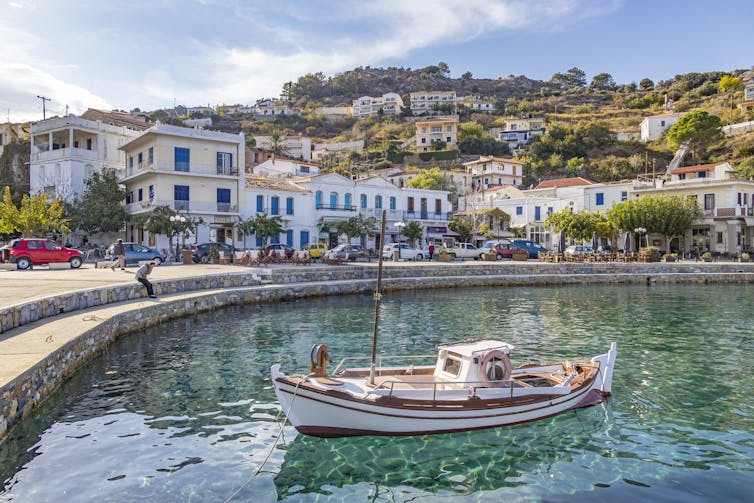
A small boat floats in blue-green waters in front of a picturesque village.
The Greek island of Ikaria in the Aegean Sea is a Blue Zone famous for its residents’ longevity.
Nicolas Economou/NurPhoto via Getty Images

Safety, social connection, beauty

Carl Jung, the renowned Swiss psychoanalyst, wrote extensively about the relationship between our internal world and our external environment.

He believed that this relationship was crucial to our psychological well-being.

More recent research in neuroscience and functional imaging has revealed a vast, intricate and complex neurological architecture underlying our psychological perception of a place. Numerous neurological pathways and functional loops transform a complex neuropsychological process into a simple realization: I am happy here!

For example, a happy place should feel safe.

The country of Croatia, a tourist haven for its beauty and culinary delights, is also one of the top 20 safest countries globally, according to the 2025 Global Peace Index.

The U.S. ranks 128th.

The availability of good food and drink can also be a significant factor in creating a happy place.

However, according to American psychologist Abraham Maslow, a pioneer in the field of positive psychology, the opportunity for social connectivity, experiencing something meaningful and having a sense of belonging is more crucial.

Furthermore, research on happy places suggests that they are beautiful. It should not come as a surprise that the happiest places in the world are also drop-dead gorgeous, such as the Indian Ocean archipelago of Mauritius, which is the happiest country in Africa, according to the 2025 World Happiness Report from the University of Oxford and others.

Happy places often provide access to nature and promote active lifestyles, which can help relieve stress. The residents of the island of Ikaria in Greece, for example, one of the original Blue Zones, demonstrate high levels of physical activity and social interaction.

A Google map display on right with a list of mapped locations on the left.
A map of 28 happy places in Philadelphia, based on 243 survey responses from Drexel students.
The Happiness Lab at Drexel University

Philly Happiness Map

I asked my undergraduate psychology students at Drexel, many of whom come from other cities, states and countries, to pick one place in Philadelphia where they feel happy.

From the 243 student responses, the Happiness Lab curated 28 Philly happy places, based on how frequently the places were endorsed and their accessibility.

Philadelphia’s founder, William Penn, would likely approve that Rittenhouse Square Park and three other public squares – Logan, Franklin and Washington – were included. These squares were vital to Penn’s vision of landscaped public parks to promote the health of the mind and body by providing “salubrious spaces similar to the private garden.” They are beautiful and approachable, serving as “places to rest, take a pause, work, or read a book,” one student told us.

Places such as the Philadelphia Zoo, Penn’s Landing and the Philadelphia Museum of Art are “joyful spots that are fun to explore, and one can also take your parents along if need be,” as another student described.

The Athenaeum of Philadelphia, a historic library with eclectic programming, feels to one student like “coming home, a perfect third place.”

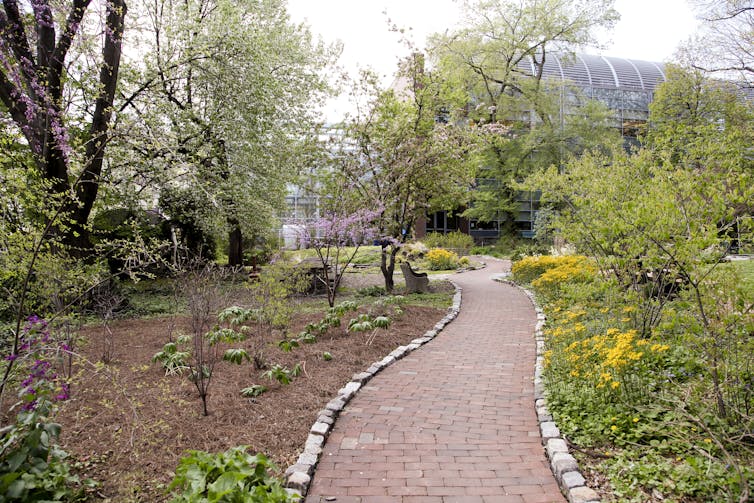
Some students mentioned happy places that are less known. These include tucked-away gardens such as the John F. Collings Park at 1707 Chestnut St., the rooftop Cira Green at 129 S. 30th St. and the James G. Kaskey Memorial Park and BioPond at 433 S. University Ave.

A stone-lined brick path extends through a nicely landscaped outdoor garden area.
The James G. Kaskey Memorial Park and BioPond in West Philadelphia is an urban oasis.
M. Fischetti for Visit Philadelphia

My students said these are small, unexpected spots that provide an excellent opportunity for a quiet, peaceful break, to be present, whether enjoyed alone or with a friend. I checked them out and I agree.

The students also mentioned places I had never heard of even though I’ve lived in the city for over 30 years.

The “cat park” at 526 N. Natrona St. in Mantua is a quiet little park with an eclectic personality and lots of friendly cats.

Mango Mango Dessert at 1013 Cherry St. in Chinatown, which is a frequently endorsed happiness spot among the students because of its “bustling streets, lively atmosphere and delicious food,” is a perfect pit stop for mango lovers. And Maison Sweet, at 2930 Chestnut St. in University City, is a casual bakery and cafe “where you may end up staying longer than planned,” one student shared.

I find that Philly’s happy places, as seen through the eyes of college students, tend to offer a space for residents to take time out from their day to pause, reset, relax and feel more connected and in touch with the city.

Happiness principals are universal, yet our own journeys are very personal. Philadelphians across the city may have their own list of happy places. There are really no right or wrong answers. If you don’t have a personal happy space, just start exploring and you may be surprised what you will find, including a new sense of happiness.

See the full Philly Happiness Map list here, and visit the exhibit at the W.W. Hagerty Library at Drexel University to learn more.

Read more of our stories about Philadelphia.

The Conversation

Eric Zillmer does not work for, consult, own shares in or receive funding from any company or organization that would benefit from this article, and has disclosed no relevant affiliations beyond their academic appointment.

ref. Philly psychology students map out local landmarks and hidden destinations where they feel happiest – https://theconversation.com/philly-psychology-students-map-out-local-landmarks-and-hidden-destinations-where-they-feel-happiest-258790

A preservative removed from childhood vaccines 20 years ago is still causing controversy today − a drug safety expert explains

Source: – By Terri Levien, Professor of Pharmacy, Washington State University

A discredited study published in 1989 first alleged a link between thimerosal and autism. Flavio Coelho/Moment via Getty Images

An expert committee that advises the Centers for Disease Control and Prevention voted on June 26, 2025, to cease recommending the use of a mercury-based chemical called thimerosal in flu vaccines. Only a small number of flu vaccines – ones that are produced in multi-dose vials – currently contain thimerosal.

Thimerosal is almost never used in vaccines anymore, but vaccine skeptics have falsely claimed it carries health risks to the brain. Public health experts have raised concerns that the committee’s action against thimerosal may shake public trust and sow confusion about the safety of vaccines.

The committee, called the Advisory Committee on Immunization Practices, or ACIP, was meeting for the first time since Health Secretary Robert F. Kennedy Jr. abruptly replaced its 17 members with eight handpicked ones on June 11.

The committee generally discusses and votes on recommendations for specific vaccines. For this meeting, vaccines for COVID-19, human papillomavirus, influenza and other infectious diseases were on the schedule.

I’m a pharmacist and expert on drug information with 35 years of experience critically evaluating the safety and effectiveness of medications in clinical trials. No evidence supports the idea that thimerosal, used as a preservative in vaccines, is unsafe or carries any health risks.

What is thimerosal?

Thimerosal, also known as thiomersal, is a preservative that has been used in some drug products since the 1930s because it prevents contamination by killing microbes and preventing their growth.

In the human body, thimerosal is metabolized, or changed, to ethylmercury, an organic derivative of mercury. Studies in infants have shown that ethylmercury is quickly eliminated from the blood.

Even though thimerosal is no longer used in childhood vaccines, many parents still worry about whether it can harm their kids.

Ethylmercury is sometimes confused with methylmercury. Methylmercury is known to be toxic and is associated with many negative effects on brain development even at low exposure. Environmental researchers identified the neurotoxic effects of mercury in children in the 1970s, primarily resulting from exposure to methylmercury in fish. In the 1990s, the Environmental Protection Agency and the Food and Drug Administration established limits for maximum recommended exposure to methylmercury, especially for children, pregnant women and women of childbearing age.

Why is thimerosal controversial?

Fears about the safety of thimerosal in vaccines spread for two reasons.

First, in 1998, a now discredited report was published in a major medical journal called The Lancet. In it, a British doctor named Andrew Wakefield described eight children who developed autism after receiving the MMR vaccine, which protects against measles, mumps and rubella. However, the patients were not compared with a control group that was vaccinated, so it was impossible to draw conclusions about the vaccine’s effects. Also, the data report was later found to be falsified. And the MMR vaccine that children received in that report never contained thimerosal.

Second, the federal guidelines on exposure limits for the toxic substance methylmercury came out about the same time as the Wakefield study’s publication. During that period, autism was becoming more widely recognized as a developmental condition, and its rates of diagnosis were rising. People who believed Wakefield’s results conflated methylmercury and ethylmercury and promoted the unfounded idea that ethylmercury in vaccines from thimerosal were driving the rising rates of autism.

The Wakefield study was retracted in 2010, and Wakefield was found guilty of dishonesty and flouting ethics protocols by the U.K. General Medical Council, as well as stripped of his medical license. Subsequent studies have not shown a relationship between the MMR vaccine and autism, but despite the absence of evidence, the idea took hold and has proved difficult to dislodge.

Grumpy white baby giving side-eye to an older white male doctor about to administer a vaccine
The Wakefield study severely damaged many parents’ faith in the MMR vaccine, even though its results were eventually shown to be fraudulent.
Peter Dazeley/The Image Bank, Getty Images

Have scientists tested whether thimerosal is safe?

No unbiased research to date has identified toxicity caused by ethylmercury in vaccines or a link between the substance and autism or other developmental concerns – and not from lack of looking.

A 1999 review conducted by the Food and Drug Administration in response to federal guidelines on limiting mercury exposure found no evidence of harm from thimerosal as a vaccine preservative other than rare allergic reactions. Even so, as a precautionary measure in response to concerns about exposure to mercury in infants, the American Academy of Pediatrics and the U.S. Public Health Service issued a joint statement in 1999 recommending removal of thimerosal from vaccines.

At that time, just one childhood vaccine was available only in a version that contained thimerosal as an ingredient. This was a vaccine called DTP, for diphtheria, tetanus and pertussis. Other childhood vaccines were either available only in formulations without thimerosal or could be obtained in versions that did not contain it.

By 2001, U.S. manufacturers had removed thimerosal from almost all vaccines – and from all vaccines in the childhood vaccination schedule.

In 2004, the U.S. Institute of Medicine Immunization Safety Review Committee reviewed over 200 scientific studies and concluded there is no causal relationship between thimerosal-containing vaccines and autism. Additional well-conducted studies reviewed independently by the CDC and by the FDA did not find a link between thimerosal-containing vaccines and autism or neuropsychological delays.

How is thimerosal used today?

In the U.S., most vaccines are now available in single-dose vials or syringes. Thimerosal is found only in multi-dose vials that are used to supply vaccines for large-scale immunization efforts – specifically, in a small number of influenza vaccines. It is not added to modern childhood vaccines, and people who get a flu vaccine can avoid it by requesting a vaccine supplied in a single-dose vial or syringe.

Thimerosal is still used in vaccines in some other countries to ensure continued availability of necessary vaccines. The World Health Organization continues to affirm that there is no evidence of toxicity in infants, children or adults exposed to thimerosal-containing vaccines.

This article was updated to include ACIP’s vaccine recommendations.

The Conversation

Terri Levien does not work for, consult, own shares in or receive funding from any company or organization that would benefit from this article, and has disclosed no relevant affiliations beyond their academic appointment.

ref. A preservative removed from childhood vaccines 20 years ago is still causing controversy today − a drug safety expert explains – https://theconversation.com/a-preservative-removed-from-childhood-vaccines-20-years-ago-is-still-causing-controversy-today-a-drug-safety-expert-explains-259442

I’m a physician who has looked at hundreds of studies of vaccine safety, and here’s some of what RFK Jr. gets wrong

Source: – By Jake Scott, Clinical Associate Professor of Infectious Diseases, Stanford University

Public health experts worry that factually inaccurate statements by Robert F. Kennedy Jr. threaten the public’s confidence in vaccines. Andrew HarnikGetty Images

In the four months since he began serving as secretary of the Department of Health and Human Services, Robert F. Kennedy Jr. has made many public statements about vaccines that have cast doubt on their safety and on the objectivity of long-standing processes established to evaluate them.

Many of these statements are factually incorrect. For example, in a newscast aired on June 12, 2025, Kennedy told Fox News viewers that 97% of federal vaccine advisers are on the take. In the same interview, he also claimed that children receive 92 mandatory shots. He has also widely claimed that only COVID-19 vaccines, not other vaccines in use by both children and adults, were ever tested against placebos and that “nobody has any idea” how safe routine immunizations are.

As an infectious disease physician who curates an open database of hundreds of controlled vaccine trials involving over 6 million participants, I am intimately familiar with the decades of research on vaccine safety. I believe it is important to correct the record – especially because these statements come from the official who now oversees the agencies charged with protecting Americans’ health.

Do children really receive 92 mandatory shots?

In 1986, the childhood vaccine schedule contained about 11 doses protecting against seven diseases. Today, it includes roughly 50 injections covering 16 diseases. State school entry laws typically require 30 to 32 shots across 10 to 12 diseases. No state mandates COVID-19 vaccination. Where Kennedy’s “92 mandatory shots” figure comes from is unclear, but the actual number is significantly lower.

From a safety standpoint, the more important question is whether today’s schedule with additional vaccines might be too taxing for children’s immune systems. It isn’t, because as vaccine technology improved over the past several decades, the number of antigens in each vaccine dose is much lower than before.

Antigens are the molecules in vaccines that trigger a response from the immune system, training it to identify the specific pathogen. Some vaccines contain a minute amount of aluminum salt that serves as an adjuvant – a helper ingredient that improves the quality and staying power of the immune response, so each dose can protect with less antigen.

Those 11 doses in 1986 delivered more than 3,000 antigens and 1.5 milligrams of aluminum over 18 years. Today’s complete schedule delivers roughly 165 antigens – which is a 95% reduction – and 5-6 milligrams of aluminum in the same time frame. A single smallpox inoculation in 1900 exposed a child to more antigens than today’s complete series.

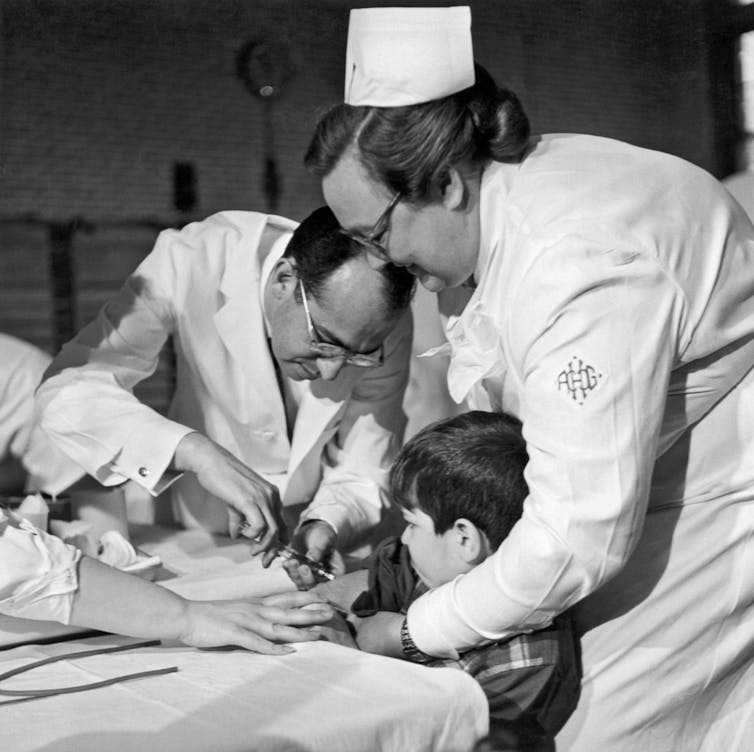
A black-and-white photo of a doctor in a white coat giving an injection to a boy who is held by a female nurse.
Jonas Salk, the inventor of the polio vaccine, administers a dose to a boy in 1954.
Underwood Archives via Getty Images

Since 1986, the United States has introduced vaccines against Haemophilus influenzae type b, hepatitis A and B, chickenpox, pneumococcal disease, rotavirus and human papillomavirus. Each addition represents a life-saving advance.

The incidence of Haemophilus influenzae type b, a bacterial infection that can cause pneumonia, meningitis and other severe diseases, has dropped by 99% in infants. Pediatric hepatitis infections are down more than 90%, and chickenpox hospitalizations are down about 90%. The Centers for Disease Control and Prevention estimates that vaccinating children born from 1994 to 2023 will avert 508 million illnesses and 1,129,000 premature deaths.

Placebo testing for vaccines

Kennedy has asserted that only COVID-19 vaccines have undergone rigorous safety trials in which they were tested against placebos. This is categorically wrong.

Of the 378 controlled trials in our database, 195 compared volunteers’ response to a vaccine with their response to a placebo. Of those, 159 gave volunteers only a salt water solution or another inert substance. Another 36 gave them just the adjuvant without any viral or bacterial material, as a way to see whether there were side effects from the antigen itself or the injection. Every routine childhood vaccine antigen appears in at least one such study.

The 1954 Salk polio trial, one of the largest clinical trials in medical history, enrolled more than 600,000 children and tested the vaccine by comparing it with a salt water control. Similar trials, which used a substance that has no biological effect as a control, were used to test Haemophilus influenzae type b, pneumococcal, rotavirus, influenza and HPV vaccines.

Once an effective vaccine exists, ethics boards require new versions be compared against that licensed standard because withholding proven protection from children would be unethical.

How unknown is the safety of widely used vaccines?

Kennedy has insisted on multiple occasions that “nobody has any idea” about vaccine safety profiles. Of the 378 trials in our database, the vast majority published detailed safety outcomes.

Beyond trials, the U.S. operates the Vaccine Adverse Event Reporting System, the Vaccine Safety Datalink and the PRISM network to monitor hundreds of millions of doses for rare problems. The Vaccine Adverse Event Reporting System works like an open mailbox where anyone – patients, parents, clinicians – can report a post-shot problem; the Vaccine Safety Datalink analyzes anonymized electronic health records from large health care systems to spot patterns; and PRISM scans billions of insurance claims in near-real time to confirm or rule out rare safety signals.

These systems led health officials to pull the first rotavirus vaccine in 1999 after it was linked to bowel obstruction, and to restrict the Johnson & Johnson COVID-19 vaccine in 2021 after rare clotting events. Few drug classes undergo such continuous surveillance and are subject to such swift corrective action when genuine risks emerge.

The conflicts of interest claim

On June 9, Kennedy took the unprecedented step of dissolving vetted members of the Advisory Committee on Immunization Practices, the expert body that advises the CDC on national vaccine policy. He has claimed repeatedly that the vast majority of serving members of the committee – 97% – had extensive conflicts of interest because of their entanglements with the pharmaceutical industry. Kennedy bases that number on a 2009 federal audit of conflict-of-interest paperwork, but that report looked at 17 CDC advisory committees, not specifically this vaccine committee. And it found no pervasive wrongdoing – 97% of disclosure forms only contained routine paperwork mistakes, such as information in the wrong box or a missing initial, and not hidden financial ties.

Reuters examined data from Open Payments, a government website that discloses health care providers’ relationships with industry, for all 17 voting members of the committee who were dismissed. Six received no more than US$80 from drugmakers over seven years, and four had no payments at all.

The remaining seven members accepted between $4,000 and $55,000 over seven years, mostly for modest consulting or travel. In other words, just 41% of the committee received anything more than pocket change from drugmakers. Committee members must divest vaccine company stock and recuse themselves from votes involving conflicts.

A term without a meaning

Kennedy has warned that vaccines cause “immune deregulation,” a term that has no basis in immunology. Vaccines train the immune system, and the diseases they prevent are the real threats to immune function.

Measles can wipe immune memory, leaving children vulnerable to other infections for years. COVID-19 can trigger multisystem inflammatory syndrome in children. Chronic hepatitis B can cause immune-mediated organ damage. Preventing these conditions protects people from immune system damage.

Today’s vaccine panel doesn’t just prevent infections; it deters doctor visits and thereby reduces unnecessary prescriptions for “just-in-case” antibiotics. It’s one of the rare places in medicine where physicians like me now do more good with less biological burden than we did 40 years ago.

The evidence is clear and publicly available: Vaccines have dramatically reduced childhood illness, disability and death on a historic scale.

The Conversation

Jake Scott does not work for, consult, own shares in or receive funding from any company or organization that would benefit from this article, and has disclosed no relevant affiliations beyond their academic appointment.

ref. I’m a physician who has looked at hundreds of studies of vaccine safety, and here’s some of what RFK Jr. gets wrong – https://theconversation.com/im-a-physician-who-has-looked-at-hundreds-of-studies-of-vaccine-safety-and-heres-some-of-what-rfk-jr-gets-wrong-259659

Toxic algae blooms are lasting longer in Lake Erie − why that’s a worry for people and pets

Source: – By Gregory J. Dick, Professor of Biology, University of Michigan

A satellite image from Aug. 13, 2024, shows an algal bloom covering approximately 320 square miles (830 square km) of Lake Erie. By Aug. 22, it had nearly doubled in size. NASA Earth Observatory

Federal scientists released their annual forecast for Lake Erie’s harmful algal blooms on June 26, 2025, and they expect a mild to moderate season. However, anyone who comes in contact with the blooms can face health risks, and it’s worth remembering that 2014, when toxins from algae blooms contaminated the water supply in Toledo, Ohio, was considered a moderate year, too.

We asked Gregory J. Dick, who leads the Cooperative Institute for Great Lakes Research, a federally funded center at the University of Michigan that studies harmful algal blooms among other Great Lakes issues, why they’re such a concern.

A bar chart shows 2025's forecast to be more severe than 2023 but less than 2024.
The National Oceanic and Atmospheric Administration’s prediction for harmful algal bloom severity in Lake Erie compared with past years.
NOAA

1. What causes harmful algal blooms?

Harmful algal blooms are dense patches of excessive algae growth that can occur in any type of water body, including ponds, reservoirs, rivers, lakes and oceans. When you see them in freshwater, you’re typically seeing cyanobacteria, also known as blue-green algae.

These photosynthetic bacteria have inhabited our planet for billions of years. In fact, they were responsible for oxygenating Earth’s atmosphere, which enabled plant and animal life as we know it.

An illustration of algae bloom sources shows a farm field, city and large body of water.
The leading source of harmful algal blooms today is nutrient runoff from fertilized farm fields.
Michigan Sea Grant

Algae are natural components of ecosystems, but they cause trouble when they proliferate to high densities, creating what we call blooms.

Harmful algal blooms form scums at the water surface and produce toxins that can harm ecosystems, water quality and human health. They have been reported in all 50 U.S. states, all five Great Lakes and nearly every country around the world. Blue-green algae blooms are becoming more common in inland waters.

The main sources of harmful algal blooms are excess nutrients in the water, typically phosphorus and nitrogen.

Historically, these excess nutrients mainly came from sewage and phosphorus-based detergents used in laundry machines and dishwashers that ended up in waterways. U.S. environmental laws in the early 1970s addressed this by requiring sewage treatment and banning phosphorus detergents, with spectacular success.

How pollution affected Lake Erie in the 1960s, before clean water regulations.

Today, agriculture is the main source of excess nutrients from chemical fertilizer or manure applied to farm fields to grow crops. Rainstorms wash these nutrients into streams and rivers that deliver them to lakes and coastal areas, where they fertilize algal blooms. In the U.S., most of these nutrients come from industrial-scale corn production, which is largely used as animal feed or to produce ethanol for gasoline.

Climate change also exacerbates the problem in two ways. First, cyanobacteria grow faster at higher temperatures. Second, climate-driven increases in precipitation, especially large storms, cause more nutrient runoff that has led to record-setting blooms.

2. What does your team’s DNA testing tell us about Lake Erie’s harmful algal blooms?

Harmful algal blooms contain a mixture of cyanobacterial species that can produce an array of different toxins, many of which are still being discovered.

When my colleagues and I recently sequenced DNA from Lake Erie water, we found new types of microcystins, the notorious toxins that were responsible for contaminating Toledo’s drinking water supply in 2014.

These novel molecules cannot be detected with traditional methods and show some signs of causing toxicity, though further studies are needed to confirm their human health effects.

A young woman and dog walk along a shoreline with blue-green algae in the water.
Blue-green algae blooms in freshwater, like this one near Toledo in 2014, can be harmful to humans, causing gastrointestinal symptoms, headache, fever and skin irritation. They can be lethal for pets.
Ty Wright for The Washington Post via Getty Images

We also found organisms responsible for producing saxitoxin, a potent neurotoxin that is well known for causing paralytic shellfish poisoning on the Pacific Coast of North America and elsewhere.

Saxitoxins have been detected at low concentrations in the Great Lakes for some time, but the recent discovery of hot spots of genes that make the toxin makes them an emerging concern.

Our research suggests warmer water temperatures could boost its production, which raises concerns that saxitoxin will become more prevalent with climate change. However, the controls on toxin production are complex, and more research is needed to test this hypothesis. Federal monitoring programs are essential for tracking and understanding emerging threats.

3. Should people worry about these blooms?

Harmful algal blooms are unsightly and smelly, making them a concern for recreation, property values and businesses. They can disrupt food webs and harm aquatic life, though a recent study suggested that their effects on the Lake Erie food web so far are not substantial.

But the biggest impact is from the toxins these algae produce that are harmful to humans and lethal to pets.

The toxins can cause acute health problems such as gastrointestinal symptoms, headache, fever and skin irritation. Dogs can die from ingesting lake water with harmful algal blooms. Emerging science suggests that long-term exposure to harmful algal blooms, for example over months or years, can cause or exacerbate chronic respiratory, cardiovascular and gastrointestinal problems and may be linked to liver cancers, kidney disease and neurological issues.

A large round structure offshore is surrounded by blue-green algae.
The water intake system for the city of Toledo, Ohio, is surrounded by an algae bloom in 2014. Toxic algae got into the water system, resulting in residents being warned not to touch or drink their tap water for three days.
AP Photo/Haraz N. Ghanbari

In addition to exposure through direct ingestion or skin contact, recent research also indicates that inhaling toxins that get into the air may harm health, raising concerns for coastal residents and boaters, but more research is needed to understand the risks.

The Toledo drinking water crisis of 2014 illustrated the vast potential for algal blooms to cause harm in the Great Lakes. Toxins infiltrated the drinking water system and were detected in processed municipal water, resulting in a three-day “do not drink” advisory. The episode affected residents, hospitals and businesses, and it ultimately cost the city an estimated US$65 million.

4. Blooms seem to be starting earlier in the year and lasting longer – why is that happening?

Warmer waters are extending the duration of the blooms.

In 2025, NOAA detected these toxins in Lake Erie on April 28, earlier than ever before. The 2022 bloom in Lake Erie persisted into November, which is rare if not unprecedented.

Scientific studies of western Lake Erie show that the potential cyanobacterial growth rate has increased by up to 30% and the length of the bloom season has expanded by up to a month from 1995 to 2022, especially in warmer, shallow waters. These results are consistent with our understanding of cyanobacterial physiology: Blooms like it hot – cyanobacteria grow faster at higher temperatures.

5. What can be done to reduce the likelihood of algal blooms in the future?

The best and perhaps only hope of reducing the size and occurrence of harmful algal blooms is to reduce the amount of nutrients reaching the Great Lakes.

In Lake Erie, where nutrients come primarily from agriculture, that means improving agricultural practices and restoring wetlands to reduce the amount of nutrients flowing off of farm fields and into the lake. Early indications suggest that Ohio’s H2Ohio program, which works with farmers to reduce runoff, is making some gains in this regard, but future funding for H2Ohio is uncertain.

In places like Lake Superior, where harmful algal blooms appear to be driven by climate change, the solution likely requires halting and reversing the rapid human-driven increase in greenhouse gases in the atmosphere.

The Conversation

Gregory J. Dick receives funding for harmful algal bloom research from the National Oceanic and Atmospheric Administration, the National Science Foundation, the United States Geological Survey, and the National Institutes for Health. He serves on the Science Advisory Council for the Environmental Law and Policy Center.

ref. Toxic algae blooms are lasting longer in Lake Erie − why that’s a worry for people and pets – https://theconversation.com/toxic-algae-blooms-are-lasting-longer-in-lake-erie-why-thats-a-worry-for-people-and-pets-259954

Supreme Court rules that states may deny people covered by Medicaid the freedom to choose Planned Parenthood as their health care provider

Source: – By Naomi Cahn, Professor of Law, University of Virginia

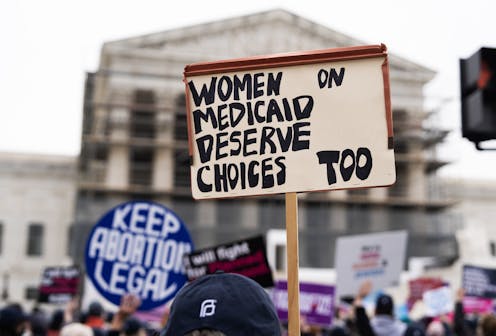
Abortion-rights demonstrators holds a sign in front of the Supreme Court building in Washington as the Medina v. Planned Parenthood South Atlantic case is heard on April 2, 2025. Tom Williams/CQ-Roll Call via Getty Images

Having the freedom to choose your own health care provider is something many Americans take for granted. But the U.S. Supreme Court’s conservative supermajority ruled on June 25, 2025, in a 6-3 decision that people who rely on Medicaid for their health insurance don’t have that right.

The case, Medina v. Planned Parenthood South Atlantic, is focused on a technical legal issue: whether people covered by Medicaid have the right to sue state officials for preventing them from choosing their health care provider. In his majority opinion, Justice Neil Gorsuch wrote that they don’t because the Medicaid statute did not “clearly and unambiguously” give individuals that right.

As law professors who teach courses about health and poverty law as well as reproductive justice, we think this ruling could restrict access to health care for the more than 78 million Americans who get their health insurance coverage through the Medicaid program.

Excluding Planned Parenthood

The case started with a predicament for South Carolina resident Julie Edwards, who is enrolled in Medicaid. After Edwards struggled to get contraceptive services, she was able to receive care from a Planned Parenthood South Atlantic clinic in Columbia, South Carolina.

Planned Parenthood, an array of nonprofits with roots that date back more than a century, is among the nation’s top providers of reproductive services. It operates two clinics in South Carolina, where patients can get physical exams, cancer screenings, contraception and other services. It also provides same-day appointments and keeps long hours.

In July 2018, however, South Carolina Gov. Henry McMaster issued an executive order that barred Medicaid reimbursement for health care providers in the state that offer abortion care.

That meant Planned Parenthood, a longtime target of conservatives’ ire, would no longer be reimbursed for any type of care for Medicaid patients, preventing Edwards from transferring all her gynecological care to that office as she had hoped to do.

Planned Parenthood and Edwards sued South Carolina. They argued that the state was violating the federal Medicare and Medicaid Act, which Congress passed in 1965, by not letting Edwards obtain care from the provider of her choice.

A ‘free-choice-of-provider’ requirement

Medicaid, which mainly covers low-income people, their children and people with disabilities, operates as a partnership between the federal government and the states. Congress passed the law that led to its creation based on its power under the Constitution’s spending clause, which allows Congress to subject federal funds to certain requirements.

Two years later, due to concerns that states were restricting which providers Medicaid recipients could choose, Congress added a “free-choice-of-provider” requirement to the program. It states that people enrolled in Medicaid “may obtain such assistance from any institution, agency, community pharmacy, or person, qualified to perform the service or services required.”

While the Medicaid statute does not, by itself, allow people enrolled in that program to enforce this free-choice clause, the question at the core of this case was whether another federal statute, known as Section 1983, did give them a right to sue.

The Supreme Court has long recognized that Section 1983 protects an individual’s ability to sue when their rights under a federal statute have been violated. In fact, in 2023, it found such a right under the Medicaid Nursing Home Reform Act. The court held that Section 1983 confers the right to sue when a statute’s provisions “unambiguously confer individual federal rights.”

In Medina, however, the court found that there was no right to sue. Instead, the court emphasized that “the typical remedy” is for the federal government to cut off Medicaid funds to a state if a state is not complying with the Medicaid statute.

The ruling overturned lower-court decisions in favor of Edwards. It also expressly rejected the Supreme Court’s earlier rulings, which the majority criticized as taking a more “expansive view of its power to imply private causes of action to enforce federal laws.”

Planned Parenthood signage is displayed outside a health care clinic.
Planned Parenthood clinics, like this one in Los Angeles, are located across the United States.
Patrick T. Fallon/AFP via Getty Images

Restricting Medicaid funds

This dispute is just one chapter in the long fight over access to abortion in the U.S. In addition to the question of whether it should be legal, proponents and opponents of abortion rights have battled over whether the government should pay for it – even if that funding happens indirectly.

Through a federal law known as the Hyde Amendment, Medicaid cannot reimburse health care providers for the cost of abortions, with a few exceptions: when a patient’s life is at risk, or her pregnancy is due to rape or incest. Some states do cover abortion when their laws allow it, without using any federal funds.

As a result, Planned Parenthood rarely gets any federal Medicaid funds for abortions.

McMaster explained that he removed “abortion clinics,” including Planned Parenthood, from the South Carolina Medicaid program because he didn’t want state funds to indirectly subsidize abortions.

After the Supreme Court ruled on this case, McMaster said he had taken “a stand to protect the sanctity of life and defend South Carolina’s authority and values – and today, we are finally victorious.”

But only about 4% of Planned Parenthood’s services nationwide were related to abortion, as of 2022. Its most common service is testing for sexually transmitted diseases. Across the nation, Planned Parenthood provides health care to more than 2 million patients per year, most of whom have low incomes.

Man in suit speaks into a microphone, flanked by other people who are standing in front of a building surrounded by scaffolding.
South Carolina Gov. Henry McMaster stands outside the Supreme Court building in Washington in April 2025 and speaks about this case.
Kayla Bartkowski/Getty Images

Consequences beyond South Carolina

This ruling’s consequences are not limited to Medicaid access in South Carolina.

It may make it harder for individuals to use Section 1983 to bring claims under any federal statute. As Justice Ketanji Brown Jackson, joined by Justices Sonia Sotomayor and Elena Kagan, wrote in her dissent, the court “continues the project of stymying one of the country’s great civil rights laws.”

Enacted in 1871, the civil rights law has been invoked to challenge violations of rights by state officials against individuals. Jackson wrote that the court now limits the ability to use Section 1983 to vindicate personal rights only if the statutes use the correct “magic words.”

The dissent also criticized the majority decision as likely “to result in tangible harm to real people.” Not only will it potentially deprive “Medicaid recipients in South Carolina of their only meaningful way of enforcing a right that Congress has expressly granted to them,” Jackson wrote, but it could also “strip those South Carolinians – and countless other Medicaid recipients around the country – of a deeply personal freedom: the ‘ability to decide who treats us at our most vulnerable.’”

The decision could also have far-reaching consequences. Arkansas, Missouri and Texas have already barred Planned Parenthood from getting reimbursed by Medicaid for any kind of health care. More states could follow suit.

In addition, given Planned Parenthood’s role in providing contraceptive care, disqualifying it from Medicaid could restrict access to health care and increase the already-high unintended pregnancy rate in America.

States could also try to exclude providers based on other characteristics, such as whether their employees belong to unions or if they provide their patients with gender-affirming care, further restricting patients’ choices.

With this ruling, the court is allowing a patchwork of state exclusions of Planned Parenthood and other medical providers from the Medicaid program that could soon resemble the patchwork already seen with abortion access.

Portions of this article first appeared in another article published on April 2, 2025.

The Conversation

The authors do not work for, consult, own shares in or receive funding from any company or organization that would benefit from this article, and have disclosed no relevant affiliations beyond their academic appointment.

ref. Supreme Court rules that states may deny people covered by Medicaid the freedom to choose Planned Parenthood as their health care provider – https://theconversation.com/supreme-court-rules-that-states-may-deny-people-covered-by-medicaid-the-freedom-to-choose-planned-parenthood-as-their-health-care-provider-259953

‘Monkey Biz-ness’: Pop culture helped fan the flames of the Scopes ‘monkey trial’ 100 years ago − and ever since

Source: – By Ted Olson, Professor of Appalachian Studies and Bluegrass, Old-Time and Roots Music Studies, East Tennessee State University

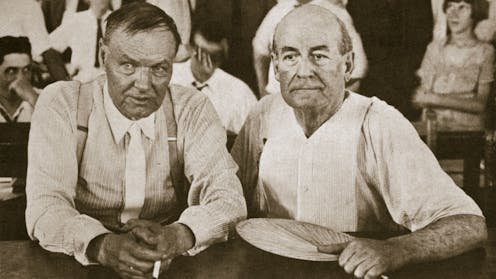
The star attorneys of the Scopes trial: Clarence Darrow, left, for the defense and William Jennings Bryan for the prosecution. Historica Graphica Collection/Heritage Images/Getty Images

Ask Americans about the Scopes trial, and they might have heard of it as the “trial of the century,” a showdown over teaching human evolution.

Less well known are its origins. As historian Edward J. Larson observed in “Summer for the Gods,” his Pulitzer Prize-winning book: “Like so many archetypal American events, the trial itself began as a publicity stunt.”

Held during July 1925 in the tiny railroad town of Dayton, Tennessee, located not far from the public university where I teach Appalachian studies, the trial was a “stunt” prompted by the state legislature’s passage of the Butler Act, which forbade educators in public schools from teaching “any theory that denies the story of the Divine Creation of man as taught in the Bible, and to teach instead that man has descended from a lower order of animals.” Tennessee was the first state to enact this type of legislation.

This “monkey trial” – so dubbed by journalist H. L. Mencken, for humans’ common ancestor with apes – exposed a cultural rift in the United States, as many Christians wrestled with how to reconcile biblical beliefs with Charles Darwin’s theory of evolution. That rift would be widened by media coverage and national response. Over the past century, collective memories of the trial, as interpreted through music, film and literature, have proven a bellwether of the ongoing “culture wars” in American society.

Publicity stunt

In Tennessee, support for the Butler Act was hardly universal. Not in favor was George Rappleyea, manager of a Dayton-area coal and iron mining operation. Rappleyea lobbied other community leaders, some of whom supported the new law, to collectively stage a trial, hoping media attention would generate economic activity in the town.

Those instigators approached John T. Scopes, a social science and math teacher at the local public high school who had also substitute-taught some biology lessons. The 24-year-old could not recall if his lectures had in fact violated the Butler Act, but the textbook in use at his school included evolutionary theory. Scopes agreed to participate.

Testifying against their teacher were three students who had clearly been coached to do so. Nevertheless, the presiding judge persuaded the grand jury to indict.

As an early indication of outside interest, Paul Patterson, the publisher of The Baltimore Sun, paid Scopes’ bail, and the ACLU announced it would defend him.

Center of the storm

Arguments started on July 10, 1925, at the Rhea County Courthouse. The trial may have begun as a determination of whether Scopes had violated the Butler Act, but both sides soon focused on debating the relative merits of biblical cosmology versus Darwinian theory.

A black and white photograph of four men standing amid a crowded room, including one younger man in a white, short-sleeve shirt and bow tie.
American teacher John Scopes, second from left, stands during his trial for teaching Darwin’s theory of evolution.
Hulton Archive/Getty Images

Representing the creationist perspective was prosecuting attorney Tom Stewart, a future senator from Tennessee. Special counsel William Jennings Bryan, a former U.S. secretary of state, was included on the prosecution team at the behest of a Christian fundamentalist organization.

The evolutionary theory position was argued by prominent trade union lawyer Clarence Darrow. An agnostic who distrusted religious fundamentalism, Darrow wrote that “there was no limit to the mischief that might be accomplished unless the country was aroused to the evil at hand.”

A circuslike atmosphere enveloped Dayton. Embodying the “monkey trial” was the performing chimpanzee Joe Mendi, whose trainers posed him for photographs around town. More than 200 journalists attended the trial, with articles appearing in The New York Times, The New Yorker and other publications around the nation.

A woman sits at a round table with a man and two children, as a chimpanzee in a suit sits in her lap.
Joe Mendi, a monkey who performed in films and theater, was brought to Dayton during the trial.
Looking Back at Tennessee Photograph Collection, 1890-1981/Tennessee State Library & Archives

Receiving the most attention was Mencken, whose reportage for The Baltimore Sun did not attempt to disguise his bias against the cultural values of rural America. Dayton’s people, he wrote, “are simply unable to imagine a man who rejects the literal authority of the Bible.”

Updates were circulated in real time via radio – the first U.S. trial to be broadcast live nationally. Filmed footage was rushed from Dayton to be shared in the nation’s theaters as newsreels.

The trial ended on July 21, 1925, with a conviction and a fine. Scopes’ conviction was eventually overturned on a technicality. Since the trial had not challenged the legality of the Butler Act, however, that law remained on the books in Tennessee for more than four decades.

‘Monkey Biz-Ness’

Commenting on the Scopes trial were two 1925 recordings by major singers of the day: a comedic jazz ditty entitled “Monkey Biz-Ness (Down in Tennessee),” performed by the International Novelty Orchestra with singer Billy Murray; and the country hit “The John T. Scopes Trial (The Old Religion’s Better After All),” sung by Vernon Dalhart. The latter song’s lyrics, composed by Carson Robison, warned listeners that “you may find a new belief, it will only bring you grief.”

Other songs of the era – with titles such as “The Bible’s True,” “You Can’t Make a Monkey Out of Me,” “You Talk Like a Monkey and You Walk Like a Monkey” and “Ain’t No Bugs on Me” – echoed that same line of thought: “rural” skepticism toward the “urban,” pro-science perspective on the origins of humankind.

A black and white photo shows men in white shirts gathered around an outdoor book stall.
Supporters of the ‘Anti-Evolution League’ amid the Scopes trial. From Literary Digest, July 25, 1925.
Mike Licht/Flickr via Wikimedia Commons, CC BY

Whereas Scopes was the subject of ridicule in those songs, he and his defenders were celebrated as heroes in “Inherit the Wind,” a 1955 Broadway play by Jerome Lawrence and Robert Edwin Lee. A fictionalized portrayal of the Scopes trial, the play powerfully defended free speech – veiled criticism of Sen. Joseph McCarthy’s recent investigations of various American citizens for their political positions and beliefs.

“Inherit the Wind” inspired a 1960 film of the same name, directed by Stanley Kramer. Its “fanaticism and ignorance” speech depicts the character based on Darrow – played by Spencer Tracy – arguing that without science, society would regress back to a time of unconstrained bigotry. The film received its debut American screening in Dayton on the 35th anniversary of the end of the Scopes trial; Scopes himself was the guest of honor.

‘Fanaticism and ignorance is forever busy, and needs feeding.’

Representations of rural Tennessee in popular culture depictions and in media coverage of the trial drew from a font of stereotypes about Appalachia that have continued into the present century. Condescending depictions of the region have been present in American culture since before the Civil War.

Centennial commemoration

Memory of the Scopes trial endures in popular culture. Take, for instance, a reference in Bruce Springsteen’s 1990 song “Part Man, Part Monkey,” or Ronald Kidd’s 2006 “Monkey Town,” a historical novel for young adults.

Dayton did benefit from the notoriety of the Scopes trial, thanks to sustained cultural tourism. Proud of its unique history, the town today boasts a historical marker to alert passersby to the significance of the landmark event that took place in the Rhea County Courthouse. And in 2025, Dayton has been hosting a series of events to commemorate the trial’s centennial.

Back in 1925, even the Baltimore journalist Mencken begrudgingly praised Dayton and its townspeople, admitting, “It would be hard to imagine a more moral town than Dayton.”

“I expected to find a squalid Southern village … What I found was a country town of charm and even beauty,” he wrote.

The Conversation

Ted Olson does not work for, consult, own shares in or receive funding from any company or organization that would benefit from this article, and has disclosed no relevant affiliations beyond their academic appointment.

ref. ‘Monkey Biz-ness’: Pop culture helped fan the flames of the Scopes ‘monkey trial’ 100 years ago − and ever since – https://theconversation.com/monkey-biz-ness-pop-culture-helped-fan-the-flames-of-the-scopes-monkey-trial-100-years-ago-and-ever-since-255946