How to give children the freedom to play all across the city – not just in playgrounds

Source: The Conversation – UK – By Michael Martin, Lecturer in Urban Design and Planning, University of Sheffield
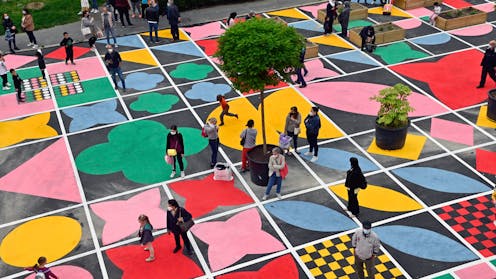
Co-created play space with children and the community, Via Val Lagarina Milan. Milan municipality

Children play everywhere. Yet their right to play – protected by a UN convention – is constantly challenged by adults.

Play is crucial to support children’s holistic development in cognitive, emotional, physical and social skills. Likewise, we know children’s environments significantly influence their health and wellbeing, for better or worse.

But across cities, young people are let down by a built environment that fails to appropriately consider their needs.

Places where children commonly used to play, such as streets and local neighbourhoods, have been transformed into car-only spaces where traffic and parking take priority. Likewise, city spaces frequently “design out” children by prohibiting skateboarding, ball games and other kinds of play.

Over time, urban planning has confined children’s opportunities for play to dedicated playground spaces only.


Get your news from actual experts, straight to your inbox. Sign up to our daily newsletter to receive all The Conversation UK’s latest coverage of news and research, from politics and business to the arts and sciences.


However, children don’t have equal access to these formal play spaces. In the largest study of playgrounds in England, my colleagues and I found substantial inequalities in access to play. Children in the most deprived areas needed to travel further to their nearest playground.

In new research, I’ve explored four international examples of how children and play can be promoted in less likely urban spaces. My findings show how play can be promoted in cities to support children’s right to play anywhere – but also that there is widespread hostility to children’s right to use urban spaces for play.

Power of play

In Sydney, a pedal park installation with temporary jumps, ramps and a pump track was set up in different car parks for the duration of the winter. In Paris, a play street was created in central Paris by closing road traffic on Friday afternoons in autumn and spring.

In Belfast, temporary play equipment and playful street furniture was set up in the Cathedral Gardens public space.

Cathedral Gardens pop-up play space in Belfast meaningfully encourages children to use the city.
Park Hood Ltd.

In Milan, a community-led design involved children in creating a colourful grid, planters, growing beds and games in a school car park, which went on to inspire a new municipal programme of temporary school streets and piazzas.

These play spaces allowed children to play freely, play with objects, play pretend, play games with rules, and play physically – the core pillars of play. What’s more, they enabled children to develop new connections with their community by appropriating urban spaces to promote relaxation and fun. This was vital following the trauma of the global pandemic – all the projects were active during COVID-19 outside of lockdown.

Intergenerational encounters at the weekly play street in the 3rd District of Paris.
Rue’golotte

These short-term projects invited children to enjoy urban life in new ways. In fact, they bolstered civic access for people of all generations. In Sydney, the closure of the car park fostered a new sense of community. Caregivers, grandparents and residents were able to connect with each other in a whole different setting.

Children in Sydney play freely in a ‘pop-up pedal park’ created in a public car park.
Randwick City Council

Politics of play

But despite the positives, over time, the projects faced protest and tension. In Milan, fears from residents emerged on play being used as a tool to displace poorer communities. This was in response to the area having long been earmarked for regeneration. In Sydney, Paris and Belfast, people actively targeted and sabotaged the informal play spaces.

In Sydney, to park their cars, older citizens successfully lobbied local councillors to reduce the total amount of space for play, from the entire car park to one aisle of parking. In Paris, local businesses were exasperated by the presence of children. Collectively they threatened project initiators and staged a protest, claiming that “play streets kill local shops”. In Belfast, the pop-up play space was set on fire, multiple times. By summer 2022, much of the park had been destroyed.

Destruction and criminal damage of the Cathedral Gardens play space in Belfast.
Author

The outcomes demonstrate the politics that children, and their play, were exposed to. Because of a range of aggressive behaviour from adults, children’s use of streets and public spaces were consistently restricted. A common statement from dissenters was “children can go elsewhere”. The reality is they can’t.

In tracking informal play projects through the pandemic and subsequent years, two additional factors hampered their longer-term success. For the council projects in Sydney and Belfast, council officers hoped to direct more resources to urban play, but the lack of a specific local policy to support play was a significant constraint. By comparison, the community projects in Paris and Milan placed an unsustainable pressure on volunteers to ensure prolonged success.

Lessons from previous crises highlight how tensions and conflict can affect innovative uses of space, often diluting their progressive purpose. Ultimately, children’s play in recovery from the pandemic experienced a similar fate.

This is worrying because Unicef research has shown children’s wellbeing has continued to suffer after COVID-19.

Places that allow for children’s play can create dynamic neighbourhoods, intergenerational encounters, and meaningful participation in urban spaces – if only we let it happen.

The Conversation

Michael Martin does not work for, consult, own shares in or receive funding from any company or organisation that would benefit from this article, and has disclosed no relevant affiliations beyond their academic appointment.

ref. How to give children the freedom to play all across the city – not just in playgrounds – https://theconversation.com/how-to-give-children-the-freedom-to-play-all-across-the-city-not-just-in-playgrounds-260444

What Trump’s decision to send more weapons to Ukraine will mean for the war

Source: The Conversation – UK – By David Hastings Dunn, Professor of International Politics in the Department of Political Science and International Studies, University of Birmingham

At face value, Donald Trump’s announcement about his plans on Russia and Ukraine look like a major policy change. Speaking from the Oval Office on July 14, where he had been meeting with Nato secretary general Mark Rutte, the US president said he would send “top-of-the-line-weapons” to help Kyiv and – unless a ceasefire deal is agreed inside a 50-day time limit – the US would impose secondary sanctions on any countries dealing with Russia.

But while this represents a significant departure from Trump’s previous approach, it’s more of a step back towards the policy approach of his predecessor Joe Biden than the U-turn that some commentators are claiming.

For months Russia has stepped up its bombardment of Ukraine, buoyed by the fact that neither the US Congress nor the White House has authorised any new military aid to Kyiv. Moscow would have been aware of this lack of US action and its missile and drone attacks against Ukraine have aimed to run down the stocks of air defence missiles supplied by Biden while paying lip service to the idea of peace negotiations.

For Trump the penny appears finally to have dropped as to what was happening. His frustration and disappointment in Putin is what has finally led to him calling this out. According to Trump, Putin “fooled a lot of people – Clinton, Bush, Obama, Biden – he didn’t fool me. At a certain point talk doesn’t talk, it’s got to be action”.

The decision to send new supplies of defensive – and potentially even longer-range offensive missiles – to Ukraine (even if the Europeans pay for them) is an important signal to Russia. But so too is the threat of tariffs of 100% on countries, such as India and China, that sustain the Russian economy by buying its oil and gas at knockdown prices.

The US senate, led by Lindsay Graham, the influential Republican senator for South Carolina, has been itching to pass these secondary sanctions for months. Now that the Trump administration appears to have adopted this plan it is a significant policy instrument to pile the pressure on Russia.

The change in Trump’s approach may also mean that the $US8 billion (£6 billion) of frozen Russian assets in the US (and US$223 billion in Europe) could be released to aid Ukraine, which would provide a ready means to pay for the US arms transfers.

Limits to US support

What has not changed, however, is the goal of Trump’s policy towards the war in Ukraine. While the Biden administration called out the illegality of Putin’s unprovoked aggression and called for the restoration of Ukrainian sovereignty, Trump is merely calling for a ceasefire.

Trump may say he is “disappointed” with Putin, but he has not labelled him as the aggressor. In fact at one point he was blaming Ukraine for the invasion. And, significantly, he has not demanded that Russia give up the 20% of Ukraine that it currently illegally occupies.

ISW map showing the state of the war in Ukraine, July 14
As at July 14, Russian troops occupy about 20% of Ukraine’s sovereign territory.
Institute for the Study of War

The US president is also silent on what the US would commit to in terms of security and stability for Ukraine after the fighting stops. This is a much bigger question than Ukraine’s Nato membership. America’s European allies in Nato regard some sort of stability force on Ukrainian territory as necessary to deter any future Russian aggression.

Whether or not US troops would be involved (and all the signs are that they would not), some sort of US security “back-stop” or guarantee is still seen in Europe as key to its success – as would be US logistical and intelligence support for its operation.

But why the 50-day delay?

Another aspect of the change in Trump’s policy is the long lead time that Russia has been given to come to the table. A lot of Ukrainian civilians are likely to die during this period if the intense bombardment continues. On the battlefield, 50 days would give the Russians an extended window during a renewed summer offensive to make further territorial gains inside the occupied provinces.

So Trump’s proposals have to be viewed through the prism of his propensity to set deadlines that are then pushed back multiple times – as with the on-again, off-again tariffs, which have given Trump the nickname Taco (“Trump always chickens out”) on Wall Street.

Russian senator, Konstantin Kosachev, was certainly taking this view when he told the BBC after Trump’s announcement that, “if this is all Trump had to say about Ukraine today, then so far it’s been much ado about nothing”.

This sentiment was shared by the Russian stock market which rose 2.7% in the aftermath of Trump’s announcement. Analysts had expected much worse, so the long delay in the prospect of anything actually happening was clearly seen as a long way off and potentially subject to change or cancellation. Trump is seen by many as both inconsistent in his threats and unpredictable as to where policy will eventually settle.

The fact that Trump told BBC Washington correspondent Gary O’Donoghue that while he was “disappointed” with Putin, he was “not done with him” – and his clear reluctance to act quickly and decisively in sanctioning Russia – should be seen as an important counterpart to the apparent policy shift.

Like so many things with the 47th US president, it’s important not to react to the media appearances or the headlines they provoke, without also paying attention to the policy actions of his administration.

The Conversation

David Hastings Dunn has previously received funding from the ESRC, the Gerda Henkel Foundation, the Open Democracy Foundation and has previously been both a NATO and a Fulbright Fellow.

ref. What Trump’s decision to send more weapons to Ukraine will mean for the war – https://theconversation.com/what-trumps-decision-to-send-more-weapons-to-ukraine-will-mean-for-the-war-261192

Taurine could power your energy drink – and maybe cancer cells too. Here’s what you need to know

Source: The Conversation – UK – By Gulshanara (Rumy) Begum, Senior Lecturer in Nutrition & Exercise Science, University of Westminster

shutterstock New Africa/Shutterstock

Energy drinks are big business. Marketed as quick fixes for fatigue and performance dips, energy drinks are especially popular among young people, athletes, sports enthusiasts, and so-called “weekend warriors” – people who pack their workouts into the weekend instead of exercising regularly. Gamers are now a major target too.

But as the market grows, so do concerns about what’s actually in these drinks – and what these ingredients might be doing to our bodies.

Many energy drinks contain some combination of three familiar stimulants: caffeine, found naturally in coffee, tea and cacao; guarana, an Amazonian plant rich in caffeine; and taurine, a naturally occurring amino acid found in scallops, mussels, turkey and chicken.

Taurine, in particular, has drawn both hype and hope. It is credited with performance-enhancing properties and potential health benefits. But new research is raising important questions about how it behaves in the body – and when it might do more harm than good.

In May 2025, a study published in Nature sparked headlines and unease in equal measure. It found that taurine may fuel the progression of leukaemia, a group of blood cancers that begin in the bone marrow.

The study showed that while healthy bone marrow cells naturally produce taurine, leukaemia cells cannot. But they can absorb taurine from their surroundings and use it as a fuel source to grow and multiply. Research on mice and in human leukaemia cell samples demonstrated that taurine in the tumour microenvironment – the area around a tumour that includes blood vessels, immune cells and structural support – accelerated the progression of leukaemia.

Crucially, when researchers blocked taurine uptake by leukaemia cells (using genetic techniques), cancer progression slowed significantly. The authors suggest taurine supplements could potentially worsen outcomes in people with leukaemia and propose that developing targeted ways to block taurine uptake by cancer cells might offer a new treatment strategy.

Taurine: friend or foe?

Taurine is one of the most abundant free amino acids in the human body, found in especially high concentrations in the heart, muscles and brain. In healthy people, it’s mainly obtained through diet, but the body can also synthesise taurine from the amino acids methionine and cysteine, provided it has enough vitamin B6, which is found in foods such as salmon, tuna, chicken, bananas and milk.

Most people consuming a typical western diet take in 40mg–400mg of taurine a day from food alone. This figure refers only to taurine that is directly ingested, not including the additional amount the body can synthesise internally, which may vary depending on age, diet and health.

Fresh scallops and half a lemon
Scallops contain high levels of taurine.
barmalini/Shutterstock

Taurine is listed on the Food and Drug Administration’s (FDA’s) generally recognised as safe (GRAS) database, and according to the European Food Safety Authority (EFSA), it’s safe to consume up to six grams per day. By comparison, a serving of Red Bull or Monster contains around one gram – comfortably below that threshold.

Despite recent concerns about a possible link to blood cancer progression, taurine isn’t inherently harmful. In fact, some people may benefit from supplementation, especially those receiving long-term parenteral nutrition, where nutrients are delivered directly into the bloodstream because the gut isn’t working properly. People with chronic liver, kidney or heart failure may also have trouble producing or holding on to enough taurine, making supplementation helpful in specific clinical settings.

Ironically, some research suggests taurine may actually help reduce the side effects of chemotherapy in leukaemia patients – even as emerging studies raise concerns that it could also fuel the disease. This contradiction underscores how much context matters: the effects of taurine depend not just on dosage and delivery, but also on the patient’s underlying condition. What helps in one context, could harm in another.

But here’s the catch: taking taurine as a supplement for particular health reasons is very different from consuming large quantities through energy drinks, which often combine taurine with high levels of caffeine and sugar. This combination can put strain on the heart, interfere with sleep and increase the risk of side effects, particularly for people with underlying health conditions or those taking other stimulants.

The latest research raises important questions about whether taurine-heavy products could be harmful in some cases, especially for people with, or at risk of, blood cancers.

So, should you worry?

According to the current evidence, if you’re a healthy adult who occasionally sips an energy drink, there’s little cause for alarm. But moderation is key. Consuming multiple high-taurine drinks daily or taking taurine supplements (without prior professional consultation), on top of a taurine-rich diet might not be wise, especially if future research confirms links between taurine and cancer progression.

Until more is known, the safest approach would be to enjoy your energy boosts by consuming a nutritious diet rather than consuming energy drinks. If you have any underlying health conditions – or a family history of cancer – it’s always best to consult a healthcare professional before diving into taurine supplementation or consumption of energy drinks.

The Conversation

Gulshanara (Rumy) Begum does not work for, consult, own shares in or receive funding from any company or organisation that would benefit from this article, and has disclosed no relevant affiliations beyond their academic appointment.

ref. Taurine could power your energy drink – and maybe cancer cells too. Here’s what you need to know – https://theconversation.com/taurine-could-power-your-energy-drink-and-maybe-cancer-cells-too-heres-what-you-need-to-know-256957

England’s redesigned banknotes will reveal how the country sees itself

Source: The Conversation – UK – By Pavan Mano, Lecturer in Global Cultures, King’s College London

Richard z/Shutterstock

The Bank of England has announced a redesign of its banknotes and invited the public to suggest new themes that might feature on them. Victoria Cleland, the Bank of England’s chief cashier, said this was as “a symbolic representation of our collective national identity and an opportunity to celebrate the UK”.

Even though they can appear like the unifying symbols Cleland suggests, my research shows that there are contradictions that surround many national symbols. They are not as unifying as they might seem. In fact, in many cases they also work to exclude people.

For a long time, there has been a persuasive argument about belonging and the nation. As one of the grand theorists of the nation, Benedict Anderson, once put it, the nation is an “imagined political community”.

The idea here is that the nation is simply a collection of people who form a community together, something larger than themselves. And national symbols are supposed to represent this community. As such, national symbols are often taken as markers of belonging.

But what is often overlooked is the exclusionary element of the nation. In my book, Straight Nation, I show how for some people to belong to a nation, others must be portrayed as not belonging. It can be difficult to pinpoint exactly how one belongs to the nation; it is far easier to point at someone else and declare that they do not.

The invitation to contribute to the redesign will therefore show two things. It will tell us how the country sees itself. It will also demonstrate the contradictions around national symbols and the exclusions they can produce. The former perhaps more straightforward than the latter.


Looking for something good? Cut through the noise with a carefully curated selection of the latest releases, live events and exhibitions, straight to your inbox every fortnight, on Fridays. Sign up here.


How does England see itself?

In theory, the banknote is a perfectly neat national symbol. It is an object that is only valid within the borders of the state it is issued in, so the images printed on it can be treated as representations of the nation. Current notes feature images of historically significant characters: former prime minister Sir Winston Churchill, author Jane Austen, painter J.M.W. Turner and scientist Alan Turing.

Jane Austen on the £10 note
Jane Austen is one of only three women who have been on the banknote.
Dudaeva/Shutterstock

Indeed, the Bank of England has suggested that images should not be “divisive”. In other words, they need to be as inclusive as possible. But in the current political environment, far-right politics and division have become extremely commonplace both globally and closer to home.

In the US, the current administration has squarely taken aim at diversity, equity and inclusion programmes and launched a massive wave of deportations. Across much of western Europe, far-right parties are going from strength to strength.

In the UK, rightwing Reform has emerged as the party that would win the most seats if a general election were held this year. The current prime minister, Keir Starmer, recently gave a speech where he warned the UK risked becoming an “island of strangers” without tougher immigration policies.

Amid these political currents, it will be interesting to see which themes and images are eventually chosen to adorn the new banknotes from the consultation which closes at the end of July. The designs will be instructive not least because they will show how how the current climate translates onto these notes as well as how the country sees itself.

For instance, there has never been a person of colour and only three women have previously featured on a banknote. It would be a a long time coming if this were to change.

The exclusions at the heart of national symbols

Perhaps more importantly, however, is the ironic contradiction around asking for the public’s views on banknotes when banknotes are disappearing from public view.

At the start of this year, Lloyds Banking Group announced it would be closing 136 of its high street banks. This follows a broader trend. Since 2015, banks have closed more than 6,000 branches, and the number of cash machines has fallen by more than 7,000 between June 2021 and June 2024.

Banking is becoming increasingly digital and carried out through a smartphone app. A growing number of establishments have gone entirely cashless.

Many people are affected by this, including those with disabilities, older people, those living in rural areas and small businesses. Not only is cash no longer king, it is barely in the building.

When it is redesigned, the new banknote will be released into an environment where it is less used and, in a growing number of establishments that have gone entirely cashless, will be almost entirely unwelcome.

National belonging is often romanticised. There is a sense that nationalism and unity go hand in hand, and that the nation is simply a basin of belonging. National symbols are portrayed as a matter of pride.

We do not know yet what designs they will bear when the crisp new banknotes are issued. But we do know that they will be issued in decreasing quantities and many people will find it harder to get their hands on them. That captures the contradictions of national symbols, and the exclusions they produce.

The Conversation

Pavan Mano does not work for, consult, own shares in or receive funding from any company or organisation that would benefit from this article, and has disclosed no relevant affiliations beyond their academic appointment.

ref. England’s redesigned banknotes will reveal how the country sees itself – https://theconversation.com/englands-redesigned-banknotes-will-reveal-how-the-country-sees-itself-260842

Why the Sycamore Gap tree provoked such strong emotional reactions – a psychologist explains

Source: The Conversation – UK – By Samuel Fairlamb, Senior Lecturer, Department of Psychology, Royal Holloway University of London

Joe Rey Photography/Shutterstock

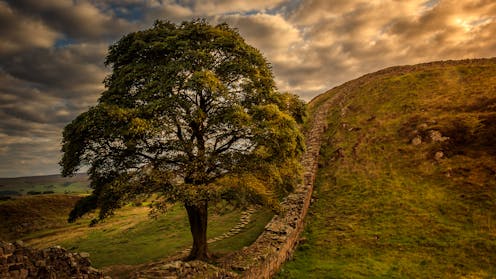
In September 2023, so many people were shocked when the famous Sycamore Gap tree, thriving in a dip along Hadrian’s Wall, was deliberately cut down overnight. For many, the tree symbolised British resilience, heritage and an enduring history. The public response was swift and intense, with widespread outrage and grief over the loss of this cultural landmark.

The two men convicted of felling the Sycamore Gap tree have been sentenced to four years and three months in prison. Meanwhile, the tree lives on thanks to an AI-generated alternate world in the film 28 Years Later.

As a psychologist, I’m interested in what inspired such a strong reaction to the destruction of a single tree. One psychological explanation, known as “terror management theory”, suggests that the emotional response reflects deeper anxieties about death – and not just about this tree.


Get your news from actual experts, straight to your inbox. Sign up to our daily newsletter to receive all The Conversation UK’s latest coverage of news and research, from politics and business to the arts and sciences.


Terror management theory, developed by psychologists Sheldon Solomon, Jeff Greenberg and Tom Pyszczynski, builds on the work of cultural anthropologist Ernest Becker, author of the Pulitzer prize-winning The Denial of Death (1973).

This book’s central idea is simple yet profound. In it, Becker proposes that our awareness of mortality creates the potential for considerable existential anxiety.

To manage this, we rely on cultural worldviews. These are our belief systems. These worldviews can be religious, secular, political or national. They all share a promise that life is meaningful and offer prescriptions for how we should live. When we live in accordance with our cultural values and standards – whether by being a good parent, a loyal citizen or following religious texts – we gain a sense of self-esteem and feel we are contributing to something enduring and significant.

These worldviews also offer the promise of immortality. Some do so literally, as in religious faiths that promise life beyond death. Others offer symbolic immortality, through lasting achievements, family bloodlines, or the continuation of one’s nation. By embedding ourselves in these worldviews, we gain a sense that some part of us will continue after we die.

Cultural symbols such as flags, religious icons, or even a tree can embody our core values and collective identity and are therefore treated with deep reverence. Throughout history, people have waged wars and shown intense emotional reactions to the desecration of such symbols (burning the American flag or the Qur’an, for example).

cur tree trunk in fenced off area
The Sycamore Gap tree was cut down in September 2023.
SunCity/Shutterstock

The Sycamore Gap tree carried similar significance. As a centuries-old landmark, it came to represent Britain’s heritage, strength and continuity. From the perspective of terror management theory, its felling may have stirred strong reactions because it reminded people that even the symbols we rely on for a sense of permanence can be suddenly lost.

This sense of cultural loss is also echoed by other recent events, such as Brexit and the immigration crisis. A collective fear over the erosion of British values and traditions place questions about the loss of British identity at the centre of public consciousness.

Rooted in mortality

Decades of psychological research support this theory’s claims. One common method (a technique called “mortality salience”) involves making participants subtly aware of their mortality (control participants are not reminded of death).

In studies carried out in the 1990s, researchers found that when the solution to a task required desecrating a cultural symbol, such as using an American flag to separate ink from a jar of sand, participants reminded of death took longer to complete the task and experienced greater apprehension.

Hundreds of studies also show how being reminded of death can increase anger and hostility towards people who threaten or violate one’s cultural values. One line of research examining reactions to those who commit moral transgressions may be particularly appropriate to this case.

For instance, in one study, participants reminded of their own death were more likely to support harsher punishments for those who committed moral transgressions such as someone who destroyed an irreplaceable artefact (much like the cutting down of a tree). Other research has shown similar effects: participants (including judges!) when reminded of death gave out harsher penalties or sentencing for those who have committed a crime.

You might question whether these effects truly reflect death anxiety or if they could be explained without invoking a desire for immortality. Research may provide compelling evidence. One study found that reminders of death increased support for harsher punishments for moral transgressors (replicating the study mentioned earlier).

However, when participants were first presented with evidence of an afterlife, the effect of death increasing harsher punishments disappeared. In other words, the promise that death is not the end appeared to buffer from the anxiety that death arouses.

The fall of the Sycamore Gap tree was more than a loss of natural beauty. It was, for many, a symbolic attack on permanence, on meaning, and on shared identity. Yet while such losses can stir outrage and calls for punishment, research also shows that when people endorse prosocial values like empathy, reminders of death can actually foster forgiveness towards those who commit moral transgressions.

According to terror management theory, these responses are not just about anger, but about what it means to be human in the face of inevitable death. In this light, the tree’s felling uprooted something sacred: a collective continuity that gives meaning to our brief lives. As we grieve its loss, perhaps we’re also mourning something more elusive – the comforting illusion that some things might last forever.


This article features references to books that have been included for editorial reasons, and may contain links to bookshop.org. If you click on one of the links and go on to buy something from bookshop.org The Conversation UK may earn a commission.


Don’t have time to read about climate change as much as you’d like?

Get a weekly roundup in your inbox instead. Every Wednesday, The Conversation’s environment editor writes Imagine, a short email that goes a little deeper into just one climate issue. Join the 45,000+ readers who’ve subscribed so far.


The Conversation

Samuel Fairlamb does not work for, consult, own shares in or receive funding from any company or organisation that would benefit from this article, and has disclosed no relevant affiliations beyond their academic appointment.

ref. Why the Sycamore Gap tree provoked such strong emotional reactions – a psychologist explains – https://theconversation.com/why-the-sycamore-gap-tree-provoked-such-strong-emotional-reactions-a-psychologist-explains-257165

Why the Nazis stole a fragment of the Bayeux tapestry

Source: The Conversation – UK – By Millie Horton-Insch, Postdoctoral Research Fellow, History of Art Department, Trinity College Dublin

There was great excitement at the news this month that the Bayeux tapestry – the 11th-century embroidered epic depicting the conquest of England by William the Conqueror in 1066 – will go on display at the British Museum in 2026. However, the tapestry had already been in the news earlier this year, admittedly to much less fanfare.

In March, it was reported that a fragment of the Bayeux tapestry had been discovered in Germany in the Schleswig-Holstein state archives. To understand how it ended up there, we must turn to a troubling and little-known episode in the tapestry’s history: Sonderauftrag Bayeux (Special Operation Bayeux), a project operated by the Nazi Ahnenerbe, the SS regime’s heritage research group.


Looking for something good? Cut through the noise with a carefully curated selection of the latest releases, live events and exhibitions, straight to your inbox every fortnight, on Fridays. Sign up here.


It has often been observed that art seems to have been of disproportionate concern to the Nazis. However, their manipulation of visual and material culture should be understood as central to – not separate from – Hitler’s genocidal regime and its efforts towards global domination.

The Ahnenerbe, under the ultimate authority of Heinrich Himmler, was established to develop and disseminate histories in support of that mythology central to the Nazi regime: the supremacy of the Aryan race. To this end, the Ahnenerbe oversaw research that claimed to use unassailable scientific methods.

However, it has long been acknowledged that their projects consciously manipulated historical evidence to construct fabricated histories that would support racist ideologies. To achieve this, numerous research projects were conducted. These projects saw scholars travel across the globe in the pursuit of objects that could act as monuments to the mythologies of Aryan supremacy. Sonderauftrag Bayeux was one such project.

Nazi interest in the Bayeux tapestry may seem surprising to British people, where the tapestry is considered a symbol of a singularly significant moment in Britain’s history. However, just as politicians in modern Britain have found it tempting to reference the tapestry in the advancement of their political agendas, so too did the Ahnenerbe.

Sonderauftrag Bayeux aimed to produce a multi-volume study of the tapestry that would assert its inherently Scandinavian character. The objective was to present the tapestry as proof of the supremacy of the early medieval Norman people, whom the Ahnenerbe claimed as the ancestors of modern German Aryans and descendants of “Viking” northern Europeans.

By June 1941, work on Sonderauftrag Bayeux had begun in earnest. Among the team sent to Normandy to study the tapestry first hand was Karl Schlabow, a textile expert and head of the Germanic Costume Institute at Neumünster in Germany. Schlabow spent a fortnight in Bayeux, and it was he who removed a fragment of the tapestry’s backing fabric and brought it back to Germany when his research visit was complete.

Though initial reports suggested that Schlabow removed this fragment when the embroidery was later transferred by the Nazis to Paris, it is more likely that he did so during June 1941, when he and his fellow members of Sonderauftrag Bayeux were stationed in Bayeux.

In a sketch by Herbert Jeschke – the artist commissioned to create a painted reproduction of the tapestry – during this visit, Jeschke depicted himself with Schlabow and Herbert Jankuhn (the director of the project) hunched over the tapestry. The sketch is accompanied by the emphatic title, “Die Tappiserie!”, an expression of delight at their privileged viewing of this medieval masterpiece.

To join the Ahnenerbe, Schlabow, like others involved in the Sonderauftrag Bayeux, was inducted into the SS. He held the rank of SS-Unterscharführer (roughly the equivalent of a sergeant in today’s British army). After the second world war many members of the Ahnenerbe denied having sympathy for Nazi policies.

However, documents seized by US intelligence officers at the end of the second world war reveal that some were denied entry to the Ahnenerbe if they, for instance, had had Jewish friends or expressed sympathy towards communist ideas. They therefore had to (at least outwardly) appear sympathetic to Nazism to be inducted into its ranks.

Details of what exactly the Ahnenerbe project uncovered, or even hoped to uncover, from this study of the tapestry are opaque. It appears that, to a large extent, the act of producing an illustrated study and dispatching researchers to the original textile was enough to claim the object as a monument to Germanic Aryan supremacy. It is clear that perceived Scandinavian influence within the tapestry’s designs was to be central to the study’s conclusions, but the project was not completed before Germany’s defeat at the end of the war.

Like many other members of the Ahnenerbe, Schlabow returned to research after the war, working at the Schleswig-Holstein State Museum in Gottorf Castle.

The discovery of even the tiniest fragment of this remarkable medieval object is cause for much excitement. However, its recovery should be framed firmly in the context in which it was removed. It should come as no surprise that Schlabow felt empowered to steal this piece of the tapestry; the regime for which he worked claimed the object as a piece of his heritage, his birthright as an Aryan German.

This find is a timely reminder that the past is closer than we realise and that there is still much work to be done to explore the long shadows cast by previous practices in the histories we inherit. The recovered fragment is currently on display in Schleswig-Holstein, but will return to the Musée la Tapisserie de Bayeux in Normandy in time for the museum’s re-opening in 2027 when the two elements will be reunited for the first time since 1941.

The Conversation

Millie Horton-Insch receives funding from the Leverhulme Trust.

ref. Why the Nazis stole a fragment of the Bayeux tapestry – https://theconversation.com/why-the-nazis-stole-a-fragment-of-the-bayeux-tapestry-260048

Vanishing data in the U.S. undermines good public policy, with global implications

Source: The Conversation – Canada – By Kristi Thompson, Research Data Management Librarian, Western University

The recent tragic floods in Texas have focused attention on the human impact of the cuts to government infrastructure and services in the United States by Donald Trump’s administration.

Although initial analyses suggest that recent budget cuts and loss of staff played no role in the timeliness of the warnings, many are concerned that a lack of data used to make critical predictions and decisions will increasingly become apparent as a serious problem.

As researchers focused on data management (Kristi) and behavioural sciences (Albert) and whose work tackles the significance of research with open access data, we have been concerned about how the data sets that scholars around the world rely on have been vanishing from U.S. government sites.

Vanishing data is of dire concern far beyond the U.S., including for Canadians.

Danielle Goldfarb, an expert on trade, real-time data, economics and public policy, notes that cuts to the National Oceanic and Atmospheric Administration’s Arctic monitoring programs weaken Canada’s ability to assess shared climate risks and global shipping impacts. The American dismantling of key weather reporting also threatens the availability of crucial data for Canada’s disaster preparedness.

The Canadian data community is watching U.S. events closely, and this has led to the recent founding of the Canadian Data Rescue Project. The project has a dual focus: to support data rescue efforts in the U.S. and to set up preventative life support for Canadian government data.

Attack on knowledge

The attack on knowledge in the U.S. began in January 2025 when Trump signed executive orders mandating the removal of information on topics such as diversity and “gender ideology” from government websites.

Next, entire websites, data distribution systems and data collection systems began to disappear. The result was not only growing alarm over how the needs of marginalized populations are represented in democratic life and how public safety could be affected, but also concerns about a research and public policy crisis.

Environmental data was a major target, with climate change tracking tools disappearing.

And as part of the defunding of the Department of Education, nearly all of the staff, including the commissioner at the National Center for Education Statistics, were fired.


Read more:
Trump orders a plan to close Education Department – an anthropologist who studies MAGA explains 4 reasons why Trump and his supporters want to eliminate it


Fundamental records

Government data provides the most fundamental record of how a society works. Health, social, economic and education data collections show a clear picture of how people live, and allow researchers to track how public policy changes affect everyday lives.

Government data is a unique resource because governments can require and enforce the collection of accurate information. This data also provides records of the activities of elected governments.

Eliminating data collection breaks the system of knowledge that allows governments to work well, and lets the public transparently see how they are working well.

Accuracy of data affects how people live

Data and budget cuts are already undermining economic policy in the U.S.

Inflation is a key indicator of economic health, and was an important electoral issue for Americans, with egg prices and other indicators coming up repeatedly in election campaigns.

But the Bureau of Labor Statistics, responsible for monitoring price changes, has been forced by staffing shortages to rely on less accurate data-collection methods. Now, according to the Wall Street Journal, economists are questioning the accuracy of the government’s inflation data.

Similar budget pressures hit climate science. The National Oceanic and Atmospheric Administration decommissioned its Billion-Dollar Weather and Climate Disasters Database as of May 8.


Read more:
Three scientists speak about what it’s like to have research funding cut by the Trump administration


This data tracked weather disasters where damages or costs reached or exceeded $1 billion and helped local and state governments plan, allocate budgets and advocate for funding. Employment losses are also expected.

Internationally, shuttering the U.S. Agency for International Development has led to data losses that will severely hinder global development goals. The Demographic and Health Surveys program helped governments of many low- and middle-income countries collect health and service data.

Losing aid funding will harm people directly. Losing the data will worsen that harm by preventing governments from making informed decision on allocating scarce resources, and it will hide how much harm is being done.

Limiting what can be known

Data destruction is a way to disrupt and control discourse by limiting what can be known. Without data, questions like “What impact are climate-related disasters having?” or “What’s the inflation rate?” are unanswerable. It becomes harder to effectively critique government actions.

If data destruction is an act of political suppression, then data preservation can be an act of political resistance.

In February 2025, several U.S. academic and non-profit associations got together to form the Data Rescue Project. They have worked to download data files, create documentation and prepare the data for publication on donated platforms.

While researchers are unable to change the termination of data collection programs, they are preserving as much data as possible so researchers and critics can at least access information.

The Canadian Data Rescue Project has hosted three data rescue events to create documentation for rescued American data sets, and is setting up processes to download and archive Canadian government data as a safeguarding measure.

Canadian data concerns

Disappearing data could happen here, and similar events have. Stephen Harper’s Conservative government cut data collection programs and issued gag orders to federal scientists.

The federal government reduced funding for environmental data collection and eliminated the First Nations Statistical Institute.

Researcher Melonie Fullick noted in 2012 that since 2009, “research on post-secondary education in Canada has been undermined by a systematic elimination of resources.” With the termination of varied education bodies or councils also came a scarcity of data.

The Harper government also eliminated the 2011 long-form census, replacing it with a voluntary survey, leading to the resignation of Canada’s national statistician and disrupting the baseline for all social and health data collection in Canada over the next few years.

Subsequent governments restored the census and some other data-collection programs, but in the case of education, researchers say some of the pains now being felt in the sector can be traced back to this period.

Canada at crossroads

A society knows itself through data, and makes a declaration about what it values by what it chooses to count.

Canada is now at a crossroads. Our researchers and policy analysts have piggybacked on U.S. data collection in critical areas from health to climate and weather forecasting. We now need a national response to help mitigate the effects of data destruction.

The Conversation

The authors do not work for, consult, own shares in or receive funding from any company or organisation that would benefit from this article, and have disclosed no relevant affiliations beyond their academic appointment.

ref. Vanishing data in the U.S. undermines good public policy, with global implications – https://theconversation.com/vanishing-data-in-the-u-s-undermines-good-public-policy-with-global-implications-258230

3 ways Canadians can take control of their finances in an age of economic uncertainty

Source: The Conversation – Canada – By Omar H. Fares, Assistant Professor, Faculty of Business, University of New Brunswick

Canadian consumers are beginning to move from short-term economic concerns to a more persistent mindset of financial precarity, and it’s starting to affect how they live.

People are delaying major purchases and starting to show signs of subscription fatigue, according to recent findings. One recent survey found that 70 per cent of Canadians are deferring major life decisions, including home ownership and family planning, as a consequence of this sustained economic uncertainty.

This anxiety is now reflected in broader sentiment. The Bank of Canada’s latest Consumer Expectations Survey found a sharp rise in economic pessimism. About two-thirds of Canadians now anticipate a recession within the year, up from 47 per cent in late 2024.

Concerns about job security, debt repayment and access to credit are also mounting. For the first time since early 2024, more consumers report cutting back on spending. Home-buying intentions are declining, especially among those expecting a downturn, and an increasing share of mortgage holders plan to reduce expenses ahead of higher renewal payments.

Consumers are no longer just reacting to inflation or interest rates, but adjusting to the idea that financial uncertainty may be here to stay.

Why today’s economic anxiety feels different

While the link between economic uncertainty and reduced spending is well established, what makes today’s situation different is the convergence of multiple pressures facing consumers.

This includes a challenging job market — particularly for younger Canadians — concerns about the disruptive effects of AI-driven automation, the threat of tariffs from the United States, ongoing global conflicts and the growing cost of living.

With economic uncertainty now a defining feature of everyday life for many Canadians, the sense of financial precarity is shaping how people think, plan and spend.

Addressing this new reality will require equipping ourselves with tools and mental habits that can help develop financial stability, even in unpredictable times. Here are three research-backed ways to do this.

A Global News segment about how half of Canadians are living bill-to-bill.

1. Budget based on values

With many people feeling the pinch or uncertainty around money, a more deliberate, values-based approach to personal finance is needed beyond traditional budgeting methods. If you’re looking for more control over your finances, it can help to shift your focus from just tracking where your money goes to making sure it goes where you actually want it to.

Research in consumer behaviour supports this shift in mindset. Mental accounting, introduced by economist Richard Thaler, explains how people naturally divide their money into mental categories like stability, family or learning. Budgeting then becomes less about cutting back and more about making intentional choices.

Studies have found that pairing this kind of values-based budgeting with simple practices, such as setting clear goals and automating transfers, can lead to lower spending and more consistent long-term behaviour. The goal is not to manage every dollar perfectly, but to make sure your money aligns with what matters most to you.

Since values tend to guide sustainable decision-making, a practical starting point is to identify three to five core values, such as financial security, personal development or time with family. Next, review your recent transactions and group them by the value they support. This reframes budgeting as a way to assess whether your current spending aligns with what you consider most important.

From there, assign a reasonable monthly amount to each category based on your income and fixed obligations. You don’t need to track every detail, but having value-based benchmarks will improve day-to-day choices.

Renaming categories in your budgeting app or spreadsheet is another important approach. For example, changing “discretionary” to “family time” or “well-being” can reinforce the link between spending and values. Set up automated transfers that reflect your goals; this might include creating a savings buffer, funding education or contributing to a low-risk investment account. Automation helps reduce decision fatigue and supports consistency.

2. Use pessimism to your advantage

While recognizing economic risks is entirely rational, how people respond to that risk makes a significant difference. Psychologists have studied a mindset known as “defensive pessimism,” a strategy that involves anticipating potential problems in order to plan effectively, rather than being overwhelmed by uncertainty.

Unlike chronic anxiety or fear, which can impair decision-making and lead to poorer financial and consumption choices, defensive pessimism encourages people to take a more measured, thoughtful approach. It combines realism with preparation and helps individuals stay focused and responsive in uncertain conditions.

People are more resilient when they focus on what can be changed. In practical terms, this might include learning a new skill, starting a side project or strengthening personal or professional networks.

To apply defensive pessimism, start by clearly identifying what could go wrong, then outline specific actions to address those possibilities. Break big tasks into smaller, manageable steps, create a backup plan and regularly reassess progress. This approach helps maintain focus, reduce surprises and turn worry into preparation.

These small, proactive steps with detailed personal reflection can offer a sense of agency that counters feelings of helplessness. Rather than ignoring challenges, defensive pessimism coupled with consistent reflection is about figuring out how to work around them.

3. Adopt a long-term outlook

Despite ongoing uncertainty, maintaining a long-term financial perspective remains very important. Research consistently shows that people who engage in long-term planning tend to accumulate greater wealth over time.

Long-term planning involves continuing to plan for future goals such as retirement or education, even when timelines need to shift due to changing circumstances.

One of the greatest challenges with this approach is known as the “sour grape effect.” This refers to the tendency people have to downplay a future goal or reward after experiencing early setbacks or failures.

A 2020 study with 1,304 participants in Norway and the U.S. found that setbacks can lead individuals to disengage from their goals. Participants were given either positive or negative feedback on an initial task and then asked to predict how much happiness they would feel if they succeeded in a later round.

Those who experienced failure anticipated much less happiness from future success. When everyone actually did succeed, their levels of happiness were the same regardless of initial feedback. Setbacks can lead people to devalue their goals as a self-protective strategy. However, participants with high achievement motivation did not show this bias.

In other words, when short-term disappointments are interpreted as failure, there is a risk that people may give up on long-term plans altogether. In these moments, the most effective course of action is staying consistent and committed, while still remaining agile enough to adapt as needed.

The Conversation

Omar H. Fares does not work for, consult, own shares in or receive funding from any company or organisation that would benefit from this article, and has disclosed no relevant affiliations beyond their academic appointment.

ref. 3 ways Canadians can take control of their finances in an age of economic uncertainty – https://theconversation.com/3-ways-canadians-can-take-control-of-their-finances-in-an-age-of-economic-uncertainty-260785

Des « vacances d’école » pour apprendre autrement : l’expérience des classes de mer

Source: The Conversation – in French – By Gilles Brougère, Professeur émérite en sciences de l’éducation, Université Sorbonne Paris Nord

Hors du cadre scolaire, immergés dans un milieu naturel, loin de leurs tables et crayons, comment les enfants apprennent-ils et qu’apprennent-ils ? L’expérience des classes de mer nous montre en quoi la confrontation à l’extérieur aide aussi à grandir.


La scène se passe en Bretagne, à la pointe sud du Finistère. « Le phare s’appelle la perdrix », explique l’éducatrice à un groupe d’écoliers en visite dans la région. « Le phare de la perdrix », répète alors un enfant. « Non, “la perdrix”, ce sont les touristes qui disent “le phare de la perdrix” », corrige l’éducatrice. « On est des touristes », insiste l’enfant. « Vous n’êtes pas des touristes, vous êtes en classe de mer », lui explique son interlocutrice. « On est des touristes », réitère l’élève.

Malgré l’insistance de l’éducatrice en milieu marin pour définir la situation, les enfants persistent à se revendiquer en touristes, ce qui dans leur bouche n’est pas négatif. Des entretiens ont permis de comprendre que, pour eux, le tourisme renvoie à la confrontation à quelque chose de différent, d’autre, à la découverte.

Ces propos d’enfants sont issus d’observations et d’entretiens menés dans le cadre d’une recherche sur les classes de mer en Finistère, département où sont nées ces classes de découverte à la suite d’autres plus anciennes, en particulier les classes de neige. Elle a permis de mettre en lumière une expérience de plusieurs décennies souvent oubliée alors qu’aujourd’hui, à la suite de la crise sanitaire due au Covid, est mis en avant l’intérêt de la « classe dehors ».

Que nous apprennent les classes de mer, ces immersions dans un milieu naturel, sur les apprentissages qui s’appuient sur des corps en mouvement, bien loin des corps immobiles de la classe ordinaire ?

Tourisme scolaire et vacances d’école

Ces classes de mer proposent des activités proches pour ne pas dire identiques au tourisme : un déplacement qui implique de vivre le quotidien (en particulier dormir, manger) dans un autre cadre, des activités corporelles (dans notre cas, le nautisme), une découverte de milieux naturels, culturels et sociaux différents mais aussi l’achat de souvenirs, quand c’est autorisé par les enseignants, ou du repos et des jeux, surtout quand le séjour est assez long.

Un enfant a proposé « vacances d’école », belle expression qui évoque à la fois la suspension de l’école et le départ d’une classe pour des « vacances » communes. Bien entendu ce ne sont pas des vacances, les enfants ne s’y trompent pas, mais cela ressemble à des vacances : « Et même quand on travaillait, c’était comme des vacances, c’était comme des jeux. »

Et cela d’autant plus qu’avec des séjours de plus en plus courts, les enseignants mettent en avant les activités propres au lieu, au littoral, limitant les temps de classe. Les investissements que cela implique en organisation, en temps comme un argent, invitent à profiter au maximum du lieu.

Une tension pour une réalité hybride entre classe et loisir

Les enseignants comme les éducateurs attachés au centre nautique où se déroule la classe de mer sont alors pris dans une tension que chacun résout dans un sens ou un autre : rappeler qu’il s’agit de scolaire (« dans classe de mer, il y a classe »), abolir le scolaire au profit d’une expérience autre, spécifique, qui constituera des souvenirs uniques.

Si, parfois, il y a une tentative – souvent vouée à l’échec face à la fatigue des enfants en fin de journée, à l’appel de l’extérieur… – de maintenir la classe, de faire régner la discipline, on trouve plus souvent un abandon à la situation d’autant plus que, dans les centres nautiques visités, elle est riche d’une histoire qui commence en 1964 et qui a produit un ensemble d’activités appréciées des enseignants comme des enfants. Ainsi arrive-t-il à un enseignant de parler de vacances pour, très vite, nous dit-il, expliquer ce qu’est un lapsus aux enfants. Doutons qu’il ait parlé de lapsus révélateur.

Bien entendu si cela ressemble à des vacances, certes très particulières, pour les enfants, ce ne sont pas des vacances pour des enseignants ou des éducateurs chargés de l’organisation. Pas plus que les professionnels du tourisme qui rendent possibles les vacances ne sont eux-mêmes en vacances…

Les caractéristiques de l’expérience des enfants

La classe de mer marque l’expérience d’une autonomie, d’une vie quotidienne sans les parents et, pour beaucoup, c’est le premier séjour en dehors de la famille, cela dans le cadre d’une vie partagée avec ses camarades de classe :

« Moi surtout, ce que j’ai aimé en classe de mer, c’est qu’on pouvait faire des groupes et dormir dans la même chambre. Et que… on pouvait discuter, on pouvait se parler entre nous, et ne pas être seul dans une seule chambre », note un participant.

Se retrouver dans la même chambre que ses copains, copines est sans doute ce qui frappe le plus dans cette expérience, ce qui conduit à de nombreux discours positifs, malgré l’absence des parents.

« Les 50 ans des classes de mer » (France 3 Bretagne, 2015).

Avant tout il s’agit de l’expérience d’une nouvelle forme de sociabilité extérieure à la famille, qui conduit nombre d’enfants à relever des apprentissages autour de l’idée de grandir, d’être capable de s’occuper de soi-même, de se préparer à être adulte, de devenir plus autonome.

Les expériences nautiques, la découverte de la voile ou du kayak constituent des moments importants, racontés par les enfants avec nombre de détails. Ils n’oublient pas pour autant la découverte de la flore et de la faune locale, celle, variable selon les séjours, du monde social et culturel (activités de pêche, musées thématiques).

Ainsi des enfants ont pu être particulièrement marqués par la visite d’une criée, ou celle d’un cimetière à bateaux militaires. Et la découverte est également présente pour les enfants bretons ; comme le dit un enfant, en se promenant sur l’estran avec ses parents, il ne pouvait imaginer qu’il s’agissait d’un espace de vie marqué par la présence d’une telle variété d’espèces animales.

Apprendre autrement

Il en résulte un sentiment d’apprendre très fort chez ces enfants. Nous l’avons évoqué ci-dessus concernant une vie quotidienne plus autonome, il renvoie tout autant aux apprentissages corporels et sportifs (le nautisme), la découverte de la faune et de la flore.

Dans le même temps, les enfants soulignent que les objets et les modalités d’apprentissage sont différents. On apprend en s’amusant, parfois sans s’en rendre compte, certains parlent d’apprentissage ludique ce qui conduit à un débat sur la possibilité d’en faire une modalité dominante ou, au contraire, marginale car cela ne permettrait pas d’atteindre les objectifs scolaires légitimes. Il s’agit d’apprentissages qui s’appuient sur l’immersion (« Notre salle de classe, c’est le chemin », dit un éducateur), le corps devenant le moyen d’accéder aux connaissances.

Ce n’est sans doute qu’une parenthèse, relativement courte, les séjours se limitant à cinq voire quatre jours le plus souvent, les plus longs dépassant rarement dix jours. Mais cette parenthèse semble confronter les enfants à un mode d’apprentissage non scolaire ou faiblement scolarisés. Nous avons montré par ailleurs comment le tourisme est un espace d’apprentissage informel (sans intention éducative). Ici, il y a bien intention éducative, mais avec les mêmes modalités, celles de la découverte, du faire, de l’activité et c’est sans doute ce qui fait la richesse de cette expérience pour les enfants, avec, en conséquence, le regret que ce ne soit pas l’occasion d’une réflexion avec eux sur l’apprentissage et ses modalités diverses.

The Conversation

Gilles Brougère a reçu des financements de le Fondation de France pour une recherche sur les classes de mer.

ref. Des « vacances d’école » pour apprendre autrement : l’expérience des classes de mer – https://theconversation.com/des-vacances-decole-pour-apprendre-autrement-lexperience-des-classes-de-mer-258092

Disneyland Paris, un parc d’attractions… inspiré de merveilles géologiques réelles

Source: The Conversation – in French – By Elodie Pourret-Saillet, Enseignante-chercheuse en géologie structurale, UniLaSalle

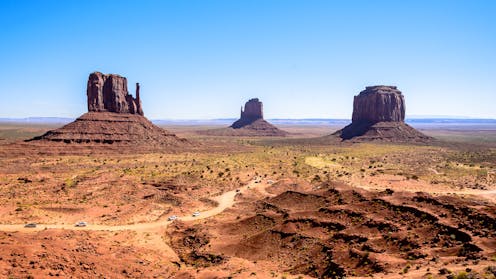
Monument Valley Navajo Tribal Parks, site naturel à cheval sur l’Arizona et l’Utah, aux États-Unis. Domenico Convertini/Flickr, CC BY-SA

La prochaine fois que vous visiterez Disneyland Paris, regardez bien les roches autour de vous. Elles vous racontent une histoire, pas celle des contes de fées, mais celle de la Terre. Une aventure tout aussi fantastique… et bien réelle.


Derrière les artifices d’un parc à thème se cache une fascinante reconstitution de la planète Terre, version Disney. À quel point est-elle fidèle à la réalité ?

Nous vous proposons de nous pencher sur un aspect inattendu de Disneyland : sa dimension géologique. Non pas celle du sous-sol sur lequel le parc est construit, mais celle des paysages qu’il met en scène. Car les Imagineers (les concepteurs des attractions et décors du parc) se sont souvent inspirés de formations naturelles bien réelles pour créer les décors enchanteurs et parfois inquiétants que le public admire chaque jour.

Des montagnes à l’est de Paris

Prenez Big Thunder Mountain, sans doute la montagne la plus iconique du parc, dans la zone inspirée du Far West américain.

train sur montagne rouge
Une montagne russe inspirée du Grand Ouest américain.
Eleanor Brooke/Unsplash, CC BY

Ses roches de couleur rouge due à la présence d’oxydes de fer et ses falaises abruptes sont directement inspirées des sites naturels emblématiques de l’Ouest américain tels que Monument Valley Tribal Park, Arches National Park ou encore le Goblin Valley State Park, entre l’Arizona et l’Utah.

Ces sites emblématiques sont constitués de grès vieux de 160 millions à 180 millions d’années, les grès Navajo et Entrada (ou Navajo and Entrada Sandstones). Ces grès de très fortes porosités sont utilisés depuis plusieurs décennies comme des « analogues de roches-réservoirs » par les géologues, c’est-à-dire comme l’équivalent en surface des réservoirs profonds afin de comprendre les écoulements de fluides.

Par ailleurs, outre leur aspect visuellement spectaculaire, c’est dans les Navajo Sandstones que les géologues ont pu élaborer les modèles actuels de croissance des failles. La présence de ces failles et fractures tectoniques est particulièrement bien représentée sur les décors de Big Thunder Mountain. En particulier, les créateurs ont respecté la relation entre l’épaisseur des couches géologiques et l’espacement des fractures, qui correspond à un modèle mathématique précis et respecté.

Cette reproduction n’a rien d’un hasard. Dès les années 1950, Walt Disney en personne a voulu intégrer des paysages naturels dans ses parcs pour leur pouvoir évocateur.

Ces montagnes sont devenues des icônes et se retrouvent dans les films Disney comme Indiana Jones et la dernière croisade (1989) au début duquel le jeune Indy mène son premier combat pour soustraire des reliques aux pilleurs de tombes dans l’Arches National Park. Pour les Imagineers, il s’agissait de recréer un Far West rêvé, mais en s’appuyant sur des repères géologiques bien identifiables, une manière d’ancrer la fiction dans un monde tangible.

arche de grès rouge
La Delicate Arch, dans le parc national d’Arches, dans l’Utah aux États-Unis.
Élodie Pourret-Saillet., Fourni par l’auteur

Tous les quinze jours, de grands noms, de nouvelles voix, des sujets inédits pour décrypter l’actualité scientifique et mieux comprendre le monde. Abonnez-vous gratuitement dès aujourd’hui !


La grotte du dragon : géologie souterraine et imaginaire

Un autre exemple frappant : la tanière du dragon, nichée sous le château de la Belle au bois dormant. Cette attraction unique à Disneyland Paris met en scène un dragon animatronique de 27 mètres de long, tapi dans une grotte sombre et humide.

Le décor rappelle les endokarsts, ces réseaux de grottes calcaires que l’on trouve notamment dans le sud de la France (comme l’Aven Armand) (Lozère), en Slovénie ou en Chine.

Les stalactites, l’eau ruisselante, les murs rugueux sont autant d’éléments qui évoquent des processus bien réels : dissolution du calcaire par l’eau acide, formation de concrétions, sédimentation…

stalactites et coussins calcaires de l’Aven Armand
Les formations calcaires de l’Aven Armand (Lozère), dans les Cévennes.
Petr1888, Wikipédia, CC BY-SA

Seule entorse à cette reconstitution souterraine : le passage brutal d’un calcaire à un substrat granitique, sur lequel repose le château du parc. Or, ces roches ont des origines très différentes : les calcaires sont sédimentaires, les granites magmatiques, formés en profondeur par refroidissement du magma. Leur voisinage est rare, sauf dans certains contextes tectoniques, comme le long de grandes failles ou en zones de métamorphisme de contact, où le granite chauffe et transforme les sédiments voisins. Un exemple existe dans le Massif central, entre granites du Limousin et calcaires du Quercy. Cette configuration, bien que possible, reste peu fréquente et repose sur des structures complexes, difficilement représentables dans un parc. Elle simplifie donc à l’extrême une histoire géologique de centaines de millions d’années.

Mais, évidemment, rien ici n’est naturel. Tout est reconstitué en béton, fibre de verre ou résine. L’effet est cependant saisissant. Les visiteurs plongent dans un univers souterrain crédible, parce qu’il s’appuie sur une géologie fantasmée mais en grande partie réaliste.

La jungle cache des coulées volcaniques figées

Dans la partie du parc appelée Adventure Isle, le visiteur traverse une jungle luxuriante peuplée de galeries souterraines, de ponts suspendus et de cascades. Mais derrière cette végétation exotique se dissimulent aussi des formes géologiques typiques des régions tropicales ou volcaniques : blocs rocheux arrondis, chaos granitiques, pitons rocheux et même orgues basaltiques.

On peut notamment repérer sur le piton rocheux nommé Spyglass Hill, près de la cabane des Robinson et du pont suspendu, des formations en colonnes verticales. Celles-ci évoquent des orgues basaltiques, comme on peut en observer sur la Chaussée des géants en Irlande du Nord ou à Usson (Puy-de-Dôme) en Auvergne.

colonnes de granite de section hexagonale
Les orgues basaltiques d’Usson (Puy-de-Dôme), en Auvergne.
Accrochoc, Wikipédia, CC BY-SA

Ces structures géométriques résultent du refroidissement lent de coulées de lave basaltique, qui se contractent en formant des prismes hexagonaux. Bien que les versions Disney soient artificielles, elles s’inspirent clairement de ces phénomènes naturels et ajoutent une touche volcanique au décor tropical.

entrée en grès derrière des racines de faux fromagers
Entrée du temple khmer Ta Phrom, érigé sur le site d’Angkor au Cambodge à la fin du XIIᵉ siècle.
Diego Delso, Wikipédia, CC BY-SA

Le décor du temple de l’attraction Indiana Jones et le Temple du Péril, quant à lui, rappelle celui du site d’Angkor au Cambodge, qui est bâti sur des grès et des latérites (formations d’altération se formant sous des climats chauds et humides). Les pierres couvertes de mousse, les failles et les racines qui s’y infiltrent, simulent une interaction entre la roche et le vivant. Ce type de paysage évoque des processus bien réels : altération chimique, érosion en milieu tropical humide et fracturation des roches.

En mêlant ainsi géologie volcanique et paysages tropicaux, cette partie du parc devient une synthèse d’environnements géologiques variés. Cependant, la reconstitution d’un environnement naturel si varié sur une surface limitée impose ici ses limites. En effet, chaque type de roche présenté ici correspond à un environnement géodynamique précis, et l’ensemble peut difficilement cohabiter dans la nature.

Quand Blanche-Neige creusait déjà pour des gemmes : les minéraux à Disneyland

Bien avant les montagnes du Far West ou les grottes de dragons, la première évocation de la géologie dans l’univers Disney remonte à Blanche-Neige, en 1937. Souvenez-vous : les sept nains travaillent dans une mine de gemmes où s’entassent diamants, rubis et autres pierres précieuses étincelantes. Cette scène, réinterprétée dans les boutiques et attractions du parc, a contribué à forger une vision enchantée mais persistante des minéraux dans l’imaginaire collectif.

À Disneyland Paris, on retrouve cette symbolique dans les vitrines, sous le château de la Belle au bois dormant ou dans certaines attractions comme Blanche-Neige et les sept nains, et la grotte d’Aladdin, où les cristaux colorés scintillent dans les galeries minières.

Ces minéraux, bien que fantaisistes, sont souvent inspirés de véritables spécimens comme les diamants, quartz, améthystes ou topazes. Dans la réalité, ces cristaux résultent de processus géologiques lents, liés à la pression, la température et la composition chimique du sous-sol et ces minéraux ne sont pas présents dans les mêmes zones géographiques simultanément.

cristaux roses et blancs, vus de près
Cristaux d’améthyste.
Sander van der Wel, Wikipédia, CC BY-SA

Une science cachée mais omniprésente

À première vue, Disneyland Paris semble à des années-lumière des sciences de la Terre. Et pourtant, chaque décor rocheux, chaque paysage artificiel repose sur des connaissances géologiques précises : types de roches, formes d’érosion, couleurs, textures…

Cette approche est d’ailleurs comparable à celle utilisée dans le cinéma, notamment dans les films Disney-Pixar comme Cars (2006), où les décors sont validés par des géologues et géographes.

Pourquoi ne pas profiter d’une visite au parc pour sensibiliser les visiteurs à ces aspects ? Comme cela est déjà le cas pour les arbres remarquables du parc, une description pédagogique des lieux d’intérêt géologique pourrait être proposée. Une sorte de « géologie de l’imaginaire », qui permettrait de relier science et pop culture. Après tout, si un enfant peut reconnaître une stalactite dans une grotte à Disneyland, il pourra peut-être la reconnaître aussi dans la nature.

The Conversation

Les visites géologiques des auteurs au parc DisneyLand Paris n’ont fait l’objet d’aucun financement de la part du parc DisneyLand Paris, ni d’avantages de quelque nature.

ref. Disneyland Paris, un parc d’attractions… inspiré de merveilles géologiques réelles – https://theconversation.com/disneyland-paris-un-parc-dattractions-inspire-de-merveilles-geologiques-reelles-260342