Summer break brings uncertainty for children, and kindness at home matters

Source: The Conversation – Global Perspectives – By Amina Yousaf, Associate Head, Early Childhood Studies, University of Guelph-Humber

Transitions, even positive ones, can be tough on children. (kahar erbol/Unsplash)

As the school year wraps up, many children are keen for summer break. Summer means sunshine, and hopefully popsicles and lots of playtime. But for many families, summer also brings a combination of excitement and uncertainty.

In the aftermath of the COVID-19 pandemic, this transition may feel particularly challenging. In recent years, children across age groups have faced significant disruptions to their social and emotional development. Both parents and education experts say lockdowns and ongoing pandemic disruptions left lingering impacts, with some children still struggling with anxiety, emotional regulation, social skills and difficulties focusing in school.

As summer kicks off, an effective tool for parents and caregivers is kindness. In early childhood development, kindness serves as a foundation for empathy and strong relationships, both of which are essential for social-emotional learning (SEL).


Read more:
Kindness: What I’ve learned from 3,000 children and adolescents


Foundation for strong relationships

Kindness is more than just being polite. It’s an essential element of emotional well-being and a core part of building resilience in children.

Experiences between children and parents or their caregivers matter to how children navigate life. Learning at school also matters: Recent research shows that children aged nine to 12 who received structured SEL instruction showed notable improvements in emotional well-being, peer relationships and overall happiness.

These benefits were especially pronounced during transitional periods, like starting a new school year, which parallels the shift into summer. The study highlighted that reinforcing SEL at home through kindness and emotional support helps children feel more grounded, confident and connected.
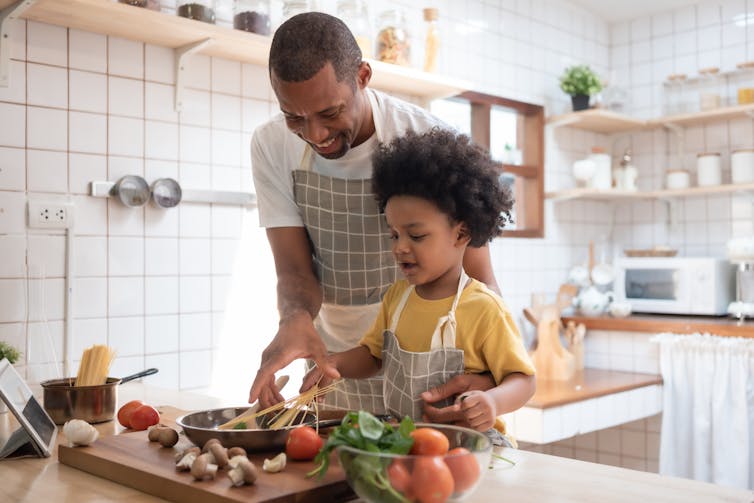
A father stands behind a child at a stove helping them with a stir fry.
Experiences between children and parents or their caregivers matter to how children navigate life.
(Shutterstock)

Lingering pandemic effects

This is particularly important now. A Canadian study that followed nearly 1,400 children between the ages of nine and 14 found that their mental health didn’t bounce back after COVID. After an initial period of adjustment, symptoms like anxiety, depression, trouble focusing and restlessness got worse again once life returned to “normal.”

By 2023, more children were struggling with their mental health than at any point during the pandemic.

Challenges also extend to younger learners. For example, a 2023 Toronto District School Board report found many kindergarten-aged children entered school with delays, including in emotional regulation, communication and social interaction.


Read more:
Pandemic effects linger, and art invites us to pause and behold distance, time and trauma


While much public discourse has centred on academic recovery, these findings suggest that emotional recovery must be just as urgent a priority.

Kindness, offered consistently and sincerely, can help lay the groundwork for this healing process.

Grounding force during period of change

Transitions, even positive ones, can be tough on children.

This is where kindness becomes a practical strategy. A soft voice, a patient ear and an empathetic response can be grounding forces during periods of change.

When your child expresses nervousness about summer activities or feels lost without school structure, simple but supportive responses like “It’s OK to feel unsure, is there something you’re curious or excited about?” can go a long way in helping them feel safe and understood.

Kindness isn’t about coddling or sheltering children. It’s about creating the emotional security they need to develop strong coping skills.

Emotionally supportive environments empower children to regulate their emotions and form meaningful relationships.

Adult hands holding a child's hands.
Kindness is about creating the emotional security children need to develop strong coping skills.
(Shutterstock)

5 ways to support children

Here are five evidence-informed ways you can combine kindness with everyday parenting to support your children during summer transitions:

Maintain predictable routines: Even in a relaxed summer setting, consistencies like regular mealtimes, rest and play help children feel secure. Research shows routines buffer children from behavioural challenges during periods of change.

Name and validate emotions: Help children identify what they’re feeling. For example: “You seem frustrated,” or “You seem sad,” and prompting “Would you like to talk?” supports brain development and emotional regulation.

Offer age-appropriate choices: Providing children with simple choices fosters autonomy and reduces power struggles. A 2020 child development study linked this practice to improved emotional outcomes.

Practice co-regulation: When you stay calm and use tools like deep breathing, soft tones and physical presence, children learn by example how to manage big feelings.

Prioritize play and connection: Pediatric specialists emphasize that unstructured play promotes creativity, resilience and emotional healing, especially important after prolonged stress.

Small, kind gestures, like offering a hug when your child is upset or sitting quietly with them, signal emotional availability and build trust. These simple acts help children feel safe, valued and ready to face the changes that summer may bring.

A collective recovery, one act at a time

Of course, kindness alone cannot solve all the challenges children face, but it offers a vital anchor during uncertain times.

Parents and caregivers don’t need to craft perfect summer plans. What children truly need is to feel emotionally safe. As summer brings change, acts of kindness can guide children and families toward healing and growth, fostering emotional resilience.

The Conversation

Amina Yousaf does not work for, consult, own shares in or receive funding from any company or organisation that would benefit from this article, and has disclosed no relevant affiliations beyond their academic appointment.

ref. Summer break brings uncertainty for children, and kindness at home matters – https://theconversation.com/summer-break-brings-uncertainty-for-children-and-kindness-at-home-matters-258332


The Competition Bureau wants more airline competition, but it won’t solve Canada’s aviation challenges

Source: The Conversation – Global Perspectives – By Geraint Harvey, DANCAP Private Equity Chair in Human Organization, Western University

A recent market study by the Competition Bureau is calling for more airline competition in Canada’s airline industry to reduce fares, increase service quality and provide better services to remote communities.

The study reiterates that Canada’s domestic air travel market is largely dominated by just two carriers, Air Canada and WestJet. Together, they account for between 56 per cent to 78 per cent of all domestic passenger traffic. This concentration limits passenger choice, and many Canadians feel airfares are high and quality of service is low as a consequence.

Increased competition has lowered air fares elsewhere, like in Europe, for example, where low-fares airlines dominate the continental market. However, there have been negative outcomes for consumers.

While the bureau positions competition as the solution to the many issues plaguing the industry, it overlooks how an increase in competition can fall short, particularly when it comes to transparency, service quality, labour conditions and regional connectivity.

Cost transparency not likely to improve

One of the Competition Bureau’s key criticisms of Canada’s airline industry is the lack of cost transparency when booking flights. Hidden fees and complex fare structures make it difficult for travellers to effectively make comparisons among airlines.

But it’s unreasonable to expect increased competition — when airlines seek to make their offering more attractive than their competitors — to lead to greater transparency in Canada. In fact, competition has been linked theoretically and empirically to dishonest practices.

Europe provides a cautionary example. Increased competition has not led to greater air fare transparency in Europe. Airlines like Ryanair, a low-fare airline and the continent’s largest airline by passengers carried, have been accused of hiding fees for passengers.

Service quality and workers

The bureau’s study also found that many Canadians are dissatisfied with the quality of service offered by domestic airlines. Yet increased competition is unlikely to raise service standards. As airlines compete to offer the lowest fares, they often look to reduce operating costs, typically at the expense of service quality.

Those who suffer the most from airlines minimizing costs are employees, since labour represents one of the few areas where airlines can cut back.

The morality and safety implications of introducing wage and employment insecurity to workers within high reliability organizations aside, reducing the quality of employment terms and conditions for workers in such an important industry is short-sighted.

Claims of a pilot shortage are contested, and making employment in Canadian aviation less attractive for a highly skilled and crucial occupational group like pilots is a strategic faux pas that could have long-term consequences for the industry’s stability.


Read more:
Potential Air Canada pilot strike: Key FAQs and why the anger at pilots is misplaced


Remote communities left behind

Canada’s unique geography means that many remote regions rely on airlines for goods and transport. Yet these areas are not effectively served by the commercial aviation industry. The bureau suggests greater competition could help, but that claim is questionable.

The reason existing airlines are not providing a greater number of flights between remote communities and larger airports is because these routes aren’t profitable. Rather than expanding service, a more competitive market could shrink route availability because airlines could abandon less profitable routes or refuse to compete on routes where a market leader emerges.

To its credit, the bureau offers several recommendations for northern and remote communities. But these communities are unlikely to benefit from competition alone. In fact, increased competition would likely mean airlines will focus on profitable routes and remove those that don’t yield high profits.

Europe’s airline industry is once again instructive. Eurocontrol, a pan-European organization dedicated to the success of commercial aviation in Europe, states that “domestic aviation in Europe has experienced a substantial and persistent decline over the past two decades,” including the demise of regional operators serving lower-density routes.

Where routes have been maintained — in Norway, for example — it’s as a consequence of public service obligations that guarantee essential routes are maintained through government support.

It’s because of public service obligations, not competition, that the Canadian government can serve remote communities. Without such safeguards, increased competition has the potential to do more harm than good.

Risks of relaxing foreign ownership

The bureau also recommended relaxing rules around foreign ownership within the Canadian airline industry so that a wholly foreign owned airline can compete domestically.

But not all airlines are equal. Some, like Qatar Airways, are backed by the government of their home state. Qatar Airways has purchased stakes in airlines in Asia Pacific and Africa.

Competition with airlines such as Qatar Airways is inherently unfair because of the huge financial support it receives. Allowing such state-backed carriers into the Canadian market could place domestic airlines at a significant competitive disadvantage. This could not only weaken Canadian airlines, but also be detrimental to the Canadian economy if domestic carriers are pushed out.

Competition may reduce fares, but it always comes at a cost. Canadians must be certain that lower fares are worth the cost.

The Conversation

Geraint Harvey does not work for, consult, own shares in or receive funding from any company or organisation that would benefit from this article, and has disclosed no relevant affiliations beyond their academic appointment.

ref. The Competition Bureau wants more airline competition, but it won’t solve Canada’s aviation challenges – https://theconversation.com/the-competition-bureau-wants-more-airline-competition-but-it-wont-solve-canadas-aviation-challenges-259498

Why queer-themed shows evoke a bittersweet nostalgia for missed childhood moments

Source: The Conversation – Global Perspectives – By Rena Bivens, Associate Professor of Communication and Media Studies, Carleton University

A scene from Heartstopper — Charlie (played by Joe Locke), left, is a gay teen boy who falls in love with classmate Nick (played by Kit Connor), right.

Imagine suddenly longing for a past you’ve only seen in a show filmed before you were born. Or, reverse that: Imagine wishing you could re-do your childhood while watching a brand new show like Heartstopper, set in the present day.

Heartstopper is a Netflix hit series, jam-packed with queer and trans teens finding love, accented by cute cartoon leaves fluttering across the screen.

Sounds adorable? Yes, but if you came out later in life, grew up in an unsupportive environment or never had a teen romance, the anemoia you feel may be intense.

If you’ve yet to hear the word anemoia, forgive yourself. Anemoia was only recently defined by The Dictionary of Obscure Sorrows as “nostalgia for a time you never experienced.” The growing obsession with what’s known as Y2K core — fashion, music and culture inspired by the 90s and early 2000s — by Gen Z is an example of this kind of intergenerational envy.

Unlike other forms of nostalgia, neuroscientist Felipe De Brigard tells us that anemoia “doesn’t need real memories.” De Brigard explores the darker side of these complex feelings. He says propaganda can misinform people about the past to elicit a longing for a time that may never have existed.

According to De Brigard, given the right material, we can create simulations of possible scenarios in our minds. We might imagine a different present or an alternative past.

Imagining what could have been

While watching Heartstopper‘s love story unfold in our living rooms, we feel happy for the fictional characters, but anger, grief and a dash of betrayal can creep in as well.

For many Heartstopper viewers, the series blends into memories from our real life. Watching queer and trans teens portrayed as ordinary people can feel like a breath of fresh air, especially if these scenes are inconsistent with our own adolescence. According to media studies professor Frederik Dhaenens, Heartstopper also uses cute esthetics that amplify these positive depictions while “soften[ing] the blow of negative experiences” faced by the characters.

a group of teens stand in a family photo style - they are in front of beach changing cabins
The season 3 cast of Heartstopper.
(Netflix)

Memories from our past start to flood through our minds as we watch. We may find ourselves wishing for the queer childhood we never had. If only I was born later, we might think. Viewers may imagine how their lives could have unfolded differently, if only they had better media representation or were surrounded by more liberal perspectives.

Enter queer anemoia: nostalgia for a do-over of an earlier stage of your life in a different time or place. While commonly expressed by queer and trans folks over 40, anyone who harbours some grief over their coming-out process or the lack of acceptance they had growing up may find themselves riding this emotional rollercoaster.

A moment of recognition

Queer anemoia is a moment of recognition. It is the contrast between our imagined teen love and — for many, but of course not all — the real past — lonely and isolated.

The sight of a thriving trans teen like Heartstopper’s Elle could elicit strong feelings for a viewer who transitioned later in life and missed their own girlhood.

Maybe the word trans wasn’t even accessible to help them make sense of their identity.

Thinking about the past is not unusual for queer and trans folks. With some sarcasm, you could call it a hobby. Hey, want to hang out tonight and subject our adolescence and coming-out stories “to the judgment of hindsight?” Media push this exercise further by helping us visualize what could have been.

‘I Kissed a Girl’

Another show described similarly to Heartstopper is the reality TV show I Kissed A Girl. The Guardian described it as “a celebratory, joyful love letter to queerness” and “the sweetest, most touching” show.

two women snuggle together on a couch, they are looking into each other's eyes
A scene from ‘I Kissed A Girl’ reunion show.
I Kissed A Girl

Among a surplus of straight couples in reality TV, I Kissed A Girl is one of only a handful of shows with queer cast members. But perhaps this is shifting. Sociologist Róisín Ryan-Flood and queer historian Amy Tooth Murphy argue that we are undergoing “one of the most dramatic transformations of gender and sexuality in social life in recent decades.”

By portraying lesbians as ordinary people with ordinary desires, I Kissed A Girl contributes to this transformation. Some viewers’ might find their own ideas about what is possible, desirable and even aspirational beginning to change.

Media can model these possibilities for us, which contributes to our identity formation. Feminist and queer theorists agree, arguing that our gender and sexual identities are collectively created, not self-made.

For example, gender studies professor Amira Lundy-Harris explains how when we encounter others in media — novels, film, television — they can help us recognize something about ourselves.

Therefore these mediated identities — these characters on TV — are not just ours. We co-create our identities with a variety of different forms of media, including social media and memoirs. We also do this with other people, including our families and friends. The cultural and political moment we are living in is also part of this collaborative identity-making process.

Late bloomers may feel more anemoia

Queer anemoia is a politically useful feeling. When we compare different cultural moments we may also recognize that we did not learn about our identity in isolation from the rest of the world. Feminist philosopher Sue Campbell has said our feelings require others to help us interpret and make sense of them. Through their characters and stories, media offer us an interpretive context for our feelings to emerge.

Some late bloomers — especially those left feeling confused or surprised by their sexual or gender identities — may blame themselves for going along with a mainstream, heteronormative or cisnormative cultural script without stopping to ask themselves who they really are. It may be hard, at first, to see that our identities are co-created.

A recently released film, Am I Ok? portrays a late bloomer, Lucy, who is 32 when she finally realizes she’s a lesbian. She’s frustrated and disappointed in herself as she tells her best friend, “I should have figured this out by now.”

Unfortunately, the film does not explore other reasons for her predicament — like compulsory heterosexuality — that are no fault of her own.

Close up of a sad white woman in her 30s with brown hair, tears streaming down her face and eyes closed.
Dakota Johnson stars in a film about discovering your sexuality later in life.
(Rotten Tomatoes)

Naming the ‘nostalgia’

British education professor Catherine Lee, who previously taught secondary school under the homophobic Section 28, wrote in The Conversation about how she was filled with regret as she watched the queer teachers in Heartstopper give their students the supportive environment she never could.

Even Heartstopper director Andy Newbery felt queer anemoia before working on the third season. He said:

“I’ve heard it many, many times since, especially from people sort of my age really, about how they wish they’d had a show like this when they were growing up.”

Naming queer anemoia gives us language for these complex, bittersweet feelings. In today’s political climate, cute portrayals of queer and trans love may not continue to grace our screens, but taking our feelings seriously and asking what they tell us about the role of media in our lives must never stop.

The Conversation

Rena Bivens does not work for, consult, own shares in or receive funding from any company or organisation that would benefit from this article, and has disclosed no relevant affiliations beyond their academic appointment.

ref. Why queer-themed shows evoke a bittersweet nostalgia for missed childhood moments – https://theconversation.com/why-queer-themed-shows-evoke-a-bittersweet-nostalgia-for-missed-childhood-moments-259341

A chance discovery of a 350 million-year-old fossil reveals a new type of ray-finned fish

Source: The Conversation – Global Perspectives – By Conrad Daniel Mackenzie Wilson, PhD candidate in Earth Sciences, Carleton University

An artist’s rendition of the newly discovered fish, _Sphyragnathus tyche_. (C. Wilson), CC BY

In 2015, two members of the Blue Beach Fossil Museum in Nova Scotia found a long, curved fossil jaw, bristling with teeth. Sonja Wood, the museum’s owner, and Chris Mansky, the museum’s curator, found the fossil in a creek after Wood had a hunch.

The fossil they found belonged to a fish that had died 350 million years ago, its bony husk spanning nearly a metre on the lake bed. The large fish had lived in waters thick with rival fish, including giants several times its size. It had hooked teeth at the tip of its long jaw that it would use to trap elusive prey and fangs at the back to pierce it and break it down to eat.

For the last eight years, I have been part of a team under the lead of paleontologist Jason Anderson, who has spent decades researching the Blue Beach area of Nova Scotia, northwest of Halifax, in collaboration with Mansky and other colleagues. Much of this work has been on the tetrapods — the group that includes the first vertebrates to move to land and all their descendants — but my research focuses on what Blue Beach fossils can tell us about how the modern vertebrate world formed.

a man stands agains a tall cliff
Blue Beach Fossil Museum curator Chris Mansky below the fossil cliffs.
(C. Wilson), CC BY

Birth of the modern vertebrate world

The modern vertebrate world is defined by the dominance of three groups: the cartilaginous fishes or chondrichthyans (including sharks, rays and chimaeras), the lobe-finned fishes or sarcopterygians (including tetrapods and rare lungfishes and coelacanths), and the ray-finned fishes or actinopterygians (including everything from sturgeon to tuna). Only a few jawless fishes round out the picture.

This basic grouping has remained remarkably consistent — at least for the last 350 million years.

Before then, the vertebrate world was a lot more crowded. In the ancient vertebrate world, during the Silurian Period (443.7-419.2 MA) for example, the ancestors of modern vertebrates swam alongside spiny pseudo-sharks (acanthodians), fishy sarcopterygians, placoderms and jawless fishes with bony shells.

Armoured jawless fishes had dwindled by the Late Devonian Period (419.2-358.9 MA), but the rest were still diverse. Actinopterygians were still restricted to a few species with similar body shapes.

By the immediately succeeding early Carboniferous times, everything had changed. The placoderms were gone, the number of species of fishy sarcopterygians and acanthodians had cratered, and actinopterygians and chondrichthyans were flourishing in their place.

The modern vertebrate world was born.

a small fish with a long wispy tail
A shortnose chimaera, belonging to the chondrichthyan group of vertebrates.
(Shutterstock)

A sea change

Blue Beach has helped build our understanding of how this happened. Studies describing its tetrapods and actinopterygians have showed the persistence of Devonian-style forms in the Carboniferous Period.

Whereas the abrupt end-Devonian decline of the placoderms, acanthodians and fishy sarcopterygians can be explained by a mass extinction, it now appears that multiple types of actinopterygians and tetrapods survived to be preserved at Blue Beach. This makes a big difference to the overall story: Devonian-style tetrapods and actinopterygians survive and contribute to the evolution of these groups into the Carboniferous Period.

But significant questions remain for paleontologists. One point of debate revolves around how actinopterygians diversified as the modern vertebrate world was born — whether they explored new ways of feeding or swimming first.

three lower jaw bones on the left, two reconstructions of prehistoric fish on the right
Comparing the jawbones of Sphyragnathus, Austelliscus and Tegeolepis.
(C. Wilson), CC BY

The Blue Beach fossil was actinopterygian, and we wondered what it could tell us about this issue. Comparison was difficult. Two actinopterygians with long jaws and large fangs were known from the preceding Devonian Period (Austelliscus ferox and Tegeolepis clarki), but the newly found jaw had more extreme curvature and the arrangement of its teeth. Its largest fangs are at the back of its jaw, but the largest fangs of Austelliscus and Tegeolepis are at the front.

These differences were significant enough that we created a new genus and species: Sphyragnathus tyche. And, in view of the debate on actinopterygian diversification, we made a prediction: that the differences in anatomy between Sphyragnathus and Devonian actinopterygians represented different adaptations for feeding.

Front fangs

To test this prediction, we compared Sphyragnathus, Austelliscus and Tegeolepis to living actinopterygians. In modern actinopterygians, the difference in anatomy reflects a difference in function: front-fangs capture prey with their front teeth and grip it with their back teeth, but back-fangs use their back teeth.

Since we couldn’t observe the fossil fish in action, we analyzed the stress their teeth would experience if we applied force. The back teeth of Sphyragnathus handled force with low stress, making them suited for a role in piercing prey, but the back teeth of Austelliscus and Tegeolepis turned low forces into significantly higher stress, making them best suited for gripping.

We concluded that Sphyragnathus was the earliest actinopterygian adapted for breaking down prey by piercing, which also matches the broader predictions of the feeding-first hypothesis.

Substantial work remains — only the jaw of Sphyragnathus is preserved, so the “locomotion-first” hypothesis was untested. But this represents the challenge and promise of paleontology: get enough tantalizing glimpses into the past and you can begin to unfold a history.

As for the actinopterygians, current research indicates that they first diversified in the Devonian Period and shifted into new roles when the modern vertebrate world was born.

The Conversation

Conrad Daniel Mackenzie Wilson receives funding from the Natural Sciences and Engineering Research Council of Canada, the Ontario Student Assistance Program, and the Society of Vertebrate Paleontology.

ref. A chance discovery of a 350 million-year-old fossil reveals a new type of ray-finned fish – https://theconversation.com/a-chance-discovery-of-a-350-million-year-old-fossil-reveals-a-new-type-of-ray-finned-fish-254246

Neurodiverse kids at camp: How programs can become places where all children belong

Source: The Conversation – Global Perspectives – By Nicole Neil, Associate professor, Faculty of Education, Western University

For many families, summer camp is a rite of passage representing friendship, fun and freedom. But for families of children with neurodevelopmental disabilities, it can be a season of rejection, stress and exclusion.

While other children pack their bags for campfires and canoeing, many children with disabilities are told there’s no space for them, not because they don’t belong, but because the camp isn’t prepared. This is a reality faced by families of children with disabilities.

That’s why colleagues and I created the Inclusive Camp Hub (inclusivecamp.ca), a free, research-informed platform to help camps become places where every child can participate.

Why we needed to act

In Canada, about one in 11 children are diagnosed with a neurodevelopmental disability, such as autism, attention-deficit/hyperactivity disorder (ADHD) and intellectual disabilities. And yet, despite legal protections like the Accessibility for Ontarians with Disabilities Act, many camps report difficulties in creating inclusive environments.

Our research into inclusion in community settings, such as camps and museums, revealed consistent barriers: staff lacked training, resources were scarce and families were left with few options. As a result, children with neurodevelopmental disabilities were excluded from the same joyful, formative experiences their peers enjoyed.

These barriers have real consequences. Families often struggle to find respite during the summer, and children miss out on opportunities for social development, peer interaction and community belonging.

Building the Hub

Well-trained and supportive staff play a crucial role in fostering inclusion in camps. Interviews with families revealed the importance of staff who are kind, responsive and equipped to support a wide range of needs. It was clear that staff training needed to be a central focus of our work.

We designed The Inclusive Camp Hub to feature practical tools grounded in research from inclusive education to focus on staff training modules, tip sheets and real-world strategies that are easy to implement.

In studying and following a module about Universal Design for Learning, for example, camp directors or staff can consider strategies for providing multiple means of representation, engagement and expression — while ensuring physical spaces and materials are universally accessible.

Less awareness of cognitive accessibility

While many community settings have made strides in improving physical accessibility, adding ramps, accessible washrooms and mobility-friendly spaces, there has been far less attention paid to cognitive accessibility.

This includes designing environments that support different ways to participate, such as by making routines predictable and by making activities flexible enough to accommodate different ways of learning.

In developing the Inclusive Camp Hub, we drew on evidence-based practices identified in our research.

These include staff training, peer-mediated interventions and behavioural supports such as reinforcement systems and prompting. Reinforcement systems are structured ways to encourage behaviour by offering rewards or positive outcomes when those behaviours happen. Prompting means giving a child cues, like pictures, words or gestures, to help them complete a task such as using a visual schedule to show what comes next.

We also found that families with children with neurodevelopmental disabilities valued hands-on, multi-sensory learning experiences, clear signage, quiet spaces and staff who are kind and responsive. By incorporating these strategies into our training site, we aimed to make inclusion achievable and sustainable for camps of all types.

A model camp

To test and refine our approach to inclusion, we launched a model inclusive camp, called the S3 camp, at Western University.

We welcomed children ages nine to 14 — with and without neurodevelopmental disabilities — and focused on STEM activities, disability awareness and, most importantly, a sense of belonging.

The camp was staffed by students in a school psychology program, as well as education and STEM-field students who received specialized training and used inclusive design tools from the Hub. They learned how to create accessible activities, use behavioural supports, support communication differences and foster inclusive group dynamics.

The results were promising. We saw campers who had difficulty at other camps fully engaged in activities. Staff reported feeling more confident and capable in supporting children with disabilities, and parents said their children came home happy, proud and excited to return the next year.

Why camp inclusion matters

At first glance, summer camps might seem like a luxury — a fun experience rather than a critical developmental one. But camps offer more than just fun: they are powerful spaces for growth, learning and connection.

Research shows that children in inclusive settings experience improved social skills, stronger peer relationships and increased self-esteem. They learn through play, build friendships and develop a sense of belonging, all which are foundational for healthy development.

These benefits extend to all campers. Neurotypical children gain empathy, communication skills and a broader understanding of diversity

Looking forward

Inclusive Camp Hub is now expanding its reach, with plans to partner with more camps and extend its impact while continuing to refine our tools based on feedback from families, staff and community organizations.

Camp leaders can take the first step by exploring the free tools and training available through the Hub. Families and advocates can continue to ask questions, share their experiences and push for environments where all children are welcomed and supported.

As a researcher, I’ve spent years studying inclusion. But nothing compares to seeing it in action, watching a child find joy, friendship and confidence at camp. Every child deserves a summer of belonging.

The Conversation

Nicole Neil’s work is supported in part by funding from the Social Sciences and Humanities Research Council.

ref. Neurodiverse kids at camp: How programs can become places where all children belong – https://theconversation.com/neurodiverse-kids-at-camp-how-programs-can-become-places-where-all-children-belong-258793

How to deal with racism in an intimate relationship

Source: The Conversation – Global Perspectives – By Maya A. Yampolsky, Associate Professor, School of Psychology, Université Laval

Intimate racism can take many forms, ranging from hostile insults and racial slurs to more subtle, pervasive everyday microaggressions. (Shutterstock)

Relationships between people of different ethnic or racial backgrounds have become increasingly common. Research indicates that more adolescents and young adults are entering into inter-ethnic relationships, and survey data from the United States shows that an increasing number of people have a favourable view of these relationships.

Inter-ethnic relationships are often seen as an act of love that conquers racism since people from different backgrounds overcome marginalization to create inter-ethnic families.

While these bonds can potentially decrease prejudice against members of racialized groups, cross-cultural connections are also vulnerable to the far-reaching influence of racism.


No one’s 20s and 30s look the same. You might be saving for a mortgage or just struggling to pay rent. You could be swiping dating apps, or trying to understand childcare. No matter your current challenges, our Quarter Life series has articles to share in the group chat, or just to remind you that you’re not alone.

Read more from Quarter Life:


Intimate racism

Racism is a system of domination and oppression that is deeply rooted in colonization and slavery, where whiteness was idealized and every other ethnic group was dehumanized. Racialized people who are not white are also susceptible to endorsing this false hierarchy, leading to racism between racialized minority groups.

We use the term “intimate racism” (inspired by the term intimate partner violence) to highlight that racism exists in close relationships, and that it requires special attention.

Intimate racism can take many forms, ranging from hostile insults and racial slurs to more subtle, pervasive everyday microaggressions (for example, a parent stereotyping their child as less smart because of their racialized identity).

Intimate racism can also touch on prejudices against racialized people that are particular to physical and emotional intimacy, which show up differently in our familial and romantic relationships.

Racism in family

From childhood, we depend on our parents and family to support and guide us, helping us form secure attachments as well as stable and loving bonds within our families and with others as we grow and expand our social connections.

These days, multiracial families are more common. However, parents of multiracial children may not always understand their children’s realities with racism, they may not be able to support their racialized children against racism and they may discriminate against their racialized children, shaking the very foundations of the family bonds.

A sad girl sitting next to a window
These days, multiracial families are more common. However, parents of multiracial children may not always understand their children’s realities with racism.
(Shutterstock)

Mixed-race children have reported favouritism for lighter skin colour and isolation within their families, as well as having their racial identities denied and stereotyped by family members.

In a study on microaggressions in families, one mixed-race research participant told researchers:

“Even though my skin was darker, I had straight hair, I had the white features and I behaved the way a white girl should behave, and so my grandmother always favoured me and was much nicer to me and horrible to my sister.”

In addition, transracial adoption has a long history of racialized children being forced into white families and institutions in order to erase their heritage and cultural identity.

This legacy has endured, with many white adoptive families thinking they need to “save” racialized children from their minority families by erasing their backgrounds and cutting them off from their community.

Racialized adoptees in white families have shared that they experience identity erasure, denial of racism’s existence and microaggressions and insults from the very people who are supposed to protect them. Such experiences expose them to racial isolation and violence.

Racism in romantic relationships

Our close relationships are supposed to be safe from racism; our meaningful connections with people who we know accept us, love us and see us for who we are can act as a protection from the harms of oppression.

So when we experience racism from our loved ones, it is a violation of the shared trust, safety and intimacy that we need from those who are supposed to be closest to us.

When it comes to romantic partners, our attractions can sometimes be coloured by exposure to media and messages that frame racialized people as “exotic” or inferior.

People in inter-ethnic romantic relationships have shared experiences where their partner sought them out to fulfil fantasies based on degrading racist sexual stereotypes. Racialized people can also be stereotyped by their partners.

close up image of two people holding hands
When people experience intimate racism, they also experience greater distress and trauma and negative impacts on their well-being.
(Shutterstock)

These stereotypes can also be echoed by family and friends, who may view an inter-ethnic relationship as unserious and hold negative views of a partner based on racial stereotypes.

In a study of intimate racism conducted by one of us (Maya A. Yampolsky) and colleagues, a Black participant said: “My former partner accused all Jamaican males of being cheaters and liars.”

When people experience intimate racism, they also experience greater distress, trauma and negative impacts on their well-being. The impact extends beyond individual hurt to the relationship dynamic, rupturing trust and affection for our loved ones, and leading to strained or even dissolved relationships.

Groups that are subject to more than one source of marginalization (because of race, gender, class, ability and so on) face multiple oppressions with intimate racism. Racialized women face sexist expectations of submissiveness, and queer racialized people often experience both racism in LGBTQ2S+ spaces and homophobia or transphobia in their racial communities.

What can you do to address intimate racism?

There isn’t enough research that looks at resolving intimate racism yet, but we can draw on findings from couples conflict, anti-racism repairs and social therapy for inspiration.

Interracial couples who value the importance of ethnic identities and multiculturalism are more likely to recognize racism at large, and how it can influence their relationship, which may help prevent intimate racism from showing up in these relationships.

We know that repairing harm from racism involves acknowledging the impact rather than the intent of our actions, recognizing our own biases and how they appear in our life, apologizing sincerely and committing to changing our behaviour in the future.

Social therapy can also provide tools to address racial tensions and change harmful relationship dynamics by encouraging open conversations about race, and allowing partners and families to explore how history has shaped their ways of loving, accepting or rejecting one another.

Ultimately, tackling intimate racism is part of our work to dismantle racism at the roots of all our social institutions so that racism doesn’t creep into our cherished connections.

The Conversation

Maya A. Yampolsky has received funding from both the Social Sciences and Humanities Research Council and the Fonds de recherche du Québec.

Iman Sta-Ali, Libera Amadiwakama Mochihashi, and Renaud Dion-Pons do not work for, consult, own shares in or receive funding from any company or organisation that would benefit from this article, and have disclosed no relevant affiliations beyond their academic appointment.

ref. How to deal with racism in an intimate relationship – https://theconversation.com/how-to-deal-with-racism-in-an-intimate-relationship-247870

Non-traditional sports like pickleball and bouldering are helping Canadians get active this summer

Source: The Conversation – Global Perspectives – By Sarah Woodruff, Professor, Director of the Community Health, Environment, and Wellness Lab, University of Windsor

While gym memberships and traditional sports will always have their place, more people are choosing leisure activities that are fun, flexible and social. (Shutterstock)

On a warm summer Canadian evening, you might hear the pop-pop of a pickleball game, spot someone scaling a climbing wall at a community centre or catch players rallying on a padel court — a fast-growing racquet sport that looks like a mix between tennis and squash.

What may once have seemed like fringe hobbies are now part of a growing movement. Canadians are seeking alternative ways to stay physically active, connect socially and improve their mental and physical well-being.

While gym memberships and traditional sports will always have their place, more people are choosing leisure activities that are fun, flexible and social.

Activities like pickleball, climbing, padel, disc golf, cricket, ultimate frisbee and stand-up paddleboarding are gaining momentum, offering a fresh approach to fitness that suits all ages, skill levels and motivations.

Why are these activities booming?

The COVID-19 pandemic played a big role in reshaping how people get physically active. With gyms closed and organized sports on hold, people turned to parks, driveways and community spaces for movement.

What began as temporary adjustments soon evolved into permanent shifts for some. Many people realized that being active didn’t have to be rigid or repetitive; it could be more social and genuinely enjoyable. TikTok videos and Instagram reels showcasing everything from “how to videos” to “beginner fails” have also helped pique curiosity and increase participation in these activities.

According to Pickleball Canada, 1.54 million Canadians are playing the sport in 2025 — a 57 per cent increase in participation over the past three years. Meanwhile, Padel, which is already popular in Europe and Latin America, is gaining ground in major Canadian cities like Toronto and Vancouver because of how accessible and easy to learn it is.

Sales increases in paddleboards, the debut of sport climbing at the Tokyo 2020/2021 Olympics and the increase in popularity of spikeball (also known as roundnet) all signal a broader shift toward fun, accessible and social forms of physical activity.

More than just exercise

The physical and mental health benefits of being physically active are well established, and yet many Canadians are still not active enough to meet the 24-Hour Movement Guidelines. The guidelines recommend that adults get at least 150 minutes of moderate-to-vigorous aerobic activity per week, perform muscle-strengthening activities twice a week, limit sedentary time and aim for seven to nine hours of quality sleep each night.

Alternative sports may help address this gap by offering new routes into physical activity. Beyond the well-known physical health benefits, such as cardiovascular health, strength, agility and co-ordination, these activities are equally effective at supporting mental health and social well-being.

For example, a recent study by Canadian researchers looked at 28 studies that investigated health and/or well-being of adult pickleball players. The results suggested positive social and psychological effects — in addition to health and fitness benefits — were evident, particularly for older adults.


Read more:
Light exercise can yield significant cognitive benefits, new research shows


Sports like pickleball, padel and ultimate frisbee thrive on social connection, as players and partners often chat, laugh, build relationships and have potlucks or social time afterwards, all which help build community and foster a sense of belonging.

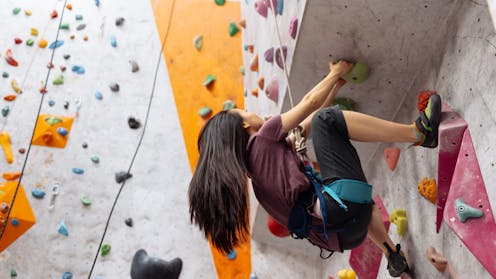
Other activities, such as bouldering and climbing, encourage mental concentration, resilience and problem-solving, as routes are often designed to be attempted several times before being successful. This helps get people stronger and more confident, as they learn to keep trying even when something feels hard at first. This sense of progress and enjoyment keeps people motivated.

When an activity is fun, social and rewarding, people are more likely to stick with it over time. When people want to be active, rather than feeling like they have to, they’re more likely to reap the long-term benefits of being active. This is known as intrinsic motivation, a key factor for maintaining long-term physical activity because people are more likely to do something they genuinely like.

Because these alternative sports are fun, low-pressure and easy to try at any level, they offer a great starting point for anyone, regardless of age, experience or ability.

Embracing the movement

Across Canada, cities are increasingly investing in these growing recreational activities. Municipal parks and empty buildings are rapidly being repurposed for new pickleball and padel courts. According to an industry journal, the number of climbing gyms across Canada increased from 136 in 2021 to 169 in 2024.

Part of the appeal lies in accessibility. These types of activities are beginner-friendly. Unlike many traditional sports where skills and speed are expected upfront, there is no need to be in peak physical shape or have the best gear. Most people can try these activities with little more than a pair of shoes and a rental.

These activities are also adaptable and low-impact, making them accessible to a wide range of participants. They’re often intergenerational and focused more on enjoyment than competition.

Just as importantly, they support physical literacy — the confidence and competence to stay active throughout one’s life. Building physical literacy early and sustaining it throughout adulthood is a cornerstone of long-term health promotion and chronic disease prevention.

If you’ve been meaning to try one of these activities, this summer might be your chance. After all, fitness doesn’t have to be a chore; sometimes it starts with just showing up and saying yes to something different.

The Conversation

Sarah Woodruff receives funding from the Social Sciences and Humanities Research Council and We Spark Health Institute.

ref. Non-traditional sports like pickleball and bouldering are helping Canadians get active this summer – https://theconversation.com/non-traditional-sports-like-pickleball-and-bouldering-are-helping-canadians-get-active-this-summer-258771

Canadian community foundations rally to support local news, calling it essential to democracy

Source: The Conversation – Global Perspectives – By Magda Konieczna, Associate Professor of Journalism, Concordia University

A couple of weeks ago, a neighbour mentioned our son’s school might be moving. I couldn’t find anything about this online.

But I did find plenty of news from down south. While the erosion of democracy in the United States is something to pay attention to, some news outlets appear to be capitalizing on its sensational aspects.

When Donald Trump and Elon Musk get into an online fistfight, local news can seem like the less glamorous cousin.

But there’s really not much we can do about American democracy.

A poster on a lamp post that says ‘Good News is Coming.’
Jon Tyson/Unsplash, CC BY

Still, U.S. media reports have contributed to news burnout. Many Canadians are tuning out from their regular news sources. Forty per cent of Canadians responding to a survey from the 2025 Reuters Digital News Report said they were sometimes or often avoiding the news, as compared to 28 per cent eight years earlier.

Hearing about problems we can’t do much about is disempowering, according to a study on solutions journalism. Researchers found that readers who were treated as active civic participants rather than passive consumers felt more empowered.

The news about my kid’s school is something that profoundly impacts my family. And I can do something about it, at least in theory. I can attend public meetings and organize my neighbours to take a stand, in hopes of affecting the outcome of the discussions.

Local news can help me do that. It’s the very stuff that can help rebuild frayed community ties and mis- and disinformation. Without access to quality local news, malicious entities can more easily step into communities with misinformation designed to sway or mislead.

Voter turnout is higher in places with more newspapers. Local journalists act as news brokers, ensuring the flow of information, which is essential to fulfilling the information needs of communities. We know that when less local news is present, communities become more polarized, and that polarization leads to increased sharing of misinformation.

But local news is increasingly in trouble. Local news outlets are closing — 566 across Canada, to be precise, between 2008 and April 2025. That’s compared to the 283 that opened and remain in operation in that same period, according to the Local News Research Project.

Rallying to support local news

My recent report for The Canadian Philanthropy Partnership Research Network, “In Defense of the Local: How Community Foundations Across Canada are Supporting Local News” describes an increasingly popular way to support these local news outlets.

Through case studies, I documented — along with my research assistant, Jessica Botelho-Urbanski, and supported by our research team at OCADU — the early signs of a growing movement of Canadian community foundations supporting local journalism.

Community foundations across Canada are becoming ever more aware that many of the issues they care about, like building just and sustainable communities, are connected to the availability of local journalism.

And some communities are starting to fund their local news outlets.

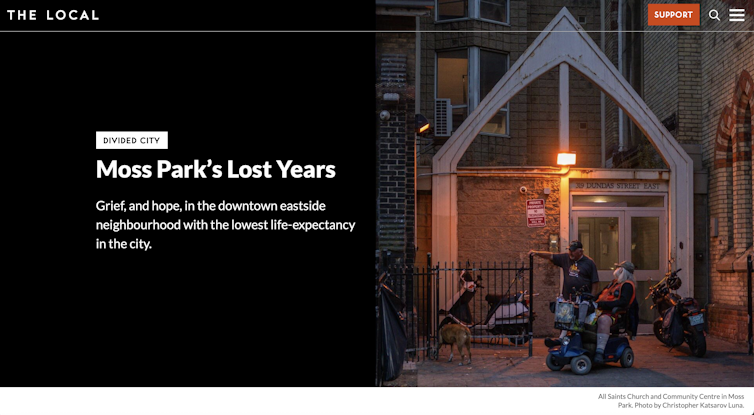
For example, the Toronto Foundation made a rare, 10-year commitment to support The Local, a non-profit news outlet founded in 2019 that describes itself as “unabashedly Toronto, reporting from corners of the city that are too often ignored or misunderstood.”

a screenshot of a story on moss park
Screenshot of a story on ‘Moss Park’ from the digital news outlet The Local.
The Local

Sharon Avery, Toronto Foundation’s president and CEO, says the organization hadn’t spent much time prioritizing journalism because “the dots have not been connected …that a healthy local journalism equals a healthy community.” But she grew convinced of the essential links between local news and democracy, and realized local news is a powerful tool.

The Winnipeg Foundation has been interested in local news for a while. Most recently, it funded the salary for one reporter, shared between Winnipeg’s The Free Press, a major local newspaper, and The Narwhal, an environmentally focused digital news startup that had been looking to expand its coverage in the Prairies.

This kind of collaboration can improve the quality of work produced while also increasing the attention garnered by the resulting journalism in a way that is truly a win-win for all partners.

How to support local journalism

All of this is happening alongside government support, delivered through solutions like the Local Journalism Initiative, which funds journalists to report on under-covered topics, and the Canadian Journalism Labour Tax Credit, which covers a portion of salaries of eligible journalists.

Our report also includes recommendations on how place-based foundations can turn these initiatives into a movement to support local journalism. Community foundations could start by getting to know their local news ecosystems. What news organizations exist? What audiences do they serve?

They should also consider policies to direct some of their ad spending to local media, following the lead of the provincial government in Ontario, which has its four largest agencies allocate at least one-quarter of their annual advertising budgets to Ontario publishers.

Perhaps the most powerful — and most challenging — of our recommendations includes working with other local players to set up a community news fund.

This would enable funders to pay into a pool allocated to local news. This approach has generated millions for local news ecosystems in the U.S., Europe and South America.

Community foundations have the power to promote journalistic collaboration, which can help to combat mis- and disinformation.

To improve the quality of life and information for Canadians from coast to coast to coast, supporting local journalism is a must.

The Conversation

The contribution of the research assistant on the report described here was funded by a SSHRC grant obtained by the Canadian philanthropy partnership research network (PhiLab). The work was also supported by the Cultural Policy Hub at OCADU.

ref. Canadian community foundations rally to support local news, calling it essential to democracy – https://theconversation.com/canadian-community-foundations-rally-to-support-local-news-calling-it-essential-to-democracy-257873

Mr Smith or Gary? Why some teachers ask students to call them by their first name

Source: The Conversation – Canada – By Nicole Brownlie, Lecturer in Education, University of Southern Queensland

Johnny Greig/ Getty Images

When you went to school, did you call your teacher Mrs, Ms or Mr, followed by their surname? Perhaps you even called them Sir or Miss.

The tradition of addressing teachers in a formal manner goes back centuries. For many of us, calling a teacher by their first name would have been unthinkable.

But that’s not automatically the case anymore. Some teachers in mainstream schools now ask students to call them by their first name.

Why is this? And what impact can teachers’ names have in the classroom?

There’s no rule

There’s no official rule in Australia on what students should call teachers.
Naming is usually decided by schools or individual teachers. This is no official training on this topic before teachers start in classrooms.

Some primary school teachers now use first names or a less formal name such as “Mr D”. Teachers say this helps break down barriers, especially for young students or those who are learning English as an additional language.

High schools are more likely to stick with tradition, partly to maintain structure and boundaries, especially with teenagers. Using formal titles can also support early-career teachers or those from minority
backgrounds
assert their authority in a classroom.

But even so, some high school teachers are using their first names to foster a sense of trust and encourage students to see them as a partner in learning, rather than simply an authority figure.

What does the research say?

Research – which is mainly from the United States – suggests names have an impact on how students perceive their teachers and feel about school.

In one study of US high school students, teenagers described teachers they addressed with formal titles as more distant and harder to connect with. Teachers who invited students to use their first name were seen as more supportive, approachable and trustworthy.

A secondary school principal in the state of Maryland reported students felt more included and respected when they could use teachers’ first names. It made classrooms feel less hierarchical and more collaborative.

A 2020 US study on teaching students doing practical placements found those who used their first name observed greater student engagement than those who did not. This came as a surprise to the student teachers who expected students would not respect them if they used their first names.

These findings don’t necessarily mean titles are bad. Rather, they show first names can support stronger teacher-student relationships.

It’s important to note society in general has become less formal in recent decades in terms of how we address and refer to each other.

So, what should students call their teachers?

What works in one school, or even one classroom, may not work in another.

For example, for Indigenous students or students from non-English speaking households, name practices that show cultural respect and mutual choice can be vital. They help create a sense of safety and inclusion.

But for other teachers, being called by their title may be a key part of their professional persona.

That’s why it’s important for naming decisions to be thoughtful and based on the needs of the teacher, students and broader school community.

The key is to treat naming as part of the broader relationship, not just a habit or automatic tradition. Whether students say “Mrs Lee” or “Jess” matters less than whether they feel safe, respected and included. It’s about the tone and relationship behind the name, not simply what someone is called.

The Conversation

Nicole Brownlie does not work for, consult, own shares in or receive funding from any company or organisation that would benefit from this article, and has disclosed no relevant affiliations beyond their academic appointment.

ref. Mr Smith or Gary? Why some teachers ask students to call them by their first name – https://theconversation.com/mr-smith-or-gary-why-some-teachers-ask-students-to-call-them-by-their-first-name-259790

Iran emerged weakened and vulnerable after war with Israel − and that could mean trouble for country’s ethnic minorities

Source: The Conversation – Canada – By Shukriya Bradost, Ph.D. Student of Planning, Governance and Globalization, Virginia Tech

Iranians celebrate the ceasefire in downtown Tehran, but many blame their own leaders for the escalation. Morteza Nikoubazl/NurPhoto via Getty Images

The 12-day confrontation between Iran and Israel in June 2025 may not have escalated into a full-scale regional war, but it marks a potentially critical turning point in Iran’s internal political landscape.

Though the Islamic Republic has entered into direct conflict with a foreign adversary before, it has never done so while so militarily weakened, internally fractured and increasingly alienated from its own population.

And unlike the Iran-Iraq war of the 1980s, when national unity coalesced around the defense of Iranian sovereignty, this time the government appeared to fight without significant public support. While accurate polling from within Iran is hard to come by, the lack of pro-government rallies, the low approval numbers for the government ahead of the war and the government’s subsequent crackdown since tell their own stories.

As a researcher of different ethnic groups within the country, I know that many Iranians – especially those from historically marginalized communities – viewed the conflict with Israel not as a defense of the nation but as a reckless consequence of the government’s ideological adventurism and regional proxy campaigns. It puts the Islamic Republic in its most vulnerable position since its establishment after the Iranian Revolution in 1979.

Hard and soft power diminished

It is worth taking a snapshot of just how diminished the Iranian government is following the recent series of blows.

Its soft power – once built on revolutionary legitimacy, Shiite ideological influence and anti-Western propaganda – has eroded dramatically.

For decades, the Islamic Republic relied on a powerful narrative: that it was the only government bold enough to confront the United States and Israel, defend Muslim causes globally and serve as the spiritual leader of the Islamic world. This image, projected through state media, proxy militias and religious rhetoric, helped the government justify its foreign interventions and massive military spending, particularly on nuclear development and regional militias.

But that narrative no longer resonates the way it once did. The leaders of Iran can no longer claim to inspire unity at home or fear abroad. Even among Shiite populations in Lebanon, Iraq and Yemen, support during the Israel-Iran confrontation was muted. Inside Iran, meanwhile, propaganda portraying Israel as the existential enemy has lost its grip, especially among the youth, who increasingly identify with human rights movements rather than government slogans.

It is also clear that Iran’s hard power is getting weaker. The loss of senior commanders and the destruction of important military infrastructure have shown that the government’s intelligence and security systems are severely compromised.

Even before Israel’s attack, a number of reports showed that Iran’s military was in its weakest state in decades. The real surprise in the recent war came not from the scale of the damage by Israeli and U.S. bombs but from how deeply Israel had penetrated the upper echelons of the Iranian military and intelligence sectors. The recent conflict amounted to a security as well as a military failure.

Externally defeated, internally adrift

As its power across the region appears diminished, so too is the Iranian government’s grip loosening internally. A 2024 survey by Iran’s Ministry of Culture revealed “discontent” among the population, with over 90% of Iranians “dissatisfied” with the country’s current position. Elections in November 2024 saw a turnout of under 40%, further underscoring Iranians’ discontent with the political process.

And reporting from inside Iran suggests many Iranians blame government policies for the war with Israel. “I place the blame on this country’s decision-makers,” one resident of Rasht told Reuters, “their policies have brought war and destruction upon us.”

The government has responded with a tactic it has used before: repression. According to government-aligned media, over 700 people were arrested during and immediately after the conflict, accused of collaborating with the Mossad, the Israeli intelligence agency.

As in past crackdowns, ethnic minority regions – particularly Kurdish areas – have been targeted.

One day after the ceasefire with Israel, the government executed three Kurdish cross-border laborers who rely on smuggling goods to survive in Iran’s underdeveloped Kurdish provinces.

These executions, which were done without a trial or legal counsel, fit a pattern of how the government uses ethnic scapegoating to stay in power. And it echoes a historic pattern: When the government feels threatened, it strikes the Kurds first.

A historical pattern of repression

Kurds are estimated to number 10-12 million in Iran, composing roughly 12% to 15% of the country’s total population – making them the third-largest ethnic group after Persians and Azeris. Iran also includes significant Baluch and Arab minorities.

When the Islamic Republic was established in 1979, many ethnic groups supported the revolution. They hoped for a more inclusive and democratic Iran than what preceded it – the brutal autocracy of the shah that had frequently targeted minorities.

Those hopes were quickly dashed. By rejecting pluralism and promoting a unifying ideology centered on Shiite Islam and Persian identity, Ayatollah Ruhollah Khomeini marginalized non-Persian and non-Shiite groups.

Other ethnic groups were viewed with suspicion, while Shiite Azerbaijanis were mainly co-opted into the system.

Khomeini declared jihad against Kurdish resistance groups, labeling them infidels, separatists and agents of Israel and the United States.

Armed with advanced weaponry inherited from the last Pahlavi shah, the government launched a military campaign in Kurdistan province. Many Kurdish villages and towns were destroyed, and approximately 50,000 Iranian Kurds were killed between 1979 and 1988.

The region was turned into a militarized zone – a status that continues today.

Campaign against Kurds

After the Iran-Iraq war ended in August 1988, the government – economically strained and militarily weakened – feared a domestic uprising.

But instead of embracing political reform, it responded with one of the most brutal crackdowns in Iran’s history. Khomeini issued a fatwa, or religious edict, ordering the execution of political prisoners, including large numbers of Kurdish dissidents.

Between late July and September 1988, thousands of political prisoners were executed – many without trial or any legal process. At least 5,000 people were killed and buried in unmarked mass graves, according to Amnesty International.

Khomeini labeled them “mohareb,” or “warriors against God,” and criticized the Revolutionary Courts for not sentencing them to death sooner. This mass execution campaign signaled the government’s resolve to eliminate all dissent, regardless of legal precedent or human rights norms.

In the years that followed, the government systematically assassinated prominent Kurdish leaders and other opposition leaders, both in Iran and overseas.

This targeted elimination of Kurdish leadership, combined with the mass executions of political prisoners, was a deliberate strategy to decapitate any organized opposition before it could challenge the government’s survival.

A new crisis, the same strategy

The Islamic Republic appears to be using the same playbook now, but under far more fragile conditions.

Given the precarious state of the government, it is fair to ask why there are not more protests now, especially in ethnic minority regions. For many, the answer is fear over what happens next.

Many Kurds have learned from previous uprisings – particularly the 2022 “Women, Life, Freedom” movement – that when they lead protests, they face the harshest crackdown. Over 56% of those killed and persecuted in the subsequent crackdown were Kurds.

Meanwhile, the overall opposition remains fractured and leaderless, both along ethnic lines and in terms of goals. The main opposition groups have traditionally been reluctant to acknowledge ethnic rights, let alone include them in any vision for a future Iran. Rather, they insist on “territorial integrity” as a precondition for any dialogue, echoing the Islamic Republic’s rhetoric.

This is a key legacy of the Islamic Republic: Its propaganda has not only shaped domestic opinion but also influenced the opposition, dividing Iranians at home and abroad. And it has long mobilized the dominant ethnic group against minorities, especially Kurds, by portraying them as internal enemies.

The Conversation

Shukriya Bradost does not work for, consult, own shares in or receive funding from any company or organization that would benefit from this article, and has disclosed no relevant affiliations beyond their academic appointment.

ref. Iran emerged weakened and vulnerable after war with Israel − and that could mean trouble for country’s ethnic minorities – https://theconversation.com/iran-emerged-weakened-and-vulnerable-after-war-with-israel-and-that-could-mean-trouble-for-countrys-ethnic-minorities-259753