How Catholic women in 18th-century Italy defied sexual harassment in the confessional

Source: The Conversation – France in French (3) – By Giada Pizzoni, Marie Curie Research Fellow, Department of History, European University Institute

The European Institute for Gender Equality defines sexual harassment as follows: “any form of unwanted verbal, non-verbal or physical conduct of a sexual nature occurs, with the purpose or effect of violating the dignity of a person, in particular when creating an intimidating, hostile, degrading, humiliating or offensive environment”. Harassment stems from power, and it is meant to control either psychologically or sexually. In both instances, victims often feel confused, alone, and uncertain about whether they caused the abuse.

As a historian, I aim to understand how women in the past experienced and tackled intimidating behaviour. Particularly, I am looking at harassment during confession in 18th-century Italy. Catholic women approached this sacrament to share doubts and hopes about subjects ranging from reproduction to menstruation, but at times were met with patronising remarks that unsettled them.

A power imbalance

The Vatican archives show us that some of the men who made these remarks dismissed them as emerging from sheer camaraderie or from curiosity, or as boastfulness, and that they belittled women who remained upset or resentful. The women were often younger, they had less power, and they could be threatened to comply. Yet, the archives also show us how some women deemed these exchanges inappropriate and stood up to such abuse.

The archives hold the records of the trials of the Inquisition tribunals, which all over the Italian peninsula handled reports of harassment and abuse in the confessional booth. For women, confession was paramount because it dictated morality. A priest’s duty was to ask women if they were abiding Christians, and a woman’s morals were bound to her sexuality. Church canons taught that sex was to be only heterosexual, genital, and within marriage. Sexuality was framed by a moral code of sin and shame, but women were active sexual agents, learning from experience and observation. The inner workings of the female body were a mystery, but sex was not. While literate men had access to medical treatises, women learned through knowledge exchanged within the family and with peers. However, beyond their neighbourhoods, some women saw the confessional box as a safe space where they could vent, question their experiences, and seek advice on the topic of sexuality. Clergymen acted as spiritual guides, semi-divine figures that could provide solace – a power imbalance that could lead to harassment and abuse.

Reporting instances of harassment

Some women who experienced abuse in the confessional reported it to the Inquisition, and those religious authorities listened. In the tribunals, notaries put down depositions and defendants were summoned. During trials, witnesses were cross-examined to corroborate their statements. Guilty convictions varied: a clergyman could be assigned fasting or spiritual exercises, suspension, exile, or the galleys (forced labour).

The archives show that in 18th-century Italy, Catholic women understood the lurid jokes, the metaphors and the allusions directed at them. In 1736 in Pisa, for example, Rosa went to her confessor for help, worried her husband did not love her, and was advised to “use her fingers on herself” to arouse his desire. She was embarrassed and reported the inappropriate exchange. Documents in the archives frequently show women were questioned if a marriage produced no children: asked if they checked whether their husbands “consumed from behind”, in the same “natural vase”, or if semen fell outside. In 1779 in Onano, Colomba reported that her confessor asked if she knew that to have a baby, her husband needed to insert his penis in her “shameful parts”. In 1739 in Siena, a childless 40-year-old woman, Lucia, was belittled as a confessor offered to check up on her, claiming women “had ovaries like hens” and that her predicament was odd, as it was enough for a woman “to pull their hat and they would get pregnant”. She reported the exchange as an improper interference into her intimate life.

Records from the confessional show examples of women being told, “I would love to make a hole in you”; seeing a priest rubbing rings up and down his fingers to mimic sex acts; and being asked the leading question if they had “taken it in their hands” – and how each of these women knew what was being insinuated. They understood that such behaviour amounted to harassment. Acts the confessor thought of as flirting – such as when a priest invited Alessandra to meet him in the vineyard in 1659 – were appalling to the women who reported the events (Vatican, Archivio Dicastero della Fede, Processi vol.42)“.

The bewildering effect of abuse

It was also a time when the stereotype of older women no longer being sexual beings was rife. Indeed, it was believed that women in their 40s or 50s were no longer physically fit for intercourse, and their sexual drive was mocked by popular literature. In 1721, Elisabetta Neri, a 29-year-old woman seeking advice about her fumi (hot flushes) that knocked her out, was told that by the time women turned 36 they no longer needed to touch themselves, but that this could help let off some steam and help with her condition.

Women were also often and repeatedly asked about pleasure: if they touched themselves when alone; if they touched other females, or boys, or even animals; if they looked at their friends’ “shameful parts” to compare who “had the largest or the tightest natura, with hair or not” (ADDF, CAUSE 1732 f.516). To women, these comments were inappropriate intrusions; to male harassers, they could be examples of titillating curiosity and advice, such as when a Franciscan friar, in 1715, dismissed intrusive comments about a woman’s sexual life (ADDF, Stanza Storica, M7 R, Trial 3)

Seeking meaningful guidance, women had entrusted these learned figures with their most intimate secrets, and they could be bewildered by the attitudes confessors often displayed. In 1633, Angiola claimed she “shivered for 3 months” after the verbal abuse (ADDF, Vol.31, Processi). The unsolicited remarks and unwanted physical touch struck them.

The courage to speak up

It is undeniable that sexuality has always been cultural, framed by moral codes and political agendas that are constantly being negotiated. Women have been endlessly policed; with their bodies and behaviour under constant scrutiny. However, history teaches us that women could be aware of their bodies and their sexual experiences. They discussed their doubts, and some stood up to harassment or abusive relationships. In the 18th century in Italy, Catholic women did not always have the language to frame abuse, but they were aware when, in the confessional, they did not experience an “honest” exchange, and at times they did not accept it. They could not prevent it, but they had the courage to act against it.

A culture of sexual abuse is hard to eradicate, but women can be vocal and achieve justice. The events of past centuries show that time was up then, as it still is now.

Author’s note: the parenthetical references in the text refer to physical records in the Vatican archives.


A weekly e-mail in English featuring expertise from scholars and researchers. It provides an introduction to the diversity of research coming out of the continent and considers some of the key issues facing European countries. Get the newsletter!


The Conversation

Giada Pizzoni has received a Marie Curie Fellowship.

ref. How Catholic women in 18th-century Italy defied sexual harassment in the confessional – https://theconversation.com/how-catholic-women-in-18th-century-italy-defied-sexual-harassment-in-the-confessional-270594

Comme pour le climat, le monde a besoin d’un panel d’experts pour affronter la crise des inégalités

Source: The Conversation – in French – By Joseph E. Stiglitz, Professor, Columbia Business School, Columbia University

Face à l’ampleur de l’aggravation des inégalités dans le monde, les pays ne devraient-ils pas s’unir pour créer un panel international sur cette question, sur le modèle du Groupe d’experts intergouvernemental sur l’évolution du climat (GIEC), l’organisme des Nations unies créé pour évaluer les données scientifiques relatives au changement climatique ? L’idée de créer un groupe international sur les inégalités a été recommandée par le Comité extraordinaire du G20 d’experts indépendants sur les inégalités mondiales.

La réflexion qui sous-tend la création de ce panel est présentée dans un rapport remis au G20 par les experts de ce comité. Ils affirment que le panel proposé « aiderait les gouvernements et les agences multilatérales en leur fournissant des évaluations et des analyses faisant autorité sur les inégalités ». Il ne ferait pas recommandations directes aux pays. Il proposerait plutôt un ensemble de mesures politiques pouvant être utilisées pour lutter contre les inégalités. Joseph E. Stiglitz, président du panel et lauréat du prix Nobel, explique l’idée.

Quelles sont les principales conclusions du rapport sur les inégalités ?

Notre rapport s’est penché sur les recherches consacrées à l’état des inégalités. Les conclusions devraient tous nous alarmer. Les inégalités de richesse sont plus importantes que les inégalités de revenus. Elles se sont aggravées dans la plupart des pays au cours des 40 dernières années.

L’augmentation mondiale des revenus et des richesses pour les plus aisés est particulièrement inquiétante. Les plus riches accumulent des fortunes tandis que la vie des gens ordinaires stagne. Pour chaque dollar de richesse créé depuis l’an 2000, 41 cents sont allés aux 1 % les plus riches. Seul un centime est allé aux 50 % les plus pauvres.

Pour chaque dollar de richesse créé depuis l’année 2000, 41 centimes sont allés au 1 % des personnes les plus riches, et seulement 1 centime est allé aux 50 % les plus pauvres.

Cette concentration de richesse confère une influence massive sur l’économie et la politique. Elle menace les performances économiques et les bases mêmes de la démocratie.

Que recommande le rapport aux pays du G20 pour lutter contre les inégalités ?

Les inégalités résultent de choix. Il existe des politiques qui permettent de les réduire. Il s’agit notamment de proposer une fiscalité plus progressive, un allègement de la dette, une révision des règles du commerce mondial et une limitation des monopoles.

Notre comité a constaté que des progrès significatifs ont été réalisés dans le suivi de l’ampleur des inégalités, de leurs facteurs et des solutions politiques. Néanmoins, les décideurs politiques ne disposent toujours pas d’informations suffisantes, fiables ou accessibles sur les inégalités.

Il existe un besoin urgent d’institutions capables de produire des analyses solides sur les inégalités.

En 1988, les gouvernements ont créé le Groupe d’experts intergouvernemental sur l’évolution du climat (GIEC) afin d’évaluer les données et de fournir des analyses rigoureuses pour aider les gouvernements à faire face à l’urgence climatique. Aujourd’hui, nous sommes confrontés à une urgence en matière d’inégalités et avons besoin d’un effort mondial similaire.

C’est pourquoi notre principale recommandation est de créer un groupe d’experts international sur les inégalités.

En vous appuyant sur ce rapport, que recommandez-vous à l’Afrique du Sud pour réduire les inégalités ?

L’Afrique du Sud a fait preuve d’un leadership extraordinaire en plaçant sa présidence du G20 sur la solidarité, l’égalité et la durabilité. Ce rapport en est la preuve. Nous espérons que l’Afrique du Sud continuera à défendre nos recommandations, en particulier la création d’un panel international sur les inégalités.

Notre comité a choisi de ne pas commenter les politiques spécifiques de certains pays. Mais le rapport propose plusieurs pistes qui peuvent réduire les inégalités. Il s’agit notamment de mesures nationales telles que le renforcement des lois sur la concurrence, la mise en place d’une réglementation favorable aux travailleurs, l’investissement dans les services publics et des politiques fiscales et budgétaires plus progressistes.

The Conversation

Joseph E. Stiglitz is chair of the G20 Extraordinary Committee of Independent Experts on Global Inequality.

Imraan Valodia receives funding from various agencies that support independent academic research

ref. Comme pour le climat, le monde a besoin d’un panel d’experts pour affronter la crise des inégalités – https://theconversation.com/comme-pour-le-climat-le-monde-a-besoin-dun-panel-dexperts-pour-affronter-la-crise-des-inegalites-270465

National MP Carlos Cheung says he is ‘deeply saddened’ over Hong Kong fire

Source: Radio New Zealand

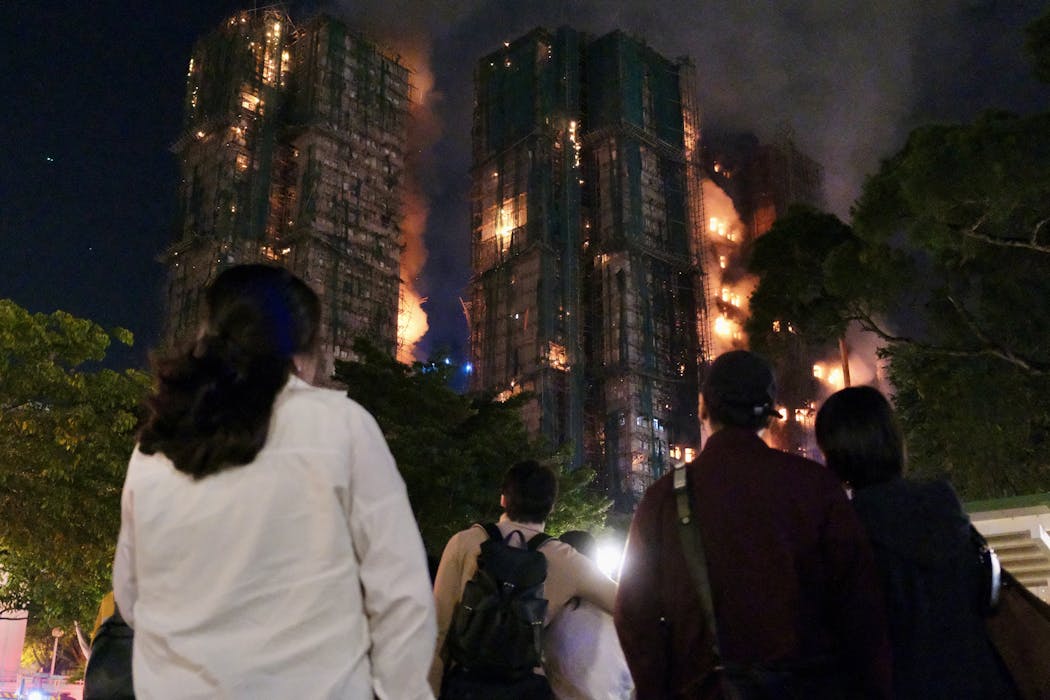
People look on as thick smoke and flames rise during a major fire at the Wang Fuk Court residential estate in Hong Kong's Tai Po district on 26 November, 2025.

People look on as thick smoke and flames rise during a major fire at the Wang Fuk Court residential estate in Hong Kong’s Tai Po district. Photo: TOMMY WANG / AFP

National MP Carlos Cheung and several other Hong Kong New Zealanders have expressed their sadness and concern over the major fire that has killed dozens.

The blaze engulfed multiple residential towers in Hong Kong’s Tai Po district.

“I am deeply saddened by the devastating fire in Hong Kong last night,” MP Carlos Cheung said.

“As someone who was born in Hong Kong and came to New Zealand as a teenager, this tragedy feels especially close to home. My heart goes out to all the families who have lost loved ones, those who are injured, and everyone affected by this horrific incident.”

The fire, which has engulfed multiple residential towers in Hong Kong’s Tai Po district, has killed 44 people with around 270 missing.

“I also want to acknowledge the bravery of the first responders who put themselves at risk to save others,” Cheung said.

“As a New Zealand Member of Parliament, I stand in solidarity with the people of Hong Kong during this incredibly difficult time, and I hope for a full and transparent investigation so that answers and accountability can be found.

My thoughts are with all those grieving and with the survivors who now face an unimaginable recovery.”

The complex includes 2000 apartments and houses over 4600 people, many of whom were pensioners.

A Hong Kong New Zealander says he and his friends are saddened by the big fire in Tai Po.

Garry Ko, a committee member at the Hong Kong New Zealand Business Association, says he used to live close to the area where a few high-rise buildings are on fire.

“As someone born in Hong Kong, I’m really saddened when I saw news about the fire. Although I [have left] Hong Kong now, Tai Po is always home in my heart,” he says.

Garry Ko says he has been keeping a close eye on the response to the blaze and his organisation will discuss what they can do to help.

Another Hong Konger living in New Zealand Anthony Lo says he hopes these who are unaccounted for in the fire could be found safe.

Three men have been arrested on suspicion of manslaughter in relation to the deadly blaze – two directors and a consultant of a construction company.

All election-related work has been paused in the city.

– RNZ/CNN

Sign up for Ngā Pitopito Kōrero, a daily newsletter curated by our editors and delivered straight to your inbox every weekday.

– Published by EveningReport.nz and AsiaPacificReport.nz, see: MIL OSI in partnership with Radio New Zealand

Fire engulfs Hong Kong apartment buildings, killing dozens, trapping others

Source: Radio New Zealand

A huge fire that ripped through a Hong Kong housing estate has killed dozens, with 279 people were unaccounted for.

The massive fire ripped through multiple high-rise residential blocks in Hong Kong’s northern Tai Po district, with authorities struggling to bring the blaze under control.

Read back on how the events unfolded

– Published by EveningReport.nz and AsiaPacificReport.nz, see: MIL OSI in partnership with Radio New Zealand

The Hong Kong high-rise fire shows how difficult it is to evacuate in an emergency

Source: The Conversation – Global Perspectives – By Milad Haghani, Associate Professor and Principal Fellow in Urban Risk and Resilience, The University of Melbourne

Tommy Wang/Getty

The Hong Kong high-rise fire, which spread across multiple buildings in a large residential complex, has killed dozens, with hundreds reported missing.

The confirmed death toll is now 44, with close to 300 people still unaccounted for and dozens in hospital with serious injuries.

This makes it one of Hong Kong’s deadliest building fires in living memory, and already the worst since the Garley Building fire in 1996.

Although more than 900 people have been reportedly evacuated from the Wang Fuk Court, it’s not clear how many residents remain trapped.

This catastrophic fire – which is thought to have spread from building to building via burning bamboo scaffolding and fanned by strong winds – highlights how difficult it is to evacuate high-rise buildings in an emergency.

When the stakes are highest

Evacuations of high-rises don’t happen every day, but occur often enough. And when they do, the consequences are almost always severe. The stakes are highest in the buildings that are full at predictable times: residential towers at night, office towers in the day.

We’ve seen this in the biggest modern examples, from the World Trade Center in the United States to Grenfell Tower in the United Kingdom.

The patterns repeat: once a fire takes hold, getting thousands of people safely down dozens of storeys becomes a race against time.

But what actually makes evacuating a high-rise building so challenging?

It isn’t just a matter of “getting people out”. It’s a collision between the physical limits of the building and the realities of human behaviour under stress.

It’s a long way down to safety

The biggest barrier is simply vertical distance. Stairwells are the only reliable escape route in most buildings.

Stair descent in real evacuations is far slower than most people expect. Under controlled or drill conditions people move down at around 0.4–0.7 metres per second. But in an actual emergency, especially in high-rise fires, this can drop sharply.

During 9/11, documented speeds at which survivors went down stairs were often slower than 0.3 m/s. These slow-downs accumulate dramatically over long vertical distances.

Fatigue is a major factor. Prolonged walking significantly reduces the speed of descent. Surveys conducted after incidents confirm that a large majority of high-rise evacuees stop at least once. During the 2010 fire of a high-rise in Shanghai, nearly half of older survivors reported slowing down significantly.

Long stairwells, landings, and the geometry of high-rise stairs all contribute to congestion, especially when flows from multiple floors merge into a single shaft.

Slower movers include older adults, people with physical or mobility issues and groups evacuating together. These reduce the overall pace of descent compared with the speeds typically assumed for able-bodied individuals. This can create bottlenecks. Slow movers are especially relevant in residential buildings, where diverse occupants mean movement speeds vary widely.

Visibility matters too. Experimental studies show that reduced lighting significantly slows down people going down stairs. This suggests that when smoke reduces visibility in real events, movement can slow even further as people hesitate, misjudge steps, or adjust their speed.

Human behaviour can lead to delays

Human behaviour is one of the biggest sources of delay in high-rise evacuations. People rarely act immediately when an alarm sounds. They pause, look for confirmation, check conditions, gather belongings, or coordinate with family members.

These early minutes are consistently some of the costliest when evacuating from tall buildings.

Studies of the World Trade Center evacuations show the more cues people saw – smoke, shaking, noise – the more they sought extra information before moving. That search for meaning adds delay. People talk to colleagues, look outside windows, phone family, or wait for an announcement. Ambiguous cues slow them even further.

In residential towers, families, neighbours and friend-groups naturally try to evacuate together. Groups tend to form wider steps, or group together in shapes that reduce overall flow. But our research shows when a group moves in a “snake” formation – one behind the other – they travel faster, occupy less space, and allow others to pass more easily.

These patterns matter in high-rise housing, where varied household types and mixed abilities make moving in groups the norm.

Why stairs aren’t enough

As high-rises grow taller and populations age, the old assumption that “everyone can take the stairs” simply no longer holds. A full building evacuation can take too long, and for many residents (older adults, people with mobility limitations, families evacuating together) long stair descents are sometimes impossible.

This is why many countries have turned to refuge floors: fire- and smoke-protected levels built into towers as safe staging points. These can reduce bottlenecks and prevent long queues. They give people somewhere safe to rest, transfer across to a clearer stair, or wait for firefighters. Essentially, they make vertical movement more manageable in buildings where continuous descent isn’t realistic.

Alongside them are evacuation elevators. These are lifts engineered to operate during a fire with pressurised shafts, protected lobbies and backup power. The most efficient evacuations use a mix of stairs and elevators, with ratios adjusted to the building height, density and demographics.

The lesson is clear: high-rise evacuation cannot rely on one tool. Stairs, refuge floors and protected elevators should all be made part of ensuring vertical living is safer.

The Conversation

Erica Kuligowski is affiliated with the Society of Fire Protection Engineers (SFPE) as a Section Editor for their Handbook of Fire Protection Engineering (Human Behaviour Section) and as a member of the Board of Governors for the SFPE Foundation. From 2002 to 2020, Erica worked as a research engineer and social scientist in the Engineering Laboratory of NIST, where she contributed to NIST’s Technical Investigation of the 2001 WTC Disaster and received US government funding to study occupant evacuation elevators.

Ruggiero Lovreglio receives funding from the Ministry of Business, Innovation and Employment (New Zealand), Royal Society Te Apārangi (New Zealand) and NIST (USA)

Milad Haghani does not work for, consult, own shares in or receive funding from any company or organisation that would benefit from this article, and has disclosed no relevant affiliations beyond their academic appointment.

ref. The Hong Kong high-rise fire shows how difficult it is to evacuate in an emergency – https://theconversation.com/the-hong-kong-high-rise-fire-shows-how-difficult-it-is-to-evacuate-in-an-emergency-270774

How England’s Premier League is trying to stop football’s financial arms race – without a salary cap

Source: The Conversation – Global Perspectives – By James Skinner, Dean Newcastle Business School/Professor of Sport Business, University of Newcastle

Debates about financial regulation in sport often begin with salary caps: strict, transparent cost-control mechanisms common in North American and Australian leagues.

They’re credited with improving competitive balance and financial sustainability, so many might assume English football would follow suit.

While England’s Premier League is preparing the most significant overhaul of its financial rules in a generation, it is avoiding a hard salary cap in favour of a bespoke framework designed for Europe’s promotion and relegation ecosystem and globally fluid transfer market.

So why have these rules been implemented, and will they help address football’s financial arms race, given one of the world’s richest and most financially unequal sporting competitions still refuses to introduce a salary cap?

What’s changing in the Premier League?

The Premier League recently announced that from 2026–27, clubs will move away from the Profitability and Sustainability Rules (PSR) introduced in the 2015–16 season, and towards a model centred on controlling football-related spending and ensuring long-term financial health.

The league’s stated aims are clarity, predictability and resilience. They shift focus from backward-looking accounting to real-time cost control and robust balance-sheet strength, with closer alignment to the approach of the Union of European Football Associations (UEFA).

Owners will retain freedom to invest in stadiums and infrastructure, but will face tighter constraints on wages, agent fees and “transfer amortisation” – an accounting practice where clubs spread the cost of a player’s transfer fee over the length of their contract to reduce annual costs and stay within spending limits.

Introducing the ‘squad cost ratio’

At the heart of the reforms, the squad cost ratio (SCR) caps how much a club may spend on its first-team squad (wages, agent fees and transfers) relative to its football revenue.

The headline limit is 85% of eligible income, with a small buffer for newly promoted sides to ease the transition.

In practice, a club generating £300 million (A$609 million) from match day, commercial and league distributions could spend around £255 million (A$518 million) on its squad.

Overspending can result in sanctions, including points deductions.

Unlike PSR’s three-year, business-wide profitability test, this squad cost ratio isolates football costs and is monitored during the season, making it easier to understand and harder to game.

Infrastructure and academy investment sit outside the ratio, which means the rule will likely curtail short-term arms races in player wages and fees.

The intent is to stop clubs overspending to keep pace with rivals, enhancing competitive balance without prescribing a hard salary cap.

The second pillar

The second pillar — sustainability and systemic resilience (SSR) — introduces financial health checks aimed at ensuring clubs are solvent and can survive unexpected financial shocks.

Three tests apply:

1. Working capital test. This verifies clubs hold enough cash and commitments to meet month-to-month obligations.

2. Liquidity test. This assesses whether a club can withstand an £85 million (A$173 million) adverse shock, such as lost broadcast income or failure to sell a player during the transfer window.

3. Positive equity test. This requires phasing in the replacement of owner loans with real investment – for example, instead of an owner lending £100 million that must be repaid, the owner invests £100 million as equity, making the club financially stronger.

Together, these measures push for stronger balance sheets, reduced reliance on risky debt and greater transparency, vital after years of insolvency threats across England’s football ecosystem.

By embedding resilience alongside cost control, the framework aims to curb boom-and-bust cycles and protect competitive integrity.

Some concerns remain

Despite its promise, the framework raises practical and strategic concerns.

First, English clubs may face competitive disadvantages in European markets if the rules around how they can generate and spend revenue are stricter than those used abroad. Minor differences may compound in a global talent race, potentially constraining investment in elite players over time.

Second, mandating equity injections while phasing out soft loans raises the cost of capital and narrows financial engineering options, making clubs more expensive to run and less attractive to private equity investment, especially mid-table teams with limited profits.

Third, and most acute, is valuation risk: SSR gives regulatory weight to “squad market value”, a volatile and loosely defined metric. Without clear standards, player valuations can legitimately diverge by tens of millions, allowing clubs to manipulate these valuations to meet financial rules instead of improving real finances.

Closing loopholes on operating spend and debt may inadvertently open a larger one around player valuations, which are harder to audit and easier to manipulate.

Will these changes work?

The two key components shaping the Premier League’s path are the SCR, a cap-like limit tied to football revenue, and SSR, which measures liquidity, working capital, and equity strength to secure financial health.

Ultimately, the question is whether these changes will deliver the desired financial transparency, or just create new loopholes.

A traditional hard salary cap for Premier League clubs remains unlikely. The Professional Footballers’ Association has warned it would unlawfully restrict trade, and leading legal opinions argue rigid caps risk breaching UK or EU employment and competition law and don’t fit a football pyramid system.

The Premier League’s innovative approach could set a benchmark, but we will have to wait and see if it becomes a yardstick for other leagues.

The Conversation

The authors do not work for, consult, own shares in or receive funding from any company or organisation that would benefit from this article, and have disclosed no relevant affiliations beyond their academic appointment.

ref. How England’s Premier League is trying to stop football’s financial arms race – without a salary cap – https://theconversation.com/how-englands-premier-league-is-trying-to-stop-footballs-financial-arms-race-without-a-salary-cap-270666

Why is bamboo used for scaffolding in Hong Kong? A construction expert explains

Source: The Conversation – Global Perspectives – By Ehsan Noroozinejad, Senior Researcher and Sustainable Future Lead, Urban Transformations Research Centre, Western Sydney University

At least 44 people have died and more than 270 are missing after a major fire engulfed an apartment complex in Hong Kong’s Tai Po district. The fire, which swept through multiple high-rise towers, is still burning.

The exact cause of the blaze, which broke out just before 3pm local time on Wednesday, is still unknown. Hong Kong Police have arrested three construction company executives on suspicion of manslaughter.

The apartment blocks are 31 stories tall. Opened in 1983, they were undergoing renovations at the time of the blaze, and were covered in bamboo scaffolding and green protective mesh.

Bamboo scaffolding has been a feature of the city for centuries. But why? The answer is part history, part engineering and part economics.

But the recent tragedy has sharpened the focus on fire safety, and when and where bamboo should be used.

A fast-growing grass

Bamboo is a fast-growing grass with hollow, tube-like stems (known as “culms”). Those tubes give it a high strength-to-weight ratio. A pole is light enough to carry up a stairwell, yet strong enough, when braced and tied correctly, to support platforms and workers.

Crews lash poles together in tight grids and tie them back to the buildings with brackets and anchors. Properly designed, a bamboo scaffold can resist wind and working loads.

Hong Kong’s Buildings Department and Labour Department publishes clear guidelines on the design and construction of bamboo scaffolds.

Bamboo scaffolding is also used in parts of mainland China, India, and across Southeast Asia and South America.

A cheap and flexible material

There are three main reasons why bamboo scaffolds are used in Hong Kong.

First, speed. An experienced team can “wrap” a building quickly because poles are light and can be cut to fit irregular shapes. That matters in tight streets with limited crane access.

Second, cost. Bamboo is a fraction of the price of metal systems, so contractors can keep bids low. The material is also easy to source locally, which keeps routine repairs and repainting within budget.

Third, tradition and skills. Bamboo scaffolding features in a famous piece of Chinese art, Along the River During the Qingming Festival, painted by Zhang Zeduan who lived between 1085 and 1145. Hong Kong still trains and certifies bamboo scaffolders, and the craft remains part of the city’s construction culture.

These factors explain why bamboo has remained visible on the city’s skyline even as metal systems dominate elsewhere.

Unlike metal made in blast furnaces, bamboo also grows back, and turning a stalk into a pole takes little processing. This means its overall climate impact is smaller.

What are the risks?

There are two main risks of bamboo scaffolding.

The first, as this tragedy in Hong Kong highlights, is fire.

Dry bamboo is combustible, and the green plastic mesh often draped over scaffolds can also quickly burn.

In the Tai Po fire, footage and reports indicate the fire quickly raced up the scaffolding and mesh, and across the facade of the buildings.

This is why there are calls for non-combustible temporary works on occupied towers – or at minimum, flame-retardant nets, treated bamboo, and breaks in the scaffold so fire can’t easily jump from bay to bay.

The second risk of using bamboo scaffolding is related to variability and weather.

Bamboo is a natural material, so strength varies with species, age and moisture. Lashings can loosen and storms are a common risk.

Hong Kong’s updated guidelines and code try to manage this with material rules (such as age, diameter and drying), mandatory ties to the structure, steel brackets and anchor testing, and frequent inspections – especially before bad weather.

A high-rise apartment covered in bamboo scaffolding and white mesh.
Bamboo has been used for scaffolding in Hong Kong for centuries.
Frank Barning/Pexels

A shift to metal

In March 2025, Hong Kong’s Development Bureau directed that metal scaffolds be adopted in at least 50% of new government public-works building contracts. It also encouraged metal use in maintenance where feasible.

Subsequent government replies to the Legislative Council in June and July reiterated the 50% requirement and described a progressive transition based on project feasibility.

Private projects may still use bamboo under existing codes. But for public works the baseline is now metal, signalling a move toward non-combustible systems.

The lesson from Hong Kong is not that bamboo is “good” or “bad” for scaffolding – it’s about context. It has clear advantages for small-scale, short-duration, ground-anchored work where streets are tight and budgets are lean. But on tall, occupied residential blocks, especially with mesh-wrapped facades, its fire risk and variability demand much stronger controls.

Bamboo scaffolding helped build Hong Kong’s skyline because it was fast, clever and affordable. The science behind fire and the realities of high-rise living now demand a tighter line: use the right tool for the job, and when the risks climb, switch to non-combustible systems.

That way the city can honour a proud craft, while keeping people safe in the homes those scaffolds surround.

The Conversation

Dr Ehsan Noroozinejad has received funding from both national and international organisations. His most recent funding on integrated housing and climate policy comes from the Australian Public Policy Institute (APPI). He also serves on the Executive Committee of the Early- and Mid-Career Academic and Practitioner (EMCAP) Network at Natural Hazards Research Australia, the Australian government-funded national centre for natural hazard resilience and disaster risk reduction.

ref. Why is bamboo used for scaffolding in Hong Kong? A construction expert explains – https://theconversation.com/why-is-bamboo-used-for-scaffolding-in-hong-kong-a-construction-expert-explains-270780

Evacuar un avión no es un juego: saber gestionar un desastre puede salvarle la vida

Source: The Conversation – (in Spanish) – By David Cobos Sanchiz, Profesor Titular Dpto. Educación y Psicología Social, Universidad Pablo de Olavide

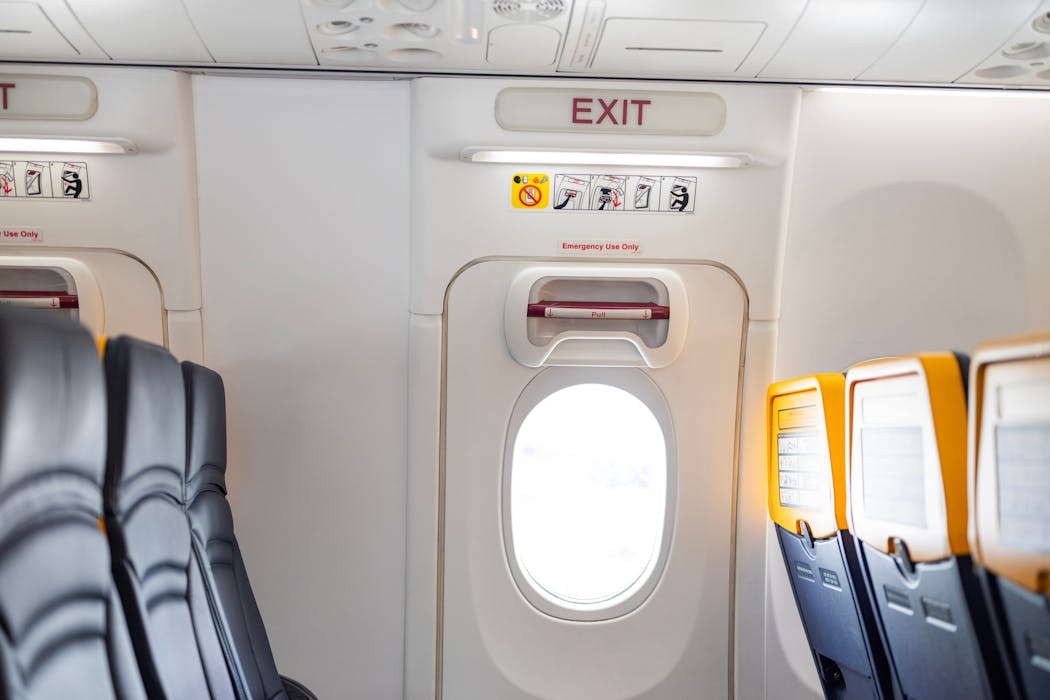
Salida de emergencia en la cabina de un avión Artit Wongpradu/Shutterstock

Según previsiones de la Asociación Internacional de Transporte Aéreo (IATA), a finales de este año 2025 alcanzaremos unas cifras récord en aviación comercial, superando los 5 000 millones de pasajeros en unos 40 millones de vuelos.

Solo en España (un gigante del turismo) la red de Aeropuertos Españoles y Navegación Aérea (AENA) movió a más de 183,3 millones de pasajeros en los primeros siete meses de 2025.

Es muy posible que haya tomado alguno de estos vuelos y puede que sea de los que se aburren o desconectan cuando se informa sobre las medidas de seguridad aérea y especialmente sobre la evacuación del avión en caso de emergencia.

Puede que también haya contemplado pasajeros sentados en las salidas de emergencia que simplemente hacen caso omiso de las instrucciones de la tripulación o que incluso se dejan puestos los auriculares, se colocan un antifaz o manipulan el teléfono móvil a la hora de despegar, justo lo que les han dicho unos minutos antes que no hagan.

Un pasajero lee atentamente las instrucciones de evacuación en caso de emergencia aérea.
Makistock/Shutterstock

Si no es usted muy aprensivo y está bien informado puede que no se preocupe, porque sabe que las probabilidades de morir en accidente aéreo son realmente insignificantes. Pero esto no es óbice para inhibirse de las instrucciones de emergencia y evacuación.

Si nos falta motivación para entender la importancia de una evacuación rápida y efectiva bastaría con visionar la película Sully, que relata el amerizaje de emergencia en el río Hudson, frente a Manhattan, poco después del despegue, y su subsiguiente evacuación. En esta ocasión, absolutamente todos los ocupantes del avión (155 personas) se salvaron sin mayores consecuencias.

Trailer de la película Sully.

El coste del comportamiento irracional

Pero el comportamiento y las características de los pasajeros pueden dificultar la evacuación de emergencia: el pánico, la ansiedad, los intentos por recuperar el equipaje y la diversidad física afectan significativamente a la eficiencia de la evacuación. Especialmente, el comportamiento irracional y la tendencia a recuperar el equipaje pueden retrasar significativamente la salida, como señalan algunos estudios.

Si hay evidencia científica sobre esto, ¿por qué no hacemos algo? Varias cuestiones rechinan aquí.

En primer lugar, todos los organismos internacionales se han olvidado de los pasajeros a la hora de establecer recomendaciones de formación. ICAO –International Civil Aviation Organization– fija las normas y métodos recomendados para la formación y licencias; IATA –International Air Transport Association– desarrolla programas de capacitación estandarizados y manuales de buenas prácticas en la industria aérea; IFALPA –International Federation of Air Line Pilots’ Associations– influye en temas de seguridad y formación desde la perspectiva de los pilotos, e ILO –International Labour Organization– establece lineamientos laborales relacionados con capacitación en transporte aéreo en algunos convenios. Pero todos estos estándares y recomendaciones son para los pilotos y la tripulación, no hay absolutamente nada previsto para los pasajeros.

Sin embargo, ya hemos hablado en otras ocasiones sobre la importancia de desarrollar una cultura de la prevención generalizada a nivel social para evitar los riesgos y sus consecuencias para la salud y la economía global.

Hay que formarse, no solo informarse

Está más que consolidada la idea de que para gestionar un desastre, la población en general (no solo los profesionales) debe poseer un conocimiento y pautas de acción apropiadas que no pueden adquirirse si antes no se ha efectuado una labor continuada de pedagogía y sensibilización.

En segundo lugar, información no es formación. La información no es más que un conjunto de datos estructurados, transmitidos con un propósito comunicativo, que no necesariamente implica un cambio comportamental en la persona que la recibe.

Dependiendo de la motivación de la persona, la información calará en su psique y transformará su comportamiento o simplemente la oirá como quien oye llover… En cambio, parafraseando al filosofo Hans-Georg Gadamer, la formación no es una mera acumulación de conocimientos, sino que implica su apropiación de manera que nos forme y transforme.

Volviendo al tema que nos ocupa, las personas a las que se debería proporcionar ayuda durante un proceso de evacuación en caso de emergencia aérea solo reciben actualmente una información atropellada que, en muchas ocasiones, no tiene ningún impacto en absoluto.

Además, no es descabellado pensar que quienes ocupen los asientos de las salidas de emergencia en los aviones deben poseer una mínima formación previa que les ayude a desempeñar mejor sus obligaciones en caso de necesidad.

La importancia del factor humano en la evacuación

Como hemos visto, investigaciones recientes destacan la importancia del factor humano a la hora de la evacuación de emergencia, por lo que sostenemos que la formación en evacuación aérea es fundamental para maximizar la supervivencia en este tipo de situaciones, como sucede en otros contextos de la vida cotidiana.

Es obvio que estaríamos hablando de una formación muy sencilla, pero comparable a la que se proporciona en muchos otros contextos, especialmente en el ámbito escolar y laboral (educación para la salud en el caso de estudiantes, formación en prevención de riesgos laborales para trabajadores, primeros auxilios para todos…).

Esta formación debería incluir los procedimientos básicos a seguir en caso de emergencia mediante simulaciones realistas porque, como ya hemos dicho antes, la formación no es solo información, sino que debe propiciar el “saber hacer”.

Todo está por construir, pero si ICAO fijara estándares básicos en forma de recomendaciones, las grandes alianzas comerciales (Star, SkyTeam, OneWorld) priorizaran sentar en las salidas de emergencia a personas con esta formación mínima acreditada. Y si los Estados la fomentaran patrocinándola de algún modo y empezando por formar gratuitamente a su personal, en poco tiempo habría un número muy significativo de personas preparadas y concienciadas para colaborar en este tipo de situaciones.

Obviamente se trata solo de una idea, pero es una idea que puede salvar su vida.

The Conversation

David Cobos Sanchiz no recibe salario, ni ejerce labores de consultoría, ni posee acciones, ni recibe financiación de ninguna compañía u organización que pueda obtener beneficio de este artículo, y ha declarado carecer de vínculos relevantes más allá del cargo académico citado.

ref. Evacuar un avión no es un juego: saber gestionar un desastre puede salvarle la vida – https://theconversation.com/evacuar-un-avion-no-es-un-juego-saber-gestionar-un-desastre-puede-salvarle-la-vida-265650

¿Puede la industria del lujo ser exclusiva y a la vez sostenible?

Source: The Conversation – (in Spanish) – By Marta Ortiz-de-Urbina-Criado, Catedrática de Universidad y Doctora en Dirección y Organización de Empresas, Universidad Rey Juan Carlos

En 2025, y después de años de subidas imparables, la industria de la moda de lujo está viendo reducir sus ingresos y la pérdida de confianza de sus clientes. Sobre todo la de los más jóvenes, de las generaciones Z y alpha (nacidos de 1995 en adelante).

Aunque la sostenibilidad (o su carencia) no parece ser la causa de este descenso, sí pasa por convertirse en una de las soluciones. Ahora los consumidores están dispuestos a pagar más por productos más sostenibles. Además, se espera que el mercado de productos de lujo sostenibles se incremente un 9,1 % anual entre 2024 y 2034, hasta 162 900 millones de dólares.

¿Estamos preparados para una moda de lujo sostenible?

Las empresas de lujo son sensibles a las presiones del mercado y la normativa en materia de sostenibilidad, incluido el abanico de leyes europeas redactadas tras la firma del Pacto Verde. Sin embargo, sus acciones no están explícitamente alineadas con los objetivos de desarrollo sostenible (ODS). Esas prácticas a menudo se basan en cumplir con las regulaciones obligatorias y se centran en aspectos que mejoran su reputación y la percepción del consumidor.

En particular, sus esfuerzos se concentran en objetivos de desarrollo sostenible como la igualdad de género (ODS 5), el trabajo decente (ODS 8), el consumo responsable (ODS 12), la acción por el clima (ODS 13) y el logro de dichos objetivos (ODS 17). Por el contrario, se observa una notable falta de énfasis en los ODS que abordan la erradicación de la pobreza, el hambre, la educación, la reducción de la desigualdad, la sostenibilidad de las ciudades y la protección de los ecosistemas (ODS 14 y 15).

La cuestión es que, por ejemplo, en la lucha contra el hambre y la pobreza, la forma en que se obtienen y tratan algunas materias primas fundamentales en la cadena de suministro del lujo –e incluso se reinterpreta el patrimonio cultural– es algo que afecta a las comunidades locales, ajenas a lo que se decide en los centros de gestión.


Leer más:
¿’Quo vadis’, ODS?


Distintas marcas, distintos modos de ser sostenibles

Las propuestas de moda de lujo sostenible no son homogéneas, sino que cada marca ha establecido su propio compromiso de sostenibilidad. Por otra parte, muchas están retrasadas en el cumplimiento de sus metas.

Las diferencias en el compromiso con la sostenibilidad de las marcas de lujo suelen estar ligadas a su propia identidad. Stella McCartney es el paradigma de dicho compromiso, que se materializa usando fibras orgánicas y piel vegana en sus productos.

La casa italiana Bottega Veneta ofrece el cuidado y mantenimiento de sus bolsos intrecciatos, que son, además, todo un alarde de oficio artesanal.

Vuitton y Gucci se han enfocado más en aspectos medioambientales como la eficiencia energética. Recientemente, Ralph Lauren ha renunciado a ser una compañía con cero emisiones en 2040 y apunta a metas más realistas como la reducción de un 30 % de sus emisiones antes de 2030.

El grupo Puig, propietario de marcas como Carolina Herrera, ha alcanzado un 74 % de uso de energías renovables y ha reducido un 23 % sus emisiones. El grupo LVMH ha reciclado más de 290 000 m² de materiales, impulsa proyectos de defensa de la biodiversidad y ha lanzado el programa LIFE 360 Business Partners para reducir sus emisiones indirectas, que suponen el 96 % de su huella de carbono.

Mucho por hacer

Pese a estos avances queda mucho pendiente. Según el Fashion Revolution Index 2025, la transparencia media del sector es solo del 14 %. El informe advierte que muchas firmas de lujo siguen sobreproduciendo sin informar sobre sus emisiones indirectas ni sobre su cadena de suministro completa.

En el terreno de la gobernanza también hay sombras. Chloé, Gucci y Loewe han sido multadas recientemente por la Unión Europea por infringir normas de competencia.

Por otra parte, firmas como Prada, Fendi, Louis Vuitton o Bottega Veneta continúan empleando cuero y pieles exóticas en sus colecciones pese a la presión de asociaciones defensoras de los derechos animales, que tratan de evitar su sacrificio y maltrato para estos usos.

Aunque esas compañías tienen certificaciones que garantizan proveedores seguros o políticas para el bienestar animal, esto no es suficiente para los activistas.

Valorar la sostenibilidad

Con todo, a pesar de que se estén haciendo cambios en las formas de producir, el consumidor tiene la última palabra. La motivación principal de la compra de moda de lujo es la calidad y el estatus, pero también se empieza a valorar el tema de la sostenibilidad. No obstante, todavía hay clientes que siguen prefiriendo prendas realizadas con tejidos naturales frente a los producidos con fibras recicladas.

El término reciclado puede parecer opuesto a la importancia que tienen la calidad y la exclusividad en este sector. Por ello, las estrategias para impulsar el lujo sostenible deben abordarse con prudencia. La clave parece estar en permanecer alineados con los atributos fundamentales del lujo. Es decir, el diseño, el legado, la calidad, la durabilidad y la atemporalidad.

Impulsar el lujo sostenible

Conseguir que el usuario se sienta orgulloso de la sostenibilidad de sus productos de lujo puede ayudar a alcanzar el objetivo marcado. Sin embargo, no hay que perder de vista el riesgo de greenwashing.


Leer más:
Europa contra el ‘greenwashing’ de las marcas


Leyes como la directiva europea Green Claims van dirigidas a regular las afirmaciones medioambientales de las empresas para evitar engaños. Su cumplimiento, junto al uso de herramientas que garanticen la trazabilidad de las prendas y el control de la veracidad de las declaraciones de los fabricantes, podrá impulsar el crecimiento de una moda de lujo más sostenible.

Por otra parte, hay una gran oportunidad de negocio en el mercado de segunda mano. Algunas estimaciones señalan que superará los 65 000 millones de dólares en 2033. Así, se puede fomentar la sostenibilidad a través de la economía circular, con iniciativas como el alquiler o intercambio de prendas de lujo que generan experiencias de uso en sí misma.


Leer más:
Crece la ola del mercado de segunda mano (y Zara se apunta al carro)


Lujo, sostenibilidad, innovación y diferenciación

Queda en el aire si el lujo puede alcanzar la sostenibilidad y si los consumidores están realmente dispuestos a consumir un lujo más responsable y menos clásico.

Para avanzar hacia un modelo sostenible, las empresas pueden desarrollar modelos de cocreación. En estos modelos pueden intervenir diferentes agentes: proveedores de materiales, diseñadores, distribuidores, e incluso las empresas de recogida de residuos textiles.

Un ejemplo es el de Stella McCartney y su colaboración con Adidas y la plataforma Clevercare. A través de esta plataforma se establece una comunicación con los consumidores para impulsar hábitos de cuidado de las prendas. Otras casas como Dolce&Gabbana tienen modelos de colaboración con sus proveedores para lograr la reducción de emisiones y la mejora de la trazabilidad.

La sostenibilidad desafía al lujo, pero también puede ser su ventaja más audaz: una vía para innovar y diferenciarse.

The Conversation

Las personas firmantes no son asalariadas, ni consultoras, ni poseen acciones, ni reciben financiación de ninguna compañía u organización que pueda obtener beneficio de este artículo, y han declarado carecer de vínculos relevantes más allá del cargo académico citado anteriormente.

ref. ¿Puede la industria del lujo ser exclusiva y a la vez sostenible? – https://theconversation.com/puede-la-industria-del-lujo-ser-exclusiva-y-a-la-vez-sostenible-268475

Una diminuta molécula podría acabar con las bacterias inmunes a los antibióticos

Source: The Conversation – (in Spanish) – By Ainhoa Roldán Terrones, Estudiante predoctoral en el área de la biofísica de membranas, Universitat de les Illes Balears

Destrucción de una bacteria por antibióticos. La capacidad de adaptación de estos microorganismos hace que los tratamientos pierdan eficacia. Kateryna Kon/Shutterstock

Actualmente, la capacidad de bacterias, virus y hongos de evadir los efectos de tratamientos diseñados para combatirlos está considerada como una de las diez amenazas principales para la salud pública. Se estima que esa resistencia a los fármacos antimicrobianos se cobra cada año 5 millones de vidas.

Sin embargo, este grave problema no sólo se debe a la alta capacidad adaptativa que tienen los microorganismos patógenos: gran parte de la culpa es nuestra. ¿Cuántas veces nos han dicho, cuando nos encontrábamos mal: “Tómate tal medicamento, en un par de días te encontrarás mejor”? ¿O cuántas veces hemos guardado los restos de un antibiótico “por si acaso”?

Malas prácticas con consecuencias

Según una encuesta realizada en 14 países europeos con más de 8 500 participantes, 1 de cada 3 de personas consumió antibióticos sin receta médica; en algunos países el porcentaje ascendía incluso a más de la mitad. La gran mayoría parecía ser consciente de que un mal uso de los medicamentos pueden hacerlos menos efectivos, pero casi el 50 % también afirmó que un antibiótico es funcional frente a un virus, cuando sólo resulta efectivo frente a bacterias.


Leer más:
Lecciones de la evolución para mejorar nuestra relación con las bacterias


Por otro lado, ¿alguna vez ha dejado un tratamiento antibiótico a medias porque ya se encontraba mejor? Si un especialista ha pautado el fármaco durante 7 días cada 8 horas, interrumpirlo porque “ya estoy bien” no es lo mismo que hacerlo porque “ya he combatido por completo la infección”. Del mismo modo, tratar resfriados o gripes con antibióticos es error muy común, ya que un antiviral no es lo mismo que un antibiótico.

Esta amplia lista de malas prácticas explica en buena medida el aumento de las resistencias microbianas.

Antibióticos con eficacia decreciente

Sin duda, el descubrimiento de los antibióticos marcó un hito en la historia de la humanidad. Su edad de oro se extendió entre las décadas de 1940 y 1960, periodo durante el cual se hallaron antibióticos naturales procedentes de bacterias como las tetraciclinas, de origen fúngico como las penicilinas y sintéticos como las sulfonas.

Aunque estos fármacos se siguen empleando, ha disminuido notoriamente su eficacia. De hecho, los tratamientos betalactámicos (gran familia de antibióticos que matan bacterias al inhibir la formación de su pared celular) son frente a los que más microorganismos han desarrollado resistencia desde 2014, y cada vez hay menos terapias eficaces.

Por eso, ante un caso de infección con bacterias multirresistentes se suele recurrir en el hospital a cócteles de antibióticos de amplio espectro. Esto tiene sus inconvenientes porque nuestro organismo alberga bacterias no patógenas que también acaban destruidas con esas terapias tan agresivas.

Péptidos antimicrobianos al rescate

Una nueva estrategia para combatir a las bacterias multiresistentes son los péptidos antimicrobianos (AMP), considerados agentes evolutivos –agentes que cambian con el tiempo– de nuestro sistema inmune innato.

Los AMP, que se encuentran en gran variedad de organismos, actúan como primera línea de defensa contra bacterias, virus y hongos. Se caracterizan por sus propiedades anfipáticas (presentan aminoácidos que interaccionan con el agua y otros que la repelen) y por su pequeño tamaño. Concretamente, contienen no más de 50 aminoácidos, las piezas diminutas que conforman las proteínas. Para hacernos una idea, una cadena de 50 aminoácidos es aproximadamente 40 veces más pequeño que un virus.

En las dos últimas décadas, los AMP han ido ganando la atención de los investigadores debido a su capacidad de discernir entre las membranas procariotas y eucariotas, es decir, entre las envolturas celulares de las bacterias y de las células humanas. Esto se debe a que, al tener carga positiva, los péptidos antimicrobianos solo interaccionan con las membranas bacterianas (carga negativa), sin afectar a las células eucariotas, que son neutras (no presentan carga).

Usar AMP como tratamiento antimicrobiano dificultaría el desarrollo de las resistencias, ya que estos péptidos actúan sobre toda la superficie de la membrana, y, cambiar la carga de esa cobertura no es una estrategia sencilla para el microorganismo por el elevado coste energético que supone. Además, para que esto ocurra se deberían acumular miles de eventos evolutivos, que podrían tardar muchos años en ocurrir.

No obstante, los péptidos antimicrobianos aún no se usan como tratamiento antibacteriano, ya que producen efectos negativos en el organismo y se degradan por las enzimas que produce nuestro cuerpo. Pero la comunidad científica sigue haciendo grandes avances para superar estos obstáculos. Por ejemplo, el proyecto FORMAMP (UE) estudió la manera de formular AMP con nanopartículas con el fin de mejorar su estabilidad y eficacia.

A la espera de que lleguen soluciones como las AMP, debemos seguir siendo conscientes de que la automedicación es una de las principales causas de resistencia a los antibióticos. El uso prudente de estos fármacos ayudará, por lo menos, a no agravar el problema.

The Conversation

Ainhoa Roldán Terrones recibe fondos de European Commission Horizon Europe Programme, Spanish Ministerio de Ciencia e Innovación y Laminar Pharmaceuticals S.A. Ella trabaja para Laminar Pharmaceuticals S.A.

Marta Salvador Castell recibe fondos del Ministerio de Ciencia e Innovación de España, Agencia Estatal de Investigación, PTQ2022-012455. Ella trabaja para laminar Pharmaceuticals S.A.

ref. Una diminuta molécula podría acabar con las bacterias inmunes a los antibióticos – https://theconversation.com/una-diminuta-molecula-podria-acabar-con-las-bacterias-inmunes-a-los-antibioticos-261906