Why being single might feel empowering as a woman in your 20s, but not your 30s

Source: The Conversation – UK – By Alicia Denby, Lecturer in Sociology and Criminology, Manchester Metropolitan University

Who are you calling cat lady? Josep Suria/Shutterstock

If you’re a woman in your 20s, being single may feel like an empowering lifestyle choice. Taking smug delight in the recent Vogue article, Is Having A Boyfriend Embarrassing Now?, you can rest assured that you’re independent, self-sufficient and living your best life.

From influencer Florence Given’s mantra to “dump him”, to Sabrina Carpenter denouncing the “manchild” and TikTok trends like “boy sober” and “elective celibacy” gaining traction, singlehood has been rebranded as a time for self-love, self-prioritisation and personal growth.

But, what happens when you hit your 30s? Does the glow of single positivity begin to fade?


Read more:
Is today’s political climate making dating harder for young people?


In my late 20s, I have certainly felt this shift. Once celebrated as an independent woman, the go-to girl for horrific dating stories (including a man who unironically referred to himself as the “Renegade Master”) I now experience pity. Friends, acquaintances, even strangers share their worries about my fertility, question my sexuality, and tell me I am “too picky” or “too pretty” to be single. My singlehood is no longer seen an empowering lifestyle choice but a cause for concern.

I know I’m not alone in this. In my forthcoming research with 19 heterosexual women aged 21 to 52, I found that while singlehood was often celebrated in young adulthood, single positivity had a clear expiration date.


Dating today can feel like a mix of endless swipes, red flags and shifting expectations. From decoding mixed signals to balancing independence with intimacy, relationships in your 20s and 30s come with unique challenges. Love IRL is the latest series from Quarter Life that explores it all.

These research-backed articles break down the complexities of modern love to help you build meaningful connections, no matter your relationship status.


Women in their 20s described being single as empowering, a time to discover themselves, invest in friendships, and pursue careers. For research participant Emma, 24, being single is liberating.

She reflected on a cultural shift wherein the single woman is no longer the lonely spinster, or Bridget Jones’s protégé, but is confident, autonomous, and self-loving: “After always following someone else’s lead, I realised I’m the main character of my own story, I’ve learnt to find myself and be loving towards myself.”

However, even in their 20s, many began to feel pressure to “settle down” and the freedom they once embraced started to feel like a ticking clock. Georgia, 21, told me: “I’m still young so I don’t get the ‘when are you going to find someone?’ question, but as I get older, I think it’s going to be more of a problem.”

An exasperated young woman covers her eyes, while an older woman in the foreground talks to her
‘When are you going to settle down?’
Nicoleta Ionescu/Shutterstock

Despite being only 21, Georgia anticipates that her singlehood will become a “problem” and is determined to embrace her freedom, while she can. Corrine, 23, also shared this feeling, enjoying her singlehood in her early 20s but anticipating that she would not feel empowered, nor satisfied, if her singlehood was to become permanent.

In fact, in my study, most women in their 20s were defiantly single and refused to “settle” just to “settle down”. But equally, they did not see singlehood as a permanent choice. Bryony, 26, explained:

Unless someone can add to my life, I’m not wasting my time. But if I don’t find someone in the next two years, I might start panicking because then I’d be looking at being 29, 30.

Deadlines

This panic, for many, begins in or around their 30s. Robyn, 25, described this as an “internal deadline”, a sense that by your 30s, you should be “in a relationship, thinking about kids, and ticking off life’s milestones”.

Comparably, while single men experience a similar pressure to couple up in mid-life, with coupledom regarded a marker of maturity and stability, single women experience greater stigma, and the pressure comes much sooner.

Albeit anticipated by women in their 20s, women in their 30s and 40s reflected on the pressure around the 30s, having moved past those societal expectations. Lydia, 52, joked:

Because I haven’t remarried, I think people assume I shrivelled up in a corner and died 20 years ago. A lot of people pity me, they think being in a relationship is the sign of ultimate happiness, but for me, that’s never been the case.

Amid a cultural shift and greater acceptance toward singlehood, it may be possible for women to challenge heterosexist and ageist “deadlines”, and pursue a life where being single is not deemed the result of personal failure, but rather a voluntary choice.

Reflecting on their 30s, Lydia and Tania, 52, recalled having “been there, done that, bought the t-shirt and the divorce!” and, having pursued an unattached lifestyle, felt it was their duty to “pass on permission” for new generations of women to do so the same.

However, while women in their 50s were happily single, their experience shows that once women outgrow the “single girl” identity, the cultural script shifts and they become resigned to the “cat lady” trope. To this end, while single positivity promotes freedom from coupledom and an acceptance that women can be happily and voluntarily single, it often only applies to young, conventionally attractive and able-bodied women.

Essentially, while the single positivity movement has helped reframe singlehood as empowering, it hasn’t entirely dismantled the couple norm. Instead, it offers a temporary reprieve, a phase of self-discovery before the pressure to settle down intensifies.

It’s time we asked: why is singlehood only celebrated when it’s temporary? Who gets to be happily single, and for how long?

The Conversation

Alicia Denby does not work for, consult, own shares in or receive funding from any company or organisation that would benefit from this article, and has disclosed no relevant affiliations beyond their academic appointment.

ref. Why being single might feel empowering as a woman in your 20s, but not your 30s – https://theconversation.com/why-being-single-might-feel-empowering-as-a-woman-in-your-20s-but-not-your-30s-269220
Britain’s ponds are disappearing – here’s why restoring them is vital for wildlife and climate resilience

Source: The Conversation – UK – By Lucy Clarke, Senior Lecturer, Department of Animal, Rural and Environmental Sciences, Nottingham Trent University

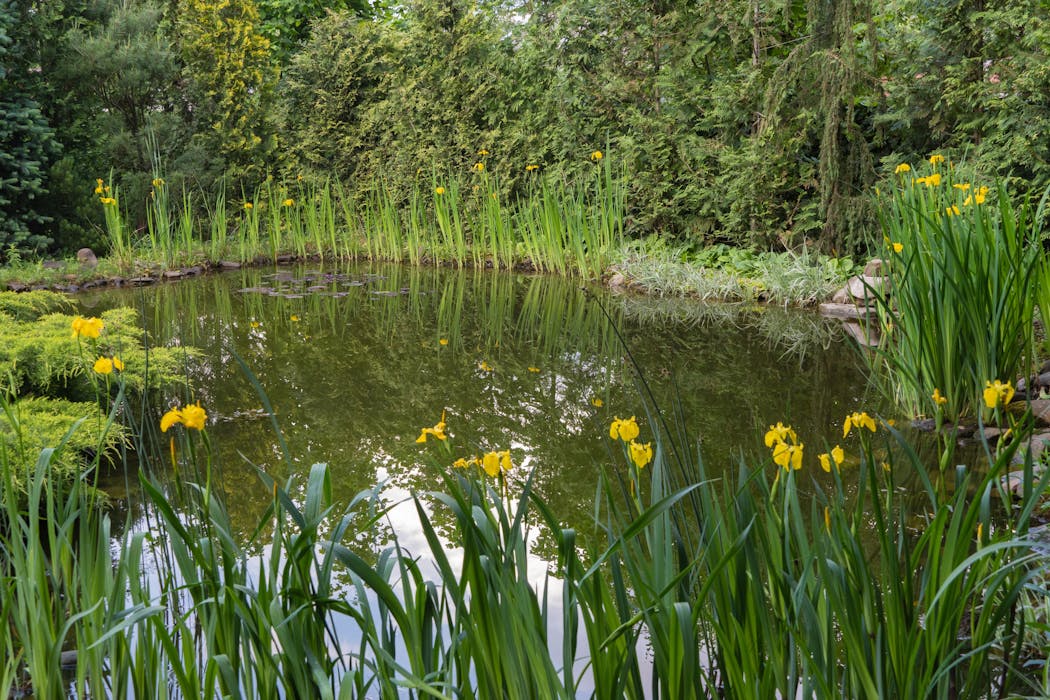
Sergey Denisenko/Shutterstock

Across Britain, ponds are quietly vanishing. Pouring over historic maps from the 1900s to trace old pond sites, I was struck by how many once dotted the landscape. Today, more than half have disappeared, a loss that threatens wildlife and our ability to cope with a changing climate.

That may be surprising as ponds seem small and insignificant. We talk about rivers, reservoirs and wetlands but ponds get very little mention, yet they punch far above their weight in ecological value. They store water, support biodiversity and help buffer floods and droughts. Losing them undermines both nature and our ability to adapt to climate extremes.

Restoring ponds – old and new, rural and urban – is one of the simplest, most effective steps we can take. Every pond counts, from a farm hollow to a garden bowl. Together, they form networks that wildlife needs to survive and make our landscapes more resilient to climate change.

The takeaway? Ponds do far more than look good. They link habitats, boost biodiversity and strengthen climate resilience. Restoring them is a practical, low-cost solution that begins with something as basic as adding water.

For wildlife, ponds are vital ecosystems and support far more than aquatic species. They provide water, food and habitat for pollinating insects, birds, bats and other mammals. Crucially, amphibians such as frogs and newts rely on networks of ponds close enough for them to move between. Lose that network or “pondscape”, and species vanish.

The consequences extend beyond biodiversity. Ponds act as natural buffers against climate extremes. Ponds act like natural sponges. During heavy rain, they slow water running across the ground and store this to reduce flood peaks. In periods of drought, they store water for plants and animals when streams run dry. They can also lock away carbon and filter pollutants, improving water quality.

Urban ponds in parks, school grounds and people’s gardens can provide vital biodiversity hotspots and local cooling during heatwaves. They help manage stormwater when we have heavy rains, reducing pressure on drains. And they can help connect people with nature, something proven to boost wellbeing.

Historic maps reveal a dense network of ponds that once dotted the landscape, but more than half of Britain’s ponds have disappeared since 1900. Research that I was involved in found that 58% of ponds present in 1900 were lost by 2019 in the Severn Vale region of the UK, and this went hand in hand with a decline in pond density with a 25m increase in the average distance between contemporary ponds.

The decline in ponds can be seen worldwide, driven by changes in agriculture and the growth in urban areas. As agriculture has intensified, these small waterbodies were seen as obstacles to efficiency. Farmers filled them in to create larger, machine-friendly fields, while improved drainage systems and water abstraction dried out many more. Expanding urban areas also replaced ponds with roads, housing and hard surfaces.

Bringing ponds back to life

Restoring ponds is one of the simplest, most effective ways to boost biodiversity and climate resilience. Whether it’s reviving forgotten waterbodies or creating new ones, these small habitats deliver big benefits for wildlife and communities.

The first step is knowing where ponds are and where they’re missing. Mapping today’s ponds shows the gaps, helping us plan new ones to link habitats and build a healthy pond network. Historic maps reveal lost ponds that can potentially be restored. Many ponds survive as “ghosts”.


Read more:
Why I’m bringing centuries-old ‘ghost ponds’ back to life


Digging them out and restoring these is surprisingly effective. Seeds buried for decades can germinate once water returns, reviving plants thought extinct locally. In Norfolk, farmers and conservationists have restored dozens of ghost ponds, and within months they teem with life .

However, you don’t need a big conservation project to make a difference. Start small. A garden pond, even the size of a washing-up bowl, can attract frogs, insects and birds. Community groups can work with councils to revive neglected ponds in parks, public gardens or village greens. If you’ve got a garden, or even a wheelbarrow or large pot, you can help rebuild the pond network.

The Royal Horticultural Society, the UK gardening charity, has great guidance on how to create a successful wildlife pond. Every pond counts and together they create the networks wildlife needs to survive and provide vital water storage.

Britain’s ponds are disappearing fast, but every new or restored pond helps reverse that trend. Restoring old ponds and creating new ones, even in gardens and parks, is one of the simplest, most effective steps we can take to protect wildlife and adapt to climate extremes.


Don’t have time to read about climate change as much as you’d like?

Get a weekly roundup in your inbox instead. Every Wednesday, The Conversation’s environment editor writes Imagine, a short email that goes a little deeper into just one climate issue. Join the 47,000+ readers who’ve subscribed so far.


The Conversation

Lucy Clarke receives funding from Natural Environment Research Council (NERC) and Department for Environment, Food and Rural Affairs (Defra) Green Recovery Challenge Fund

ref. Britain’s ponds are disappearing – here’s why restoring them is vital for wildlife and climate resilience – https://theconversation.com/britains-ponds-are-disappearing-heres-why-restoring-them-is-vital-for-wildlife-and-climate-resilience-267649

Le premier zoo virtuel d’Europe peut-il éveiller les consciences sur le bien-être animal ?

Source: The Conversation – France in French (2) – By Pierre-Henry Leveau, Maître de conférences en sciences de gestion et du management à la Faculté de Tourisme, Culture et Hospitalité; membre du laboratoire GRoupe de Recherche ANgevin en Économie et Management, Université d’Angers

En ouvrant son Zoo du futur, l’association Gaia fait le pari que le public continuera de s’émerveiller et à se sensibiliser à la cause animale, sans avoir besoin de garder les animaux en captivité. Ici, l’image numérique d’un tigre dans la simulation en réalité virtuelle. Gaia/Reality Matters, Fourni par l’auteur

De plus en plus décriés, les zoos jouent pourtant un rôle dans la sensibilisation du public à la sauvegarde des espèces sauvages. À Bruxelles, le premier zoo en réalité virtuelle aurait-il trouvé la formule gagnante ?


Inauguré à Bruxelles en septembre 2025 et ouvert au public jusqu’au 30 décembre 2025, le Zoo du futur, premier zoo européen 100 % virtuel promet l’émerveillement d’un zoo, mais sans cages. Imaginé par l’association de protection animale Gaia, en collaboration avec le studio d’expériences immersives Reality Matters, le Zoo du futur propose au public de repenser la relation entre humains et animaux en lui permettant d’admirer une pléiade d’animaux en liberté dans des environnements naturels reconstitués numériquement.

Deux technologies immersives rendent possible la découverte de ces univers numériques : la réalité virtuelle (VR) via des casques afin d’observer les animaux ainsi que la réalité augmentée via une application mobile pour interagir avec des modules pédagogiques (quiz, informations sur les animaux). L’ambition du projet est double : et si la VR ne servait pas seulement à divertir mais aussi à éduquer afin d’encourager des comportements plus responsables ?

Ayant travaillé sur les effets de la VR sur les consommateurs, le Zoo du futur constitue donc un terrain d’observation privilégié pour comprendre comment les technologies immersives modifient les pratiques touristiques et culturelles. Dans le cadre de ces recherches, je me suis entretenu avec plusieurs acteurs de cette initiative.

Renouveler l’expérience du public

Ces technologies immersives impactent plusieurs dimensions dans le vécu du visiteur. La première correspond à la métaversification de l’expérience, c’est-à-dire que le digital agrémente désormais les lieux marchands, culturels et touristiques réels. Dans le cas du zoo bruxellois, trois univers thématiques en VR offrent une expérience immersive aux visiteurs : la savane, la banquise et la jungle.

La seconde dimension correspond à l’aspect multisensoriel offert par les nouvelles technologies, qui, à l’instar d’une expérience réelle, stimulent plusieurs, voire tous les sens. Le Zoo du futur combine sons d’ambiance, diffusion d’odeurs et interaction virtuelle qui impliquent les mouvements du visiteur « pour essayer d’avoir l’immersion la plus aboutie possible », comme l’indique Sébastien de Jonge, le directeur des opérations de Gaia que j’ai pu interroger au cours de mes recherches. Lorsque le visiteur s’équipe du casque VR, il voit subitement un éléphant qui s’approche, ses yeux qui plongent dans les siens, sa trompe qui s’élève. Il essaye de toucher l’animal, persuadé de sentir sa présence. L’illusion sensorielle est palpable et l’émotion réelle.

Image numérique d’un éléphant dans la savane
La confrontation avec un éléphant en réalité virtuelle a le potentiel de provoquer plus d’émotions, en permettant de s’approcher et d’interagir avec l’animal.
Gaia/Reality Matters, Fourni par l’auteur

La troisième dimension correspond à l’empowerment du consommateur, c’est-à-dire la capacité à agir activement avec son corps et à interagir avec les objets de l’environnement virtuel. En permettant de s’immerger à la première personne dans des environnements virtuels aux graphismes très réalistes, la VR séduit le public qui s’attend désormais à être davantage acteur de son expérience que de simplement avoir à écouter une histoire.

Pour Andy Van den Broeck, fondateur de Reality Matters, la VR est complémentaire à l’expérience réelle, voire magnifiée. Il souligne que « dans un zoo réel, vous ne pouvez pas vous approcher aussi près des animaux pour les observer, ou vous déplacer librement et interagir dans ces grands espaces naturels ». De plus, le zoo virtuel enrichit l’expérience avec de la réalité augmentée afin d’offrir une interaction ludique et éducative avec les animaux.

Provoquer l’empathie pour des animaux, même virtuels

Ces dimensions concourent à stimuler un sentiment d’incarnation, c’est-à-dire à l’illusion d’être le personnage virtuel. L’une des forces de la VR réside dans sa capacité à faire vivre une expérience d’incarnation dans laquelle on n’observe pas seulement, mais où l’on réfléchit et réagit émotionnellement d’une façon semblable que lors d’une expérience réelle (Leveau et Camus, 2023).

L’apprentissage par la pratique est une des forces de la VR. L’implication active favorise la mémorisation et l’acquisition des compétences grâce à une compréhension plus concrète et une meilleure appropriation de la situation que la simple lecture d’un document, par exemple. La pyramide de l’apprentissage établi par le chercheur en éducation américain Edgar Dale confirme qu’on apprend mieux lorsqu’on est acteur de la situation d’apprentissage. Un individu retiendrait selon lui seulement 10 % de ce qu’il lit, contre 90 % de ce qu’il dit et fait.

Image numérique d’un panda dégustant du bambou
Plonger le visiteur dans un environnement virtuel offre aussi l’occasion de lui faire découvrir les animaux tels qu’ils se comportent dans leur environnement naturel, et non dans un enclos artificiel.
Gaia/Reality Matters, Fourni par l’auteur

Les technologies immersives développent également l’empathie. Alors que, dans un zoo classique, on contemple des animaux réels, mais privés de liberté, le zoo virtuel exhibe des animaux numériques dans leur habitat naturel. À ce jour, « les visiteurs réfléchissent en termes de protection des espèces, pas d’individus », insiste Sébastien de Jonge. Le zoo virtuel invite à donc renverser le regard en valorisant l’animal comme un être vivant singulier et en proposant une alternative concrète et positive, tout en questionnant les conditions de vie des animaux dans les zoos traditionnels, sans pour autant attaquer leurs méthodes frontalement.

On constate que la gamification interactive associée à la VR, telle que les quiz interactifs sur l’espace vital d’un éléphant, déclenche une prise de conscience et des changements de comportements concrets. Selon Sébastien de Jonge, la réaction du public quant au bien-être des animaux à l’issue de l’expérience virtuelle en témoigne en provoquant des questionnements sur les alternatives à faire valoir. Ainsi, plonger les visiteurs dans des environnements naturels reconstitués en VR suscite une réflexion sur la captivité animale tout en préservant la dimension pédagogique des zoos. Cette approche, en phase avec les attentes des associations de défense animale, invite aussi chacun à repenser son rapport au vivant et à adopter des choix de consommation plus responsables.

Tirer parti des envies contradictoires des consommateurs

C’est précisément le basculement de spectateur passif à acteur impliqué qui confère un rôle inédit dans la sensibilisation éthique et environnementale. L’expérience en VR permet non seulement d’apprendre en interagissant de manière plus directe, mais aussi d’interroger nos modes de consommation et de loisirs. En proposant une alternative plus responsable dans les activités de récréations et de loisirs, la VR agit sur les comportements de manière vertueuse.

À cet effet, la VR contribue à des pratiques marketing plus éthiques en se substituant ponctuellement comme une alternative durable au voyage physique ou en contribuant à un tourisme plus inclusif auprès de certains publics (seniors, PMR, etc.). Pour le zoo, la VR contribue à donner l’illusion d’une expérience réelle sans nuire aux écosystèmes. Gaia défend ce modèle : « Le Zoo du futur, pour nous, c’est une campagne comme une autre », confie Sébastien de Jonge. Les tarifs volontairement bas, à 12 € l’entrée, ne sont pas rentables et confirment cette logique.

Mais qu’en est-il réellement du côté des consommateurs ? Dans un sondage réalisé auprès de 100 personnes, en France, en septembre 2025, 83,4 % déclarent préférer visiter un zoo réel plutôt qu’un zoo virtuel. Pourtant, plus de 98 % d’entre elles déclarent être sensibles au bien-être et aux conditions de vie des animaux en captivité. Ce paradoxe s’observe d’une part à travers le succès commercial des plus grands zoos en Europe, dont la fréquentation dépasse annuellement le million de visiteurs, comme au zoo de Barcelone, d’autre part à travers la multiplication de fermetures de delphinariums (Marineland en France en 2025 ou encore le dernier delphinarium en Belgique, Boudewijn Seapark, dont la fermeture administrative est actée pour 2037).

Inciter le changement de comportements

Enfin, 95 % des personnes interrogées nous ont confié être prêtes à adapter leurs comportements de consommation pour mieux respecter le bien-être des animaux en privilégiant un zoo virtuel plutôt qu’un zoo réel. Ainsi, nous espérons, comme Sébastien de Jonge, que cette fiction-réalité puisse « simplement allumer une lumière dans l’esprit du public » et conduire les zoos à se réinventer pour concilier bien-être animal avec viabilité économique. En cas de succès, le projet temporaire pourrait devenir permanent et esquisser pour les zoos un business model inédit.

Néanmoins, il ne faut pas oublier que ces technologies génèrent une pollution numérique et que la VR est réputée inciter le visiteur à se rendre dans la réalité sur le lieu qu’il a virtuellement exploré. Un tel dispositif risque donc de s’avérer contre-productif, à l’opposé des ambitions affichées par l’association, malgré la vocation première du projet de conjuguer émerveillement, pédagogie et respect du bien-être animal. Avec son zoo virtuel, Gaia démontre cependant le potentiel de la VR au-delà du simple divertissement : la technologie ouvre la voie à des pratiques plus soutenables et à un modèle économique écocentrique, fondé sur la valeur intrinsèque du vivant.

The Conversation

Pierre-Henry Leveau ne travaille pas, ne conseille pas, ne possède pas de parts, ne reçoit pas de fonds d’une organisation qui pourrait tirer profit de cet article, et n’a déclaré aucune autre affiliation que son organisme de recherche.

ref. Le premier zoo virtuel d’Europe peut-il éveiller les consciences sur le bien-être animal ? – https://theconversation.com/le-premier-zoo-virtuel-deurope-peut-il-eveiller-les-consciences-sur-le-bien-etre-animal-269865

Les syndicats sont-ils vraiment en crise ?

Source: The Conversation – France in French (3) – By Tristan Haute, Maître de conférences, Université de Lille

Mardi 2 décembre, la CGT, FSU et Solidaires appellent à manifester et à faire grève pour s’opposer au projet de budget 2026. L’occasion de revenir sur la perception que les Français ont des syndicats. Contrairement aux idées reçues, ils et elles font globalement confiance aux syndicats pour les défendre.


En France, les syndicats sont décrits, depuis les années 1980, comme éternellement en crise. Le taux de syndicalisation est faible (10,3 % en 2019), la participation aux élections professionnelles ou aux grèves recule et la confiance dans les syndicats est minoritaire. La construction de plusieurs mouvements sociaux en dehors des cadres syndicaux, comme le mouvement des gilets jaunes et plus récemment le mouvement « Bloquons tout », a également alimenté ce discours décliniste. Il en est de même du recours massif au télétravail consécutif à la crise sanitaire qui pourrait participer à accroître la distance aux syndicats sur les lieux de travail.

La défiance à l’égard des syndicats, un mythe à relativiser

Cependant, un examen plus attentif des rapports des salariés aux organisations syndicales vient nuancer un tel discours décliniste. Ainsi, les exemples de mobilisations impulsées par les organisations syndicales ayant connu un certain succès en termes de participation des salariés et de popularité ne manquent pas ces dernières années, à commencer par les mouvements contre les projets de réformes des retraites du printemps 2023 ou de l’hiver 2019-2020. Plus proches de nous, les syndicats ont rassemblé entre 500 000 et 1 million de personnes dans les rues, le 18 septembre 2025, et encore de 200 000 à 600 000, le 2 octobre. Et, si le mouvement « Bloquons tout » était soutenu par 46 % des Français, ce chiffre a atteint 56 % pour le mouvement intersyndical du 18 septembre.

Il est à ce titre pertinent de diversifier les formes d’engagement au travail en ne se limitant pas à l’adhésion syndicale ou au recours à la grève, par exemple en étudiant la participation aux élections professionnelles, les discussions syndicales entre collègues ou la participation par divers moyens aux mouvements sociaux, ce qui permet aussi de tenir compte de l’inégale exposition des salariés aux différentes formes d’engagement au travail.

Parallèlement, la « confiance » des salariés dans les syndicats n’a que très peu évolué depuis la fin des années 1970. En 1978, 50,1 % des salariés faisaient confiance aux syndicats selon l’enquête postélectorale du Cevipof, contre 44 % en 2024 selon le baromètre de la confiance politique du Cevipof alors même que, sur la même période, le taux de syndicalisation en France a fortement chuté.

Ce paradoxe se retrouve à l’échelle européenne. Comme le montre le graphique ci-dessous, la confiance dans les syndicats varie énormément d’une année à l’autre. Cela ne semble lié ni à des mobilisations sociales ni à des indicateurs macroéconomiques. En revanche, on remarque que les deux phases historiques où cette confiance est la plus faible coïncident avec les présidences des socialistes François Mitterrand et François Hollande. Ce résultat confirme que, avec un gouvernement de gauche, les Français adoptent une posture plus libérale alors que, avec un gouvernement de droite, ils et elles demandent plus de redistribution.

Graphique : Confiance des salariés dans les syndicats (en %) (1978-2024)

Enfin, dépasser cette notion de « confiance » permet de faire état d’une image plus positive des syndicats. En effet, cette notion apparaît problématique. Le degré de confiance peut s’exprimer de manière générale (sentiment de confiance) ou pour un objectif particulier (défendre l’emploi, les salaires, les conditions de travail… au niveau local, au niveau sectoriel ou au niveau national) et, dans ce dernier cas, la capacité d’action des syndicats ne dépend pas uniquement d’eux-mêmes, mais aussi du contexte politique, économique et social.

Ainsi, diversifier les indicateurs mesurant l’image qu’ont les salariés des syndicats fait apparaître une forte demande de syndicats et une certaine appréciation de leurs actions. C’est ce que montrent plusieurs enquêtes réalisées en France ou à l’échelle européenne. Selon des enquêtes postélectorales que nous avons réalisées en 2022 puis en 2024 dans le cadre du projet CERTES, plus de 60 % des salariés répondants sont d’accord avec le fait que les syndicats rendent des services aux salariés (64 % en 2022, 62,8 % en 2024).

La perception des syndicats en France, une question politiquement clivante

La perception des syndicats par les salariés est donc, en France, plutôt positive. Elle varie toutefois selon leurs positions professionnelles, selon leurs relations au travail avec la direction et avec leurs collègues et, dans une moindre mesure, selon leur profil social. Elle varie aussi très fortement selon leurs autres attitudes politiques.

Ainsi, en Europe comme en France, plus les salariés se situent à gauche, plus ils ont une perception positive des syndicats. Nous avons exploré plus en détail cette relation à partir de l’enquête postélectorale de 2024 réalisée en ligne par Cluster 17 en juillet 2024 auprès d’un échantillon de 5 109 répondants représentatif de la population française âgée de 18 ans et plus selon la méthode des quotas.

Tableau : Rapport aux syndicats des salariés selon leurs attitudes politiques

Nous avons construit, de manière automatique et en nous limitant aux 2 287 répondants salariés, quatre classes à partir de 11 questions d’opinion (augmentation des salaires, conditionnalité des aides sociales, encadrement des licenciements, immigration, écologie, féminisme, droits des minorités sexuelles et de genre, reconnaissance de l’État de Palestine) :

  • Les « identitaires » se distinguent par leur hostilité à l’immigration, au féminisme, à l’écologie et aux droits des personnes LGBTQIA+, par des attitudes plutôt méritocratiques en matière d’emploi et par une opposition marquée à toute augmentation générale des salaires.

  • Les « méritocrates » ont des attitudes plus méritocratiques que le groupe précédent, mais sont plus tolérants en matière d’immigration ou de droits des femmes et des personnes LGBTQIA+, sans pour autant être progressistes.

  • Les « libéraux » se distinguent par leur opposition un peu plus marquée à toute augmentation générale des salaires et par une tolérance un peu plus grande en matière d’immigration, de droits des femmes et des personnes LGBTQIA+.

  • Les « progressistes » se distinguent par des attitudes progressistes sur tous les plans, y compris par un rejet de toute conditionnalité des aides sociales.

Alors qu’au premier tour des législatives de 2024, 68 % des progressistes ont voté Nouveau Front populaire (NFP) – 48 % des identitaires et 36 % des méritocrates ont voté Rassemblement national (RN) –, notre sondage révèle que 90 % des progressistes considèrent que les syndicats rendent des services aux salariés, contre la moitié des identitaires, des méritocrates ou des libéraux.

Les écarts sont aussi très importants si on considère le rapport des salariés au mouvement social du printemps 2023 contre la réforme des retraites : près de 90 % des progressistes disent y avoir participé ou l’avoir soutenu, contre autour de 45 % des identitaires et des méritocrates et à peine 30 % des libéraux.

Au contraire, les écarts sont bien moins importants si on considère la seule adhésion syndicale, alors même qu’en 2024, contrairement à de précédents scrutins, les syndiqués ont significativement plus voté à gauche que les non-syndiqués. Ainsi, si 30 % des progressistes sont syndiqués, c’est tout de même le cas de 16 % des identitaires, de 15 % des méritocrates et de 10 % des libéraux.

Des syndicats affaiblis par leurs prises de position politiques ?

La perception positive des syndicats et des mouvements sociaux est donc bien plus répandue que la seule adhésion syndicale, mais bien plus clivée politiquement.

Contrairement à une idée reçue, la défiance dans les syndicats est donc à relativiser : malgré la faiblesse de leurs effectifs, ils ne suscitent pas plus d’opinions négatives que par le passé et parviennent encore à mobiliser une partie conséquente du salariat. Mais ces nouveaux indicateurs de l’influence syndicale que sont leur perception par les salariés et leur capacité à mobiliser sont aussi plus clivés politiquement.

Ce résultat éclaire donc à nouveau frais les réflexions autour des liens entre syndicalisme et politique et des stratégies d’alliances qui peuvent exister. Il permet aussi de remettre en cause l’idée selon laquelle les prises de position politiques des syndicats, contre le RN, voire en faveur de la gauche pour certaines centrales, comme en 2024, participeraient à les affaiblir. Le contraire serait plutôt vrai : cela les met en phase avec les salariés qui, même non syndiqués, les apprécient et participent à leurs actions.

The Conversation

Tristan Haute a reçu des financements de l’Agence nationale de la recherche dans le cadre du projet Comportements électoraux et rapports à l’emploi, au travail et au syndicalisme.

ref. Les syndicats sont-ils vraiment en crise ? – https://theconversation.com/les-syndicats-sont-ils-vraiment-en-crise-271011

Speaker Johnson’s choice to lead by following the president goes against 200 years of House speakers building up the office’s power

Source: The Conversation – USA – By SoRelle Wyckoff Gaynor, Assistant Professor of Public Policy and Politics, University of Virginia

House Speaker Mike Johnson has given a lot of effort to pushing the agenda of President Donald Trump. Kevin Dietsch/Getty Images

When the framers of what became the U.S. Constitution set out to draft the rules of our government on a hot, humid day in the summer of 1787, debates over details raged on.

But one thing the men agreed on was the power of a new, representative legislative branch. Article I – the first one, after all – details the awesome responsibilities of the House of Representatives and the Senate: power to levy taxes, fund the government, declare war, impeach justices and presidents, and approve treaties, among many, many others.

In comparison, Article II, detailing the responsibilities of the president, and Article III, detailing the Supreme Court, are rather brief – further deferring to the preferred branch, Congress, for actual policymaking.

At the helm of this new legislative centerpiece, there was only one leadership requirement: The House of Representatives must select a speaker of the House.

The position, modeled after parliamentary leaders in the British House of Commons, was meant to act as a nonpartisan moderator and referee. The framers famously disliked political parties, and they knew the importance of building coalitions to solve the young nation’s vast policy problems.

But this idealistic vision for leadership quickly dissolved.

The current speaker of the House, Mike Johnson, a Republican from Louisiana, holds a position that has strayed dramatically from this nonpartisan vision. Today, the leadership role is far more than legislative manager – it is a powerful, party-centric position that controls nearly every aspect of House activity.

And while most speakers have used their tenure to strengthen the position and the power of Congress as a whole, Johnson’s choice to lead by following President Donald Trump drifts the position even further from the framers’ vision of congressional primacy.

A large room with many people sitting in semicircular rows.
The opening of the second session of the 59th Congress in 1906, with Speaker Joseph Cannon presiding.
Artist Frances Benjamin Johnston, Photo by Heritage Art/Heritage Images via Getty Images

Centralizing power

By the early 1800s, Speaker of the House Henry Clay, first elected speaker in 1810 as a member of the Whig Party, used the position to pursue personal policy goals, most notably entry into the War of 1812 against Great Britain.

Speaker Thomas Reed continued this trend by enacting powerful procedures in 1890 that allowed his Republican majority party to steamroll opposition in the legislative process.

In 1899, Speaker David Henderson created a Republican “cabinet” of new chamber positions that directly answered to – and owed their newly elevated positions to – him.

In the 20th century, in an attempt to further control the legislation Congress considered, reformers solidified the speaker’s power over procedure and party. Speaker Joseph Cannon, a Republican who ascended to the position in 1903, commandeered the powerful Rules Committee, which allowed speakers to control not only which legislation received a vote but even the amending and voting process.

At the other end of the 20th century was an effort to retool the position into a fully partisan role. After being elected speaker in 1995, Republican Newt Gingrich expanded the responsibilities of the office beyond handling legislation by centralizing resources in the office of the speaker. Gingrich grew the size of leadership staff – and prevented policy caucuses from hiring their own. He controlled the flow of information from committee chairs to rank-and-file members, and even directed access to congressional activity by C-SPAN, the public service broadcaster that provides coverage of Congress.

As a result, the modern speaker of the House now plays a powerful role in the development and passage of legislation – a dynamic that scholars refer to as the “centralization” of Congress.

Part of this is out of necessity: The House in particular, with 435 members, requires someone to, well, lead. And as America has grown in population, economic power and the size of government, the policy problems Congress tackles have become more complex, making this job all the more important.

But the position that began as coalition-building has evolved into controlling the floor schedule and flow of information and coordinating and commandeering committee work. My work on Congress has also documented how leaders invoke their power to dictate constituent communication for members of their party and use campaign finance donations to bolster party loyalty.

This centralization has cemented the responsibilities of the speaker within the chamber. More importantly, it has elevated the speaker to a national party figure.

Major legislation passed

Some successful leaders have been able to translate these advantages to pass major party priorities: Speaker Sam Rayburn, a Democrat from Texas, began his tenure in 1940 and was the longest-serving speaker of the House, ultimately working with eight different presidents.

Under Rayburn’s leadership, Congress passed incredible projects, including the Marshall Plan to fund recovery and reconstruction in postwar Western Europe, and legislation to develop and construct the Interstate Highway System.

In the modern era, Speaker Nancy Pelosi, a Democrat and the first and only female speaker, began her tenure in 2007 and held together a diverse Democratic coalition to pass the Affordable Care Act into law.

But as the role of speaker has become one of proactive party leader, rather than passive chamber manager, not all speakers have been able to keep their party happy.

Two men at a desk, speaking, with an American flag hung behind them.
Republican Minority Leader Joseph William Martin Jr., left, and Democratic Speaker of the House Sam Rayburn confer on the House rostrum in January 1956.
PhotoQuest/Getty Images

Protecting Congress’ power

John Boehner, a Republican who became speaker in 2011, was known for his procedural expertise and diplomatic skills. But he ultimately resigned after he relied on a bipartisan coalition to end a government shutdown in 2014 and avert financial crises, causing his support among his party to plummet.

Speaker Kevin McCarthy was ousted in 2023 from the position by his own Republican Party after working with Democratic members to fund the government and maintain Congress’ power of the purse.

Although these decisions angered the party, they symbolized the enduring nature of the position’s intention: the protector of Article I powers. Speakers have used their growing array of policy acumen, procedural advantages and congressional resources to navigate the chamber through immense policy challenges, reinforcing Article I responsibilities – from levying taxes to reforming major programs that affect every American – that other branches simply could not ignore.

In short, a strengthened party leader has often strengthened Congress as a whole.

Although Johnson, the current speaker, inherited one of the most well-resourced speaker offices in U.S. history, he faces a dilemma in his position: solving enormous national policy challenges while managing an unruly party bound by loyalty to a leader outside of the chamber.

Johnson’s recent decision to keep Congress out of session for eight weeks during the entirety of the government shutdown indicates a balance of deference tilted toward party over the responsibilities of a powerful Congress.

This eight-week absence severely weakened the chamber. Not being in session meant no committee meetings, and thus, no oversight; no appropriations bills passed, and thus, more deference to executive-branch funding decisions; and no policy debates or formal declarations of war, and thus, domestic and foreign policy alike being determined by unelected bureaucrats and appointed judges.

Unfortunately for frustrated House members and their constituents, beyond new leadership, there is little recourse.

While the gradual, powerful concentration of authority has made the speaker’s office more responsive to party and national demands alike, it has also left the chamber dependent on the speaker to safeguard the power of the People’s House.

The Conversation

SoRelle Wyckoff Gaynor does not work for, consult, own shares in or receive funding from any company or organization that would benefit from this article, and has disclosed no relevant affiliations beyond their academic appointment.

ref. Speaker Johnson’s choice to lead by following the president goes against 200 years of House speakers building up the office’s power – https://theconversation.com/speaker-johnsons-choice-to-lead-by-following-the-president-goes-against-200-years-of-house-speakers-building-up-the-offices-power-270440

Stalin’s postwar terror targeted Soviet Jews – in the name of ‘anti-cosmopolitanism’

Source: The Conversation – USA (3) – By Wendy Z. Goldman, Professor of History, Carnegie Mellon University

A plaque in Russia commemorates the Jewish Anti-Fascist Committee, whose leaders were executed in August 1952. Adam Baker/Flickr via Wikimedia Commons, CC BY

Many Americans know of Josef Stalin’s Terror of the late 1930s, during which more than 1 million people were arrested for political crimes, and over 680,000 executed.

Fewer know about the repressions that began after World War II and ended with Stalin’s death in 1953. Much like the repressions of the 1930s, they involved fabricated plots, arrests, coerced confessions and purges. Unlike the Terror of the 1930s, they were accompanied by a wave of state-sponsored antisemitism – including the purge of Jews from multiple occupations and unwritten quotas that limited their professional and educational opportunities.

The abolition of the Jewish Anti-Fascist Committee on Nov. 20, 1948, and the arrest and execution of its members was central to this postwar assault. The committee’s elimination was accompanied by an “anti-cosmopolitan” campaign emphasizing Russian nationalism, Soviet patriotism and anti-Westernism. In certain ways, the campaign served as the mirror image of anti-communist and jingoistic propaganda in the United States at the time.

“Rootless cosmopolitan” became code for “Jewish,” and dismissals swept the arts, sciences and media. The Ministry of State Security arrested Jewish industrial leaders for sabotage and, in 1953, fabricated “the Doctor’s Plot,” which accused a group of predominately Jewish doctors who treated Kremlin officials of trying to assassinate Stalin and other party leaders.

Two side-by-side police images show a dark-haired man in a white shirt and dark suit jacket.
Peretz Markish, one of many Jewish artists and leaders persecuted in the ‘anti-cosmopolitan’ campaign, was executed on the ‘Night of the Murdered Poets.’
Central Archive of the Federal Security Service of the Russian Federation (Moscow) via Wikimedia Commons

The very idea of an antisemitic campaign following the massive Soviet losses in World War II presents an enigma. Of the 6 million Jews murdered in the Holocaust, almost 2 million were murdered by the Nazis on Soviet soil. Why would Soviet leaders, who fought a bitter and costly war to defeat fascism, choose to attack the very group that the Nazis tried to annihilate?

My forthcoming book, “Stalin’s Final Terror: Antisemitism, Nationality Policy, and the Jewish Experience,” addresses this difficult question.

Clashing with the state

The Soviet state created the Jewish Anti-Fascist Committee in 1942 to aid the war effort at home and abroad. Its chairman, Solomon Mikhoels, was a renowned Yiddish actor and director of the State Yiddish Theater – one of the many cultural and scientific luminaries who led the committee.

The committee made an enormous contribution to the war effort, sending thousands of articles about fascism, the Jewish war experience and the Red Army for publication in the foreign press. Mikhoels and writer Itsik Fefer toured the United States, Mexico, Canada and Great Britain, where they were welcomed by rapturous crowds and raised millions of dollars.

In 1943, as the Red Army began liberating Soviet territories from German occupation, the committee was inundated by letters from surviving and returning Jews. Committee leaders tried to help people reclaim their homes, to distribute foreign aid and to identify and commemorate sites of Nazi war crimes. They wrote to Stalin suggesting the creation of a Jewish national republic in Crimea to replace destroyed communities in Ukraine, Belorussia and Russia.

Two balding men in suits flank an older man with white hair in a sweater.
Jewish Anti-Fascist Committee members Itsik Fefer, left, and Solomon Mikhoels, right, speak with Albert Einstein during their international tour.
Mondadori Publishers/Getty Images via Wikimedia Commons

But the state deemed these unsanctioned activities expressions of “bourgeois Jewish nationalism.” Some Communist Party leaders even insinuated that the Jewish Anti-Fascist Committee was being used by spies, and advocated its elimination.

The minister of state security, V.S. Abakumov, convinced Stalin that Mikhoels was spying for Jewish organizations in the United States, but Mikhoels was too well known at home and abroad to be arrested. In January 1948, Mikhoels was lured to a house on the outskirts of Minsk, crushed by a truck and dumped on a deserted road.

The murder, disguised as an accident, signaled a turning point in the government’s policy toward Soviet Jews. In November 1948, the government abolished the committee as “a center of anti-Soviet propaganda.” Fifteen of its leaders were arrested over the following months. The state shuttered the Yiddish publishing house, press, theaters, literary journals and writers association, and arrested hundreds of Yiddish cultural figures.

Unbowed in court

The Jewish Anti-Fascist Committee’s leaders were charged with bourgeois nationalism, treason and espionage. Tortured in prison and kept in cramped, freezing cells, they were forced to confess.

The Ministry of State Security hoped to stage a public show trial, but as soon as the physical coercion stopped, the defendants began to retract their confessions and write letters of protest. The evidence was based on these extracted confessions, and the state feared an international outcry.

After the group had already spent more than two years in prison, the case was reopened. M.D. Riumin, the new head of the investigatory unit, was intent on showing that the defendants directed Jewish nationalist organizations that infiltrated the government at every level. After new interrogations, an indictment was drawn up, sent to Stalin and approved by the Politburo.

A secret trial began in May 1952. Despite being physically broken, the defendants presented a powerful rebuttal.

brandstaetter images/Hulton Archive/Imagno/Getty Images
Solomon Lozovskii, pictured here in the 1930s, had led the Red International of Labor Unions.
brandstaetter images/Hulton Archive/Imagno/Getty Images

Solomon Lozovskii, an old revolutionary and former deputy foreign minister, shredded the state’s accusations. Historian Iosif Iuzefovich retracted his confession and told the court that after numerous beatings, “I was ready to confess that I was the pope’s own nephew, acting on his direct personal orders.” Boris Shimeliovich, the director of a leading Moscow hospital, testified that he had received over 2,000 blows to his buttocks and heels. Even the chairman of the court began to doubt the charges.

Yet the defendants were convicted. Thirteen of the 15 were executed on Aug. 12, 1952. The executions were later commemorated as “The Night of the Murdered Poets, though only five of the victims were poets. Solomon Bregman, a labor leader, died in prison; Lina Shtern, a renowned scientist, was sentenced to exile.

After Stalin’s death, the defendants were exonerated. The case only became public, however, in 1988, when the country began a full reckoning with the Stalin era.

A black-and-white photo of a woman standing in front of a lecture room.
Lina Shtern, shown here in the 1930s, was well known for her scientific research on the blood-brain barrier.
Dephot/ullstein bild via Getty Images

The final Terror

How do we explain this final Terror?

Jews had benefited enormously from the revolution in 1917, which eliminated czarist oppression, granted them equal rights and opened new educational and employment opportunities. They entered professions and held leading posts in the Communist Party. They were considered an official nationality, like Ukrainians, Uzbeks, Armenians and hundreds of other groups in the new Union of Soviet Socialist Republics.

Yet after the war, the Jewish Anti-Fascist Committee’s efforts to help Jewish survivors and commemorate the Holocaust were not acceptable to the state, which minimized the singularity of Jewish wartime experiences. The government identified advocacy solely on behalf of Jews, either at home or abroad, as “bourgeois nationalism” or Zionism.

Amid the intensifying Cold War, the government sought to mobilize popular support by resurrecting Russian nationalism, once an anathema to socialist revolutionaries. It reestablished many czarist discriminatory policies, creating obstacles to Jewish advancement and education. Despite the government’s initial support for the new state of Israel, it blocked the Jewish Anti-Fascist Committee from participating in Jewish international organizations, which it viewed as a conduit for Western spies and Jewish nationalism.

Some historians believe that Stalin was preparing a larger Terror, including the deportation of the Jewish population, but his plans were disrupted by his death in 1953. Others disagree, asserting a lack of evidence.

Yet one point is worth pondering: Using the Jewish Anti-Fascist Committee, Riumin aimed to build a larger case that would have targeted Jews in every institution for treason. He never succeeded, however, in staging a public trial or launching a wider hunt for enemies throughout the government.

The courage of the defendants thwarted Riumin’s venomous ambition. They testified bravely about their abuse and exposed the falsity of the charges. Revolutionaries committed to the struggle against fascism, they held firm to the end.

The Conversation

I have in the past received funding from the Guggenheim Foundation, the Mellon Foundation, the National Council for Eurasian and East European Research, the ACLS, and the National Endowment for the Humanities. I am not currently receiving funding from any external organization.

ref. Stalin’s postwar terror targeted Soviet Jews – in the name of ‘anti-cosmopolitanism’ – https://theconversation.com/stalins-postwar-terror-targeted-soviet-jews-in-the-name-of-anti-cosmopolitanism-265562

When the world’s largest battery power plant caught fire, toxic metals rained down – wetlands captured the fallout

Source: The Conversation – USA (2) – By Ivano W. Aiello, Professor of Marine Geology, San José State University

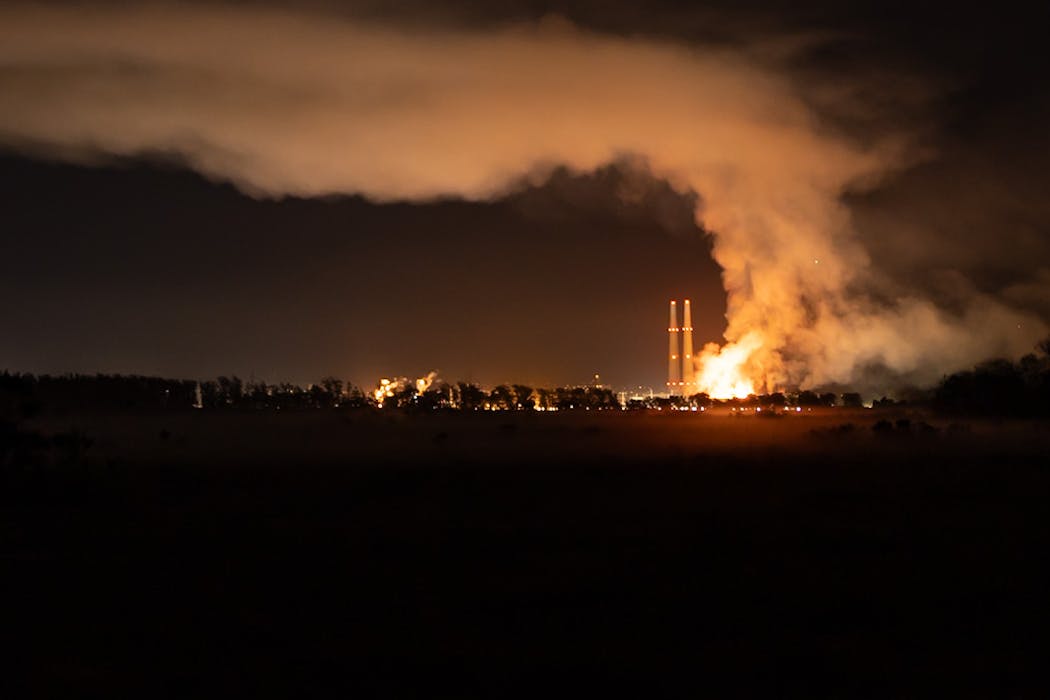
A battery energy storage facility that was built inside an old power plant burned from Jan. 16-18, 2025. Mike Takaki

When fire broke out at the world’s largest battery energy storage facility in January 2025, its thick smoke blanketed surrounding wetlands, farms and nearby communities on the central California coast.

Highways closed, residents evacuated and firefighters could do little but watch as debris and ash rained down. People living in the area reported headaches and respiratory problems, and some pets and livestock fell ill.

Two days later, officials announced that the air quality met federal safety standards. But the initial all-clear decision missed something important – heavy metal fallout on the ground.

A large charred piece of material with a putty knife to show the size.
A chunk of charred battery debris found near bird tracks in the mud, with a putty knife to show the size. The surrounding marshes are popular stopovers for migrating seabirds. Scientists found a thin layer of much smaller debris across the wetlands.
Ivano Aiello, et al, 2025

When battery energy storage facilities burn, the makeup of the chemical fallout can be a mystery for surrounding communities. Yet, these batteries often contain metals that are toxic to humans and wildlife.

The smoke plume from the fire in Vistra’s battery energy storage facility at Moss Landing released not just hazardous gases such as hydrogen fluoride but also soot and charred fragments of burned batteries that landed for miles around.

I am a marine geologist who has been tracking soil changes in marshes adjacent to the Vistra facility for over a decade as part of a wetland-restoration project. In a new study published in the journal Scientific Reports, my colleagues and I were able to show through detailed before-and-after samples from the marshes what was in the battery fire’s debris and what happened to the heavy metals.

The batteries’ metal fragments, often too tiny to see with the naked eye, didn’t disappear. They continue to be remobilized in the environment today.

A satellite image of the area where the fire was, surrounded by farm fields and marshes.
The Vistra battery energy storage facility – the large gray building in the lower left, near Monterey Bay – is surrounded by farmland and marshes. The smoke plume from the fire rained ash on the area and reached four counties.
Google Earth, with data from Google, Airbus, MBARI, CSUMB, CC BY

What’s inside the batteries

Moss Landing, at the edge of Monterey Bay, has long been shaped by industry – a mix of power generation and intensive agriculture on the edge of a delicate coastal ecosystem.

The Vistra battery storage facility rose on the site of an old Duke Energy and PG&E gas power plant, which was once filled with turbines and oil tanks. When Vistra announced it was converting the site into the world’s largest lithium-ion battery facility, the plan was hailed as a clean energy milestone. Phase 1 alone housed batteries with 300 megawatts of capacity, enough to power about 225,000 homes for four hours.

The energy in rechargeable batteries comes from the flow of electrons released by lithium atoms in the anode moving toward the cathode.

In the type of batteries at the Moss Landing facility, the cathode was rich in three metals: nickel, manganese and cobalt. These batteries are prized for their high energy density and relatively low cost, but they are also prone to thermal runaway.

Lab experiments have shown that burning batteries can eject metal particles like confetti.

Metals found in wetlands matched batteries

When my team and I returned to the marsh three days after the fire, ash and burned debris covered the ground. Weeks afterward, charred fragments still clung to the vegetation.

Our measurements with portable X-ray fluorescence showed sharp increases in nickel, manganese and cobalt compared with data from before the fire. As soon as we saw the numbers, we alerted officials in four counties about the risk.

We estimate that about 25 metric tons (55,000 pounds) of heavy metals were deposited across roughly half a square mile (1.2 square kilometers) of wetland around Elkorn Slough, and that was only part of the area that saw fallout.

To put this in perspective, the part of the Vistra battery facility that burned was hosting 300 megawatts of batteries, which equates to roughly 1,900 metric tons of cathode material. Estimates of the amount of batteries that burned range from 55% to 80%. Based on those estimates, roughly 1,000 to 1,400 metric tons of cathode material could have been carried into the smoke plume. What we found in the marsh represents about 2% of what may have been released.

Three series of maps of the area showing change in quantities of the three metals.
These contour maps show how metals from the Moss Landing battery fire settled across nearby wetlands. Each color represents how much of a metal – nickel, manganese or cobalt – was found in surface soils. Darker colors mean higher concentrations. The highest levels were measured about two weeks after the fire, then declined as rain and tides dispersed the deposits.
Charlie Endris

We took samples at hundreds of locations and examined millimeter-thin soil slices with a scanning electron microscope. Those slices revealed metallic particles smaller than one-tenth the width of a human hair – small enough to travel long distances and lodge deep in the lungs.

The ratio of nickel to cobalt in these particles matched that of nickel, manganese and cobalt battery cathodes, clearly linking the contamination to the fire.

Over the following months, we found that surface concentrations of the metals dropped sharply after major rain and tidal events, but the metals did not disappear. They were remobilized. Some migrated to the main channel of the estuary and may have been flushed out into the ocean. Some of the metals that settled in the estuary could enter the food chain in this wildlife hot spot, often populated with sea otters, harbor seals, pelicans and herons.

A zoomed in look at a small lump on a leaf
A high-magnification image of a leaf of bristly oxtongue, seen under a scanning electron microscope, shows a tiny metal particle typically used in cathode material in lithium-ion batteries, a stark reminder that much of the fallout from the fire landed on vegetation and croplands. The image’s scale is in microns: 1 micron is 0.001 millimeters.
Ivano Aiello

Making battery storage safer as it expands

The fire at Moss Landing and its fallout hold lessons for other communities, first responders and the design of future lithium-ion battery systems, which are proliferating as utilities seek to balance renewable power and demand peaks.

When fires break out, emergency responders need to know what they’re dealing with. A California law passed after the fire helps address this by requiring strengthening containment and monitoring at large battery installations and meetings with local fire officials before new facilities open.

How lithium-ion batteries work, and why they can be prone to thermal runaway.

Newer lithium-ion batteries that use iron phosphate cathodes are also considered safer from fire risk. These are becoming more common for utility-scale energy storage than batteries with nickel, manganese and cobalt, though they store less energy.

How soil is tested is also important. At Moss Landing, some of the government’s sampling turned up low concentrations of the metals, likely because the samples came from broad, mixed layers that diluted the concentration of metals rather than the thin surface deposits where contaminants settled.

Continuing risks to marine life

Metals from the Moss Landing battery fire still linger in the region’s sediments and food webs.

These metals bioaccumulate, building up through the food chain: The metals in marsh soils can be taken up by worms and small invertebrates, which are eaten by fish, crabs or shorebirds, and eventually by top predators such as sea otters or harbor seals.

Our research group is now tracking the bioaccumulation in Elkhorn Slough’s shellfish, crabs and fish. Because uptake varies among species and seasons, the effect of the metals on ecosystems will take months or years to emerge.

The Conversation

Ivano Aiello receives funding from private donors.

ref. When the world’s largest battery power plant caught fire, toxic metals rained down – wetlands captured the fallout – https://theconversation.com/when-the-worlds-largest-battery-power-plant-caught-fire-toxic-metals-rained-down-wetlands-captured-the-fallout-268848

Iran’s president calls for moving its drought-stricken capital amid a worsening water crisis – how Tehran got into water bankruptcy

Source: The Conversation – USA (2) – By Ali Mirchi, Associate Professor of Water Resources Engineering, Oklahoma State University

Iranians pray for rain in Tehran on Nov. 14, 2025. The city is experiencing its worst drought in decades. Fatemeh Bahrami/Anadolu via Getty Images

Fall marks the start of Iran’s rainy season, but large parts of the country have barely seen a drop as the nation faces one of its worst droughts in decades. Several key reservoirs are nearly dry, and Tehran, the nation’s capital, is facing an impending “Day Zero” – when the city runs out of water.

The situation is so dire, Iranian President Masoud Pezeshkian has revived a long-debated plan to move the capital from this metro area of 15 million people.

Previous administrations have floated the idea of moving the capital but never implemented it. Tehran’s unbridled expansion has created a host of problems, ranging from chronic water stress and land subsidence to gridlocked traffic and severe air pollution, while also heightening concerns about the city’s vulnerability to major seismic hazards.

A man gestures while surrounded by other people and speaks into a microphone.
Iranian President Masoud Pezeshkian, shown in January 2025, says moving the capital is now a necessity.
Iranian Presidency/AFP via Getty Images

This time, Pezeshkian has framed relocation as a mandate, not a choice. He warned in November 2025 that if nothing changes, the city could become uninhabitable.

How Iran got to the point of water bankruptcy

Drought has been a concern in this part of the world for millennia. A prayer by the Persian King Darius the Great that was carved in stone more than 2,000 years ago asked his god to protect the land from invaders, famine and lies.

However, today, Iran’s escalating water and environmental problems are the predictable outcome of decades of treating the region’s finite water resources as if they were limitless.

Iran has relied heavily on water-intensive irrigation to grow food in dry landscapes and subsidized water and energy use, resulting in overpumping from aquifers and falling groundwater supplies. The concentration of economic activity and employment in major urban centers, particularly Tehran, has also catalyzed massive migration, further straining already overstretched water resources.

Those and other forces have driven Iran toward “water bankruptcy” – the point where water demand permanently exceeds the supply and nature can’t keep up.

Four people walk next to a bridge across dry ground where a river normally runs.
People walk across the dried-up Zayandeh Rud riverbed in the historic city of Isfahan, Iran, in February 2025.
Morteza Nikoubazl/NurPhoto via Getty Images

Iran’s centralized, top-down approach to water governance has proven ineffective in ensuring the sustainability of its water resources and in maintaining a balance between renewable water supply and demand, a gap that has continued to widen.

Since the 1979 revolution, Iran has pursued an aggressive hydraulic mission, building dams and diverting rivers to support sprawling cities and expanding irrigated agriculture. Driven by ideological ambitions, the country’s focus on food self-sufficiency together with international sanctions and economic isolation, have taken a heavy toll on the nation’s environment, particularly its water resources. Drying lakes, groundwater depletion and rising salinity are now prevalent across Iran, reflecting dire water security risks throughout the country.

As water resource and environmental engineers and scientists, including a former deputy head of Iran’s Department of Environment, we have followed the county’s water challenges for years. We see viable solutions to its chronic water problems, though none is simple.

Falling water reserves leave Iran vulnerable

Experts have been warning for years that the lack of foresight to tackle Iran’s water bankruptcy problem leaves the country increasingly vulnerable to extreme climate conditions.

Iranians are again seeing those risks in this latest drought.

Precipitation has been well below normal in four of the water years since 2020. That has contributed to a sharp decline in reservoir levels. Fall 2025 has been the hottest and driest fall on record for Tehran since 1979, testing the resilience of its water system.

The city faces mounting stress on already diminished groundwater reserves, with little relief in sight without significant rainfall.

Shrinking snowpack and shifting rainfall patterns make it harder to predict how much water will flow in rivers and when. Rising temperatures make the problem worse by boosting demand and leaving less water in the rivers.

There is no quick fix to resolve Tehran’s water emergency. In the near term, only significantly more rainfall and a reduction in consumption can offer respite.

Panicky moves to increase interbasin water transfers, such as the Taleqan‑to‑Tehran water transfer to pump water from the Taleqan Dam, over 100 miles (166 km) away, are not only inadequate, they risk worsening the water supply and demand imbalance in the long run. Iran has already experimented with piping water between basins, and those transfers have in many cases fueled unsustainable growth rather than real conservation, worsening water problems both in the donor and recipient basins.

The equivalent of bathtub rings show how low the water has dropped in this reservoir.
The exposed shoreline at Latyan Dam shows significantly low water levels near Tehran on Nov. 10, 2025. The reservoir, which supplies part of the capital’s drinking water, has seen a sharp decline due to prolonged drought and rising demand in the region.
Bahram/Middle East Images/AFP via Getty Images

At its core, Tehran’s predicament stems from a chronic mismatch between supply and demand, driven by rapid population growth.

Whether relocating the political capital, as suggested by Pezeshkian, could meaningfully reduce the city’s population, and hence the water demand, is highly doubtful.

The sparsely populated Makran region in the country’s southeast, along the Gulf of Oman, has been mentioned as a potential option, touted as a “lost paradise,” though details on how much of the city or population would move remain unclear.

Meanwhile, other major Iranian cities are facing similar water stresses, highlighting the fact that this is a nationwide threat.

Water solutions for a dry country

The country needs to start to decouple its economy from water consumption by investing in sectors that generate value and employment opportunities with minimal water use.

A farmer stands on a narrow strip of earth with flooded rice fields on either side. Mountains are in the distance.
The Kamfiruz area grows rice by flooding fields. It’s also facing water shortages.
Hiroon/Middle East Images/AFP via Getty Images

Agricultural water consumption can be reduced by producing higher-value, less water-intensive crops, taking into account food security, labor market and cultural considerations. Any water savings could be used to replenish groundwater.

Becoming more open to global trade and importing water-intensive crops, rather than growing them, would also allow Iran to use its limited agricultural land and water to grow a smaller set of strategic staple crops that are critical for national food security.

That’s a transition that will be possible only if the country moves toward a more diversified economy that allows for reduced pressure on the country’s finite resources, an option that seems unrealistic under economic and international isolation.

Kaveh Madani discusses the drought stress Iran is facing.

Urban water demand could be reduced by strengthening public education on conservation, restricting high-consuming uses such as filling private swimming pools, and upgrading distribution infrastructure to minimize leaks.

Treated wastewater could be further recycled for both drinking and nonpotable purposes, including maintaining river flows, which are currently not prioritized.

Where feasible, other solutions such as flood management for aquifer recharge, and inland groundwater desalination, can be explored to supplement supplies while minimizing environmental harm.

Taken together, these measures require bold, coordinated action rather than piecemeal responses.

Renewed talk of relocating the capital signals how environmental stresses are adding to the complex puzzle of Iran’s national security concerns. However, without addressing the root causes of the nation’s water bankruptcy, we believe moving the capital to ease water problems will be futile.

The Conversation

Nothing to disclose.

Mojtaba Sadegh receives funding from the US National Science Foundation, NASA, and the Joint Fire Science Program.

Amir AghaKouchak and Kaveh Madani do not work for, consult, own shares in or receive funding from any company or organization that would benefit from this article, and have disclosed no relevant affiliations beyond their academic appointment.

ref. Iran’s president calls for moving its drought-stricken capital amid a worsening water crisis – how Tehran got into water bankruptcy – https://theconversation.com/irans-president-calls-for-moving-its-drought-stricken-capital-amid-a-worsening-water-crisis-how-tehran-got-into-water-bankruptcy-270456

Rural high school students are more likely than city kids to get their diplomas, but they remain less likely to go to college

Source: The Conversation – USA (2) – By Sheneka Williams, Professor of Educational Administration, Michigan State University

A high school junior looks over a farm where he works in Perry, N.Y., in March 2025. Lauren Petracca/Associated Press

Many high school seniors are currently in the midst of the college application process or are already waiting to hear back from their selected schools.

For high school students in rural parts of the United States, the frantic pace of the college application process can look a bit different. For starters, some of these rural students might not have large numbers of elite universities and colleges coming to admissions fairs in their areas. They might not have all of the required high school courses to attend some of these schools, either, according to Sheneka Williams, a scholar of educational leadership and rural education who graduated from a small, rural high school in Alabama.

Amy Lieberman, the education editor at The Conversation U.S., spoke with Williams to understand the particular experiences of rural students – and what, exactly, coming from a rural background can mean as students think about college.

How are rural high school students’ experiences unique?

Nationally, nearly 10 million students – or 1 in 5 public school students in the U.S. – attended rural schools in the fall of 2022.

Research suggests that rural students finish or complete high school at a higher rate than urban students.

While approximately 90% of rural high school students graduated in 2020, 82% of urban high school students got their diplomas that year.

But rural students’ college entrance rate is lower than that of urban and suburban students.

Within four years of graduating high school, 71% of rural students attended college, compared to 73% of suburban and 71% of city students who also went to college, according to 2023 findings by the National Center for Education Statistics.

Why are rural students finishing high school at a higher rate than their suburban and urban peers but attending college at a lower rate?

First, we know that some colleges are not really recruiting students in rural areas. If these universities don’t know you exist, and if your parents haven’t gone to college and don’t know how the admission system works, you might not have help as you move closer to attending college. Some rural schools also do not have college counselors.

There are other reasons why some rural high school graduates are not going to college, I have personally seen. Some students are apprehensive about leaving home. They have close-knit families and communities, and they might be wondering where they fit in at a school in a large place that is much bigger than where they grew up.

A group of young people wear red shirts and hold musical instruments, including trumpets, as they walk in the street on a blue-sky day.
Students in the West Bolivar High School marching band take part in the McEvans School homecoming parade in Shaw, Miss., in September 2022.
Rory Doyle for The Washington Post via Getty Images

Do any of these scenarios describe your own educational journey?

I grew up in a small town in Alabama and was different from some of the other Black students, since I came from a family of educators who had gone to college for two generations.

But when I did go to college, I went to a campus that was two times the size of my hometown, which has a population of just 12,000. It takes a confident student, as well as encouragement from parents or mentors, to believe that you can go to school away from home.

We had some college fairs in high school, but the visiting colleges were state universities and regional schools. You did not have selective schools coming to recruit.

Students today can learn about schools online, but there is still the issue that universities are not, on their own, connecting enough with rural students.

Do rural students fit into universities’ diversity goals?

Only recently have people begun to think and talk more about what rural really means. Some people use the U.S. Census Bureau’s definition of rural, which is “all population, housing, and territory not included within an urban area.”

But that’s a somewhat surface definition. It’s hard for some scholars to agree on what counts as rural, including me. It feels like something you have to experience and know, and that is hard to define. Part of the issue is that rural has been defined by what urban is not, and that makes it seem it doesn’t deserve its own definition.

Universities are beginning to think about these rural students more and the particular challenges they experience in school. That includes not necessarily having stable access to high-speed internet, which approximately 22.3% of Americans in rural areas and 27.7% of Americans in tribal areas don’t have, compared to only 1.5% of Americans in urban areas.

Another issue is that even for rural students who want to go to college, they might not have the right qualifications, such as certain courses they have completed.

I am currently involved in research with sociologists Barbara Schneider and education scholars Joe Krajcik and Clausell Mathis about how some rural high schools in Alabama and Mississippi aren’t able to teach physics or chemistry. Physics and chemistry are both gateway courses to college, and if you want to be an engineer or STEM major, you have to complete these courses in order to have a shot at certain colleges.

Rural high schools tend to have a lack of resources, in terms of both budget and their staffing. Schools not being able to find teachers who are qualified or certified in certain subject areas, such as science courses, is a nationwide problem. But this issue is tougher in smaller, rural towns.

Schools will say they don’t have students interested in those subjects. But the states also aren’t requiring that these classes are offered.

This lack of science course offerings can create a whole block of students who are not going to college. And if we are talking about the South, in particular, and states that have a high population of Black students in rural areas, we are talking about a whole swath of students who don’t have this education and would find it a struggle to get into larger, splashier schools that are not near home.

A scoreboard and old-looking building are seen in a brown field.
High school students in rural areas might not have access to the same classes or technology that peers in suburban and urban areas do.
iStock/Getty Images Plus

What do you think are some of the solutions to these challenges?

There are many local efforts to offer tutoring and things of that nature for rural high school students. Some of those efforts have been blunted because schools are funded by property taxes, and some of them just don’t have the revenue to pay for these add-ons without federal support.

I think colleges need to do a better job of recruiting students at rural high schools. I also think that once these students make it to college, it would help if there were support or affinity groups.

Some colleges have not thought enough about rural students. I think the narrative around rural students and college needs to shift – these students may want to go to college, but nobody is looking for them. When you live in small, geographically isolated places, sometimes you only know what you see.

The Conversation

Sheneka Williams receives funding from the U.S. Department of Education.

ref. Rural high school students are more likely than city kids to get their diplomas, but they remain less likely to go to college – https://theconversation.com/rural-high-school-students-are-more-likely-than-city-kids-to-get-their-diplomas-but-they-remain-less-likely-to-go-to-college-269246

New York’s wealthy warn of a tax exodus after Mamdani’s win – but the data says otherwise

Source: The Conversation – USA (2) – By Cristobal Young, Associate Professor of Sociology, Cornell University

Wealthy New Yorkers have threatened to leave the city if Mayor-elect Zohran Mamdani follows through on his promise to raise taxes on the rich. Charly Triballeau/AFP via Getty Images

New York’s mayor-elect, Zohran Mamdani, campaigned on a promise to raise the city’s income tax on its richest residents from 3.9% to 5.9%. Combined with the state income tax, which is 10.9% for the top bracket, the increase would cement the city’s position as having the highest taxes on top earners in the country.

It set off a chorus of warnings about the tax flight of the city’s wealthiest residents.

Hedge fund billionaire Bill Ackman claimed that both the city’s businesses and wealthy residents “have already started making arrangements for the exits.”

New York Gov. Kathy Hochul echoed the concern, opposing the proposal “because we cannot have them leave the state.” Before the election, Mamdani’s opponent, former New York governor Andrew Cuomo, joked that if Mamdani won, “even I will move to Florida.”

I research whether high earners actually move when their taxes go up. My colleagues and I have analyzed millionaire taxes in New Jersey and California, the migration of Forbes billionaires globally and decades of IRS data tracing where Americans with million-dollar incomes live.

Top earners are often thought of as “mobile millionaires” who are ever searching for lower-tax places to live. In reality, they’re often reluctant to leave the places where they built their careers and raised their families.

At the same time, there are grains of truth in the tax migration arguments, so it’s important to carefully parse the evidence.

A small fraction of a small fraction

The first fact is simple: Millionaires have low migration rates.

Mobility in America is highest among people who are still searching for their economic place in life. Workers who earn the lowest wages move across state lines at relatively high rates, about 4.5% per year, often in search of more affordable housing. People making $1 million-plus a year move only half as often: Just 2.4% of them pack up each year.

When millionaires do move, it rarely appears to be for tax reasons. For example, Florida is the top destination for New York movers in general. But among the richest 1% of New Yorkers, the top destination is Connecticut, followed by New Jersey and California, all three of which levy a millionaire tax.

Some millionaires certainly do favor lower-tax destinations. But many moves to low-tax states are offset by moves in the opposite direction to higher-tax states, and many other moves take place between states that have the same tax rate.

Overall, only about 15% of millionaires who move end up with a lower tax bill. That shows the rich are willing and able to move for tax reasons. But because only about 2.4% of millionaires move each year – and only a fraction of those moves reduce their taxes – overall tax migration ends up being a small fraction of a small fraction. Not never, but not often.

Some benefits don’t have a dollar sign

Migration is mostly a young person’s game.

The most mobile Americans are recent college graduates who are brimming with potential, searching for work and unburdened by major responsibilities. Their rate of migration from one state to another is over 12%, more than four times the rate of millionaires.

The typical adult mover is about 30 years old, while the highest income earners are typically about 50. People choose where to build their careers and families decades before they reach their peak earnings phase.

By the time someone earns enough to be taxed in the highest brackets, they’re usually late into their careers. They are almost always married, often have children at home, own their homes and, in many cases, own a business. Their social lives and their economic success are linked to local networks of colleagues, clients and connections built up over a long career. Moving away from those networks means giving up a great deal of social capital and starting over somewhere new.

Top earners know that some states have lower taxes, but for most, tax flight is simply a bad deal. The social and economic costs of uprooting are bigger than the tax savings.

When your social world collapses

Two recent events showed why the rich generally stay where they are – and what it takes to move them.

The first was the Tax Cuts and Jobs Act, which President Donald Trump signed into law in late 2017. The tax reform package capped the federal deduction for state and local taxes and raised taxes on high earners in states like New York, New Jersey and California. In a Wall Street Journal op-ed titled “So Long, California. Sayonara, New York,” economists Arthur Laffer and Stephen Moore predicted that 800,000 people a year would flee those states.

They didn’t. A colleague and I studied every millionaire tax return in the country for two years before and after the reform. Nothing happened. There was no increase in migration out of the states where tax burdens rose. The predicted exodus simply did not occur.

We were about to wrap up the study and call it case closed. Then something unexpected did happen: In early 2020, millionaires began leaving high-tax states in large numbers. Low-tax states saw no comparable outflows. The pattern matched those tax-flight predictions from just a few years earlier.

It was the COVID-19 pandemic, and it brought a profound shock to the social lives of city residents.

Offices emptied out, with entry swipes in major cities dropping by nearly 90%. Time spent at work fell sharply, local amenities were shuttered, and time spent alone grew as in-person contact became a health risk. K–12 schools closed, disrupting children’s relationships with teachers and classmates.

A normally busy city street featuring just a couple of pedestrians.
The COVID-19 pandemic briefly turned downtowns into ghost towns.
Spencer Platt/Getty Images

For many households, this was also a strange form of freedom, and a chance to rethink the geography of work and life, especially for top earners who could work remotely from anywhere. Disconnected from the bonds of place, top earners moved and clearly favored low-tax destinations.

The lesson is that social lives and economic policies are deeply intertwined. The 2017 tax reform had no effect on migration because the social cost of moving is high – especially for people at the peak of their careers who are enjoying the many social benefits of economic success. As long as those connections to others are strong, they outweigh the appeal of moving to lower-tax states.

When the pandemic broke apart so much of social life, the ledger shifted. If your office, school, friendships and daily routines no longer anchor you in place, what is keeping you in a high-tax place?

But by early 2023, as social and economic life returned to normal, we found that millionaire migration patterns mostly reverted to their prepandemic baselines.

In other words, the surge in tax flight was temporary.

If you want the rich, appeal to the young

There is a big lesson here for state and city policies.

Every place wants to attract high-income earners and the spending power and tax dollars that accompany their salaries. Many policymakers think that tax cuts will lure them in, but this is mostly a fool’s errand. In normal times, the rich are deeply rooted and not movable.

The real opportunity lies in attracting and retaining the next generation of top earners – young people who are unattached to place and looking for opportunities to build their careers and their lives. Places that draw young professionals build the pipeline of future top earners.

Those early-career folks are mobile, but they are not thinking about the top tax rate. Their salaries are low. They are trying to find good jobs, pay the rent, form relationships and start families. They hope to be successful enough to one day be paying Mamdani’s millionaire tax. For the time being, though, they need the basic costs of living to be manageable. Soon they will need affordable child care and good public schools for their kids.

If the city helps them that far along, many of them would gladly pay a millionaire tax when and if the time comes. In this light, the Mamdani plan is simply practical: Higher taxes at the top support the services and quality of life that keep the next generation in the city.

The Conversation

Cristobal Young received funding from the Russell Sage Foundation and the Washington Center for Equitable Growth in support of this research project.

ref. New York’s wealthy warn of a tax exodus after Mamdani’s win – but the data says otherwise – https://theconversation.com/new-yorks-wealthy-warn-of-a-tax-exodus-after-mamdanis-win-but-the-data-says-otherwise-270415