La segunda vida de la grasa: una rica fuente de células madre para crear terapias avanzadas

Source: The Conversation – (in Spanish) – By Liliya Kazantseva, Responsable de Producción de Medicamentos de Terapias Avanzadas, Junta de Andalucía

RDNE Stock project/Pexels

Durante varios años, Victoria intentó lidiar con su exceso de grasa corporal sin mucho éxito. Después de probar distintas dietas y hacer ejercicio físico, su médico le propuso someterse a una liposucción.

En un congreso al que asistió, el médico de Victoria descubrió que la grasa podía usarse para producir un tipo de medicamento muy peculiar, y preguntó a su paciente si estaba dispuesta a donarlo.

Medicamento biológico

Como le ocurrió a Victoria, tal vez le asalten varias preguntas: ¿cómo es posible producir un medicamento a partir de la grasa? ¿Sería como una pastilla hecha de manteca? Vayamos paso por paso.

Estamos acostumbrados a tomar paracetamol o ibuprofeno cuando queremos aliviar un malestar general. Estas pastillas contienen ciertas sustancias químicas que producen efectos beneficiosos, como aliviar el dolor de cabeza.

Sin embargo, existen otros fármacos, conocidos como “medicamentos de terapias avanzadas”, cuya actividad terapéutica viene determinada por sustancias de origen biológico, como las células de nuestro cuerpo. Debido a su naturaleza “viva”, estos fármacos resultan ser más complejos que una pastilla convencional.

Pero ¿qué contiene la grasa?

La grasa de nuestro organismo es más que un simple bloque de manteca. Su interior alberga unas células muy valiosas, conocidas como células madre mesenquimales, que también pueden obtenerse a partir de la médula ósea, la placenta o incluso de la pulpa dental, lo que las hace bastante ubicuas. Estas tienen la capacidad de convertirse en otros tipos celulares, como neuronas o células del hueso, y contribuir a la regeneración de tejidos tras una lesión.

Extracción de tejido graso mediante liposucción.
Mehmet Turgut Kirkgoz/Pexels

Normalmente, en terapias avanzadas se prefiere trabajar con células madre de la grasa debido a su fácil obtención.

Pero no todo es tan sencillo cuando los expertos manejan sustancias de origen biológico. Así, se ha visto que por cada gramo de lipoaspirado es posible obtener cerca de un millón de células madre. Esto puede parecer mucho, pero no es suficiente si se quieren emplear como medicamento.

Para detectar mejoras en el cuerpo hace falta administrar, habitualmente por la vía intravenosa, varios millones de células, que pueden sumar, dependiendo del caso, hasta 200 millones. Para alcanzar esa cantidad es necesario multiplicar las células en una instalación específica.

Un huerto celular

Igual que se cultivan los tomates en un invernadero, los científicos trabajan dentro de un recinto cerrado y controlado. Conocido como “sala blanca”, está diseñado para evitar que contaminantes como bacterias, hongos o partículas inertes entren al interior, garantizando así la esterilidad del medicamento.

Científica trabajando en una sala blanca.
Pavel Danilyuk/Pexels

Es aquí donde llega la grasa donada, que será sometida a la acción de unas “tijeras moleculares invisibles”. Estas permiten extraer y separar las células madre, que se multiplican en frascos especiales donde es recreado su ambiente natural. Una vez alcanzada la cantidad necesaria, las células se acondicionan en una solución inocua que mantiene sus propiedades y permite administrarlas al paciente.

¿Por qué las células madre?

¿Y qué tienen de especial estos medicamentos “vivos”? La respuesta está en las características únicas de las células madre. Una de las más relevantes es que no suelen producir problemas de compatibilidad entre individuos, a diferencia de las trasfusiones sanguíneas, donde se deben comprobar grupos y compatibilidad para evitar las reacciones adversas.

Además, las células madre son capaces de modular la respuesta del sistema inmune, evitando que reaccione de forma exagerada y cause daño al propio cuerpo. Estas propiedades las hacen especialmente útiles en enfermedades autoinmunes o en casos de rechazo tras un trasplante.

Y también tienen la capacidad de dirigirse a zonas del cuerpo dañadas y contribuir a la regeneración del tejido afectado en la piel, el hueso o el nervio.

Héroes invisibles

Todos los fármacos que usamos en nuestro día a día han pasado por un largo camino de desarrollo en el que se ha tenido que demostrar tanto su seguridad como su efecto deseado. Los medicamentos de terapias avanzadas representan un grupo novedoso de fármacos, por lo que actualmente los tratamientos basados en células madre se hallan mayoritariamente en fase de ensayo clínico. Por ejemplo, en septiembre de 2023 se registraron 1 748 ensayos clínicos con este tipo de terapia.

Aun así, cabe destacar que las terapias avanzadas jugaron un papel importante durante la pandemia de covid-19, cuando las células madre se emplearon para aliviar la inflamación pulmonar en casos graves de neumonía.

Tras décadas de avances, no es descabellado pensar que en los próximos años se aprobarán nuevos medicamentos basados en el uso de células madre. Esto permitirá avanzar hacia una medicina personalizada, adaptada a las necesidades específicas de cada paciente.

Gracias a esta experiencia, Victoria descubrió que al someterse a una liposucción y donar su grasa no solo estaba tomando una decisión para su propio bienestar, sino que también estaba ofreciendo una oportunidad de tratamiento a muchas otras personas. Una alternativa terapéutica innovadora, segura y que, en algunos casos, representa la única esperanza disponible. ¿Quién diría que algo que solemos querer eliminar puede, en realidad, salvar vidas?

The Conversation

Las personas firmantes no son asalariadas, ni consultoras, ni poseen acciones, ni reciben financiación de ninguna compañía u organización que pueda obtener beneficio de este artículo, y han declarado carecer de vínculos relevantes más allá del cargo académico citado anteriormente.

ref. La segunda vida de la grasa: una rica fuente de células madre para crear terapias avanzadas – https://theconversation.com/la-segunda-vida-de-la-grasa-una-rica-fuente-de-celulas-madre-para-crear-terapias-avanzadas-259723


Evolución humana: el futuro de un cíborg

Source: The Conversation – (in Spanish) – By Emiliano Bruner, Investigador Científico, Museo Nacional de Ciencias Naturales (MNCN-CSIC)

La antropología evolutiva se ocupa de investigar nuestra historia pasada, bajo el sensato criterio de que conocer nuestra historia natural nos ayuda a entender quiénes somos, nuestras potencialidades y nuestras limitaciones. Pero, al final, siempre queda una pregunta implícita: ¿y luego qué?

El quiénes somos esconde en realidad el perpetuo afán de saber a dónde vamos, enfermiza obsesión del mono sapiens que nunca se siente satisfecho con lo que está viviendo, y continuamente corroe el presente anticipando lo que vendrá en el futuro. Pues seamos sinceros: las previsiones acerca del porvenir de nuestra especie, bien sea por parte de expertos, novelistas o improvisados, casi nunca han acertado. Así que tampoco hay que tomarse el ejercicio demasiado en serio, aunque venga bien para hacer un poco de introspección filogenética.

Una especie con mucho éxito y poca probabilidad de evolución

Empecemos por aclarar una cosa: la evolución genética de nuestra especie está, por el momento, parada. Los cambios evolutivos se dan generalmente en grupos pequeños, poblaciones aisladas donde algunos rasgos se revelan muy ventajosos para el éxito reproductivo (el número de hijos) y aumentan la difusión de una nueva combinación genética.

Este proceso ahora mismo no se puede dar en nuestra especie. Somos ocho mil millones de grandes simios desperdigados por todo el planeta, y no hay cambio genético que pueda mover la consecuente inercia genómica. Además, vivimos en ambientes diferentes, culturas diferentes, y con variaciones incesantes en los parámetros de vida, así que probablemente no existan cambios estables que tengan el mismo valor en todos los contextos.

Lo que sí evolucionará será nuestra cultura, y con ella nuestra biología, a raíz de una plasticidad considerable que responde a una flexible integración entre cuerpo y herramienta, entre comportamiento y fisiología.

La evolución tecnológica implica evolución cognitiva

Una de nuestras grandes adaptaciones es haber logrado delegar funciones fisiológicas y cognitivas a elementos externos, periféricos, extrasomáticos, que incluyen las herramientas, la cultura en general y el sistema social. Pensamos gracias a una red de elementos orgánicos (cerebro y cuerpo), inorgánicos (herramientas) y superorgánicos (la cultura, los conceptos, los símbolos). Cada vez que, a través de estas relaciones, aumentamos la complejidad social, cultural o tecnológica, nos asustamos y vaticinamos desastres cognitivos que, generalmente, nunca se cumplen.

La introducción de la escritura, de la imprenta, de las gafas, de la fotografía o de las calculadoras desencadenaron en la sociedad previsiones nefastas para nuestra organización mental y social, previsiones que nunca acertaron. Por el contrario, la tecnología extiende nuestras habilidades cognitivas, expande la mente y provoca que el cerebro se reinvente con nuevas funciones integrativas.

Somos cíborgs por lo menos desde hace unos 300 mil años, es decir, desde que un homínido ancló a su tecnología su forma de vivir, de sentir y de pensar. Ya desde entonces, nuestros nichos (ecológicos, económicos y cognitivos) dependen de nuestras herramientas, lo cual hace de nosotros una especie híbrida y aún más conectada a nuestro entorno.

La especialización evolutiva es un callejón sin salida

Ahora bien, el hecho de que esta “capacidad protésica” sea para nosotros “natural” no la exime de contraindicaciones, tanto para el individuo como para la especie. Los pájaros se han especializado en el vuelo, pero muchos de ellos mueren estrellados como consecuencia de un momento de desatención, o de una ráfaga de viento impredecible. Una especialización puede convertirse en un callejón sin salida para cualquier animal en el momento en que cambie el entorno (haciendo que esa especialización ya no sirva para nada) o que alcance un nivel extremo (y genere de repente conflictos, umbrales o consecuencias imprevistas).

En ese sentido, los humanos estamos muy especializados, circunstancia que nos hace muy proclives a morir de éxito, y que propicia situaciones perjudiciales de una forma tan rápida que no permite respuestas adecuadas. De hecho, en cada transformación debería darse un equilibrio sano entre lo nuevo y lo viejo, para no acabar fosilizándose (exceso de conservación) y no generar desquiciadas aberraciones (exceso de cambio). En este sentido nosotros lo tenemos muy difícil, considerando el peligrosísimo desfase entre nuestros cambios genéticos (nulos) y nuestros cambios culturales (exponenciales).

Todo ello lleva, inevitablemente, a ciertas preocupaciones lícitas. A principio de los años 80 del siglo pasado, Konrad Lorenz, premio nobel de medicina y padre de la etología animal, publicó una obra que se tradujo al español como Decadencia de lo humano. Un libro denso e iluminador que no se ha vuelto a publicar, probablemente por su mensaje bien estructurado y sincero y, por ende, incómodo.

«Desadaptaciones» evolutivas

En su obra, Lorenz reflexiona sobre adaptaciones humanas que, debido a nuestro éxito masivo, se nos están volviendo en contra y están generando riesgos importantes. Son rasgos que habrían sido programados evolutivamente, útiles para pequeños grupos de cazadores-recolectores donde todos se conocen, pero que se vuelven absurdos en la horda anónima global de nuestra sociedad masificada.

Nuestra búsqueda compulsiva de orden y de estructura genera manipulación y control políticos y económicos. Nuestra fascinación innata por el crecimiento cuantitativo desemboca en diferentes formas de explotación y contaminación, y en un aumento cancerígeno de las empresas multinacionales, ajenas al progreso de los valores humanos. Nuestra adicción a la competición genera estrés y lucha a todas las escalas, tanto a nivel personal como colectivo. La especialización cultural y tecnológica conlleva una pérdida de conocimiento general, esclavitud industrial y renuncia a la comprensión. Nuestro afán por el virtuosismo impulsa una producción tecnológica sobredimensionada con respecto a las necesidades reales. La publicidad promueve falsas prioridades y vende inútiles esperanzas. La agresividad colectiva y la sensibilidad a la propaganda y a la demagogia provocan un estado continuo de conflicto. En general, el sistema tecnocrático está alejando al ser humano de su propia humanidad, empujándolo a una situación explosiva de control, hostilidad y malestar.

Más iguales, pero más diferentes

Ya hace unos cuarenta años, Lorenz añadía también una reflexión demográfica: este estado tecnocrático aumenta exponencialmente las diferencias entre generaciones, pero provoca una extrema homogeneidad dentro de la misma generación. Es decir, los habitantes del mundo globalizado son cada vez más semejantes entre sí (visten de la misma forma, tienen las mismas exigencias y luchan con las mismas armas), pero cada vez más distintos de (e incompatibles con) sus padres.

Y estos desequilibrios adaptativos no solo ponen en riesgo el futuro de la especie, sino que, sobre todo, desgastan terriblemente la calidad de vida de los individuos, que al fin y al cabo deberían ser, no lo olvidemos, aún más importantes que las especies a las que pertenecen.

Todo fluye, todo empieza y todo acaba

Toda especie nace, evoluciona, y se extingue. El concepto budista de impermanencia se aplica perfectamente a la filogenia humana, y el de interconexión es la base de la ecología. Todo fluye, todo empieza y todo acaba. Sería absurdo pensar que nuestra especie será la única que no se extinguirá nunca. Las cucarachas y las medusas seguirán siendo los verdaderos triunfadores en este planeta, y es probable que en un futuro habrá seres aún más mentales que nosotros, tal vez descendientes lejanos de los chimpancés, de los macacos o de los delfines.

Desde luego, ocurra lo que ocurra, esto ya no es responsabilidad nuestra: de ello se encargará la selección natural. Por un lado, no hay por qué tener prisa, y sería lo suyo implicarse para retardar lo que podamos nuestra muerte evolutiva. Al mismo tiempo, en lugar de preocuparnos excesivamente por el destino biológico de nuestro linaje, sería mejor ocuparnos de su calidad de vida. Hay que asumir que el bienestar individual no es una prioridad ni de la evolución ni de nuestro sistema económico.

Así que, si queremos curarnos en salud (sobre todo mental), no queda otra que implicarse en primera persona. Desarrollar una conciencia autónoma y equilibrada sí que es cosa nuestra. Y malgastar nuestras vidas como esclavos de impulsos primordiales o compulsiones mercantiles no parece, de entrada, la mejor de las elecciones.


La versión original de este artículo ha sido publicada en la revista Telos, de Fundación Telefónica.


The Conversation

Emiliano Bruner colabora con Telos, la revista que edita Fundación Telefónica.

ref. Evolución humana: el futuro de un cíborg – https://theconversation.com/evolucion-humana-el-futuro-de-un-ciborg-262738

No solo en Gaza: Estados Unidos minimiza las atrocidades cometidas por los regímenes que respalda

Source: The Conversation – (in Spanish) – By Jeff Bachman, Associate Professor, Department of Peace, Human Rights & Cultural Relations, American University School of International Service

Los palestinos se agolpan para conseguir comida en la ciudad de Gaza el 30 de julio de 2025. Abdalhkem Abu Riash/Anadolu via Getty Images

Desde la Segunda Guerra Mundial, Estados Unidos ha apoyado repetidamente a gobiernos que han cometido atrocidades masivas, definidas por el experto en genocidio Scott Straus como “violencias sistemáticas a gran escala contra la población civil”.

Esto incluye el apoyo a Israel, que se ha mantenido constante a pesar del reciente desacuerdo del presidente Donald Trump con el primer ministro Benjamin Netanyahu sobre si se está matando de hambre a los palestinos en Gaza.

Somos académicos especializados en genocidio y otras atrocidades masivas, así como en seguridad internacional. En nuestra investigación para un próximo artículo en la revista Journal of Genocide Research, analizamos declaraciones oficiales, documentos desclasificados e informes de los medios de comunicación sobre cuatro casos que implican el apoyo de Estados Unidos a gobiernos que cometieron atrocidades: Indonesia en Timor Oriental entre 1975 y 1999, Guatemala entre 1981 y 1983, la coalición liderada por Arabia Saudí –conocida como “la Coalición”– en Yemen desde 2015 e Israel en Gaza desde octubre de 2023.

Identificamos seis estrategias retóricas utilizadas por funcionarios estadounidenses para distanciar públicamente a Estados Unidos de las atrocidades cometidas por quienes reciben su apoyo.

Esto es significativo porque cuando los estadounidenses, así como otras personas del resto del mundo, aceptan esa retórica tal cual, Estados Unidos puede mantenerse impune a pesar de su papel en la violencia global.

Ignorancia fingida

Cuando los funcionarios estadounidenses niegan tener conocimiento alguno de las atrocidades perpetradas por quienes reciben apoyo de Estados Unidos, lo llamamos “ignorancia fingida”.

Por ejemplo, después de que la Coalición bombardease un autobús escolar en Yemen, matando a decenas de niños, la senadora estadounidense Elizabeth Warren preguntó al general Joseph Votel si el Mando Central de Estados Unidos hacía un seguimiento del propósito de las misiones a las que reabastecía.

Su respuesta: “Senadora, no lo hacemos”.

Esta ignorancia declarada contrasta radicalmente con los crímenes de guerra bien documentados de la Coalición desde 2015. Como dijo el experto en Yemen Scott Paul: “Ya nadie puede fingir sorpresa cuando mueren muchos civiles”.

Ofuscación

Cuando las pruebas de las atrocidades ya no pueden ignorarse, los funcionarios estadounidenses recurren a la ofuscación, que consiste en confundir los hechos.

Cuando las fuerzas indonesias llevaron a cabo masacres en 1983, matando a cientos de civiles, la embajada de Estados Unidos en Yakarta envió un telegrama al secretario de Estado y a varias embajadas, consulados y misiones estadounidenses cuestionando los informes porque “no habían recibido confirmación de otras fuentes”.

De manera similar, durante el genocidio en Guatemala, tras el golpe de Estado exitoso de Efraín Ríos Montt, los funcionarios estadounidenses tergiversaron los informes sobre la violencia perpetrada por el Gobierno, y culparon a la guerrilla.

En su informe sobre los derechos humanos en Guatemala de 1982, por ejemplo, el Departamento de Estado afirmó: “En los casos en que ha sido posible atribuir la responsabilidad [de los asesinatos en Guatemala], parece más probable que, en la mayoría de los casos, los insurgentes […] sean los culpables”.

Sin embargo, los servicios de inteligencia de EE. UU. afirmaban lo contrario.

Se pueden encontrar informes sobre atrocidades y abusos cometidos por el Estado en Guatemala en documentos de inteligencia estadounidense desde la década de 1960 en adelante. Un telegrama de la CIA de 1992 señalaba explícitamente que “varias aldeas han sido arrasadas” y que “cabe esperar que el ejército no dé cuartel ni a combatientes ni a no combatientes”.

Negación

Cuando se acumulan las pruebas de las atrocidades, así como las pruebas de quién es el responsable, los funcionarios estadounidenses recurren a menudo a la negación. No niegan que se esté proporcionando ayuda estadounidense, sino que argumentan que no se utilizó directamente para cometer aquello de lo que se les acusa.

Por ejemplo, durante las atrocidades cometidas por Indonesia en Timor Oriental, Estados Unidos estaba entrenando activamente a miembros del cuerpo de oficiales indonesio. Cuando las fuerzas de seguridad indonesias masacraron a unas 100 personas en un cementerio de Dili en 1991, la administración de George H. W. Bush se limitó a decir que “ninguno de los militares indonesios presentes en Santa Cruz había recibido adiestramiento estadounidense”.

Desviación

Cuando el escrutinio público alcanza niveles que ya no pueden ignorarse fácilmente, los funcionarios estadounidenses pueden recurrir a la desviación.

Se trata de ajustes políticos muy publicitados que rara vez implican cambios significativos. A menudo incluyen una forma de engaño. Esto se debe a que el objetivo de la distracción no es cambiar el comportamiento del receptor de la ayuda estadounidense, sino que se trata simplemente de una táctica política utilizada para apaciguar a los críticos.

En 1996, cuando la administración Clinton cedió a la presión de los activistas y suspendió la venta de armas pequeñas a Indonesia, continuó vendiéndoles armamento valorado en 470 millones de dólares estadounidenses, incluidos nueve aviones F-16.

Más recientemente, en respuesta a las críticas del Congreso y de la opinión pública, la administración Biden suspendió la entrega de bombas de 900 y 227 kg a Israel en mayo de 2024, pero solo de forma temporal. El resto de sus transferencias de armas se mantuvo sin cambios.

Como ejemplifica el respaldo estadounidense a Israel, el desvío también incluye investigaciones superficiales de Estados Unidos que muestran preocupación por los abusos, sin consecuencias, así como el apoyo a
autoinvestigaciones, con resultados exculpatorios previsibles.

Exaltación

Cuando las atrocidades cometidas por los beneficiarios de la ayuda estadounidense son muy visibles, los funcionarios de EE. UU. también recurren a la exaltación para elogiar a sus líderes y presentarlos como dignos de recibir ayuda.

En 1982, el presidente Ronald Reagan elogió al presidente Suharto, el dictador responsable de la muerte de más de 700 000 personas en Indonesia y Timor Oriental entre 1965 y 1999, por su liderazgo “responsable”. Mientras tanto, los funcionarios de Clinton lo consideraban “uno de los nuestros”.

De manera similar, el líder guatemalteco Ríos Montt fue descrito por Reagan a principios de la década de 1980 como “un hombre de gran integridad personal y compromiso”, obligado a enfrentarse a “un brutal desafío de guerrilleros armados y apoyados por otros fuera de Guatemala”.

Así, se presenta a estos líderes como si utilizaran la fuerza por una causa justa o solo porque se enfrentan a una amenaza extrema. Este fue el caso de Israel, con la administración Biden afirmando que Israel se encontraba “en medio de una batalla existencial”.

Esta exaltación no solo eleva moralmente a los líderes, sino que también justifica la violencia que cometen.

Dos hombres sentados en sillas de respaldo alto frente a una chimenea.
El presidente indonesio Suharto, a la izquierda, de visita al presidente Bill Clinton en 1993, fue elogiado por los funcionarios de la administración Clinton como ‘uno de los nuestros’, a pesar de ser responsable de la muerte de más de 700 000 personas en su país.
Kazuhiro Nogi/AFP via Getty Images

Diplomacia silenciosa

Por último, los funcionarios estadounidenses también suelen afirmar que están llevando a cabo una forma de diplomacia silenciosa, trabajando entre bastidores para controlar a los receptores de la ayuda estadounidense.

Es importante señalar que, según ellos, para que la diplomacia silenciosa tenga éxito, es necesario que Estados Unidos mantenga su apoyo. Por lo tanto, la defensa continuada de quienes cometen atrocidades se legitima precisamente porque es esta relación la que permite a Estados Unidos influir en su comportamiento.

En Timor Oriental, el Pentágono argumentó que el entrenamiento aumentaba “el respeto de los derechos humanos por parte de las tropas indonesias”. Cuando una unidad militar indonesia adiestrada por EE. UU. masacró a unas 1 200 personas en 1998, el Departamento de Defensa afirmó que “aunque los soldados entrenados por Estados Unidos hubieran cometido algunos de los asesinatos”, EE. UU. debía continuar con su trabajo para “seguir influyendo en lo que sucediera a continuación”.

Los funcionarios estadounidenses también insinuaron en 2020 que los yemeníes atacados por la coalición liderada por Arabia Saudí se benefician del apoyo armamentístico de Estados Unidos a esta, ya que dicho apoyo le da influencia sobre el uso de las armas.

En el caso de Gaza, han mencionado repetidamente la diplomacia silenciosa como una forma de promover la moderación, al tiempo que tratan de bloquear otros sistemas de rendición de cuentas.

Por ejemplo, Estados Unidos ha vetado seis resoluciones del Consejo de Seguridad de las Naciones Unidas sobre la Franja desde octubre de 2023 y ha impuesto sanciones a cinco jueces y fiscales de la Corte Penal Internacional debido a las órdenes de detención dictadas contra Netanyahu y el exministro de Defensa israelí Yoav Gallant.

Distanciamiento y minimización

Los funcionarios estadounidenses llevan mucho tiempo utilizando diversas estrategias retóricas para distanciar al país y minimizar su contribución a las atrocidades cometidas por otros con su apoyo.

Teniendo en cuenta estas estrategias, el reconocimiento por parte de Trump de la “hambruna real” en Gaza puede considerarse una distracción de la defensa inalterable de Estados Unidos a Israel, mientras las condiciones de hambruna en Gaza empeoran y los palestinos son asesinados mientras esperan por comida.

Desde fingir ignorancia hasta minimizar la violencia y alabar a sus autores: los gobiernos y presidentes estadounidenses han utilizado durante mucho tiempo una retórica engañosa para legitimar la violencia de los líderes y países que respaldan.

Pero hay dos elementos necesarios que permiten que este enfoque siga funcionando: uno es el lenguaje del Gobierno estadounidense; el otro es la credulidad y la apatía del público.

The Conversation

Las personas firmantes no son asalariadas, ni consultoras, ni poseen acciones, ni reciben financiación de ninguna compañía u organización que pueda obtener beneficio de este artículo, y han declarado carecer de vínculos relevantes más allá del cargo académico citado anteriormente.

ref. No solo en Gaza: Estados Unidos minimiza las atrocidades cometidas por los regímenes que respalda – https://theconversation.com/no-solo-en-gaza-estados-unidos-minimiza-las-atrocidades-cometidas-por-los-regimenes-que-respalda-262894

Fatiga museal: cómo disfrutar de los museos sin agotarse en el intento

Source: The Conversation – (in Spanish) – By Alberto Pérez-López, Profesor Permanente Laboral. Ejercicio físico, Nutrición y Metabolismo., Universidad de Alcalá

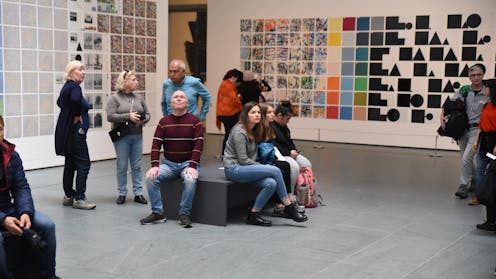
Unos visitantes descansan en el Museo de Arte Moderno de Nueva York. Sharkshock/Shutterstock

Con la llegada del verano, millones de personas se lanzan a descubrir el patrimonio cultural de sus ciudades o de los destinos turísticos que eligen para las vacaciones.

Visitar museos se ha convertido en una de las actividades más populares para quienes buscan combinar descanso y desconexión con enriquecimiento cultural. No es de extrañar, diferentes investigaciones han encontrado que la visita a museos tiene potencial para aumentar la calidad de vida, disminuir el riesgo de padecer problemas de salud mental, reducir la soledad y el aislamiento y aumentar las emociones positivas.

Sin embargo, muchos visitantes experimentan un fenómeno poco conocido pero bastante común: la fatiga museal.

¿Qué es la fatiga museal?

¿Alguna vez ha tenido que detenerse en mitad de su visita a un museo por un cansancio que parece excesivo para el recorrido que ha hecho? Tres pasillos y dos tramos de escalera después, y la cafetería del museo parece mucho más apetecible que las esculturas de la Grecia clásica.

Visitantes en una sala con bastante gente dentro de un museo.
Hay mucho que ver en el Louvre…
Pandora Picturas/Shutterstock

La fatiga museal es precisamente eso, un tipo de cansancio físico y mental que ocurre durante la visita a museos. Fue descrita por primera vez por el conservador del Boston Museum of Fine Arts, Benjamin Ives Gilman, en 1916, en el que se considera el punto de partida de los estudios de visitantes de museos. En su investigación, Gilman observó que los visitantes comenzaban el recorrido con entusiasmo, pero al cabo de un tiempo perdían interés, se distraían con facilidad o simplemente pasaban por alto las obras sin prestarles atención.

Este fenómeno se debe a una combinación de factores: largas caminatas, posturas incómodas al observar obras en vitrinas o paredes, sobreestimulación visual y acumulación de información. Todo esto, sumado al calor del verano y la afluencia de turistas, puede hacer que la experiencia museística resulte más agotadora que placentera.

El museo como espacio de actividad física

Aunque no lo parezca, recorrer un museo puede suponer un esfuerzo físico considerable, dependiendo del estado o condición física de la persona. La visita a un museo de tamaño mediano puede implicar caminar entre 1,5 y 3 kilómetros.

Pero si su objetivo es ver en unas pocas horas todo lo expuesto en instituciones como el Museo del Louvre en París, el British Museum de Londres o el Metropolitan Museum of Art de Nueva York, debería empezar ya a entrenar para una media maratón.

El problema no es solo la extensión del recorrido –al que se añaden escaleras, rampas, etc.–, sino también la manera en la que lo transitamos, con detenciones constantes, idas y venidas, y cambios de ritmo. Además, se está mucho tiempo de pie, se sube y se baja, y se realizan movimientos repetitivos como inclinarse, girar el cuello o mantener la vista enfocada durante períodos prolongados.

Y esto solo desde el punto de vista físico; la fatiga museal tiene también un componente mental. El exceso de elementos expuestos a los que prestar atención, de cartelas y textos de sala, la masificación que sufren algunas galerías, etc. influyen en la experiencia que tenemos de la visita y en muchas ocasiones suponen una sobreestimulación mental y sensitiva.


¿Quiere recibir más artículos como este? Suscríbase a Suplemento Cultural y reciba la actualidad cultural y una selección de los mejores artículos de historia, literatura, cine, arte o música, seleccionados por nuestra editora de Cultura Claudia Lorenzo.


Dejando esto a un lado, visitar un museo también puede verse como una forma ligera de actividad física beneficiosa para todos, pero especialmente para personas mayores o con movilidad reducida, siempre que se planifique bien y se eviten excesos.

Consejos para evitar la fatiga museal estas vacaciones:

  1. Planifique su visita: antes de iniciar la visita o incluso de acudir al museo, consulte el plano y seleccione las salas o exposiciones que más le interesan. Si al llegar al museo no sabe dónde ir, añadirá a la fatiga museal el cansancio que resulta de tener que tomar muchas decisiones en poco tiempo.

  2. Haga pausas frecuentes: aproveche los bancos o zonas de descanso para sentarse, hidratarse y asimilar lo que ha visto. Algunos museos incluso ofrecen recorridos cortos diseñados con descansos estratégicos.

  3. Elija el momento adecuado: si es posible, visite el museo temprano por la mañana, a mediodía o a última hora de la tarde, cuando hay menos gente y el ambiente es más tranquilo.

  4. Vista ropa cómoda: el calzado adecuado y la ropa ligera son esenciales para mantenerse cómodo durante toda la visita (especialmente para esa maratón que sabemos que está planeando).

  5. Alterne actividad y descanso: combine la visita a museos con actividades en el exterior o recreativas que impliquen movimiento más libre, como caminar por un parque o recorrer la ciudad en bicicleta.

  6. Menos es más: en vacaciones, el objetivo es disfrutar, no acumular. Es preferible una buena experiencia en un solo museo que muchas visitas apresuradas y agotadoras.

  7. No intente verlo todo: en la línea de la anterior recomendación, visitar un museo con la intención de ver todo lo expuesto es, en muchos casos, misión imposible. En lugar de prestar atención a todos los elementos, pruebe a pasear por el espacio y detenerse en lo que le llame la atención. Recuerde que no le dan un premio al que ha leído todas las cartelas y textos, ni tampoco al que ha visto todos los Picassos. La visita debería ser interesante y placentera para usted.

Un cambio de mirada

Los museos también están respondiendo a esta realidad. Cuando Gilman realizó su estudio en 1916, tomó fotografías a los visitantes en las que se notaba el esfuerzo que se veían obligados a hacer para examinar los objetos expuestos (arrodillarse, estirarse, ponerse de puntillas, etc.).

Imágenes en las que el visitante de museos tiene que adoptar diferentes (e incómodas) posturas.
Imágenes hechas por Gilman para su estudio en las que el visitante de museos tiene que adoptar diferentes (e incómodas) posturas.
Open JSTOR Collection

Hoy en día, los museos están mucho más centrados en el visitante y su experiencia. El diseño de los espacios de exposición, la museografía, tiene muy en cuenta la experiencia de quien acude a ellos. Prácticamente todos cuentan con zonas de descanso y asientos distribuidos estratégicamente y los objetos están expuestos de manera que su visualización sea cómoda. Pero, además, cada vez se diseñan más recorridos breves, aplicaciones móviles, guías, etc., para permitir que personalicemos la visita y la adaptemos a nuestras necesidades e intereses. Algunos incluso organizan actividades físicas dentro del museo, como yoga entre esculturas o visitas guiadas que combinan arte y movimiento. El visitante es cada vez más participante y menos receptor pasivo de lo que sucede en el museo.

En este contexto, el museo deja de ser solo un lugar de contemplación pasiva y se transforma en un espacio que promueve la salud física, mental y emocional y que, por ello, puede mejorar el bienestar de sus visitantes.

Entender lo que pasa

Visitar museos en vacaciones es una excelente manera de aprender, disfrutar y conectarse con la cultura. Pero también es importante hacerlo de forma consciente, cuidando el cuerpo y respetando nuestros ritmos.

Entender la fatiga museal como parte del proceso nos permite disfrutar más y mejor de estos espacios, integrando el movimiento y el descanso como aliados de la experiencia estética. Porque al final, un buen viaje, como una buena exposición, no se mide por lo mucho que se ve, sino por lo profundamente que se vive y se disfruta.

Y si al final decide hacer esa media maratón por el Louvre, al menos le hemos avisado… Empiece a entrenar ya y ¡suerte!

The Conversation

Las personas firmantes no son asalariadas, ni consultoras, ni poseen acciones, ni reciben financiación de ninguna compañía u organización que pueda obtener beneficio de este artículo, y han declarado carecer de vínculos relevantes más allá del cargo académico citado anteriormente.

ref. Fatiga museal: cómo disfrutar de los museos sin agotarse en el intento – https://theconversation.com/fatiga-museal-como-disfrutar-de-los-museos-sin-agotarse-en-el-intento-262173

Is AI coming for your creative job? Maybe not – with some human intervention

Source: The Conversation – Canada – By Afsoon Soudi, Assistant Professor, RTA school of Media, Toronto Metropolitan University

The AI robot, Ai-Da, at a United Nations summit with its paintings, which sold for US$1 million. 2025 © Ai-Da Robot Studios

Many writers, actors and other creatives are currently experiencing a small wave of panic about artificial intelligence (AI) taking over their jobs.

Generative AI (GenAI) is making machine learning and creative work more accessible to everyone. But for industry professionals, the rise of generative AI can signal the destruction of creative jobs.

Yet, according to a recent report by the World Economic Forum, AI will create more jobs in the next five years than it will displace.

We are four scholars in different creative industries hoping to explore educational approaches to AI. We want to help prepare the next generation to innovate within human-AI collaborative frameworks. To do this, we have begun to confer with other creative professionals through an online survey.

What if AI can actually support human creativity and productivity? Can we use these technologies to our advantage? What we can expect for the future?

We believe creative professionals can harness new technologies while still upholding their foundational creative and ethical principles.

How AI is being used in creative sectors

AI is becoming deeply embedded within the operational workflows of creative industries, from a nascent concept to an integrated reality.

Media and creative workers have gone on strike to protest the use of AI, sparking important conversations. For example, Screenwriters in Hollywood and the Writers’ Union of Canada have raised concerns and helped shape new policies around AI and creative work.

Within media production, large language models (LLMs) can facilitate the rapid prototyping of narrative concepts, scripts and audiovisual materials, while automated editing platforms and AI-driven visual effects create massive efficiency gains in post-production. This technological integration allows creators to shift their focus from laborious manual tasks to higher-level creative refinement.

In graphic communication and packaging, AI and machine learning are acknowledged drivers of change. AI can enhance processes from ideation to production logistics like sorting and personalized web-to-print platforms. In the realm of Digital Asset Management, AI is instrumental in improving asset discoverability and utility through automated metadata tagging and sophisticated image recognition.

Journalism is also undergoing a significant transformation. AI has been used for a while now to analyze large datasets for investigative reporting, but LLMs now routinely streamline article summarization. More advanced applications are emerging: AI systems are designed to identify news values and auto-generate articles from live events. Major news organizations like the Financial Times and The New York Times are already deploying AI tools in their newsrooms.

Ethical challenges

The integration of AI is not without considerable challenges.

The generation of fabricated information and non-existent sources are documented failures. These examples highlight critical issues with accuracy and reliability.

Many people have said they do not fully understand the extent to which AI is incorporated into their standard software. This disparity between deployment and user consciousness underscores the subtle yet pervasive nature of AI’s integration. This points to an urgent need for greater transparency and digital literacy.

Bias and intellectual property

Models trained on vast, uncurated internet data often replicate and amplify existing societal biases. For example, studies demonstrate persistent issues such as anti-Muslim bias in LLMs.


Read more:
Artificial intelligence can discriminate on the basis of race and gender, and also age


At the same time, urgent ethical and legal questions regarding intellectual property have emerged. The training of LLMs on copyrighted content without compensation has created significant friction. For example, the pending New York Times litigation against OpenAI highlights unresolved issues of fair use and remuneration for creative work.

Conversely, GenAI demonstrates considerable potential to democratize creative production. These tools, by lowering technical barriers and automating complex processes, can provide access to individuals and groups historically excluded from creative fields due to resource or educational constraints.

Specific applications are already enhancing media accessibility, such as AI-powered tools that automatically generate alt text for images and subtitles for video content.

Navigating this dual-use landscape necessitates the adoption of robust governance frameworks. Fostering industry-wide equity, diversity and innovation education is essential to mitigate risks while harnessing GenAI’s potential for an inclusive creative ecosystem.

Labour and skill evolution

Technological revolutions have historically catalyzed significant transformations in creative labour markets and GenAI represents the latest disruptive force.

The proliferation of GenAI has once again reshaped the creative industries, demanding new professional competencies.

Human creativity and intervention are indispensable, providing cultural and contextual accuracy. Humans must also review AI-generated content for quality and inclusivity.

In response to this shift, higher education institutions need to recalibrate curricula from tool-specific training towards fostering curiosity, ethical reasoning and AI literacy.

The Conversation

The authors do not work for, consult, own shares in or receive funding from any company or organisation that would benefit from this article, and have disclosed no relevant affiliations beyond their academic appointment.

ref. Is AI coming for your creative job? Maybe not – with some human intervention – https://theconversation.com/is-ai-coming-for-your-creative-job-maybe-not-with-some-human-intervention-252796

DIY air cleaners are an easy and cost-effective way to help ventilate homes during wildfires

Source: The Conversation – Canada – By Anne-Marie Nicol, Associate Professor, Health Sciences, Simon Fraser University

In recent decades, the number and severity of wildfires across Canada has increased due to climate change and a more wildfire-prone landscape.

While wildfires can wreak havoc in their immediate area, wildfire smoke can travel thousands of kilometres, putting millions more people at risk from the adverse impacts.

Research on wildfire smoke and health shows that smoke is more than just an irritant. It is increasingly clear that older adults, pregnant people and young children face higher risks to their health, including premature birth, hospitalization and premature death.

One way to reduce smoke exposure is to stay indoors and create a “clean air shelter” by closing the doors, windows and using an air cleaner to remove smoke and other particles from the air.

However, that is easier said than done for many people. While effective, store-bought air cleaners can be expensive and require pricey replacement filters.

In addition, many homes don’t have air conditioners and easily trap heat. Closing all windows means reducing ventilation, and can make hot summer days even more unpleasant. Another option, popularized during the COVID-19 pandemic, is the idea of building your own air cleaner, using easily sourced parts from local hardware stores.

Do-it-yourself air cleaners

An infographic explaining how a DIY air cleaner works
An infographic explaining how a DIY air cleaner works.
(Author provided/The BREATHE Project)

In British Columbia, we started The BREATHE Project to study the impacts of wildfires and distribute information about DIY air cleaners.

A 2023 article by the National Collaborating Centre for Environmental Health compiled evidence on the effectiveness of do-it-yourself (DIY) air cleaners as an alternative to store-bought units.

The results showed that DIY air cleaners are not only more affordable and accessible, but are equally as effective, as long as the correct parts are used and the room size is taken into consideration.

This includes the use of a MERV-13 filter, a minimum 75-watt box fan, duct tape and a shroud cover on the front corners of the fan. One unit can clean a small room, and multiple units can be used for larger spaces.

DIY air cleaners also help reduce other air contaminants including allergens, mold spores, emissions from woodstoves, respiratory pathogens, dust, and traffic related air pollutants.

The U.S. Environmental Protection Agency found similar results in their analysis of DIY air cleaners and determined that the units are safe to use as built.

The BREATHE Project

A short clip about the BREATHE Project and the DIY air cleaner worskshops. (The BREATHE Project)

Our team at Simon Fraser University partnered with the BC Lung Foundation to share this knowledge about cleaner indoor air with communities across British Columbia.

In 2023, we launched a pilot project in the Lower Mainland to find out if workshops about making DIY air cleaners could be feasible. These workshops were held in community centers, libraries, seniors’ centers and neighbourhood houses, with the average participant being over 70 years old and with at least one medical condition.

We were surprised to find that our workshops were fully booked within days of advertising, and that news of our project was quickly spreading by word of mouth within communities.

We used participant feedback to fine-tune our materials and created instructional videos, and a train-the-trainer manual to guide other organizations on how to host similar workshops.

In 2024, we took the project into B.C.’s Interior Health Authority region, where fires were more frequent and more severe.

We named our project BREATHE: Building Resilience to Emerging Airborne Threats and Heat Events and have since added additional resources for communities grappling with the co-exposure of wildfire smoke and extreme heat.

fan blades inside a box with holes for air to pass through held together using duct tape.
A DIY air cleaner being assembled at one of the BREATHE Project’s workshops.
(Author provided/The BREATHE Project)

BREATHE has now partnered with all of B.C.’s health authorities. We have hosted over 90 workshops so far this year, many in northern, rural and remote regions. Workshops have been held in the Cowichan Valley, Lower Mainland, Central Okanagan, the Kootenays and the Northern Rockies.

The project has helped build over 2,500 air cleaners and brought important information about community resilience to people directly impacted by these exposures.

BREATHE also serves as a launchpad for research on the impacts of wildfire smoke on at-risk populations across the province.

Everyone can take steps to protect their health when it is smoky outside. Our resources, including our train-the-Trainer guides and step-by-step videos are free and available on our website. If you are interested in hosting your own workshops, or seeking a collaboration, please reach out through our website.

The Conversation

Anne-Marie Nicol is a Knowledge Mobilization Specialist at the BC Centre for Disease Control.

Prem Gundarah does not work for, consult, own shares in or receive funding from any company or organisation that would benefit from this article, and has disclosed no relevant affiliations beyond their academic appointment.

ref. DIY air cleaners are an easy and cost-effective way to help ventilate homes during wildfires – https://theconversation.com/diy-air-cleaners-are-an-easy-and-cost-effective-way-to-help-ventilate-homes-during-wildfires-261336

The creatine boom: Trends and facts about supplements and use

Source: The Conversation – Canada – By Scott Mills, PhD Candidate, Kinesiology and Health Studies, University of Regina

Creatine supplementation is booming among those seeking greater muscle size and performance.

Although creatine is certainly not a new discovery, with research dating back to the 1830s, its popularity and sales have continued to grow, and have expanded beyond bodybuilders and athletes to clinical applications and benefits beyond muscle performance.

Today, creatine stands as one of the most researched supplements, and new findings continue to support its use for consistent and measurable results in bodybuilding, fitness and overall health.

While creatine is naturally found in foods like red meat and seafood, and also produced naturally in the body, supplementation has surged in popularity, especially among young men.

This growth in popularity is largely due to young men’s desire to increase muscle size and muscle strength. Several meta-analyses have looked at the effects of creatine supplementation during resistance training on properties of muscle, and support its use and effectiveness when combined with resistance training.

Simply put, creatine can help maintain energy levels, especially during short-duration, high-intensity exercise like weight training.

Creatine’s role in the body

From a physiological perspective, once in the body, the majority of creatine is stored in the muscle as phosphocreatine (PCr). In this form, it can help maintain energy levels through the maintenance of adenosine triphosphate (ATP), which is the body’s primary energy currency.

Because creatine supplementation increases intramuscular levels of creatine, it may enable resistance training at a higher intensity and for longer durations, leading to greater gains in the gym.

Although creatine’s impact on muscle performance may be more well known, it does not paint the whole picture. Research is revealing creatine’s positive impact outside the muscular system, showing positive effects on the storage and metabolism of glucose, blood-flow dynamics, anti-inflammatory effects and positive benefits for cognition and brain function, to name a few.

Dosage and safety

From a research perspective, dosage recommendations for men can vary, but typically either five grams of creatine daily, or a customized dosage based on bodyweight of (0.1 grams per kilogram per day) have been shown to be well-tolerated and effective for increasing muscle performance.

From a food intake perspective, to consume about five grams of creatine in the diet, an individual would have to consume about 1.15 kilograms of beef, or about a kilogram of pork, for example. This means even a diet that is high in creatine-containing foods may not be enough to maximize its benefits.

The high calorie content of eating enough of these foods to reach the target creatine intake makes supplementation a practical and appealing option, both for ease of consumption and calorie considerations.

Also, from a cost perspective, at about $0.50 per serving, it’s an easy and cost-effective strategy to reach creatine intake goals. With new forms of creatine seemingly being released all the time (capsules, gummies and flavoured powders), it makes it easy to maintain intake.

Regarding the safety of creatine supplementation, a position stand paper by the International Society of Sports Nutrition concluded that creatine supplementation poses no greater adverse effects in healthy individuals compared to placebo, even with higher dosages.

With that being said, creatine hasn’t been immune to its share of negative claims. Anecdotally, creatine may have some whispers of undesirable side-effects; however, research looking at common myths and misconceptions of creatine (including concerns about water retention, hair loss and dehydration) have largely removed many of the fears.

Resistance training is key

It’s important to note that while creatine consumption on its own may still show some positive effects, it is largely creatine consumption in combination with resistance training that leads to benefits.

Resistance training can increase measures of muscle growth and performance (muscle power, muscle strength and muscle endurance) and it’s the combination of creatine with resistance training that will maximize its effects. So resistance training is a paramount component to the positive effects of creatine.

Of course, creatine is not an essential nutrient. Individuals can see improvements in muscle growth and muscle performance while focusing on the intake of high-quality and nutrient-rich foods, a well-designed individualized resistance training program, combined with adequate high-quality sleep and proper stress management without the need to supplement creatine.

A healthy lifestyle is the foundation of well-being, including the groundwork for effectively building muscle.

Creatine supplementation has made its way into the hands of those seeking the secret to greater muscle size and performance. It is well researched and widely accepted, and it continues to increase in popularity due to the positive effects when paired with a solid resistance training program, its safe risk profile when consumed at evidence-based dosages and its low-cost.

While creatine supplementation is not essential, it may be a practical, affordable and effective choice for those seeking muscle growth benefits and beyond.

The Conversation

Scott Mills does not work for, consult, own shares in or receive funding from any company or organisation that would benefit from this article, and has disclosed no relevant affiliations beyond their academic appointment.

ref. The creatine boom: Trends and facts about supplements and use – https://theconversation.com/the-creatine-boom-trends-and-facts-about-supplements-and-use-261817

I’m a physicist who studies fossils, and I recently discovered preserved blood vessels in the world’s largest T. rex

Source: The Conversation – Canada – By Jerit Leo Mitchell, Physics PhD Candidate, University of Regina

Advanced technologies reveal new information about ancient fossils. (J. Mitchell), CC BY

Despite the fact that much of the current research in paleontology focuses on trying to find traces of organic remains in fossils, dinosaur DNA has unfortunately never been recovered.

A lot of what we know about dinosaurs comes from preserved bones and teeth that are dug out of the ground. These hard tissues alone, however, are limited in the information they provide.

Soft tissues are extremely rare in the fossil record, but can help provide a much more life-like reconstruction of ancient life. This includes things like muscles and ligaments, pigments or even skin (like scales or feathers), which contain detailed information on how dinosaurs lived and what they looked like.

Another interesting soft tissue that can be found in bones are blood vessels. My research team and I discovered blood vessels preserved in a Tyrannosaurus rex fossil, and our findings were recently published in Scientific Reports.

CBC News Saskatchewan reports on an unexpected discovery in a Tyrannosaurus rex fossil.

As an undergraduate physics student at the University of Regina, I joined a research team using particle accelerators to study fossils. There, I first discovered blood vessels in a bone from a T. rex using advanced 3D models. It’s been nearly six years since that moment; I am now working on my PhD where I use my background in physics to advance analysis techniques in fossil research.

An extraordinary specimen

The vessels were found in a remarkable T. rex specimen nicknamed Scotty. Held in the Royal Saskatchewan Museum’s collection in Canada, Scotty is the largest T. rex ever unearthed. The fossil also remains one of the most complete specimens of T. rex.

Scotty appeared to have had a rough life 66 million years ago; many of the recovered bones appeared to have injuries, possibly due to a fight with another dinosaur, or disease. One bone in particular, a section of rib, features a large partially healed fracture.

In general, after bones experience a traumatic event like a fracture, there is a huge increase in the activity of blood vessels in the affected area as part of the healing process. We believe this is what was found in Scotty’s rib: an extensive network of mineralized vessels that we were able to examine using reconstructed 3D models.

a boomerang shaped fossil bone with the fracture labelled
A fossil from Scotty the T. rex, showing a fractured bone.
(J. Mitchell), CC BY

Revolutionizing paleontology research

When analyzing fossil bones, there are two main challenges. The first is how to examine the interior of the bones without damaging the fossil. And second, the bones are very large and can be quite dense due to the fossilization process, where minerals replace and fill in original organic materials.

At first, we thought we could perform an computed topography (CT) scan of the bone, similar to what is used for medical purposes, which allows imaging of bones without damaging them. While this solves the first problem, the second problem means that a conventional medical CT machine is not nearly powerful enough to penetrate the dense bone.

For our examination, we used synchrotron light, special high-intensity x-rays. These are produced at select particle accelerator labs, and allow us to investigate microstructures such as blood vessels in the bone with ease.

Synchrotron x-rays can also be useful for chemical analysis. We found the vessels were preserved as iron-rich mineralized casts, a common form of fossilization, but in two distinct layers. This layering is due to the complicated environmental history that led to the exceptional preservation seen in Scotty’s rib.

3D printed bone fragments
3D-printed models of the vessel structures found in Scotty’s rib bone.
(J. Mitchell), CC BY

Written in blood vessels

By analyzing blood vessels produced by an incompletely healed fracture, we can hopefully learn how T. rex healed, helping speculation on how Scotty was able to survive after sustaining injuries. This could lead to evolutionary information comparing the vessel structures seen in Scotty to other dinosaur species, as well as modern relatives to dinosaurs like birds.

The results may also help future fossil exploration by guiding scientists to target bones that show signs of injury or disease, potentially increasing the chances of discovering more vessels or other types of preserved soft tissues.

With cross-disciplinary research and novel applications of advanced technologies, there is so much potential to recreate the past lives of dinosaurs like never before.

The Conversation

Jerit Leo Mitchell receives funding from Mitacs Accelerate and the Sylvia Fedoruk Centre for Nuclear Innovation.

ref. I’m a physicist who studies fossils, and I recently discovered preserved blood vessels in the world’s largest T. rex – https://theconversation.com/im-a-physicist-who-studies-fossils-and-i-recently-discovered-preserved-blood-vessels-in-the-worlds-largest-t-rex-261786

Why do we agree to take off our shoes at the airport?

Source: The Conversation – France – By Emmanuel Carré, Professeur, directeur de Excelia Communication School, chercheur associé au laboratoire CIMEOS (U. de Bourgogne) et CERIIM (Excelia), Excelia

It is 7.30am at Terminal 2E at Charles de Gaulle airport near Paris, and in the line leading to the security gates, an executive is removing his belt with a mechanical gesture, a mother is taking baby bottles out of her bag, and a tourist is sighing as he unties his shoes. Everyone is moving forward in beep-punctuated silence, only disturbed by the sound of bins moving along the conveyor belts.

This scene repeats itself relentlessly: according to the International Air Transport Association, 4.89 billion passengers took a flight in 2024, meaning that more than 13 million people a day go through such security checkpoints. (The Trump adminisration recently ended the requirement for people to remove shoes at US airports “during regular security checks”.

At first glance, going through airport security may seem like nothing more than a necessary technical procedure. Viewed from an anthropological perspective, however, this mundane moment reveals a transformation of our identities that is as effective as it is subtle. Something strange happens in these queues: we enter them as citizens, consumers, professionals – and leave them as “passengers in transit”. This metamorphosis, which we take for granted, deserves a closer look.

The dynamics of ritual transformation

What strikes us first in these airport scenes is the gradual, systematic dispossession of personal belongings, clothing, and status symbols deposited into plastic bins before they disappear from view. Then, there is the arbitrary character of the underlying logic: why shoes and not underwear? Why 100 ml and not 110 ml? This apparent lack of coherence actually serves a symbolic purpose: it’s there to create a sense of dispossession that touches on the individual’s social status attributes.

As early as 1909, ethnographer Arnold van Gennep identified separation as the first phase of rites of passage. Individuals must abandon their previous state, shedding what defined them in the secular world. The suited executive becomes an anonymous body, temporarily stripped of his attire, and subjected to the same technological gaze as everyone else. This forced egalitarianism is not a side effect. It is actually central to the process: it prepares for a transformation of identity by neutralizing, albeit temporarily, the usual social hierarchies.

Then comes the screening: scanners, detectors, questions about intentions. “Why are you travelling? Who are you going to see? Did you pack your bags yourself?” Every traveller becomes a temporary suspect who must prove their innocence. This reversal of the burden of proof – of the fundamental principle that one is “innocent until proven guilty” – goes largely unnoticed since it seems entirely “logical” in these circumstances.

This phase corresponds to what Van Gennep called the margin or liminality, a concept later developed by anthropologist Victor Turner: a moment when subjects, deprived of their usual social attributes, find themselves in a state of vulnerability that makes them malleable and ready to be transformed. In this technological in-between, we are no longer fully citizens, nor are we travellers just yet.

Trailer for the film Border Line (2023), by Juan Sebastián Vásquez and Alejandro Rojas, which illustrates the all-security approach to border controls.

Eventually, there is what is called reintegration, to use another term coined by Van Gennep: we are now permitted to enter the area beyond security checks. Officially, we have become “passengers” – a status that requires docility, patience, and the acceptance of various constraints “for the sake of our own safety”. This area, with its duty-free shops and overpriced cafés, highlights this ritual transformation, since we are no longer citizens exercising our right to travel, but global consumers in transit, stripped of our political and territorial roots.

A weekly e-mail in English featuring expertise from scholars and researchers. It provides an introduction to the diversity of research coming out of the continent and considers some of the key issues facing European countries. Get the newsletter!

The paradox of the ‘security theater’

The troubling paradox with security scanners is that although they effectively detect prohibited items (forgotten knives, suspicious liquids) and act as a real deterrent, they fall short when faced with sophisticated threats: in 2015, US test teams succeeded in smuggling fake weapons in 95% of their attempts.

Between 2007 and 2013, the US behaviour detection programme SPOT failed to detect a single terrorist, at a cost of $900 million. It missed the only real terrorists who passed through airports, but there were no hijackings in the United States. The programme therefore appears to be both useless (in the absence of any real threat) and ineffective (in failing to detect real threats).

This lack of operational efficiency is compounded by a major economic imbalance: according to engineer Mark Stewart and political scientist John Mueller, the actual reduction in the risk of terrorism resulting from the tens of millions invested annually by airports is so limited that the costs far outweigh the intended benefits.

Security expert Bruce Schneier refers to this logic as “security theater” – measures primarily designed to reassure the public rather than neutralize the most serious threats. These measures are not dysfunctional, but rather a rational response to social expectations.

After a terrorist attack, the public expects visible measures that, although of questionable effectiveness, will calm collective fears. The “security theater” responds to this demand by producing a sense of protection that helps maintain confidence in the system. Researchers Razaq Raj and Steve Wood of Leeds Beckett University describe how this theater is staged in a way that is reassuring, but sometimes discriminatory, at airports.

This explains why these measures persist and are becoming more common despite their limited results. In addition, they help reinforce a tacit acceptance of authority. This phenomenon relies largely on the status quo bias, which locks us into established systems, and on a societal dynamic of ever-increasing demands for security, with no apparent possibility of turning back.

Learning to be docile

These security checks teach us something more significant than meets the eye. They condition us to accept surveillance as something normal and necessary, benevolent even. This acceptance isn’t limited to airports; it extends to other social contexts. We learn to “show our ID”, to provide justification for our movements, and accept that our bodies be scrutinized “for our own good”.

This system also works by reversing the roles. Resistance becomes suspicious: anyone who questions the procedures, refuses an additional search or gets annoyed by delays is automatically labelled as a “problem”. The binary character of such moral classification – good, docile passengers versus difficult passengers – tends to turn criticism into an indication of potential guilt.

Over time, airport security gestures and their repetition become part of our bodily habits. We anticipate constraints by wearing shoes without laces, carrying prepackaged liquids and making our computers accessible. We develop what philosopher Michel Foucault called “docile bodies”: bodies trained by discipline to internalize constraints and facilitate control.

Beyond airports

The Covid-19 pandemic also introduced similar practices: certificates, passes and behaviours that have become near-rituals. We have become accustomed to “showing ID” for access to public spaces. With each new shock, new collective rules are established, which permanently alter our reference points.

The requirement for passengers to remove their shoes at airports actually dates back to a single failed attempt to carry out a terrorist attack: the December 2001 incident in which a man named Richard Reid concealed explosives in his shoes. One man, one failure… and travellers routinely complying 24 years later where the requirement still exists. This is just one example of an event among others which resonate as “founding myths” used to normalize a number of constraints.

French sociologist Didier Fassin notes the emergence of a “moral government” where obedience becomes a proof of ethics and where questioning control turns into a sign of civic irresponsibility. This evolution is remarkable in that it is largely invisible: we do not see the ritual at work, we just experience “necessary measures”. This normalization probably explains why such transformations encounter little to no resistance.

Anthropology teaches us that the most effective rituals are those that are no longer perceived as such. They become obvious, necessary and indisputable. The system uses what US political scientist Cass Sunstein calls “sludge”. Unlike “nudge”, which subtly encourages good behaviour, sludge operates through friction, making resistance more costly than cooperation. Social psychology research on compliance without pressure suggests that we are more likely to accept constraints when we feel we chose them. By believing that we are making a free choice to board a plane, we freely accept all the constraints that come with it.

Challenging the obvious

The conscious recognition of such mechanisms does not necessarily imply that they should be criticized or opposed. There are legitimate requirements associated with collective security. Being aware of these transformations, however, leads us to question and discuss their rationale, rather than just blindly submitting to them.

Philosopher Hannah Arendt pointed out that understanding power is a step toward regaining one’s capacity for action. Perhaps this is what is at stake here – not rejecting all constraints, but retaining the ability to think them through.

The Conversation

Emmanuel Carré ne travaille pas, ne conseille pas, ne possède pas de parts, ne reçoit pas de fonds d’une organisation qui pourrait tirer profit de cet article, et n’a déclaré aucune autre affiliation que son organisme de recherche.

ref. Why do we agree to take off our shoes at the airport? – https://theconversation.com/why-do-we-agree-to-take-off-our-shoes-at-the-airport-262931

Where you think you are in society (not where you actually are) matters for how you think about inequality

Source: The Conversation – UK – By Giacomo Melli, PhD candidate in sociology, University of Oxford

Where do you see yourself on the ladder? Cristina Conti/Shutterstock

Imagine society as a ladder with ten rungs. Where would you place yourself? That answer reflects your subjective social status – where you see yourself in society. Importantly, this is not necessarily reflective of where you actually are. Subjective social status matters as it shapes what you believe, how you behave, and, as my new study shows, how much you care about economic inequality.

These days, economic inequality is hard to ignore. In the UK, the richest 10% of households holds nearly half of all wealth, while millions struggle to make ends meet.

My research asked: why do some people support reducing inequality while others don’t?

Take two middle class professionals with similar jobs and incomes. One supports higher taxes on the wealthy, the other doesn’t. Why the difference? It’s not just their actua class position. What matters is where they feel they stand in society – their subjective social status.

My research analysed survey data on more than 51,000 people from 25 countries where respondents placed themselves on a ten-rung ladder representing society. This simple question – about how people feel they rank socially – turns out to be a powerful predictor of support for redistribution, such as progressive taxation or government efforts to reduce income inequality.

You might assume that views on redistribution boil down to income: those struggling financially want the government to help reduce inequality, while those who are doing well want to keep things as they are. But what really matters is where people feel they stand compared to others, regardless of their actual income or job.

As the sociological theory known as the Thomas theorem puts it: “If people define situations as real, they are real in their consequences.” These consequences can also affect politics – how people perceive their social standing can shape what policies (and parties) they support.

Where do you think you are?

My research found that people who feel at the bottom of the social ladder tend to support income redistribution, regardless of how unequal their country actually is. That might seem obvious.

But what’s striking – and what the research also shows – is how often people’s perceptions don’t match their economic reality. One in five who place themselves in the top third are in fact working class, while one in five people who see themselves in the bottom third of society are actually high income earners in their country. People’s perceptions of where they stand often don’t match reality because they rely on personal background, upbringing and comparisons with peers or social circles.

You might expect those who feel near the top of society to oppose redistribution, especially in countries where inequality is high. Yet the evidence tells a different story. People behave very differently depending on how unequal their society is.

In countries where income inequality is high, those who feel privileged are often more supportive of redistribution. This doesn’t happen in countries where inequality is low. My findings show that, for example, someone who feels near the top in the US (an unequal country) is 31% more likely to support government action to reduce inequality than their counterpart in more equal Denmark.

This suggests that “wealthy” people’s attitudes aren’t just about protecting their own interests. Something else is at play.

Fear and altruism

One possible answer lies in two feelings: fear and altruism. Those who feel socially well off don’t live in a vacuum, they notice when inequality is high around them. Whether out of fear for their own safety, altruism for those struggling or both, these feelings can lead even the privileged to support government efforts to reduce inequality.

Why should those who feel at the top of society in low-inequality countries worry? They think they are doing well, and they can see that society around them is also functioning reasonably well.

People respond not only to their material conditions, but to how they see themselves and the context around them. Even those who feel they’re doing well may support redistribution if they believe growing inequality could threaten the system.

Wooden blocks depicting two people on an uneven seesaw, against a yellow background
Where you think you are in terms of wealth in society doesn’t necessarily reflect where you actually are.
Bored Photography/Shutterstock

This research reveals something crucial about how politics works in democratic societies. Politics is about how people see themselves, not just their income or class. This matters beyond redistribution. It also affects populist attitudes, electoral participation and support for far-right parties.

This insight helps explain why some middle-class voters might back policies that don’t seem to benefit them, and why opinions vary so much between similar countries. As inequality keeps shaping political debates worldwide, understanding these feelings becomes key to making sense of contemporary politics. At the end of the day, it’s perception, not just reality, that drives the politics we see.

The Conversation

Giacomo Melli does not work for, consult, own shares in or receive funding from any company or organisation that would benefit from this article, and has disclosed no relevant affiliations beyond their academic appointment.

ref. Where you think you are in society (not where you actually are) matters for how you think about inequality – https://theconversation.com/where-you-think-you-are-in-society-not-where-you-actually-are-matters-for-how-you-think-about-inequality-259715