Earth’s frozen regions are sending a clear warning about climate change – but politicians are ignoring it

Source: The Conversation – UK – By Chris Stokes, Professor in the Department of Geography, Durham University

muratart/Shutterstock

“We cannot negotiate with the melting point of ice.” That’s the message from more than 50 leading scientists who study the Earth’s frozen regions, published in the latest annual State of the Cryosphere report.

In the past year alone, the vast polar ice sheets in Greenland and Antarctica are likely to have shed around 370 billion tonnes of ice, with a further 270 billion tonnes from the 270,000 mountain glaciers around the world, some of which are disappearing altogether.

In February 2025, global sea ice extent reached a new all-time minimum in the 47-year satellite record. Elsewhere, perennially frozen ground (called permafrost) continues to thaw, releasing additional greenhouse gas emissions each year that are roughly equivalent to the world’s eighth-highest-emitting country.

The warning lights from the cryosphere have been flashing red for several years, and governments ignore this at their peril.

Melting ice is driving an acceleration in the rate of sea-level rise, which has doubled to 4.5mm per year over the last three decades. If this acceleration continues, sea-level rise will reach around 1cm per year by the end of this century – a rate so high that many island and coastal communities will be forced to move.

The loss of mountain glaciers will affect billions of people who rely on their meltwater for agriculture, hydropower and other human activities; and the damage caused to infrastructure by Arctic permafrost thaw has been estimated to cost US$182 billion (£137 billion) by 2050 under our current emissions trajectory.

Negotiations based on ‘best available’ science

In an effort to reduce the risks and effects of climate change, including those from the cryosphere described above, the Paris climate agreement was adopted by 195 countries at the annual UN climate summit in 2015, with the aim of limiting “the increase in global average temperature to well below 2°C above pre-industrial levels” and pursue efforts “to limit the temperature increase to 1.5°C”.

Its implementation should be based on and guided by the “best available science”. That includes evidence provided by the Intergovernmental Panel on Climate Change (IPCC), a group created by the UN to provide governments with regular assessments of the scientific basis of climate change, its impacts and options for adaptation and mitigation.

This guiding principle was strengthened by the International Court of Justice in July 2025, which reaffirmed 1.5°C as the primary legally binding target for climate policies under the Paris climate agreement.

Yet recent climate negotiations, including at the UN climate summit in Brazil in November 2025 (Cop30), have seen some countries – largely fossil fuel producers – push back on previously standard language endorsing the IPCC as a source of the “best available science”.

As cryosphere scientists who regularly attend the UN’s climate summits, we have noticed recent efforts to downplay, confuse and dilute some of the latest scientific findings, especially from the cryosphere. We find this alarming.

At Cop30, observations about the complete loss of glaciers in two countries (Slovenia and Venezuela) were removed from the final draft text. Other shocking scientific findings about “irreversible changes to the cryosphere” were diluted to a rather vague “need to enhance observations and address gaps in the monitoring of the hydrosphere and the cryosphere”.

This tactic to obfuscate the science is not new, but has been increasingly used over recent years, during which the indicators of climate change and its consequences on the cryosphere have become increasingly obvious to scientists.

At Cop30, climate negotiators from several countries expressed disappointment and concern that the role of the IPCC as the best available science was not highlighted alongside some of the more alarming scientific findings, with an intervention from the UK capturing this frustration.

While the final overarching summary text from Cop30 – the Mutirão decision – references the IPCC as the source of the best available science, and contains some strong language around the need to limit warming to 1.5°C, rather than 2°C, these look like empty words when the same document fails to even mention “fossil fuels”. Emissions from fossil fuels will result in 2.6°C of warming by 2100, without urgent action.

Indeed, the final text from Cop30 is the first to explicitly reference a temperature “overshoot”, reiterating the need “to limit both the magnitude and the duration of any temperature overshoot”. Most scientists agree that overshoot is now inevitable, but that 1.5°C increase remains the legal and ethical imperative for a long-term global temperature target.

However, some scientists – including ourselves – would argue that even this is too high, committing us to losing around half of the world’s mountain glaciers and several metres of sea-level rise from the polar ice sheets.

Among the dire warnings, a recent study offers hope that it is still possible to curtail warming in the next 15 to 20 years, peaking at an increase of around 1.7°C in the 2040s before declining to an increase of 1.5°C and then 1.2°C by the end of the century. But that requires rapid and deep cuts in emissions from now on.

Climate negotiations may move at a glacial pace, but the irony is that the pace of glacier change is rapidly overtaking our ability to adapt to it and protect the most vulnerable people. The science is clear. But the perils of ignoring it are even clearer.


Don’t have time to read about climate change as much as you’d like?

Get a weekly roundup in your inbox instead. Every Wednesday, The Conversation’s environment editor writes Imagine, a short email that goes a little deeper into just one climate issue. Join the 47,000+ readers who’ve subscribed so far.


The Conversation

Chris Stokes receives funding from the the Natural Environment Research
Council (NE/R000824/1).

Florence Colleoni has previously received some funding from national Italian Programma Nazionale sulle Ricerche in Antartide (PNRA) and currently receives funding from the High-Computing Performance-TRES programme from the Italian Ministry of Research. She is affiliated with the Scientific Committee on Antarctic Research for which she serves as co-chief officer of the science research programme INSTANT.

James Kirkham has previously received funding from the Natural Environment Research Council. He is currently affiliated with the International Cryosphere Climate Initiative (ICCI) and regularly works with countries in the context of the UNFCCC.

ref. Earth’s frozen regions are sending a clear warning about climate change – but politicians are ignoring it – https://theconversation.com/earths-frozen-regions-are-sending-a-clear-warning-about-climate-change-but-politicians-are-ignoring-it-270604


To feel lonely is to be human: here’s how to handle it at Christmas

Source: The Conversation – UK – By Paul Jones, Associate Dean for Education and Student Experience at Aston Business School, Aston University

Serg Grbanoff/Shutterstock

Christmas is often considered a time of connection, warmth and belonging. That’s the script, anyway. But for many people, the reality feels different; isolating, emotionally weighted and filled with comparisons that sting.

Whether you’re spending Christmas alone, navigating grief, or simply don’t feel “festive,” it can feel like you’ve slipped out of sync with the rest of the world. However, that feeling isn’t the same as being alone. Loneliness, isn’t about the number of people around you. It’s about connection, and the absence of it.

This time of year intensifies emotional experience. Rituals such as decorating a tree or watching a favourite film may bring up memories. These could be of people, or they could be of former versions of ourselves.

We measure time differently in December, a phenomenon psychologists refer to as “temporal anchoring”. The season acts as a golden thread spanning our lives, pulling us back to the past. We often use it to reflect on what we’ve lost, who we’ve become, and what didn’t happen. It can cut deeply.

It is a sharp counterpoint to the cultural messaging: people coming together, the push to be joyful and the idea that gratitude must prevail. It’s not just tinsel that is expected to sparkle. We are, too.

Some people are more vulnerable at this time of year, particularly those in flux or transitioning. A recent breakup, moving house, a medical diagnosis or redundancy can often lead to feeling emotionally unanchored. Others carry complex feelings about family, grief or past trauma, which make forced joy or cheerfulness jarring.

Personality plays a role too. People high in traits such as neuroticism or socially prescribed perfectionism can be more vulnerable to distress and loneliness when life does not live up to their expectations.

Your brain on loneliness

Studies have shown that chronic loneliness can increase stress hormones such as cortisol, impair immune function and even affect cardiovascular health. Social neuroscientist John Cacioppo described loneliness as “a biological warning system” that our need for connection isn’t being met.

Loneliness, though, is a normal human response. It is a reaction to a mismatch between our desired social experience and our reality. Self-discrepancy theory helps explain why this mismatch causes emotional pain. When there’s a gap between who we are and who we feel we should be, whether it is socially, emotionally or even seasonally, discomfort follows. Christmas, with all its trimmings, amplifies that gap.

Close up of person sitting on floor with mug of tea surrounded by Christmas-y things.
Do Christmas your own way.
Bogdan Sonjachnyj/Shutterstock

Solitude isn’t the enemy

That said, being alone at Christmas doesn’t automatically mean something’s wrong.
In fact, it might be exactly what you need.

For many, this time can be a rare opportunity for space, stillness and healing. It
might be the only time of year when you get the space to hear your own thoughts, reflect or reset. Choosing solitude purposefully can be deeply restorative.

Connecting with yourself can be just as important as connecting with others.
Research into self-determination theory also highlights autonomy, competence and relatedness as core psychological needs.

Autonomy, in particular, means honouring your own choices, not other people’s expectations. For example, choosing to spend the day quietly reading, cooking for yourself, or creating a personal ritual supports both autonomy and competence. These acts reinforce your ability to care for yourself and reduce the pressure to seek validation from others.

Philosophers such as 19th-century Danish thinker Søren Kierkegaard and ancient stoic Epictetus emphasised the importance of tuning into your own inner life rather than being governed by external forces. They remind us that authenticity doesn’t come from performing joy for others, but from noticing what we need and choosing to honour it.

The key is alignment. Do what nourishes you, not what performs well on
Instagram, and let the societal pressures wash over you rather than be driven by
them.

So what can help?

Trying to “fix” loneliness with a to-do list isn’t the answer. It’s about tuning into what you need. These approaches are rooted in psychological and philosophical insight. They are not quick fixes.

1. Let yourself feel it

Loneliness hurts. It’s okay to name it. Pushing it away rarely works. Accepting and sitting with it can be the first step toward softening its grip.

2. Create micro-rituals

Small routines bring meaning and structure. Brew a
particular tea. Rewatch a film that resonates. Light a candle for someone you miss. Rituals connect you to something larger but also connect you to yourself.

3. Reframe connection

Closeness doesn’t have to mean crowds. It might mean sending a message, joining a quiet online space or simply being present with yourself. Journaling, voice notes or reflective walks can all be forms of inward connection.

4. Celebrate your uniqueness

You are not a statistic. You don’t need to aim for the “average” mental health baseline. Your emotional life is yours alone. A little variation, a little eccentricity, these are signs of being alive.

5. Find what works for you

There’s no one right way to do Christmas. Whether it’s a solo walk, a day in pyjamas, or calling one person you trust, the point is to honour your individuality.

If you’re feeling out of step this Christmas, that doesn’t make you broken. It makes you aware. You’re noticing what’s missing; you are listening. That’s not weakness, it’s one of the greatest sources of wisdom.

In The Book of Disquiet, Portuguese poet and philosopher Fernando Pessoa wrote: “To feel today what one felt yesterday isn’t to feel – it’s to remember today what was felt yesterday, to be today’s living corpse of what yesterday was lived and lost.”

It’s a stark image, but a truthful one. At Christmas, we often try to summon old
feelings, those of joy, warmth, and belonging, as if they can be reactivated on
command. But what if we didn’t force it? Christmas doesn’t have to be remembered joy. It can be present truth.

Loneliness isn’t something to be solved or suppressed. It’s a companion on the
journey inward.

And sometimes, the most meaningful connection we can make is with ourselves.

This article features references to books that have been included for editorial reasons, and may contain links to bookshop.org. If you click on one of the links and go on to buy something from bookshop.org The Conversation UK may earn a commission.

The Conversation

Paul Jones does not work for, consult, own shares in or receive funding from any company or organisation that would benefit from this article, and has disclosed no relevant affiliations beyond their academic appointment.

ref. To feel lonely is to be human: here’s how to handle it at Christmas – https://theconversation.com/to-feel-lonely-is-to-be-human-heres-how-to-handle-it-at-christmas-271652

How Europe’s new carbon tax on imported goods will change global trade – and our shopping habits

Source: The Conversation – UK – By Simona Sagone, PhD Candidate, Green Finance, Lund University; University of Palermo

Image by pikisuperstar on Freepik, FAL

For people living in the EU, the price of their next car, home renovation and even local produce may soon reflect a climate policy that many have never even heard of. This new regulation, which comes fully into force on New Year’s Day, does not just target heavy industry – it affects everyday goods which now face an added carbon cost when they enter Europe.

The carbon border adjustment mechanism (CBAM) puts a carbon price on many imported goods – meaning that EU-based importers will pay for the greenhouse gases emitted during the production of certain carbon-intensive materials.

If goods come from countries with weaker climate rules, then the charge will be higher. To sell to the EU, producers will effectively need to show their goods aren’t too carbon intensive.

The goal is to prevent companies from relocating their production to places with looser regulations, ensuring fair competition between EU and non-EU companies, while incentivising global decarbonisation.

After a trial phase, full payment obligations begin on January 1 2026, when importers will need to buy CBAM certificates to cover the embedded emissions in goods such as iron and steel, aluminium, cement, fertilisers, hydrogen and (eventually) electricity.

Although it is an EU climate policy, CBAM looks set to be a gamechanger for global trade. Countries that rely on EU exports may need to make costly investments in cleaner technologies and better emissions tracking, or risk losing market share. The UK government plans to introduce its own version of CBAM in 2027 – although how this links to the EU’s is yet to be decided.

graphic of globe, two hands holding ship, money
More and more countries are introducing carbon pricing systems.
Buravleva stock/Shutterstock

A positive shift is already underway: more and more companies are now measuring and reporting their emissions accurately, responding to the growing demand for reliable carbon data. At the same time, an increasing number of countries are introducing their own carbon pricing systems to stay aligned with the EU and protect the competitiveness of their exports.

Morocco is a prominent example: its 2025 finance law gradually introduces a carbon tax from January 2026. As Moroccan firms will already pay a carbon price domestically, their exports are likely to avoid additional CBAM charges at the EU border, helping them remain competitive.


Read more:
Your essential guide to climate finance


In many countries, CBAM is also accelerating interest in renewable energy and greener industrial processes. Some see it not as a threat, but an opportunity to attract investment and position themselves as low-carbon manufacturing hubs.

However, this mechanism is still controversial. For businesses, CBAM is complex and administratively heavy. Firms need robust systems to measure embedded emissions, collect data from suppliers and produce environmental product declarations. Many will also need new renewable energy contracts to cut their carbon footprint.

Around the world, CBAM has faced strong criticism. India and China describe it as “green protectionism”, arguing that it puts unfair pressure on developing economies. At the same time, the EU has not yet created dedicated funding to help exporters in lower-income countries adapt. Without this support, the mechanism may not achieve the desired results.

What about consumers?

Although CBAM is mainly aimed at industry, its ripple effects will reach consumers in the EU. Importers are unlikely to absorb the full additional cost, meaning prices are likely to rise – particularly for goods that rely heavily on steel, aluminium or cement. This could mean Europe sees higher costs for cars, home appliances, electronics, building materials and, indirectly, food production (through fertilisers).

At the same time, CBAM may bring more transparency. Because importers must report the emissions embedded in their goods, consumers may eventually have clearer information about the climate impact of what they buy.

The mechanism will also generate EU revenues from certificate sales. These are expected to support vulnerable households in many European countries, as well as funding clean technologies and improving energy efficiency. How the funds are used will be crucial to public acceptance of Europe’s new carbon tax.

Even before full implementation, CBAM is already reshaping supply chains and influencing government policies far beyond Europe’s borders. It may trigger trade disputes, push exporters to adopt carbon pricing, and highlight the need for more climate finance to support developing countries undergoing green industrial transitions.

For many European consumers, it’s likely to mean gradual price increases – and potentially, more climate-conscious purchasing decisions. Behind the scenes, it marks a significant shift in how global trade accounts for carbon – and how climate policy reaches into people’s everyday lives.


Don’t have time to read about climate change as much as you’d like?

Get a weekly roundup in your inbox instead. Every Wednesday, The Conversation’s environment editor writes Imagine, a short email that goes a little deeper into just one climate issue. Join the 47,000+ readers who’ve subscribed so far.


The Conversation

Simona Sagone does not work for, consult, own shares in or receive funding from any company or organisation that would benefit from this article, and has disclosed no relevant affiliations beyond their academic appointment.

ref. How Europe’s new carbon tax on imported goods will change global trade – and our shopping habits – https://theconversation.com/how-europes-new-carbon-tax-on-imported-goods-will-change-global-trade-and-our-shopping-habits-270496

People with personality disorders often use language differently – our research reveals how

Source: The Conversation – UK – By Charlotte Entwistle, Leverhulme Early Career Research Fellow in Psychology, University of Liverpool

Is it possible to spot personality dysfunction from someone’s everyday word use? My colleagues and I have conducted research that suggests you can, and often sooner than you might expect.

Whether in a quick text message, a long email, a casual chat with a friend, or a comment online, the words people choose quietly reveal deeper patterns in how they think, feel, and relate to others.

Everyone has personality traits – habitual ways of thinking, feeling and behaving. When these patterns become rigid, intense or disruptive, they can cause ongoing problems with emotions, sense of self and relationships.

At the more severe end are personality disorders, where these patterns create significant distress and impairment. Common personality disorders include narcissistic, antisocial, and borderline personality disorder.

But not everybody has a full-blown disorder. Personality functioning actually exists on a spectrum. We’re all a little narcissistic, after all.

Many people you meet – at work, when dating, or online – may show milder difficulties, such as mood fluctuations, negativity, rigid thinking or darker traits like manipulation and callousness. These patterns often slip into how people speak or write long before they show up in more explicit behaviour.

There are some extreme examples. Linguists analysing the personal letters of Austrian serial killer Jack Unterweger – widely viewed as a classic case of malignant narcissism – found unusually high levels of self-focused language, such as “I” and “me”. He also had a notably flat emotional tone. Likewise, letters from Dennis Rader, the BTK killer (bind, torture, kill) displayed strikingly grandiose, detached and dominance-focused wording.

Psychologists have long known that certain linguistic habits reveal how people are functioning internally. For example, people experiencing distress consistently use more self-focused language and more negative emotion words. That’s because they internalise a lot and experience negative affect.

Those with darker personality traits often use more hostile, negative and disconnected language, including more swear words and anger words, such as “hate” or “mad”. At the same time, they use fewer socially connected terms like “we”.

Vitally, these patterns aren’t usually deliberate. They emerge naturally because language tracks attention, emotion and thought. With computational text analysis, researchers can now analyse these subtle cues at scale, and rapidly.

Our research findings

Across four studies using computational text analysis – three of which formed my PhD research – my colleagues and I found clear evidence that personality dysfunction leaves a detectable trace in everyday communication.

In one study of 530 people, published in the Journal of Personality Disorders, we analysed written essays about peoples’ close relationships. We also collected data on their levels of personality dysfunction. Those with greater personality dysfunction used language that carried a sense of urgency and self-focus – “I need…”, “I have to…”, “I am…”.

This was expressed alongside ruminative, past-tense wording. They also had more negative, particularly angry, emotion terms, such as “furious” and “annoyed”. At the same time, they used noticeably less intimate or affiliative language such as “we”, “love” and “family”.

In a second project, published in Journal of Affective Disorders Reports, we again analysed written essays (530 people), as well as transcribed conversations from 64 romantic couples which included women with diagnosed personality disorders.

Across both written and spoken communication, those with more dysfunctional or disordered personalities used more negative emotion words – and a wider variety of them. Even during mundane conversations, their language carried heavier negative affect, indicating a preoccupation with negative feelings.

Turning to online communication, in a study recently published in npj Mental Health Research, we analysed nearly 67,000 Reddit posts from 992 people who self-identified as having a personality disorder. Those who frequently engaged in self-harm used language that was markedly more negative and constricted.

Their posts contained more self-focused language and more negations – such as “can’t”. They also used more sadness and anger terms, and more swearing, while referencing other people less. Their wording was also more absolutist, reflecting all-or-nothing thinking, favouring words like “always”, “never”, or “completely”.

Angry furious businesswoman working on computer, screaming with alphabet letter coming out of open mouth
Look out for anger and swearing.
pathdoc/Shutterstock

Together, these features created a linguistic picture of emotional overwhelm, negativity, withdrawal and rigid thinking.

Finally, in an ongoing project analysing more than 830,000 posts from the same 992 individuals with personality disorder, plus 1.3 million posts from a general-population comparison group of 945 people, we examined how people express their self-beliefs (“I am …”, “I feel …”, “My …”). Using an advanced self-belief classification tool, we found that people with personality disorders shared self-beliefs on online discussion forums far more often, and their wording differed profoundly.

Their self-beliefs were more negative, extreme, and disorder-focused, including phrases like “my mental health”, “symptoms”, “diagnosis” and “medication”. They also used more emotional descriptors such as “depressive”, “suicidal” and “panic”. Many self-belief statements centred on pain and trauma – “abusive”, “abandonment”, “hurt”, “suffer”.

They also frequently referenced childhood or significant relationships (“mother”, “partner”, “relationship”). These patterns arose across a wide range of discussion contexts, suggesting that deeper struggles with identity may surface in language universally.

Why this matters

Understanding these linguistic patterns isn’t about diagnosing people from their texts. It is about noticing shifts in language that can provide gentle clues. If someone’s messages suddenly become unusually urgent or extreme, emotionally negative, absolutist, inward-focused and socially detached, it may be a sign they’re struggling.

And in everyday situations – dating, befriending, online interactions – recognising patterns of hostility, extreme negativity, and emotional and cognitive rigidity can help people spot early red flags. This is particularly for dark personality styles, such as psychopathy or narcissism. For instance, noticeably high use of self-references (“I”, “me”), anger words (“hate”, “angry”), and swear words, combined with a lack of terminology indicative of social connection (“we”, “us”, “our”), may be important language patterns to look out for.

But no single word or phrase reveals someone’s personality. People vent, joke, and use sarcasm. What really matters is the pattern over time; the emotional tone, themes and recurring linguistic habits. Subtle linguistic traces can offer a window into someone’s emotional world, identity, thinking patterns and relationships long before they speak openly about their difficulties.

Noticing these patterns can help us learn about and understand others, support those who may be struggling, and navigate our social lives safely – online and offline – with greater awareness.

The Conversation

Charlotte Entwistle has received funding from the Engineering and Physical Sciences Research Council (EPSRC) and Leverhulme Trust.

ref. People with personality disorders often use language differently – our research reveals how – https://theconversation.com/people-with-personality-disorders-often-use-language-differently-our-research-reveals-how-271109

Bird flu warnings are being ignored. I’ve seen this pattern before

Source: The Conversation – UK – By Nikki Ikani, Assistant Professor Intelligence & Security, Leiden University; King’s College London

TLF/Shutterstock.com

There’s an unwritten rule in publishing, or so I’ve been told: don’t write about COVID. Our collective attention span has been saturated by those endless months holed up in attics and cramped corners of apartments, staring out at a world we could no longer take part in. When the worst of it passed, we felt an urge to close that chapter, to padlock it behind a heavy latch.

But in doing so, we also tuck away the hard-won lessons of that time: how quickly systems buckle, how two decades of coronavirus warnings accumulated without adequate preparedness, and how the very mechanisms we rely on for safety can become the scaffolding of a next disaster.

This matters now as another threat is taking shape: highly pathogenic avian influenza, known as bird flu.

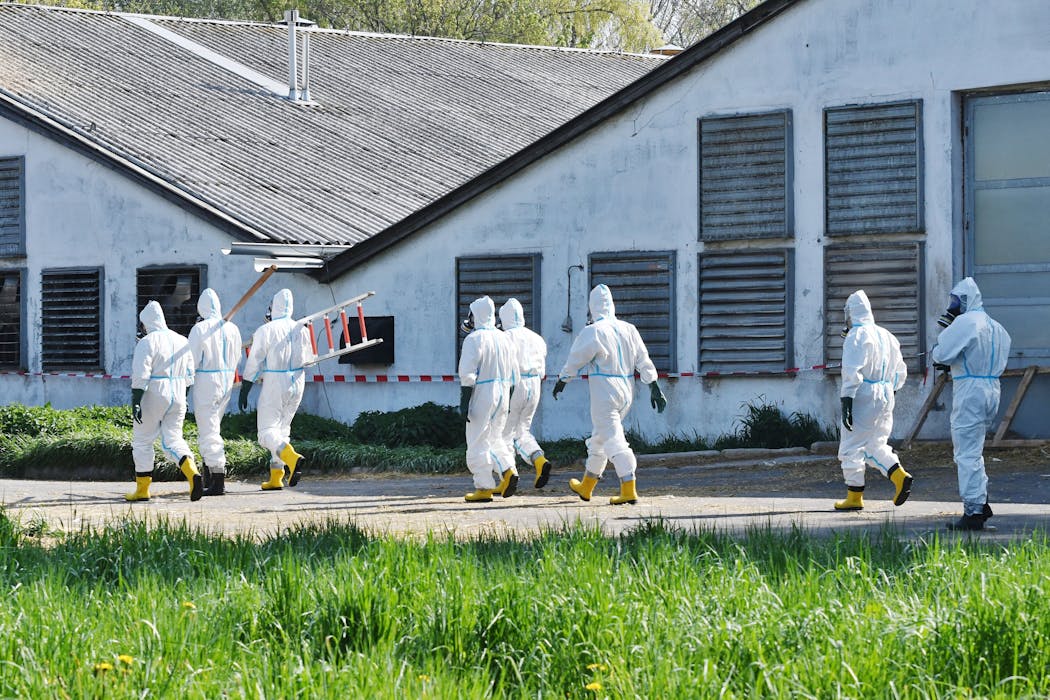
Bird flu still poses a low‑probability threat of sustained human transmission. But that doesn’t make the virus harmless. The H5 viruses are brutally lethal to birds – 9 million have died outright, and hundreds of millions have been culled to contain the spread. Alarming is the virus’s expanding reach into mammals. So far, at least 74 mammal species, from elephant seals to polar bears, have suffered die‑offs.

The individual cases are situated within a broader shift. Dense poultry farms create opportunities for the virus to hop species. Over a thousand US dairy herds have tested positive in the past two years, and viral fragments have even been detected in milk – a worrying route of spillover. Every jump is a probe for new footholds.

Europe is seeing a surge too. From early September to mid-November 2025, 1,444 infected wild birds were found across 26 countries: a quadrupling compared with the year before.

Human cases remain rare: only 992 confirmed H5N1 infections worldwide since 2003, though with a near‑50% fatality rate. But the numbers are increasing.

The Americas have logged 75 cases since 2022, and in November, the US recorded its first H5N5 death in a patient with existing health problems. And although no human cases have been reported in Europe, the European Centre for Disease Prevention and Control warns that the widespread animal circulation raises the risk of spillover.

My research focuses on how warnings collapse before catastrophe, from geopolitical shocks to intelligence failures and industrial accidents. The pattern is often the same. Frontline observers spot something early, but the signal fades as it moves upward, diluted by bureaucracy, competing interpretations, or institutional forgetfulness.

The recent Hong Kong fire is yet another tragic example: residents at Wang Fuk Court had raised multiple alarms about the styrofoam boards that ignited with a lighter, the uncertified netting and the pattern of ignored safety notices long before the blaze, yet those concerns never gained traction.

The failures I study share recurring blind spots: weak signals drowned out by noise, bureaucratic habits that slow or soften uncomfortable messages, and the political instinct to downplay problems that threaten established narratives. When you see warning as a chain running from detection to decision, collapse is often partial. Some links hold. Others jam at the moment they are most needed.

Bird flu now sits inside that kind of chain. The technical ability to detect change is there: veterinarians, virologists and surveillance systems are picking up signals, sequencing viruses and logging outbreaks. But the infrastructure meant to catch the virus in its early stages is fraying. The agencies that once charted the terrain of emerging pandemic threats have been hollowed out – budgets trimmed, staff evaporated.

Surveillance falters

A study of 31 European nations warned that COVID exposed a “critical gap in preparedness” and urged standardised indicators and open data as the foundation for any future response. The EU’s freshly launched pre-pandemic plan is a good step, but it cannot mask the gaps in day-to-day monitoring and response that still leave countries exposed.

Across the Atlantic, cuts have left the US Centers for Disease Control and Prevention scrambling. American scientists warn that federal reporting has slowed: the United States Department of Agriculture shared too little genetic data on the outbreak in cattle and other affected animals, released it late, and in formats researchers could not use. It left scientists unable to track how the virus was evolving or spreading across herds.

In the UK, domestic surveillance capacity has equally faced strain, with reduced access to European disease intelligence and chronic vet shortages weakening early detection.

Once the signal dims within institutions, it dims for the public as well. And a weak warning rarely travels far.

A recent poll shows this clearly: most Americans don’t even register bird flu as a credible threat. What doesn’t help is that symptoms in humans can be so mild that they slide past notice. A case in a dairy worker earlier this year looked like nothing more than conjunctivitis.

None of this means a new pandemic is imminent. Health authorities still say the chance of an efficient human-to-human outbreak is low. These viruses rarely make that leap. And we’re not helpless. We’re better prepared than we were before COVID: we have vaccine candidates, clearer protocols and agencies that learned painful lessons.

But low isn’t none. And if it were to occur, the consequences could be catastrophic. Most people have some immunity to the seasonal flu strains. We probably have none to H5.

And influenza doesn’t restrict itself to the frail in the way COVID often did; past flu epidemics killed healthy adults in large numbers. Adding to the concern, health expertise itself has come under attack, weakening the very authority that should turn signals into action.

If we avert our eyes from the bird flu threat because our systems have grown inattentive, underfunded and unprepared, we risk repeating that same pattern. And the next alarm will arrive too late for anyone to claim they didn’t see it coming.

The Conversation

Nikki Ikani receives funding from the Dutch Research Council (NWO) for her WARN project (with project number VI.Veni.221R.093). She is also working on her first trade non-fiction book based on her warning research, set to publish with Penguin Random House in the UK and Hachette in the US.

ref. Bird flu warnings are being ignored. I’ve seen this pattern before – https://theconversation.com/bird-flu-warnings-are-being-ignored-ive-seen-this-pattern-before-271765

South Korea, Taiwan and Vietnam show that economic statecraft is not just the preserve of great powers

Source: The Conversation – UK – By Robyn Klingler-Vidra, Vice Dean, Global Engagement | Associate Professor in Political Economy and Entrepreneurship, King’s College London

Make American shipbuilding great again (Masga) may sound like an effort by the US to bolster its economic strength and project power internationally, but Masga is not an American policy. It is a South Korean initiative that emerged following trade talks with the US in June.

Rather than responding to the Trump administration’s tariff threats solely through trade negotiations, Korean officials saw an opportunity to show their American counterparts that South Korea deserved better treatment. They suggested that South Korea bring its shipbuilding prowess to the US.

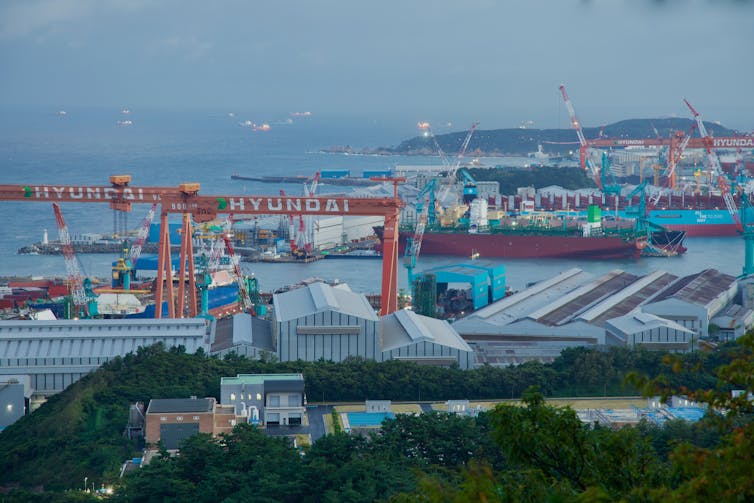
South Korea is perhaps most famous as an exporter of K-pop, cars and semiconductors. But it is also a global powerhouse in shipbuilding. The shipyard in the south-eastern Korean city of Ulsan alone produces roughly ten times more ships annually than the entire US shipbuilding industry.

And as the US tries to counter China’s rapidly growing naval fleet, Korean assistance is something that is clearly needed. The US navy secretary, John Phelan, declared earlier in 2025 that US shipbuilding programmes “are a mess”. He added: “I think our best one is six months late and 57% over budget … That is the best one.”

Masga was launched in August, with South Korean conglomerates HD Hyundai and Samsung Heavy Industries signing a US$150 billion (£112 billion) deal to modernise US shipbuilding capabilities.

It is a clear example of a middle power, a term for countries that lack the dominance of great powers but matter because they possess distinctive industrial, resource or diplomatic capabilites, using economic statecraft to punch above its weight.

The HD Hyundai Heavy Industries headquarters in Ulsan.
The HD Hyundai Heavy Industries headquarters in Ulsan, South Korea.
Korea by Bike / Shutterstock

Economic statecraft has largely been used to describe actions taken by great powers like the US and China to enable and restrict access to their consumer markets, investment coffers and production capabilities. The aim is to achieve foreign policy goals or national security objectives by inflicting damage on or beating the capabilities of a rival power.

One classic example is the US government’s use of sanctions against Russia over its war in Ukraine and Iran over its nuclear programme. The overt linking of economic tools like sanctions and tariffs to defence objectives in Washington’s recent national security strategy is another striking illustration of this.

Middle powers have traditionally not actively pursued economic statecraft to achieve their objectives. They have instead looked to secure a seat at key tables through cooperative participation in regional and multilateral forums. But some of these countries are now asserting their power more explicitly, through preemptive moves like Masga.

Using economic statecraft

Taiwan is perhaps the most obvious case of a middle power engaging in economic statecraft. The country has used its critical role in global semiconductor supply chains as leverage to protect itself against Chinese invasion. Former Taiwanese president Tsai Ing-wen referred to international reliance on the island’s chip industry as a “silicon shield” in 2021.

Taipei imposes strict controls on tech sales and screens investment, particularly from China, to protect its position. And Taiwan’s industry-leading firms, such as TSMC, also invest heavily to maintain their technological edge.

Vietnam offers another example. Consistent with its “bamboo diplomacy” foreign policy model, Hanoi hosts leaders from China, Russia and the US, seeking flexibility rather than rigid alignment. The aim is clear: to maximise Vietnam’s national interests pragmatically and with autonomy.

With the world’s sixth-largest reserves of rare earths, Vietnam is now looking to use critical minerals as a tool of economic statecraft. The government voted to ban rare-earth exports on December 11, citing the need to reorient the sector towards domestic processing and higher-value manufacturing rather than merely the export of basic raw materials.

Rare earths are essential components in numerous products that are central to our daily lives, including smartphones, semiconductors and electric vehicles. By restricting foreign access to these essential inputs, Vietnam is striving to secure its long-term position in the supply chains of highly in-demand resources.

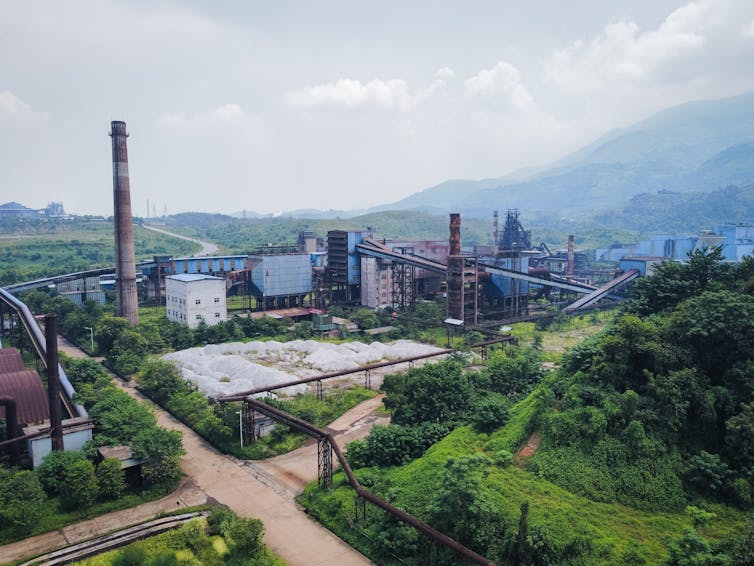
A rare earths mine in the Ninh Binh province of Vietnam.
A rare-earths mine in the Ninh Binh province of Vietnam.
ProjectP / Shutterstock

Together, these cases show how economic statecraft is not only the preserve of great powers. Middle power states are selectively granting and restricting access to their economic strengths to reshape markets and security relationships. Korea’s shipbuilding, Taiwan’s chip production and Vietnam’s rare earths illustrate this more assertive approach.

They are no longer confined to reactive measures or behind-the-scenes diplomacy in regional forums or multilateral negotiations. These states are proposing economic and military partnerships, as seen in initiatives such as Masga and Tsai’s assertion that everyone needs to care about Taiwan, given how essential chips are to the world economy.

Great powers are taking notice. In October, HD Hyundai and US defence contractor Huntington Ingalls Industries announced they are together building next-generation navy vessels. This marks the first time a South Korean firm will build a US navy ship. And Washington has also reportedly been courting Hanoi with elevated diplomatic status and promises of mining support.

For other middle powers, the lesson is clear: identify and leverage the strategic economic strengths that other countries depend on.

The Conversation

Robyn Klingler-Vidra received a research grant from the Chiang Ching-kuo Foundation between 2019-2023.

ref. South Korea, Taiwan and Vietnam show that economic statecraft is not just the preserve of great powers – https://theconversation.com/south-korea-taiwan-and-vietnam-show-that-economic-statecraft-is-not-just-the-preserve-of-great-powers-272139

Why public views of terrorism don’t match the evidence, and what the government needs to do to keep people safe

Source: The Conversation – UK – By Sara Fregonese, Associate Professor of political geography, School of Geography, Earth and Environmental Sciences, University of Birmingham, University of Birmingham

The mass shooting during Hanukkah in Bondi Beach is a horrific reminder that contemporary terrorism can affect the places where we meet others, shop, celebrate and conduct our daily lives. However, our research suggests that what the UK public fears and assumes about terrorism threats is quite different from reality.

In 2022, we asked 5,000 people in the UK about their experiences and perceptions of terror threat and counter-terrorism measures.

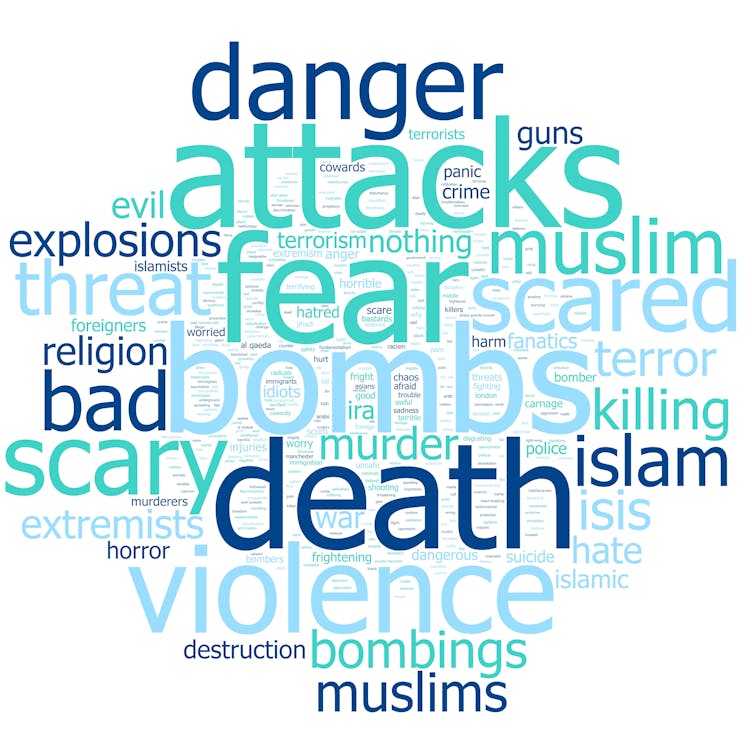
Respondents told us the first word that came to mind when they heard the word terrorism. Most prominent in their responses are references to bombs and bombings. This isn’t surprising, given the global prominence of such terrorist tactics for some time. However, evidence shows that nearly “80% of UK domestic terrorist attacks since 2018 have been carried out with bladed or blunt force weapons”.

In recent years, a global shift in terror tactics has made explosive attacks less common. Less sophisticated means of attacks – such as arson and the use of bladed weapons and firearms – have become more appealing financially and logistically, especially among lone actors.

In western Europe, terrorism is increasingly perpetrated via “low-tech attacks against public spaces carried out with everyday items”. This includes attacks using vehicles as weapons, which has led to a recent increase in hostile vehicle protective infrastructure in cities.

Answers to ‘What is the first word you think of when you hear the word
Sara Fregonese and Paul Simpson, CC BY

The UK public isn’t neurotically expecting explosions and deadly attacks, however. Only 8% of our respondents saw terrorism as the most important problem facing the UK, ranked behind poverty, health, the environment, and unemployment / job security. It is also seen as more significant than racism / discrimination, delinquency, and road safety.

It is important that the public knows what the nature of that problem is, especially considering the National Terrorism Threat Level has remained either severe or substantial for the past several years meaning an attack is likely.

Diverse perceptions

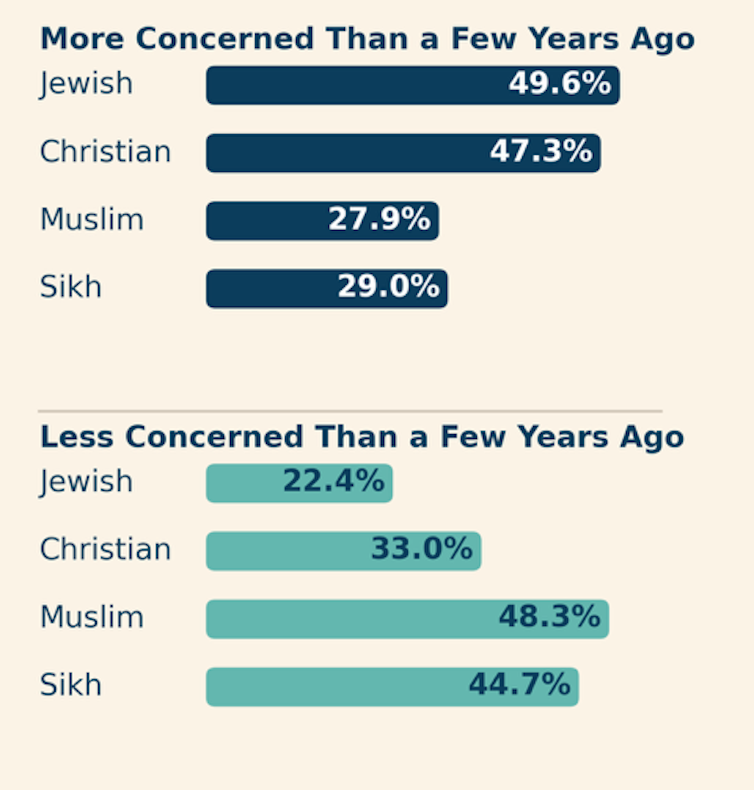
We also asked respondents how they felt about the threat of terrorism compared with a few years previously. Similar numbers felt more concerned about terrorism threats than in previous years (39.83%), as those feeling less concerned (35.65%). However, when breaking data down by religious belonging, a more complex picture emerged.

We saw diametrically opposed feelings of concern among Christians and Jewish respondents on the one hand, and Muslims and Sikhs on the other. In 2022, 49.6% of Jewish respondents declared themselves more concerned about terrorism threats than a few years earlier. Importantly, this preceded the Manchester Synagogue attack in November 2025 and the Bondi Beach attack.

Similarly, 47.3% of Christian respondents felt more concerned about terrorist threats than in previous years. Just 27.9% of Muslim respondents and 29% of Sikh respondents said they felt more concerned about terrorism threats than a few years earlier.

Muslim (48.3%) and Sikh (44.7%) respondents largely felt less concerned about terrorism in 2022 compared to a few years earlier. A lower proportion of Jewish (22.4%) and Christian (33%) respondents felt less concerned about terrorism in 2022.

Changing concern about terror threat by religious belief (2022)


Sara Fregonese and Paul Simpson, CC BY

We need to better understand how these perceptions and differences in concerns have formed. They may be connected to societal polarisation, and with different approaches and reactions to counter-terrorism measures.

Responding to terrorism

These findings matter for how governments respond to, and prepare the public for, terror threats.

UK government counter-terrorism policy has recently come under scrutiny. A report by the independent commission for counter-terrorism law, published in November 2025, called for substantial changes to the current system. This included recommendations for a narrower definition of terrorism and an overhaul of the Prevent Duty, which requires public bodies to identify and report signs of radicalisation.

The government’s national security strategy has also been criticised by the UK Independent Reviewer of Terrorism Legislation for not taking online terror threats seriously enough.

One of the ways that governments respond to terror threats is through information campaigns intended to alert and educate the public on the current nature of threat. And yet, our data shows that public awareness of such campaigns is worryingly low – 83.5% of respondents aren’t aware of them at all. That rate declines further for those aged 50 and over.

Those who said they are aware of counter-terrorism information campaigns largely failed to recall what these campaigns actually are. Their answers gave incomplete, wrong or conflated campaign names and slogans.

One might wonder if multiple campaigns – Run, Hide, Tell (2015-onwards); See it, Say it, Sorted (2016-onwards); Action Counters Terrorism (2017-onwards) – have actually produced confusion rather than clarity among the public over the nature of terror threat and what to watch out for. Equally, they may have become such a ubiquitous background in our cities, that people are now paying little attention.

It is essential to address these misalignments between public understanding of terrorism and the current evidence. The public needs clear, easy to remember, and updated information about current threats. Without this, people will struggle to recognise current threats and attune their instincts on how to react to them correctly.

And, while the messaging needs to be coherent, attention needs to be paid to the evident diversity of experiences and views about threat and security measures. Given our findings on how different demographic groups perceive terrorism, the recent call for equality impact assessments of counter-terrorism measures is a timely one indeed.

The Conversation

Sara Fregonese received funding from the Economic and Social Research Council (grant number ES/V01353X/1) which supported the research reported here

Paul Simpson received funding from the Economic and Social Research Council (grant number ES/V01353X/1) which supported the research reported here

ref. Why public views of terrorism don’t match the evidence, and what the government needs to do to keep people safe – https://theconversation.com/why-public-views-of-terrorism-dont-match-the-evidence-and-what-the-government-needs-to-do-to-keep-people-safe-272101

​The ​1​2 ways Christmas wrecks your sleep​ – and how to fix it

Source: The Conversation – UK – By Clare Anderson, Professor of Sleep and Circadian Science, University of Birmingham

Christmas is supposed to be restful, yet somehow it ends up being one of the worst times of year for sleep. Between late nights, travel, one too many eggnogs and all that excitement, your sleep schedule doesn’t stand a chance – and neither does your mood, safety or health. Here are a dozen sneaky ways Christmas sabotages your sleep and what you can do about it.

1. The social jetlag of Christmas parties

Late nights and lie-ins might feel indulgent, but they’re secretly sabotaging your internal clock. Those late nights and bright lights throw your body clock out of sync, leaving you with disrupted sleep and making you slower to function and gloomier the next day. Irregular sleep timing is associated with many poor consequences for health and performance.

2. End-of-year exhaustion

Many adults routinely sleep less than the recommended seven hours. Nightly sleep loss of even one hour quickly takes a major toll. Sleeping less than six hours a night can cause dangerous levels of sleepiness after just two weeks, making end of year exhaustion real, and the Christmas break an ideal time to catch up on lost sleep.

3. Festive eating and sleepiness

Those big festive meals, rich in carbs and fat, can be sedatives on a plate. When we’re short on sleep, we’re more likely to crave sugary or fatty quick fixes for energy – only to crash about 90 minutes later, when sleepiness hits again.

4. Excited children, disrupted bedtimes

Christmas Eve excitement sends stress hormones soaring in kids (and let’s be honest, adults too), making it nearly impossible to drift off. Paradoxically, sleepy children often become hyper rather than drowsy – turning bedtime into a battle. When children stay up later, this results in parents staying up later. This doesn’t simply delay sleep, it also shortens it, reducing total sleep time by an average of 33 minutes for each hour that bedtime is delayed.

An excited kid in a Santa hat, jumping in the air.
Wired, not tired.
Roman Samborskyi/Shutterstock.com

5. Shift work at Christmas

While others are celebrating, retail, healthcare and other essential workers are grinding through marathon shifts that wreak havoc on sleep. Shifts lasting longer than ten hours increase the risk of accident and injury by 13%, while those involving night work increase it by 28%. Put those together (long shifts overnight) and it’s a recipe for disaster. Sleeping during the day and being awake at night is already a challenge for many shift workers, but even more so at Christmas.

6. The hidden burden of Christmas travel

In all the Christmas excitement, it’s easy to forget how risky travel can be when you’re tired. Sleepiness contributes to around 17% of fatal vehicle accidents – and long journeys, international travel, reduced sleep and sleeping in unfamiliar environments all make things worse.

7. Christmas lights paradox

For those in the northern hemisphere, winter brings lower light levels during the day, yet bright Christmas displays light up the night sky – and our brain. Indoor lighting that is too dim during the day and too bright at night can disrupt circadian rhythms and sleep, making us feel more tired and less happy. While sleeping under Christmas lights may put you in the festive mood, it can disrupt your heart rate during sleep and affect your blood sugar in the morning.

8. Alcohol and the myth of the silent night

Yes, alcohol helps you nod off faster, but then it sabotages your sleep by messing with your brain chemistry and making breathing problems worse. You won’t even remember these disruptions (you need to be awake for several minutes to form a memory), but you’ll definitely remember the hangover.

9. Christmas napping

A Christmas Day nap can be a tradition for many families – especially grandpa. On average, people sleep about 5% more on Christmas Day. That extra 24 minutes of sleep over the holidays can help fight off common colds and other bugs. Christmas really is the time to indulge … in sleep.

10. More than an empty stocking

Money worries, heightened expectations and increased loneliness can all trigger Christmas anxiety. When you’re anxious, there’s a 90% increased risk that you’ll struggle to fall or stay asleep – and poor sleep makes anxiety worse. Protecting your sleep and helping others protect theirs can help prevent this vicious circle.

11. The pleasure and pain of New Year’s Eve

New Year’s Eve is the worst night of the year for sleep – most people go to bed 90 minutes later than usual, and it shows. More traffic accidents than usual happen on New Year’s Day, so if you’re exhausted, skip anything that requires alertness.

12. A gift to yourself

If on the twelfth day of Christmas your wish is for a good night’s sleep and staying safe and well, here are some top tips:

  • Keep sleep and wake timing consistent where possible, and aim for at least seven hours of sleep.
  • Naps are a perfect way to refresh and restore, but keep them short (20-30 minutes) and early (before 3pm).
  • Moderate your alcohol and heavy food intake.
  • Manage light exposure. Maximise natural daylight and avoid artifical light, including bright screens (phones, tablet computers, laptops) at night. Cosy, warm, dim Christmas lights are fine, but turn them off before bed.
  • Support children’s sleep. Keep the bedtime routine consistent and manage excitement.
  • Take special care when travelling. Think three S’s: Seven hours of sleep. Switch drivers or rest every two hours. Stop if you feel sleepy.

The Conversation

Clare Anderson currently receives funding from UK (ESRC, EPSRC) and Australian (ARC, NHMRC) Research Councils, Transport Accident Commission and Takeda Pharmaceutical.

ref. ​The ​1​2 ways Christmas wrecks your sleep​ – and how to fix it – https://theconversation.com/the-1-2-ways-christmas-wrecks-your-sleep-and-how-to-fix-it-271362

Christmas food poisoning and how to avoid it – by a microbiologist

Source: The Conversation – UK – By Primrose Freestone, Senior Lecturer in Clinical Microbiology, University of Leicester

Lysenko Andrii/Shutterstock

Food poisoning affects millions of people in the UK every year, and the risk rises during the Christmas period. Large family meals, raw poultry, packed fridges and buffet food all increase the chances of contamination.

In the UK, the most common bacterial causes of food poisoning are campylobacter and salmonella, both of which are frequently found on raw poultry.

While most cases of food poisoning are mild and clear up on their own, they can be serious for vulnerable groups. These include very young children, older adults, pregnant people and those with weakened immune systems.

Symptoms can include nausea, vomiting, fever, diarrhoea and a general feeling of being unwell.

Although there are no UK statistics published specifically for food poisoning at Christmas, the UK experiences more than 2.4 million cases of food poisoning every year. Public health agencies consistently see a seasonal rise in cases over the festive period, thought to be linked to the widespread preparation of poultry such as turkey.

So what is it about Christmas that makes it such a risky time of year? Here’s a closer look at the festive food habits that raise the risk of food poisoning, and how to avoid them.

Not checking use-by dates

Checking use-by dates is especially important at Christmas, when fridges are often full and food has been bought well in advance. Foods labelled “use by” are highly perishable and must be stored correctly in the fridge and eaten within the stated time to prevent bacterial growth.

Even if food is still within date, it should not be eaten if the packaging looks swollen or if the food smells or looks unusual when opened. These are signs of possible bacterial or fungal contamination, and it is safer to throw the food away.

Under-thawing frozen poultry or washing it

Large frozen birds such as turkeys can take several days to thaw fully in the fridge. Cooking poultry that is not completely defrosted can result in uneven cooking, allowing bacteria to survive in the centre of the meat.

Washing raw poultry before cooking is unnecessary and increases the risk of food poisoning. Poultry sold by supermarkets and butchers is already cleaned. Washing it can splash bacteria such as campylobacter and salmonella onto sinks, work surfaces, hands, clothes and nearby foods, leading to cross-contamination.

Undercooking your Christmas dinner

Poultry can contain bacteria throughout the meat, not just on the surface, so the entire bird must be thoroughly cooked to make it safe to eat.

Always follow the cooking instructions on the packaging. These timings are usually based on an unstuffed bird. Poultry cooked with stuffing inside the cavity often takes longer, and heat may not reach the centre properly, allowing bacteria to survive.

The only way to make poultry safe is by cooking it thoroughly. Using a food thermometer can help. Poultry is safe to eat when the thickest part reaches at least 75°C, a temperature that effectively kills food poisoning bacteria.

For this reason, it is much safer to cook stuffing in a separate dish rather than inside the bird.

Hand washing and kitchen hygiene

Good hygiene is essential when preparing raw meat, poultry, fish or vegetables.

After handling raw foods, wash your hands thoroughly with soap and water. Clean and disinfect chopping boards, knives, and work surfaces to prevent cross-contamination.

Do not prepare food for others if you have vomiting or diarrhoea, particularly if caused by highly contagious viruses such as norovirus or rotavirus.

Incorrect storage of Christmas leftovers

Food poisoning bacteria are present everywhere, including kitchens and fresh foods. Refrigeration slows their growth, but only if the fridge temperature stays between 0 and 5°C.

At Christmas, fridges are often overloaded, which can raise internal temperatures and allow bacteria to multiply. Avoid storing items that do not need refrigeration in the fridge.

Leftovers should be cooled, covered, and refrigerated within two hours. At room temperature, some bacteria can double in number every 20 minutes. Leftovers should be eaten within two days.

If you cannot eat leftovers within this time, freeze them. When stored at -18°C, they can be kept safely for up to three months.

Christmas dining out and party buffets

Around 60% of food poisoning cases in the UK are linked to food eaten outside the home.

Even in restaurants with high hygiene ratings, food can still be exposed to contamination from people, insects or the environment.

Buffets carry particular risks because perishable foods may be left out too long.

Food should not be left out for more than two hours unless refrigerated or, in the case of hot food, kept above 60°C. If you take buffet leftovers home, refrigerate them promptly and reheat until piping hot before eating.

Following these food safety tips can help reduce your risk of food poisoning this Christmas. In addition to food-related hazards, St John Ambulance has highlighted a range of other festive accidents to watch out for.

I hope your holiday is happy, healthy, and safe.

Merry Christmas.

The Conversation

Primrose Freestone does not work for, consult, own shares in or receive funding from any company or organisation that would benefit from this article, and has disclosed no relevant affiliations beyond their academic appointment.

ref. Christmas food poisoning and how to avoid it – by a microbiologist – https://theconversation.com/christmas-food-poisoning-and-how-to-avoid-it-by-a-microbiologist-271418

Christmas Comes to Moominvalley: a magical show that honours Tove Jansson and her creations

Source: The Conversation – UK – By Kiera Vaclavik, Professor of Children’s Literature & Childhood Culture, Queen Mary University of London

Christmas can be a bit of a performance. It often involves harassed people doing a lot. But for many of us, alongside all the stressful preparations, it will include some kind of theatre visit, whether a panto, musical or ballet, such as The Nutcracker.

These days a way to escape the tyranny of digital screens, family trips to the theatre were already a tradition by the end of the 19th century. Children’s books of “the Golden Age” – from Lewis Carroll’s Alice books to JM Barrie’s Peter Pan and Kenneth Grahame’s The Wind in the Willows – offered fertile ground for stage adaptation and family audiences came flocking.

Today there is enormous choice, and the range on offer is heartening. In London, Jacksons Lane Arts Centre’s festive production Christmas Comes to Moominvalley – returning for the second year and perhaps becoming a tradition of its own – is a charming option for families looking for some Christmas magic and family time together.

The production is based on a supremely well-crafted short story called The Fir Tree by Tove Jansson, whose first Moomin book was published 80 years ago. It follows the Moomin family’s preparations for Christmas. So far, so standard. The interesting twist comes from the fact that Moomins, who usually hibernate through the winter, have no idea of what Christmas actually is.

Accustomed to things like floods, comets and volcanoes, they naturally assume it is a calamity, a dangerous force of nature to be placated. The family do their best to follow protocol and manage to improvise the requisite tree, food and presents.

Like Noel Streatfeild, whose Ballet Shoes (1936) is also being staged for the second time this year at the National Theatre in London, Jansson knows just how much of an undertaking Christmas is and the sense of unpreparedness she conveys throughout is highly relatable:

“I’ve made absolutely no arrangements yet myself,” complains the Hemulen, “and here they send me off to dig you out … Everybody’s running about like mad and nothing’s ready.” Having put in the hard work, the Moomins not only share their Christmas, but hand it over wholesale to other (more knowing, but less well-furnished) creatures.

It’s a story which manages to be positive and heartwarming, championing kindness and generosity (regarded by many as the true values of Christmas), without being in any way schmaltzy or saccharine. It’s a not inconsiderable feat, and something of minor Christmas miracle.

Retaining Jansson’s essence

Jacksons Lane has, then, hit Christmas gold with its source material, especially given the near-cult following of the much-loved Moomins who have been everywhere in this anniversary year. Their first appearance, a few scenes into the show, is a bit of a “Totoro” moment – the audience is primed to love them and palpably delighted when they finally appear.

A strong base is no guarantee for success though, and there are plenty of adaptations of children’s books that have entirely missed the mark (such as Broadway Entertainment Group’s shocking version of The Little Prince in 2022). Happily, this production isn’t one of them.

It’s a well-balanced show in every sense. Christmas Comes to Moominvalley makes the most of the acrobatics and circus skills that Jacksons Lane (itself celebrating its 50th anniversary this year) has nurtured so effectively.

It contrasts the charming but slightly ponderous, plodding Moomin family in their big white suits with a group of zippy, colourfully costumed characters who juggle, lift and tumble. There is also a good balance of pace – dynamic, fast-action scenes are interspersed with quieter, slower moments with harp and song, showcasing the strong clear voice of actress Xenia Garden.

Given this overall sensitivity, it’s a shame that the very poignant and evocative moment when the Moomins gift their entire Christmas tree, presents and food to the less fortunate is slightly rushed. Rather than an act of generosity and selflessness it verges on becoming a hurried offloading motivated by fear.

The show certainly doesn’t forget its written roots though. Much of the text is projected onto the stage backdrop, perhaps as a way around the slightly muffled delivery caused by cumbersome Moomin heads. It’s unclear otherwise quite what the purpose of the words is or who they’re for (certainly not younger children learning to read). But they do mean that Jansson’s presence is there throughout.

The show ultimately succeeds in delivering a memorable show with the wow factor that you want from a Christmas production. The lifts and tumbles – not to mention the literal plate spinning which harried adults will particularly relish and relate to – showcase the physical skills of the performers and are well integrated into the storytelling. The gradual decoration of the tree builds in the second half to deliver a near-perfect image of Christmas magic complete with lights, candles, stars, snow (and sea shells).

A children’s play that asks what Christmas is may seem a bit cerebral and too much like hard work, but Christmas Comes to Moominvalley isn’t this at all. It’s both metaphorically and literally uplifting. It inspires through acts of dazzling physical dexterity while also directing the audience to the words and images of the endlessly talented Tove Jansson.

Christmas Comes To Moominvalley is on at Jacksons Lane Arts Centre, London until Jan 4


Looking for something good? Cut through the noise with a carefully curated selection of the latest releases, live events and exhibitions, straight to your inbox every fortnight, on Fridays. Sign up here.


The Conversation

Kiera Vaclavik does not work for, consult, own shares in or receive funding from any company or organisation that would benefit from this article, and has disclosed no relevant affiliations beyond their academic appointment.

ref. Christmas Comes to Moominvalley: a magical show that honours Tove Jansson and her creations – https://theconversation.com/christmas-comes-to-moominvalley-a-magical-show-that-honours-tove-jansson-and-her-creations-272212