Will artificial snow save the ski industry in the long run – or curse it?

Source: The Conversation – UK – By Paolo Aversa, Professor of Strategy, King’s College London

At the Winter Olympics, athletes race down immaculate white slopes. The snow looks perfect. But it is largely manufactured.

In Italy, where rising temperatures and declining snowfall were felt earlier than in other Alpine regions, technological fixes began in the 1990s. Today, reliance on artificial snow is widespread: around 95% of Italian ski resorts use snowmaking, and more than 70% of slopes are covered by artificial snow during the season.

Modern snowmaking uses a large fan-like “snow canon” to spray tiny droplets of water into cold air, where they freeze before landing on the ground. Vehicles known as piste bashers (in Europe) or snowcats (in North America) then compress and groom that new snow until it forms a more stable base. The process does not rely on chemical additives. It has become so effective that it can now guarantee competition-grade conditions even when natural snowfall is increasingly unreliable.

Together with colleagues at the Universities of Oxford and Trento, I have been part of the Hot Snow project, investigating what all this means for the ski industry.

Snow canon with mountain backdrop
A ‘snow canon’ blasts tiny droplets into the air, where they freeze into snowflakes before landing.
Gherzak / shutterstock

We know that continuous innovation – often referred to by the industry as “technical snow” – has helped protect winter sports. Yet we found it also carries a less visible risk: successful adaptation through artificial snow can make the ski industry complacent about climate change.

How artificial snow really works

In leading resorts, artificial snowmaking process is data-driven and highly automated. At the touch of a tablet, operators can adjust the quality and density of new snow, depending on temperature, humidity and the sort of surface they want to create. This produces snow that can be more controllable and durable than natural snowfall.

Snowmaking systems have become more energy efficient over time. Production is optimised to exploit the coldest possible weather windows, reducing energy use per cubic metre of snow. In regions such as the Dolomites, where the Olympic ski races are being held, resorts largely rely on renewable electricity and rainwater stored in artificial basins.

close up of snow cannon
A snow cannon fires out water mist that will fall as snow.
Beekeepx / shutterstock

Even so, artificial snow remains energy intensive. In Italian ski resorts, snowmaking accounts for around 30–40% of total energy consumption, with annual costs of €50 million to €100 million (£44 million to €88 million). Across the Alps, total energy demand for artificial snow is estimated at around 2,100 gigawatt-hours per winter season – roughly equivalent to the total annual domestic electricity use of Milan.

The water footprint is just as significant. Artificial snow production in Italy alone consumes around 100-150 million cubic metres of water each year – roughly equivalent to the annual water use of between 1 million and 1.5 million people.

In regions where winter precipitation is becoming less reliable and summers are growing hotter and drier, this growing competition for water adds another layer of pressure, particularly for mountain communities and downstream users. For this reason, ski resorts increasingly rely on artificial reservoirs to store water which, though useful in dry seasons, are often harmful to mountain landscapes and ecosystems.

When adaptation becomes a trap

The effectiveness of snowmaking is both a blessing and a curse.

Across Europe, artificial snow now underpins much of the ski industry. In many regions, slopes depend on it to open at all. This technological success creates what economists call a lock-in effect. Resorts continue to invest heavily in snow cannons, reservoirs and grooming vehicles, even in areas where artificial snow may soon become unviable.

Bare mountainside with single strip of snow
In a dry or warm winter, snowmaking is crucial. This photo was taken in the Dolomites in January 2018: a bare mountainside with machine-made snow.
Stefano Politi Markovina / shutterstock

At the same time, rising infrastructure costs requires a constant increase in consumer prices. Ski pass prices have increased by around 40% since 2021, further turning skiing into a sport accessible only to those with deep pockets. Each new investment further entrenches this trajectory, making it progressively harder to step back and rethink alternatives for the future of these resorts.

The illusion of control

Some snowmaking systems can technically operate even when air temperatures rise above freezing, albeit at a very high energy cost. One manufacturer has demonstrated technology capable of producing snow at ambient temperatures of up to 20°C. That possibility reinforces a dangerous narrative: that innovation alone will solve the problem.

But climate projections suggest there will come a point when even artificial snow cannot compensate for warming conditions at many altitudes. In Italy, most resorts located around 1,000 metres above sea level have abandoned hopes of operating consistently, while skiing in the Apennines – once a preferred destination for central and southern Italy – has largely shut down.

When artificial snow stops being viable, the transition is often abrupt. Resorts are left with stranded assets and communities face sudden economic shocks. This is what we describe as an “expiring industry”, one that can appear economically healthy today while facing a clear climate-driven end date.

The danger is not collapse tomorrow, but delay today. As long as slopes remain open and bookings stay strong, there is little incentive to invest in alternatives. After all, winter tourism is still worth over €11 billion (£9.6 billion) a year to the Italian economy alone.

What should change

Those who benefit from the status quo are unlikely to propose alternative futures. Public policy therefore plays a crucial role in shaping which futures remain possible.

Continuing to subsidise ski infrastructure may keep slopes open for a few more seasons, but it also deepens reliance on winter snow in places where long-term viability is increasingly uncertain. It risks diverting public money, attention and political capital away from transitions that could actually endure.

A different approach would make public support conditional. Resorts could be required to disclose water and energy use transparently, and to present credible plans to diversify beyond winter-only tourism rather than simply extending it. This would also mean scrutinising claims that lift infrastructure can function as sustainable, year-round transport — a justification often used to secure public funding, but rarely realised in practice.

I’m a passionate skier myself. As a Veneto native, the Dolomites are my favourite place to ski. So this is not about blaming skiers or dismissing snowmaking technology, which has helped sustain jobs in the mountain communities of my region.

The problem is mistaking successful short-term adaptation for a viable long-term strategy. When technological fixes stand in for long-term planning, they delay investment in alternatives and leave regions more exposed when climate limits are finally reached.

As long as artificial snow keeps slopes white against an increasingly green landscape, it is easy to believe alpine skiing will always be there. But this is not simply kicking the can down the road. It is pushing it uphill. And metre by metre, the slope is getting steeper.

The Conversation

Paolo Aversa works on the Hot Snow project with professor Juliane Reinecke at the University of Oxford and professor Alberto Nucciarelli and Dr Edoardo Trincanato at the University of Trento.

The research has been supported by The Center of Sustainable Business at King’s Business School, The Fondazione CARITRO, and the Center for Sports and Business at the Stockholm School of Economics.

ref. Will artificial snow save the ski industry in the long run – or curse it? – https://theconversation.com/will-artificial-snow-save-the-ski-industry-in-the-long-run-or-curse-it-275270


Valentine’s day: can 36 questions really change your love life?

Source: The Conversation – UK – By Viren Swami, Professor of Social Psychology, Anglia Ruskin University

LightField Studios/Shutterstock

About a decade ago, author Mandy Len Catron wrote an essay for the New York Times about “36 questions that lead to love”. The idea suggests that two people can grow closer – and even fall in love – by answering a series of increasingly intimate questions.

Catron described how in 2014 she and an acquaintance went on a date together. During the evening, they took turns asking and answering 36 questions. Before that meeting the pair both admitted to a slight mutual attraction, but the exercise changed this fairly dramatically.

Within weeks they had developed strong feelings for each other. The following year they moved in together, had children in 2021 and in 2025, more than a decade after their first date, they got married – and the 36 questions were included in a bowl at the reception bar.

The idea behind the 36 questions is simple enough – that by answering a series of intimate questions, two people become vulnerable and develop a close connection. But can the 36 questions really cause two people to fall in love?

In the 1990s, US psychologist Arthur Aron and his colleagues developed a sharing game that could be used to develop feelings of closeness between strangers. They wanted to provide researchers with a fast track to developing closeness in the lab, for studies involving participants who didn’t know each other.

The task is simple. Two strangers sit across from each other and take turns asking and answering 36 questions arranged in three sets. The task takes about 45 minutes to complete, with the questions becoming increasingly intimate and personal.

One question from the first set asks the strangers to describe their perfect day, while a question from the final set asks them to describe whose death they would find most disturbing.

Why does it work?

The main mechanism that helps build closeness in the 36 questions is reciprocal self-disclosure. This is when sharing intimate information about oneself prompts the other person to share similarly intimate information about themselves.

Reciprocal self-disclosure is an important part of relationship development. When people engage in reciprocal self-disclosure, they signal to each other that they’re willing to be responsive and share their vulnerabilities. In turn, this process helps to build mutual trust and liking, leading to greater feelings of closeness and intimacy.

Imagine that, over the course a conversation, I share with you that I’ve been struggling with my mental health. In sharing this information, you infer that I trust you and that I want to have an authentic, honest and meaningful relationship with you. This, in turn, might encourage you to share something intimate about your own mental health, which encourages deeper trust and connection between us.

Woman and man sitting on sofa talking together.
Just how magic are those 36 questions?
Prostock-studio/Shutterstock

What about romantic love?

But can the 36 questions really cause people to fall in love? In the original study, Aron and his co-researchers suggested that the 36 questions – sometimes called the “fast friends procedure” – could create real feelings of “interpersonal closeness” between strangers.

To test this, they randomly assigned strangers to take part in the fast friends procedure or to a small-talk exercise, which also included 36 questions but that did not increase in intensity over the sets. In a series of studies, Aron and his fellow researchers found that participants who’d completed the fast friends task felt closer to each other than those who had engaged in small talk.

A 2021 study found that participants engaging in the fast friends task not only felt closer than those who engaged in small talk, but also felt greater liking for their partners, believed their partners were more responsive, enjoyed the interaction more and had more fun.

However, Aron and his co-researchers also cautioned that the fast friends procedure does not produce feelings of loyalty, dependence or commitment between strangers – key ingredients for love. The procedure also does necessarily produce respect for the other person, which takes time to develop, nor does it produce feelings of passion, romance and physical and sexual attraction.

Although the fast friends procedure might not cause strangers to fall in love, it could help existing couples maintain their feelings for each other.

In studies where existing couples take part in the procedure with other couples they haven’t met before, the participants later report greater closeness to the couples they interacted with. But they also report greater closeness to and passionate love for their own partners.

The procedure could actually help foster loving relationships of all kinds. One group of researchers adapted the 36 questions to make them suitable for children aged eight to 13 and their parents. When the researchers asked parents and their children to take turns asking and answering the question, the children seemed to end the task feeling more loved.

The fast friends procedure also shows promise in developing closeness outside the lab and in different circumstances. In educational settings such as schools and universities, the task seems to be both an effective ice-breaker and a way to promote closeness and friendship formation. There’s even some evidence that tasks that promote closeness could increase productivity and creativity among team members working together.

The fast friends procedure could also be used to reduce prejudice and stigmatising views. In a 2015 study, heterosexual people took part in the fast friends task with a stranger who revealed they were gay or a lesbian.

These heterosexual participants reported stronger feelings of closeness and lower sexual prejudice at the end of the task compared to the start. Other studies have suggested that the procedure could also reduce racial prejudice and ageism.

So don’t let romantic couples usurp the 36 questions. If you’re spending Valentine’s day with friends, it could be a great way to deepen your bond.

The Conversation

Viren Swami does not work for, consult, own shares in or receive funding from any company or organisation that would benefit from this article, and has disclosed no relevant affiliations beyond their academic appointment.

ref. Valentine’s day: can 36 questions really change your love life? – https://theconversation.com/valentines-day-can-36-questions-really-change-your-love-life-273611

Vagus nerve stimulation: from TikTok tips to clinical trials

Source: The Conversation – UK – By Arshad Majid, Professor of Cerebrovascular Neurology, School of Medicine and Population Health, University of Sheffield

Manu5/Wikimedia, CC BY-SA

The vagus nerve has quietly shaped how our bodies function for thousands of years. Recently, it has moved into the spotlight, especially in wellness culture, where manipulating it is often described as a way to calm the body, reset the nervous system or even treat a wide range of conditions.

As someone who researches the vagus nerve in clinical settings, I think it is important to explain what it actually does, what we know so far and where claims run ahead of the evidence.

The vagus nerve is one of 12 cranial nerves that emerge directly from the brain. It is the longest of them, extending from the brainstem through the neck and into the chest and abdomen. Along the way it connects to the heart, lungs, gastrointestinal tract and liver. You cannot see or feel it directly, but it helps regulate everything from your heartbeat to digestion.

Its name comes from the Latin word for “wanderer”, reflecting its long route through the body. One of the most important things to understand is that it is primarily a sensory nerve. Roughly 80% of its fibres carry information from the body back to the brain, acting as a constant internal monitoring system. Only about 20% of the fibres send signals from the brain to the organs.

In practice, this means the vagus nerve continually informs the brain about what is happening inside the body, including heart rate, digestion and inflammation.

Rest and digest

The vagus nerve is a major component of the autonomic nervous system, which controls functions we do not consciously regulate. This system has two main branches.

The sympathetic nervous system drives the fight-or-flight response. It increases heart rate, raises blood pressure and prepares the body for action.

The parasympathetic nervous system has the opposite effect. It slows the heart, supports digestion and promotes a calmer physiological state. The vagus nerve is the primary nerve of this system and is often described as supporting “rest and digest” functions.

This connection explains why the vagus nerve is linked to relaxation and stress regulation. But the relationship is often oversimplified in popular culture.

Many techniques promoted online, such as slow breathing, humming, singing or splashing cold water on the face, are said to stimulate the vagus nerve. These activities do not switch the vagus nerve on or off.

What these activities can do is indirectly influence vagal activity by signalling that the body is safe. Slow breathing with a long exhale, for example, can reduce heart rate and promote a calmer state. You might notice a slowing pulse or a general sense of settling.


Read more:
Conscious breathing can reduce anxiety and depression – tips for how to do it


In some people this effect is clear. In others it is minimal. Importantly, strong evidence on how reliably these techniques influence vagus nerve activity is still limited, and responses vary widely between people.

Medical vagus nerve stimulation

In clinical medicine, vagus nerve stimulation has been used for decades. There are two main approaches.

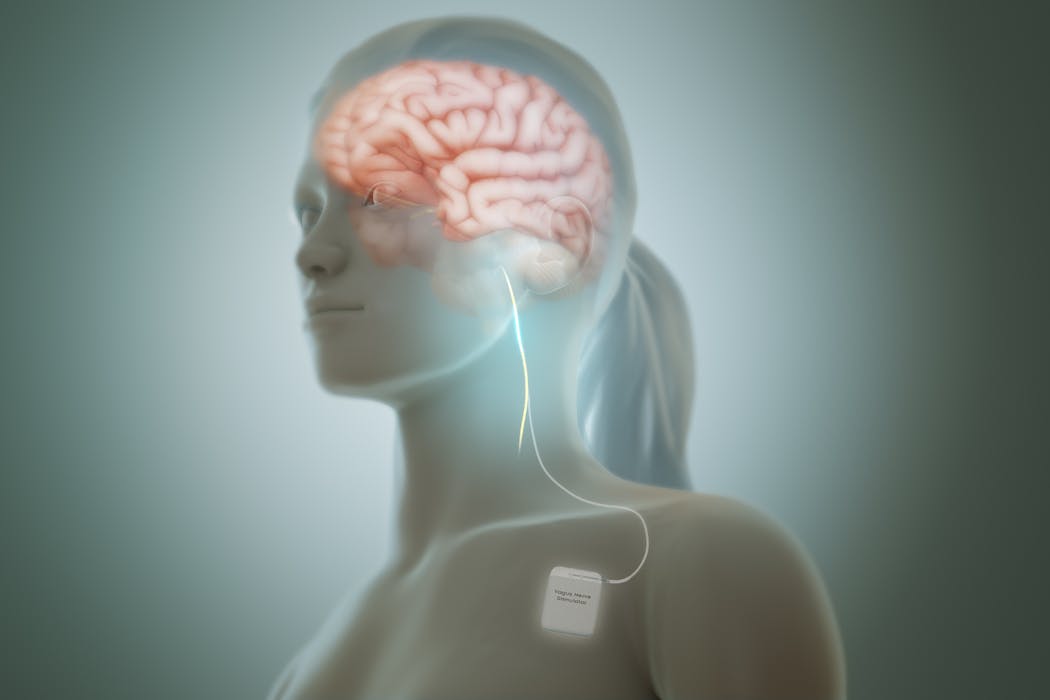
The first is invasive vagus nerve stimulation. This involves surgically implanting a small pacemaker-like device in the chest, with wires wrapped around the vagus nerve in the neck. The device delivers regular electrical stimulation directly to the nerve.

In the US, this treatment is approved for drug-resistant epilepsy and depression. It can be effective but is used less often in the UK because it requires surgery, ongoing care and significant cost.

The second approach, and the focus of much current research, is non-invasive vagus nerve stimulation. Studies show that a small branch of the vagus nerve supplies part of the outer ear. By placing electrodes on specific areas of the ear, researchers can stimulate this branch electrically without surgery.

Brain imaging studies suggest this produces patterns of activity similar to those seen with implanted devices. This gives researchers confidence that similar neural systems are being influenced, even if it is not always possible to confirm that only the vagus nerve is involved.

Medical vagus nerve stimulation devices must meet strict safety and evidence standards. They have to demonstrate clinical benefit in trials and continue to be monitored after approval.

Consumer wellness devices are not held to the same standards. Many can be sold without strong evidence that they stimulate the vagus nerve or improve health outcomes. This does not mean they are necessarily harmful, but claims about their effects should be treated cautiously.

Stroke recovery

One of the most promising areas of research is stroke rehabilitation. After a stroke, many patients experience weakness in one arm that can affect independence for years.

In ongoing research, my colleagues and I are investigating whether non-invasive vagus nerve stimulation, paired with physical rehabilitation, can improve arm function after stroke. The aim is to enhance neuroplasticity, the brain’s ability to reorganise and form new connections, allowing healthy areas to take over lost functions.

This is being tested in a large clinical trial, in which neither participants nor researchers know who is receiving active stimulation until the end of the study. This helps reduce bias. If the results are positive, this approach could change how stroke rehabilitation is delivered.

Vagus nerve stimulation does not work the same for everyone. Some people experience headaches or worsening migraines. A small minority report changes in mood. In my own case, stimulation produces low mood, which is a recognised but uncommon response.

This variability is one reason why one-size-fits-all advice about stimulating the vagus nerve can be misleading.

The vagus nerve is not a cure-all. Most conditions involve multiple biological and psychological factors, and no single nerve explains or fixes them all.

It is, however, a crucial pathway linking the brain and body. As research progresses, we are likely to see more targeted, properly tested therapies using vagus nerve stimulation for specific conditions.

For now, the key message is caution without cynicism. The vagus nerve is real and important. The science is advancing. But meaningful benefits depend on careful research, appropriate use and an honest understanding of what the evidence does and does not yet show.


Strange Health is hosted by Katie Edwards and Dan Baumgardt. The executive producer is Gemma Ware, with video and sound editing for this episode by Anouk Millet. Artwork by Alice Mason.

In this episode, Dan and Katie talk about social media clips via TikTok from drjoedamiani, ayuswellness and prettyspatricia.

Listen to Strange Health via any of the apps listed above, download it directly via our RSS feed or find out how else to listen here. A transcript is available via the Apple Podcasts or Spotify apps.

The Conversation

Arshad Majid receives funding from the National Institute of Health research (NIHR) EME Programme for the TRICEPS trial which is investigating tVNS in stroke recovery.

ref. Vagus nerve stimulation: from TikTok tips to clinical trials – https://theconversation.com/vagus-nerve-stimulation-from-tiktok-tips-to-clinical-trials-274240

Toronto’s Project South charges point to systemic issues beyond police corruption

Source: The Conversation – Canada – By Tandeep Sidhu, Assistant Professor, Department of Sociology and Criminology, University of Manitoba

The Toronto Police Service is embroiled in an unprecedented crisis following a criminal investigation that led to several officers being charged with a list of drug trafficking, theft, conspiracy, fraud and other offences related to an organized crime investigation.

Project South was a seven-month long investigation that disrupted a criminal network that used information supplied to them via police databases.

The details of Project South were disclosed during a news conference that featured senior police officers bizarrely wearing bullet-proof vests. The core of these allegations involve claims of officers leaking information to this network that contributed to a series of violent crimes, including a conspiracy to murder a correctional officer.

Image management strategies activated

Toronto police Chief Myron Demkiw promised that no stone would be left unturned in the investigation and said the actions of a few officers did not define the force. He requested an independent external investigation before announcing the Project South charges.

The head of the Toronto Police Association, Clayton Campbell, similarly said there is “nothing our members hate more than a corrupt cop.”

Ontario’s inspector general of policing announced the province will lead a review of police services to address corruption in policing.

These public statements and requests for a probe are best understood through the lens of police image management, which refers to the array of what are essentially marketing strategies employed by police services to maintain their public image.

The police employ a series of strategic communications in times of crisis, and in their routine corporate communications, to convey a curated image to the public. Like other public relations strategies, this can obscure systemic issues in policing.

The statements from Demkiw and Campbell serve several functions, all of which are intended to safeguard the public image of policing. They disavow the charged officers, protect the reputation of the larger policing community and demonstrate a public-facing commitment to change.

Demkiw’s request for an external investigation, outlined during the news conference, is a strategy that allows the Toronto Police Service to be seen as taking the issue seriously and pre-empts public calls for such a response.

Police misconduct in Toronto and beyond

Allegations of misconduct against the Toronto Police Service have persisted for decades and include charges of corruption, theft, evidence management, misleading the court and fraud, among other offences.

A 2020 study investigating the experiences of inner-city Toronto residents subjected to police raids also demonstrated that allegations of theft, violence and intentional property damage are commonplace.

Some researchers have argued that a double standard exists for police services in terms of officers accused of corruption and other forms of misconduct. They argue that police often demand harsh sentences and punishment for members of the public, but face less severe consequences when misconduct is addressed internally.

A lesser-known form of police misconduct surrounds the abuse of police databases. Officers across Canada have used databases to stalk former partners, interfere in investigations for friends and family, form intimate relationships, access the personal information of and monitor lawyers and leak information.

While Campbell noted that searches on police databases leave digital footprints, this does little to prevent their abuse.

Like ticket-fixing, database abuse is difficult to detect. The true scope of database abuse is immeasurable, owing to the vast volume of data and searches officers perform, which makes it difficult to distinguish legitimate policing activity from illegitimate activity. What is known about its prevalence should be regarded as the tip of the iceberg.

Why bother?

So what value does an “independent” probe into Ontario police services offer? Considering the hard-to-detect nature of many forms of police misconduct, the efficacy of such an initiative is debatable.

There is also an inherent contradiction at play. The probe is being directed at all Ontario police services, suggesting that these forms of misconduct are systemic.

But Ontario Premier Doug Ford referred to a “few bad apples” in response to the public uproar following the Project South charges, suggesting there’s no systemic issue in place.

So why launch such an expansive probe that will likely cost taxpayers millions of dollars if these acts of misconduct are limited to a select few officers?

Demkiw’s request for an independent probe is an admission that police misconduct is systemic, but places the onus for repair onto an independent institutional body. As I’ve argued previously, police services cannot be trusted to repair these issues. This strategy not only allows police forces to appear as though they take internal corruption seriously, but insulates them from future criticism when officers engage in misconduct.

Considering there are already calls for Demkiw to resign, inaction would mark the end of his career.

Nonetheless, while the probe promises to investigate the “totality of the landscape” of policing in Ontario, the public should regard these efforts as a form of image management that insulates police forces from serious, genuine scrutiny.

Better ways to prevent corruption

While the police are mitigating the damage stemming from Project South, the question of how to prevent these abuses arises.

The existing mechanisms for detecting database abuse, for example, are inherently reactive. These issues are brought to the attention of the police following the misconduct.

One strategy to address this issue is a more robust system of random audits that function as a general “integrity check” on the police use of databases. This would function in tandem with a requirement that officers provide a detailed explanation of why searches on people are performed, creating a more substantive digital footprint that may be audited.

This strategy will inherently be met with resistance from police unions and researchers who partner with the police who have drawn attention to the occupational stress stemming from police reporting requirements.

But the research drawing attention to report writing and its proposed relationship to occupational stress fails to adequately consider that report writing is not only an expected function of the police — it may also be a critical avenue for accountability.

The Conversation

The authors do not work for, consult, own shares in or receive funding from any company or organisation that would benefit from this article, and have disclosed no relevant affiliations beyond their academic appointment.

ref. Toronto’s Project South charges point to systemic issues beyond police corruption – https://theconversation.com/torontos-project-south-charges-point-to-systemic-issues-beyond-police-corruption-275408

La primera ministra japonesa arrasa en las elecciones. ¿Cumplirá con su agenda?

Source: The Conversation – (in Spanish) – By Adam Simpson, Senior Lecturer in International Studies in the School of Society and Culture, Adelaide University

La primera ministra japonesa, Sanae Takaichi, ha conseguido una victoria aplastante para el Partido Liberal Democrático (PLD) en las elecciones parlamentarias que convocó poco después de asumir el cargo. Ahora que ha consolidado su poder en la legislatura japonesa (denominada Dieta), la gran pregunta es qué hará con él.

Desde su ascenso al cargo de primera ministra en una votación parlamentaria en octubre, la ultraconservadora Takaichi ha trastocado el normalmente sobrio sistema político japonés. Para empezar, porque ha conectado con los votantes más jóvenes como ningún otro líder japonés en la historia reciente gracias a su presencia en las redes sociales, su icónico sentido de la moda y su talento diplomático. Es más, en un momento digno de una estrella de rock, mostró sus habilidades con la batería en una jam session con el líder de Corea del Sur.

La primera ministra japonesa, Takaichi Sanae, y el presidente surcoreano, Lee Jae Myung, tocando juntos la batería.

Takaichi ha aprovechado astutamente la fase de luna de miel de su liderazgo convocando elecciones anticipadas para ganar más poder en la Dieta antes de que su popularidad decaiga.

Eso sí, ahora los votantes esperan ver un retorno de su inversión, y Takaichi se enfrenta a la tarea de cumplir sus promesas. Mejorar el nivel de vida en un país con una población activa en rápido descenso y un envejecimiento demográfico sin inmigración masiva pondrá a prueba sus habilidades políticas mucho más que ganar unas elecciones.

Una victoria electoral improbable

Aunque el PLD de Takaichi ha estado en el gobierno durante la mayor parte de la historia de la posguerra de Japón, recientemente ha experimentado una serie de malos resultados electorales.

En 2024 perdió la mayoría en la Cámara Baja que ostentaba junto con su entonces socio de coalición, Komeito, tras una serie de escándalos de corrupción. Luego, el año pasado, la coalición perdió su mayoría en la Cámara Alta, dejando al gobierno pendiendo de un hilo.

El partido inició su notable cambio de rumbo tras la dimisión del entonces primer ministro Shigeru Ishiba en septiembre, a raíz de esos reveses electorales.

Muchas encuestas preelectorales predijeron una victoria considerable para el PLD y su nuevo socio de coalición, Nippon Ishin (el Partido de la Innovación de Japón). Takaichi también recibió un impulso con el respaldo del presidente estadounidense Donald Trump. Aunque la opinión pública japonesa tiene una impresión desfavorable de Trump, también sabe que Estados Unidos es su máximo garante de seguridad frente a China, además de ser el principal destino de las exportaciones de Japón.

No obstante, existían algunas dudas sobre si la popularidad de Takaichi, especialmente entre los votantes más jóvenes, se traduciría en votos.

Al final, su éxito electoral se ha contagiado al resto de su partido. A pesar de las temperaturas bajo cero y las nevadas récord en algunos lugares, el PLD ha vuelto cómodamente al poder con una mayoría mucho mayor en la Cámara Baja. La coalición cuenta ahora con una mayoría cualificada de dos tercios, lo que significa que puede pasar por alto a la Cámara Alta para impulsar su agenda legislativa.

¿Una postura más firme con China?

Desde que asumió el cargo de primera ministra, la belicista Takaichi ha adoptado una postura firme hacia China.

En noviembre, enfureció a Pekín al afirmar que Japón podría intervenir militarmente para ayudar a proteger Taiwán ante una posible invasión china. Esto provocó feroces ataques por parte de China contra Takaichi, que continuaron hasta bien entrado el nuevo año.

Aunque la opinión pública japonesa está dividida sobre si salir en ayuda de Taiwán en caso de conflicto con China, ahora existe un fuerte apoyo a la promesa de Takaichi de aumentar el presupuesto de defensa al 2 % del PIB para marzo de este año, dos años antes de lo previsto.

En diciembre, el Gabinete aprobó un aumento del 9,4 % en el gasto de defensa para alcanzar este objetivo, centrándose en la producción nacional y en capacidades avanzadas (cibernéticas, espaciales y de ataque a larga distancia).

En respuesta a las crecientes amenazas de China, Corea del Norte y Rusia, el Gobierno de Takaichi también tiene previsto revisar las estrategias fundamentales de seguridad y defensa de Japón este año.

Las dificultades económicas en primer plano

Por mucho que importe la defensa, Takaichi será juzgado en última instancia por la opinión pública en lo que respecta a la política económica.

La población está cada vez más preocupada por el aumento de la inflación y el estancamiento de los salarios, que provocan una caída del nivel de vida.

Un ejemplo claro de ello: el precio del arroz se ha duplicado desde 2024, alcanzando un nuevo máximo el mes pasado. La indignación pública por el aumento del precio del arroz incluso provocó la dimisión del ministro de Agricultura el año pasado.

La inflación estuvo 45 meses consecutivos por encima del objetivo del 2 % del Banco de Japón. Y aunque los salarios nominales han repuntado recientemente, los ingresos reales han disminuido durante los últimos cuatro años.

Takaichi ha convertido la lucha contra el coste de la vida en una prioridad. Ha prometido suspender durante dos años el impuesto del 8 % sobre los alimentos en Japón. Y el año pasado, su Gobierno anunció un paquete de estímulos de 135 000 millones de dólares estadounidenses (más de 130 000 millones de euros), que incluye subvenciones para las facturas de electricidad y gas.

Sin embargo, estas políticas aumentarán el déficit presupuestario del Gobierno, lo que se sumará a los ya altísimos niveles de deuda pública del país.

El mes pasado, los precios de los bonos del Estado japonés se desplomaron después de que Takaichi convocara las elecciones, ya que los mercados pronosticaban que una victoria del PLD daría lugar a una política fiscal más laxa y a un aumento de la deuda pública.

Es poco probable que el Banco de Japón intervenga para apoyar el mercado de bonos en cualquier crisis futura, lo que dejará al Gobierno con unos costes de financiación más elevados, lo que aumentará aún más la deuda pública.

Japón también se enfrenta a enormes retos relacionados con la disminución de la población y la mano de obra.

Es demasiado pronto para saber si Takaichi tiene las respuestas a estos retos. Pero ahora tiene el poder, la autoridad y la libertad para llevar a cabo con valentía su agenda política. Ahora tendrá que ofrecer el tipo de cambio que espera el electorado.

The Conversation

Adam Simpson no recibe salario, ni ejerce labores de consultoría, ni posee acciones, ni recibe financiación de ninguna compañía u organización que pueda obtener beneficio de este artículo, y ha declarado carecer de vínculos relevantes más allá del cargo académico citado.

ref. La primera ministra japonesa arrasa en las elecciones. ¿Cumplirá con su agenda? – https://theconversation.com/la-primera-ministra-japonesa-arrasa-en-las-elecciones-cumplira-con-su-agenda-275454

What the troubling use of the term ‘ghettos’ reveals about Denmark’s attitude towards immigration

Source: The Conversation – UK – By Garbi Schmidt, Professor of Cultural Encounter Studies and a member of the inter-institutional research group on migration, Roskilde University

Few countries talk about “ghettos” the way Denmark does. For more than a decade, the term has shaped national debates about migration, integration and who truly belongs.

What began as a policy tool to identify struggling neighbourhoods has evolved into a social experiment in how to manage so-called “parallel societies”. These are predominantly migrant communities considered by politicians to be functioning separately from mainstream Danish life.

In 2010 the then government created a “ghetto list”. This list ranks public housing areas with more than 1,000 residents where unemployment levels and crime rates are higher than average. These areas are also ranked on income and education levels, along with whether more than half of the residents come from non‑western countries.

Over the years, these areas have become shorthand for failed integration. Danish politicians use the list as a roadmap for intervention: tearing down apartment blocks, forcing long-term tenants to relocate. The goal, they say, is to “mix” populations and prevent segregation.

While the government replaced the official term “ghettoområder” (ghetto areas) with “parallelsamfundsområder” (parallel-society areas) in 2021 to reduce stigma, the criteria and policies affecting these neighbourhoods have largely stayed the same.

The first ghetto

For anyone outside Denmark, this language of “the ghetto” or “parallel societies” can sound unsettling. In most European countries, the word still evokes a dark past. From medieval Jewish quarters, to the Nazi-era ghettos where Jews were confined before being deported to death camps – the word ghetto has such a complex history.

Modern housing estates were once a point of pride in the Danish welfare model – clean, affordable and surrounded by green space. So why use such a charged term to describe them?

As part of my research, I look at the historical development of the ghetto in Denmark and Danish culture, and how this has changed over the years.

Indeed, it was back in 1692 when the idea of the ghetto first emerged in Denmark. This was after police constable Claus Rasch proposed confining the city’s Jewish population – of which there were very few – to a designated district. In a long letter to King Christian V, he suggested that all Jews be moved to the Christianshavn area.

There, he argued, they could continue their businesses, but their daily lives should be closely regulated so they would not disturb their Christian neighbours or cause “a scandal”.

The Jewish quarter Rasch imagined strongly resembled the ghettos across Europe that had existed for more than 150 years. Such ghettos were established specifically to enforce a clear boundary between Christians and Jews. And their creation was driven by prejudice and fear.


Read more:
Think twice before copying Denmark’s asylum policies


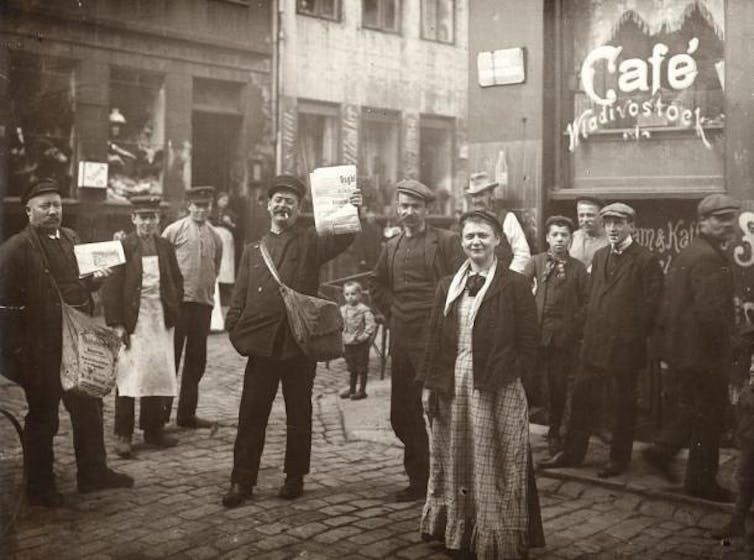
The answer from the king was a firm no. But a little more than two centuries later, in 1908, Danish newspapers began writing about a ghetto in a squalid part of Copenhagen. This ghetto had, the press reported, been established by Russian Jews in the slum then existing in the streets just east of Kongens Have, in the inner city of the capital.

Black and white photo of people standing on the street.
A Jewish newspaper vendor in the last century’s Eastern European ghetto in Vognmagergade, Copenhagen.
Copenhagen Museum and Josefine Ørskov

Inhabitants of this ghetto included Jewish immigrants who had fled the Russian empire due to religious and political persecution, along with others who wanted to find jobs and a better life. Emigration to North America was the final goal. A life in the slums of Copenhagen was only seen as a stop on the way.

Danish newspapers wrote with a mix of curiosity and excitement about the new “exotic” residents, who looked different and spoke Yiddish and Russian. Though these articles didn’t encourage people to visit the ghetto for a Sunday outing.
Quite the opposite. The area was poor and considered to be full of people with bad morals. Crime, drunkenness and suspicious political ideas were all part of its reputation. In other words, the ghetto was seen as dangerous.

Building division

Today’s “ghetto” or parallel society policies are built on that same instinct: that certain groups must be managed or dispersed to preserve cohesion.

Officially, the Danish government says it wants to break down parallel societies and promote integration. But in practice, the strategy has meant displacement. Families who have lived in the same neighbourhoods for decades are being moved, sometimes against their will, to prevent “concentrations” of non-western residents.

View of Superkilen park
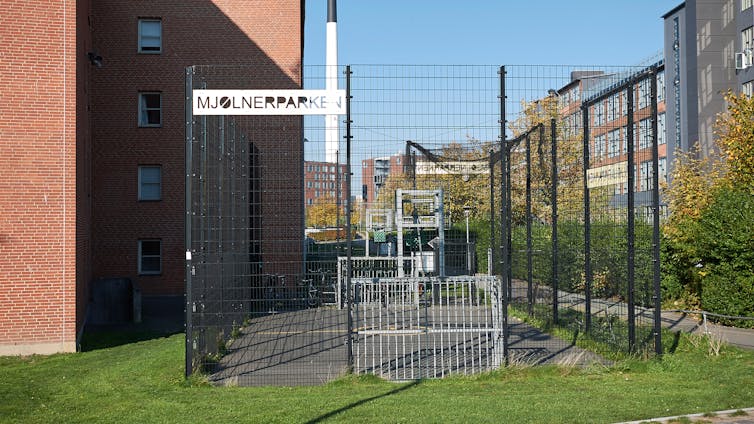
Mjølnerparken in Copenhagen, a public housing estate that for years appeared on Denmark’s official ‘ghetto list’. The area has since undergone extensive renovation and social interventions as part of state efforts to dismantle so-called ‘parallel societies’.
Shutterstock/simona flamigni, CC BY

In 2024, the European Court of Justice (ECJ) ruled that Denmark’s housing policy – used to reshape these districts – amounted to racial discrimination. And at the end of last year, the ECJ said the legislation may be unlawful.

As Britain’s Labour government looks to Denmark for inspiration on asylum and migration reform, it’s worth paying attention to this parallel story. Denmark’s housing and asylum systems are two sides of the same coin: both built on the idea that tighter control creates cohesion.

But the Danish experience suggests something different – that in trying to dismantle “parallel societies”, the country may be building new divisions of its own.


This article was commissioned as part of a partnership between
Videnskab.dk and The Conversation. You can read the article in Danish here.

The Conversation

Garbi Schmidt has received funding from the Carlsberg Research Foundation

ref. What the troubling use of the term ‘ghettos’ reveals about Denmark’s attitude towards immigration – https://theconversation.com/what-the-troubling-use-of-the-term-ghettos-reveals-about-denmarks-attitude-towards-immigration-268581

Sudan’s latest peace plan: what’s in it and does it stand a chance?

Source: The Conversation – Africa (2) – By Samir Ramzy, Researcher, Helwan University

US president Donald Trump’s advisor on Arab and African Affairs, Massad Boulos, announced in February 2026 that Washington and three Middle East states – Saudi Arabia, Egypt and the United Arab Emirates (collectively known as the Quad) – were close to finalising a detailed initiative aimed at ending Sudan’s war. The plan resembled the roadmap shared by the Quad in September 2025.

According to Boulos, the proposal had received preliminary approval from the two warring parties in the civil war: Sudan’s Armed Forces and the paramilitary Rapid Support Forces (RSF).

Civil war erupted in the country in mid-April 2023 over disputes surrounding military reform and the future configuration of Sudan’s political system. Since then, more than 14 million Sudanese have been displaced inside and outside the country. Tens of thousands have been killed and more than half of the population – around 21 million people – are facing acute hunger.

Meanwhile, the battlefield has produced a de facto territorial split. The army and its allies remain entrenched in eastern, northern and central Sudan, including the capital, Khartoum. The RSF controls much of western Sudan, including all Darfur states.

Active fighting is now largely concentrated in Kordofan, which lies between the two zones of control. The region represents 20% of Sudan’s territory, extends over roughly 390,000 square kilometres and has a population of around 8 million.

Based on my research on Sudan’s political and conflict dynamics, I argue that the prospects for the Quad-led initiative remain limited in the short term, even if it could, over time, help pave the way for a ceasefire.

Continued military escalation, deep mistrust between the Sudanese army and the paramilitary forces, and the army’s refusal to legitimise the RSF undermine prospects for de-escalation.

Additionally, regional and international actors have yet to generate sufficient pressure for peace. Competing regional interests and continued external support for the warring parties reduce incentives for compromise. As a result, the most realistic outcome for now is a temporary humanitarian pause rather than a lasting political settlement.

The obstacles

The latest Quad framework has five main parts:

  • an immediate ceasefire

  • unhindered humanitarian access

  • civilian protection

  • the launch of a political process leading to civilian governance

  • a reconstruction pathway supported by a pledged US$1.5 billion.

Media leaks suggest the proposal includes coordinated withdrawals by Sudanese warring parties from major cities.

Under the proposal, the RSF would pull back from key positions in South Kordofan and around El-Obeid, the closest RSF-controlled area to Khartoum. Army units in the capital would, meanwhile, be replaced by local police as part of efforts to prepare urban centres for civilian governance.

A UN-led mechanism would monitor the ceasefire and secure humanitarian corridors.

Despite the seriousness of this proposal, developments on the ground indicate that neither side is ready to de-escalate. The biggest obstacles continue to be:

1. The army’s refusal to legitimise the RSF

Within hours of the initiative’s announcement, army commander Abdel Fattah al-Burhan publicly reiterated that he would not accept any political or military role for the RSF.

This stance aligns with reports that senior army figures objected to key provisions of the Quad proposal, particularly those allowing the RSF to retain local governance structures in areas under its control to facilitate aid delivery.

For the army, recognising such arrangements would amount to legitimising the RSF as a political actor.

2. The army’s broader insistence that it alone should oversee any reform of Sudan’s military institutions

This is the very issue that triggered the war in 2023.

3. Escalation on the battlefield

Neither side appears to be preparing for withdrawals. On the contrary, recent weeks have seen escalating clashes and the opening of new fronts.

For instance, the Sudan People’s Liberation Movement–North, an RSF ally, has launched new attacks against army forces in Blue Nile state.

At the same time, the army has succeeded in lifting sieges on key towns in South Kordofan that had been encircled by the RSF for nearly two years. This increasingly complex military map makes agreement on withdrawal zones exceptionally difficult.

4. Deep mistrust between the warring parties

This mistrust derailed previous efforts. In May 2023, the US-Saudi mediated Jeddah agreement collapsed after both sides reneged on commitments to withdraw from civilian areas.

5. External actors are not yet incentivising peace

Regional and international dynamics remain a major obstacle. This includes some of the Quad’s members, who publicly endorse a ceasefire even as battlefield realities suggest otherwise. These actors have repeatedly denied accusations of providing military support to one side or the other.

As long as both Sudanese warring parties retain access to regional backing, there is little incentive to halt the fighting. Continued war allows them to compete over territory and extract resources while sidelining any meaningful civilian political alternative.

Chances of breakthrough

A breakthrough is possible. But it won’t happen quickly. A meaningful shift would require stronger international pressure.

Washington appears to be moving gradually in this direction as part of a broader effort to consolidate western influence in Sudan while curbing rival regional and global actors. This is happening most notably amid concerns over Russia’s reported interest in establishing a naval facility in Port Sudan.

A pillar of this approach is drying up the drivers of war, especially arms flows. In December 2025, the US Congress passed legislation expanding American intelligence engagement in Sudan to monitor and expose external actors fuelling the conflict. The language of the bill suggests that all suppliers are potential targets.

In this context, media leaks about external involvement in Sudan can be seen as a form of political pressure on arms suppliers. This places current providers in a difficult position: either align with Washington’s framework or risk confrontation with it.

Regional actors may gradually follow suit if Washington demonstrates sustained resolve. Egypt, in particular, could pivot towards a ceasefire as the conflict edges closer to Blue Nile state near Ethiopia’s Grand Renaissance Dam, a core national security concern for Cairo.

These dynamics could eventually restrict external military support to both Sudanese parties, narrowing their options and increasing the geopolitical cost of continued war. In this context, maintaining current suppliers of Russian, Chinese and Iranian weapons could provoke countermeasures by Washington and its allies, a costly gamble for both sides.

Over time, this may push the army and the RSF towards negotiations, at least to secure a humanitarian ceasefire.

The Conversation

Samir Ramzy does not work for, consult, own shares in or receive funding from any company or organisation that would benefit from this article, and has disclosed no relevant affiliations beyond their academic appointment.

ref. Sudan’s latest peace plan: what’s in it and does it stand a chance? – https://theconversation.com/sudans-latest-peace-plan-whats-in-it-and-does-it-stand-a-chance-275456

Four symbolic moments in Bad Bunny’s Super Bowl halftime show

Source: The Conversation – UK – By Natalia Rodríguez Vicente, Lecturer in Translation & Interpreting Studies, University of Essex

The Super Bowl halftime show is one of the most watched cultural events in the US. Every year, tens of millions of viewers tune in, many of them less for the sport than for the spectacle. That reach makes halftime a rare moment in which ideas about national identity and belonging are staged for a global audience.

At the 2026 Super Bowl in Santa Clara, Puerto Rican artist Bad Bunny delivered a halftime performance almost entirely in Spanish and packed with carefully staged symbolism. To understand what the show was communicating, it helps to look closely at four key moments.

1. Sugar cane fields

The show opened in a landscape of sugar cane fields and performers dressed as jíbaros (rural farmers) wearing traditional pava hats. These elements nod to the island’s agricultural roots and carry deep historical and cultural weight, as sugar cane points directly to the plantation economy, first under Spanish colonial rule and later reorganised under US governance.

2. Ricky Martin and Lo Que Le Pasó a Hawái

Ricky Martin is a Puerto Rican singer best known internationally for hits like Livin’ la Vida Loca. Instead of performing one of his global anthems, he sang an excerpt from Bad Bunny’s song Lo Que Le Pasó a Hawái, which frames Hawaii as a cautionary tale for Puerto Rico, warning against the consequences of over-tourism and gentrification:

Quieren quitarme el río
Y también la playa.
Quieren el barrio mío
Y que abuelita se vaya.

No, no suelte’ la bandera
ni olvide’ el lelolai.
Que no quiero que hagan contigo
lo que le pasó a Hawái.

They want to take my river,
and want the beach as well.
They want my neighbourhood,
and want Grandma gone.

No, don’t let go of the flag,
and don’t forget the lelolai.
As I don’t want them to do to you
what they did to Hawaiʻi.

The lyrics trace loss as a gradual process that begins with land and natural resources (“the river” and “the beach”), then moves inward to community space (“my neighbourhood”), family continuity (“grandma”), and cultural memory itself (“lelolai”, a traditional refrain), urging listeners not to “let go of the flag”, as a symbol of identity.

3. Electricity poles sparking

The staging of jíbaros climbing sparking electricity poles, suggesting overload and failure, during El Apagón, Bad Bunny’s protest song about chronic power outages on the island, can be read as a visual reference to Puerto Rico’s fragile power grid following Hurricane Maria.

According to the latest data from the US Energy Information Administration, Puerto Rico experienced an average of around 27 hours of power outages per year between 2021 and 2024. By contrast, customers in the mainland US typically had about two hours of outages per year. The poles thus functioned as signs of uneven material conditions.

4. A continental roll call after God Bless America

The performance closed with Bad Bunny saying: “God Bless America” followed by a roll call of countries across South, Central and North America, as well as parts of the Caribbean. The sequence challenged a familiar assumption about who counts as “America”. In everyday US English, America is often used as shorthand for the United States as in Donald Trump’s slogan “Make America Great Again.” Across much of Latin America, América refers to the continent.

Why the symbolism matters

These four moments form one narrative: the sugar cane fields root the performance in Puerto Rico’s colonial history. Ricky Martin’s lyrics name the risk of cultural erasure. The electricity poles tie questions of identity to material inequality. Finally, the roll call after God Bless America expands the frame outward, celebrating the continent as a shared, plural space.

The show has provoked strong reactions, including Donald Trump dismissing it as “absolutely terrible, one of the worst, ever”.

On the biggest stage in US popular culture, the performance pushed Latin visibility at the highest mainstream level. Against the scale of the spectacle, and the controversy it provoked, a message glowed quietly in the background: “The only thing more powerful than hate is love.”


Looking for something good? Cut through the noise with a carefully curated selection of the latest releases, live events and exhibitions, straight to your inbox every fortnight, on Fridays. Sign up here.


The Conversation

Natalia Rodríguez Vicente does not work for, consult, own shares in or receive funding from any company or organisation that would benefit from this article, and has disclosed no relevant affiliations beyond their academic appointment.

ref. Four symbolic moments in Bad Bunny’s Super Bowl halftime show – https://theconversation.com/four-symbolic-moments-in-bad-bunnys-super-bowl-halftime-show-275527

El norovirus que ha obligado a posponer un partido de los Juegos Olímpicos de Invierno

Source: The Conversation – (in Spanish) – By Raúl Rivas González, Catedrático de Microbiología. Miembro de la Sociedad Española de Microbiología., Universidad de Salamanca

MikeDotta/Shutterstock

El 5 de febrero, el Comité Olímpico Internacional, el Comité Organizador de los Juegos Olímpicos de Invierno de Milano Cortina 2026 y la Federación Internacional de Hockey sobre Hielo decidieron posponer el partido que enfrentaba a Finlandia y Canadá, actual campeón olímpico, en la competición olímpica de hockey sobre hielo femenino.

La decisión fue tomada tras detectar varios casos de norovirus. Catorce integrantes del equipo finlandés, incluyendo jugadoras y personal técnico, resultaron infectadas o tuvieron que ser aisladas. Simultáneamente, apareció un caso positivo en el equipo de hockey sobre hielo femenino de Suiza, lo que obligó a la jugadora afectada a aislarse en una habitación individual y al resto del grupo a extremar las precauciones, llegando incluso a no estar presentes en el desfile de la ceremonia de apertura.

A pesar de la alarma inicial, el Comité Olímpico Internacional (COI) ha intentado calmar los ánimos y ha declarado que de momento no hay un brote generalizado, sino casos aislados y contenidos en delegaciones específicas.

Un protocolo de respuesta rápida

Para contener un posible brote de norovirus en los Juegos de Milano Cortina 2026 y evitar que afecte a más disciplinas, el Comité Olímpico Internacional (COI) y las delegaciones nacionales han implementado un protocolo de respuesta rápida.

Éste incluye el aislamiento de los deportistas con síntomas, posponer partidos si fuera necesario para permitir que el periodo de incubación y contagio pase sin afectar la integridad de la competición y establecer un sistema de vigilancia activa para cualquier persona que haya compartido transporte o vestuarios con los casos positivos. También se han intensificado las labores de desinfección en la Milano Rho Ice Hockey Arena y en las zonas comunes de las seis Villas Olímpicas, además de instalar puntos adicionales de lavado de manos, reforzar las inspecciones de seguridad alimentaria y evitar el autoservicio en el catering.

La principal causa de gastroenteritis aguda en el mundo

El norovirus es un virus de ARN monocatenario perteneciente a la familia Caliciviridae, y es la principal causa de gastroenteritis aguda (GEA) en el mundo, provocando cerca de 685 millones de casos al año. Globalmente, se estima que ocurren 1,5 millones de muertes por GEA, de las cuales entre 136 000 y 278 000 son debidas al norovirus.

Fue identificado por primera vez en 1968 durante un brote de gastroenteritis aguda en Norwalk (Ohio, EE. UU.), donde se aisló de las heces de pacientes afectados. Por esta circunstancia, en primera instancia recibió el nombre de “virus de Norwalk”.

En la actualidad, se conocen 10 genogrupos y 49 genotipos. La clasificación en genogrupos y genotipos está basada en la diversidad de aminoácidos en dos proteínas, VP1 y ORF1. Las infecciones humanas se deben predominantemente a los genogrupos GI, GII y GIV, siendo el genogrupo GII la causa más común de gastroenteritis.

Mueren más niños y ancianos

Los niños, ancianos y personas inmunocomprometidas son especialmente susceptibles a desarrollar cuadros graves. En países de bajos ingresos, la mortalidad es común en niños debido a la deshidratación. Por el contrario, en países desarrollados, las muertes ocurren principalmente en ancianos.

El norovirus es muy contagioso y se propaga con mucha facilidad y rapidez a través de personas enfermas y alimentos, agua y superficies contaminadas. La infección causa náuseas, dolor abdominal y vómitos y diarrea graves y repentinos.

Por lo general, las personas empiezan a tener síntomas entre 12 y 48 horas después de haber estado expuestas al norovirus. Aunque dichos síntomas suelen durar entre 24 y 48 horas, la debilidad posterior puede afectar seriamente el rendimiento de un atleta de élite.

El norovirus es ampliamente reconocido por su capacidad de provocar brotes rápidos y masivos en lugares cerrados o semicerrados, donde la alta concentración de personas y la convivencia estrecha facilitan la transmisión. Es el caso de hospitales, residencias de ancianos, guarderías, escuelas y, en especial, en cruceros. Y desde luego, una villa olímpica también puede ser un escenario perfecto para que se produzca un brote.

Ya pasó en el Campeonato Mundial de Atletismo de Londres 2017

El brote de norovirus ocurrido durante el Campeonato Mundial de Atletismo de Londres 2017 fue uno de los incidentes sanitarios más mediáticos en la historia reciente del deporte, generando una controversia significativa sobre las medidas de cuarentena. Afectó al rendimiento de varios atletas de élite, como el velocista de Botsuana Isaac Makwala, uno de los favoritos para las medallas en los 200 y 400 metros lisos.

En los Juegos Olímpicos de Invierno de Pyeongchang 2018 también hubo un brote de norovirus, con 261 casos totales confirmados.

El norovirus representa una amenaza para la industria turística porque tiene un impacto desproporcionado debido a la alta visibilidad mediática. Por esa razón, la prevención y el manejo de brotes de gastroenteritis aguda en cruceros siguen estándares y planes de higiene acordados internacionalmente. Entre otras medidas, se realiza un cribado previo al embarque, existe un protocolo de vigilancia una vez a bordo y se aisla a las personas infectadas. La aplicación de medidas de higiene ambiental y la educación de la tripulación y los pasajeros sobre el lavado de manos y la notificación de síntomas también son esenciales. En caso de brote, se cierran los restaurantes de autoservicio.

En el año 2025 fueron confirmados al menos 17 brotes en cruceros.

Sin medicamentos específicos

No hay medicamentos específicos para tratar las infecciones por norovirus. En la mayoría de los casos los síntomas desaparecen por sí solos después de unos días. Sin embargo, es importante mantenerse hidratado para prevenir la deshidratación severa y guardar reposo.

Los casos más graves pueden requerir tratamiento médico para prevenir la deshidratación, especialmente en niños pequeños, ancianos y personas con sistemas inmunológicos debilitados.

The Conversation

Raúl Rivas González no recibe salario, ni ejerce labores de consultoría, ni posee acciones, ni recibe financiación de ninguna compañía u organización que pueda obtener beneficio de este artículo, y ha declarado carecer de vínculos relevantes más allá del cargo académico citado.

ref. El norovirus que ha obligado a posponer un partido de los Juegos Olímpicos de Invierno – https://theconversation.com/el-norovirus-que-ha-obligado-a-posponer-un-partido-de-los-juegos-olimpicos-de-invierno-275467

¿Nacemos sabiendo lo que es la belleza… o lo aprendemos?

Source: The Conversation – (in Spanish) – By Antonio Félix Vico Prieto, Profesor Educación Musical, Universidad de Jaén, Universidad de Jaén

_Venus del espejo_ de Velázquez, uno de los ejemplos sobre los que se estudia la composición áurea en el arte. National Gallery/Wikimedia Commons

Desde hace siglos, artistas, arquitectos y científicos han sentido una fascinación especial por un número: 1,618…. Es la famosa proporción áurea, una relación matemática que aparece en templos griegos, las pinturas de Mondrian, conchas de nautilus, plantas, galaxias y hasta en las proporciones del cuerpo humano.

Con semejante currículum, no es extraño que se haya ganado la fama de ser el número de la “belleza universal”. Tanto es así, que si ponemos dos figuras con distintas proporciones delante de una persona, esta tenderá a seleccionar como más armoniosa la que respeta la proporción áurea.

Pero ¿realmente percibimos su belleza de manera instintiva? ¿O depende de nuestra formación y experiencia? En un estudio que realizamos en la Universidad de Jaén nos propusimos responder a estas preguntas comparando algo tan cotidiano como dos tipos de mirada: la de quienes han recibido formación artística y la de quienes no.

La belleza bajo la lupa (y el microscopio) de la ciencia

La fascinación por esta proporción no es nueva. Ya en el Renacimiento, el matemático Luca Pacioli la describía como “de divina proportione” y explicaba, en un famoso escrito del mismo nombre, su presencia en numerosas obras de arte y formas naturales. Desde entonces, no han faltado intentos por encontrar en ella una base biológica de la percepción estética, algo así como si nuestro cerebro llevara incorporado un detector interno de proporciones armoniosas.

Fotografía en la que se ha sobreimpreso la cuadrícula de composición según la proporción áurea: la torre sur del puente Golden Gate se encuentra exactamente en la línea áurea vertical derecha y la calzada en la línea áurea horizontal inferior.
Imagen de Brocken Inaglory con cuadrícula de Friederike Wiegand., CC BY

A lo largo de los siglos XIX y XX, varios estudios trataron de comprobar esta hipótesis de manera experimental. Algunos de ellos sugerían que existe una preferencia por rectángulos cercanos a la proporción áurea, pero otros trabajos cuestionaron estos resultados mostrando que la supuesta preferencia no era tan consistente como se creía.

Y claro, a la luz de esos hallazgos, surgía una pregunta tan necesaria como incómoda: si la proporción áurea se presenta como una forma de belleza universal, ¿por qué no la prefiere todo el mundo?

Cuando la belleza no salta a la vista

En un estudio previo ya habíamos detectado algo curioso.

Las personas sin formación artística preferían obras de arte basadas en la proporción áurea frente a composiciones basadas en proporciones muy extremas (por ejemplo, 1/6, una proporción que difícilmente pasaría el filtro estético de Instagram). Curiosamente, esa preferencia desaparecía cuando la comparación se hacía con una proporción más equilibrada (por ejemplo, ½, una proporción clásica, simétrica y que produce serenidad según algunos ascetas… e instagramers).

El resultado despertó una sospecha razonable: tal vez esas personas no estaban eligiendo la proporción áurea persuadidas por una armonía matemática que ellas mismas desconocían, sino simplemente porque la proporción más extrema les resultaba poco agradable.

Para testar esta hipótesis, planteamos la investigación comparando dos grupos: estudiantes de Psicología, sin formación artística específica (grupo “Naïve”) y estudiantes de Bellas Artes, con entrenamiento y experiencia artística (grupo “Cuasi-experto”). La pregunta que nos hacíamos era sencilla y directa: ¿la educación artística aumenta la sensibilidad hacia cierto tipo de armonía visual?

Veamos qué sucedió en “el combate por la belleza”.

Áurea vs. extrema

En un primer experimento, a los participantes se les presentaban, durante apenas un segundo y medio, dos versiones de un mismo cuadro inspirado en Mondrian: uno ajustado a la proporción áurea y otro basado en una proporción extrema (1/6). La tarea era muy sencilla: solo tenían que elegir cuál les parecía más bello.

Los resultados no dejaron lugar a dudas. Ambos grupos prefirieron los inspirados en la proporción áurea, aunque los estudiantes de Bellas Artes (como si les fuese su prestigio en ello) lo hicieron con mucha más convicción. Esto indicaba que esta relación clásica parecía funcionar como un criterio estético básico, incluso para personas sin formación artística.

Pero claro, los resultados no resolvían la cuestión clave: ¿preferimos la proporción áurea por sí misma o solo porque la alternativa es poco atractiva? Para abordar este punto, diseñamos otro experimento. El segundo asalto del combate prometía ser más revelador.

Un duelo más equilibrado

Esta vez, la proporción áurea se enfrentaba a un rival más digno: la proporción ½. Tradicionalmente ambas armónicas se consideran armónicas, así que la comparación permitiría evaluar si la supuesta superioridad estética de la proporción áurea se sostenía en condiciones más ajustadas.

Cada columna corresponde a un grupo de pinturas adaptadas de Mondrian utilizadas en los experimentos 1 y 2. Las filas corresponden a diferentes disposiciones geométricas: proporción áurea (GR), media proporción (1/2) y sexta proporción (1/6).
Cada columna corresponde a un grupo de pinturas adaptadas de Mondrian utilizadas en los experimentos 1 y 2. Las filas corresponden a diferentes disposiciones geométricas: proporción áurea (GR), media proporción (½) y sexta proporción (1/6).
A. Félix Vico-Prieto, Ángel Cagigas, Juan M. Rosas y José E. Callejas-Aguilera, CC BY

Fue aquí donde apareció la diferencia clave, el golpe maestro. Las personas sin formación artística no mostraron una preferencia clara entre ambas. Sin embargo, y de nuevo haciendo una broma pugilística, los estudiantes de Bellas Artes no dieron su brazo a torcer y se inclinaron de forma significativa por la proporción áurea. Para ellos, no solo destacaba frente a proporciones extremas, sino que superaba incluso a otras proporciones que también consideramos equilibradas y armoniosas.

Más allá de las matemáticas: la experiencia de la belleza

Esto nos permite asomarnos a un territorio fascinante: el de la experiencia real de la belleza. Casi por knock out, los resultados nos llevan a recordar algo fundamental: la percepción de la belleza no se reduce a aplicar una fórmula matemática.

Sin duda alguna, la proporción áurea ejerce un atractivo universal. Podemos inferir que quizá existe cierta predisposición natural hacia ella, ya que incluso personas sin ningún tipo de formación artística suelen preferirla.

Sin embargo, cuando observamos a quienes han dedicado años a mirar, analizar y crear imágenes, la historia parece cambiar. Para los estudiantes de Bellas Artes, la proporción áurea adquiere un matiz distinto. Ellos no solo se inclinan por ella con mayor claridad. Además, su mirada entrenada les permite detectar diferencias sutiles que para otros pasan desapercibidas. No es que vean “más bonito”, sino que ven de otra manera.

Todo esto invita a pensar que la percepción de belleza no es únicamente un fenómeno biológico o instintivo. Con seguridad debe existir una mirada natural hacia ella, sí, pero la educación y la experiencia parecen jugar un papel decisivo en cómo percibimos y valoramos lo que vemos.

El estudio, por supuesto, deja preguntas abiertas: ¿las personas con mayor sensibilidad estética nacen así o es precisamente esa sensibilidad la que se construye a través del aprendizaje? Posiblemente no se trate solo de una cuestión de educación, sino que quienes tienen esa sensibilidad innata orienten sus intereses y formación hacia el arte. No obstante, también es probable que predisposición y educación dialoguen, se influyan y se potencien.

Lo que este trabajo pone sobre la mesa es que la percepción de la belleza quizá no sea algo universal, sino una experiencia en constante construcción que reside en la manera en la que hemos aprendido a mirar.


¿Quiere recibir más artículos como este? Suscríbase a Suplemento Cultural y reciba la actualidad cultural y una selección de los mejores artículos de historia, literatura, cine, arte o música, seleccionados por nuestra editora de Cultura Claudia Lorenzo.


The Conversation

Las personas firmantes no son asalariadas, ni consultoras, ni poseen acciones, ni reciben financiación de ninguna compañía u organización que pueda obtener beneficio de este artículo, y han declarado carecer de vínculos relevantes más allá del cargo académico citado anteriormente.

ref. ¿Nacemos sabiendo lo que es la belleza… o lo aprendemos? – https://theconversation.com/nacemos-sabiendo-lo-que-es-la-belleza-o-lo-aprendemos-273153