“¿Me pone un café?”. Una de las acciones más cotidianas de nuestra vida se ha encarecido notablemente en los últimos años y, aunque muchos consumidores perciben esta subida, pocos se preguntan qué hay detrás del precio de una taza.
El café es uno de los productos agrícolas más globalizados del mundo y su precio depende de una cadena que va del cafetal a la cafetería (o a nuestra cafetera). Por eso, cuando pagamos una taza no solo pagamos el café que bebemos.
¿Robusta o arábica?
Empecemos por subrayar que no todo el café es igual. En el mercado global predominan dos grandes variedades: arábica y robusta. El arábica, más valorado por su perfil aromático, domina los segmentos de mayor calidad. El robusta, más económico, se utiliza sobre todo en mezclas comerciales, expreso y café soluble. A ello se suma la diferencia entre el café convencional (el del “café con leche en vaso”) y el de especialidad en el que origen, trazabilidad y calidad sensorial justifican precios superiores.
Tampoco el aumento de precios les afecta del mismo modo. Desde 2021, buena parte del aumento internacional de precios ha estado vinculado precisamente a fenómenos climáticos adversos que han reducido la oferta de café, especialmente el arábica. Sin embargo, el clima no lo explica todo: el precio responde también a qué interpretan los mercados internacionales que puede ocurrir en los próximos meses.
El café en los mercados financieros
Como otras materias primas, el café también cotiza en mercados internacionales mediante contratos de futuros. Es decir, no solo se negocia el café disponible hoy, sino las expectativas sobre oferta, costes y riesgos futuros. De hecho, en 2026 las perspectivas de una cosecha brasileña más abundante han moderado las cotizaciones de los futuros a la baja. Sin embargo, ese ajuste no se traslada de inmediato al consumidor (y no siempre llega a hacerlo).
A todo esto se suma el componente logístico. El café se produce principalmente en
América Latina, África y Asia, pero se consume mayoritariamente en Europa y Estados Unidos. La pandemia, el encarecimiento energético y los cuellos de botella han disparado los costes de transporte. Además, la cadena de valor del café no termina en el tostador, ni en el supermercado. En las últimas dos décadas, una parte creciente del valor económico del sector cafetero se ha desplazado hacia “la experiencia de consumo”, transformando esta bebida cotidiana en un producto cultural, social y aspiracional.
A nivel global han proliferado las cafeterías especializadas, impulsando un modelo de negocio en el que el consumidor no paga por el café sino por el entorno y la experiencia sensorial. Este modelo es la evolución natural de la revolución en el consumo de café que supuso la aparición y crecimiento de cadenas de cafeterías como Starbucks, Costa Coffee o Tim Hortons.
Paralelamente, el sector ha vivido un fenómeno aparentemente opuesto, pero igualmente transformador: la industrialización de la experiencia del café en el hogar. Grandes compañías como Nestlé han transformado el consumo de café mediante el desarrollo de cápsulas monodosis de uso doméstico.
En ambos modelos, una parte creciente del valor económico se desplaza desde el grano hacia la facilidad de acceso, la tecnología, la marca y la experiencia. Es así como el café atraviesa una larga cadena antes de llegar a la taza, y cada eslabón añade costes, transforma el producto y captura parte del margen económico.
Sin grano no hay café
Hay una realidad que conviene no perder de vista: que el precio internacional del café suba no implica necesariamente mayores beneficios para sus productores. Mientras que las grandes empresas pueden diversificar sus riesgos, negociar precios a gran escala y aplicar instrumentos financieros para protegerse de las fluctuaciones en los precios, los mayores riesgos siguen recayendo sobre la base de la cadena de valor cafetera.
Millones de pequeños caficultores –muchos en economías en desarrollo con fragilidad institucional, baja productividad y limitada capacidad de negociación– afrontan la incertidumbre climática, la volatilidad de precios y un incremento constante en los costes, con escasos márgenes financieros.
La asimetría es evidente: quienes más dependen del café suelen ser quienes menos herramientas tienen para protegerse. En este contexto han cobrado fuerza las cooperativas, asociaciones de productores y esquemas de comercio justo que buscan reducir la intermediación, mejorar el poder negociador de los agricultores y favorecer una distribución más equilibrada del valor generado.
Porque, aunque una cafetería de especialidad o una cápsula premium expliquen parte del precio final, conviene recordar que sin productores, sin cafetales y sin granos, simplemente no hay café.
Las personas firmantes no son asalariadas, ni consultoras, ni poseen acciones, ni reciben financiación de ninguna compañía u organización que pueda obtener beneficio de este artículo, y han declarado carecer de vínculos relevantes más allá del cargo académico citado anteriormente.
Source: The Conversation – (in Spanish) – By Héctor Reyes Martín, Profesor de Física y Neurociencias en la Escuela Politécnica, Universidad Francisco de Vitoria
En el contexto universitario actual, en el que predominan la inmediatez y la obtención de resultados, a menudo facilitados por la inteligencia artificial generativa, ¿es posible educar en otros valores?
Lo que en primera instancia puede parecer una carga (incorporar y gestionar esta herramienta tecnológica en la enseñanza) podría convertirse en un reto positivo y llevar los aprendizajes más allá de aspectos curriculares. ¿Cómo? Usándola para educar en virtudes intelectuales (la prudencia, la paciencia, la autoestima, la resiliencia ante la dificultad o la perseverancia) y de esta manera animar a los estudiantes a crecer como personas más allá del rendimiento académico.
Medir el aprendizaje con IA
Con este objetivo, en nuestro grupo de investigación en Física y Neurociencia hemos elaborado dos guías detalladas, una sobre una asignatura concreta y la otra sobre el uso de la inteligencia artificial. Hemos podido comprobar que su uso combinado ayuda a los estudiantes a controlar el proceso de aprendizaje y de esta manera usar la inteligencia artificial con prudencia y autocontrol.
La primera guía explica cómo estudiar los contenidos curriculares del aprendizaje de la física, ayudando a personalizar el proceso de aprendizaje del alumnado de una manera más interactiva que un libro de texto convencional.
Por ejemplo, en la guía advertimos a los estudiantes de que, para pasar del mundo de la intuición al conocimiento formal de la física, se necesita tiempo y tesón. Nuestro cerebro ha evolucionado para hacerse una idea rápida de cómo es el mundo en el que estamos de la manera más eficaz posible, lo cual a veces dificulta alcanzar un conocimiento técnico de las cosas.
Dejar que en el aula broten los prejuicios o ideas intuitivas permite, además de entrenar la escucha respetuosa, entender cómo nuestra percepción de la realidad es tantas veces errónea.
Usar la IA con pautas específicas
La otra guía pauta el uso de la inteligencia artificial en el aprendizaje: se proponen tiempos de estudio en el que su uso se hace absolutamente recomendable, mientras que en determinadas circunstancias estará limitado o incluso prohibido. Las preguntas que el alumnado debe hacerse son: ¿Te ayuda o te sustituye? ¿Su uso te permite aprender, o simplemente terminar un ejercicio o proyecto de investigación?
En este manual se propone cómo afrontar un problema de modo autónomo. La IA tiene un papel en cada una de las fases, desde comprender el enunciado, hasta resolverlo matemáticamente y discutir los resultados, pasando por asociar los contenidos con otros que se han estudiado antes. Por ejemplo, puede ayudar a localizar las dificultades matemáticas en lugar de resolver el ejercicio; nos ofrece pistas sobre los principios físicos retomando la teoría o corrige una redacción realizada por el estudiante sobre cómo se resuelve el problema, puliendo la verbalización y la precisión que se requiere en el aprendizaje.
Aprendemos a usar la guía en clase, en los tiempos de actividades colaborativas. La idea es que el alumnado pueda emplearla también de modo autónomo en su estudio personal.
Por qué funciona
Un cuestionario validado por expertos de diferentes áreas (físicos, ingenieros y educadores) nos ha permitido medir el nivel de seguimiento de las dos guías en cada estudiante, qué nivel de autocontrol y prudencia muestran en el uso de las nuevas herramientas digitales.
Al alumnado se le pregunta si compara sus razonamientos con los que puede plantear la IAG, si valoran el uso de este recurso como una ayuda o una forma rápida de completar una tarea, incluso si usan la IAG para que la tecnología detecte sus errores y les ayude a localizarlos, sin mostrar explícitamente cuáles son.
El alumnado genera un juicio, no solo sobre su aprendizaje, sino también sobre su propia persona. Este cuestionario se puede rellenar una única vez cada curso o en distintos momentos del año. Lo importante es que tiene validez psicométrica, por lo que es fiable como herramienta de seguimiento.
Pero, como en cualquier prueba psicométrica, se puede mentir. Lo que ofrece ciertas garantías es el hecho de que el alumnado sabe que la propuesta es un bien para ellos, por lo que se implican positivamente. Por otro lado, la estadística ayuda mucho: si todos mintieran, los resultados serían altamente incoherentes.
Autocontrol y pensamiento crítico
Así hemos comprobado cómo el uso adecuado de las dos guías mejora la autorregulación, el control que el alumnado tiene sobre su proceso de aprendizaje. También hemos visto que los estudiantes con mayor autorregulación tienen más capacidad de comprensión de lo que se está estudiando, mejorando así su razonamiento físico-matemático. En definitiva, mejora la forma de estudiar del alumnado, les ayuda a conocerse mejor y a afrontar el reto del estudio, no solo con herramientas cognitivas adecuadas, sino también con nuevas habilidades personales, a través del crecimiento en virtudes.
Este método de trabajo combinando instrucción humana y apoyo de la tecnología de manera controlada y crítica ayuda a aprender tanto de uno mismo como de la materia que se está estudiando, y a entender cómo las virtudes intelectuales que hemos mencionado al principio (la prudencia, la paciencia, la perseverancia) nos pueden hacer no solo mejores estudiantes, sino personas más capaces y más preparadas para la vida.
Las personas firmantes no son asalariadas, ni consultoras, ni poseen acciones, ni reciben financiación de ninguna compañía u organización que pueda obtener beneficio de este artículo, y han declarado carecer de vínculos relevantes más allá del cargo académico citado anteriormente.
Source: The Conversation – (in Spanish) – By Carmen Varo Varo, Catedrática de Lingüística General en la UCA, investigadora del Instituto de Lingüística Aplicada (ILA). Semántica léxica, déficits semánticos y perfiles lingüísticos en trastornos ddel neurodesarrollo y enfermedades neurodegenerativas, Universidad de Cádiz
Hay familias que llevan años en lo que los especialistas llaman un limbo diagnóstico: saben que “algo” ocurre, pero ninguna prueba lo confirma con suficiente claridad. A veces se trata de un hijo que, superando los umbrales mínimos en las pruebas estandarizadas, tiene “algo” que no encaja. Otras es un mayor en el que “algo” ha cambiado, pero de una forma difícil de explicar. En estos contextos, deberíamos prestar más atención al lenguaje.
Puesto que tendemos a pensar en el lenguaje como un instrumento de comunicación social, los problemas de lenguaje son entendidos como aquellos que interfieren con esa función comunicativa. En estos casos, la intervención consiste, fundamentalmente, en restaurarla o, al menos, compensarla.
Este enfoque funcional relega a un segundo plano el hecho de que en el lenguaje también se proyectan los principales mecanismos de la cognición: la memoria, la atención, la categorización, la función ejecutiva, e incluso la emoción.
De hecho, el análisis lingüístico no solo nos informa sobre las competencias relacionadas con lenguaje sino, de manera especial, sobre la arquitectura cognitiva de cada persona.
Cuando el lenguaje se deteriora
Cuando el lenguaje se deteriora o se desarrolla de forma atípica no lo hace al azar: sigue patrones que reflejan la peculiar organización de los sistemas cognitivos subyacentes.
Por un lado, la memoria declarativa actúa como un almacén mental para hechos y palabras. De ella dependen tanto el vocabulario como la capacidad para captar la intención de un mensaje en su contexto social.
Por otro lado, la memoria procedimental se encarga de las habilidades y secuencias automatizadas. Este sistema gestiona la arquitectura estructural del lenguaje, desde la combinación de sonidos hasta la formación de palabras y la construcción de oraciones.
A partir de esta distinción, la mirada clínica permite interpretar perfiles lingüísticos que, a primera vista, resultan desconcertantes.
Corta pero no es un cuchillo
Imaginemos un paciente que, cuando habla, construye oraciones gramaticalmente válidas pero vacías de contenido semántico. Por ejemplo, dice: “necesito algo para cortar… no es un cuchillo… algo que corta” para referirse a un serrucho. Se trata de una disociación entre fonología y gramática frente al léxico que puede alertar de que hay una demencia semántica.
Este patrón tan específico puede indicar la atrofia de una zona del cerebro llamada neocórtex temporal izquierdo, región cerebral que funciona como el centro logístico de nuestros conceptos y conocimientos.
Torpeza en el discurso y torpeza motora
La disociación puede encontrarse también en dirección contraria. Pensemos en una niña de diez años con una alteración genética poco habitual con un discurso lento, que tiende a acumular comienzos oracionales (“Ella…es que… es que… es que ella quería…”), con largas pausas y excesivas autocorrecciones. Es el rastro de una mente que sabe lo que quiere decir, pero que lucha contra la maquinaria que se ocupa de unir las piezas.
Su comprensión y su vocabulario son excelentes, incluso es capaz de producir expresiones como “Va al cole guapa vestida”, donde el orden está alterado pero el sentido es nítido. O puede construir frases como “Conmigo se lleva bien de generosa”, que muestran cómo su mente ha fusionado dos estructuras distintas en el intento de ensamblar el mensaje.
Este perfil, que suele acompañarse de torpeza motora y dificultades atencionales, muestra que el problema no está en el conocimiento del mundo o el almacén de conceptos, sino en la maquinaria encargada de secuenciar y automatizar las reglas del lenguaje.
El diagnóstico del lingüista
¿Cómo puede la lingüística ayudar en estos casos? La clave no está en analizar el habla espontánea en situaciones reales, en las que la mente debe gestionar el lenguaje, a la vez que la atención y la memoria. No se trata simplemente de hacer un inventario de errores –como quien cuenta piezas rotas–, sino de interpretar esos fallos como un mapa coherente. Al observar qué piezas fallan y cuáles resisten, el lingüista puede realizar un diagnóstico funcional: una explicación detallada de cómo está organizado el cerebro de esa persona.
Así, el lenguaje deja de ser el problema para convertirse en la herramienta que nos dice exactamente dónde necesita apoyo la paciente.
Desde trastornos del neurodesarrollo hasta enfermedades neurodegenerativas
Esto vale tanto para los trastornos del neurodesarrollo (en niños) como para las enfermedades neurodegenerativas en sus fases iniciales (en mayores). En ambos, casos, los cambios en el lenguaje suelen preceder a la confirmación diagnóstica por otras vías. Y se puede llevar a cabo sin procedimientos invasivos y con un impacto directo sobre la calidad de vida cotidiana.
Hay veces en que falla la fluidez verbal en la categorización semántica, es decir, al organizar y clasificar los significados. Por ejemplo, cuando una persona, al tratar de decir “tenedor”, es incapaz de decidir entre la palabra correcta y opciones como “cuchara” y “cuchillo”, que se encuentran semánticamente cercanas.
Si alguien pierde la especificidad del contenido de forma progresiva, por ejemplo pasando de decir “canario” a “pájaro”, hasta finalmente referirse a él como “animal” o “bicho”, hablamos de un deterioro de la memoria semántica a largo plazo.
La importancia de identificar lo que está preservado
La terapia más eficaz no es la que intenta reconstruir lo que se ha perdido o nunca se desarrolló de manera típica, sino la que identifica lo que está preservado y lo convierte en apoyo para lo que ya está comprometido.
En el adulto con demencia semántica en fase temprana, las rutas fonológica y gramatical intactas sostienen todavía durante un tiempo la comunicación que el vaciamiento semántico –esa pérdida progresiva de los conceptos y los nombres de las cosas que deja el lenguaje como una estructura hueca– irá erosionando.
En la niña con la alteración genética, su excelente capacidad para entender la intención del otro, respetar los turnos de palabra y usar el contexto para hacerse entender nos permiten construir estrategias de comunicación funcional eficaces.
Aprender a leer esos patrones, en lugar de simplemente catalogar déficits por niveles lingüísticos, es lo que convierte el análisis del lenguaje en un instrumento de diagnóstico cognitivo temprano.
Carmen Varo Varo recibe fondos de: Proyecto: «Estudio neurocognitivo longitudinal y transversal de las capacidades acústico-perceptivas y la función lingüística en niños prematuros», Proyecto de Excelencia (Modalidad Reto Consolidado): «Estudio psicolingüístico longitudinal de niños con cromosomopatías de baja prevalencia» y Proyecto de Investigación (Responsabilidad Social): «Herramientas para la evaluación y rehabilitación del lenguaje en niños con cromosomopatías de baja prevalencia».
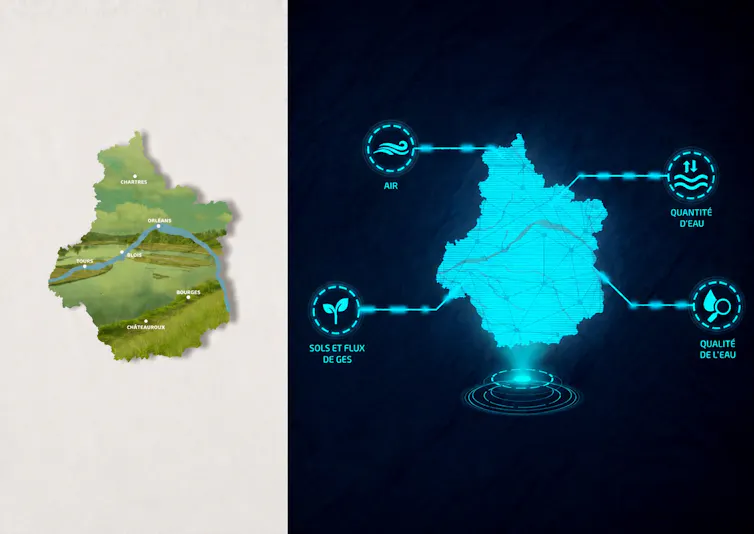
Les jumeaux numériques environnementaux permettent de mieux comprendre les ressources naturelles, un objectif au cœur du programme ARD JUNON, soutenu par la Région Centre-Val de Loire. Ces outils centralisent des données de terrain, des modèles et des analyses.Didier Depoorter/BRGM, Fourni par l’auteur
Faut-il adapter les pratiques agricoles face à des ressources en eau de plus en plus incertaines ? Peut-on renforcer la résilience des territoires face aux risques d’inondation ou de pollution de l’air ? Comment anticiper les effets d’aménagements sur les sols, l’eau ou la biodiversité ?
Les réponses à ces questions reposent aujourd’hui sur des données fragmentaires et des arbitrages complexes entre acteurs du territoire. Mais une nouvelle approche émerge : l’usage de jumeaux numériques environnementaux, qui permet de représenter numériquement et automatiquement la réalité physique sur de longues périodes. Déjà utilisés dans l’industrie pour les véhicules ou les machines, ces formes de modélisation sont désormais appliquées à de nombreux autres objets : bâtiments, villes, organes humains, processus de fabrication… Elles assurent leur suivi de façon intégrée et continue, tout au long de leur cycle de vie, avec une promesse : mieux comprendre pour mieux décider.
Dans l’environnement au sens large (urbain, agricole, naturel, industriel) et dans un contexte de changement climatique où la gestion des ressources naturelles et énergétiques est devenue critique, ces approches suscitent un intérêt croissant auprès des acteurs publics et industriels.
En France, par exemple, l’État a annoncé mi-avril 2026 un investissement de 25 millions d’euros dans le cadre du plan France 2030 pour développer des jumeaux numériques des territoires, destinés à mieux anticiper leurs évolutions et éclairer les décisions des collectivités. Mais leur déploiement soulève encore plusieurs défis, techniques comme sociaux.
Décider au quotidien et sur le long terme
Une fois déployés sur un territoire, les jumeaux numériques permettent d’adapter les flux et les pratiques en fonction de la disponibilité des ressources et des risques.
Le programme JUNON vise à fournir un jumeau numérique à la Région Centre-Val de Loire, qui permettra de concevoir des services numériques pour améliorer le suivi et la compréhension de l’environnement ainsi que la gestion des ressources naturelles. Néologis, Fourni par l’auteur
Mais leur intérêt ne se limite pas au suivi en temps réel. Les jumeaux numériques permettent aussi de tester différents scénarios et de planifier de futurs aménagements selon différentes problématiques. Les projets d’urbanisation, de paysagisme et de restauration environnementale peuvent ainsi se décliner afin d’estimer leurs impacts respectifs et de rationaliser les choix des collectivités.
Il devient par exemple possible de comparer l’impact de la création d’un bois ou d’une zone agricole, à l’aménagement d’une rive, à la création d’un parking, d’une autoroute ou bien d’un parc photovoltaïque. Quels seront leurs impacts respectifs par rapport aux émissions de CO₂, aux dépenses énergétiques, à la disponibilité de la ressource eau et à la qualité de l’air ? Ces impacts varient-ils selon les localisations ? Actuellement, plusieurs villes européennes et dans le monde construisent déjà leur plan d’urbanisme en fonction de ces paramètres grâce aux jumeaux numériques.
En objectivant ces effets, les jumeaux numériques contribuent à éclairer les décisions. Ils peuvent aider à apaiser des débats souvent sensibles entre acteurs du territoire, afin d’améliorer le dialogue social et le partage des ressources et des espaces communs. Mais si cette capacité à mieux comprendre et anticiper suscite un fort intérêt, elle se heurte encore à plusieurs obstacles.
Des outils encore difficiles à s’approprier
Le développement des jumeaux numériques repose en grande partie sur les progrès récents de l’intelligence artificielle (IA). Les techniques de machine learning permettent désormais de suivre et d’analyser en continu de grandes quantités de données et d’en tirer des capacités de prédiction inédites.
Cependant, pour de nombreux acteurs (personnels techniques, élus ou grand public), cette impulsion technologique constitue une rupture qui reste difficile à appréhender, tant dans sa mise en œuvre que dans l’interprétation des résultats. Peut-on se fier à un modèle pour orienter des décisions concrètes ? Comment comprendre les hypothèses et les calculs derrière les simulations ? L’enjeu ne se limite pas à un simple rejet : un manque de compréhension partagée peut conduire à des visions divergentes entre acteurs, et fragiliser des projets de jumeaux souvent longs et coûteux.
Dans ce contexte, l’accompagnement est essentiel. Retours d’expérience sur d’autres jumeaux numériques territoriaux, formations et démarches de médiation facilitent l’appropriation progressive de ces outils.
Gourmands en données
Les jumeaux numériques dépendent des données auxquelles ils ont accès. Pour représenter et suivre en temps réel des environnements complexes et étendus, ils ont besoin de volumes d’informations très importants et de dispositifs de mesure souvent onéreux. C’est le cas par exemple de certaines sondes de mesure sur la qualité des eaux, à la fois coûteuses à l’achat et à l’entretien, qui doit être régulier.
Certaines variables sont difficiles à mesurer de façon automatique, comme la biodiversité qui repose encore largement sur des observations de terrain. La fréquence et l’étendue des mesures sont limitées car elles doivent être réalisées par des spécialistes pour faire le décompte long et laborieux des différentes espèces présentes. De même, certains polluants émergents, comme les PFAS ou certains pesticides, ne sont toujours pas mesurables en dehors des laboratoires.
D’autres proxys reposent sur des observations indirectes dans le temps. L’analyse d’images satellitaires permet ainsi d’identifier les périodes de développement des cultures (levées végétales), et donc de déduire la nature des semis. Cette information est essentielle pour estimer les besoins en eau, anticiper les périodes d’irrigation ou évaluer les pressions exercées sur la ressource.
Bien que ces technologies soient encore en développement à l’échelle des territoires, de nombreux projets émergent déjà, portés par des acteurs variés : collectivités, agences publiques, entreprises, bureaux d’études…
Or, ces initiatives sont souvent développées de manière indépendante. Il n’est pas rare que plusieurs jumeaux numériques mobilisent des flux de données similaires ou proposent des fonctionnalités proches, sans véritable mutualisation. Par exemple, un jumeau numérique régional simulant une crue centennale du Danube ne peut pas anticiper correctement les risques s’il est isolé : il nécessite les données du jumeau climatique global (précipitations en amont, fonte des neiges alpines) pour produire des simulations fiables. Sans cette interconnexion, les systèmes d’alerte des villes seraient basés sur des scénarios incomplets, sous-estimant potentiellement les risques. Le silotage des jumeaux territoriaux peut entraîner des redondances, des coûts supplémentaires et un usage moins efficient des ressources. Pour aller vers plus de frugalité, des initiatives telles que les projets LDT4SSC (Local Digital Twins for Smart and Sustainable Communities) visent à créer une fédération européenne de jumeaux numériques locaux interconnectés. L’un des enjeux majeurs consiste donc à rendre ces systèmes interopérables, c’est-à-dire capables de communiquer entre eux et de partager des données et des résultats.
Cette interopérabilité s’exerce à deux niveaux. D’une part, celui des données utilisées et générées : celles-ci doivent être accessibles, compréhensibles et réutilisables par différents acteurs. L’utilisation de principes comme les standards FAIR (Findable, Accessible, Interoperable, Reusable) permet de faciliter leur partage.
D’autre part, celui des méthodes et des outils. Aujourd’hui, les solutions sont encore largement hétérogènes. Le développement de standards communs (définir par exemple des procédures de communication ou protocoles d’échange, des architectures et des formats) qui permettraient de faciliter leur articulation et leur évolution est au cœur de nombreuses études. Une standardisation des jumeaux numériques pourrait rendre ces structures plus compatibles.
Les jumeaux numériques apparaissent désormais comme des outils de plus en plus omniprésents dans la gestion de nos territoires. Ils sont porteurs de solutions innovantes, mais supposent de nombreux défis qui devront être abordés collectivement.
Sébastien Dupraz a reçu des financements de la Région Centre-Val de Loire, de l’Etat Français et de l’Europe dans le cadre de ses activités liées aux Jumeaux Numériques Environnementaux.
La référence à la théorie de l’« exécutif unitaire » – une interprétation de la Constitution qui consiste à conférer au président des États-Unis un pouvoir très étendu – permet à Donald Trump de gouverner à sa guise, ou presque, notamment en prenant le contrôle des agences normalement indépendantes, de révoquer certains de leurs responsables ou encore d’exercer une influence accrue sur le ministère de la justice. En soi, la théorie n’est pas absurde ; mais entre les mains d’un homme tel que le locataire actuel de la Maison-Blanche, elle suscite les plus grandes craintes.
Depuis son retour à la Maison-Blanche, le 20 janvier 2025, Donald Trump n’a cessé de chercher à étendre ses prérogatives. Les actions entreprises en ce sens suscitent des déclarations toujours plus alarmantes sur l’avenir de la démocratie états-unienne, le chef de l’État étant soupçonné de vouloir tout simplement supprimer les élections, ou d’envisager sérieusement d’effectuer un troisième mandat présidentiel, alors même que cela serait contraire à la Constitution.
Tout cela se justifie en partie par l’invocation de la théorie de l’exécutif unitaire, promue par des penseurs proches du chef de l’État, à commencer par ceux de l’Heritage Foundation : une lecture de la Constitution qui vise à réduire largement les contrepoids au pouvoir présidentiel.
Perspective historique
Cette théorie de l’« exécutif unitaire » n’a, en elle-même, rien d’absurde, car la présidence états-unienne a toujours été un objet mal défini.
Dans le premier chapitre de son ouvrage de référence sur la question, paru en 1957, le juriste Edward S. Corwin (1878-1963) commençait d’ailleurs par rappeler que le pouvoir exécutif était « indéfini quant à la fonction […] et plastique quant à la méthode », et que l’article 2 de la Constitution (celui qui définit le pouvoir exécutif) était « le plus grossièrement esquissé ».
C’est pourquoi les constitutionnalistes s’interrogent régulièrement sur les intentions des « Pères fondateurs », en particulier en examinant le contenu des articles des Federalist Papers, rédigés par plusieurs de ces Pères fondateurs afin de convaincre les Américains de ratifier la Constitution après sa rédaction. Comme on peut s’y attendre, les auteurs ne s’entendaient pas toujours sur ces questions.
Alexander Hamilton était notoirement en faveur d’un exécutif « vigoureux », là où Thomas Jefferson émettait plus de réserves. Pour autant, dans la pratique, Jefferson, président de 1801 à 1809, contribua tout autant que ses opposants politiques à étendre les pouvoirs présidentiels, notamment lors de l’achat de la Louisiane auprès de la France en 1803, ou à travers son envoi de la marine contre les États barbaresques avant d’obtenir l’accord du Congrès. Dès les premières années de l’existence des États-Unis, la théorie et la pratique n’étaient donc pas toujours alignées.
C’est pour cette raison que l’on examine souvent la pratique historique, comme l’ont fait en 2008 deux éminents juristes conservateurs, Steve Calabresi et John Yoo. Il apparaît que les présidents ont, dans leur grande majorité, interprété leurs prérogatives de manière relativement étendue – y compris lorsqu’ils avaient dénoncé cette pratique avant leur accession au pouvoir. La nécessité de tenir compte de cette propension du président à maximiser son pouvoir personnel est d’ailleurs au cœur de la théorie de l’équilibre des pouvoirs (checks & balances), selon laquelle, comme le veut la célèbre formule de James Madison (président de 1809 à 1817), « l’ambition doit contrecarrer l’ambition ».
De manière comparable, les Pères fondateurs savaient que les crises – et la guerre en particulier – profiteraient à l’exécutif. C’est précisément cette importance des tensions internationales que l’historien Arthur M. Shlesinger Jr. souligna en 1973 par la formule de « présidence impériale », pour décrire les abus de pouvoir auxquels les locataires de la Maison-Blanche pouvaient se livrer en se prévalant de situations exceptionnelles en politique étrangère.
On l’aura compris : la question de l’exécutif unitaire s’inscrit dans celle, plus large, des prérogatives respectives des différentes branches du gouvernement fédéral.
La théorie aujourd’hui
La question est demeurée sujet à débat au fil du temps, la Cour suprême pouvant être vue comme passant d’un extrême à l’autre : le jugement Myers v. US (1926) entérine le droit de limogeage du président (power of removal), tandis que celui d’Humphrey’s Executor v. US (1935) le restreint en considérant qu’une agence comme la Commission fédérale sur le commerce (Federal Trade Commission), créée par une loi du Congrès, n’a pas une fonction exécutive ou politique.
La théorie telle qu’on la connaît commence à émerger lors des débats relatifs au « privilège exécutif » sous la présidence de Richard Nixon, en particulier à l’occasion des affaires United States v. Nixon (1974) et Nixon v. Fitzgerald (1982), alors que le président était confronté à une menace de destitution à la suite du scandale du Watergate. Il s’agit d’un moment historique du débat sur la présidence, qui augure la polarisation politique que l’on connaît aujourd’hui et que l’on attribue souvent à Newt Gingrich et, dans une moindre mesure, à Pat Buchanan.
La théorie prend vraiment forme lors de la « révolution conservatrice » menée par Ronald Reagan dans les années 1980, qui se comprend mieux comme une « contre-révolution » répondant au progressisme des décennies précédentes, notamment manifesté par les lois sur les droits civiques adoptées dans les années 1960 (Civil Rights Act et Voting Rights Act) ou sur la protection de l’avortement à travers l’arrêt de la Cour suprême Roe v. Wade en 1973. Le gouvernement Reagan cherche alors à limiter la capacité des agences fédérales à mettre en place la discrimination positive (affirmative action), à laquelle il préfère des politiques « aveugles à la couleur de peau » (colorblind), et déclare à l’occasion de ces disputes que l’indépendance présumée de certaines commissions n’est que « baliverne » (hogwash). Il est d’ailleurs frappant de constater à quel point les politiques du gouvernement Reagan préfigurent les attaques du gouvernement Trump et de la Cour Roberts (la Cour suprême actuelle, composée de six conservateurs, dont le juge suprême John Roberts, et de trois progressistes) contre les succès du mouvement pour les droits civiques.
Il faut néanmoins préciser que, bien que la théorie reste populaire chez les conservateurs, une version moins extrême mais comparable a été développée par les progressistes sous le nom d’« administration présidentielle » à la suite de la présidence Clinton, notamment en 2001 par la juriste Elena Kagan, qui allait devenir en 2010 juge à la Cour suprême. On ne peut donc imputer la popularité de ces idées au seul « Project 2025 » de l’Heritage Foundation, dernière version d’une série de documents visant à aider les présidents républicains à mettre en place des politiques conservatrices – un projet dans lequel l’Union américaine pour les droits civiques (American Civil Liberties Union) a vu un programme menaçant d’éroder les droits et libertés civiques des citoyens.
On s’attend à présent à ce que la Cour suprême effectue un revirement de jurisprudence par la décision Trump v. Slaughter, portant sur le limogeage par Trump, en 2025, d’une membre (démocrate) de la Commission fédérale sur le commerce, Rebecca Slaughter. Pour l’instant, l’arrêt Humphrey’s Executor v. US (1935) fait encore jurisprudence : il indique que le président ne peut limoger les membres de cette Commission sans faute grave. Mais la première décision de la Cour suprême sur cette affaire, prise « en urgence » – une pratique qui fait d’ailleurs débat –, montre déjà que les juges conservateurs de la Cour ont l’intention de donner au président le pouvoir de limoger les membres de toutes les agences fédérales.
La théorie… et son application
La théorie de l’exécutif unitaire s’inscrit dans un contexte et des évolutions plus larges. Calabresi et Yoo ont explicitement limité ses contours à la gestion des agences fédérales, en excluant les questions liées à la politique étrangère ou traitant directement des droits civiques. On peut d’ailleurs noter que Yoo a déjà pris ses distances avec les politiques de la première administration Trump, ce qui montre que même les théoriciens de l’exécutif unitaire ne sont pas insensibles aux abus du président.
Il reste néanmoins que cette dernière ne représente qu’un outil conceptuel parmi d’autres dans lesquels l’administration Trump II peut puiser pour accroître le pouvoir du président. Si elle semble effrayante, c’est parce qu’elle est combinée à de nombreuses autres évolutions : une polarisation culturelle et politique qui mène à des évolutions historiques telles que la fin du droit constitutionnel à l’avortement par l’arrêt Dobbs v. Jackson Women’s Health Organization (2022) ; une érosion croissante des contre-pouvoirs ; et un présidentialisme qui doit beaucoup à la personnalité histrionique de Donald Trump.
Jacob Maillet ne travaille pas, ne conseille pas, ne possède pas de parts, ne reçoit pas de fonds d’une organisation qui pourrait tirer profit de cet article, et n’a déclaré aucune autre affiliation que son organisme de recherche.
La surprise stratégique constitue l’un des paradoxes les plus persistants de l’histoire militaire. Alors même que les sociétés contemporaines disposent de volumes d’information sans précédent et que les technologies de surveillance rendent le champ de bataille toujours plus transparent, les États continuent d’être surpris par des attaques majeures.
De Pearl Harbor à la guerre du Kippour, du 11 septembre 2001 à l’attaque du Hamas contre Israël, le 7 octobre 2023, les exemples abondent et ne semblent diminuer ni en fréquence ni en intensité. Certains auteurs avancent même que la majorité des tentatives de surprise stratégique au XXᵉ siècle ont atteint leur objectif.
Ce constat invite à poser une question centrale : comment expliquer que des organisations disposant de ressources analytiques considérables continuent de se tromper sur l’imminence d’un conflit ?
Encore faut-il préciser ce que recouvre la notion de « surprise stratégique ». Toutes les ruptures ne se valent pas. Une armée peut être surprise tactiquement sans que cela modifie durablement l’équilibre global. La surprise stratégique, elle, produit une rupture de paradigme : elle bouleverse les hypothèses dominantes, transforme la perception de la menace et reconfigure les priorités politiques et militaires.
Hors du domaine militaire, des dynamiques comparables existent dans les innovations de rupture, souvent sous-estimées parce qu’elles émergent en dehors des acteurs légitimes ou selon des critères initialement jugés non pertinents. Le succès fulgurant de TikTok a, ainsi, été largement sous-estimé par les plateformes occidentales, qui n’ont pas anticipé la puissance d’un modèle fondé sur la recommandation algorithmique plutôt que sur le réseau social. Enfin, dans un autre registre, la progression rapide des drones bon marché et leur usage détourné dans des conflits récents ou par des acteurs non étatiques ont révélé le potentiel stratégique de technologies d’abord perçues comme marginales.
Le cas du détroit d’Ormuz illustre précisément l’ambiguïté entre surprise et non-surprise stratégique. Depuis plus de deux décennies, la littérature militaire et stratégique documente la doctrine iranienne de déni d’accès reposant sur des tactiques asymétriques : mines, vedettes rapides, drones et missiles côtiers. Ces travaux avaient pu démontrer l’intention de rendre le détroit inutilisable pour des adversaires technologiquement supérieurs. Autrement dit, le scénario d’un blocage d’Ormuz n’est pas inattendu. Si surprise il y a, elle réside peut-être moins dans l’événement lui-même que dans sa réception ; biais d’interprétation, arbitrages politiques et sous-estimation du seuil d’escalade conduisent à traiter comme improbable ce qui est pourtant documenté.
Ces innovations ont en commun d’avoir été négligées non en raison d’un manque d’information, mais parce qu’elles ne correspondaient pas aux critères dominants de valeur, de légitimité ou de pertinence au moment de leur émergence.
Pourquoi ces attaques passent sous les radars ?
La littérature académique, et notamment l’ouvrage fondateur du professeur Erik Dhal (Intelligence and Surprise Attack, 2013), ancien analyste des services de renseignement, distingue classiquement trois grandes explications.
La première, dite « traditionnaliste », met l’accent sur les limites cognitives des décideurs. Les biais d’ancrage (difficulté à se départir d’une première impression), l’excès de confiance, le raisonnement analogique (aller chercher des comparaisons dans d’autres exemples historiques par exemple, même s’ils ne sont pas équivalents) ou encore la difficulté à concevoir l’improbable empêchent d’interpréter correctement les signaux existants.
Dans cette perspective, les surprises résultent moins d’un manque d’information que d’une incapacité à lui donner du sens. On parle alors souvent de « failure of imagination » (manque d’imagination), expression devenue célèbre après les enquêtes du Congrès américain sur les attentats du 11 septembre 2001 qui ont reproché aux analystes du renseignement de ne pas avoir relié ensemble des données pourtant disponibles. Ce fut également l’une des explications de la survenue des attentats du 7-Octobre en Israël. De nombreux signaux étaient disponibles, mais ont été lus à travers un cadre dominant selon lequel le Hamas n’aurait pas eu d’intérêt à mener une intervention militaire envers Israël, gouverner Gaza lui permettant de générer suffisamment de revenus et de préserver sa position.
La seconde approche, dite « réformiste », déplace l’analyse vers les organisations. Les surprises seraient liées à des défaillances bureaucratiques : fragmentation de l’information, rivalités entre agences, inerties institutionnelles ou procédures inadaptées. Ici, le problème n’est pas tant cognitif qu’organisationnel : l’information existe, mais elle circule mal ou ne parvient pas à être traduite en décision.
La chute de Kaboul, le 15 août 2021, en serait une bonne illustration, notamment pour illustrer la distance entre alerte, interprétation et prise de décision. Plusieurs évaluations américaines envisageaient une dégradation rapide de la situation, mais la vitesse d’effondrement de l’État afghan et de ses forces armées a dépassé les anticipations publiques comme opérationnelles. Il ne s’agissait pas simplement d’un défaut de collecte brute d’informations, mais d’une difficulté pour les organisations à intégrer des facteurs immatériels, tels que la faible volonté de combattre, la dépendance extrême aux soutiens américains, la fragilité politique du régime et les effets psychologiques d’une dynamique générale d’effondrement, notamment liée à une profonde chute du moral des militaires afghans après l’annonce du retrait états-unien.
Une troisième lecture, dite des « challengers », introduit une limite plus structurelle avec, entre autres, le déficit d’accès aux intentions adverses. Les signaux d’alerte peuvent être nombreux, mais leur interprétation demeure fondamentalement incertaine sans compréhension précise des objectifs et des plans de l’adversaire. Le renseignement humain apparaît alors comme une ressource critique pour lever cette ambiguïté. La surprise ne résulterait donc pas seulement d’un problème de traitement de l’information, mais d’une difficulté intrinsèque à accéder à une connaissance suffisamment fine pour inférer des intentions fiables.
Ces approches convergent toutefois sur un point essentiel : les signaux sont rarement absents. Ils sont ambigus, dispersés, noyés dans le bruit ou interprétables de multiples façons. L’enjeu n’est donc pas seulement de voir, mais de discerner à temps ce qui annonce une rupture. Cela implique notamment de distinguer intentions et capacités : une concentration de forces peut relever de la coercition ou de la posture, sans intention immédiate d’attaque (comme les diverses démonstrations chinoises à l’égard de Taïwan par le passé – qui ne prédisent en rien d’éventuelles futures intentions). À l’inverse, une intention déclarée peut ne pas être suivie d’effet faute de moyens : la Corée du Nord profère par exemple des menaces d’escalade militaire ou d’attaque contre ses voisins, sans que celles-ci ne se traduisent par des opérations effectives de grande ampleur.
Dans un environnement saturé d’informations, la difficulté ne disparaît pas. La multiplication des données et des capteurs (électroniques, électromagnétiques, humains, cyber, spatiaux, etc.) ne réduit pas nécessairement l’incertitude ; elle peut au contraire la renforcer. L’adversaire, loin d’être passif, organise activement la tromperie : dissimulation, désinformation, gestion des attentes ou encore production de signaux contradictoires.
La surprise stratégique est donc le produit de stratégies visant à rendre le réel (ce que l’on observe) compatible avec ce que l’on croit déjà, en exploitant les biais cognitifs et organisationnels adverses. Cela a, par exemple, été le cas avant la guerre de Kippour de 1973 : l’Égypte a multiplié des exercices militaires le long du canal de Suez pendant plusieurs mois précédant le conflit, ce qui a amené certains analystes israéliens à penser qu’il ne s’agissait que de cela avant le début de la guerre.
Un autre facteur décisif réside dans l’écart entre l’alerte et la décision. L’alerte n’est jamais purement cognitive : elle est aussi politique, budgétaire et organisationnelle. Reconnaître une menace implique des coûts – mobiliser des forces, modifier des postures, assumer un risque de faux positif. Or, plus une attaque est rare, plus il est rationnel de ne pas y croire ou plutôt, d’ailleurs, de ne pas prendre d’actions fortes qui lui soient liées.
Ce paradoxe explique pourquoi les événements les moins probables sont aussi les plus déstabilisants. Le syndrome de « l’enfant qui criait au loup », la routine et les coûts irrécupérables renforcent cette inertie : les investissements passés orientent la perception des menaces futures, au risque de survaloriser certains scénarios au détriment d’autres. Si une organisation militaire se prépare depuis des années à un conflit de contre-insurrection terrestre et que ce scénario a fléché des dépenses importantes, il sera d’autant plus difficile d’envisager et de se préparer à des alternatives où ce type d’engagement n’existe pas. Un exemple typique est le cas des armées occidentales qui, pendant les vingt années qui ont suivi la chute du mur du de Berlin, ont eu de la peine à penser un éventuel retour de la guerre de haute intensité.
Comment réduire le risque de surprise stratégique ?
D’abord, accepter que l’alerte en elle-même a peu de valeur si elle n’est ni précise ni audible. Une alerte efficace doit être tactique (localisée et précise : un attentat se prépare pour tel jour à tel endroit), claire et adressée à des décideurs disposés à l’entendre.
En 1942, les Américains ont remporté une bataille décisive de la Seconde Guerre mondiale, Midway, grâce à cette articulation entre renseignement précis et capacité décisionnelle. Leurs équipes avaient craqué le code japonais de chiffrement des communications et disposaient d’informations tactiques de qualité. Mais elles ne suffisaient pas en elles-mêmes : elles ont été efficaces parce qu’elles ont été remises à des décideurs engagés et à l’écoute.
Dans un autre registre, alors qu’il a pu être présenté comme inédit, le Covid ne constituait pas en soi un événement inimaginable au regard du précédent du SRAS ou des nombreux exercices de prospectives des institutions internationales traitant des maladies zoonotiques. Mais le coût d’un potentiel « faux positif » (arrêter l’économie pour une fausse alerte) a paralysé la décision. L’enjeu est plus souvent du côté de la capacité de réaction à l’alerte que dans l’alerte elle-même.
Ensuite, il convient de penser l’alerte comme un continuum. Son efficacité se joue à trois niveaux : analytique (qualité de la compréhension), procédural (circulation et traduction de l’information) et politique (réceptivité des décideurs). Plutôt que d’opposer inaction et mobilisation totale, les organisations gagneraient à développer des réponses graduées. À l’image des pratiques de « test et apprentissage », il s’agit d’accepter des coûts limités pour ajuster rapidement ses décisions et réduire l’incertitude par l’action. Concrètement, cela pourrait prendre la forme de mesures intermédiaires permettant de tester une hypothèse sans engager des coûts trop élevés : déployer temporairement des forces dans une zone à risque, renforcer ponctuellement la surveillance (cyber, renseignement humain, satellites) ou encore lancer des exercices de préparation pour évaluer la réalité d’une menace.
Enfin, le rôle des imaginaires mérite d’être réévalué. Il ne s’agit pas tant d’imaginer l’inédit que de rendre les situations extrêmes plus concrètes et les réponses plus acceptables en permettant de les voir, de les écouter, bref de s’immerger. Les récits, simulations de type jeux vidéo, serious games ou wargames ainsi que les dispositifs de design spéculatif permettent de tester des protocoles d’action à faible coût. Ils servent moins à anticiper qu’à entraîner les organisations à réagir.
Plus profondément encore, les surprises stratégiques peuvent relever d’incompréhensions éthiques. Ce que nous ne concevons pas – parce que cela échappe à nos cadres normatifs – devient difficile à percevoir. Travailler les imaginaires, c’est alors développer une forme d’empathie stratégique : reconnaître l’altérité de l’adversaire, ses logiques propres, et sa capacité à agir en dehors de nos attentes.
Pour conclure, la surprise stratégique ne disparaîtra pas. Elle est constitutive de l’incertitude et du conflit. L’enjeu n’est donc pas de l’éliminer, mais d’apprendre à mieux y répondre : en articulant information et décision, en développant des réponses graduées et en cultivant des formes d’anticipation capables d’intégrer l’altérité.
Dans le cas français, la question posée n’est pas celle de scénarios anticipés et préparés tels que la guerre de haute intensité. Sur ces thématiques, les avertissements et la préparation sont là. Mais peut-être faut-il accentuer le travail sur les signaux faibles, en focalisant l’attention sur les sujets peut-être perçus comme étant à la marge. Cela ne peut-être valable que si nous développons réellement une forme d’empathie stratégique (comprendre viscéralement les enjeux de nos diverses parties prenantes), et surtout si tout cela est directement connecté à la décision politique. Sinon, comme vu précédemment, cela restera un travail d’avertissement sans mise en action.
Nicolas Minvielle est membre du comité d’orientation de la Fabrique de la Cité, il a été animateur de la Red Team Défense et est LCL (R) auprès du Commandement du Combat Futur de l’Armée de terre. Il est co-fondateur du collectif Making Tomorrow
Olivier Wathelet est co-fondateur du collectif Making Tomorrow et a été animateur de la Red Team Défense.
Les études récentes plaident pour l’importance d’une évaluation intégrée et rigoureuse des dynamiques des populations de vers de terre (ici, un lombric européen), fondée sur des données historiques, des suivis standardisés et l’analyse des multiples facteurs.Fir0002/Wikimédia, CC BY-NC
Qui sont vraiment les vers de terre ? Presque invisibles mais essentiels, ils sont passés en un siècle et demi du statut de nuisibles à ceux d’alliés de l’agriculture durable. Que mangent-ils ? Sont-ils vraiment capables de creuser jusqu’à dix mètres sous terre ? Comment les identifier ? Autant de questions – et quelques autres – auxquelles répondent les chercheurs de l’Inrae Yvan Capowiez et Mickaël Hedde dans leur ouvrage publié aux éditions Quæ. Ci-dessous, nous reproduisons un extrait du chapitre 6 « Vers de terre : menacés et parfois menaçants ? », consacré à deux questions : les vers plats exotiques vont-ils décimer les vers de terre en France ? Et nos lombrics locaux sont-ils en déclin ?
Les vers plats exotiques vont-ils décimer les vers de terre en France ? Tout commence avec le commerce international des plantes. Des pots de fleurs, des mottes de terre, des plants exotiques traversent les océans et, avec eux, des passagers clandestins.
Les vers plats terrestres, des prédateurs à l’appétit féroce, souvent reconnaissables à leur tête en forme de marteau, représentés par Platydemus manokwari, un ver plat originaire de Nouvelle-Guinée ; les Bipalium, des vers plats asiatiques ; et Obama nungara, nous venant d’Argentine.
Un envahisseur capable de dissoudre les autres vers de terre
Ils ne creusent pas, ne retournent pas la terre, mais se glissent à la recherche d’une proie molle et vulnérable. Le ver plat ne chasse pas comme un prédateur ordinaire. Il ne mord pas, et ne poursuit pas sa proie à grande vitesse. Non, il opère à la manière d’un assassin silencieux, d’un tueur à l’arme chimique.
Lorsqu’il croise un ver de terre, il s’allonge sur lui et sécrète un mucus paralysant qui l’immobilise progressivement. Incapable de fuir, le ver de terre subit alors une attaque redoutable : le ver plat libère des enzymes digestives directement sur sa peau. Celles-ci ont le pouvoir de dissoudre les tissus. Petit à petit, le corps du ver de terre se liquéfie, transformé en une bouillie que le ver plat aspire lentement, ne laissant rien derrière lui.
Jusqu’à récemment, ces prédateurs exotiques restaient confinés aux climats tropicaux. Mais avec le réchauffement climatique et l’intensification des échanges commerciaux, ils se répandent aujourd’hui en Europe, en Amérique du Nord et ailleurs. C’est, assurément, un sujet à surveiller.
Pour autant, gardons la tête froide. Depuis sa découverte en France, le dernier-né de ces envahisseurs (Obama nungara) a certes été trouvé dans de nombreux départements français, mais souvent dans des jardins de particuliers ou des parcs, c’est-à-dire des endroits où on a pu introduire des espèces végétales exotiques ou des espèces ayant côtoyé ces plantes exotiques dans les pépinières.
En outre, s’ils consomment des vers de terre, les vers plats n’ont pas conduit, à notre connaissance, à des éradications locales. Ce type de sujets n’est pas neuf et a déjà défrayé la chronique par le passé dans d’autres pays, d’abord dans les années 1970 en Nouvelle-Zélande, puis dans les années 1990 en Irlande.
Chaque fois, ce fut la même dynamique, d’abord des papiers scientifiques alertant du problème, puis des articles de presse anxiogènes, et enfin, quelques années plus tard, un abandon du sujet, car le ver plat disparaissait de la région. N’oublions pas que la plupart des introductions, et c’est heureux, se traduisent par des échecs pour les organismes envahisseurs.
Pour ce qui est d’Obama nungara sur le territoire français, restons vigilants, mais ne tombons pas dans la paranoïa. Aujourd’hui, ce ver plat n’est, en l’état actuel des connaissances, présent dans aucun sol agricole en France.
Déclin des insectes, des oiseaux… et les lombrics ?
Les vers de terre sont-ils en déclin ?
On sait aujourd’hui que de nombreux groupes d’animaux montrent des signes préoccupants de déclin. Les insectes, les oiseaux (en particulier, ceux ayant un régime alimentaire insectivore) et certains groupes d’amphibiens ou de chauves-souris sont fréquemment cités dans les études comme témoins d’un effondrement de la biodiversité.
Parmi les causes évoquées figurent en bonne place l’intensification agricole, l’usage massif de pesticides et la simplification des paysages. Il semble donc légitime de se demander si les vers de terre sont eux aussi victimes de ce déclin global de la biodiversité.
Pourtant, alors que leur rôle fonctionnel est bien établi, peu d’études se sont penchées sur les dynamiques de population à long terme de ces organismes, essentiellement faute de données historiques fiables. Contrairement aux oiseaux, il n’existe pas de réseau de suivi participatif ni de base de données d’observations remontant sur plusieurs décennies.
Comment savoir si les populations de vers de terre diminuent ?
Des initiatives de sciences participatives récentes ont vu le jour, comme l’Observatoire participatif des vers de terre (OPVT) ou l’initiative Bouché#2022 de l’Inrae. Néanmoins, ces initiatives, encore limitées, ne permettent pas d’améliorer le suivi et la cartographie des espèces rares, spécialistes de certains milieux écologiques, qui sont plus difficiles à capturer et à identifier par des non-spécialistes.
D’ailleurs, comment savoir si les populations de vers de terre diminuent ? Pour cela, plusieurs approches sont possibles, chacune avec ses forces et ses limites.
La plus directe consiste à comparer des données actuelles à des données anciennes, obtenues sur les mêmes sites. Ce type d’approche, dite rétrospective, s’appuie sur l’existence de sites suivis dans le temps où les méthodes d’échantillonnage ont été suffisamment bien décrites pour permettre une comparaison. C’est rare, mais pas impossible.
Une alternative est de mettre en place dès aujourd’hui des observatoires à long terme, intégrant les vers de terre dans les protocoles de suivi. Ce sont ces dispositifs, actuellement peu nombreux, qui permettront demain de répondre avec certitude à la question : les populations de vers de terre déclinent-elles vraiment ?
Le besoin d’approches plus rigoureuses
À ce jour, seules deux études, menées au Royaume-Uni, ont tenté d’estimer les tendances à long terme des populations de vers de terre. Toutes deux concluent à un déclin, mais leurs approches posent question.
La première, en comparant la biomasse actuelle de vers de terre dans une parcelle de grande culture à celle estimée dans la même parcelle lorsqu’elle était une prairie, il y a cent soixante-dix ans, conclut à une chute de 80 % de la biomasse des vers. Ce chiffre impressionne, mais il est peu informatif scientifiquement, tant le changement d’usage du sol est drastique.
La seconde étude, plus récente, utilise des données indirectes issues d’un réseau de surveillance de la faune du sol. Elle rapporte une diminution de 30 à 40 % de l’abondance des vers de terre en vingt-cinq ans, mais avec des baisses plus marquées dans les milieux forestiers que dans les zones agricoles ! Curieusement, les prairies y apparaissent plus impactées que les grandes cultures.
Ces résultats ont, en outre, été critiqués par de nombreux chercheurs pour certaines incohérences méthodologiques et quelques erreurs factuelles, notamment des valeurs d’abondance peu crédibles dépassant parfois les 1 000 individus par mètre carré, et ce, tant dans le passé que dans le présent.
*Les Vers de terre sortent de l’ombre, éditions Quæ, 2026. Editions Quae, Fourni par l’auteur
Face à ce flou, les travaux récents soulignent l’importance d’une approche plus rigoureuse pour estimer les trajectoires temporelles des populations lombriciennes. Il faut croiser les approches historiques, les observations de terrain standardisées, et prendre en compte de multiples facteurs influençant les populations : pratiques agricoles, climat, propriétés physico-chimiques du sol, mais aussi héritages biogéographiques.
Ce n’est qu’au prix de cette rigueur que nous pourrons véritablement déterminer si les vers de terre sont eux aussi menacés.
Mickaël Hedde a reçu des financements de l’ANR, l’ADEME, l’OFB, l’union européenne (Horizon Europe).
Yvan Capowiez ne travaille pas, ne conseille pas, ne possède pas de parts, ne reçoit pas de fonds d’une organisation qui pourrait tirer profit de cet article, et n’a déclaré aucune autre affiliation que son organisme de recherche.
Dans nos villes comme dans nos campagnes, les haies prodiguent de nombreux bénéfices tant environnementaux que territoriaux. Ces dernières années, différents plans gouvernementaux ont enfin permis de financer leur restauration, mais la circulaire du 24 mars 2026 relative au régime unique de la haie semble les remettre en cause.
C’est une situation pour le moins paradoxale : alors que diverses aides financières tâchent depuis plusieurs années d’inciter à la plantation de haie, les autorités françaises viennent d’en faciliter grandement la destruction. Cette nouvelle donne a de quoi inquiéter alors que la France perd déjà quelques 20 000 km de haie par an et que les nombreux bénéfices écologiques de ces plantations ne sont plus à prouver.
Mais pour comprendre ce qui se joue actuellement, commençons par voir ce qu’est une haie.
Haie des villes et haie des champs
La haie est par définition une suite linéaire de végétaux initialement créée ou conservée pour limiter une parcelle ou une propriété. La plupart du temps, une haie c’est un alignement plus ou moins boisé qui comprend d’abord une strate herbacée faite de graminées, de fleurs sauvages, ensuite une strate arbustive qui comprend buissons et arbustes, comme l’aubépine ou le noisetier, et enfin une strate arborescente composée d’arbres.
Les différentes strates d’une haie. Man vyi, CC BY
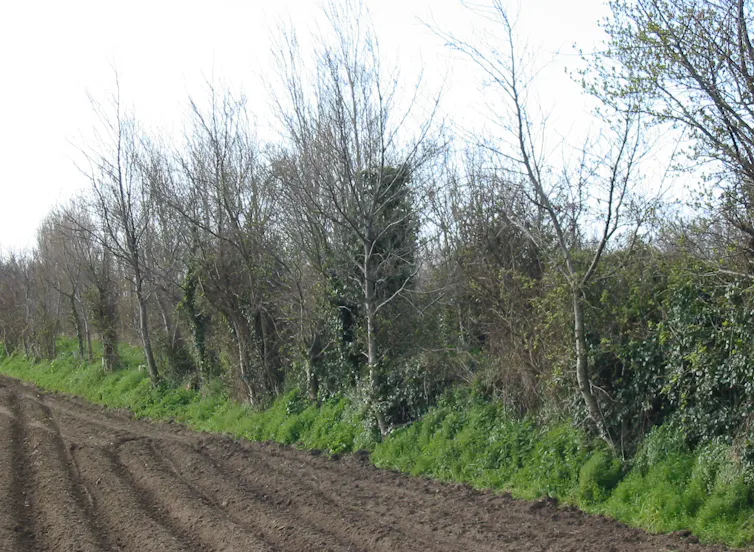
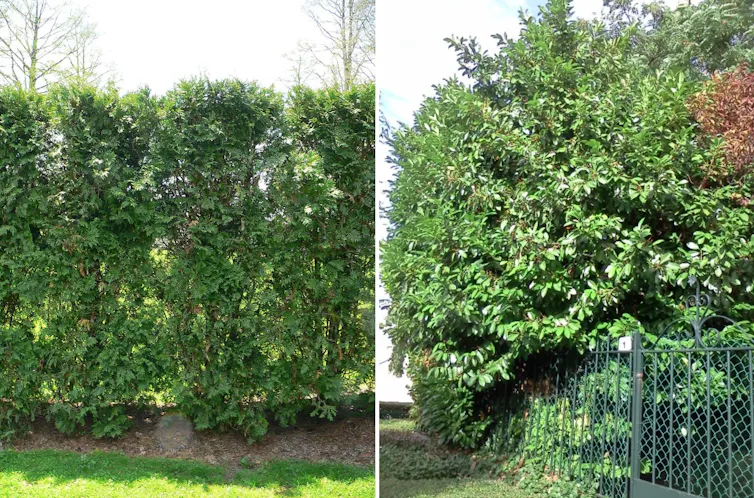
Cependant, certaines haies sont uniquement des ronciers taillés, comme on peut l’observer en bordure de champs en Normandie ou en Vendée, ou bien des plantations monospécifiques, par exemple le laurier-cerise ou le thuya dans les zones pavillonnaires, ou encore de vrais boisements linéaires faits de chênes ou de frênes.
Haies de thuya à gauche, et de laurier-cerise à droite. Wikicommons, CC BY
Des haies qu’on entretient
Dans le passé, et encore aujourd’hui dans de nombreuses contrées, les haies sont entretenues. A minima, elles sont taillées pour éviter qu’elles ne s’épaississent trop et débordent sur la parcelle. Au maximum, un nettoyage complet du talus, souvent par le feu ou les herbicides, et des coupes fortes des arbres sont effectuées sur des cycles de quelques années, généralement tous les neuf ans, durée d’un bail.
Traditionnellement, les arbres sont alors complètement émondés en supprimant toutes les branches et on laisse alors le tronc nu et une branche pointant vers le haut, le « tire-sève ». Les branches coupées servaient alors à faire des fagots ou, avec le feuillage, du fourrage pour le bétail. On parle de « ragosses » ou de « trognes » selon les régions.
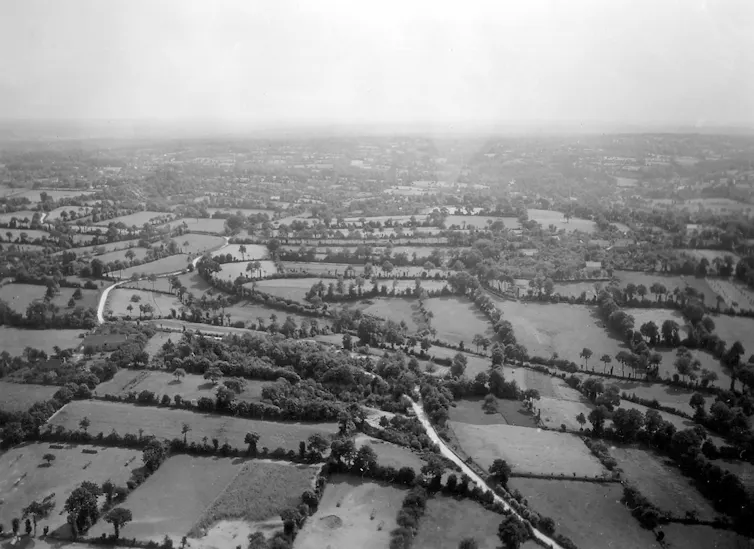
Les haies forment le paysage de bocage, typique de nombreuses régions, notamment dans le grand ouest de la France. Il s’agit d’une mosaïque de parcelles bordées de haies plus ou moins arborées.
Ces haies qui accueillent de nombreux végétaux, spontanées ou non, sont à l’origine des « haies champêtres » que les paysagistes tentent de recréer en milieu urbain en opposition aux haies monospécifiques qui forment de vrais murs végétaux, voire aux haies d’entrelacs (en branchages d’osier plessés, par exemple).
Les rôles des haies
Que ce soit en ville ou à la campagne, en zone naturelle ou cultivée, les haies jouent une multitude de rôles. Leur première fonction est clairement celle de clôture. En ville, on parle de « haies défensives ». Dans la campagne, ces limites évitent aux animaux d’élevage de sortir de l’enclos et de pénétrer dans les cultures.
Les haies fournissent également divers biens aux populations, que ce soit pour du bois de chauffage, d’outillage ou de menuiserie, mais aussi pour l’alimentation du bétail avec les parties émondées ou la production de fruits d’arbres spontanés (châtaignes ou merises, par exemple) ou bien plantés (par exemple, les noisettes en Corse ou les poires en Ille-et-Vilaine). On en extrait également des perches et des piquets de clôture à partir de cépées de châtaignier, et parfois des plantes médicinales.
Les haies fixent également le sol et limitent l’érosion et les inondations en aval en retenant l’eau. En s’opposant au ruissellement, elles favorisent également l’infiltration d’eau et l’alimentation des nappes phréatiques.
Outre leur rôle évident d’absorption de CO₂, les haies ont un rôle maintenant démontré dans la microclimatologie des territoires. Elles offrent une protection contre les vents avec un effet brise-vent connu depuis fort longtemps pour le bétail et les cultures, et elles amortissent les variations de température et de gestion culturale entre les parcelles. La haie montre donc un rôle environnemental puissant aussi bien très localement qu’à une échelle plus globale.
Une haie brise-vent protège une pâture (foin) de vents dominants qui pourraient la coucher. Jwaller, CC BY
Enfin, les haies offrent des habitats à de très nombreuses espèces animales et végétales, souvent typiques des buissons et des bosquets, comme les mésanges, les campagnols ou le chèvrefeuille. L’absence de bois ou de forêt dans un territoire peut être ainsi partiellement compensée par un réseau de haies qui va accueillir une faune et une flore spontanée.
Les haies permettent également aux espèces de circuler entre plusieurs bosquets en faisant la liaison : ce sont des corridors écologiques. Les haies permettent ainsi la dispersion de nombreuses espèces au sein d’un territoire et le maintien de populations animales dans des habitats plus ou moins isolés.
La haie est donc un écosystème à part entière qui bénéficie à l’agriculture comme à la biodiversité locale. Car les haies sont un refuge et un habitat pour de nombreuses espèces bénéfiques au travail agricole : les prédateurs, comme les coléoptères carabes ou les oiseaux insectivores, ou bien des pollinisateurs, comme les bourdons.
Quelle protection pour les haies ?
Régulations climatiques, effets brise-vent, gestion de l’eau, protection des sols, absorption des polluants et préservation active de la biodiversité sont donc parmi les principaux services écosystémiques rendus par les haies.
Mais elles sont aussi, et peut-être surtout, l’expression d’une culture locale et d’une histoire sociale ancienne d’organisation d’un territoire. Elles témoignent des expériences et des pratiques des habitants, anciens et actuels, de leur attachement à leur milieu de vie, d’un patrimoine et de leurs souvenirs personnels et familiaux. Elles donnent accès à la mémoire des territoires et à leur transformation au cours des siècles passés.
Jusqu’en 2015, pourtant, les haies ne bénéficiaient d’aucune mesure de protection ni de compensation, contrairement aux forêts avec le Code forestier ou au bois même urbain pouvant bénéficier du classement « Espace boisé » (articles L113-1 à L113-7 du Code l’urbanisme, NDLR).
La mécanisation agricole a ainsi pu entraîner sans difficulté majeure la destruction de plus de 40 000 kilomètres de haies en Bretagne par un remembrement soutenu dans les années 1960-1980 pour réunir de petites parcelles en une seule exploitation. Encore aujourd’hui, la France perd 20 000 km de haie par an.
Réville-aux-Bois (Meuse). Arrachage d’une haie entre deux champs de maïs, après le retournement d’une prairie. DFerton, CC BY
Pourtant de très nombreux travaux de recherche notamment en agroforesterie et en agroécologie ont permis la compréhension argumentée de l’importance des haies et donc de leur conservation, sinon de leur recréation pour une structuration durable des paysages tant ruraux qu’urbains.
Aujourd’hui, plusieurs aides financières existent pour accompagner la plantation et la gestion des haies en zone agricole. L’État a, par exemple, souhaité renforcer les objectifs du « plan Haie » du Plan de relance de 2020, en budgétant 110 millions d’euros en 2024 à un nouveau « Pacte en faveur de la haie » qui vise 50 000 km de nouvelles haies pour 2030.
Une dangereuse simplification administrative ?
Mais le gouvernement semble également vouloir faciliter l’arrachage des haies en publiant le 27 mars 2026 une instruction relative au « Guichet unique de la haie » (entrée en application le 1er juin, NDLR). Ce dernier réduit plus d’une dizaine de procédures possibles d’arrachage des haies à une seule.
Avant, selon le type de haie, il fallait interroger les règles de « bonnes conditions agricoles et environnementales » (BCAE de la Politique agricole commune, ou PAC), ou le Code de l’urbanisme, ou le Code de l’environnement, ou les arrêtés préfectoraux ou municipaux, etc. Une personne voulant arracher une haie devait donc potentiellement consulter la mairie, la direction départementale des territoires, l’Office français de la biodiversité (OFB), les zonages environnementaux, le réseau européen Natura 2000, etc.
Ce guichet unique advient dans le cadre des procédures de simplification administrative souhaitées par la profession agricole à la suite d’une proposition faite par Gabriel Attal, alors premier ministre, en janvier 2024, en plein mouvement agricole. Le gouvernement assure, aujourd’hui, que cette simplification n’aggravera pas l’arrachage des haies et permettra de présenter plus facilement les réglementations en cours de protection. D’après lui, une réglementation mieux appliquée permettrait d’en faciliter le contrôle et il met en avant un mécanisme de compensation, toute haie détruite devant être remplacée par une nouvelle haie.
Ce nouveau guichet est pourtant loin de dissiper les inquiétudes. Il ne semble, d’abord, pas du tout propice à une préservation des haies existantes puisqu’il facilite les demandes d’arrachage. Ainsi, il est demandé une justification du projet, mais sans cadrer davantage ce qui est attendu. Comme le remarque le Conseil national de la protection de la nature (CNPN), il n’est pas demandé notamment d’exposer l’absence de solution alternative satisfaisante.
Ce guichet unique semble également, dans son mécanisme promu de compensation, oublier une réalité : une nouvelle haie ne peut remplacer une vieille haie où un écosystème complexe s’est installé et joue une imposante panoplie de rôles environnementaux, comme nous l’avons souligné.
Non seulement le CNPN, mais aussi les 11 000 signataires de l’enquête publique ont ainsi tiré la sonnette d’alarme. Ils soulignent comment ce nouveau décret contredit toutes les opérations en cours et compromet la transition écologique de l’agriculture française.
Le collectif Réseau haies de France demande, lui, l’application de la démarche « Éviter, puis réduire, puis compenser » (loi d’août 2016 de reconquête de la biodiversité, de la nature et des paysages, art. 2 et 69) alors que le nouveau décret pousse directement vers des compensations discutables. L’Association des maires de France (AMF) émet également de sérieuses réserves et demande a minima une consultation systématique des édiles.
Ce nouveau dispositif du guichet unique est d’autant plus inquiétant que les haies demeurent plus importantes que jamais. Elles restent un des outils les plus efficaces pour gérer les inondations et protéger concrètement les captages d’eau des pollutions de toutes sortes, pour accompagner la mise en place des pratiques agroécologiques et aussi pour introduire une présence de vie végétale et animale dans les milieux urbains et périurbains où l’espace est compté.
Sous contraintes notamment du changement climatique et de l’effondrement de la biodiversité, la haie est un pilier indispensable à la durabilité des territoires.
Philippe Clergeau est membre de l’Académie d’agriculture de France et du Groupe sur l’Urbanisme Écologique
Au XIXe siècle, médecins et écrivains dénonçaient les effets d’une existence toujours plus rapide, portée par le télégraphe, le train et l’industrialisation. Face au surmenage, ils prescrivaient le repos, le grand air et l’oisiveté assumée.
Le burn-out semble être un concept résolument moderne, né à l’ère de la communication numérique mondiale et des longues journées passées au bureau. Pourtant, l’Angleterre victorienne avait elle aussi sa propre conception de ce phénomène, qu’on appelait le « surmenage » (« overwork »).
Le médecin C.H.F. Routh, par exemple, a publié On Overwork and Premature Mental Decay: Its Treatment, un ouvrage qui a connu quatre éditions entre 1873 et 1888. Si le vocabulaire diffère, les préoccupations de fond sont remarquablement proches des nôtres. Le surmenage était perçu comme un phénomène nouveau dans cette époque marquée par l’expansion impériale et l’industrialisation, avec le développement des chemins de fer et du télégraphe, qui permettaient des communications rapides à l’échelle mondiale et imposaient un rythme de vie toujours plus accéléré.
Les Victoriens étaient sans conteste des adeptes de ce que le philosophe Thomas Carlyle appelait l’« Évangile du travail ». Mais ils étaient également très conscients des problèmes de santé que pouvait entraîner cette dévotion à cette nouvelle religion.
Aux États-Unis, le neurologue George Beard avait introduit le concept de neurasthénie, un trouble associé à l’épuisement du système nerveux sous l’effet d’une sollicitation excessive. En Grande-Bretagne, en revanche, le surmenage était perçu de manière bien différente : il apparaissait comme quelque chose de plus viril, presque comme un motif de fierté.
Comme aujourd’hui avec la notion de burn-out des cadres et des professions intellectuelles, le surmenage était alors principalement associé à l’activité mentale et aux classes professionnelles. Cette conception laissait de côté les classes populaires, pourtant accablées de travail.
Les médecins suscitaient une inquiétude particulière. Routh évoque notamment le cas du docteur Golding Bird, un médecin réputé, qui lui conseilla de ralentir son rythme de travail. Selon lui, il fallait s’accorder six semaines de vacances chaque année : « Sinon, vous vous retrouverez, à mon âge, médecin prospère, mais vieillard mourant. » Bird exerçait encore lorsqu’il lui donna ce conseil, mais il mourut quelques semaines plus tard, à l’âge de 39 ans.
Voyager pour retrouver la santé
Pour les personnes souffrant de surmenage ou d’autres formes de mal-être, le remède privilégié — du moins pour les classes aisées — consistait à séjourner dans une station de villégiature thérapeutique, de préférence en Europe continentale.
En 1870, l’éditeur écossais William Chambers publia Wintering at Menton, un récit dans lequel il raconte l’effondrement de sa santé sous l’effet du surmenage après son mandat de lord-maire d’Édimbourg, ainsi que son rétablissement. Il y décrit avec émerveillement les paysages de Menton, sur la Côte d’Azur, son ciel bleu et son climat doux et réconfortant, et invite ses contemporains à repenser leur mode de vie.
Selon lui, trop de personnes descendaient prématurément dans la tombe, après avoir « succombé dans la bataille fébrile — et l’on pourrait presque dire insensée — de l’existence. Trop longtemps et avec trop d’acharnement, elles se sont consacrées à leurs activités professionnelles. »
Menton devint ainsi l’une des destinations privilégiées des Britanniques cherchant à se remettre du surmenage ou d’autres formes d’épuisement physique et mental. Cette réputation doit beaucoup aux travaux du docteur James Henry Bennet, auteur notamment de Menton and the Riviera as a Winter Climate (1861) et des nombreuses éditions de Winter and Spring on the Shores of the Mediterranean (1865-1875).
Ce dernier ouvrage se présentait comme un guide du voyage thérapeutique, passant en revue les différentes stations de la côte méditerranéenne. Sa conclusion était sans appel : Menton offrait, selon Bennet, le climat et les conditions les plus favorables au rétablissement.
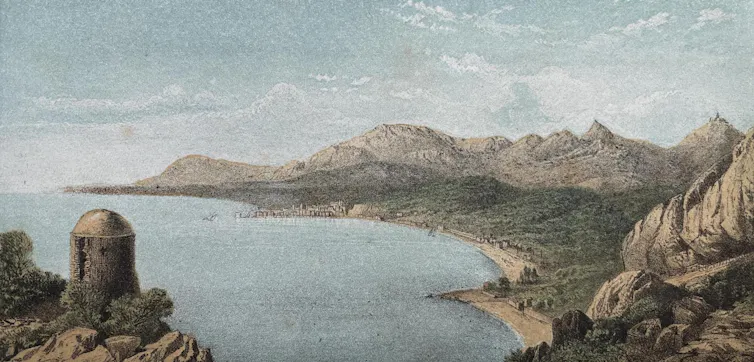
Une illustration de Menton tirée de l’ouvrage de James Henry Bennet, Winter and Spring on the Shores of the Mediterranean. Gutenberg
Les raisons de l’influence considérable des ouvrages de Bennet tiennent en grande partie au récit de sa propre guérison, qui servait de préface à l’ensemble de ses livres :
« Vingt-cinq années consacrées à une profession exigeante, ainsi que les soucis incessants qui accablent un médecin londonien surchargé de travail, ont épuisé mes forces vitales. En 1859, je fus atteint de phtisie et tentai en vain d’en enrayer la progression. »
Se croyant condamné, Bennet prit la direction de la Côte d’Azur. Mais, une fois installé sous le « ciel bienfaisant » de Menton et « libéré des travaux et des inquiétudes de sa vie antérieure », il constata avec une grande surprise que sa santé s’améliorait.
Il décida alors d’y passer chaque hiver et y ouvrit un cabinet médical. Sous l’effet de cette renommée grandissante, Menton passa du statut de petit village à celui de grande station de cure, dotée notamment de son propre quartier anglais.
La révolution de la climatologie médicale
Bennet fut l’une des figures majeures du développement de ce que l’on appelait alors la « climatologie médicale ». Cette approche reposait sur l’idée que de nombreuses maladies — notamment la phtisie, aujourd’hui connue sous le nom de tuberculose — pouvaient être guéries ou, à tout le moins, stabilisées grâce à un séjour dans un lieu bénéficiant d’un climat favorable.
Ce courant s’est développé en partie en réaction au fog qui étouffait les villes industrielles britanniques. Les « maladies de poitrine », comme on les appelait alors, semblaient naturellement mieux évoluer sous l’air pur et le ciel bleu de la Côte d’Azur durant l’hiver.
La méthode thérapeutique de Bennet paraissait presque révolutionnaire pour son époque. Les malades devaient quitter les chambres closes et surchauffées des maisons anglaises pour partir marcher dans les collines, s’exposer aux rayons du soleil et respirer un air pur, tout en profitant de la beauté des paysages qui les entouraient. Aucun médicament n’était nécessaire.
Cette approche était également recommandée aux personnes âgées ou fragiles. Elles pouvaient être conduites chaque jour vers un endroit différent, abrité et ensoleillé : « Le champ de l’observation s’élargit ainsi sans fatigue ; les magnifiques paysages de la région peuvent être contemplés et appréciés sous leurs aspects toujours changeants ; et l’esprit se trouve revigoré par le changement. » Cette vision offre une source d’inspiration intéressante pour réfléchir aux possibilités de la prise en charge du grand âge aujourd’hui.
Pour les personnes souffrant de surmenage, Bennet recommandait de passer au minimum trois hivers complets dans la station. Nous sommes loin des courtes cures thermales du XVIIIe siècle, tout comme des brefs séjours de « bien-être » auxquels nous sommes habitués aujourd’hui.
Ce que Bennet proposait, c’était une forme d’« oisiveté légitime » (« legitimate idleness »), permettant aux professionnels épuisés de mener une « vie calme et contemplative », profitant du soleil « comme un lézard convalescent sur son mur ».
La reine Victoria emmena son fils Prince Leopold, atteint d’hémophilie, dans la « chère et magnifique Menton ». Écrivains et artistes affluèrent également vers la station, de Robert Louis Stevenson à Aubrey Beardsley en passant par Katherine Mansfield. Ils ont laissé des témoignages remarquables sur les plaisirs et les épreuves de cette forme d’exil médical.
Mon ouvrage, In Quest of a Cure: Literary and Medical Cultures of the Health Resort, explore nombre de ces trajectoires à Menton, à Davos et dans d’autres stations, ainsi que l’évolution des pratiques thérapeutiques. Pour traiter le surmenage comme d’autres affections, le temps constituait l’élément essentiel : à l’opposé de l’urgence permanente, des inquiétudes et du temps morcelé de la vie urbaine victorienne, il fallait ralentir, étirer le temps et permettre aux malades de s’abandonner à un état d’« oisiveté légitime » au contact des vertus réparatrices de la nature.
Les recherches de Sally Shuttleworth ayant servi de base à cet article ont été financées par une bourse Advanced Investigator intitulée « Diseases of Modern Life: Nineteenth-Century Perspectives », attribuée par le European Research Council dans le cadre du septième programme-cadre de recherche (subvention n° 340121).
Une enquête menée auprès de plus de 500 Américains blancs suivis dans le temps montre que l’audience de Fox News est associée à une adhésion accrue à la théorie complotiste du « grand remplacement ». Un résultat qui éclaire le rôle des médias dans la diffusion de certaines croyances politiques.
Lors d’un match de baseball des Washington Nationals le 17 mai 2026, trois personnes ont déployé une grande banderole depuis les gradins supérieurs du Nationals Park, affichant l’adresse d’un site suprémaciste blanc. Ce site, qui met en garde contre un prétendu remplacement des populations blanches par des personnes racisées, appelait à l’expulsion de 100 millions de personnes des États-Unis.
Cet incident inquiétant s’inscrit dans un contexte plus large de montée en puissance de la « théorie du grand remplacement », une théorie complotiste xénophobe selon laquelle des élites agissant dans l’ombre favoriseraient des politiques migratoires permissives afin de remplacer les Américains blancs nés aux États-Unis par des immigrés issus des minorités.
Des responsables républicains de premier plan, parmi lesquels le président Donald Trump, le président de la Chambre des représentants Mike Johnson ou encore le podcasteur conservateur Tucker Carlson, ont repris des idées associées à cette théorie. Des médias conservateurs, comme Fox News, les ont par ailleurs diffusées auprès de millions de téléspectateurs.
Mais les idées xénophobes exprimées récemment au Nationals Park sont-elles le fait d’une poignée d’extrémistes, ou bénéficient-elles également d’un soutien plus large au sein de la population ? Si tel est le cas, comment les élites politiques et médiatiques contribuent-elles à leur diffusion ?
Pour répondre à ces questions, notre équipe a mené plusieurs enquêtes représentatives de la population américaine, au cours desquelles nous avons interrogé les États-uniens sur leur adhésion aux principaux postulats de la théorie du grand remplacement.
Les nouveaux immigrés perçus comme une menace
Nos travaux montrent de manière constante qu’une part importante des Américains estime que les nouveaux immigrés menacent le pouvoir politique, culturel et économique des Américains blancs. Dans notre dernière enquête, menée en mars 2026 auprès de 1 000 États-uniens, 36 % des répondants se sont déclarés d’accord avec l’affirmation suivante : « Les Américains nés aux États-Unis perdent leur influence économique, politique et culturelle dans ce pays en raison de la croissance de la population immigrée. »
Une proportion notable de l’échantillon – 26 % – adhérait également à l’idée que des élites politiques chercheraient à « remplacer » la population blanche actuelle, en approuvant l’affirmation suivante : « Certaines personnes œuvrent secrètement pour faire en sorte que les immigrés finissent par remplacer les véritables Américains. »
Le soutien à ces croyances est particulièrement marqué parmi les Américains blancs, les républicains, les conservateurs et les personnes s’identifiant au mouvement Make America Great Again (MAGA) de Donald Trump. Ainsi, plus de trois quarts des sympathisants du mouvement MAGA et près de six républicains sur dix se sont déclarés d’accord avec l’affirmation suivante : « Les immigrés envahissent et colonisent les États-Unis. »
Mais comment expliquer la diffusion de la théorie du grand remplacement ?
Nous avons constaté que les Américains blancs qui s’identifient comme républicains, qui se définissent comme conservateurs et qui nourrissent des attitudes négatives à l’égard des personnes d’autres origines raciales sont plus susceptibles d’adhérer aux principaux postulats de la théorie du grand remplacement. Nous avons également mis en évidence un lien clair entre le fait de regarder Fox News et le soutien à cette théorie complotiste chez les Américains blancs.
Compte tenu de la popularité de Fox News, ce résultat méritait selon nous un examen plus approfondi. Comme nous le détaillons dans notre étude, alors que 39 % de l’ensemble des Américains blancs considèrent que les immigrés « envahissent et colonisent » les États-Unis, cette proportion atteint 61 % parmi ceux qui regardent Fox News. Même après avoir pris en compte l’identification partisane, l’idéologie politique, les attitudes raciales et les caractéristiques démographiques, l’audience de Fox News reste fortement associée à un soutien accru à la théorie du grand remplacement.
Par ailleurs, le suivi des mêmes répondants au fil du temps nous a permis d’observer l’évolution de leurs opinions en fonction de leurs habitudes de consommation médiatique. En résumé, plus un Américain blanc regarde les programmes de Fox News, plus il est susceptible d’adopter les idées associées à cette théorie complotiste.
Des liens avec la violence politique
Nos travaux s’inscrivent dans le prolongement de plusieurs décennies de recherche montrant que l’opinion publique est fortement influencée par la consommation médiatique. Des études récentes soulignent notamment l’influence de Fox News sur les attitudes des Américains concernant la pandémie de Covid-19, les politiques migratoires ou encore les questions de justice pénale.
Compte tenu de l’attention que les animateurs de Fox News, certains responsables politiques élus et divers commentateurs accordent à la théorie du grand remplacement, nos résultats suggèrent que cette couverture médiatique a effectivement contribué à façonner les opinions d’une partie des Américains blancs. La théorie du grand remplacement n’est plus aujourd’hui cantonnée aux marges de la société.
À nos yeux, cette évolution est préoccupante, non seulement parce que cette théorie complotiste présente l’immigration comme une question existentielle — où l’enjeu serait ni plus ni moins que la préservation de son identité et de son pays — mais aussi parce qu’elle a été associée à de nombreux actes de violence politique visant des personnes racisées et des minorités religieuses.
À l’approche du 250e anniversaire des États-Unis, le pays continuera sans aucun doute à débattre de l’immigration, des questions raciales et de ce que signifie être Américain.
Les désaccords sur la politique migratoire ont toute leur place dans une démocratie. Mais les théories complotistes rendent beaucoup plus difficile la recherche d’un terrain d’entente ou l’élaboration de compromis politiques. Nos travaux montrent que lorsque des médias influents reprennent ou légitiment des récits complotistes, l’adhésion du public à ces théories tend à progresser à son tour.
Jesse Rhodes a reçu des financements de la National Science Foundation, la Spencer Foundation et de Demos.
Tatishe Nteta a reçu des financements de la Russell Sage Foundation.
Adam Eichen ne travaille pas, ne conseille pas, ne possède pas de parts, ne reçoit pas de fonds d’une organisation qui pourrait tirer profit de cet article, et n’a déclaré aucune autre affiliation que son organisme de recherche.