Even professional economists can’t escape political bias

Source: The Conversation – USA (2) – By Aeimit Lakdawala, Associate Professor of Economics, Wake Forest University

Republican-leaning economists tend to predict stronger economic growth when a Republican is president than Democrats do – and because of this partisan optimism, their forecasts end up being less accurate.

I’m an economist, and my colleagues and I found this by analyzing nearly 40 years of responses to The Wall Street Journal’s Economic Forecasting Survey. Unlike most such surveys, the Journal publishes each forecaster’s name, allowing us to link their predictions to their political affiliations.

The respondents were professional economists at major banks, consulting firms and universities whose forecasts help guide financial markets and business decisions. Out of more than 300 economists in our sample, we could identify the political affiliations of 122. We did this by looking at the forecasters’ political donation records, voter registration data and work histories with partisan groups.

The pattern was striking: Republican forecasters systematically predicted higher gross domestic product growth when their party controlled the presidency, representing roughly 10% to 15% of average growth rates during our study period.

When we examined forecast accuracy using real-time GDP data, Republican forecasters made larger errors when their preferred party held office. This suggests partisan optimism makes their professional judgment worse.

What makes this finding particularly notable is its asymmetry. The partisan gap emerged specifically during Republican presidencies. Under Democratic Presidents Bill Clinton, Barack Obama and Joe Biden, Republican and Democratic forecasters made virtually identical predictions. That wasn’t the case when George W. Bush, and later Donald Trump, occupied the White House.

Interestingly, this bias appears only in GDP forecasts. When we analyzed predictions for inflation, unemployment and interest rates, we found no systematic differences between Republican and Democratic forecasters.

That makes sense, because GDP forecasts are inherently more uncertain than other economic predictions. Professional forecasters tend to disagree more and make more mistakes when predicting GDP compared to inflation or unemployment rates. This creates opportunities for partisan ideologies to sneak in.

We traced the bias to different views about the effectiveness of tax policies. Using Google Trends data to measure when tax cuts were in the news, we found Republican forecasters become systematically more optimistic precisely when tax policy discussions heat up.

Why it matters

Previous research has found that most people have a strong partisan bias when they make economic predictions. Our work is the first to show that professional economists can also succumb to such influences – despite their training and market incentives to be accurate.

Their errors can come at a high price. Financial markets, policymakers and businesses rely on economists’ forecasts to make major decisions. When the Federal Reserve sets interest rates, when companies plan investments and when investors allocate portfolios, they often reference these professional consensus forecasts.

Our research challenges a common assumption in economics: that aggregating diverse expert forecasts eliminates individual biases and improves accuracy.

This doesn’t mean professional forecasters are incompetent or dishonest. These are highly trained economists with strong financial incentives for accuracy. Rather, our findings reveal how even experts with the best intentions can be unconsciously influenced by their own ideological beliefs – especially when dealing with inherently uncertain data.

What still isn’t known

Several important questions remain unanswered. It’s unclear how this bias might be reduced. Would making forecasters more aware of their political leanings help reduce the effect? Or would developing new forecasting methods that weight predictions based on historical accuracy during different political regimes improve consensus forecasts?

We’re also curious whether institutional factors matter. Might forecasters at institutions with explicit political diversity policies show less bias? How do international forecasters viewing the U.S. economy compare to domestic ones?

Finally, our research focuses on U.S. forecasters during a period of increasing political polarization. Whether similar patterns emerge in other countries with different political systems, or during less polarized times, remains an open question.

The Research Brief is a short take on interesting academic work.

The Conversation

Aeimit Lakdawala has previously received funding from NSF.

ref. Even professional economists can’t escape political bias – https://theconversation.com/even-professional-economists-cant-escape-political-bias-263153

Harm-reduction vending machines offer free naloxone, pregnancy tests and hygiene kits

Source: The Conversation – USA (3) – By Alice Zhang, Assistant Professor of Family and Community Medicine, Penn State

A vending machine dispenses Narcan nasal spray, a medication that reverses opioid overdose, and other items. Penn State College of Medicine

In the lobby of the YMCA in Reading, Pennsylvania, stands a row of vending machines – but one machine is different from the rest.

Instead of stocking chips or soda, this vending machine has drug-testing strips, hygiene kits, socks, soap, wound care supplies and naloxone, a medication also known by its brand name Narcan that is used to reverse opioid overdoses – all completely free.

The Health To Go vending machine has been in the Reading YMCA for over a year. Another one is in Harrisburg, outside of the UPMC Harrisburg Emergency Department. The machines list the names of resources such as mental health care, food banks, housing assistance and substance use disorder treatment on the screen and provide contact information and a QR code to scan for more info.

We are a physician and assistant professor of family and community medicine and a criminal justice professor at Penn State University and have been part of a collective effort to put these two Health To Go vending machines in place. The vending machines are part of a growing movement in the United States to provide easy access to harm-reduction resources.

Naloxone, wound care kits and more

Harm-reduction vending machines became popular in cities across the U.S. during the COVID-19 pandemic, when people could not easily access in-person services and when drug overdose deaths also rose dramatically.

Most machines dispense naloxone nasal spray to reverse overdoses and other items such as syringes and fentanyl test strips. Some, like the Health To Go machines, also offer general health and hygiene items such as soap, toothpaste and toothbrushes, and pregnancy tests. If a person is seen at the machine, they could be getting a toothbrush and socks or they could be getting naloxone – no one watching would necessarily know. Also, the nature of the vending machine means the people using them don’t need to interact with a person to obtain Narcan or drug-checking strips, as many people with substance use disorder feel stigma or embarrassment about their addiction.

The Health To Go vending machines are interactive, with a large touch screen in the front. The vending machine is connected to WiFi and cellular data and is able to capture anonymous information on how people are using the machine. The machine can also ask users survey questions to get their feedback, such as whether there are other items they would like to see in the machine or whether they think the machine is having an impact on reducing stigma on substance use.

These machines in Pennsylvania, where over 3,300 people died of drug overdose in 2024, down from over 5,300 in 2021, are funded by grants from Penn State College of Medicine, the National Institute on Drug Abuse, UPMC Pinnacle Foundation and opioid settlement funds from Dauphin and Berks counties.

All of this data helps the team know how to improve the machine to better serve people with opioid addiction, as well as people experiencing homelessness and having trouble affording basic needs. The touch screen is also able to play videos, such as a quick explainer on how to use fentanyl testing strips and testimonials from people in recovery, and display local community resources and services where people can get help.

A teal and grey vending machine that says 'Health To Go' with large digital touchscreen on front
Large touch screens prompt users to sign in to get free items and learn about other community services.
Alice Zhang/Penn State College of Medicine

Over the past year, the two Health To Go vending machines in Reading and Harrisburg have dispensed more than 11,000 items. The most popular items are the hygiene kits, with over 3,300 dispensed. The kits contain toothbrushes, toothpaste, socks, combs, nail clippers, ChapStick, mouthwash, soap and towels. The machines also have dispensed nearly 1,900 doses of naloxone, 1,700 wound care kits, and over 1,500 safer sex kits.

We interviewed 10 vending machine users in Reading in the winter and spring of 2025. “I was homeless and I didn’t have any money,” one woman shared with us. “It sounded too good to be true, and then I got here and got all that stuff for free. … Just having a clean pair of socks, that’s awesome.”

More than 2,300 distinct usernames were registered to the two machines in the past year. The usernames are the person’s birth year, a color and a nature or animal icon. This allows us to track individuals anonymously over time as they use the machine and get info as they answer survey questions. Nearly 40% of users reported being unemployed, and almost a quarter said they are experiencing homelessness or housing insecurity.

Out of those surveyed, 4 in 5 said they had trouble paying for basic needs, and over a third had not seen a health care provider in the past year.

A judgment-free alternative

Health To Go vending machine users reported that they used the machines because the supplies were free, available 24/7, and they could get what they needed easily and without facing judgment.

For people who feel uncomfortable in traditional health care settings or talking to someone in person, these vending machines offer a judgment-free alternative.

“You don’t have no one looking over your shoulder, you have no one condemning you for, you know, getting an HIV kit or getting a pregnancy test kit or getting a wound kit,” a vending machine user we surveyed told us. “There’s no one there behind you, just like, ‘Oh my God, you have HIV.’”

“Nobody wants to walk up to somebody and say, ‘Hey, excuse me, can I get a Narcan kit, or can I get a fentanyl test strip?’” another vending machine user said. “It just makes you feel … like not whole. I don’t want other people to know that I’m in an addiction.”

We think that putting naloxone and drug-checking strips alongside other health and hygiene items helps to normalize them. We also believe calling it Health To Go puts the focus on health, not just on substance use.

The team plans to install at least two more machines in central Pennsylvania within the next year. By removing barriers such as cost, hours of operation and potential stigma, the Health To Go vending machines are able to reach people who may otherwise fall through the cracks of traditional health care.

As one machine user explained, “They are saving people from STDs and stuff like that. They’re saving people from overdosing. They’re saving people from dying.”

Read more of our stories about Philadelphia and Pennsylvania.

The Conversation

Alice Zhang receives funding from National Institute on Drug Abuse, UPMC Pinnacle Foundation, Dauphin County, Berks County, York County, and Penn State College of Medicine.

Jennifer Murphy does not work for, consult, own shares in or receive funding from any company or organization that would benefit from this article, and has disclosed no relevant affiliations beyond their academic appointment.

ref. Harm-reduction vending machines offer free naloxone, pregnancy tests and hygiene kits – https://theconversation.com/harm-reduction-vending-machines-offer-free-naloxone-pregnancy-tests-and-hygiene-kits-263159

The Moon is getting slightly farther away from the Earth each year − a physicist explains why

Source: The Conversation – USA – By Stephen DiKerby, Postdoctoral Researcher in Physics and Astronomy, Michigan State University

Earth rises over the Moon, as seen by the Apollo 8 astronauts. Bill Anders/NASA

Curious Kids is a series for children of all ages. If you have a question you’d like an expert to answer, send it to CuriousKidsUS@theconversation.com.


“Is the Moon getting farther away from Earth?” – Judah, 9, Broken Arrow, Oklahoma


The Moon is getting 1½ inches (3.8 centimeters) farther away from the Earth every year.

Scientists measure the distance to the Moon by bouncing lasers off mirrors placed there by space probes and astronauts.

By measuring the amount of time it takes light to travel to the Moon and back, scientists can very precisely measure the distance to the Moon and how the distance changes.

The distance to the Moon actually changes over a single month as it goes around the Earth. The Moon is typically 239,000 miles (385,000 km) away from the Earth, but its orbit is not a perfect circle and changes by about 12,400 miles (20,000 km) as it orbits the Earth. This change is why some full moons are a bit bigger than others; these are called supermoons.

As an astrophysics researcher, I’m interested in the motion and interaction of objects such as planets, stars and galaxies. The motions of the Earth and Moon have many interesting consequences, and studying how they move over time can help researchers better understand how each has changed over the 4½ billion years since the Earth and Moon formed.

Tidal forces

So, why is the Moon getting farther away? It’s all because of tides.

Tides come from a difference in gravity across an object. The force of gravity exerted by the Moon is about 4% stronger on the side of Earth that faces toward the Moon, compared to the opposite side of the Earth facing away, because gravity gets weaker with distance.

This tidal force causes the oceans to slosh around in two bulges that point toward and away from the Moon. They do this because the gravitational force pulling on Earth by the Moon isn’t just an average force that’s the same strength everywhere. The Moon’s gravity is strongest on the closer side of the Earth, creating a bulge of water pointing toward the Moon. It’s weaker on the opposite side of the Earth, which leaves another bulge of water that lags behind the rest of the Earth.

An animation showing the formation of tides
A NASA animation, not to scale, shows how the Moon creates tides on the Earth. The water in the oceans sloshes toward and away from the Moon.
NASA/Vi Nguyen

As the Earth rotates, these bulges move around and keep pointing at the Moon because of its gravitational pull. In New York City or Los Angeles, the water level can change by about 5 feet due to these tidal bulges.

These liquid bulges do not quite line up with the Moon – they “lead” it a little bit because the Earth is rotating and dragging them forward. These bulges also exert a gravitational pull back on the Moon. The bulge closer to the Moon isn’t just pulling the Moon toward the center of the Earth, but also a little bit ahead in its orbit – like the boost a sports car gets as it goes around a curve.

An animation of the moon orbiting the Earth, with two bulges growing and ebbing away
As the Moon orbits the Earth, the tidal bulges do not exactly point toward the Moon, but instead a little bit ahead of it because of friction between the bulges and the rotating Earth.
NASA/Vi Nguyen

This forward pull from the closer tidal bulge causes the Moon to speed up, which causes the size of its orbit to increase. Think of a baseball player hitting a home run. If the player hits the ball faster at home plate, it’ll zoom higher up into the sky.

So the bottom line is that the gravity of the closer tidal bulge on the Earth is pulling the Moon forward, which increases the size of the Moon’s orbit. This means that the Moon gets slightly farther away from the Earth. This effect is very gradual and only detectable on average over years.

Does the Moon’s increasing distance affect Earth?

The Moon gains momentum as its orbit gets bigger. Think about spinning a weight attached to a string. The longer the string, the more momentum the weight has, and the harder it is to stop.

Because the Earth is doing the work of increasing the Moon’s momentum, the Earth’s rotation slows down in turn, as its momentum goes to the Moon. To put it another way, as the Moon’s orbital momentum increases, the Earth’s rotational momentum decreases in exchange. This exchange makes a day get very slightly longer.

But don’t worry, these effects are so small: 1.5 inches per year compared to a distance of 239,000 miles (384,000 km) is just 0.00000001% per year. We’ll keep having eclipses, tides and days that last 24 hours for millions of years.

Was the Moon closer to us in the past?

The Earth’s days were shorter in the past.

The Moon probably formed around 4.5 billion years ago, when a young Earth was hit by a Mars-size protoplanet, causing a lot of material to get knocked off into space.

Eventually, that material formed the Moon, and it was initially much closer to the Earth. Back then, you’d see the Moon much bigger in the sky.

A NASA simulation of the collision between early Earth and a now-destroyed protoplanet that likely created the Moon.

By examining fossilized clam shells for material showing their daily growth patterns, paleontologists found evidence that 70 million years ago – near the end of the time of dinosaurs – the day was only 23.5 hours long, just as predicted by astronomical data.

What will happen in the future?

So, will the Moon eventually escape from the Earth’s gravitational pull as it moves away?

If we fast-forward tens of billions of years into the future, eventually the Earth’s rotation could slow down until it is tidally locked with the Moon. That means that it would take just as long for the Earth to rotate as the Moon does to orbit. At this point, the Moon would stop getting more distant, and you would see the Moon only from one side of the Earth.

A NASA video shows how the Sun might appear as a red giant billions of years in the future.

But two things will stop that from happening. First, in a billion years or so, the Sun will get brighter and boil away the oceans. Then, there won’t be large tidal bulges of water to cause the Moon to get more distant. A few billion years later, the Sun will expand into a red giant, probably destroying the Earth and the Moon.

But these events are so far in the future that you don’t need to worry about them. You just get to enjoy tides on the beach, solar eclipses and our beautiful Moon.


Hello, curious kids! Do you have a question you’d like an expert to answer? Ask an adult to send your question to CuriousKidsUS@theconversation.com. Please tell us your name, age and the city where you live.

And since curiosity has no age limit – adults, let us know what you’re wondering, too. We won’t be able to answer every question, but we will do our best.

The Conversation

Stephen DiKerby receives funding from NASA and NSF grants, as well as from Michigan State University.

ref. The Moon is getting slightly farther away from the Earth each year − a physicist explains why – https://theconversation.com/the-moon-is-getting-slightly-farther-away-from-the-earth-each-year-a-physicist-explains-why-262106

Transgender policies struggle to balance fairness with inclusion in women’s college sports

Source: The Conversation – USA – By Amanda Siegrist, Associate Professor of Recreation and Sport Management, Coastal Carolina University

Lia Thomas, second from left, stands on the starting blocks during the 500-yard freestyle finals at the NCAA swimming and diving championships in Atlanta on March 17, 2022. Rich von Biberstein/Icon Sportswire via Getty Images

With two executive orders related to school sports, President Donald Trump recently tried to settle the growing legal conflict over the right of transgender students to participate in school sports.

That conflict, which the Biden administration tried to address and is now taking place in states, lower federal courts and the Department of Education, will reach the U.S. Supreme Court in its upcoming term.

Supporters of transgender athlete participation argue that gender is a social construct, shaped by societal norms and cultural beliefs more so than by biology. They say that people should have the right to self-identify. And they argue that there is no significant threat to fairness, safety or opportunity in student sports.

Opponents say that sex and gender identity are distinct from each other. They argue that including biologically born male athletes in women’s sports subverts fairness and threatens the impact of Title IX in women’s sports.

As a professor of sport management with a law degree, I believe the progress in equity, access and participation made by women in sport since the passage of Title IX is at risk if U.S. institutions and legislators depart from the federal law’s original intent: to ensure equal opportunities for women in education settings.

Inclusion versus fairness

Women’s sports are experiencing unprecedented success. In 2024, the NCAA women’s basketball championship final drew a larger TV audience than the men’s final for the first time ever. Sponsorship deals for women’s pro sports have witnessed double-digit growth year over year the past two athletic seasons.

The 2023-2024 academic year saw 235,735 student-athletes participate in NCAA women’s sports. That’s a record high.

When Congress passed Title IX in 1972, the goal was simple: make sure women have the same educational opportunities as men in school, including in sports programs.

For decades, it worked. Thousands of new teams and opportunities for women emerged, and participation skyrocketed. Before 1972, only about 30,000 women had participated in college sports. Today, 220,000 female athletes compete in NCAA sports.

But while Title IX was expanding access for women athletes in schools, the boundaries of women’s sports were being tested in professional leagues.

A transgender woman plays tennis on a clay court.
Renée Richards plays in the women’s 1977 U.S. Open tennis championships in New York.
Focus on Sport/Getty Images

In 1977, Renée Richards, a transgender tennis player, successfully challenged the United States Tennis Association’s eligibility rules and was allowed to compete in women’s tennis after undergoing sex reassignment surgery.

She played in the 1977 women’s U.S. Open and competed on the women’s professional tour, where she played for four more years before retiring.

Richards was hailed as a pioneer for transgender athletes. But her perspective has shifted over time. In February 2025, Richards said: “I believe that having gone through male puberty disqualifies transgender women from the female category in sports.”

Richards’ perspective underscores the tension between the inclusion of transgender people and maintaining fairness in competition and opportunities for women – a tension that remains at the center of legal debates today.

Court challenges

Courts across the country are now confronting a new wave of challenges to policies on transgender athlete participation from K-12 through college.

In 2021, Becky Pepper-Jackson, a transgender girl, sued the West Virginia Board of Education in federal court over the state’s “Save Women’s Sports Act,” which requires that sport participation in schools must be based on biological sex at birth. Pepper-Jackson argued that the act violated Title IX and the equal protection clause of the Fourteenth Amendment that requires states to treat people in similar situations equally.

A lower court struck down West Virginia’s law as unconstitutional, and in July 2025, the Supreme Court agreed to hear the case.

Four people stand together to be photographed.
Becky Pepper-Jackson, second from left, attends the Lambda Legal Liberty Awards on June 8, 2023, in New York.
Roy Rochlin/Getty Images for Lambda Legal

In 2024, several college athletes filed a lawsuit against the NCAA and participating universities. The suit claims the organization violated the athletes’ Title IX rights by allowing transgender swimmer Lia Thomas at the University of Pennsylvania to compete at the national championships in 2022. The plaintiffs argued that competing against athletes who had undergone male puberty created unfair conditions in women’s sports.

The suit has not been resolved. But in April 2025, the Department of Education concluded that the University of Pennsylvania violated Title IX by allowing Thomas to swim on the women’s team during the 2021-2022 season. As part of a resolution agreement with the Education Department, the university was required to restore to female athletes all individual Division I swimming records broken by biologically born male athletes competing in women’s categories. Per the agreement, the university also issued an apology to the affected athletes and adopted biology-based eligibility standards.

These collegiate cases form part of a larger picture. From high school track meets to NCAA championships, the participation of transgender women in female sports has, in the opinion of some, altered outcomes, raised safety concerns and challenged the principle of fair play.

Studies show that males have strength and size advantages over women. Those differences translate to advantages in sport, even after hormone suppression. To introduce competitive disadvantages in women’s sport threatens the premise of Title IX: to provide women with equal opportunity.

As these court cases unfold, their resolutions will help define standards for transgender participation in women’s sports across educational levels.
They underscore the ongoing challenge for institutions and governing bodies to balance inclusion, competitive fairness and compliance with Title IX.

The Conversation

Amanda Siegrist does not work for, consult, own shares in or receive funding from any company or organization that would benefit from this article, and has disclosed no relevant affiliations beyond their academic appointment.

ref. Transgender policies struggle to balance fairness with inclusion in women’s college sports – https://theconversation.com/transgender-policies-struggle-to-balance-fairness-with-inclusion-in-womens-college-sports-262082

Americans expect inflation to be far higher than it really is, polling shows

Source: The Conversation – UK – By Paul Whiteley, Professor, Department of Government, University of Essex

BearFotos/Shutterstock

American voters often rank inflation as the most important issue facing the US. But something odd has happened to inflationary expectations since Donald Trump became president in January. Americans believe inflation is much higher than it is, and are bracing themselves for further increases.

The difference between real inflation and what the public think it is has diverged by a significant amount – much more so than under former president Joe Biden.

In December 2024, while Biden was still in office, respondents in surveys conducted by the University of Michigan predicted a rate of inflation of 2.8%, when it was actually 2.7%. However, by May 2025, five months into Trump’s second term, the public was estimating inflation at 6.6% when inflation had fallen to 2.4%.

The inflation expectations surveys included the following question: “By about what percent do you expect prices to go up/down on the average, during the next 12 months?”

The chart below shows the average response to this question over four years. This tells us what the average American feels about price increases, rather than what is actually happening in the economy. These views directly affect spending by consumers and therefore growth and employment in the US economy.

Expectations and actual inflation 2021 to 2025:

A graph by Paul Whiteley

Graph by Paul Whiteley with Federal Reserve and University of Michigan data., CC BY-SA

The red line on the chart above shows the actual inflation rate in the US, measured by the annual change in the consumer price index. It starts from former US president Joe Biden’s inauguration as president in January 2021 when the pandemic had a big impact on inflation. Subsequently, the rate has been declining since early 2022 although there was a modest increase from the start of Donald Trump’s second term from January 25 this year.

Some of these expectations can be explained by specific items. For example, food prices in the US have continued to increase as the chart below shows. The increases were rather rapid after the end of the pandemic, and they have continued but at a slower rate from the start of 2023, even though the broader inflation rate was falling at the time. Food prices are a particularly sensitive item because food is an essential.

Another item is the rapid rise in house prices that started after the pandemic and has continued under the Trump administration. This has put home ownership beyond the means of many Americans. However, neither of these can fully explain why the public believe inflation is so much higher than it actually is since the start of Trump’s second term in office.

Consumer food price index in the US 2021 to 2025:

A graph showing the Consumer Food Price Index.

Graph by Paul Whiteley, CC BY-SA

A reason for this concern among the US public could be the financial uncertainty among businesses and financial markets and consumers.

Donald Trump’s attempts to sack Lisa Cook, the governor of the Federal Reserve, currently held up by the courts, is one example of a factor creating economic instability. The Fed is an independent institution that controls inflation via changes in interest rates and so dramatic changes there are likely to create worries about what happens next.

What about tariffs?

The introduction of high tariffs on goods from other countries by the Trump administration is probably another factor. Put simply, tariffs are a tax on imports and so have a direct impact on the price of goods on sale in the US.

This, coupled with a fall in the value of the dollar in recent months, will be pushing up prices in American shops. A dollar would buy 98 euro cents in January of this year, almost a one-for-one exchange rate. By August 25, it would buy only 85 euro cents, a fall in value of around 15%.

Trump’s so-called “big beautiful bill”, which passed Congress in July, could be another source of inflationary expectations. This extends the tax cuts introduced in Trump’s first term, reducing taxes by US$4.5 trillion (£3.3 trillion) over ten years while cutting welfare spending and reducing investments in green energy projects.

The Yale University Budget Lab, a research centre studying financial policy, estimates that the bill will add US$3 trillion to the nation’s debt over the period 2025-2034 and US$12.1 trillion from 2025-55. This means that the US Treasury has to pay higher rates to encourage lenders when they become nervous about the inflationary consequences of the deficits.

If a country has to borrow large amounts to balance the books, it creates a temptation to print more money, which then boosts inflation.

When it comes to the political consequences of this, inflationary expectations are really important. This is because the public’s judgment about the president’s handling of inflation are largely the same as judgments about his overall presidency.

This can be seen in the chart below, which comes from successive surveys conducted by YouGov for the Economist newspaper since Trump came to office.

Approval ratings for the president’s handling of inflation and his overall job ratings:

Trump's approval ratings graphed.

Graph by Paul Whiteley based on data from YouGov for the Economist, CC BY-SA

The chart compares Trump’s overall job approval with his approval ratings for handling inflation. They track very closely – and both are rapidly falling, indicating that the failure to combat inflation is tarnishing the president’s approval ratings.

Presidential job approval is closely related to voting behaviour, so if inflation continues to rise and the public believe it will be even higher in the future, then this is likely to damage both Trump and the Republican party in the midterm elections next year.

The Conversation

Paul Whiteley has received funding from the British Academy and the ESRC.

ref. Americans expect inflation to be far higher than it really is, polling shows – https://theconversation.com/americans-expect-inflation-to-be-far-higher-than-it-really-is-polling-shows-264070

Is your child in a classroom with other year groups? Here’s how it could help them

Source: The Conversation – UK – By Pinky Jain, Head of Teacher Education, Leeds Beckett University

Rawpixel.com/Shutterstock

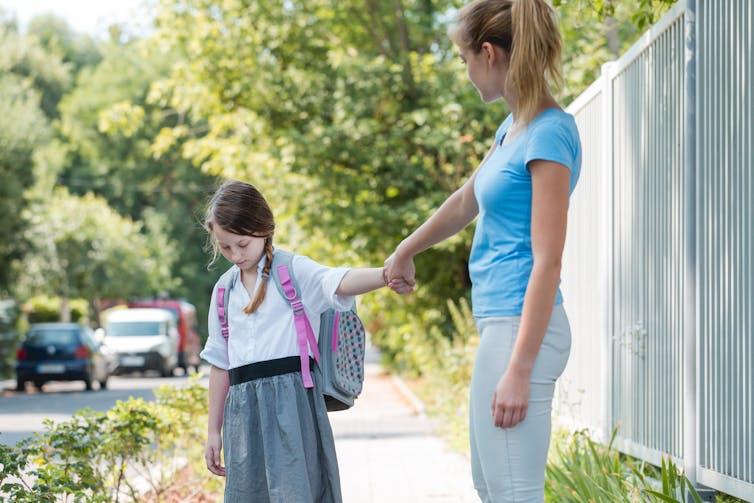
Some children at primary school, as they head into a new school year, will find themselves learning alongside children of different ages. Year one and year two might be educated in the same classroom, for instance.

Many schools have mixed year group teaching for a range of reasons. It might be because of the size of school: in schools with a small number of pupils, it may be more practical to combine classes.

In other situations, the school may have expertise that they would like to use in the best possible way, and they feel that putting year groups together would be the best way to support all children. This might be because both year groups need to build strength in a particular subject, which a certain teacher specialises in. Or it might be the best way to make use of the school’s resources, such as teaching assistant expertise, to support children.

The routine and structure of the class will be set up to support each child and also ensure that the right level of learning is provided to children.

Much of the research carried out on mixed-age classes is based in small rural schools, as that is where there tends to be the most mixed-age classrooms. It is worth noting that the outcomes of these small schools are generally as good as schools nationally. Research has found limited impact on children, their learning and outcomes as a result of mixed-age classes.

A review of research findings on mixed-age classrooms has found that there is no empirical evidence that student learning suffered from this style of learning. In fact, some students in mixed-age classrooms have reported higher scores in their attitudes towards school and self-concept (how they feel about themselves) compared to their peers in single-age classrooms.

Reflecting the real world

In the world outside school, children regularly interact across a wide range of ages. At home, they often live alongside siblings and relatives spanning multiple generations. In after-school clubs and activities, children may differ by several years in age. Public spaces for play and learning such as parks and museums are open to children of all ages.

Beyond childhood, it is uncommon to encounter higher education or professional environments composed of people from only a single age group. Even during the primary school day, it is typical for children of all ages to share break times. In nearly every context, mixed-age interaction is the norm except for one notable exception – the school classroom.

Children high fiving
Apart from in classrooms, mixed-age friendships are the norm.
Inside Creative House/Shutterstock

There are some additional benefits to mixed-age classes. They may help enhance social skills, promote individualised learning, and help children thrive socially and emotionally.

They can create a more realistic approach to learning, where older children work more independently and can mentor younger children, and enhance children’s communication and collaboration skills. They can also support a greater sense of belonging and community in schools, when children across year groups form friendships.

A new school year is full of excitement but also apprehension. There will be a lot of new things for parents and their child to manage and cope with. Having your child go into a mixed-age class is a supportive start and one which, if managed well, may enhance children’s experiences in school.

It is important that communication between school and parents is open and honest. Schools will consider a wide range of resources that will support all children’s development over the time that they are in school.

So it is important that if you are unsure about sending your child into a school where there are mixed-age classes, that you have conversations with the school about what they are planning, and how they will be supporting children to develop their learning. Parents and school working in collaboration is the best way to support children as both school and parents have a key role play in supporting children’s development.

Children who are in mixed-age classes will not feel any different to single age classes. As a lot of mixed-age classes are in small schools, there is an additional benefit in that it prepares children to move to high school where they will encounter and mix with children of all ages. Being in a mixed-age class will support and offer a variety of friendships and support their time in school.

The Conversation

Pinky Jain does not work for, consult, own shares in or receive funding from any company or organisation that would benefit from this article, and has disclosed no relevant affiliations beyond their academic appointment.

ref. Is your child in a classroom with other year groups? Here’s how it could help them – https://theconversation.com/is-your-child-in-a-classroom-with-other-year-groups-heres-how-it-could-help-them-263071

Is Milei’s electoral blow the beginning of the end for his radical economic vision?

Source: The Conversation – UK – By Matt Barlow, Lecturer International Political Economy, University of Glasgow

In his first real electoral test since sweeping to power in October 2023, the party of Argentina’s right-wing populist president, Javier Milei, has suffered a landslide defeat. The result can be read as an emphatic reminder of the remarkable endurance in Argentina of Peronism – the movement named after former president Juan Perón.

The ideology is grounded in the state taking a leading role in the economy through progressive policies to deliver social justice – the antithesis of Milei’s mission to cut the state down to size.

Elections in the province of Buenos Aires on September 7 left Milei’s Liberty Advances party on 34% of the vote with the various factions of the Peronist party (under the banner of Homeland Force Front) on 47.4%.

While it was essentially a provincial election, the contest took on a symbolism nationally. Milei himself had framed it as a life-or-death battle between his libertarian movement and the left-wing wealth redistrubutive politics of Peronism.

Since 2003, the movement has often been called Kirchnerism because of its association with Néstor Kirchner and his wife Cristina Fernández de Kirchner. Both were once president of the country representing the Peronist party.

Despite being barred from seeking public office due to corruption charges, Fernández de Kirchner continues to dominate left-wing progressive politics in Argentina. Before the vote in Buenos Aires province, Milei argued that it was a chance for voters to put the final nail in the coffin of Kirchnerism by backing his liberal policies.

This idea of putting an end to Kirchnerism is an interesting one. Speaking with an Argentinian academic friend after Milei’s 2023 victory – the biggest vote margin since the return to democracy in 1983 – my friend said: “Kirchnerismo is dead”. In his eyes, the scale of the defeat meant that politically it could not come back from it.

I disagreed, because social justice and wealth redistribution underpin Kirchnerist progressive policies. This is certainly polarising, but it maintains significant support. Kirchnerism has been the left-wing identity of the Peronist party since 2003, and the Peronist ideology is deeply embedded in Argentinian society.

The recent vote was Milei’s first litmus test since taking his “chainsaw” to the Argentinian state through his programme of deep austerity. The 13 percentage point loss was a clear rejection of his policies in the most populous province, which accounts for 40% of the Argentinian population.

And while Buenos Aires province is traditionally a Peronist stronghold, in 2023 Milei came within 1.5% of taking it, showing that his anti-establishment appeal had gained widespread support. But after less than two years in office, the political pendulum looks to be swinging back to the Left.

Página 12, a left-wing Kircherist newspaper, summed up this idea of the battle between two social and economic visions. Its headline, “Peronism had defeated the austerity and hunger of Milei”, pointed to the extreme spending cuts for which he is now infamous.


Read more:
Kemi Badenoch says she wants to be Britain’s Javier Milei – but is the Argentinian president a model to follow?


But what does this defeat mean for the president ahead of Argentina’s October mid-term legislative elections?

First, it suggests the political capital that Milei held in 2023 has quickly eroded. When campaigning, Milei took advantage of disillusionment with the political status quo. Then, he had the advantage of being a political outsider with radical ideas that could, perhaps, work.

Now, for nearly two years his rhetoric has shaped policies that directly impact the lives and livelihoods of citizens.

Milei’s policies have managed to tame inflation. The level of rampant monthly price rises has been brought down to around 2% from the more than 7% seen in 2022. But this figure is of little comfort to many for whom his policies, such as freezing pensions, disability benefits and wages below inflation and cutting energy and transport subsidies, has made lives much harder.

In June 2025, unemployment figures reached 7.9% – the highest level since 2021. Surveys show that more than 50% of Argentine workers fear losing their jobs. Milei’s cuts to state spending on education, social care, healthcare and infrastructure have all contributed to the unemployment figures.

Real wages are being eroded as salaries fail to keep pace with inflation. And Milei’s removal of currency controls has meant that the Argentine peso has appreciated significantly against the dollar.

This is pushing up the cost of living in dollar terms, which is bad news for Argentinians. For years, many have saved in dollars to avoid the plummeting value of the peso.

Argentina is now one of the most expensive countries in Latin America – with some of the lowest salaries. All of this means that 63.7% of Argentinians are finding it more difficult to make it to the end of the month financially.

Political headwinds

Second, Milei’s hopes of expanding his minority in the country’s congress, in order to deepen his project of economic liberalism, have taken a big hit. Opposition politicians watered down his package of economic reforms, so gaining influence in the senate and chamber of deputies is essential if he is to go further.

The Peronists are the largest bloc in the country’s congress, so Milei must make significant gains in the mid-terms to counter this.

Many political commentators are suggesting that this defeat should be a point of reflection, leading Milei to change course. The president has no such plans for now though, and instead has vowed to double down on austerity.

But herein lies the problem. Milei promised that his radical policies were the answer to Argentina’s longstanding economic problems. But while making substantial progress in his agenda – with strong support from the IMF – his policies to tame inflation, balance the budget, and to deliver stability and growth are not yet being felt by Argentinians.

And reports of corruption against his sister Karina Milei (also secretary-general of his presidency) have rocked this anti-establishment president. This is the man who promised to fight the corruption.

It has been a tumultuous few weeks for the Argentine president. But does it spell the beginning of the end for Milei’s radical economic policies? The extent to which the Buenos Aires province is a barometer for national sentiment will become clear on October 26.

The Conversation

Matt Barlow does not work for, consult, own shares in or receive funding from any company or organisation that would benefit from this article, and has disclosed no relevant affiliations beyond their academic appointment.

ref. Is Milei’s electoral blow the beginning of the end for his radical economic vision? – https://theconversation.com/is-mileis-electoral-blow-the-beginning-of-the-end-for-his-radical-economic-vision-265099

Child dies from complications of measles years after infection – SSPE explained

Source: The Conversation – UK – By Benedict Michael, Professor, Infectious Neuroscience, University of Liverpool

A child with measles. Natalya Maisheva/Shutterstock.com

A school-age child has died from a devastating brain complication of measles in Los Angeles, highlighting the deadly consequences of declining vaccination rates.

The child, who was too young to receive the measles vaccine, developed subacute sclerosing panencephalitis (SSPE) – a progressive and almost always fatal brain condition that strikes years after initial measles infection.

SSPE affects around one in 10,000 people who contract measles, but the risk soars to one in 600 for infants infected before their first birthday. The condition causes progressive brain scarring and inflammation, typically emerging six to eight years after the original measles infection.

Early symptoms can be mistaken for learning difficulties or concentration problems. But over months, patients develop rapidly worsening dementia, uncontrollable jerking movements and seizures. Despite treatment attempts with antiviral and anti-inflammatory drugs, nearly all patients die within five years.

The tragedy underscores growing concerns about measles outbreaks in countries with previously high vaccination coverage. The US Centers for Disease Control and Prevention has reported nearly 1,500 measles cases so far this year alone.

The anti-vaccine legacy

Declining vaccination rates stem partly from fraudulent research attempting to link the MMR vaccine to autism – claims by a now-discredited doctor that have been thoroughly debunked. Social media misinformation has amplified these fears, potentially worsened by COVID pandemic scepticism around vaccines.

Before measles vaccination began in the 1960s, the UK saw between 100,000 and 800,000 cases annually. Globally, the disease killed around 2-3 million people each year. Measles remains one of the most contagious viruses known, infecting nine out of ten unvaccinated people exposed to it.

The measles vaccine is 97% effective and prevented more than 60 million deaths worldwide between 2000 and 2023. Crucially, high vaccination rates create “herd immunity” that protects infants too young for vaccination – like the child who died in Los Angeles.

Anti-vaxx protestors in London, England.
Vaccination rates have fallen since the pandemic.
Jessica Girvan/Shutterstock.com

Medical experts can diagnose SSPE through brain scans, electrical activity tests and spinal fluid analysis to detect antibodies against the replicating measles virus. However, treatment options remain extremely limited due to the condition’s rarity, which prevents large-scale clinical trials.

It comes about because the measles virus can lie dormant in the body after infection, later mutating and attacking the brain. This causes irreversible widespread brain cell death and inflammation – the “panencephalitis” that gives SSPE its name.

While SSPE was once common in developing countries, it has become rare in nations with robust childhood vaccination programmes. However, falling vaccination rates now threaten to bring back this and other preventable diseases.

Given the years-long delay between measles infection and SSPE development, health officials warn that more tragic cases may follow current outbreaks. By the time SSPE cases become common, it will be too late to prevent a great many more through vaccination.

The death in LA serves as an important reminder that measles is not a benign childhood illness. It can cause serious complications, including pneumonia and, as this case shows, delayed but deadly brain damage years later.

The Conversation

Benedict Michael is affiliated with Encephalitis International.

ref. Child dies from complications of measles years after infection – SSPE explained – https://theconversation.com/child-dies-from-complications-of-measles-years-after-infection-sspe-explained-265220

Smell triggers the same brain response as taste does – even if you haven’t eaten anything

Source: The Conversation – UK – By Putu Agus Khorisantono, Postdoctoral Researcher, Department of Clinical Neuroscience, Karolinska Institutet

Our sense of smell and taste are strongly connected. Dragon Images/ Shutterstock

Taste is often thought to be controlled solely by our tastebuds. But maybe you’ve noticed how food can taste bland when you have a cold and and your nose is blocked? This common experience highlights just how important our sense of smell is when it comes to taste – and how strongly the two are connected.

When we eat something, two processes happen simultaneously. First, the taste buds on the tongue are activated by the food. At the same time, the odours from these foods travel up through the mouth and into the back of the nose – a process called “retronasal smelling”. These two processes combine in the brain to create the sensory experience we call flavour.

The connection between these two processes is extremely powerful. Just as blocking your sense of smell can alter the way your food tastes, aroma alone can also be perceived as a taste.

But though this phenomenon is well established, the mechanism behind it remained unknown. So we conducted a study that set out to understand why smell can control our taste. We discovered that aroma triggers a similar response in the brain as taste does – even if a person hasn’t actually “tasted” anything.

To conduct our study, we recruited 25 people to our laboratory. For the first part of the study, each person was given a variety of different beverages to test. These tasted and smelled of different sweet and savoury flavours. For the sweet flavours, participants were given beverages that tasted and smelled like golden syrup, raspberry or lychee. For the savoury flavours, the beverages tasted and smelled of bacon, chicken broth or onion.

Our tasters then performed a learning task where they had to correctly remember the abstract visual cues each flavour had been assigned. This helped the participants to establish a strong connection between the taste and smell components of each flavour.

Next, we scanned each person’s brain using functional magnetic resonance imaging (fMRI). This allowed us to see the brain’s responses to the various stimuli by measuring changes in blood flow. During these scanning sessions, we presented our volunteers with drinks that had only one type of sensory input – either taste or smell, but not both.

Then we used machine learning to identify unique patterns in how different areas of the brain responded when it was exposed to a sweet or savoury taste, or a sweet or savoury aroma.

As expected, we saw that the insula (the brain area that is the primary taste hub) showed different responses to sweet and savoury tastes. But it also showed a pattern of response to both sweet and savoury odours.

A digital rendering of the human brain, with the insula region highlighted in orange.
The insula is the brain’s primary taste hub.
mybox/ Shutterstock

Most importantly, the odour response patterns overlapped with the taste patterns. This means that the insula responds to odours in a similar way as it responds to taste. So if a person smells something sweet, the brain would respond in the same way as if you’d actually eaten something sweet.

This overlap was even more pronounced when we looked specifically at the insula’s “dysgranular” and “agranular” regions. These regions are involved in processing perceptual signals from within the body. Since hunger and thirst signals also come from the body, this could suggest that the brain uses the odour of a food to determine whether it would satisfy the body’s nutritional needs.

Flavour response

This changes what we think about the insula’s role in food perception. It was once thought to just be a taste processing site, but our research shows it’s a far more sophisticated structure that takes in taste information and integrates it with other sensory components to create flavour.

These results were also the first ever to directly show the overlapping brain response between tastes and smells in the brain’s taste centre. Essentially, this indicates that when we eat something, we perceive food odours as tastes because they induce the same response patterns in the insula as actual tastes.

Our findings have exciting implications for understanding sensory experiences and could lead to advances in the field.

The clearest application is creating innovative foods and drinks that use aromas to compensate for the removal of less healthy ingredients – such as sugar, salt or fat. But there’s still a lot we need to learn about how odours and tastes affect our dietary habits.

Understanding how this mechanism works could also help people with a reduced sense of smell (anosmia) since they may form flavour preferences differently than the rest of the population.

We’re currently conducting a follow-up study to see if this phenomenon also occurs with odours that are perceived outside of the mouth (known as orthonasal smelling). This happens when we sense an odour by sniffing it. Orthonasal smelling plays a pivotal role in food anticipation. If this does lead to a similar activation as taste, it would mean that smell is crucial to hunger regulation.

In fact, rodent research indicates that food smells encourage eating by activating a subgroup of neurons. And, this activation is inhibited when that food is eaten. Understanding how this works would unlock a host of techniques to manage eating behaviour.

Our study also showed that while responses to tastes and odours overlap, this flavour response changed throughout the course of the experiment – becoming less distinct as time went on. This suggests that when you’re repeatedly exposed to a smell without tasting it, the brain stops associating the two over time. So you might stop “tasting” these aromas if you don’t reinforce the connection occasionally.

Better understanding just how the brain processes our sense of taste and smell could have important implications for influencing eating behaviour. Some day, it could be possible to reduce cravings and guide food choices using smell alone.

The Conversation

Janina Seubert receives funding from the European Research
Council (ERC) under the European Union’s Horizon 2020 research and
innovation programme (grant agreement n° 947886) and from the
Swedish Research Council (VR 2018-0318 and VR 2022-02239).

Putu Agus Khorisantono does not work for, consult, own shares in or receive funding from any company or organisation that would benefit from this article, and has disclosed no relevant affiliations beyond their academic appointment.

ref. Smell triggers the same brain response as taste does – even if you haven’t eaten anything – https://theconversation.com/smell-triggers-the-same-brain-response-as-taste-does-even-if-you-havent-eaten-anything-264922

Meet the women who turned beach cleanups into a global movement – and what was forgotten along the way

Source: The Conversation – UK – By Elsa Devienne, Assistant Professor in History, Northumbria University, Newcastle

Beach cleanup pioneer Linda Maraniss brandishing collected waste at the Texas senate assembly. Reproduced with permission from Linda Maraniss.

In October 1984, volunteers on the coast of Oregon hauled away 26 tonnes of waste in a single day, most of it plastics. It was the first beach cleanup of its kind – part scientific survey, part environmental action – and it helped expose how the plastic industry was polluting the ocean.

Today, however, beach cleanups risk becoming feel-good exercises that let the industry off the hook. Over the decades, the focus shifted. And up until fairly recently, associated reports no longer named companies, but blamed “people” or “us”.

But in the 1980s, three unsung women had a different vision of cleanups as citizen science, aimed squarely at corporate polluters. They wanted hard evidence of where the litter came from and who was responsible. This is a key conclusion of my academic research: if beach cleanups are to fulfil their promise, they must go back to their roots and hold producers – not careless people – accountable.

That was the original strategy. Back in 1984, 47-year-old Judie Neilson was working at her desk at the Oregon Fish and Wildlife Department when she happened upon a specialist magazine containing an article on ocean plastics.

Neilson knew that marine animals got stuck in fishing nets but, she told me recently in an interview for the Plastisphere podcast, she “didn’t know they had an appetite for Styrofoam”. The story of a brown bear found dead in Yakutat Bay in Alaska with 13 plastic cups in its stomach stuck with her. She had to do something.

Armed with decades of experience as an environmental volunteer, the cleanup Neilson designed was a collective experiment, an opportunity not just to clean, but to collate data on the number and type of trash. Neilson was adamant: this “[was] not an anti-litter campaign.”

Not only did the 2,100 volunteers collect those 26 tonnes of trash, but they returned 1,600 questionnaires, detailing the number and type of garbage. The data revealed a shocking state of affairs: 60% was expanded polystyrene.

The Oregon cleanup made the headlines and soon spread to other states. In 1985, there were “Debris-A-Thons” in New Jersey, “Beach Sweeps” in North Carolina, and “Get the Trash Out of the Splash” in Alabama.

But 1986 was when the cleanup took on a truly national and scientific dimension. That year, the campaign group Ocean Conservancy organised the first “Coastal Cleanup” along the Texas shoreline. Two women were at the helm. One of them, marine biologist Kathy O’Hara, was writing a scientific report on marine litter for the US Environmental Protection Agency, which identified plastics as the number one marine debris.

The other, Linda Maraniss, had just relocated to Texas with her husband and two children. As a newcomer to the state, she had been shocked when visiting Padre Island National Seashore, a wild coastline on the Gulf of Mexico: “This isn’t a beach,” she thought, “it’s a landfill”.

Inspired by Neilson’s efforts, Maraniss and O’Hara organised a statewide coastal cleanup on September 20 1986, hoping it would provide hard facts on, to quote O’Hara’s report: “what types of plastic is out there, where it comes from, what it does, or who controls it”.

So where was all the plastic from? Beachgoers? In contrast to the the “Crying Indian” campaign in the 1970s – a famous advert, funded by the soda and packaging industry, that blamed pollution on individual litterbugs rather than corporations – the plastic trash could not only be blamed on beachgoers.

Volunteers found salt fishing bags, hard hats, fishing nets. This was evidence that plastic pollution was mainly caused by the fishing, petroleum, boating and cruising industries. Ocean dumping (from boats and oil platforms) was rife.

A shift in focus

By the early 1990s, International Coastal Cleanup Day had become a major global effort involving almost all US states, and 12 countries across the globe. It also had won important victories, including the enforcement of the ocean dumping ban on plastics. But it hadn’t made a dent in the marine pollution problem.

So, in the early 2000s, Ocean Conservancy changed its strategy. First, cleanups now focused on “land-based” sources of waste – a change backed by the data.

But the exact origin of land-based garbage was much harder to ascertain. Since land-based waste was usually made up of consumer items (plastic bottles, bags and the like), consumers, who had largely been absent from earlier reports, were now visible.

Second, cleanup reports stopped classifying the type of trash by material. Instead, they shifted to linking beach waste to activities, with “shoreline and recreational activities” in first place.

Counting plastics, depending on the method adopted, can lead to different conclusions. In the 2000s, the word “plastic” almost disappeared from cleanup reports. Instead, beach picnickers or, even more vaguely, “people” were blamed. By focusing on individual behaviour rather than the material, cleanups tended to obscure the responsibility of the companies selling plastics.

Today, Ocean Conservancy still runs International Coastal Cleanup Day (in fact, this year is the 40th cleanup) and the classification by material type has been reintroduced. Meanwhile, activists from the Break Free From Plastic coalition run different kinds of cleanups.

Their “brand audits” use citizen science to document the brands whose products end up in the ocean and hold them accountable. In their last cleanup report, volunteers found 31,564 coke bottles, with The Coca-Cola Company and Pepsico being the corporations whose brands were by far the most commonly found.

As plastic production soars, beach cleanups can’t just tidy up the mess. Like the pioneers from the 1980s, cleanup organisers need to confront the industries behind it, and demand we move away from unnecessary single use plastics.

The Conversation

Elsa Devienne receives funding from a British Academy/Leverhulme Small Grant.

ref. Meet the women who turned beach cleanups into a global movement – and what was forgotten along the way – https://theconversation.com/meet-the-women-who-turned-beach-cleanups-into-a-global-movement-and-what-was-forgotten-along-the-way-264652