Pourquoi en France les start-ups dirigées par des femmes lèvent en moyenne 2,5 fois moins de fonds que celles dirigées par des hommes ?

Source: The Conversation – France (in French) – By Pauline Gibard, Maîtresse de conférences en entrepreneuriat, Université Jean Moulin Lyon 3

L’investisseuse est souvent perçue comme bienveillante, plus accessible et plus à l’écoute. Un stéréotype ancré chez certaines entrepreneures. Lightspring/Shutterstock

Le financement d’une entreprise n’est pas qu’une affaire d’argent. C’est une relation, une danse à deux où chaque partenaire projette des stéréotypes. Une étude donne la parole à des entrepreneures qui portent elles-mêmes ces représentations.


En France, les start-ups fondées par des femmes lèvent en moyenne 2,5 fois moins de fonds que celles fondées par des hommes. Ce constat illustre à quel point le financement reste l’un des principaux enjeux liés de l’entrepreneuriat féminin, parfois décrit comme un second plafond de verre. Il faut déjà s’imposer comme entrepreneuse, puis encore franchir la barrière de l’accès aux capitaux.

Jusqu’ici, c’est l’offre de financement qui a été principalement étudié : combien d’argent est disponible, comment fonctionnent les banques et les fonds ? Mais pour obtenir un financement, il faut d’abord… en faire la demande. Sur ce point, la recherche est encore rare.

C’est précisément ce que nous avons exploré dans notre étude publiée dans la Revue internationale PME, à travers 29 entretiens narratifs avec des entrepreneures. Leurs récits montrent que la demande de financement est avant tout une relation : une danse à deux entre entrepreneuse et financeurs, imprégnée d’attentes, de craintes et de stéréotypes.

La finance pensée comme un univers masculin

Dans cette danse, l’investisseur est spontanément imaginé comme un homme : « Quand je pense à un investisseur, je pense automatiquement à un homme » raconte une entrepreneure. Cela leur confère une légitimité « naturelle », rationnels, ambitieux, cartésiens.

Certaines entrepreneures y voient même un atout : « Je pense que les hommes investisseurs seraient plus à même de nous pousser dans nos retranchements pour faire avancer notre projet », estime l’une. Mais cette admiration s’accompagne souvent d’un malaise.

Plusieurs redoutent un regard condescendant ou un manque de crédibilité : « Si je demande un financement à un homme, j’aurais tendance à penser qu’il estime que j’ai moins de revenus », observe une autre. D’autres évoquent un sentiment de domination, voire le risque d’abus : « Je ne suis pas une friandise. Avec une femme au moins, on ne risque pas d’attouchement », insiste une fondatrice.

Les investisseuses, trop bienveillantes ?

Quand la partenaire de danse est une investisseuse, le pas change. Elle est souvent perçue comme plus accessible et plus à l’écoute « Je pense que les femmes seraient plus bienveillantes avec moi » estime une entrepreneure. Pour certaines, elles incarnent même un modèle inspirant.

On pourrait croire que les entrepreneures se tournent plus facilement vers des investisseuses. Mais la réalité est plus ambivalente. Certaines redoutent un excès de bienveillance, perçu comme un manque d’exigence :

« C’est très cliché, mais j’aurais peur qu’avec un trop-plein de bienveillance, on ne me “pousse” pas assez. J’ai l’impression qu’entre hommes, on fait plus d’argent, on pousse plus ».

D’autres craignent au contraire une rivalité ou un jugement plus sévère : « On a un peu plus de pression face à une femme, car c’est soit de la compassion, soit du mépris… » explique une autre.

« Pas prévu de faire des enfants ensemble »

Face à ces représentations contrastées, les entrepreneures apprennent à choisir leurs partenaires de danse.

Certaines privilégient les investisseuses pour des projets destinés à un public féminin, ou dans des situations particulières comme une grossesse perçue comme mieux acceptée par une femme. D’autres préfèrent des investisseurs masculins, jugés plus crédibles ou plus susceptibles de « pousser » leur projet.


À lire aussi :
Pour la première fois, une étude révèle ce qui se passe dans le cerveau d’un entrepreneur


Notons que toutes ne se laissent pas enfermer dans ce jeu de projections :

« Pour mon financement, je cherche des investisseurs qui font écho à mes valeurs profondes. Fille ou garçon, nous n’avons pas prévu de faire des enfants ensemble donc ce n’est pas un problème » raconte une fondatrice.

Une danse à deux traversée de stéréotypes

Ces témoignages rappellent que le financement entrepreneurial n’est pas qu’une affaire de capitaux ou de business plans. C’est une relation, une danse à deux, où chaque partenaire projette des stéréotypes.

Nos résultats montrent que les entrepreneures elles-mêmes portent et mobilisent des représentations. Voir les hommes comme plus rationnels, ou les femmes comme plus bienveillantes, influe sur la façon dont elles valorisent une relation de financement, et parfois sur leur capacité à s’y engager.

Améliorer l’accès au financement ne peut pas se limiter à féminiser les instances d’investissement. Il faut aussi comprendre comment ces imaginaires se construisent et orientent les relations. Car finalement, lever des fonds, ce n’est pas seulement obtenir un chèque. C’est accepter de danser, et la danse n’a de sens que si les deux partenaires trouvent l’accord.

The Conversation

Les auteurs ne travaillent pas, ne conseillent pas, ne possèdent pas de parts, ne reçoivent pas de fonds d’une organisation qui pourrait tirer profit de cet article, et n’ont déclaré aucune autre affiliation que leur organisme de recherche.

ref. Pourquoi en France les start-ups dirigées par des femmes lèvent en moyenne 2,5 fois moins de fonds que celles dirigées par des hommes ? – https://theconversation.com/pourquoi-en-france-les-start-ups-dirigees-par-des-femmes-levent-en-moyenne-2-5-fois-moins-de-fonds-que-celles-dirigees-par-des-hommes-267562
Sir Richard Branson’s wife Joan Templeman dies aged 80

Source: Radio New Zealand

Joan Templeman, the wife of British billionaire Sir Richard Branson, has died aged 80.

The Virgin Records founder and airline tycoon shared the news on his Instagram page, writing that he was “heartbroken” to announce that Ms Templeman, his partner of almost 50 years, had died.

“She was the most wonderful mum and grandmum our kids and grandkids could have ever wished for,” Sir Richard, 75, wrote.

– Published by EveningReport.nz and AsiaPacificReport.nz, see: MIL OSI in partnership with Radio New Zealand

Pentagon investigation of Sen. Mark Kelly revives Cold War persecution of Americans with supposedly disloyal views

Source: The Conversation – USA – By Gregory A. Daddis, Professor and Melbern G. Glasscock Endowed Chair in American History, Texas A&M University

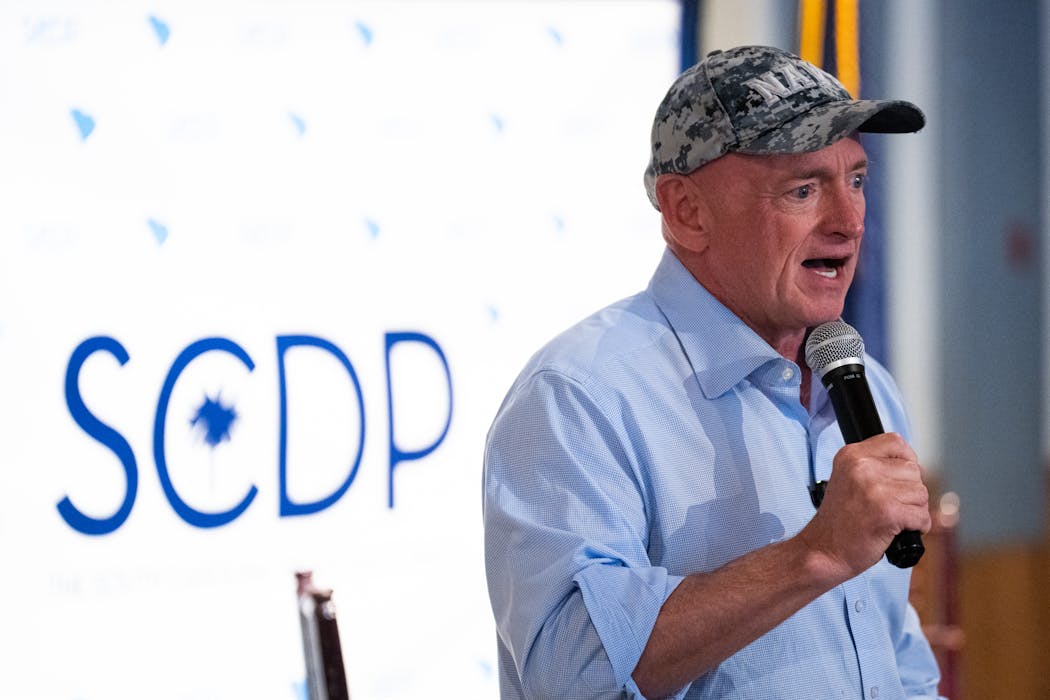
Arizona Sen. Mark Kelly speaks at a town hall meeting hosted by the South Carolina Democratic Party in Columbia, S.C., on Sept. 12, 2025. Bill Clark/CQ-Roll Call, Inc via Getty Images

In an unprecedented step, the Department of Defense announced online on Nov. 24, 2025, that it was reviewing statements by U.S. Sen. Mark Kelly, a Democrat, who is a retired Navy captain, decorated combat veteran and former NASA astronaut.

Kelly and five other members of Congress with military or intelligence backgrounds told members of the armed forces “You can refuse illegal orders” in a video released on Nov. 18, reiterating oaths that members of the military and the intelligence community swear to uphold and defend the Constitution. The legislators said they acted in response to concerns expressed by troops currently serving on active duty.

President Donald Trump called the video “seditious behavior, punishable by death.”

Retired senior officers like Kelly can be recalled to duty at any time, which would make it possible for the Pentagon to put Kelly on trial under the Uniform Code of Military Justice, although the Defense Department announcement did not specify possible charges. Defense Secretary Pete Hegseth wrote online that “Kelly’s conduct brings discredit upon the armed forces and will be addressed appropriately.”

This threat to punish Kelly is just the latest move by the Trump administration against perceived enemies at home. By branding critics and opponents as disloyal, traitorous or worse, Trump and his supporters are resurrecting a playbook that hearkens back to Sen. Joseph McCarthy’s crusade against people he portrayed as domestic threats to the U.S. in the 1950s.

As a historian who studies national security and the Cold War era, I know that McCarthyism wrought devastating social and cultural harm across our nation. In my view, repeating what I believe constitutes social and political fratricide could be just as harmful today, perhaps even more so.

Targeting homegrown enemies

In the late 1940s and early 1950s, many Americans believed the United States was a nation under siege. Despite their victory in World War II, Americans saw a dangerous world confronting them.

The communist-run Soviet Union held Eastern Europe in an iron grip. In 1949, Mao Zedong’s communist troops triumphed in the bloody Chinese civil war. One year later, the Korean peninsula descended into full-scale conflict, raising the prospect of World War III – a frightening possibility in the atomic era.

Anti-communist zealots in the U.S., most notably Wisconsin Republican Sen. McCarthy, argued that treasonous Americans were weakening the nation at home. During a February 1950 speech in Wheeling, West Virginia, McCarthy asserted that “the traitorous actions of those who have been treated so well by this nation” were undermining the United States during its “final, all-out battle” against communism.

When communist forces toppled China’s government, critics such as political activist Freda Utley lambasted President Harry Truman’s administration for what they cast as its timidity, blundering and, worse, “treason in high places.” Conflating foreign and domestic threats, McCarthy claimed without evidence that homegrown enemies “within our borders have been more responsible for the success of communism abroad than Soviet Russia.”

From 1950 through 1954, Sen. Joseph McCarthy, a Wisconsin Republican, used his role as chair of two powerful Senate committees to identify and accuse people he thought were Communist sympathizers. Many of those accused lost their jobs even when there was little or no evidence to support the accusations.

As ostensible proof, the senator pointed to American lives being lost in Korea and argued that it was possible to “fully fight a war abroad and at the same time … dispose of the traitorous filth and the Red vermin which have accumulated at home.”

Political opponents might disparage McCarthy for his “dishonest and cowardly use of fractional fact and innuendo,” but the Wisconsinite knew how to play to the press. Time and again, McCarthy would bombastically lash out against his critics as he did with columnist Drew Pearson, calling him “an unprincipled liar,” “a fake” and the owner of a “twisted perverted mentality.”

While McCarthy focused on allegedly disloyal government officials and media journalists, other self-pronounced protectors of the nation sought to warn naive members of the public. Defense Department pamphlets like “Know Your Communist Enemy” alerted Americans against being duped by Communist Party members skilled in deception and manipulation.

Virulent anti-communists denounced what they viewed as inherent weaknesses of postwar American society, with a clearly political bent. Republicans asserted that cowardly, effeminate liberals were weakening the nation’s defense by minimizing threats both home and abroad.

Censure and worse

In such an anxiety-ridden environment, “red-baiting” – discrediting political opponents by linking them to communism – spread across the country, leaving a trail of wrecked lives. From teachers to public officials, anyone deemed un-American by McCarthyites faced public censure, loss of employment or even imprisonment.

Under the 1940 Smith Act, which criminalized promoting the overthrow of the U.S. government, hundreds of Americans were prosecuted during the Cold War simply for having been members of the Communist Party of the United States. The act also authorized the “deportation of aliens,” reflecting fears that communist ideas had seeped into nearly all facets of American society.

The 1950 Internal Security Act, widely known as the McCarran Act, further emphasized existential threats from within. “Disloyal aliens,” a term the law left purposefully vague, could have their citizenship revoked. Communist Party members were required to register with the government, a step that made them susceptible to prosecution under the Smith Act.

Immigrants could be detained or deported if the president declared an “internal security emergency.” Advocates called this policy “preventive detention,” while critics derided the act as a “Concentration Camp Law,” in the words of historian Masumi Izumi.

Scapegoating outsiders

The scaremongering wasn’t just about people’s political views: Vulnerable groups, such as gay people, were also targeted. McCarthy warned of links between “communists and queers,” asserting that “sexual perverts” had infested the U.S. government, especially the State Department, and posed “dangerous security risks.” Closeted gay or lesbian employees, the argument went, were vulnerable to blackmail by foreign governments.

Fearmongering also took on a decidedly racist tone. South Carolina Governor George Bell Timmerman, Jr., for instance, argued in 1957 that enforcing “Negro voting rights” would promote the “cause of communism.”

Three years later, a comic book titled “The Red Iceberg” insinuated that communists were exploiting the “tragic plight” of Black families and that the NAACP, a leading U.S. civil rights advocacy group, had been infiltrated by the Kremlin. Conservatives like Arizona Sen. Barry Goldwater criticized the growing practice of using federal power to enforce civil rights, calling it communist-style social engineering.

In an interview on Oct. 13, 2024, then-candidate Donald Trump described Democratic Party rivals as ‘the enemy from within’ and suggested using the armed forces against ‘radical left lunatics’ on Election Day.

A new McCarthyism

While it’s never simple to draw neat historical parallels from past eras to the present, it appears McCarthy-like actions are recurring widely today. During the Red Scare, the focus was on alleged communists. Today, the focus is on straightforward dissent. Critics, both past and present, of President Donald Trump’s actions and policies are being targeted.

At the national level, Trump has called for using military force against “the enemy from within.” On Sept. 30, 2025, Trump told hundreds of generals and admirals who had been called to Quantico, Virginia, from posts around the world that the National Guard should view America’s “dangerous cities as training grounds.”

The Trump administration is making expansive use of the McCarran Act to crack down on immigrants in U.S. cities. White House adviser Stephen Miller has proposed suspending the constitutionally protected writ of habeas corpus, which entitles prisoners to challenge their detentions in court, in order to deport “illegal aliens,” alleging that the U.S. is “under invasion.”

In my home state of Texas, political fearmongering has taken on an equally McCarthyesque tone, with the Legislature directing the State Board of Education to adopt mandatory instruction on “atrocities attributable to communist regimes.”

Perhaps it is unsurprising, then, that right-wing activist Laura Loomer has unapologetically called for “making McCarthy great again.”

Disagreement is democratic

The history of McCarthyism shows where this kind of action can lead. Charging political opponents with treason and calling the media an “enemy of the people,” all without evidence, undercuts democratic principles.

These actions cast certain groups as different and dehumanize them. Portraying political rivals as existential threats, simply for disagreeing with their fellow citizens or political leaders, promotes forced consensus. This diminishes debate and can lead to bad policies.

Americans live in an insecure world today, but as I see it, demonizing enemies won’t make the United States a safer place. Instead, it only will lead to the kind of harm that was brought to pass by the very worst tendencies of McCarthyism.

The Conversation

Gregory A. Daddis does not work for, consult, own shares in or receive funding from any company or organization that would benefit from this article, and has disclosed no relevant affiliations beyond their academic appointment.

ref. Pentagon investigation of Sen. Mark Kelly revives Cold War persecution of Americans with supposedly disloyal views – https://theconversation.com/pentagon-investigation-of-sen-mark-kelly-revives-cold-war-persecution-of-americans-with-supposedly-disloyal-views-265964

A database could help revive the Arapaho language before its last speakers are gone

Source: The Conversation – USA – By Andrew Cowell, Professor of Linguistics, University of Colorado Boulder

There are fewer than 100 speakers of the Arapaho language today. Mark Makela/GettyImages

I was hired at the University of Colorado Boulder in 1995 as a language professor. I relocated from Hawaii, where I had learned the Hawaiian language.

When I arrived in Colorado, I decided I needed to learn about the Indigenous language of the Boulder and Denver area, Arapaho. The Arapaho people had occupied the area for many years until they were forced to leave in the 1860s.

I first visited the Northern Arapaho people on the Wind River Reservation in Wyoming in 1999. At that time, there were hundreds of speakers of the Arapaho language.

Today, there are less than 100, and all are over the age of 70.

The Arapaho people in Wyoming and Colorado believe their language can still survive, and so do I. That’s why I am working to combine decades of language documentation with new technological approaches in order to help revive the language.

Loss of Native languages

Many Native American languages currently have few Native speakers, and the speakers are typically the oldest members of the community. The languages of the Wichita and Kansa people, for example, are among many that are no longer spoken at all.

Native American languages have been in decline in the face of Euro-American pressure for centuries.

On the Great Plains, this decline accelerated after World War II when Native soldiers came home after seeing prosperity off the reservation.

Arapaho elders tell me that bilingual parents decided to speak only English to their children to improve their chances of success in life. They were certain the tribal languages would come “later.”

But “later” didn’t happen. Boarding schools had already been suppressing the language, and now economic improvements brought cars, radios and televisions to Wind River, further promoting the use of English. Without language exposure in the home, children were not able to acquire good speaking abilities.

A documentary from Rocky Mountain PBS about Native American people who lost their language as children.

Today, however, tribal communities around the country increasingly want to maintain or reacquire their languages. Efforts to do this have been going on for several decades, with some successes, such as the Mohawk language of New York and Canada, Cherokee in Oklahoma and North Carolina and the Blackfoot language of northern Montana.

In most places however, numbers of Native speakers continue to decline, while learning among younger speakers progresses slowly.

Uses of data for curriculum

My early work focused on documenting the Arapaho language. Past linguists working with Native languages typically focused on traditional storytelling, as well as audio-recorded data. But my interest in anthropology led me to focus on conversation and everyday interaction. I also recorded on video to capture social settings, gestures and sign language. And to better understand the role of the language in daily use, I worked to become a good speaker myself.

I have compiled my documentation into a database that contains over 100,000 sentences of natural Arapaho speech. All of this has been transcribed, translated into English and accompanied by detailed linguistic analysis.

The database is further supported by an online learning site and an online dictionary of around 25,000 entries. They are among the largest such resources for an Indigenous language, though resources do exist for other languages, such as Yurok.

Courtesy of Andrew Cowell.13.8 KB (download)

From documentation to curriculum

In response to the Arapaho people’s goal of language revitalization, my own work has shifted from documentation to assisting teachers, students and curriculum developers. The database turns out to have great value in this area.

Adult learners can watch the videos along with the Arapaho transcriptions or English translations, or both, and review the detailed grammatical analysis.

However, it is quite difficult for young learners to immediately benefit from listening to natural discourse. That’s why carefully graded curricula are crucial. Unlike for commonly taught languages such as French or Spanish, materials for most Native American languages are just being developed.

Arapaho can be challenging to learn because its structure is quite different from English. Many small chunks of meaning are combined to produce long, complex words. For example, an English speaker can start with “happy” and produce “un-happi-ness.” Arapaho speakers typically add three, four or even five prefixes, and multiple suffixes as well. A speaker can say the word “niibeetwonwoteekoohunoo” – which has six separate meaningful chunks. This translates to English, “I want to go and drive to town.”

There is little value in memorizing such complex words, just as English learners don’t memorize entire sentences. Instead, Arapaho learners need to understand the separate parts, and how they combine.

Previous efforts have succeeded in teaching children to speak basic Arapaho. The challenge now is to keep improving their Arapaho language abilities, using a graded curriculum that continues through all school levels.

The database can identify and label the individual chunks of words, and assign meanings to each chunk. A beginner’s dictionary of 1,300 entries has been created by calculating the overall frequency of base words in the 100,000 sentences, and then selecting only the most common ones.

The list has been broken down further to produce target vocabulary for each grade level. Smaller chunks of prefixes and suffixes are also measured, and sequential grammar-learning goals can be produced based on frequency and complexity.

A draft Arapaho learning sequence has been created, with 44 stages. It is now possible for the first time to produce a full, progressive language curriculum for Arapaho. The next step is to develop more curricular materials and train teachers to use them.

The sequence of 44 stages is now being introduced at Wyoming Indian Elementary School, the first school on the Wind River Reservation to pioneer dual-language classrooms.

Limitations of technology

Technology is not a magic bullet, however. Only Native people can save their languages, by choosing to learn and speak them.

Because artificial intelligence works using large language models, it needs billions of words of discourse to be trained effectively in a language. No Indigenous language has nearly that amount of data, so the capacity of AI to address Native language endangerment is limited. Moreover, many Indigenous communities are wary of AI due to concerns over data sovereignty and cultural property rights.

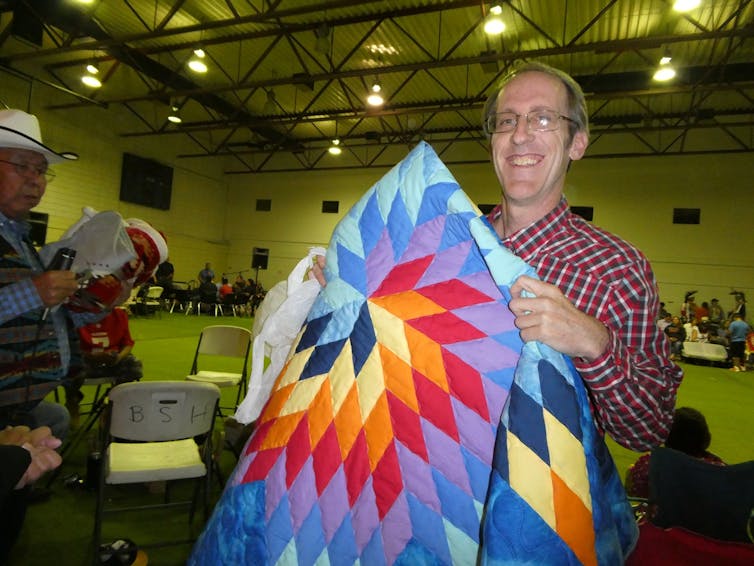
A man in a red gingham shirt holds a colorful quilted blanket.
The author, Andrew Cowell, is recognized for his Arapaho language revitalization at a 2018 ceremony on the Wind River Reservation in Wyoming.
Courtesy of Andrew Cowell.

My own old-fashioned experience as a learner and teacher has proved crucial. I can see where difficulties lie for learners, and how to fine-tune computational measurements and predictions. I’ve learned that success in helping revitalize Native languages depends on researchers building long-term relationships with Native peoples and, ideally, speaking Native languages. Only then can new technologies be applied most productively.

The Conversation

Andrew Cowell currently receives funding from National Science Foundation. Past funding related to the work described here has come from the American Council of Learned Societies and Hans Rausing Endangered Language Documentation Programme.

He has received compensation from elements of the Northern Arapaho Tribe and the Southern Cheyenne and Arapaho Tribe for some of his assistance and consultation.

ref. A database could help revive the Arapaho language before its last speakers are gone – https://theconversation.com/a-database-could-help-revive-the-arapaho-language-before-its-last-speakers-are-gone-269592

Why posture during movement matters more than how you sit or stand

Source: Radio New Zealand

If you’ve ever caught yourself slouching at your desk and immediately jerked your shoulders back and straightened your spine, you know the struggle. Within minutes, you’re slumped over again.

Here’s why: Rigid corrections are impossible to maintain because they treat posture like a static position to hold rather than a dynamic skill to train.

Good posture isn’t something you freeze into place — it’s a fluid, balanced and aligned state that you build with proper breathing, strength and mobility.

Proper breathing can improve your posture, enhance your mobility, and relieve aches and pains.

Proper breathing can improve your posture, enhance your mobility, and relieve aches and pains.

Unsplash

– Published by EveningReport.nz and AsiaPacificReport.nz, see: MIL OSI in partnership with Radio New Zealand

Experts recommend new mums stay offline for six weeks after baby is born

Source: Radio New Zealand

When Hannah Gheller had her baby 14 weeks ago, she did not expect social media to become such a “minefield”.

The first-time mum from Melbourne/Naarm says she felt it was a “shame-inducing tool” when she was struggling to breastfeed and her son wasn’t gaining weight.

“I would Google tips for improving [milk] supply and expressing, only for my Instagram to effectively be filled with tradwives who were showing off their chest freezers full of expressed milk. Or how formula is not natural and therefore shouldn’t be fed to babies.”

Experts say there are ways mothers can better protect themselves online during the vulnerable postpartum period.

Experts say there are ways mothers can better protect themselves online during the vulnerable postpartum period.

Unsplash

– Published by EveningReport.nz and AsiaPacificReport.nz, see: MIL OSI in partnership with Radio New Zealand

Scientists discover four major turning points for human brain

Source: Radio New Zealand

Alzheimer's disease Asian female doctor holds brain anatomy model for diagnosis and treatment, new modern clinic, complete tools to cure brain disease.

The five brain phases were split into: childhood brain, adolescent brain, adult brain, early ageing brain and late ageing brain. Photo: 123rf

Scientists have discovered the human brain goes through five different phases of life, with key turning points at four different ages.

These “major turning points” occur around the ages of 9, 32, 66 and 83, a media release from the University of Cambridge said.

The neuroscientists from Cambridge University found the brain structure changes over the course of a human life, as the brain rewires to “support different ways of thinking while we grow, mature, and ultimately decline”.

The study that was led by the university’s MRC Cognition and Brain Sciences Unit compared brains of more than 3800 people aged between 0 and 90.

According to scientist and research lead Dr Alexa Mousley, it is the first study to “identify major phases of brain wiring across a human lifespan”.

It found the brain does not shift into “adult mode”, on average, until the age of 32.

The five brain phases were split into: childhood brain, adolescent brain, adult brain, early ageing brain and late ageing brain.

“These eras provide important context for what our brains might be best at, or more vulnerable to, at different stages of our lives,” Mousley said.

“It could help us understand why some brains develop differently at key points in life, whether it be learning difficulties in childhood, or dementia in our later years.”

Childhood brain

According to the media release, brains are defined by “network consolidation” from infancy through to childhood. Connectors in the brain rewire across the whole brain in the same pattern until roughly 9 years old.

At this point, the first turning point, the brain experiences a “step-change” in cognitive capacity – and an increase in risk of mental health disorders.

Adolescent brain

The second turning point sees the brain’s communications networks increasingly refine, the media release said.

This continues until a person is in their 30s, when it peaks.

This is the “strongest topological turning point of the entire life span”.

Mousley said: “Around the age of 32, we see the most directional changes in wiring and the largest overall shift in trajectory, compared to all the other turning points.

“While puberty offers a clear start, the end of adolescence is much harder to pin down scientifically. Based purely on neural architecture, we found that adolescent-like changes in brain structure end around the early 30s.”

Adult brain

According to this study, adulthood begins at 32, until around the age of 66.

Researchers say it is at this time that the brain’s architecture stabilises.

Early ageing brain

Mousley said data used for the study suggested a “gradual reorganisation” of the brain’s networks occurs in the mid-60s.

“This is probably related to ageing, with further reduced connectivity as white matter starts to degenerate.

“This is an age when people face increased risk for a variety of health conditions that can affect the brain, such as hypertension.”

Late ageing brain

The final turning point for the brain occurs around the age of 83, the media release said.

Data for this stage was limited but showed the whole brain’s connectivity declined further.

Scientist Professor Duncan Astle said: “Many neurodevelopmental, mental health and neurological conditions are linked to the way the brain is wired. Indeed, differences in brain wiring predict difficulties with attention, language, memory, and a whole host of different behaviours.

“Understanding that the brain’s structural journey is not a question of steady progression, but rather one of a few major turning points, will help us identify when and how its wiring is vulnerable to disruption.”

Sign up for Ngā Pitopito Kōrero, a daily newsletter curated by our editors and delivered straight to your inbox every weekday.

– Published by EveningReport.nz and AsiaPacificReport.nz, see: MIL OSI in partnership with Radio New Zealand

How food assistance programs can feed families and nourish their dignity

Source: The Conversation – USA (3) – By Joslyn Brenton, Assistant Professor of Sociology, Ithaca College

Food assistance does more good when it doesn’t make people feel bad for needing help. SolStock/E+ via Getty Images

The 2025 government shutdown drew widespread attention to how many Americans struggle to get enough food. For 43 days, the more than 42 million Americans who receive Supplemental Nutrition Assistance Program benefits had to find other ways to stock their cupboards.

When asked how she felt about her benefits being suspended, one woman in West Virginia told a New York Times reporter, “We’re angry. Because we do count!”

Her sentiment reflects an often underappreciated fact about food. Food is not just a matter of survival. What and how you eat is also a symbol of your social status. Being unable to reliably feed your family healthy and nutritious foods in a way that aligns with your values can feel undignified. It can make people feel unseen and less important than others.

As researchers who study food inequality, nutrition and food justice, we have spent decades surveying and interviewing Americans about how they eat. We have witnessed firsthand how food assistance does help people meet their basic needs, but how it can also be stigmatizing and diminish their sense of dignity.

We have also studied alternatives to typical charitable food programs that, despite good intentions, tend to induce shame. We have learned that it is possible to help people put food on the table while preserving their dignity.

Dignity and food assistance

Addressing the root causes of food insecurity – what happens when people lack steady access to the food they need for a nutritious diet that’s in keeping with their preferences – is a persistent problem in the United States.

Thus, the demand for SNAP benefits, which help Americans buy groceries, other government nutrition programs, and food banks and food pantries rarely declines much – even when the economy is strong. Yet relying on food assistance programs does not tend to support a healthy diet and can take a toll on mental health.

As interviewers and clinicians, we have heard mothers describe the shame they feel when SNAP benefits do not cover the entire grocery bill. We have witnessed the frustration that comes with walking down a food pantry aisle lined with signs instructing hungry people to “take only 1 item!”

“The stuff looks like almost trash, but they give it to you,” one woman we interviewed said of her experience with food pantries and the like.

These kinds of stories are not uncommon. Charitable food programs receive leftover items from grocery stores, donations from community food drives and local businesses, and sometimes surplus from local farms. Food is often damaged in transport or from being handled too many times. A review of the research found that many people who use food pantries described the food as unhealthy, moldy or inedible. Being given unhealthy and unappealing food in a time of need is a double burden.

While free food may fill the stomach, it does not satisfy the desire to feel fully human and worthy of nourishment.

People who visit food banks have told researchers that they have come to expect low-quality food and few choices. When food aid is provided that way, it can leave the people it is supposed to help feeling powerless and ashamed.

These indignities are compounded by the fact that people who visit food banks and food pantries routinely face suspicion and surveillance around what they buy and how they eat, intensifying the stress associated with food insecurity.

In our research, we saw cashiers hovering over mothers using SNAP EBT cards in the self-checkout line. Politicians routinely suggest that SNAP is corrupt, contributing to nationwide perceptions that people who rely on this program are unfairly gaming the system. One study found that more than two-thirds of the Americans people who get food assistance have been the target of hostile comments and interactions from strangers at the grocery store.

Minimizing stigma

Several studies have shown that food programs do not need to sacrifice dignity to offer help. Programs that offer opportunities for people with lower incomes to receive and give back are important.

In Canada, bulk-buying food cooperatives did just that. Food assistance programs confer dignity when they make people feel good. People seeking help feel more satisfied after visiting food pantries that keep convenient hours or offer fresh produce.

SNAP has also tried to promote client dignity by ensuring that benefits are accepted in major grocery stores and distributing the funds to debit cards, allowing people to look and feel like everyday shoppers.

Yet despite these efforts social stigma persists. People who are enrolled in the SNAP program are still routinely devalued and judged for being poor in a society that assigns social value and worth based on one’s position on the economic ladder.

A customer shops for groceries in a supermarket.
Because SNAP benefits can be used to buy food at stores, the program generally allows for broad choices.
Brandon Bell/Getty Images

Cultivating dignity in food assistance

Minimizing stigma improves food assistance. Intentionally cultivating food dignity may be the next step.

Our assessment of a nationwide meal kit program demonstrated how dignity can be cultivated when food assistance programs consider the nutritional, emotional, aesthetic and cultural dimensions of food and eating.

In 2021, we conducted 116 interviews with participants of a meal kit program called Pass the Love. The program was free and anyone could enroll, no questions asked. The meal kits contained the necessary food and recipes to make three vegetarian meals a week, such as sesame coconut noodle salad or carrot coconut dal with rice. The program ran for four consecutive weeks.

When we interviewed participants about their experiences during and after the program, we learned that while they were thankful for the free food, what mattered more was the high quality, how it was packaged and how it conveyed care and respect.

Most participants had incomes at or well below the poverty line. They described what we came to call a “high dignity food experience,” meaning that it generated positive feelings and a sense of worth.

Opening the nicely packaged meal kit boxes each week felt like “Christmas,” to some people and a “gift” to others. Many found the “thought and care” that went into the program remarkable. Offering high-quality food to make nutritious, complete meals symbolized that low-income or food-insecure people deserve to eat well and feel good.

Our research, like similar studies that others have conducted, shows that treating food as a basic human right requires more than just giving people something to eat. It means ensuring unconditional access to the culturally appropriate fresh and nutritious food people need to thrive not just physically, but psychologically and socially.

The Conversation

Joslyn Brenton received funding from Partnership for a Healthier America as an external research expert.

Dr. Virudachalam received funding from the Edna G. Kynett Memorial Foundation, Rite Aid Foundation, and Partnership for a Healthier America in the last 36 months. She is a member of The Food Trust Board of Directors, the National Produce Prescription Collaborative Steering Committee, and Philadelphia City Council’s Food and Nutrition Security Task Force.

Alyssa Tindall does not work for, consult, own shares in or receive funding from any company or organization that would benefit from this article, and has disclosed no relevant affiliations beyond their academic appointment.

ref. How food assistance programs can feed families and nourish their dignity – https://theconversation.com/how-food-assistance-programs-can-feed-families-and-nourish-their-dignity-269171

What makes a true Santa is inside – and comes with the red suit

Source: The Conversation – USA (3) – By Christina Hymer, Assistant Professor of Management and Entrepreneurship, University of Tennessee

Members of the Fraternal Order of Real Bearded Santas meet at Pink’s restaurant at Knott’s Berry Farm before the holiday rush in 2009. Business Wire via AP

When you picture Santa Claus, a white, bearded, overweight and jolly man who dashes around delivering gifts to children during the Christmas season probably comes to mind. Yet, not everyone who dons the red suit fits this stereotype.

That’s what Bethany Cockburn, Borbala Csillag and I learned when we teamed up to study professional Santas. For our study, we looked into how these professional Santas were able to “be” Santa, even if they didn’t fully fit the image.

As we explained in a forthcoming article in the Academy of Management Journal, many who do this work don’t see it as just a job – it’s a calling. For some professional Santas, it’s especially important that they look and feel like Santa to experience that sense of purpose in their work.

We surveyed 849 professional Santas who live across the U.S. and interviewed 53 of them, collecting data between 2018 and 2021. We identified three types of professional Santas: prototypical (64%), semi-prototypical (23%) and nonprototypical (13%).

Prototypical Santas look the part. They are white and overweight, have real beards and express confidence that they are the right fit.

Semi-prototypical Santas looked the part, too, but felt like they weren’t quite suitable for a range of reasons. They might be introverted or use a fake beard.

Nonprototypical Santas had characteristics at odds with the stereotype. They might be nonwhite, female or gay, or have a physical disability.

Man dressed as Santa holds a dog on his lap.
Many Santas see their work, whether paid or volunteer, as a calling.
Photo by Gwyn Sussman

Whereas prototypical Santas could easily slide into the Santa role, the process was more complex for the others.

Semi-prototypical Santas did things like come up with stories they’d tell themselves or share with children to explain away their fake beards. Nonprototypical Santas had values aligned with the Santa image, such as being peaceful, loving and kind. But they still made a big effort to look like what people expect when they visit a Santa.

“Should it be a difference if you’re a Jewish Santa Claus or a Catholic Santa Claus?” asked an atheist professional Santa we called “Santa Aquila.” “No. You’re Santa Claus. What do you do? You’re not even supposed to preach anything.”

Another Santa whom we called “Santa Lynx” hid that she was female in part by flattening her chest.

Why it matters

While anyone can take a turn being their neighborhood potluck’s Santa, the one you meet at the mall probably attended some combination of Santa schools, webinars and training.

For instance, the Charles W. Howard Santa Claus School was founded in 1937 and conducts an annual Santa training each year. National networks also exist, such as the Fraternal Order of Real Bearded Santas, which says it has 1,000 members, – and the IBRBS, formerly known as the International Brotherhood of Real Bearded Santas, offering meetups and professional support.

A man dressed as Santa in a gray beard smiles festively.
Actor B.J. Averell, dressed as Santa Claus, attends a toy drive for struggling Bay Area families in Burlingame, Calif., in December 2024.
Tayfun Coskun/Anadolu via Getty Images

There are also local organizations, such as the Lone Star Santas network in Texas.

Although most professional Santas are paid for their work, many do this voluntarily.

It’s not uncommon for there to be some sort of expectation around who should have a particular occupation. Pilots tend to be male, most schoolteachers are female, and salespeople are often seen as extroverted.

But that doesn’t mean that women can’t be pilots, men can’t be teachers or that introverts can’t work in sales.

What’s next

I’m now looking at how broader institutional environments, current events and social movements can shape how people experience their callings and find meaning at work.

The Research Brief is a short take on interesting academic work.

The Conversation

Christina Hymer does not work for, consult, own shares in or receive funding from any company or organization that would benefit from this article, and has disclosed no relevant affiliations beyond their academic appointment.

ref. What makes a true Santa is inside – and comes with the red suit – https://theconversation.com/what-makes-a-true-santa-is-inside-and-comes-with-the-red-suit-269569

La creatividad, clave para captar la atención ante la avalancha de estímulos digitales que recibimos

Source: The Conversation – (in Spanish) – By Jordi Caballé May, Profesor de creatividad, storytelling y comunicación política creativa, UOC – Universitat Oberta de Catalunya

Natalya Kosarevich/Shutterstock

Notificaciones continuas, titulares urgentes, vídeos cortos encadenados, series en streaming, anuncios personalizados, correos de trabajo fuera del horario…

Hoy, nuestro cerebro ya no es un espacio sereno y ordenado, sino un campo de batalla constante en el que cientos de actores compiten ferozmente por conquistar nuestra atención.

El economista y premio Nobel Herbert Simon ya advirtió en los años 70 de una paradoja que hoy es central: “Un exceso de información crea una pobreza de atención”.

Esta afirmación, ahora, resuena con más fuerza que nunca y se ha transformado en una idea compartida por psicólogos, neurocientíficos y comunicadores: la atención es el bien más escaso del siglo XXI.

Uno de los autores que ha explorado esta idea es Johann Hari, que en su libro El valor de la atención nos sitúa ante una verdad incómoda: “Vivimos en la era de la distracción sistemática”.

Una distracción industrializada

Cada día, nuestras mentes son arrastradas, fragmentadas y desgarradas por un entorno digital que no solo tolera la distracción, sino que la ha industrializado. Este entorno ha sido diseñado, literalmente, para robarnos la atención y venderla al mejor postor.

Los datos que aporta Hari son alarmantes: los adolescentes solo mantienen la concentración durante 65 segundos seguidos. Los adultos, en tareas digitales, apenas llegan a los tres minutos.

En ese lapso de tiempo, una idea compleja no puede nacer, y mucho menos crecer.

Para Hari, no hemos perdido la concentración por desinterés, sino porque un modelo económico y tecnológico vive de nuestra dispersión. Y a más dispersión, más facilidad para ser segmentados, predecibles y manipulables.

Las redes sociales nos prometen conexión, pero realmente nos desconectan de la realidad, la fragmentan y la vacían de contenido.

Esta pérdida de atención conlleva que la lectura profunda se desvanezca, la memoria se debilite y la capacidad de reflexión caiga en picado.

Todo esto es letal para la política, que necesita precisamente lo contrario: espacios para construir un relato, capacidad de matizar y un mínimo de atención compartida para mirar colectivamente hacia el futuro.

Los algoritmos no buscan el pensamiento profundo, sino la respuesta emocional más rápida posible y, en este contexto, la comunicación política se ve arrastrada por una lógica que no le pertenece.

Para la comunicación política entender este robo de la atención es fundamental, porque no podremos construir relato ni discurso si antes no se crea silencio.

La comunicación política creativa

Hoy, un discurso lleno solo con buenos argumentos no es suficiente para conectar con la ciudadanía y puede ser ignorado por un meme de gatitos.

En cambio, un discurso creativo bien diseñado puede romper la inercia del scroll, puede generar una pausa donde hay prisa, puede invitar a pensar donde todo empuja a reaccionar.

Se trata de construir relatos que creen contexto y curiosidad. No de escribir más mensajes, sino de hacer uno memorable. En este escenario, la creatividad puede ser nuestra mejor aliada.

La comunicación política creativa propone aplicar las técnicas de la redacción publicitaria, la narrativa, el guion y el humor en la creación de discursos institucionales o políticos para convertir los mensajes clave en relatos atractivos capaces de conectar con la ciudadanía y seducirla.

Si aplicamos el proceso creativo a la conceptualización y redacción de discursos obtendremos textos más cercanos, diferentes y memorables.

Cómo ganarnos la atención cuidadana

John Cleese, miembro fundador de la compañía de comedia Monty Phython, en su libro Creativity: A Short and Cheerful Guide afirma que “la creatividad es la capacidad de encontrar una mejor manera de hacer cualquier cosa”.

En un mundo de scroll infinito e interrupciones constantes, la creatividad no es solo un recuso estético o narrativo, sino una herramienta estratégica para ganarse la confianza y la atención de la ciudadanía.

Un discurso creativo sabe crear pausa, seducir, provoca emociones genuinas, utiliza metáforas poderosas que quedan en la memoria, ritmos que invitan a escuchar con calma, silencios cargados de sentido, estructuras narrativas que generan expectativa, giros que rompen patrones.

El discurso creativo permite convertir los datos fríos y crudos en relatos que conecten con valores compartidos por la ciudadanía basados en los beneficios concretos de estos.

Cuando un discurso es creativo, se produce lo que el psicólogo Mihaly Csikszentmihalyi llama “estado de flujo”: el público queda cautivado, se olvida del tiempo, conecta emocionalmente y quiere seguir escuchando.

Por tanto, en un mundo donde la fragmentación es la norma, la creatividad abre la puerta a la inmersión, la narrativa sostenida y la conexión profunda.

En otras palabras, abona el terreno donde arraigan las ideas que transforman y crea espacios donde la reflexión y la conexión emocional pueden florecer.

Recuperar la concentración a través de la creatividad es la oportunidad de transformar el ruido en conversación, la distracción en participación y la pasividad en acción colectiva.

The Conversation

Jordi Caballé May no recibe salario, ni ejerce labores de consultoría, ni posee acciones, ni recibe financiación de ninguna compañía u organización que pueda obtener beneficio de este artículo, y ha declarado carecer de vínculos relevantes más allá del cargo académico citado.

ref. La creatividad, clave para captar la atención ante la avalancha de estímulos digitales que recibimos – https://theconversation.com/la-creatividad-clave-para-captar-la-atencion-ante-la-avalancha-de-estimulos-digitales-que-recibimos-267780