Comprender antes de juzgar: ¿qué enseñan los fallos ferroviarios del pasado sobre el accidente de Adamuz?

Source: The Conversation – (in Spanish) – By José Ygnacio Pastor Caño, Catedrático de Universidad en Ciencia e Ingeniería de los Materiales, Universidad Politécnica de Madrid (UPM)
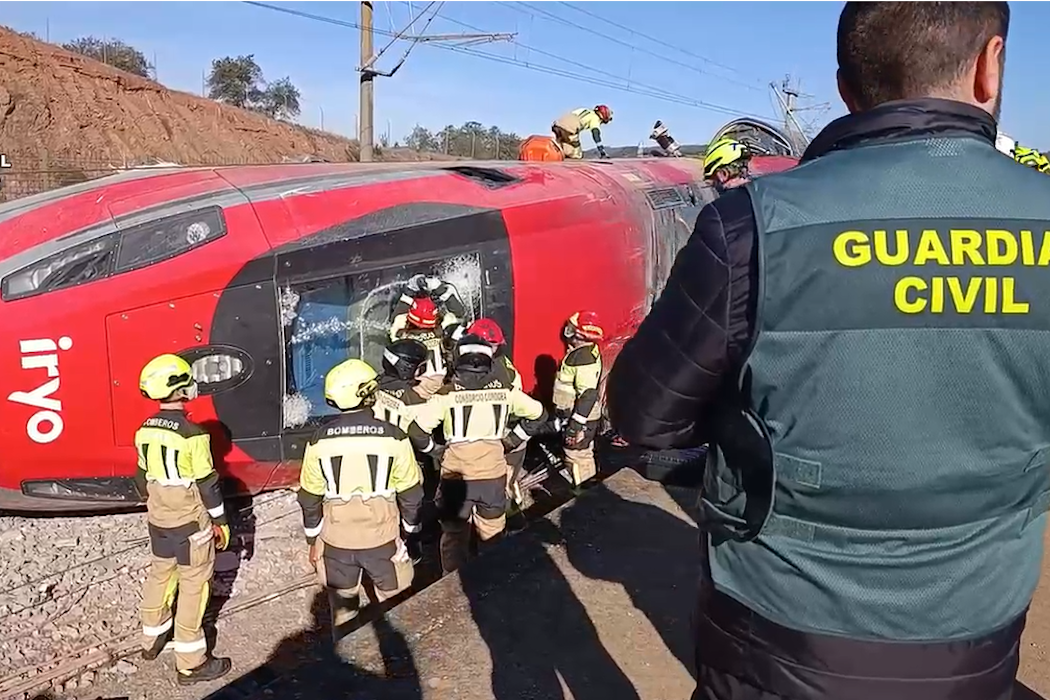
Los bomberos trabajan en la cabecera del tren Iryo siniestrado en Adamuz. Guardia Civil.

La primera vez que entendí de verdad la palabra fatiga no fue en un laboratorio, sino en el salón de casa: una silla aparentemente nueva decidió, sin aviso previo, convertirse en cuatro patas y en un argumento filosófico sobre la gravedad. Nadie la había maltratado. Nadie la había sobrecargado. Simplemente, tras miles de ciclos de carga, una microscópica grieta creció hasta alcanzar su tamaño crítico y se propagó, fracturando el material. Y ahí estaba yo: indignado, tentado de buscar culpables… y, al mismo tiempo, obligado a admitir lo obvio: los fallos complejos rara vez se explican con un dedo acusador.

Con el siniestro de tren en Adamuz ocurre algo parecido, solo que la silla pesa cientos de toneladas, se movía a 200 km/h y transportaba vidas. En este caso, lo mínimo exigible es no convertir la tragedia en una tertulia especulativa de barra de bar.

Búsqueda de evidencias para la identificación de víctimas e investigación del accidente ferroviario el 19 de enero de 2026. Guardia Civil de España.

En busca de un culpable

Lo demás –la causa raíz– es, por definición, una investigación en curso. Aun así, el ser humano necesita cerrar historias rápido: “fue el maquinista”, “fue la vía”, “fue el tren”, “fue algo con nombre propio”.

La información disponible apunta, precisamente, a que no estamos ante el relato fácil del culpable único: fuentes oficiales señalan que se exploran fallos de infraestructura o mecanismos como indicios de una posible anomalía (¿grieta?) en el carril o en elementos del tren. En cualquier caso, no hay que pensar en un sabotaje, ya que, en ese caso, hubiera descarrilado todo el tren.

Esquema simplificado de cómo se investiga un accidente ferroviario.
José Ygnacio Pastor, Universidad Politécnica de Madrid, CC BY-NC

Investigar lleva tiempo

Las investigaciones serias tienen un defecto insoportable: tardan lo que tardan y no entienden de prisas. La normativa europea exige publicar el informe final antes de doce meses; si no se llega a ese plazo, debe emitirse un avance intermedio. Es decir, incluso con presión pública, el sistema está diseñado para que la prisa no sea la autora intelectual del informe.

Accidente ferroviario en Angrois cerca de Santiago de Compostela, el 24 de julio de 2023.
Wikimedia Commons., CC BY

Para hacernos una idea, el accidente de Santiago de Compostela (24 de julio de 2013) obtuvo el informe final en mayo de 2014. En Hatfield (Reino Unido, 2000), la combinación de análisis técnico, responsabilidades y reformas operativas duró años, porque un fallo material puede ser solo el primer dominó de una cadena organizativa.

La seguridad se aprende a partir de los errores del pasado: análisis de las enseñanzas de tres accidentes europeos recientes.
José Ygnacio Pastor, Universidad Politécnica de Madrid, CC BY-NC

Tres lecciones del pasado (sin necesidad de adivinar el futuro)

–A veces, el material es el tren, no la vía.

El accidente de Eschede (Alemania, 1998) es el recordatorio más cruel de que una fisura por fatiga en un componente puede desencadenar una catástrofe, aunque el resto del sistema “parezca” correcto. El detalle relevante es la idea de iniciación y propagación de grietas bajo cargas no críticas repetidas y la importancia de su detección antes del umbral crítico.

–A veces el material es la vía, y el problema es invisible… hasta que deja de serlo.

La fatiga por contacto rodante es una especialidad de la física con mala educación: trabaja en silencio, en la interfaz rueda–carril, con tensiones que pueden alcanzar magnitudes enormes en la zona superficial, y va sembrando grietas. Es lo que pasó en Hatfield, en 2000.

–A veces la causa dominante no es materiales, sino operación y barreras.

El siniestro de 2013 en Santiago de Compostela muestra otra familia: velocidad, factores humanos, transición entre sistemas de protección… y, sobre todo, el debate sobre cuántas capas debe tener un sistema para que un solo error no sea fatal. No es el mismo patrón que el de un descarrilamiento en recta tras una renovación reciente, pero sí enseña el mismo método: no buscar una bala de plata, sino una cadena de eventos.

Esquema simplificado.
Árbol de familias causales del accidente y diferentes tipos de pruebas de peritaje científico que pueden usarse para discriminar entre ellas.
José Ygnacio Pastor, Universiad Politécncia de Madrid, CC BY-NC-ND

¿Y Adamuz? Hipótesis razonables

Si el foco mediático insiste en que la vía era moderna y renovada y el tren era reciente, lo técnico debe responder con humildad: precisamente, por eso, el abanico plausible incluye fallos súbitos o defectos que escaparon a las inspecciones rutinarias. Algunas hipótesis, o todas ellas, podrías responder a nuestra curiosidad:

-Posible problema de unión-soldadura-fatiga de carril: las pruebas habría que buscarlas desde la fractografía (análisis de las superficies de fractura): marcas de avance por fatiga frente a rotura bruca. También, en el historial de ensayos no destructivos en el punto y soldaduras cercanas, en la geometría de vía y asentamientos (registros de auscultación) y en evidencias de campo (fragmentos, deformaciones, “marca de inicio” del descarrilamiento…).

-Si fuera material rodante (rueda-eje-rodamiento/bogie), lo que suele delatarlo son señales previas en los registradores (vibraciones, alarmas, temperatura de los rodamientos), daño característico en la rueda o el eje y en su superficie de fractura y correlación con el mantenimiento real.

-Si no se tratara de un problema de materiales, seguirían siendo hipótesis plausibles —hasta ahora no descartables— la colisión con un obstáculo en la vía, una anomalía local de geometría, el fallo de sujeciones o de un aparato de vía cercano, así como efectos del viento o tensiones térmicas locales, menos habituales en enero, pero relevantes porque la vía responde a la variación cíclica de la temperatura del carril.

En la interacción constante entre las ruedas del ferrocarril, pueden formarse grietas debido al desgaste continuo, al incremento cíclico de las temperaturas y a las cargas repetitivas que provocan la fatiga de los materiales implicados.
José Ygnacio Pastor, Universidad Politécnica de Madrid, CC BY-NC

La seguridad del futuro: más velocidad, más sensores, más humildad

China ha presentado prototipos como el CR450, que operarán hasta 450 km/h. La promesa de seguridad no está en la magia del récord, sino en el ecosistema: instrumentación, mantenimiento predictivo, inspección automatizada, gemelos digitales y una cultura donde un aviso pequeño no se archiva como molestia.

Al final, vuelvo a mi silla rota. Si me hubiera fiado de la intuición, habría culpado a la carpintería, al destino o a esa pata coja. Pero cuando uno analiza, aparece la cadena: un diseño con sus compromisos, una unión que concentra tensiones, un microdefecto, miles de cargas repetidas… y, por fin, un último ciclo que no fue el más fuerte, sino el primero que alcanzó al umbral de rotura.

Comprender antes de juzgar

El análisis forense obliga a leer las huellas del fallo como si fueran un texto, desde la fractografía submicrométrica hasta el macrocosmos del sistema, donde cada decisión humana y técnica deja también su firma.

Con Adamuz, la única postura seria es comprender antes de juzgar. Porque si algo nos enseñan las grandes catástrofes ferroviarias del pasado es que el progreso en seguridad no nace del análisis más rápido, sino de las evidencias más pacientes. Y esas evidencias, como las grietas, no se aprecian fácilmente… pero inevitablemente existen.

Se inspeccionan cabeza y alma del carril, juntas y soldaduras para detectar defectos internos subcríticos invisibles a simple vista.
Comprobación de raíles con un equipo de ultrasonidos manual (Túnel de Base del Gotardo, Suiza).
Wikimedia Commons., CC BY

The Conversation

José Ygnacio Pastor Caño recibe fondos del proyecto PID2022-137274NB-C33, financiado por el Plan Estatal 2021–2023 de la
Agencia Española de Investigación del Gobierno de España.

ref. Comprender antes de juzgar: ¿qué enseñan los fallos ferroviarios del pasado sobre el accidente de Adamuz? – https://theconversation.com/comprender-antes-de-juzgar-que-ensenan-los-fallos-ferroviarios-del-pasado-sobre-el-accidente-de-adamuz-273879
Manger sans viande est-il bon pour la santé ? Un débat récurrent dans l’histoire de la diététique

Source: The Conversation – in French – By Bruno Laurioux, Professeur émerite, Université de Tours

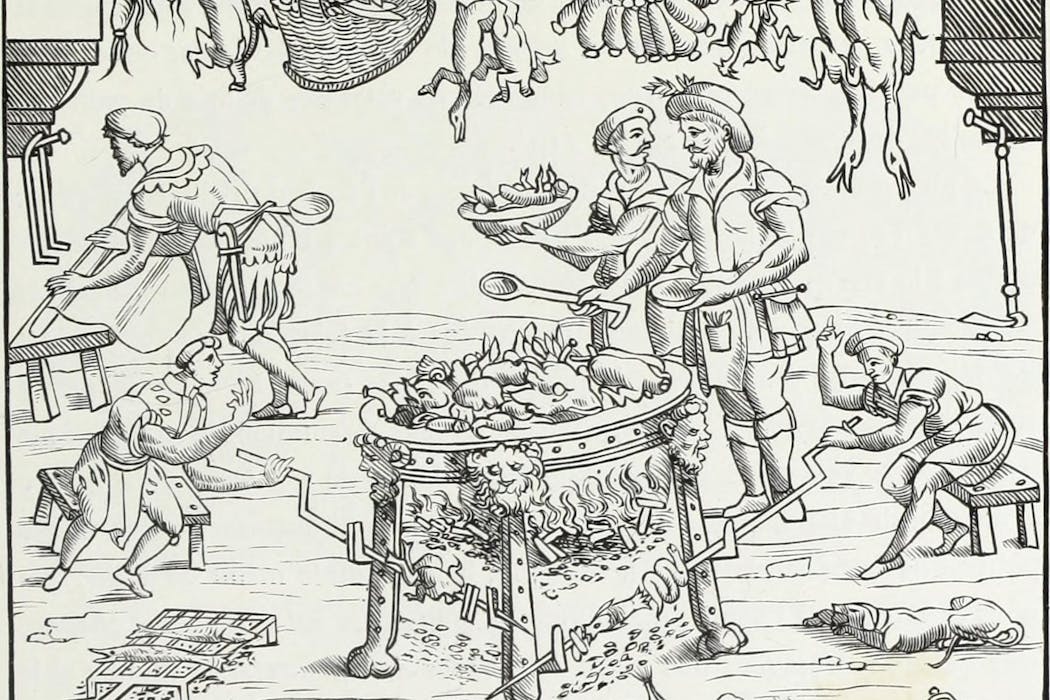
Image extraite de _Mœurs, usages et costumes au Moyen Âge et à l’époque de la Renaissance_ (1871), de Paul Lacroix, illustré par F. Kellerhoven., CC BY

De l’intérêt de limiter sa consommation de viande, voire de s’en priver, au bénéfice de sa santé. C’est un des arguments avancés par celles et ceux qui promeuvent le végétarisme. Mais savez-vous que cette question, ô combien d’actualité, divise les spécialistes depuis… le Moyen Âge ? C’est ce que nous raconte Bruno Laurioux, professeur émérite à l’université de Tours et président de l’Institut européen d’histoire et des cultures de l’alimentation dans Une histoire de la diététique. D’Hippocrate au Nutri-Score (éditions du CNRS, 2025).


Dans la longue histoire du végétarisme, trois arguments principaux ont été avancés pour justifier le refus – ou le rejet – de la viande. Le plus ancien est d’ordre éthique ; on le retrouve chez certains néo-pythagoriciens de l’Antiquité tardive, qui stigmatisent la violence faite à l’animal lorsqu’on le met à mort pour le consommer. L’argument le plus récent – il date du XXe siècle – est de nature environnementale et pointe les impacts très négatifs de l’élevage intensif, en termes de rejet de gaz à effet de serre ou de prélèvement des eaux.

Mais, on l’oublie souvent, l’une des motivations de ceux qui se privent totalement de viande peut être le souci de leur santé. Entretenue par les crises sanitaires à répétition qui touchent le secteur de la production animale depuis le déclenchement de l’encéphalopathie spongiforme bovine (ESB, surnommée communément « maladie de la vache folle ») à la fin des années 1990, puis ravivée par la mise en évidence des effets cancérogènes d’une consommation soutenue de viande rouge, une méfiance certaine envers la viande s’est installée dans notre paysage.


À lire aussi :
Pour promouvoir l’alimentation végétale, l’argument santé serait plus efficace que l’argument écologique


Or, cette ligne de contestation de la consommation carnée a été également utilisée dans un passé parfois lointain, qui va du Moyen Âge au XXe siècle. C’est ce que nous décrivons dans Une histoire de la diététique. D’Hippocrate au Nutri-Score.

La défense du régime chartreux « sans viande » : Arnaud de Villeneuve

Le traité De esu carnium (en français, Sur la consommation des viandes) a été composé entre 1302 et 1305 par l’un des plus grands médecins du temps, le Catalan Arnaud de Villeneuve ; la version originale intégrale de cet ouvrage intégrale étant De esu carnium d’Arnaldus de Villanova, éd. Dianne M. Bazell, Barcelone (Arnaldi de Villanova Opera medica Omnia, XI), 1999).

Professeur renommé à l’université de Montpellier, très bon connaisseur des textes médicaux traduits récemment de l’arabe, Arnaud de Villeneuve met ses talents de praticien au service du roi d’Aragon comme du pape. Il prend ici la défense des Chartreux ; cet ordre monastique rigoriste, fondé par saint Bruno, est accusé de laisser mourir ses membres malades, en leur refusant absolument l’usage de la viande. Or, la possibilité d’en manger avait été ouverte, précisément pour les malades, par la règle bénédictine, la plus répandue en Occident.

De manière générale, l’interdiction de la viande des animaux terrestres et aériens, qui constituait le cœur du carême pour les fidèles et s’imposait aux moines à perpétuité, s’était notablement assouplie. Et ceci sous l’effet du système de représentation dominant dans la société laïque qui valorisait la consommation carnée ; un système face auquel les petites communautés de Chartreux apparaissaient comme des pôles de résistance.

Contre les détracteurs des Chartreux qui les présentent comme cruels ou dénués de toute humanité en ne permettant pas la viande aux malades en grand danger de mort, Arnaud de Villeneuve veut prouver qu’on agit plus efficacement en leur administrant des médicaments et que les mets végétaux ne présentent aucun danger supplémentaire par rapport aux mets carnés – bien au contraire. Il pose ainsi une série d’arguments médicaux tirés des auteurs de référence qu’il maîtrise à merveille.

D’abord, démontre-t-il, prescrire de la viande ne sert à rien quand le malade a juste besoin de médicaments. Ensuite, la chaleur supplémentaire que procure la graisse contenue dans la viande, invoquée par certains détracteurs des Chartreux, n’apporte rien aux malades et peut même être très nuisible à leur guérison.

Troisième argument : la viande restaure certes les muscles mais non la force vitale tout entière ; si le sang « épais et glutineux » qu’elle engendre peut certes aider le corps au quotidien, le vin et les jaunes d’œuf (qui font partie du régime monastique ordinaire), parce qu’ils sont « légers et subtils », se révèlent, juge-t-il, bien plus utiles pour restaurer l’ensemble de ses fonctions physiques et cognitives. (La « prescription » de vin à des malades peut surprendre aujourd’hui, à raison. Mais à l’époque, leur donner du vin, donc de l’alcool, ne fait pas débat, ndlr).

Le médecin catalan, qui se pique aussi de théologie, rappelle au passage que la Bible ne présente jamais la viande comme une nourriture saine ni nécessaire. Et il constate que les Chartreux, même s’ils se privent totalement de viande, vivent fort vieux, atteignant couramment 80 ans, à l’instar des patriarches des premiers âges du monde, où la viande n’était pas encore d’usage.

La conclusion s’impose : la consommation de viande n’est nullement une nécessité en cas de maladie et, par conséquent, s’en priver ne constitue pas un danger ; ceux qui prétendent nécessaire l’usage de la viande ont en réalité mal compris ses effets sur l’alimentation. Conclusion forte, qui intéressa les lecteurs mais n’eut guère d’impact sur les pratiques. Le De esu carnium fut souvent copié et parfois cité mais n’empêcha pas le vaste courant favorable à la viande de se développer et d’emporter tout sur son passage.

Les bienfaits du carême : Andry contre Hecquet

Pourtant le plaidoyer anti-viande ressurgit au début du XVIIIe siècle, sous la plume du bouillant Philippe Hecquet. Ce « self-made-man », devenu médecin du prince de Condé et doyen de la faculté parisienne, manifeste ses talents de polémiste en s’attaquant aux libertés que des fidèles toujours plus nombreux ont pris avec les obligations du carême. Et, scandale majeur pour le rigoureux janséniste qu’il est, sur les conseils mêmes de leur médecin traitant !

Car le contexte a bien changé depuis Arnaud de Villeneuve. Le carême s’est retrouvé au cœur de la contestation que la Réforme protestante a menée contre bien des dogmes et des pratiques catholiques non attestés dans l’Écriture. Avec le siècle des Lumières s’amorce un mouvement encore plus profond dans la société d’Ancien Régime, celui d’une déchristianisation progressive. S’ensuit une forte augmentation de la vente de viande, qui, durant le carême, est traditionnellement détenue par l’Hôtel-Dieu, en vertu des dispenses accordées aux malades.

C’est contre cette évolution que s’élève Hecquet, lorsqu’il publie en 1709 son Traité des dispenses du carême.

Il entend notamment y établir « par l’histoire, par l’analyse et par l’observation », la « convenance » que les aliments maigres entretiennent « avec la santé ». Au bout de quelque 73 chapitres, Hecquet a réussi l’exploit de démontrer à la fois

« que le Carême n’a rien de si extraordinaire » ni de « trop austère » et « que les fruits, les grains et les légumes sont », contrairement à la viande, « les aliments les plus à naturels à l’homme ».

Pour cela, il dresse le profil diététique d’un grand nombre de produits végétaux.

La conclusion qu’il en tire est sans appel :

« Il est vrai de dire que le maigre est plus naturel à l’homme que le gras, qu’il fait moins de maux, et guérit plus de maladies. »

C’est un renversement complet du système de valeur diététique qui est ici proposé, avec l’affirmation d’une absolue supériorité médicale des céréales, fruits et légumes.

Le traité de Philippe Hecquet connait un retentissement immédiat. Mais il indispose fort la plupart des collègues. Dans l’ombre, l’un d’entre eux fourbit ses armes en vue d’un ouvrage qui va en prendre le contrepied. Pour ce Nicolas Andry, l’abstinence de viande n’est ni plus ni moins que « l’écueil de la santé ». Or, Hecquet affirme exactement le contraire, en voyant dans l’antériorité du régime végétal mentionnée dans la Bible la preuve de sa supériorité sur le régime carné : Dieu n’a-t-il pas ainsi manifesté sa préférence ?

D’autre part, tout à sa volonté de combattre les dispenses abusives de carême, Hecquet a déniché, dans les statistiques sur les consommations carnées de Paris, les preuves d’un fâcheux relâchement des pratiques d’abstinence. Ce faisant, il touche les puissants intérêts professionnels des bouchers comme ceux des médecins. Il semble aussi franchir une ligne rouge aux yeux de l’Église, en faisant de la privation de viande non plus une pénitence mais un choix, semblant revenir à d’anciennes hérésies.

Défaite du végétarisme médical en France, au XVIIIᵉ siècle

C’en est trop. Andry réfute point par point les arguments de Hecquet dans les deux volumes de son Traité des dispenses de Carême parus en 1713. L’une de ses affirmations les plus fortes se fonde sur un retournement de son raisonnement : c’est précisément parce que les aliments de carême nourrissent mal que l’Église en a prescrit l’usage, afin de ne pas satisfaire complètement les besoins du corps. En 1714, l’intervention du plus grand médecin du temps, Jean Astruc, qui affirme clairement la supériorité nutritive du gras sur le maigre, marque la défaite du végétarisme médical. Tout au moins en France.

Car, outre-Manche, le courant végétarien qui se développe à partir du XIXe siècle s’appuie sur des arguments médicaux, auxquels une figure comme Anna Klingsford donnera la forme d’un axiome :

« Non seulement les substances végétales renferment tous les éléments nécessaires à la nutrition et à la production de force et de chaleur, mais […] même elles en contiennent plus que les substances animales. »

Paradoxalement, c’est dans la citadelle du carnisme qu’était devenue la faculté de Paris qu’elle soutiendra sa thèse en 1880.

The Conversation

Bruno Laurioux ne travaille pas, ne conseille pas, ne possède pas de parts, ne reçoit pas de fonds d’une organisation qui pourrait tirer profit de cet article, et n’a déclaré aucune autre affiliation que son organisme de recherche.

ref. Manger sans viande est-il bon pour la santé ? Un débat récurrent dans l’histoire de la diététique – https://theconversation.com/manger-sans-viande-est-il-bon-pour-la-sante-un-debat-recurrent-dans-lhistoire-de-la-dietetique-272844

Juice cleanses, charcoal supplements and foot patches – is detoxing worth the hype?

Source: The Conversation – UK – By Katie Edwards, Commissioning Editor, Health + Medicine and Host of Strange Health podcast, The Conversation

If you’re healthy, do you need to do a charcoal detox? AtlasStudio/Shutterstock

January arrives with a familiar hangover. Too much food. Too much drink. Too much screen time. And suddenly social media is full of green juices, charcoal supplements, foot patches and seven-day “liver resets”, all promising to purge the body of mysterious toxins and return it to a purer state.

In the first episode of Strange Health, a new visualised podcast from The Conversation, hosts Katie Edwards and Dan Baumgardt put detox culture under the microscope and ask a simple question: do we actually need to detox at all?

Strange Health explores the weird, surprising and sometimes alarming things our bodies do. Each episode takes a popular health or wellness trend, viral claim or bodily mystery and examines what the evidence really says, with help from researchers who study this stuff for a living.

Katie Edwards, a health and medicine editor at The Conversation and Dan Baumgardt, a GP and lecturer in health and life sciences at the University of Bristol share a longstanding fascination with the body’s improbabilities and limits, plus a healthy scepticism for claims that sound too good to be true.

This opening episode dives straight into detoxing. From juice cleanses and detox teas to charcoal pills, foot pads and coffee enemas, Katie and Dan watch, wince and occasionally laugh their way through some of the internet’s most popular detox trends. Along the way, they ask what these products claim to remove, how they supposedly work, and why feeling worse is often reframed online as a sign that a detox is “working”.

The episode also features an interview with Trish Lalor, a liver expert from the University of Birmingham, whose message is refreshingly blunt. “Your body is really set up to do it by itself,” she explains. The liver, working alongside the kidneys and gut, already detoxifies the body around the clock. For most healthy people, Lalor says, there is no need for extreme interventions or pricey supplements.

That does not mean everything labelled “detox” is harmless. Lalor explains where certain ingredients can help, where they make little difference and where they can cause real damage if misused.

Real detoxing looks less like a sachet or a foot patch and more like hydration, fibre, rest, moderation and giving your liver time to do the job it already does remarkably well. If you’re buying detox patches and supplements then it’s probably your wallet that is about to be cleansed, not your liver.


Strange Health is hosted by Katie Edwards and Dan Baumgardt. The executive producer is Gemma Ware, with video and sound editing by Sikander Khan. Artwork by Alice Mason.

Dan and Katie talk about two social media clips in this episode, one from 30.forever on TikTok and one from velvelle_store on Instagram.

Listen to Strange Health via any of the apps listed above, download it directly via our RSS feed or find out how else to listen here. A transcript is available via the Apple Podcasts or Spotify apps.

The Conversation

Katie Edwards works for The Conversation and co-hosts the Strange Health podcast.

Dan Baumgardt and Trish Lalor do not work for, consult, own shares in or receive funding from any company or organisation that would benefit from this article, and have disclosed no relevant affiliations beyond their academic appointment.

ref. Juice cleanses, charcoal supplements and foot patches – is detoxing worth the hype? – https://theconversation.com/juice-cleanses-charcoal-supplements-and-foot-patches-is-detoxing-worth-the-hype-273394

The way Earth’s surface moves has a bigger impact on shifting the climate than we knew

Source: The Conversation – Global Perspectives – By Ben Mather, ARC Early Career Industry Fellow, School of Geography, Earth and Atmospheric Sciences, The University of Melbourne

Our planet has experienced dramatic climate shifts throughout its history, oscillating between freezing “icehouse” periods and warm “greenhouse” states.

Scientists have long linked these climate changes to fluctuations in atmospheric carbon dioxide. However, new research reveals the source of this carbon – and the driving forces behind it – are far more complex than previously thought.

In fact, the way tectonic plates move about Earth’s surface plays a major, previously underappreciated role in climate. Carbon doesn’t just emerge where tectonic plates meet. The places where tectonic plates pull away from each other are significant too.

Our new study, published today in the journal Communications, Earth and Environment sheds light on how exactly Earth’s plate tectonics have helped to shape global climate over the past 540 million years.

Peering deep within the carbon cycle

At the boundaries where Earth’s tectonic plates converge, we get chains of volcanoes known as volcanic arcs. Melting associated with these volcanoes unlocks carbon that’s been trapped inside rocks for thousands of years, bringing it to Earth’s surface.

Historically, it’s been thought these volcanic arcs were the primary culprits of injecting carbon dioxide into the atmosphere.

Our findings challenge that view. Instead, we suggest that mid-ocean ridges and continental rifts – locations where the tectonic plates spread apart – have played a much more significant role in driving Earth’s carbon cycles throughout geological time.

This is because the world’s oceans sequester vast quantities of carbon dioxide from the atmosphere. They store most of it within carbon-rich rocks on the seafloor. Over thousands of years, this process can produce hundreds of metres of carbon-rich sediment at the bottom of the ocean.

As these rocks then move about the Earth driven by tectonic plates, they may eventually intersect subduction zones – places where tectonic plates converge. This releases their carbon dioxide cargo back into the atmosphere.

This is known as the “deep carbon cycle”. To track the flow of carbon between Earth’s molten interior, oceanic plates and the atmosphere, we can use computer models of how the tectonic plates have migrated through geological time.

What we discovered

Using computer models to reconstruct how Earth moves carbon stored on tectonic plates, we were able to predict major greenhouse and icehouse climates over the last 540 million years.

During greenhouse periods – when Earth was warmer – more carbon was released than trapped within carbon-carrying rocks. In contrast, during icehouse climates, the carbon sequestration into Earth’s oceans dominated, lowering atmospheric carbon dioxide levels and triggering cooling.

One of the key takeaways from our study is the critical role of the deep-sea sediments in regulating atmospheric carbon dioxide. As Earth’s tectonic plates slowly move, they carry carbon-rich sediments, which are eventually returned into Earth’s interior through a process known as subduction.

We show that this process is a major factor in determining whether Earth is in a greenhouse or icehouse state.

How much carbon is recycled into Earth’s mantle at subduction zones (blues) compared to how much is released through volcanic arcs and mid-ocean ridges (oranges) over the past 540 million years. Carbonate platforms – large accumulations of carbonate rocks – are indicated by green polygons, where light green indicates active platforms, and dark green indicates older, inactive platforms.

A shift in understanding the role of volcanic arcs

Historically, the carbon emitted from volcanic arcs has been considered one of the largest sources of atmospheric carbon dioxide.

However, this process only became dominant in the last 120 million years thanks to planktic calcifiers. These little ocean critters belong to a family of phytoplankton whose main talent lies in converting dissolved carbon into calcite. They are responsible for sequestering vast amounts of atmospheric carbon into carbon-rich sediment deposited on the seafloor.

Planktic calcifiers only evolved about 200 million years ago, and spread through the world’s oceans about 150 million years ago. So, the high proportion of carbon spewed into the atmosphere along volcanic arcs in the past 120 million years is mostly due to the carbon-rich sediments these creatures created.

Before this, we found that carbon emissions from mid-ocean ridges and continental rifts – regions where tectonic plates diverge – actually contributed more significantly to atmospheric carbon dioxide.

A new perspective for the future

Our findings offer a new perspective on how Earth’s tectonic processes have shaped, and will continue to shape, our climate.

These results suggest Earth’s climate is not just driven by atmospheric carbon. Instead, the climate is influenced by the intricate balance between carbon emissions from Earth’s surface and how they get trapped in sediments on the seafloor.

This study also provides crucial insights for future climate models, especially in the context of current concerns over rising carbon dioxide levels.

We now know that Earth’s natural carbon cycle, influenced by the shifting tectonic plates beneath our feet, plays a vital role in regulating the planet’s climate.

Understanding this deep time perspective can help us better predict future climate scenarios and the ongoing effects of human activity.

The Conversation

Ben Mather receives funding from the Australian Research Council.

Adriana Dutkiewicz receives funding from the Australian Research Council.

Dietmar Müller receives funding from the Australian Research Council.

Sabin Zahirovic has received funding from the Alfred Sloan Foundation’s Deep Carbon Observatory, the Australian Research Council, and BHP via the STELLAR industry collaborative project.

ref. The way Earth’s surface moves has a bigger impact on shifting the climate than we knew – https://theconversation.com/the-way-earths-surface-moves-has-a-bigger-impact-on-shifting-the-climate-than-we-knew-272352

A year on from his second inauguration, Trump 2.0 has one defining word: power

Source: The Conversation – Global Perspectives – By Bruce Wolpe, Non-resident Senior Fellow, United States Study Centre, University of Sydney

As Donald Trump celebrates the anniversary of his second inauguration as president of the United States and begins his sixth year in office, his greatest asset is power. He covets absolute power.

The greatest threat to how Trump completes his term is how he wields his power.

Indeed, in the most foolish act in foreign policy in Trump’s presidency, he has threatened punitive tariffs on Denmark and seven other NATO allies in Europe to force the sale of Greenland to the United States. They are outraged. This is a ridiculous ploy that will not deliver Greenland to Trump.


Read more:
Trump has threatened European countries with higher tariffs if he doesn’t get Greenland. Will it work?


Trump’s escalation in Denmark has already strengthened Putin’s iron resolve to get as much of Ukraine as he can. Prospects for ending the war in Ukraine are now near zero.

On top of Trump’s pending tariffs on Europe, if Trump seizes Greenland, the consequences will shake the world – including Australia. NATO will be terminated. Australia will face an existential question of whether, under those circumstances, it must terminate its alliance with the US.

We can see in a raft of polls at this one-year mark of Trump’s second term that voters across the country are expressing growing disquiet about his management of the economy and the affordability of housing and groceries, the raids by ICE agents as they seize and deport migrants as we saw last week in Minneapolis, and uncertainty about Trump’s foreign adventurism in the Americas and with Iran.

Trump is exercising this power because he can. This will jolt Republicans in Congress to break with Trump on this issue – the first such rift between Trump and his party since his re-election.

Welcome to Trump’s year six.

Trumpism in his second term

Following his election victory in 2024, Trump has been faithful to three of four pillars of Trumpism that made his base a movement that has changed America:

  • nativism (favouring US-born citizens over immigrants)

  • protectionism and tariffs

  • America First nationalism (“Make America Great Again”).

To those ends, Trump is acting aggressively, with immigration agents arresting and deporting tens of thousands, and threats to deploy US troops in American cities to enforce these policies. Trump has imposed punitive tariffs against every trading partner – including Australia, which has a significant trade deficit with the United States. Trump demands foreign companies invest in the United States and build new factories.

But on the fourth Trumpism pillar – America-First isolationism as a driver of America’s foreign policy – Trump has redefined his foreign policy settings with grander ambitions.

Trump has rejected the history of the US waging wars to project American values: protecting Asia from communism in Korea and Vietnam; turning back brutal aggression in Kuwait; punishing the export of radical Islamic terrorism in Afghanistan and Iraq.

Trump has applied these lessons to Iran – so far. It is one thing to take out Iran’s nuclear capability. It is another to do regime change – a bridge too far back to the “forever wars” Trump despises.

Trump has buried America’s posture of globalism. He has withdrawn the US from virtually all the architecture, save the United Nations itself, erected after the second world war to ensure global security, stability and prosperity. He has ordered the US out of global organisations, and has cut billions in foreign aid.

The US attack on Venezuela was about much larger goals than arresting its leader. It was about power – controlling power over critical resources in the Americas, from Venezuela to Greenland and everything in between, from Mexico to Cuba to Canada.

Politics at home

Trump is paying a high price at home for his activism in wielding power abroad. Every day Trump spends projecting power outside the United States means he is not paying attention to the American people.

A recent poll shows 56% of US adults believe Trump has gone too far on Venezuela. 57% do not want the US to strike Iran. Even before Trump’s tariff announcement on Greenland, only 17% approved of Trump’s desire to acquire Greenland, and 71% rejected using military force to do it.

Trump’s overall polls are bad. His approval rating is 40% – nearly 10 points down since his inauguration – and disapproval is at 60%. AP-NORC also finds that “Trump hasn’t convinced the Americans that the economy is in good shape.”

CNN polling reports that 55% of those surveyed believe Trump’s policies “have hurt the economy” and that Trump is not doing enough to lower prices. Grocery prices are up sharply. The latest Wall Street Journal poll shows Trump is underwater by double digits on handling inflation, and that he is not focusing enough on the economy.

On immigration, the unrest in Minneapolis and other cities from the harsh methods employed by ICE agents is also taking a toll, with Trump’s approval on that issue lagging below 40%.

But even with all these red flags and warnings from the field, Trump is undeterred. He believes that as president, he can do anything he wants to do. Guardrails that have for decades protected America’s democracy have been cast aside.

Trump has not been blocked – yet – by an ultra-conservative Supreme Court or the pliant Republican Congress for the tariffs he is imposing, the government agencies he has shut down, the monies appropriated by Congress he has terminated, the hundreds of thousands of government employees he has fired, the military strikes he has ordered without advising, much less getting approval from, Congress.

Trump is seeking more control over the economy by seeking to prosecute the chair of the Federal Reserve Bank, an independent agency that sets monetary policy, and to pack its board with loyalists to Trump’s demands that interest rates be lowered.

Since his inauguration, Trump has instructed the Justice Department to prosecute those who attempted to bring him to justice in courtrooms and impeachment proceedings in Congress.

Trump’s musings on power

As Trump consolidates his power, Trump’s musings become imperatives. After months of expressing a desire to own it, Trump is now acting aggressively to conquer Greenland.

At home, Trump is now also musing – twice so far this month – over whether the US midterm elections will be cancelled. Trump knows the likelihood of the Democrats taking back control of the House of Representatives is high. That is precisely what he suffered in the 2018 congressional elections in his first term.

Trump told Reuters last week, “We shouldn’t even have an election,” because of all his great successes.

In January, Trump told Republicans in the House, “I won’t say cancel the election, they should cancel the election, because the fake news would say, ‘He wants the elections cancelled. He’s a dictator.’ They always call me a dictator.” He told them that if the Democrats take the House back they will “find a reason to impeach” him.

Any steps taken – such as declaring martial law to suspend the midterm elections – will be catastrophic. And that is an understatement.

Based on Trump’s restless mind and command of what he believes is absolute power, at stake this year are the future of democracy at home and alliances abroad.

The Conversation

Bruce Wolpe receives funding from the United States Studies Centre. He has worked with the Democrats in the US Congress and for Prime Minister Julia Gillard.

ref. A year on from his second inauguration, Trump 2.0 has one defining word: power – https://theconversation.com/a-year-on-from-his-second-inauguration-trump-2-0-has-one-defining-word-power-273697

Would you use AI to break writer’s block? We asked 5 experts

Source: The Conversation – Global Perspectives – By Nicola Redhouse, Lecturer, Publishing and Editing, The University of Melbourne

Pexels, The Conversation, CC BY-NC

The founder and chief executive of Bloomsbury Publishing, responsible for blockbuster romantasy author Sarah J. Maas and literary heavyweights like George Saunders, has suggested AI “will probably help creativity” – including by helping authors defeat writer’s block.

“AI gets them going and writes the first paragraph, or first chapter, and gets them back in the zone,” he said.

We asked five creative writing experts, including authors who’ve published memoirs, novels and short stories, what they think. Would they use AI to break writer’s block?

Their answers – which ranged from “a hard no” to innovative reasons for “yes” – were illuminating, complicated and often surprising.

The Conversation

The authors do not work for, consult, own shares in or receive funding from any company or organisation that would benefit from this article, and have disclosed no relevant affiliations beyond their academic appointment.

ref. Would you use AI to break writer’s block? We asked 5 experts – https://theconversation.com/would-you-use-ai-to-break-writers-block-we-asked-5-experts-271627

Trump has threatened European countries with higher tariffs if he doesn’t get Greenland. Will it work?

Source: The Conversation – Global Perspectives – By Shannon Brincat, Senior Lecturer in Politics and International Relations, University of the Sunshine Coast

In an extraordinary escalation of his bid to claim Greenland, US President Donald Trump has threatened eight European countries – Denmark, Sweden, Norway, Finland, Great Britain, France and Germany and the Netherlands – with a 10% tariff on all goods coming into the United States from February 1 until he is able to buy the semi-autonomous Danish territory. That tariff will then increase to 25% on June 1.

On the one hand, Greenland is potentially rich in raw materials and rare earth minerals, highly desirable for US tech giants who control key levers of power in Washington. On the other, Trump claims it is necessary for national security.

Greenland is part of a sovereign country, Denmark, and any offensive action against it would constitute an act of aggression.

In the past few days, a small number of European troops have arrived in Greenland to bolster its defences. Trump’s recalcitrant stance has sent shockwaves across Europe, which is now questioning the future of NATO.

So what might happen now?

The US needs a pretext of self-defence

Aggressive wars are illegal under international law. Under the UN Charter, the use of force is lawful only when

1. authorised by the UN Security Council under Chapter VII

2. as self-defence under Article 51 in response to an armed attack.

In this case, as the US’ claims have no backing from the UNSC, its use of force would require a pretext or provocation that would allow self-defence – in other words, an attack or imminent attack.

As I always tell my students in international law, these must be scrutinised carefully as there is long, chequered history behind such claims. The key problem are “false flags” by which states fabricate or manufacture a threat or attack to justify their own offensive operations.

A recent example of this is the illegal use of force in the US-led 2003 Iraq War. This was publicly sold on two claims that had no factual basis: that Saddam Hussein possessed weapons of mass destruction and/or had close ties to al-Qaeda (and, by implication, the September 11 attacks). Even though these have been disproven, many continue to believe it.

The US wants to take over Greenland as a forward base, so we should be wary of false flags that may arise in this context. The US has justified its claim as preventing aggression from China and Russia, even though there is no evidence of their presence.

However, the potential of rivals in a region does not authorise the use of force against a third-party state. Any attack on Greenland would remain naked aggression.

What could Europe do?

There are several things Europe could do in response.

It could deploy forces, as already requested by Greenland. The Danish government has already expanded its military in Greenland and launched “Operation Arctic Endurance” in cooperation with allies including France, Germany, Norway and Sweden.

But sending 50-100 troops to Greenland is hardly a show of strength, with a handful of soldiers to cover areas the size of Switzerland.

Countries in NATO have an agreement for collective defence.
In the unlikely event of a US attack, the alliance would be sorely tested, especially given the US is a long-standing member. NATO has weathered inter-alliance disputes before, such as the 1956 Suez Crisis.

Many question whether NATO would dissolve, or if many members would leave. Certainly, it would weaken its reputation and paralyse it for some time.

Europe could threaten to close access to all military bases in Europe as this would dramatically hamper US capabilities not only in Europe but Russia, the Middle-East, and North Africa.

However, the biggest retaliatory threat Europe could muster is the Anti-Coercion Instrument (ACI) and selling off of US bonds, of which Europe holds substantial leverage (around 28% of foreign holdings). If other states, such as China, followed suit, the US economy would likely collapse because of the rapid devaluing of the dollar. However, this is the “nuclear option”, and risks self-harm to European financial power at the same time.

Overall, Europe is in a much weaker position – hampered not only by lack of military parity but energy dependency on the US. After the mysterious destruction of the Nord Stream Pipeline, Europe is energy dependent on the US – and everyone knows it.

Moreover, if Europe took action against the US in Greenland, it would then also have to shoulder the commitment to Ukraine in the war with Russia. It would be hard-pressed on two fronts.

What would Australia and other allies do?

It is doubtful many states would actively defend Greenland against the US. But not many states would actively support it either, and with that turning away from the US as “saviour”, world order would have profoundly shifted. It would likely signal the end of the liberal international order, taking any semblance of international law with it.

All other allies would be put on notice of a rogue ally. Emboldening Trump would be highly dangerous: Cuba and Iran have already been listed. More operations in Venezuela would be possible. But he has also made statements about sending troops to Mexico and threatening Colombia. Canada is already extremely worried, given Trump’s claims of making it “the 51st state” in early 2025. Where would it end?

Australia would be in the extremely difficult position of having to side with either the US, Europe, or take an independent stance.

It would also be worried about risking the AUKUS agreement – a treaty essential for Australian defence. Taiwan would be questioning the credibility of US protection. World public opinion, already dangerously low regarding Trump, would plummet further.

For these reasons, it highly like this is all just bluster from the US to coerce Greenland from Denmark. Some have explored how US security concerns could be met without annexing Greenland but this is not the point for Trump, who is seeking to appear as the “strong man” to his MAGA supporters.

What appears likely is that European powers will offer concessions so that Trump appears to “win” for his domestic base. It has been reported that EU officials will propose to use NATO to bolster Arctic security and give the US concessions on mineral extraction. This is classic appeasement. Emboldened, we could expect further aggressive US action elsewhere.

The long-term damage would be to US credibility, with all allies on notice of aberrant and erratic behaviour. Trump’s attempts to grasp at resources and forward defences highlights US decline more than anything else.

Europe seems likely to fare little better, revealed to be utterly dependent on the US and a distinct lack of principles for its members. The real loser is the West: fractured and eating itself.

The Conversation

Shannon Brincat does not work for, consult, own shares in or receive funding from any company or organisation that would benefit from this article, and has disclosed no relevant affiliations beyond their academic appointment.

ref. Trump has threatened European countries with higher tariffs if he doesn’t get Greenland. Will it work? – https://theconversation.com/trump-has-threatened-european-countries-with-higher-tariffs-if-he-doesnt-get-greenland-will-it-work-273698

Congress’ power has been diminishing for years, leaving Trump to act with impunity

Source: The Conversation – Global Perspectives – By Samuel Garrett, Research Associate, United States Studies Centre, University of Sydney

A year into US President Donald Trump’s second term, his record use of executive orders, impoundment of government spending, and military interventions in Venezuela and Iran have sparked criticisms from Democrats and even some Republicans. They say he is unconstitutionally sidelining Congress.

As Trump increasingly wields his power unilaterally, some have wondered what the point of Congress is now. Isn’t it supposed to act as a check on the president?

But the power of the modern presidency had already been growing for decades. Successive presidents from both parties have taken advantage of constitutional vagaries to increase the power of the executive branch. It’s a long-running institutional battle that has underwritten US political history.

The years-long erosion of Congress’ influence leaves the president with largely unchecked power. We’re now seeing the consequences.

A fraught relationship

Congress is made up of the House of Representatives and the Senate. Under the US Constitution, it’s the branch of the government tasked with making laws. It’s supposed to act as a check on the president and the courts.

It can pass legislation, raise taxes, control government spending, review and approve presidential nominees, advise and consent on treaties, conduct investigations, declare war, impeach officials, and even choose the president in a disputed election.

But the Constitution leaves open many questions about where the powers of Congress end and the powers of the president begin.

In a 2019 ruling on Trump’s tax returns, the judge commented:

disputes between Congress and the President are a recurring plot in our national story. And that is precisely what the Framers intended.

Relative power between the different branches of the US government has changed since independence as constitutional interpretations shifted. This includes whether the president or Congress takes the lead on making laws.

Although Congress holds legislative power, intense negotiations between Congress and the executive branch (led by the president) are now a common feature of US lawmaking. Modern political parties work closely with the president to design and pass new laws.

Redefining the presidency

By contrast, presidents in the 19th and early 20th centuries generally left Congress to lead policymaking. Party “czars” in Congress dominated the national legislative agenda.

Future president Woodrow Wilson noted in 1885 that Congress:

has entered more and more into the details of administration, until it has virtually taken into its own hands all the substantial powers of government.

Wilson and Franklin Roosevelt after him would later help to redefine the president not only as the head of the executive branch, but as head of their party and of the government.

In the 1970s, in the wake of the Watergate scandal and secret bombing of Cambodia, Congress sought to expand its oversight over what commentators suggested was becoming an “imperial presidency”.

This included the passage of the 1973 War Powers Resolution, designed to wrest back Congressional control of unauthorised military deployments.

Nevertheless, the Clinton, George W. Bush and Obama administrations all argued that Congressional authorisation was not required for operations in Kosovo, Iraq and Libya (though Bush still sought authorisation to secure public support).

In turn, the Trump administration argued its actions in Venezuela were a law-enforcement operation, to which the resolution does not apply.

Why presidents bypass Congress

Historically, presidents have sought to bypass Congress for reasons of personality or politics. Controversial decisions that would struggle to pass through Congress are often made using executive orders.

Obama’s 2011 “We Can’t Wait” initiative used executive orders to enact policy priorities without needing to go through a gridlocked Congress. One such policy was the 2012 creation of the DACA program for undocumented immigrants.

Franklin Roosevelt’s use of executive orders dwarfed that of his predecessors. He issued eight times as many orders in his 12-year tenure than were signed in the first 100 years of the United States’ existence.

The question of what constitutes a genuine threat to the preservation of the nation is especially pertinent now. More than 50 “national emergencies” are currently in effect in the United States.

This was the controversial basis of Trump’s tariff policy under the International Emergency Economic Powers Act. It bypassed Congressional approval and is now being considered by the Supreme Court.

Recent presidents have also increasingly claimed executive privilege to block Congress’ subpoena power.

Institutional wrestling

Institutional wrestling is a feature of Congressional relations with the president, even when the same party controls the White House and both chambers of the legislature, as the Republican party does now.

While Roosevelt dominated Congress, his “court-packing plan” to take control of the US Supreme Court in 1937 proved a bridge too far, even for his own sweeping Democratic majorities. The Democrats controlled three quarters of both the House and Senate and yet refused to back his plan.

More recently, former Democrat Speaker Nancy Pelosi delivered many of Barack Obama’s early legislative achievements, but still clashed with the president in 2010 over congressional oversight.

As House minority leader, she rallied many Democrats against Obama’s US$1.1 trillion (A$1.6 trillion) budget proposal in 2014. Obama was forced to rely on Republican votes in 2015 to secure approval for the Trans-Pacific Partnership, despite his heavy lobbying of congressional Democrats.

Even today’s Congress, which has taken Trump’s direction at almost every turn, demonstrated its influence perhaps most notably by forcing the president into a backflip on the release of the Epstein files after a revolt within Trump’s supporters in the Republican party.

Given the extremely slim Republican majority in Congress, the general unity of the Republican party behind Trump has been a key source of his political strength. That may be lost if public opinion continues to turn against him.

Is Trump breaking the rules?

Trump and his administration have taken an expansive view of presidential power by regularly bypassing Congress.

But he’s not the first president to have pushed the already blurry limits of executive power to redefine what is or is not within the president’s remit. The extent to which presidents are even bound by law at all is a matter of long running academic debate.

Deliberate vagaries in US law and the Constitution mean the Supreme Court is ultimately the arbiter of what is legal.

The court is currently the most conservative in modern history and has taken a sweeping view of presidential power. The 2024 Supreme Court ruling that presidents enjoy extensive immunity suggests the president is, in fact, legally able to do almost anything.

Regardless, public opinion and perceptions of illegality continue to be one of the most important constraints on presidential action. Constituents can take a dim view of presidential behaviour, even if it’s not technically illegal.

Even if Trump can legally act with complete authority, it’s public opinion — not the letter of the law — that may continue to shape when, and if, he does so.

The Conversation

Samuel Garrett does not work for, consult, own shares in or receive funding from any company or organisation that would benefit from this article, and has disclosed no relevant affiliations beyond their academic appointment.

ref. Congress’ power has been diminishing for years, leaving Trump to act with impunity – https://theconversation.com/congress-power-has-been-diminishing-for-years-leaving-trump-to-act-with-impunity-273099

Au Kazakhstan, le débat brûlant sur le mariage polygame

Source: The Conversation – in French – By Hélène Thibault, Professeure agrégée de science politique, Nazarbayev University

Au Kazakhstan, les propositions de légaliser la polygynie font régulièrement surface, y compris en novembre dernier, portées par des élus qui souhaitent donner un statut civil aux familles déjà engagées dans ces unions. Mais, chaque fois, elles rallument la controverse : pour leurs opposants, ce serait un glissement dangereux pour la laïcité de l’État et un net recul pour les droits des femmes.

On utilise souvent le mot polygamie pour parler de la polygynie, c’est-à-dire le mariage d’un homme avec plusieurs femmes. En réalité, polygamie est un terme général qui signifie simplement « mariage entre plusieurs personnes », sans préciser le sexe.

La polygynie (un homme avec plusieurs femmes) est de loin la forme la plus répandue, au point où elle a fini par devenir l’usage courant du mot « polygamie ». L’inverse – une femme mariée à plusieurs hommes, la polyandrie – est extrêmement rare. C’est pourquoi, dans la langue commune, les termes « polygamie » et « polygynie » sont souvent utilisés comme synonymes.

En tant que spécialiste de l’Asie centrale, professeure de science politique à l’Université Nazarbayev au Kazakhstan et chercheure en résidence au CÉRIUM de l’Université de Montréal (UdeM), je m’intéresse depuis longtemps aux questions de genre et de religion en Asie centrale. Ayant grandi en milieu rural au Québec, j’ai développé une passion pour cette région lors de mes études de baccalauréat à l’UdeM. Mes recherches doctorales à l’Université d’Ottawa sur le renouveau religieux au Tadjikistan m’ont emmenée à être confrontée à des situations cocasses liées à mon genre et à mon statut marital. À la suite de cette expérience de terrain et à mon déménagement au Kazakhstan en 2016, je me suis davantage intéressée aux dynamiques de genre.

Autrefois pratiquée par les nomades

Au Kazakhstan, la polygynie, qui était pratiquée traditionnellement parmi les populations nomades, est devenue un crime à l’époque soviétique, mais a été décriminalisée en 1998. Cependant, elle n’a pas été légalisée. Dans l’état actuel des choses, un homme ne peut pas être légalement marié à plus d’une femme, mais rien dans la loi n’interdit la « bigamie » et « polygamie » comme c’est le cas dans de nombreux pays, dont le Canada.

Le tokalisme à nouveau à la mode
Le tokalisme à nouveau à la mode ? Qui sont ceux qui prennent des secondes femmes, et comment procèdent-ils ? Photo tirée de la chaîne YouTube du Parti populaire du Kazakhstan ayant organisé une discussion entre experts sur le thème de la légalisation.
YouTube

Ceci fait en sorte que la polygynie tend à florir dans cet état laïc, mais majoritairement de culture musulmane : environ 6 % des hommes kazakhs seraient aujourd’hui engagés dans une relation polygyne, soit trois fois plus qu’il y a 10 ans. En l’absence de loi régulant ces mariages, les époux souhaitant se marier (incluant ceux qui sont peu pratiquants), se tournent vers la mosquée pour obtenir la bénédiction d’un imam. Leur union est alors reconnue devant Dieu, mais n’a aucune valeur aux yeux de la loi.

Cette situation, passée presque inaperçue au moment où les autorités entamaient de grandes réformes législatives visant à désoviétiser le système judiciaire, est loin de faire consensus. Pour les uns, elle signe une islamisation rampante de la société et pour d’autres, elle illustre la superficialité des liens matrimoniaux.

Je présente ici les grandes lignes de ce débat qui mêle religion, égalité des hommes et des femmes et dynamiques familiales.


À lire aussi :
Le régime de Vladimir Poutine est autoritaire et détestable, mais on ne peut le qualifier de fasciste


Tentatives ratées de légalisation

À trois reprises, des politiciens kazakhs ont proposé, sans succès, de légaliser la polygynie en modifiant la loi sur la famille et le mariage ; en 2001, en 2008 et plus récemment en novembre au moment où Abzal Kuspan, un député de la chambre basse du Parlement, le Majilis, est revenu avec une proposition de légaliser « l’institution de la tokal » au pays, un terme utilisé au Kazakhstan pour désigner la deuxième femme.

L’un des arguments avancés pour justifier ce changement est, qu’on le veuille ou non, ce type d’union est très répandu et que les femmes au sein de ces unions ne bénéficient d’aucune protection légale en cas de divorce.

Signe de l’islamisation de la société ?

Comme elle est permise en Islam, l’idée que la polygynie est une manifestation de la croissance de la religiosité au pays est très répandue. Cependant, le phénomène est loin d’être limité aux communautés pratiquantes.

Dans le cadre de mes recherches, parmi les 16 individus en situation polygyne interrogés dans différentes régions du Kazakhstan, un seul se disait pratiquant alors que les autres s’identifiaient comme musulmans, mais ne respectaient pas plusieurs règles comme la prière quotidienne et l’abstinence d’alcool.

Les résultats d’un sondage que j’ai commandé en 2019 montrent aussi que le soutien à la polygynie reste très faible parmi les Kazakhs musulmans. Pour ses opposants, cette pratique constitue surtout une violation du caractère séculier de l’État.

Le Kazakhstan a hérité de l’Union soviétique un état séculier où la séparation de la religion et de l’État est très prononcée et la majorité de la population est de confession musulmane, mais où la pratique rigoureuse de l’Islam est marginale.


Déjà des milliers d’abonnés à l’infolettre de La Conversation. Et vous ? Abonnez-vous gratuitement à notre infolettre pour mieux comprendre les grands enjeux contemporains.


Une menace aux droits de femmes ?

D’autres s’opposent à la légalisation pour des raisons d’égalité des sexes. De façon générale, les études montrent que là où la polygynie est permise, les femmes se retrouvent dans des positions d’infériorité structurelle.

Au Kazakhstan, ce discours est aussi très présent. Chaque initiative de légalisation a provoqué de vives discussions au sein de la société. Des femmes d’influence, dont des parlementaires, se sont prononcées et ont proposé que ces mesures s’accompagnent également d’une légalisation de la polyandrie, invoquant le principe d’égalité entre les sexes. Au sein d’une société encore largement patriarcale, cette idée a cependant peu de chances de se concrétiser. Symptôme de ces inégalités, les « tokals » sont souvent perçues comme des femmes opportunistes cherchant un mariage fortuné pour échapper au travail. Cependant, mes recherches révèlent une réalité plus nuancée : il s’agit souvent de femmes divorcées cherchant une relation amoureuse qui leur procure une certaine autonomie, notamment en leur permettant de s’affranchir de l’influence, souvent très exigeante, de la belle-famille.

Bien que l’idée de légaliser la polygynie soit présentée comme une mesure visant à « protéger » les femmes, elle s’apparente plutôt à une pente glissante : une telle réforme s’inscrirait dans un contexte marqué par des inégalités économiques et sociales structurelles, et ne ferait que renforcer la dépendance des femmes envers les hommes. D’ailleurs, le taux de divorce est très élevé au Kazakhstan et les femmes divorcées peinent déjà à faire respecter le paiement des pensions alimentaires par leur ancien conjoint. Rien ne permet d’espérer qu’il en serait autrement pour les « tokals » et leurs enfants.

La Conversation Canada

Hélène Thibault ne travaille pas, ne conseille pas, ne possède pas de parts, ne reçoit pas de fonds d’une organisation qui pourrait tirer profit de cet article, et n’a déclaré aucune autre affiliation que son organisme de recherche.

ref. Au Kazakhstan, le débat brûlant sur le mariage polygame – https://theconversation.com/au-kazakhstan-le-debat-brulant-sur-le-mariage-polygame-270505

Personalismo a lo grande: claves para entender la presidencia de Donald Trump a lo largo de este primer año de mandato

Source: The Conversation – (in Spanish) – By Ana Sofía Cardenal Izquierdo, Profesora de Ciencia Política, UOC – Universitat Oberta de Catalunya

Un año después de la llegada de Donald Trump a la Casa Blanca, ya no se trata de especular sobre promesas de campaña ni de anticipar escenarios posibles. Su presidencia ofrece un primer balance tangible de decisiones, ritmos y efectos que permite separar con nitidez lo que era previsible de lo inesperado, y, sobre todo, evaluar qué implicaciones tiene este primer año de gobierno para la coalición política que lo sostiene.

Lo que podía esperarse

Desde el inicio era previsible una presidencia marcada por la confrontación directa con los principales contrapesos del sistema democrático estadounidense. Trump ha mantenido y profundizado una política de hostigamiento sistemático contra los medios críticos, la justicia y aquellas instituciones con capacidad contramayoritaria. El Congreso, especialmente, ha quedado relegado a un papel secundario, cuando no irrelevante, lo que algunos analistas han identificado como el principal problema de la extralimitación presidencial.

Esta dinámica no responde a episodios aislados ni a impulsos erráticos, sino a una lógica coherente de concentración de poder. La deslegitimación de los medios hostiles, la presión sobre jueces y fiscales y la normalización del ataque a organismos reguladores forman parte de una estrategia deliberada de debilitamiento de los contrapesos institucionales.

También era esperable la utilización patrimonialista del Estado. Trump no ha roto con su pasado empresarial, sino que lo ha integrado en el ejercicio de la presidencia, difuminando de forma sistemática la frontera entre interés público e interés privado y persiguiendo sin disimulo su enriquecimiento y el de su familia. La confusión entre gobierno y negocio no es un efecto colateral, sino un rasgo estructural de su forma de entender el poder.

Asimismo, Trump ha gobernado claramente para los grupos que lo llevaron al poder. Su agenda –económica, cultural y política– responde de manera directa a las demandas de su base electoral y de los actores organizados que la articulan: desregulación, recortes del Estado, políticas migratorias restrictivas y una concepción mayoritaria y plebiscitaria del mandato democrático. Todo ello encaja con su talante político y con las señales emitidas durante la campaña.

Por último, lejos de un discurso genuinamente antiélite, su presidencia ha consolidado una alianza pragmática con grandes corporaciones, en particular con el sector tecnológico. Más que regular su poder, el Ejecutivo ha optado por instrumentalizarlo.

Lo que no se esperaba (al menos no en esta magnitud)

Si algo ha sorprendido incluso a quienes anticipaban una presidencia disruptiva ha sido la velocidad y la intensidad del cambio. En apenas meses se han sucedido decisiones de enorme calado: el papel central de DOGE –el Departamento de Eficiencia Gubernamental–, el desmantelamiento de amplias capas de la administración pública, recortes masivos de empleo público, el debilitamiento de la cooperación internacional, la imposición de aranceles y el endurecimiento extremo de las deportaciones.

La rapidez no ha sido accidental. Ha funcionado como una estrategia política en sí misma, reduciendo la capacidad de reacción de actores institucionales, judiciales y sociales. Gobernar deprisa ha sido una forma de gobernar sin oposición efectiva y es también una estrategia típica de autócratas decididos a desarticular a la oposición y consolidar su poder.

También ha resultado inesperada la profundidad del giro en política exterior. El lema Make America Great Again –Hagamos América grande de nuevo– parecía apuntar a una retirada del escenario internacional y a una vuelta al aislacionismo. Las primeras decisiones –el distanciamiento de organismos multilaterales, el debilitamiento de la ONU, el desmantelamiento de USAID (Agencia de los Estados Unidos para el Desarrollo Internacional)…– reforzaron esa lectura. Sin embargo, el balance del primer año sugiere otra cosa.

No estamos ante una retirada del mundo, sino ante una redefinición del papel de Estados Unidos en términos más cercanos a una lógica imperial que a una potencia de poder blando.

Trump no renuncia a la proyección internacional; rechaza el multilateralismo y apuesta por relaciones bilaterales coercitivas, delimitación explícita de esferas de influencia y control de recursos estratégicos clave para la competición tecnológica global. La reactivación implícita de una doctrina tipo Monroe marca un cambio profundo y poco anticipado.

Especialmente inquietante ha sido, además, la centralidad de los aparatos coercitivos del Estado. El papel de ICE –el Servicio de Control de Inmigración y Aduanas de los Estados Unidos– como brazo ejecutor de la política migratoria, con amplios márgenes de discrecionalidad e impunidad, y el uso creciente de la Guardia Nacional apuntan a la conformación de cuerpos de fuerza altamente leales al Ejecutivo.

Y alarmante es también el potencial despliegue de soldados del ejército en Minneapolis, tras las protestas por el asesinato de Renee Good. La historia comparada muestra que muchos regímenes autoritarios consolidan su poder mediante fuerzas coercitivas personalistas; la analogía no es mecánica, pero el paralelismo resulta difícil de ignorar.

Quizá lo más inesperado por inquietante ha sido la debilidad de los contrapesos. El Congreso ha quedado prácticamente ausente, el Tribunal Supremo ha avalado mayoritariamente las decisiones presidenciales y los medios, aunque más resistentes, muestran una capacidad limitada de freno. Universidades, algunas voces aisladas en el Senado y, de forma creciente, el presidente de la Reserva Federal, Jerome Powell, aparecen como focos dispersos de resistencia institucional.

El impacto sobre su base de apoyo

El efecto de este primer año sobre la base de Trump es ambivalente. Su coalición es amplia, heterogénea y en buena medida instrumental, lo que hace improbable una reacción uniforme.

A corto plazo, su núcleo más leal sale reforzado. La confrontación constante y la narrativa de asedio alimentan un vínculo emocional que interpreta cada choque institucional como prueba de autenticidad. Para esta base dura, Trump no solo gobierna: combate. Aunque el núcleo duro de apoyo a Trump es altamente resistente incluso ante acusaciones graves, los sondeos muestran que su manejo del escándalo de Jeffrey Epstein es uno de los pocos temas en los que su aprobación entre republicanos se desploma por debajo de su respaldo habitual. Esta fractura –moderada pero real– sugiere que una serie de revelaciones más comprometedoras sobre su implicación en las redes de Epstein podría comenzar a erosionar, al menos parcialmente, la fidelidad de su base más leal.

Más ambiguo es el efecto sobre las élites económicas. Aunque muchas se han beneficiado de la desregulación y de un Estado menos intervencionista, la imprevisibilidad, el uso político de los aranceles y la inestabilidad internacional introducen costes crecientes. No se trata aún de una ruptura, pero sí de una relación más tensa.

Entre las clases medias y trabajadoras, el apoyo depende cada vez más del equilibrio entre incentivos simbólicos y efectos materiales. Los recortes en empleo público, la inflación o el deterioro de servicios pueden erosionar progresivamente ese respaldo, especialmente allí donde los costes se hacen visibles. Habrá que estar atentos a sus efectos en este sector menos leal a Trump del electorado.

Por último, sectores institucionales y tecnocráticos muestran una incomodidad creciente. El conflicto con la Reserva Federal, la politización de la administración y el uso discrecional del aparato coercitivo tensionan a actores que valoran la estabilidad por encima de la confrontación ideológica.

Qué conviene observar

Más que fijarse solo en índices de aprobación –que también–, conviene estar muy atentos a señales indirectas: cambios en el discurso de grandes donantes y empresas, silencios estratégicos y voces discordantes dentro del Partido Republicano, eventuales desacuerdos en el Tribunal Supremo, la actitud de la Reserva Federal y la evolución del encuadre mediático en medios tradicionalmente afines.

El primer año de Trump no habla solo de Trump. Habla de la capacidad –o incapacidad– del sistema político estadounidense para resistir una presidencia que tensiona deliberadamente sus límites formales e informales. Incluso si su apoyo electoral se erosionara, muchas de las transformaciones impulsadas podrían perdurar más allá de su figura. En ese sentido, este primer año no parece un paréntesis, sino el inicio de una reconfiguración más profunda del orden político estadounidense.

The Conversation

Ana Sofía Cardenal Izquierdo no recibe salario, ni ejerce labores de consultoría, ni posee acciones, ni recibe financiación de ninguna compañía u organización que pueda obtener beneficio de este artículo, y ha declarado carecer de vínculos relevantes más allá del cargo académico citado.

ref. Personalismo a lo grande: claves para entender la presidencia de Donald Trump a lo largo de este primer año de mandato – https://theconversation.com/personalismo-a-lo-grande-claves-para-entender-la-presidencia-de-donald-trump-a-lo-largo-de-este-primer-ano-de-mandato-273873