Tackling the chaos at home might be the secret to a more successful work life

Source: The Conversation – UK – By Yasin Rofcanin, Professor of Management Strategy & Organisation, University of Bath

Maria Svetlychnaja/Shuttersotck

In a world of hybrid working and four-day weeks, most workers are asked to be agile, creative and strategic – not just at work but also at home. But what if the energy and focus workers invest into solving family life challenges could actually make them better at adapting and innovating in their jobs?

Our recent study suggests that managing household life – what we call “strategic renewal at home” – doesn’t just benefit family functioning. It also boosts employees’ ability to generate ideas, reshape their roles and respond effectively to change at work.

In short, proactively adapting and reorganising your home life could be a hidden asset for your career.

“Strategic renewal” is a concept long associated with business transformation – think of a company reinventing its operations to respond to shifts in the market. But we argue that this same concept can apply to people managing life at home.


Get your news from actual experts, straight to your inbox. Sign up to our daily newsletter to receive all The Conversation UK’s latest coverage of news and research, from politics and business to the arts and sciences.


Imagine a working parent who streamlines their childcare routine, redistributes chores with their partner or introduces a new system for managing family meals. These efforts – far from mundane – are proactive, forward-thinking moves to adapt to a changing environment. That’s strategic renewal, just in a different setting.

Our findings show that when people engage in this kind of domestic renewal, it creates powerful ripple effects, shaping how they think, feel and perform at work.

The hidden power of home life

We followed 147 dual-earning couples in the US over six weeks. Each week, employees reported how much they engaged in strategic renewal at home and at work. We also captured their experiences of “flow” at home (those rare, deeply focused and enjoyable moments).

For instance, when someone is completely absorbed in gardening, painting a room, or even following a complex recipe – activities that are both enjoyable and require focus – time seems to fly. We also captured their confidence in handling challenges (self-efficacy), and their partner’s view of how well they were managing work–family balance.

We uncovered several interesting points. Employees who took proactive steps to improve family routines felt more “in flow” at home.

These moments of flow built their confidence (self-efficacy), making them feel more capable of tackling future challenges – not just at home, but at work too. That confidence translated into more strategic renewal at work. Employees were more likely to change how they approached tasks, pitch ideas or redesign their roles.

Crucially, their partners also noticed. Employees high in self-efficacy were rated as better at balancing work and family, as well as being more effective in family life.

In other words, strategic behaviour at home doesn’t stay there – it travels with us. What happens at the breakfast table can spill over into the boardroom.

But not all environments are equal. The benefits of home-based strategic renewal were much stronger when the family was supportive of creativity. When people felt free to try new things, take risks and share ideas at home, the gains from their efforts were amplified.

This could be as simple as trying out a new meal, brainstorming weekend plans together or encouraging a partner to experiment with a new hobby. These activities reflect openness, curiosity and support for creative expression in everyday life.

The same was true at work. Employees who felt their organisations fostered a climate of creativity – valuing new ideas, experimentation and autonomy – were more likely to act on their confidence and engage in strategic behaviour.

We found a big takeaway for workers. Cultivating open, creative climates in both domains makes all the difference. Encouraging new ideas at home or at work doesn’t just make people feel good – it helps workers to be flexible and adaptive.

What employers can do

There’s a crucial lesson here for organisations too. The home is not a “black box” – some kind of impenetrable space that has no bearing on work. Instead, home life can play an active and meaningful role in shaping employees’ energy, confidence and creative capacity. Home can be a source of renewal, resilience and even innovation.

Forward-thinking companies should avoid treating home and work as separate silos. Instead, they can invest in developing self-efficacy in employees. This could be providing training, coaching and feedback that reinforces workers’ belief in their ability to handle challenges.

They should also encourage family-supportive leadership. Managers who ask about employees’ home life, support flexible arrangements and accommodate caring responsibilities help create the space for home-based renewal to thrive.

a surprised woman receiving a gift at her desk from her colleagues
Celebrating employees – for things beyond their professional achievements – is important.
La Famiglia/Shutterstock

And they should recognise “off-the-clock” moments. Celebrating life milestones, offering childcare support or simply acknowledging the mental load of home life all signal that organisations value the full person, not just the professional.

For decades, companies have looked inward for solutions to innovation and adaptability – to things like better tech, better processes and better metrics. But our study found leaders should instead look outward — toward employees’ lives beyond work.

When employees reorganise their domestic life, they’re demonstrating foresight, adaptability and leadership. These are precisely the qualities workplaces are looking for in a world of constant disruption.

When workplaces start seeing the home not just as a stressor but as a source of strength, they can open the door to smarter, more sustainable strategies for resilience, creativity and growth.

So the next time you redesign your morning routine, don’t think of it as just surviving the chaos. You might just be sharpening your edge for the workday ahead.

The Conversation

The authors do not work for, consult, own shares in or receive funding from any company or organisation that would benefit from this article, and have disclosed no relevant affiliations beyond their academic appointment.

ref. Tackling the chaos at home might be the secret to a more successful work life – https://theconversation.com/tackling-the-chaos-at-home-might-be-the-secret-to-a-more-successful-work-life-258487

Wimbledon’s electronic line-calling system shows we still can’t replace human judgment

Source: The Conversation – UK – By Feng Li, Chair of Information Management, Associate Dean for Research & Innovation, Bayes Business School, City St George’s, University of London

The Wimbledon tennis tournament in 2025 has brought us familiar doses of scorching sunshine and pouring rain, British hopes and despair, and the usual queues, strawberries and on-court stardust. One major difference with this year’s tournament, however, has been the notable absence of human line judges for the first time in 147 years.

In a bid to modernise, organisers have replaced all 300 line judges with the Hawk-Eye electronic line-calling (ELC) system powered by 18 high-speed cameras and supported by around 80 on-court assistants.

It has been sold as a leap forward but has already caused widespread controversy. In her fourth-round match against Britain’s Sonay Kartal, Anastasia Pavlyuchenkova was forced to replay a point she had clearly won, because ELC had failed to register that a ball had landed out. Furious, Pavlyuchenkova told the umpire: “You took the game away from me … they stole the game from me.”

British players Emma Raducanu and Jack Draper have also voiced concerns about the accuracy and reliability of the technology.

We have seen this before in business, government and elite sport (think VAR in football). Promising technologies fail, not necessarily because the systems are flawed – though some are – but because the institutions around them have not kept up. The belief that technology can neatly replace human judgement is seductive. It’s also deeply flawed.


Get your news from actual experts, straight to your inbox. Sign up to our daily newsletter to receive all The Conversation UK’s latest coverage of news and research, from politics and business to the arts and sciences.


Systems like Hawk-Eye at Wimbledon offer measurable gains in accuracy, but accuracy is not the same as legitimacy. People don’t just want correct decisions, they also want understandable and fair ones. When human line judges made mistakes, they were visible and open to appeal. When a machine fails, with no explanation and no route for redress, it breeds confusion and frustration.

Consider Formula 1. At the 2025 British Grand Prix in Silverstone, driver Oscar Piastri was handed a 10-second penalty by race stewards for erratic braking during a safety car restart. He called it inconsistent and harsh, and many fans agreed.

The key difference? We knew who made the call. There was someone to question, and a process to scrutinise. With machines, however, there’s no one to challenge. You can’t argue with a black box, or hold it to account.

Beyond performance

Technology is usually introduced to improve performance or reduce costs, but the full story is rarely made explicit. Wimbledon’s adoption of the new system was framed as a move towards greater accuracy and consistency, but it was also likely driven by the desire to speed up matches, cut costs, and reduce reliance on human labour.

Yet sport is not just about accuracy. It is entertainment. It thrives on emotion, tradition and theatre. For 147 years, line judges were part of Wimbledon’s identity. Their posture, uniforms, gestures, indeed even the drama of a close call, added to the spectacle. Removing them may have improved accuracy (and cut costs), but the atmosphere was also changed.

Tradition is often dismissed as nostalgia, but in institutions like Wimbledon, tradition is part of what makes the experience legitimate and enjoyable. When it’s stripped away with only a token explanation, players and audiences can lose trust, not just in the change, but in the institution itself. It is a cultural change, which is never easy.

One common solution is to combine human judgement with the technology especially during the transition period, but hybrids rarely work well in practice as responsibilities get blurred.

In business, this is known as the “hybrid trap”: bolting new technologies onto old systems without rethinking or redesigning either. Instead of the best of both worlds, the result is often confusion, duplication and failure.

Wimbledon did not seem to offer a formal challenge system or human override during matches. Although 80 former line judges were retained as on-court assistants, their role was not adjudicative. This might speed up play, but it leaves the system brittle. When something breaks, there is no immediate redress. We have seen this elsewhere.

What this tells us about AI

Wimbledon’s failure was a textbook case of poor tech adoption. Hawk-Eye did what it was designed to do, but the institution wasn’t ready, least of all the players, umpires and spectators.

The same pattern is playing out with artificial intelligence (AI) and other emerging technologies, from customer service bots to healthcare triage systems. These tools are being rolled out at speed, often with minimal oversight. When they hallucinate, embed bias or produce erratic results, there is rarely a clear route to appeal, and often no one to hold accountable.

The real problem is not just technical but institutional. Most organisations aren’t ready for what they’re adopting. Instead of transforming themselves to harness new technologies, they bolt them onto legacy systems and carry on as before. Key questions go unanswered: Who decides? Who benefits? Who is accountable when things go wrong? Without clear answers, new technologies don’t solve dysfunction, they entrench it. Sometimes, they hardwire it.

If we want technology to improve how the world works, we can’t just automate tasks, processes or jobs. We need to rethink and redesign the institutions these systems are meant to serve, using new capabilities these technologies make possible. Until then, even the best systems will continue to fall short, both quietly and occasionally spectacularly.

The Conversation

Feng Li does not work for, consult, own shares in or receive funding from any company or organisation that would benefit from this article, and has disclosed no relevant affiliations beyond their academic appointment.

ref. Wimbledon’s electronic line-calling system shows we still can’t replace human judgment – https://theconversation.com/wimbledons-electronic-line-calling-system-shows-we-still-cant-replace-human-judgment-260845

Superman wasn’t always so squeaky clean – in early comics he was a radical vigilante

Source: The Conversation – UK – By John Caro, Principal Lecturer, Film and Media, University of Portsmouth

Superman was the very first superhero. He debuted in Action Comics issue #1 which was released in June 1938. Over time, the character has been assigned multiple nicknames: “The Man of Steel”, “The Man of Tomorrow” and “The Big Blue Boy Scout”. However, in his first appearance in ravaged Depression-era America, the byline used to announce Superman’s debut was: “The Champion of the Oppressed”.

Created by the sons of Jewish immigrants, writer Jerry Siegel and artist Joe Shuster, Superman is an example of youthful male wish fulfilment: an all-powerful figure dressed like a circus strong man, who uses brawn to right wrongs. However, Siegel and Shuster’s initial version of the character was a more flawed character.

Appearing in a 1933 fanzine, Siegel’s prose story The Reign of the Superman with accompanying illustrations by Shuster, featured a reckless scientist whose hubris is punished when he creates the telepathic “super man” by experimenting on a drifter plucked from the poverty lines. Echoing Mary Shelley’s Frankenstein, the creator is dispatched by his creation.


Looking for something good? Cut through the noise with a carefully curated selection of the latest releases, live events and exhibitions, straight to your inbox every fortnight, on Fridays. Sign up here.


Siegel and Shuster had some early success selling stories to National Allied Publications, the forerunner of DC Comics. At this time, comic books were mainly collections of newspaper cartoons – the “funnies” – pasted together to create more portable anthologies. They featured the escapades of characters like Popeye and Little Orphan Annie.

Inspired by the heroic tales of derring do of pulp fiction adventurers such as Johnston McCulley’s Zorro (1919) and Philip Wylie’s 1930 science fiction novel Gladiator, Siegel and Shuster further developed their Superman character. They transformed him into a hero and added the now familiar cape and “S” logo.

Having no luck selling their superhero to the newspapers, they eventually sold the rights to Superman to DC Comics, where Superman achieved huge success. Within a year, there was a syndicated newspaper strip and a spin-off Superman comic book featuring the first superhero with their own exclusive title. Along with extensive merchandising, there was a 1940 radio show, followed by an animation series in 1941, with the inevitable live action serial in 1948.

In this early example of a property crossing multiple media platforms, Superman’s apparent appeal lay with the fantastical aspects, as he battled mad scientists, criminal masterminds and giant dinosaurs.

But in the early issues, Superman’s enemies were noticeably more earthbound and reflected the concerns of an audience reeling from the effects of the Great Depression. In an early story, War in Sante Monte, Superman confronts a corrupt Washington lobbyist, Alex Greer, who is bribing a greedy senator. It transpires that Greer represents an arms dealer who is profiteering by manipulating both sides in an overseas war.

In a later tale, Superman Battles Death Underground, our hero challenges the owner of a dangerous mine who is cutting corners with safety precautions.

In 1932 Siegel’s father, a tailor, died following the attempted robbery of the family shop – so it is no surprise that Superman had a low tolerance for crime and its causes. In the story Superman in the Slums, dated January 1939, the social commentary is plain. When teenager Frankie Marello is sentenced to reform school, Superman acknowledges the impact of the boy’s social environment:

It’s these slums – your poor living conditions – if there was only some way I could remedy it!

His solution is to raze the dilapidated buildings to the ground, forcing the authorities to replace them with modern cheap-rental apartments. In creating new construction work, here is Superman’s extreme version of President Franklin D. Roosevelt’s New Deal.

In the 1998 forward to Superman: The Action Comics Archives Volume 2, former DC Comics editor Paul Kupperberg comments this is a Superman “who fought (mainly) guys in suits out to screw over the little guy”. The form that the fight took is of interest, for this Superman has no time for niceties or due process, as he gleefully intimidates and bullies anyone who gets in his way.

A man caught beating his wife is thrown into a wall and warned that there is plenty more where that came from. The corrupt lobbyist is dangled over power cables until he reveals who he is working for. Any police officers that attempt to obstruct Superman’s personal quest for justice are brushed aside with annoyance.

Refining Superman

Through his appearances on mainstream radio and cinema, Superman softened and became more patient. In popular culture, concerns about the depression and social injustice shifted to efforts to encourage a national consensus as the United States moved to a war footing in the early 1940s.

Post-war, there were occasional returns to the more radical interpretations of Superman, but generally it is the clean cut, fantastical Big Blue Boy Scout perception of the character that has dominated.

The new Superman film appears to be maintaining that image. In the trailer, actor David Corenswet’s Superman tackles various super-villains and a destructive Kaiju (a Godzilla-like skyscraper-sized monster) – although there is the suggestion that behind them all is the corrupt industrialist, Lex Luthor.

The trailer for the latest Superman film.

Fittingly, it is in the pages of comic books that a more progressive, militant representation of Superman has emerged. In 2024 DC rebooted its familiar superheroes with its new grittier “Absolute” universe.

Jason Aaron and Rafa Sandoval’s Absolute Superman comic (2024) emphasises the character’s status as an isolated blue-collar immigrant from the doomed planet of Krypton. This is a youthful, less seasoned Superman who is quick to anger and less likely to pull his punches. Their interpretation is closer to Superman’s early vigilante roots, including a storyline where he liberates the workers in a Brazilian mine from the clutches of exploitative big business.

Perhaps – in the comic books at least – the Champion of the Oppressed has finally returned.


This article features references to books that have been included for editorial reasons, and may contain links to bookshop.org. If you click on one of the links and go on to buy something from bookshop.org The Conversation UK may earn a commission.

The Conversation

John Caro does not work for, consult, own shares in or receive funding from any company or organisation that would benefit from this article, and has disclosed no relevant affiliations beyond their academic appointment.

ref. Superman wasn’t always so squeaky clean – in early comics he was a radical vigilante – https://theconversation.com/superman-wasnt-always-so-squeaky-clean-in-early-comics-he-was-a-radical-vigilante-260721

The Salt Path scandal: defending a memoir’s ‘emotional truth’ is a high-risk strategy

Source: The Conversation – UK – By Robert Eaglestone, Professor of Contemporary Literature and Thought, Royal Holloway University of London

Raynor Winn, author of the award-winning memoir The Salt Path, which was recently adapted into a film, has been accused of “lies, deceit and desperation”. Writing in The Observer, reporter Chloe Hadjimatheou claims that Winn left out significant facts and invented parts of the story.

The Salt Path follows a transformative 630-mile trek along England’s South West Coast Path that Winn took with her terminally ill husband Moth after they lost their home and livelihood.

The Observer article claims that aspects of both the story of losing their home and Winn’s husband’s illness were fabricated. In a statement on her website, Winn has defended her memoir, calling the claims “grotesquely unfair” and “highly misleading”.

There’s a long list of memoirs which have been shown to be problematic. James Frey’s recovery memoir A Million Little Pieces (2003) was allegedly exaggerated. In 2006, he apologised for fabricating portions of the book. Worse, Binjamin Wilkomirski’s feted Holocaust survivor memoir Fragments: Memories of a Wartime Childhood (1995) was completely fake. Wilkomirski’s real name was Bruno Dössekker and he was not a Holocaust survivor, he had simply invented his “memories” of a death camp, though he seemed to believe they were true.

But, for readers, how much does this matter? Novelist D.H. Lawrence wrote that readers should: “Never trust the artist. Trust the tale.” As readers of The Salt Path, we fear for Raynor and Moth as they desperately try to escape drowning from a freak high tide at Portheras Cove. We are relieved when we hear that Moth’s terminal disease was “somehow, for a while, held at bay”.

The origin of the word fiction is from the Latin fingere, which means not to lie, but to fashion or form. All memoirs – indeed, all texts, from scientific articles to history books to bestselling novels – are “formed” or “shaped”. Writing doesn’t just fall from a tree, we make it, and it reveals the world by mediating the world.


Looking for something good? Cut through the noise with a carefully curated selection of the latest releases, live events and exhibitions, straight to your inbox every fortnight, on Fridays. Sign up here.


But this idea, that writing is a “shaping”, is why this case matters. Writing, done by oneself, or by a ghostwriter (or even by AI) has conventions, not-quite-rules that underlie its creation and reception. Some of these are in the text (the enemies eventually become lovers); some are outside the text itself (you really can judge a book by its cover). But most conventions are both inside and outside at the same time.

Works by historians have footnotes to sources, so you (and other historians) can check the claims. Each scientific article refers to many others, because each article is just one tiny piece of the whole puzzle on which a huge community of scientists are working, and the extensive references show how this piece fits (or doesn’t). Non-fiction follows conventions, while novelists can do whatever they want, of course, to challenge or obey the conventions (that’s one reason why novels are exciting).

Memoir has a particularly important convention, revealed most clearly by the historian Stefan Maechler’s report on Wilkomirski’s fraudulent memoir. Maechler argued that Wilkomirski broke what the French critic Philippe Lejeune called the “autobiographical pact”, a contract of truth between the author and the reader.

For Lejeune, however, this pact is not like a legal agreement. A memoir, unlike a scientific article, need only put forward the truth as it appeared to the author in that area of their life. While the information needs to be accurate to some degree, its level of verifiability is less than a legal document or work of history. Much more important for Lejeune is the harder-to-pin-down fidelity to meaning.

After all, many meaningful things – falling in love, for example, or grief – happen mostly inside us and are hard to verify. Even more, the developing overall shape of our life as it seems to us is not really a historical fact, but our own making of meaning. For Lejeune, in a memoir, this emotional truth is more significant than the verifiable truth.

Playing with ‘emotional truth’

The author of The Salt Path seems to have leaned into this idea. In her first statement after The Observer’s piece she claims that her book “lays bare the physical and spiritual journey Moth and I shared, an experience that transformed us completely and altered the course of our lives … This is the true story of our journey”. How, after all, could one verify a “spiritual journey”?

However, I don’t fully agree with Lejeune. Perhaps our inner and outer worlds are not as separate as he supposes. Our public actions, including sharing facts, show who we are as much as our words describing our inner journeys.

In a memoir, the verifiable truth and the emotional truth are linked by a kind of feedback loop. As readers, we allow some degree of playing with verifiable truth: dialogue is reconstructed, not recorded; we accept some level of dramatisation; we know it’s from one person’s perspective. But we also make a judgment about these things (there’s no fixed rule, no science to this judgment).

If there’s too much reconstruction, too much dramatisation, we begin to get suspicious about the emotional truth too: is this really how it felt for them? Was it honestly a spiritual journey? And, in turn, this makes us more suspicious of the verifiable claims. By contrast, the novelist’s pact with the reader admits they fake emotional truth, which somehow makes it not fake at all: that’s one reason why novels are complicated.

This is why defending a memoir’s “emotional truth” is a high-risk strategy. We know from our own lives that people who are unreliable in small (verifiable) things are often unreliable in large (emotional, meaningful) ones.

So, for readers, the facts behind The Salt Path matter less in themselves and more because each question points to a larger issue about the book’s meaning. When you call someone “fake”, you don’t really mean that “their factual claims are inaccurate”, but that they are somehow inauthentic, hollow or – it’s a teenager’s word, but still – phoney. Once the “autobiographical pact” looks broken in enough small details, the reader no longer trusts the teller or the tale.

In a lengthy statement published on her website in which she addresses the allegations in detail, Winn said that the suggestion that Moth’s illness was fabricated was an “utterly vile, unfair, and false suggestion” and added: “I can’t allow any more doubt to be cast on the validity of those memories, or the joy they have given so many.”


This article features references to books that have been included for editorial reasons, and may contain links to bookshop.org. If you click on one of the links and go on to buy something from bookshop.org The Conversation UK may earn a commission.

The Conversation

Robert Eaglestone does not work for, consult, own shares in or receive funding from any company or organisation that would benefit from this article, and has disclosed no relevant affiliations beyond their academic appointment.

ref. The Salt Path scandal: defending a memoir’s ‘emotional truth’ is a high-risk strategy – https://theconversation.com/the-salt-path-scandal-defending-a-memoirs-emotional-truth-is-a-high-risk-strategy-260937

Dyspraxia: why children with developmental coordination disorder in the UK are still being failed

Source: The Conversation – UK – By Charikleia Sinani, Senior Lecturer in Physiotherapy, School of Science, Technology and Health, York St John University

M-Production/Shutterstock

When a child struggles to tie their shoelaces, write legibly or stay upright during PE, it can be dismissed as clumsiness or lack of effort. But for around 5% of UK children, these challenges stem from a neurodevelopmental condition known as developmental coordination disorder (DCD), also known as dyspraxia. And new findings reveal how deeply it’s impacting their lives – at home, in school and in their future.

Alongside colleagues, we conducted a national survey of more than 240 UK parents. The findings reveal a stark reality for families of children with developmental coordination disorder (DCD).

Despite affecting around 5% of children – making it as common as ADHD – DCD remains underdiagnosed, misunderstood and insufficiently supported. Families reported an average wait of nearly three years for a diagnosis, with almost one in five children showing clear signs of DCD but not yet having begun the diagnostic process.

The diagnosis, when it comes, is often welcomed: 93% of parents say it helped explain their child’s difficulties and offered clarity. But many also expressed frustration that this recognition didn’t change much in practical terms, particularly in schools. One parent summarised the prevailing sentiment: “It is helpful for us at home but not at school.”


Get your news from actual experts, straight to your inbox. Sign up to our daily newsletter to receive all The Conversation UK’s latest coverage of news and research, from politics and business to the arts and sciences.


Our survey showed that the movement difficulties associated with DCD can ripple through everyday life, mental health and wellbeing.

Children with DCD face daily physical struggles with eating, dressing, cutting with scissors and handwriting. These aren’t just inconveniences. They translate into fatigue, frustration and often social exclusion. Compared to national averages, children in this survey were less active, with only 36% meeting recommended physical activity levels. Many parents worry that early disengagement from sport is cultivating lifelong habits that will undermine their children’s health.

The emotional impact is just as severe. A staggering 90% of parents expressed concern about their child’s mental health. Anxiety, low self-esteem and feelings of isolation are common. Children with DCD are significantly more likely than their peers to show signs of emotional and peer-related difficulties.

One parent recalled their child asking, “Why do I even try when I’m never picked?” Others shared heartbreaking worries: a child who felt “he doesn’t belong here” or another who had internalised the idea that they are “stupid” or “terrible”.

DCD is a lifelong condition: it doesn’t go away with age, and there’s currently no “cure.” However, with the right support, many children can develop strategies to manage their difficulties and thrive. Early intervention, tailored therapies, especially occupational therapy, and appropriate classroom accommodations can make a significant difference to a child’s confidence, independence and quality of life.

Schools are often unprepared

Despite 81% of teachers being aware of a child’s motor difficulties, fewer than 60% had individual learning plans in place. Support was inconsistent: some children benefited from teaching assistants or adaptive tools like laptops, while others found themselves struggling alone. Physical education posed particular challenges, with 43% of parents saying their child wasn’t supported in PE lessons, often facing teachers who didn’t understand DCD at all.

The consequences are significant: 80% of parents felt that movement difficulties negatively impacted their child’s education, and the same number feared it would affect their future employment.

Therapy helps but is hard to access. Most families had sought therapy, with occupational therapy proving transformative for some. Yet many faced long waits or had to pay out of pocket, with some families spending thousands annually. Even when therapy was available, 78% felt it wasn’t sufficient.

And it’s not just the children who suffer – 68% of parents reported constant emotional concern, and nearly half said the condition restricted their ability to take part in normal family activities.

What needs to change

To improve outcomes for children with DCD, we need urgent, coordinated action across five key areas. Parents and experts involved in the report outlined clear recommendations:

Awareness: A nationwide effort is needed to educate the public, schools and healthcare professionals about DCD as a common yet currently poorly understood condition.

Diagnosis: GPs and frontline professionals need clear, step-by-step guidance and referral routes to help them identify early motor difficulties and connect families with the right support quickly.

Education: All teachers should receive mandatory training in DCD and practical strategies for supporting affected pupils in the classroom.

Mental health: Support systems must recognise the deep connection between movement challenges and emotional wellbeing, ensuring that physical and psychological needs are treated together.

Support: Crucially, children shouldn’t have to wait for a formal diagnosis to get support. Early intervention is vital to preventing long-term harm – and must be available as soon as difficulties emerge.

Children with DCD are bright, capable and full of potential. But as one parent warns, “If she can’t write her answers down quickly enough in exams, she won’t be able to show her knowledge.” The cost of neglect is high, not just in lost grades or missed goals, but in the wellbeing of a generation of children struggling in silence.

The Conversation

Charikleia Sinani has received funding from The Waterloo Foundation.

The Impact of Developmental Coordination Disorder in the UK study was conducted in collaboration with our colleagues Catherine Purcell, Judith Gentle, Melissa Licari, Jacqueline Williams, Mark Mierzwinski and Sam Hudson.

Greg Wood has previously received funding from The Waterloo Foundation.

Kate Wilmut has in the past received funding from ESRC (Economic and Social Research Council), The Leverhulme Trust and The Waterloo Foundation

ref. Dyspraxia: why children with developmental coordination disorder in the UK are still being failed – https://theconversation.com/dyspraxia-why-children-with-developmental-coordination-disorder-in-the-uk-are-still-being-failed-260853

A one minute scan of your foot could help prevent amputation – here’s how

Source: The Conversation – UK – By Christian Heiss, Professor of Cardiovascular Medicine, Head of Department of Clinical and Experimental Medicine, University of Surrey

YAKOBCHUK VIACHESLAV/Shutterstock

Imagine having blocked arteries in your legs and not knowing it. At first, there may be no symptoms at all. Just occasional fatigue, cramping or discomfort – symptoms easy to dismiss as ageing or being out of shape.

But as blood flow worsens, a small cut on your foot might not heal. It can turn into an ulcer. In the worst cases, it can lead to amputation. This condition is called peripheral artery disease (PAD) – and it’s far more common than many realise.

PAD affects around one in five people over the age of 60 in the UK, and is especially prevalent in people with diabetes, high blood pressure or kidney disease.

PAD is rarely an isolated issue: it’s usually a sign of widespread atherosclerosis, the build-up of fatty deposits that can also narrow arteries in the heart and brain.

It also significantly increases the risk of heart attacks, strokes and other conditions linked to poor blood flow to vital organs. Research shows that a large proportion of people diagnosed with PAD will die within five to ten years, most often due to these complications.

Early detection is key to reducing the impact of PAD, and I’ve been working with colleagues to develop a faster, simpler way to diagnose it.

PAD testing

Doctors can check circulation in the feet by comparing blood pressure in the toe with that in the arm. The result is known as the toe–brachial index (TBI). The trouble is that the test needs a toe-sized cuff, an optical sensor and a doctor who knows how to use the equipment.

Many GP surgeries and foot clinics don’t have this kit. And in many people, especially those with diabetes or stiff arteries, the test doesn’t always give a clear or reliable, result.

Our research team asked a simple question: could we turn a routine ultrasound scan into a quick, reliable way to measure blood flow in the foot?

Most hospitals, and many community clinics, already have handheld ultrasound probes, which use Doppler sound to track how blood flows through vessels.

This works through the Doppler effect: as blood moves, it changes the pitch of the sound waves. Healthy blood flow creates a strong, steady “swoosh”, while a narrowed or blocked artery produces a faint or disrupted sound. Doctors are trained to hear the difference and use these sound patterns to spot circulation problems, especially in conditions like PAD.

But my research team wondered whether a computer could do more than listen: we wanted to know whether it could convert the shape of that Doppler “wave” into a number that mirrors the TBI.

To investigate, we scanned the feet of patients already being treated for PAD – 150 feet in all. For each artery, we used Doppler ultrasound to measure how quickly blood surged with each heartbeat, a pattern known as the acceleration index. We then compared these results to the standard toe–brachial index, the traditional test that measures blood pressure in the toe.

A one-minute scan, a nearly perfect match

The acceleration index alone was able to predict the standard toe–brachial index with 88% accuracy. Using a simple formula, we converted that Doppler reading into an “estimated TBI” – a number that closely mirrored the conventional result. It needed no toe cuff, no optical sensor and it took under a minute to perform.

Even more encouraging, estimated TBI rose in tandem with traditional TBI results after treatment. When patients underwent angioplasty – a procedure to reopen blocked arteries – their estimated TBI increased almost identically to the measured TBI. That means this scan doesn’t just help diagnose PAD; it could also be used to track recovery over time.

Crucially, our approach works with equipment that’s already widely available. We repeated the experiment using a basic pocket Doppler: the kind many GPs and podiatrists have tucked in a drawer.

While it wasn’t quite as precise as hospital-grade ultrasound, the results were still strong. With some additional software refinement, doctors could soon assess foot circulation quickly and accurately using tools they already own, without adding time to a busy clinic schedule.

Why early detection matters

Because early diagnosis of PAD changes everything. It can mean the difference between losing a foot, keeping your mobility and living longer with a better quality of life. It can shorten hospital stays and reduce the risk of heart attack and stroke.

But right now, too many people with PAD aren’t diagnosed until they already have chronic limb-threatening ischaemia – the most severe form of the disease. This condition occurs when blood flow to the legs or feet becomes critically low, depriving tissues of oxygen. It can cause constant foot pain (especially at night), wounds that won’t heal and, in advanced cases, tissue death (gangrene) and the risk of amputation. Without urgent treatment to restore circulation, chronic limb-threatening ischaemia can be life-threatening.

Part of the problem is that the tools used to diagnose PAD are often slow, expensive or too complicated for routine use. That’s why a simple, cuff-free Doppler scan that provides a reliable estimate of toe–brachial index is so promising. It uses equipment that many clinics already have, takes less than a minute and delivers immediate results – offering a faster, easier way to spot poor circulation before serious damage is done.

We’re now looking at ways to automate the measurement so that it can be used even by non-specialists. We’re testing it in various clinics with different patient groups and exploring its performance over time. But the evidence so far suggests that this could become a key part of vascular care – not just in hospitals, but in GP surgeries, diabetes clinics and anywhere else early intervention could save a limb.

Blocked arteries don’t need to stay hidden. With the right tools, we can find them earlier, treat them faster and protect people from the devastating consequences of late diagnosis.

The Conversation

Christian Heiss has received funding from Lipton Teas & Infusions, Ageless Science, iThera, the Medical Research Council, the ESRC, European Partnership on Metrology, co-financed from European Union’s Horizon Europe Research and Innovation Programme and UK Research and Innovation. He is member of the board of the European Society of Vascular Medicine, president of the Vascular, Lipid and Metabolic Medicine Council of the Royal Society of Medicine, and chairperson-elect of the ESC WG Aorta and Peripheral Vascular Diseases.

ref. A one minute scan of your foot could help prevent amputation – here’s how – https://theconversation.com/a-one-minute-scan-of-your-foot-could-help-prevent-amputation-heres-how-260847

England’s family hubs plan aims to build on Sure Start’s success – but may struggle to overcome today’s child poverty levels

Source: The Conversation – UK – By Sally Pearse, Strategic Lead for Early Years and Director of the Early Years Community Research Centre, Sheffield Hallam University

Rawpixel.com/Shutterstock

The government has announced its strategy for “giving every child the best start in life”, laying out proposals covering early years care, education and support in England.

The strategy builds on the current local family hub model of services, which offer a range of support aimed at babies and young children. Best Start family hubs will further bring together early years and family services in a similar way to the previous Sure Start programme. The government’s commitment includes £1.5 billion in investment to implement these reforms.

The Best Start Hubs will be a one-stop shop to support families with their child’s early development, from breastfeeding advice to speech and language support and stay and play sessions. The hubs will also support families with wider challenges such as housing and benefits, and provide courses for parents.

The attempt to bring services together to deliver local, holistic support to families is understandable given the impact of the original Sure Start initiative, introduced by Tony Blair’s Labour government.


Get your news from actual experts, straight to your inbox. Sign up to our daily newsletter to receive all The Conversation UK’s latest coverage of news and research, from politics and business to the arts and sciences.


The Sure Start Local Programmes that were established from 1999 onwards had a significant positive effect on those families who had access to them. From 2010, though, when the Conservative-Liberal Democrat coalition came into power, funding was cut and many Sure Start centres closed.

In May 2025 the Institute for Fiscal Studies published a summary report on the short- and medium-term effects of Sure Start on children’s lives.

They found that the impact of the Sure Start services for under-fives was remarkably long-lasting, with improvements during their teenage years in educational attainment and behaviour in school, and reductions in hospital admissions. The Institute for Fiscal Studies estimates that these long-term benefits significantly outweigh the cost of the Sure Start programme.

Like Sure Start, the Best Start strategy has the potential to be transformational for young children and their families.

However, the current range of challenges faced by families and the depth of child poverty in the country will make bringing about this transformation challenging. A 2023 report from charity the Joseph Rowntree Foundation estimates that there are one million children growing up destitute in the UK, without the means to stay warm, dry, clean and fed.

The challenge of poverty

The day after the Best Start strategy was launched, the children’s commissioner for England published a research report on children’s experience of growing up in a low-income family. Based on interviews with 128 children, the report outlines the “almost-Dickensian” levels of poverty experienced by children whose basic needs are not being met. Children described poor housing conditions, mouldy food and lack of hot water.

The significant impact that poverty has on children’s educational attainment, health and future lives will be difficult for the benefits that the Best Start programme may provide to negate.

I have witnessed these financial challenges and the wider range of issues families are dealing with on a daily basis in my own role as the director of the Early Years Community Research Centre at Sheffield Hallam University, and through my wider research with families.

In March 2024 I was part of a team of researchers who were commissioned by the Ministry for Housing, Community and Local Government to explore how multiple insecurities, such as financial difficulties, health problems, precarious work, poor housing and lack of support networks affected people’s lives.

Parents described the difficulties of making ends meet. They talked about having to deal with many different national and local agencies, the stress this created within their family and the toll on their health and wellbeing.

Even working full-time did not necessarily make families more secure. In one family, the working pattern the parents had to adopt to make ends meet meant that they only had one day a fortnight to be together.

We have to do stupid hours. I mean my partner, she works nights. I work mainly days … we’re kind of like passing ships in the night.

The places these families turned to were local community centres run by a range of organisations. The common themes about why they accessed these centres were the warm, welcoming, non-judgemental approach taken by staff, trusting relationships with staff and the range of services and support that were offered.

This bodes well for the Best Start strategy – if it is able to deliver the full range of services the government has outlined in a local trusted space. However, this will be a significant challenge in communities that have lacked support over recent years, are suffering the hardships of poverty and that may have lost trust in government services.

The Conversation

Sally Pearse received funding from the Ministry for Housing, Communities and Local Government

ref. England’s family hubs plan aims to build on Sure Start’s success – but may struggle to overcome today’s child poverty levels – https://theconversation.com/englands-family-hubs-plan-aims-to-build-on-sure-starts-success-but-may-struggle-to-overcome-todays-child-poverty-levels-260630

Superman: James Gunn’s prolonged punch-fest falls flat

Source: The Conversation – UK – By Laura Crossley, Senior Lecturer in Film, Bournemouth University

The first two superhero movies of the year examined the morality of power and politics (Captain America: Brave New World) and mental health and personal accountability (Thunderbolts*) in thoughtful and often nuanced ways. It is rather depressing, then, that the third act of Superman is largely a prolonged CGI punch-fest that lacks any narrative or visual vigour to make it interesting.

There is a lot riding on the success of the DC Universe (DCU), now under the creative stewardship of director James Gunn and producer James Safran. After the varied fortunes of the DC Extended Universe (DCEU), this iteration of Superman marks a reboot of DC properties and is the introductory instalment of the first phase, or “chapter” as they are being called, with the subtitle Gods and Monsters.

The films also marks a shift from the “Snyderverse” – the series of interconnected films made under the oversight of director Zack Snyder – which were characterised by the darkness of both their themes and their aesthetics.

This darkness, and the attendant moral ambiguity, of the Snyderverse has been replaced by a more optimistic tone. This new Superman film is more simplistic and clear-cut, with good versus bad and a bright, comic-book design.


Looking for something good? Cut through the noise with a carefully curated selection of the latest releases, live events and exhibitions, straight to your inbox every fortnight, on Fridays. Sign up here.


Anyone familiar with Gunn’s previous superhero offerings (The Guardians of the Galaxy trilogy; The Suicide Squad) will recognise much of the tone and the look. This is very much the Superman movie that Gunn wants to make. And therein lies part of the problem.

As the opening film of chapter one, this effectively sets the tone for all that is to come across the DCU. But that raises the question of how Gunn’s overall approach will work with future properties that will have (or should have) very different styles, narrative themes and concerns.

This film is deliberately not an origin story. We meet Superman (David Corenswet), bloodied and battered after having lost an off-screen fight. He’s already an established superhero in a world accustomed to them after approximately 300 years of “metahumans” – as the opening exposition dump helpfully informs us.

Superman then returns to the icy Fortress of Solitude, complete with robot staff and adorable CGI super-dog, Krypto. We are, in effect, entering the middle of the story, with Superman’s dual identity as Clark Kent already known to his girlfriend Lois Lane (Rachel Brosnahan).

The pair have a fun, palpable chemistry. In an early stand-out scene, Lois, in journalist mode, grills Clark/Superman on the finer points of superhero accountability and responsibility after he single-handedly – and without any form of legal jurisdiction – stops a war between the fictitious countries of Boravia (eastern European, evil) and Jahanipur (a south-east Asian/Middle Eastern mash-up in which the people are impoverished and entirely agency-free), just before the movie begins. Sadly, these valid and deeply relevant questions remain unexplored for the rest of the film.

The trailer for Superman.

Brosnahan is a spiky, intelligent and self-assured Lois Lane who is not given enough to do, partly because this “starting in the middle” approach robs her relationship with Clark/Superman of any real tension and complexity. But also because the film is so overstuffed that there is little room for any meaningful character development.

What we do have is incoherent plotting, clunky dialogue and exposition and too many characters who are too thinly drawn.

The gang’s back together

Corenswet is a fine Superman, commandingly heroic and believably vulnerable when required. However, there is not much opportunity for him to explore his Clark Kent alter-ego before he is in full superhero mode, thereby denying the character time to establish the humanity that is core to Superman’s personality.

Lex Luthor (Nicholas Holt), the quintessential Superman villain, is supposed to be brilliant but here is rendered more as an Elon Musk-like figure with hints of Trump. He’s a megalomaniac with a populist touch with motivations that are so unclear as to be nonsensical.

We also get members of the Justice Gang, including a horribly bewigged Nathan Fillion as Green Lantern, Hawkgirl (Isabela Merced) and Mister Terrific (Edi Gathegi).

Gathegi steals almost the entire movie with a charismatic, laid-back turn that is crying out for his own standalone entry. Mister Terrific gets the movie’s most fun set piece: a single-handed fight against multiple goons choreographed to an upbeat pop soundtrack that is straight out of the James Gunn playbook.

As is the Justice Gang’s fight against an inter dimensional giant squid, which plays out as the comedic backdrop visible through a window during a pivotal scene with Lois Lane, and in which a depressed Superman takes no part. Any moments of seriousness are immediately undercut by on the nose and often cheap jokes.

The lack of narrative focus and character development results in a story that does not give us any tangible reasons to care about these characters beyond the fact that they are already well-established cultural icons. The lack of scaffolding means that when we reach what should be the emotional turning points, there is no heft to these moments.

The phoney war between Boravia and Jahanipur also provides problematic optics. The people of Jahanipur are an anonymous mass of peasants armed only with sticks who get a single word of dialogue shared between them (“Superman!”). They are at the mercy of their warlike neighbours in Boravia, whose evil is made evident through the grotesque physicality of their leader (Zlatko Buric).

This plot device seems to be making a passing reference to both the war in Ukraine and the Israeli-Palestinian conflict, without having anything of value to say about either. The situation is resolved by the arrival of the American Justice Gang (because all metahumans are exclusively based in America, apparently) and then we’re on to the next joke.

In this Superman reboot, the humanity of the character is largely lost, something we are told about rather than see. This is ironic given that truth, justice and humanity are supposed to be the guiding principles of the Superman story.

The Conversation

Laura Crossley does not work for, consult, own shares in or receive funding from any company or organisation that would benefit from this article, and has disclosed no relevant affiliations beyond their academic appointment.

ref. Superman: James Gunn’s prolonged punch-fest falls flat – https://theconversation.com/superman-james-gunns-prolonged-punch-fest-falls-flat-260940

How China’s green transition is reshaping ethnic minority communities

Source: The Conversation – Canada – By Reza Hasmath, Professor in Political Science, University of Alberta

China has emerged as a global front-runner in the fight against climate change, with sweeping policies aimed at curbing environmental degradation and building a more sustainable future.

Yet behind these green ambitions lies a more complicated human story. Ethnic minority communities — who make up roughly nine per cent of China’s total population and often inhabit ecologically sensitive regions like Tibet, Xinjiang, Yunnan and Inner Mongolia — are experiencing the transition in ways that involve significant trade-offs.

Where they live, how they work and the cultural practices they depend on have all been shaped by state environmental policies, often without meaningful input or representation.

My ongoing research examines the lesser seen consequences of China’s environmental agenda, focusing on how it affects the lives of ethnic minority communities across four critical dimensions: traditional livelihoods, internal migration, economic well-being and cultural identity.

Disruptions to traditional livelihoods

For centuries, many ethnic minorities in China have built their livelihoods around the land. Tibetan nomadic herders, Uyghur and Kazakh farmers and communities like the Yi, Qiang or Tu have long depended on agriculture, grazing and forest products not just for economic survival, but as a way of life deeply tied to ancestral customs and ecological knowledge.

That fabric is now fraying. Climate change, rising temperatures and desertification have degraded pasturelands in Tibet and farmland in Xinjiang, undermining herding and agriculture.

At the same time, state policies like the Grain for Green program, which converts farmland into forest to reduce erosion, have displaced upland farmers and restricted access to traditional lands.

These disruptions are compounded by restrictions on small-scale logging and non-timber forest product collection. These practices have long sustained communities such as the Hani, Dai and Yi.

Although these initiatives aim for environmental conservation, they often lack provisions for alternative livelihood options, rendering affected ethnic minority communities vulnerable to economic hardship.

Internal migration

As China’s environmental and development policies reshape rural regions, ethnic minority communities are increasingly affected by internal migration. Some ethnic minority families move voluntarily for work, while others are displaced by large-scale infrastructure or conservation projects.

In Tibet, expanded rail and road networks have boosted trade, but contributed to the migration of herding communities. In Yunnan, dam construction has displaced villages inhabited by ethnic groups such as the Nu, Lisu, Hani and Bai, often with minimal consultation.

Relocation into urban areas introduces new pressures: overcrowded infrastructure, limited services and increased competition for employment. These conditions can exacerbate the marginalization of ethnic minorities and heighten social tensions.

The effects are especially stark in Xinjiang. Uyghur communities have been relocated to new urban zones where efforts framed as economic development often fracture social structures and push assimilation.

Coupled with securitization measures, such transitions risk eroding cultural identity and deepening socio-economic disparities, particularly among ethnic minority women.

Ultimately, internal migration fragments extended family networks, an essential characteristic for many ethnic minority cultures. Without inclusive planning, these relocations can entrench the very inequities that sustainability efforts seek to address.

A double-edged economy

Green transition policies promise new livelihoods through eco-tourism, conservation work and renewable energy sectors. For some communities, these transitions have created new pathways.

Pilot programs in ecologically sensitive zones such as Qinghai have involved Tibetan herders as conservation workers, combining ecological protection with livelihood maintenance.

These examples remain exceptions. Most affected communities lack training and access to green jobs. The Grain for Green program offers short-term land conversion subsidies, but little in the way of long-term retraining. As a result, some households plunge deeper into poverty after losing access to their farmland or pasture.

Ironically, relocated families sometimes end up in low-paid construction jobs tied to the very projects that displaced them. This circular dependency — displaced by green projects, then employed in their construction — offers no route to upward mobility and deepens socio-economic marginalization.

Cultural displacement

Perhaps the most intangible impact of China’s green transition is cultural. In many ethnic minority communities, livelihoods are intertwined with the environment; rituals follow the seasons and sacred sites mark the land.

Conservation bans and resettlement disrupt ancestral customs and erase mobility patterns, as seen with the sedentarization of Tibetan nomads.

Eco-tourism campaigns and “heritage villages” try to preserve culture. However, they often turn it into a spectacle. Traditions become performances curated for tourists, while the deeper practices — language, inter-generational teaching and land-based rituals — fade.

Well-meaning efforts to promote ethnic minority festivals in the name of boosting tourism have also sometimes led to the standardization of diverse traditions into single narratives, minimizing internal variation in customs and flattening community voices.

A more inclusive green transition?

There is no doubt that China’s climate ambition is transforming its economy and the daily lives of millions. From the Tibetan Plateau to the Tarim Basin in Xinjiang and across the vast grasslands of Inner Mongolia, environmental protection is impacting the people whose lives are rooted in these fragile ecosystems.

Making this transition equitable means ensuring ethnic minorities shape, not merely receive, state policy. That includes integrating local ecological knowledge into conservation planning, providing long-term training for displaced populations and ensuring that relocation compensation reflects economic losses, as well as social and cultural costs.

China frames its environmental vision through the concept of “ecological civilization,” a philosophy rooted in Confucian ideals and socialist principles that seeks to harmonize human development with nature. At its best, this model aspires to align economic growth with ecological balance.

For ecological civilization to fulfil its promise, it must be inclusive and prioritize cultural rights alongside environmental goals. Environmental policymakers must recognize that sustainability is about both reducing emissions and preserving the dignity, heritage and agency of all communities.

China’s green transition has the potential to be a global model. To lead by example, however, it must confront not only the climate crisis, but also the deeper challenge of inclusion.

The Conversation

Reza Hasmath does not work for, consult, own shares in or receive funding from any company or organisation that would benefit from this article, and has disclosed no relevant affiliations beyond their academic appointment.

ref. How China’s green transition is reshaping ethnic minority communities – https://theconversation.com/how-chinas-green-transition-is-reshaping-ethnic-minority-communities-259793

Les enjeux actuels sont mondiaux. Pour y faire face, il faut créer de véritables partenariats en recherche

Source: The Conversation – in French – By Rémi Quirion, Scientifique en chef du Québec et professeur au Département de psychiatrie de l’Université McGill, McGill University

Des inondations dans l’État du Rio Grande do Sul, au Brésil. Les changements climatiques provoquent de nombreuses catastrophes naturelles. Seul un réel partenariat entre scientifiques du monde entier nous permettra de les affronter. (Unsplash)

En science, la collaboration est devenue un mot d’ordre. On la cite volontiers dans les appels à projets, dans les publications, dans les communiqués de presse. Elle incarne un idéal de travail collectif, d’ouverture, de mise en commun des expertises.

Depuis 2011, la collaboration est au cœur de mon mandat à titre de premier scientifique en chef du Québec. En plus de mes fonctions de conseil auprès du gouvernement et de PDG du Fonds de recherche du Québec (FRQ), j’ai tissé au fil des ans de nombreuses ententes avec des partenaires à travers le globe pour soutenir et développer des collaborations scientifiques sur des préoccupations communes, et positionner nos équipes sur l’échiquier mondial de la recherche.

Alors que je quitterai mes fonctions à l’automne prochain, je souhaite aujourd’hui faire un vœu pour l’avenir : celui d’oser aller plus loin. Face aux défis de plus en plus complexes, transnationaux et systémiques auxquels nous sommes confrontés, je fais le vœu de véritables partenariats en recherche.


Déjà des milliers d’abonnés à l’infolettre de La Conversation. Et vous ? Abonnez-vous gratuitement à notre infolettre pour mieux comprendre les grands enjeux contemporains.


Favoriser le partenariat

En français, le mot partenariat a une profondeur particulière. Il dépasse la simple collaboration ponctuelle ou utilitaire. Il évoque une relation fondée sur la confiance, la durabilité et une intention commune d’avancer ensemble, en toutes circonstances. Certains vont jusqu’à le comparer à un mariage : une union qui suppose engagement, patience, résilience et loyauté, y compris dans les périodes de turbulence.

Les collaborations, bien qu’essentielles, restent souvent éphémères. Elles naissent autour d’un projet, durent le temps d’un financement, puis s’effacent lorsque les conditions changent ou que les agendas se séparent. Ce modèle, qui a longtemps suffi pour répondre à des problématiques scientifiques bien définies, montre aujourd’hui ses limites.


À lire aussi :
Les villes du monde entier partagent de nombreux enjeux. Pour les résoudre, elles doivent développer leur diplomatie scientifique


Car les enjeux auxquels nous sommes confrontés aujourd’hui – crise climatique, pandémies, sécurité alimentaire, intelligence artificielle, migrations, perte de biodiversité – ne respectent ni les frontières disciplinaires ni les frontières géographiques. Ils exigent des réponses coordonnées, durables, enracinées dans des liens solides et stables.

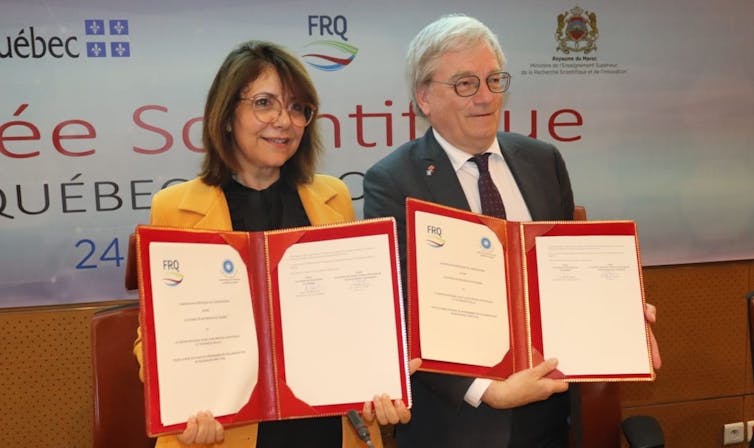
Par exemple, le partenariat entre le FRQ et le Centre National pour la Recherche Scientifique et Technologique (CNRST) du Maroc permet depuis 2021 de rassembler nos équipes respectives autour de projets de recherche portant sur de grands défis de société, tels que la santé humaine ou encore les adaptations aux changements climatiques et la gestion de l’eau.

Un homme et une femme prennent une photographie
Jamila El Alami, directrice du CNRST (à gauche), et Rémi Quirion, scientifique en chef du Québec (à droite), lors de la signature de l’entente de collaboration scientifique, en septembre 2021.
(Courtoisie de l’auteur)

Les partenariats scientifiques ont cette capacité unique de résister aux aléas. Là où une collaboration peut s’interrompre à la première difficulté administrative, financière ou politique, un partenariat repose sur une intention de long terme, sur une infrastructure de confiance et de partage qui dépasse les projets individuels. Ces relations profondes entre institutions, entre équipes, entre individus, permettent de continuer à travailler même lorsque le contexte se durcit.

La science au-delà des contingences politiques

Un exemple emblématique de cette résilience des partenariats scientifiques peut être observé dans les relations entre chercheurs canadiens et américains.

Malgré des divergences politiques ponctuelles entre gouvernements, des liens profonds entre institutions de recherche ont permis de préserver, voire de renforcer, des coopérations critiques. Dans le contexte actuel trouble, nous avons pu observer que des quantités considérables de données en santé publique, en climatologie, en biodiversité ont été sauvées, partagées, et mises à disposition des communautés scientifiques, alors qu’elles auraient pu être perdues.

Il ne s’agissait pas d’un simple échange ponctuel, mais bien d’une action conjointe rendue possible par des années de travail en commun, de confiance mutuelle, et d’objectifs partagés. Ce sont ces partenariats durables qui permettront à la science de faire face aux crises actuelles et futures.

Le programme de scientifique en résidence dans les représentations du Québec à l’étranger, que j’ai initié en collaboration avec le ministère des Relations internationales et de la Francophonie du Québec, constitue un moyen pour bâtir et renforcer ce type de partenariat. En plus d’ouvrir les horizons de carrière de la relève en recherche, ces résidences les initient à la diplomatie scientifique en contribuant à la coopération et la mobilité internationales en recherche. Depuis 2017, treize délégations en Amérique du Nord, en Afrique, en Asie et en Europe ont accueilli des scientifiques en résidence.


À lire aussi :
C’est la relève en recherche qui mènera les grandes transformations mondiales


Dans un monde de plus en plus polarisé, où la diplomatie scientifique devient parfois la dernière ligne de dialogue entre nations, les partenariats entre chercheurs jouent un rôle critique. Ils incarnent des ponts de compréhension, des espaces de continuité, même en temps d’incertitude.

Lorsque les liens politiques vacillent, les liens scientifiques, eux, peuvent perdurer – à condition qu’ils aient été construits avec soin, dans la durée, avec un véritable engagement de part et d’autre.

Une diplomatie quotidienne

Créer de tels partenariats exige plus que des accords institutionnels ou des lettres d’intention. Cela demande du temps, des efforts constants, des échanges réguliers, une reconnaissance réciproque des contraintes et des savoirs. Cela demande aussi une volonté politique et institutionnelle de soutenir ces liens sur le long terme, au-delà des échéances électorales ou des cycles de financement.

Il ne s’agit pas d’idéaliser : les partenariats ne sont pas toujours faciles. Ils nécessitent une diplomatie quotidienne, une capacité à gérer les désaccords, à s’adapter à l’évolution des contextes. Mais c’est précisément dans cette complexité qu’ils trouvent leur force.

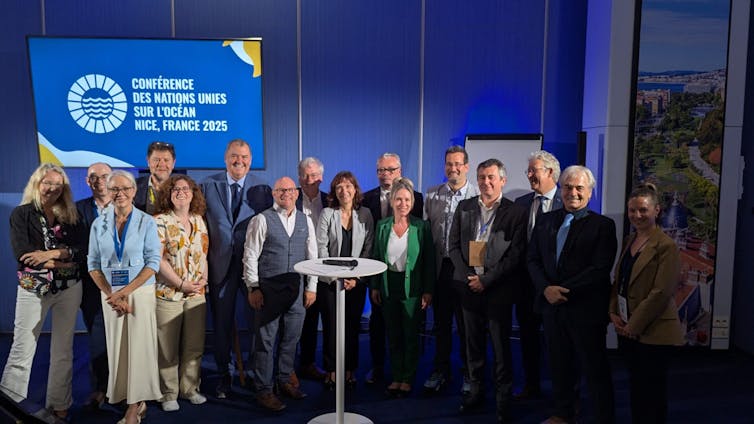
Un groupe d’hommes et de femmes prend une photographie
Rencontre franco-québécoise à l’occasion du renouvellement du Laboratoire de recherche international Takuvik et du lancement de la Chaire GEOMARIS, lors de la Conférence des Nations unies sur l’Océan, à Nice, en juin 2025.
(Courtoisie de l’auteur)

Car lorsqu’une crise éclate, ce ne sont pas les collaborations de circonstance qui tiennent. Ce sont les partenariats éprouvés, forgés au fil du temps, qui permettent d’agir rapidement, efficacement, avec cohérence.

Penser ensemble

Aujourd’hui, plus que jamais, nous avons besoin de ces partenariats.

Si nous voulons que la recherche scientifique joue pleinement son rôle dans la résolution des grands défis de notre temps, nous devons bâtir des liens durables, profonds, transdisciplinaires et transnationaux.

Il ne s’agit plus seulement de partager des données ou de publier à plusieurs mains, mais de penser ensemble, d’agir ensemble, de construire ensemble un avenir commun.

La science ne peut plus être une mosaïque de projets isolés. Elle doit être un tissu vivant, tissé de relations fortes, de valeurs partagées, d’engagements communs. Le partenariat n’est pas une option : c’est une condition essentielle pour que la science continue à éclairer notre monde, même dans ses zones les plus obscures.

La Conversation Canada

Rémi Quirion ne travaille pas, ne conseille pas, ne possède pas de parts, ne reçoit pas de fonds d’une organisation qui pourrait tirer profit de cet article, et n’a déclaré aucune autre affiliation que son organisme de recherche.

ref. Les enjeux actuels sont mondiaux. Pour y faire face, il faut créer de véritables partenariats en recherche – https://theconversation.com/les-enjeux-actuels-sont-mondiaux-pour-y-faire-face-il-faut-creer-de-veritables-partenariats-en-recherche-257186