Toneladas de frutas y verduras pudriéndose en el campo, otro síntoma de un modelo agrario insostenible

Source: The Conversation – (in Spanish) – By Jaime Martínez Valderrama, Científico Titular, Estación Experimental de Zonas Áridas (EEZA – CSIC)
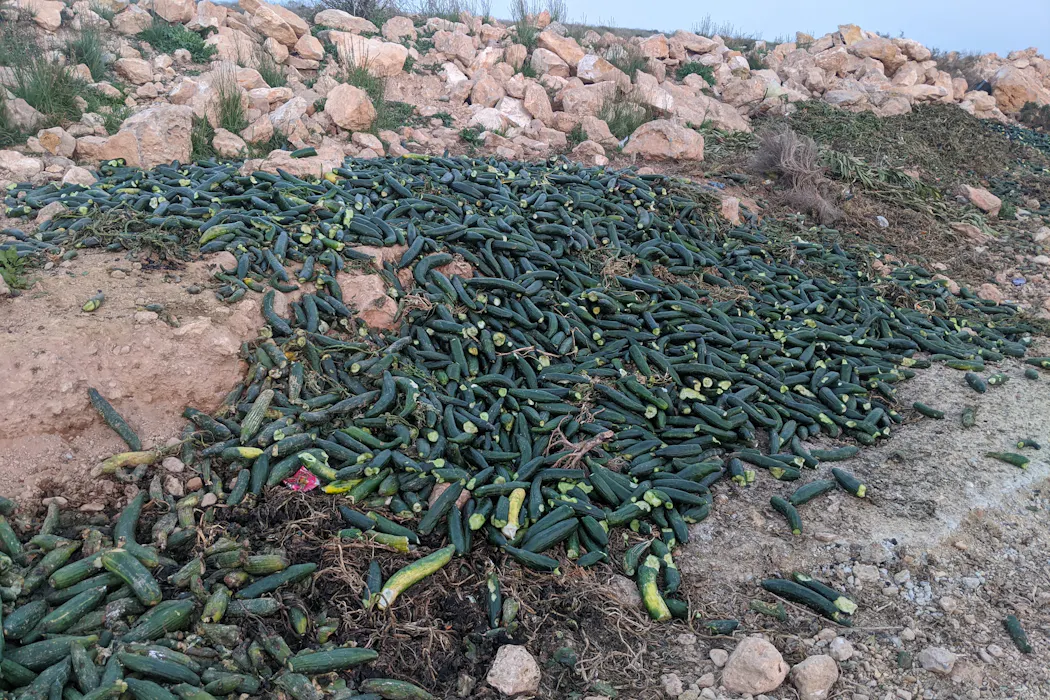
Jaime Martínez Valderrama, CC BY-SA

España es un país eminentemente árido, es decir, tiene condiciones climáticas caracterizadas por una importante escasez de humedad. Para ser más concretos, el 67 % del territorio tiene un índice de aridez –la relación entre la precipitación y la evapotranspiración de las plantas– inferior a 0,65, lo que se cataloga como tierras secas o zonas áridas. En este contexto, la demanda de recursos hídricos, lejos de ceñirse a su disponibilidad, no ha parado de crecer en los últimos cincuenta años.

Esa es la principal razón de la escasez de agua y la base de numerosos conflictos hídricos, y sitúa a España como unos de los países con mayor estrés hídrico (el 29 de 164). Esta escasez ya no es de índole natural, y se define como la brecha entre la oferta disponible y la demanda expresada de agua dulce en un ámbito determinado, bajo los marcos institucionales vigentes (incluidos tanto los mecanismos de fijación de precios del recurso como las tarifas de suministro), así como las condiciones de infraestructura, implicando siempre una dimensión humana en la reducción de la disponibilidad natural de agua.

Las numerosas infraestructuras para captar, acumular y distribuir agua, y la modernización de los sistemas de regadío, responden al mantra de que en España no se malgasta ni una sola gota de agua. Todos los caudales que van a parar al mar se perciben a veces como un desperdicio y cada vez que llueve a mares se lamenta no tener más embalses que acumulen toda esa agua.

Mapa donde se muestra con colores el estrés hídrico en las comunidades autónomas españolas
Estrés hídrico en España.
World Resources Institute, Aqueduct (2024), CC BY-SA

Miles de toneladas de fruta y hortalizas sin salida comercial

El supuesto fervor por acaparar cada gota de agua y transformarla en riqueza choca con la delirante imagen de campos cubiertos de frutas y hortalizas que se pudren al sol. Los bajos precios en origen existentes en determinados momentos del año hacen que a los agricultores no les merezca la pena invertir más recursos en recolectar la cosecha. Así, cada año, tras los enormes esfuerzos que supone regar, fertilizar y cuidar miles de hectáreas de cultivo, el producto final ni siquiera entra en los circuitos comerciales.

A partir de los datos que quincenalmente recopila el Fondo Español de Garantía Agraria (FEGA) y los coeficientes de uso de agua y de emisión de CO₂, por tipo de cultivo y por comunidad autónoma, hemos estimado este desperdicio para el período 2018-2024.

A lo largo de este periodo se descartaron 483 624 toneladas de producto excedente, lo que equivale a una huella hídrica de casi 36 hm³ anuales y a una huella de carbono de 36.694 toneladas de CO₂ equivalente (t CO₂-eq) al año. Estos descartes no se destinan directamente a residuos. Una parte de los alimentos descartados (32,9 %) se utiliza para alimentación animal, otra se dona a bancos de alimentos (55,4 %) y, finalmente, el 11,7 % se destruye.

El tomate es el cultivo con mayor volumen de descartes, seguido por la naranja y el caqui. En términos de huella hídrica, el cultivo con mayor impacto es la ciruela, con 3 759 miles de m³ año⁻¹. Le siguen los caquis y las naranjas. En cuanto a la huella de carbono anual, el tomate vuelve a destacar claramente, alcanzando 3 100 t CO₂-eq año⁻¹. A continuación, se sitúa el melón (2 356 t CO₂-eq año⁻¹) y la nectarina (2 209 t CO₂-eq año⁻¹).

A escala regional, el mayor volumen de descartes se registra en la Región de Murcia, con 20,2 kt toneladas al año, y un total de 141,4 kt en el periodo 2018–2024. Le siguen Andalucía (17,9 kt año⁻¹ y 125,9 kt acumuladas) y la Comunidad Valenciana (16,7 kt año⁻¹ y 119,6 kt).

En términos de huella hídrica, el mayor desperdicio corresponde a la Comunidad Valenciana, con 8,78 hm³ año⁻¹ y una huella hídrica total de 61,5 hm³ durante el periodo de estudio.

Tomates descartados en un contenedor grande en el campo
El tomate es el cultivo más descartado.
Jaime Martínez Valderrama, CC BY-SA

Producir a gran escala para bajar costes

Los bajos precios explican el abandono de cosechas en perfecto estado para el consumo. Pero ¿qué origina esos precios reducidos? En gran medida, la lógica de la eficiencia económica. Para ser competitivos, los productores buscan reducir sus costes de producción, lo que les lleva a adoptar modelos de producción a gran escala, no exentos de importantes implicaciones sociales y ambientales.


Leer más:
La espiral de la agricultura insostenible: de los milagros económicos a la precariedad socioambiental


El objetivo es generar grandes volúmenes de producción para minimizar el precio por unidad. Para ello, se recortan costes allí donde es posible –especialmente costes laborales u obviando las obligaciones con el medioambiente– con el fin de compensar las inversiones necesarias en tecnología, infraestructuras e insumos agrarios, que permiten incrementar los rendimientos por explotación.

Esta dinámica genera una espiral de inversión, endeudamiento, sobreproducción y caída de precios que termina atrapando al agricultor en un sistema perverso, en el que solo aquellos con mayor capacidad financiera logran sostenerse.

El descarte de cosechas en perfecto estado no es más que un síntoma de este modelo agrario que favorece la concentración de la producción en un número cada vez menor de agentes y genera numerosas externalidades negativas. Estas acaban siendo asumidas por la sociedad en su conjunto –y no por quienes se benefician de la producción a gran escala–, como ocurre, por ejemplo, con la necesidad de construir desaladoras tras la sobreexplotación de las aguas subterráneas.

Estas cifras son solo la punta del iceberg

El recuento del FEGA responde a la subvención (hasta el 5 % de la cosecha) que reciben los agricultores para paliar esos bajos precios. Por encima de ese porcentaje no hay cobertura, aunque los descartes de cosechas pueden seguir produciéndose.

Una simple comprobación revela la verdadera magnitud del desperdicio. En marzo de 2024 apareció en la prensa la noticia del abandono de 300 000 toneladas de limones, el 30 % de la cosecha, en Alicante. Las cifras del FEGA muestran que, para todo el año 2024, en toda la Comunidad Valenciana, se habían descartado 132 toneladas.

Sandías tiradas en un campo con rocas
Sandías abandonadas en el Campo de Níjar, Almería. El acuífero sobre el que crecen ha sido sobreexplotado y la intrusión marina lo ha arruinado. Para seguir regando se ha construido una enorme desaladora en Carboneras.
Jaime Martínez Valderrama, CC BY-SA

Atendiendo a esta comparación, a la nutrida partida de noticias que reseñan estos descartes y a las imágenes de campos donde la fruta se pudre, parece evidente que este tipo de desperdicio no es algo puntual ni anecdótico, sino que supone un despilfarro inaceptable en un contexto de creciente escasez hídrica. Por aquellas fechas del desperdicio limonero, se planteaba llevar agua en barco a Barcelona debido a la pertinaz sequía. Está en juego nuestra seguridad hídrica mientras las reglas del mercado y la eficiencia a la que no se deja de aludir siguen desperdiciando agua.

The Conversation

Jaime Martínez Valderrama ha recibido fondos del proyecto ATLAS financiado por la Fundación Biodiversidad del Ministerio para la Transición Ecológica y el Reto Demográfico (MITECO) en el marco del Plan de Recuperación, Transformación y Resiliencia (PRTR)

Emilio Guirado ha recibido fondos del proyecto ATLAS financiado por la Fundación Biodiversidad del Ministerio para la Transición Ecológica y el Reto Demográfico (MITECO) en el marco del Plan de Recuperación, Transformación y Resiliencia (PRTR)

Fernando Tomás Maestre Gil recibe fondos de la King Abdullah University of Science and Technology.

Javier Martí Talavera ha recibido fondos del proyecto ATLAS financiado por la Fundación Biodiversidad del Ministerio para la Transición Ecológica y el Reto Demográfico (MITECO) en el marco del Plan de Recuperación, Transformación y Resiliencia (PRTR)

Jorge Olcina Cantos ha recibido fondos para la elaboración del proyecto Atlas d3 la Desertificacion en España de la Fundación Biodiversidad del Ministerio de Transicion Ecológica y del Reto Demográfico, con financ8acion del programa europeo para la Recuperacion y Resiliencia.

Juanma Cintas recibe fondos del “Plan Complementario de I + D + i en el área de Biodiversidad (PCBIO)” financiado por la Unión Europea en el marco del Plan de Recuperación, Transformación y Resiliencia (NextGenerationEU) y del gobierno de Andalucía.

– ref. Toneladas de frutas y verduras pudriéndose en el campo, otro síntoma de un modelo agrario insostenible – https://theconversation.com/toneladas-de-frutas-y-verduras-pudriendose-en-el-campo-otro-sintoma-de-un-modelo-agrario-insostenible-276237

¿Por qué escribimos como escribimos? Ortografía, normas y controversias

Source: The Conversation – (in Spanish) – By Victoriano Gaviño Rodríguez, Catedrático de universidad. Lengua española, Universidad de Cádiz

JUAN ANTONIO ORIHUELA/Shutterstock

La mayoría de la gente aprende a escribir sin hacerse demasiadas preguntas. Nos dicen que huevo lleva hache, que perro lleva dos erres y que baca y vaca no son lo mismo. Lo aceptamos, lo memorizamos y seguimos adelante con el aprendizaje.

Pero si uno se detiene un momento, surge la duda: ¿quién decidió todo eso? ¿Por qué escribimos así y no de otra forma? Y, sobre todo, ¿por qué parece tan difícil cambiarlo?

Algo más que una serie de reglas

Básicamente, porque la ortografía no es un simple conjunto de reglas para no cometer faltas. Es algo más profundo: un código compartido que permite que millones de personas escriban y se entiendan.

Gracias a ese código, un texto escrito en Cádiz puede ser leído en Buenos Aires o en Medellín sin grandes problemas. Pero hay algo más: la ortografía también es memoria histórica. Así, por ejemplo, nuestra hache muda está ahí, en ocasiones, porque hace siglos sí sonaba.

Es como una cicatriz lingüística: ya no cumple función práctica, pero nos recuerda de dónde venimos. Al mismo tiempo, atesora una escritura de tantos años que ya forma parte de nuestra propia identidad.

Dos formas de fijar una ortografía

A lo largo de la historia, las lenguas han seguido dos caminos principales para establecer su ortografía:

  1. La vía institucional (la de “esto se escribe así y punto”). Viene determinada por alguien que fija las reglas y decide qué es correcto y qué no y, de manera subsidiaria, quién escribe bien y quién no. Aquí entran las academias, los gobiernos o, como en el caso del español, una institución como la Real Academia Española (RAE).

    Fundada en 1713, tardó muy pocos años en publicar su “Discurso proemial de la orthographia de la Lengua Castellana” aparecido en el Diccionario de Autoridades (1726), que sirvió de base para la elaboración de su primer tratado ortográfico en 1741, así como del resto de textos que la convirtieron pronto en el principal órgano regulador de la escritura de nuestra lengua.

  2. La vía del uso (la de “se escribe así porque todo el mundo lo hace así”). Se produce cuando las normas no las impone nadie desde arriba. Surgen poco a poco, por costumbre. El inglés es el mejor ejemplo: nadie decidió oficialmente cómo se escribe.

    Por eso, algunas de sus palabras tienen una ortografía un tanto creativa, con grafías similares a las que les corresponden muy diferentes pronunciaciones (como sucede, por ejemplo, en through, though y tough). En este modelo, la norma nace del uso. Primero escribe la gente. Luego, si acaso, alguien lo regula.

El caso español: institucional, pero con debate

En el español triunfó claramente la vía institucional. La ortografía académica se consolidó poco a poco en el siglo XIX, tanto en España como en Hispanoamérica. A partir de 1844, su enseñanza en la escuela pública fue impuesta por el estado español y adoptada de manera general en la administración y la imprenta.

En un determinado momento, escribir bien (según las normas académicas) dejó de ser solo una cuestión lingüística para convertirse en algo más serio: requisito laboral, símbolo de educación y prestigio social y, finalmente, marca de identidad cultural. No escribir correctamente podía hacerte parecer ignorante.


Leer más:
¿Por qué tiene tildes el español y por qué nos cuesta tanto usarlas bien?


Aunque con tímidos intentos anteriores, fue a lo largo del siglo XIX cuando se intensificaron las propuestas de reforma de la ortografía del español. Algunos querían simplificarla, escribir como se habla, eliminar letras inútiles, hacer el sistema más lógico. Los argumentos eran bastante sensatos: ¿para qué sirve la hache si no suena? ¿Por qué conservar be y uve si suenan igual? ¿Por qué ge y jota se usan a veces para el mismo sonido y otras no?

Preguntas e intentos razonables, pero en la práctica enarbolados por personas sin poder y sin un modelo consensuado de reforma. Simples maestros que buscaban facilitar su enseñanza en la escuela y disminuir así los altos índices de analfabetismo. Perseguidos por el gobierno, sus intentos se apagan pronto y se disuelven en el silencio del olvido.

En el caso concreto de alguna república hispanoamericana, como Chile, se llegó a impulsar desde las instituciones educativas una reforma que aspiraba a reconciliar la escritura con la voz. Sin embargo, como otras tentativas, también aquella acabó cediendo ante el peso de la norma y terminó perdiéndose en la fuerza obstinada de la costumbre.

La prensa, ring de boxeo lingüístico

En siglos anteriores, los debates sobre la ortografía no solo se daban en tratados lingüísticos. Se discutían en la prensa, que funcionaba como una especie de red social de la época, pero con más tinta y menos memes. En este espacio de debate público, se enfrentaban reformistas y conservadores en auténticas batallas y ciclos polémicos en los que unos querían simplificar la ortografía y hacerla más lógica. Otros defendían las costumbres y el poder institucionalizador de la RAE en esta tarea.

No eran discusiones menores: en ellas se dirimía quién tenía autoridad sobre la lengua y qué modelo debía enseñarse a generaciones enteras. Cada artículo, cada réplica, no solo defendía una forma de escribir, sino también una forma de entender la lengua y su transmisión. Lo mismo ocurre en nuestros tiempos, porque los cambios en la escritura, a diferencia de lo que sucede en otras disciplinas lingüísticas, importa mucho a la gente.

¿Por qué es tan difícil cambiar la ortografía?

La ortografía no es solo lógica, es costumbre, y cambiarla implica reeducar a millones de personas, modificar libros, sistemas educativos… Y, lo más difícil, convencer a la gente de que deje de hacer lo que lleva haciendo toda la vida. Por eso, la propia Academia viene repitiendo desde hace siglos que lo mejor es que el cambio sea introducido poco a poco por el uso. Y luego, ya veremos.

La ortografía siempre ha sido y es un tema de interés colectivo, capaz de generar opiniones y controversias. Pero hoy la pregunta ya no se formula con la urgencia de otros tiempos, aunque tampoco ha desaparecido del todo. En una época atravesada por la inmediatez digital y la escritura veloz, se debate entre su función normativa y su valor simbólico. Reformarla y hacerla más sencilla podría aliviar ciertas dificultades, pero también implicaría desprenderse de capas de historia, de matices etimológicos y de una tradición compartida.


Leer más:
¿Es buena idea penalizar las faltas de ortografía en las pruebas de acceso a la universidad?


Más que una reforma radical, hoy se impone una negociación silenciosa entre el uso y la norma, entre lo que cambia y lo que permanece. Porque la lengua, como todo organismo vivo, ya se transforma por sí sola, sin decretos ni rupturas bruscas. No se impone desde arriba, sino que va cediendo al pulso de quienes la hablan y la escriben cada día.

Tal vez en esa transformación lenta resida su verdadera capacidad de adaptación. Porque la ortografía con que escribimos es irregular, tiene incoherencias y conserva restos del pasado que no siempre tienen sentido hoy. Pero funciona. Y eso suele pesar más que la perfección.

En el fondo, hay que recordar que estamos ante una cuestión de identidad, de historia y de sentimiento comunitario: la ortografía no es solo un sistema de letras. Es también una forma de decir “así escribimos y somos nosotros”. Por eso, cuando alguien propone reformarla, no solo altera una práctica. Toca algo más profundo: la relación de una sociedad con su propia esencia. Y en ese punto las ideologías echan raíces.

The Conversation

Victoriano Gaviño Rodríguez ha sido investigador principal de los proyectos de investigación “Ideas lingüísticas y pedagógicas en la prensa española del siglo XIX. LinPePrensa” (ref. PGC2018-098509-B-I00) y “La lengua y su enseñanza en la prensa española: de la ley Moyano al fin de la II República (1857-1939). LinPePrensa II” (ref.: PID2021-126116NB-I00), del Ministerio de Ciencia, Innovación y Universidades del Gobierno de España (Proyectos de I+D de Generación del Conocimiento).

– ref. ¿Por qué escribimos como escribimos? Ortografía, normas y controversias – https://theconversation.com/por-que-escribimos-como-escribimos-ortografia-normas-y-controversias-279062

Bioética del espacio: claves para reflexionar sobre la vida y lo ultraterrestre

Source: The Conversation – (in Spanish) – By Ayoze González Padilla, Investigador predoctoral en Filosofía y Bioética, Centro de Ciencias Humanas y Sociales (CCHS – CSIC)

Imagen de una galaxia en espiral. Triff/Shutterstock

El 1 de abril, la misión Artemis II volverá a adentrarse en el llamado espacio exterior, tras más de cinco décadas de ausencia humana en él. Artemis II busca iniciar una nueva era de exploraciones y descubrimientos.

Por ello, mientras la tecnología avanza y posibilita que nuestra especie visite la cara oscura de la Luna, no está de más reflexionar sobre qué significa dar ese salto y qué debemos tener en cuenta desde la Tierra.

La bioética del espacio es una filosofía de la vida, del espacio y, por consecuencia, del tiempo. Son estas tres dimensiones de la realidad las que, siendo independientes, al mismo tiempo convergen en una misma cosa: el cosmos. Así lo analizo en un libro de próxima publicación.

Fotografía tomada desde Estación Espacial Internacional mientras sobrevolaba el océano Pacífico, al noreste de Papúa Nueva Guinea.
NASA, CC BY

Pensar más allá

La vida tal y como la conocemos ocupa un espacio. Y este espacio no solo permite la extensión del movimiento sino que constituye el ser. Es decir, el individuo se relaciona a través de su contexto, desde su cultura, su sociedad y, además, su medio ambiente natural.

Sin embargo, concebir el cosmos es acercarnos a una noción del espacio inaprensible. Tenemos intuición de los espacios cercanos, terrestres, pero cuando se extienden más allá de nuestra capacidad de visión nos encontramos ante un abismo.

La bioética del espacio observa el mundo –del presente y del futuro– desde una dimensión ética. Se rige por cuatro fundamentos mínimos: el valor vida, la relación entre la tierra y el espacio, la posición biocéntrica y la regulación ético-jurídica.

Solo porque existimos

No hay reflexión filosófica sin una mínima consideración de lo que es la vida, una vida que no solo necesita ser vivida, sino que debe desarrollarse bajo unos mínimos de dignidad y autonomía. Cuando hablamos del valor vida nos referimos a una concepción que da sentido a las relaciones entre humanos y otras especies, en un ecosistema global en donde el individuo es un sujeto que necesita ser tomado en consideración más allá de su utilidad comunitaria, sin jerarquías imperantes.

La fotografía original de la famosa imagen ‘Blue Marble’, que muestra la Tierra tomada desde una distancia aproximada de 29 400 km, el 7 de diciembre de 1972, desde el Apolo 17.
NASA/Wikimedia Commons

El valor vida general considera a todo individuo como valioso por el mero hecho de existir. Su valor radica en sí mismo, en primer lugar, y luego en su posición en favor de la salud del medio ambiente. Precisamente, la variedad en las expresiones de la vida –que existan bacterias y también secuoyas, leones y hormigas, seres humanos y tardígrados– rinde fuerza a este valor. El valor vida específico, es decir, operativo, nos ayuda a convivir de tal forma que podamos seguir las lógicas de la naturaleza sin abusos ni soberanías.

Comprendiendo el valor general podemos articular el valor operativo siendo responsables y sostenibles. De este modo, nuestra relación con, por ejemplo, un jaguar podrá ser cautelosa si hay amenaza de un enfrentamiento entre ambos, pero no concebirá al animal como un objeto fetiche al que podemos enjaular y despellejar. Será, en resumen, un individuo al que tenemos que respetar, igual que lo hacemos con los miembros de nuestra propia especie.

Así, imaginar qué hay fuera de nuestro huevo cósmico implica repensar nuestra relación con lo ultraterrestre. La existencia de vida inteligente más allá de los confines de nuestra posibilidad es un síntoma de su valor inherente y su fuerza intrínseca. La viabilidad de vida simple es una esperanza que nos ayuda a comprender qué somos en realidad.

El espacio es constante

La relación respecto a los espacios implica entender que tanto lo que está dentro de nuestro planeta Tierra como lo que está fuera son realidades de una misma cosa, parte de lo que somos. De este modo, tanto el terrestre como el exterior son espacios continuos: la evolución cultural de la Tierra influye en la evolución cultural del cosmos.

El Tratado de 1967, instrumento jurídico clave en la regulación del espacio ultraterrestre, contiene en su artículo II el principio de no apropiación nacional por reivindicación de soberanía. Esto busca asegurar que no se continúen las lógicas expansionistas y extractivistas propias de nuestro planeta más allá de él.

Por ello, la relación entre Tierra y espacio no debe de ser de posesión ni solo de uso, sino de valor, responsabilidad y copertenencia.

Posición biocéntrica

La bioética del espacio se fundamenta en la teoría pero puede ir más allá e intervenir en la conducta. Colocar la vida en el centro nos permite tomar partido en una visión del mundo en donde somos parte y todo con la misma fuerza e importancia.

Ocupar este lugar implica abrazar una posición fuerte, equilibrada y garantista que no pretende ser juez y parte, solo parte. El juez de la vida es inconcebible, porque no existe valorador en un mundo que entiende la vida como un valor inherente.

El borde de una región cercana y joven de formación estelar, NGC 3324, situada en la Nebulosa Carina.
El borde de una región cercana y joven de formación estelar, NGC 3324, situada en la Nebulosa Carina. Captada en luz infrarroja por la cámara de infrarrojo cercano (NIRCam) del Telescopio Espacial James Webb de la NASA, esta imagen revela zonas de nacimiento estelar que antes estaban ocultas.
NASA, CC BY

Regular los derechos naturales

La referencia a la regulación ético-jurídica busca comprender el derecho sin someterse a las lógicas antropocéntricas. De este modo, con independencia de la especie, podemos llevar a cabo una ordenación justa, responsable, armoniosa y, sobre todo, centrada en la vida.

Esto ayuda a estar en el mundo de una manera ordenada y protegida, con garantías. Así, solo queda ir más allá del pacto social hacia un pacto ecológico, donde se tengan en cuenta la función y utilidad de la naturaleza pero también –y sobre todo– su valor.

La bioética del espacio ayuda a pensar en un futuro alejado del antropocentrismo, el colonialismo y las dualidades. Y así, proporciona una idea de mundo que no solo necesita ser imaginado sino también habitado. De esta manera, podemos adentrarnos nuevamente en lo ultraterrestre desde la comprensión de que vida y ética son una misma cosa.

Esta nueva etapa de la exploración espacial debe servir no solo para preguntarnos hacia dónde queremos ir, sino también quiénes somos y desde que posición deseamos partir.


¿Quiere recibir más artículos como este? Suscríbase a Suplemento Cultural y reciba la actualidad cultural y una selección de los mejores artículos de historia, literatura, cine, arte o música, seleccionados por nuestra editora de Cultura Claudia Lorenzo.


The Conversation

Ayoze González Padilla recibe fondos del Ministerio de Ciencia, Innovación y Universidades del Gobierno de España.

– ref. Bioética del espacio: claves para reflexionar sobre la vida y lo ultraterrestre – https://theconversation.com/bioetica-del-espacio-claves-para-reflexionar-sobre-la-vida-y-lo-ultraterrestre-269540

Underwater turbines are gaining government support – our research maps their global potential

Source: The Conversation – UK – By Danny Coles, Senior Research Associate, Department of Engineering Science, University of Oxford; University of Plymouth

Turbines like these can be deployed on the seabed to harness tidal energy. Nova Innovation

Recent disruptions to oil supply in the Middle East have sent energy prices soaring, reminding countries how vulnerable they remain to imported fossil fuels. At the same time, global electricity demand is expected to almost triple by 2050.

Wind turbines and solar panels will undoubtedly play the central role. But both depend on the weather: wind turbines stand still on calm days, while solar panels generate less in overcast conditions, and nothing at night. That variability is driving interest in more predictable sources of clean power.

One promising option lies beneath the ocean’s surface.

Tidal stream turbines work much like wind turbines, only under the sea. As tides flow in and out, predictably, twice a day in places like the UK, the moving water spins turbine blades to generate electricity. This power is then transmitted to shore via cables laid along the seabed. Unlike wind and solar, tides are governed by the gravitational pull of the moon and sun, making them highly predictable years in advance.

Governments are beginning to take notice. The UK and France are investing in tidal stream energy and plan to install at least 400 megawatts of capacity over the next decade; enough to power a city like Leeds or Amsterdam.

Other countries, including Canada, the US, China and Japan, are also exploring the technology, albeit with much smaller scale projects.

Infographic of HATTs
Horizontal axis tidal turbines are the dominant form of underwater tidal stream technology.
Gemini / The Conversation

Despite this growing interest, a basic question remains: how much electricity can tidal currents actually produce, and where is it located?

I’ve teamed up with experts from around the world to help answer those questions. In our new research, we identified more than 400 potential tidal energy sites across 19 countries in Europe, the Americas, Asia and Australasia. These are locations where water flows fast enough, and at suitable depths, for turbines to operate.

Scientists typically describe tidal energy in three stages. The theoretical resource is the total energy in tidal currents. The technical resource is the portion that current turbine technology could realistically capture for electricity production. Finally, the practical resource accounts for constraints such as shipping routes, fishing activity and marine conservation areas. In practice, only a small fraction – around 1% to 20% – of the theoretical energy can actually be used to generate electricity.

Even so, the potential is significant. Across 90 of the most-studied sites, we estimate that tidal turbines could generate around 110 terawatt-hours of electricity each year – roughly equivalent to the annual electricity demand of Portugal.

annotated world map
Sites around the world with the potential to generate tidal stream power.
Coles et al (2026) / Royal Society

Half the global resource in just six sites

Some countries stand out. The US, UK, New Zealand, Canada, China and Indonesia have the largest overall tidal energy resources. In places such as the UK, Indonesia and New Zealand, tidal energy could supply at least 10% of current national electricity demand. In larger countries like the US and China, the resource is still substantial but represents a smaller share of total electricity demand.

A striking finding is how concentrated this energy is, as more than half of the global tidal resource we identified is located in just six sites. These include the Pentland Firth between mainland Scotland and the Orkney Islands, the Alderney Race between the Channel Islands and France and the Minas Passage in a part of Canada known for the world’s highest tides. Two major sites in Alaska (Chatham Strait and Cook Inlet) are also among the most energetic in the world.

However, many of these locations are far from major population centres. Remoteness presents a significant challenge, as building the infrastructure needed to transmit electricity over long distances can be costly and complex. This is one of several factors that may reduce the amount of energy that can be practically harnessed.

Tidal power tends to be strongest in narrow areas between large islands or landmasses, where lots of water is “pushed through” the gap. But finding the most promising hotspots also depends on factors like seabed geography or localised ocean currents, which need specialised and detailed research.

This means there are gaps in the data. For many promising sites, particularly in countries such as Norway, South Korea and the Philippines, detailed measurements of tidal currents are still lacking. For this reason, global estimates of tidal energy potential could increase significantly as more data becomes available.

Our findings broadly support projections from the European Commission, which anticipates up to 8 gigawatts of tidal stream capacity in Europe. However, global projections of more than 100 gigawatts – roughly the electricity demand of the entire UK – remain uncertain without better data and more comprehensive site assessments.

With enough investment and data, plus careful site selection, tidal stream energy offers something rare in renewables: power you can predict years in advance. In an electricity system increasingly affected by the weather, that reliability could make it a disproportionately valuable part of the world’s transition to clean energy.

The Conversation

Danny Coles is a member of the Marine Energy Council. Danny consults to tidal energy developers. Danny Coles receives funding from UK Research and Innovation.

– ref. Underwater turbines are gaining government support – our research maps their global potential – https://theconversation.com/underwater-turbines-are-gaining-government-support-our-research-maps-their-global-potential-279509

How medieval chess created a space in which players – regardless of race – could engage as equals

Source: The Conversation – UK – By Krisztina Ilko, Junior Research Fellow, Queens’ College and Affiliated Lecturer at the Faculty of History, University of Cambridge

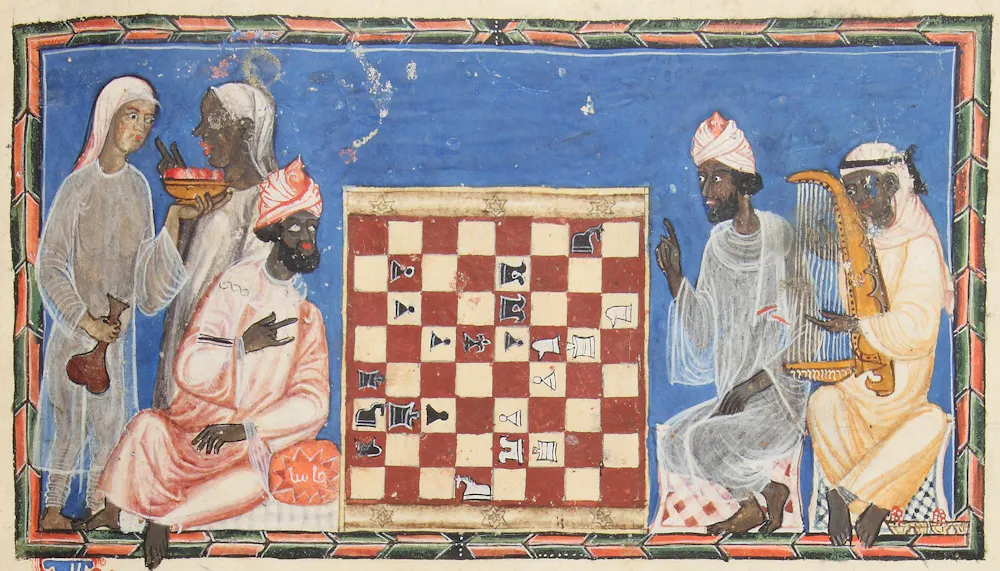
An illustration from the Libro de Axedrez showing two players immersed in a game. Libro de Axedrez

In the medieval European imagination, racial difference was often highly polarised. Black people were perceived either as exotic status symbols – including saints and wealthy rulers such as the Queen of Sheba – or as subjugated figures, considered inferior to white Christians.

Yet, as my research demonstrates, the game of chess offered an alternative lens, creating a space in which players – regardless of their skin colour – could engage as equals.

Evidence from the Libro de Axedrez, Dados e Tablas (Book of Chess, Dice and Tables), a gaming manual completed for King Alfonso the Wise in Seville in 1283, reinforced my idea. The manuscript contains 103 chess problems, each of which is accompanied by text revealing the winner and an image. These illustrations show a wide array of figures, ranging from Jewish men to Muslim women. They include Asian, white and Black players.

One of its most striking illustrations shows a Black and a pale-skinned player facing each other across a chessboard. The latter has a shaved head, showing that he is a learned cleric. Yet, despite this signifier of intelligence, the text reveals that the Black player will win. In the “game of logic”, the triumph will be achieved by demonstrating superior strategic skills. The player’s mental prowess matters above all. As the Libro de Axedrez reasons, chess is an embodiment of wisdom, and those who study it become able to conquer others.

Another image in the manuscript shows five Black people framing the chessboard. In western medieval visual culture, scenes with only Black figures are rare and typically have negative connotations. However, this particular image envisions them in a highly intellectualised setting and in a seemingly amicable atmosphere.

Several men of colour sit around a chess board in a medieval illustration

Libro de Axedrez

While chess did not eradicate the dominant social norms when it came to race, it did empower players to challenge them within its own ludic realm.

The representation of chess as an encounter between people of different skin colour was not limited to Europe. The Shahnama, an epic poem narrating the history of the Iranians from creation to the Islamic conquest, recounts the game’s introduction to Iran.

According to the Shahnama, an unnamed Indian king sent an embassy to the Sassanian king with a chessboard accompanied by a challenge: figure out the rules or pay tribute. Fortunately, the king’s advisor, Būzurjmihr, succeeded. A 14th-century copy of the epic places this scene in a late medieval Mongol setting. Here, the paler Būzurjmihr is contrasted by the Indian envoy’s darker skin colour.

It has been argued by scholars that the latter’s dark skin and “baggy clothes” were meant to underscore his defeat. However, I believe some clues suggest otherwise. His “baggy” tunic is sumptuously adorned with gilding, in contrast to the simple blue robe of Būzurjmihr, despite him being the highest-ranking diplomat of the court. His darker skin certainly reflects his foreign origins but hardly makes him a negative character. He is, in fact, a champion of the Indian rajah, who transmits the game of logic and is presented as a guardian of much-coveted Indian knowledge.

The chess pieces themselves

In addition to representations of chess contests, medieval perceptions of race can also be studied via chess through investigating the playing pieces.

A 9th century elephant chess figure from modern day Pakistan.
National Library of France, CC BY

Chess spread across Afro-Eurasia from sixth-century India to the rest of the known world. Chess is a game of war, and the figures are meant to represent soldiers. Yet, as the game travelled, the form of the figures kept changing, reflecting the societies that produced them.

For example, a long-haired chess king made in Mansura or Multan (modern-day Pakistan) in the ninth or tenth century reflects ideals of Indian kingship. The famous Lewis Chessmen meanwhile, discovered in Scotland’s Outer Hebrides but probably carved in Norway, are often perceived as the most emblematic representatives of a medieval chess set. Yet, in this light, they are only a relatively late and geographically peripheral testimony of a longstanding tradition.

Medieval chess was not as black and white as the modern game. Some chessboards were white and red, or blue and gold. Nonetheless, the chequered squares, and the figures themselves, were differentiated through contrasting colouring. This allowed people to project ideas of skin colour and racial perceptions onto the game.

A 13th-century poem describes how chess pieces “are the people of this world, who are drawn out of one bag, like a mother’s womb, and are positioned in various places of this world”. Therefore the pieces could become representations of the different peoples of the globe. But the outcome of their encounters on the board was still decided by the rules of logic, not their skin colour. In this way chess embodied a “just world”, in which intellect, instead of religion or race, mattered the most.

The Conversation

Krisztina Ilko has previously received funding from The British Academy.

– ref. How medieval chess created a space in which players – regardless of race – could engage as equals – https://theconversation.com/how-medieval-chess-created-a-space-in-which-players-regardless-of-race-could-engage-as-equals-279132

Why AI health chatbots won’t make you better at diagnosing yourself – new research

Source: The Conversation – UK – By Rebecca Payne, Clinical Senior Lecturer, Bangor University; University of Oxford

Millions of people are turning to artificial intelligence (AI) chatbots for advice on everything from cooking to tax returns. Increasingly, they are also asking chatbots about their health.

But as the UK’s chief medical officer recently warned, that may not be wise when it comes to medical decisions. In a recent study, colleagues and I tested how well large language model (LLM) chatbots help the public deal with common health problems. The results were striking.

The chatbots we tested were not ready to act as doctors. A common response to studies like this is that AI moves faster than academic publishing. By the time a paper appears, the models tested may already have been updated. But studies using newer versions of these systems for patient triage suggest the same problems remain.

We gave participants brief descriptions of common medical situations. They were randomly assigned either to use one of three widely available chatbots or to rely on whatever sources they would normally use at home. After interacting with the chatbot, we asked two questions: what condition might explain the symptoms? And where should they seek help?

People who used chatbots were less likely to identify the correct condition than those who didn’t. They were also no better at determining the right place to seek care than the control group. In other words, interacting with a chatbot did not help people make better health decisions.

Strong knowledge, weak outcomes

This does not mean the models lack medical knowledge because LLMs can pass medical licensing exams with ease. When we removed the human element and gave the same scenarios directly to the chatbots, their performance improved dramatically. Without human involvement, the models identified relevant conditions in the vast majority of cases and often suggested appropriate levels of care.

So why did the results deteriorate when people actually used the systems? When we looked at the conversations, the problems emerged. Chatbots frequently mentioned the relevant diagnosis somewhere in the conversation, yet participants did not always notice or remember it when summarising their final answer.

In other cases, users provided incomplete information or the chatbot misinterpreted key details. The issue was not simply a failure of medical knowledge – it was a failure of communication between human and machine.

The study shows that policymakers need information about real-world performance of technology before introducing it into high-stakes settings such as frontline healthcare. Our findings highlight an important limitation of many current evaluations of AI in medicine. Language models often perform extremely well on structured exam questions or simulated “model-to-model” interactions.

But real-world use is much messier. Patients describe symptoms in vague or incomplete way and can misunderstand explanations. They ask questions in unpredictable sequences. A system that performs impressively on benchmarks may behave very differently once real people begin interacting with it.

A doctor using artificial intelligence technology for medical support
AI may be better used as a medical secretary.
ST_Travel/Shutterstock

It also underscores a broader point about clinical care. As a GP, my job involves far more than recalling facts. Medicine is often described as an art rather than a science. A consultation isn’t simply about identifying the correct diagnosis. It involves interpreting a patient’s story, exploring uncertainty and negotiating decisions.

Medical educators have long recognised this complexity. For decades, future doctors were taught using the Calgary–Cambridge model. This meant building a rapport with the patient, gathering information through careful questioning, understanding the patient’s concerns and expectations, explaining findings clearly and agreeing a shared plan for management.

All these processes rely on human connection, tailored communication, clarification, gentle probing, judgement shaped by context and trust. These qualities cannot easily be reduced to pattern recognition.

A different role for AI

Yet the lesson from our study is not that AI has no place in healthcare. Far from it. The key is understanding what these systems are currently good at and where their limitations lie.

One useful way to think about today’s chatbots is that they function more like secretaries than physicians. They are remarkably effective at organising information, summarising text and structuring complex documents. These are the kinds of tasks where language models are already proving useful within healthcare systems, for example in drafting clinical notes, summarising patient records or generating referral letters.

The promise of AI in medicine remains real, but its role is likely to be more supportive than revolutionary in the near term. Chatbots should not be expected to act as the front door to healthcare. They are not ready to diagnose conditions or direct patients to the right level of care.

Artificial intelligence may be able to pass medical exams. But just as passing a theory test doesn’t make you a competent driver, practising medicine involves far more than answering questions correctly. It requires judgement, empathy and the ability to navigate the complexity that sits behind every clinical encounter. For now, at least, that requires people rather than bots.


AI has long been discussed as a threat to jobs and livelihoods. But what’s the reality? In this series, we explore the impact it is already having on different occupations – and how people really feel about their AI assistants.


The Conversation

Rebecca Payne works on the Health and Care Research Wales funded REMEDY project and also recieves funding from a University of Oxford Clarendon-Reuben Scholarship. She is a Fellow of the Royal College of General Practitioners and a Senior Fellow of the Faculty of Medical Leadership and Management.

– ref. Why AI health chatbots won’t make you better at diagnosing yourself – new research – https://theconversation.com/why-ai-health-chatbots-wont-make-you-better-at-diagnosing-yourself-new-research-278049

A seat on the bench isn’t enough: what Fifa’s new women’s football rule gets right (and wrong)

Source: The Conversation – UK – By Kerry Harris, Senior Lecturer in Sport Coaching, Cardiff Metropolitan University

Fifa’s latest decision to require every team in its women’s competitions to include at least one female head coach or assistant is, on the surface, a landmark moment.

The rule will apply across all women’s tournaments, from youth level to senior competition, beginning this year with the U17 and U20 World Cups and the Women’s Champions Cup.

In a sport where the technical area remains overwhelmingly male, the symbolism is powerful. But symbolism in sport is rarely neutral. It can signal progress while exposing how far the structures around it still have to travel.

Women’s football has grown rapidly in visibility and commercial value. Coaching, however, has not kept pace. At the 2023 Women’s World Cup, only 12 of 32 head coaches were women. Across some national associations, women make up as little as 5% of the coaching workforce. Against that backdrop, Fifa’s intervention is both unsurprising and, in many ways, overdue.

It is also an admission that organic change has failed. But there is a deeper issue. Research on coaching cultures consistently shows that underrepresentation is not the root problem but a symptom of more deeply embedded behaviour. Increasing numbers without addressing those issues risks leaving the foundations intact.

The timing, too, invites scrutiny. If the imbalance has been clear for years, why act now? And why only within the women’s game?

A problem contained within a single domain

The policy applies exclusively to women’s competitions. On one level, that makes practical sense. Structurally, however, it reinforces a familiar pattern. Gender inequality is treated as an issue to be solved within women’s sport, rather than across football as a whole.

The men’s game – where coaching pathways are more entrenched, better funded and more resistant to disruption – remains untouched. In effect, the responsibility for reform is placed on the side of the sport with the least power to drive it.

There is also a flawed assumption at play: that appointing more women will, in itself, transform coaching cultures. It may not. Women, like men, can reproduce the same patriarchal structures they have been socialised into. Representation alone does not guarantee change.

Policies like this walk a narrow line. Without intervention, inequality persists. But mandates risk introducing a parallel narrative: that women are present because they are required, not because they are qualified.

Fifa’s chief football officer, Jill Ellis, has framed the rule as an accelerant, designed to “create clearer pathways, expand opportunities, and increase visibility for women on our sidelines”. The logic is compelling.

Yet elite coaching is as much about perceived authority as it is about expertise. If female coaches are seen, however unfairly, as fulfilling a quota, the policy risks undermining its own aims.

There is another trap here too. The expectation that women will bring inherently different, more collaborative or empathetic approaches leans on gender stereotypes. It risks reinforcing the very assumptions that have historically limited women’s progression.

Visibility at the top does not necessarily mean readiness. Fifa has invested in coach development and nearly 800 women have received scholarship support since 2021. But the gap between training and elite international competition remains significant.

If exposure outpaces infrastructure, early difficulties may be interpreted as evidence that the policy itself is flawed. Sport is quick to remember failure and slow to acknowledge context. And if those stepping into these roles have been shaped by the same systems they are expected to change, criticism risks missing the point entirely.

Beyond visibility

None of this is an argument against increasing the number of women in coaching. Representation matters. It shapes expectations, broadens ambition and challenges long-standing assumptions about who leads.

But meaningful change is rarely immediate. It happens in coach education, in hiring practices, in mentoring networks and in grassroots environments where coaching identities first take shape. A mandate can open the door. It cannot, on its own, build the path.


Read more:
What makes a good football coach? The reality behind the myths


Without deeper structural change, such as in how coaching is taught, valued and practised, new appointments risk being placed into old systems.

Fifa’s decision is part of a broader effort to increase the presence of women in technical roles and align leadership with the rapid growth of the women’s game. It is not insignificant. It disrupts a long-standing status quo and will have visible effects, not least at the 2027 World Cup. But visibility alone will not transform a system.

If women on the touchline are to become unremarkable – as an expectation not an exception – the structures beneath elite coaching must change as well. Otherwise, mandates risk becoming what sport has seen before: gestures that are symbolically powerful, but structurally fragile. Real change will come not when women are required to be present, but when their presence no longer needs to be required.

The Conversation

Kerry Harris does not work for, consult, own shares in or receive funding from any company or organisation that would benefit from this article, and has disclosed no relevant affiliations beyond their academic appointment.

– ref. A seat on the bench isn’t enough: what Fifa’s new women’s football rule gets right (and wrong) – https://theconversation.com/a-seat-on-the-bench-isnt-enough-what-fifas-new-womens-football-rule-gets-right-and-wrong-279194

UK parents urged to curb fast-paced screen content for small children – neuroscientist who advised government explains why

Source: The Conversation – UK – By Sam Wass, Professor of Early Years Neuroscience, University of East London

Fotoluminate LLC/Shutterstock

The UK Department for Education has just released guidance for parents on early years screen use, which I advised on as an expert. It includes recommended limits on the time children spend on screens. It also advises avoiding fast-paced content for younger children.

Recent research from the UK Department for Education suggests that over half of two-year-olds now spend over two hours a day watching screens. For the top 20%, that figure approaches five hours daily – more than a third of their waking life.

These changes have occurred rapidly, particularly since the introduction of smartphones. In 2009, children aged five to 15 spent around nine hours a week – about 1.3 hours a day – watching screens.

But the nature of what children watch has shifted just as dramatically as the amount of time they spend doing so.

Fifteen years ago, close to half of UK preschoolers tuned into CBeebies – BBC content aimed at children aged six and under – each week. Today, children’s engagement with content produced by TV companies is almost 75% lower.

Over the same period, short-form, on-demand video has expanded rapidly. Now, more than 90% of three- to five-year-olds use video-sharing platforms such as YouTube.

To illustrate what this means in practice, we can compare a 25-minute episode of the CBeebies show In the Night Garden from 2006 with a 25-minute slice of typical viewing from a four-year-old watching YouTube Kids (the latter taken from a recent US study).

The CBeebies episode followed a single narrative thread, with a stable cast of eight characters. The YouTube sample is made up of ten separate clips within the same timeframe, featuring 37 speaking characters. The editing tempo shifted from one cut every 16.7 seconds in the CBeebies episode to one cut every 1.5 seconds. There were sharp increases in visual stimulation (changes in light and colour) and auditory stimulation (shifts in pitch and volume).

Comprehension and attention

From a neuroscience perspective, we think this transformation has taken place because there are two ways in which content can hold a young child’s attention.

One route works through comprehension. Slow pacing, clear speech, exaggerated expressions and simple narrative structure allow children to follow what is happening. Comprehension drives attention.

The second route operates through attention capture. Rapid movement, abrupt edits and dynamic sound capture attention automatically. Even if we are trying not to pay attention to something, movement makes it hard to ignore. We think that we developed like this because, historically, motion signalled threat or opportunity. That reflex remains. Attention capture is immediate, involuntary and does not depend on comprehension.

Much contemporary digital content leans heavily on this second mechanism. It is instantaneous, and it works on everybody.

This shift to fast-paced content may, though, also have a role to play in the links between early screen use and later emotional and behavioural dysregulation: difficulties managing emotions and behaviour.

The reason is that young brains run at a slower tempo than adult brains. When environments are fast and unpredictable, the nervous system shifts into a heightened alert state to enable rapid detection of change. Brainstem systems involved in arousal become more active. The sympathetic nervous system – the same system engaged during fight-or-flight responses – becomes involved. In the short term, this may help explain why many children appear irritable or dysregulated when screens are switched off.

Finding patterns

Over longer periods, repeated exposure to highly stimulating, unpredictable content may contribute to broader patterns of behavioural and emotional dysregulation linked to screen use. A growing body of correlational research links high levels of early screen exposure with later difficulties in regulation and increased rates of anxiety. Correlational research shows that two things often occur together or in the same person – such as screen time and anxiety – but don’t prove that one caused the other.

Both behavioural dysregulation in childhood and anxiety in adulthood are associated with heightened brainstem and sympathetic activity – systems that are engaged by fast-paced screen content.

Much of the evidence remains correlational, making it hard to infer causation. However, some animal studies have experimentally exposed animals to doses of simulated screen time, showing that screen exposure causally affects arousal in ways that are consistent with the correlational findings.

Together, the pieces of evidence fit together in a way that is increasingly difficult to ignore – particularly against the backdrop of rising mental health difficulties in young children.

The government guidance recognises this faster-paced content – which is why the advice is to avoid it for young children. But history suggests that advisory-only approaches rarely shift behaviour at scale. If aspects of the current digital environment are indeed contributing to regulatory and mental health challenges, policy attention may need to move further upstream.

That would mean reconsidering the responsibilities of content producers and platform designers, not only parents. How exactly to do this, though, is fraught with difficulty – particularly at a time when the science itself is struggling to keep up with the pace of change.

The Conversation

Sam Wass receives funding from Leverhulme Trust RPG-2025-114

– ref. UK parents urged to curb fast-paced screen content for small children – neuroscientist who advised government explains why – https://theconversation.com/uk-parents-urged-to-curb-fast-paced-screen-content-for-small-children-neuroscientist-who-advised-government-explains-why-278732

It’s not just gen Z – older adults need help spotting online misinformation too

Source: The Conversation – UK – By Holly Barnett, PhD Candidate in Psychology, Lancaster University

PeopleImages/Shutterstock

Given the ongoing and often heated debate about banning social media for under-16s, it’s easy to assume that young people are the only group at risk of online harm. Misinformation research often focuses on younger people, and multiple studies do identify younger groups, such as generation Z, as vulnerable to online deception.

But evidence shows that older adults are just as, if not more, likely than younger generations to believe misinformation. Despite the spread of misinformation online, around 15% of adults rarely or never consider if news items are true. Indeed, adults aged 65 and older shared nearly seven times more fake news links during the 2016 US election, in comparison to younger users. Older adults may be more at risk of believing falsehoods due to changes such as memory loss and lower digital skills.

In 2024, nine in ten people in the UK reported seeing misinformation on social media. Yet only 3% of the population had taken a media literacy course. While there is working being done to ensure technology is accessible, users must have the skills and confidence to recognise if they are being deceived.

My new paper reviewed studies which delivered misinformation training to older adults aged 50 and over. My colleagues and I identified which approaches improved misinformation detection, but also noted that some had the opposite effect.

1. Game-based approaches

BadNews is a free online video game developed by researchers at the Cambridge Social Decision-Making Lab. Players take on the role of the scammer to learn the techniques used to deceive people. Playing BadNews improved misinformation detection across different age groups and cultures. The improvement lasted longer when feedback was provided immediately after playing.

Another game called Spot the Troll trained older adults 60-plus to identify “troll” accounts, which are online accounts often used to spread false information anonymously. This game provided what researchers call a cross-protection effect – learning to spot trolls also improved participants’ ability to identify false news.

2. Correcting misinformation

In a study from the Netherlands, users watched a video from trusted doctors and scientists, showing others getting vaccinated and debunking common misconceptions about vaccines. Afterwards, older adults were less likely to believe vaccine myths.

This study made use of corrective information – accurate information that helps people replace false beliefs formed after encountering misinformation. Through a process known as debunking, corrective information explains what was incorrect and provides the accurate facts instead.


Read more:
Why people believe misinformation even when they’re told the facts


Graphics from the World Health Organization have been found to support the perceived credibility and sharing of corrective information across age groups in the UK and Brazil.

Addressing health misinformation among older adults is particularly crucial due to increased risk of serious illness. By stating why misinformation is inaccurate, detailed corrections can provide more long-term benefits than brief retractions, which usually do nothing more than label a claim as false. However, this sustained belief change was less common among those aged 65-plus compared to those aged 50-64. Similarly, the benefits of corrections are reduced if misinformation is encountered again afterwards.

3. Developing literacy skills

Information and media literacy courses teach people the skills needed to judge information effectively. One study found that MediaWise for Seniors, a media literacy course in the US, improved older users’ ability to judge the truthfulness of headlines. Users also showed an increased likelihood of performing research about the headline.

In Spain, engagement with a similar course improved older users’ detection of true information. Although people felt more confident in their decisions, the researchers labelled this as overconfidence – their actual detection of false information did not improve as much. Still, the course did help people to recognise when a headline was politically biased.

What more needs to be done?

Concern about misinformation is high, with older adults particularly worried about threats to the legitimacy of health and medical information, plus UK politics and social issues.

Political misinformation contributes to unfair election outcomes when fake news sways voter opinion. Amid the 2016 US election, fake stories favouring Donald Trump were shared 30 million times on Facebook, with people aged 65-plus shared sharing more fake news during this period. Older adults have also been found to show higher partisan bias. This means that they are more likely to trust content which agrees with their political views.

Because voting is more common among older people, there is a risk of democracy being swayed by fake stories – especially those which feel believable because they align with what users already think, even when they’re inaccurate.

An older woman happily scrolls on a tablet
Misinformation about health and politics may be particularly harmful.
PeopleImages/Shutterstock

Finally, researchers of media and information literacy must develop a greater understanding of how the ageing process can affect misinformation detection. While some older adults may be more susceptible, we should not assume this applies to all people over a certain age.

Multiple studies we looked at reported high dropout rates, where participants had not completed the full training course or experiment. We should therefore identify why older users do not complete misinformation training which they initially chose to take part in.

People of all ages need to feel confident in identifying when they are being deceived. But, while detecting fake news is valuable, we must not forget the importance of being able to identify true news. True content often spreads at a slower rate and taking part in misinformation interventions can increase scepticism.

In other words, misinformation detection training can lead people to become more cautious of accurate information. Clearly, achieving the right balance is essential – people should feel confident identifying misinformation without being discouraged from engaging with true content.

The Conversation

Holly Barnett receives funding from the Engineering and Physical Sciences Research Council (EPSRC).

– ref. It’s not just gen Z – older adults need help spotting online misinformation too – https://theconversation.com/its-not-just-gen-z-older-adults-need-help-spotting-online-misinformation-too-274148

Décarboner, mais à quel prix ? La transition énergétique face aux droits autochtones

Source: The Conversation – in French – By Emmanuelle Champion, Professor, Université TÉLUQ

La transition énergétique s’accélère. Mais sur les territoires où s’extraient les minéraux qui la rendent possible, une autre question s’impose : celle du consentement des peuples autochtones.


Dans les discours politiques, médiatiques et même scientifiques, la transition énergétique est souvent présentée comme une trajectoire évidente et linéaire : il suffirait de remplacer les énergies fossiles par des renouvelables, d’électrifier les usages et d’innover technologiquement pour décarboner nos économies.

La décarbonation apparaît ainsi comme un impératif essentiellement technique, inscrit dans la continuité rassurante du progrès énergétique.

Mais cette représentation masque une dimension essentielle : la transition n’est pas seulement énergétique. Elle est aussi matérielle, territoriale et politique.

Une transition n’est pas un simple remplacement

Cette mise en récit de la transition comme succession ordonnée de substitutions s’appuie sur une représentation particulière de l’histoire énergétique. Or, le charbon n’a pas fait disparaître le bois ; le pétrole n’a pas remplacé le charbon.

Comme l’a montré l’historien Jean-Baptiste Fressoz dans Sans transition (2024), les transformations énergétiques passées n’ont jamais été de simples remplacements. Chaque nouvelle source d’énergie s’est ajoutée au contraire aux précédentes, contribuant à une expansion globale de la consommation de matières et d’énergie.

Cette lecture linéaire du passé rend pensable l’idée d’une transition « douce » compatible avec la poursuite de la croissance économique. Elle transforme la décarbonation en horizon rassurant. Mais elle invisibilise les tensions matérielles que cette transformation engendre aujourd’hui.


À lire aussi :
La transition énergétique nécessite beaucoup de minéraux et de métaux. Cela pourrait avoir un impact sur nos lacs


Le cœur matériel de la décarbonation : les minéraux

Car la transition énergétique repose sur une infrastructure lourde : batteries, éoliennes, panneaux solaires, réseaux électriques, véhicules électriques.

Tout cela nécessite des minéraux critiques et stratégiques — lithium, nickel, cobalt, cuivre, terres rares — dont l’extraction se fait dans des lieux précis et soulève des enjeux politiques différents selon les territoires.

Au Canada, cette dynamique est particulièrement visible. Le gouvernement fédéral a fait des minéraux critiques un pilier de sa politique industrielle en lançant en 2022 la Stratégie canadienne sur les minéraux critiques, qui identifie 31 ressources jugées essentielles à la transition énergétique et prévoit plusieurs milliards de dollars d’investissements pour soutenir leur développement.

Plusieurs de ces minéraux — lithium, nickel, graphite ou niobium — sont présents en quantité importante au Québec. La province compte aujourd’hui plus d’une trentaine de mines actives et plusieurs dizaines de projets d’exploration ou de développement liés à ces ressources, principalement dans le Nord-du-Québec, en Eeyou Istchee ou sur la Côte-Nord. Or, ces régions correspondent largement à des territoires autochtones reconnus ou revendiqués.

À l’échelle mondiale, une analyse portant sur plus de 5000 projets liés aux minéraux de la transition énergétique montre que plus de 50 % des projets extractifs se situent sur ou à proximité de territoires occupés ou utilisés par des peuples autochtones et des communautés rurales dépendantes de la terre.

Ce n’est pas un simple hasard géographique. C’est un fait politique majeur.

Quand la transition devient une question territoriale

Cette concentration territoriale signifie que les coûts matériels de la transition sont distribués de manière inégale.

Le Forum permanent des Nations unies sur les questions autochtones souligne que les impacts de l’exploitation des minéraux nécessaires à la transition énergétique « s’accumulent et se transforment en violations systémiques des droits des peuples autochtones, notamment du consentement préalable, libre et éclairé et de l’autodétermination sur leurs terres et ressources ».

La transition ne concerne donc pas seulement le climat. Elle redéfinit les conditions politiques d’accès aux terres et aux ressources. Autrement dit : la décarbonation transforme une question énergétique en question territoriale.

Rendre structurante la question du consentement

Dans ce contexte, la question du consentement autochtone ne peut plus être traitée comme une formalité procédurale.

Le Consentement préalable, libre et éclairé (CPLÉ), reconnu par la Déclaration des Nations unies sur les droits des peuples autochtones, devient un axe central de la transition elle-même. Car l’impératif climatique accélère les projets extractifs, raccourcit les délais, mobilise des arguments d’urgence.

Or, l’urgence peut entrer en tension avec le temps long de la délibération collective et de l’autodétermination. La décarbonation ne supprime donc pas les conflits : elle les déplace. Elle reconfigure les rapports entre États, entreprises et communautés autochtones, en faisant du consentement non plus une périphérie du débat, mais l’un de ses enjeux centraux.

Une transition sous condition politique

Interroger cette dynamique ne revient pas à nier l’urgence climatique. Il s’agit plutôt de reconnaître que la transition énergétique n’est pas uniquement un projet technique. C’est aussi un projet de reconfiguration des rapports de pouvoir sur l’espace et les ressources.

Si la transition se veut réellement juste et durable, elle ne peut se limiter à un calcul carbone. Elle doit intégrer la question du consentement et de l’autodétermination des peuples concernés. Car la transition énergétique ne sera pas seulement verte – elle sera politique.


À lire aussi :
La menace méconnue de la transition énergétique


Une transition déjà juridiquement reconfigurée au Québec

Au Québec et au Canada, cette reconfiguration n’est pas théorique. Elle est déjà visible dans des décisions judiciaires et des accords industriels concrets.

En 2017, la Cour d’appel du Québec a confirmé la décision du gouvernement de refuser un projet d’exploration d’uranium dans le Nord-du-Québec, dans l’affaire Ressources Strateco. L’entreprise minière soutenait que son projet respectait toutes les exigences techniques et environnementales. La Cour a néanmoins reconnu que l’autorisation d’un projet extractif ne dépend pas uniquement de critères géologiques ou économiques : elle comporte aussi une dimension politique, dans laquelle l’acceptabilité sociale – notamment du point de vue des communautés autochtones concernées – peut être déterminante.

Sans consacrer explicitement le consentement préalable, libre et éclairé, la décision a ainsi contribué à déplacer la focale vers la question du rapport au territoire.

En 2020, Rio Tinto et la communauté innue d’Uashat mak Mani-utenam ont conclu l’entente Ussiniun (« renouveau » en innu-aimun), mettant fin à une poursuite de 900 millions de dollars. Cette entente illustre une autre dimension de cette transformation : elle reconnaît que les conflits extractifs peuvent engager des responsabilités historiques et ouvrir des processus de réparation.

À l’échelle fédérale, l’adoption en 2021 de la Loi sur la Déclaration des Nations unies sur les droits des peuples autochtones (souvent appelée Loi C-15), qui vise à harmoniser les lois canadiennes avec la Déclaration des Nations unies sur les droits des peuples autochtones, inscrit désormais le principe du consentement dans l’architecture normative du pays. Si sa mise en œuvre demeure débattue, elle renforce l’idée que l’accès aux ressources ne peut plus être pensé indépendamment de l’autodétermination des peuples concernés.


Déjà des milliers d’abonnés à l’infolettre de La Conversation. Et vous ? Abonnez-vous gratuitement à notre infolettre pour mieux comprendre les grands enjeux contemporains.


Dans ce contexte, la transition énergétique ne peut être réduite à une stratégie de décarbonation. Elle devient un test politique : celui de la capacité des institutions à concilier impératif climatique, exploitation minière accrue et respect effectif du consentement autochtone.

La transition ne sera pas seulement une affaire de carbone. Elle sera aussi une affaire de droit, de territoire et de pouvoir.

La Conversation Canada

Emmanuelle Champion a reçu des financements du Conseil de recherche en sciences humaines du Canada (CRSH).

– ref. Décarboner, mais à quel prix ? La transition énergétique face aux droits autochtones – https://theconversation.com/decarboner-mais-a-quel-prix-la-transition-energetique-face-aux-droits-autochtones-275160