Ultrasound is standard for breast cancer screening, but it has its limitations.Anchiy/E+ via Getty Images
Ultrasound is widely used in breast cancer diagnosis. While it can effectively show that a lump is filled with fluid – indicating it is unlikely to be cancer – it cannot reliably determine whether a solid mass is benign or cancerous. This often leads doctors to order breast biopsies to confirm the presence of cancer.
However, most breast biopsies do not detect cancer. In the U.S., more than 1 million breast biopsies are performed each year, and about 80% of them are benign. Unnecessary biopsies are linked to potential harms, including increased anxiety, complications from the procedure and medical costs. Despite advances in breast imaging, breast biopsy remains the only definitive method to determine whether a suspicious lump is cancerous.
My work as an engineer focuses on improving imaging technology to detect and diagnose cancer. Breast cancer grows when the tumors form new blood vessels and consume more oxygen. This makes examining blood vessels and oxygen levels potential biomarkers that could improve breast cancer diagnosis.
Diffuse optical tomography, or DOT, is an imaging technology that uses near-infrared light to measure total blood hemoglobin concentration and oxygen levels – key indicators of tumor activity – in the breast lump. It does not require patients to be injected with contrast dyes to make the image clearer.
My team and I found that combining ultrasound with DOT can improve the accuracy of breast cancer diagnoses and reduce unnecessary breast biopsies. The ultrasound provides information about the structure of a breast lump, while DOT provides information about its function, and this data together can improve breast cancer diagnosis.
Anyone with breast tissue is at risk of developing breast cancer.
Improving breast ultrasounds with DOT
In our study, we imaged 226 patients recommended for routine breast biopsy using our new hand-held imaging technology, which combines ultrasound with diffuse optical tomography. These patients had either breast cancer or benign lumps, and their final diagnosis was confirmed with a biopsy.
Radiologists initially evaluated each patient using standard imaging methods, such as ultrasound and mammography. They then reviewed additional information from DOT images. Importantly, the radiologists and engineers were blinded to the biopsy results when determining diagnoses.
We observed significant biological differences between cancerous and benign lumps. Cancerous lesions had significantly higher levels of hemoglobin and lower levels of oxygen than noncancerous tissue. More aggressive cancers showed even higher hemoglobin concentrations and lower oxygen levels than less aggressive tumors.
When radiologists were able to review DOT measurements, biopsies of benign lumps decreased by approximately 25%. The false-negative rate was 1.8%, which aligns with medical guidelines that recommend monitoring rather than an immediate biopsy.
More accurate, noninvasive diagnostic tools can not only reduce unnecessary biopsies but also lead to more precise and efficient diagnoses. Beyond ultrasound, researchers have also explored combining other imaging techniques with DOT, including X-ray mammography, 3D mammographyand MRI. However, DOT systems combined with mammography and MRI are more difficult for routine use in the clinic compared to ultrasound. My team is working to further refine our technology, including incorporating AI tools to help process imaging data.
Minimizing avoidable procedures can help preserve a patient’s quality of life and reduce health care costs. I believe these improvements can collectively have a meaningful and far-reaching effect on patient care and the broader health care system.
Quing Zhu receives funding from the National Cancer Institute for this work
On February 28, the US and Israel launched a war against Iran following weeks of US military build-up in the region and threats from US President Donald Trump.
In the ensuing weeks, Iran has retaliated by striking US assets in the Persian Gulf states and targets across Israel. Israel has launched a ground invasion into southern Lebanon in response to attacks from Hezbollah.
Oil and gas shipments through the Strait of Hormuz have come to a virtual standstill, threatening a global energy crisis. And thousands have been killed, most in Iran and Lebanon.
The entire Middle East has been affected by this war – and the region will no doubt be very different once it’s resolved.
We asked five experts in international politics and Middle East studies to explain the most important changes they see happening following the war.
The academic experts who shared their analysis of this topic are:
Scott Lucas
Professor of International Politics, Clinton Institute, University College Dublin. He joined University College Dublin in 2022 as Professor of International Politics, having been on the staff of the University of Birmingham since 1989. He began his career as a specialist in US and British foreign policy, but his research interests now also cover current international affairs – especially North Africa, the Middle East, and Iran – New Media, and Intelligence Services.
Andrew Thomas
Lecturer in Middle East Studies, Deakin University. He teaches units on International Relations, Middle East conflict and global governance. His book “Iran and the West: a non-Western approach to foreign policy” (2024) explores how non-Western perspectives on the Middle East and beyond can improve our understanding of intractible conflict.
Chris Ogden
Associate Professor in Global Studies, University of Auckland, Waipapa Taumata Rau. He specialises in the interplay between identity, culture, security and domestic politics in India, China, South Asia, East Asia and the Indo-Pacific. His latest book is “The Authoritarian Century: China’s Rise and the Demise of the Liberal International Order” (Bristol University Press, 2022).
Jessica Genauer
Academic Director, Public Policy Institute, UNSW Sydney. She is an expert in international conflict and provide regular analysis for national and international outlets on war and conflict. Her research interests include conflict, threat perceptions, and post-conflict institution-building with a focus on the Middle East as well as Russia / Ukraine and the US.
Kristian Coates Ulrichsen
Fellow for the Middle East at the Baker Institute, Rice University. His research examines the changing position of Persian Gulf states in the global order, as well as the emergence of longer-term, nonmilitary challenges to regional security. Previously, he worked as senior Gulf analyst at the Gulf Center for Strategic Studies and as co-director of the Kuwait Program on Development, Governance and Globalization in the Gulf States at the London School of Economics.
Chris Ogden is a senior research fellow with the Foreign Policy Centre, London.
Andrew Thomas, Jessica Genauer, Kristian Coates Ulrichsen, and Scott Lucas do not work for, consult, own shares in or receive funding from any company or organisation that would benefit from this article, and have disclosed no relevant affiliations beyond their academic appointment.
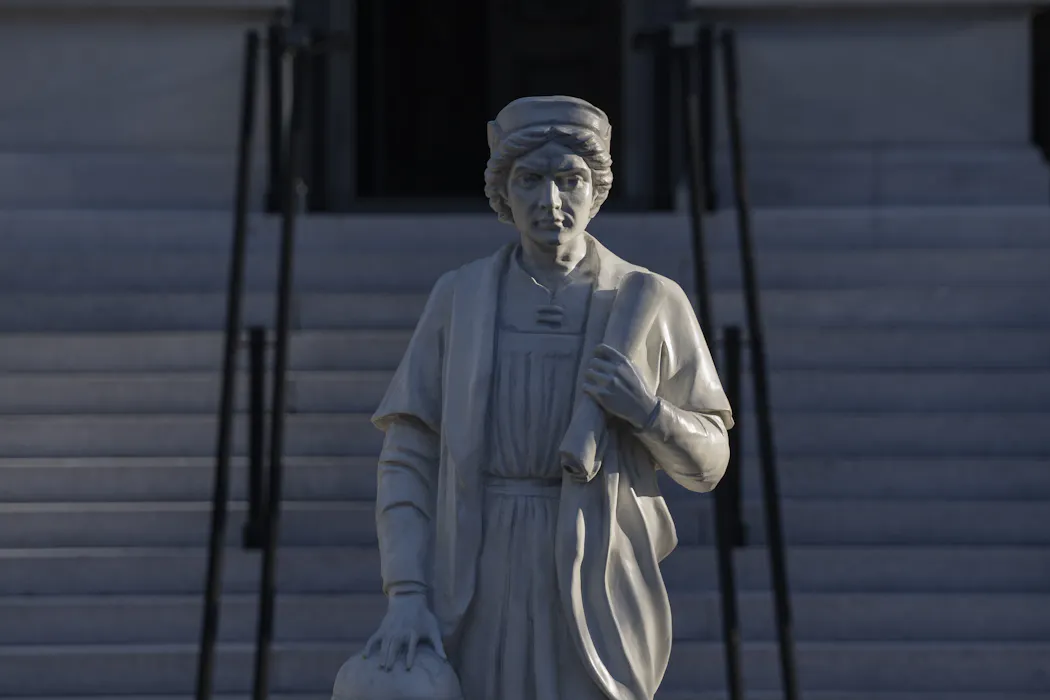
Christopher Columbus is back. At least, a statue of him is back, reinstalled by US President Donald Trump on the White House grounds in late March – part of the president’s stated mission to cancel “cancel culture”.
The resurrection of Columbus made good on Trump’s 2025 executive order, “Restoring Truth and Sanity to American History”.
The statue is in fact a replica of the original thrown into Baltimore Harbor by protesters on Independence Day 2020 during the Black Lives Matter upheavals of the first Trump presidency.
The protests targeted monuments “honoring white supremacists, owners of enslaved people, perpetrators of genocide, and colonizers”. But damaged pieces of the Columbus statue were later salvaged and became a model for the copy.
Trump has since championed Columbus as “the original American hero, a giant of Western civilization, and one of the most gallant and visionary men to ever walk the face of the earth”.
He might have chosen any statue of the explorer and navigator from Genoa who pioneered European colonisation of the Americas. But clearly reinstating one removed by his opponents sends a more powerful message.
‘Improper partisan ideology’
Restoring statues to their original location isn’t simply about undoing their previous removal. It’s designed to reverse what some see as attempts to “erase history”.
And it has a long history of its own. Roman emperors once feared being condemned to obscurity through “damnatio memoriae” – having their statues destroyed, coins melted down and names chiselled from the facades of buildings.
Trump’s executive order was very much about retaliating against those who want to “perpetuate a false reconstruction of American history, inappropriately minimize the value of certain historical events or figures, or include any other improper partisan ideology”.
Relocating a memorial to a more prominent location – from Baltimore to the White House, for instance – goes one step further. It amplifies the significance of the historical figure and the symbolic restoration of their reputation.
But sometimes just restoring a statue to its original site is symbolism enough.
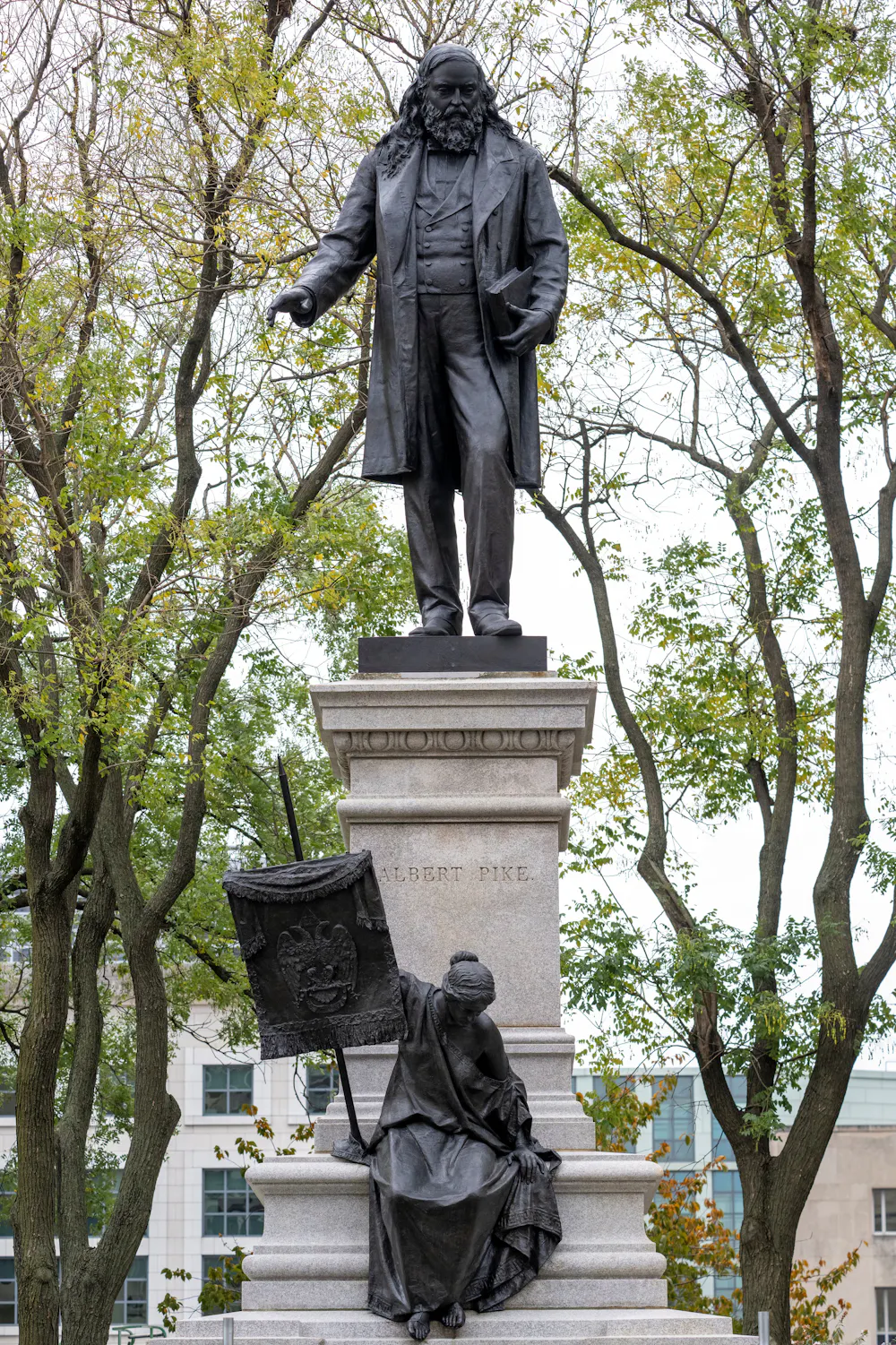
Pike was a disgraced figure, accused of misappropriating funds and allowing his troops to desecrate the bodies of Union soldiers. There are also alleged ties to an early version of the Ku Klux Klan.
Advocates for the statue’s retention note there is no mention of the Confederacy or depiction of a military uniform, only Pike’s contribution to the American Freemasons.
But when the statue was pulled down in 2020, Trump certainly took sides: “The DC police are not doing their job as they watched a statue be ripped down and burn. These people should be immediately arrested. A disgrace to our country.”
‘Woke lemmings’
Of course, history isn’t always simple, as memorialising the American Civil War shows.
Arlington National Cemetery in Virginia was established in 1864 as a national military cemetery, with a Confederate section dedicated in 1900 as part of the effort to promote reconciliation between the North and South.
Its Confederate Memorial (designed by a Confederate veteran) features a female figure representing the South holding symbols of peace. A bronze relief below depicts sanitised images of slavery: a woman caring for white children, and a man following his owner into battle as his servant.
A biblical quotation below preaches peace: “They have beat their swords into ploughshares and their spears into pruning hooks.”
But another quote in Latin – “Victrix causa diis placuit sed victa Caton” – references Julius Caesar’s victory in the Roman civil war and casts the South’s defeat as a noble lost cause.
The monument was erected in 1914, removed by Congress in 2023, and is scheduled to return in 2027. Secretary of War Pete Hegseth claimed on social media it “never should have been taken down by woke lemmings. Unlike the Left, we don’t believe in erasing American history – we honor it.”
Presidential hopeful Barack Obama addresses a rally before a statue of Caesar Rodney in Wilmington, Delaware, 2008. Emmanuel Dunand/AFP via Getty Images
Defiant choices
Similarly, an equestrian statue of Founding Father Caesar Rodney – installed in Wilmington, Delaware, in 1923 and removed in 2020 to prevent damage by protesters – highlights these contested readings of history.
Rodney is famous for riding all night from Delaware to Philadelphia, through a thunderstorm, to break a deadlock and cast the deciding vote in favour of American independence in 1776.
But as well as being a brigadier general and signatory to the Declaration of Independence, he owned 200 slaves on his family’s plantation.
The statue is now scheduled to reappear for six months, this time in Washington DC, to celebrate America’s 250th anniversary on July 4. It will be installed in Freedom Plaza, named in honour of Martin Luther King Junior.
Placing the contested statue of a famous slave owner in a space dedicated to a Black civil rights leader is a provocative, if not defiant, choice. And it shows again how powerful symbols and symbolic actions can be.
The argument that removing statues also erases history doesn’t hold up to scrutiny. It conflates public visibility and symbolic placement with actual knowledge of the past.
In that sense, reinstalling controversial memorials is, in itself, an attempt to rewrite history by erasing a more recent past and returning to an old, disputed status quo.
Garritt C. Van Dyk has received funding from the Getty Research Institute.
Source: The Conversation – Global Perspectives – By Jasmin Lilian Diab, Assistant Professor of Migration Studies; Director of the Institute for Migration Studies, Lebanese American University
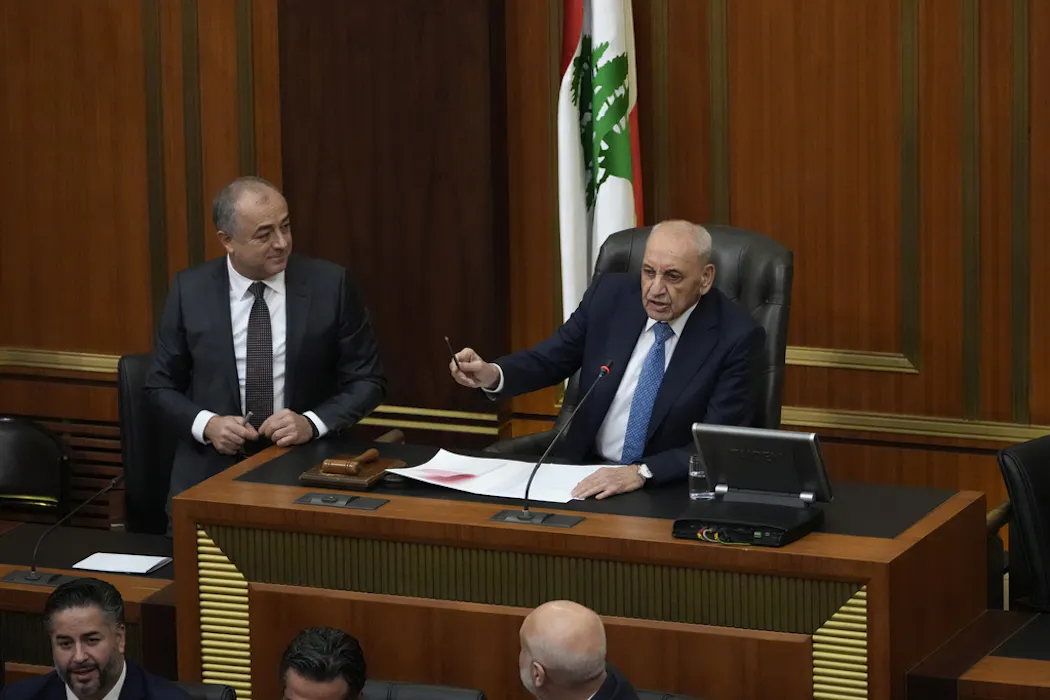
Long-time Lebanese power broker and speaker of the parliament Nabih Berri speaks during a legislative session. AP Photo/Hussein Malla
Lebanon was meant to be preparing for key parliamentary elections in May 2026. Then came the return of war.
Two days after the U.S. and Israel launched their military operation in Iran on Feb. 28, Hezbollah and Israel resumed their own full-scale hostilities. That marked the final collapse of a much-violated ceasefire that for a little over a year had barely kept a lid on fighting. With Israel’s full-scale bombardment of the country and invasion of southern Lebanon again underway, the Lebanese parliament on March 9 postponed scheduled elections by extending its own mandate by two years.
Its justification was a now familiar one: war, instability and a security situation deemed incompatible with democratic process. As conflict escalates across the region and further destabilizes Lebanon with the possibility of long-term Israeli occupation, officials insist that elections are simply not feasible.
But this is not the first time Lebanese elections have been postponed.
Since 2013, the Lebanese government has delayed parliamentary elections multiple times, citing among other factors the war in neighboring Syria, political deadlock and disputes over electoral law. Each delay has been framed as temporary, necessary and exceptional. Yet taken together, they reveal a pattern: Elections in Lebanon seem to be always approaching – and continually postponed.
This is not simply a story of crisis interrupting democracy. It is a story of how crisis is used to govern it.
Crisis as justification and opportunity
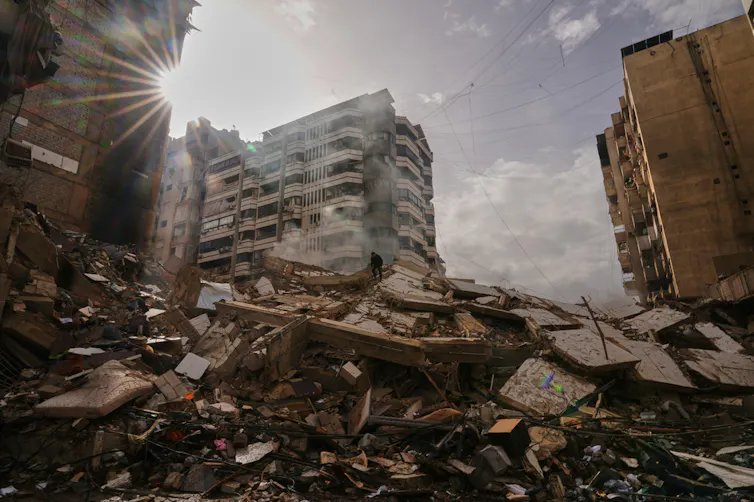
There is little question that the latest postponement of elections comes amid trying conditions – airstrikes, displacement and mounting insecurity – that make the logistics of an election extremely difficult.
A man stands atop the rubble as smoke rises from a building destroyed in an Israeli airstrike in Beirut’s southern suburbs on March 14, 2026. AP Photo/Hassan Amma
Indeed, on its face the parliament’s decision appears pragmatic. Elections require mobility, stability and functioning institutions, all of which are currently under strain.
But arguments for postponement obscure an important reality: Political crises in Lebanon have contributed to a self-fulfilling logic that protects the political status quo.
The extension of parliament’s term was announced by Speaker Nabih Berri, a central figure in the country’s political order since Lebanon’s civil war ended in 1990. That order has long been defined by power-sharing among entrenched elites, as well as a system widely criticized for enabling corruption, patronage and institutional paralysis.
The current system was formalized in the Taif Agreement, which formally ended Lebanon’s devastating 15-year civil war. The accord distributed power along sectarian lines, with key state positions allocated to religious communities. While intended to ensure representation, it instead entrenched elite bargaining and veto power, making consensus both necessary and perpetually elusive.
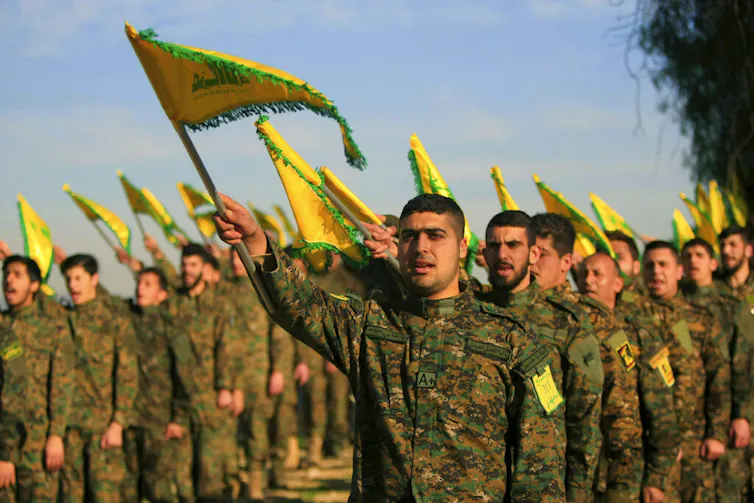
Over time, this has produced a political system defined less by governance than by managed deadlock – where institutional paralysis is not incidental but built into the system itself. This fragility is compounded by the interplay of domestic and external forces, including the significant political and military role of Hezbollah. Emerging out of the Lebanese civil war and the broader context of Israeli occupation in the 1980s, Hezbollah developed as an armed resistance movement and later consolidated its position as both a political actor and a military force operating alongside the state, complicating the already tenuous balance of power.
This fragility is further reflected in repeated institutional deadlock, including prolonged presidential vacuums like between 2014 and 2016. Then, Hezbollah and its allies blocked consensus over a candidate, leaving the country without a head of state for over two years.
The politics of delay
Within Lebanon’s fractured political context, postponing elections has serious consequences. Fundamentally, it changes when and how political accountability happens in ways that benefit those already in power. In Lebanon, elections increasingly function as deferred events: always anticipated but continually postponed.
This prolongs the tenure of a political class that has faced sustained public anger since the 2019 uprising, when mass protests erupted across the country over economic mismanagement, corruption and deepening inequality. The movement forced the resignation of the government and exposed the fragility of the state’s political and economic order.
While this challenges individual leaders and the broader system of governance, it did not translate into sustained structural reform or a meaningful reconfiguration of power. Instead, the post-2019 period has been marked by deepening economic collapse, institutional paralysis and repeated political deadlock that has included prolonged delays in government formation.
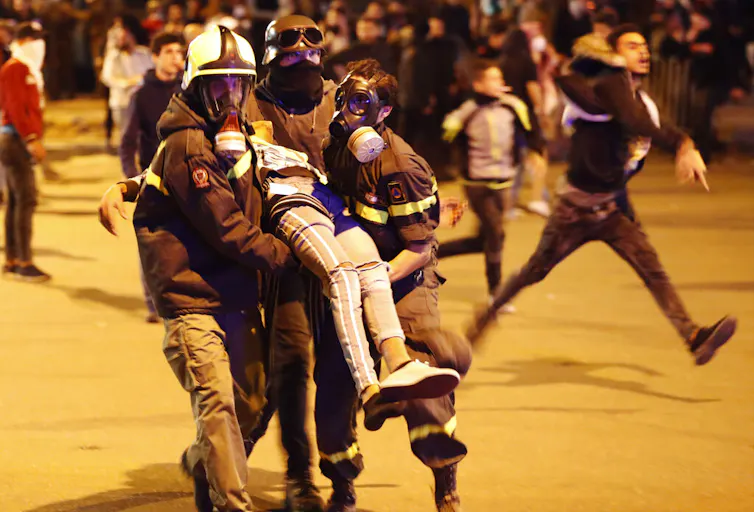
Civil defense workers carry an injured protester after a clash with riot police during 2019 demonstrations in Beirut. AP Photo/Hussein Malla, File
Election delays also narrow the space for political alternatives. New parties, independent candidates and reformist movements rely on electoral cycles to gain visibility and legitimacy. Postponing elections thus also defers possibilities for political transformation.
Finally, postponement reinforces a system in which accountability is continually suspended. Without elections, there is no formal mechanism through which citizens can register discontent or enact change.
In this sense, delay is not simply a byproduct of instability. It is a political outcome with clear beneficiaries in power, both within the Lebanese state and among actors such as Hezbollah, whose influence is often reinforced in periods of internal and external crisis.
Crucially, elections are never canceled outright. They are deferred, extended, rescheduled. While the promise of democratic participation remains, its realization is continually pushed into the future.
Displacement and exclusion
The current crisis also raises deeper questions about who is able to participate in Lebanon’s political life. Escalating violence in the south has displaced thousands, disrupting livelihoods, mobility and access to basic services. Participation in elections becomes not only difficult but, for many, secondary to survival.
This dynamic is not new. Periods of conflict in south Lebanon, from the prolonged Israeli occupation prior to 2000 to the 2006 Israel-Hezbollah war, have repeatedly disrupted electoral participation, displacing communities and reshaping who is able to vote, where, and under what conditions. Electoral processes have, at times, proceeded despite such disruptions, but often in ways that marginalize those most affected by violence.
This follows a broader pattern in which those most affected by crises in Lebanon are also those least able to shape the country’s political outcomes.
Lebanon’s electoral system has long been marked by exclusion: from diaspora voters who face logistical and administrative barriers to those displaced – entirely excluded from the political process.
Today, renewed conflict, including Israeli military operations in the south, intensifies these constraints.
The postponement of elections, then, is marked by both genuine logistical constraints and facilitating the interests of entrenched political elites.
It also risks deepening existing inequalities. Large segments of the population, particularly those in the majority-Shiite south, will face disproportionate barriers to participation as displacement, insecurity and the destruction of infrastructure make voter registration, campaigning and access to polling stations significantly more difficult.
These are the same communities whose political representation is most directly shaped by cycles of violence, displacement and uncertainty.
All this does not mean that elections no longer matter in Lebanon. On the contrary, their repeated deferral points to their continued importance. But it also highlights the fragile nature of democratic processes within a system shaped by entrenched power and persistent instability.
At the same time, there are ongoing, if uneven, efforts to reckon with this paralysis. Reform-oriented political actors and segments of civil society have continued to push for electoral transparency, diaspora participation in elections and institutional reform.
International actors, including the International Monetary Fund and the European Union, have also tied financial assistance and recovery frameworks to governance reforms, including calls for credible and timely elections. Yet these pressures have so far yielded limited structural change, often absorbed into the same status quo they seek to transform.
Meanwhile, the escalation of violence in the south and the persistent possibility of expanded military confrontation continues to reshape the conditions under which any future election might take place.
In Lebanon, democracy is not suspended in times of crisis but stretched. And in that stretching, the distance between citizens and political change continues to grow. That will only continue unless emerging pressures, both domestic and international, are able to create forms of genuine accountability.
Jasmin Lilian Diab does not work for, consult, own shares in or receive funding from any company or organization that would benefit from this article, and has disclosed no relevant affiliations beyond their academic appointment.
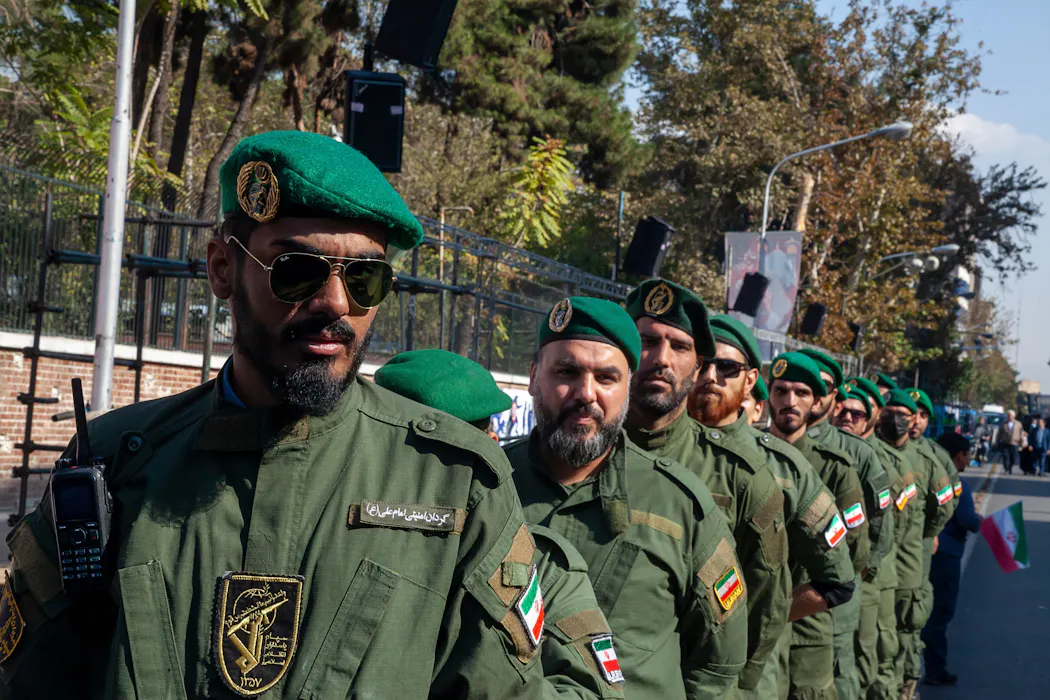
The Iranian Revolutionary Guard Corps (IRGC) has long exerted a strong, often underestimated power in the Middle East. With around 190,000 members, plus an estimated 450,000 reserves in the Basij paramilitary, the largest component of Iran’s Armed Forces also controls much of the country’s politics, intelligence and economy.
After an Israeli airstrike assassinated the Islamic Republic’s Supreme Leader Ayatollah Ali Khamenei on February 28, US President Donald Trump called on the IRGC to lay down its arms in exchange for immunity. IRGC forces refused the offer, and with many more of its leaders killed over the last month, it shows no sign of giving up.
As US ground forces deploy to the Middle East, it is imperative to understand that – despite a month of widespread US-Israeli bombing, damaged infrastructure, internal fractures and decimated leadership – the IRGC will likely resist any invasion of Iranian territory with tenacity. Its history demonstrates why.
The IRGC originally emerged in the 1979 revolution from the ad hoc street militias made up of students loyal to Ayatollah Ruhollah Khomeini’s vision of an Islamic Republic. It was opposed to the factions that sought to create a secular republic after the overthrow of the monarchy, and sought to be a national guard to protect the nascent Islamic revolutionary government.
Also known as the Pasdaran-e Enghelab, “Guardians of the Revolution”, it soon evolved into a praetorian guard for the country’s supreme leader.
In the force’s earliest days it prevented a counter-revolution by the Artesh, the standing military under the Shah. The IRGC also fought street battles with rival revolutionary forces, including secular leftists and rival Islamist militias.
With Iraq’s invasion of Iran in 1980, the IRGC emerged as a frontline conventional combat force in tandem with the national military. They repelled Saddam Hussein’s attack by 1982, though the war continued for another 6 years. Many current IRGC commanders were young soldiers or officers at the time, and experienced firsthand how Iraq deployed chemical weapons against them while the West remained silent.
Iranian soldiers wearing gas masks during the Iran-Iraq War, 1985. Mahmoud Badrfar
The IRGC also became a counter-insurgency force when Saddam Hussein supported Iran Kurdish rebels in 1980. It has suppressed various internal ethnic rebellions, ranging from a Kurdish revolt in the northwest that began in the 1980s to a Baloch insurgency in the southeast in the 2000s.
Trump’s recent attempts to foment Kurdish revolts will therefore likely meet with profound wrath from IRGC commanders, who have been fighting these ethnic rebel groups for decades.
Lessons from proxies
Through its regional proxies, the IRGC already has extensive experience of protracted wars of attrition against the US and Israel.
In 1982, the IRGC created a foreign expeditionary force, known as the Quds Force. Named after the Arabic for Jerusalem, the Quds supported the creation of Hezbollah in Lebanon in response to Israel’s invasion in that year to expel the Palestine Liberation Organization.
From that point onward, the IRGC was able to confront Israel via its proxy forces. Over 18 years, Hezbollah used tactics such as suicide car bombs to wear down occupying Israeli forces, who withdrew from southern Lebanon in 2000. The operation was widely seen as a military failure for Israel.
Qasem Soleimani (left) was the commander of the Quds until his assassination by US forces in 2020. He is pictured here with Ali Khamenei (right) in 2019. Khamenei.ir, CC BY-NC
These tactics were repeated after the 2003 US invasion of Iraq, when Quds-backed proxy Shi’a militias, such as Kataib Hezbollah, targeted the US military deployed there with improvised explosive devices. The US withdrew from Iraq in 2011, desperate to extricate itself from a “forever war”.
The Quds’ proxies in Lebanon and Iraq provided lessons that the IRGC will surely seek to replicate in the event of a US invasion.
Many of these tactics were designed to wear down an occupying force, and will not be enough to thwart an immediate, high-intensity ground invasion. But if the US fails to achieve its (currently unclear) goals, it could find itself in yet another prolonged occupation and low-intensity war. If it does, the IRGC’s well-honed attrition tactics will be deployed extensively.
After decades of bilateral tensions, the 9/11 attacks in 2001 forced the US and Iran into a brief alliance against the Taliban in Afghanistan. Iran’s regime even reached out to the US in late 2001, offering help to fallen pilots who landed on Iranian soil while combating their mutual enemy.
But in January 2002, George W Bush placed Iran alongside Iraq and North Korea in the now-infamous “Axis of Evil”, making them a target in the US’ War on Terror. For Iran, this marked a abrupt shift in public perceptions of the US.
The reformist president Mohammad Khatami’s efforts at rapprochement ended. Three years later, the regime supported the rise of Mahmoud Ahmadinejad, a hardliner who, along with the Supreme Leader, invested in both the expansion of the nuclear program and the IRGC. The IRGC has since evolved to assume multiple security functions in the Islamic Republic.
The only subsequent period of detente between the IRGC and the US was when the Quds Force fought against the Islamic State in 2014 in Iraq, in tandem with US air support. This cooperation occurred during the Obama administration, and a year later, the US entered a nuclear deal with Iran, from which Trump withdrew just two years later in 2017.
When IRGC bases were hit by ISIS terrorist strikes in early February 2019, it therefore viewed the attacks as the result of covert US actions. It blamed the US and Israel, in addition to a rise in Balochi and Kurdish subversion.
In the IRGC’s narrative, the Trump administration’s current war is part of a systemic American effort since the 1980s to attack the IRGC through proxies or economic warfare in order to weaken the Islamic Republic. For them, this is a conflict that has endured since the Iranian Revolution in 1979.
The IRGC has been, without a doubt, weakened by the past month of US-Israeli aerial attacks. But its history demonstrates its pattern of officers who have a sense of a distinct corporate identity, and who will defend their institutional power even if their leadership is killed.
The IRGC also commands the vast Basij paramilitary. Here, Ayatollah Ali Khamenei at the Great Conference of Basij members, Azadi stadium October 2018. By Khamenei.ir, CC BY-NC
This explains why, after Khamenei’s death, the IRGC rallied behind his son Mojtaba to keep its power intact. While some Iranians celebrated and others mourned Khamenei’s death, the IRGC presented a united front in backing his regime. If Iran’s political system fell apart, the IRGC’s in-group status would be lost.
The IRGC has also evolved to operate as a business network. With holdings in the service sector, ranging from media to construction, it controls at least 20% percent of the economy. Given how some IRGC leaders have benefited from corrupt practices in managing these networks, they would fear being held accountable and tried by a new political order, and will not countenance the idea of surrender.
What this network of privilege represents is, ultimately, a deep state. The IRGC is not just an army, but a separate, autonomous and vast military institution, one that has managed to retain its power after Khamenei’s assassination. If the events of history – and of the conflict thus far – are anything to go by, it will fight to the bitter end rather than capitulate.
A weekly e-mail in English featuring expertise from scholars and researchers. It provides an introduction to the diversity of research coming out of the continent and considers some of the key issues facing European countries. Get the newsletter!
Ibrahim Al-Marashi no recibe salario, ni ejerce labores de consultoría, ni posee acciones, ni recibe financiación de ninguna compañía u organización que pueda obtener beneficio de este artículo, y ha declarado carecer de vínculos relevantes más allá del cargo académico citado.
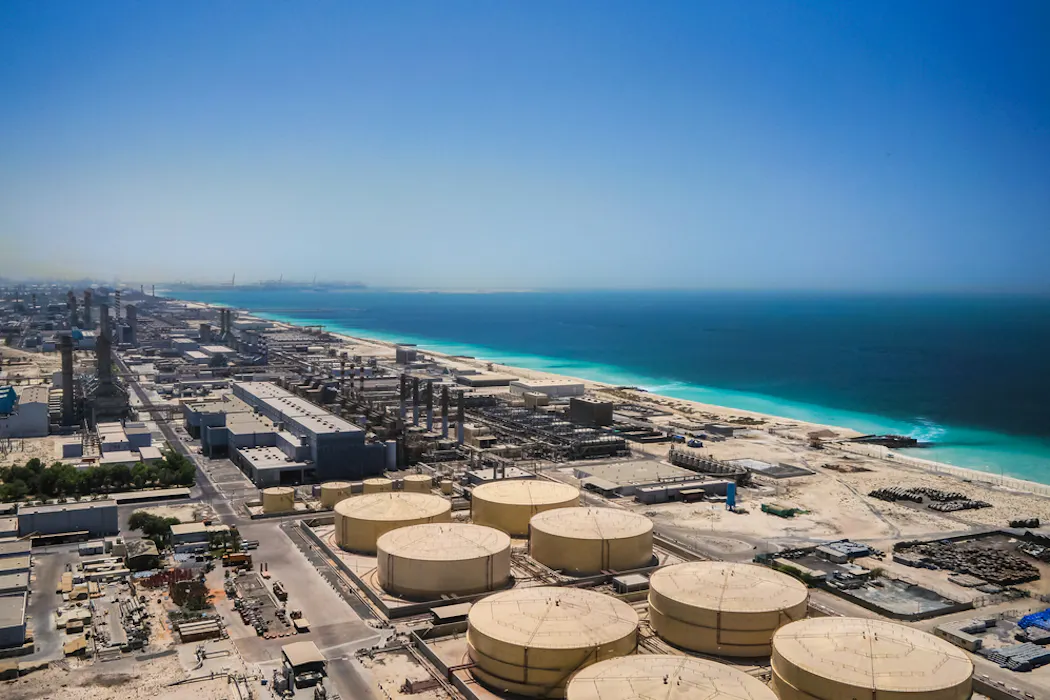
Environ 70 % de l’eau potable en Arabie saoudite provient d’usines de dessalement. Au Koweït et à Oman, cette proportion atteint 90 %. Stanislav71/Shutterstock
Alors que les tensions militaires s’intensifient au Moyen-Orient, les usines de dessalement apparaissent comme des infrastructures critiques. Leur vulnérabilité pourrait rapidement transformer un conflit régional en crise humanitaire.
Depuis des décennies, le Golfe est indissociable du pétrole. Pétroliers, oléoducs et raffineries ont longtemps été considérés comme les infrastructures les plus stratégiques — mais aussi les plus vulnérables — de la région. Ces derniers jours, des frappes américano-israéliennes ont d’ailleurs visé des dépôts pétroliers à Téhéran. Dans leur sillage, des habitants ont évoqué une pluie noire tombant pendant des heures, que certains médias ont décrite comme de la pluie acide.
Dans toute la péninsule Arabique, le dessalement de l’eau de mer — qui consiste à obtenir de l’eau potable à partir de l’eau salée — a transformé ces paysages parmi les plus arides de la planète en sociétés urbaines prospères. Des villes comme Dubaï, Doha, Koweït City ou Abou Dhabi dépendent très largement des usines de dessalement.
Ainsi, 70 % de l’eau potable de l’Arabie saoudite provient de ces installations. Au Koweït et à Oman, cette part peut atteindre 90 %. Sans ces usines de dessalement, une grande partie des systèmes urbains modernes de la région aurait du mal à exister.
Pourtant, cet exploit technologique a discrètement créé une nouvelle forme de vulnérabilité stratégique. La sécurité hydrique du Golfe dépend en effet d’un nombre relativement limité d’immenses usines côtières de dessalement — de vastes complexes industriels qui servent de véritables bouées de sauvetage pour des villes entières.
Le conflit militaire en cours commence à en révéler les fragilités. Des frappes de missiles et des interceptions de drones ont eu lieu à proximité de grandes installations de dessalement ainsi que de complexes combinant production d’eau et d’électricité dans le Golfe. L’Iran comme les États-Unis ont été accusés d’avoir ciblé ces infrastructures. Même lorsque les dégâts restent limités, ces attaques soulignent à quel point ces installations sont exposées dans un contexte de guerre moderne.
Contrairement aux oléoducs ou aux terminaux de stockage du pétrole, les usines de dessalement ne peuvent pas être facilement contournées ni remplacées. Ce sont des installations fixes et extrêmement complexes, qui nécessitent d’importants apports d’énergie, des membranes spécialisées ou des systèmes thermiques, ainsi que des processus continus de traitement chimique et mécanique. Réparer des dommages importants sur une grande installation pourrait prendre des mois, voire davantage.
Les conséquences d’une interruption de fonctionnement seraient immédiates. La plupart des villes de la région disposent de capacités de stockage d’eau limitées. Si une grande usine de dessalement cessait de fonctionner, les gouvernements pourraient être confrontés à la perspective d’un rationnement d’urgence de l’eau pour des millions d’habitants en quelques jours seulement. Les hôpitaux, les systèmes d’assainissement, la production alimentaire et l’industrie seraient tous touchés simultanément.
Dépendance au dessalement
Ce risque est amplifié par la rareté structurelle de l’eau dans la région. Le Moyen-Orient compte parmi les régions les plus touchées par le stress hydrique au monde. Les précipitations y sont faibles et très irrégulières, tandis que la hausse des températures accroît l’évaporation et la demande en eau. Les nappes phréatiques ont été fortement surexploitées dans une grande partie de la région.
En Iran, la baisse du débit des fleuves, les sécheresses prolongées et la surexploitation des eaux souterraines ont déjà laissé certains barrages à sec. Des pressions similaires existent dans d’autres pays où les ressources renouvelables en eau douce sont extrêmement limitées. Le dessalement est ainsi passé d’une technologie complémentaire à la colonne vertébrale des systèmes urbains d’approvisionnement en eau. Cette évolution a fait émerger ce que l’on pourrait appeler une « dépendance au dessalement » : une situation dans laquelle des sociétés entières reposent sur un petit nombre d’installations centralisées pour assurer leur approvisionnement en eau.
L’ampleur de cette dépendance est frappante. Environ 100 millions de personnes dans la région au sens large dépendent directement de l’eau dessalée. La péninsule Arabique à elle seule représente une part importante de la capacité mondiale de dessalement, et dix des plus grandes usines du monde se concentrent le long des rives du Golfe et de la mer Rouge. À mesure que la pénurie d’eau s’intensifie dans la région, cette dépendance devrait encore s’accentuer. Mais une dépendance accrue signifie aussi une exposition plus grande aux risques.
Des usines de dessalement d’eau visées par des attaques.
Les infrastructures hydrauliques ont historiquement été vulnérables en temps de guerre. De l’Irak à la Syrie en passant par le Yémen, des usines de traitement de l’eau, des stations de pompage et des réservoirs ont été endommagés ou pris pour cible lors de conflits antérieurs. Le droit international humanitaire reconnaît d’ailleurs ce danger. L’article 54(2) du protocole additionnel aux conventions de Genève du 12 août 1949, relatif à la protection des victimes des conflits armés internationaux (protocole I), dispose que :
Il est interdit d’attaquer, de détruire, d’enlever ou de mettre hors d’usage des biens indispensables à la survie de la population civile, tels que les denrées alimentaires, les zones agricoles destinées à la production de denrées alimentaires, les cultures, le bétail, les installations et réserves d’eau potable ainsi que les ouvrages d’irrigation, dans le but spécifique d’en priver la population civile ou la partie adverse pour leur valeur de subsistance, quel qu’en soit le motif, que ce soit pour affamer les civils, les contraindre à se déplacer ou pour toute autre raison.
Ces protections s’appliquent aussi bien aux conflits armés internationaux qu’aux conflits armés non internationaux.
Des risques majeurs
Les conséquences humanitaires de la mise hors service de ces immenses usines de dessalement seraient considérables. Contrairement aux infrastructures pétrolières, qui peuvent parfois être contournées grâce aux marchés mondiaux ou à des réserves d’urgence, les systèmes d’approvisionnement urbains en eau sont fortement localisés. Si une usine de dessalement alimentant une grande métropole était touchée et endommagée lors d’une attaque, il existerait très peu d’alternatives immédiates. Des importations d’eau par navires-citernes ou des unités de dessalement d’urgence pourraient apporter un soulagement temporaire, mais elles ne pourraient pas remplacer la production quotidienne d’une grande installation.
Les effets en cascade iraient bien au-delà de l’eau potable. Les systèmes d’assainissement commenceraient à défaillir, les risques sanitaires augmenteraient et l’activité économique pourrait ralentir fortement. Le tourisme, l’industrie et les services — des piliers des économies des États du Golfe — dépendent d’un approvisionnement en eau stable.
Les conséquences géopolitiques seraient également majeures. Le Golfe apparaît de plus en plus comme un laboratoire pour comprendre les nouvelles formes de vulnérabilité des infrastructures à l’ère du stress climatique : la militarisation des systèmes de production d’eau. À mesure que le dessalement se développe dans le monde — de la Californie à l’Australie, en passant par l’Afrique du Nord et le sud de l’Europe — des fragilités comparables pourraient émerger ailleurs. Des mégapoles côtières confrontées à la sécheresse investissent déjà massivement dans de grandes installations de dessalement pour sécuriser leur approvisionnement futur en eau. La question de leur protection en temps de conflit dépasse donc largement le Moyen-Orient.
Protéger les usines de dessalement n’est plus seulement un enjeu régional. C’est un défi global : comment sécuriser les infrastructures technologiques dont dépend désormais la vie quotidienne des sociétés modernes dans un contexte de raréfaction de l’eau.
Plusieurs stratégies pourraient réduire ces risques. Développer le recyclage des eaux usées et restaurer les zones naturelles de stockage de l’eau permettrait de diversifier les ressources. Des systèmes de dessalement plus distribués — avec des installations plus petites réparties sur plusieurs sites — limiteraient la dépendance à quelques grandes usines. L’augmentation des capacités stratégiques de stockage d’eau offrirait également aux villes un tampon en cas d’interruption brutale.
Mais les solutions techniques ne suffiront pas à elles seules. Le véritable enjeu est de reconnaître ce que sont devenues les usines de dessalement : des infrastructures humanitaires critiques dont dépend l’approvisionnement en eau de populations entières.
Pendant une grande partie du XXe siècle, le pétrole a façonné les villes du Golfe. Au XXIe siècle, c’est l’eau dessalée qui les fait vivre.
Sanam Mahoozi ne travaille pas, ne conseille pas, ne possède pas de parts, ne reçoit pas de fonds d’une organisation qui pourrait tirer profit de cet article, et n’a déclaré aucune autre affiliation que son organisme de recherche.
The United States’ Operation Epic Fury against Iran does more than mark a military escalation. It shows how Trump revives old national myths: the American frontier, the cowboy, regenerative violence, and Providence – while stripping them of their civic dimension and turning them into narratives of domination.
That is what distinguishes him from earlier presidents: he does not draw on these myths to celebrate collective effort or democratic purpose, but to stage domination, purification, and personal omnipotence.
This language is more than the language of military necessity: it reactivates an old grammar of American power in a brutally hardened form.
In Republics of Myth (2022), Hussein Banai, Malcolm Byrne and John Tirman argue that conflict with Iran is driven not only by strategic interests but also by two incompatible national narratives, each of which turns every new crisis into confirmation of older humiliations, fears, myths, and hostilities.
On the American side, that narrative remains deeply shaped by, the myth of the frontier: a space to tame, “savages” to defeat, and a mission to fulfil. Applied to the Middle East, that framework casts Iran as an external frontier to be subdued. Trump did not invent this narrative. He radicalised it.
The Frontier: from expansion to predation
In his inaugural address on January 20, 2025, Trump presented the frontier as one of the nation’s central founding myths. The United States, he said, must once again become “A growing nation – one that increases our wealth, expands our territory,” and pursues its “manifest destiny.” He added that “the spirit of the frontier is written into our hearts.” Here, the frontier is no longer a metaphor for collective progress. It becomes, once again, a language of power and appropriation.
Nor did this rhetoric remain abstract. In the first weeks of his second term, Trump repeatedly said that Canada should become the 51st state and declared of Greenland:
This narrative is rooted in a Puritan imaginary of mission in the wilderness, of a “New Jerusalem,” and of the violent conquest of a territory populated by figures deemed as “barbaric savages.”Republics of Myth also shows how this grammar was projected from Latin America to the Middle East.
Trump is therefore not simply reusing an old American image; he is reactivating its most expansionist version. The same mechanism operates home. At the southern border, Trump speaks of “invasion,” “migrant occupation” and, again, “savages.” Abroad, he applies the same logic to Iran, describing it in apocalyptic terms as a force of “evil” that must be crushed and as an imminent existential danger. In both cases, the point is less to protect a border than to stage a reconquest through a moral narrative of good versus evil.
The cowboy becomes a cult of the leader
The second myth is that of the individualistic cowboy, as analysed by Historian Heather Cox Richardson: the ideal of the “real” American, typically white who acts alone, expects nothing from
government, protects his own, and imposes his will by dominating others.
Richardson shows that this myth, reworked in the modern era by Barry Goldwater and later mainstreamed by Ronald Reagan, has become central to Republican political culture. Under Trump, it is taken to an extreme. One sentence, spoken when he announced the opening of strikes against Iran on February 28, captures the logic:
“No president was willing to do what I am willing to do tonight.”
The cowboy is no longer a figure of popular autonomy. He becomes the exceptional man, the one who dares alone, above institutional caution.
Where earlier presidents could use frontier imagery to narrate a national effort, Trump turns the cowboy into a template for the charismatic, transgressive leader. The hero no longer stands for a collective order. He externalises conflict, polarises the world into good and evil, and justifies himself only through his ability to win. This pattern is not without precedent. From Reagan’s “evil empire” to George W. Bush’s “axis of evil,” American presidents have often opposed a virtuous “us” to a threatening “them.” But under Trump, the moral narrative no longer primarily serves to defend values or the “free world.” It serves to magnify a leader whose legitimacy rests on his capacity to prevail. Yet, Trump also undermines the very binary he deploys: even after branding an adversary as evil, he may pivot the next day and embrace the idea of a deal with the enemy. The rhetoric is therefore not only harsher than before; it is also more unstable, more transactional, and more theatrical.
Violence as regeneration
The third myth is that of regenerative violence, long identified by historian Richard Slotkin. He has shown the idea that violence can purge disorder and restore a lost order runs through modern American political mythology.
Violence is not an accident of the frontier; it is its symbolic engine. It destroys the obstacle, repairs humiliation, for example, the humiliation left by the 1979 hostage crisis, which Trump invoked in his February 28, 2026 address – purifies space, and regenerates the community.
As early as 2017, Trump’s inaugural address invoked “American carnage” painting a portrait of a ravaged country that had to be restored through rupture, a narrative drawn from the rhetorical tradition of the Jeremiad.
In 2025–2026, that logic extends to foreign policy. At West Point, addressing graduates of the US military academy, Trump said he wanted to refocus the military on “crushing America’s adversaries, killing America’s enemies,” and on the ability to “dominate any foe and annihilate any threat.”
Since the start of his second term, that myth has been dramatised even more explicitly through the fusion of entertainment and reality, as in a White House video that mixed images of the strikes on Iran with scenes from Hollywood films and video games under the slogan “American Justice.”
Trump promises his enemies “certain death” and links destruction to a supposed political liberation. Violence, then, is no longer simply a means. It becomes the condition of renewal. This is where Trump departs most clearly from a more conventional presidential use of power.
Where his predecessors tied violence to an explicit project of political transformation – democratisation, state-building, regional redesign, Trump expresses a more radical belief: power itself becomes a virtue, and crushing the enemy its most dazzling proof. Violence no longer prepares a new order. It becomes an end in itself, as though the demonstration of power alone could produce a political solution.
Under Trump, the old American myth of violence is stripped of its universalist trappings. What remains is destruction as proof of power.
Providence and the leader’s mission
The fourth myth is religious. From the outset, the American frontier was bound up with a providentialist imagination: a mission in the wilderness, a chosen people, a direct Protestant relationship to God. Trump takes up that tradition, but shifts it onto himself. In his 2025 inaugural address, he said that his “life was saved for a reason” and that he was “saved by God to make America great again. At the National Prayer Breakfast he again declares that God has “a special plan and a glorious mission for America.”
Here too, the original myth is distorted. Providence is no longer invoked to recall the nation’s collective vocation. It is used to sacralise the president himself in a quasi-messianic role. Trump’s supporters intensify this drift: part of evangelical Trumpism cast him in the language of anointing, prophecy, or a war between good and evil. Religion does not replace strategy here; it sacralises force.
The war against Iran throws all of this into sharp relief. It shows how old American myths are not just reused, but hardened and distorted. The frontier becomes predation, the cowboy – a cult of the leader, violence – redemptive crushing, religion – the sacralisation of the leader.
Trump does not simply inherit the US presidential tradition. He radicalises its darkest impulses, draining these narratives of their civic, moral, or universalist content and leaving only their most brutal core: conquest, force, divine right, and the annihilation of the enemy. That is also part of what makes them appealing to many Republican sympathisers.
A weekly e-mail in English featuring expertise from scholars and researchers. It provides an introduction to the diversity of research coming out of the continent and considers some of the key issues facing European countries. Get the newsletter!
Jérôme Viala-Gaudefroy ne travaille pas, ne conseille pas, ne possède pas de parts, ne reçoit pas de fonds d’une organisation qui pourrait tirer profit de cet article, et n’a déclaré aucune autre affiliation que son organisme de recherche.
Une interdiction pure et simple des voitures à moteur thermique est rejetée par les électeurs pivots. En revanche, elle est plutôt soutenue si elle est associée à certaines conditions. Sur l’image, le périphérique parisien, le 25 janvier 2026. Yann Vernerie/Shutterstock
En Europe, les débats sur le climat opposent souvent deux camps. Pourtant, une vaste enquête menée dans 13 pays européens raconte une autre histoire. Entre soutien et rejet existe un groupe décisif : un tiers des électeurs, dont l’adhésion dépend surtout de la manière dont les politiques sont conçues.
Nous avons interrogé près de 19 000 adultes dans 13 pays de l’Union européenne (UE) sur 15 propositions de politiques climatiques. Nos résultats montrent que l’opinion publique n’est pas divisée en deux blocs figés « pour » et « contre ». Une part significative de la population se situe au centre, dans ce que nous appelons le « milieu conditionnel ». Ces électeurs ne sont ni apathiques ni désengagés. Leurs opinions évoluent en fonction de la conception des politiques, de leur équité perçue, de leurs coûts réels, et de leur degré d’intrusion dans leur quotidien. Comme ce groupe du « milieu conditionnel » représente 33 % des électeurs, et son soutien peut faire basculer une politique vers (ou hors de) l’obtention d’une majorité.
Trois leçons pour convaincre les électeurs pivots
Si l’objectif est de construire des majorités durables pour l’action climatique, la solution n’est pas d’éviter les politiques difficiles. C’est de bien les concevoir. Trois leçons pratiques se dégagent :
Mettre en avant les bénéfices individuels. Les électeurs réagissent fortement à la façon dont les politiques climatiques sont conçues et à la question de savoir qui paie et qui bénéficie (et si le soutien aux groupes vulnérables est crédible). Une mesure sera plébiscitée si elle est perçue comme avantageuse pour eux, et rejetée si elle menace leur pouvoir d’achat ou semble compliquer leur quotidien.
Concevoir les instruments politiques comme des leviers d’acceptabilité. Les taxes, interdictions, subventions ou exemptions ne sont pas de simples outils techniques : leur conception détermine si une politique sera perçue comme juste, flexible ou contraignante, et si elle obtiendra un soutien.
Ne pas confondre opposition bruyante et opinion publique. Une large part des Européens ne sont pas des opposants endurcis. Si les électeurs pivots sont souvent silencieux, ils peuvent faire basculer une majorité.
Ce qui influence le milieu conditionnel : les coûts, les contraintes, et l’instrument politique lui-même
Ce groupe agit avant tout selon une logique individuelle de coût-bénéfice. Nos résultats) le confirment : la conception des politiques et leurs impacts perçus (sur le pouvoir d’achat, le bien-être ou l’économie nationale) sont les principaux déterminants de leurs préférences, bien plus que leur pays d’origine, leurs attitudes ou leur profil sociodémographique. En d’autres termes : ils ne suivent pas une idéologie, mais leur portefeuille. Pour les rallier, il faut donc privilégier des mécanismes concrets perçus comme équitables, plutôt que des arguments moraux ou collectifs.
Prenons l’exemple des politiques automobiles : une interdiction pure et simple des nouvelles voitures à moteur thermique après 2035 rencontre une forte résistance parmi les électeurs pivots, avec seulement 15 % de soutien. Mais l’ajout d’une exemption pour les carburants synthétiques, une alternative perçue comme moins contraignante, fait bondir ce soutien à 42 %. Cet exemple révèle une logique clé : ce groupe réagit moins à l’objectif final d’une politique qu’à la manière dont elle s’applique concrètement à leur situation.
Certaines politiques sont systématiquement plus faisables que d’autres
Parmi les 15 propositions que nous avons étudiées), les niveaux de soutien varient considérablement. Les mesures imposant des coûts visibles et directs aux consommateurs (taxes ou interdictions de consommation) ont tendance à rencontrer des difficultés.
À l’inverse, les politiques présentées comme des investissements partagés, des subventions, ou des règles accompagnées de protections pour les ménages vulnérables obtiennent de meilleurs résultats.
Par exemple, la création d’un fonds ferroviaire européen, destiné à étendre le réseau ferroviaire et à réduire le coût des billets de train, recueille un large assentiment avec 77 % de soutien, perçue comme un investissement collectif porteur de bénéfices partagés. À l’inverse, l’idée d’une taxe sur la viande bovine, bien que visant à encourager des modes de consommation plus durables, ne convainc que 11 % des répondants, jugée trop onéreuse sur le plan individuel et difficilement acceptable dans le contexte économique actuel.
Ce graphique représente la proportion moyenne de répondants, tous pays confondus, qui soutiennent chacune des 15 politiques (en vert), ainsi que la proportion de répondants appartenant au groupe « conditionnel » ayant répondu « neutre » à chaque politique (en jaune). Climate Policy Feasibility across Europe Relies on the Conditional Middle, Fourni par l’auteur
Comment ce groupe peut faire basculer les majorités
Les personnes appartenant au groupe du « milieu conditionnel » représentent un poids électoral décisif : 71 % d’entre elles ont participé aux élections européennes de 2024, ce qui souligne leur engagement dans le processus démocratique. Leur influence s’étend particulièrement au sein des partis centristes, qui jouent un rôle clé dans la constitution des majorités politiques.
Si ces électeurs pivots, actuellement neutres, basculaient en faveur des politiques climatiques, le nombre de mesures soutenues par une majorité augmenterait substantiellement, passant de 4 à 10 sur 15. Ainsi, à la situation actuelle où une majorité de répondants soutient le fonds ferroviaire européen, l’interdiction des avions privés, les normes d’isolation obligatoire et la taxe sur les profits des entreprises de carburants fossiles, s’ajouterait un soutien à :
un mécanisme d’ajustement carbone aux frontières (CBAM),
l’interdiction des publicités pour les produits très polluants dans l’UE,
l’extension du système d’échange de quotas d’émission (EU ETS) aux transports, à l’agriculture et au chauffage,
l’interdiction des ventes de véhicules à moteur thermique avec exemptions pour les carburants synthétiques.
En Europe, cinq pays supplémentaires verraient alors une majorité de leurs citoyens soutenir au moins 7 des 15 politiques climatiques étudiées.
Les électeurs pivots affichent des préférences nettes quant à l’utilisation des revenus climatiques (ceux issus du système d’échange de quotas d’émission de l’UE, par exemple). Ils privilégient avant tout les projets d’adaptation comme les investissements dans les technologies vertes ou les transports bas carbone, perçus comme des bénéfices concrets et collectifs. Le soutien aux ménages les plus vulnérables, sous forme de mesures de compensation, arrive en seconde position, car il atténue les inégalités et renforce la légitimité sociale de ces financements. En revanche, les aides aux travailleurs des secteurs fossiles menacés par la transition sont jugées bien moins prioritaires.
Pour maximiser l’adhésion du groupe du « milieu conditionnel », il est crucial que ces revenus soient affectés à des usages perçus comme légitimes et utiles à tous. La communication joue ici un rôle clé : elle sera plus efficace si elle est transparente, concrète et centrée sur les bénéfices individuels ou locaux (services publics, infrastructures). Par exemple, un message comme « votre contribution finance des digues pour protéger votre région des inondations » aura un impact bien supérieur à une formule générique telle que « votre taxe soutient la transition écologique ». Il s’agit de montrer comment la mesure améliore directement le quotidien, et non simplement d’en décrire la finalité environnementale ou sociale.
Loïc Berger a reçu des financements de l’Union Européenne sous le programme Horzon (projet CAPABLE, n° 101056891)
Thomas Epper a reçu des financements de l’Union Européenne sous le programme Horizon (projet CAPABLE, n° 101056891) et l’Agence nationale de la recherche (projet WIASSS, ANR-25-CE26-4698).
Uyanga Turmunkh a reçu des financements de de l’Union Européenne sous le programme Horizon (projet CAPABLE, n° 101056891) et l’Agence nationale de la recherche (projet ENDURA, ANR- 21-CE03-0018).
Source: The Conversation – (in Spanish) – By Raúl Martínez-Corcuera, Lecturer in Communication Studies. Researcher on hate speech: racism, sexism, LGTBIphobia… in the news media, sports, advertising…, Universitat de Vic – Universitat Central de Catalunya
La decisión del Comité Olímpico Internacional (COI) de excluir a las mujeres trans del deporte olímpico vulnera derechos, espacios de inclusión y compromete el deporte como ámbito social orientado a la equidad, la diversidad y la cohesión social.
Las divisiones binarias son construcciones sociales e institucionales amparadas en normas, valores y decisiones políticas, pero el COI quiere definir qué cuerpos son legítimos en categorías femeninas.
El COI se justifica en la equidad, es decir, asume que las mujeres trans podrían tener ventajas derivadas de la pubertad masculina. Sin embargo, este debate también es discutido. De acuerdo con algunos estudios, características fisiológicas, como la masa muscular o la densidad ósea pueden persistir tras la terapia hormonal. Sin embargo, estos efectos varían con el tiempo, el entrenamiento y el contexto social.
Así, no existe un consenso científico y las evidencias son contradictorias. El propio COI (2021) establecía que no podía asumirse una ventaja automática basada en el sexo o la identidad de género. La ciencia no ha cambiado de opinión. El COI, sí.
¿Y las personas intersexuales?
La complejidad de las realidades biológicas incluye personas intersexuales, con diferencias del desarrollo sexual. Son variaciones biológicas naturales en características sexuales de tipo cromosómicas, gonadales u hormonales. Y no siempre se ajustan a las definiciones típicas de “masculino” o “femenino”.
Muchas personas intersexuales no son conscientes de su condición. En algunos casos, estas variaciones no presentan signos visibles y solo se identifican mediante pruebas médicas específicas. Por tanto, implementar controles genéticos obligatorios podría afectar a mujeres que son social, legal y personalmente reconocidas como mujeres.
El acceso al deporte está reconocido en marcos internacionales. UNESCO, por ejemplo, lo considera parte del derecho a la salud y al bienestar. Limitar este acceso no puede argumentarse en evidencias científicas incompletas o decisiones políticas discrecionales.
Más allá de la competición, el deporte es un espacio de socialización, identidad y pertenencia. La exclusión de mujeres en el deporte de élite envía un mensaje claro a la sociedad. Define quién puede participar y quién queda fuera.
¿Y las personas jóvenes? Para muchas mujeres trans, el deporte puede ser un espacio clave de integración, de reconocimiento y bienestar. La imposición de pruebas genéticas y la exclusión institucional refuerza el estigma. Además, fomenta el abandono deportivo y limita oportunidades de desarrollo personal y social.
Para el Canadian Centre for Ethics in Sport las políticas restrictivas pueden tener consecuencias negativas para la salud mental y el bienestar de las personas trans. Y recuerda que la participación deportiva es un derecho y no un privilegio condicionado.
Evolucionar más allá del binarismo
Múltiples investigaciones proponen modelos alternativos para combinar equidad e inclusión más allá de categorías binarias. Estas clasificaciones valoran el rendimiento, la capacidad aeróbica o la masa corporal. Otras plantean sistemas multidimensionales. En deportes de combate, como el boxeo, ya existen categorías por peso, edad o nivel. Incorporar nuevas variables no sería necesariamente una ruptura, sino una evolución del sistema.
La solución no es sencilla. Los modelos alternativos también presentan desafíos y pueden generar nuevas formas de exclusión. Pueden ser difíciles de implementar. Y pueden requerir recursos técnicos y organizativos significativos. Sin embargo, al ignorar estas posibilidades aceptamos el sistema actual como única opción. Y eso no es cierto.
Este artículo se ha realizado con la colaboración de Masoume Mohammadi, PhD en Sports Management (Mazandaran University, Irán), y Shahriar Nazari Radgiglou, PhD student en Medical Physiology (Çukurova University, Turquia).
Raúl Martínez-Corcuera no recibe salario, ni ejerce labores de consultoría, ni posee acciones, ni recibe financiación de ninguna compañía u organización que pueda obtener beneficio de este artículo, y ha declarado carecer de vínculos relevantes más allá del cargo académico citado.
Source: The Conversation – (in Spanish) – By Carlos Vázquez Monzón, Profesor Ayudante Doctor, especializado en Astrofísica y Astrodinámica, Universidad Loyola Andalucía
En verano de 2025, los telescopios del sistema ATLAS detectaron un objeto inusual atravesando el sistema solar. Su trayectoria no dejaba lugar a dudas: procedía del espacio interestelar. Bautizado como 3I/ATLAS (C/2025 N1), este cuerpo celeste se convirtió en el tercer visitante confirmado de fuera de nuestro vecindario cósmico, tras Oumuamua y 2I/Borisov. Pero, junto al interés científico, surgió también una oleada de rumores, exageraciones y teorías conspirativas.
Un cometa de otro sistema estelar
Lo que verdaderamente se sabe es bastante sólido: 3I/ATLAS es un cometa interestelar. Su trayectoria es hiperbólica, así que no está ligado gravitacionalmente al Sol; simplemente lo cruza y seguirá su viaje por el espacio. NASA indica además que no supone peligro para la Tierra y que su aproximación más cercana a nuestro planeta fue de unos 270 millones de kilómetros.
Presenta una coma brillante y cola, signos claros de actividad cometaria.
Está compuesto por hielo, polvo y compuestos orgánicos.
Al acercarse al Sol, libera gases como agua, dióxido de carbono o metanol.
Su tamaño se estima entre cientos de metros y algunos kilómetros.
Más allá de estos datos, el verdadero interés de 3I/ATLAS radica en su procedencia. Se trata de un objeto formado en otro sistema estelar y expulsado luego al espacio interestelar, probablemente como consecuencia de interacciones gravitatorias con planetas masivos.
Su composición química aporta pistas clave sobre ese origen: la abundancia de compuestos volátiles como el CO₂ y el CO sugiere que se formó en un entorno especialmente frío, compatible con regiones externas de discos protoplanetarios alrededor de estrellas de baja masa, como las enanas rojas. En estos entornos, las bajas temperaturas favorecen la formación y conservación de hielos ricos en carbono. Todo ello convierte a 3I/ATLAS en una oportunidad excepcional para estudiar materiales que no han estado sometidos a las condiciones físicas y químicas propias del sistema solar.
Una cápsula del tiempo cósmica
Los científicos consideran estos objetos como auténticas cápsulas del tiempo. A diferencia de los cometas locales, que han evolucionado bajo la influencia del Sol durante miles de millones de años, los interestelares pueden conservar información más “prístina”.
Cabe matizar que el hecho de que existan moléculas orgánicas no implica la presencia de vida. Más bien indica que los ingredientes químicos básicos necesarios para la vida son comunes en el universo.
Lo que no sabemos
A pesar de los avances, todavía hay muchas incógnitas:
Su sistema de origen exacto es desconocido.
Su tamaño y estructura interna tienen grandes incertidumbres.
Su historia (cómo fue expulsado de su sistema original) sigue siendo objeto de estudio.
Estas lagunas son normales en ciencia, pero en redes sociales suelen convertirse en terreno para especulación exagerada.
Trayectoria hiperbólica de 3I/ATLAS. theskylive.com
El problema de la desinformación
Desde su descubrimiento, 3I/ATLAS ha sido objeto de múltiples teorías infundadas en redes sociales, desde que se trata de una nave extraterrestre disfrazada de cometa, hasta que muestra movimientos inteligentes o artificiales o que contiene vida alienígena.
Ninguna de estas afirmaciones tiene respaldo científico.
Por ejemplo, los supuestos “movimientos extraños” se explican por la emisión de chorros de gas, un fenómeno perfectamente conocido en cometas. Del mismo modo, las moléculas orgánicas detectadas son comunes en el medio interestelar y no indican actividad biológica.
¿Por qué se difunden estas ideas?
La desinformación en torno a 3I/ATLAS responde a varios factores. Por un lado, el concepto de “objeto interestelar” resulta fascinante, pero poco intuitivo para el público general. Por otro, las narrativas extraordinarias, como la posibilidad de una nave alienígena, tienen un enorme atractivo mediático.
A esto se suma la dinámica de las redes sociales, donde los contenidos más llamativos se difunden más rápido que los análisis rigurosos. En muchos casos, titulares sensacionalistas simplifican o distorsionan resultados científicos reales.
También influye un malentendido frecuente: la ciencia trabaja con incertidumbre. El hecho de que aún no se conozcan todos los detalles sobre 3I/ATLAS no significa que “todo sea posible”, sino que el conocimiento se construye de forma progresiva.
El astrofísico Avi Loeb, uno de los principales impulsores de interpretaciones controvertidas que han contribuido a la desinformación en torno al cometa interestelar 3I/ATLAS. Christopher Michel., CC BY
La importancia del pensamiento crítico
El caso de 3I/ATLAS pone de manifiesto la necesidad de distinguir entre evidencia y especulación. En ciencia, las hipótesis deben contrastarse con datos observacionales. Y, cuanto más extraordinaria es una afirmación, mayor debe ser el nivel de prueba exigido.
Eso sí, puede enseñarnos muchas cosas. Para empezar, el cometa podría ser extraordinariamente antiguo. Al haberse formado en otro sistema estelar y haber vagado durante millones (o miles de millones) de años por el espacio interestelar, es posible que parte de su material sea anterior al propio sistema solar e, incluso, comparable en antigüedad a la Vía Láctea. En este sentido, constituye un fragmento de historia galáctica que ha sobrevivido a la formación de planetas, a su expulsión gravitatoria y a largos viajes por el medio interestelar.
Carlos Vázquez Monzón ha recibido fondos de la Unión Europea-NextGenerationEU, y de la Xunta de Galicia bajo la beca ED 431B 2020/38