« Ce que tu veux, c’est ce que tu es » : « Gourou » ou la violence invisible de la positivité toxique

Source: The Conversation – France (in French) – By Isabelle Barth, Secrétaire général, The Conversation France, Université de Strasbourg
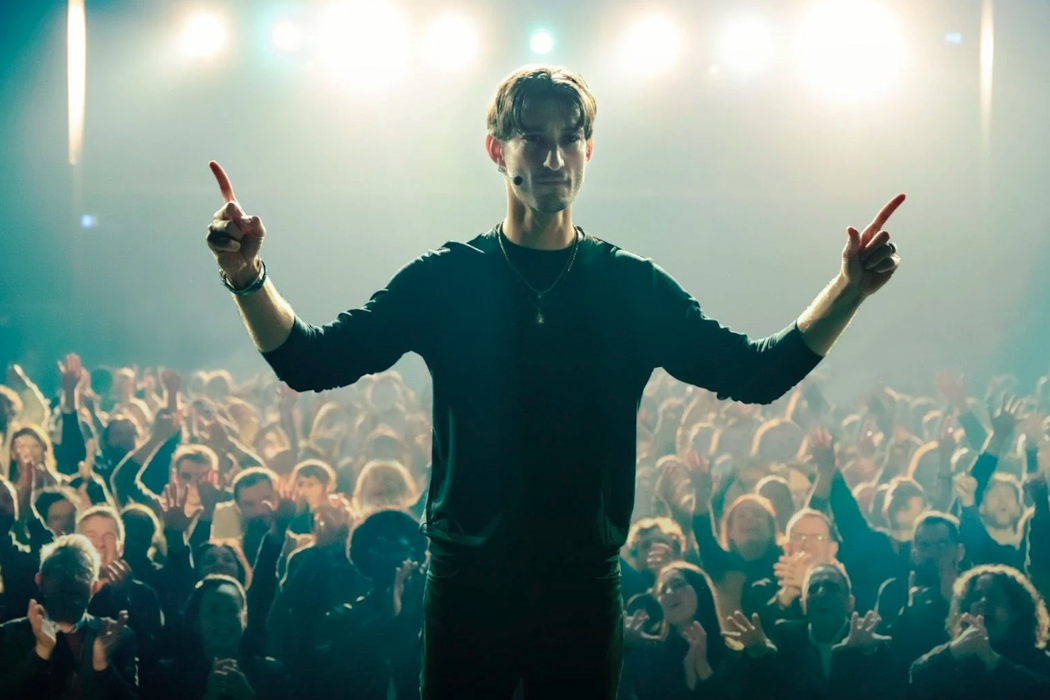
Le comportement du personnage interprété par Pierre Niney dans _Gourou_ reflète-t-il avec exactitude la réalité du coaching ? Ou est-il caricatural ? WY Productions/Ninety Films/Studiocanal/M6 Films/Photographe Jérôme Prébois

Dans Gourou, le nouveau film de Yann Gozlan, Pierre Niney interprète un coach en développement personnel qui pousse les limites trop loin. Si les excès du bien-être méritent d’être critiqués, le coaching, sous certaines conditions, reste un outil qui peut être utile… à condition de ne pas lui demander ce qu’il ne peut pas faire. La croyance en une toute-puissance (de soi, du coach ou du coaching), voilà le danger !


« Ce que tu veux, c’est ce que tu es ! » Dans le film Gourou, ce mantra répété jusqu’à l’épuisement par le public à l’initiative du « gourou » (incarné par Pierre Niney) n’est pas un simple slogan de motivation, c’est le symptôme d’une idéologie dans laquelle nous baignons dans nos sociétés occidentales (c’est un prérequis indispensable de se situer dans ce cadre culturel) : celle qui prétend que la volonté suffit à tout, que le bonheur est un choix individuel, que la souffrance relève d’un défaut personnel.

Le film en fait une ritournelle hypnotique, révélant la face sombre de cette croyance devenue hégémonique : car la réalité est qu’elle culpabilise, elle isole, elle invalide.

Le gourou : une figure moderne de l’emprise

Traditionnellement, le terme « gourou » désigne un maître spirituel (à l’origine dans la religion brahmanique). Mais les sciences sociales ont montré son évolution vers une figure plus ambiguë : celle d’un individu charismatique qui exerce une influence disproportionnée sur un groupe en promettant transformation, sens et salut personnel. Les travaux de Janet Jacobs et de Benjamin Zablocki sur les dynamiques sectaires montrent que le gourou moderne n’a plus besoin de religion : il lui suffit d’un récit séduisant et performatif pour réunir autour de lui une communauté soudée qui croit en sa promesse de réussite totale.

Dans le film Gourou, cette figure est incarnée par un maître du développement personnel qui exige une adhésion sans faille à son credo. Il ne guide pas : il prescrit. Il ne propose pas : il impose. Et surtout, il réduit toute souffrance à un manque de volonté. C’est là que le film touche juste : il montre comment l’emprise peut se construire non par la contrainte, mais par la promesse de bonheur.


À lire aussi :
Le coaching en entreprise : une mode, des paradoxes


Les exemples contemporains abondent. Dans les entreprises, on peut trouver des ateliers de « gestion émotionnelle » proposés à des salariés soumis à des cadences intenables. Sur LinkedIn, des cadres racontent leur burn out comme une « aventure inspirante ». Sur Instagram, des influenceurs affirment que « la maladie est un message de l’Univers ». Dans tous ces cas, la souffrance est requalifiée en défaut de mindset, et la porte de sortie est de rebondir, mais nous ne sommes pas des balles en caoutchouc !

C’est cette dénonciation de la « positivité toxique » qui est, à mon sens, l’angle le plus intéressant et interpellateur du film.

La positivité toxique : une norme sociale qui invalide

La positivité toxique n’est pas une invention de scénariste. La psychologue Barbara Held parle dès 2002 de « tyranny of the positive attitude », une tyrannie douce qui exige d’afficher un optimisme constant. Dès 2002, Whitney Goodman a popularisé le terme toxic positivity pour désigner cette injonction à nier les émotions négatives. Quant à Sara Ahmed, elle montre dans The Promise of Happiness (2010) que le bonheur est devenu une norme morale : ceux qui ne s’y conforment pas sont perçus comme des perturbateurs.

Cette idéologie produit un mécanisme central : l’invalidation émotionnelle. Les psychologues parlent d’emotional invalidation pour désigner cette dynamique où l’on explique à quelqu’un que ce qu’il ressent n’est « pas utile », « pas constructif », ou « pas la bonne manière de voir les choses ». Dans Gourou, cette invalidation est systémique : toute émotion « basse » est immédiatement interprétée comme un manque de volonté ou un défaut de caractère. La tristesse devient une erreur, la colère une faute morale, la fatigue un manque d’ambition.

Cette invalidation fragilise les individus, les coupe de leur propre expérience, et les rend dépendants d’un discours qui prétend les sauver tout en les dépossédant de leur réalité. Le film illustre bien une dérive, mais s’adosse aux polémiques autour du coaching qui font les choux gras des médias.

Ne pas jeter le coaching… avec l’eau du bain !

Le coaching occupe aujourd’hui une place ambivalente. Le lien entre positivité toxique et coaching est souvent fait. Pour certains chercheurs (on peut citer les travaux de Roland Gori ou ceux d’Eva Illouz et Edgar Cabanas dans leur livre Happycratie, 2018) le coaching contemporain, loin de se limiter à un accompagnement professionnel, s’est transformé en industrie du développement personnel. Pour ces critiques, le coaching promeut une vision individualiste du bonheur : chacun serait responsable de son état émotionnel, indépendamment des conditions sociales, économiques ou politiques.

Le coaching reposerait alors sur une logique d’auto-optimisation permanente : devenir la meilleure version de soi-même, corriger ses « blocages », éliminer ses « pensées limitantes ». Cette rhétorique, en apparence émancipatrice, produit un effet pervers : elle transforme les difficultés structurelles en problèmes psychologiques individuels.

L’individu responsable de tous les maux ? Vraiment ?

Dans Gourou, le maître-coach incarne cette dérive. Il ne questionne jamais les causes des souffrances ; il accuse les individus de ne pas « vouloir assez ». Il ne libère pas ; il enferme dans une spirale où chaque faille devient une preuve d’insuffisance personnelle.

Mais réduire toute la profession à ces dérives serait injuste. Le coaching, lorsqu’il est exercé avec éthique, offre un espace d’écoute, de clarification et de progression réelle. De nombreux travaux, notamment en psychologie du travail, montrent qu’un accompagnement bien mené peut renforcer l’autonomie, soutenir la prise de décision et aider à traverser des transitions complexes. Le problème n’est donc pas le coaching en soi, mais son instrumentalisation par une idéologie du « tout dépend de toi ». Gourou pointe ces excès, et enfonce la porte déjà bien entrouverte de la valeur d’un métier qui, pratiqué avec rigueur, peut réellement aider.

Ce que « Gourou » dit de notre société

Le film révèle une violence invisible, enveloppée de bienveillance, mais profondément normative. Une violence qui dit : « Tu n’as pas le droit d’être triste. » Une violence qui exige que chacun soit son propre coach, son propre thérapeute, mais aussi son propre bourreau en s’imposant des défis sans avoir forcément les ressources pour les relever. Une violence qui simplifie le monde pour éviter de regarder en face ce qui ne va pas.

Il est temps de rappeler une évidence : la tristesse n’est pas un échec, la colère n’est pas un défaut, le doute n’est pas une faiblesse. Ce sont des émotions humaines, légitimes, nécessaires. Gourou invite à refuser la dictature du sourire et à retrouver le droit fondamental d’être humain, donc… imparfait.

The Conversation

Isabelle Barth ne travaille pas, ne conseille pas, ne possède pas de parts, ne reçoit pas de fonds d’une organisation qui pourrait tirer profit de cet article, et n’a déclaré aucune autre affiliation que son organisme de recherche.

ref. « Ce que tu veux, c’est ce que tu es » : « Gourou » ou la violence invisible de la positivité toxique – https://theconversation.com/ce-que-tu-veux-cest-ce-que-tu-es-gourou-ou-la-violence-invisible-de-la-positivite-toxique-274660

If Pope Leo joined Trump’s Board of Peace, it would compromise centuries of ‘positive neutrality’

Source: The Conversation – Global Perspectives – By Darius von Guttner Sporzynski, Professor of History, Australian Catholic University

Pope Leo XIV is among the world leaders invited to join Donald Trump’s “Board of Peace”. Initially aimed at ending the conflict in Gaza, Trump says it will also resolve conflicts globally. The Vatican’s secretary of state has said the pope needs time to consider whether to take part.

Leo, the first pope from the United States, forcefully decried conditions in Gaza in a Christmas Eve address. He has told journalists the only solution to the conflict is a Palestinian state. But the Vatican has long described its foreign policy as “positive neutrality”.

Formal membership of state-sponsored commissions has usually been avoided by the Holy See, the central government of the Catholic Church – which has diplomatic relations with 184 countries, plus the European Union and the Sovereign Military Order of Malta, as well as a permanent observer status at the United Nations.

Across nearly two millennia, popes have been deeply involved in peace efforts. They have mediated disputes, facilitated negotiations, opened humanitarian corridors and applied moral pressure to restrain violence. Yet they have almost always done so from the sidelines: carefully positioned close enough to influence outcomes, but far enough away to preserve credibility with all parties.

Papal peacemaking has worked best when the pope could speak to everyone, even those who rejected the political order of the day. Neutrality is not a rhetorical posture, but a practical asset: hard won and easily lost.

Can the papacy maintain independent authority in an increasingly polarised world?

Influence without command

The Holy See has no army, no coercive economic power and no capacity to enforce compliance. What it has possessed, in varying degrees across time, is moral authority, diplomatic reach and access to networks that cross borders, ideologies and regimes.

In late antiquity, popes intervened at moments of acute danger, relying on prestige and symbolic authority rather than force. Pope Leo I’s encounter with Attila the Hun in 452, near Mantua in northern Italy, illustrates this approach. The pope’s message of peace persuaded the ruler of the Huns not to destroy Rome.

The episode captured a durable pattern. Papal influence worked through persuasion, reputation and the claim to speak in the name of a higher moral order.

Raphael’s Meeting of Leo the Great and Attila, completed under Leo X (1513-1521)
Mvsei Vaticani

Between the 10th and 14th centuries, the Peace of God and Truce of God movements sought to limit who could be attacked, when fighting was permitted and how warfare should be conducted. These were not state treaties, but moral frameworks, designed to protect the vulnerable. The church established the right to asylum by proclaiming immunity from violence for those who could not defend themselves.

As medieval diplomacy matured, popes increasingly acted as mediators between rulers. Though the pope was never a neutral observer in a theological sense, he could function as a neutral broker in political terms: precisely because he was not a competing territorial power.

Mediation lowered the cost of compromise by allowing rulers to frame concessions as obedience to moral authority rather than weakness before an enemy.

Neutrality as modern strength

The early modern period expanded the ambition and limits of papal peacemaking. In 1493, Pope Alexander VI drew up boundaries for Spain and Portugal’s colonisation of non-Christian lands. Other European powers increasingly rejected the pope’s authority to allocate sovereignty beyond Christendom.

In 1518, Pope Leo X promoted a general peace among central European Christian rulers, resulting in the Treaty of London. But a century later, the region’s Thirty Years’ War was one of the longest and most destructive conflicts in European history. After it ended, European diplomacy became more overtly secular. While the pope could create peace architecture, he could not sustain it once political incentives shifted.

For 1,114 years, popes ruled as absolute monarchs over the Italian territories known as the Papal States, strategically located in central Italy. With their loss, completed in 1870, the pope gained a different kind of leverage.

In the late 19th century, the Holy See aligned itself with emerging legal approaches to peace, including arbitration and international adjudication. It endorsed mechanisms that restrained unilateral force. Neutrality was no longer a defensive posture, but an active diplomatic resource.

Moral authority in total war

The first world war tested the limits of that resource. Pope Benedict XV confronted industrialised mass conflict, in which moral appeals struggled to gain traction. His peace proposal of August 1 1917 outlined principles that would later become familiar: disarmament, arbitration, freedom of the seas and territorial restitution. Governments acknowledged the initiative, but largely rejected its premises.

Pope Benedict XV tried to intervene in World War II.
War of the Nations/Wikimedia Commons

While unsuccessful, Benedict XV’s intervention reinforced a papal vision of peace grounded in law and justice, rather than domination. It entrenched the Holy See’s role as a humanitarian actor, supporting prisoners of war, refugees and civilian relief – even when diplomatic leverage was minimal.

During the second world war, Pope Pius XII adopted a similar posture. His 1939 radio appeal warned war would destroy everything peace could preserve. Throughout the conflict, the Holy See relied on discreet diplomacy and humanitarian networks. Its capacity to mediate was constrained, but its credibility as a channel of communication endured.

In the early nuclear age, successive popes increasingly addressed the ethical implications of weapons capable of annihilation. The emphasis shifted toward global norms, restraint and the need for institutions capable of preventing catastrophe.

Speaking to the world

That shift became explicit in the United Nations era. When Pope Paul VI addressed the UN General Assembly on October 4 1965, his message was not tied to any state interest. “Never again war,” he urged, framing peace as a universal moral obligation rather than a diplomatic bargain.

This has defined much modern papal diplomacy. The Holy See acts through agenda-setting, moral language and support for multilateral norms. It rarely produces treaties directly, but shapes the terms in which peace and war are debated.

The Pope with a cardinal, both in white and red frocks.
‘Never again war,’ Pope Paul VI (pictured left) urged the UN General Assembly, in 1965.
Picryl

At times, however, the papacy has returned to hands-on mediation. The Beagle Channel dispute between Argentina and Chile in 1978 brought the two states close to war. Both accepted papal mediation, culminating in the 1984 Treaty of Peace and Friendship. Its conditions were consent from both parties, trust in neutrality and a willingness to frame compromise as honourable rather than humiliating.

More recently, Pope Francis was involved in the restoration of diplomatic relations between the US and Cuba, announced on December 17 2014. Symbolic gestures, such as Francis kneeling before South Sudan’s rival leaders in April 2019, reinforced his role as a moral catalyst rather than a governing authority.

Why this invitation is different

Against this long history, Trump’s “Board of Peace” stands out. It is not an ad hoc mediation effort, nor a quiet facilitation role requested by all parties. It is a formally constituted, state-led body, with clear political ownership and governance ambitions. Membership would signal alignment with a specific national framework.

Accepting a seat on such a board might offer influence over humanitarian access, reconstruction priorities and the protection of civilians. It could give the Holy See a voice inside a process that will shape lives on the ground.

But the risks are equally real.

Formal participation could narrow the pope’s room to manoeuvre, making it harder to engage actors who distrust the board’s sponsor. It could blur the line between moral authority and political endorsement.

Joining a state-led board could increase short-term influence, but at the possible cost of long-term credibility. And once neutrality is perceived to be compromised, it is difficult to restore.

The Conversation

Darius von Guttner Sporzynski does not work for, consult, own shares in or receive funding from any company or organisation that would benefit from this article, and has disclosed no relevant affiliations beyond their academic appointment.

ref. If Pope Leo joined Trump’s Board of Peace, it would compromise centuries of ‘positive neutrality’ – https://theconversation.com/if-pope-leo-joined-trumps-board-of-peace-it-would-compromise-centuries-of-positive-neutrality-274283

Rafiki unbanned on appeal: why it’s an important moment for African film

Source: The Conversation – Global Perspectives – By Gibson Ncube, Senior Lecturer, Stellenbosch University

The film Rafiki is a charming love story that plays out in urban Kenya. It follows two teenage girls whose close friendship slowly turns into first love. Directed by rising filmmaker Wanuri Kahiu, it was celebrated as groundbreaking by critics and at festivals when it was released in 2018. But back home in Kenya, where homosexuality is criminal, the film was banned.

On 23 January 2026, after a lengthy legal campaign by the filmmaker, the Kenyan Court of Appeals unbanned Rafiki for public screening in that country.


In 2018, the state-funded Kenya Film Classification Board had justified the ban because the film’s happy ending was perceived to be “promoting homosexuality”. The ban quickly became a symbol of the problems filmmakers face whenever they challenge traditional views on sex, gender and morality.

The unbanning marks more than the rehabilitation of a single film. It signals a subtle but significant shift in how African film might negotiate censorship in the years to come.

A young African woman with dreadlocks smiles at the camera, wearing a flowing green dress with a white pattern on it.
Wanuri Kahiu in 2025.
Bryan Berlin/ Wikimedia Commons, CC BY-NC-SA

My research as a scholar of African queer cinemas has focused on how such moments reveal the fragile yet transformative possibilities through which African film cultures negotiate visibility and legitimacy. And the right to imagine queer futures and freedom of speech on their own terms.

At first glance, the unbanning might appear modest. Kenya has not decriminalised same-sex relations, and legal restrictions on LGBTIQ+ lives remain firmly in place. Even so, Rafiki’s return is very important.

It marks the first time a Kenyan film previously prohibited for queer content has been permitted full public circulation. Other recently banned queer-themed films like I am Samuel remain banned.

Although largely symbolic, the gesture disrupts long-standing assumptions about what African films can show, who they can centre, and which lives can be made visible.

Censorship and representation

African film industries have historically operated under difficult systems of moral, religious, and political regulation. From colonial censorship boards to postcolonial classification authorities, film has been treated as requiring constant surveillance.

Sexuality, especially queer sexuality, has been one of the most heavily policed domains. Films tackling same-sex desire have often been banned, restricted to festival circuits, or forced into underground circulation. In South Africa, the film Inxeba/The Wound was effectively banned from mainstream cinemas. In Nigeria, the first independent queer film Ìfé was prohibited from cinemas.


Read more:
How young filmmakers are protecting artistic freedom in Kenya


Rafiki’s initial banning followed this pattern. Despite being selected for screening at the important Cannes Film Festival, it was deemed unsuitable for Kenyan audiences. An internationally celebrated Kenyan film could be screened overseas but not in Nairobi.

So the unbanning disrupts this asymmetry. It shows that national cinemas cannot indefinitely insulate themselves from transnational circuits. Overseas, African queer films increasingly gain visibility, prestige and market value.

Kenyan law appears, in this sense, to be more flexible and changing in response to international attention, cultural pressure and public image.

African audiences

One of the most significant implications of the unbanning concerns the question of audiences. Bans don’t just suppress content; they also actively shape who is imagined as the viewers. For decades, queer African films have been implicitly addressed to foreign audiences, festivals and academic readers, rather than to local publics.

Allowing Rafiki to screen at home challenges this idea. It opens a space, even if it’s a fragile one, for Kenyan audiences to encounter queer lives. Not as abstract political controversies but as intimate, everyday narratives. Rafiki tells a deliberately modest story, grounded in the innocence of first love and the textures of everyday life in the city.

This matters because being represented is not only about being visible. It’s also about producing audiences. More than depicting queer lives, films like Rafiki shape new viewing communities and new forms of recognition.

In this sense, the unbanning contributes to a slow reconfiguration of African film publics. It suggests that African audiences are not uniformly conservative or inherently hostile to queer narratives. Instead, they are plural and capable of engaging with complex stories about identity, love and desire.

These publics have been changing, thanks in part to streaming platforms and digital technologies. Even where films are banned from cinemas, viewers can still watch, share and debate them online. This shift is important as cinema spaces themselves are declining across many African countries.

African filmmakers

For African filmmakers, the unbanning carries both practical and symbolic importance. Practically, it signals the possibility that national classification regimes may become more negotiable and more responsive to legal challenges and public pressure. The 2018 High Court ruling that temporarily lifted the ban to allow limited screenings had already established an important precedent. The current unbanning consolidates that into institutional practice. It has set a legal precedent.


Read more:
Banning African films like Rafiki and Inxeba doesn’t diminish their influence


Symbolically, the decision offers a measure of protection to filmmakers who dare to take aesthetic and political risks. Rafiki was shot cautiously in order to evade state surveillance.

It teaches us that queer storytelling is no longer automatically incompatible with national cinema. This may encourage a new generation of African directors, screenwriters and producers to pursue narratives once seen as too dangerous, too marginal, or too commercially unviable.

But caution should not be thrown to the wind. The unbanning does not signal the end of censorship, nor does it guarantee a hospitable environment for filmmakers. Classification boards still retain broad powers, and political backlash remains likely.

A fragile opening …

The unbanning of Rafiki should not be overstated. Legal prohibitions against same-sex relations remain in force. Violence against queer communities persists, and cultural backlash is inevitable. Yet openings in cultural policy often precede legal and social change, not the other way around.

Cinema, precisely because it works through emotions and the visual, can create the conditions for new ethical and political sensibilities to emerge.


Read more:
Queer film in Africa is rising – even in countries with the harshest anti-LGBTIQ+ laws


Rafiki’s return ultimately represents a possibility that African films can speak more openly about intimacy, vulnerability and difference. A possibility that African audiences can encounter these stories on their own terms.

The Conversation

Gibson Ncube receives funding from the National Research Foundation (South Africa).

ref. Rafiki unbanned on appeal: why it’s an important moment for African film – https://theconversation.com/rafiki-unbanned-on-appeal-why-its-an-important-moment-for-african-film-274542

Fossil hunters find a new dinosaur track site on South Africa’s coast – the youngest so far

Source: The Conversation – Africa (2) – By Charles Helm, Research Associate, African Centre for Coastal Palaeoscience, Nelson Mandela University

Southern Africa is world renowned for its fossil record of creatures that lived in the very distant past, including dinosaurs. But, about 182 million years ago, a huge eruption of lava covered much of the landscape (the inland Karoo Basin) where most of the dinosaurs roamed. After that, the dinosaur fossil record in the region goes abruptly quiet for the Jurassic Period (which lasted from 201 million to 145 million years ago).

Two exciting recent discoveries confirm, however, that there is more to find of dinosaurs that lived in southern Africa a long time after those lava flows.

First, dinosaur tracks aged around 140 million years were reported in 2025 on a remote stretch of the coast in South Africa’s Western Cape province. These were the first to be found in the region from that geological time period (the Cretaceous, 145 million to 66 million years ago).

Now, we’ve found more.

Our work as a team of ichnologists (studying fossil tracks and traces) often takes us to the Knysna area of the Western Cape coast, where we investigate tracks in coastal aeolianites (cemented sand dunes) in the age range of 50,000 to 400,000 years old.

During one of these visits, early in 2025, we decided to visit a small patch of rock that formed during the early Cretaceous Period. It’s the only place in the vicinity where rock of this age is exposed, and much of it is underwater at high tide. We thought we might be lucky enough to find a theropod (dinosaur) tooth like the one discovered in those rocks by a 13-year-old boy in 2017.

We were pleasantly surprised when instead Linda Helm, a member of our party, told us in a state of excitement that she had found dinosaur tracks. Further examination of the deposits revealed more than two dozen probable tracks.

This so-called Brenton Formation exposure is tiny, no more than 40 metres in length and five metres in width, with cliffs rising from the shore to a maximum of five metres. To find dozens of tracks in this small area suggests a considerable dinosaur presence in the region during the Cretaceous.

In our study we estimate that these tracks are 132 million years old, making them the youngest known dinosaur tracks in southern Africa (50 million years younger than the youngest tracks reported from the Karoo Basin). They form the second record of dinosaur tracks from the South African Cretaceous, and the second record from the Western Cape province. Some of them occur on rock surfaces, while others occur in the cliffs in profile.

Dinosaur fossil treasures

Southern Africa has a wealth of vertebrate tracks and traces from the Mesozoic Era (the “Age of Dinosaurs”, from 252 million to 66 million years ago, a time span that includes the Jurassic) in the Karoo Basin – a vast inland basin filled with thick piles of sedimentary deposits.


Read more:
Why South Africa’s Karoo is a palaeontological wonderland


Dinosaur tracks from the Triassic and Jurassic periods are abundant in Lesotho and surrounding areas in South Africa’s Free State and Eastern Cape provinces.

But vast quantities of lava, now referred to as the Drakensberg Group, overlaid these track-bearing deposits as a result of large-scale eruptions. A few dinosaurs appear to have briefly survived the initial effects of the lava flows, and were probably among the last vertebrates to inhabit the Karoo Basin.

Then, as the supercontinent of Gondwana fragmented at the end of the Jurassic Period and in the early Cretaceous Period, limited Cretaceous terrestrial deposits formed in rift basins in what are now the Western Cape and Eastern Cape provinces of South Africa.

Dinosaur body fossils have been reported from those deposits, mostly from the Eastern Cape. They include the first dinosaur to be identified in the southern hemisphere, now identified as a stegosaur, as well as sauropods, a coelurosaurian and iguanodontid hatchlings and juveniles.

The only examples of dinosaur skeletal material from the Western Cape are a few isolated sauropod teeth, disarticulated bones of a probable sauropod, and two cases from the Knysna area: the theropod tooth mentioned above and a portion of a tibia.

But now we’re after their tracks.

Dinosaurs of Knysna

The tracks we found at Knysna are in the modern intertidal zone, where the high tide covers most of them twice a day.

It would be difficult to imagine a more different scene, 132 million years ago, than the spectacular coastline, magnificent estuary, and lots of development by humans that we encounter today. Back in the early Cretaceous, many dinosaurs would have been visible in the area, perhaps inhabiting tidal channels or point bars (river beaches). The vegetation would also have been very different from that of today.

The Brenton Formation tracks were made by theropods, possibly ornithopods (both these kinds of dinosaur were bipedal, walking on two legs), and possibly sauropods (huge dinosaurs with very long necks and very long tails that were quadrupedal, walking on four legs). Theropods were meat eaters, while ornithopods and sauropods were plant eaters.

It can be challenging at times to distinguish theropod tracks from ornithopod tracks. Sauropod tracks are larger and don’t always have clear digit impressions, also sometimes making them hard to identify with confidence.


Read more:
Identifying dinosaurs from their footprints is difficult – but AI can help


In most cases, we have chosen not to “over-interpret” which types of dinosaurs made which tracks, as they just aren’t clear enough. Our research paper simply intends to document that dinosaur tracks of this age are relatively plentiful in the Brenton Formation.

The fact that early Cretaceous dinosaur tracks have now been identified in both the Robberg Formation and the Brenton Formation suggests that more may be found if a search is conducted in appropriate places. There are a number of other exposures of non-marine Cretaceous rocks in the Western Cape and Eastern Cape. Systematic exploration of these deposits is now indicated, in the hope that in addition to finding more dinosaur skeletal material, more dinosaur tracks (and potentially those of other vertebrates) will be identified.

Mark G. Dixon and Fred van Berkel of the African Centre for Coastal Palaeoscience, Nelson Mandela University, contributed to this research.

The Conversation

The authors do not work for, consult, own shares in or receive funding from any company or organisation that would benefit from this article, and have disclosed no relevant affiliations beyond their academic appointment.

ref. Fossil hunters find a new dinosaur track site on South Africa’s coast – the youngest so far – https://theconversation.com/fossil-hunters-find-a-new-dinosaur-track-site-on-south-africas-coast-the-youngest-so-far-274337

Some people gain confidence from thinking things through, others lose it – new research

Source: The Conversation – UK – By Sucharit Katyal, Postdoctoral Research Fellow in the Department of Psychology, University of Copenhagen

Our study shows there is no one-size-fits-all rule like “stop overthinking it” or “think more carefully”, when it comes to decision making.
pexels/karola g, CC BY

Have you ever made a decision, only to find yourself second-guessing it moments later? Maybe you spoke up in a meeting and immediately wondered if you said the wrong thing, or left a social gathering feeling confident, only to replay your actions in your head and feel uncertain. For many of us, reflecting on our choices doesn’t always reassure — sometimes it fuels self-doubt.

As a cognitive scientist, I am fascinated by this gap between what people objectively know and how confident they feel. Indeed, your level of confidence can affect so many things – whether you speak up or act on your ideas, how much you study for an exam or stick with your decisions. And yet, the way confidence develops — or erodes — can vary dramatically between people.

Two factors in particular can play a big role: anxiety and gender. People with higher levels of anxiety often report feeling less confident about their decisions than non-anxious people, even when their choices are just as accurate. Anxiety can make thoughts spiral: “What if I made the wrong choice?” “Did I miss something?” And these mental loops can erode confidence over time.

Women, on the other hand, tend to report lower confidence levels than men across a variety of tasks, despite performing equally well.

This is thought to arise from social and cultural factors. Feedback, expectations and stereotypes can subtly influence self-perception, making women more likely to underestimate their abilities.

Confidence over time

With these differences in mind, I began to wonder: if confidence is shaped so differently by anxiety and gender, what happens when people spend extra time thinking about a decision? Does reflection help everyone, or might it push some people further into self-doubt?

Man sits in chair in a lecture with a pencil to his lip, deep in thought.
A moment of confidence can quickly turn into second-guessing when we replay our decisions.
pexels mikhail nilov, CC BY

To answer this, in our new study, my colleagues and I looked at how participants performed different memory and visual discrimination tasks, while rating their confidence after each answer. By tracking how these ratings changed with elapsed time, we could see how confidence changes as people reflect on their decisions — and how these changes differ depending on gender and the severity of anxiety symptoms.

What we found was that participants with higher anxiety were not just underconfident — but that spending more time thinking made them even less sure of themselves. This happened even when their answers were correct.

For women, however, extra reflection had the opposite effect. Carefully reviewing the task allowed them to gradually feel more confident. Over time, this reduced the usual confidence gap between women and men, until both genders were equally certain in their decisions.

In short, the same behaviour — reflecting on a decision — was found to have the opposite effect depending on what factor (gender or anxiety) made a person feel underconfident in the first place.

Why this matters

So why does thinking longer produce such different outcomes? For anxious people, it seems that longer reflection time can become ruminative, amplifying worries and imagined errors. While for women, reflection can be constructive, allowing careful consideration of evidence and performance.

This distinction highlights a simple but powerful point: confidence isn’t about how long you think — it’s about how you think. In other words, deliberation that carefully evaluates evidence can boost confidence, while rumination can erode it.

So what does this mean for future decision-making?

Well, if you tend to be anxious, more thinking isn’t always better. Limit rumination, focus on concrete evidence and set clear decision rules to prevent your confidence from spiralling downward.

And if you you’re a woman and you tend to underestimate your abilities, taking some time to review the evidence and outcomes may well help your confidence better reflect reality.

And what, you might ask, if I’m both a woman and have anxiety — how will I respond? Well, that would depend on which of your biases are more dominant, anxiety-related or gender related.

And if the two are similar, then your underconfidence might stay the same over time: not getting better, but also not worsening. For you, it might be worth trying out both ways of decision-making in a low-stakes situation to see which serves you better.

The bottom line, though, is that there’s no one-size-fits-all rule like “stop overthinking it” or “think more carefully” when it comes to decision-making.

Instead, you should focus on being aware of how your mind’s emotional and social habits shape your levels of confidence, so you can make better choices and trust yourself when it’s justified to do so. This can help turn reflection from a source of doubt into a tool for self-assurance.


This article was commissioned as part of a partnership between
Videnskab.dk and The Conversation.

The Conversation

Sucharit Katyal received a fellowship from Koa Health.

ref. Some people gain confidence from thinking things through, others lose it – new research – https://theconversation.com/some-people-gain-confidence-from-thinking-things-through-others-lose-it-new-research-273625

Trump’s clash with the gun lobby

Source: The Conversation – UK – By Jonathan Este, Senior International Affairs Editor, Associate Editor, The Conversation

This article was first published in The Conversation UK’s World Affairs Briefing email. Sign up to receive weekly analysis of the latest developments in international relations, direct to your inbox.


The US government’s reaction to the killing of Alex Pretti last weekend – and of Renée Good a fortnight earlier – was a grim reminder of George Orwell’s dystopian masterpiece Nineteen Eighty-Four, in which: “The Party told you to reject the evidence of your eyes and ears. It was their final, most essential command.”

In similar fashion, senior members of the Trump administration asked the American people to reject freely available video evidence of the two killings. They claimed that Pretti, a nurse at a local veterans’ hospital, was a “domestic terrorist”, that he was “brandishing a handgun”, and was “an assassin” who “tried to murder federal agents”. Good, a mother of three, supposedly “viciously ran over the ICE officer” who then put three bullets in her head.

Given that video evidence flatly contradicts those statements, this could yet prove a serious overreach on the part of Donald Trump and his lieutenants. Already border patrol commander Greg Bovino, who was in charge of ICE operations in Minneapolis, has been removed. And there’s speculation that Kristi Noem, US secretary of homeland security, is under serious pressure.

How BBC Verify analysed available video footage of Alex Pretti’s death.

One of the more objectionable claims from some of the people looking to blame the victims, writes Andrew Gawthorpe, was the claim made by several Trump officials – and the president himself – that by carrying a gun, Pretti had been asking for trouble.

As you might expect, this drew a sharp reaction from both the National Rifle Association and the Gun Owners of America. These two organisations, who are among Trump’s staunchest backers, reminded the administration of the second amendment right to bear arms, even to a protest – something which also brings in the first amendment right to free expression.

Gawthorpe, an expert in US history and politics at Leiden University, points to the dramatic irony at play here. The express intention of the second amendment was to allow American citizens to arm themselves against a tyrannical government. He concludes: “While some gun rights advocates may have been willing to keep quiet while federal agents were trampling on the rights of migrants and brown-skinned citizens, the murder of Pretti is a bridge too far.”


Read more:
Shooting of Alex Pretti in Minneapolis has put America’s gun lobby at odds with the White House


Meanwhile Mark Shanahan, a professor of political engagement at the University of Surrey, addresses some important points raised by Pretti’s killing. What are federal agents doing on the streets of Minneapolis in the first place, what will the episode mean for Trump’s popularity, and what can be done to prevent further violence?

When it comes to the last question, he argues that the removal of one of the key ICE personnel from the city is a start. Proper congressional scrutiny of ICE’s funding, which is set to sharply increase again this year, would also appear appropriate.


Read more:
Why the shooting of Alex Pretti in Minneapolis is so significant – expert Q&A


George Lewis, a professor of American history at the University of Leicester, reminds us that Americans have fought back against authoritarianism before. From the 1930s to the 1970s, the House Un-American Activities Committee (Huac) terrorised liberal Americans in its bid to root out communism and (vaguely defined) “un-American” activities such as campaigning for civil rights.

However, a concerted campaign by liberal lawmakers including Jimmy Roosevelt inside Congress, as well as legions of well-organised activists, managed to consign Huac to history’s dustbin in 1975.


Read more:
Americans have fought back against authoritarianism at home before


Ukraine: diplomatic stalemate

We’re still waiting to hear whether Vladimir Putin plans to sign up to Donald Trump’s “Board of Peace”. But the signs aren’t all that good. The Ukrainian president, Volodymyr Zelensky, was making some positive noises earlier this week about the prospect of securing security guarantees from Washington. This followed the latest round of talks in Abu Dhabi – at which, for the first time, representatives of Russia, Ukraine and the US came together to talk about ways to end the war.

But almost as soon as Zelensky had revealed his optimism that a deal might be possible, American sources indicated that in return for US security guarantees, Ukraine would have to accept the loss of the parts of the Donbas region it still occupies. This is a non-starter, as Ukraine considers the territory strategically vital.

As Stefan Wolff points out, we’ve been here before. Zelensky can’t accept this condition – and even if he does, Putin won’t accept US guarantees. Trump, meanwhile, will more than likely blame the Ukrainian president for the lack of a deal.


Read more:
Ukraine: Zelensky upbeat on US deal – but Davos showed the US president to be an unreliable ally


After 12 months of Trump’s second term, the unreliability of the US as an ally for Europe and the rest of Nato is becoming ever more evident. The US president’s Board of Peace appears designed to undermine the United Nations, while his negative rhetoric about US military allies, including the UK, appeared calculated to cause maximum offence (even if Trump later walked back some of his more controversial statements).

David Dunn, a specialist in the US and international security at the University of Birmingham, believes that while Trump may see the world in terms of great power competition, the recent World Economic Forum in Davos, Switzerland revealed a growing determination on the part of “medium-sized powers” to face up to this new reality – and begin building a new system that does not rely on Washington to make the running.


Read more:
US foreign policy has taken a radical turn in Trump’s first year back in office


War in Iran?

After calling on the people of Iran to keep protesting a fortnight ago, promising that “help is on its way”, the US president has ordered a “beautiful armada” into the Gulf, from where it can put pressure on Iran. In fact, the deployment of the aircraft carrier USS Abraham Lincoln and its strike group appears designed to get the Islamic Republic to dismantle its nuclear programme.

But the likelihood of this developing into full-scale conflict between the US and Iran is very slim, writes Bamo Nouri. He thinks it doubtful that US action can easily dislodge the regime. Despite the widespread recent protests, the Islamic Republic remains firmly embedded and has spent decades preparing for a possible war with the US.

Nouri, a journalist and international relations expert at City St George’s, University of London, believes that any conflict between the US and Iran would almost certainly destabilise the entire Middle East – and would be highly likely to spread. It’s the last thing that America’s allies in the region want, he concludes.


Read more:
Why it would be a big mistake for the US to go to war with Iran


Sign up to receive our weekly World Affairs Briefing newsletter from The Conversation UK. Every Thursday we’ll bring you expert analysis of the big stories in international relations.


The Conversation

ref. Trump’s clash with the gun lobby – https://theconversation.com/trumps-clash-with-the-gun-lobby-274675

US military action in Iran risks igniting a regional and global nuclear cascade

Source: The Conversation – Global Perspectives – By Farah N. Jan, Senior Lecturer in International Relations, University of Pennsylvania

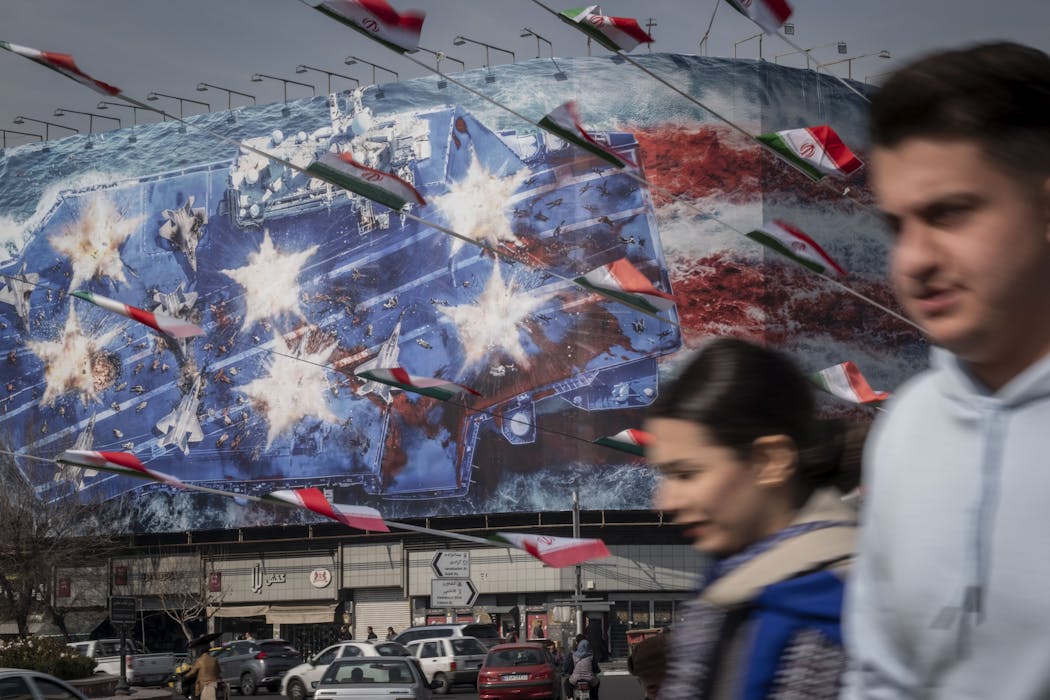
Iranian youths walk past a building covered with a giant billboard depicting an image of the destroyed USS Abraham Lincoln. Morteza Nikoubazl/NurPhoto via Getty Images

The United States is seemingly moving toward a potential strike on Iran.

On Jan. 28, 2026, President Donald Trump sharply intensified his threats to the Islamic Republic, suggesting that if Tehran did not agree to a set of demands, he could mount an attack “with speed and violence.” To underline the threat, the Pentagon moved aircraft carrier USS Abraham Lincoln – along with destroyers, bombers and fighter jets – to positions within striking distance of the country.

Foremost among the various demands the U.S. administration has put before Iran’s leader is a permanent end to the country’s uranium enrichment program. It has also called for limits to the development of ballistic missiles and a cutting off of Tehran’s support for proxy groups in the Middle East, including Hamas, Hezbollah and the Houthis.

Trump apparently sees in this moment an opportunity to squeeze an Iran weakened by a poor economy and massive protests that swept through the country in early January.

But as a scholar of Middle Eastern security politics and proliferation, I have concerns. Any U.S. military action now could have widespread unintended consequences later. And that includes the potential for accelerated global nuclear proliferation – regardless of whether the Iranian government is able to survive its current moment of crisis.

Iran’s threshold lesson

The fall of the Islamic Republic is far from certain, even if the U.S. uses military force. Iran is not a fragile state susceptible to quick collapse. With a population of 93 million and substantial state capacity, it has a layered coercive apparatus and security institutions built to survive crises. The Islamic Revolutionary Guard Corps, the regime’s military wing, is commonly estimated in the low-to-high hundreds of thousands, and it commands or can mobilize auxiliary forces.

A group of people are seen by a fire.
Protesters in Iran on Jan. 8, 2026.
Anonymous/Getty Images

After 47 years of rule, the Islamic Republic’s institutions are deeply embedded in Iranian society. Moreover, any change in leadership would not likely produce a clean slate. Secretary of State Marco Rubio acknowledged as much, telling lawmakers on Jan. 28 that there was “no simple answer” to what would happen if the government fell. “No one knows who would take over,” he said. The exiled opposition is fragmented, disconnected from domestic realities and lacks the organizational capacity to govern such a large and divided country.

And in this uncertainty lies the danger. Iran is a “threshold state” — a country with the technical capacity to produce nuclear weapons but that has not crossed the final line of production.

A destabilized threshold state poses three risks: loss of centralized command over nuclear material and scientists, incentives for factions to monetize or export expertise, and acceleration logic — actors racing to secure deterrence before collapse.

History offers warnings. The collapse of the Soviet Union in the early 1990s produced near-misses and concern over the whereabouts of missing nuclear material. Meanwhile, the activities of the A.Q. Khan network, centered around the so-called father of Pakistan’s atomic program, proved that expertise travels – in Khan’s case to North Korea, Libya and Iran.

What strikes teach

Whether or not regime change might follow, any U.S. military action carries profound implications for global proliferation.

Iran’s status as a threshold state has been a choice of strategic restraint. But when, in June 2025, Israel and the U.S struck Iran’s nuclear facilities, that attack – and the latest Trump threats – sent a clear message that threshold status provides no reliable security.

The message to other nations with nuclear aspirations is stark and builds on a number of hard nonproliferation lessons over the past three decades. Libya abandoned its nuclear program in 2003 in exchange for normalized relations with the West. Yet just eight years later, NATO airstrikes in support of Libyan rebels led to the capture and killing of longtime strongman Moammar Gaddafi.

Ukraine relinquished its nuclear arsenal in 1994 for security assurances from Russia, the U.S. and Britain. Yet 20 years later, in 2014, Russia annexed Crimea, before launching an outright invasion in 2022.

Now we can add Iran to the list: The country exercised restraint at the threshold level, and yet it was attacked by U.S. bombs in 2025 and now faces a potential follow-up strike.

The lesson is not lost on Mehdi Mohammadi, a senior Iranian adviser. Speaking on state TV on Jan. 27, he said Washington’s demands “translate into disarming yourself so we could strike you when we want.”

If abandoning a nuclear program leads to regime change, relinquishing weapons results in invasion, and remaining at the threshold invites military strikes, the logic goes, then security is only truly achieved through the possession of nuclear weapons – and not by negotiating them away or halting development before completion.

If Iranian leadership survives any U.S. attack, they will, I believe, almost certainly double down on Iran’s weapons program.

IAEA credibility

U.S. military threats or strikes in the pursuit of destroying a nation’s nuclear program also undermine the international architecture designed to prevent proliferation.

The International Atomic Energy Agency was, until the earlier Israel and U.S. strikes, functioning as designed – detecting, flagging and verifying. Its monitoring of Iran was proof that the inspection regime worked.

Military strikes – or the credible threat of them – remove inspectors, disrupt monitoring continuity and signal that compliance does not guarantee safety.

If following the rules offers no protection, why follow the rules? At stake is the credibility of the IAEA and faith in the whole system of international diplomacy and monitoring to tamp down nuclear concerns.

Men and women line the deck of a large ship.
The USS Abraham Lincoln in San Diego Bay on Dec. 20, 2024.
Kevin Carter/Getty Images

The domino effect

Every nation weighing its nuclear options is watching to see how this latest standoff between the U.S. and Iran plays out.

Iran’s regional rival, Saudi Arabia, has made no secret of its own nuclear ambitions, with Crown Prince Mohammed bin Salman publicly declaring that the kingdom would pursue nuclear weapons if Iran did.

Yet a U.S. strike on Iran would not reassure Washington’s Gulf allies. Rather, it could unsettle them. The June 2025 U.S. strikes on Iran were conducted to protect Israel, not Saudi Arabia or Iran. Gulf leaders may conclude that American military action flows to preferred partners, not necessarily to them. And if U.S. protection is selective rather than universal, a rational response could be to hedge independently.

Saudi Arabia’s deepening defense cooperation with nuclear power Pakistan, for example, represents a hedge against American unreliability and regional instability. The Gulf kingdom has invested heavily in Pakistani military capabilities and maintains what many analysts believe are understandings regarding Pakistan’s nuclear arsenal.

Turkey, meanwhile, has chafed under NATO’s nuclear arrangements and has periodically signaled interest in an independent capability. President Recep Tayyip Erdoğan questioned in 2019 why Turkey should not possess nuclear weapons when others in the region do. An attack on Iran, particularly one that Turkey opposes, could well accelerate Turkish hedging and potentially trigger a serious indigenous weapons program.

And the nuclear cascade would not likely stop at the Middle East. South Korea and Japan have remained non-nuclear largely because of confidence in American extended deterrence. Regional proliferation and the risk of a destabilized Iran exporting its know-how, scientists and technology would raise questions in Seoul and Tokyo about whether American guarantees can be trusted.

An emerging counter-order?

Arab Gulf monarchies certainly understand these risks, which goes some way toward explaining why they have lobbied the Trump administration against military action against Iran – despite Tehran being a major antagonism in Gulf states’ desire to “de-risk” the region.

The American-led regional security architecture is already under strain. It risks fraying further if Gulf partners diversify their security ties and hedge against U.S. unpredictability.

As a result, the Trump administration’s threats and potential strikes against Iran may, conversely, result not in increased American influence, but in diminished relevance as the region divides into competing spheres of influence.

And perhaps most alarming of all, I fear that it could teach every aspiring nuclear state that security is attainable only through the possession of the bomb.

The Conversation

Farah N. Jan does not work for, consult, own shares in or receive funding from any company or organization that would benefit from this article, and has disclosed no relevant affiliations beyond their academic appointment.

ref. US military action in Iran risks igniting a regional and global nuclear cascade – https://theconversation.com/us-military-action-in-iran-risks-igniting-a-regional-and-global-nuclear-cascade-274599

How the Supreme Court might protect the Fed’s independence by using employment law in Trump v. Cook

Source: The Conversation – USA (2) – By Elizabeth C. Tippett, Associate Professor of Law, University of Oregon

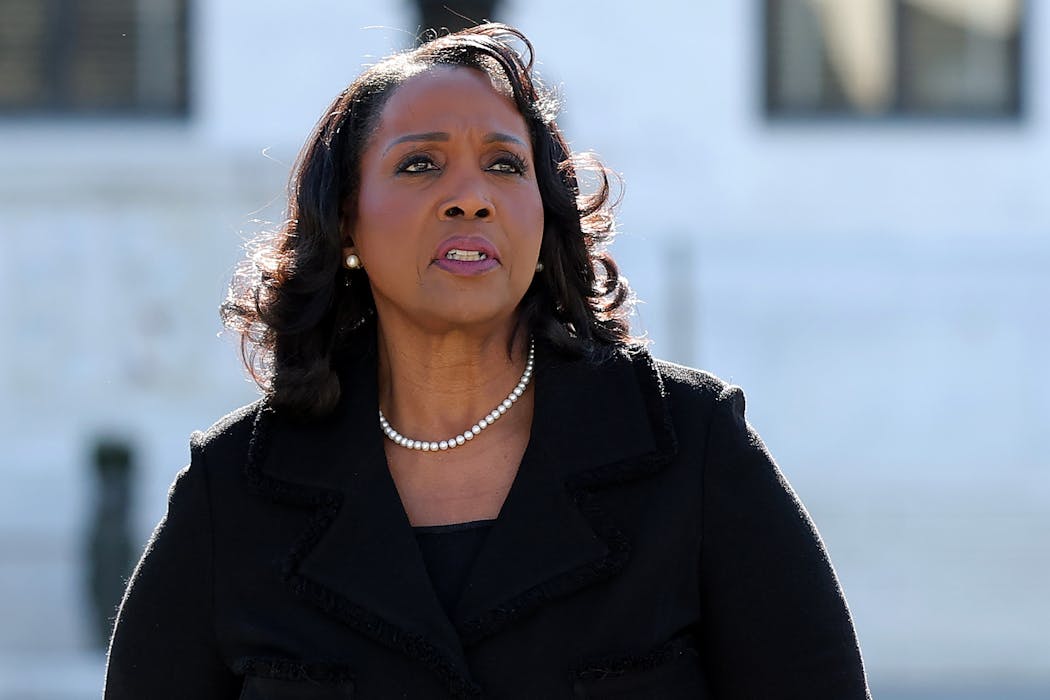
Federal Reserve Board member Lisa Cook leaves the U.S. Supreme Court on Jan. 21, 2026, after oral arguments in Trump v. Cook. Kevin Dietsch/Getty Images

Most of the Trump administration’s legal disputes involving the firing of high-level officials deal with the scope of presidential power.

On Jan. 21, 2026, the U.S. Supreme Court heard oral arguments in one of the most significant cases of this kind to date. It was brought by Lisa Cook, a member of the Board of Governors of the Federal Reserve. The Fed serves as the U.S. central bank and sets monetary policy – including a key interest rate that influences borrowing costs.

President Joe Biden nominated Cook in 2022, and she was sworn in in May of that year.

President Donald Trump fired her on Aug. 25, 2025, but a lower court temporarily reinstated Cook to her role on Sept. 9.

Based on the oral arguments, a majority of the court’s justices seem inclined to protect the Fed’s independence by treating this case as an employment dispute. As a law professor who specializes in employment law and follows the Supreme Court, I can explain how that might play out.

Why Cook’s case matters

To be sure, this is not a typical employment law case because Cook has far more legal rights to her job than most American workers.

The vast majority of U.S. workers are employed “at-will” – meaning they can be fired for any reason and severed from their jobs with no advance notice. Cook’s position is covered by the Federal Reserve Act, which states that board members will be appointed by the president to 14-year terms and can be terminated by the president, but only for “cause.”

A federal judge presiding over the case in the District of Columbia also ruled that Cook was entitled to “due process” before her termination – meaning some notice, an explanation of the evidence against her and an opportunity to respond.

Cook’s lawsuit has outsized importance because the Fed’s board oversees the Federal Reserve.

As former Fed governors explained in a friend-of-the-court brief, “effective monetary policy requires a commitment to long-term goals,” and the lengthy 14-year terms of board members “are designed to insulate” them “from short-term political pressures.”

In another brief to the court, economists also expressed concern that a loss of independence could undermine the dollar’s status as a global reserve currency, which tends to protect the U.S. during global shocks.

These concerns appear to be shared by the Supreme Court. During oral argument, for example, Justice Brett Kavanaugh repeatedly pressed the government’s lawyer to concede – and articulate – the importance of Fed independence, grilling him as if he were a first-year law student.

In a 2009 law review article, Kavanaugh wrote that it “may be worthwhile to insulate” the Federal Reserve Board “from direct presidential oversight.”

A group of people meet at a conference table while the Federal Reserve insignia is projected onto a screen above their heads.
President Trump has sought to fire Lisa Cook, a member of the Federal Reserve’s Board of Governors, sitting to Fed chair Jerome Powell’s left.
Saul Loeb/AFP via Getty Images

What can count as cause for firing someone?

The Department of Justice announced in September 2025 that it was investigating Cook for allegedly making false statements on mortgage applications in 2021. Cook has denied those allegations.

As law professor Jed Shugarman has observed, it’s possible that the court will not rule on Cook’s case beyond allowing the lower court to proceed to a final decision. This would be the most cautious approach, since multiple justices pointed out that the facts about Cook’s alleged wrongdoing were not fully developed.

If the Supreme Court offers legal guidance to the lower court, the question of what counts as cause under the Federal Reserve Act is far from clear. The statute does not define the term, which lacks a clear meaning.

Modern American employment law starts from the baseline assumption of at-will status, where cause doesn’t matter because workers can be terminated for any reason. The rare employment contracts that promise termination for cause – like for executives, football coaches or workers who belong to unions – spell out what cause means in the contract.

When must an offense occur if an official is to be fired over it?

The reference to termination for cause appeared in the original 1913 Federal Reserve Act. But it was taken out in 1933 and then added back in 1935 after a series of lengthy Senate hearings on Fed independence. To decide what the cause provision means for Cook today, the justices may delve into what cause meant back in 1935.

As I note in “The Master-Servant Doctrine: How Old Legal Rules Haunt the Modern Workplace,” my 2025 book, standards for conduct justifying termination have changed over time.

According to an influential study by law professors Jane Manners and Lev Menand, the historical meaning of cause for federal agency heads was based on “inefficiency, neglect of duty, or malfeasance in office.”

The U.S. District Court applied this definition to Cook’s case, and inferred that cause only meant acts committed after she was appointed to the Fed’s Board of Governors. An act that predates the official’s Senate confirmation, the court explained, “has never been a basis for removal.”

At oral argument, the Supreme Court’s justices also focused on Congress’ purpose in enacting the firing-for-cause rule: to protect Fed independence from other branches of government.

This interpretation would, at minimum, protect Cook and other Fed governors from being fired due to policy differences with a president, such as Trump’s repeated complaints over the frequency and size of the Fed’s interest rate cuts.

An interpretation of this sort could be similar to antidiscrimination law or whistleblower law, which make it illegal for employers to fire someone for a fake or a flimsy reason to cover up their true motive – such as discrimination or retaliation.

What counts as due process?

As a matter of constitutional law, government workers who can only be terminated for cause have the right to receive “due process” from their employer prior to termination.

This process is known as a “Loudermill” hearing – named after the leading case on point – which generally consists of a presentation of the evidence against the worker and the opportunity to respond.

The lower court ruled that Cook had not been provided due process. At the Supreme Court, the government’s attorney tried to argue that Cook was given the equivalent of a Loudermill hearing, based on a Truth Social post that Trump made on Aug. 20, 2025, calling for her to resign. It was linked to apparent evidence in a news report about mortgage applications Cook filed in 2021.

The attorney argued that the five-day delay between Trump’s first post and Cook’s firing gave her an opportunity to respond.

Some Supreme Court justices expressed skepticism that social media posts can satisfy the Loudermill standard. Justice Amy Coney Barrett, for example, pointedly asked, “Why couldn’t those resources (used to litigate the case) have been put into a hearing?”

Yet I also got the sense that some justices, especially Kavanaugh, seemed reluctant to hang their hat on due process alone.

A hearing and an opportunity to respond – without a meaningful definition of “cause” – wouldn’t limit the reasons a member of the Fed could be terminated. It would only require a president to go through the motions of showing how he or she reached a foregone conclusion.

And, in my view, that is no substitute for independence.

The Conversation

Elizabeth C. Tippett does not work for, consult, own shares in or receive funding from any company or organization that would benefit from this article, and has disclosed no relevant affiliations beyond their academic appointment.

ref. How the Supreme Court might protect the Fed’s independence by using employment law in Trump v. Cook – https://theconversation.com/how-the-supreme-court-might-protect-the-feds-independence-by-using-employment-law-in-trump-v-cook-274264

Pierre Poilievre: The most successful unsuccessful leader in Canadian politics?

Source: The Conversation – Canada – By Stewart Prest, Lecturer, Political Science, University of British Columbia

Nine months after falling definitively short in the 2025 federal election, Pierre Poilievre is facing a mandatory leadership review at this weekend’s Conservative Party convention.

By all accounts, he’s likely to cruise through the review, since he enjoys strong support among Conservative Party members.

That support extends to the broader voting coalition Poilievre has assembled, which continues to stand behind his leadership for the most part. Recent polling suggests that more than three quarters of Conservative voters view him as doing an “excellent” job.

The problem for Poilievre and the party, however, is that among those who did not vote Conservative, the view is starkly different. In that same recent Abacus poll, 62 per cent of non-Conservative voters reported he’s doing a “poor” or “very poor” job.

In a sense, Poilievre is the most successful unsuccessful leader in Canadian politics.

The Justin Trudeau problem

If you count by share of the vote, Poilievre led the party to its best showing in nearly 40 years. Brian Mulroney was the last leader of a Conservative party to crack 40 per cent of the vote share across the country. He also got the party to its best share of seats since Stephen Harper’s lone majority victory in 2011.

Poilievre managed to pull together, and even expand, the coalition of Conservative voters, appealing in particular to younger male voters, and was making inroads with labour voters — at least until Donald Trump showed up for his second term as American president.

Thanks largely due to Trump’s threats to make Canada a 51st state, Liberals performed even better in the election. Defying the odds, newly minted Prime Minister Mark Carney led the Liberals back from what seemed like certain defeat, assisted by the emergence of a far more more belligerent United States following Trump’s return.


Read more:
Canada’s Conservatives, with an assist from Donald Trump, are down — but they’re far from out


The Liberals bested the Conservatives in vote share and seat share, cementing Carney’s leadership of the country.

An even bigger problem for Poilievre is that his own approach to politics as opposition leader almost certainly influenced the Liberal rebound after Justin Trudeau stepped down — and when an electoral landslide seemed all but assured for the Conservatives.

Because Canadians considered Trudeau a problem, Poilievre’s take-no-prisoners approach paid significant dividends. The Conservatives led the Liberals by an increasingly comfortable margin throughout 2024. Language about the country being broken didn’t seem out of place to those tired of the status quo.

The Donald Trump impact

As soon as Trump made himself the problem, however, most Canadians looked for a much more fulsome response than Poilievre was able to offer. Rather than a leader focused on criticizing Canada, the majority of Canadians above all wanted one who promised to stand up against the American threat.

Similarities between Poilievre and Trump — sometimes rhetorical, other times substantive, and sometimes both — deepened the suspicion.

This divisiveness has continued to plague the party in the months since the 2025 election. One Conservative MP has decided to resign and two others have actually crossed the floor to join the Liberals, bringing the governing party within a hair’s breadth of a majority.

Nova Scotia MP Chris d’Entremont cited Poilievre’s leadership style specifically in explaining his decision to become a Liberal, suggesting the Conservative leader was too negative at a time when the country needed solutions-oriented politics.

This remains the quandary for the Conservative leader and the party: everything Poilievre does to secure the support of the more populist wing of the conservative movement in Canada tends to alienate the rest of the country, while any move to the centre risks condemnation from those further to the right.

Poilievre has won over core Conservatives and alienated the rest of the country, including that crucial share of voters necessary to push the Conservatives over the top.

Repelling more than he attracts

There is, to be sure, a path to victory still available to the Conservatives. A resurgent NDP, or some other wobble in Liberal fortunes, could be enough to put the Conservatives over the top next federal election.

They cannot count on such luck, however. Faced with the generational event that is the second Trump presidency, many Canadians are viewing the current Canada-U.S. tensions as an “us/them” existential battle, with other issues pushed into the background.

This week’s premier’s meeting in New Brunswick, for example, focused heavily on national unity. So too did Carney’s meeting with premiers in Ottawa.

This seems likely to persist so long as the U.S. poses a threat to Canadian security and prosperity. And as long as Poilievre presents himself as being sympathetic to Trump’s populist project, Canadians not already in the Conservative column will look to keep him out of the Prime Minister’s Office.

The most likely result, then, of this weekend’s review is a strong endorsement of Poilievre’s leadership and a continuation of the status quo: a country that has come together on a question of existential importance, but an opposition leader who divides, repelling more than he attracts.

The Conversation

Stewart Prest does not work for, consult, own shares in or receive funding from any company or organisation that would benefit from this article, and has disclosed no relevant affiliations beyond their academic appointment.

ref. Pierre Poilievre: The most successful unsuccessful leader in Canadian politics? – https://theconversation.com/pierre-poilievre-the-most-successful-unsuccessful-leader-in-canadian-politics-274358

With Iran weakened, Trump’s end goal may now be regime change. It’s an incredibly risky gamble

Source: The Conversation – Global Perspectives – By Amin Saikal, Emeritus Professor of Middle Eastern Studies, Australian National University; The University of Western Australia; Victoria University

The United States and the Islamic Republic of Iran are once again on the brink of a major confrontation. This would have terrible ramifications for both countries, the region and the world.

All signs point in this direction, but the two sides also have an off-ramp: the possibility of reaching an agreement on Iran’s nuclear program and other disputed issues.

The Iranian regime has never been so besieged both internally and externally. It has just faced yet another widespread protest movement demanding the government’s ouster, while dealing with the threat of military action by the US, supported by its ally, Israel.

Even so, the regime remains resilient and defiant. It brutally crushed the recent protests at the cost of thousands of lives and mass arrests and has warned the US of an all-out war if it attacks.

At the same time, it has signalled a willingness to reach a deal with the US over its nuclear program to avoid such an outcome.

So, what happens next, and can war be avoided?

A regime in survival mode

The regime’s tenacity is embedded in its unique theocratic nature, in which societal subordination and confrontation with outside enemies are the modus operandi.

Since its inception 47 years ago, the regime has learned how to ensure its longevity. This requires having a strong and defendable state, armed with all the necessary repressive instruments of state power, along with an ideology that mixes the concept of Shia Islamic martyrdom with fierce Iranian nationalism.

Given this, the regime has operated within a jihadi (combative) and ijtihadi (pragmatist) framework for its survival.

It has prepared for both war and making deals. This is not the first time Iran’s clerical leaders have been put in a tight corner by their own people and outside adversaries. They have always found a way to work through challenges and threats to their existence.

Still, the current challenge is bigger than any they’ve faced before. Over the past month, US President Donald Trump has vowed to punish the regime for its repression of the Iranian people, and now for its refusal to reach a deal on its nuclear program.

Some believe his ultimate goal, though, is to create the conditions for regime change.

Regime change not a given

Trump must know that regime change in Iran will not happen easily. Supreme Leader Ayatollah Ali Khamenei and his fellow clerics are ready to fight to the very end. They know that if the Islamic system they created goes down, everyone in the regime is most likely to perish with it.

The regime has built sufficient fanatical forces (namely, the Islamic Revolutionary Guard Corps and Basij paramilitary force) and advanced missiles and drones to defend itself. It also has the ability to block the Strait of Hormuz, though which 20% of the world’s oil and 25% of its liquefied natural gas flows every day.

The regime also has the backing of China, Russia and North Korea, which means any US assault could quickly escalate into a broader regional war.

Although Trump has not favoured regime change in the past, he now seems as if he’s not ruling it out. (His ally, Israeli Prime Minister Benjamin Netanyahu has long had this aim.)

But even though Trump now has a “massive armada” of ships and fighter jets in the region, the Iranian regime cannot be toppled by air and sea alone. And a ground invasion is not on Trump’s agenda, given the United States’ bitter experiences with ground offensives in Vietnam, Iraq and Afghanistan.

The regime could only crumble if a sizeable part of its security forces defected to the opposition. So far, they have remained quite loyal and solidly behind the leadership – as the brutal crackdown to the recent protests shows.

A possible destabilising future

Even if the regime were to crumble from within by some chance, what would come next?

Iran is a large and complex country, with an ethnically mixed population. While Persians form a slim majority of the population, the country has significant minority groups, such as the Kurds, Azeris, Arabs and Balochis. They all have a history of movements for secession and autonomy.

With the exception of two short periods of experimenting with democracy in the early and mid-20th century, Iran has been governed by authoritarian rulers. In the event of a power vacuum, it remains prone to chaos and disintegration.

It is doubtful that Reza Pahlavi, the son of the last shah of Iran, Mohammad Reza Pahlavi, who ruled from 1941–79, will command sufficient public support and organisational strength to ensure a smooth transition to democracy. He has lived most of his life in exile in the US and has been closely identified with Israeli and American interests.

Netanyahu would be pleased to see a disintegrated Iran, as he has always wanted to prevent the formation of a united Muslim front against Israel. But the fall-out from a destabilised Iran would be problematic for the region.

These considerations are probably weighing on Trump’s mind, delaying his promise to the Iranian protesters that “help is on its way”.

Diplomacy is the better way forward. The time has come for the Iranian and American leadership to compromise and resurrect their July 2015 nuclear deal, from which Trump withdrew in 2018.

This should be urgently followed by Iran’s clerical rulers opening their iron fist and allowing the Iranian people to determine their future and that of their country within a democratic framework.

Otherwise, the volatility that has long dominated this oil-rich country, where between 30–40% of the population lives in poverty, will eventually devour the regime.

The Conversation

Amin Saikal does not work for, consult, own shares in or receive funding from any company or organisation that would benefit from this article, and has disclosed no relevant affiliations beyond their academic appointment.

ref. With Iran weakened, Trump’s end goal may now be regime change. It’s an incredibly risky gamble – https://theconversation.com/with-iran-weakened-trumps-end-goal-may-now-be-regime-change-its-an-incredibly-risky-gamble-274626