Inseguridad alimentaria en Venezuela: qué está pasando y por qué importa

Source: The Conversation – (in Spanish) – By José Miguel Soriano del Castillo, Catedrático de Nutrición y Bromatología del Departamento de Medicina Preventiva y Salud Pública, Universitat de València
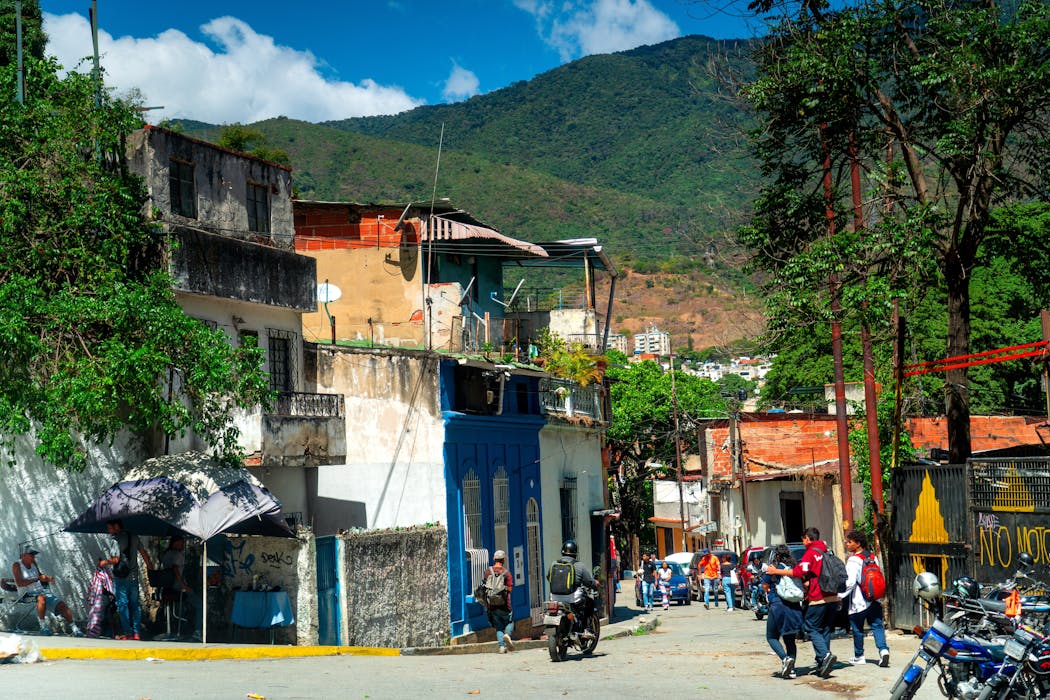
Barriada humilde en Caracas. Tomasz Podolski/Shutterstock

Al margen de la reciente captura de Nicolás Maduro por fuerzas estadounidenses, no debemos olvidar la situación de inseguridad alimentaria que arrastra Venezuela desde hace tiempo. Este concepto no se circunscribe solo a la “falta de comida”: también supone hablar de acceso, calidad, estabilidad y dignidad. Un país puede disponer de alimentos en mercados o bodegas y, aun así, millones de personas tienen dificultades para comprarlos de forma regular, o terminan consumiendo dietas poco nutritivas.

En Venezuela, esta circunstancia se ha mantenido como un problema estructural en la última década, pero con cambios de intensidad según la economía, la inflación y el financiamiento humanitario.

Una situación seria

Diversas fuentes coinciden en que la situación sigue siendo crítica. El Programa Mundial de Alimentos (PMA) indica que aproximadamente el 15 % de la población (alrededor de 4 millones de inividuos) necesita asistencia alimentaria urgente, y que alrededor del 40 % experimenta inseguridad alimentaria moderada o severa. Esto no significa que todas esas personas estén en la misma condición: “moderada” suele implicar reducción en calidad y cantidad de alimentos (saltarse comidas, dietas monótonas), mientras que “severa” puede significar quedarse sin comida o pasar días con muy poca ingesta.

Los organismos humanitarios ubican a Venezuela entre los países de la región con altas necesidades humanitarias sostenidas. El informe publicado el 29 de diciembre de 2025 por el Sistema Mundial de Información y Alerta Temprana de la Organización de las Naciones Unidas para la Alimentación y la Agricultura (FAO-GIEWS) señala que 7,9 millones de personas dentro del país necesitan asistencia, con necesidades críticas concentradas en seguridad alimentaria, entre otras áreas.

Lo que dicen los hogares: miedo a que la comida no alcance

El trabajo de campo en hogares ayuda a entender el componente cotidiano del problema. Según la última Encuesta Nacional sobre Condiciones de Vida (ENCOVI) del 2024, realizada por la Universidad Católica Andrés Bello, el 78,1 % de las personas entrevistadas estaba preocupada por la posibilidad de que los alimentos se acabaran, y el 41,1 % afirmó haberse quedado sin comida en su hogar en algún momento.

Estos indicadores importan porque muestran el “estrés” alimentario: cuando una familia no sabe si podrá comer mañana, tiende a reducir porciones, priorizar calorías baratas, endeudarse, vender bienes o sacrificar gastos en salud y educación.

Principales causas: inflación, ingresos y fragilidad del abastecimiento

Uno de los motores más repetidos en análisis recientes es el deterioro del poder adquisitivo. En una actualización de noviembre de 2025, la Red de Sistemas de Alerta Temprana contra la Hambruna advierte que las condiciones macroeconómicas han empeorado la inseguridad alimentaria, destacando que la inflación aumentó más del 100 % durante 2024–2025. Este incremento de precios estaba vinculado, entre otros factores, a tensiones en el tipo de cambio.

A día de hoy, el Fondo Monetario Internacional proyecta un aumento de la inflación del 269,9 % actual hasta el 682 % en 2026 en Venezuela. Por su parte, el salario mínimo nominal se mantiene congelado en 130 bolívares mensuales (equivalentes a 43 centavos de dólar) desde 2022.

Cuando los precios crecen más rápido que los ingresos, incluso quienes “tienen empleo” pueden terminar ajustando su alimentación a lo mínimo: menos proteína, menos frutas y verduras, más carbohidratos baratos y porciones menos abundantes. El bolívar venezolano cerró 2025 con una devaluación del 82,7 % frente al dólar, lo que erosiona aún más el poder de compra de los hogares.

A esto se suma la dependencia de importaciones y la vulnerabilidad de la producción local. FAO-GIEWS señala presiones sobre la producción de maíz y anticipa requerimientos de importación de cereales por encima del promedio en el ciclo 2025/26. Las importaciones de alimentos alcanzaron en 2024 un total de 3 022 millones de dólares (un 9 % más que en 2023) y representan aproximadamente el 60 % del suministro total de alimentos del país. Entre enero y julio de 2025, las compras externas del grupo agropecuario, alimentos y bebidas fueron de 5 837,1 millones de dolares, lo que supone un aumento de 11,3 % respecto al mismo periodo de 2024.

Consecuencias visibles: salud, nutrición infantil y decisiones difíciles

La inseguridad alimentaria deja huellas en el cuerpo y en la vida social, especialmente entre los más pequeños: las dietas pobres en micronutrientes y proteínas afectan al crecimiento, el aprendizaje y el sistema inmunitario infantil. Según Cáritas Venezuela, entre 8 y 10 de cada 100 niños evaluados sufren desnutrición aguda severa con riesgo de muerte, mientras la desnutrición crónica ha crecido de 18 % en 2016 a cerca del 30 % actualmente. Adicionalmente, más del 40 % de las embarazadas presentan déficit nutricional agudo y un 24 % de las mujeres en edad reproductiva padecen anemia.

En zonas vulnerables, muchas familias ajustan su dieta para “llenar” con lo que rinde más, pero eso no equivale a alimentarse bien. Las estrategias de supervivencia incluyen liquidación de ahorros (76 % de hogares), endeudamiento para comer (54 %) y venta de bienes personales.

Brechas territoriales y desigualdad

De cualquier modo, la crisis alimentaria no afecta por igual a todos los territorios. Las ediciones más recientes de la ENCOVI muestran que, aunque la pobreza extrema se ha reducido en promedio nacional, más del 70 % de los hogares siguen en situación de pobreza de ingresos y los mayores niveles de vulnerabilidad se concentran en zonas rurales, periféricas y fronterizas. En estos espacios –con fuerte presencia indígena o agrícola– la inseguridad alimentaria moderada y severa se mantiene por encima del promedio nacional, y los hogares reportan con más frecuencia saltarse comidas, reducir porciones y sustituir alimentos frescos por opciones más baratas y menos nutritivas.

Esta expansión territorial de la pobreza se vincula con el colapso de servicios básicos: más de 54 000 fallos eléctricos fueron registrados en enero de 2025. Además, según una encuesta reciente, un 86 % de los venezolanos indicó la presencia de agua fétida y sucia y un 87 % de la población requiere gas por bombona con distribución ineficiente.

Actualmente, a la situación inestable de Venezuela hay que sumar la situación de inseguridad alimentaria que mezcla emergencia (hogares que pasan hambre) con cronicidad (hogares que sobreviven con dietas pobres y vulnerables a cualquier shock). Los datos actuales muestran necesidades amplias y persistentes, y también advierten de que sin estabilidad macroeconómica y sin financiamiento humanitario suficiente, la situación puede empeorar rápidamente. Y esto, ante los próximos retos que vive el país, se debería de tener en cuenta para proteger y salvaguardar a su población.

The Conversation

José Miguel Soriano del Castillo no recibe salario, ni ejerce labores de consultoría, ni posee acciones, ni recibe financiación de ninguna compañía u organización que pueda obtener beneficio de este artículo, y ha declarado carecer de vínculos relevantes más allá del cargo académico citado.

ref. Inseguridad alimentaria en Venezuela: qué está pasando y por qué importa – https://theconversation.com/inseguridad-alimentaria-en-venezuela-que-esta-pasando-y-por-que-importa-272915

Notre-Dame de Paris et l’avènement du patrimoine spectacle-et-science

Source: The Conversation – France (in French) – By Patrice Gourbin, Historien de l’architecture [maître de conférences à l’Ecole nationale supérieure d’architecture de Normandie], Ecole Nationale supérieure d’architecture et de paysage de Bordeaux (ENSAP Bordeaux)

La reconstruction de Notre Dame de Paris, en avril 2024. CC BY

En 2019, la reconstruction de la charpente de Notre-Dame de Paris « à l’identique » des matériaux d’origine et de leur mise œuvre a été présentée comme une nécessité technique, historique et parfois même mystique. Or ce type d’attitude, relativement récente, mérite d’être interrogée en tant que fait culturel qui interroge le rapport de nos sociétés à leur histoire.


Fort de la mission qui lui avait été confiée par l’État dans les années 1830, le service des Monuments historiques fut pendant près de cent cinquante ans l’unique garant du patrimoine national.

Confronté aux dévastations de la Grande Guerre, il mit en place une doctrine de reconstruction des édifices ou parties d’édifices détruits qui fut reprise après la Seconde Guerre mondiale et se maintint inchangée jusqu’au milieu des années 1990. Il ne s’agissait pas de refaire les monuments « à l’identique » de ce qu’ils étaient avant la catastrophe, mais de leur redonner leur apparence originelle tout en les améliorant d’un triple point de vue, technique, archéologique et artistique.

Les charpentes furent par exemple reconstruites en béton armé pour des raisons d’économie, de facilité d’entretien et de résistance au feu. Le matériau pouvait aussi être utilisé pour renforcer des structures instables ou remplacer à moindre coût les maçonneries traditionnelles. À Rouen, la grande voûte en bois de la salle des procureurs du palais de justice, incendiée en mars 1944, fut reconstituée dans son apparence grâce à un voile mince de béton armé supportant à la fois un lambris de bois intérieur et la couverture extérieure en ardoises épaisses. La modification concernait l’ensemble de la structure de l’édifice : du fait de la poussée de la nouvelle voûte, trois fois plus lourde que l’ancienne, il fallut renforcer les fondations en sous-œuvre et forer l’épaisseur des murs pour y installer des tirants métalliques reliant la voûte, le plancher intermédiaire en béton et les fondations.

Retrouver un état de « référence »

Sur le plan archéologique, il était courant de supprimer des éléments considérés comme non pertinents, en particulier ceux du XIXᵉ siècle, une période dévalorisée de l’histoire de l’art. Le but était de retrouver un état de référence, souvent le plus ancien connu. Par exemple pour la reconstruction de l’église de Carignan (Ardennes) détruite en 1940, l’architecte en chef Yves-Marie Froidevaux choisit de revenir à l’état de 1681 en remplaçant la tour-porche du XIXe en pierre par un clocher en charpente de style classique.

Politiques de création

Enfin, la dernière amélioration concernait le domaine de la création. Si les éléments décoratifs répétitifs (corniches, garde-corps, décor géométrique ou végétal, modénature étaient refaits tels qu’ils étaient avant la catastrophe, ce n’était généralement pas le cas des éléments artistiques uniques, tels que tympans sculptés, chapiteaux, vitraux, mobilier. Leur remplacement était alors une occasion de faire appel à des créateurs contemporains.

Lors de la première reconstruction, des commandes furent passées auprès des artistes au cas par cas pour remplacer les éléments mobiliers détruits. Lors de la seconde, le service des Monuments historiques vit dans les destructions une opportunité de développer une politique de création dans les monuments anciens, en particulier dans le domaine du vitrail. L’intervention n’était pas uniquement réparatrice : les objets et vitraux du XIXe siècle, considérés comme inappropriés, étaient souvent supprimés, qu’ils soient endommagés ou non, au profit de créations neuves. La commande reposait sur une conception corporatiste : l’objectif était de créer une classe d’artisans spécialisés dans l’intervention en milieu patrimonial. Ce n’est qu’en 1955 que les commandes commencèrent à s’ouvrir à des artistes qui n’étaient pas aussi des maîtres-verriers, comme Jacques Villon (à Metz) ou Marc Chagall (à Reims).

Les dernières interventions sur les monuments endommagés par la seconde guerre mondiale datent du milieu des années 1980. À Rouen, la flèche de la tour Saint-Romain de la cathédrale fut reconstruite en 1984 avec une charpente en béton armé.

Incontestée, la reconstruction-amélioration s’appliquait à toutes sortes d’interventions, post-catastrophe ou non : la reconstitution des combles du Parlement de Bretagne à Rennes après l’incendie de 1994, la remise en état d’usage du château de Falaise (Calvados) à partir de 1997 ou de celui de Suscinio (Morbihan).

Nouvelles pratiques de reconstruction

Mais le milieu des années 1990 fut aussi celui de l’émergence de nouvelles pratiques de (re)construction, en dehors du champ d’action du service des Monuments historiques. Les interventions s’inspiraient des méthodes de l’archéologie expérimentale qui cherchait, par la reproduction du geste créateur, à mieux comprendre les artefacts originaux. À Saint-Sylvain-d’Anjou, une association initiée par le maire de la commune restitua un château à motte en bois de l’an mil à quelques du site originel afin de l’ouvrir à la visite. À Rochefort la reconstruction de la frégate l’Hermione débuta en 1992 avec un double objectif. Il s’agissait non seulement de refaire un objet à valeur mémorielle et patrimoniale, mais aussi de mettre en scène sa fabrication dans le cadre d’un chantier immersif ouvert au public.

La construction du château (imaginaire) de Guédelon qui débuta en 1997 reposait sur la même stratégie, mais avec une exigence supplémentaire dans le domaine de l’archéologie de la matière et du geste. Il s’agissait de retrouver les savoir-faire et les matériaux correspondant à la période de référence qui avait été choisie. Les interférences avec le présent étaient évacuées pour la science mais aussi pour le spectacle, avec par exemple des ouvriers vêtus de costumes médiévaux.

Le patrimoine-spectacle existait déjà : le premier son et lumière avait eu lieu à Chambord en 1950 avec un succès planétaire et de multiples avatars au fil du temps comme celui du Puy-du-Fou. Guédelon y ajoutait une dimension scientifique et son succès témoignait de la profondeur des attentes du public, qui n’était pas seulement consommateur de divertissement.

Les actuels chantiers de la charpente de la cathédrale de Paris et de la flèche de l’abbatiale de Saint-Denis sont dans la continuité de ce renversement des pratiques engagé dans les années 1990. La triple amélioration qui caractérisait les reconstructions suivant les deux guerre mondiales s’est évaporée. Dévalorisées, les techniques modernes sont considérées comme inappropriées au moment même où leur utilisation plus que centenaire aurait pu en démontrer la pertinence économique et structurelle.

Quant à l’amélioration créative, elle paraît désormais anachronique comme le montre le procès intenté à l’encontre de l’insertion de vitraux contemporains à Notre-Dame de Paris voulue par le président de la République. Appliquant les leçons de Rochefort et Guédelon, les deux chantiers parisiens convoquent science et spectacle. Il s’agit tout autant de retrouver l’apparence ancienne que de s’assurer du geste et de la matière ancienne, sous le regard du public qui est invité à suivre l’avancement des travaux, sur site (à Saint-Denis) ou en différé (à Paris) par médias interposés. Enfin l’équilibre économique est assuré de la même manière, par les dons et les recettes du chantier-spectacle.

La reconstruction de tout ou partie du patrimoine disparu a-t-elle trouvé un nouveau départ ? Le patrimoine-spectacle, qui est aussi patrimoine-science a trouvé son public, mais il ne s’applique qu’à des édifices iconiques de l’histoire nationale. Peut-être marque-t-il la fin de cette expansion patrimoniale dénoncée par les experts dans les années 1990, de l’historienne Françoise Choay, qui y voyait le signe d’un « narcissisme collectif », au directeur de l’architecture et du patrimoine François Barré qui s’inquiétait de l’abus patrimonial. Quoiqu’il en soit, le patrimoine-spectacle-et-science peut dès maintenant être érigé en emblème du champ culturel patrimonial des années 2020.


Cet article est publié dans le cadre de la série « Regards croisés : culture, recherche et société », publiée avec le soutien de la Délégation générale à la transmission, aux territoires et à la démocratie culturelle du ministère de la culture.

The Conversation

Patrice Gourbin ne travaille pas, ne conseille pas, ne possède pas de parts, ne reçoit pas de fonds d’une organisation qui pourrait tirer profit de cet article, et n’a déclaré aucune autre affiliation que son organisme de recherche.

ref. Notre-Dame de Paris et l’avènement du patrimoine spectacle-et-science – https://theconversation.com/notre-dame-de-paris-et-lavenement-du-patrimoine-spectacle-et-science-263672

Mary, Queen of Scots’ last letter is going on display in 2026 – five interesting facts about her other writing

Source: The Conversation – UK – By Emily Hay, PhD Candidate in Scottish Literature, University of Glasgow

The last letter of Mary, Queen of Scots goes on display in 2026 for the first time in almost a decade. Deposed from her Scottish throne in 1567, Mary spent 20 years in captivity across Scotland and England before she was executed for plotting against her cousin and captor, Elizabeth I of England. Writing that final letter was one of the last things Mary did before mounting the scaffold on February 8, 1587.

As I explore in my PhD thesis, writing was a key concern for Mary throughout her captivity. She wrote hundreds of letters as well as poems and prose essays, using her words as a means of influence with her supporters, jailers and a reading public at large. Here are five things you should know about her from her writing.

1. French was her language of choice – but it wasn’t all she could write

Sent to France at the age of five, Mary developed a lifelong attachment to the country and its language. Studying under the French poet Pierre de Ronsard, she had a particular fondness for French poetry. It was here that Mary first began composing poems of her own, with short verses penned in prayer books belonging to her female family members. French also remained her language of choice for writing throughout her life, even after she returned to rule Scotland in 1561.

However, contrary to popular myth, Mary was also fluent in her native Scots, speaking and writing letters in it throughout her reign.

2. She was deposed and imprisoned for poems she (allegedly) wrote

In February 1567, Mary’s husband, Lord Darnley, was killed, and by May of the same year she had married the Earl of Bothwell – the man widely believed to have killed him.

According to her rebellious lords, her own poetry attested to her guilt of adultery and murder. In the “casket sonnets” – so-called for the silver gilt casket they were discovered within – Mary had apparently declared her love for Bothwell while Darnley was still alive. The poems were even produced as evidence against her at the hearings held to decide her fate after she escaped to England in 1568.

Mary, Queen of Scots
Mary, Queen of Scots.
National Portrait Gallery, CC BY-NC

To this day literary historians remain divided on whether the sonnets were actually written by Mary or forged by her enemies. Whatever the truth may be, they highlight the political stakes Mary’s writing entailed.

3. Propaganda painted her as a monster and a witch – but she had very different views of herself

Following Darnley’s murder, Mary became the subject of a slew of derogatory propaganda. One Edinburgh placard painted her as a naked mermaid (a symbol of prostitution). Elsewhere across Britain, written propaganda also imagined her as monstrous classical women like the snake-haired Medusa and the witches Medea and Circe.

Even in prison, Mary didn’t take such slander lying down. In one letter to Elizabeth I in 1568 she wrote: “I am not an enchanter” and “I am not of the nature of the basilisk.” The basilisk was a mythical creature interchangeable with Medusa because both were known for their serpentine nature and ability to kill with a mere look. In these written rejections of her negative public image, Mary hoped to prove her propagandists wrong and persuade the English queen to help restore her to her throne.

4. She saw herself as more a king than a woman

Popular culture has always contrasted the masculine, intellectual Elizabeth against the feminine, emotional Mary – most notably, the 2018 film had Saoirse Ronan’s Mary wishing she had emulated Elizabeth’s decision to remain unmarried. Yet, while Elizabeth I famously declared that she had “the heart and stomach of a king”, Mary’s writing reveals she also saw herself as more a king than a woman.

In two poems written and published during her imprisonment, she notably compares herself to the biblical kings Solomon and David. Both were common figures of comparison for monarchs who wanted to display their power and virtue – Henry VIII, Elizabeth and James VI and I (Mary’s son) had all done so during their reigns.

Mary’s message was clear: though ousted from her throne, she would never stop projecting herself as a monarch. She too was a king first, and a woman second.

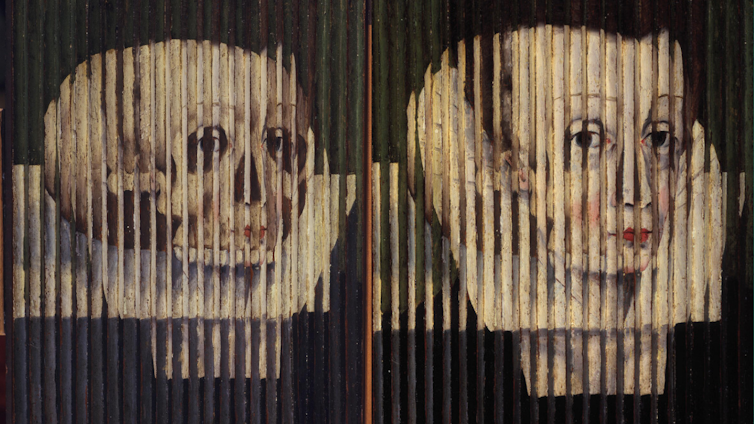
A painting of a skull and Mary, Queen of Scots.
Anamorphosis, called Mary, Queen of Scots by an unknown artist. The painting should be looked at from left to right to reveal the human head changing into a skull.
National Galleries Scotland, CC BY-NC

5. She wanted to control her public persona – even in death

Though she had been charged with treason by the English government, in her final letter Mary told her brother-in-law, Henry III of France, that she was dying for her Catholic faith. Throughout her imprisonment Mary tried to control the public view disseminated of her through writing – on several occasions even trying to stop the circulation of derogatory books published about her in England and France.

Her conscious attempts to control the narrative only strengthened in the lead up to her execution. In a letter to the Spanish ambassador, written after she had received news of her death sentence, Mary claimed she could hear construction in the great hall of her prison at Fotheringhay, stating: “I think it is to make a scaffold to have me play out the final act of the tragedy.”

For Mary, her end was a performance that she sought to influence and control, and her presentation on the scaffold – carrying a crucifix and wearing a petticoat in the red of martyrdom – only played into this. Given how enduring the view of Mary as a martyr became in the years following her death, it would seem, on that count at least, that she won.


Looking for something good? Cut through the noise with a carefully curated selection of the latest releases, live events and exhibitions, straight to your inbox every fortnight, on Fridays. Sign up here.


The Conversation

Emily Hay has previously received funding from the Arts and Humanities Research Council (AHRC).

ref. Mary, Queen of Scots’ last letter is going on display in 2026 – five interesting facts about her other writing – https://theconversation.com/mary-queen-of-scots-last-letter-is-going-on-display-in-2026-five-interesting-facts-about-her-other-writing-272754

Think society is in decline? Research gives us some reasons to be cheerful

Source: The Conversation – UK – By Paul Hanel, Senior Lecturer, Department of Psychology, University of Essex

Tinnakorn jorruang/Shutterstock

Talk to a random member of the public and they’re likely to say that people’s behaviour is getting worse. From brazen shoplifting, to listening to music out loud on public transport, to violence against retail workers, there are plenty of reasons we might feel bleak about other people.

This perception is backed up by research: a study published in June 2023 found that people in over 60 countries believe that basic decency is declining. A 2025 poll of 9,600 Americans found that 46% believed that rudeness is overall increasing, whereas only 9% found it was decreasing compared to pre-pandemic levels.

But people’s perception can be inaccurate. In my research, I investigate how accurate people’s perceptions about other people are, the implications of inaccurate perceptions, and what happens when those misperceptions are corrected.

And it’s clear that there are some misperceptions at play here. If we look at people’s values, those abstract ideals that guide our behaviour, there are reasons to be positive about society.

In a 2022 study of 32,000 people across 49 cultural groups, the values of loyalty, honesty and helpfulness ranked highest, while power and wealth ranked lowest. The results offer little support for claims of moral decline. An interactive tool, developed by social scientist Maksim Rudnev using data from the European Social Survey, shows that the pattern remained consistent between 2002-23 across over 30 European countries.

Further studies show people’s values are broadly similar across over 60 countries, education levels, religious denominations and gender (there are exceptions of course). That is, there is substantial overlap between the responses between both groups.

Even the values of 2,500 Democrats or Republicans in the USA in 2021-23, or of 1,500 Leave and Remain voters of the Brexit referendum in 2016-17, are remarkably similar. This suggests an alternate narrative to perceptions of countries being divided and polarised.

One limitation of these findings is that they are based on people’s self-reports. This means these results can be inaccurate, for example because people wanted to portray themselves positively. But what about people’s actual behaviour?

Good citizens

Quite a few studies suggest that most people are actually behaving morally. For example, when researchers analysed actual public conflicts recorded by CCTV, they found that in nine out of ten conflicts a bystander intervened (in cases where bystanders were present). These findings, from 2020, were similar across the Netherlands, South Africa and the UK.

People intervene in knife or terrorist attacks, even when they put themselves in danger. While these cases are rare, they demonstrate that many people are willing to help even under extreme circumstances.

In less dramatic situations we can also observe that people are considerate of others. For example, a 2019 study found that in 38 out of 40 countries investigated lost wallets were, on average, more likely to be returned if they contained a bit of cash rather than no cash, and even more likely to be returned when they contained a fair bit of cash. This is likely because finders recognised that the loss would be more harmful to the owner of the wallet.

In another experiment (2023), 200 people from seven countries were given US$10,000 (£7,500) with almost no strings attached. Participants spent over $4,700 on other people and donated $1,700 to charity.

But what about changes over time? It might be that people 50 or 100 years ago behaved more morally. There are not many studies that systematically track behaviour change over time, but one study found that Americans became slightly more cooperative between the 1950s and the 2010s when interacting with strangers.

Why misperceptions persist

Why do quite a few people still believe that society is in moral decline? For one thing, news outlets tend to focus on negative events. Negative news is also more likely to be shared on social media. For example, numerous studies noticed that when disasters strike (hurricanes, earthquakes), many media stations report panic and cruelty, even though people usually cooperate with and support each other.

In addition, people who hold more extreme political views – on either the left or the right – are more likely to post online, as are bots from Russia and elsewhere. In other words, what we see on social media is by no means representative of the population.

Of course, none of this denies that a minority of people can cause serious harm, or that some aspects of public life, such as online abuse of children, may be worsening. Further, these trends do not necessarily reflect how the average person behaves or what they value.

A young woman and older woman smiling at a table outdoors
People still value helpfulness and honesty.
Dmytro Zinkevych/Shutterstock

It matters if people are overly pessimistic about others. People who wrongly believe that others care more about selfish values and less about compassionate ones are, on average, less likely to volunteer or vote. This is not surprising: why invest your time in people you think would never return the favour?

Numerous experiments have found that showing people that others share, on average, similar values and beliefs to their own, can make them more trusting and hopeful for the future. Talking to others, be it friends, people you only know loosely or strangers, can make us realise that other people are mostly friendly, and it can also make us feel better.

Volunteering, joining local groups or attending neighbourhood events can be a good idea: helping others makes us feel better. Finally, reading positive news stories or focusing on other people’s kindness can also help our outlook.

In a nutshell, the evidence suggests that moral decline is not happening, even if there are examples of some bad behaviour on the rise. If we all were to stop talking to other people assuming they would mean us harm, cease to go the extra mile for other people and so on, there is a risk we all become more self-centred and decline would eventually happen. Luckily, we, as a society, can influence our own fate.

The Conversation

Paul Hanel received in the past funding from the Economic and Social Research Council as well as Research England.

ref. Think society is in decline? Research gives us some reasons to be cheerful – https://theconversation.com/think-society-is-in-decline-research-gives-us-some-reasons-to-be-cheerful-268834

Iran protests have put the country’s political system on trial

Source: The Conversation – UK – By Arash Beidollahkhani, Research Fellow at the Global Development Institute, University of Manchester

Protests that began in late December over rising prices and a collapsing currency have now spread to most of Iran’s 31 provinces, with demonstrators taking aim at the country’s rulers. The demonstrations signal a deep challenge to a political order that many Iranians see as incapable of delivering stability, dignity or a viable future.

The unrest poses the most serious challenge to Iran’s political establishment since 2022. That year, nationwide protests erupted over the death of 22-year-old Mahsa Amini in police custody after she was arrested for violating hijab rules. Those demonstrations were ultimately suppressed through force.

Iran’s political establishment has for decades defined itself through permanent confrontation on multiple fronts: with Israel, the US and what it sees as global imperialism. This posture has reshaped domestic life by subordinating the economy, governance and social stability to ideological resistance.

What the latest protests reveal is not simply frustration with the hardship that has accompanied this political stance. They seem to reflect a growing consensus among Iranians that this order cannot be reformed into something functional and must therefore be replaced.

Iranian security forces confront a lone protester during demonstrations.
Iranian security forces confront a lone protester during demonstrations in late December. This widely shared image has become a symbol of the protests.
Instagram

This has been apparent in the language used by the protesters. Many demonstrators have linked their daily hardships to the regime’s foreign policy priorities, expressed perhaps most clearly through one chant that has echoed through the streets of various Iranian cities in recent days: “Not Gaza, not Lebanon, I sacrifice my life for Iran.”

The slogan is a rejection of the regime’s official stance that sacrifice at home is necessary to fulfil ideological goals of “resistance” abroad. Iran has long pursued a policy of supporting militant groups like Hamas and Hezbollah to counter the influence of the US and Israel in the Middle East.

Chants of “death to the dictator” – a reference to Iran’s ageing supreme leader, Ayatollah Ali Khamenei – are yet more evidence of the broad rejection of the political order among the Iranian population. They signal that many Iranians now view their economic survival as inseparable from fundamental political change.

The protests have spread across wide sections of Iranian society. What began as strikes by bazaar merchants and shopkeepers in Iran’s capital, Tehran, quickly drew in students, professionals and business owners elsewhere in the country. Protests have even been reported in Qom and Mashhad, cities whose populations have traditionally been loyal to the state.

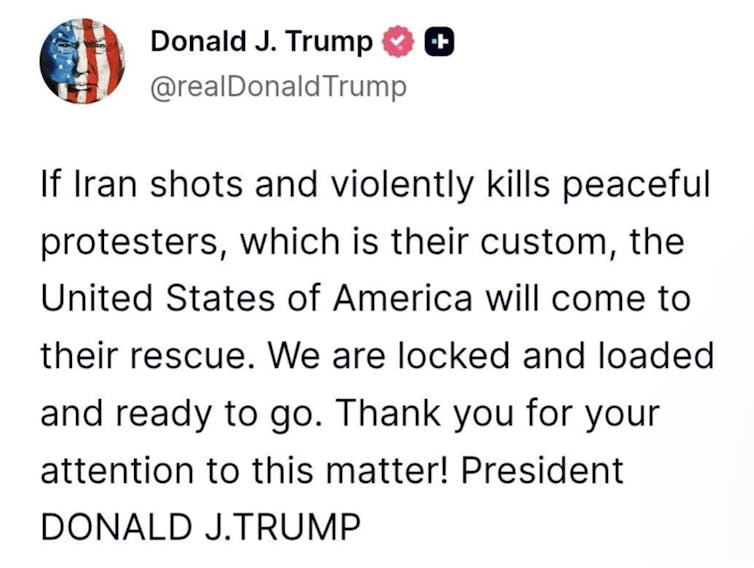
The state’s initial response to the protests was muted. The government recognised the protests and promised to listen to the “legitimate demands” of the demonstrators. However, despite a warning from US president Donald Trump of US intervention should security forces “kill peaceful protesters”, at least 36 people have died so far. Over 2,000 more people have been detained.

A social media post by Donald Trump warning of American intervention should Iran's authorities kill protesters.
Donald Trump posts on his Truth Social media platform in response to the protests in Iran.
@realDonaldTrump / Truth Social

Post-war paralysis

The protests come six months after Iran’s brief but destabilising war with Israel. This conflict severely strained the state’s capacity to govern, with Khamenei largely withdrawing from public view since then due to heightened fears over his safety. Major decisions in Iran require Khamenei’s approval, so his absence has slowed decision-making across the system.

The effects of this have been felt nationwide. Universities and schools have been hampered by repeated closures, shortened schedules and the sudden suspension of in-person classes. Transport networks have faced repeated disruption and economic planning has become nearly impossible.

Prices are now rising fast. The official annual inflation rate stands at around 42%, with food inflation exceeding 70%. The prices of some basic goods have reportedly risen by more than 110% compared with a year ago, and are expected to rise further in the coming weeks.

Iran’s authorities have also intermittently suspended routine daily and weekly activities since the end of the war, such as school days, public office hours, transport services and commercial operations. They cite energy shortages, pollution or security concerns as the reasons for doing so.

Underlying these disruptions is a governing system braced for the possibility of renewed war, either with Israel or possibly the US. The regime is operating in a prolonged state of emergency, which has pushed Iranian society itself deeper into crisis.

Iran’s governing paralysis has been strained further by intensifying competition within the ruling elite. The war with Israel led to the deaths of several senior Iranian military and security figures, which has created gaps in networks of power.

With authority fragmented, rival political, military and security factions have sought to position themselves for influence in a post-Khamenei order. Networks associated with figures such as former president Hassan Rouhani, former foreign minister Javad Zarif and current president Masoud Pezeshkian are pursuing negotiations with western powers to address Iran’s foreign policy challenges.

But others appear to be engaging in talks aimed at securing backing from ideological allies such as Russia and China. These include people in security and intelligence circles, along with figures ideologically aligned with Khamenei like his second-eldest son Mojtaba, current speaker of parliament Mohammad-Bagher Ghalibaf and conservative clerics such as Mohammad-Mahdi Mirbagheri.

These rival strategies have not produced coherent governance. Instead, they have reinforced perceptions among the Iranian public that the system is preoccupied with survival rather than addressing everyday breakdowns in basic administration, public services and economic coordination.

Iran stands at a crossroads. One path leads toward deeper militarisation, elite infighting and prolonged paralysis. The other points towards a reckoning with a political order that large segments of Iranian society no longer believe can deliver stability or welfare.

The protests suggest that the central question for many Iranians is no longer whether the system can be repaired, but whether continuing to live under it is viable at all. What is clear is that Iran is at a critical political moment, with significant changes likely to unfold in the weeks and months ahead.

The Conversation

Arash Beidollahkhani does not work for, consult, own shares in or receive funding from any company or organisation that would benefit from this article, and has disclosed no relevant affiliations beyond their academic appointment.

ref. Iran protests have put the country’s political system on trial – https://theconversation.com/iran-protests-have-put-the-countrys-political-system-on-trial-272781

What I’ve learned from studying the wild pigeon

Source: The Conversation – UK – By Will Smith, Leverhulme Early Career Fellow, University of Nottingham

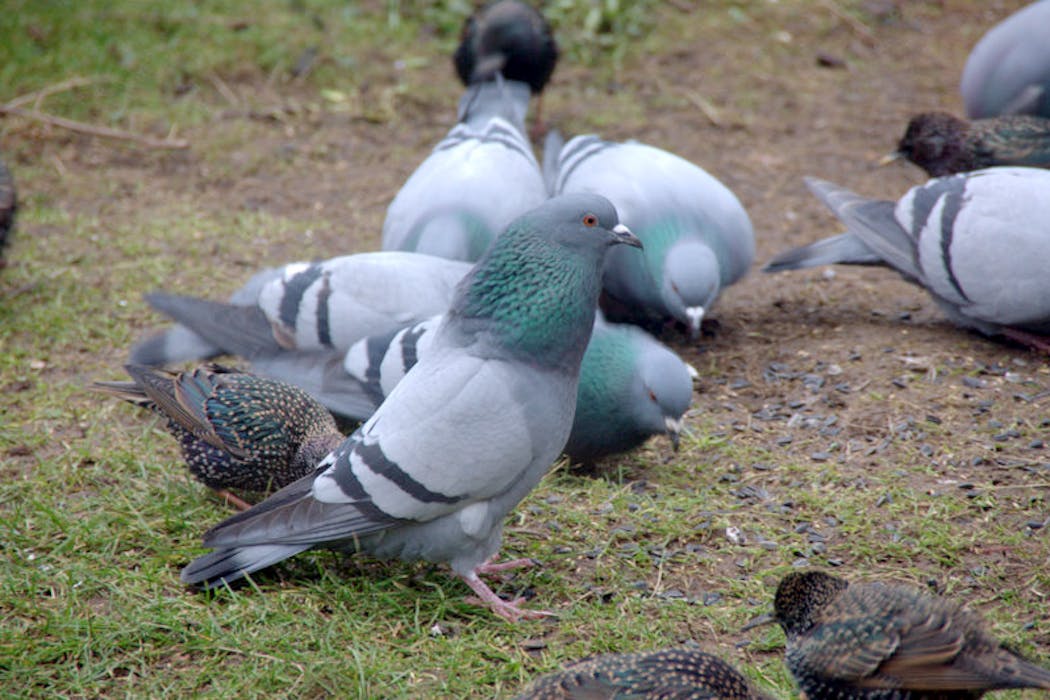
Wild rock doves such as these are endangered, following interbreeding with feral ‘city pigeons’. Mike Pennington/Wikimedia , CC BY-NC-SA

Domestic pigeons have surprising cultural significance. They inspired Charles Darwin in his thinking about evolution, delivered wartime messages to save lives, and have symbolic meaning around the world.

The domestic pigeon is among the best understood animals on the planet, with research published weekly on various aspects of their biology. Yet we know very little about their wild ancestors. Because of this, I have been visiting Scotland’s Outer Hebrides since 2019 to study the truly wild pigeon.

Millennia of human-pigeon interactions arose from the domestication of a small, blue-grey bird – the rock dove – 5,000-10,000 years ago, probably in the Middle East. Most of us are familiar with feral pigeons. Found cooing and strutting throughout the world’s cities, these animals descend from escaped domestic birds.

Unlike feral pigeons, which thrive in attics (or outside McDonald’s), the rock dove is shy, and mostly found on cliffs or mountains. Domestic pigeons, feral pigeons and rock doves all belong to the same species – Columba livia.

Although rock doves are native to vast swathes of Europe, Africa and Asia, their modern geographic distribution is unclear, thanks to interbreeding with feral pigeons. Across much of their original range, rock doves have gone extinct, replaced by pigeons with a mixture of wild and feral ancestry. For example, they have been completely subsumed into the feral pigeon gene pool across England and Wales.

Nevertheless, wild-looking pigeons were known to live in parts of Scotland and Ireland. Among ornithologists and casual birdwatchers, these birds were sometimes said to be “proper” rock doves, and sometimes wild-feral hybrids. It was this mystery that inspired me to study these birds which, living in remote habitats (and being difficult to distinguish from feral pigeons), had been neglected by scientists for decades.

In 2022, my colleagues and I published the first genetic study of these Scottish and Irish populations. We confirmed that they are wild rock doves, but that wild-feral interbreeding is common. We found that rock doves have thinner beaks and rounded heads, whereas feral pigeons have an engorged cere (the white fleshy lump above the beak).

Most interestingly, the rock doves of the Outer Hebrides, off the west coast of Scotland, remain genetically distinct, with limited evidence of interbreeding with feral pigeons. Future genetic research will hopefully identify similar colonies surviving elsewhere (wild-looking populations are also seen in parts of Asia, north Africa, and the Mediterranean).

For now though, Outer Hebridean rock doves represent the “wildest” (having the least feral pigeon ancestry) known contemporary population in the world. Foraging in meadows, and roosting in sea caves, they have, against scientists’ expectations, escaped the impacts of domestication. This is probably because pigeon keeping has always been rare in the Outer Hebrides, and few feral pigeons make it across the sea from mainland Britain.

Each year, I spend several weeks in the Outer Hebrides studying the rock doves. To allow individual birds to be followed throughout their lives, they need to be fitted with coded leg rings. Urban feral pigeons can be captured with a hand net and some birdseed, but their warier cousins require a more thoughtful approach.

We find that the best way is to target them overnight, when they are roosting. We take measurements, photographs and blood samples, before returning them to sleep. We have so far incorporated over 1,200 birds into our study.

Outer Hebridean rock doves are sparsely distributed, in colonies of up to a hundred birds. They rest and breed in caves, rocky crags and ruined buildings. Living among golden eagles and red deer, it’s a completely different lifestyle to that associated with feral pigeons.

In 2025, we published the results of a GPS tracking trial. We tracked rock doves from a colony in a disused barn, to see whether life in a human-built environment affects their behaviour.

Although naturalists have long discussed a classic rock dove “commuting” behaviour (travelling many miles each day, between roosting and foraging sites), this is not what we observed with our barn-dwelling birds. While many Outer Hebridean rock doves still commute (they are seen traversing the islands each morning and evening), the doves we tracked had abandoned this behaviour, associating almost exclusively with farmland.

This may give us a rare window into the earliest stages of domestication in this species. Our observations suggest that, instead of being deliberately retrieved from nature and actively farmed, rock doves were probably first attracted by agriculture, abandoning their natural commuting behaviour to live alongside us. Providing roosting structures likely enhanced this process – and we started building dovecotes at least 4,000 years ago.

The exciting thing about working with rock doves is that much of their biology
remains a mystery. We now know that genetically distinct populations persist, but there’s little information about their reproduction, predators or diseases.

Studying wild rock doves gives us a rare chance to establish how one of science’s model species lives in nature. This may yield insights into domestication, wild-feral hybridisation, and human-wildlife relationships – contributing to the wider understanding of our place in the natural world.

The Conversation

Will Smith’s research on rock doves has previously been funded by the Edward Grey Institute and the John Fell Fund (both of the University of Oxford), the British Trust for Ornithology, the Scottish Ornithologists’ Club, the British Birds Charitable Trust, the Houghton Trust, and the John Muir Trust. His research is currently funded by the Leverhulme Trust (as an Early Career Fellow), the Genetics Society, and the British Ecological Society.

ref. What I’ve learned from studying the wild pigeon – https://theconversation.com/what-ive-learned-from-studying-the-wild-pigeon-269116

US action against Greenland would undermine Nato, but now is not the time to panic

Source: The Conversation – UK – By Stefan Wolff, Professor of International Security, University of Birmingham

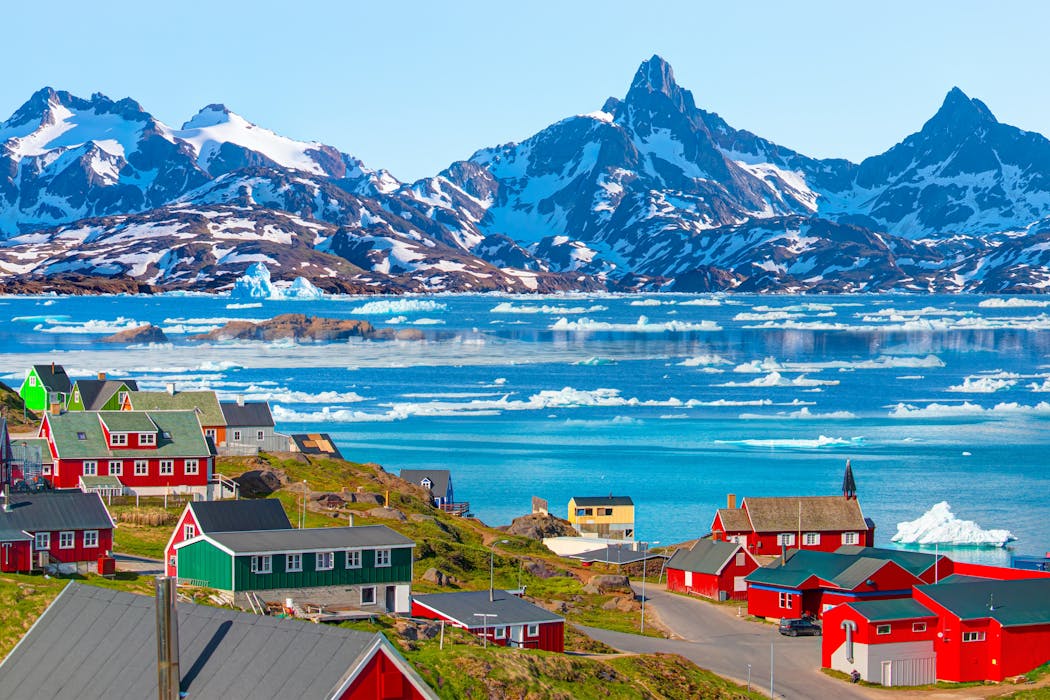
Donald Trump sees Greenland as national security priority for the US. muratart / Shutterstock

Shortly after the US military operation to capture Venezuelan leader Nicolás Maduro on January 3, US president Donald Trump restated his claim to Greenland. The White House sees Greenland, which is part of the kingdom of Denmark, as crucial for national security and is reportedly considering a range of options to acquire the island. This includes “utilising the US military”.

Trump’s proclamations have led to a sense among Europeans that US aspirations for dominance over the western hemisphere extend beyond Latin America. And the fact that Trump’s secretary of state, Marco Rubio, told congressional leaders in Washington that the administration wants to buy Greenland, not invade it, is unlikely to make them feel much better.

Their worries that Trump is serious about annexing Greenland are not unfounded: the US president has repeatedly expressed his desire to make Greenland part of the US, starting back in his first term. But some of the presumed implications, like the dissolution of Nato as foreseen by Danish prime minister Mette Frederiksen, are at least for now overblown.

Assuming there is an American move against Greenland, this would not be the first time two Nato allies have been at loggerheads. France pulled out of Nato’s military structures in the late-1960s over concerns about losing its foreign policy autonomy and possibly being drawn into the Vietnam war.

Greece withdrew from military participation in the alliance in 1974 after neighbour and fellow Nato member Turkey invaded Cyprus and occupied the northern, predominantly Turkish-Cypriot, part of the island. Tensions between the two Nato members continue to this day but have not brought the alliance down.

Nato also rode out the Suez crisis in 1956. This crisis saw Britain and France, together with Israel, invade Egypt to regain control of the Suez canal before withdrawing after intense US pressure.

The alliance also survived the “cod wars” between the UK and Iceland in the 1970s. And Nato did not disintegrate during the rift that emerged between its members in the run-up to – and in the aftermath of – the US-led invasion of Iraq in 2003.

What sets all of these previous examples apart from an American move against Greenland is that this would be the first time the US engages in an aggressive act against a Nato ally. This would hardly be something that Denmark and its European allies could accept, especially if it involves the use of force.

But not accepting US aggression can come in many different forms. On the spectrum of possible responses, the least likely is an activation of the EU’s mutual defence clause, which would be followed by military hostilities between European states and the US. The EU does not have the military capabilities, nor is it likely to have the political will, to go to war with the US.

A mass European exodus from Nato is also far from a foregone conclusion. Nato’s founding treaty does provide an option for members to leave in its article 13, which foresees a “notice of denunciation” and a 12-month period until an exit takes full effect. But given the security threats that Europe currently faces from Russia, even a temporarily dysfunctional Nato would be better than no Nato at all.

In the event that the US moves to take control of Greenland, political paralysis within Nato would almost be certain. This would probably involve escalating rhetoric on both sides of the Atlantic and a Danish withdrawal from military participation in Nato.

European diplomatic protests against American action over Greenland might lead Trump to declare that the US is withdrawing from Nato. But that, too, is not straightforward. Such a move would require approval in the US Senate and consultation with members of both houses of Congress.

There would probably be significant pushback both from US lawmakers and from the Pentagon. This is because a US withdrawal from Nato would entail a possibly rushed and almost certainly chaotic transfer of responsibilities in the Nato command structure and would raise major questions about US military bases in Europe.

None of this would be in the interests of American security and would certainly undermine US abilities to project force outside the western hemisphere.

Europe’s next steps

So, for Europe, the first order of the day is not to panic and rush into any ill-advised actions. While it is important to match Trump’s aggressive rhetoric, it is also key not to be drawn into needless escalation. In the long-term, an even deeper transatlantic fracture is ill-suited to the European interest in a revitalised Nato.

Security in the Arctic is a joint priority for the alliance, not just for the US. Greenland is a critical node in north Atlantic security, but so are Iceland and Norway as well as US bases in Europe. Emphasising these shared interests may not cut much ice with Trump but it is likely to strengthen congressional resolve to push back against the president’s threats to the transatlantic alliance.

At the same time, Europe should not rush into any hasty deals with Trump over Greenland. While US security concerns, and possibly even economic interests, could be accommodated in existing arrangements, anything beyond that – such as selling Greenland to the US in exchange for renewed US commitments to Nato and Europe – would be foolish.

Not only can Trump not be trusted to keep any promises he might make in order to get a deal done but he could also not credibly commit his successors. Hence, any arrangement that the Europeans may now undertake to manage American hostility may be counterproductive if it cannot be undone should the mood in Washington change to become less anti-European.

And there is still a faint hope in Europe that things might get better either after the US mid-term elections in 2026 or the presidential elections in 2028. As always, there is also the possibility that Trump’s strategic focus might zoom in on some other issue – such as a protracted failure of US policy in Venezuela – and so take his eyes off Greenland.

The Conversation

Stefan Wolff is a past recipient of grant funding from the Natural Environment Research Council of the UK, the United States Institute of Peace, the Economic and Social Research Council of the UK, the British Academy, the NATO Science for Peace Programme, the EU Framework Programmes 6 and 7 and Horizon 2020, as well as the EU’s Jean Monnet Programme. He is a Trustee and Honorary Treasurer of the Political Studies Association of the UK and a Senior Research Fellow at the Foreign Policy Centre in London.

David Hastings Dunn has previously received funding from the ESRC, the Gerda Henkel Foundation, the Open Democracy Foundation and has previously been both a NATO and a Fulbright Fellow.

Mark Webber is Senior Non-resident fellow at the NATO Defence College in Rome and a trustee of NATO Watch. He has previously received funding from the Economic and Social Research Council (ESRC) and the British Academy to carry out research on NATO.

ref. US action against Greenland would undermine Nato, but now is not the time to panic – https://theconversation.com/us-action-against-greenland-would-undermine-nato-but-now-is-not-the-time-to-panic-272911

Why disabled young people with life-shortening conditions need better support for intimacy

Source: The Conversation – UK – By Sarah Earle, Professor of Social Science, School of Social Sciences, Nottingham Trent University

Yiistocking/Shutterstock

Until relatively recently, children and young people with life-shortening conditions were not expected to survive into adulthood.

Conditions such as cancer, cystic fibrosis and Duchenne muscular dystrophy were widely understood, particularly in the late 20th century and early 2000s, as diagnoses that would likely result in death during childhood or adolescence. Today, there are more than 400 recognised life-shortening conditions, and many infants and children with these diagnoses still do not reach adulthood.

However, advances in medical treatment, specialist care and assistive technologies have begun to change this picture. Increasing numbers of children and young people with life-shortening conditions are now living into adulthood, sometimes well beyond what clinicians and families were originally told to expect.

Although most young adults with these conditions still face shorter lives, increased life expectancy has made new aspects of social and family life possible. This includes the opportunity to think about sexual relationships, intimacy and reproduction.

For the past 15 years, I have worked with colleagues in the Sexuality Alliance, which advocates for the sexual and reproductive rights of disabled young people living with life-shortening conditions.

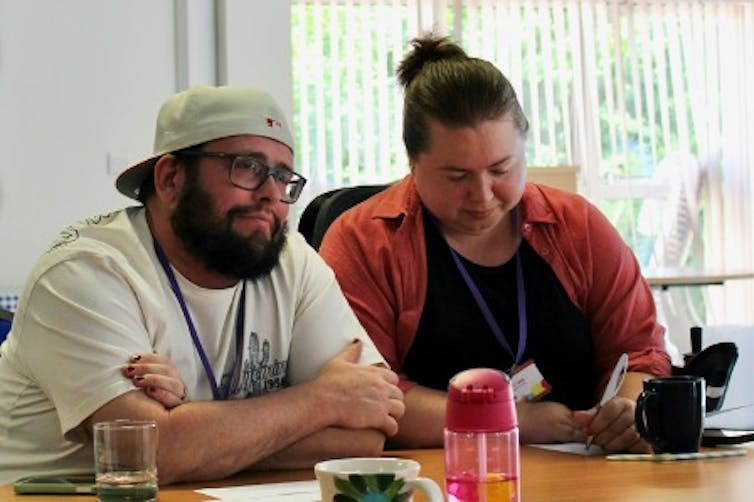
Leah and Lewis Leyland, co-researchers and members of the Sexuality Alliance.
Alison Cooke, CC BY

Our research, which was co-produced with disabled young people, shows that many feel unsupported and overlooked when it comes to their sexual and reproductive lives. Families and carers often report feeling unprepared.

In many cases, they had been told that their child would die, only to find that they were continuing to live, becoming teenagers and then adults. Professional staff, including nurses, doctors and therapists, were often unaware of these issues or felt anxious about addressing them.

The risk of death remains a constant presence in the lives of young adults with life-shortening conditions. Uncertainty shapes everyday experience, but it is not always at the forefront of how young people understand themselves.

The young people we interviewed told us that they want to live life to the full, and that this includes exploring sexual intimacy and forming romantic relationships. They described this as a normal part of growing up, and many saw it as a rite of passage. They also explained how important intimacy can be for both physical and emotional wellbeing.

One participant said that being in a relationship gave him a reason to live. Another said it helped him stay healthy by reducing loneliness and depression. For many participants, taking part in our research was the first time they had ever been able to talk openly about this part of their lives.

Addressing the sexual and reproductive citizenship of disabled young people who were not expected to live into adulthood is sensitive work because it confronts longstanding taboos around sexuality, youth and death. Disabled people frequently reported feeling marginalised, infantilised and treated as asexual. Many participants felt they were seen primarily as vulnerable rather than as people with desires, agency and rights.

They also told us that safeguarding practices, which are intended to protect vulnerable people and the organisations that support them, could sometimes unintentionally reinforce silence. Many had little or no access to sex education.

One young person explained that she had been removed from sex education at school. This was not only because she was expected to die, but also because staff believed the topic might distress her or be inappropriate. The result was the same: exclusion from information that her peers received.

Families, carers and professionals are well placed to support young people in realising their sexual and reproductive citizenship, but many report lacking the training or confidence to do so. A starting point is to challenge everyday disablist assumptions that presume disabled people cannot, should not, or do not want to have sex or children.

As part of our work, we co-produced resources to help young people and carers talk openly about sex and intimacy.

These resources encourage carers to reflect on their own attitudes and beliefs. They also provide a clear legal overview of issues such as consent and mental capacity, helping professionals feel more confident. Young people are supported to understand their rights and responsibilities, and to develop the skills needed for honest conversations about their sexual and reproductive wishes.

Despite the risks and uncertainties they face, many young people see intimacy and relationships as central to their wellbeing and identity. This work highlights the need to challenge disablist assumptions, improve access to inclusive sex education, and equip carers and professionals with the tools to support young people in realising their sexual and reproductive rights.

The Conversation

Sarah Earle does not work for, consult, own shares in or receive funding from any company or organisation that would benefit from this article, and has disclosed no relevant affiliations beyond their academic appointment.

ref. Why disabled young people with life-shortening conditions need better support for intimacy – https://theconversation.com/why-disabled-young-people-with-life-shortening-conditions-need-better-support-for-intimacy-271263

What will 2026 look like for the UK’s electric vehicle market?

Source: The Conversation – UK – By Jagannadha Pawan Tamvada, Professor of Entrepreneurship, Kingston University

Vivid Brands/Shutterstock

In the UK, as in many other countries, the shift towards electric vehicles (EVs) has been rapid. Incentives, increased choice and some positive PR took the electric car sales to nearly 500,000 vehicles in 2025 – around 24% of the market. But the government’s budget in late November, which outlined new charges for EV owners, may have slammed the brakes on this momentum.

Chancellor Rachel Reeves revealed that EV owners will face a new 3p-per-mile road charge from April 2028, marking a significant shift in how the government taxes cleaner forms of transport. The owners of plug-in hybrids will pay 1.5p per mile. These new levies will apply alongside other motoring taxes that EVs are also now required to pay.

This is the UK’s first major step towards replacing declining fuel-duty revenues, which have fallen as more drivers move from petrol and diesel vehicles to electric alternatives. The pay-per-mile tax is expected to raise more than £1 billion in its first full year.

These charges don’t mean that the government is cooling on EVs, however. Some sweeteners still remain. An electric car grant (ECG), launched in July 2025, offers up to £3,750 off eligible new electric vehicles and is aimed at keeping the transition to cleaner transport affordable for consumers.

But critics argue that introducing running-cost charges risk slowing EV uptake at a time when the government is still trying to accelerate the shift away from fossil-fuel vehicles.

And industry experts are warning that discounts of up to £11,000 per vehicle offered by carmakers to boost demand are not sustainable. At the same time, industry groups warn that higher operating costs could also reduce demand, particularly for price-sensitive customers.

The shift signals a maturing phase for the UK’s EV market: incentives remain, but the era of untaxed electric motoring is drawing to a close. So what could it mean for sales – and is it a good time for drivers to make the change? Here’s what 2026 might have in store for the EV market.

1. Prospective buyers are likely to hold back

The demand for EVs is likely to be affected in the short run. Forecasts from the independent Office for Budget Responsibility (OBR) suggest that nearly 440,000 fewer EVs will be sold by 2031 because of the new charge. However, 320,000 of these are expected to be offset by increased sales due to other measures in the budget (an increase to the threshold for the “luxury car tax” for EVs, for instance, and widening the electric car grant).

To put that into perspective, nearly 1.95 million new cars were sold in 2024 in the UK. Battery-powered EVs accounted for one in five of these new sales and, together with plug-in hybrid electric vehicles (PHEVs), they exceeded 40% of the market share. The secondhand market is likely to feel the impact as well: with overall ownership costs rising, demand for used EVs may weaken alongside new-car sales.

2. Less confidence in EV ownership costs

Prospective buyers are likely to scrutinise the long-term costs of EV ownership, as the new system introduces more uncertainty. There will inevitably be questions: what happens if the per-mile charge increases from 3p to 4p, or if inflation pushes these rates higher? This unpredictability around future running costs could dampen consumer confidence, particularly among buyers who are already cautious about making the switch to a still-evolving technology.

3. Car producers will find it challenging

Carmakers are also likely to face challenges. The automotive industry is already investing heavily in factories, tooling and technology to support the shift to electric production.

Several manufacturers, including Jaguar, are planning to phase out internal combustion engines entirely. A sudden change in the policy environment could complicate these long-term commitments.

Some companies may scale back or delay investment in EV technologies if they anticipate weaker consumer demand, while others might double down – accelerating production, lowering costs through building more cars, and innovating more aggressively to keep electric models attractive despite the new charges their customers will face.

BMW, for example, is expected to introduce several new EV models over the next two years, with its new iX3 travelling more than 1,000 kilometres (621 miles) on a single charge recently. The leaders of Polestar and Volvo have no intentions of slowing down either as they strive to hold on to market share in the face of Chinese competition.

4. Commuters will feel most penalised

Commuters are likely to feel the greatest impact. For many people, lower living costs are a key reason for living outside major cities, and long daily journeys make fuel efficiency a central consideration. Drivers who planned to switch to EVs to reduce commuting costs may now feel penalised for living further from their workplaces. Every extra mile will add to their running costs under the new system.

a rural ev charging point with greenery in the background.
Every mile will come at a cost to commuters.
Rito Succeed/Shutterstock

5. Impact on other sustainability initiatives

The new charge also highlights a broader reality: sustainability subsidies are rarely permanent. The closure of the feed-in tariff scheme for solar power in 2019 is a recent example. But although there were warnings against its removal, solar adoption actually continued to rise. A similar dynamic could play out in other areas of clean technology.

6. EV prices are likely to go down

There is a potential silver lining for buyers – the pay-per-mile policy could indirectly bring down EV prices. With projected demand dropping, manufacturers may feel pressure to reduce margins to attract customers. Some Chinese carmakers operating in the UK have already introduced additional incentives to offset the impact of the new charges. This could signal that competitive pricing strategies will intensify in response to the policy.

The risk of the new charge is that it creates the impression that sustainability incentives are not only being withdrawn but replaced with new costs for drivers switching to cleaner vehicles. This may make petrol cars seem like a lower-risk option for would-be EV buyers. But over time, falling EV prices, improved battery efficiency and lower operating costs compared with traditional vehicles are still expected to make the transition economically compelling.

The Conversation

The authors do not work for, consult, own shares in or receive funding from any company or organisation that would benefit from this article, and have disclosed no relevant affiliations beyond their academic appointment.

ref. What will 2026 look like for the UK’s electric vehicle market? – https://theconversation.com/what-will-2026-look-like-for-the-uks-electric-vehicle-market-271441

Introducing Strange Health – a new video podcast from The Conversation

Source: The Conversation – UK – By Katie Edwards, Commissioning Editor, Health + Medicine and Host of Strange Health podcast, The Conversation

Enamul Hasan Code/Shutterstock

I have a confession.

When I am stressed, overwhelmed or trying to switch my brain off after a long day, I do not meditate. I do not do breathwork. I am rarely mindful. Instead, I watch YouTube videos of draining boils and earwax extraction.

Deeply satisfying. Genuinely calming. Extremely unsettling to anyone who happens to walk into the room.

I am not alone, although my husband tells me I soon will be if I continue watching acne “removal” videos in bed, particularly at full volume. Gross-out health content is everywhere, and it is wildly popular. Videos of extractions, parasites, clogged pores and bodily “build-ups” rack up millions of views. Articles about strange symptoms, mystery lumps and alarming bodily discoveries consistently top health reading lists.

This is not because people like me are weird. Or at least, not only because we are weird.

It is because bodies are strange, unpredictable and often poorly explained. When something feels embarrassing, frightening or just plain confusing, curiosity kicks in hard.

As a health editor, I commission articles from experts about the parts of the body we are usually taught not to talk about. Time and again, the most-read stories are the ones that make people recoil slightly before clicking anyway. Worms. Smells. Leaks. Stones. Toxins. The things you Google at midnight and hope nobody ever finds in your search history.

Behind the gag reflex, there is usually a serious question. Is this normal? Is this dangerous? Has the internet just convinced me I am dying?

That is why we have launched Strange Health, a new podcast series from The Conversation. In it, I’m teaming up with Dan Baumgardt, a practising GP and lecturer in health and life sciences at the University of Bristol, to decode wellness trends and explore what’s weird and wonderful about the body.

On Strange Health, Dan I will take the health questions people are already obsessing over online, especially the bizarre, gross or misunderstood ones, and examine them properly. In each episode we’ll also be talking to academic experts who are actively researching these issue. We ask where these ideas come from, what the science really says, and why misinformation spreads so easily when bodies get involved.

From guilty pleasure to public health problem

Some of The Conversation’s most popular health articles sit firmly in this territory. Pieces about pina colada-scented vaginas, body stones, brain “holes” and “miracle cures” have attracted hundreds of thousands of readers.

That popularity tells us something important. People are not just looking for reassurance. They are looking for explanations that make sense of what their bodies are doing, and what might genuinely help, without judgement or jargon.

It also explains why misinformation thrives here. The more uncomfortable the topic, the less likely people are to ask a professional, and the more tempting it is to trust a confident stranger online.

Each episode of Strange Health focuses on a single strange or controversial health topic. Some are familiar. Some are genuinely disgusting. All of them have been circulating widely online. There will be gross details. There will be moments of disbelief. There will also be solid science and practical explanations.

If you have ever found yourself spiralling after watching a TikTok, reading a wellness blog, or eyeing up a suspicious supplement advert, Strange Health is designed for you. And we want you to become part of the conversation by submitting your own burning questions about the human body – no matter how strange they may be – to strangehealth@theconversation.com.


Strange Health launches on 20th January and the first episode is about detoxing. New episodes will be available every Tuesday throughout February and March. You can listen wherever you get your podcasts, or watch on YouTube and Spotify.

Strange Health is hosted by Katie Edwards and Dan Baumgardt. The executive producer is Gemma Ware, with video and sound editing by Sikander Khan. Artwork by Alice Mason.

Listen to The Conversation Weekly via any of the apps listed above, download it directly via our RSS feed or find out how else to listen here. A transcript is available via the Apple Podcasts or Spotify apps.

The Conversation

Dan Baumgardt does not work for, consult, own shares in or receive funding from any company or organisation that would benefit from this article, and has disclosed no relevant affiliations beyond their academic appointment. Katie Edwards works for The Conversation.

ref. Introducing Strange Health – a new video podcast from The Conversation – https://theconversation.com/introducing-strange-health-a-new-video-podcast-from-the-conversation-272766