Desde el estallido de la actual ola de protestas en Irán han surgido dos narrativas muy contrapuestas para explicar lo que está ocurriendo en las calles.
Para el poder iraní, los disturbios se presentan como un complot orquestado desde el extranjero. Argumentan que se trata de un intento impulsado desde fuera para desestabilizar al Estado mediante la manipulación, la infiltración y las operaciones psicológicas sobre la ciudadanía.
Para la oposición, los mismos acontecimientos se enmarcan como un levantamiento nacional arraigado en agravios de larga data. Argumentan que las protestas señalan una ruptura entre la sociedad y el sistema político.
La forma en que se cuenta un conflicto es un componente clave en la guerra. Las protestas en Irán tienen dos relatos muy diferentes.
La elaboración de narrativas como guerra psicológica
En la era digital, la guerra psicológica ha ido más allá de la propaganda convencional y ha entrado en el ámbito de lo que los académicos Ihsan Yilmaz y Shahram Akbarzadeh llaman operaciones estratégicas de información digital.
Las operaciones psicológicas funcionan como instrumentos diseñados por el poder no solo para suprimir la disidencia sino también para alterar la forma en que los individuos perciben la realidad, la legitimidad y las posibilidades políticas. Su objetivo es cognitivo y emocional pues:
Inducen al miedo, la incertidumbre y la impotencia.
Sirven para desacreditar a los oponentes.
Construyen una sensación de inevitabilidad en torno a un determinado escenario político.
Estas técnicas son empleadas no solo por los Estados sino también, y cada vez más, por actores no estatales.
Las plataformas de redes sociales se han convertido en los principales escenarios de esta lucha psicológica. Los hashtags, los memes, las imágenes manipuladas y los comentarios coordinados, a menudo amplificados por cuentas automatizadas, se utilizan para enmarcar acontecimientos, señalar culpables y moldear respuestas emocionales a gran escala.
Es necesario subrayar que el público no es un receptor pasivo de estas narrativas. Las personas que simpatizan con un determinado encuadre lo reproducen, refuerzan y controlan activamente dentro de las cámaras de eco digitales. De este modo, florece el sesgo de confirmación y se descartan o atacan las interpretaciones alternativas.
Por ello, el control de la narrativa no es una dimensión secundaria del conflicto sino un campo de batalla central. La forma en que se enmarca un levantamiento puede determinar su trayectoria. Puede determinar si sigue siendo pacífico o se vuelve violento, y si la represión interna o la intervención extranjera se consideran justificadas o inevitables.
La narrativa del régimen iraní
El régimen iraní ha enmarcado sistemáticamente el levantamiento actual como un complot orquestado por Israel, Estados Unidos y los servicios de inteligencia aliados. En esta narrativa, las protestas no serían una expresión de descontento interno, sino una continuación del enfrentamiento entre Israel e Irán. Esto, según se argumenta, forma parte de una campaña más amplia para derrocar al régimen y sumir al país en el caos.
Dos semanas después del inicio de las protestas, el Estado organizó grandes manifestaciones a favor del régimen. Poco después, el líder supremo, el ayatolá Alí Jamenei, declaró que estas manifestaciones habían «frustrado el plan de los enemigos extranjeros que iban a llevar a cabo mercenarios nacionales».
El mensaje era claro: la disidencia no solo era ilegítima, sino traicionera. Se describía a quienes participaban en ella como instrumentos de potencias externas, en lugar de ciudadanos con reivindicaciones políticas.
Demonizar la disidencia tiene un doble propósito. No solo es un método para silenciar a la oposición sino también una herramienta para manipular la percepción y moldear las respuestas emocionales.
Al presentar a los manifestantes como agentes extranjeros, el régimen busca fabricar conformidad, desanimar a los partidarios indecisos y proyectar una imagen de popularidad generalizada. El objetivo no es simplemente castigar a los críticos, sino señalar que la disidencia pública tendrá graves consecuencias.
Para reforzar esta narrativa, las cuentas de las redes sociales favorables al régimen han difundido contenidos que mezclan el encuadre ideológico con material factual selectivo. Los análisis que sostienen que los acontecimientos en Irán siguen un conocido «manual de cambio de régimen», así como declaraciones israelíes que sugieren operaciones de inteligencia dentro de Irán. Una característica común de este enfoque es la selección selectiva de comentarios de expertos o datos aislados para justificar la represión.
El momento y la amplificación de este tipo de contenidos también son significativos. Las redes sociales se utilizan mediante manipulación algorítmica para que el discurso del régimen se vuelva viral y margine las opiniones contrarias.
Al mismo tiempo que se va desarrollando, esta campaña digital se ve reforzada por formas más tradicionales de control. Las restricciones y los cortes de internet limitan el acceso a fuentes de información alternativas. Esto permite a los medios de comunicación estatales dominar las comunicaciones y frustrar los desafíos a la narrativa oficial.
En este entorno, la historia del régimen funciona tanto como propaganda como instrumento estratégico. Su objetivo es redefinir el levantamiento, deslegitimar la disidencia y preservar la autoridad, controlando la forma en que se interpretan los acontecimientos.
La narrativa de la oposición
Aunque la oposición está dividida, dos grupos principales se han mostrado activos en la formulación de la narrativa de la oposición: los que apoyan la depuesta monarquía iraní y el grupo armado disidente Mojahedin-e-Khalq (MEK). A pesar de sus diferencias, ambos han contribuido a la misma historia.
Han elaborado una narrativa persuasiva, enmarcando el levantamiento como una emergencia moral que requiere intervención externa, en particular por parte de Estados Unidos e Israel. Esta narrativa no representa todas las voces de la oposición, pero ha ganado visibilidad a través de las redes sociales, los medios de comunicación en el exilio y las redes de activistas. Su objetivo principal es llamar la atención internacional sobre el conflicto y defender, y luego provocar, un cambio de régimen en Irán.
Una técnica central ha sido la legitimación y el fomento de la violencia. Los llamamientos a la protesta armada y la confrontación directa con las fuerzas de seguridad marcan un claro cambio de las movilizaciones civiles reclamando mejoras hacia un levantamiento violento de la población.
El elevado número de víctimas entre las fuerzas estatales –hasta el 11 de enero, se hablaba de más de 114– es un ejemplo de la eficacia de esta técnica. Esta escalada se justifica a menudo como necesaria para mantener vivo el movimiento y generar un nivel de derramamiento de sangre que obligue a la intervención internacional.
Según observadores internacionales, los enfrentamientos entre manifestantes armados y fuerzas estatales han provocado un número significativo de víctimas en ambos bandos.
Una segunda estrategia ha sido la de engordar las cifras de víctimas. El número de muertos que dan las plataformas de la oposición son mucho mayores que las cifras aportadas por organismos independientes.
Esta exageración tiene un claro propósito psicológico y político. Su objetivo es conmocionar e influir en la opinión internacional, presentar la situación como genocida o excepcional, y aumentar la presión sobre los gobiernos extranjeros para que actúen militarmente.
Un tercer elemento ha sido el uso de la intimidación y la coacción retórica. En algunas apariciones en los medios, opositores de alto perfil han amenazado a los comentaristas favorables al régimen, advirtiendo de represalias una vez que el poder cambie de manos.
Este lenguaje tiene múltiples funciones. Busca silenciar los puntos de vista alternativos, proyectar confianza e inevitabilidad, y presentar la situación como una lucha entre el bien y el mal. Al mismo tiempo, esta retórica corre el riesgo de alienar al público indeciso y reforzar las afirmaciones del régimen de que el levantamiento conducirá al caos o a una política de venganza.
Estas prácticas revelan cómo parte de la oposición también ha adoptado la guerra narrativa como herramienta estratégica. Esta narrativa se utiliza para amplificar la violencia, exagerar los daños y suprimir las interpretaciones contrarias. Su objetivo es redefinir el levantamiento no solo como una revuelta interna, sino como una crisis humanitaria y de seguridad que exige la intervención extranjera.
Al hacerlo, refleja el propio esfuerzo del régimen por convertir la narración en un arma en un conflicto en el que la percepción es tan importante como el poder.
De diferentes maneras, ambas narrativas acaban marginando a los propios manifestantes. Reducen un movimiento popular diverso a un instrumento de lucha por el poder, ya sea para legitimar la represión en el país o para justificar la intervención del extranjero.
Ali Mamouri no recibe salario, ni ejerce labores de consultoría, ni posee acciones, ni recibe financiación de ninguna compañía u organización que pueda obtener beneficio de este artículo, y ha declarado carecer de vínculos relevantes más allá del cargo académico citado.
La nueva edición de las Guías Dietéticas para Estadounidenses (en adelante, GDA) de 2025-2030 ha generado un importante revuelo en medios y redes sociales, provocando una polarización entre seguidores y detractores. Su propuesta es, cuando menos, disruptiva, tanto en su representación gráfica como en sus recomendaciones. Pero apenas se ha hablado del fondo del asunto: por primera vez desde 1980, tras nueve ediciones en cuarenta y cinco años, se ha eludido el procedimiento científico estándar establecido para su elaboración.
Cambio radical
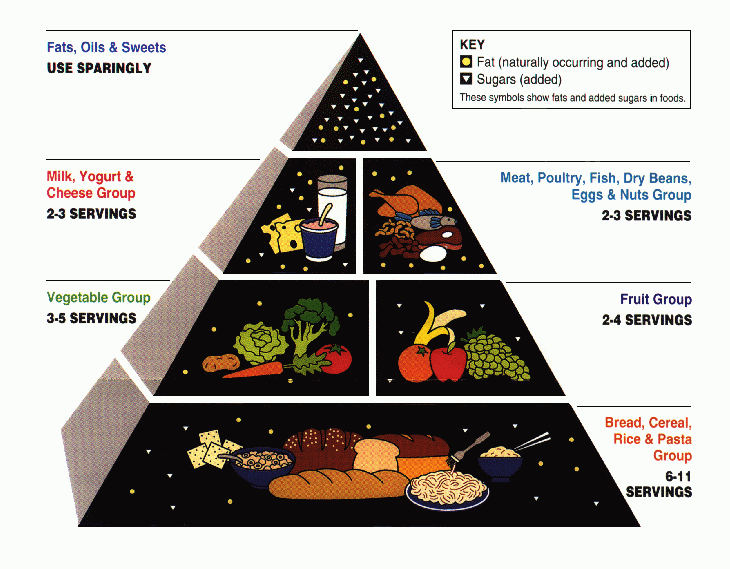
El aspecto más llamativo de las GDA 2025-2030 es su representación gráfica, que rompe radicalmente con MyPlate (guía representada en forma de plato y vigente desde 2010) y con cualquier propuesta “piramidal” típica, desde sus orígenes en 1992 a sus evoluciones. Su actual plasmación es una suerte de pirámide invertida que crea un gradiente visual, de más a menos, entre los alimentos más recomendados, en la parte superior, y los menos, abajo.
No es un formato novedoso. En 2017, el Instituto Flamenco de Vida Saludable hizo una propuesta idéntica, pero con dos diferencias claras: además de explicar el porqué de este gráfico y su interpretación, sus contenidos eran netamente diferentes –e incluso contradictorios– con las actuales GDA.
La proteína animal asciende a lo más alto
En lo que se refiere a sus contenidos, las nuevas guías incluyen evidentes autocontradicciones y mensajes cuestionables a la luz de la ciencia:
El texto recomienda no superar el 10 % del valor calórico total con las grasas saturadas. Sin embargo, al mismo tiempo, aconseja el consumo habitual de carne y sebo de vacuno, mantequilla y lácteos enteros. El gráfico refuerza esta idea.
En la pirámide, los cereales integrales son los más perjudicados (vértice inferior) sin embargo, cuando se comparan las raciones/día propuestas con las raciones de los alimentos más destacados resultan ser idénticas: entre 2 y 4.
Las legumbres no aparecen en la representación gráfica a pesar de su papel central en los patrones dietéticos saludables. Esta omisión simbólica refuerza la centralidad de la proteína animal en el nuevo relato.
Giro de guion
Estas guías se actualizan cada cinco años mediante un riguroso procedimiento supervisado por el Departamento de Agricultura de Estados Unidos (USDA) y el Departamento de Salud y Servicios Humanos (HHS). Durante dos años, y a través de un mecanismo de total transparencia que incluye un periodo de consulta pública, un panel independiente de 10 a 20 expertos, denominado Comité Asesor de las Guías Alimentarias, analiza la evidencia y elabora un informe. Una vez finalizado, este se remite al USDA y al HHS, que redactarán las GDA en base a sus recomendaciones.
Pero todo cambió en la edición actual. Una vez que la administración Trump recibió el informe de 421 páginas del Comité Asesor, se implantó un proceso de revisión inédito y exprés (de menos de 6 meses) para “corregir las deficiencias” del documento original. Un panel alternativo de expertos emitió su propio informe –The Scientific Foundation For The Dietary Guidelines For Americans– sin los habituales mecanismos de transparencia y participación pública. En apenas 90 páginas, expone las preocupaciones sobre el dosier original, las recomendaciones que acepta o rechaza de él y la “evidencia” que dará forma a las actuales GDA.
Nada ilustra mejor este giro que la tabla inicial de este informe alternativo: una lista de verificación o checklist que muestra, una a una, qué se ha hecho con las 56 recomendaciones del Comité Asesor (aceptarlas, aceptarlas parcialmente o rechazarlas). El resultado es elocuente: solo 14 se aceptan íntegramente, 12 parcialmente y 30 se rechazan por completo.
De esta manera, la administración hace una ostentación clara e inequívoca de lo que le parece el informe original del Comité Asesor, en lo que podría interpretarse como una manifestación de “malismo”. El checklist funciona como un “mira lo que hago con tus recomendaciones” elevado a categoría de mensaje. También se dedica medio folio a “apoyar la salud de la testosterona en los hombres” (página 64), un elemento innecesario a la luz de las necesidades en salud pública, pero que encaja con una exaltación ideológica de la masculinidad.
El informe alternativo también añade otras capas de inquietud: muchos de sus autores presentan importantes vínculos con la industria láctea y del ganado vacuno (como se puede comprobar consultando las páginas 11-18 del informe alternativo), sectores particularmente beneficiados por las nuevas GDA.
La justificación y la falacia
En un episodio de instrumentalización científica, las guías actuales sostienen que la crisis de salud de los estadounidenses es consecuencia de las propias recomendaciones federales promovidas durante décadas. Esta argumentación constituye una falacia post hoc ergo propter hoc: asumir que, porque algo ocurre después, fue causado por lo anterior. Según su lógica, las antiguas GDA habrían impulsado alimentos de muy baja calidad y altamente procesados, responsables de la epidemia de obesidad y enfermedades crónicas.
En realidad, ninguna versión previa de las GDA ha recomendado refrescos, snacks dulces o salados, bollería, cereales de desayuno azucarados ni otros ultraprocesados; más bien al contrario, los ha desaconsejado o relegado claramente. Además, la evidencia disponible muestra que el seguimiento de los estadounidenses de las guías ha sido históricamente bajo. Por tanto, culpar a las ediciones previas de ser la causa de la mala alimentación y de sus consecuencias es, como mínimo, un ejercicio de demagogia.
En definitiva, las GDA 2025-2030 no solo resultan científicamente controvertidas y contradictorias, sino también hacen gala de un radicalismo procedimental importante, aportando una receta que combina unos pocos ingredientes saludables con generosas dosis de ideología e intereses corporativos.
Juan Alfonso Revenga Frauca es consultor de la Interprofesional de los aceites de orujo de oliva (ORIVA)
José Miguel Soriano del Castillo no recibe salario, ni ejerce labores de consultoría, ni posee acciones, ni recibe financiación de ninguna compañía u organización que pueda obtener beneficio de este artículo, y ha declarado carecer de vínculos relevantes más allá del cargo académico citado.
It is late, the ward is crowded, and the clock is moving faster than everyone would like. A doctor has stabilised the patient as best they can, but one thing is missing – blood.
A relative is asked to “try somewhere else”, and within minutes, the family is on the phone, calling friends, contacting church groups, posting in WhatsApp chats, hoping that someone nearby is eligible, willing and able to reach the hospital in time.
In that moment, healthcare stops being only about medicine. It becomes about networks, trust and whether a lifesaving resource can be found quickly enough.
This is not an unusual drama in Ghana. It is a recurring reality, quietly shaping outcomes in emergencies, childbirth, surgery and severe illness. Ghana has made progress, but the gap between what is needed and what is available remains wide.
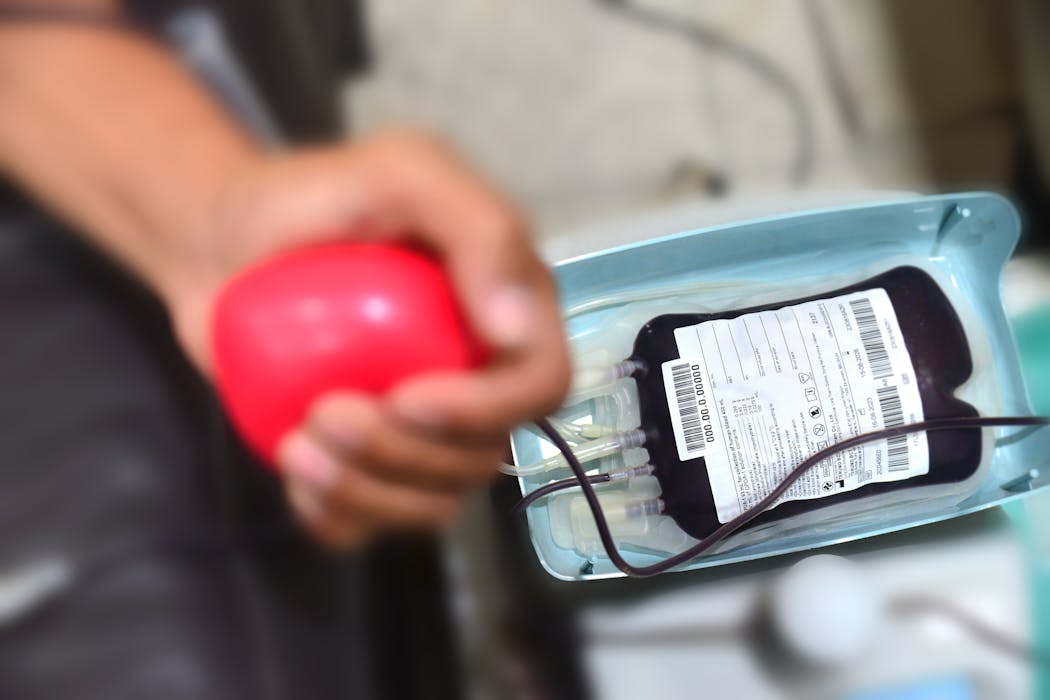
In 2024, Ghana’s National Blood Service collected 187,280 units of blood. This falls far short of the World Health Organization recommended annual stock requirement of 308,000 units. The consequences are tangible, including delays to surgery, difficult clinical decisions, and families carrying the burden of searching for blood at the worst possible time.
One way to gauge the scale is the “blood collection index”, defined as donations per 1,000 people. Ghana’s index increased from 5.9 in 2023 to 6.1 in 2024, but it remains well below the ten per 1,000 level that is often cited as a basic benchmark by the WHO.
The contrast is stark. The WHO’s global figures show an average (median) donation rate of 31.5 per 1,000 in high-income countries, compared with 6.6 per 1,000 in lower- and middle-income countries and 5.0 per 1,000 in low-income countries. Ghana is a low-income country, yet its donation level remains below average for this group of countries, underscoring a persistent gap between demand and supply.
Why does this matter so much? Because blood availability is not a niche issue. It underpins everyday healthcare and becomes decisive in emergencies.
Few examples are more urgent than childbirth. Postpartum haemorrhage (severe bleeding after delivery) can escalate rapidly, and survival often depends on timely transfusion.
In 2025, the WHO highlighted that bleeding following childbirth causes nearly 45,000 deaths globally each year. When anaemia is common, the danger increases further: women have less physiological “buffer” against blood loss.
Women who enter labour with severe anaemia have around seven times higher odds of dying or becoming critically ill from heavy bleeding after childbirth, compared to those with moderate anaemia. In plain terms, they start with less room for error, and without fast access to transfusion, things can spiral quickly.
So why is Ghana’s blood supply so difficult to secure? Part of the answer is structural. Blood services require investment in collection, testing, transport at the right temperature and distribution networks.
These systems must work reliably every day, not only during crises. Yet the demand is rising with population growth and expanding clinical services, while resources remain constrained. The result is a system that is often stretched, especially outside major urban centres.
Another part of the story is how donations are sourced. In many settings, a stable supply depends on a large base of regular voluntary donors. Ghana is still working towards that goal.
In 2024, voluntary donations nationwide decreased from 40% to 29%, even as regional blood centres saw some improvement. That matters because heavy reliance on replacement donors (family members or friends recruited at the point of need) creates unpredictability. Emergencies do not wait for someone to finish work, travel across town and pass eligibility screening.
Then there is trust. People don’t donate in a vacuum; they donate into a system they believe in.
In our ongoing national survey in Ghana on people’s blood donation experiences, trust is clearly concentrated in familiar and formal sources. Around nine in ten respondents report trust in requests coming from a family member or close friend, and similarly high trust in requests issued by an official hospital or clinic.
Trust drops as the source becomes more distant or less verifiable, with markedly higher scepticism towards non-hospital community donation groups and, most of all, unknown people.
Yet high trust in hospitals does not automatically translate into action. When people are unsure how blood is used, whether it reaches patients fairly, or whether it might be diverted or sold, willingness can stall.
Even when people want to help, uncertainty can lead to hesitation: “Will this really go where they say it will?” In a high-stakes context, doubt is costly.
This gap points to a transparency problem, where confidence depends not only on who makes the request, but also on whether the system can credibly show where the blood goes.
Finally, communication channels shape outcomes. When a hospital lacks a rapid, reliable way to reach suitable donors, it falls back on what is available: phone calls, personal networks and social media posts.
But social feeds are noisy, messages get buried, and not everyone has the same connectivity or social reach. The ability to mobilise donors becomes uneven, depending on who you know, where you live, and how quickly information travels.
None of this means Ghana lacks goodwill. In fact, the opposite is often true: communities respond generously when they understand a need and feel confident their help will make a difference. The challenge is that goodwill alone cannot compensate for gaps in infrastructure, coordination and trust.
Telling people to “donate more” is not a strategy if the system cannot consistently reach donors, support them and show them that their contribution mattered.
The solution?
What would meaningful progress look like? It starts with stronger hospital services and blood-bank capacity, so that safe collection, testing and storage can happen consistently.
Alongside that, Ghana needs a more organised digital way to mobilise donors: a channel that can reach the right people quickly, rather than relying on broad social media appeals that get buried, skimmed past, or spread too widely without finding eligible donors nearby.
A well-run system could also keep clear, traceable records for each donation and request, making it easier to show where blood goes and to coordinate fast, accountable responses when an emergency hits.
That is exactly the gap our research is tackling. We’re developing a hospital-linked digital platform designed for Ghana’s realities. Here, urgent requests can be sent quickly to nearby eligible donors through a trusted channel, with location-aware matching and follow-up rather than blanket posts. It also builds in transparent, auditable donation-to-use tracking, helping hospitals coordinate emergencies more efficiently while giving donors clearer reassurance about where their blood goes.
Because, in the end, the story of blood in Ghana is not only about shortages. It is about a simple question with life-or-death consequences: when someone is bleeding, will help arrive in time?
This article was commissioned in conjunction with Prototypes for Humanity, a global initiative that showcases and accelerates academic innovation to solve social and environmental challenges. The Conversation is the media partner of Prototypes for Humanity 2025.
This article was commissioned in conjunction with Prototypes for Humanity, a global initiative that showcases and accelerates academic innovation to solve social and environmental challenges. The Conversation is the media partner of Prototypes for Humanity 2025.
Michael Head has previously received funding from the Bill & Melinda Gates Foundation, Research England and the UK Department for International Development, and currently receives funding from the UK Medical Research Foundation, and UK Research and Innovation
Honghui Shen receives funding from the NIHR Southampton Biomedical Research Centre.
Markus Brede receives funding from UK Research and Innovation and has previously received funding from the Royal Society and the Alan Turing Institute.
Growing up in Greece, wildfires were a constant presence each summer. In 2007, I remember watching TV footage of fires ravaging the Peloponnese peninsula and island of Evia, destroying forests and homes, taking lives. The sight of helicopters and firefighting aircraft crossing the smoky skies was both terrifying and awe-inspiring.
Then when I was 17, flames crept dangerously close to my home in Kavala, northern Greece. I recall standing outside with water-hose in hand, scanning the horizon and hoping our nearby treeless street would stop the fire’s advance. Thankfully, firefighting aircraft reached the area just in time – but the feeling of vulnerability at seeing how easily entire landscapes could be consumed stayed with me.
Those experiences shaped my curiosity about how people could better respond to such disasters. Wildfires are becoming more intense, frequent and harder to manage worldwide as fire seasons become longer, affecting communities from California to Australia.
According to the UN environment programme, longer droughts, heatwaves, and erratic winds are pushing ecosystems past their natural limits, endangering both human lives and biodiversity. Nasa reports that extreme wildfire activity has more than doubled worldwide over the past two decades.
In 2018, Greece suffered the deadliest wildfires in its modern history when fires in the southern seaside town of Mati and in the general Attica region claimed over 100 lives. The devastation renewed my determination to find better ways to combat fires.
The following year, while doing a master’s degree in robotics at the University of Bristol, I joined a hackathon event, organised by the UK government’s Defence Science and Technology Laboratory and the Lancashire Fire and Rescue Service, about using “swarm intelligence”, AI and drones to improve wildfire detection and response.
Swarm intelligence describes the exchange of information by decentralised, self-organised systems in order to solve complex problems. It is inspired by such collective behaviour in nature, for example by flocks of birds or swarms of insects. The competition sparked my interest to investigate how these tools could be used in such potentially catastrophic events.
After the hackathon, my supervisor Sabine Hauert, a professor of swarm engineering, and I were approached by Windracers, a UK company specialising in heavy-lift drones capable of carrying hundreds of kilograms of payloads including water to remote areas.
Transforming my childhood wildfire experiences into tangible technology through a PhD project was irresistible. The challenge was how to develop these drones into a swarm that could be used for quicker and more effective detection of, and response to, potentially catastrophic wildfires.
XPrize challenge
Today, I lead the Aura team (short for Autonomous Ubiquitous Response with Aware Robots), one of 15 semi-finalists in the wildfire section of XPrize – the series of competitions seeking technological solutions for the world’s “most urgent and complex challenges”. We were also chosen to be one of the Prototypes for Humanity exhibiting in Dubai in 2025.
Aura comprises experts from the universities of Bristol and Sheffield plus members of Lancashire Fire and Rescue. The challenge set by XPrize was simple to describe, but technologically demanding: monitor 1,000 square kilometres of land for a full day and, upon detecting a fire, extinguish it within ten minutes.
Aura’s technology stems in part from my PhD research during the pandemic lockdowns. Unable to work in the lab, I reached out to firefighters, foresters and emergency professionals worldwide for insights. Through interviews and focus groups including extensive collaboration with the Lancashire Fire and Rescue Service, who frequently use drones when responding to wildfires, we shaped the swarm system based on real operational needs.
The Aura team do a wildfire detection test using swarming drones, October 2025. Video: Aura.
Our approach uses commercially available drones, such as quadcopters, equipped with custom software that transforms them into a coordinated swarm. Like a flock of birds, they operate without a central leader, relying on interactions with one another about their location and other information to continuously adapt to their environment.
This allows a single operator to control multiple drones simultaneously, because the drones perform some tasks safely without any need for human intervention. This is an essential capability for large-scale, rapid responses.
The firefighters guided us on what truly matters in the field: reliability, usability and speed. They emphasised the human challenges of wildfire response: long shifts under extreme heat, difficult terrain, with a constant risk to their as well as other people’s lives.
Eradication is not always the answer
By offering firefighters an aerial support team that can scout, map and even deploy extinguishing material autonomously, Aura aims to extend their reach and safety rather than replace their expertise.
The fire practitioners we work with, in the UK and other countries such as Greece and Canada, often remind us their goal is not to eradicate every wildfire. Fire is a natural and necessary element of many ecosystems, so the challenge lies in managing it, preventing small fires from becoming catastrophic ones while allowing controlled burns that sustain biodiversity.
Our swarming drones system supports that balance by acting as an intelligent tool to help firefighters and land managers make faster, more informed decisions. Our vision is to see drones not only fighting fires but also assisting in disaster logistics: delivering supplies, monitoring hotspots, and supporting crews in the field.
A BBC news report on Lancashire Fire Service’s trial of Windracers’ drones, August 2024.
Despite the rapid pace of innovation, however, drone regulation still lags behind technology. In most countries, operating drones “beyond visual line of sight” (BVLOS) requires special authorisation. Dropping payloads of even small amounts of water on a wildfire also involves lengthy safety assessments. These restrictions make testing swarm systems such as Aura challenging.
But progress is on the horizon. Regulators are beginning to approve limited BVLOS operations for certified operators in the US, Australia, Canada and the UK. But a more flexible, data-driven approval process, one that builds cumulative safety cases from successful missions, could unlock greater potential for autonomous systems like ours.
We still have a long way to go to make these technologies a reality, but the ambition that drives me is the one that began when those flames threatened my childhood home. To protect lives and landscapes from preventable loss, while enabling people to live in balance with nature.
This article was commissioned in conjunction with Prototypes for Humanity, a global initiative that showcases and accelerates academic innovation to solve social and environmental challenges. The Conversation is the media partner of Prototypes for Humanity 2025.
This article was commissioned in conjunction with Prototypes for Humanity, a global initiative that showcases and accelerates academic innovation to solve social and environmental challenges. The Conversation is the media partner of Prototypes for Humanity 2025.
Georgios Tzoumas has received funding from Innovate UK, including the Future Flight challenges.
Source: The Conversation – UK – By Catherine Wynne, Associate Dean for Research and Enterprise, Faculty of Arts, Social Sciences and Education, University of Hull
It is 1925 and the scene is Chimneys. It’s the English stately pile of the Caterham family, but the penurious Lady Caterham (Helena Bonham Carter), has been forced to rent it to the industrial magnate Sir Oswald Coote (Mark Lewis Jones).
Inside the house, a party is in full swing and the misanthropic Lady Caterham, a visitor in her own house, observes to her daughter, Lady Eileen “Bundle” Brent (Mia McKenna Bruce), that the guests are “industry, aristocracy, and the foreign office”.
Agatha Christie’s The Seven Dials Mystery, published in 1929, is now a lavish three-part Netflix series written by Chris Chibnall and directed by Chris Sweeney. This new adaptation uses Christie’s puzzle of the seven dials not just to entertain, but to confront the political and imperial world her novels often leave implicit.
During the party, the young men of the foreign office play a prank on their colleague by setting eight alarm clocks in his room timed to go off at 11.15am the next morning. Why? Because their colleague famously sleeps late.
When one of the clocks goes missing, later found by Bundle on the lawn, and the other seven are arranged neatly on the bedroom’s mantelpiece, Bundle is perplexed. And there’s a death – naturally.
Despite the suggestion that the victim was under stress in his work (a contemporary reference to the rapid rise in mental health issues in young men), Bundle rejects the verdict that he took his own life. Her certainty is compounded when she later comes upon another young male victim, whose final words are “seven dials”. But what is he really referring to? Bundle intends to find out.
The trailer for Seven Dials.
Trailed by a figure unknown to her, her pursuit of her shadow leads her to Scotland Yard and to Inspector Battle (Martin Freeman, no stranger to sleuthing having played Watson in the BBC Sherlock Holmes series). Bundle mirrors Irene Adler from Arthur Conan Doyle’s A Scandal in Bohemia (1891). In the story, Adler follows a disguised Holmes to Baker Street and becomes the only person ever to outwit the detective.
Like Adler before her, the intrepid Bundle is a feminist trailblazer. McKenna Bruce is superb, occupying the role with aplomb. In Christie’s novel Bundle cannot sit still. In the series she jumps out of an upper-storey window in Chimneys to avoid a proposal of marriage from a boring and older MP, George Lomax (Alex Macqueen), landing in the garden where Kettle is investigating the evidence. She has made her choice.
What Netflix adds to Christie’s original
The Netflix series is a more straightforward thriller than Christie’s novel. In the introduction to the 2026 signature edition of the novel, which comes with new cover art and design from Netflix, Val McDermid posits that Christie operates on the terrain of thriller pastiche, sending up the masculine John Buchan-type thrillers of the 1910s and 1920s. She is also Jane Austen-like with her ironic take on the aristocracy, the nouveaux riche and purposeless young men and women.
The series echoes Christie’s critique of the rigid social structures of the 1920s. Bonham Carter’s Lady Caterham observes that Lady Coote should not thank servants, Sir Oswald Coote declares that he can buy class. But it does more too: Christie avoided references to the first world war, writing in the decade after its ending. During the war, she worked dispensing medicines for the Voluntary Aid Detachment of the British Red Cross in Torquay (where she learned all about poison). By contrast war is embedded into the Netflix series.
Bundle has lost her brother in the conflict and her connection to the young foreign office men is a comradeship made through war. They are survivors of a sort. Life, Bundle says, is “far too short”. Her late brother Tommy served with the foreign office’s Gerry Wade (Corey Mylchreest), who recovered his body.
In the series’ climax, Lady Caterham, powerfully articulated by Bonham Carter, describes the war as an “abattoir” with no “glory”. She lives, Miss Havisham-like, in a house where a bucket catches the drops of water from a leaky roof and the footman doesn’t get paid. As Bundle discovers (in line with the thriller genre) no one is what they seem to be.
But the most chilling indictment of European empires and the social structures they support is articulated by Dr Cyril Matip (Nyasha Hatendi), a brilliant Cameroonian inventor whom Lomax tries to get to work for Britain by inviting him to his country pile.
When Lomax puts on a pheasant shoot to entertain Matip, the inventor refuses to participate – he has seen what guns can do. Meanwhile, Bundle’s eyes rest on a shot pheasant in the grass. At dinner, Matip describes the impact of war and his distrust of Europeans. He has seen how “Africans have fought other Africans for white Europeans”.
In homage to Christie’s most famous work, Murder on the Orient Express, the climax occurs on a train. But not all is over. The final secret – that of the seven dials – is still to be revealed. Seven Dials refreshes Christie for our times, and it does it admirably. Christie still has much to say. We underestimate her at our peril.
Looking for something good? Cut through the noise with a carefully curated selection of the latest releases, live events and exhibitions, straight to your inbox every fortnight, on Fridays. Sign up here.
This article features references to books that have been included for editorial reasons, and may contain links to bookshop.org. If you click on one of the links and go on to buy something from bookshop.org The Conversation UK may earn a commission.
Catherine Wynne does not work for, consult, own shares in or receive funding from any company or organisation that would benefit from this article, and has disclosed no relevant affiliations beyond their academic appointment.
We were standing by a large white board in one of the prison’s educational areas, debriefing how our study on hope had gone when the man slipped into the room without a sound. Like the other participants he was over 60, and serving a life sentence. He had grey hair, and was very tall and slim.
He slowly picked up a chair before slamming it down. I invited him to join us, but he stayed still while the others watched. Then he dragged the chair across the floor with a piercing scrape. I could hear my own pulse.
As I began to speak I noticed he was crying. At first, it sounded like a whisper of sobs, but then it got louder. He rose abruptly, and came up close to me. I wrote in my fieldwork notes from that day:
My heart is racing. He asks, towering over me: ‘How dare you ask us about hope.’ The alarm blares. Guards escort him out. The others sit in stunned silence, eyes locked on us, waiting for a reaction.
In the months that followed, I would meet many other men for whom hope was not necessarily a lifeline as is so commonly assumed, but a burden that they had to carry, sometimes painfully.
The Insights section is committed to high-quality longform journalism. Our editors work with academics from many different backgrounds who are tackling a wide range of societal and scientific challenges.
Hope is not a soft word in prison. It shapes how people cope with their sentence and it determines whether – and how – they engage with staff and other prisoners. It shapes whether they commit to vocational and educational activities, and it sustains connections with people on the outside.
For older life-sentenced prisoners specifically, hope becomes interlinked with accelerated ageing, with bullying from younger prisoners, and with the fear of release into an unknown world.
My project (In search of Hope: the case of elderly life-sentenced prisoners) began in August 2022. We were investigating how the “right to hope” – as defined by Judge Ann Power-Forde in her concurring opinion to the European Court of Human Rights judgment Vinter and others v the UK (2013)– translates behind prison walls for older people serving life sentences, many of whom face slim prospects of release due to their advanced age and the length of their prison sentence.
The research was carried out across three English prisons over 12 months by myself and research associate, Helen Gair, with a small team of research assistants. We conducted fieldwork in a Category A prison (reserved for people presenting the highest levels of risk), a Category C (mid-security level prison, often aimed at training and resettlement), and a Category D (open prison or the last stage before release).
Each facility had its own smell and sound. The spatial layout and daily rhythm varied too. For instance, the high security site was an old red brick Victorian building, and the wings were arranged in a half panopticon (circular) design. Outside the main block, guard dogs were walked on a strip of green that ran along a ten-metre-high wall. Inside it was loud; lockdowns were frequent, and it smelled of sweat and mould.
In the open prison, the smell of cannabis drifted through the grounds. Men greeted us in grey tracksuits, often carrying disposable cups of tea. There were ducks and a pond and a RAF plane on display.
In the Category C prison, we often got lost. The alphabetical alignment of buildings made little sense to us. We had our own set of keys which meant we could move around independently. However, rusty locks slowed us down often, and every gate and door had to be opened and closed behind us.
Men aged 50 and above and serving life sentences were invited to participate. We collected diaries, completed ethnographic prison observations, and ran one-to-one interviews with each participant.
Additionally, interviews were conducted with prison staff, both working in frontline and office-based roles, to get a sense of how those who work closest to ageing life-sentenced prisoners perceived hope and whether prison practices preserved or restrained it. Overall, we wanted to find out how hope was experienced by prisoners and how it was handled as a prison practice.
Idealised hope v prison reality
In the 2010s, a case was brought before the European Court of Human Rights by Jeremy Bamber, Douglas Vinter and Peter Moor. They had each been convicted of murder in the UK and been given whole-life orders – the most severe form of life sentence.
This means that by law, they were sentenced to spend the rest of their lives in prison with no minimum term set for parole or release. Only a small percentage of people get such severe sentences: Myra Hindley and the Yorkshire Ripper Peter Sutcliffe being two examples.
On July 9, 2013, the human rights court ruled that whole-life orders which do not include any prospect of release or review would amount to inhuman or degrading treatment, contrary to Article 3 of the European Convention on Human Rights. The notion of a “right to hope” was first mentioned by Judge Ann Power-Forde’s concurring judgment:
… Even those who commit the most abhorrent and egregious of acts … nevertheless retain their essential humanity and carry within themselves the capacity to change. Long and deserved though their prison sentences may be, they retain the right to hope that, someday, they may have atoned for the wrongs which they have committed. They ought not to be deprived entirely of such hope. To deny them the experience of hope would be to deny a fundamental aspect of their humanity and to do that would be degrading.
The right to hope is thus vested in a possibility of release and review. What this means is that there must be a realistic possibility that any prisoner sentenced to life imprisonment be considered, at some point in time, for release or that the justification for their continued detention needs to be reviewed.
But how does the right to hope account for the fact of ageing in prison?
The rapid and global “greying” of the prison population indeed complicates the human rights jurisprudencial understanding of a right to hope. As of March 2025, there were 87,919 people in prison in England and Wales, with nearly one in five (18%) aged 50 or older, according to the Ministry of Justice.
Compounding matters, life-sentenced prisoners now make up around 10% of the sentenced population, and this group is ageing rapidly. Almost a third of “lifers” are over 50. As a result, old, life-sentenced prisoners are the fastest-growing subgroup in the system.
This phenomenon combined with the current overcrowding crisis produces a range of managerial and ethical challenges: bed spaces are tied up for decades, healthcare and social care demands are on a steep rise, and the pressures on ill-equipped prison staff increase.
The myth of prison release
One important finding from our project is that parole and the possibility of release during a prisoner’s life span becomes somewhat of a myth for those serving life sentences at an advanced age. Usually, life-sentenced prisoners are given a minimum tariff, which is a period when they are not eligible for parole. This legal principle does not account for age however. Dean, 62 , was a life-sentenced prisoner at the Category A prison who had served six years. He told us how unrealistic parole felt in light of his age:
I will be 80 years old before my first parole hearing and in all honesty I don’t know if I will reach that milestone. Although my health is reasonable, I’m on all kinds of medication to keep me going but incarceration has a way of dragging you down so I am not optimistic.
Trevor was 73 when we interviewed him in the Category C prison and had been inside for 27 years. He was sat in a wheelchair and had an elastic band wrapped around his middle finger and thumb. He explained to us that it helped him hold a pen.
He described years of postponed parole hearings, medical delays, and transfers to lower security prisons being denied because his health needs could not be met in open prison conditions. He asked us simply:
If you were in my situation would you live in hope or would you resign yourself to your future?
The experience of no longer believing in release is supported by official data that shows that few prisoners sentenced to life get released during their lifetime.
One in five lifers are now beyond their tariff, often by several years with age-related barriers to parole contributing to prolonged incarceration. What we noticed during fieldwork was that older prisoners often struggled to access or complete accredited programmes because of mobility issues and cognitive impairment, but also due to managerial prioritisation of younger prisoners or those convicted of shorter sentences.
Rising deaths in England and Wales among older prisoners further underscores the illusory prospect of release.
Nearly nine in ten of the 192 deaths from natural causes in the year 2025 involved older prisoners and the number of people in prison requiring palliative care continues to grow.
From 2016 to 2020, hospitals recorded 190 admissions of older male prisoners with a palliative care diagnosis. In roughly 40% of those cases, cancer was the main condition on entry. The charity, Inquest, reported in 2020 that many of the deaths in prison were neither inevitable nor unforeseeable, pointing instead to systemic failings in healthcare provision, communication, emergency intervention, and medication management.
Building on this, academic scholars Philippa Tomczak and Ròisìn Mulgrew argued that classifying deaths in custody as “natural” obscure the ways in which prison environments contribute to deaths that might otherwise have been avoided.
Additionally, research has repeatedly linked self-harm and suicide patterns to experiences of hopelessness and social isolation. The participants in our study similarly tied the removal of hope to suicides, citing examples they had witnessed in prison.
In his prison diary, a participant with thick rectangular glasses called Ian, 65, who had served 33 years of his life sentence and was now held in a Category C prison, wrote:
With the absent (sic) of hope you have despair. I have known prisoners who have committed suicide, they had no hope or expectations only misery and despair.
So there appears to be a contradiction between the legal possibility of release and its practical improbability in the context of old and ageing, life-sentenced prisoners.
The fear of release
Beyond the practical improbability of release, many participants described how much they feared the world they would hypothetically re-enter one day. Several participants in their 60s and 70s reflected on how they no longer recognised the world outside.
For them, the time spent in prison combined with their physical and cognitive decline has institutionalised them. They felt they could not fare alone outside prison rules and environments. One man named Roy, who had spent decades in various Category A prisons wrote in his diary:
I have no hope of, or real wish to leave prison, where I am now completely institutionalised, I have no responsibilities other than abiding by prison rules, and few expenses.
Another frail-looking man named Russell, 68, described in his diary (which he completed from his Category C cell) how the very idea of a future had become hollow: “It’s difficult really because like I say, I haven’t got any hope of getting out of prison as far as I’m concerned. That is it. I’m in prison and that’s as far as it will go.”
Practical matters such as technological advances and housing also made the very thought of release overwhelming. Gary, 63, who had served 24 years, wrote poignantly about his fears of release, saying: “Release frightens me because of the label that has been firmly given to me and that brings its own problems. Where will I live? How will I live?”
A 73-year-old participant named Kevin, who was transferred during the project from a Category C to an open prison, spoke about how, after 21 years in prison, things will have changed too much on the outside for him to deal with. As he stood on the doorstep of freedom, he worried about getting his head around new technology and accessing simple things like his pension. He said: “Technology has moved on at a phenomenal pace, seems very scary to me … I should stay here in prison where everything is regulated and structured rather than going out to something that is quite alien to me.”
These feelings are exacerbated by the erosion of social networks, the death of family and friends, and the disappearance of any meaningful horizon. Social isolation means that the world they would be reintegrating into has become alien and they will have to navigate it mostly alone. Kevin added:
People that I used to call friends no longer want to know me or have died. One thing for sure that I can [say] is true, you certainly find out who your true friends are … when you come to prison and especially if you come to prison for a long time.
This sense of destroyed horizons, where release holds no promise and the outside world has become even more terrifying than the cell, has been dramatised in popular culture.
In The Shawshank Redemption (1994) the character Brooks, released after 50 years inside, finds himself unable to cope with the pace and impersonality of the modern world. His suicide becomes a haunting metaphor for the crushing effect of institutionalisation that hollows out the self and the possibility of meaningful social reintegration.
When hoping becomes harmful
Other prisoners we spoke to seemingly decided it was more beneficial for them to give up on hope altogether. Some – like Barry -– wondered if giving up on hope of release would be less torturous.
Barry was 65 when we spoke to him and has spent over four decades in prison on a life sentence. He’s tall and slim. When he walked in, we noticed he had a limp and used a cane. The first time we met, he sat with his hands clasped, speaking in a measured voice that occasionally broke into a laugh, not from humour but more from what I felt like was exhaustion. Though parole is technically available to him, he has come to see the pursuit of release not as hopeful but as harmful.
Over years of disappointments, Barry wondered if living with no hope would be less painful and felt it had become “pointless” to hope. He wrote in his diary:
Hope is when I want something to happen or something to be true … I often ask myself would it be kinder to live with no hope and just live with a ‘wait and see’ kind of attitude.
Indeed, every parole hearing postponed, every dashed expectation had eroded the value of hoping. Ultimately, giving up on hope is captured as something that eventually preserves mental health. As Barry added:
An empty case of hope is healthy, I say that because of the amount of men I have seen become ill; disappointment becomes despair, becomes depression, becomes mental ill health … then when you stop hoping, you start to recover and you no longer feel hopeless, as you are not hoping for anything. So hope is a paradox, it can disappoint or make you feel there is a real possibility of things to come.
He recalled reading about an American woman sentenced to life without parole who had begged for the death penalty instead. Her explanation (“I don’t just want to be alive, I want to be able to live”) resonated with him so powerfully that he said it, “almost knocked me off my chair”. He recognised in her plea the same cruel paradox he faced: that to prolong his existence in hopeless conditions was no life at all. His conclusion was irrevocable:
I understand more than most the need for hope, but all the years that I have been in prison and all the hopes I have had destroyed, I see hope as an enemy.
But then Barry equally admitted that he still hoped, no matter what. His hope was like a human natural reflex, over which he had no control, it just happened. He said: “We all hope … I hope I’ll get out on my next parole.”
What then, is hope in prison? Is it cruel and torturous or is it a human feature that brings relief and drive?
Recalibrating hope
We found hope meant different things to different people. It is not just about release. Some needed detailed plans, others focused on the day to day. Sometimes hope shifted towards modest goals that are tied to imagined places outside prison: a quiet retirement, a chance to study, to garden.
Terry was 65 and had served 38 years in category A prison. He told us that all he hoped for was “a quiet life in retirement”, while Russell, who was about the same age but had served over 12 years and was in a Category C when he wrote his diary, said that he hoped to, “… someday be released and to live the remaining years I have left in a small bungalow with a small garden in a village miles away from my old area of England. Have a pet cat.”
Others cast their hopes in more detailed and concrete plans about what the future would look like. Carl, 60, who enjoyed cooking and working out, for example, said he hoped to move in with his daughter and grandchildren for a while in an area where his ambition is to build his own house. He added: “I designed and roughly costed the development plan that helped to reinforce the hope that these plans were achievable.”
In the moment
But other participants recalibrated hope to more immediate aspirations set in the present, and in day-to-day encounters.
Barry said: “My hope is that I continue to live in the moment … You know, cause right now I’m in this office with you two guys, it’s calm. It’s nice. It’s peaceful. It’s a nice moment. But I’m not gonna think about what it’s gonna be like at 4pm because I might walk out that door and straight into a prison riot.”
Russell agreed, adding: “Looking for the future, I just go from one day to the next. It’s no good planning too far ahead.”
This shift of hope raises questions about how prisons shape and even limit the ways people can access and imagine their futures.
Another participant, Craig, who was 66 and had only served just over five years in the Category A prison when we met him wrote: “… you personalise hope to suit the circumstances.”
For the institution and those working in prison, these attitudes towards hope could be perceived as successful because prisoners sentenced to the longest sentences demonstrated a commitment to live a crime-free life, set in the present moment, focused on small menial things that will not raise any risk for management.
But when hope becomes so short-termist and bland, we are able to capture a shift in the very logic of imprisonment – one which is less about nourishing transformation aimed at resocialisation, and more about the life-long containment of decaying and dying bodies.
Hope matters
This article opened with a man telling my colleagues and I: “How dare you ask us about hope?” That moment has echoed throughout this study, both as an outburst that shows how prison research can be fraught with complexity but can also propel further and deeper reflection on humanitarian ideals such as hope.
When people in prison speak of the cruelty and fallacy of hope, you begin to wonder how much beauty and promise hope really holds in spaces of high control and constraint.
When transposed to prisons, hope no longer seems to be attached to an open horizon, evocative of lightness and liberty found anew. Instead, it represents dissociation from the outside world, and the cause of frustration, mistrust and a sense of abandonment.
Hope in prison exposes a disconnect between abstract legal humanitarian ideals and the empirical realities of ageing while incarcerated for long periods of time. And this claim could probably be extended to other settings of heightened regulation and tight monitoring, such as care homes, immigration detention centres, or even youth justice facilities.
The decision to depart from hope’s conventional, perhaps slightly romanticised meaning, and to recalibrate it towards real, daily conditions could nonetheless illustrate new ways for how older life-sentenced prisoners (and others under constraint) regain agency and keep going.
Ultimately, hope matters – not only for the people I met and interviewed – but also for broader society.
Imprisonment marked by hopelessness is linked to deteriorating mental and physical health, increasing pressure on prison healthcare and, upon release, on community health and social care services.
This is exacerbated for older prisoners released after decades inside. Hope is not a sentimental indulgence, but a condition that shapes whether imprisonment prepares people to live safely beyond prison or releases them with profound unmet needs. Regimes that erode hope risk merely displacing, rather than resolving, social harm.
To hear about new Insights articles, join the hundreds of thousands of people who value The Conversation’s evidence-based news. Subscribe to our newsletter.
Marion Vannier receives funding from the UK Research and Innovation Future Leader Fellowship.
“When a child has a fever, crush a ‘candlenut’ (fiyaai [Aleurites moluccanus]). Add water to the mixture, and apply it to the child’s body. The fever will go down.”
Indigenous Indonesian communities — like the Papuan Abui people of Alor — are the custodians of very ancient knowledge. Their traditional healing practices rely on the masterful use of medicinal plants.
Through years of fieldwork and research, we have documented how the names of local healing plants, their properties, and the related treatments are integrated into everyday conversation and practice among Indigenous communities. These names even shape local human geography (toponyms) and the plots of legends and folktales.
In short, those plant names are more than just vocabulary items in endangered or undocumented languages. They provide us with leads to a treasure trove of medical knowledge, cultural history, and unrecorded oral traditions.
Collecting the names, understanding the culture
Our studies on local phytonyms and medicinal plants represent an interdisciplinary effort originating from language documentation. We combine ethnobotany with field linguistics to document mainly Papuan Indigenous contexts from Southeast Indonesia (Alor-Pantar Archipelago) — including Abui, Kape, Papuna, Kamang, Kabola, Kula, and Sawila.
Collecting and analysing plant samples and their names involves working closely with Indigenous speakers — through direct and systematic interviews — as well as fieldwork and the development of an ongoing database. To ensure taxonomic accuracy, we verify every identification with botanists from the Royal Botanic Gardens, Kew.
For every plant, we record more than just its scientific classification and specimen data. We document its local name, English translation, and cultural roots — uncovering the oral traditions, ancestral medical practices, and unwritten histories attached to each species.
This interdisciplinary work proves that medicinal properties, undocumented stories and myths, and ancestral beliefs are deeply and intricately interwoven.
Intertwined practices and heritage
Beyond their medicinal use, plants and fungi are woven into the cultural beliefs and traditions of the Abui people. They shape a complex system of Indigenous knowledge.
Take the ruui haweei, or ‘rat’s ears’ mushroom (Auricularia polytricha). Pregnant women eat this in the hope that their children will be born with beautiful ears.
Then there is the naai or ‘pigeon pea’ (Cajanus cajan). This plant is used to treat diseases in children believed to be caused by their father’s adultery.
In this ritual, healers serve cooked pea porridge to the mother. The number of seeds left behind in the pot is said to reveal the number of women the husband has slept with. According to local belief, this revelation heals the sick child.
Plants also play a role in conflict resolution. During tribal wars, the luul meeting or ‘long pepper’ (Piper retrofractum) was used to symbolically cleanse the ‘warm blood’ spilled in battle. By eating the roots or nuts, villagers purified the bloodshed, allowing them to share meals again and chew betel nuts in peace.
Finally, the bayooqa tree (Pterospermum diversifolium) bridges the gap between medicine and the spirit world. While its leaves treat wounds and dysentery, its wood is sacred. It was traditionally used to build worship platforms for the ancient god ‘Lamòling’.
Locals used these platforms in a ritual called bayooqa liik hasuonra (‘pushing down the platform’), performed forty days after a burial. Family members shared a ritual meal on a wooden slab before cutting down the posts and flipping the platform over — a final farewell to their relative.
Our findings show that healing plants are not only central to the daily medicinal needs of Indigenous Papuan communities, but are also part of a deep-rooted cultural heritage. This knowledge shapes their local identity and guides them through every stage of life — from birth to death.
Francesco Perono Cacciafoco received funding from Xi’an Jiaotong-Liverpool University (XJTLU): Research Development Fund (RDF) Grant, “Place Names and Cultural Identity: Toponyms and Their Diachronic Evolution among the Kula People from Alor Island”, Grant Number: RDF-23-01-014, School of Humanities and Social Sciences (HSS), Xi’an Jiaotong-Liverpool University (XJTLU), Suzhou (Jiangsu), China, 2024-2025.
Face à l’urgence écologique, l’inaction est souvent justifiée par nos biais cognitifs individuels. Mais cette lecture psychologisante occulte l’essentiel. Des causes politiques, économiques et sociales sont à l’œuvre dans l’effondrement du vivant actuel. On le verra à travers l’exemple des océans et des milieux marins.
Face à l’urgence climatique, pourquoi sait-on mais n’agit-on pas ? Telle est la question posée par l’activiste Camille Étienne dans son documentaire Pourquoi on se bat ? (2022). Parmi ses invités figure Sébastien Bohler, journaliste et chroniqueur, notamment connu pour son essai le Bug humain (2019). Dans l’ouvrage, il explique que notre cerveau privilégierait le court terme au détriment de la planète. Il en conclut qu’il faut rééduquer notre cerveau pour déclencher l’action collective.
Ce discours, qui attribue l’inaction écologique à des biais cognitifs, c’est-à-dire à des mécanismes automatiques du cerveau, est repris par de nombreuses communications grand public. Sa simplicité est séduisante, mais il pose plusieurs problèmes. En effet, il ne dit rien des écarts considérables de comportements que l’on peut observer entre individus ou sociétés, il occulte les facteurs politiques, économiques et culturels et surtout il offre un alibi aux industries qui ont tout intérêt à maintenir l’exploitation intensive de la nature.
Cette explication est attrayante, mais ne permet pas de comprendre ce qui organise l’inaction ni d’y apporter des solutions concrètes et efficaces. Le cas du milieu marin illustre particulièrement cette logique : la gouvernance de l’océan est particulièrement délicate dans un contexte où prédomine l’exploitation économique, alors que les problèmes qui en découlent (catastrophes environnementales, destruction des moyens de subsistance de celles et ceux qui en dépendent ailleurs dans le monde…) sont souvent invisibilisés.
Cette découverte est relativement récente. En effet, la recherche océanographique s’est développée plus tardivement que ses équivalents terrestres, du fait, entre autres raisons, des difficultés d’accès du milieu marin. Ce retard explique en partie pourquoi la prise de conscience environnementale liée à la mer a été plus tardive que celle concernant les forêts ou les terres agricoles, par exemple.
Surtout, l’océan est un milieu qui nous est étranger : la dégradation des fonds, la raréfaction des espèces ou l’acidification des eaux se produisent hors de nos champs sensoriels.
Ce contexte est particulièrement propice à l’émergence de biais cognitifs pour expliquer leur effondrement écologique.
Des biais réels mais surestimés
Depuis les années 1980, la recherche sur le sujet a montré qu’il existait à la fois des biais psychologiques et des remèdes à ces derniers. Pour n’en citer que quelques-uns : biais d’optimisme, de présentisme (c’est-à-dire, notre tendance à préférer les résultats immédiats au détriment des résultats futurs) ou encore distance psychologique.
Appliqués à l’écologie, ils se traduisent par une minimisation des risques environnementaux, qui sont alors perçus comme lointains, temporaires ou réversibles. De ces constats naît l’idée que l’inaction environnementale serait préprogrammée dans notre cerveau de façon universelle et que les solutions devraient viser cette partie rétive de nos psychologies.
Autre exemple : le phénomène de « shifting baseline » (aussi appelé amnésie environnementale), qui décrit la tendance pour chaque nouvelle génération à réévaluer comme « normal » un état de plus en plus dégradé de la nature. Pour le milieu marin, les professionnels prennent alors pour référence des niveaux de biodiversité déjà appauvris. Chaque nouvelle étape de dégradation des écosystèmes est ainsi intégrée comme un nouvel état stable, ce qui rend la perte globale plus difficile à voir.
Souvent mobilisés pour expliquer les comportements humains, ces biais peinent pourtant à décrire toute la réalité. Raisonnons par l’absurde : s’il existe des biais universels qui nous poussent à minimiser les enjeux environnementaux, voire à détruire l’environnement, comment expliquer les écarts parfois importants en termes de croyances et de comportements que l’on peut observer d’une personne à l’autre, d’une société à l’autre ?
L’effondrement écologique ne peut se comprendre sans faire l’analyse des sociétés qui y contribuent et qui exacerbent nos biais individuels. Dans nos sociétés industrialisées, l’accroissement du capital structure à la fois nos environnements sociaux et nos motivations. Or, l’avènement des sociétés capitalistes n’a pas été le résultat de seuls biais cognitifs ou de processus biologiques universels : il a été mené par une petite fraction de l’humanité qui, avec les moyens matériels et politiques adéquats, a pu l’imposer à la majorité, entraînant la rupture des rapports sociaux et environnementaux préexistants.
Dans les milieux marins, l’effondrement écologique s’explique surtout par les conditions économiques et politiques qui le rendent possible à l’échelle globale : pêche industrielle peu régulée, marchandisation de la biodiversité marine (tourisme, aquaculture…), intérêts économiques et politiques liés au contrôle de l’extraction minière et énergétique (hydrocarbures offshore, minerais marins)… Le tout inscrit dans un système économique global fondé sur l’accumulation.
Tout cela montre que l’effondrement écologique actuel est davantage la conséquence d’arrangements sociopolitiques que de biais cognitifs individuels qui nous pousseraient naturellement à détruire les écosystèmes. Il nous faut sortir de cette vision et agir sur les causes systémiques qui produisent l’inaction.
En effet, nous pouvons agir sur les organes politiques et économiques qui encadrent la gestion des milieux naturels, dont les milieux marins. Or, c’est précisément ce que les discours majoritaires sur les biais psychologiques empêchent de faire. En légitimant l’idée selon laquelle ces biais universels – car inscrits dans notre biologie – seraient à l’origine des problèmes d’exploitation, ils invisibilisent les rapports de pouvoir, déresponsabilisent les politiques et fournissent des outils permettant ensuite de justifier l’inaction.
Que faire ? Individuellement, il est bien sûr possible d’agir sur sa consommation de produits issus de la surpêche et de l’exploitation animale, de limiter les déplacements polluants ou encore de rejoindre des collectifs afin de gagner en capacité d’action et d’information.
Quels arguments pour convaincre et engager à l’action ? La recherche en psychologie et en communication environnementale a identifié six « vérités clés » :
le changement climatique existe,
il est créé par nos sociétés industrielles,
il existe un consensus scientifique,
il a des conséquences graves sur l’humanité et la biodiversité,
la majorité des personnes en sont inquiètes et veulent agir,
enfin, des actions efficaces existent.
L’action collective doit ensuite œuvrer à tous les niveaux, du local à l’international, en gardant pour boussole :
le respect des droits et de la dignité des populations,
une gouvernance la plus égalitaire et démocratique possible,
et la mise en place de mesures efficaces, contrôlées et collaboratives de gestion des biens communs, tels que des aires marines protégées exigeantes.
L’effondrement du climat et de la biodiversité ne sont donc pas des fatalités, mais les conséquences des systèmes sur lesquels nous pouvons avoir un impact – à condition de les réorienter vers des modèles plus justes et soutenables.
Pierre-Yves Carpentier est membre de l’association Alternatiba06 qui œuvre pour l’écologie.
Benoit Dérijard a reçu des financements du CNRS (Centre National de la Recherche Scientifique), de l’Université Côte d’Azur, du FEAMPA (Fonds Européen pour les Affaires Maritimes, la Pêche et l’Aquaculture), de la Région Sud et de l’OFB (Office Français de la Biodiversité).
Clara Vincendon ne travaille pas, ne conseille pas, ne possède pas de parts, ne reçoit pas de fonds d’une organisation qui pourrait tirer profit de cet article, et n’a déclaré aucune autre affiliation que son organisme de recherche.
Source: The Conversation – France (in French) – By Camille Dormoy, Docteure en sociologie, spécialiste des politiques publiques de gestion des déchets/économie circulaire, Université de Picardie Jules Verne (UPJV)
Pour réduire les déchets, les politiques publiques misent de plus en plus sur les sciences comportementales, comme les « nudges » (dispositifs de suggestion). Cette idée est séduisante, mais elle déplace la responsabilité d’un problème systémique vers les individus. Les défauts de tris et autres dépôts sauvages sont alors souvent requalifiés comme de « mauvais comportements ». Le problème de cette approche ? Elle invisibilise les déterminants matériels, sociaux et politiques de la production des déchets.
Depuis une dizaine d’années, les collectivités territoriales, les agences nationales et une partie du secteur privé se sont engouffrées dans une voie présentée comme prometteuse : l’application des sciences comportementales à la réduction des déchets.
L’idée est que si les individus trient mal, jettent au mauvais endroit ou produisent trop de déchets, c’est qu’ils manquent d’information, de motivation ou parce que les dispositifs censés orienter leurs gestes (emplacement des bacs, lisibilité des consignes…) n’envoient pas les « bons signaux ». Des campagnes fondées sur les « nudges », des dispositifs incitatifs ou des signalétiques présentées comme « engageantes », sont alors présentées comme suffisantes pour transformer les comportements ordinaires et les pratiques quotidiennes.
Ce récit séduit. En effet, il permet d’agir vite, à moindre coût, et sans remettre en cause les logiques structurelles qui génèrent les déchets. Mais cette vision est réductrice. Elle repose sur une vision des conduites humaines qui méconnaît profondément les rapports sociaux, les conditions d’habiter, les trajectoires résidentielles, les inégalités matérielles et symboliques.
Surtout, elle déplace la question politique des déchets à l’échelle des individus. Ce faisant, elle en assigne la responsabilité aux habitants, présentés comme des acteurs indisciplinés mais rationalisables à coups de micro-incitations.
Dispositifs défaillants et production institutionnelle de la stigmatisation
Sur le terrain, les observations ethnographiques montrent un paysage différent. Il est davantage structuré par des dispositifs sociotechniques, économiques, organisationnels que par les intentions individuelles.
Dans de nombreux quartiers, le tri est entravé par des infrastructures inadaptées. Citons par exemple les vide-ordures encore en usage qui empêchent toute séparation des flux à la source, l’absence d’espaces de stockage dans les logements, les bacs trop éloignés ou difficilement accessibles… certains dispositifs semblent conçus sans avoir tenu compte des pratiques quotidiennes de circulation des habitants. On peut ainsi penser aux points d’apport volontaire dispersés sur plusieurs centaines de mètres, qui imposent de longs trajets pour trier le verre, le papier et les plastiques.
Ces contraintes matérielles façonnent les gestes quotidiens, bien davantage qu’un prétendu manque de volonté ou de sensibilisation. S’y ajoute un autre phénomène, particulièrement saillant dans les quartiers populaires : des pratiques de circulation d’objets – don, récupération, redistribution informelle – se trouvent placées sous un régime de suspicions et de sanctions.
Autrement dit, ce qui relevait auparavant d’une économie populaire du réemploi est désormais requalifié en dépôts sauvages et incivilités. Et cela non pas parce que les pratiques auraient nécessairement changé, mais parce que leur visibilité est perçue comme un problème par les institutions.
Cette requalification transforme des logiques de subsistance ou de solidarité en manquements à la norme. Dans ce cadre, les acteurs institutionnels chargés de la gestion des déchets valorisent avant tout une logique de salubrité publique. Leur action se concentre alors sur l’évacuation, la disparition rapide des traces, l’entretien visuel de la voie publique. Le déchet y est traité comme un rebut dont il faut se débarrasser, et non comme une ressource susceptible d’être valorisée. Ainsi, des objets laissés temporairement dans l’espace public dans l’attente d’un repreneur ou d’un réemploi sont ramassés par les camions de collecte. Et ce faisant, définitivement soustraits à toute possibilité de réutilisation, parfois réduits à l’état de déchets ultimes par le broyage.
Ce glissement est lourd d’effets. Dans ces quartiers, les déchets deviennent des marqueurs sociaux. Ils servent à requalifier des groupes, à leur attribuer des comportements naturalisés, à désigner des « responsabilités » qui coïncident souvent avec des stigmatisations ethno-sociales préexistantes.
La propreté devient alors un instrument de classement. La figure de l’« habitant défaillant » se substitue aux défaillances structurelles des dispositifs sociotechniques, économiques et organisationnels. Rebut d’un côté, ressources de l’autre : la distinction n’est pas seulement technique, elle est sociale et politique. Elle organise la manière dont les territoires sont perçus, traités et hiérarchisés.
Les sciences comportementales masquent les vrais enjeux
Dans ce contexte, le recours aux sciences comportementales agit comme un masque. Il détourne l’attention des problèmes très concrets qui structurent la gestion des déchets au quotidien :
infrastructures défaillantes ou mal pensées (vide-ordures qui encouragent à jeter sans trier, locaux poubelles saturés, équipements peu lisibles),
conditions de travail éprouvantes (gardiens inexistants ou cantonnés à « tenir » les parties communes sans moyens ni formation sur le tri, prestataires de nettoiement soumis à des règles strictes et à des cadences élevées),
et des conflits permanents entre acteurs (bailleur, métropole, prestataires, habitants).
Au lieu de rendre ces dysfonctionnements visibles, l’analyse se concentre sur le dernier maillon de la chaîne : l’habitant, présenté comme celui qui se trompe, résiste ou ne fait pas assez d’efforts. C’est pourtant l’organisation du système qui crée les conditions mêmes de ces « mauvais gestes ».
Les éboueurs, les agents de tri, les services techniques et les décisions politiques disparaissent derrière une théorie simplifiée des comportements, où l’individu devient un point d’application dépolitisé. Pour les instituions, cette approche est séduisante à plusieurs titres :
ensuite, parce qu’elle évite d’avoir à ouvrir le dossier – plus coûteux et plus conflictuel – de la réduction à la source, de la régulation de la production, ou de la reconfiguration des infrastructures (transformation matérielle et organisationnelle des dispositifs existants). Cela impliquerait ainsi de remettre en cause des équipements qui orientent structurellement les pratiques vers l’évacuation plutôt que vers la valorisation. Ou encore de redéfinir le rôle des acteurs de terrain – gardiens, agents de propreté, prestataires –, aujourd’hui cantonnés à une gestion de la salubrité visible ;
enfin, elle s’accorde avec une conception néolibérale de l’action publique où chacun est sommé d’être responsable de son empreinte.
Pourtant, cette logique se heurte à deux limites majeures.
La première tient aux résultats eux-mêmes de ces interventions comportementales. D’abord, leurs effets sont difficiles à mesurer. Elles peuvent également se révéler peu durables, puisque fortement dépendante des configurations sociales et matérielles dans lesquelles elles sont déployées. Enfin, elles peuvent modifier les comportements à court terme, mais ces ajustements se défont rapidement lorsque les incitations cessent, tant que l’organisation concrète reste inchangée. En pratique, les effets observés dans des cadres expérimentaux se révèlent difficiles à transposer durablement dans les contextes ordinaires.
La seconde limite est politique. En recentrant l’attention sur les comportements individuels, ces interventions contribuent à déplacer la responsabilité vers ceux qui disposent de la marge de manœuvre la plus étroite. Les habitants les plus précaires deviennent les premiers visés par ces dispositifs correctifs, alors même qu’ils subissent des infrastructures défaillantes et des conditions d’habiter plus contraignantes que d’autres.
Pendant ce temps, les ressorts structurels de la production de déchets demeurent intouchés. L’action publique se focalise ainsi sur ceux qui ont le moins de pouvoir d’action et épargne ceux qui déterminent réellement les volumes et les flux.
Sortir de la vision psychologisante de la gestion des déchets
En finir avec les sciences comportementales appliquées à la gestion des déchets ne signifie pas rejeter toute forme d’attention aux pratiques quotidiennes et individuelles. Cela implique plutôt de déplacer son centre de gravité. Pour cela, il convient de sortir d’une vision psychologisante, de réintroduire les dimensions matérielles, institutionnelles, historiques, politiques et sociales, et enfin de reconnaître que les déchets ne sont pas seulement une affaire d’individus mais aussi de systèmes.
Les infrastructures, les logiques économiques de production, la division sociale du travail, les politiques urbaines et les rapports de pouvoir façonnent bien davantage les volumes, les flux et les gestes que ne le feront jamais les autocollants sur un bac jaune.
Si les sciences comportementales ont pu offrir quelques outils ponctuels, elles ne constituent ni une théorie sociale ni une politique publique durable. La gestion des déchets exige une compréhension plus exigeante, celle d’un monde où la matérialité, les normes, la stigmatisation, les inégalités et les infrastructures s’entremêlent. S’y dérober en réduisant sa complexité à des micro-incitations n’est pas seulement inefficace, c’est aussi renoncer à penser ce que les déchets révèlent réellement de nos sociétés.
Camille Dormoy ne travaille pas, ne conseille pas, ne possède pas de parts, ne reçoit pas de fonds d’une organisation qui pourrait tirer profit de cet article, et n’a déclaré aucune autre affiliation que son organisme de recherche.
We were standing by a large white board in one of the prison’s educational areas, debriefing how our study on hope had gone when the man slipped into the room without a sound. Like the other participants he was over 60, and serving a life sentence. He had grey hair, and was very tall and slim.
He slowly picked up a chair before slamming it down. I invited him to join us, but he stayed still while the others watched. Then he dragged the chair across the floor with a piercing scrape. I could hear my own pulse.
As I began to speak I noticed he was crying. At first, it sounded like a whisper of sobs, but then it got louder. He rose abruptly, and came up close to me. I wrote in my fieldwork notes from that day:
My heart is racing. He asks, towering over me: ‘How dare you ask us about hope.’ The alarm blares. Guards escort him out. The others sit in stunned silence, eyes locked on us, waiting for a reaction.
In the months that followed, I would meet many other men for whom hope was not necessarily a lifeline as is so commonly assumed, but a burden that they had to carry, sometimes painfully.
The Insights section is committed to high-quality longform journalism. Our editors work with academics from many different backgrounds who are tackling a wide range of societal and scientific challenges.
Hope is not a soft word in prison. It shapes how people cope with their sentence and it determines whether – and how – they engage with staff and other prisoners. It shapes whether they commit to vocational and educational activities, and it sustains connections with people on the outside.
For older life-sentenced prisoners specifically, hope becomes interlinked with accelerated ageing, with bullying from younger prisoners, and with the fear of release into an unknown world.
My project (In search of Hope: the case of elderly life-sentenced prisoners) began in August 2022. We were investigating how the “right to hope” – as defined by Judge Ann Power-Forde in her concurring opinion to the European Court of Human Rights judgment Vinter and others v the UK (2013)– translates behind prison walls for older people serving life sentences, many of whom face slim prospects of release due to their advanced age and the length of their prison sentence.
The research was carried out across three English prisons over 12 months by myself and research associate, Helen Gair, with a small team of research assistants. We conducted fieldwork in a Category A prison (reserved for people presenting the highest levels of risk), a Category C (mid-security level prison, often aimed at training and resettlement), and a Category D (open prison or the last stage before release).
Each facility had its own smell and sound. The spatial layout and daily rhythm varied too. For instance, the high security site was an old red brick Victorian building, and the wings were arranged in a half panopticon (circular) design. Outside the main block, guard dogs were walked on a strip of green that ran along a ten-metre-high wall. Inside it was loud; lockdowns were frequent, and it smelled of sweat and mould.
In the open prison, the smell of cannabis drifted through the grounds. Men greeted us in grey tracksuits, often carrying disposable cups of tea. There were ducks and a pond and a RAF plane on display.
In the Category C prison, we often got lost. The alphabetical alignment of buildings made little sense to us. We had our own set of keys which meant we could move around independently. However, rusty locks slowed us down often, and every gate and door had to be opened and closed behind us.
Men aged 50 and above and serving life sentences were invited to participate. We collected diaries, completed ethnographic prison observations, and ran one-to-one interviews with each participant.
Additionally, interviews were conducted with prison staff, both working in frontline and office-based roles, to get a sense of how those who work closest to ageing life-sentenced prisoners perceived hope and whether prison practices preserved or restrained it. Overall, we wanted to find out how hope was experienced by prisoners and how it was handled as a prison practice.
Idealised hope v prison reality
In the 2010s, a case was brought before the European Court of Human Rights by Jeremy Bamber, Douglas Vinter and Peter Moor. They had each been convicted of murder in the UK and been given whole-life orders – the most severe form of life sentence.
This means that by law, they were sentenced to spend the rest of their lives in prison with no minimum term set for parole or release. Only a small percentage of people get such severe sentences: Myra Hindley and the Yorkshire Ripper Peter Sutcliffe being two examples.
On July 9, 2013, the human rights court ruled that whole-life orders which do not include any prospect of release or review would amount to inhuman or degrading treatment, contrary to Article 3 of the European Convention on Human Rights. The notion of a “right to hope” was first mentioned by Judge Ann Power-Forde’s concurring judgment:
… Even those who commit the most abhorrent and egregious of acts … nevertheless retain their essential humanity and carry within themselves the capacity to change. Long and deserved though their prison sentences may be, they retain the right to hope that, someday, they may have atoned for the wrongs which they have committed. They ought not to be deprived entirely of such hope. To deny them the experience of hope would be to deny a fundamental aspect of their humanity and to do that would be degrading.
The right to hope is thus vested in a possibility of release and review. What this means is that there must be a realistic possibility that any prisoner sentenced to life imprisonment be considered, at some point in time, for release or that the justification for their continued detention needs to be reviewed.
But how does the right to hope account for the fact of ageing in prison?
The rapid and global “greying” of the prison population indeed complicates the human rights jurisprudencial understanding of a right to hope. As of March 2025, there were 87,919 people in prison in England and Wales, with nearly one in five (18%) aged 50 or older, according to the Ministry of Justice.
Compounding matters, life-sentenced prisoners now make up around 10% of the sentenced population, and this group is ageing rapidly. Almost a third of “lifers” are over 50. As a result, old, life-sentenced prisoners are the fastest-growing subgroup in the system.
This phenomenon combined with the current overcrowding crisis produces a range of managerial and ethical challenges: bed spaces are tied up for decades, healthcare and social care demands are on a steep rise, and the pressures on ill-equipped prison staff increase.
The myth of prison release
One important finding from our project is that parole and the possibility of release during a prisoner’s life span becomes somewhat of a myth for those serving life sentences at an advanced age. Usually, life-sentenced prisoners are given a minimum tariff, which is a period when they are not eligible for parole. This legal principle does not account for age however. Dean, 62 , was a life-sentenced prisoner at the Category A prison who had served six years. He told us how unrealistic parole felt in light of his age:
I will be 80 years old before my first parole hearing and in all honesty I don’t know if I will reach that milestone. Although my health is reasonable, I’m on all kinds of medication to keep me going but incarceration has a way of dragging you down so I am not optimistic.
Trevor was 73 when we interviewed him in the Category C prison and had been inside for 27 years. He was sat in a wheelchair and had an elastic band wrapped around his middle finger and thumb. He explained to us that it helped him hold a pen.
He described years of postponed parole hearings, medical delays, and transfers to lower security prisons being denied because his health needs could not be met in open prison conditions. He asked us simply:
If you were in my situation would you live in hope or would you resign yourself to your future?
The experience of no longer believing in release is supported by official data that shows that few prisoners sentenced to life get released during their lifetime.
One in five lifers are now beyond their tariff, often by several years with age-related barriers to parole contributing to prolonged incarceration. What we noticed during fieldwork was that older prisoners often struggled to access or complete accredited programmes because of mobility issues and cognitive impairment, but also due to managerial prioritisation of younger prisoners or those convicted of shorter sentences.
Rising deaths in England and Wales among older prisoners further underscores the illusory prospect of release.
Nearly nine in ten of the 192 deaths from natural causes in the year 2025 involved older prisoners and the number of people in prison requiring palliative care continues to grow.
From 2016 to 2020, hospitals recorded 190 admissions of older male prisoners with a palliative care diagnosis. In roughly 40% of those cases, cancer was the main condition on entry. The charity, Inquest, reported in 2020 that many of the deaths in prison were neither inevitable nor unforeseeable, pointing instead to systemic failings in healthcare provision, communication, emergency intervention, and medication management.
Building on this, academic scholars Philippa Tomczak and Ròisìn Mulgrew argued that classifying deaths in custody as “natural” obscure the ways in which prison environments contribute to deaths that might otherwise have been avoided.
Additionally, research has repeatedly linked self-harm and suicide patterns to experiences of hopelessness and social isolation. The participants in our study similarly tied the removal of hope to suicides, citing examples they had witnessed in prison.
In his prison diary, a participant with thick rectangular glasses called Ian, 65, who had served 33 years of his life sentence and was now held in a Category C prison, wrote:
With the absent (sic) of hope you have despair. I have known prisoners who have committed suicide, they had no hope or expectations only misery and despair.
So there appears to be a contradiction between the legal possibility of release and its practical improbability in the context of old and ageing, life-sentenced prisoners.
The fear of release
Beyond the practical improbability of release, many participants described how much they feared the world they would hypothetically re-enter one day. Several participants in their 60s and 70s reflected on how they no longer recognised the world outside.
For them, the time spent in prison combined with their physical and cognitive decline has institutionalised them. They felt they could not fare alone outside prison rules and environments. One man named Roy, who had spent decades in various Category A prisons wrote in his diary:
I have no hope of, or real wish to leave prison, where I am now completely institutionalised, I have no responsibilities other than abiding by prison rules, and few expenses.
Another frail-looking man named Russell, 68, described in his diary (which he completed from his Category C cell) how the very idea of a future had become hollow: “It’s difficult really because like I say, I haven’t got any hope of getting out of prison as far as I’m concerned. That is it. I’m in prison and that’s as far as it will go.”
Practical matters such as technological advances and housing also made the very thought of release overwhelming. Gary, 63, who had served 24 years, wrote poignantly about his fears of release, saying: “Release frightens me because of the label that has been firmly given to me and that brings its own problems. Where will I live? How will I live?”
A 73-year-old participant named Kevin, who was transferred during the project from a Category C to an open prison, spoke about how, after 21 years in prison, things will have changed too much on the outside for him to deal with. As he stood on the doorstep of freedom, he worried about getting his head around new technology and accessing simple things like his pension. He said: “Technology has moved on at a phenomenal pace, seems very scary to me … I should stay here in prison where everything is regulated and structured rather than going out to something that is quite alien to me.”
These feelings are exacerbated by the erosion of social networks, the death of family and friends, and the disappearance of any meaningful horizon. Social isolation means that the world they would be reintegrating into has become alien and they will have to navigate it mostly alone. Kevin added:
People that I used to call friends no longer want to know me or have died. One thing for sure that I can [say] is true, you certainly find out who your true friends are … when you come to prison and especially if you come to prison for a long time.
This sense of destroyed horizons, where release holds no promise and the outside world has become even more terrifying than the cell, has been dramatised in popular culture.
In The Shawshank Redemption (1994) the character Brooks, released after 50 years inside, finds himself unable to cope with the pace and impersonality of the modern world. His suicide becomes a haunting metaphor for the crushing effect of institutionalisation that hollows out the self and the possibility of meaningful social reintegration.
When hoping becomes harmful
Other prisoners we spoke to seemingly decided it was more beneficial for them to give up on hope altogether. Some – like Barry -– wondered if giving up on hope of release would be less torturous.
Barry was 65 when we spoke to him and has spent over four decades in prison on a life sentence. He’s tall and slim. When he walked in, we noticed he had a limp and used a cane. The first time we met, he sat with his hands clasped, speaking in a measured voice that occasionally broke into a laugh, not from humour but more from what I felt like was exhaustion. Though parole is technically available to him, he has come to see the pursuit of release not as hopeful but as harmful.
Over years of disappointments, Barry wondered if living with no hope would be less painful and felt it had become “pointless” to hope. He wrote in his diary:
Hope is when I want something to happen or something to be true … I often ask myself would it be kinder to live with no hope and just live with a ‘wait and see’ kind of attitude.
Indeed, every parole hearing postponed, every dashed expectation had eroded the value of hoping. Ultimately, giving up on hope is captured as something that eventually preserves mental health. As Barry added:
An empty case of hope is healthy, I say that because of the amount of men I have seen become ill; disappointment becomes despair, becomes depression, becomes mental ill health … then when you stop hoping, you start to recover and you no longer feel hopeless, as you are not hoping for anything. So hope is a paradox, it can disappoint or make you feel there is a real possibility of things to come.
He recalled reading about an American woman sentenced to life without parole who had begged for the death penalty instead. Her explanation (“I don’t just want to be alive, I want to be able to live”) resonated with him so powerfully that he said it, “almost knocked me off my chair”. He recognised in her plea the same cruel paradox he faced: that to prolong his existence in hopeless conditions was no life at all. His conclusion was irrevocable:
I understand more than most the need for hope, but all the years that I have been in prison and all the hopes I have had destroyed, I see hope as an enemy.
But then Barry equally admitted that he still hoped, no matter what. His hope was like a human natural reflex, over which he had no control, it just happened. He said: “We all hope … I hope I’ll get out on my next parole.”
What then, is hope in prison? Is it cruel and torturous or is it a human feature that brings relief and drive?
Recalibrating hope
We found hope meant different things to different people. It is not just about release. Some needed detailed plans, others focused on the day to day. Sometimes hope shifted towards modest goals that are tied to imagined places outside prison: a quiet retirement, a chance to study, to garden.
Terry was 65 and had served 38 years in category A prison. He told us that all he hoped for was “a quiet life in retirement”, while Russell, who was about the same age but had served over 12 years and was in a Category C when he wrote his diary, said that he hoped to, “… someday be released and to live the remaining years I have left in a small bungalow with a small garden in a village miles away from my old area of England. Have a pet cat.”
Others cast their hopes in more detailed and concrete plans about what the future would look like. Carl, 60, who enjoyed cooking and working out, for example, said he hoped to move in with his daughter and grandchildren for a while in an area where his ambition is to build his own house. He added: “I designed and roughly costed the development plan that helped to reinforce the hope that these plans were achievable.”
In the moment
But other participants recalibrated hope to more immediate aspirations set in the present, and in day-to-day encounters.
Barry said: “My hope is that I continue to live in the moment … You know, cause right now I’m in this office with you two guys, it’s calm. It’s nice. It’s peaceful. It’s a nice moment. But I’m not gonna think about what it’s gonna be like at 4pm because I might walk out that door and straight into a prison riot.”
Russell agreed, adding: “Looking for the future, I just go from one day to the next. It’s no good planning too far ahead.”
This shift of hope raises questions about how prisons shape and even limit the ways people can access and imagine their futures.
Another participant, Craig, who was 66 and had only served just over five years in the Category A prison when we met him wrote: “… you personalise hope to suit the circumstances.”
For the institution and those working in prison, these attitudes towards hope could be perceived as successful because prisoners sentenced to the longest sentences demonstrated a commitment to live a crime-free life, set in the present moment, focused on small menial things that will not raise any risk for management.
But when hope becomes so short-termist and bland, we are able to capture a shift in the very logic of imprisonment – one which is less about nourishing transformation aimed at resocialisation, and more about the life-long containment of decaying and dying bodies.
Hope matters
This article opened with a man telling my colleagues and I: “How dare you ask us about hope?” That moment has echoed throughout this study, both as an outburst that shows how prison research can be fraught with complexity but can also propel further and deeper reflection on humanitarian ideals such as hope.
When people in prison speak of the cruelty and fallacy of hope, you begin to wonder how much beauty and promise hope really holds in spaces of high control and constraint.
When transposed to prisons, hope no longer seems to be attached to an open horizon, evocative of lightness and liberty found anew. Instead, it represents dissociation from the outside world, and the cause of frustration, mistrust and a sense of abandonment.
Hope in prison exposes a disconnect between abstract legal humanitarian ideals and the empirical realities of ageing while incarcerated for long periods of time. And this claim could probably be extended to other settings of heightened regulation and tight monitoring, such as care homes, immigration detention centres, or even youth justice facilities.
The decision to depart from hope’s conventional, perhaps slightly romanticised meaning, and to recalibrate it towards real, daily conditions could nonetheless illustrate new ways for how older life-sentenced prisoners (and others under constraint) regain agency and keep going.
Ultimately, hope matters – not only for the people I met and interviewed – but also for broader society.
Imprisonment marked by hopelessness is linked to deteriorating mental and physical health, increasing pressure on prison healthcare and, upon release, on community health and social care services.
This is exacerbated for older prisoners released after decades inside. Hope is not a sentimental indulgence, but a condition that shapes whether imprisonment prepares people to live safely beyond prison or releases them with profound unmet needs. Regimes that erode hope risk merely displacing, rather than resolving, social harm.
To hear about new Insights articles, join the hundreds of thousands of people who value The Conversation’s evidence-based news. Subscribe to our newsletter.
Marion Vannier receives funding from the UK Research and Innovation Future Leader Fellowship.