Lee Miller retrospective confirms her as one of the most important photographers of the 20th century

Source: The Conversation – UK – By Lynn Hilditch, Lecturer in Fine Art and Design Praxis, Liverpool Hope University

Following on from the success of Kate Winslet’s biopic Lee, released last year, Lee Miller has never been more in vogue. Unsurprisingly perhaps, tickets for the new Lee Miller retrospective at Tate Britain sold out during its first weekend.

Curated mostly in chronological order, the exhibition steers viewers through a series of gallery spaces each documenting a key era in Miller’s multi-faceted career, from Vogue model to surrealist muse, fashion photographer to war correspondent, and finally to hostess and cordon bleu cook.

Tate’s exhibition is certainly not the first UK retrospective of Miller’s work, but it is arguably the most large-scale show since The Art of Lee Miller at the V&A in 2007. This new exhibition tells Miller’s complex story through approximately 250 modern and vintage prints, film and selected original publications.

Beginning at the height of the jazz age in fashionable New York, we first encounter a striking photomaton self-portrait of Miller taken around 1927. Here, at 19, she became one of the first supermodels, posing for the likes of celebrated fashion photographers Edward Steichen and George Hoyningen-Huene.

With a letter of introduction from Steichen, she entered the exciting and hedonistic world of 1920s Paris. Here she apprenticed herself to surrealist artist Man Ray and rubbed creative shoulders with artists, writers and intellectuals, many of whom appear in the exhibition in portraits taken by Miller.

A screening of Jean Cocteau’s 1930 film The Blood of the Poet (Le sang d’un poète) shows Miller in her only film role as a statue that comes to life, placing her directly within the Parisian avant garde.

In another short, newly restored and rarely seen experimental film, Miller and Man Ray are seen filming each other with a handheld camera revealing a playful intimacy in their relationship as Man Ray blows bubbles from a clay pipe while Miller giggles as she caresses a phallic sculpture by Romanian artist Constantin Brancusi.

Many photographs in this exhibition are very familiar having been widely reproduced – from the torn curtain exposing a desert landscape (Portrait of Space, Al Bulyaweb, near Siwa, Egypt, 1937), to the portrait of Miller defiantly washing off the dirt from Dachau in Hitler’s bath, to the surreal and occasionally humorous portraits of a devastated London captured during the blitz.

However, there are several previously unseen photographs printed from Miller’s original negatives or borrowed from the archives of other creatives. Two examples include a portrait of Miller’s friend and fellow artist Eileen Agar with one of her sculptures (Eileen Agar, London, 1937), and the wonderfully disorientating shot of the Helwan Cement Factory taken in Cairo in 1936, demonstrating Miller’s innovative modernist sensibility.

Miller’s war photographs are, by their very nature, difficult viewing. Sensitively curated by Hilary Floe in consultation with Dr Andy Pearce at the UCL Centre for Holocaust Education, scenes from the concentration camps are a dramatic change in tone from the humour and pun of her Egyptian and blitz images.

In razor-sharp contrast, Miller’s photographs from Buchenwald and Dachau are like a sucker punch to the stomach – hard-hitting and painful to absorb. There was a noticeable silence in the gallery as cameras and phones were lowered, Miller’s photographs inviting us to reflect and question our own humanity.

“I usually don’t take pictures of horrors,” Miller wrote to Audrey Withers, editor of British Vogue. “But don’t think that every town and every area isn’t rich with them. I hope Vogue will feel that they can publish these pictures.” Many of them were published, transforming the fashion and lifestyle magazine into an important platform for reporting the war in Europe – particularly to the magazine’s American readership.

Miller’s photographs of refugees and children in the immediate aftermath of the war are some of her more poignant images: the haunting gaze of two children waiting for gruel soup; opera singer Irmgard Seefried singing an aria from Madam Butterfly among the ruins of the Vienna Opera House; and an old woman scavenging for scraps in the “Field of Blood” park in Vérmezõ, Budapest.

The final gallery space concludes the exhibition with a selection portraits of Miller’s friends, many taken for her final Vogue photo-essay Working Guests (1953), transporting us from the devastation of post-war Europe to the more peaceful setting of Farley Farm in East Sussex (now home to the Lee Miller Archives).

Here, Miller lived with her second husband Roland Penrose, whom she married in 1946, and her son Antony, born in 1947. Suffering from what would today be diagnosed as PTSD, and struggling with severe bouts of depression and alcoholism, Miller took on her final role. Replacing the darkroom with the kitchen she became a hostess and an established cook – a more ordinary end to an extraordinary life.

Lee Miller is showing at Tate Britain in London till 15 February 2026.


Looking for something good? Cut through the noise with a carefully curated selection of the latest releases, live events and exhibitions, straight to your inbox every fortnight, on Fridays. Sign up here.


The Conversation

Lynn Hilditch does not work for, consult, own shares in or receive funding from any company or organisation that would benefit from this article, and has disclosed no relevant affiliations beyond their academic appointment.

– ref. Lee Miller retrospective confirms her as one of the most important photographers of the 20th century – https://theconversation.com/lee-miller-retrospective-confirms-her-as-one-of-the-most-important-photographers-of-the-20th-century-267452

Charlie Kirk: the latest in a long line of political martyrs, from left and right

Source: The Conversation – UK – By Natasha Lindstaedt, Professor in the Department of Government, University of Essex

Donald Trump has posthumously awarded the rightwing influencer Charlie Kirk the Presidential Medal of Freedom, the highest civilian award in the US.

In an emotional ceremony at the White House on October 14, Trump told his Kirk’s widow Erika that her husband “was a martyr for truth and for freedom … From Socrates and St. Peter, from Abraham Lincoln to Martin Luther King, those who change history the most — and he really did — have always risked their lives for causes they were put on earth to defend.”

Martyrdom has a long and successful history in US political mythology. This arguably began with Joseph Warren a Boston physician and American patriot who was killed at the Battle of Bunker Hill in 1775.

Warren was involved in almost every major insurrectionary act in the Boston area before dying in battle and became a rallying point for the American independence movement.

Another martyr was abolitionist John Brown of “John Brown’s body lies a-mouldering in the grave” fame. While he was alive, Brown was seen by many as difficult and fanatical.

But after he was captured and hanged for treason in 1859, he was elevated to martyr status as a folk hero of the Unionist side in the American civil war. As the song says: “his soul goes marching on”.

Some martyrs have been tied to civil rights, democratic and independence movements – think of Martin Luther King and Medgar Evers in the US, Patrice Lumumba in Congo and Mahatma Gandhi in India, whose memory has inspired resistance to tyranny and injustice.

Bobby Sands, the imprisoned IRA MP who died in 1981 after a lengthy hunger strike that aimed to get IRA prisoners political status, is now widely credited as an important figure in the Irish republican cause. At the time, Sands and his fellow IRA soldiers were treated as terrorists by the British government.

Mythmaking for legitimacy

But it’s authoritarian movements and regimes for whom martyrs often become almost central to their ideology, helping them manufacture legitimacy through mythmaking. Authoritarian movements use martyrs to exploit people’s emotions.

They storify their deaths – exaggerating their significance and reinforcing grief, pride and vengeance through elaborate ceremonies and in monuments and school curriculums. It’s a way to shape collective memory in ways that provide a moral justification for repression and provide a rallying point for loyalty.

In fascist Italy, after the dictator Benito Mussolini took power in 1922, he had the remains of 300,000 soldiers transferred to massive new ceremonial graveyards with great ceremony and accompanied by priests loyal to Il Duce’s regime. Guidebooks, pamphlets, films and newspaper articles were used to publicise these ossuaries. They became a must-see destination for schools, universities and clubs.

Mussolini was adept at using these “fallen heroes” as a central tool of Italian fascist propaganda. From then on, any Italian fascist who had died for the cause was glorified as a hero.

His aim was to inspire others to have similar levels of loyalty and religious devotion. It’s a lesson that clearly hasn’t been lost on the current Italian prime minister, Georgia Meloni, pursuing a similar tactic in sanitising the memory of prominent figures from the country’s fascist era.

Martyrs were also important to the mythology of the Bolsheviks. Bolsheviks killed in the cause were given red funerals, which were theatrical and verged on the religious. They offered a release and motivation for zealous members in support of the movement. Graves were treated as shrines and the stories of those who died would fill Soviet schoolbooks.

Portrait of murdered Nazi stormtrooper Horst Wessel.
Stormtrooper turned Nazi saint: Horst Wessel.
Bundesarchiv, Bild

Adolf Hitler and his propaganda chief Josef Goebbels also used martyrs to great effect. The 14 Nazi party members killed during the unsuccessful Munich “beer hall putsch” of 1923 were memorialised in a square in the centre of Munich and given their own day (after the war, the four police officers killed defending the Weimar republic were given a plaque in the same square).

But the Nazi movement’s most famous martyr was Horst Wessel. A young stormtrooper who was shot in a street brawl with a communist agitator, Wessel had written a song glorifying the Nazi movement’s struggle against communism. After his death in 1930, the “Horst Wessel lied” became the Nazi anthem and his death became a justification for fighting (and after the Nazis took power, imprisoning) opponents of the Nazis.

They also serve

In North Korea, Kim Jong-suk – the wife of eternal leader Kim il-Sung – is still portrayed as a martyr for the regime in the fight against Japanese occupation and in supporting her husband. Her death is commemorated each year as a quasi-sacred event.

It all helps to reinforce a culture of unquestioning loyalty to the Kim clan dynasty. By the early 2000s, her biography became a separate subject in the North Korean curriculum, while a museum was set up in her honour.

Martyrs also play an important role in Iran. Iranians who died for the revolution have been heralded as heroes. Their photographs adorn city streets and commemorations fill the calendar.

Those that died in the Iran-Iraq war are venerated in massive murals, monuments, billboards and comic strips. Massive pictures of more recent “martyrs”, such as Qassem Soleimani, the former head of the Revolutionary Guard’s al-Quds force who was assassinated in 2020 in a US drone strike, line some of the main thoroughfares in the capital Tehran.

Donald Trump: Charlie Kirk was a “‘martyr for freedom’ .

There is an enduring power of political martyrdom that is useful to both democratic and authoritarian movements. Democrats tend to use martyrs to broaden participation and protect pluralism, while in authoritarian movements, martyr narratives often fuse faith with politics and, in some cases, glorify violence.

In the case of Charlie Kirk, some scholars have even argued that Kirk’s elevation to martyr status appears part of a Trump administration campaign to vilify the liberal left.

The deaths of key figures that are attached to certain regimes or movements can be used to persuade people beyond reason, inspire undying loyalty and bind followers more tightly to each other and to their leaders. The US is more polarised than ever over what kind of martyr Charlie Kirk has become – and what, exactly, his death is meant to symbolise.

The Conversation

Natasha Lindstaedt does not work for, consult, own shares in or receive funding from any company or organisation that would benefit from this article, and has disclosed no relevant affiliations beyond their academic appointment.

– ref. Charlie Kirk: the latest in a long line of political martyrs, from left and right – https://theconversation.com/charlie-kirk-the-latest-in-a-long-line-of-political-martyrs-from-left-and-right-266264

Miniature Heroes: what collecting big-headed football figures revealed to me about fan culture

Source: The Conversation – UK – By David Cook, Senior Lecturer in Marketing, Nottingham Trent University

The author’s collection of Corinthians. Author provided, CC BY-NC

If you ever visit my office, you’ll be greeted by a crowd of tiny footballers frozen in mid-stride. These are Corinthian football figures – the big-headed, plastic, caricature miniatures that once filled the shelves of 1990s stores and the pursuits of football-mad kids like me.

For me, what began as a childhood hobby has evolved into something more meaningful. In my academic life, it is now a lens through which I explore how communities co-create value, preserve culture and sustain brand legacies long after the original companies disappear.

Corinthian Marketing Ltd, the firm behind these figures, ceased operations several years ago. Yet the brand lives on. Not through corporate revival, but through the passion of collectors.

Fan-led online communities, social media content, websites and even a convention to celebrate the figures’ 30th anniversary have helped restore prominence. Many collectors buy, sell and trade figures with one another. Some go to great lengths to catalogue and showcase their collections.

A handful of more artistically minded fans even repaint them into different retro kits or sculpt and 3D-print new ones. This grassroots revival is more than nostalgia – it’s a form of co-creation.

In my doctoral study and subsequent work I have explored the concept of creating shared value (CSV). It’s an outlook originally advanced by Michael Porter, often considered the father of modern business strategy, and Mark Kramer, a social impact strategist focused on social change.

CSV encourages organisations to generate both economic and social value through collaborative engagement. It has gained traction in a variety of contexts, where value is increasingly understood as emerging from networks of people rather than isolated firms.

The Corinthian collector community exemplifies this. This community has re-energised and evolved a brand without any formal commercial backing, demonstrating how value can be cultivated and shared through community-led action.

Collecting as co-creation

This co-creation is deeply emotional. The figures tap into powerful memories — from family holidays spent hunting for rare finds in unfamiliar shops to negotiating swap deals with school friends between (and sometimes during) lessons. They also evoke the thrill of watching childhood footballing heroes in action.

Their exaggerated features and iconic kits aren’t just design quirks – they’re symbolic anchors for identity. Recent research shows that emotional branding and brand love are key drivers of consumer loyalty, especially when products evoke personal and cultural meaning.

In my own research, I have examined how emotional engagement fosters brand attachment, particularly in sport where fans form lasting bonds with teams, players and merchandise.

I still remember the thrill of stumbling upon my first ever figure on a trip to the local corner shop – right-back Warren Barton in England’s iconic Euro 96 kit. While Barton only ever made three appearances for England and didn’t even make the final Euro 96 squad – and the model itself isn’t worth anything monetarily – it represents the beginnings of my passion for collecting, and remains the most treasured piece in my collection.

Collecting is in itself a form of shared value creation. It generates cultural and emotional value, not just economic. The act of curating a collection, trading with others and preserving football history contributes to a broader ecosystem of fandom and identity. In CSV terms, this reflects the idea of “value in context” – where meaning is derived through interaction, not passive consumption.

A cupboard full of Corinthian figures
The author’s collection of Corinthians in his office.
Author provided, CC BY-NC

If you’re part of a collector community like the Corinthian Collector’s Club, you’re not just helping to shape how a brand is remembered and talked about, you’re actively reviving and reinvigorating it. This kind of involvement is what research calls “actor engagement”: the process of investing time, emotion, and creativity into shared platforms that keep a brand’s legacy alive.

What’s striking is how this mirrors the dynamics I have studied in sport sponsorship. In my research, I have explored how sponsors and event hosts co-create value with other stakeholder groups such as fans — not just through advertising, but by enabling meaningful interactions, such as educational initiatives or reducing plastic waste.

Similarly, Corinthian collectors have taken on the role of sustaining and evolving brand meaning, not through corporate strategy, but through dedicating their energy, sharing information, and taking collective action. In both cases, value is co-created through relationships – whether that be between brands and fans, products and memories, or communities and culture.

The Corinthian story shows that even in the absence of the very company that founded the product themselves, shared value can flourish when people care enough to keep it alive.

In a world increasingly dominated by digital platforms and ephemeral content, these little plastic figures can remind us that tangible artefacts still matter. They offer lessons in emotional branding, community cultivation and the enduring power of nostalgia. And they show that real, resonant value can be created not only by commercial organisations, but by the people who love what those companies once offered.


Looking for something good? Cut through the noise with a carefully curated selection of the latest releases, live events and exhibitions, straight to your inbox every fortnight, on Fridays. Sign up here.


The Conversation

David Cook does not work for, consult, own shares in or receive funding from any company or organisation that would benefit from this article, and has disclosed no relevant affiliations beyond their academic appointment.

– ref. Miniature Heroes: what collecting big-headed football figures revealed to me about fan culture – https://theconversation.com/miniature-heroes-what-collecting-big-headed-football-figures-revealed-to-me-about-fan-culture-266082

Why India’s monsoon is becoming more extreme – even though overall rainfall has hardly increased

Source: The Conversation – UK – By Ligin Joseph, PhD Candidate, Oceanography, University of Southampton

Across India, torrential rains over the past few months have swallowed an entire village in the Himalayas, flooded Punjab’s farmlands and brought Kolkata to a standstill. This all happened in a monsoon season in which total rainfall was technically only 8% above normal.

Climate change is not simply making India’s monsoon wetter. It’s making it wilder – with longer dry spells and more extreme downpours.

The Indian summer monsoon, which delivers about 80% of the country’s annual rainfall, usually sweeps in from the Arabian Sea in early June and retreats at the end of September. Growing up in India, I remember the joy of watching the rains arrive each year, the scent of wet earth and the relief they brought after a scorching April and May. Those memories still live in me. But today, the same monsoon that once filled our rivers and hearts with hope now brings fear and uncertainty.

This year, the monsoon arrived a week early, the fastest onset in 16 years. However, an early start does not necessarily translate to higher rainfall totals for the season. The modest 8% above average hides the real story: many regions experienced unusually intense and frequent downpours.

In the Himalayan village of Dharali, for instance, a cloudburst in early August triggered flash floods that left the local market buried under sediment as high as a four-storey building. Most parts of the village were completely washed away. Scientists suspect melting glaciers and cloudbursts – both linked to a warmer climate – were to blame.

In Punjab, a state of 30 million people often called India’s “food bowl”, heavy rains drowned crops across an area roughly the size of Greater Manchester. All 23 districts of the state were affected.

Scientists say the deluge was driven by an unusual interaction between regular monsoon weather systems and “western disturbances” – storm systems that originate in the Mediterranean and typically influence India’s weather in the winter. Their overlap this year amplified rainfall across northern India.

On the other side of the country, the huge city of Kolkata was not spared either. Some areas received 332mm of rain in just a few hours, more than half of what London gets in a whole year. The rains fell just before the major Hindu festival of Durga Puja, paralysing the city. The culprit was another low-pressure system that formed over the Bay of Bengal and carried vast amounts of moisture inland.

While the south escaped the worst flooding, cities such as Mumbai and Vijayawada also saw intense cloudbursts, demonstrating the spread of extreme rainfall.

Why the monsoon is becoming more extreme

Each disaster was driven by the same underlying trend: a warmer atmosphere that can hold more moisture. For every degree of warming, the air can store about 7% more water vapour – and when that moisture is released, it falls in heavier downpours over shorter periods. This trend is now clearly visible in India’s monsoon data.

Map of India
How the number of extreme rainfall days during the summer monsoon has changed since 1951. Green areas are having more extremes; brown areas less. Extremes are increasing across southern and western India, and decreasing in parts of central and northeastern India. (Boundaries and names shown on the map do not imply official endorsement or acceptance).
Ligin Joseph (data: Indian Meteorological Department)

The number of extreme rainfall days, when daily totals exceed the top 10% of the long-term average, has risen sharply across southern and western India since the 1950s. Some regions, meanwhile, are receiving less overall rain but in stronger and more erratic bursts, meaning both droughts and floods can be a threat in the same season.

Scientists have also noticed shifts in the monsoon’s circulation and in the low-pressure systems that drive it. Climate change is pushing the whole monsoon system westward, increasing rainfall over typically arid northwestern India, while decreasing rainfall over the traditionally wetter northeast.

All this extreme rainfall is turning the monsoon from a friend into a foe. Unless we act responsibly to limit greenhouse gas emissions and become more resilient to the consequences of a changing climate, the season that sustains life across India may increasingly threaten it.


Don’t have time to read about climate change as much as you’d like?

Get a weekly roundup in your inbox instead. Every Wednesday, The Conversation’s environment editor writes Imagine, a short email that goes a little deeper into just one climate issue. Join the 45,000+ readers who’ve subscribed so far.


The Conversation

Ligin Joseph receives funding from the UK’s Natural Environment Research Council (Nerc).

– ref. Why India’s monsoon is becoming more extreme – even though overall rainfall has hardly increased – https://theconversation.com/why-indias-monsoon-is-becoming-more-extreme-even-though-overall-rainfall-has-hardly-increased-267159

Misophonia: having strong negative reactions to certain sounds is linked to mental inflexibility

Source: The Conversation – UK – By Helen E. Nuttall, Senior Lecturer in Cognitive Neuroscience, Lancaster University

Bana Balleh/Shutterstock.com

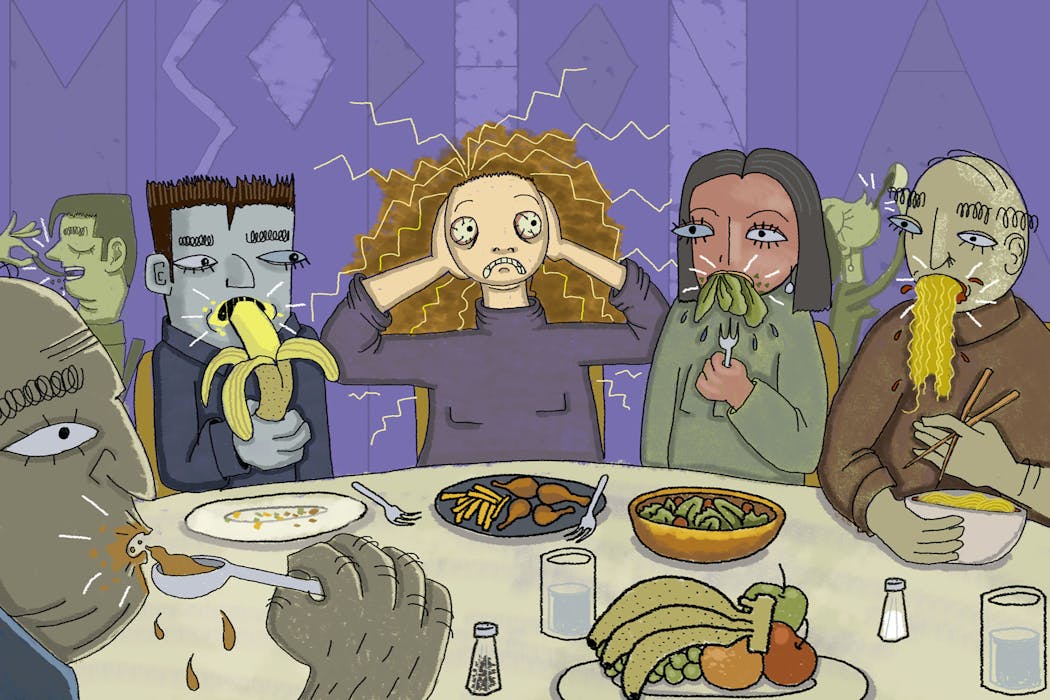
Hearing involves more than just the ears – it’s intimately connected to how we think and feel. A recent study has shed light on the possible links between hearing, emotion, and cognition by investigating misophonia, a condition where someone experiences an extreme emotional response to particular sounds.

If you’ve ever felt inexplicably furious at the sound of someone chewing or clicking a pen, you might have some insight into what people with misophonia experience. The triggers can be sounds made by the human body – someone eating crisps, cracking their knuckles, or breathing heavily. But it’s not just bodily sounds; a clock ticking or a dog barking can provoke the same intense reaction.

The emotional responses range from irritation to full-blown rage and disgust. These aren’t just feelings, either. Physically, people with misophonia experience fight-or-flight responses when they hear trigger sounds. For some, the condition becomes so debilitating that they avoid situations where they might encounter these sounds, which can seriously affect their daily lives and relationships.

But why do certain sounds cause such extreme reactions? The new study suggests that people with misophonia may find it harder to switch focus between emotional and non-emotional information – a skill known as “affective flexibility”.

The researchers tested 140 adults with an average age of 30, including both those with clinically significant misophonia symptoms and those whose symptoms didn’t meet clinical thresholds. Participants completed a memory and affective flexibility task, which involved both memory tasks and emotional tasks using pictures rather than sounds.

The participants were asked to switch between remembering details and judging the emotional content of pictures. The researchers found that the severity of someone’s misophonia was associated with their ability to accurately respond to emotional tasks. More severe misophonia was associated with worse accuracy on these tasks, suggesting reduced mental flexibility when dealing with emotional stimuli.

A person cracking their knuckles.
A trigger sound could be someone cracking their knuckles.
Oporty786/Shutterstock.com

The mind’s echo: why some sounds won’t let go

Based on questionnaire responses, people with more severe misophonia also showed a stronger tendency to ruminate. Rumination refers to getting stuck in negative thoughts about the past, present, or future, which can cause distress.

It’s worth noting that the questionnaires weren’t specifically about ruminating on misophonia experiences – this was a general tendency to get stuck in negative thought patterns.

Rumination is a symptom of various mental health conditions, including anxiety, depression and obsessive-compulsive disorder. This link between misophonia and rumination suggests the condition may relate to how people process emotions in general, not just how they react to certain sounds.

These findings highlight just how complex our experiences with sound can be. Hearing really is much more than just the ear doing its job. More severe misophonia may be linked to less mental flexibility around emotional situations and a stronger habit of negative thinking.

It’s crucial to understand that these findings reflect correlation, not causation. We can’t say that reduced mental flexibility causes misophonia, or that misophonia causes reduced flexibility. The relationship could work either way, or both could be influenced by some other factor entirely. Still, the researchers suggest these findings may help inform how misophonia is diagnosed in future.

There are some limitations to consider. The memory and affective flexibility task is new as of this year, so there’s limited data on how well it works. It would also be useful for future research to use sounds instead of images to better understand how visual versus auditory emotional stimuli relate to misophonia. The study also didn’t use a control task to compare emotional task switching with non-emotional task switching, which would have strengthened the findings.

Misophonia remains an underexplored area of research. We don’t really know how common it is worldwide, and research into treatment is still in early stages. There’s even debate about which disorder classification misophonia should be grouped into, if any.

For people with misophonia, the condition can seriously disrupt everyday life. A deeper exploration of the diversity in hearing experiences will be key to understanding how people process sound and how best to relieve the discomfort it brings.

The Conversation

Helen E Nuttall receives funding from UKRI, the Vivensa Foundation, North West Cancer Research, and Rosemere Cancer Foundation.

– ref. Misophonia: having strong negative reactions to certain sounds is linked to mental inflexibility – https://theconversation.com/misophonia-having-strong-negative-reactions-to-certain-sounds-is-linked-to-mental-inflexibility-266844

Revenge quitting: is it ever a good idea to leave your job in anger?

Source: The Conversation – UK – By Kathy Hartley, Senior Lecturer in People Management, University of Salford

GaudiLab/Shutterstock

Many of us will have experienced the rage that comes with being badly treated at work – and maybe even felt the instinct to pack up and leave. Bad bosses, belittling treatment or poor pay could be behind these kneejerk emotions. But, while most employees swallow their anger and get back to work, some walk out in a way that tells their employer exactly how they feel. Welcome to the world of “revenge quitting”.

Unlike “quiet quitting”,“ where workers stay in their job but do only the bare minimum, revenge quitting is about making a loud and visible stand.

It’s a phenomenon that has now spread around the world. Quitters have filmed their exit for social media, sent scathing farewell emails or quit two hours before they were due to teach a class.

These incidents show how revenge quitting can be empowering – a way to reclaim dignity when workers feel ignored or mistreated. But this signals more than increased workplace drama or a generational change in behaviour. It indicates that when riled, some workers are ready to make their exit heard.

Economist Albert Hirschman’s classic 1970 book Exit, Voice, and Loyalty suggested that when dissatisfied, people can either use voice (speak up and complain), show loyalty (put up with it) or exit (leave). Revenge quitting is a form of exit, but one designed to send a message to employers.

Several workplace dynamics increase the likelihood of revenge quitting.

  • abusive bosses and toxic environments: research shows that abusive supervision makes workers more likely to retaliate and to quit

  • mistreatment by customers: studies also show that rudeness or incivility from clients can spark revenge intentions in frontline workers

  • emotional exhaustion: being overworked or unsupported can tip people into retaliatory behaviour, including dramatic resignations

  • social media culture: platforms like TikTok provide a stage, making quitting not just personal but performative.

Risks and alternatives

Of course, revenge quitting comes with risks. Dramatic exits may damage future careers, especially in small industries where word travels fast, or if workers quit multiple times after a relatively short stay. For those with in-demand skills or plenty of experience and a history of good performance, the risks may be lower.

So, what are the alternatives?

  • voice rather than exit: raising concerns with the HR department, wellbeing leads or trade union representatives (where they exist)

  • disengagement: quietly withdrawing, for instance by not spending time preparing for meetings or avoiding extra tasks, as a way of regaining some control.

These alternatives might ultimately harm organisations more than a worker who quits loudly (so long as revenge quitting doesn’t become a wider phenomenon in the organisation). But of course, not everyone who wants to quit can do so.

A 2023 survey found that more than half of workers worldwide would like to leave their jobs but can’t. This could be due to things like financial responsibilities, limited opportunities or family constraints.

Employment relations researchers have called these people “reluctant stayers”. One study found that around 42% of employees in two organisations were reluctant stayers. Others have found that these “stuck” employees often develop plans to retaliate. They may quietly spread negativity or undermine productivity. In the long run, this may cause more harm than revenge quitting.

The effect of revenge quitting is likely to depend on the context. In small organisations, a sudden departure can be devastating. This is especially true if the employee has rare or highly valued skills. Sudden loud quitting may also hurt the colleagues left behind to pick up the pieces.

Larger organisations may experience inconvenience but are likely to be able to absorb the shock more easily. While a loud exit by senior or highly skilled staff may have significant impact, employers will be keen to prevent this, working to resolve problems before things reach breaking point. For this reason, revenge quitting is likely to be more visible among more junior or precarious workers, who often feel less supported.

Great fanfare – Joey quit his hotel job back in 2012 with a brass band.

So what can workplaces do? Revenge quitting can be a sign that traditional employee support systems aren’t working. Many HR teams are already overstretched, and are struggling to meet all the demands placed on them. But still, there are some basic practices that employers can follow.

These include encouraging open communication so employees feel safe raising issues, as well as training managers to avoid abusive or micromanaging behaviour. And although it may seem obvious, unequal workloads and conditions will leave workers disgruntled – it’s important to ensure they are fair. Employers should also recognise the expectations of younger workers, who often prioritise respect and balance.

At its heart, revenge quitting reflects serious issues in a workplace. While leaving loudly can feel empowering for the worker, especially in the heat of the moment, it could be bad news for both employees and organisations.

This article features references to books that have been included for editorial reasons, and may contain links to bookshop.org. If you click on one of the links and go on to buy something from bookshop.org The Conversation UK may earn a commission.

The Conversation

Kathy Hartley does not work for, consult, own shares in or receive funding from any company or organisation that would benefit from this article, and has disclosed no relevant affiliations beyond their academic appointment.

– ref. Revenge quitting: is it ever a good idea to leave your job in anger? – https://theconversation.com/revenge-quitting-is-it-ever-a-good-idea-to-leave-your-job-in-anger-266823

How domestic abusers use emotional bonding to control their victims – new study

Source: The Conversation – UK – By Mags Lesiak, PhD Researcher in Psychological Criminology, University of Cambridge

AYO Productions/Shutterstock

At first, it looks like love. He’s charming. Always generous, always attentive. He remembers your coffee order, listens to your stories, seems to share your pain. He tells you that you’re the only one who understands him. But as the relationship deepens, the warmth starts to fade. He becomes distant, defensive, unpredictable. You try harder to reconnect. You think: maybe it’s me.

This pattern of affection followed by withdrawal is often mistaken for the natural turbulence of intimacy. In fact, it can be a form of coercive control: a deliberate manipulation of attachment designed to entrap rather than connect.

For decades, survivors who stayed with abusive partners have been labelled by some as codependent or masochistic – blamed for the abuse and asked: “Why didn’t you just leave?” My new research with colleague Loraine Gelsthorpe, published in the journal Violence Against Women, challenges this outdated view.

We conducted in-depth interviews with 18 female survivors of abuse, and discovered a psychological “playbook” – a set of recurring strategies used to gain trust, create emotional attachment, and then use that attachment as a means of control.

Many of the women I interviewed spoke about their experiences of earlier trauma (often childhood neglect, abuse or loss) and how their abusers appeared to share similar experiences. Survivors described feeling deeply seen or “understood” by someone who shared their pain.

The perpetrators used this connection to create a sense of closeness and emotional intensity early in the relationship, but then later used it against their victims. Personal disclosures were turned into weapons – repeated back during arguments, mocked in front of others or used to justify the abuser’s own behaviour.

The study shows that “trauma bonding” is not necessarily a passive response, but rather, an attachment actively manufactured by perpetrators through grooming, trauma-sharing and manipulation – a strategy of control.

In our research, we found a recurring pattern that survivors described as the “two-faced soulmate”: the abuser who appears deeply loving, even soulful, while concealing manipulation beneath warmth.

A person holding up two sinister masks
The two-faced soulmate.
Yta23/Shutterstock

The women described cycles of unpredictable behaviour: tenderness followed by sudden withdrawal, verbal cruelty softened by moments of warmth.

Like a slot machine, the abuser delivers unpredictable rewards such as a sudden apology, a tender message or a flash of charm – just enough to keep the victim emotionally hooked. Survivors described this cycle as maddening: not knowing when affection would come, but still hoping it would.

This is what behavioural science calls intermittent reinforcement, a powerful way to condition behaviour. When rewards are rare and unpredictable, the brain doesn’t disengage, it craves and tries harder.

The bond that forms isn’t irrational, it’s neurologically reinforced. And that craving, that confusion, becomes the abuser’s tool. They don’t need to use force. The schedule of rewards does it for them.

A rising form of control

In England and Wales, reported domestic abuse is at record levels. In the year ending March 2024, 2.3 million adults experienced domestic abuse – 6.6% of women and 3% of men. While most forms of crime are falling, recorded violence against women has risen by more than a third since 2018.

Reporting of psychological abuse has also increased. In England and Wales, police recorded 45,310 offences of coercive or controlling behaviour in the year ending March 2024 – up from 17,616 in 2017.

These offences capture not physical violence but domination through monitoring, gaslighting, isolation and control over victims’ everyday lives. Research shows that coercive control is now more commonly reported than physical or sexual abuse in many contexts, and is often the primary mechanism of entrapment.

In our study, all participants reported experiencing psychological abuse, and the majority also described episodes of physical violence. However, the emotional control was not simply a parallel form of harm – it was the gateway to later physical abuse.

The emotional attachment through grooming, flattery and trauma sharing created a dependency that made subsequent physical aggression easier to dismiss, deny or endure.

Detecting invisible abuse

All participants in our study were financially independent, lived separately from their abusers and faced no explicit threats. Yet they described feeling emotionally captive – unable to leave the relationship without unbearable guilt, fear or confusion.

Coercive control in relationships isn’t obvious – it can involve subtle shifts in tone, behaviour and emotional volatility. Traditional risk assessment tools used by police are not designed to detect these subtler dynamics, and often fail to register coercive patterns when there is no recent physical violence.


Read more:
Even before deepfakes, tech was a tool of abuse and control


Survivors’ distress may be misinterpreted as personal deficits – “attachment issues”, “poor boundaries” or “emotional instability” – thus shifting the focus on to her psychology rather than his tactics of control. Participants reported being dismissed by therapists, friends and professionals, or told that their reactions were overreactions or signs of emotional fragility, not valid responses to sustained manipulation.

Organisations working with survivors need a broader understanding of abuse that includes the psychological tactics outlined in this research. Signs like emotional compulsion, sudden mood swings or manipulative displays of vulnerability are not “soft” or secondary – they are part of how abusers gain control.

Such behaviour is often missed because it doesn’t leave bruises – yet it forms the emotional infrastructure that keeps victims trapped.

If institutions continue to define coercion only through visible threats or violence, they will miss its most insidious form: control that is designed to feel like love.

The Conversation

This research was conducted as part of a PhD project funded by the UK Economic and Social Research Council (ESRC) and Pembroke College, University of Cambridge. No additional funding was received specifically for the authorship or publication of this article.

– ref. How domestic abusers use emotional bonding to control their victims – new study – https://theconversation.com/how-domestic-abusers-use-emotional-bonding-to-control-their-victims-new-study-267371

‘Smart Purple Villages’: la revolución rural inteligente con rostro de mujer

Source: The Conversation – (in Spanish) – By Gisela Palma Pinar, Doctora en Geografía especializada en zonas rurales inteligentes y sostenibles ( Smart Villages), Universidad Complutense de Madrid

Representación de un pueblo inteligente (_smart village_). Unión Europea

El mundo rural ha comenzado a transitar hacia un modelo de desarrollo más moderno, sostenible y digitalizado en los últimos años. La combinación de tecnologías inteligentes, transición verde e innovación social ha marcado un nuevo horizonte para los pueblos, no solo como espacios productivos, sino también como entornos habitables, inclusivos y equitativos.

En este marco surge el concepto de Smart Purple Villages –Pueblos Inteligentes Violetas, en su traducción literal–, una evolución del modelo Smart Villages que integra la igualdad de género como eje central del progreso rural y reconoce el papel de las mujeres y de los colectivos menos representados en la gobernanza, el emprendimiento y la innovación.

Mientras que las Smart Villages principalmente se han centrado en la sostenibilidad y la transformación digital, las Smart Purple Villages añaden una dimensión imprescindible: la participación activa de las mujeres, la inclusión social y la reducción de las desigualdades en el medio rural.

Este enfoque busca un desarrollo inteligente, sostenible y más equitativo, alineado con los Objetivos de Desarrollo Sostenible (ODS), en especial el ODS 5 (igualdad de género) y el ODS 10 (reducción de las desigualdades).

Igualdad digital y visibilización

Cada 15 de octubre se celebra el Día Internacional de las Mujeres Rurales, un recordatorio de su contribución esencial a la economía y la sostenibilidad del medio rural. Sin embargo, su visibilización sigue siendo insuficiente. Muchas mujeres rurales afrontan desigualdades laborales, brechas digitales y una participación limitada en espacios de decisión, a pesar de su papel crucial en la innovación y la cohesión comunitaria.

Por ello, surgen iniciativas específicas enfocadas en la formación, el emprendimiento y el liderazgo femenino:

  • Desafío Mujer Rural (Instituto de las Mujeres /Fondo Social Europeo): promueve la consolidación de empresas lideradas por mujeres, fomentando la innovación y la competitividad de los proyectos empresariales.

  • Red Rural Nacional (RRN): programa de actividades para mujeres rurales que incluye formación, generación de redes, actividades económicas en el sector agrario y agroalimentario y comunicación para visibilizar sus iniciativas.

  • FADEMUR: Federación de Asociaciones de Mujeres Rurales que trabaja para eliminar la triple discriminación que enfrenta ese colectivo, fomentar la creación de cooperativas y mejorar la capacitación profesional.

  • EMPODERA: proyecto socio-ambiental que desarrolla competencias para el empleo verde, con enfoque inclusivo hacia municipios rurales y promoviendo a mujeres emprendedoras como referentes.

  • SARA: proyecto europeo que detecta dificultades en el emprendimiento femenino rural y proporciona formación y apoyo para crear negocios sostenibles ligados a los pueblos inteligentes.

  • EWA (Empowering Women in Agrofood): programa de EIT Food (Unión Europea) que capacita a mujeres emprendedoras del sector agroalimentario mediante formación intensiva, tutoría y networking.

  • Estrategia Emprendedora 2030 (UATAE MUJER): difunde buenas prácticas de emprendimientos sostenibles liderados por mujeres, promoviendo nuevos estilos de comercio basados en solidaridad y respeto al entorno.

Estas iniciativas se alinean con estrategias europeas como Smart Rural 21 y Smart Rural 27, que combinan sostenibilidad, tecnología y cohesión social, ahora reforzadas con la perspectiva de género.

El principio fundamental de las Smart Purple Villages es que no hay desarrollo inteligente sin igualdad. A partir de esta premisa, los territorios rurales pueden reinventarse mediante proyectos que combinen tecnología, emprendimiento y cooperación.

Los sectores clave incluyen:

  • Emprendimiento femenino y empleo local: cooperativas y pequeñas empresas lideradas por mujeres que utilizan herramientas digitales para comercializar productos locales, servicios turísticos y artesanías. Programas como Cooperativas Rurales de Servicios de Proximidad de FADEMUR fomentan la creación de empleo femenino mediante cooperativas.

  • Educación y capacitación digital: alfabetización tecnológica para mujeres, jóvenes y mayores. Reduce la brecha digital y genera oportunidades laborales a través de programas como Pueblos en Clave Digital.

  • Cuidado y bienestar comunitario: tecnologías de asistencia, redes de voluntariado y soluciones inteligentes para mejorar la atención a personas mayores y dependientes, integrando el modelo Smart Silver con enfoque de género.

  • Turismo sostenible e inclusivo: destinos turísticos gestionados desde la perspectiva de género, promoviendo la economía circular, la cultura local y el equilibrio entre tradición e innovación.

  • Gobernanza participativa: inclusión de mujeres en la toma de decisiones locales y en la gestión de proyectos de desarrollo rural, fomentando un enfoque comunitario más inclusivo.

Casos inspiradores en España

Algunos territorios rurales ya aplican estrategias “violeta inteligentes”:

  • Castilla y León: iniciativas LEADER o la iniciativa Lánzate Rural, que impulsan redes de mujeres emprendedoras con productos agroalimentarios digitales.

  • Galicia: desarrolla un programa para mejorar las capacidades digitales e incrementar las oportunidades laborales.

  • Andalucía: comarcas como Sierra Mágina, en Jaén, promueven procesos participativos con enfoque de género en los territorios rurales.

  • Castellón: varios municipios comienzan a diseñar estrategias que dan prioridad a los grupos más desfavorecidos como las mujeres, incorporando igualdad de oportunidades en sus planes de digitalización rural.

También se desarrollan las iniciativas Smart Silver y Purple Villages, orientadas a la atención inteligente de personas mayores, con fuerte presencia femenina en servicios de proximidad y cuidados digitales. Estos casos demuestran cómo la combinación de innovación tecnológica y liderazgo femenino puede transformar la ruralidad.

Financiación y cooperación: claves del éxito

El desarrollo de Smart Purple Villages requiere cooperación entre administraciones públicas, universidades, empresas y comunidades locales. Entre las fuentes y programas más relevantes se encuentran:

  • Iniciativa LEADER: apoyo a proyectos locales de desarrollo rural sostenible.

  • Fondos Next Generation EU: financian la transición verde y digital, con inclusión de la perspectiva de género.

  • Programas Interreg: cooperación transfronteriza, como España-Portugal, para fortalecer digitalización y sostenibilidad.

  • Pacto Verde Europeo y Agenda Digital 2030: marco estratégico para la digitalización inclusiva y la transición ecológica.

Estas herramientas garantizan que la digitalización vaya acompañada de formación, sensibilización y acceso equitativo a recursos, transformando el territorio rural en un espacio más competitivo, resiliente e inclusivo.

A pesar de los avances, persisten desafíos importantes como brechas digitales y salariales que limitan el potencial de muchas mujeres rurales. También la falta de conectividad, dificultades para acceder al crédito y escasa representación femenina en cargos de decisión, sin olvidar el riesgo de “digitalización sin igualdad”, donde la tecnología beneficie solo a unos pocos.

No obstante, la tendencia es positiva: jóvenes mujeres regresan a sus pueblos impulsadas por proyectos digitales y sostenibles. La integración de innovación, cultura local y liderazgo femenino puede convertirse en motor de la nueva ruralidad europea.

Hacia un futuro rural igualitario e inteligente

Las Smart Purple Villages representan una visión renovada del desarrollo rural: un modelo que une tecnología, sostenibilidad e igualdad de género para construir comunidades más cohesionadas y resilientes.

España, con experiencia en programas Smart Villages y creciente apuesta por la igualdad digital, tiene la oportunidad de liderar este proceso. La clave estará en fortalecer redes locales, promover cooperación público-privada y garantizar que la digitalización llegue a todas las personas, sin distinción de género o lugar.

En última instancia, las Smart Purple Villages nos invitan a imaginar un futuro rural donde la inteligencia no se mida solo en datos o dispositivos, sino en la capacidad de crear territorios más justos, inclusivos y sostenibles, donde las mujeres rurales sean protagonistas del cambio.

The Conversation

Las personas firmantes no son asalariadas, ni consultoras, ni poseen acciones, ni reciben financiación de ninguna compañía u organización que pueda obtener beneficio de este artículo, y han declarado carecer de vínculos relevantes más allá del cargo académico citado anteriormente.

– ref. ‘Smart Purple Villages’: la revolución rural inteligente con rostro de mujer – https://theconversation.com/smart-purple-villages-la-revolucion-rural-inteligente-con-rostro-de-mujer-266934

¿En qué se diferencia la adicción a los videojuegos de otras adicciones en la adolescencia?

Source: The Conversation – (in Spanish) – By Manuel Alcaraz Iborra, Profesor Titular en el área de Psicología Evolutiva y de la educación, Universidad de Zaragoza

AnnaStills/Shutterstock

¿Con cuál de estas afirmaciones se siente más identificado? “Cuando estoy realmente animado o enfadado, no suelo pensar en las consecuencias de mis acciones” o “Cuando estoy cabreado, intento no reaccionar de manera irreflexiva”. La primera de ellas muestra rasgos de “urgencia” (que podríamos definir como impulsividad emocional) y es una respuesta propia de una persona impulsiva, todo lo contrario que la segunda.

La impulsividad es un rasgo de la personalidad que se ha relacionado, desde hace décadas, con las adicciones a sustancias como el alcohol y otras drogas, especialmente en la adolescencia. En la actualidad, algunos componentes de la impulsividad también se vinculan con las adicciones “comportamentales” (a las redes sociales, a los videojuegos, a comprar). Aunque más que de adicciones, en estos casos se suele hablar de “uso problemático” dado que, al contrario que con las sustancias, existe un uso moderado que no supone ninguna consecuencia negativa para la salud.

La impulsividad y las adicciones

La impulsividad se mide a través de cuatro componentes: la “urgencia” (actuar sin pensar cuando se sienten emociones positivas o negativas intensas: es decir, ser impulsivo en las emociones), la búsqueda de nuevas sensaciones, la falta de constancia en una tarea y la falta de premeditación. Y no tienen por qué darse todas a la vez. Por ejemplo, una persona puede mostrarse impulsiva buscando nuevas sensaciones o dejando tareas sin acabar, y sin embargo controlar bien sus reacciones emocionales y las consecuencias que tienen.

Lo interesante es que las distintas combinaciones de estos componentes de la impulsividad se relacionan con diferentes tipos de adicciones. Por ejemplo, cuando un adolescente muestra mayores niveles de urgencia o impulsividad emocional, presenta más probabilidades de ser adicto al alcohol, incluso aunque muestre bajos niveles de búsqueda de sensaciones, falta de constancia o falta de premeditación.

La urgencia y el uso de videojuegos

Resultados recientes de nuestro grupo de investigación muestran que menores niveles de urgencia en chicos y chicas de entre 15 y 17 años se relacionan con mayor frecuencia de uso problemático de videojuegos. Que es exactamente lo contrario que sucede en la adicción al alcohol.


Leer más:
El juego de azar en adolescentes se vincula al alcohol, al tabaco y a los videojuegos


En cierto modo, lo natural es que si un adolescente se enfada o se alegra, actúe de forma un tanto irreflexiva en ese momento. Es algo común hasta que alcanzan la edad adulta, necesario para aprender a regular mejor sus emociones. Y lo que indica nuestro estudio es que precisamente cuando los adolescentes no se “dejan llevar” ante una situación emocional intensa –como un suspenso o un regalo inesperado–, tienen más probabilidades de hacer un uso abusivo de los videojuegos.

Además, en esta correlación entre bajos niveles de urgencia y mayor uso problemático de videojuegos influye mucho la existencia de problemas emocionales. Es decir, que cuando los adolescentes muestran algunos síntomas emocionales –como por ejemplo síntomas depresivos– y tienen bajos niveles urgencia, es cuando el uso problemático de videojuegos es más probable.

¿Cómo explicamos estos resultados?

Si a un chaval de 15 años le regalan sin esperarlo entradas para ver el partido de la final de su equipo favorito, su euforia debería llevarle a hacer algo inusual en él, como abrazar a su padre de manera efusiva. Nuestros resultados nos hacen pensar que, cuando los adolescentes no se emocionan ni reaccionan de manera impulsiva, tienden a sustituir esas reacciones espontáneas e irreflexivas por dedicarse actividades monótonas pero motivadoras como los videojuegos. Por eso, síntomas emocionales en la adolescencia como desgana y la falta de iniciativa deberían hacer saltar nuestras alertas. Especialmente si observamos una tendencia a “refugiarse” en las videoconsolas.


Leer más:
El acoso escolar es una puerta de entrada a las adicciones


No se trata de evitar que usen los videojuegos: el reto es lograr que estos chavales encuentren actividades alternativas que los activen emocionalmente. Por ejemplo, escuchar un buen grupo de la música que les guste, unirse a un deporte colectivo o practicar ejercicio físico con algo de riesgo como la escalada. Necesitan encontrar las actividades que activen sus emociones para dejar de refugiarse en los videojuegos.

Consecuencias del uso problemático de videojuegos

La adicción a los videojuegos está incluida en los principales manuales sobre diagnóstico sobre salud mental bajo el nombre de Trastorno del Juego Online (inicialmente sólo contemplaba el juego online pero hoy se refiere a todo tipo de videojuegos, también no conectados a internet). Aunque aún son objeto de estudio, estos trastornos se relacionan con depresión, problemas de sueño, bajos resultados académicos y agresividad en la adolescencia, que es el periodo en el que más se utiliza este tipo de tecnología lúdica.

El porcentaje de adolescentes (tanto chicos como chicas) que presentan esta problemática ronda el 5 %. Entender por qué unos caen y otros no es fundamental para poder prevenir un uso excesivo que les perjudique.

Además de la importancia incuestionable del contexto –las horas de acceso u otros hábitos familiares como la lectura–, existen ciertos rasgos temperamentales, expresados desde el nacimiento, como la impulsividad que podrían ser precursores de esta adicción. Conocer los rasgos temperamentales, facilita identificar sobre qué y sobre quién prevenir antes de que el uso de videojuegos se convierta en un problema.

El objetivo, como casi siempre, no debe ser prohibir, sino educar.

The Conversation

Los autores han recibido fondos del Ministerio de Derechos Sociales, Consumo y Agenda 2030 para la ejecución de este proyecto durante los años 2024 y 2025.

Marta Modrego Alarcón no recibe salario, ni ejerce labores de consultoría, ni posee acciones, ni recibe financiación de ninguna compañía u organización que pueda obtener beneficio de este artículo, y ha declarado carecer de vínculos relevantes más allá del cargo académico citado.

– ref. ¿En qué se diferencia la adicción a los videojuegos de otras adicciones en la adolescencia? – https://theconversation.com/en-que-se-diferencia-la-adiccion-a-los-videojuegos-de-otras-adicciones-en-la-adolescencia-264093

¿Quién (no) usa ChatGPT en la universidad? El papel de la brújula ética

Source: The Conversation – (in Spanish) – By Silvia Ortiz-Bonnin, Profesora titular laboral de Psicología del trabajo, Universitat de les Illes Balears

Drazen Zigic/Shutterstock

La inteligencia artificial ya forma parte de las aulas universitarias. Herramientas como ChatGPT se han convertido en compañeras habituales de estudio: ayudan a redactar textos, generar ideas o entender conceptos complejos. ¿Quiénes no la usan todavía, y por qué?

En nuestro estudio con 737 estudiantes de grado comprobamos que un 70 % de ellos ya lo están usando cotidianamente. Aprecian especialmente la rapidez y la facilidad de la herramienta. Les ayuda a organizar ideas, aclarar dudas y ahorrar tiempo en tareas que de otro modo serían más largas o tediosas. La perciben como un tutor disponible las 24 horas, capaz de explicar de otra manera lo que no entienden en clase.

Los riesgos que frenan su uso

La mayoría del alumnado que participó en la encuesta percibe riesgos en el uso de ChatGPT, tanto a ser acusado de plagio como a recibir información dudosa o falsa o infringir las normas académicas de su universidad. Otras cuestiones que preocupan en menor medida a los estudiantes son el hecho de que la utilización de esta herramienta no esté regulada y la falta de protección de datos y privacidad.

Estos riesgos percibidos resultan decisivos a la hora de optar por usar o no usar ChatGPT. Para el alumnado más consciente de los riesgos, la herramienta deja de percibirse como una ayuda y se convierte en algo que prefieren mantener a distancia. Cuanto más conscientes son de los riesgos, menos la utilizan.


Leer más:
¿Tienen los días contados los trabajos fin de estudio tal y como los conocemos?


La importancia de la honestidad académica

¿Por qué hay estudiantes que son más sensibles a estos riesgos? En la universidad española, por ejemplo, todavía no existen normas claras ni formación específica sobre el uso de la IA, como hemos analizado en un trabajo reciente. Sin embargo, nuestra hipótesis es que la diferencia no se explica solo por factores externos como la falta de regulación, sino también por algo más interno: la propia percepción del alumnado sobre lo que es honesto y lo que no lo es en el ámbito académico.

La llamada percepción de deshonestidad académica se refiere a las creencias éticas del alumnado sobre qué comportamientos consideran aceptables o inaceptables en su vida universitaria. Estos serían, por ejemplo, hacer trampa en un examen (con chuletas o dispositivos electrónicos), mentir para obtener ventajas académicas (como pedir una prórroga con una excusa falsa) o presentar como propio un trabajo que en realidad ha sido elaborado por otra persona.


Leer más:
Escribir en la universidad en la era de la inteligencia artificial


El 83 % del alumnado considera deshonesto o muy deshonesto este tipo de comportamientos académicos. Y dentro de este grupo, se observa una correlación llamativa: quienes más desaprueban prácticas poco éticas en el ámbito universitario como copiar en un examen o entregar como propio el trabajo de otra persona, tienden a percibir más riesgos en el uso de ChatGPT. Y esa percepción se traducía en una menor frecuencia de uso y en una baja intención de seguir utilizándolo en el futuro.

El uso de ChatGPT como una decisión ética

Nuestros resultados muestran que, antes de decidir si usar ChatGPT, el alumnado sopesa ventajas y riesgos. En un lado de la balanza colocan la rapidez y la facilidad; en el otro, la privacidad, la calidad de las respuestas o el temor a sanciones académicas. Lo que inclina la balanza no es solo el peso de cada argumento, sino la mirada con que se juzgan. La brújula ética de cada estudiante amplifica los riesgos o, por el contrario, los minimiza, y acaba orientando la decisión final.

Este hallazgo conduce a una conclusión importante: el reto de las universidades será acompañar esa brújula ética individual con normas institucionales claras y formación específica. Esto puede traducirse, por ejemplo, en protocolos sobre el uso de la IA en las diferentes asignaturas y trabajos académicos o en cursos y talleres que enseñen a emplear estas herramientas de manera crítica y responsable.

Elaborar normas colaborativamente

Para ilustrar cómo puede abordarse este reto en la práctica, diseñamos un taller sobre inteligencia artificial generativa para alumnado universitario. Se llevaron a cabo encuestas en vivo, debates sobre mitos y la elaboración colectiva de normas de uso responsable. El 72,8 % afirmó sentirse más preparado para usar la IA de manera correcta y responsable.

Este tipo de iniciativas no solo informan al alumnado y le enseñan a usar mejor la herramienta, sino que también fortalecen su brújula ética. Le ayudan a aprovechar el potencial de la inteligencia artificial sin perder de vista la integridad académica que sostiene la vida universitaria. Lo importante no es tanto lo que la IA es capaz de hacer, sino las decisiones que tomamos sobre cómo queremos usarla en la universidad.

The Conversation

Las personas firmantes no son asalariadas, ni consultoras, ni poseen acciones, ni reciben financiación de ninguna compañía u organización que pueda obtener beneficio de este artículo, y han declarado carecer de vínculos relevantes más allá del cargo académico citado anteriormente.

– ref. ¿Quién (no) usa ChatGPT en la universidad? El papel de la brújula ética – https://theconversation.com/quien-no-usa-chatgpt-en-la-universidad-el-papel-de-la-brujula-etica-265226