D’Adophe Thiers à Édouard Balladur, à qui ont profité les grands emprunts ?

Source: The Conversation – in French – By Éric Pichet, Professeur et directeur du Mastère Spécialisé Patrimoine et Immobilier, Kedge Business School

En France, un grand emprunt pourrait-il sauver la situation financière de l’État ? D’un côté, un endettement qui ne cesse de croître, de l’autre, des ménages qui épargnent toujours plus. Et si la solution était de demander aux seconds de financer plus ou moins volontairement le premier. Sur le papier, l’idée semble alléchante d’autant que le grand emprunt occupe une place particulière dans l’imaginaire français. Tentant lorsque l’épargne des ménages est une mesure de précaution pour se protéger des conséquences de l’endettement du secteur public.


L’incapacité récurrente des pouvoirs publics en France à ramener le déficit dans les critères de Maastricht a été aggravée par les deux grandes crises récentes, celle des subprimes en 2008 et celle du Covid en 2020. Cette dérive s’est encore accentuée avec l’incapacité de l’Assemblée nationale issue de la dissolution de juin 2024 à s’accorder pour voter une loi de finances qui réduirait ce déficit. En conséquence, ce dernier est attendu à 5,4 % du PIB en 2025 et encore vers 5 % en 2026, soit le plus important de la zone euro relativement au PIB, quel que soit le sort de la loi de finances pour 2026 toujours en suspens, soit très loin du seuil de 3 % fixé par le Pacte de stabilité et de croissance.

Quant à la dette publique, partie de 20 % du PIB en 1980, dernière année d’équilibre des comptes publics, elle culmine à 116 % à la fin de 2025, soit près du double du seuil du Pacte fixé à 60 % du PIB. Ce faisant, elle se situe juste après celle de la Grèce et de l’Italie.

L’inquiétante envolée de la charge de la dette

La longue période de taux d’intérêt très bas voire négatifs auxquels empruntait l’État de 2009 à 2022 était la conséquence directe de l’action inédite des grandes banques centrales pour éviter une dépression mondiale à la suite de la crise des subprimes de 2008. Ce volontarisme monétaire exceptionnel s’est achevé brutalement avec la hausse brutale des taux des banques centrales en 2022-2023 pour juguler la forte inflation qui a suivi l’invasion de l’Ukraine.


À lire aussi :
De Chirac à Macron, comment ont évolué les dépenses de l’État


En conséquence, les taux d’émission des obligations françaises à dix ans sont passés de 1 % en 2022 à 3,6 % début 2026, soit à des niveaux supérieurs au Portugal et à l’Espagne et même à la Grèce. Plus grave, la charge de la dette publique (les intérêts versés chaque année aux créanciers des organismes publics) passera de 50 milliards d’euros en 2022 à 75 milliards en 2026 (dont 60 milliards pour le seul État).


Fourni par l’auteur

Source : Programme de stabilité de 2024, charge d’intérêts en comptabilité nationale, Finances publiques et économie (Fipeco).

Le précédent de l’emprunt obligatoire

Face à l’Himalaya diagnostiqué de la dette (avec raison mais un peu tard…) par François Bayrou quand il était premier ministre, les députés socialistes ont repris, au moment des débats sur l’instauration de taxe Zucman l’idée d’un emprunt forcé sur les plus riches en référence à une initiative du premier ministre Pierre Mauroy en 1983. Émis à un taux de 11 % (contre 14 % sur le marché à l’époque) celui-ci avait contraint 7 millions de contribuables à prêter 13,4 milliards de francs (soit environ 5 milliards d’euros) à hauteur de 10 % de leur impôt sur le revenu et de 10 % de leur impôt sur la fortune. Prévu pour trois ans, mais très impopulaire, car touchant également la classe moyenne supérieure, il fut remboursé par anticipation au bout de deux ans et ne fit jamais école.

Si cette idée d’un emprunt forcé a été rejetée par le gouvernement et l’Assemblée nationale le 26 novembre 2025, la piste d’un grand emprunt agite toujours les esprits d’autant que le contexte actuel rappelle celui des précédents historiques, en temps de guerre ou face à des crises budgétaires aiguës, et qu’ils ont toujours été couronnés de succès à l’émission.

L’emprunt de Thiers ou la naissance du mythe

Après la cuisante défaite de la guerre franco-prussienne de 1870-1871, le traité de Francfort du 10 mai 1871 impose à la France, outre la cession de l’Alsace-Lorraine, une indemnité de 5 milliards de francs-or (soit 70 milliards d’euros). Adolphe Thiers, le chef de l’exécutif de l’époque, émet alors un emprunt d’État au taux de 5 % sur cinquante ans garanti sur l’or.

L’engouement des épargnants a permis de payer l’indemnité allemande dès 1873 avec deux ans d’avance mettant ainsi fin à l’occupation militaire. Surtout, le succès de l’emprunt a assis la crédibilité de la toute jeune IIIe République. Puissant symbole de la résilience du pays il inspira d’autres emprunts de sorties de guerre, comme l’emprunt dit de la Libération de 1918 et celui de 1944.

L’emprunt Pinay 1952-1958 ou les délices de la rente

Premier grand emprunt du temps de paix, la rente Pinay – du nom du ministre de l’économie et des finances sous la quatrième et la cinquième République – de 1952 était destinée à sortir le pays des crises alimentaires et du logement de l’après-guerre. L’équivalent de 6 milliards d’euros a été alors levé avec un taux d’intérêt plutôt faible de 3,5 %,, mais assorti d’une indexation de son remboursement sur le napoléon en 1985 (date à laquelle l’emprunt a été complètement remboursé) et surtout une exonération d’impôt sur le revenu et sur les droits de succession.

Cette gigantesque niche fiscale pour les plus riches était d’ailleurs discrètement mise en avant par les agents de change qui conseillaient aux héritiers de « mettre leur parent en Pinay avant de le mettre en bière » pour éviter les droits de succession entraînant au passage de cocasses quiproquos familiaux lorsque le moribond reprenait des forces…

Le succès de la rente Pinay fut tel que de Gaulle, revenant au pouvoir, lui demanda de récidiver avec le Pinay/de Gaulle de 1958 destiné à sauver les finances publiques, restaurer la crédibilité de l’État et accompagner la réforme monétaire qui allait aboutir au nouveau franc de 1960.

L’emprunt Giscard, un grand emprunt coûteux pour l’État

Portant le nom du ministre des finances du président Pompidou, cet emprunt émis en 1973 rapportait 7 % et a levé l’équivalent d’environ 5,6 milliards d’euros sans avantage fiscal mais une obscure sous-clause du contrat, qui prévoyait une indexation automatique sur le lingot d’or en cas d’inflation.

L’or s’étant envolé avec la fin des accords de Bretton Woods de 1971-1974, cet emprunt coûta finalement en francs constants au moment de son remboursement en 1988 près de cinq fois ses recettes.

1993, le dernier grand emprunt

Après la crise des subprimes de 2008, Nicolas Sarkozy avait envisagé l’émission d’un grand emprunt de 22 milliards d’euros pour financer cinq grandes priorités : l’enseignement supérieur, la recherche, l’industrie, le développement durable et l’économie numérique. Il opta finalement pour un financement classique sur les marchés au motif – pertinent – qu’il aurait fallu allécher les particuliers par un taux d’intérêt supérieur.

Le dernier grand emprunt national est donc toujours aujourd’hui l’emprunt Balladur de mai 1993 rapportant 6 % sur quatre ans et destiné à mobiliser l’épargne des Français les plus aisés pour financer l’accès au travail des jeunes et la relance des travaux publics et du bâtiment. Initialement fixé à 40 milliards de francs, son succès fut tel qu’il récolta 110 milliards de francs (30 milliards d’euros) grâce à la souscription de 1,4 million d’épargnants. Le gouvernement Balladur s’étant engagé à accepter toutes les souscriptions des particuliers, il ne put satisfaire les investisseurs institutionnels.

BFM Business, 2025.

Pas (encore) de problèmes de financement pour l’État

Un grand emprunt pourrait-il être la solution dans le contexte actuel pour financer les déficits, comme on l’entend parfois ?

Malgré la dérive des comptes publics, en France, l’État reste crédible avec une note de A+ attribuée par Standard & Poors et par Fitch, et de Aa3 par Moody’s (soit l’équivalent de 16 ou 17/20). Par ailleurs, le Trésor n’a aucune difficulté à emprunter 300 milliards d’euros par an (la moitié pour financer le déficit de l’année et l’autre pour rembourser les emprunts arrivant à échéance), si ce n’est à un taux d’intérêt supérieur de 80 points de base (0,8 %) au taux d’émission des obligations allemandes à dix ans (3,6 % contre 2,8 %). Aujourd’hui la dette publique française s’élève à environ 3 500 milliards d’euros et 55 % de la dette négociable est détenue par les non-résidents.

En France, les particuliers financent environ 10 % de cette dette publique soit 350 milliards d’euros via l’assurance-vie en euros, mais cette niche fiscale est coûteuse et régressive car elle favorise les gros patrimoines. Ainsi, selon le Conseil d’analyse économique, le manque à gagner en recettes fiscales lié à l’assurance-vie au titre des successions serait de l’ordre de 4 à 5 milliards d’euros par an.

Un grand emprunt utile en 2026 ?

Aujourd’hui, les ménages semblent se conformer à la théorie de l’économiste David Ricardo : inquiets de la situation financière du pays, ils augmentent leur taux d’épargne passé de 15 % de leurs revenus en moyenne avant la crise à 18,4 % en 2025. Et leur épargne financière, qui représente 10 % de leurs revenus, culmine à 6 600 milliards d’euros, un niveau bien supérieur à la totalité de la dette publique.

C’est pourquoi un grand emprunt national proposé par un gouvernement stable disposant d’une majorité solide rencontrerait sans doute un grand succès. Il aurait le mérite de redonner confiance au pays et de conjurer ce que The Economist identifie dans un tout récent article publié le 11 janvier 2026 comme le principal problème économique mondial : le pessimisme.

The Conversation

Éric Pichet ne travaille pas, ne conseille pas, ne possède pas de parts, ne reçoit pas de fonds d’une organisation qui pourrait tirer profit de cet article, et n’a déclaré aucune autre affiliation que son organisme de recherche.

ref. D’Adophe Thiers à Édouard Balladur, à qui ont profité les grands emprunts ? – https://theconversation.com/dadophe-thiers-a-edouard-balladur-a-qui-ont-profite-les-grands-emprunts-273372


12 ways the Trump administration dismantled civil rights law and the foundations of inclusive democracy in its first year

Source: The Conversation – USA – By Spencer Overton, Professor of Law, George Washington University

The second Trump administration has weakened federal civil rights law and is shredding the foundations of America’s racially inclusive democracy. imagedepotpro, iStock/Getty Images Plus

One year after Donald Trump’s second inauguration, a pattern emerges. Across dozens of executive orders, agency memos, funding decisions and enforcement changes, the administration has weakened federal civil rights law and the foundations of the country’s racially inclusive democracy.

From the start, the U.S. was not built to include everyone equally. The Constitution protected and promoted slavery. Most states limited voting to white men. Congress restricted naturalized citizenship to “free white persons.” These choices were not accidents. They shaped who could belong and who could exercise political power, and they entrenched a racial political majority that lasted for generations.

That began to change in the 1960s. After decades of protest and pressure, Congress enacted laws that prohibited discrimination in employment, education, voting, immigration and housing.

Federal agencies were charged with enforcing those laws, collecting data to identify discrimination and conditioning public funds on compliance. These choices reshaped U.S. demographics and institutions, with the current Congress “the most racially and ethnically diverse in history,” according to the Pew Research Center. The laws did not eliminate racial inequality, but they made exclusion easier to see and harder to defend.

The first year of the second Trump administration marks a sharp reversal.

In a March 2025 speech to Congress, Trump spoke of dismantling DEI programs.

Cumulative retreat

Rather than repealing civil rights statutes outright, the administration has focused on disabling the mechanisms that make those laws work.

Drawing on over two decades of teaching and writing about civil rights and my experience directing a GW Law project on inclusive democracy, I believe this pattern reflects not isolated administrative actions but a cumulative retreat from the federal government’s role as an enforcer of civil rights law.

Over the past year, the president and his administration have taken a series of connected actions:

• On its first day in office, announced the end of all federal diversity, equity and inclusion programs, including diversity officers, equity plans and related grants and contracts.

• Shut down or sharply cut funding for federal programs aimed at reducing inequality, including offices focused on minority health, minority-owned businesses, fair federal contracting, environmental justice and closing the digital divide in broadband.

• Warned schools that diversity programs could jeopardize their federal funding, opened investigations into colleges offering scholarships to students protected under DACA – the Obama-era policy providing deportation protection for undocumented immigrants who came to the U.S. as children – and signaled that colleges risk losing federal student aid if their accrediting agencies consider diversity.

• Revoked security clearances and access to federal buildings for employees at law firms with diversity policies. The FCC investigated media companies for promoting diversity and threatened to block mergers by companies with similar programs, leading several companies to drop their initiatives.

• Issued a government-wide memo labeling common best practices in hiring, admissions and other selection and evaluation processes – such as compiling diverse applicant pools, valuing cultural competence, considering first-generation or low-income status and seeking geographic and demographic representation – as potentially legally suspect. The memo warned that federal funding could be cut to schools, employers and state and local governments using such practices. Federal prosecutors reportedly investigated federal contractors that consider diversity, characterizing such initiatives as fraud.

• Weakened enforcement against discrimination by ordering agencies to stop using disparate impact analysis. That kind of analysis identifies disparities in outcomes, assesses whether they are justified by legitimate objectives, and intervenes when they are not. The Department of Justice, the EEOC, the National Credit Union Administration and other agencies complied and dropped disparate impact analysis. Because algorithmic systems typically operate without explicit intent, eliminating disparate impact analysis reduces federal agencies’ ability to detect and address discriminatory outcomes produced by increasingly automated government and private-sector decision-making.

Rescinded an executive order that barred discrimination by federal contractors, required steps to ensure nondiscriminatory hiring and employment, and subjected contractors to federal compliance reviews and record-keeping. This weakened a key mechanism used since 1965 to detect and remedy workplace discrimination.

A large group of people marching with signs urging passage of a civil rights bill.
Civil rights, union and religious leaders board a dedicated Pennsylvania Railroad train from New York to Washington, D.C., to march in support of the bill that would become the Civil Rights Act of 1964.
Bob Parent/Getty Images

• Eliminated data used to track inequality, including rolling back guidance encouraging schools to collect data on racial disparities in discipline and special education. The administration also removed data used to identify racial disparities in environmental harms.

• Dismantled or sharply reduced civil rights offices across federal agencies, including the Department of Homeland Security, the Social Security Administration and the Department of Education. About three-quarters of lawyers in the Justice Department’s Civil Rights Division left.

Pressured the Smithsonian to remove exhibits about racial injustice, restored Confederate monuments and military base names, and barred schools and teacher training programs from including material the administration labeled divisive, such as unconscious bias.

• Declared English the nation’s only official language, repealed a requirement that federal agencies provide meaningful access to government programs and services for people with limited English proficiency, and prompted the General Services Admininistration and the departments of Justice, Education and other agencies to scale back language-assistance requirements and services.

Attempted to limit birthright citizenship guaranteed by the 14th Amendment, and adopted practices that treat ethnicity and non-English accents as legitimate reasons for immigration stops.

The pattern is hard to miss

Taken together, these shifts have practical consequences.

When agencies stop collecting data on racial disparities, discrimination becomes harder to detect. When disparate impact analysis is abandoned, unfair practices with no legitimate purpose go unchallenged. When diversity programs are chilled through investigations and funding threats, institutions respond by narrowing opportunity. When history and language are recast as threats to unity, truth and freedom of speech and thought are suppressed and undermined.

A crowd of people gathered at the base of the Statue of Liberty.
Lyndon Johnson at the base of the Statue of Liberty on Oct. 3, 1965, before signing the Immigration and Nationality Act, which prohibited racial discrimination in the immigration process and repealed quotas heavily favoring immigration from northern and western Europe.
LBJ Library

Administration officials argue that these steps are needed to prevent discrimination against white people, promote unity, ensure “colorblind equality” and comply with a Supreme Court decision that struck down affirmative action in college admissions. But that ruling did not ban awareness of racial inequality, or neutral policies aimed at reducing it. Many of the administration’s actions rely on broad claims of illegality without providing specific violations.

The selective nature of enforcement is also telling.

Books about racism and civil rights were removed from military libraries, while books praising Nazi ideas or claiming racial intelligence differences were left untouched. The administration suspended admissions of refugees – over 90% of whom have been from Africa, Asia and Latin America in recent years – but then reopened the refugee program for white South Africans.

One year in, the pattern is hard to miss.

The administration is not simply applying neutral rules. It is dismantling the systems that once helped the U.S. move toward a more open and equal democracy. It is replacing them with policies that selectively narrow access to economic, cultural and educational participation.

The result is not simply a change in policy, but a fundamental shift in the trajectory of American democracy.

The Conversation

Spencer Overton is the faculty director of a program at GW Law that receives grants from non-profit foundations like the David & Lucile Packard Foundation, Democracy Fund, and the Rockefeller Brothers Fund.

ref. 12 ways the Trump administration dismantled civil rights law and the foundations of inclusive democracy in its first year – https://theconversation.com/12-ways-the-trump-administration-dismantled-civil-rights-law-and-the-foundations-of-inclusive-democracy-in-its-first-year-273433

China is becoming more sexually liberal – if you are a man

Source: The Conversation – UK – By Jieyu Liu, Professor of Sociology and China Studies, SOAS, University of London

Sexual attitudes have relaxed significantly in China since the Mao era. Approaching the 50th anniversary of Mao Zedong’s death and the subsequent end of the cultural revolution, there has been a significant de-politicisation of everyday life that some are calling a sexual revolution.

China’s opening up to the outside world has facilitated a gradual relaxation of sexual morality and widespread media discussion of sex and intimacy. But increasingly, it is clear that while sexual behaviour is liberalising in China, it is still closely influenced by traditional views, leaving women less liberated than men.

The American-Chinese documentary Mistress Dispellers (2024) reignited western interest in sex, love and intimacy trends in China – but especially, how men and women experience these developments differently.

It explores the recent phenomenon of professionals who help women remove a lover from their adulterous husband’s life. These paid persuaders deceive their way into the lives of cheating husbands and then, by ousting the extra lover, seek to restore monogamous harmony.

But how did such an extraordinary industry emerge in China? My recently published book, Embedded Generations, offers a comprehensive overview of Chinese family practices, including sexual behaviour seen through the eyes of three generations.

Generational shifts

Sex outside marriage has steadily become more commonplace in China. But for the oldest generation I studied, born in the 1930s and ’40s, courtship was the norm as they entered marriage in the Mao era (1949-76). During these years, the Chinese Communist Party enforced heterosexual marriage throughout the country, with premarital virginity emphasised as a virtue for both men and women.

Mao Zedong and his wife Jiang Qing  in 1938 reading and writing.
Mao Zedong and his wife Jiang Qing in 1938: under Mao’s leadership, heterosexual marriage was enforced throughout China.

During the Cultural Revolution (1966-76), the open expression of physical intimacy was forbidden. Social norms, as well as fear of political criticism and attack, meant that almost all men and women of the oldest generation denied any involvement in sex outside marriage.

But after Mao’s death, the modernising reforms under Deng Xiaoping enabled more “liberal” trends for the middle generation, born in the 1960s and ’70s. This was especially true for men, who for the first time could admit to having premarital sex. However, female virginity remained important as a condition of marriage, meaning most women of this generation still denied having pre-marital sex.

A turning point came in the late 1990s, when many barriers to premarital sex were eliminated. Sex outside marriage was legalised after the removal of the potential charge of hooliganism that had acted as a deterrence for so long.

Practical obstacles were overcome, including with the relaxation of university regulations on intimacy restrictions. While dormitories are still single-sex, there is a growing availability of leisure opportunities that include an increasing number of hotels near university campuses.

Most notably of all, the rapid growth of internet use has been hugely influential, helping to spread information about sexual behaviour.

Still a man’s world

The younger generation now regards sex as a key part of a loving relationship. But there is still a lingering cultural emphasis on the value of female virginity, highlighting different social expectations for men and women.

Within this lies a contradiction. Young men expect their girlfriends to be willing to have sex as a demonstration of love and commitment. Yet many also expect their brides to be virgins. This is a considerable source of tension and anxiety for many young women.

This means women who openly embrace feminist principles to assert their sexual agency and pleasure remain in the minority. Most are still conservative in outlook and behaviour. Despite the increased incidence of premarital sex, the number of young women’s sexual partners before marriage (on average, one) is not noticeably different from women of older generations.

Mistress Dispeller trailer.

Reflecting these broad changes, 80% of male and 60% of my female interviewees from the younger generation, born in the 1980s and ’90s, admitted having sex before marriage – but mostly with the person they were planning to marry. The younger generation also shows a growing tolerance towards extramarital affairs. However, in this regard too, women remain more constrained by traditional social norms.

As well as these unequal social norms, the Chinese job market still rewards men more than women. This means in later life, men tend to have accumulated more wealth and status, and so are regarded as still desirable. In contrast, an older woman in a lower-paid job might be regarded as less attractive in the dating market.

As wives have children and grow older, they may need to find ways to prevent their husbands from abandoning their families – which is where the mistress dispeller comes in. Typically, only wealthier and young urban women without children feel able to initiate divorce.

That said, many married men, including those with lovers outside their marriages, have remained cautious in initiating divorce proceedings. The often considerable financial costs of divorce in China, particularly when children are involved, act as a barrier. Under Chinese law, the spouse involved in an extramarital affair is the guilty party and so must carry the financial penalty. These can be so steep that men risk losing their life savings, meaning that divorce in these situations is still less common.

My research helps show that while sex outside marriage has become more normalised in China, sexual attitudes are held in check by deep-rooted traditional views. This has created an environment that disproportionately favours men and a privileged elite, leaving many wives no option but to find help from mistress dispellers when their husbands cheat. Anyone speaking of a sexual revolution in China needs to bear this in mind.

This article refers to a book for editorial reasons, and contains a link to bookshop.org. If you click on the link and go on to buy something from bookshop.org, The Conversation UK may earn a commission.

The Conversation

Jieyu Liu receives funding from European Research Council (grant agreement No. 640488).

ref. China is becoming more sexually liberal – if you are a man – https://theconversation.com/china-is-becoming-more-sexually-liberal-if-you-are-a-man-271010

Netflix’s killer new Agatha Christie mystery – what to watch and see this week

Source: The Conversation – UK – By Jane Wright, Commissioning Editor, Arts & Culture, The Conversation

Well 2026 has certainly got off to a flying start with a raft of excellent films, plays and TV dramas to keep our minds off the lack of sunlight and cash during this dreary month. And that’s the marvellous thing about art and culture: it is often free or costs relatively little (apart from going to the theatre in London, of course), and sustains the old spirits when things appear a bit gloomy.

This new year marks the 50th anniversary of the death of Agatha Christie, the British queen of crime; 1976 was also the year her final novel, Sleeping Murder, was published, after she had died on January 12. The author of 66 detective novels, Christie sold millions of books around the world and inspired countless film and TV adaptations.

To mark this anniversary, Netflix pays homage with a lavish production of Seven Dials, a three-part murder mystery set in the aristocratic world of England in the 1920s.

The glittering country pile of Chimneys is the scene, and the lady of the house, Lady Caterham (Helena Bonham Carter) has fallen on hard times and been forced to rent it out to some wealthy industrialist.

Now this sounds exactly like the set up in Jane Austen’s last novel, Persuasion – which is rather apt, given that Lady C’s irrepressible daughter, Lady Eileen “Bundle” Brent, is played by Mia Mckenna-Bruce, who also played the hilariously hypochondriac Mary Elliot, sister of Anne, in the 2022 film version.

Lady C and her daughter return as guests to attend a party in their own house, filled with people from “industry, aristocracy and the foreign office”. Naturally a murder ensues and Bundle is on the case, much to the chagrin of Superintendent Battle (Martin Freeman).

This new adaptation doesn’t just provide a rollicking piece of entertainment as it follows the exploits of feminist trailblazer Bundle. It exposes and confronts the brutal world of empire that provided the backdrop to Christie’s novels. Our reviewer, Catherine Wynne, says this excellent Netflix production refreshes Christie for the 21st century – “and does it admirably”.

Seven Dials is on Netflix


Read more:
Seven Dials: Netflix series turns Agatha Christie’s country-house mystery into a study of empire and war


Zombies and hockey players

Few horror films have actually filled me with a sense of dread – but the 28 Days Later series has always managed to do just that, turning the movie zombie from a shambling figure of fun into something fast, aggressive and terrifying. And as the franchise plays out, we realise it’s not really the zombies that we should be afraid of post-apocalypse, but other surviving humans. After 28 Days, Weeks and Months, the fourth instalment of the franchise, 28 Years Later: The Bone Temple, starring the ever-brilliant Ralph Fiennes, is out today.

28 Years Later: The Bone Temple is in cinemas now


Read more:
28 Years Later: The Bone Temple explores the legacy of shared trauma on the national psyche


I once watched a live ice hockey match in Canada, both spellbound and horrified. It was one of the most aggressive things I had ever seen, where exaggerated rivalry, macho posturing and squaring up for a fight seemed positively encouraged. The spectators, relishing every testosterone-fuelled moment, could have been lifted straight out of Gladiator. So I’m looking forward to watching Heated Rivalry, a gay love story set in this hypermasculine environment. Sports researcher and queer football fan Joe Sheldon gives us his take on the much-talked-about Canadian show that has just landed on Sky in the UK.

Heated Rivalry is on Now TV


Read more:
Heated Rivalry matters in a sporting culture that still sidelines queer men


Tragedy!

The experimental Belgian director Ivo van Hove has notched up another smash show in London’s West End with his production of Arthur Miller’s post-war play, All My Sons. It stars Bryan Cranston and Marianne Jean-Baptiste as Joe and Kate Keller, a couple mourning their son, who remains missing after the second world war. But respected businessman and good family man Joe is hiding a dark secret that threatens to bring his world crashing down. In this stripped-back production, van Hove has chosen to stage Miller’s play as a Greek tragedy, heightening the tensions of this heartwrenching drama.

All My Sons is on at Wyndham’s Theatre, London, till March 7


Read more:
All My Sons: director Ivo Van Hove powers up Arthur Miller’s post-war play with a Greek tragedy staging


The BBC’s new flagship drama Waiting for the Out is based on the real-life experiences of prison educator Andy West, recounted in his 2022 memoir The Life Inside. The drama tells the story of Dan, a young teacher from a criminal family who brings a little philosophy into the lives of inmates at a category-B prison, while trying to overcome his own mental health challenges. Abigail Harrison Moore, once a prison teacher herself, explains how the show illuminates the value of arts education for people often discarded by society, and how it provides a chink of light in a sometimes dark existence.

Waiting for the Out is on BBC iPlayer


Read more:
I taught art in a high-security prison – Waiting for the Out took me straight back to my classroom


Looking for something good? Cut through the noise with a carefully curated selection of the latest releases, live events and exhibitions, straight to your inbox every fortnight, on Fridays. Sign up here.


The Conversation

ref. Netflix’s killer new Agatha Christie mystery – what to watch and see this week – https://theconversation.com/netflixs-killer-new-agatha-christie-mystery-what-to-watch-and-see-this-week-273609

Why do some people get ‘hangry’ more quickly than others?

Source: The Conversation – UK – By Nils Kroemer, Professor of Medical Psychology, University of Tübingen; University of Bonn

Kues/Shutterstock

“Come on, little fella – we should get going now.” But my son was not listening. The sand in the playground was just right, so he just kept digging with his new toy excavator.

As I drifted back to my list of to-dos, however, the laughter was suddenly replaced by sobs. My son was not hurt, just very upset. When I looked at my phone, I saw it was well past his regular mealtime – and he was feeling very hungry.

However old we are, we all have a tendency to grow irritated if our body lacks enough fuel. But while humans have experienced this for as long as we have been on the planet, a specific word to describe the phenomenon only entered the Oxford English dictionary in 2018. “Hangry: to be bad-tempered or irritable as a result of hunger.”

Perhaps more surprising is the scarcity of research into how hunger affects people’s everyday moods. Most studies on food and mood have focused on patients with metabolic or eating disorders – perhaps because many psychologists have traditionally understood hunger to be such a basic physiological process.

So, with colleagues from the fields of psychology and mental health, I decided to investigate how different people respond to feeling hungry. We wanted to see if (and why) some people are better at reacting calmly when hunger strikes. Perhaps there would be some lessons for those of us with young children, too.

Surprising results

In the animal world, hunger is frequently studied for its role as a key motivator. Hungry rodents, for example, will vigorously press a lever or climb over large walls to get to food rewards. In the wild, hungry animals often roam further to explore their environment, seeming restless as they seek to overcome the threat of low or no energy.

A Pallas’s cat (also known as a manul) gets increasingly hangry as it hunts for food. Video: BBC.

To investigate the relationship between energy levels, hunger and mood in people, we equipped 90 healthy adults with a continuous glucose monitor for a month. Glucose is the primary source of energy for the body and brain, and these monitors – used in clinical practice to help patients with diabetes regulate their blood sugar levels – report values every few minutes. (Participants could actively check their glucose levels using the sensor app, and we could see when they accessed them.)

We also asked our participants to complete mood check-ins on their smartphones up to twice a day. These included questions about how hungry or sated they felt on a scale from 0 to 100, as well as a rating of their current mood.

The results surprised us. First, people were only in a worse mood when they acknowledged feeling hungry – not simply when they had lower blood sugar levels. And second, people who more accurately detected their energy levels in general were less prone to negative mood swings.

This suggests there is a key psychological middle step between a person’s energy and mood levels, which scientists call interoception.

In the brain, hunger is signalled by neurons in the hypothalamus that detect a prolonged energy deficit. Conscious feelings of hunger are then linked to the insula, a part of the cerebral cortex that is folded deep within the brain, and which also processes taste and plays a role in feeling emotions.

In our recent study, people with high interoceptive accuracy experienced fewer mood swings. This does not mean they never felt hungry – they just seemed better at keeping their mood levels stable.

This is important, because a sudden change in mood can have knock-on effects on relationships with family, friends and colleagues. It can lead to bad decision-making and more impulsive behaviour – including buying fast-energy food that can be less good for you.

More generally, paying close attention to our bodies’ needs helps keep our minds at ease too, avoiding unnecessary wear and tear on both. Deviating too much from the body’s ideal state can pose a long-term risk to our health – mental as well as physical.

Caught off-guard

Young children find it hard to interpret all the signals from their rapidly developing body. They are also easily distracted by what is happening around them, and often fail to attend to their hunger or thirst without prompting – leading to a sudden meltdown like my son had in the playground.

Likewise for many adults in today’s fast-paced world full of digital distractions, it can be easy to be caught off-guard by dipping energy levels. One simple life hack is to keep a regular meal schedule, because hunger often kicks in when we skip a meal.

Everyone’s energy levels ebb and flow, of course. But it is possible to improve your interoceptive accuracy by allowing your inner systems to pay closer attention to your energy levels. In addition, exercise and physical activity can sharpen your hunger sensing and improve energy metabolism.

Most of the time, of course, our moods are only modestly affected by hunger, among the many other factors that can come into play. But one of the lessons of my time at the playground has been to take care of my son’s food needs long before they become obvious. Perhaps we all need to be more aware of the risk of getting hangry.

The Conversation

Nils Kroemer receives funding from the German Research Foundation (DFG). He is affiliated with the German Center for Mental Health (partner site Tübingen) and the German Center for Diabetes Research.

ref. Why do some people get ‘hangry’ more quickly than others? – https://theconversation.com/why-do-some-people-get-hangry-more-quickly-than-others-273617

Fast fashion: why changes in return policies don’t do enough to address environmental damage

Source: The Conversation – UK – By Anastasia Vayona, Postdoctoral Research Fellow in Social Science and Policy, Faculty of Science and Technology, Bournemouth University

Around 40% of online shopping globally is driven by impulse buying. JadeThaiCatwalk/Shutterstock

Online fashion retailer Asos recently introduced additional fees for customers who return lots of items, marking a significant shift in the fast fashion model that has relied on free, frictionless return policies as a key competitive advantage.

And now the fashion retailer has introduced a new tool to show shoppers exactly what their return rate is, and if they are about to incur a fee. The new policy is aimed at encouraging shoppers with the highest return rates to cut back.

It’s not clear yet if other fast fashion brands such as H&M, Shein, Zara and Primark might follow Asos’s lead on returns, and whether it will change shopping habits.

There are two common fast fashion shopping scenarios. The first is where customers buy three or four versions of the same item in different sizes, then return the ones that they don’t want. The second is where a shopper will buy three or four completely different dresses, for example.

The first approach, called “bracketing” in the retail industry, may be affected more by the new cost of returns. So it may encourage some shoppers to cut down on the sizes they order, perhaps from four to two, if they continue to use Asos. This may have somewhat of a positive environmental effect, if it reduces the size of orders.

The second scenario, impulse buying, generates almost the 40% of all online spending globally, with clothing being the most frequently purchased category. But when faced with return fees, impulse buyers are significantly more likely to avoid the return process entirely, if it is seen as complicated or pricey.

A study in the US found 75% of online consumers have kept unwanted items due to complicated or expensive return processes, rather than initiating a return. This means instead of items going back to the online shop (where they can potentially be refurbished and resold), they remain in consumers’ homes or end up in local landfills.

Rather than reducing overall consumption, the return fee merely shifts the waste burden from the retail supply chain to individual households and council waste systems.

However, Asos says it is committed to sustainability. Its corporate strategy states that: “We recognise our responsibility for reducing our impact on the environment and protecting the people in our supply chain.” Meanwhile, Shein says: “We are working hard to drive continued progress toward our sustainability and social commitments.”

The environmental implications of Asos’s new policy, and fast fashion generally, reveal a complex picture. To understand what they are, we need to examine what happens to unwanted clothing in our fashion system, and what incentives genuinely drive more sustainable outcomes.

The returns problem

The textile sector is a significant contributor to global carbon emissions, accounting for 8-10% of worldwide emissions – surpassing the combined carbon footprint of aviation and maritime shipping. Within this broader impact, product returns create additional environmental damage through a cascade of effects: extra transportation, packaging waste, energy-intensive inspection and sorting processes, and ultimately disposal.

The costs of fast fashion to the environment are high.

When an item is returned, it enters a reverse logistics system (sending goods back from the customer to the retailer) that is far less efficient than the original chain from manufacturer to supplier. Returns often require individual courier pickups, adding transportation costs and emissions.

So on the surface, return fees appear to offer a straightforward solution: discourage returns, reduce transportation emissions, ease the burden on waste systems. But this logic fails to account for consumer behaviour when faced with financial penalties.

Garments languishing unworn in closets represent entirely wasted resources: all the water, chemicals, energy and labour invested in their production yield no value. Discarding an item of clothing locally just shifts the burden to council waste systems that are often unprepared to handle textiles.

Return fees, in other words, don’t necessarily solve the waste problem. They simply reduce consumers’ options, sometimes forcing them towards worse alternatives.

This reveals a deeper truth: the environmental problem isn’t returns but rather fast fashion itself. The system generates excess production by design. Retailers prefer inventory buffers to avoid being out of stock. This excess is fundamental to how fast fashion operates.

What would make a big difference

Charging for returns is unlikely to improve environmental outcomes that much. The following measures could be more effective:

Extended producer responsibility: In France, retailers are required to finance their collection and sorting systems, creating incentives to design more durable products and manage end-of-life properly. This shifts responsibility from consumers to producers, where it belongs.

Taxation on hazardous materials: Sweden’s proposed tax on clothing containing harmful chemicals targets the production phase, where most environmental damage occurs.

Investment in recycling infrastructure: Research clearly shows that viable textile-to-textile recycling at scale is the bottleneck. Without it, reuse becomes the only circular option.

Design standards: Polyester blends complicate recycling. Requiring higher recycled content percentages or limiting fibre blends would address some root causes of waste.

Transparency in returns data: Multiple studies show that retailers lack basic data on where returned items end up. Mandatory disclosure of what they do with returned items would expose the destruction problem and increase their accountability.

The path to greater sustainability in fashion probably isn’t through discouraging returns. It’s more closely tied to changing how clothing is designed, manufactured and valued. The real question isn’t whether returns should cost money – it’s why we’re producing products no one wants to keep in the first place.

The Conversation

Anastasia Vayona is affiliated with Bournemouth University and ReUse Foundation in volunteer bases

ref. Fast fashion: why changes in return policies don’t do enough to address environmental damage – https://theconversation.com/fast-fashion-why-changes-in-return-policies-dont-do-enough-to-address-environmental-damage-273633

Why the home secretary can’t fire a police chief who has done wrong – it’s key to the integrity of British policing

Source: The Conversation – UK – By John Fox, Senior Lecturer in Police Studies, University of Portsmouth

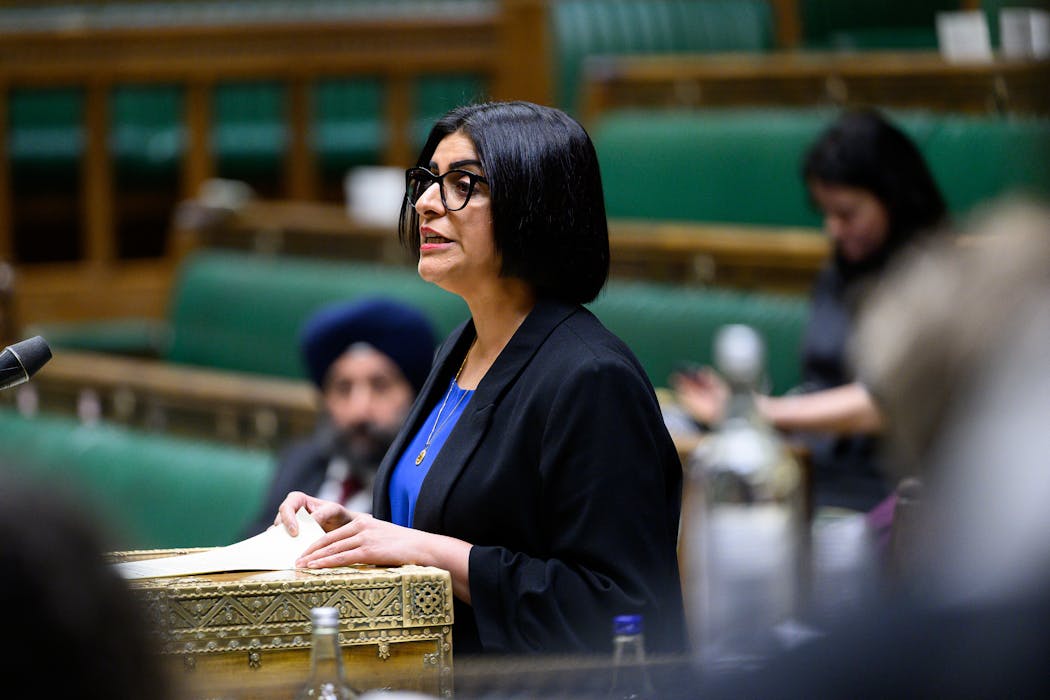
Shabana Mahmood delivers a statement to MPs about West Midlands police. UK Parliament/Flickr, CC BY-NC-ND

Craig Guildford, the chief constable of one of Britain’s largest police forces, West Midlands Police, will retire, after coming under pressure over a controversial decision by the police to ban visiting supporters of the Israeli football team Maccabi Tel Aviv from attending a match against Aston Villa.

Things escalated after it was revealed that the police used incorrect evidence that was hallucinated by AI in a report that led to their decision. Guildford had previously twice denied that AI was used. In an apology, the force said it had not deliberately distorted evidence.

The home secretary, Shabana Mahmood, then told MPs that she had “lost confidence” in Guildford, and announced that she would bring in new powers to allow any future home secretary to sack a chief constable. But such a promise, I argue, may be a threat to a key principle of policing in the UK.

When Robert Peel created the current British policing model, he insisted that officers must be non-partisan and free from political control and influence. Holding the office of constable means a police officer (including a chief constable) swears their allegiance to the king rather than any elected politician.

They should execute their duty independently, without fear or favour. Neither politicians nor anyone else may tell the police what decisions to take or what methods to employ, or not employ, to enforce the law. This is why the home secretary can’t just fire a chief constable.

How police are governed

For policing purposes, the UK has three separate criminal justice jurisdictions: Scotland, Northern Ireland and England and Wales. Whatever Mahmood implements will only apply to her jurisdiction, England and Wales. Since the 1970s, this includes 43 separate police forces, each covering a county or larger urban area such as the West Midlands.

The English and Welsh forces are governed by a shared system. Responsibility is divided between the Home Office, which provides half the police budget and sets national pay awards and regulations; the police and crime commissioner, an elected official with a mandate to set certain policing priorities; and the chief constable for an area, who is supposed to be operationally independent to decide how those priorities are met.

The notion of “independence from politics” has been under threat since the introduction of police and crime commissioners (PCCs) in 2011, most of whom are aligned to one of the main political parties. In addition, there have been questions raised about interference in the operational day-to-day running of police forces by at least one recent home secretary. The judge involved in this case said she found police had “maintained their operational independence”, and that the home secretary’s conversations with senior police had not influenced on-the-ground operations.


Read more:
Suella Braverman: why the home secretary can’t force the police to cancel a pro-Palestine march


Before 2011, the second limb of the three-pronged arrangement was a police authority. This consisted of 17 members drawn from local council, the magistracy and some members of the public. They were responsible for selecting (and if necessary, removing) their chief constable. The national police inspectorate would advise the police authority on suitability and qualifications, but there was no role for central government in the decision. Arguably, this removed personal enmity and political influence from the system.

Things changed in 1996, when the Police Act gave a home secretary the power to direct a police authority to force their chief constable to resign on the grounds of gross inefficiency or ineffectiveness. This was an extremely rare event, and generally chief constables were pretty safe in their role until a time of their choosing.

When the Conservative-led coalition government came to power in 2010, the prime minister was enamoured with the policing model in the US, whereby the local mayor had direct control of policing. This inspired Cameron’s government to create the current system of locally elected PCCs. They removed from the home secretary the power to sack a chief constable, and passed it to the PCC.

Last November, the government announced they were scrapping the model of PCCs. While we don’t yet know exactly what will replace them, the mood seems to be to give responsibility for policing to elected mayors or council leaders. Whether they will have sole power to fire the chief constable remains to be seen, but given Mahmood’s current stance it seems unlikely.

Policing by consent

To work effectively, “policing by consent” requires a sufficiently high level of public trust in the police. For several reasons, public confidence in the police is currently at a low ebb.

People want to be sure that their police service is free from political interference. It is, in my view, obviously undesirable for a chief constable to be scared of upsetting the home secretary of the day, and undesirable that any politician might bully a chief constable to suit their political ends. Losing a £100,000 pension is no doubt a sobering prospect.

As is often the case in politics, this fairly new home secretary probably wants to create the impression that she is strong, and will personally tackle inefficiency in policing. On the face of it, what Mahmood is planning to do is not particularly radical or remarkable – she is simply giving herself back the power that her predecessors had before the Tories took it away in 2011.

Although that power was rarely used, we must ask whether it was ever a desirable power for the home secretary to have in the first place.

The Conversation

John Fox is a former senior police detective.

ref. Why the home secretary can’t fire a police chief who has done wrong – it’s key to the integrity of British policing – https://theconversation.com/why-the-home-secretary-cant-fire-a-police-chief-who-has-done-wrong-its-key-to-the-integrity-of-british-policing-273615

Mandatory digital ID cards abandoned: where did the government go wrong?

Source: The Conversation – UK – By Tim Holmes, Senior Lecturer in Criminology and Policing, Bangor University

What was initially sold as a bold move to help stem the flow of illegal immigrants and change the UK’s approach to digital ID has now been abandoned.

The proposed scheme, unveiled in September 2025, called for the creation of a digital ID card stored on mobile phones, for use as proof of a person’s right to work in the UK. It has now emerged that this aspect of the scheme will not be compulsory.

Mandatory digital ID cards were billed primarily as a tactic to stop illegal migration. They would make employing illegal immigrants difficult, as employers would need to log ID checks of new employees. Beyond this role, they would enable quicker and easier access to government services, replacing a range of documents with one universal card.

The proposal’s downfall was, arguably, not the idea of a digital identity document. We already have these, in the form of the NHS app, eVisas, age and ID verification apps and digital banking apps. In effect, passports already have many of the characteristics of a digital ID card, including biometric data.

Rather, it was the government’s approach to one word: mandatory. Unlike drivers’ licences and passports, the scheme as proposed required universal uptake – a compulsory form of ID for all.

In an August 2025 Ipsos survey, 57% of respondents said they supported a national ID card scheme. But many had significant concerns over data security and implementation. Fear over invasion of privacy, digital exclusion and government overreach appear to have overpowered the arguments for the value of the scheme. The prime minister has been blamed for failing to make the case for the scheme, allowing these concerns to dominate discussion .

In a climate of declining trust in MPs, it would be difficult to generate confidence in the government to run a scheme which would allow the state to monitor and regulate people’s access to services and prove their identity. The Home Affairs committee noted it had received 3,500 statements from the public with the vast majority opposing the scheme. A petition opposing the scheme received 2,984,192 signatures.

How to sell an ID card scheme

Beyond addressing privacy concerns, there are a number of points that the government could have promoted to earn public support for digital IDs. They needed to do a better job at spreading the message that ID cards are part of a broader movement towards digitisation that can be trusted, and will make people’s lives easier.

The promise of a digital society has always been a quicker and easier access to services and a more responsive system to the demands of its users. In many ways, the UK has embraced this idea. But the experiences of the people of Jersey, for example, with the JerseyMe digital ID, could have been publicised more as an example of how it works in practice.

In my view, the importance of combating fraud and identity theft in particular needed more attention. The focus on illegal immigration in debates on the ID card meant the value in stopping, annually, £1.8 billion worth of identity theft was not highlighted enough.

It is evident that more attention to the concerns of those who do not have smartphones or who would prefer not to have digital ID. The civil liberties group Liberty noted that the most marginalised in society are likely to be unable to access a digital ID card. If such cards were mandatory for accessing work, this would effectively exclude people from the labour force.

A woman appearing to hold a hologram of a digital ID card floating in the air
Digital IDs will no longer be mandatory to prove a right to work in the UK.
nednapa/Shutterstock

The economic value of the digital identity sector to the UK could also have been showcased more. Latest estimates note the sector has over 260 companies, employing over 10,000 employees and generating over £2.1 billion pounds in revenue. Estimates suggest that this could increase to £4 billion by 2030.

A digital society

With the introduction of the Gov Wallet app the move to accessing government documents through your phone or digital device continues. The plan requires all government agencies to provide digital copies of documentation through the app by 2027.

Digital drivers licences, DBS checks, veteran cards, benefit proofs and child entitlement records could all be accessed digitally through the app on your phone using smartphone facial recognition. So whether or not we have digital ID cards, there is a future where smartphones are used by all to access government provided forms of identification.

State systems of surveillance, like ID cards, are often depicted as secretive and controlling. But they do not have to be. The Estonian ID card scheme is often held up as an example of transparent system for managing identification. It has a built-in system that allows citizens to monitor when their data is accessed.


Read more:
As the UK plans to introduce digital IDs, what can it learn from pioneer Estonia?


Even if, in reality, society is comfortable with digital technology, the level of confidence needs to be much higher before a mandatory scheme will be accepted. Introducing a voluntary version first that showed users the value of the system may have saved the proposal.

The other question that remains after this decision is how the government will address the other serious public concern – illegal immigration. Without this policy, its efforts to deal with illegal working in the UK will face further challenges.

The Conversation

Tim Holmes does not work for, consult, own shares in or receive funding from any company or organisation that would benefit from this article, and has disclosed no relevant affiliations beyond their academic appointment.

ref. Mandatory digital ID cards abandoned: where did the government go wrong? – https://theconversation.com/mandatory-digital-id-cards-abandoned-where-did-the-government-go-wrong-273603

YouTube may have surpassed the BBC in viewer share, but that’s not the whole picture – a media expert explains

Source: The Conversation – UK – By Dekan Apajee, Head of Media Department, School of Arts and Creative Industries, University of East London

News this week from the Broadcasters’ Audience Research Board (BARB) that YouTube has surpassed the BBC in viewing share has been widely framed as a tipping point. Some read it as a final nail in the future of public service broadcasting in a platform-led age.

But having spent ten years as a BBC journalist, another decade as a freelance content producer and academic, as well as the past five years as an Ofcom Content Board member, my instinct at times like this is to pause.

Audience measurement in a fragmented media landscape is complex. Anyone working in the industry knows that figures like those contained in this latest report from Barb – the independent UK body that measures and provides audience data for TV and video – have long been treated with caution. They capture something meaningful, but not the whole picture.

It’s important to be transparent about how Barb arrives at its numbers. Viewing is captured through two main methods: people-based data from the Barb panel; and device-based census data for online TV viewing. Both are well-established approaches, but both are proxies. They rely on standard assumptions about attention and behaviour in a world where people are increasingly watching across multiple platforms at the same time.

One television or “a view” doesn’t necessarily mean one viewer. A clip playing on a second screen doesn’t mean it’s being actively engaged with. And in an environment of constant choice, people don’t always remember what they’ve seen, let alone where they’ve seen it. The sheer volume of content means attention is often fleeting and fragmented. All of this matters when we interpret the recent headlines like this.

Rather than framing this story as YouTube versus the BBC, a more productive approach would be to look at what’s happening in practice. Audiences are still watching the BBC content via YouTube. The real job now is to understand which BBC content is travelling, how it’s being encountered and what that means for public service value when context and branding are no longer guaranteed.

Large volumes of BBC output circulate widely on YouTube: drama clips, comedy moments, documentary sequences, music performances, children’s favourites, archive footage and cultural highlights. Often re-edited or consumed in fragments, this content reaches audiences far beyond the BBC’s own services.

When that happens, YouTube gets the credit for reach and scale. The BBC’s role as commissioner, curator and public service institution can quietly recede into the background. In that sense, this moment may be less about YouTube overtaking the BBC, and more about where BBC content now lives, and how it is experienced, remembered and understood.

This shift hasn’t happened overnight. Ofcom’s 2025 Media Nations report has been pointing in this direction for years. Audiences consistently say they value high-quality UK content and trusted brands, yet they increasingly encounter that content via platforms rather than broadcasters. Discovery is driven by algorithms, not schedules; viewing is on demand, not appointment-based. Context becomes optional.

That fundamentally changes the relationship between content and audience.
The BBC still operates with public service values embedded across its output, standards around accuracy, care, accessibility, representation and responsibility. Those values shape everything from Planet Earth, to Newsround or big TV events like The Traitors.

BBC chatshow host Graham Norton’s best bits are widely viewed on YouTube.

YouTube, by contrast, is an open ecosystem. It hosts exceptional creativity and storytelling alongside commentary, parody, reaction content and material that lacks context or accountability. The platform doesn’t distinguish between public service content and everything else: that’s down to viewers.

Purpose, reach and intent

From my time at Ofcom, one thing has been consistently clear: audiences don’t lack intelligence or curiosity. What they often lack is context (and sometimes memory). When content is encountered in fragments, across platforms, mixed with countless other videos, it becomes harder to recognise what you’ve watched, where it came from, or what values shaped it.

Public service broadcasting has never just been about reach. It has been about intent. BBC content is designed to entertain, educate, reflect the UK back to itself and provide shared cultural reference points. When that content is consumed in isolation, one clip among many, some of that public service value risks being diluted, even when the content itself remains strong.

In that context, it’s hardly surprising that this debate coincides with reports, including from Reuters, that the BBC is moving towards a formal content partnership with YouTube. In many ways, that simply acknowledges a reality audiences have already created.

So when I look at these latest Barb figures, I don’t see a simple story of decline or defeat. I see a signal – imperfect, partial, but still useful – pointing to a deeper transformation in how public service content circulates in a platform-led world.

The more important question isn’t whether YouTube has beaten the BBC, it’s whether we are paying close enough attention to which BBC content is thriving on YouTube, how audiences are encountering it, and whether its public service value remains visible once the familiar containers fall away.

Because in a media environment defined by abundance, distraction and imperfect measurement, public service values don’t disappear. They just need more help to be seen and understood.


Looking for something good? Cut through the noise with a carefully curated selection of the latest releases, live events and exhibitions, straight to your inbox every fortnight, on Fridays. Sign up here.


The Conversation

Dekan Apajee does not work for, consult, own shares in or receive funding from any company or organisation that would benefit from this article, and has disclosed no relevant affiliations beyond their academic appointment.

ref. YouTube may have surpassed the BBC in viewer share, but that’s not the whole picture – a media expert explains – https://theconversation.com/youtube-may-have-surpassed-the-bbc-in-viewer-share-but-thats-not-the-whole-picture-a-media-expert-explains-273721

As Marmite Morrissey returns, let’s talk about the actual music

Source: The Conversation – UK – By Glenn Fosbraey, Associate Dean of Humanities and Social Sciences, University of Winchester

When news broke of a new Morrissey single and album last week (both titled Make-Up is a Lie), one thing was assured: it was going to get people talking.

Perhaps the most “Marmite” artist of all time, it’s hard to find an artist who divides opinion as much as Morrissey. To some, he is so beloved that going to one of his concerts is a religious experience. To others, he is so detestable there are social media groups with names like “the Morrissey Hate Club”, with detractors dismayed by how his recent political positions on immigration and nationalism are so at odds with the socialist values his early work appeared to advocate.

Morrissey has consistently argued that his views are focused on British identity and freedom of speech, not racism, and has denied that his contemporary nationalist stance conflicts with the anti-establishment and socialist values of his early work with The Smiths. In a 2018 blog post, he wrote: “I despise racism. I despise fascism.”

Morrissey’s relationship with the media has been similarly complex. In 2007, for example, he wrote a piece on the Guardian’s music blog about how the NME had “deliberately tried to characterise” him as a racist. Then, in 2019, he was quoted in the NME for saying the Guardian was running a “hate campaign” against him for running an article that accused him of supporting far-right ideologies.

Love or hate him, people remain fascinated with Morrissey. And this means that most of the music media covered the news of his new album, even if, like Spin magazine, they did so through gritted teeth.

A 2019 Guardian article observed that it “can be difficult – painful, even – to untangle the things you love about Morrissey from those you despise”. But when it comes to the actual new music, does the good outweigh the bad?

Title shots

At present, with the exception of the single Make-Up is a Lie, fans have only the song titles for the rest of the album to go on. The track list was shared via social media on Christmas Day.

What we can take from this limited information is that Morrissey continues to come up with intriguing, unique and often bizarre song titles. Joining the likes of Don’t Make Fun of Daddy’s Voice (2004), Kick the Bride Down the Aisle (2014) and Jim Jim Falls (2020) from his back catalogue are new titles The Monsters of Pig Alley, Zoom Zoom the Little Boy and Many Icebergs Ago. Interesting, yes. But, as songs like Julie in the Weeds (2014) and Never Again Will I Be a Twin (2017) testify, compelling titles don’t necessarily lead to compelling songs.

Addressing what he saw as a media attempt to delete him “from being the central essence of The Smiths”, in 2024 Morrissey asserted that he “invented the group name, the song titles, the album titles, the artwork, the vocal melodies and all of the lyrical sentiments”.

From this list, it’s Morrissey’s authorship of vocal melodies that is most often overlooked, and it’s rare to find any reference to his songwriting contributions that goes beyond the lyrics.

Yet, for all the skill of his talented co-writers over the years, be that Jonny Marr, Alain Whyte, Boz Boorer, Jesse Tobias, or, in the case of Make-Up is a Lie, Camila Grey, those lead lines are Morrissey’s. And, when thousands of fans are singing them, like the performance (below) of There is a Light That Never Goes Out at Move Festival in Manchester, even his staunchest critics cannot deny his talent for writing catchy melodies.

Make-Up is a Lie may never be an anthemic sing-along in the same way as There is a Light, but the chorus, with its melodic leaps and repetition, does at least contain two of the components that scientists believe make up the “earworm effect”, which will make it hard to forget (whether we like it or not).

Morrissey performing There is a Light That Never Goes Out.

Rhyme time

At his best, Morrissey employed a range of different rhyme types to allow himself a wider range of words to draw from, resulting in lyrics which simultaneously felt startlingly fresh and comfortingly familiar.

In both The Smiths and in his solo career, Morrissey has used assonance, family, additive, and consonance rhymes in songs like That Joke Isn’t Funny Anymore (1985), Rubber Ring (1987), Our Frank (1991), and Lifeguard Sleeping, Girl Drowning (1994).

When he used “perfect” rhymes (rhymes where both the vowel sounds and any consonant sounds after them are the same), he was often innovative, for example rhyming “northern” with “worse and” (1992’s We Hate it When Our Friends Become Successful).

In recent years, though, Morrissey seems keen to write lyrics containing more obvious perfect end rhymes. There’s been “place/face” (Earth is the Loneliest Planet, 2014) ; “babies/rabies/scabies” (Neal Cassady Drops Dead, 2014); “bus/fuss” and “train/strain” (Spent the Day in Bed, 2017); “Room/ gloom” (The Secret Of Music, 2020); and “sleuth/ truth” (The Truth About Ruth, 2020). And, of course, the “kegs/legs” rhyme in 2006’s Dear God, Please Help Me, where the line “there are explosive kegs between my legs” is a prime candidate for his worst ever.

Pleasingly, Morrissey is more expansive and imaginative with his rhyme types in Make-Up is a Lie (“reclusion/explosion” and “Paris/granite”) with only “outburst and cloudburst” seeming like a slight regression.

Whether or not 2026 will prove another difficult year for Morrissey fans won’t just rest on the music he releases, of course. There will be interviews to nervously watch and press to nervously read, and it’s inevitable that the words “cancellation” and “controversy” will never be far away. But a strong album would certainly be a boost for those who fall on the love side of the Marmite divide.

The Conversation

Glenn Fosbraey does not work for, consult, own shares in or receive funding from any company or organisation that would benefit from this article, and has disclosed no relevant affiliations beyond their academic appointment.

ref. As Marmite Morrissey returns, let’s talk about the actual music – https://theconversation.com/as-marmite-morrissey-returns-lets-talk-about-the-actual-music-273310