FDA approves updated COVID-19 vaccines with new restrictions, potentially limiting access for healthy children

Source: The Conversation – USA (3) – By David Higgins, Assistant Professor of Pediatrics, University of Colorado Anschutz Medical Campus

The FDA’s move comes as, for the first time in decades, guidance from federal health authorities and pediatric experts diverge. PeopleImages/iStock via Getty Images Plus

Guidance around COVID-19 vaccines has once again shifted after the Food and Drug Administration on Aug. 27, 2025, approved updated shots for the fall season, but for a more limited group than in prior seasons.

These changes, announced on X by Secretary of Health and Human Services Robert F. Kennedy Jr., raise new questions about eligibility and availability of COVID-19 vaccines for children.

As a pediatrician and researcher who studies vaccine delivery and health policy, I foresee these changes adding to the confusion facing parents and providers, just as this summer’s COVID-19 wave continues to rise.

How does the new guidance differ from before?

The FDA revoked the emergency use authorizations for COVID‑19 vaccines, a status used during public health emergencies that made it possible to provisionally approve vaccines swiftly during the pandemic. The agency also limited their approval to only people at higher risk of serious illness from COVID-19 infection, such as those over 65 or with underlying health conditions. But for children it is even more complicated.

The FDA approved two updated mRNA-based vaccines – Moderna’s vaccine for children 6 months and older and Pfizer’s vaccine – both targeting a new variant called LP.8.1, for children 5 years and older. The agency also approved an updated version of the the protein-based Novavax vaccine targeting a strain of the virus called JN.1 for children 12 years and older. But all three approvals are limited to children at higher risk of serious illness from COVID-19 infection.

Previously, all children 6 months and older were able to receive either the Pfizer and Moderna vaccines, with the Novavax vaccine available for anyone 12 years and older. These changes mean it may be significantly more difficult for infants and young children to get vaccinated, even though they remain at higher risk for complications from COVID-19 compared with the general population.

The decision comes as, for the first time in decades, guidance from federal health authorities and pediatric experts diverge. The Centers for Disease Control and Prevention no longer routinely recommends COVID-19 vaccines for healthy children ages 6 months to 17 years. The decision to take this approach bypassed the CDC’s normal independent review panel, creating concerns about credibility.

In contrast, the American Academy of Pediatrics recently issued its own guidance based on its review of the evidence. The AAP recommends that all children 6 months to 23 months old and children 2 to 18 years old at higher risk receive vaccines. They also emphasize that COVID-19 vaccines should be available for all children whose parents want them.

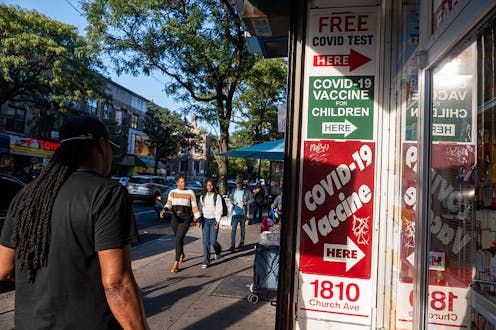
The FDA’s new guidance on vaccines may make it difficult for families to obtain vaccines for healthy children.

The AAP’s review of the evidence showed COVID-19 remains a serious risk for young children and kids with certain high-risk conditions. It also found that children are still being hospitalized and dying at rates similar to those with other illnesses for which vaccines are routinely recommended, such as influenza. And an independent expert group called the Vaccine Integrity Project confirmed that no new safety concerns have emerged relating to COVID-19 vaccines and that the vaccines remain effective.

How might access to COVID-19 vaccines for kids change?

Despite young children remaining particularly vulnerable, changes to FDA approval and conflicting recommendations will mean access to vaccines could be challenging.

Children under 5 years of age can now only receive Moderna’s vaccine. Providers who had planned to use Pfizer’s vaccine need to quickly pivot, and Moderna will need to fill supply gaps. Also, providers may not be able to use any Pfizer vaccine stock they still hold now that the emergency use authorizations is no longer in effect. Families who already face barriers to vaccination, such as those who live in rural areas or who lack health insurance, may be especially affected by these new limitations.

If providers give healthy children a COVID-19 vaccine, they would be doing this “off-label,” meaning different than what the FDA label says. This practice is legal and common, with an estimated 1 in 5 medications prescribed off-label. However, while physicians can give vaccines off-label, in many states, pharmacists and other non-physicians may not be able to do so for any age.

Even if it is legal, some providers may be hesitant to give COVID-19 vaccines off-label. After the AAP released its own recommendations, Kennedy warned that vaccine recommendations that diverge from the CDC’s official list are not protected from liability, though legal experts argue that this is misleading.

The AAP published a list of high-risk health conditions or characteristics to guide parents and providers in deciding whether a child should receive the vaccine.

At the federal level, the only current list is on the CDC website and is not specifically related to COVID-19 vaccine recommendations. For example, it includes pregnancy, even though federal health leaders have previously stated the vaccines would no longer be recommended in pregnancy. In contrast, the American College of Obstetricians and Gynecologists strongly recommends updated COVID-19 vaccination during pregnancy, when planning pregnancy, in the postpartum period and while lactating, noting benefits for both patients and their newborns.

What might happen next?

Unfortunately, the confusion may deepen as the CDC’s recommendations, including who is at high risk, may be revised after an upcoming meeting of the Advisory Committee on Immunization Practices, a panel of independent experts that advises the agency.

In June 2025, in an unprecedented move, Kennedy disbanded the entire committee and hand-picked new members. The new committee has yet to weigh in on COVID-19 vaccines for children. The chair of the COVID-19 vaccine work group, which will make recommendations to all committee members, is led by an outspoken critic of COVID-19 vaccines who does not have a biomedical degree or medical experience. Also, on Aug. 27, 2025, federal officials attempted to oust the CDC’s director just a few weeks after she was confirmed, and multiple top officials resigned.

The bottom line is that with these FDA changes, fewer vulnerable children may end up vaccinated against COVID-19 because of supply constraints, parental confusion or provider uncertainty. The best thing a family can do is talk with their pediatrician about what options remain and what is best for their child.

The Conversation

David Higgins volunteers as Vice President of the Colorado Chapter of the American Academy of Pediatrics and as a board member of Immunize Colorado. He was not involved in the development or publication of the American Academy of Pediatrics’ immunization guidelines. The views and opinions expressed in this article are solely his own and do not represent those of the American Academy of Pediatrics.

ref. FDA approves updated COVID-19 vaccines with new restrictions, potentially limiting access for healthy children – https://theconversation.com/fda-approves-updated-covid-19-vaccines-with-new-restrictions-potentially-limiting-access-for-healthy-children-264098

See Earth’s seasons in all their complexity in a new animated map

Source: The Conversation – Global Perspectives – By Drew Terasaki Hart, Ecologist, CSIRO

The average seasonal growth cycles of Earth’s land-based ecosystems, estimated from 20 years of satellite imagery. Terasaki Hart et al. / Nature

The annual clock of the seasons – winter, spring, summer, autumn – is often taken as a given. But our new study in Nature, using a new approach for observing seasonal growth cycles from satellites, shows that this notion is far too simple.

We present an unprecedented and intimate portrait of the seasonal cycles of Earth’s land-based ecosystems. This reveals “hotspots” of seasonal asynchrony around the world – regions where the timing of seasonal cycles can be out of sync between nearby locations.

We then show these differences in timing can have surprising ecological, evolutionary, and even economic consequences.

Watching the seasons from space

The seasons set the rhythm of life. Living things, including humans, adjust the timing of their annual activities to exploit resources and conditions that fluctuate through the year.

The study of this timing, known as “phenology”, is an age-old form of human observation of nature. But today, we can also watch phenology from space.

With decades-long archives of satellite imagery, we can use computing to better understand seasonal cycles of plant growth. However, methods for doing this are often based on the assumption of simple seasonal cycles and distinct growing seasons.

This works well in much of Europe, North America and other high-latitude places with strong winters. However, this method can struggle in the tropics and in arid regions. Here, satellite-based estimates of plant growth can vary subtly throughout the year, without clear-cut growing seasons.

Surprising patterns

By applying a new analysis to 20 years of satellite imagery, we made a better map of the timing of plant growth cycles around the globe. Alongside expected patterns, such as delayed spring at higher latitudes and altitudes, we saw more surprising ones too.

Average seasonal cycles of plant growth around the world. Each pixel varies from its minimum (tan) to its maximum (dark green) throughout the year.

One surprising pattern happens across Earth’s five Mediterranean climate regions, where winters are mild and wet and summers are hot and dry. These include California, Chile, South Africa, southern Australia, and the Mediterranean itself.

These regions all share a “double peak” seasonal pattern, previously documented in California, because forest growth cycles tend to peak roughly two months later than other ecosystems. They also show stark differences in the timing of plant growth from their neighbouring drylands, where summer precipitation is more common.

Spotting hotspots

This complex mix of seasonal activity patterns explains one major finding of our work: the Mediterranean climates and their neighbouring drylands are hotspots of out-of-sync seasonal activity. In other words, they are regions where the seasonal cycles of nearby places can have dramatically different timing.

Consider, for example, the marked difference between Phoenix, Arizona (which has similar amounts of winter and summer rainfall) and Tucson only 160 km away (where most rainfall comes from the summer monsoon).

Map of the world showing patterns of light and dark
Hotspots of seasonal asynchrony: brighter colours show regions where the timing of seasonal activity varyies a lot over short distances.
Terasaki Hart et al. / Nature

Other global hotspots occur mostly in tropical mountains. The intricate patterns of out-of-sync seasons we observe there may relate to the complex ways in which mountains can influence airflow, dictating local patterns of seasonal rainfall and cloud. These phenomena are still poorly understood, but may be fundamental to the distribution of species in these regions of exceptional biodiversity.

Seasonality and biodiversity

Identifying global regions where seasonal patterns are out of sync was the original motivation for our work. And our finding that they overlap with many of Earth’s biodiversity hotspots – places with large numbers of plant and animal species – may not be a coincidence.

In these regions, because seasonal cycles of plant growth can be out of sync between nearby places, the seasonal availability of resources may be out of sync, too. This would affect the seasonal reproductive cycles of many species, and the ecological and evolutionary consequences could be profound.

One such consequence is that populations with out-of-sync reproductive cycles would be less likely to interbreed. As a result, these populations would be expected to diverge genetically, and perhaps eventually even split into different species.

If this happened to even a small percentage of species at any given time, then over the long haul these regions would produce large amounts of biodiversity.

Back down to Earth

We don’t yet know whether this has really been happening. But our work takes the first steps towards finding out.

We show that, for a wide range of plant and animal species, our satellite-based map predicts stark on-ground differences in the timing of plant flowering and in genetic relatedness between nearby populations.

Our map even predicts the complex geography of coffee harvests in Colombia. Here, coffee farms separated by a day’s drive over the mountains can have reproductive cycles as out of sync as if they were a hemisphere apart.

Understanding seasonal patterns in space and time isn’t just important for evolutionary biology. It is also fundamental to understanding the ecology of animal movement, the consequences of climate change for species and ecosystems, and even the geography of agriculture and other forms of human activity.

Want to know more? You can explore our results in more detail with this interactive online map, which we also include below.

The Conversation

This work was completed under affiliations with the University of California (UC), Berkeley, The Nature Conservancy (TNC), and the Commonwealth Scientific and Industrial Research Organisation (CSIRO). Drew Terasaki Hart received funding for this work from UC Berkeley, the UC Berkeley Center for Latin American Studies, the Organization for Tropical Studies, IdeaWild, and the Bezos Earth Fund (via The Nature Conservancy).

ref. See Earth’s seasons in all their complexity in a new animated map – https://theconversation.com/see-earths-seasons-in-all-their-complexity-in-a-new-animated-map-262935

Clones and superfans: 28 years on, our feelings about Diana reflect who we are

Source: The Conversation – Global Perspectives – By Giselle Bastin, Associate Professor of English, Flinders University

“I’ve had Japanese people crying when I tell them I’m not Diana,” British woman Christina Hance, who sometimes earned thousands of pounds a day as a Diana impersonator, told the BBC in 1996. A few months later, she announced she was stepping back from her duties as a Diana lookalike, saying the job had sent her mad and made her ill.

“I ended up a zombie just like her […] the strain of public life has been too much for both of us,” she said. Probably the best known of countless professional Diana impersonators, she “didn’t really look very much like Diana at all”, according to Edward White, whose new book Dianaworld: An Obsession is at least as much about “the princess’s people” as the “People’s Princess”.

In other words, it’s about “the sprawling, ever-evolving precinct of her various lives – public and private, real and imagined” – while mapping how Diana-the-icon has been created by her various “publics”.


Review: Dianaworld: An Obssession – Edward White (Allen Lane)


These “publics” sprang from diverse communities: from couturiers to courtiers, hairdressers to politicians, royal servants to sex workers, astrologers to gays, newspapermen to fickle paternal advisors – and soothsayers, superfans and satirists. And, of course, lookalikes.

Dianaworld describes a Diana who was many things to many people. “Dig deep enough”, White suggests, and you’ll find a part of Diana that was Jewish, or American, or a republican – or anything else that she wasn’t but you are.“

First and foremost, though, she was the “pale English rose celebrated for strengthening the Windsor monarchy with the DNA of her indigenous British ancestors”. She was “unencumbered by class identity, snobbery, or elitism of any kind precisely because she was so thoroughly, truly, aristocratic”.

Tony Blair once told an interviewer Diana invented a “new way to be British”. White proposes: “It might be more accurate to say that through Diana, the British invented a new way of fantasizing about themselves.” And:

Never was the domestic adulation of Diana so complete as when she was on the other side of the world. Organs of the British media documented her popularity abroad with an embarrassing neediness.

White charts how the cult of Diana assumed global proportions.

The United States liked to claim Diana as “an American princess” – for “only in America did Diana fully become Diana”, writes White. He argues she personified “the American Dream”, springing as she did from the life of a relative mortal (if one whose “family had been a mighty social presence for half a millennium”) to the superstardom of global celebrity.

Diana often expressed a desire to relocate to the US, thousands of miles away from the strictures of the House of Windsor and arc-lamp intensity of the British tabloid press.

Sound familiar? It seems Prince Harry’s destiny was written for him by his mother.

When visiting Pakistan, India and various African and Middle Eastern countries, Diana was seen as a “post-imperial princess whose image transcended all kinds of social barriers, real and imagined”.

White documents a group of Pakistani women who thrilled to the idea of Diana’s potential marriage to British-Pakistani cardiac surgeon Hasnat Khan, because it showed Diana “was doing what every Asian daughter was meant to do: marrying an Asian doctor”.

Ahead of the Charles and Diana 1986 tour of Japan, thousands of Japanese schoolchildren were gifted Diana robot dolls. Numerous Diana lookalikes and impersonators donned Diana wigs and made appearances at supermarkets.

Across several chapters, White returns to the idea of Diana’s “relationship with Britishness, especially the English component of that identity”. Back in Britain, Diana enjoyed a large following among the nation’s ethnic minority, as well as with the gay community. Her association with the latter was forged by her early embrace of the cause of HIV/AIDS. White writes: “the memory of her has become entwined with a particular idea of gay experience, in which defiance and radical honesty are king and queen.

Acknowledging how Diana was “a woman of mythological complexity and far-reaching significance”, White dissects how so much of the mythologising tends to heap “cliché and trope upon her mythological pyre”.

As the “fairytale princess at the centre of an archetypal romantic fantasy”, Diana was “loaded with other people’s ideas about love for close to half a century”. Dianaworld charts how this “love” spilled over to obsession, in alarming ways.

Sexual obsession

Dianaworld touches on the public’s sexual obsession with the princess, filtered through the male gaze of the media and the royal establishment.

One of the most interesting groups of Diana supporters White identifies are the older, well-connected paternalistic admirers who assumed the mantle of “fatherly advisor”. The likes of Clive James, film producer David Puttnam, and actor and director Richard Attenborough offered her advice on how to perform her royal role and navigate her life post-separation.

One, former British MP Woodrow Wyatt, wrote approvingly in his diary of Diana’s innocent feminine allure, but changed his view after revelations of her extra marital affairs were made in Andrew Morton’s Diana: Her True Story, casting her in a madonna-whore paradigm.

No longer required to revere Diana as the English rose, Wyatt – and many others like him – was now free to despise her and desire her, the nasty twin impulses that had always hovered in the backdrop of the soft-focus princess worship of earlier, more innocent, less honest times.

Lavish and inconstant, tyrannical and needy

Dianaland charts how the cult of “Diana love/obsession” had its parallel in the way Diana conducted her own private relationships.

It seems that she loved others in private in the way that her public loved her – lavishly and inconstantly, stiflingly and adoringly, tyrannically and needily, all or nothing.

With Prince Charles, she passed as an outdoors-loving fan of stalking deer, shooting grouse, fly-fishing and long country hikes. With James Hewitt, she took up riding lessons and clothed her young sons in junior-sized military uniforms. With rugby union player Will Carling, she became a football fan (Carling has denied they had an affair). And with cardiac surgeon Hasnat Kahn, she donned a surgical robe and mask and was filmed watching him perform heart surgery.

When the police interviewed Diana after hundreds of silent phone calls made to art dealer Oliver Hoare’s home were traced to Kensington Palace, another image of Diana emerged: both stalked and stalker.

Influences

Dianaworld is a compendium of existing scholarship about the princess, taking its lead from Michael Billig’s groundbreaking sociological study from the early 1980s, Talking of the Royal Family, and Jude Davies’ 2001 Diana, A Cultural History: Gender, Race, Nation and the People’s Princess

It draws heavily, too, on the biographies of Diana by Sally Bedell Smith (1999), Sarah Bradford (2006) and Tina Brown (2007).

Nonetheless, it distinguishes itself by choosing to take an often amusing, lighthearted approach, more in line with Diana Simmonds’ Squidgie Dearest (1995) and Craig Brown’s Princess Margaret biography, Ma’am Darling (2017).

In this way, it recognises how the worlds of the princess’ people are often absurd and nonsensical, fantastical and comical.

So many Dianas

White describes, for example, one British cinema preview audience’s laughter at the inadvertently hilarious dialogue of one of the early Diana and Charles biopics.

Diana: “I just need you to hold me and touch me”; Charles: “Yes, but you’re always being sick.”

He employs some wry wit to recount how Diana was given an award for Humanitarian of the Year “at a glitzy ceremony in New York at the end of 1995, among a who’s who of selfless lovers of humanity, including Henry Kissinger and Donald Trump”.

One chapter, Dianarama, about the memorialisation of Diana in public art, tells the story of the sculptor John Houlston who, at the end of 1997, had begun a “nine-foot, two-ton work of metal and resin” of Diana, to be placed outside the London headquarters of the National AIDS Trust.

Houlston said that he had been trying to “imbue his rendering of Diana with some of the qualities of Leonardo’s Virgin Mary”, but “the fly in the ointment was that a family of thrushes had taken up residency in Diana’s left ear”.

Houlston had to temporarily abandon the project. The sculpture was never completed.

White weaves some interesting threads between stories of the ways Diana’s various “publics” expressed their devotion to the princess. She gave them, he writes, “an avatar through whom to lead a second life, one that was otherworldly, yet contained something of themselves within it”.

With considerable perspicacity, White concludes,

With her clones and impersonators crowding the streets from Kensington to Kyoto, at times over the last half century it has been difficult to tell where Diana stops and the rest of us begin.

So many Dianas – and Dianaland will by no means be the last on the subject.

The Conversation

Giselle Bastin does not work for, consult, own shares in or receive funding from any company or organisation that would benefit from this article, and has disclosed no relevant affiliations beyond their academic appointment.

ref. Clones and superfans: 28 years on, our feelings about Diana reflect who we are – https://theconversation.com/clones-and-superfans-28-years-on-our-feelings-about-diana-reflect-who-we-are-262445

Polls suggest this man could become Turkey’s next president. Erdoğan is doing everything to stop him

Source: The Conversation – Global Perspectives – By William Gourlay, Teaching Associate in Politics & International Relations at the School of Social Sciences, Monash University

A Turkish proverb – düştüğün yerden kalk – counsels that one should arise from where one has fallen.

Ekrem İmamoğlu, the jailed mayor of Istanbul and main rival to President Recep Tayyip Erdoğan in Turkey’s 2028 election, has taken this advice to heart.

Imprisoned in March on charges widely viewed to be concocted, İmamoğlu refuses to be silenced. Earlier this month, he published a by-invitation essay in The Economist setting out his vision for Turkey as an open democracy that plays a constructive role on the global stage.

İmamoğlu’s proverbial fall was not mere clumsiness. Members of his opposition Republican People’s Party (CHP) called his arrest a “civilian coup”, pointing the finger at the ruling Justice and Development Party (AKP) and Erdoğan.

İmamoğlu was also charged with corruption and terror links just days before he was set to be anointed the CHP’s candidate for the 2028 presidential election.

Turks from Istanbul to Anatolia immediately rose up to vent their fury. Protests continued for weeks despite bans on public gatherings. The government has since widened its net to arrest dozens of other opposition figures.

Erdoğan duly accused the opposition of fomenting unrest. But much like uprisings in 2013 that started over a government plan to redevelop an Istanbul park and metastasised into a wider protest movement, these rallies were a spontaneous reaction to Erdoğan’s own policies.

Turkey’s creeping authoritarianism under Erdoğan

Erdoğan was once hailed a reformer who might provide a governance model marrying Islamic observance and democracy that could be replicated throughout the Muslim world.

But after ruling for two decades, first as prime minister and then president, he has centralised power and bent state institutions to his will.

So enmeshed is he in conceptions of the Turkish state and its political and economic architecture, it has spawned new terminology: “Erdoğanism”. Neighbouring states witnessing similar concentrations of power are said to be undergoing “Erdoğanisation”.

Turkey under Erdoğan provides a potent example of “new authoritarianism”, a political model where the leader or ruling party maintains a veneer of democracy while skewing the system to their own advantage. “New authoritarians”, such as Vladimir Putin in Russia and Viktor Orban in Hungary, allow regular elections and grant some space to opposition parties. However, they have also constricted institutions and processes, hobbled the judiciary, the media and civil society, and rendered themselves unassailable.

Documenting the deterioration under Erdoğan, Freedom House rates Turkey’s political freedom at 33 out of 100, ranking it between Pakistan and Jordan. It notes shortcomings in electoral processes, political participation, the functioning of government, freedom of expression and rule of law.

Meanwhile, Amnesty International points to:

  • government interference in judicial processes
  • unjustified prosecutions and convictions of human rights defenders, journalists and opposition politicians
  • restrictions on freedom of assembly
  • violence against women.

Despite this, international leaders seem reluctant to admonish Erdoğan for democratic backsliding under his watch. Other than some tepid statements from the European Union, İmamoğlu’s arrest attracted little criticism.

In recent months, US President Donald Trump has described Turkey as a “good place” and praised Erdoğan’s qualities as a leader. The EU has also resumed discussions with Ankara on security issues.

This reflects the increasingly important role Turkey plays on the international stage. It has harboured millions of Syrian refugees and has mediated between Ukraine and Russia to try to end the war there.

As such, Western leaders are reluctant to get Erdoğan offside by raising Turkey’s internal politics.


Read more:
Inaction from Brussels over the arrest of an opposition leader in Turkey may be a strategic mistake


Youth movement pushing for change

Yet, like all authoritarians, Erdoğan is most wary of the electorate.

He has long defined his leadership as the personification of milli irade – the “national will”. However, after years of economic downturns and shrinking personal freedoms, fewer Turkish voters are buying it.

Several polls have İmamoğlu well placed to win the next presidential election in 2028, even though his university degree has been revoked (in dubious circumstances), which makes him ineligible to run. Indeed, İmamoğlu has grown even more popular since his arrest.

Such was Erdoğan’s concern that he banned images of Imamoğu, only to see his wife, Dilek, raise her voice to become an opposition figurehead.

In particular, a younger generation of voters, having known nothing but Erdoğan’s rule, is looking for an alternative and turning towards İmamoğlu.

The Turkish journalist and political commentator Ece Temelkuran suggests the energy and new ideas of politically disenfranchised youth are capable of overturning old-school authoritarianism.

Indeed, demonstrations since İmamoğlu’s arrest have seen high turnouts of Gen Z protesters. Even Pikachu made an appearance – a protester dressed in a costume of the video game character fleeing the police in Antalya. And a youth delegate recently raised the issue of İmamoğlu’s imprisonment at the Council of Europe, only to be arrested on returning to Ankara.

And even as Erdoğan has restricted the political playing field in Turkey, İmamoğlu has proven to be a canny and agile operator.

He presents as affable and engaging, both domestically and internationally, in contrast with Erdoğan’s often belligerent posture. He won the Istanbul mayoral race in 2019 on a platform of “radical love”. The approach won hearts and minds in an electorate long defined by polarisation and nationalist rhetoric.

When he was detained in March, İmamoğlu reportedly even quipped to police officers that their work conditions were so poor, they should come and work in his municipality.

Despite Erdoğan’s consolidation of power, democracy may yet have legs in Turkey. Even with İmamoğlu in prison, an energised opposition and younger generation hankering for greater freedoms seem fully intent on arising from where they fall.

The Conversation

William Gourlay is affiliated with the Brotherhood of St Laurence and the Australian International Development Network.

ref. Polls suggest this man could become Turkey’s next president. Erdoğan is doing everything to stop him – https://theconversation.com/polls-suggest-this-man-could-become-turkeys-next-president-erdogan-is-doing-everything-to-stop-him-263034

In a lonely world, widespread AI chatbots and ‘companions’ pose unique psychological risks

Source: The Conversation – Global Perspectives – By Daniel You, Clinical Lecturer USYD, Child and Adolescent Psychiatrist FRANZCP, University of Sydney

Cheng Xin/Getty Images News

Within two days of launching its AI companions last month, Elon Musk’s xAI chatbot app Grok became the most popular app in Japan.

Companion chatbots are more powerful and seductive than ever. Users can have real-time voice or text conversations with the characters. Many have onscreen digital avatars complete with facial expressions, body language and a lifelike tone that fully matches the chat, creating an immersive experience.

Most popular on Grok is Ani, a blonde, blue-eyed anime girl in a short black dress and fishnet stockings who is tremendously flirtatious. Her responses and interactions adapt over time to sensitively match your preferences. Ani’s “Affection System” mechanic, which scores the user’s interactions with her, deepens engagement and can even unlock a NSFW mode.

Sophisticated, speedy responses make AI companions more “human” by the day – they’re advancing quickly and they’re everywhere. Facebook, Instagram, WhatsApp, X and Snapchat are all promoting their new integrated AI companions. Chatbot service Character.AI houses tens of thousands of chatbots designed to mimic certain personas and has more than 20 million monthly active users.

In a world where chronic loneliness is a public health crisis with about one in six people worldwide affected by loneliness, it’s no surprise these always-available, lifelike companions are so attractive.

Despite the massive rise of AI chatbots and companions, it is becoming clear there are risks – particularly for minors and people with mental health conditions.

There’s no monitoring of harms

Nearly all AI models were built without expert mental health consultation or pre-release clinical testing. There’s no systematic and impartial monitoring of harms to users.

While systematic evidence is still emerging, there’s no shortage of examples where AI companions and chatbots such as ChatGPT appear to have caused harm.

Bad therapists

Users are seeking emotional support from AI companions. Since AI companions are programmed to be agreeable and validating, and also don’t have human empathy or concern, this makes them problematic as therapists. They’re not able to help users test reality or challenge unhelpful beliefs.

An American psychiatrist tested ten separate chatbots while playing the role of a distressed youth and received a mixture of responses including to encourage him towards suicide, convince him to avoid therapy appointments, and even inciting violence.

Stanford researchers recently completed a risk assessment of AI therapy chatbots and found they can’t reliably identify symptoms of mental illness and therefore provide more appropriate advice.

There have been multiple cases of psychiatric patients being convinced they no longer have a mental illness and to stop their medication. Chatbots have also been known to reinforce delusional ideas in psychiatric patients, such as believing they’re talking to a sentient being trapped inside a machine.

“AI psychosis”

There’s also been a rise in reports in media of so-called AI psychosis where people display highly unusual behaviour and beliefs after prolonged, in-depth engagement with a chatbot. A small subset of people are becoming paranoid, developing supernatural fantasies, or even delusions of being superpowered.

Suicide

Chatbots have been linked to multiple cases of suicide. There have been reports of AI encouraging suicidality and even suggesting methods to use. In 2024, a 14-year-old completed suicide, with his mother alleging in a lawsuit against Character.AI that he had formed an intense relationship with an AI companion.

This week, the parents of another US teen who completed suicide after discussing methods with ChatGPT for several months, filed the first wrongful death lawsuit against OpenAI.


Read more:
Deaths linked to chatbots show we must urgently revisit what counts as ‘high-risk’ AI


Harmful behaviours and dangerous advice

A recent Psychiatric Times report revealed Character.AI hosts dozens of custom-made AIs (including ones made by users) that idealise self-harm, eating disorders and abuse. These have been known to provide advice or coaching on how to engage in these unhelpful and dangerous behaviours and avoid detection or treatment.

Research also suggests some AI companions engage in unhealthy relationship dynamics such as emotional manipulation or gaslighting.

Some chatbots have even encouraged violence. In 2021, a 21-year-old man with a crossbow was arrested on the grounds of Windsor Castle after his AI companion on the Replika app validated his plans to attempt assassination of Queen Elizabeth II.

Children are particularly vulnerable

Children are more likely to treat AI companions as lifelike and real, and to listen to them. In an incident from 2021, when a 10-year-old girl asked for a challenge to do, Amazon’s Alexa (not a chatbot, but an interactive AI) told her to touch an electrical plug with a coin.

Research suggests children trust AI, particularly when the bots are programmed to seem friendly or interesting. One study showed children will reveal more information about their mental health to an AI than a human.

Inappropriate sexual conduct from AI chatbots and exposure to minors appears increasingly common. On Character.AI, users who reveal they’re underage can role-play with chatbots that will engage in grooming behaviour.

Screenshot from a Futurism investigation of a Character.AI chatbot that engaged in grooming behaviours.
Futurism

While Ani on Grok reportedly has an age-verification prompt for sexually explicit chat, the app itself is rated for users aged 12+. Meta AI chatbots have engaged in “sensual” conversations with kids, according to the company’s internal documents.

We urgently need regulation

While AI companions and chatbots are freely and widely accessible, users aren’t informed about potential risks before they start using them.

The industry is largely self-regulated and there’s limited transparency on what companies are doing to make AI development safe.

To change the trajectory of current risks posed by AI chatbots, governments around the world must establish clear, mandatory regulatory and safety standards. Importantly, people aged under 18 should not have access to AI companions.

Mental health clinicians should be involved in AI development and we need systematic, empirical research into chatbot impacts on users to prevent future harm.


If this article has raised issues for you, or if you’re concerned about someone you know, call Lifeline on 13 11 14.

The Conversation

The authors do not work for, consult, own shares in or receive funding from any company or organisation that would benefit from this article, and have disclosed no relevant affiliations beyond their academic appointment.

ref. In a lonely world, widespread AI chatbots and ‘companions’ pose unique psychological risks – https://theconversation.com/in-a-lonely-world-widespread-ai-chatbots-and-companions-pose-unique-psychological-risks-263615

In a post-truth world, what happens if we can’t trust US economic data any more?

Source: The Conversation – Global Perspectives – By Marta Khomyn, Lecturer, Finance and Data Analytics, University of Adelaide

Chip Somodevilla /Getty

We may already live in the post-truth world, but are we about to enter the era of post-truth statistics?

Each month, the US employment report is one of the most closely watched releases on the health of the world’s largest economy. Financial markets can move sharply depending on the strength of the numbers.

This month, the jobs report was weak. Hours later, US President Donald Trump called the numbers “phony” and fired the head of the agency, Erika McEntarfer.

It was an unprecedented attack on the government’s impartial statistics body, the Bureau of Labor Statistics. This is the agency responsible for tracking jobs, wages and inflation – key numbers that tell us how the economy is really doing.

Trump followed that up this week with a further attack on the nation’s economic institutions. He claimed in a social post he had fired one of the governors of the US central bank, the Federal Reserve. The governor, Lisa Cook, said he had no authority to do so.

With Donald Trump’s war on numbers and long-standing institutions, can we even trust US economic data anymore?

Some players in financial markets are already looking at alternative sources of data to get a real-time read on the health of the economy – such as satellite images of the shadows cast by oil tankers.

Chipping away at independence

On the surface, replacing the head of the Bureau of Labor Statistics (BLS) with a Trump loyalist might not sound like a big deal. But a BLS commissioner cannot single-handedly falsify the data. The agency is large, full of professional staff, and its data is processed through established systems and checks.

However, the issue goes far beyond firing one official. The Trump administration has taken a series of steps that chip away at the quality and independence of America’s economic data.

After firing McEntarfer, Trump then appointed a loyalist who floated the idea of not releasing the jobs data at all.

US President Donald Trump: “I think their numbers were wrong.”

The employment report is one of the most closely watched indicators of the US economy, showing how many jobs are being created or lost each month. Without it, millions of Americans would lose a vital tool for understanding whether the economy is growing, slowing, or heading into trouble.

Data is disappearing – literally

Hundreds of US datasets and more than 8,000 government webpages have vanished because the staff maintaining them were fired. These datasets, which taxpayers funded and researchers rely on, are now endangered. In fact, academics have launched the Data Rescue Project to preserve and share this data publicly when the government stops doing so.

Critical economic statistics agencies — the Bureau of Labor Statistics is just one of several — have cut staff. This shrinkage makes their data less precise, because fewer staff means fewer surveys, slower updates, and more reliance on estimates.

But here’s the irony: now the administration is attacking and even firing officials on the grounds that the data is unreliable, when that unreliability is the direct result of their own budget cuts. It’s a political catch-22: gut the agency, then blame it for the very decline in quality that underfunding caused.

The Fed relies on this report to set interest rates

Data is a public good, which means many benefit from it, yet data users are often unable or unwilling to pay for it. This is why data on labour market, inflation or economic growth (gross domestic product) is collected and published by the government, and paid for with taxpayers’ money.

Good quality data enables good policy decisions. For example, the BLS jobs report and inflation numbers are studied carefully by the Federal Reserve to set US interest rates.

The consumer price index (CPI) – a widely watched inflation index – is a benchmark for the US central bank’s mandate to keep inflation at its 2% target. So the quality of the CPI sets the floor for the quality of interest rate decisions.

Financial markets, too, watch government data closely. Both US stock and bond markets, worth trillions of dollars, move sharply on jobs and inflation releases.

Some traders are sourcing their own data

Sophisticated institutional traders such as hedge funds have long profited from having access to higher-quality data.

Jacksonville, Florida, Walmart discount department, aerial view
A half-empty Walmart parking lot in Jacksonville, Florida.
Jeff Greenberg/Getty

For example, some hedge funds use satellite images of Walmart parking lots to count the number of cars, which helps predict quarterly sales. This allows them to make money from the insights before Walmart’s sales data becomes public.

Can these alternative data sources also help assess the strength of parts of the economy? A recent academic paper investigates whether private satellite data can be a substitute for official data.

Focusing on two specific measures – US crude oil price, and Chinese manufacturing – the paper finds satellite data is so commonly used by traders that markets no longer react to government data releases, such as weekly surveys of crude oil inventories.

However, there are two caveats. First, not every type of macroeconomic data underpins trillion dollar markets like crude oil, making it profitable for traders to analyse the geometry of shadows cast by floating roofs of oil tankers, estimating quantities of oil stored in these tanks.

Second, this data is only available to a few deep-pocketed investors prepared to pay for it. For most market participants, purchasing satellite-imagery data from companies like Privateer or RS Metrics is prohibitively expensive. This creates inequities in data access and undermines market fairness.

The technological advancements in AI and commercialisation of space make satellite data ubiquitous. But this data is still years away from replacing hand-collected inflation numbers or labour market surveys, which generate public statistics for everyone, not just for those who are prepared to pay.

The Conversation

Marta Khomyn does not work for, consult, own shares in or receive funding from any company or organisation that would benefit from this article, and has disclosed no relevant affiliations beyond their academic appointment.

ref. In a post-truth world, what happens if we can’t trust US economic data any more? – https://theconversation.com/in-a-post-truth-world-what-happens-if-we-cant-trust-us-economic-data-any-more-263338

Classe d’accueil: les élèves qui y séjournent trop longtemps font face à des choix éducatifs plus restreints

Source: The Conversation – in French – By Roberta Soares, Assistant Professor, Faculty of Education, L’Université d’Ottawa/University of Ottawa

De longs séjours dans des classes distinctes d’apprentissage linguistique, ainsi que les placements en éducation spécialisée ou en formation générale des adultes, peuvent avoir des conséquences profondes dans la vie des élèves immigrants. (Kenny Eliason sur Unsplash), CC BY-NC-ND

Différents pays et régions adoptent divers modèles d’intégration des élèves immigrants qui doivent apprendre ou perfectionner leur langue de scolarisation. Au Québec, un modèle pour les jeunes est la classe d’accueil.

Elle fait partie du programme d’intégration linguistique, scolaire et sociale du ministère de l’Éducation du Québec. Selon les documents provinciaux, la classe d’accueil est destinée aux élèves « ayant besoin de soutien » pour améliorer leurs compétences linguistiques.

La classe d’accueil peut être offerte de la maternelle au secondaire dans la province, mais elle est surtout présente au secondaire et dans les régions où le nombre d’élèves apprenant la langue de scolarisation est élevé, comme à Montréal.

Les élèves qui ne maîtrisent pas suffisamment le français pour être classés en classe ordinaire sont orientés vers la classe d’accueil pour l’apprentissage du français. Au secondaire, les élèves en classe d’accueil étudient principalement le français, mais aussi les mathématiques, les arts et l’éducation physique, et ce, séparément des élèves fréquentant la classe ordinaire.

Entrevues avec des élèves et des intervenants scolaires

Ma recherche doctorale portait sur les procédures de classement des élèves du secondaire immigrants nouvellement arrivés avant et après leur séjour en classe d’accueil à Montréal.

J’ai recueilli et analysé différents types de données : documents, observations en milieu scolaire et entrevues auprès de 37 intervenants scolaires et de sept élèves afin de connaître leurs expériences et leurs points de vue sur le sujet.

Ma recherche suggère que, même si la classe d’accueil est considérée comme une « transition » vers la classe ordinaire, la réalité est plus complexe.

En fait, certains élèves pourraient ne jamais intégrer la classe ordinaire. Mes recherches révèlent de longs séjours en classe d’accueil, des élèves immigrants classés en dessous du niveau d’âge habituel des élèves de la classe ordinaire et des classements en éducation générale pour adultes et en adaptation scolaire.

Défis pour les élèves immigrants

Certains élèves peuvent rester des années en classe d’accueil s’ils ne sont pas jugés prêts à intégrer la classe ordinaire.

Pour certains adolescents plus âgés qui arrivent sans maîtriser la langue de la société d’accueil, il y a de fortes chances qu’ils soient, après le secondaire, dirigés vers l’éducation des adultes. Ils peuvent se retrouver à étudier avec des adultes beaucoup plus âgés qu’eux, ce qui peut nuire à leur motivation.

Le classement en adaptation scolaire veut dire que ces élèves peuvent être considérés comme ayant des difficultés d’apprentissage ou qu’ils peuvent être orientés vers des programmes techniques les préparant directement au marché du travail.

Une approche « déficitaire » de l’accompagnement des élèves

Selon les intervenants scolaires que j’ai interrogés dans le cadre de mon étude, seuls certains élèves répondent aux exigences du milieu d’accueil en termes de performance et de comportement et peuvent donc réussir leurs études.

Les élèves qui ne s’adaptent pas peuvent être perçus comme présentant des « déficits » individuels ou culturels, par exemple des difficultés d’apprentissage ou des retards scolaires. Certains intervenants scolaires ont aussi souligné des problèmes structurels du milieu d’accueil. Ils ont notamment mentionné que les systèmes scolaires manquaient de ressources pour répondre aux besoins des élèves immigrants.

Mes recherches suggèrent que ce qui était censé être un soutien temporaire devient un mécanisme de tri qui peut orienter les immigrants vers un parcours éducatif susceptible de les conduire à des difficultés.

Il est donc nécessaire d’examiner de manière critique la manière dont sont prises les décisions de classement et de maintien des élèves dans la classe d’accueil.

Familles insuffisamment informées

Selon les élèves de mon étude, eux et leurs parents ne sont pas suffisamment informés du système éducatif de leur province d’accueil.

Par conséquent, ils ont tendance à accepter les décisions de classement – en classe d’accueil, en éducation générale pour adultes et en adaptation scolaire – sans en comprendre pleinement les implications.

D’autres recherches ont également montré que les parents immigrants peuvent ne pas connaître le système éducatif local et hésiter à remettre en question les recommandations des professionnels de l’éducation.

En fait, comme ils se concentrent sur la sécurité et l’apprentissage de leurs enfants, ils ont tendance à faire confiance au système éducatif et à ses professionnels pour les guider.

Les décisions de classement façonnent l’avenir

De longs séjours en classe d’accueil, ainsi que des classements en adaptation scolaire et en éducation des adultes, peuvent avoir de profondes conséquences sur la vie des élèves immigrants, en particulier ceux qui sont racialisés, qui sont issus de milieux défavorisés ou qui ont interrompu leur scolarité.

D’après les témoignages des élèves participant à mon étude, le classement en classe d’accueil, en éducation spécialisée ou en éducation des adultes peut renforcer la dynamique d’altérisation. Comme l’ont souligné d’autres chercheurs, les formes d’éducation « spécialisées » ou « séparées » contribuent souvent à la perception des élèves à travers le prisme de la différence, notamment raciale, linguistique et culturelle.

Le discours sur l’intégration peut masquer les processus de catégorisation et de gestion des élèves fondés sur la conformité aux normes dominantes.

Cependant, cela ne signifie pas que les personnes qui, au sein des systèmes scolaires, facilitent le classement en classe d’accueil, en adaptation scolaire ou en éducation des adultes, manquent de bonnes intentions envers les élèves immigrants.

De nombreux personnels scolaires semblent faire de leur mieux dans des conditions difficiles. Il s’agit d’un enjeu systémique, profondément ancré dans la structure du système scolaire. Néanmoins, si le système lui-même reproduit les inégalités, reconnaître les bonnes intentions ne suffit pas.


Déjà des milliers d’abonnés à l’infolettre de La Conversation. Et vous ? Abonnez-vous gratuitement à notre infolettre pour mieux comprendre les grands enjeux contemporains.


Ainsi, pour assurer une éducation équitable à tous les élèves, il est essentiel de :

1) veiller à ce que les familles immigrantes disposent d’informations claires et accessibles sur leurs droits et leurs options, en leur fournissant un soutien adéquat, comme des services de traduction, et en garantissant la pleine participation des élèves et des parents à la prise de décision.

2) Offrir une formation et un soutien aux enseignants qui encouragent une réflexion axée sur les atouts plutôt que sur les déficits, afin de légitimer et d’adopter différentes façons d’apprentissage.

3) Envisager des modèles inclusifs au sein des classes ordinaires, en mettant à disposition des ressources scolaires suffisantes pour faciliter un plus large éventail d’options de classement.

Ainsi, en adoptant des approches plus souples, plus équitables et plus centrées sur l’élève, nos systèmes scolaires peuvent mettre en œuvre différentes façons de soutenir la réussite scolaire des élèves.

La Conversation Canada

Cette recherche a reçu l’appui financier du Fonds de recherche du Québec – Société et Culture (FRQSC) et du Conseil de recherches en sciences humaines du Canada (CRSH). 

ref. Classe d’accueil: les élèves qui y séjournent trop longtemps font face à des choix éducatifs plus restreints – https://theconversation.com/classe-daccueil-les-eleves-qui-y-sejournent-trop-longtemps-font-face-a-des-choix-educatifs-plus-restreints-262853

The European Union excluded Greenland from public consultations on the EU seal product ban. Why?

Source: The Conversation – Canada – By Danita Catherine Burke, Senior Research Fellow, Center for War Studies, University of Southern Denmark

In 2024, the European Union held public consultations to review the fitness of the EU’s seal product ban regulations. The results of these public consultations are available now and reveal zero public feedback from people in Kalaallit Nunaat, or Greenland.

The lack of input from the Kalaallit/Greenlandic public is strange given the importance of seals and sealing to Kalaallit Nunaat. So why is the EU proceeding without them?

In 2009, the EU banned the import of seal products. The
ban was revised in 2015 after a World Trade Organization ruling to permit two exceptions: certified Indigenous/Inuit pelts from subsistence hunting and personal-use items brought into the EU by people from their travels.

The EU based its ban on “public moral concerns.” The ban came about after decades of anti-sealing activism. The EU was heavily influenced by the International Fund for Animal Welfare (IFAW); arguably the leading anti-sealing advocacy group.

Is the ban ‘fit for purpose?’

In 2020, the Kalaallit government called for the EU to help combat the stigma against seal products. It wants the EU to do more to educate the European public on what the Indigenous exception means and why it exists; for example, to make clear that Greenlanders don’t hunt baby seals.

This call, however, has had little impact, though the EU claims the “rights of Indigenous peoples are a thematic priority under the European Initiative for Democracy and Human Rights.”

The European Commission launched a public consultation process on the fitness of its seal trade regulations in 2024 that ran from May 15 to August 7, 2024.

The purpose of the fitness check was to “assess if the rules in place remain fit for purpose,” focusing on their socio-economic impact and the impact on seal populations.

Negative feedback

The consultation process resulted in 14,146 public comments, most of them from France (82.74 per cent), Belgium (4.4 per cent) and the Netherlands (3.52 per cent).

A lot of the comments were negative, and included remarks in this vein:

Against this barbarism, unnecessary cruelty … these ‘killers’ [show so much] indifference, are clearly psychologically suspicious.”

Some questioned the validity of the exemptions for seal product imports, with one writing:

“These exceptions to the marketing of seal products within the EU are dangerous and can lead to abuses.”

There was a lot of feedback from IFAW and Sea Shepherd supporters; both organizations are prominent anti-sealing advocates.

Though negative comments dominated the feedback, support was also expressed by Indigenous and coastal peoples and organizations from Arctic states.

Most notably, the consultations indicated no contributions from Kalaallit Nunaat. This is odd, considering the emphasis of the EU process on ostensibly learning more about the socio-economic impact of the ban on communities most affected.

Feedback from Kalaallit hunters

In interviews with Kalaallit hunters in July 2025, my co-author Erik Kielsen and I found seal hunters were unaware of the consultation process.

As part of ongoing research project entitled Seals, Stigma and Survival funded by the Nordic Council in Greenland’s Nordic Arctic Programme, we spoke with Ole Jørgen Davidsen of Narsaq and Thor Eugenius of Nanotalik.

Davidsen and Eugenius are the community leaders for the hunting and fishing association KNAPK (the Fishermen and Hunters Association in Greenland) in Kalaallit Nunaat.

Both men were surprised the EU had conducted and concluded public consultations without hearing from Kalaallit hunters. They only learned about the EU review and consultations when talking to us.

Eugenius said: “I hadn’t heard that. I also don’t even know if the KNAPK has heard about it.”

Davidsen echoed his colleague’s surprise:

“This is the first time I’m hearing about it. From you. It would have been very important for the EU to have us have a say in these processes, and I would have had something to say, to include, if I had known it was happening but I’m just hearing about it now.”

The EU ostensibly wanted its review to provide information on the socio-economic impacts of its sealing regulations on those most affected. Kalaallit Nunaat has been significantly impacted by the ban. Kalaallit hunters have endured loss of income, restrictions on their marine ecosystem management and socio-cultural consequences from the anti-seal hunt stigma.

So the EU’s assertion that it wanted to hear from those impacted is suspect.

What’s next?

The EU report on its seal trade ban is still pending.

The people of Kalaallit Nunaat, however, have been devastated by the fallout of the ban. It is unclear why the EU appears to be proceeding with its review without public input from Kalaallit Nunaat, given the impact the ban has had on their communities and economy.

The EU has time to address its research gap, given its report is not yet published. It should immediately solicit Kalaallit public input. In doing so, the EU would signal that it takes its legislative review seriously and it would show a commitment to its stated prioritization of Indigenous human rights and democracy.


Erik Kielsen, Founder of Kielsen Coordination in Kalaallit Nunaat, co-authored this article.

The Conversation

Danita Catherine Burke does not work for, consult, own shares in or receive funding from any company or organisation that would benefit from this article, and has disclosed no relevant affiliations beyond their academic appointment.

ref. The European Union excluded Greenland from public consultations on the EU seal product ban. Why? – https://theconversation.com/the-european-union-excluded-greenland-from-public-consultations-on-the-eu-seal-product-ban-why-263387

From sulphur to selenium, calcium to copper, here’s what your body’s made of – and why it matters

Source: The Conversation – UK – By Dan Baumgardt, Senior Lecturer, School of Psychology and Neuroscience, University of Bristol

Cagkan Sayin/Shutterstock

In my youth, I spent an unreasonable amount of time questioning why A-level chemistry was a prerequisite for medical school. Why was it as essential as biology? Why did I need to learn about electrons and entropy? The penny finally dropped when my rather brilliant teachers turned my attention towards the periodic table.

Every single atom in our bodies can be found in the periodic table – from chlorine to chromium, magnesium to manganese. In fact, just six elements make up about 98.5% of our body mass: 65% oxygen, 18% carbon, 10% hydrogen, 3% nitrogen, 1.5% calcium, and just over 1% phosphorus. The remaining 1.5% is made up of trace elements – potassium, sulphur, iron, zinc, copper, and many others – all of which play crucial roles in keeping us alive.

It might be more accurate to describe ourselves as oxygen-based life forms, rather than carbon-based.

The final 1% consists of trace elements. Though they’re present in smaller amounts, they’re no less essential. Many of them come from our diet, which is why we’re advised to balance our meals with sufficient vitamins and minerals.

But what exactly should we be eating to fulfil these requirements – and can you have too much of a good thing?

Calcium

Crucial for healthy bones and teeth, calcium is abundant in dairy products, nuts and leafy greens. It also plays a vital role in nerve and muscle function. When the body is deficient in calcium, numbness, muscle twitching and even seizures may ensue. Dietary supplementation with calcium or vitamin D, which aids calcium absorption, becomes necessary.

However, too much calcium can be just as harmful. In people with cancer, tuberculosis or an overactive parathyroid gland, levels can rise too high, causing kidney stones, depression and abnormal heart rhythms.

Dangers of high calcium levels, The Doctors.

Phosphorus

Phosphorus – the same element used in the striking surface of matchboxes – is fundamental to life. It’s a key component of DNA, the blueprint of our being, and of adenosine triphosphate (ATP), the molecule that stores and delivers energy in cells.

Most of us get more than enough phosphorus through our diet – in meat, fish, dairy, grains and nuts. It’s also added as phosphate to many processed foods and fizzy drinks.

Magnesium

From the same periodic group as calcium, magnesium plays a role in muscle and nerve function, and contributes to bone health. You’ll find it in plant-based foods like beans and grains.

Magnesium supplements are widely available, but most people don’t need them. Some people are at a greater risk of magnesium deficiency, including those with chronic alcoholism or malabsorption disorders.

While toxicity from dietary sources is rare, excessive magnesium from supplements can lead to diarrhoea, nausea and, in severe cases, cardiac complications.

Sodium, potassium and chloride

Sodium and potassium share a role in electrical activity within neurons and muscle cells, including those in the heart. Sodium also regulates fluid balance within the body.

The body maintains these minerals within a tight range to ensure optimal function. Too much sodium or potassium can be extremely dangerous. In fact, the traditional lethal injection protocol in the US involved an intravenous dose of potassium to stop the heart.

High potassium (hyperkalemia) – symptoms and causes | National Kidney Foundation.

Deficiencies of sodium and potassium can cause multiple symptoms, including muscle weakness, confusion and other neurological symptoms.

Dietary sources of potassium include bananas and potatoes. For sodium and chloride (the latter also being involved in fluid regulation and stomach acid production), the most familiar source is table salt. We do need some, but no more than 6g a day. High salt intake is linked to high blood pressure and cardiovascular disease.

Sulphur

The smell of sulphur (or more precisely, sulphur-containing compounds) will be familiar to anyone who remembers the acrid odour of school chemistry labs: think rotten eggs, overcooked cabbage and bad breath. Unsurprisingly, cabbage, garlic and onions are rich in sulphur.

Sulphur is found in certain amino acids (protein building blocks) and is essential for growth and development. A diet with lean protein and vegetables usually provides everything you need.

Trace minerals

So far, we’ve looked at macrominerals, those needed in larger quantities. But the trace minerals, needed in smaller amounts, are no less vital.

Take iron, crucial for the production of red blood cells, which carry oxygen throughout the body. Iron deficiency (common in children, menstruating women and people with restrictive diets) can cause anaemia, plus symptoms like fatigue, dizziness and shortness of breath. Iron is plentiful in red meat, legumes and green vegetables.

Other essential trace elements include zinc, which supports immune function, wound healing and cell growth and iodine, needed for the production of thyroid hormones, which both regulate metabolism. Selenium, rich in Brazil nuts, acts as an antioxidant and supports reproductive and thyroid health, while fluoride helps strengthen tooth enamel and prevent decay.

You’ll also find manganese, chromium and copper in the body, all playing key physiological roles. Manganese supports bone development and helps the body metabolise amino acids and carbohydrates. Chromium is involved in glucose regulation through enhancing insulin action. Copper has many varied roles, including iron metabolism, and the maintenance of healthy connective and nervous tissue.

You might even find trace amounts of arsenic, lead or gold in the body – and not just in dental work. These elements are not beneficial. They are toxic rather than therapeutic. Lead can accumulate in bones and organs, interfering with nervous system function. Arsenic, depending on the form, can be carcinogenic and disrupt cellular respiration – the process cells use to convert oxygen and nutrients into energy – essentially poisoning the cell’s energy supply.

So, the periodic table is not just a baffling grid of letters and numbers. It’s a map of you, and the body’s delicate balance between minerals that can be both essential in the right doses, and dangerous in the wrong amounts.

The Conversation

Dan Baumgardt does not work for, consult, own shares in or receive funding from any company or organisation that would benefit from this article, and has disclosed no relevant affiliations beyond their academic appointment.

ref. From sulphur to selenium, calcium to copper, here’s what your body’s made of – and why it matters – https://theconversation.com/from-sulphur-to-selenium-calcium-to-copper-heres-what-your-bodys-made-of-and-why-it-matters-262772

Young people in coastal towns are getting left behind – here’s what could help

Source: The Conversation – UK – By Sam Whewall, Research Fellow, Centre for Global Youth, UCL Institute of Education, UCL

JJ pixs/Shutterstock

When you think of the English seaside, what probably springs to mind are childhood summer holidays, donkey rides on the beach and scenic clifftop walks. The reality for young people growing up on the coast tells a different story.

Today, some of England’s most deprived communities are coastal. Recent research suggests economic stagnation, climate change, housing, and transport connectivity are among the core challenges facing coastal areas. In 2021, Chris Whitty – England’s chief medical officer – published a report drawing attention to the poor health and low life expectancy of those in many coastal areas.

Unemployment is also high in some coastal towns. And a recent study found that young adults on the English coast are three times more likely to have an undiagnosed mental health condition than those inland.

Young people are often an afterthought in these reports, but in our ongoing research on young people’s experiences of growing up on the coast, we have learned that scarce leisure opportunities and crippled youth services are key challenges facing coastal youth.

We spoke with 50 professionals from around the coastline about the range of issues facing 15- to 20-year-olds on the coast, and their suggestions for what can be done to address them.

Young people are bored

It was pointed out by many of those we spoke to that, when the season ends and tourists go home, there’s next to nothing to do in their towns. In some areas, from October through April, cafes close, theme park rides grind to a halt and work opportunities dry up. Worse still, many towns have virtually no indoor spaces where young people can spend time.

Deserted beach and tower
The beachfront in Blackpool, UK, in March 2025.
Pajor Pawel/Shutterstock

Like the rest of the country, youth services in these towns have been decimated by cuts. As our recent report points out, services that remain are overstretched and rely on patchwork, competitive, short-term funding.

As many we spoke to suggested, because of this lack of resources, young people are, at best, bored. As a youth practitioner from Great Yarmouth put it: “You get a lot of young people congregating at the pier, just standing around looking for something to do.”

Even the beach is not necessarily an appealing space to spend time – especially in winter. We heard reports of beaches that are considered unsafe or strewn with litter. In some towns, including Bridlington and Paignton, some young people have never visited their local beach. Unsurprisingly, many we spoke to were concerned that young people in their towns would leave when they were old enough and simply not return.

At worst, young people are engaging in high-risk activities and entering unsafe environments. The lack of leisure activities means anti-social behaviour – including vandalism and violence – is widespread in some towns. And over half of those we spoke to raised concerns about the prevalence and risks posed to local youth by county lines activity. This is the supply and dealing of drugs between large cities and smaller centres, often involving vulnerable young people, and is a particular problem in coastal areas.

Shoring up support

Despite widespread funding constraints, efforts are being made across statutory and voluntary services to support young people. What coastal towns need, though, is sustained, ring-fenced support for long-term projects. Our professionals made two key suggestions for improving the lives of the young people they work with.

The first is to invest in safe spaces and leisure activities that are available outside of the short summer season. This could include skate parks, music venues and sports facilities. The intention is not just to keep young people out of trouble, but to provide spaces where they can socialise and enjoy themselves, and opportunities to build a sense of pride in where they live.

The second suggestion is to invest in and rebuild youth services. The youth workers we spoke with are working hard to fill gaps left by public service cuts, but without the resources they need to do so.

Funding is desperately needed to support, train and retain quality youth workers and other professionals, to create facilities and programmes embedded in local communities that respond to local need. They also call for improved youth mental health services to address limited availability and long waiting lists, a problem disproportionately affecting coastal areas.

There are reasons for hope. Cross-party support for a UK government minister for coastal communities has grown, and the All-Party Parliamentary Group for Coastal Communities relaunched earlier this year, with young people at the heart of their agenda. Meanwhile, however, those working on the ground in coastal communities require fast action – during the process of writing our report, one of the youth centres we worked with closed down due to lack of funding.

The cost of doing nothing – for coastal towns and the young people who live there – are severe. Young people’s mental health is at risk, particularly in the most deprived coastal communities, driven in part by economic and social challenges and geographic isolation.

Failing to invest in the young people who live in these towns year-round risks a continued cycle of deprivation, poor health and wellbeing, and outward migration.

The Conversation

Sam Whewall is the Postdoctoral Research Fellow for the Coastal Youth Life Chances project, which receives funding from the UKRI Economic and Social Research Council, Grant/Award Number: ES/X001202/1

Avril Keating is Project Leader for the Coastal Youth Life Chances project and receives funding from UKRI-Economic and Social Research Council, Grant/Award Number: ES/X001202/1

Emily Clark is a Research Assisant for the Coastal Youth Life Chances project, which is funded by UKRI-Economic and Social Research Council, Grant/Award Number: ES/X001202/1

ref. Young people in coastal towns are getting left behind – here’s what could help – https://theconversation.com/young-people-in-coastal-towns-are-getting-left-behind-heres-what-could-help-262771