Source: The Conversation – France in French (3) – By Michel Wieviorka, Sociologue, membre Centre d’analyse et d’intervention sociologiques (CADIS, EHSS-CNRS), Auteurs historiques The Conversation France
Dans un contexte de droitisation qui étouffe l’horizon collectif, la mémoire de Mai 68 est parfois évoquée comme « origine du déclin ». Pourtant, son héritage rappelle qu’un changement social profond peut naître « d’en bas ». À l’échelle mondiale, la génération Z, ou Gen Z, relance aujourd’hui des formes de mobilisation qui contestent les élites, réinventent les symboles et réclament plus de démocratie. Une nouvelle promesse de transformation politique ?
Les tendances à la droitisation de la vie politique et intellectuelle française s’inscrivent dans un contexte de perte de repères. Qui ose parler de « jours heureux » à venir, comme le faisait le Conseil national de la résistance ? De « lendemains qui chantent » comme le Parti communiste français au temps de sa splendeur ?
À gauche, le discours ne prête guère à l’optimisme, il est surtout question de crises, sans horizon plus lointain que l’élection présidentielle de 2027. L’absence de perspectives est accablante, et la guerre en Ukraine, les horreurs du Proche-Orient ou la géopolitique erratique de Donald Trump alimentent des raisonnements dans lesquels les acteurs et les enjeux de la vie internationale occupent presque toute la place et semblent déconnectés des dynamiques sociales ou politiques internes aux sociétés concernées, en dehors du nationalisme.
La droitisation mine le débat démocratique en rejetant les demandes sociales au nom de leur supposé impact sur l’économie, et en disqualifiant les revendications culturelles en celui de l’intégrité de la nation et de l’universalisme abstrait que porte l’idée républicaine. La droite et l’extrême droite désignent notamment, parmi les coupables, Mai 68 et ses acteurs, qui en ayant sapé l’autorité auraient ouvert la voie au « wokisme » et autres « gangrènes ».
Le changement par le bas
Mai 68 a exercé un impact durable sur la vie collective, accélérant et même déclenchant l’entrée de la société dans l’ère postindustrielle, d’en bas, à partir de contestations, et non pas via des jeux politiciens et politiques publiques plus ou moins technocratiques. Il faut tirer une leçon de ce constat : Mai 68, dans ce qu’il a pu comporter de meilleur, nous invite à considérer avec confiance et bienveillance au moins certaines des mobilisations récentes ou contemporaines, et à y voir la marque non pas de crises (ou pas seulement) mais de nouveaux conflits propres à l’ère nouvelle, ou lui permettant d’advenir.
Hier, des actions collectives spectaculaires se sont opposées à des pouvoirs autoritaires : mouvement pro-démocratie « des parapluies » à HongKong, en 2014 ; « printemps arabe », inauguré en Tunisie en décembre 2010 ; soulèvement postélectoral de 2009 en Iran, avec le « mouvement vert », puis en 2022-2023 le mouvement « Femme-Vie-Liberté », sous la bannière de Mahsa Amini, jeune Kurde d’Iran tuée par la police des mœurs, etc.
Aujourd’hui se mobilise la génération Z, ou Gen Z, née grosso modo entre 1995 et 2010. Au Maroc, à Madagascar, en Indonésie, au Népal, au Pérou, au Kenya, etc., le mouvement Gen Z met en cause les classes dirigeantes, leurs dépenses fastueuses ou tout au moins superflues – des stades par exemple, moins urgents que l’accès à l’eau, à l’électricité, à un logement décent pour les plus démunis.
Avec des différences d’un pays à l’autre, certes, Gen Z dénonce la corruption, le népotisme, les carences des services publics, l’injustice sociale, la précarité. Elle a soif d’écoute. Elle demande des droits. Elle se heurte à une répression violente, à des emprisonnements abusifs. Elle lutte à la fois pour diverses revendications, et pour les conditions de leur traitement politique, c’est-à-dire pour la démocratie ou pour son élargissement.
Gen Z est de son temps. À l’aise dans la culture du numérique, le mouvement use de l’IA non sans humour et s’organise grâce aux réseaux sociaux, tel Discord. Sa modernité culturelle globale s’observe aussi dans sa référence au manga One Piece et dans l’adoption comme emblème du drapeau de l’équipage du personnage principal, le pirate Luffy, qui libère les peuples et se bat contre un gouvernement corrompu.
Le mouvement est générationnel, mais ce n’est pas la guerre d’une génération contre d’autres.
Rien ne dit que Gen Z durera ou exercera un impact durable. La répression est toujours susceptible de l’emporter. Gen Z peut s’abolir, s’institutionnaliser pour donner naissance à un parti politique. Ou dégénérer, laisser la place à la spirale de la violence, au terrorisme, à la guerre civile. On observe déjà qu’il est lourd souvent de colère, de rage, et que, faute pour lui, de débouché politique, les débordements ne manquent pas : émeutes, pillages notamment. Mais comme Mai 68, il mérite d’être perçu dans ce qu’il présente de meilleur, son haut niveau de projet, sa capacité à innover culturellement et à se mobiliser pour des droits fondamentaux.
Et en France ?
On peut aisément repérer pour la France des points communs avec le mouvement Gen Z en considérant par exemple, pour les seules années récentes, les luttes écologistes, féministes, antiracistes, les gilets jaunes, Nuit debout, ou bien encore les manifestations contre la réforme des retraites.
Sociales, en effet, les demandes, ici, mettent aussi en jeu le revenu, la justice, l’égalité, l’accès à l’éducation, à la santé, au logement ou à l’emploi, le refus de la corruption – des thèmes chers à Gen Z.
Culturelles, elles peuvent porter sur l’environnement, ou concerner les identités minoritaires. En matière éthique, elles plaident pour d’autres relations entre les femmes et les hommes, contre le racisme, l’antisémitisme, pour des réponses appropriées aux questions liées à la vie et à la mort – des thèmes qui ne sont pas nécessairement ceux du mouvement Gen Z à l’étranger, mais qui ne s’opposent pas à eux.
Les mouvements contemporains, tout comme Gen Z, recourent aux réseaux sociaux, et tendent à privilégier une logique d’autogestion horizontale associée au refus de tout leader. Ils sont susceptibles d’adopter un objet emblématique, une couleur : un bonnet rouge (en Bretagne, en 2013), un gilet jaune (en 2018-2019).
Avec ici une différence considérable : s’il est possible de constater des caractéristiques générationnelles dans un pays comme la France, on n’a pas vu à ce jour s’affirmer une action collective puissante de jeunes de type Gen Z.
En démocratie, quand les demandes émanant de la société ne trouvent pas leur traitement politique faute de partis, d’instances, d’institutions où elles peuvent être entendues et débattues, elles débouchent chez les uns sur la violence, les rêveries révolutionnaires ou insurrectionnelles, chez d’autres sur l’apathie ou le découragement, chez d’autres encore sur un tropisme accru pour les réponses autoritaristes.
Dès lors, les forces extrêmes du spectre politique peuvent récupérer certaines de ces demandes en les intégrant et en les pervertissant. Les gilets jaunes ont ainsi été critiqués par exemple pour la place qu’a pu occuper le national-populisme dans le discours des acteurs, ou pour leur côté « mâle blanc hétéro ». Mais il n’y a aucune raison pour jeter le bébé avec l’eau du bain, les dérives avec l’essentiel, qui se lit dans les significations les plus élevées de l’action, et non dans ses dérapages.
Changer de société
Des points communs existent donc entre bien des mobilisations en France, et Gen Z. Mais une distinction les sépare, selon qu’elles jouent ou non un rôle dans le changement de type de société, et selon alors les acteurs qui les portent.
Ce n’est pas faire preuve de mépris, pour reprendre une notion récemment mise à l’honneur par le sociologue François Dubet, que de dire des luttes comme celle des gilets jaunes ou sur les retraites, qu’elles ne font guère partie des mobilisations caractéristiques d’une société post-industrielle (c’est-à-dire qui en appellent à une autre relation à la nature et à l’environnement, à d’autres conceptions de la production et de la consommation). Leurs enjeux, sociaux, sont hautement respectables ; mais bien peu dessinent un contre-projet de société. Leur niveau de projet ne vise pas à faire basculer la société dans une nouvelle ère – même si ces luttes sont plus ou moins pénétrées de thèmes post-industriels, par exemple lorsqu’elles cherchent à articuler le social et l’environnement (comme dans le Pacte du pouvoir de vivre porté par la CFDT et une soixantaine d’associations).
On l’a évoqué, l’appel à un contre-projet n’est pas aussi fortement associé à l’émergence d’une jeunesse. Et le désir d’entrer dans un nouveau monde se mêle confusément à la défense de ce qui faisait les charmes de l’ancien, ou se télescope avec lui. Les gilets jaunes, par exemple, reprochaient aux élites de parler de fin du monde quand eux parlaient de fin du mois.
Nous ne manquons pas d’analyses, de mises en garde et de propositions pour sortir d’une crise – de la démocratie, de la représentation politique, des partis, des institutions, du modèle républicain… Mais à trop parler de crise, on ne s’écarte pas de jeux politiciens tournés vers l’accès au pouvoir et obsédés par la perspective de la prochaine élection présidentielle.
On en délaisse vite une toute autre perspective : celle d’une société animée par ses mouvements, par ses acteurs contestataires, et où des dynamiques conflictuelles dessinent des contre-projets, comme dans la sociologie d’Alain Touraine ou dans la philosophie politique de Claude Lefort ou de Paul Ricœur – de belles figures intellectuelles de la deuxième moitié du siècle dernier et du début de celui-ci. La leçon nous vient de pas si loin dans le temps – de ces penseurs, de Mai 68 – ou dans l’espace – de Gen Z.
Ne pas la méditer, sous-estimer aussi faibles soient-elles les mobilisations susceptibles de nous faire entrer plus vite et mieux dans l’ère post-industrielle, ou, pire encore, les disqualifier, c’est contribuer à la droitisation contemporaine de la vie collective, et faire le lit de l’extrémisme et de l’autoritarisme qui menacent.
Michel Wieviorka ne travaille pas, ne conseille pas, ne possède pas de parts, ne reçoit pas de fonds d’une organisation qui pourrait tirer profit de cet article, et n’a déclaré aucune autre affiliation que son organisme de recherche.
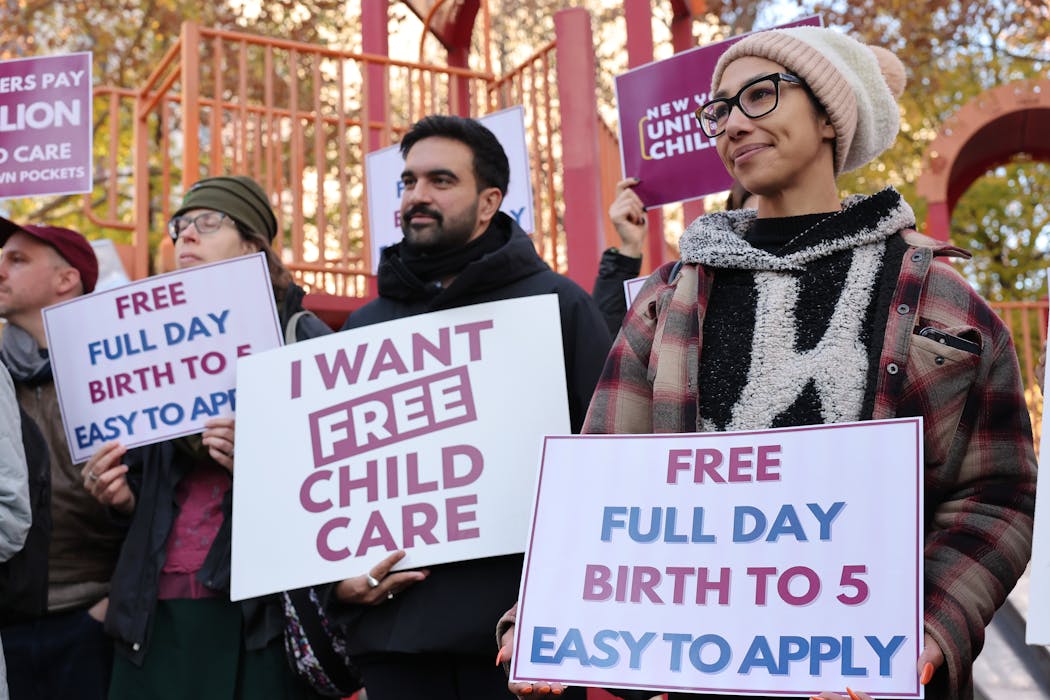
Assembly member Zohran Mamdani attends a news conference on universal child care at Columbus Park Playground on Nov. 19, 2024, in New York City.Michael M. Santiago/Getty Images
Zohran Mamdani, the 34-year-old New York State Assembly member and democratic socialist, was elected New York City’s mayor on Nov. 4, 2025, after pledging to make the city more affordable through policies that include freezing rents, providing free public buses and a network of city-owned grocery stores.
Of all of Mamdani’s campaign commitments, free high-quality child care for every New Yorker from 6 weeks to 5 years old – while boosting child care workers’ wages to match that of the city’s public school teachers – could be the most transformative.
The cost of child care in New York City is expensive. More than 80% of families with young children cannot afford the average annual cost of US$26,000 for center-based care. A recent study found that families with young children are twice as likely to leave the city as those without children. The study identified housing and child care costs as key drivers of migration out of the city.
New York’s child care problem mirrors a nationwide system that is seen by many experts as broken. U.S. families spend between 8.9% and 16% of their median income on full-day care for one child. And prices have been rising: Between 1990 and 2024, the cost of day care and preschool rose 263%, much faster than overall inflation.
Despite high prices, child care workers are poorly paid: In 2024, the median pay for child care workers, who are mostly women and often women of color, was $15.41 an hour, or $32,050 a year. That’s nearly at the bottom of all occupations when ranked by annual pay. Additionally, child care programs face high turnover, and it’s difficult for them to recruit and retain qualified staff. Program quality suffers as a result.
As a feminist scholar who has written extensively about child care, I believe Mamdani’s promise of free universal child care, with decent pay for child care staff, could transform the politics and the reality of child care in New York and beyond.
An example to the nation
During the Great Depression, the Works Projects Administration, a New Deal agency created to combat unemployment, established 14 emergency nursery schools in New York. Opened between 1933 and 1934, these schools were primarily intended to offer employment opportunities to unemployed teachers, but they also became a form of de facto child care for parents employed on various work-relief projects.
In 1941, the lack of adequate child care prompted the administration of Mayor Fiorello La Guardia to fund a handful of already existing nursery schools, including the New Deal nurseries whose federal funding had dried up. New York became the only U.S. city to provide publicly subsidized child care services.
While most wartime child care centers were shuttered at war’s end, in New York a citywide grassroots mobilization of parents forced the city to keep its centers operating. It marked the first peacetime allocation of municipal tax dollars for child care programs.
People hold signs as they attend a news conference at Columbus Park Playground, Nov. 19, 2024, in New York City. Michael M. Santiago/Getty Images
Building blocks
In the 1960s, under the liberal administration of Mayor John Lindsay, public child care in New York City was expanded, and in 1967 child care workers organized a union, AFSCME Local 205 Day Care Employees.
After a bitter three-week strike in 1969 to protest low wages and poor working conditions, child care workers won a contract that included a wage scale comparable to that of elementary school teachers in the city’s public school system. The contract also included a training program that allowed them to upgrade their skills and get credit for it.
When President Richard Nixon vetoed federal child care legislation in 1971 that would have provided federal funding for child care programs across the nation, New York’s child care movement took to the streets to demand universal child care, even if the federal government refused to fund it. Groups like the Day Care Forum and the Committee for Community Controlled Child Care staged demonstrations on the city’s Triborough Bridge – since renamed the Robert F. Kennedy Bridge – and set up a one-day “model day care center” on the lawn of City Hall.
Though far from universal, the child care system in New York today boasts the largest publicly supported system in the country, and can serve as the building blocks for Mamdani’s plan.
Transformative beyond New York
Mamdani’s campaign estimated that his universal child care plan would cost $6 billion annually. To fund his policies, Mamdani has proposed an increase of the state’s corporate tax rate and raising the city’s income tax by 2 percentage points on New Yorkers earning more than $1 million a year. While Mamdani will need the assistance of Gov. Kathy Hochul to raise taxes, Hochul supports universal child care, even if she disagrees on how to pay for it.
Universal child care has positive economic impacts, including more women in the workforce and more money in the pockets of parents to spend in the economy. Research from the liberal Center for American Progress concluded that the availability of affordable high-quality child care would lead 51% of stay-at-home parents to find work, and about a third of employed parents to work more hours.
In New York, the disposable income of families could increase by up to $1.9 billion due to the avoidance of child care costs.
If he can find the money to pay for it, with universal child care, Mamdani could blaze a trail that other policymakers follow.
Simon Black does not work for, consult, own shares in or receive funding from any company or organization that would benefit from this article, and has disclosed no relevant affiliations beyond their academic appointment.
Romain-Bertrand de Lur Saluces fait entrer le vin de Château d’Yquem à Sauternes (Gironde) dans le classement de 1855, en tant que seul Premier cru supérieur.FreeProd33/Shutterstock
Famille d’ancienne noblesse originaire de Guyenne, dans le sud-ouest de la France, les Lur Saluces sont indissociables d’un grand vin bordelais : le sauternes. Une famille autant attachée au maintien de ses traditions qu’à son intégration dans l’économie capitaliste avec les forges d’Uza, dans les Landes.
La famille de Lur s’établit au Xe siècle en Limousin. Au XVe siècle, Bertrand de Lur a deux fils. L’aîné Bertrand II, seigneur de Longa, conserve ses terres en Périgord et sa branche s’éteint au siècle suivant. Le cadet Pierre s’établit en Guyenne par son mariage à Riperas, avec Isabeau de Montferrand, vicomtesse d’Uza et baronne de Fargues. Le château de Fargues, édifié en 1306 par le cardinal Raymond Guilhem de Fargues, neveu du pape Clément V et la vicomté d’Uza entrent ainsi dans la famille.
En 1785, Louis-Amédée de Lur Saluces épouse Françoise-Joséphine de Sauvage, descendante de parlementaires bordelais, âgée de seize ans et demi, orpheline et dame d’Yquem. Elle devient comtesse de Lur Saluces et apporte en dot le fameux domaine qui allait devenir un des plus sûrs fondements de leur fortune au XIXe siècle.
Françoise-Joséphine, femme entrepreneure du XIXᵉ siècle
Joséphine d’Yquem, ou Françoise-Joséphine de Lur Saluces, née le 11 février 1768 à Bordeaux, est décédée le 6 novembre 1851 au château d’Yquem à Sauternes (Gironde). Wikimedia
Si les qualités du vin d’Yquem sont reconnues depuis le milieu du XVIIe siècle, les Lur Saluces contribuent, grâce à leurs relations, à sa commercialisation après 1785. Très vite, le couple Louis-Amédée et Françoise-Joséphine s’emploie à donner à Yquem une reconnaissance à la hauteur de son potentiel.
Veuve à vingt ans, Françoise-Joséphine reprend seule la direction du domaine à la veille de la Révolution. Avec détermination, elle impose une gestion rigoureuse et visionnaire : sélection draconienne des raisins, avènement de la vendange par tries successives, perfectionnement des méthodes de vinification, innovation dans l’élevage.
En 1826, elle fait construire un chai à Yquem, ainsi qu’une tonnellerie, et réussit le lancement des premières bouteilles étiquetées avec liseré vieil or et, désormais iconique, couronne à sept pics. Cette gestion avisée permit de quadrupler les vignobles, non en superficie mais en valeur. Françoise-Joséphine se révèle, comme l’écrit Christel de Lassus, « une véritable femme entrepreneure du XIXe siècle ».
Vers 1850, les Lur Saluces dominent un véritable empire viticole en Gironde – plus de 700 hectares en Sauternais avec les châteaux d’Yquem, Fihlot, Coutet et Malle et environ 200 hectares en Saint-Emilionnais.
Forges d’acier d’Uza
L’activité économique des Lur Saluces ne se limite pas au seul domaine viticole. Dans leur domaine d’Uza, ils installent les premières forges dès 1759, et contribuent au désenclavement économique du Marensin et du pays de Born. En 1760, le jeune comte Claude Henri Hercule Joseph de Lur Saluces et sa sœur Marie Anne Henriette, épouse du comte de Rostaing, établissent au pied du château d’Uza une entreprise de forges industrielles, succédant à une ancienne activité de forge artisanale.
La forge d’Uza (Landes) est ondée en 1759 et cesse définitivement de fonctionner en 1981. Wikimediacommons
Les forges sont longtemps prospères, grâce notamment aux contrats passés avec les fournisseurs de l’Armée royale pour la fourniture de boulets, et avec la Compagnie du Midi pour la réalisation de pièces pour le chemin de fer. Elles périclitent progressivement suite à l’ouverture en 1881 des Forges de l’Adour sises à Tarnos qui exercent une concurrence préjudiciable. Leur fermeture définitive a lieu en 1981.
Nouvelle identité nobiliaire
Au début du XVIIIe siècle, les Lur Saluces sont une très grande famille, liée aux Penthièvre, un des lignages les plus prestigieux de France et une des trois plus grandes fortunes du royaume. Ils symbolisent une noblesse typiquement bordelaise, du fait de leur enracinement séculaire, en terre bordelaise certes, mais aussi dans le sud de la Grande Lande. À la fin de l’Ancien Régime, leur appartenance à l’épée et leur ancienneté, en font toutefois un cas un peu à part, dans la noblesse bordelaise, majoritairement de robe et récente.
Après cette date, ils se replient dans leurs domaines, où ils consacrent l’essentiel de leur activité. Les repères de l’Ancien Régime ayant été perdus, il leur faut en trouver de nouveaux. La famille est attirée à la fois par la nouveauté de la ville et par la tranquillité de l’enracinement rural. Elle remet ses châteaux au goût du jour, au XVIIIe puis au XIXe siècle, pour exprimer son attachement à la monarchie légitimiste. À partir de la Restauration, les signes de distinction passent d’un luxe d’ostentation, dont la symbolique a perdu de sa consistance, vers un certain confort qui est désormais une marque de reconnaissance d’une élite.
Premier cru supérieur de Bordeaux
Les Lur Saluces d’Yquem de la fin du XVIIIᵉ siècle au milieu du XIXᵉ siècle, de Marguerite Figeac-Monthus.
Au XIXe siècle, les rendements viticoles passent progressivement de 40 à 10 quintaux à l’hectare, d’où un accroissement exceptionnel de la qualité. Cette évolution aboutit à la naissance des vins de Sauternes. Romain-Bertrand de Lur Saluces fait entrer Yquem dans l’histoire du classement de 1855, en tant que seul Premier cru supérieur. Au XXe siècle, le comte Alexandre de Lur Saluces en est l’ultime héritier, dirigeant du domaine de 1968 à 2004 avec la même rigueur. Il met en œuvre sa vision stratégique originale depuis 1970 dans des conditions difficiles de mauvaises récoltes successives.
Il privilégie la qualité de la vendange et du vin en s’affranchissant des contraintes climatiques (entraînant de faibles récoltes, voire le refus de toute vendange comme en 1972,1974 et 1992) et des conséquences financières de trésorerie. En ne conservant que des vins de qualité exceptionnelle, vendus en bouteille près de quatre ans après la récolte des grains de raisin, il construit une image fiable du Château d’Yquem et gagne durablement la confiance d’une élite de connaisseurs et d’amateurs.
Vente des parts à LVMH
Alexandre de Lur Saluces (1934-2023), gestionnaire du château d’Yquem et du château de Fargues tout au long de sa vie. Wikimedia
Une dissension familiale apparaît au grand jour en novembre 1996 lorsque certains membres de la famille annoncent avoir vendu leurs parts du château d’Yquem à Bernard Arnault, le président-directeur général du groupe LVMH. Après deux ans de bataille juridique, Alexandre de Lur Saluces cède. Il accepte non seulement la cession de parts faites par 45 membres de sa famille, dont son frère aîné Eugène, mais il vend au groupe LVMH, les 10 % qu’il détient avec son fils Bertrand. Au fond, la multiplication des actionnaires familiaux bouscule l’unité séculaire et provoque l’arrivée de LVMH.
Pour Bertrand Hainguerlot, un des actionnaires vendeurs des parts sociales, la cession s’explique essentiellement pour des raisons fiscales liées aux droits de succession. Depuis 1957, une société civile immobilière possède le vignoble et le stock de vins en barriques. En 1992, afin de préparer la succession familiale, est créée une société en commandite par actions, qui gère l’exploitation, c’est-à-dire, le vignoble et la vinification. Les commanditaires sont les actionnaires familiaux et l’unique commandité Alexandre de Lur Saluces. Ce dernier reste dirigeant du château d’Yquem.
« Le nom de Lur Saluces figure sur l’étiquette, laisser un Lur Saluces à la tête du domaine, c’est assurer la pérennité », rappelle Alain Raynaud, président de l’Union des grands crus de Bordeaux.
Valeurs émotionnelles
Pour Alexandre de Lur Saluces, la valeur financière de cession très élevée, n’a pas compensé pour autant la perte de sa valeur émotionnelle : conservation des valeurs familiales, perpétuation de la dynastie, etc. Pour les autres actionnaires familiaux ayant obtenu 600 millions de francs (soit plus de 71 millions d’euros) sur le prix d’acquisition, il n’y a ni regret financier ni regret émotionnel.
À défaut de la terre, Alexandre de Lur Saluces transmettra la « morale d’Yquem », racontée pour la postérité dans un ouvrage. Le seigneur d’Yquem, devenu prince de Fargues, se consacre alors à recréer au château de Fargues, fief de la famille, un très grand sauternes. Il s’éteint le 24 juillet 2023.
Ce n’est pas la fin de l’histoire… mais l’histoire en marche. Après avoir passé plusieurs années à l’étranger, Philippe de Lur Saluces, représentant de la 16e génération, est revenu en 2014, aux côtés de son père. Il prend sa suite avec la volonté d’ouvrir de nouvelles perspectives pour Fargues.
Gérard Hirigoyen ne travaille pas, ne conseille pas, ne possède pas de parts, ne reçoit pas de fonds d’une organisation qui pourrait tirer profit de cet article, et n’a déclaré aucune autre affiliation que son organisme de recherche.
But our new research suggests that in a digital world full of influencers – trusted tastemakers with large online followings – being too attractive can actually backfire, particularly in the fitness space.
We call this the “beauty backfire effect,” and we put it to the test in a series of laboratory experiments.
We showed hundreds of study participants mock Instagram posts from fictitious fitness influencer accounts. The posts were identical in every way, except for one key difference: how attractive the influencer was. We judged this by asking independent raters to evaluate photos of real influencers ahead of time.
The results were striking: We found that extremely attractive fitness influencers – or “fitfluencers” – got fewer likes and follows than their moderately attractive peers.
Why? Because people viewed them as less relatable.
In fact, in one of our studies, people who saw an extremely attractive fitfluencer reported having lower self-esteem afterward. In contrast, seeing a moderately attractive fitfluencer gave some participants a small confidence boost, likely because the image felt more attainable.
Interestingly, the beauty backfire effect wasn’t as strong in other domains. When we ran the same experiment with finance influencers in the mix, appearance didn’t matter as much. That’s not entirely surprising, of course. For a financial coach, looks aren’t tied to credibility. Meanwhile, for a fitness coach, they’re central.
But the beauty backfire effect isn’t inevitable. In a final analysis, we explored whether self-presentation style could close the relatability gap.
When highly attractive influencers adopted a humble tone, sharing their struggles, training challenges or fitness plateaus, the engagement gap disappeared, we found. But when they adopted a prideful tone, boasting about their natural talent or exceptional dedication, the gap grew even larger.
This suggests that humility can be a powerful communication tool for influencers who might otherwise seem “out of reach.”
Why it matters
Fitfluencers depend on their appearance as a kind of credential. A sculpted physique signals expertise in health and wellness. But engagement isn’t just about how good someone looks on camera. It’s about whether followers feel they can connect with them.
This is where relatability comes in. Audiences connect with fitfluencers who feel like real, reachable versions of themselves. But extreme attractiveness does the opposite: It turns an attainable goal into an impossible ideal, and what should inspire instead alienates.
This effect aligns with classic social comparison theory. People judge themselves in relation to others. If the gap between self and fitfluencer seems too wide, comparisons become discouraging, not motivating. In other words, the more “perfect” the fitfluencer looks, the less followers believe they can realistically be like them – and the less likely they are to engage.
Social media platforms have been taking note. These days, TikTok, Snapchat and other outlets build their appeal on candid, authentic content over polished, airbrushed imagery. In this new landscape, perfection can be a liability.
Our research shows that extreme attractiveness might grab attention but can undermine connection, the true currency of the influencer economy. For brands and creators, the takeaway is clear: Success may depend less on looking flawless and more on sounding real.
What’s next
Our findings raise new questions about how beauty shapes influence online.
For instance, gender appears to matter. In a follow-up study, highly attractive female fitness influencers faced stronger backlash than equally attractive men, perhaps reflecting a broader social tendency to judge women’s looks more harshly. Future research could explore whether similar biases apply to other visible traits, such as race or disability.
The effect may also extend beyond fitness. Industries built around appearance – fashion, beauty or lifestyle content – could show the same pattern.
Finally, not all audiences respond alike. People new to fitness or younger users still forming their identities may be especially prone to negative comparisons with highly attractive fitfluencers. Understanding these differences could help creators and platforms foster healthier engagement online.
Justin Palmer contributed research for this article as an undergraduate.
The authors do not work for, consult, own shares in or receive funding from any company or organization that would benefit from this article, and have disclosed no relevant affiliations beyond their academic appointment.
When banks issue their defrauded customers refunds and successfully identify the perpetrators, fraud victims are 60% more likely to stick with their bank than customers that didn’t experience any fraud.
But if customers get their stolen money back but never learn who the perpetrators are, they are 40% more likely to take their accounts elsewhere than customers who weren’t defrauded.
We believe this pattern emerged because identifying fraudsters can signal competence and rebuild trust. But when no one is caught, even with a refund, customers are more likely to see the fraud incident as a lapse in capability and blame the bank itself.
We partnered with a major U.S. bank that shared five years of data covering 422,953 customers, including 22,953 who experienced a single instance of fraud.
These customers were victims of account-based fraud, meaning that perpetrators had surreptitiously siphoned away money from their accounts, often through various scams.
Every defrauded customer got a refund, but the perpetrators were identified only about 13% of the time. Our findings support what’s known as the “service recovery paradox”: When a business handles a problem well, its customers can become more loyal than if no problem had occurred.
Customers who had recently opened their bank accounts and those with few prior interactions with the banks were the most likely to leave if the perpetrators were never identified.
Customers in cases where perpetrators weren’t identified within the next three months – and who had opened their accounts years earlier and were more engaged with their banks – were more likely to stay put because they are more familiar with the bank’s technological capabilities and, therefore, are more likely to forgive the bank.
Our results suggest that when perpetrators are identified, customers can regain confidence in their bank’s ability to safeguard their accounts. When the fraudsters aren’t caught, they lose more trust instead.
Financial fraud of many kinds is growing increasingly common.
Why it matters
Financial fraud is both costly and pervasive. More than one-third of U.S. consumers were targeted by attempted financial fraud in 2024, and nearly 40% of those attempts led to a financial loss. Total losses from defrauded consumers totaled more than US$12.5 billion in 2024.
U.S. regulations generally require banks to issue customers full refunds whether or not the perpetrator of a fraud is caught. But when customers get refunds after being defrauded, it doesn’t automatically restore their trust in a bank or app.
What still isn’t known
We focused on fraud cases that the customers themselves reported. It’s unclear whether they would have responded the same way had their banks detected the fraud instead. Another open question is whether similar patterns hold for other debacles, such as data breaches that make customers’ personal information vulnerable to exploitation.
Vamsi Kanuri does not work for, consult, own shares in or receive funding from any company or organization that would benefit from this article, and has disclosed no relevant affiliations beyond their academic appointment.
In the opening scene of “It Might Get Loud,” a 2008 music documentary, musician Jack White appears surrounded by scrap wood and garbage. He hammers nails into a board, wraps wire around a glass Coca-Cola bottle as a makeshift guitar bridge, attaches a pickup, and plugs the contraption into a vintage Sears Silvertone amplifier – anything more modern or of better quality would never do.
White then uses his signature slide bar to play a distorted, electric riff on the rudimentary instrument. He declares, matter-of-factly, “Who says you need to buy a guitar?” and casually puffs a cigarette.
This scene of manufacturing innovation, crafting what is needed out of what is available, is a signature of The White Stripes, the influential rock band White co-founded in the late 1990s.
Drummer Meg White and guitarist/vocalist Jack White, originally Jack Gillis before taking Meg White’s name during their four-year marriage, make up The White Stripes. Hailing from Detroit, the band helped lead the garage rock revival, releasing six studio albums between 1999 and 2007.
Their recordings “Elephant,” “Get Behind Me Satan” and “Icky Thump” each won Grammys for Best Alternative Music Album. The White Stripes’ last televised performance together was “We’re Going to Be Friends” in 2009 on the final episode of “Late Night With Conan O’Brien.”
The band’s legacy of innovation has earned them a place in the Rock & Roll Hall Fame. They will be inducted in Los Angeles on Nov. 8, 2025, along with Outkast, Cyndi Lauper and Soundgarden.
I find The White Stripes’ experiment in sonic complexity particularly impressive because it was created by just two performers. Their soundscape relied on instrumental and vocal manipulations of tone and timbre and on stylistic fusions of blues, folk music, garage rock and movements such as British punk and Dutch De Stijl art.
Several songs directly reference Detroit icons. The jaunty 2001 single “Hotel Yorba,” which blends blues and folk while heavily featuring acoustic guitar, honors a Detroit hotel built in 1926. The music video was partially filmed outside the aging building, with indoor scenes filmed elsewhere.
Jack White said the band wanted to know more about the Hotel Yorba’s history but were chased out by an armed manager. In September 2025, the hotel was closed due to unsafe living conditions.
In contrast, the song “The Big Three Killed My Baby,” released in 1999, refers to Detroit’s major automakers at the time: Ford, General Motors and Chrysler. Infused with a punk style, the song discusses the conflict between gas and electric engines. With a tone of anguish, it serves as a biting critique of these companies’ lack of creativity and, as the song states, the use of “planned obsolescence,” which intentionally limits a product’s useful life cycle. The close of the song reveals that what has truly been killed is the consumer’s common sense.
“I always look at playing the guitar as an attack. … It can’t be this wimpy thing where you’re pushed around by the idea, the characters, or the song itself,” Jack White said in a 2010 interview. “It’s every player’s job to fight against all of that.”
Likewise, spontaneity, lack of set lists and real-time creativity were hallmarks of their performances.
A 2002 live performance of “Dead Leaves and the Dirty Ground” begins with brief, chaotic, distorted guitar-wailing and a single, powerful strike of bass drum and cymbal. The performance features a blues-infused rock riff and sweet vocal melodies with high-pitched repetitions and steady cymbal beats punctuated by bass drum and tom hits. That’s the raw, unfiltered, unmitigated, underproduced, auto-tune-avoidant intensity and artistic sound for which The White Stripes strove.
The White Stripes perform “Dead Leaves and the Dirty Ground” on “Saturday Night Live” in 2002.
A sound forged by punk and blues
The White Stripes had many influences, including the Flat Duo Jets, who shared their instrumentation of drum, guitar and vocals, and similarly fused styles such as ’50s rockabilly and blues-inspired punk. They were also heavily ensconced in the Detroit garage rock and punk scenes, which included bands such as The Detroit Cobras, The Dirtbombs, The Paybacks and Rocket 455. Each act was unique in how it deployed its creative foundations, mainly a primal, raw, electric sound with consistent, pounding rhythms and edgy vocal timbres.
Acknowledged delta blues influences included Blind Willie McTell and Son House, whose “Grinnin’ in Your Face” – Jack White’s favorite song – maintains a powerful simplicity echoed throughout many White Stripes songs.
A folklike acoustic sound is mirrored in The White Stripes’ tracks “You’ve Got Her in Your Pocket” and “It’s True That We Love One Another.” Similar acoustic simplicity is heard in “Your Southern Can Is Mine,” “Apple Blossom” and “This Protector,” which use imperfections of intonation, melodic repetition, prescribed harmonic structures and soulful sounds.
The harder edges of punk and garage rock are equally present in the opening riffs of the songs “Icky Thump,” “Blue Orchid,” “Fell in Love With a Girl” and midway through “Seven Nation Army.”
Meg White’s tom and bass drum pulsations – as recognizable and definitive of The White Stripes’ sound as Jack White’s electrified blues riffs – are heard in the openings of the songs “Jimmy the Exploder,” “Little Cream Soda,” “The Hardest Button to Button,” “Astro” and even “Seven Nation Army,” which became a popular sports arena staple.
More than a mere look backward, The White Stripes served as a catalyst of progress, raising the stature of the underground Detroit sound to the world’s stage.
Nathan Fleshner does not work for, consult, own shares in or receive funding from any company or organization that would benefit from this article, and has disclosed no relevant affiliations beyond their academic appointment.
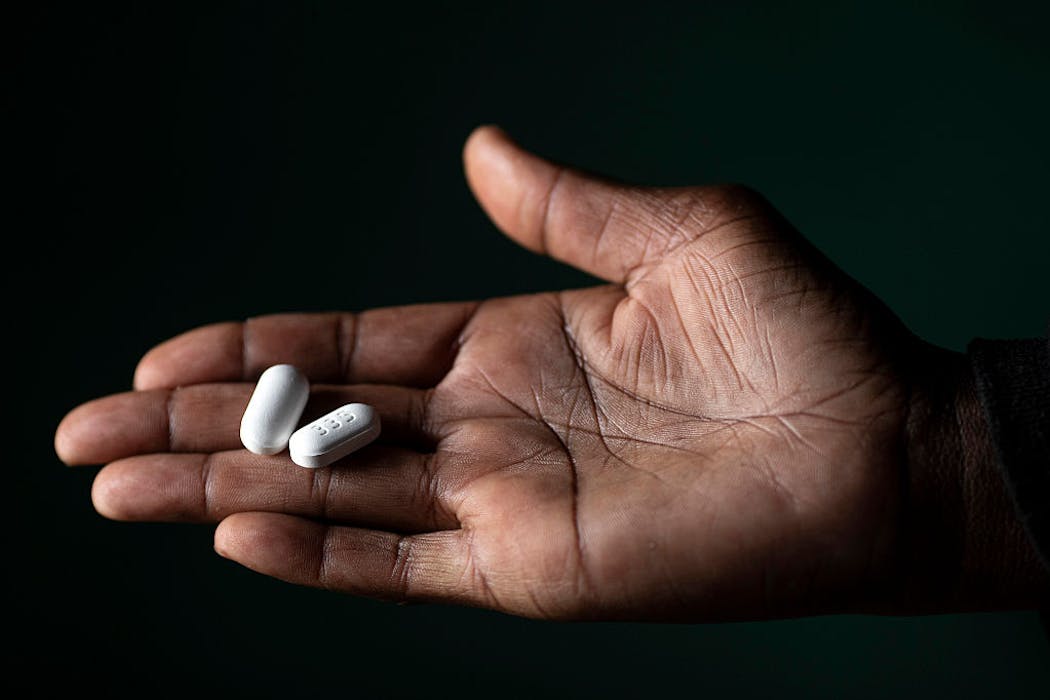
Providing supplies of HIV medications does not ensure they will get into the hands of those who need them most.Per-Anders Pettersson/Getty Images
Protecting public health abroad benefits Americans.
In a globalized world, diseases and their social and economic impacts do not stay within national boundaries. Increased rates of untreated HIV in any part of the world increase the risk of transmission for U.S. citizens.
Changes made in the first year of President Donald Trump’s second term to address the global HIV epidemic, however, may not keep Americans safe.
In September 2025, the U.S. Department of State announced its America First Global Health Strategy, a plan that aims to make “America safer, stronger, and more prosperous” by encouraging other governments to take responsibility for their citizens’ health and to promote U.S. commercial and faith-based interests. It includes the commitment to purchase and distribute the breakthrough HIV preventive drug lenacapavir for up to 2 million people – principally pregnant and breastfeeding women – in 10 countries heavily affected by HIV.
Since President George Bush initiated the program in 2003, PEPFAR has saved an estimated 26 million lives. HIV deaths have declined by 70% since 2004, and new infections fell after the program’s inception. PEPFAR helped put the world on track to ending the HIV pandemic by promoting access to highly effective drugs, supporting community-led outreach and programs, and building health care infrastructure.
HIV clinics dependent on PEPFAR funding have shuttered with the Trump administration’s significant cuts to the program. AFP/Getty Images
On Jan. 20, 2025, President Donald Trump signed an executive order that paused funding for all foreign aid programs, including PEPFAR. It shuttered PEPFAR-supported clinics and outreach programs, halted medical and supply shipments, and prompted mass layoffs of the global HIV workforce. It also dissolved USAID, which provided essential infrastructure for PEPFAR to do its work.
Legal pushback in the months following the Trump administration’s dismantling of USAID allowed limited parts of PEPFAR to restart. However, access to HIV medication was explicitly limited to only pregnant and breastfeeding women. This strategy excludes prevention and care to the majority of people who are vulnerable to HIV infection.
The Trump administration’s new global HIV prevention strategy prioritizes preventing mother-to-child HIV transmission. About 120,000 children under the age of 5 were newly infected with HIV in 2024, or around 9% of the 1.3 million new infections that year.
However, 55% of new infections worldwide occur among “key populations,” a catchall term coined by UNAIDS and WHO. These include sex workers, people who use injectable drugs, men who have sex with men, transgender people, prisoners, and the sex partners of these individuals. These groups are considered “key” because of their heightened vulnerability to HIV infection and because ending the HIV pandemic cannot be achieved without their access to prevention, testing and treatment.
Meeting vulnerable communities where they are is critical to effective HIV care. STR/AFP via Getty Images
The Trump administration’s new strategy favors pregnant and breastfeeding women and cuts out other vulnerable communities. It proposes funding government health care workers in lieu of peers without ensuring these workers will be adequately equipped to provide unprejudiced care. The plan withdraws support for community-led, nongovernmental organizations that bridge gaps in care and offer sensitivity training to providers.
Many people who are vulnerable to or living with HIV view government-run medical care with profound distrust and apprehension. Some participants in my own research have told me they would rather die than seek care in a government-run facility. They recount dehumanizing experiences in these facilities, including undergoing invasive procedures without consent and being openly humiliated. Health care workers have also violated patient confidentiality by disclosing patients’ sexuality and HIV status to family members, friends, neighbors, landlords or employers.
The strategy shifts funds to faith-based institutions, citing potential financial support from tithes and donations as well as greater reach through faith leaders. However, research has shown that faith-based and government health care institutions evoke fear of stigmatization, mistreatment, arrest and denial of services among many who are most at-risk for HIV.
Effectively addressing HIV requires more than providing supplies or medical treatment. Although treatments to manage and prevent HIV infection are highly effective under ideal conditions, these are not the circumstances of many people living with and vulnerable to HIV. Treatment is lifelong and needs to be taken regularly. Additionally, the epidemic is often concentrated in networks of people who face societal discrimination, making care retention and engagement difficult.
The Trump administration’s new global health strategy requires community health care workers to consolidate their work across four distinct diseases: malaria, polio, tuberculosis and HIV. However, very different populations are vulnerable to these diseases, and each has unique social, psychological and medical concerns and needs.
For example, malaria and polio primarily affect children under 5, but the former requires strategies to reduce the mosquito bites that transmit disease, while the latter requires childhood immunization. Meanwhile, HIV primarily affects adolescents and adults and requires interventions addressing sexual health and harm reduction.
Research and lessons learned over decades of global health work suggest that carefully tailoring prevention and care strategies to each vulnerable population and addressing their unique social, behavioral, structural and medical needs improves their effectiveness.
A healthy world makes a safe and prosperous US
The 55 countries that most recently benefited from PEPFAR may seem far from U.S. soil. But in an interconnected world, their epidemic is an American epidemic.
The Trump administration’s reversal of decades of progress on ending the HIV pandemic – and weakening U.S. leadership and humanitarian effort in the fight against HIV – has already led to thousands of deaths. Every new HIV infection will incur global economic and societal costs by draining labor capacity in high-burden countries while increasing health care and caregiving costs. This global insecurity and economic instability has precedents in the initial HIV crisis and the COVID-19 pandemic.
Ensuring people living with HIV worldwide receive appropriate treatment and care advances U.S. national security, diplomatic and economic interests. Ensuring that citizens in other countries enjoy good health permits their economies to thrive and America’s in turn. I believe a healthy world is a more prosperous, peaceful and stable world, to everyone’s benefit.
Robin Lin Miller has previously received research and evaluation funding from the U.S. Department of State, Centers for Disease Control and Prevention, National Institute of Mental Health, National Institute of Drug Abuse, the Eunice Kennedy Shriver National Institute of Child Health and Development, American Foundation for AIDS Research, Michigan Department of Community Health, Michigan AIDS Fund, AIDS Foundation of Chicago, and the Health Services Improvement Fund.
Source: The Conversation – UK – By Natasha Lindstaedt, Professor in the Department of Government, University of Essex
A pelican in the Dalamtian delta, where a massive rewilding project is taking place.Neil Aldridge/Rewilding Ukraine.
Ukrainians have always felt closely tied to their land, often expressing this through literature and folktales. But these connections have grown even stronger since the country was invaded by Russia in 2022.
Forests, rivers and meadows in Ukraine are considered sacred spaces and important to resilience. As Ukrainians have dealt with the constant stress of war, nature has been a place to reconnect.
Ukraine has also been at the forefront of large-scale nature restoration in Europe in recent years. The country is planning two new national parks: Budzhak Steppes National Natural Park (in the Odessa region in the south) and the Great Carpathians National Park (in the south-west). And a project called Rewilding Ukraine has begun restoring some 13,500 hectares of wetlands and steppe (unforested grasslands) – that’s almost twice as big an area as Manhattan in the US.
This is serious rewilding. Compare this scale to that to one of the best known examples of rewilding in England, for instance – the Knepp Castle estate in west Sussex which involves some 3,500 acres (1416 hectares).
Rewilding these areas of Ukraine has involved the release of over 240 animals of different species, including kulan (wild donkeys), steppe marmots, eagle owls, fallow deer and even hamsters which are native to the region and the building of two breeding platforms for Dalmatian pelicans.
Interventions such as the removal of 200 meters of man-made dams surrounding Ermakiv Island are allowing beavers to thrive and the natural ecosystem to rebalance. There are benefits for the local human populations too, as flooding in villages and towns is reduced.
Help for veterans
The impact of this massive rewilding project is not only being felt in the landscapes of the Danube delta and adjacent Tarutino steppe in south-west Ukraine where vital efforts are being made to preserve this endangered habitat.
An initiative known as Nature for Veterans was launched in 2025 with the aim of helping soldiers and their families find emotional restoration from the horrors of war by immersing them in these newly revitalised areas of south-west Ukraine, far from the frontline.
Many who avoided death in the conflict find themselves severely affected with post traumatic stress disorder (PTSD), and their loved ones have suffered in their own ways. The value of nature-based therapy for war veterans, particularly those with PTSD, has been understood for many years, since first world war survivors with “shell shock” were commonly prescribed time outdoors.
This has particular relevance to Ukraine today as figures from its ministry of health, suggest that some 1.8 million soldiers and veterans may need psychological support.
Wars and climate change are inextricably linked. Climate change can increase the likelihood of violent conflict by intensifying resource scarcity and displacement, while conflict itself accelerates environmental damage. This article is part of a series, War on Climate, which explores the relationship between climate issues and global conflicts.
Environmental damage
Of course, the war in Ukraine has not only generated a large number of casualties (totalling 400,000), but has also caused enormous destruction to its ecological landscape. Thousands of hectares have been burned, rivers have been polluted by shelling and biodiversity has been interrupted by artillery noise and displacement.
What’s more, as much as 30% of Ukraine has been contaminated by landmines. In total, environmental damage has exceeded US$127 billion (£96 billion).
To some extent, due to the contamination of land, the war has also made it more difficult for Ukrainians to connect with nature. And evidence suggests this disruption has affected their mental health, something that is backed up by research showing people’s relationship with their local environment affects their wellbeing.
For societies facing the constant stress of war and threats to the country’s territorial integrity, landscape and environment, the chance to connect with nature offers important benefits.
In the face of this type of stress, Ukrainians have found ways to restore their lost connections with nature either by rebuilding gardens, adapting to new landscapes and/or finding different ways of sustaining their traditions.
Rewilding is offering renewal and recovery for both Ukraine’s people and its environment.
The authors do not work for, consult, own shares in or receive funding from any company or organisation that would benefit from this article, and have disclosed no relevant affiliations beyond their academic appointment.
Each grey hair may be a sign that a cell has chosen to stop replicating rather than risk turning malignant.Pixel-Shot/ Shutterstock
Grey hair is an inevitable hallmark of ageing. It’s a visual reminder of the passing years and all the bodily changes that accompany it.
But emerging scientific research is challenging this simple narrative – revealing that those silver strands on our heads could be an outward sign of our body’s own intricate defences against cancer.
A new study in mice has uncovered the remarkable ways in which our bodies manage cellular damage – a process key in both ageing and cancer. In ageing, cellular damage gradually weakens and disrupts cell function. In cancer, unrepaired or faulty cells can trigger abnormal growth and tumour formation.
The work here has highlighted a surprising connection between the loss of pigment in our hair and the mechanisms that can keep deadly cancers at bay.
Melanocyte stem cells are at the heart of this discovery. These cells reside deep within the hair follicles and serve as a reservoir for melanocytes – the pigment-producing cells responsible for hair and skin colour.
Under normal circumstances, our melanocyte stem cells replenish these pigment-producing cells through cyclical regeneration, a process characterised by repeated phases of activity, resting and renewal in sync with the natural cycles of hair growth and loss. This grants a steady supply of pigment and thus vibrant hair colour throughout most of our lives.
But every day, our cells endure assaults on its own DNA (the genetic material inside our cells) from sources such as ultraviolet radiation, chemical exposure and even our own cellular metabolism process. This cellular damage contributes to both ageing and to the risk of cancers – such as melanoma, a type of skin cancer.
This new study sheds light on what happens when melanocyte stem cells deep within the supportive niche of the hair follicle sustain DNA damage – particularly a type of damage called double-strand breaks.
When this happens, the melanocyte stem cells can undergo a process called “seno-differentiation”. In essence, this means that the stem cells irreversibly mature into pigment cells – then disappear from the stem cell pool, leading to the gradual appearance of grey in our hair.
DNA damage can cause some of these stem cells to irreversibly mature and turn grey. Beti Argi/ Shutterstock
This protective process is tightly regulated by internal signalling pathways which allow the cells to communicate with each other. By removing these mature cells from the stem cell population, this prevents the accumulation and possible future spread of genetic mutations or DNA changes that could promote cancer.
In a sense, each grey hair is a small victory of bodily self-sacrifice: a cell choosing to bow out rather than risk turning malignant.
Cancer link
The story doesn’t end there, however. Not all DNA damage triggers this protective process. In their experiments, the researchers exposed melanocyte stem cells in mice to potent cancer-causing chemicals as well as UV radiation. Remarkably, under these stressors, melanocyte stem cells were found to bypass seno-differentiation altogether.
Instead, signals from the surrounding tissues actually encouraged the damaged cells to self-renew and continue dividing – despite carrying genetic damage. This created a cellular environment ripe for the emergence of melanoma.
This research suggests that the fate of melanocyte stem cells appears to hinge on both the specific kind of damage they receive and on the molecular cues present in their micro-environment. Stressors such as chemicals or UV light, which cause the cells’ DNA strands to break, also cause the melanocyte stem cells to self-destruct by default. This same process causes grey hair.
But when under the influence of cancer cells, these damaged melanocyte stem cells persist – creating seeds from which melanoma can grow. Scientists describe this dynamic as “antagonistic fates” – where the same stem cell population can take two dramatically different paths depending on the circumstances.
Importantly, these findings reframe grey hair and melanoma not as unrelated outcomes, but as twin fates of the body’s ancient struggle to balance tissue renewal and avoid cancer. Greying is not itself a shield against cancer, but instead a byproduct of a protective process that eliminates risky cells.
Conversely, when the control mechanisms falter or are subverted by carcinogens, the door is left open for malignancy. This new understanding may also help begin to explain why we’re more likely to develop cancer as we get older.
Of course, it’s crucial to note the limits of these findings. Much of the pivotal evidence comes from experiments in mice. This means research still needs to be conducted in humans to understand if our melanocyte stem cells also function in a similar way. Biological differences between species, as well as complexities of human lifestyles and genetics, mean the picture for our own hair and cancer risk is nuanced.
Still, these discoveries open exciting avenues for both cancer research and ageing science. Understanding the signals that nudge stem cells toward differentiation or risky expansion could someday enable therapies to reinforce the body’s natural safeguards, potentially lowering cancer risk as we age.
There are broader implications as well. This information could help explain why some people develop melanoma even without having been exposed to clear risk factors – and why cancers and tissue degeneration so often go hand-in-hand in later life.
The story of grey hair is not just about vanity or the inevitable march of time. It’s about evolution, adaptation and the ceaseless vigilance of our bodies’ internal guardians. Those silver strands may be telling us something profound: that amid the competition between ageing and cancer, sometimes it’s worth sacrificing a pigment cell for the sake of the whole organism.
Justin Stebbing does not work for, consult, own shares in or receive funding from any company or organisation that would benefit from this article, and has disclosed no relevant affiliations beyond their academic appointment.
Source: The Conversation – UK – By Mike Savage, Professorial Research Fellow, International Inequalities Institute, London School of Economics and Political Science
When the full, unexpurgated diaries of the Conservative MP Sir Henry “Chips” Channon were published in 2021, these disarmingly frank accounts of his aristocratic life in mid-20th century Britain caused a stir. They revealed the inner thoughts of a renowned social climber and rightwing snob, whose political career never recovered from his record as an appeaser of Nazi Germany.
Having married into the Guinness family fortune, Channon revelled in the booty of landed wealth: the thrill at purchasing a country house, Kelvedon Hall in Essex; the glitter of cut glass in the lavish dinner parties he hosted; extravagant bejewelled gifts for his many lovers; the whirl of expensive European holidays and chauffeur-driven cars. One diary entry describes Channon and friends partying with Nazi leaders including Hermann Göring while in Berlin for the 1936 Olympics.
But there is an intriguing counterpoint to his naked love of wealth. During the later 1930s under a Conservative-led coalition government, taxes began to rise to pay for Britain’s rearmament in preparation for war. Writing about then-chancellor Sir John Simon’s “staggering” first war budget late in 1939, Channon recalled:
There was a gasp when he said that income tax would be 7/6 [37.5p] in the £. The crowded House [of Commons] was dumbfounded … Increased surtax, lower allowances, raised duties on wine, cigarettes and sugar, substantially increased death duties. It’s all so bad that one can only make the best of it, and reorganise one’s life accordingly.
This and subsequent tax increases had a massive effect on Channon’s lavish lifestyle. During the second world war, his Kelvedon estate was repurposed as a military hospital – part of the large-scale selling off of landed estates that changed the face of rural Britain (as evoked in Evelyn Waugh’s Brideshead Revisited). Yet Channon’s attitude to these privations was pragmatic: he would just have to pay the extra and get on with his life as best he could.
It is now widely recognised that our current times bear uncanny parallels with the 1930s – from the rise of authoritarian regimes to huge pressures on public spending in the context of volatile economic conditions. Yet unlike that pre-war period, today’s proposals to raise taxation on high incomes and wealth are being met with huge pushback – sometimes amounting to hysteria – from parts of society and the media.
The Conversation and LSE’s International Inequalities Institute have teamed up for a special online event on Tuesday, November 18 from 5pm-6.30pm. Join experts from the worlds of business, taxation and government policy as they discuss the difficult choices facing Chancellor Rachel Reeves in her budget. Sign up for free here
Rather than the pragmatism that Channon and many of his wealthy contemporaries displayed, some public commentary implies that increasing tax on the wealthy is akin to infringing the natural order of things. The new Labour government’s adjustment of inheritance tax in autumn 2024 to bring farm property into line with other assets was met with protests on the streets.
The same year, reforms to end tax exemptions for “non-domiciled” UK residents (those who claim their permanent home is outside the UK) – initially announced by Conservative chancellor Jeremy Hunt – provoked a flurry of (mostly unsubstantiated) claims that the international super-rich would be leaving the UK for better pastures abroad.
Whatever happened to the stoicism of the rich, prepared to shoulder their responsibilities for social wellbeing in the face of pressing economic and political challenges?
Perhaps the key difference between Channon’s time and our own is revealed in two graphs which show dramatic changes in the distribution and degree of wealth held in Britain over the last century. At the time Channon was writing, wealth assets per head were vastly smaller than they are now – having declined since the early 20th century, mostly due to wartime depredation. However, from the 1950s on, they began a remarkable ascent.
From the dawn of human history, it took many millennia for the mean amount of wealth per Briton to equate to £50k – reached sometime in the 1970s. Yet a mere 40 years after that, this personal wealth figure had tripled:
This dramatic rise in UK wealth ownership was matched by a change in who owned it. In Channon’s time, the top 1% wealthiest people owned an astonishing 50% of the UK’s total – which makes sense of his stoicism. He knew well enough that only a few upper-class people like him had substantial wealth, while large numbers of Britons lived in straitened conditions and could not realistically pay more tax. When the going got tough, there was little option but for people like him to cough up.
Since then, the wealth share held by the top 1% has more than halved, dropping to around 20% of the total. And the UK’s wealthiest 10% now owns just under 60% – down from 90% in Channon’s day:
On the face of it, these two graphs appear to tell a cheerful and progressive story. The UK, like many rich countries, has become much wealthier, and these benefits are being more widely spread. What’s not to like?
In fact, many influential economists – including contributors to the Institute for Fiscal Studies’ influential Deaton Review – have identified the build-up of private wealth as a worrying trend for Britain. Where the vast increase in the nation’s wealth over the past 75 years could have been invested for the good of the nation, it has been largely squirrelled away into private hands, inflating the wealth of the UK’s upper and middle class to the detriment of society as a whole.
As a sociologist, I have long researched the impact of class inequalities on British society – and how class, gender, racial and regional divides are mutually reinforcing.
I am now increasingly concerned by the way the build-up of private wealth assets intensifies these inequalities – potentially to breaking point. Left unchecked, I believe Britain’s “wealth timebomb” will enlarge the current ruptures in society – already reflected in the rise of angry populist political movements – leaving a calamitous legacy for future generations.
As UK chancellor Rachel Reeves’s options for potential increases in wealth and other taxes are debated ahead of a highly anticipated budget on November 26, I’d argue that such discussions should not be framed purely in technical terms – of what is an efficient way of raising funds for the public purse without damaging UK prosperity.
There is a much broader cultural politics of wealth that needs addressing. In particular, it is time to stress-test the seemingly widespread view that wealth should be treated entirely as a private good, and does not come with any social obligations.
This idea leads to the deeply dysfunctional view that wealth assets are free to be amassed, spent and passed on by their owners with scant encroachment in the form of taxation. Chips Channon can be criticised for many things – but even he did not agree with that.
The collective effort of generations
The contemporary reluctance to tax wealth, in Britain and many other rich countries, is actually very unusual. Throughout history, most societies have seen this form of resource redistribution as utterly reasonable.
One of William the Conqueror’s first acts after the Norman invasion of 1066 was to commission the Domesday book to systematically record the landed assets of his newly conquered land. In poorer societies, wealth stocks were the most viable assets to tax.
Throughout British history, private wealth holders were often sanctioned for flouting common norms of “reciprocity” and fairness for the people who worked for them. In the aristocratic landed estates that made up Britain’s main form of wealth until the early 20th century, owners were still under strong moral pressure to operate them for the wider public good.
Similarly, in a strong manufacturing economy like Britain’s, it was uncontentious to regard wealth derived from owning factories and businesses as some kind of social product – the result of profits from the often gruelling lives of many workers. Those fortunate to possess large stocks of wealth were generally expected to take some kind of social responsibility for their workers.
A few 19th-century philanthropists were explicit about the public value of private wealth. Most famously, American steel magnate Andrew Carnegie’s Gospel of Wealth inspired a radical liberal critique of wealth that influenced Britain’s Liberal government (1905-15) to champion the taxation of high levels of private wealth. This became a central tenet of new liberalism in the early 20th century, as described by Britain’s first ever sociology professor, Lionel Hobhouse:
The prosperous businessman who thinks that he has made his fortune entirely by self-help does not pause to consider what single step he could have taken on the road to his success but for the ordered tranquillity which has made commercial development possible: the security by road and rail and sea, the masses of skilled labour, and the sum of intelligence which civilisation has placed at his disposal … The inventions which he uses as a matter of course, and which have been built up by the collective effort of generations of men of science and organisers of industry.
Defending this idea of “common wealth” extended to Tory radicals too – including the Victorian cultural critic John Ruskin, who in 1860 famously wrote “there is no wealth but life” – declaring:
That country is the richest which nourishes the greatest numbers of noble and happy human beings. That man is richest who, having perfected the functions of his own life to the utmost, has the widest helpful influence, both personal and by means of his possessions, over the lives of others.
The period from the late 19th century, when Britain enjoyed global dominance through its combined industrial and military strength, also saw strong political currents at home. These emphasised the need for municipal ownership of amenities such as electricity, gas, water and many other public building projects – with the city of Birmingham providing one of the most influential models.
Such public-spirited benevolence emphatically did not extend to Britain’s colonial possessions – which were routinely treated as uncivilised territories to be raided, despoiled and exploited for the benefits of their colonial master. But at home, there was a clear understanding amid the rich elite of the need for their wealth to play a role in building a better-functioning society for all who lived in Britain – most of whom did not own any of it.
There were often religious and moral beliefs underlying these views. But as the case of Chips Channon suggests, there was also a self-interested recognition that the wealthy themselves benefited from recognising the social role of wealth, in its ability to help create an educated, ordered workforce and calm, respectful society. What, then, has happened to this collective vision of wealth?
The rise of ‘ordinary’ wealth
By the early 21st century, wealth was no longer the preserve of the gilded few in the UK. Inspired in particular by prime minister Margaret Thatcher’s 1979-90 Conservative government, the prospects of mass ownership of wealth assets – starting with your own home – was held out as a realistic possibility for most Britons.
This major shift was echoed in many rich countries. French economist Thomas Piketty regards today’s “proprietarian middle class”, who enjoy the benefits of wealth assets typically tied up in their homes and pension funds, as a key feature of contemporary capitalism.
In Britain, the proportion of owner-occupiers rose from around 38% of UK properties in 1958 to 70% by 2003 – propelled in large part by Thatcher’s cut-price “right to buy” council houses scheme. Yet this came at a cost for others. The thinktank Common Wealth has estimated this scheme cost British taxpayers £200 billion in terms of the wealth or income that would have been available to local councils had they had sold at full market value or retained the homes – equating to “one of the largest giveaways in UK history”.
A second major form of “ordinary” wealth is tied up in pension funds, offering future rewards for people enrolled in occupational or other kinds of pension schemes. Given that this wealth is only realisable from age 55 (rising to 57 in 2028), it can appear highly hypothetical for younger people. Nonetheless, The Resolution Foundation calculates that pension assets are now the single largest wealth stock across UK households.
Pensions and property have changed the cultural politics of private wealth. It is no longer seen as the prerequisite of the privileged few.
But at the same time, the nation’s “common” wealth has been stripped back due to privatisation, reduced welfare benefits, and the build-up of national debt – which (excluding public sector banks) has risen from less than 30% of UK GDP in 1993 to just under 100%.
This has created a public-to-private wealth cycle. Straitened public services – in part the result of national and local government cuts and a reduction in infrastructure investment – make ordinary private wealth seem much more important as a buffer against potential shocks such as ill health, redundancy and care needs. As a result, keeping hold of this private wealth feels critical to large numbers of people.
Its cultural appeal is also understandable. Private wealth can be seen as the product of personal endeavour like putting down a deposit to buy a house or paying into a pension scheme. For people who have grafted to acquire a modest wealth holding (or aspire to do so), the idea that wealth is a collective and social product can feel alien.
In reality, however, the Thatcherite, neoliberal model which championed the democratisation of wealth was never a sustainable vision – because it did not provide a viable, long-term way of establishing cultural norms of social reciprocity. Indeed, even before Thatcher’s reign as prime minister ended in 1990, the wealth shares of the top 1% and 10% had stopped declining – and they have been pretty much flatlining, possibly even edging up slightly, ever since.
Just as the UK’s total wealth began to rise at record rates, the democratisation of wealth reached its limits. Politically and economically, a new wall was established. Policies ever since have prioritised those people with wealth who typically also have the most political and cultural influence. And overwhelmingly, this does not include young people.
The UK’s wealth ‘timebomb’
While Britain’s private wealth is more widely shared among people than in the early 20th century, its distribution is still extremely unequal – far more so than income. The Resolution Foundation (RF) calculates that half of UK families have no net wealth at all, with debts outweighing assets for 40% of households.
Given the continuing upward trend in house prices, the prospects of getting on the property ladder for people in this “wealthless” half are remote. At the same time, private rents have climbed substantially, with the UK monthly average rising from £948 in January 2015 to £1,286 in August 2024.
Meanwhile, since 2009, most of the benefits of quantitative easing – designed to boost the UK economy in the wake of the 2008 global financial crisis and later COVID – have leached into the hands of the already wealthy, without percolating down to the rest of society. The RF’s sober summary is that wealth gains “flowed disproportionately to older, asset-rich households and homeowners in certain parts of the country (particularly London). The result is a wealth landscape that is both highly unequal and harder to climb.”
This proliferation of wealth also intensifies other inequality. A recent report I co-authored for the Runnymede Trust demonstrates the astonishing depth of the racial wealth divide. Black African and Bangladeshi households have only 10% of the wealth that white British households enjoy. There are also marked gender wealth divides, notably due to pension wealth – because men are more likely to be the beneficiaries of occupational pension schemes.
All this is in the context of a UK economy that is widely recognised as stagnating. Are the two linked? Almost certainly.
There is now an influential body of thought which emphasises the structural limitations of “asset economies” or “rentier capitalism”, in which economic returns are primarily driven by passive rent-seeking behaviour. For those with wealth, why invest in a risky new start-up scheme (their own or someone else’s) when they can enjoy risk-free “passive” returns on their existing assets?
According to the RF, 53% of the increase in UK household wealth between 2010-22 was due to the passive effects of asset price inflation (such as being beneficiaries of house price rises) rather than active investment – be that paying off debts or profiting from entrepreneurial graft.
This bias towards passive wealth helps explain both Britain’s stagnating economy and the static nature of private wealth. Together, they are storing up a massive challenge to any ideas of intergenerational fairness, as young people’s future prospects increasingly depend on which side of the wealth fence they were born on.
The work of sociologists such as Sam Friedman has demonstrated how the prospects of working-class children reaching the top levels of professional and managerial employment are limited by a pervasive “class ceiling”. Similarly, the prospects of young adults acquiring wealth depend increasingly on whether their own parents are wealthy.
As austerity politics has eroded collective public provision, people are forced back on to their own economic resources, if they have them. In a society where the acquisition of private wealth seems to be the social norm, it is understandable how a mentality of “pulling up the drawbridge” can take hold. In this era, the appeal of populist movements has taken hold – spawning a politics of distrust and hate.
It’s clear the UK has reached the limits of Thatcher’s “democratisation of wealth” agenda. It is unrealistic to expect the wealth net to spread any wider. And therefore, I believe it is now vital (and urgent) to challenge the historically anomalous, unsustainable view that the rewards of private wealth should only be enjoyed by those fortunate enough to possess it.
But what does this mean for the nuts and bolts of taxation policy?
The case for introducing a wealth tax. Video: Financial Times.
Why wealth should be taxed more
For Rachel Reeves and her successors at No.11 Downing Street, the financial room for manoeuvre is very restricted. When considering tax changes, chancellors must first scan the financial markets to consider how their budget and other policy decisions could affect the bond markets and broader financial stability of the UK economy.
Nonetheless, there are powerful technical reasons why wealth should be taxed more.
Given that substantial private income is based on returns to capital (in the form of rent, share dividends and so forth), it seems entirely logical to treat this as equivalent in taxation terms.
Yet whereas higher-rate taxpayers pay income tax 40% (rising to 45%), capital gains are taxed at between 24% and 32% (with some capital gains, notably those which accrue on a person’s primary property, not taxed at all). This is simply inconsistent.
It is widely recognised that the property tax system needs reforming, either through revaluing council tax or by modifying stamp duty on newly purchased properties. Ditto pension taxation – for example, by ditching the triple-lock system which increases the state pension each April by the highest of three measures: average earnings growth, inflation or 2.5%.
We are in the fortunate position that a great deal of background research has been done to demonstrate the feasibility of wealth taxation – and to dispel the common objections, from the supposed complexity of their collection to suggestions that many people will leave the country should a wealth tax be imposed on the very rich. (Behavioural analysis of how many wealthy people do actually leave a country after the introduction of tax reforms shows it is unusual to do so.) In all cases, the evidence against these taxes is thin and easily countered.
Meanwhile, around the world, an increasing number of mainstream economists such as Gabriel Zucman now champion arguments for taxing wealth head-on. In his proposals for an internationally coordinated standard taxation for ultra-high-net-worth individuals, the threshold for paying this tax is set very high: at 2% of the assets of dollar billionaires.
France debates the proposed ‘Zucman’ wealth tax. Video: France 24.
Defenders of private wealth sometimes portray wealth taxation as a socialist project, opening the door to some kind of full-blown communist revolution. But this kind of pigeonholing is simply wrong: the case for taxing wealth has historically come from the political mainstream.
Nonetheless, to make a convincing case in the current climate, it is important to extend the analysis beyond purely technical, economic arguments (which most critics of such taxes are reluctant to do). Ultimately, for wealth taxation to become politically palatable demands big cultural and social questions of the people who own it in very large quantities.
Extreme vs ordinary wealth
We are living in a remarkable period of human history. The total amount of private wealth has mushroomed in recent decades, in Britain and across the world. On the face of it, this appears to testify to some astonishing human progress in an incredibly short time period.
Yet I doubt many readers of this article are feeling this sense of personal advancement – even those who have benefited (directly or indirectly) from the democratisation of wealth since Channon gleefully revelled in his upper-class bubble in the mid-20th century.
Even many of those with “ordinary” levels of wealth don’t necessarily feel well off. Wealth sunk into expensive property or pension savings can radically eat into other living expenses. Which leads me to an important conclusion about the need to focus on taxing wealth itself – not just the income from wealth.
For many people, wealth is not simply about money. It evokes the possibility of leading a “good life” and being able to flourish in the future – not only yourself but your offspring and wider family. This is especially true, and understandable, when it comes to the idea of being able to live in owner-occupied property. Even in the UK’s most eyewatering property regions, many of these owners of ordinary wealth are still a world apart from those whose private wealth can be classified as “extreme”.
Taxing the latter via a “whole wealth” tax has a clear advantage in establishing the argument head-on that very large amounts of private wealth should have some public purpose. Even Channon recognised this.
But as exponents of limitarianism emphasise, only those whose wealth is above a certain threshold should be liable to such a tax. The 2020 Wealth Tax Commission calculated that setting a threshold at £500,000 per year would raise around £260 billion, if charged at 1% per year for five years. Setting the threshold much higher at £2 million, thus affecting roughly 2% of Britons, would still raise £80 million.
These figures (though in need of updating) indicate the potential for raising public funds in a reasonable way, without descending into rancour and political name-calling. By setting an appropriate threshold, it can be clearly established that ordinary wealth need not be taxed – so as not to alienate the large numbers of people who understandably value the security their wealth stocks provide.
Perhaps most importantly, it would restore the vital principle that private wealth entails social responsibilities. When the augmentation of wealth is driven by passive processes such as asset price inflation – as so much of it is today – then it is surely a stretch to view this as down to your own efforts alone.
Even those who acquire their wealth by entrepreneurial drive and flair still need the support of the wider social infrastructure that educates, cures and supports their workers and customers. We need to revive the cultural politics of common wealth, before the timebomb explodes.
The Conversation and LSE’s International Inequalities Institute have teamed up for a special online event on Tuesday, November 18 from 5pm-6.30pm. Join experts from the worlds of business, taxation and government policy as they discuss the difficult choices facing Chancellor Rachel Reeves in her budget. Sign up for free here
To hear about new Insights articles, join the hundreds of thousands of people who value The Conversation’s evidence-based news. Subscribe to our newsletter.
Mike Savage is affiliated with the LSE’s International Inequalities Institute where he convenes a research group exploring the ‘social impact of extreme wealth’. His work has been supported by various funders including the ESRC and UKRI.