People with personality disorders often use language differently – our research reveals how

Source: The Conversation – UK – By Charlotte Entwistle, Leverhulme Early Career Research Fellow in Psychology, University of Liverpool

Is it possible to spot personality dysfunction from someone’s everyday word use? My colleagues and I have conducted research that suggests you can, and often sooner than you might expect.

Whether in a quick text message, a long email, a casual chat with a friend, or a comment online, the words people choose quietly reveal deeper patterns in how they think, feel, and relate to others.

Everyone has personality traits – habitual ways of thinking, feeling and behaving. When these patterns become rigid, intense or disruptive, they can cause ongoing problems with emotions, sense of self and relationships.

At the more severe end are personality disorders, where these patterns create significant distress and impairment. Common personality disorders include narcissistic, antisocial, and borderline personality disorder.

But not everybody has a full-blown disorder. Personality functioning actually exists on a spectrum. We’re all a little narcissistic, after all.

Many people you meet – at work, when dating, or online – may show milder difficulties, such as mood fluctuations, negativity, rigid thinking or darker traits like manipulation and callousness. These patterns often slip into how people speak or write long before they show up in more explicit behaviour.

There are some extreme examples. Linguists analysing the personal letters of Austrian serial killer Jack Unterweger – widely viewed as a classic case of malignant narcissism – found unusually high levels of self-focused language, such as “I” and “me”. He also had a notably flat emotional tone. Likewise, letters from Dennis Rader, the BTK killer (bind, torture, kill) displayed strikingly grandiose, detached and dominance-focused wording.

Psychologists have long known that certain linguistic habits reveal how people are functioning internally. For example, people experiencing distress consistently use more self-focused language and more negative emotion words. That’s because they internalise a lot and experience negative affect.

Those with darker personality traits often use more hostile, negative and disconnected language, including more swear words and anger words, such as “hate” or “mad”. At the same time, they use fewer socially connected terms like “we”.

Vitally, these patterns aren’t usually deliberate. They emerge naturally because language tracks attention, emotion and thought. With computational text analysis, researchers can now analyse these subtle cues at scale, and rapidly.

Our research findings

Across four studies using computational text analysis – three of which formed my PhD research – my colleagues and I found clear evidence that personality dysfunction leaves a detectable trace in everyday communication.

In one study of 530 people, published in the Journal of Personality Disorders, we analysed written essays about peoples’ close relationships. We also collected data on their levels of personality dysfunction. Those with greater personality dysfunction used language that carried a sense of urgency and self-focus – “I need…”, “I have to…”, “I am…”.

This was expressed alongside ruminative, past-tense wording. They also had more negative, particularly angry, emotion terms, such as “furious” and “annoyed”. At the same time, they used noticeably less intimate or affiliative language such as “we”, “love” and “family”.

In a second project, published in Journal of Affective Disorders Reports, we again analysed written essays (530 people), as well as transcribed conversations from 64 romantic couples which included women with diagnosed personality disorders.

Across both written and spoken communication, those with more dysfunctional or disordered personalities used more negative emotion words – and a wider variety of them. Even during mundane conversations, their language carried heavier negative affect, indicating a preoccupation with negative feelings.

Turning to online communication, in a study recently published in npj Mental Health Research, we analysed nearly 67,000 Reddit posts from 992 people who self-identified as having a personality disorder. Those who frequently engaged in self-harm used language that was markedly more negative and constricted.

Their posts contained more self-focused language and more negations – such as “can’t”. They also used more sadness and anger terms, and more swearing, while referencing other people less. Their wording was also more absolutist, reflecting all-or-nothing thinking, favouring words like “always”, “never”, or “completely”.

Angry furious businesswoman working on computer, screaming with alphabet letter coming out of open mouth
Look out for anger and swearing.
pathdoc/Shutterstock

Together, these features created a linguistic picture of emotional overwhelm, negativity, withdrawal and rigid thinking.

Finally, in an ongoing project analysing more than 830,000 posts from the same 992 individuals with personality disorder, plus 1.3 million posts from a general-population comparison group of 945 people, we examined how people express their self-beliefs (“I am …”, “I feel …”, “My …”). Using an advanced self-belief classification tool, we found that people with personality disorders shared self-beliefs on online discussion forums far more often, and their wording differed profoundly.

Their self-beliefs were more negative, extreme, and disorder-focused, including phrases like “my mental health”, “symptoms”, “diagnosis” and “medication”. They also used more emotional descriptors such as “depressive”, “suicidal” and “panic”. Many self-belief statements centred on pain and trauma – “abusive”, “abandonment”, “hurt”, “suffer”.

They also frequently referenced childhood or significant relationships (“mother”, “partner”, “relationship”). These patterns arose across a wide range of discussion contexts, suggesting that deeper struggles with identity may surface in language universally.

Why this matters

Understanding these linguistic patterns isn’t about diagnosing people from their texts. It is about noticing shifts in language that can provide gentle clues. If someone’s messages suddenly become unusually urgent or extreme, emotionally negative, absolutist, inward-focused and socially detached, it may be a sign they’re struggling.

And in everyday situations – dating, befriending, online interactions – recognising patterns of hostility, extreme negativity, and emotional and cognitive rigidity can help people spot early red flags. This is particularly for dark personality styles, such as psychopathy or narcissism. For instance, noticeably high use of self-references (“I”, “me”), anger words (“hate”, “angry”), and swear words, combined with a lack of terminology indicative of social connection (“we”, “us”, “our”), may be important language patterns to look out for.

But no single word or phrase reveals someone’s personality. People vent, joke, and use sarcasm. What really matters is the pattern over time; the emotional tone, themes and recurring linguistic habits. Subtle linguistic traces can offer a window into someone’s emotional world, identity, thinking patterns and relationships long before they speak openly about their difficulties.

Noticing these patterns can help us learn about and understand others, support those who may be struggling, and navigate our social lives safely – online and offline – with greater awareness.

The Conversation

Charlotte Entwistle has received funding from the Engineering and Physical Sciences Research Council (EPSRC) and Leverhulme Trust.

ref. People with personality disorders often use language differently – our research reveals how – https://theconversation.com/people-with-personality-disorders-often-use-language-differently-our-research-reveals-how-271109

Jane Austen celebrated Christmas with dancing, dinner parties and dangerous games

Source: The Conversation – UK – By Meg Kobza, Leverhulme Early Career Fellow, Newcastle University

Would you dare to play Snapdragon and pluck a flaming raisin from a fiery bowl of brandy? Or don the costume of a comedic character on Twelfth Night? Jane Austen certainly would have – and did.

These games were two among many festive traditions that featured in the Georgian Christmas season and were part of Austen’s yuletide experience. Much like our own holiday season, it was a time filled with frivolity, fun, and friendly gatherings – as Mr Elton confirms in the pages of Emma (1816).

During a picturesque carriage ride through the snow, he shares his delight with Emma and Mr Knightley, proclaiming: “This is quite the season, indeed, for friendly meetings. At Christmas every body invites their friends about them, and people think little of even the worst weather.”

This sentiment holds as true now as it did when it appeared in print in 1815 and is echoed across Austen’s novels. In Pride and Prejudice (1813) both Mrs Bennet and Lizzy invite family to stay for the holidays – Mrs Bennet welcoming her brother and his family to Longbourn, Lizzy offering to host her aunt and uncle at Pemberly.

Whether the assembly at Randalls in Emma or Sir Thomas Bertram’s ball at Mansfield Park, social gatherings with friends and family were a central part of Georgian Christmas culture. In Persuasion (1817), Mary Musgrove’s disappointment over a “very dull Christmas” without a single dinner party during the whole of the holidays emphasises the expectation and significance of jolly entertainments to foster a festive spirit.

It is likely that Austen met one of her earliest romantic interests, the clever and handsome Tom Lefroy, at one such jovial holiday gathering in December of 1795. Lefroy, who was spending Christmas with family, continually crossed paths with Austen throughout the season.

In a letter to her sister Cassandra, Austen recalled: “I am almost afraid to tell you how my Irish friend and I behaved. Imagine to yourself everything most profligate and shocking in the way of dancing and sitting down together.” They certainly made merry – flirting, laughing, and gossiping their way through the season.


This article is part of a series commemorating the 250th anniversary of Jane Austen’s birth. Despite having published only six books, she is one of the best-known authors in history. These articles explore the legacy and life of this incredible writer.


While the sentiments of Austen’s Christmas scenes pervade our holidays even today, there are certain aspects of the Georgian holiday season that are more unfamiliar – most notably the length of the season itself.

Today, Christmas decorations pop up early, with pumpkins vying for space between mince pies and stockings long before November has even begun. In Austen’s time, the Christmas season sat firmly in December, beginning with St Nicholas Day on December 6 and concluding with a bang one month later on January 6, or, as the Georgians knew it, Twelfth Day.

Unlike our December 25, Austen’s Christmas Day was a more intimate and quiet affair, not yet characterised by elaborate feasting, large parties, or even Father Christmas. Instead, the day was spent attending church and with close family while Twelfth Night was given the spotlight of the season.

The days between Christmas and Twelfth Day – known as the 12 days of Christmas – were therefore filled with preparation and anticipation.

A Christmas party in the 2020 adaptation of Emma.

Twelfth Night was an evening of mischief, masquerade and merriment. With a history dating back to the Romans, Twelfth Night was rooted in ideas of topsy-turvy – where anyone could be anything and everyone’s fate was determined by the slice of a cake.

Shared among family, friends and servants, the Twelfth Night cake, whether extravagant or practical, contained a dried bean and a dried pea. Whoever happened upon the slice with the dried bean became king for the evening, and the dried pea the queen. They would reign for the night, with their subjects left to do their bidding.

Once the king and queen were crowned, revelry and games ensued. Austen’s niece, Fanny Knight, often wrote of family Twelfth Night celebrations, recalling “we were all agreeably surprised with a sort of masquerade, on being dressed into character”. There were costumes for a Harlequin, flower girl, clown, cupid, musician and many others.

Austen herself enjoyed the spirited play of Twelfth Night, donning the character of “Miss Candour” one year and spending the whole evening “taking people aside to comment on their dress or making outrageous comments in loud whispers for all to hear!” Then came the games – including Snapdragon, apple-bobbing, and a messy round of Bullet Pudding which also appeared in the 2020 screen adaptation of Emma. Snapdragon challenged players to snatch almonds or raisins from flaming bowl of brandy while bullet pudding involved using your nose to poke through a mound of flour in order to find a hidden bullet – this often resulted in laughter and flour-powdered faces.

Twelfth Day carried the merriment of the night before into daylight hours and was treated as a bank holiday. As January 7 dawned, however, households hurried to take down their decorations, stripping festive greenery from banisters, doorways, mantles and tables. The once resplendent wreaths and garlands were promptly gathered and set alight to ward off bad luck in the new year.

Though Twelfth Night eventually went out of fashion, it seems that the Georgians and Austen herself found pleasure in mixing revelry with reverence and enjoyed the festive season to its fullest.


Looking for something good? Cut through the noise with a carefully curated selection of the latest releases, live events and exhibitions, straight to your inbox every fortnight, on Fridays. Sign up here.


This article features references to books that have been included for editorial reasons, and may contain links to bookshop.org. If you click on one of the links and go on to buy something from bookshop.org The Conversation UK may earn a commission.

The Conversation

Meg Kobza does not work for, consult, own shares in or receive funding from any company or organisation that would benefit from this article, and has disclosed no relevant affiliations beyond their academic appointment.

ref. Jane Austen celebrated Christmas with dancing, dinner parties and dangerous games – https://theconversation.com/jane-austen-celebrated-christmas-with-dancing-dinner-parties-and-dangerous-games-272123

Christmas Comes to Moominvalley: a magical show that honours Tove Jansson and her creations

Source: The Conversation – UK – By Kiera Vaclavik, Professor of Children’s Literature & Childhood Culture, Queen Mary University of London

Christmas can be a bit of a performance. It often involves harassed people doing a lot. But for many of us, alongside all the stressful preparations, it will include some kind of theatre visit, whether a panto, musical or ballet, such as The Nutcracker.

These days a way to escape the tyranny of digital screens, family trips to the theatre were already a tradition by the end of the 19th century. Children’s books of “the Golden Age” – from Lewis Carroll’s Alice books to JM Barrie’s Peter Pan and Kenneth Grahame’s The Wind in the Willows – offered fertile ground for stage adaptation and family audiences came flocking.

Today there is enormous choice, and the range on offer is heartening. In London, Jacksons Lane Arts Centre’s festive production Christmas Comes to Moominvalley – returning for the second year and perhaps becoming a tradition of its own – is a charming option for families looking for some Christmas magic and family time together.

The production is based on a supremely well-crafted short story called The Fir Tree by Tove Jansson, whose first Moomin book was published 80 years ago. It follows the Moomin family’s preparations for Christmas. So far, so standard. The interesting twist comes from the fact that Moomins, who usually hibernate through the winter, have no idea of what Christmas actually is.

Accustomed to things like floods, comets and volcanoes, they naturally assume it is a calamity, a dangerous force of nature to be placated. The family do their best to follow protocol and manage to improvise the requisite tree, food and presents.

Like Noel Streatfeild, whose Ballet Shoes (1936) is also being staged for the second time this year at the National Theatre in London, Jansson knows just how much of an undertaking Christmas is and the sense of unpreparedness she conveys throughout is highly relatable:

“I’ve made absolutely no arrangements yet myself,” complains the Hemulen, “and here they send me off to dig you out … Everybody’s running about like mad and nothing’s ready.” Having put in the hard work, the Moomins not only share their Christmas, but hand it over wholesale to other (more knowing, but less well-furnished) creatures.

It’s a story which manages to be positive and heartwarming, championing kindness and generosity (regarded by many as the true values of Christmas), without being in any way schmaltzy or saccharine. It’s a not inconsiderable feat, and something of minor Christmas miracle.

Retaining Jansson’s essence

Jacksons Lane has, then, hit Christmas gold with its source material, especially given the near-cult following of the much-loved Moomins who have been everywhere in this anniversary year. Their first appearance, a few scenes into the show, is a bit of a “Totoro” moment – the audience is primed to love them and palpably delighted when they finally appear.

A strong base is no guarantee for success though, and there are plenty of adaptations of children’s books that have entirely missed the mark (such as Broadway Entertainment Group’s shocking version of The Little Prince in 2022). Happily, this production isn’t one of them.

It’s a well-balanced show in every sense. Christmas Comes to Moominvalley makes the most of the acrobatics and circus skills that Jacksons Lane (itself celebrating its 50th anniversary this year) has nurtured so effectively.

It contrasts the charming but slightly ponderous, plodding Moomin family in their big white suits with a group of zippy, colourfully costumed characters who juggle, lift and tumble. There is also a good balance of pace – dynamic, fast-action scenes are interspersed with quieter, slower moments with harp and song, showcasing the strong clear voice of actress Xenia Garden.

Given this overall sensitivity, it’s a shame that the very poignant and evocative moment when the Moomins gift their entire Christmas tree, presents and food to the less fortunate is slightly rushed. Rather than an act of generosity and selflessness it verges on becoming a hurried offloading motivated by fear.

The show certainly doesn’t forget its written roots though. Much of the text is projected onto the stage backdrop, perhaps as a way around the slightly muffled delivery caused by cumbersome Moomin heads. It’s unclear otherwise quite what the purpose of the words is or who they’re for (certainly not younger children learning to read). But they do mean that Jansson’s presence is there throughout.

The show ultimately succeeds in delivering a memorable show with the wow factor that you want from a Christmas production. The lifts and tumbles – not to mention the literal plate spinning which harried adults will particularly relish and relate to – showcase the physical skills of the performers and are well integrated into the storytelling. The gradual decoration of the tree builds in the second half to deliver a near-perfect image of Christmas magic complete with lights, candles, stars, snow (and sea shells).

A children’s play that asks what Christmas is may seem a bit cerebral and too much like hard work, but Christmas Comes to Moominvalley isn’t this at all. It’s both metaphorically and literally uplifting. It inspires through acts of dazzling physical dexterity while also directing the audience to the words and images of the endlessly talented Tove Jansson.

Christmas Comes To Moominvalley is on at Jacksons Lane Arts Centre, London until Jan 4


Looking for something good? Cut through the noise with a carefully curated selection of the latest releases, live events and exhibitions, straight to your inbox every fortnight, on Fridays. Sign up here.


The Conversation

Kiera Vaclavik does not work for, consult, own shares in or receive funding from any company or organisation that would benefit from this article, and has disclosed no relevant affiliations beyond their academic appointment.

ref. Christmas Comes to Moominvalley: a magical show that honours Tove Jansson and her creations – https://theconversation.com/christmas-comes-to-moominvalley-a-magical-show-that-honours-tove-jansson-and-her-creations-272212

Christmas food poisoning and how to avoid it – by a microbiologist

Source: The Conversation – UK – By Primrose Freestone, Senior Lecturer in Clinical Microbiology, University of Leicester

Lysenko Andrii/Shutterstock

Food poisoning affects millions of people in the UK every year, and the risk rises during the Christmas period. Large family meals, raw poultry, packed fridges and buffet food all increase the chances of contamination.

In the UK, the most common bacterial causes of food poisoning are campylobacter and salmonella, both of which are frequently found on raw poultry.

While most cases of food poisoning are mild and clear up on their own, they can be serious for vulnerable groups. These include very young children, older adults, pregnant people and those with weakened immune systems.

Symptoms can include nausea, vomiting, fever, diarrhoea and a general feeling of being unwell.

Although there are no UK statistics published specifically for food poisoning at Christmas, the UK experiences more than 2.4 million cases of food poisoning every year. Public health agencies consistently see a seasonal rise in cases over the festive period, thought to be linked to the widespread preparation of poultry such as turkey.

So what is it about Christmas that makes it such a risky time of year? Here’s a closer look at the festive food habits that raise the risk of food poisoning, and how to avoid them.

Not checking use-by dates

Checking use-by dates is especially important at Christmas, when fridges are often full and food has been bought well in advance. Foods labelled “use by” are highly perishable and must be stored correctly in the fridge and eaten within the stated time to prevent bacterial growth.

Even if food is still within date, it should not be eaten if the packaging looks swollen or if the food smells or looks unusual when opened. These are signs of possible bacterial or fungal contamination, and it is safer to throw the food away.

Under-thawing frozen poultry or washing it

Large frozen birds such as turkeys can take several days to thaw fully in the fridge. Cooking poultry that is not completely defrosted can result in uneven cooking, allowing bacteria to survive in the centre of the meat.

Washing raw poultry before cooking is unnecessary and increases the risk of food poisoning. Poultry sold by supermarkets and butchers is already cleaned. Washing it can splash bacteria such as campylobacter and salmonella onto sinks, work surfaces, hands, clothes and nearby foods, leading to cross-contamination.

Undercooking your Christmas dinner

Poultry can contain bacteria throughout the meat, not just on the surface, so the entire bird must be thoroughly cooked to make it safe to eat.

Always follow the cooking instructions on the packaging. These timings are usually based on an unstuffed bird. Poultry cooked with stuffing inside the cavity often takes longer, and heat may not reach the centre properly, allowing bacteria to survive.

The only way to make poultry safe is by cooking it thoroughly. Using a food thermometer can help. Poultry is safe to eat when the thickest part reaches at least 75°C, a temperature that effectively kills food poisoning bacteria.

For this reason, it is much safer to cook stuffing in a separate dish rather than inside the bird.

Hand washing and kitchen hygiene

Good hygiene is essential when preparing raw meat, poultry, fish or vegetables.

After handling raw foods, wash your hands thoroughly with soap and water. Clean and disinfect chopping boards, knives, and work surfaces to prevent cross-contamination.

Do not prepare food for others if you have vomiting or diarrhoea, particularly if caused by highly contagious viruses such as norovirus or rotavirus.

Incorrect storage of Christmas leftovers

Food poisoning bacteria are present everywhere, including kitchens and fresh foods. Refrigeration slows their growth, but only if the fridge temperature stays between 0 and 5°C.

At Christmas, fridges are often overloaded, which can raise internal temperatures and allow bacteria to multiply. Avoid storing items that do not need refrigeration in the fridge.

Leftovers should be cooled, covered, and refrigerated within two hours. At room temperature, some bacteria can double in number every 20 minutes. Leftovers should be eaten within two days.

If you cannot eat leftovers within this time, freeze them. When stored at -18°C, they can be kept safely for up to three months.

Christmas dining out and party buffets

Around 60% of food poisoning cases in the UK are linked to food eaten outside the home.

Even in restaurants with high hygiene ratings, food can still be exposed to contamination from people, insects or the environment.

Buffets carry particular risks because perishable foods may be left out too long.

Food should not be left out for more than two hours unless refrigerated or, in the case of hot food, kept above 60°C. If you take buffet leftovers home, refrigerate them promptly and reheat until piping hot before eating.

Following these food safety tips can help reduce your risk of food poisoning this Christmas. In addition to food-related hazards, St John Ambulance has highlighted a range of other festive accidents to watch out for.

I hope your holiday is happy, healthy, and safe.

Merry Christmas.

The Conversation

Primrose Freestone does not work for, consult, own shares in or receive funding from any company or organisation that would benefit from this article, and has disclosed no relevant affiliations beyond their academic appointment.

ref. Christmas food poisoning and how to avoid it – by a microbiologist – https://theconversation.com/christmas-food-poisoning-and-how-to-avoid-it-by-a-microbiologist-271418

Marriage and migration: what happens when men return to the family home in Botswana

Source: The Conversation – Africa – By Unaludo Sechele, Research Fellow, University of the Free State

The history of labour migration in Botswana can be linked to the discovery of gold and diamonds in South Africa in the late 19th century. South Africa needed cheap labour, and men from neighbouring territories were pulled into the workforce as unskilled or semi-skilled workers in mines, factories, kitchens and farms.

Mine recruitment agencies like the Native Recruiting Corporation and the Witwatersrand Native Labour Association began expanding recruitment networks in Botswana in the 1930s.

Men in Botswana – a British protectorate and largely rural economy at the time – were open to labour migration for several reasons. They had to pay taxes to the colonial administration, and for that they needed cash. Some needed to pay traditional bride price in cattle, acquire ploughs for agricultural production, or educate their children. Drought pushed some farmers to look for other work.

So men were forced leave their families and migrate to work in South Africa or Southern Rhodesia (today’s Zimbabwe). They would return home only about once a year. This left women as primary caregivers in their families, in a society with a patriarchal culture, where men are normally in charge. As a Tswana phrase puts it: “Mosadi ke ngwana wa monna – A woman is a man’s child.”

Families experienced a variety of challenges and changes as a result, and their responses to the circumstances varied. Previous studies have examined the effects of men’s absence, but there hasn’t been much historical research on the impact on women and families of their return. As a women’s historian I was interested in this aspect.

I interviewed 33 rural women in Botswana’s north-east and central disricts whose husbands had been away between 1970 and 2015 to ask them how this had affected them. From what they told me, it became apparent that most marriages did not work out for the best.

Their stories and perspectives add to what’s known about the economic and social impact of labour migration in the southern African region.

Labour migration and the disruption of families

Previous research has found that labour migration damaged families in the countries that provided workers. The tightly knit cooperative, social and economic unit became economically dependent on migrants’ income. Although it improved people’s lives economically, labour migration separated husbands and wives for long periods.

In Tswana society, marriage is typically seen as a husband and wife living together to raise children and make decisions. However, for women married to migrant workers, the situation was quite different. They spent much time apart; they only spent time together when the husband came home to visit, was on leave, or was between jobs.

It also shifted women’s social and economic status – and traditional gender roles. Even though the absent husband retained power over strategic family decisions, male migration improved the position of women, who became, in practice, heads of the house.

However, miners returned home when retired, retrenched or injured. Many also came back to Botswana following Botswana’s independence in 1966 and the discovery of diamonds in the country in 1967.

According to national censuses, the number of people living abroad decreased from 45,735 in 1971 to 38,606 in 1991 and 28,210 in 2001.

As these miners returned home, they removed their wives from critical aspects of running the household and reclaimed their roles as heads of families.

The return of husbands

My research aimed to analyse the redistribution of responsibilities and power dynamics between husbands and wives when migrants returned to Botswana.

The interviews with women revealed a range of outcomes. Three cases illustrate them. (I have changed the names to protect identities.)

Conflict

According to Julia Keneetswe, her husband’s return and attempt to reassert authority caused conflicts. Keneetswe provided a brief background of her marriage and the type of parent her husband was when he was working in the mines. She claimed that her husband’s contract was terminated because of violence. She stated that after his return, he was a violent man who nearly killed her.

Keneetswe said:

My husband was already at the mines when we got married. He would not come home even for the Christmas holidays or support the children. Since he came home after being fired for fighting with a colleague at the mine, there hasn’t been any peace. This man is extremely violent … He is also a useless drunkard, but I can’t leave him because where will I go, so I will just stay here and mind my own business while he takes care of his.

It is important to highlight that most women did not simply sit back and wait for their husbands to return; instead, they empowered themselves in various ways.

Independence

For example, Mary Mojadi had progressed to become head of department at the primary school where she was teaching. As a result of the differences they had when her husband returned, she opted to leave the marriage since she was not only educated and aware of her rights but also was financially stable and had the means to start a new life by herself.

Similarly, Kelebogile Sejo told me she had been on the village development committee for several years, a position that garnered her respect in the community. Although she was not the one who initiated the divorce, she did not oppose it because she had proved to herself over the years that she could build a life for herself and her children without depending on her husband.

Reunion

Not all reunions ended in fights and divorce. Beta Mojela’s experience was different. She said that when her husband left for the mines, she was left with nothing but uncultivated land. She took it upon herself to start a horticultural business, which became successful. When her husband retired, he returned home to an up-and-running business, and they continued working together to grow the business.

Conclusion

My research looked at labour migration from Botswana through a feminist lens. It noted that migration was a challenge to the patriarchal nature of Tswana society – the belief that men ought to be the head of the family.

Some women who had spent significant time without husbands failed to adjust to life in the shadow of their husbands when they returned. Miscommunication and a lack of compromise led to conflicts in some marriages. But there were cases in which the couples reunited.

The return of husbands did not have the same results or reception for different families. Nonetheless, these circumstances allowed some women to evolve as heads of families and become more independent.

The Conversation

Unaludo Sechele received funding from American Council of Learned Societies- African Humanities Program. She is affiliated with University of the Free State- International Studies Group.

ref. Marriage and migration: what happens when men return to the family home in Botswana – https://theconversation.com/marriage-and-migration-what-happens-when-men-return-to-the-family-home-in-botswana-270403

How a healthy gut could help your baby sleep better

Source: The Conversation – UK – By Manal Mohammed, Senior Lecturer, Medical Microbiology, University of Westminster

morrowlight/Shutterstock

When babies struggle with poor sleep, parents often suffer right alongside them. Growing evidence shows that a baby’s gut health plays a key role in comfort, digestion and overall sleep quality. Supporting a healthy gut microbiome may help babies sleep better, which can bring much-needed relief to exhausted parents.

Newborns are not born with a fully developed sleep-wake cycle and many rely on cues from feeding, contact and environmental rhythms. Strengthening the gut microbiome can support more settled sleep. The following approaches are backed by emerging research.

Breastfed babies, if doing so is possible, tend to have better sleep patterns and a more stable sleep-wake cycle than infants fed adapted formula. Breast milk naturally contains beneficial bacteria that help seed the infant gut, as well as human milk oligosaccharides, which are specialised carbohydrates found only in human milk.

Babies cannot digest them, but beneficial gut bacteria can. These oligosaccharides act as prebiotics, feeding helpful gut bacteria such as Bifidobacteria and Lactobacillus. They also help protect the gut lining and block harmful microbes from attaching to it.

Breast milk also delivers hormonal signals that influence sleep, including melatonin and tryptophan. These can help infants settle more easily and form more regular rhythms over time. Even partial breastfeeding can offer these benefits.

Allow skin-to-skin and close contact

Physical closeness, also known as kangaroo care, helps transfer healthy maternal microbes and supports sleep regulation. Skin-to-skin contact stabilises an infant’s temperature, breathing and heart rate. These steady physiological rhythms reduce energy expenditure and help babies reach calmer, more predictable states that support sleep development.

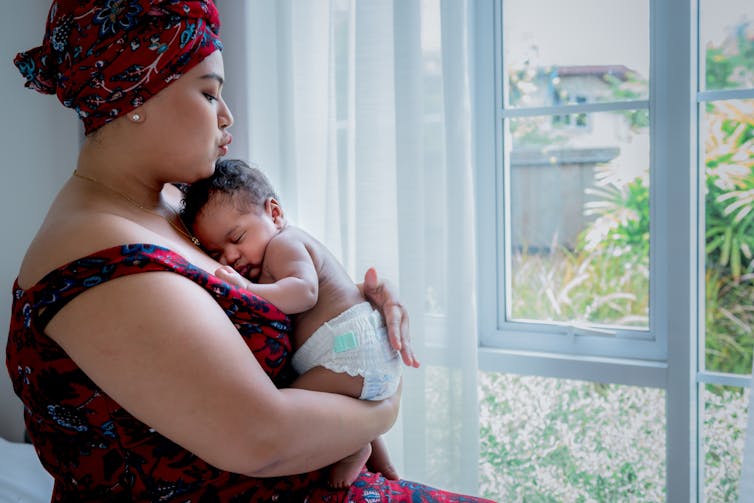
Baby sleeping against woman's chest

Anatta_Tan/Shutterstock

Studies show that an infant’s temperature can shift by one to two degrees Celsius during skin-to-skin contact, and the caregiver’s body adjusts through close thermal coupling to help keep the baby within a comfortable range. This reduces the effort required from the infant to maintain their own temperature.

Skin-to-skin contact also reduces signs of stress and helps babies settle more easily into sleep. It activates the parasympathetic nervous system, sometimes called rest-and-digest mode, which supports digestion and relaxation. Close contact also boosts oxytocin, reducing crying and encouraging feeding, which indirectly supports sleep.

Avoid over-sanitising

Normal home-level exposure to skin bacteria, family members and pets helps diversify the infant microbiome. This does not mean all forms of close contact are risk free. Very young babies are more vulnerable to infections such as HSV, which can be transmitted through saliva, so caregivers who are unwell or have active cold sores should avoid kissing newborns and keep hands clean during feeding.


Read more:
Why you should never kiss a baby


Routine use of antibacterial soaps and antibacterial wipes is not recommended unless necessary, for example when cleaning up bodily fluids, dealing with known infections in the household or following medical advice after surgery or immune-related conditions.

Support the microbiome through solids

Once a baby is developmentally ready, usually after six months, fibre-rich foods such as mashed beans, peas, lentils, sweet potato, oats and bananas can help nourish the gut.

Foods containing natural probiotics can be introduced once a baby has begun solids, provided they are offered in small amounts and prepared appropriately.

Plain yogurt is usually suitable from six months, as are fermented dairy products such as kefir when they are unsweetened and have a safe texture – smooth, runny or spoonable with no lumps – so that it can be swallowed easily and does not pose a choking risk. Other fermented foods, such as small tastes of fermented vegetable brine, should be low in salt and sugar and blended or thinned to an appropriate consistency.

Introducing allergens such as peanut and egg early, in line with current paediatric guidelines, also helps support immune balance.


Read more:
Are peanut allergies actually declining?


Use antibiotics only when needed

Antibiotics can disrupt the gut microbiome by reducing microbial diversity, lowering levels of beneficial bacteria and allowing less helpful strains to dominate. They should never be avoided when medically necessary, but unnecessary courses should be minimised. Because antibiotics can deplete helpful gut bacteria, some parents consider using probiotics to support recovery.

Certain probiotic supplements may reduce colic and support sleep by improving gut comfort. Commonly studied infant strains include Lactobacillus reuteri and Bifidobacterium infantis.

These strains feed on human milk oligosaccharides, support digestion and help maintain gut barrier function. They may also reduce inflammation and produce metabolites such as short-chain fatty acids, which nourish the cells lining the gut and support immune regulation. Medical guidance is essential before introducing any supplements.

Watch for gut-disrupting issues

Healthy digestion supports better sleep and can be aided by effective burping, avoiding overfeeding and monitoring for possible food intolerances such as cow’s milk protein sensitivity. Addressing discomfort early can prevent sleep disruption. Tracking patterns around feeds, nappies and crying spells can help identify symptoms that cluster at particular times of day.

Persistent arching, pulling legs to the chest, vomiting after most feeds or stools containing mucus can signal a problem beyond routine wind. Reflux, constipation and transient lactose overload – when milk moves through the gut too quickly for the lactose to be fully digested, leading to gas, frothy stools and discomfort – are common culprits.

Allow pet exposure

Household dog exposure is linked to more robust infant microbiomes and may support healthier immune outcomes. Dogs introduce a wider range of environmental microbes into the home during a sensitive developmental window. There is no need to get a pet solely for this purpose, but research suggests that normal interaction with existing pets could be beneficial.

A smiling infant and ginger corgi pembroke lying together on a white sheet.

Regina Burganova/Shutterstock

Routine contact such as supervised play, shared floor space and the general messiness that comes with pets can all contribute. Sensible hygiene still applies. Wash hands after handling food bowls or dog waste and keep pets out of sleeping spaces.

Regulate the sleep environment

Predictable routines reduce stress and support more settled sleep. Creating a stable sleep environment helps lower arousal levels, which can otherwise unsettle digestion.

Aim for a consistent room temperature, dim lighting and a calm wind-down routine that signals the shift from stimulation to rest. White noise can mask household sounds that might otherwise wake a baby. Try to keep overnight interactions low key with minimal talking and gentle movements. These cues form a stable pattern that supports deeper, more restorative sleep.

While no single strategy guarantees perfect nights, these evidence-informed practices work together to support a healthier gut and a more settled baby. When babies sleep better, parents finally get the rest they need too.

The Conversation

Manal Mohammed does not work for, consult, own shares in or receive funding from any company or organisation that would benefit from this article, and has disclosed no relevant affiliations beyond their academic appointment.

ref. How a healthy gut could help your baby sleep better – https://theconversation.com/how-a-healthy-gut-could-help-your-baby-sleep-better-271445

Healthy habits and the holiday season: Tips for families to navigate eating, physical activity and sleep

Source: The Conversation – Canada – By Holly Noelle Schaafsma, Postdoctoral Research Fellow, University of Guelph

The holiday season is a time of exciting activities, family get-togethers and a time away from the normal work and school routine. As a result, your family, like many others, may feel like your usual routines are lost in the holiday hustle. Possible disruptions that can affect well-being and cause household stress include irregular meals, more snacking and screen time and later bedtimes.

The good news is, integrating simple, healthy household habits over the holidays can help your family maintain healthy eating, sleep and activity behaviours to feel your best during this busy holiday season.

As registered dietitians and family health researchers, we have conducted studies on family health and learned a number of effective strategies that can help your family create healthy habits. Here are our three top tips to help your family maintain healthy eating, physical activity and sleep habits while still enjoying everything this special season has to offer.

1. Make meals a family affair

Hectic schedules during the holidays can make it feel almost impossible to find time to cook and sit down for a family meal. However, during the holiday season, when there are many chances to snack on cookies and candies, making time to sit down for at least one family meal a day is key. This simple habit helps your family maintain healthier eating patterns and gives everyone a valuable chance to connect.

Remember, the family meal doesn’t have to happen at dinner time. Work around your holiday schedule; if breakfast together works best, that’s great.

Involve the whole family, including young children, in food preparation. This can include holiday baking, cooking a family meal or making a dish for a holiday get-together. Involving children in meal preparation, such as stirring food, measuring ingredients or even helping with grocery shopping, can improve their likelihood of trying the food they create and may reduce picky eating.

For ideas on simple, family-friendly recipes with tips for involving kids, check out the series of free cookbooks developed by researchers at the Guelph Family Health Study.

2. Find moments to move, play and unplug

Get outside! Children who spend more time outside are more physically active. Spending time in nature also supports brain development and helps kids relax.

Plan a family hike, go skating and sledding; walk to nearby events and through your neighbourhood to enjoy holiday lights. These brief opportunities for movement add up!

When it’s time to come inside to warm up, have a plan for screen time. Children spend less time in front of screens when their parents set screen time limits. While this may sound like a tough feat during the school break, setting specific screen-time limits for the holiday season can help kids know what to expect, which may reduce day-to-day arguments about screens.

Keep meals screen-free. Turn off the TV and put phones and tablets in a designated place away from where you eat.

Setting screen limits doesn’t mean you can’t enjoy your favourite holiday movies. Purposeful, time-limited screen use has its benefits. In fact, co-viewing movies or TV together has been associated with many cognitive benefits for kids. Asking content-related “what if” and “why” questions can help develop vocabulary and critical thinking.

3. Balance festivities with family sleep routines

A good night’s sleep can help everyone, parents included, make the most of the holiday season. Children with sufficient sleep report less stress and hyperactivity, and better physical and mental health. Depending on their age, children and adolescents need between eight and 17 hours of sleep per day, while adults need seven to nine hours of sleep. Research shows that one in four children are not getting enough sleep.

Between festivities, keeping a consistent bedtime routine can help your children get enough sleep. Make time to unwind from a busy day with calm, screen-free activities such as reading a book before going to bed.

Maintaining a consistent bedtime routine can also help children fall asleep when sleeping away from home. Giving children a “few-minutes warning” can help them navigate their emotions when it’s time to stop a fun activity to get ready for bed. Children who are more sensitive to change may need extra closeness with their parents to feel safe and fall asleep in a new environment.

We hope these simple routines can help your family connect, slow down and find joy even during the busiest days of the holidays.

The Conversation

Jess Haines receives funding from Canadian Institutes of Health Research, National Institutes of Health, Danone Institute International, Protein Industries Canada, Health Canada, and Canadian Foundation for Dietetic Research.

Kathryn Walton receives funding from the Canadian Foundation for Innovation, the New Frontiers in Research Fund and the Canadian Institutes of Health Research.

Raphaëlle Jacob received funding from the Canadian Institutes of Health Research.

Holly Noelle Schaafsma does not work for, consult, own shares in or receive funding from any company or organisation that would benefit from this article, and has disclosed no relevant affiliations beyond their academic appointment.

ref. Healthy habits and the holiday season: Tips for families to navigate eating, physical activity and sleep – https://theconversation.com/healthy-habits-and-the-holiday-season-tips-for-families-to-navigate-eating-physical-activity-and-sleep-271723

Karoline Leavitt’s White House briefing doublethink is straight out of Orwell’s ‘1984’

Source: The Conversation – USA – By Laura Beers, Professor of History, American University

White House press secretary Karoline Leavitt speaks during the daily press briefing on Nov. 4, 2025. Andrew Harnik/Getty Images

During a press conference on Dec. 11, 2025, White House press secretary Karoline Leavitt announced there was good news on the state of the economy.

“Inflation as measured by the overall CPI has slowed to an average 2.5% pace,” she said, referring to the consumer price index. “Real wages are increasing roughly $1,200 dollars for the average worker.”

When CNN political correspondent Kaitlan Collins attempted to ask a follow-up question, Leavitt pivoted to an attack. Not on Collins, a frequent target of White House ire, but on Leavitt’s predecessor in the Biden White House, Democrat Jen Psaki.

Psaki, claimed Leavitt, stood at the same lectern a year before and told “utter lies.” In contrast, Leavitt insisted, “Everything I’m telling you is the truth backed by real, factual data, and you just don’t want to report on it ’cause you want to push untrue narratives about the president.”

The “real, factual data” that underpinned Leavitt’s statement was specious at best. The actual inflation rate for September was 3%, not the 2.5% figure cherry-picked from economic data. The rise in real wages? CNN business editor David Goldman writes that in the past year, U.S. workers have experienced “the lowest annual paycheck growth that Americans have had since May 2021.”

White House press secretary Karoline Leavitt speaks to the media on Dec. 11, 2025.

I’m a historian who has written about the enduring legacy of George Orwell’s ideas about truth and freedom. Listening to Leavitt assert a “truth” so obviously discordant with people’s lives, I was reminded of the repeated pronouncements from the Ministry of Plenty in Orwell’s “1984.”

“The fabulous statistics continued to pour out of the telescreen,” Orwell wrote. “As compared with last year there was more food, more clothes, more houses, more furniture, more cooking-pots, more fuel, more ships, more helicopters, more books, more babies — more of everything except disease, crime, and insanity. Year by year and minute by minute, everybody and everything was whizzing rapidly upwards.”

The novel’s doomed hero, Winston Smith, works in the Records Department that produces these fraudulent statistics – figures that are so far divorced from reality that they “had no connection with anything in the real world, not even the kind of connection that is contained in a direct lie.”

In the world of “1984,” not only are statistics invented, they are continually reinvented to serve the needs of Big Brother’s regime at any given moment: “All history was a palimpsest, scraped clean and reinscribed exactly as often as was necessary.”

Transparency as doublespeak

The lack of transparency depicted in “1984” has an uncanny echo in our current political moment, despite Leavitt’s repeated assertions that President Donald Trump is the “most transparent president in history.”

Leavitt has made that claim countless times, including in her public defense of Trump’s “Quiet, Piggy!” dismissal of Bloomberg News journalist Catherine Lucey last month.

In Leavitt’s usage, “transparency” has become a form of Orwellian “doublespeak,” a word or phrase which through the process of “doublethink” had come to encompass its exact opposite meaning.

Doublethink,” in Orwell’s writing, was the mechanism of thought manipulation that allowed someone “to know and not to know, to be conscious of complete truthfulness while telling carefully constructed lies, to hold simultaneously two opinions which cancelled out, knowing them to be contradictory and believing in both of them.”

Doublethink was the mechanism that enabled the citizens of Oceania, the Anglo-American superstate governed by Big Brother’s authoritarian regime, to accept that “WAR IS PEACE; FREEDOM IS SLAVERY; IGNORANCE IS STRENGTH.”

And it is the mechanism that allowed Leavitt to proclaim, in defending Trump’s unwillingness to release the Epstein files, “This administration has done more with respect to transparency when it comes to Jeffrey Epstein than any administration ever.” That claim was pronounced “fabulously audacious” by The Guardian’s Washington bureau chief, David Smith, in a story headlined “Nothing to see here: Trump press chief in full denial mode over Epstein.”

President Ronald Reagan records a radio address on foreign policy on Sept. 24, 1988, in which he discussed “our philosophy of peace through strength.”

Making ‘lies sound truthful and murder respectable’

In his famous essay “Politics and the English Language,” Orwell wrote that “political language is designed to make lies sound truthful and murder respectable, and to give an appearance of solidity to pure wind.”

Over the past 10 months, Leavitt has, among other things, claimed that the now dismantled U.S. Agency for International Development – USAID – provided a grant of $32,000 for a “transgender comic book” in Peru. Not true. She has misrepresented the “One Big Beautiful Bill” as fully eliminating taxes on tips, overtime and Social Security. In reality, deductions for these are capped. She claimed that Trump coined the motto “peace through strength.” He didn’t. The phrase has been in circulation for decades, used most prominently by Ronald Reagan during his presidency.

And she recently sought to delegitimize U.S. Sen. Mark Kelly and colleagues’ plea to servicemen and women not to obey illegal orders by suggesting tautologically that “all lawful orders are presumed to be legal by our servicemembers,” and hence Kelly’s plea could only serve to provoke “disorder and chaos.”

All governments lie. But Leavitt has become a master of the art of political language, wielded to aggrandize her boss, belittle his opponents and deflect attention from administration scandals.

The Conversation

Laura Beers does not work for, consult, own shares in or receive funding from any company or organization that would benefit from this article, and has disclosed no relevant affiliations beyond their academic appointment.

ref. Karoline Leavitt’s White House briefing doublethink is straight out of Orwell’s ‘1984’ – https://theconversation.com/karoline-leavitts-white-house-briefing-doublethink-is-straight-out-of-orwells-1984-270675

Which countries people are fleeing from – and why

Source: The Conversation – UK – By Sanwal Hussain, PhD Candidate in the Department of Politics and Society, Aston University

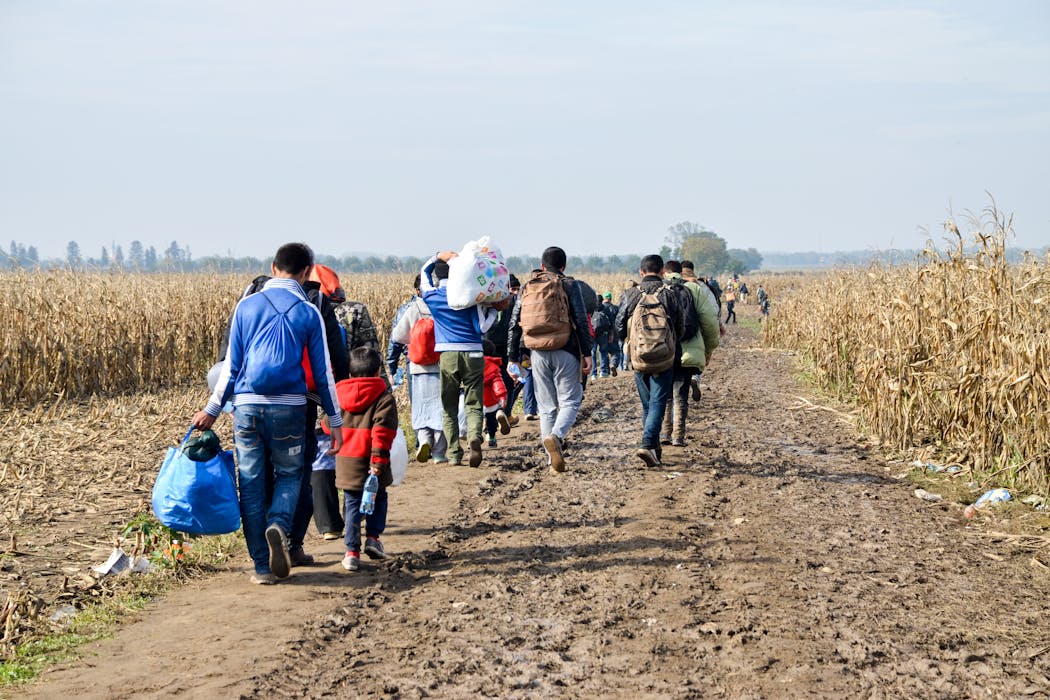
A group of refugees near the border between Serbia and Croatia in 2015. Ajdin Kamber / Shutterstock

The US government halted all applications for green cards, citizenship and asylum from 19 mostly African and Middle Eastern countries on December 2. This move came a week after President Donald Trump announced he would “permanently pause migration” from all “third-world countries” after two national guard members in Washington were shot by an Afghan national.

A cornerstone of Trump’s 2024 presidential election campaign was his promise to deport record numbers of migrants. And in September, his administration claimed to be on track to deport nearly 600,000 people by the end of Trump’s first year in office. But these latest announcements are a sharp escalation.

Regardless of what this will all mean for migrants in the US moving forward, it has drawn renewed global attention to migration. So what are some of the countries people have been fleeing from in recent years, and why are they taking the decision to do so?

Afghanistan

Afghanistan has one of the largest displaced populations in the world. Four decades of conflict and instability have contributed to a situation where, according to the International Organization for Migration (IOM), up to 1 million Afghan men migrate annually.

These people are mostly aged between 18 and 26 and migrate via informal means to neighbouring Iran and Pakistan, as well as westward predominantly to Turkey, the Gulf region, Europe and the US. Women and girls generally constitute only a small proportion of the migration flows.

The number of people fleeing Afghanistan surged in 2021, when the Taliban took back control of the country after a 20-year insurgency against US and Nato forces. The IOM estimated that approximately 20,000 to 30,000 Afghan nationals were migrating abroad each week around the time the Taliban captured the capital of Kabul.

Around 180,000 Afghans were resettled in the US under Biden-era programmes to help people who had worked with allied forces during the war escape. The US has now effectively ended these programmes.

Since 2021, tens of thousands more Afghan migrants have been resettled in the UK, Germany, France, Italy, Spain, the Netherlands and Brazil. They have arrived under schemes similar to those introduced by the US, as well as by seeking asylum through more conventional routes.

Migration from Afghanistan is being driven primarily by the pursuit of safety and economic security. When the Taliban first ruled Afghanistan from 1996 to 2001, it completely excluded women from public life – banning their education and employment.

The Taliban authorities also prohibited music, visual arts, paintings and even poetry. And it enforced harsh criminal punishments for people accused of adultery, including public floggings and stonings.

Since 2021, the Taliban has reintroduced many of these policies. Women are banned from education beyond primary school, as well as employment and public spaces. They cannot move freely in public without a male guardian.

Amnesty International says the Taliban has carried out arbitrary arrests, forcible disappearances and torture. It claims former government employees, human rights defenders and journalists have been executed without trial.

At the same time, the economic situation is dire. The Afghan economy has long depended on foreign assistance, which has been disrupted as a result of sanctions against the Taliban. In 2024, the UN reported that approximately 85% of Afghans live on less than US$1 a day (£0.75).

Iran

In Afghanistan’s westerly neighbour Iran, many people are also choosing to flee. Around 2.2 million Iranians left the country in 2022, with research out of Tehran’s Sharif University finding that 62% of those currently living abroad have no intention of returning.

Many of the people leaving Iran are young professionals or students. In 2024, Iranian state media reported that approximately 110,000 students had left the country to study abroad that year, with Europe and the US popular destinations.

Others resort to illegal migration. Between January 2023 and March 2024, around 20,000 Iranian nationals applied for asylum in the EU, while approximately 62,000 have sought asylum in the UK over the past decade – more than any other nationality.

The decision of Iranians to flee appears to stem from a loss of hope in change. Iran’s authorities have consistently responded to protests violently, most recently killing more than 500 people in a crackdown on the Women, Life, Freedom movement. This nationwide movement was sparked by the death of a 22-year-old Iranian girl called Mahsa Amini in police custody in 2022.

Beyond state repression, many Iranians are struggling to find jobs in an economy that has been severely weakened by years of western sanctions. And even those who do have jobs are gradually seeing their quality of life eroded by high inflation rates. Cultural restrictions, such as a ban on modern dress and western music, are also a source of frustration for people.

Pakistan

Nearly 3 million Pakistani nationals have moved away from their country in the past three years. Many of these people are skilled workers seeking opportunities in Australia, Canada, Europe, the UK or US. Others, usually unskilled workers, are migrating to the Gulf region.

The number of students in Pakistan going abroad for their studies is also on the rise. Visas issued to Pakistani students in the UK, for example, have grown from less than 5,500 in 2019 to over 35,500 in 2024.

The desire of many Pakistanis to live abroad is largely the result of their country’s weak economy, which has become characterised by high inflation, substantial public debt and limited job opportunities.

At the same time, the Pakistani government has introduced various authoritarian laws in recent years. This has included a bill passed in January 2025 that criminalised online disinformation – a law its critics say is designed to quash dissent.

Pakistan’s government has also installed a national internet firewall, enabling the authorities to monitor online traffic and regulate the use of popular apps. The initiative has sparked concerns about its potential to stifle protest.

With reduced space to demand change from their government, many people in Pakistan are seeing no option but to move abroad.

The Conversation

Sanwal Hussain does not work for, consult, own shares in or receive funding from any company or organisation that would benefit from this article, and has disclosed no relevant affiliations beyond their academic appointment.

ref. Which countries people are fleeing from – and why – https://theconversation.com/which-countries-people-are-fleeing-from-and-why-268930

Child poverty: how bad is it in the UK?

Source: The Conversation – UK – By Regina Murphy Keith, Senior Lecturer in Food, Nutrition and Public Health, University of Westminster

komokvm/Shutterstock

The UK government recently unveiled its child poverty strategy, with the removal of the two-child limit on benefits payments as the centrepiece.

What’s sobering is how desperately the UK needs a strategy to address child poverty. At the end of 2024, four and a half million children – 31% of all UK children – were in relative poverty, meaning that they live in households earning less than 60% of the UK’s median income.

And 18% of all children were growing up in food-insecure households, without consistent access to nutritious food.

Ladywell, in Birmingham, has the highest levels, with 62% of children living in relative poverty. In some areas of Leeds, London, Bradford, Manchester and Liverpool over half of children live in poverty. Nearly half of Asian British and Black British children are in poverty, as are 43% of children in single-parent families.

This problem isn’t limited to the UK. Research by Unicef found that 23% of the children in 37 surveyed high-income countries live in poverty. But while relative poverty in these countries declined by an average of 2.5% between 2013 and 2023, in the UK it rose by 34%.

Within the UK, Scotland reduced child poverty in 2025, thanks to policies such as the monthly Scottish child payment of £27.15 for all children under 16. Payments also go to those expecting a baby and during the baby’s first year of life, to support the health and nutrition of mothers and infants.

One in five Scottish children still live in poverty, but Scotland has kept child poverty levels stable in the last decade.

In England, policies such as the two child limit and the cap on total benefits payments, combined with reductions in spending, have led to rising levels of child poverty. Unicef estimate that as these there has been a real terms decrease in spending of around £3.6 billion on policies that support children.

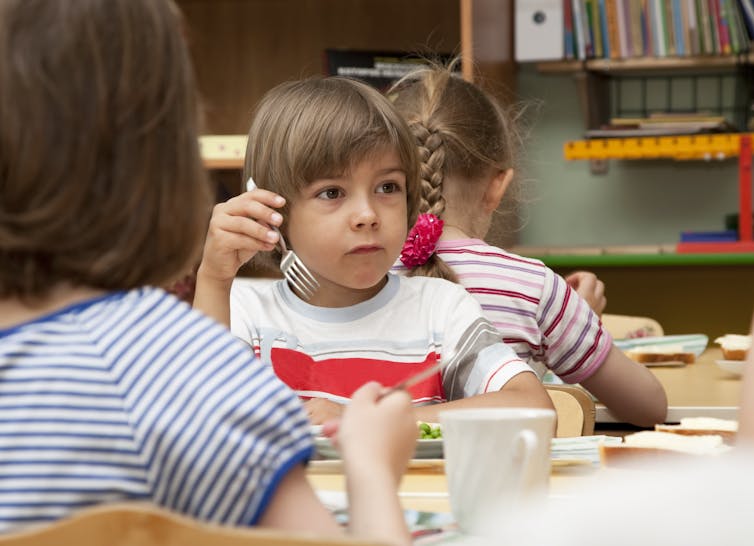
Children eating at school
Free school meals can help families.
Kuznetsov Alexey/Shutterstock

Another challenge families have is the high cost of childcare. This reduces the number of women who return to work after having children, limiting family income. While an increase in government-funded hours of childcare has reduced costs in England for children aged under two, for those parents of three- and four-year-olds who already received a subsidy costs have gone up, as they in Wales and Scotland.

Testimonies from children collected by the Children’s Commissioner for England lay the problem of child poverty bare. A 14-year-old girl explained how she worried her family wouldn’t have enough to eat. “We do try as much as possible to save up what we have,” she said.

“Every time I got [food packages] the food was always out of date and mouldy,” said an 11-year-old boy. “I know I’m poor but I’m not going to eat mouldy food.”

What works

The government’s recent budget included the significant step of lifting the two-child cap on benefits, which limited the means-tested support that families could receive from the state to the first two children in a household. The removal of this limit will lift around 500,000 children out of poverty.

The government has also pledged to reduce the time families live in temporary housing such as bed and breakfasts. From 2026, free school meals will be available to all children in families on universal credit. This is progress – but children will still slip through the cracks.

It’s estimated that a third of the children in the deepest poverty are from migrant families, who have no access to state benefits.


Read more:
To truly tackle child poverty, the UK needs to look again at migration policy


One strategy that we can see is working is the provision of free school meals for all children in London. Three in five (60%) parents surveyed said they were able to spend more money on food as a result of free school meals, while 84% said that the provision of school lunches had helped their household finances.

Further action on child poverty requires investment in community support services, such as community kitchens and community support centres, which address the root causes poverty. Communities and children should be at the centre of future policies and plans.

The Conversation

Dr. Regina Murphy Keith is affiliated with the World Public Health Nutrition Association a registered charity for nutritionists and she is a Commissioner on the UK RIght to Food Commisssion

ref. Child poverty: how bad is it in the UK? – https://theconversation.com/child-poverty-how-bad-is-it-in-the-uk-271692