Quel rôle pour la production hors-sol dans l’agriculture de demain ?

Source: The Conversation – in French – By Marie-Pierre Bruyant, Sciences végétales, UniLaSalle

Produire des légumes en hydroponie, en aéroponie ou en aquaponie. Tel est le pari de la production agricole hors-sol qui suscite ces dernières années tantôt l’engouement, tantôt la critique. Quels atouts et quelles limites présente-t-elle, et quel rôle lui donner dans l’indispensable transition que doit connaître l’agriculture ?


Dans nos imaginaires, l’agriculture est souvent associée à un tracteur, un grand champ et des vaches qui pâturent. Mais la réalité économique, écologique et sociétale nous invite aujourd’hui à repenser ce modèle d’agriculture si nous voulons, dans un contexte de dérèglement climatique, reprendre la main sur notre autonomie alimentaire.

Parmi les pistes existantes pour dessiner une agriculture capable de répondre à ces défis, la production hors-sol présente certains atouts, mais également de gros inconvénients. Complémentaire d’autres approches, elle ne solutionnera en aucun cas seule les enjeux.

Changement climatique, urbanisation et pertes de sols agricoles

Le dérèglement climatique, par les phénomènes climatiques extrêmes courts, mais intenses et fréquents qu’il engendre, affecte déjà profondément les productions agricoles de certaines régions du monde. Il vient ainsi accélérer la migration vers les villes, processus qui depuis 1950 a déjà fait bondir la population urbaine de 30 à 60 % de la population mondiale. Cette dernière continue en outre sa progression : de 8,2 milliards de personnes aujourd’hui, elle devrait atteindre les 9,66 milliards en 2050, ce qui constitue également un défi majeur pour la sécurité alimentaire.

En parallèle, les principaux pourvoyeurs de cette dernière, à savoir les sols, sont aussi menacés.

Par l’artificialisation d’une part, directement liée à l’urbanisation, qui se manifeste en France par la disparition annuelle de 24 000 ha d’espaces naturels ou agricoles chaque année au profit de l’urbanisation et l’industrialisation.

Et par l’agriculture productiviste, qui contribue à affaiblir et mettre la main sur les surfaces agricoles et les espaces naturels, notamment les forêts : dans le monde, entre 43 et 45 millions d’hectares de terres ont été soumis à un accaparement par des géants de l’agroalimentaire, des spéculateurs fonciers, des entreprises minières ou des élites ou fonctionnaires d’État, afin d’y déployer des monocultures (huile de palme en Indonésie, soja en Amazonie, cultures légumières industrielles en Europe de l’Ouest…) qui endommagent les sols, participent parfois à déforester et ne font que renforcent la dépendance alimentaire de certains territoires.

Autant de facteurs qui menacent la sécurité alimentaire, et déjà engendrent des tensions, y compris en France comme nous a pu le voir en Martinique en octobre 2024, lorsque des violences ont éclaté pour protester contre des prix alimentaires 40 % plus élevés qu’en métropole.

Les productions hors-sol

Face à ces situations complexes, une évolution de nos systèmes agricoles est nécessaire. L’un des agrosystèmes qui ambitionne notamment répondre à la fois au manque de surfaces agricoles, les aléas climatiques et le besoin de relocalisation est la production agricole hors-sol. Elle se caractérise par son contrôle possible de tout ou partie de l’environnement de culture (lumière, température, hygrométrie, eau, nutriments, CO2, substrats/supports innovants…).

Surtout, elle facilite l’atténuation des effets du changement climatique comme la sécheresse, les inondations ou le gel tardif et est peu gourmande en eau. Certaines fermes hors-sol s’établissent dans des bâtiments réhabilités, des sous-sols ou des toits, ce qui n’occupe pas de nouvelles terres agricoles. Cette installation proche des centres-villes permet une production locale et faible en intrants, qui limite les coûts d’exportation et évite une contamination potentielle des sols.

Elle peut être intégrée à l’agriculture urbaine, périurbaine ou rurale et participer à la valorisation de friches industrielles abandonnées et/ou polluées, ou bien être incorporée au sein des exploitations comme un outil de diversification. Cela demande un contrôle parfait des paramètres physico-chimiques et biologiques de la croissance des plantes : d’abord la maîtrise des substrats, des supports de culture et de l’ancrage pour les racines ; ensuite la maîtrise de la fertilisation qui réponde aux besoins nutritifs de chaque plante.

Différents types de systèmes agricoles. 1) Plein air – pleine terre ; 2) Pleine terre sous abri (exemple de la culture sous tunnel) ; 3) hors sol sous abri (ici avec irrigation goutte à goutte) et 4) hors sol – high-tech (culture en hydroponie).
Adrien Gauthier, Fourni par l’auteur

Hydroponie, aéroponie et aquaponie

Ces systèmes prennent trois principales formes.

La plus connue du grand public est l’hydroponie : la majorité des tomates, concombres, courgettes, salades ou encore fraises produits hors-sol, sont cultivés selon cette technique. Cette méthode apporte tous les nutriments essentiels à la plante sous forme d’un flux liquide. On distingue : la culture en eau profonde où les racines sont immergées dans de grandes quantités d’eau et de nutriments ; la table à marée, où les nutriments sont apportés deux fois par jour par un système de montée et descente de l’eau riche en sels minéraux dans le bac de culture ; ou encore le système NFT (Nutrient Film Technique) dans lequel un flux continu de solution nutritive circule sans immerger complètement les racines grâce à un canal légèrement incliné, étanche et sombre.

L’aéroponie, quant à elle, est une méthode proche de l’hydroponie qui consiste à pulvériser directement sur les racines, sous forme de brouillard, les nutriments sans pesticide, adaptés à l’exigence de l’espèce cultivée. Les racines sont isolées de la canopée et placées dans des containers spéciaux les maintenant dans l’obscurité. Elle optimise l’oxygénation des racines, réduit les risques de maladies et favorise le développement de la plante.

Enfin, l’aquaponie, qui combine aquaculture et hydroponie, valorise les déjections de poissons élevés en bassin (dans un local dédié) pour nourrir les plantes. En contrepartie, les plantes prélèvent les nutriments et nettoient l’eau à l’aide de bactéries. Ces dernières rendent les nutriments disponibles et assimilables par les plantes. Une parfaite harmonie et un travail d’équipe !

Différents systèmes de ponies. A. culture en eau profonde, B. Système de table à marées, C. Aéroponie, D. Aquaponie. E. le système NFT (Nutrient Film Technique).
Adrien Gauthier, modifié d’après Rathnayake et Sharmilan, 2023, Fourni par l’auteur

Des techniques très critiquées

Cesdites techniques hors-sol sont toutefois la cible de nombreuses critiques : elles produiraient des fruits et légumes sans goût, qui ne voient ni le sol ni le soleil ou encore des aromatiques ou des micropousses qui « ne nourrissent pas son homme ». Cette acceptation sociale et culturelle dépend bien sûr beaucoup des pays. Alors que le hors-sol jouit d’une bonne image aux États-Unis et en Asie, les Européens se montrent plus sceptiques à l’idée de manger des fruits et légumes qui n’ont pas poussé dans du « vrai » sol.

Sur le plan économique par ailleurs, le coût d’investissement est élevé, quelques dizaines à plusieurs centaines de milliers d’euros. Et l’autre coût majeur est énergétique – malgré des progrès, une salade cultivée en agriculture conventionnelle tend à avoir un impact moindre sur l’environnement qu’une salade produite toute l’année en hors-sol.

Dans ce contexte, de nombreuses entreprises high-tech qui s’étaient engouffrées dans ce modèle ont déjà mis la clé sous la porte faute de rentabilité : la start-up d’herbes aromatiques Jungle, le producteur de fraises et de salades Agricool, ou encore Infarm, qui proposait des légumes cultivés en hydroponie, n’ont pas résisté.

Une solution parmi d’autres

Aujourd’hui, l’ambition de ces systèmes à petite échelle, qui offrent des variétés limitées, n’est pas de nourrir toute une population, mais simplement de contribuer à l’autonomie alimentaire des villes. Ces nouvelles fermes ont également l’avantage pédagogique de reconnecter les citoyens à la production agricole, et d’être un support intéressant pour découvrir le cycle de vie d’une plante.

En outre, ces fermes pourraient diversifier leur activité afin de rester viables en se tournant vers la production d’aliments à destination des animaux, de plantes alternatives aux protéines animales ou encore de plantes pour l’industrie pharmaceutique (molécules à haute valeur ajoutée).

Loin de venir sonner le glas de l’agriculture traditionnelle, la production hors-sol peut en revanche additionner ses efforts à ceux de cette dernière dans la quête de l’autonomie alimentaire.


Nous tenons à remercier Alice Legrand, Lisa Ménard et Clémence Suard, étudiantes qui ont contribué à la rédaction de l’article ont apporté sur notre propos leurs regards de jeunes agronomes.

The Conversation

Les auteurs ne travaillent pas, ne conseillent pas, ne possèdent pas de parts, ne reçoivent pas de fonds d’une organisation qui pourrait tirer profit de cet article, et n’ont déclaré aucune autre affiliation que leur organisme de recherche.

ref. Quel rôle pour la production hors-sol dans l’agriculture de demain ? – https://theconversation.com/quel-role-pour-la-production-hors-sol-dans-lagriculture-de-demain-265917

The Room in the Tower: the ‘real’ hauntings that inspired this year’s BBC Ghost Story for Christmas adaptation

Source: The Conversation – UK – By Alice Vernon, Lecturer in Creative Writing and 19th-Century Literature, Aberystwyth University

This year’s BBC Ghost Story for Christmas is an adaptation of E. F. Benson’s 1912 tale of vampiric horror and haunted sleep, The Room in the Tower.

The unnamed narrator begins the story by relating a recurring nightmare he has suffered for 15 years. In the dream, he has been invited to the mansion of the Stone family. The dream begins pleasantly, with card games, cigarettes and light conversation. But it always takes a turn when the family’s fearsome matriarch, Mrs Stone, tells the narrator that he’ll now be shown to his room for the night – the titular room in the tower. Upon entering the room, he is overwhelmed with abject horror, and wakes up before he sees the object of his fear.

While visiting a friend one stormy summer’s day, the narrator finds himself at the very home he saw at least once a month in his dreams. Sure enough, he’s led to the room in the tower, where he finds a hideous portrait of the demonic Mrs Stone. The portrait is removed from the room at his request, but leaves curious bloodstains on the narrator and his friend’s hands. During the night, however, the narrator’s sleep is once again disturbed by the nightmare made manifest.

E. F. Benson in a suit, with a moustache
E. F. Benson ‘grew up with ghosts’.
The New York Public Library

Many ghost stories take place in bedrooms. One of the BBC’s first ghost stories adapted for television was M. R. James’ Oh Whistle, and I’ll Come to You, My Lad, which features a bumbling academic terrorised in his hotel room by a ghost quite literally wearing a bed sheet. Horror comes from a twisted reversal of what we expect to see and experience, and since the bed should be the place of utmost safety, it is ripe to be distorted into a place of existential dread.

Sleep, too, is a state of pure vulnerability. Those few breathless seconds after waking from a nightmare remind us just how defenceless we are. No tale of the supernatural from the early 20th century examines the way our troubled sleep can haunt us quite like The Room in the Tower.

Benson grew up with ghosts. His father, Edward Benson, was the archbishop of Canterbury. He was good friends with novelist Henry James, and allegedly told his son a spooky story he’d heard that James later turned into The Turn of the Screw (1898).

Benson’s mother was Mary Sidgwick, whose brother Henry was a founding member and first president of the Society for Psychical Research (SPR). The SPR’s aim was to investigate strange and paranormal phenomena, with particular interests in thought transference (or telepathy), visions and hallucinations, and ghosts and hauntings.

Begun in 1882, the SPR almost immediately set about collecting a massive amount of data under their Census of Hallucinations. They sent out a questionnaire to the public, and received thousands of responses over several years, some with fascinating anecdotes about being terrorised by ghosts and monsters in the middle of the night. The SPR compiled these in an issue of their periodical in 1894.

A man with a long white beard in a black and white photo
Henry Sidgwick, first president of the SPR in 1894.
WikiCommons

To read them in light of The Room of the Tower, it seems that Benson, too, knew what it feels like to be haunted by hallucinatory sleep disorders. Indeed, perhaps he even took direct influence from some of the anecdotes. The narrator in The Room in the Tower, being visited by a vampiric monster at the end of the story, describes himself as being “paralysed” – a typical sensation of sleep paralysis, which is often accompanied by a terrifying hallucination.

In Benson’s story, the narrator sees a “figure that leaned over the end of my bed”. In the SPR’s Census, a respondent referred to as Miss H. T. describes a horrifying visitation similar to the experience of Benson’s narrator. She wrote that she had seen the same figure three times, just as the narrator has the same nightmare over and over again. It would happen the same way every time; she would believe herself to be awake, and she would see a shimmer in the air that gradually solidified. Paralysed, she couldn’t move or scream to defend herself as the shape “took the form of mist and then developed into a dark veiled figure, which came nearer to me” and bent over the bed. Finally, the paralysis would lift, and the figure disappeared just as Miss H. T. threw her hands out towards it.

What both the Census and The Room in the Tower show is that ghosts don’t need to come from graveyards, gothic houses, or local legends. Often the most terrifying encounters, the experiences that prove most fruitful for ghost stories, are those our sleeping minds conjure up on the ethereal boundary between dreaming and waking.

The Room in the Tower will air on BBC One on Christmas Eve at 10pm, and will star Joanna Lumley as the terrifying Mrs Stone. For those of us prone to experience troubled sleep, it may well summon a nightmare of our own.


Looking for something good? Cut through the noise with a carefully curated selection of the latest releases, live events and exhibitions, straight to your inbox every fortnight, on Fridays. Sign up here.


This article features references to books that have been included for editorial reasons, and may contain links to bookshop.org. If you click on one of the links and go on to buy something from bookshop.org The Conversation UK may earn a commission.

The Conversation

Alice Vernon does not work for, consult, own shares in or receive funding from any company or organisation that would benefit from this article, and has disclosed no relevant affiliations beyond their academic appointment.

ref. The Room in the Tower: the ‘real’ hauntings that inspired this year’s BBC Ghost Story for Christmas adaptation – https://theconversation.com/the-room-in-the-tower-the-real-hauntings-that-inspired-this-years-bbc-ghost-story-for-christmas-adaptation-272309

Reducing household waste poses serious challenges in residential high-rises

Source: The Conversation – Canada – By Lisa Kowalchuk, Associate Professor of Sociology, University of Guelph

Like much of the western world, Canada is facing a crisis in waste disposal as landfills reach their capacity. In Ontario, a live countdown gives municipal landfills just eight more years before they are full. We urgently need to reduce our garbage.

The scramble for a solution has governments considering and even approving questionable alternatives like incineration and opening new or dormant landfills in rural areas.

Colleagues and I conducted a study between 2022 and 2024 with a non-profit service provider called the St. James Town Community Corner in Toronto, and found an overlooked opportunity for greater waste diversion among renters in multi-residential buildings.

Our research team included Trisha Einmann, a PhD candidate in sociology at the University of Guelph, Alaa Mohamed, a client engagement worker with The Neighbourhood Organization and Aravind Joseph, a former co-ordinator with The Neighbourhood Organization.

St.James Town is a vibrant, densely populated neighbourhood with a high proportion of immigrants, racialized people and those with lower-than-average household incomes. At its core are 19 rental towers of 14 to 30 storeys that house about 18,500 people.

Policymakers must bring multi-residential buildings fully into the effort to divert household waste from landfill, so that communities like St. James Town can be part of the solution.

Residential building waste

There is a glaring need to increase the amount of waste diverted from landfills in Ontario, where the institutional commercial and industrial sector generates 60 per cent of the province’s waste, yet the sector’s diversion rate is only 15 per cent.

The residential sector also merits attention. Here, the overall diversion rate of 50 per cent is highly uneven between multi-residential buildings and single family dwellings.

While nearly 47 per cent of Torontonians reside in multi-residential buildings of five storeys or more, they divert just 27 per cent of their waste from landfills, compared to 61 per cent for single-family homes.

Our research

In our study, we focused on two St. James Town high-rises: a social housing building and a privately owned rental building.

We conducted a resident survey, focus groups and interviews with experts and authorities to understand residents’ values, practices and challenges related to household waste.

The vast majority of our 103 survey respondents — 93 per cent — agreed or strongly agreed that sorting waste is very important; 91 per cent agreed that it protects the environment; and 78 per cent said it is part of their daily routine. These figures were virtually the same for private and social-housing renters, and were higher for immigrants than those born in Canada.

Just over half of our respondents, however, found it inconvenient or difficult to sort waste, and the challenges they identified confirmed the spatial and infrastructural hurdles documented elsewhere.

In high-rises like those in St. James Town, which were built before waste separation programs were commonplace, the typical disposal option is the single, narrow garbage chute on each floor and tall bins in an outdoor enclosure for bulky waste or recyclables. Apartments typically lack space to store sorted waste.

Landlords are off the hook

Another barrier to better waste management was the lack of managerial willingness to work with concerned residents, a crucial ingredient in achieving greater waste diversion in multi-residential buildings.

In the private building, the fundamental problem was the absence of managerial commitment to waste diversion, making it impossible for residents to divert waste there.

This is rooted in past municipal decisions and current provincial policy. City service obligates the separate collection of all major waste types. In 2009, the City of Toronto allowed private multi-residential buildings to choose private instead of municipal waste services so that they could avoid the expense and hassle of collecting organics.

Multi-residential buildings that contract with private haulers (40 per cent in Toronto) become subject to the regulation governing waste in the commercial and industrial sector, which omits organics and calls for “reasonable efforts” to participate in recycling.

This weak wording and minimal enforcement by the province allows the hollowest of gestures toward recycling on the part of landlords.

In the privately owned building in our study, there were outdoor blue bins, but no separate bins for non-recyclable trash, and the blue bins were observed to contain all manner of waste. Unsurprisingly, we saw the hauling company combining blue bin and compactor content together, though the property manager claimed otherwise.

Participants at both buildings complained of an information vacuum. In the private building, 63 per cent of survey respondents reported disposing of organics in the trash chute at least some of the time; for recyclables this was 28 per cent.

The fact that people were sorting organics before putting them in the trash chute suggests they believed it will be properly sorted by the waste management company after collection. This belief was also shared by one of the maintenance staff at the building who deals with waste.

This echoes a tendency observed elsewhere, and likely reflects a misguided belief that the waste will eventually be sorted at a facility.

Many respondents told us they aren’t being properly directed on where to put any of the different forms of waste, including hazardous items. For example, in the private building, there was nothing to tell them that there’s no organics collection, or what can and cannot be recycled.

Misplaced or unsorted waste reflects the lack of information residents receive. Without stronger regulations, landlords have little incentive to invest in waste management to keep recycling separate from trash.

Waste management and housing conditions

With a savings-above-all approach to waste management, the practices of some can make surroundings unpleasant for others. In disposal areas and other common spaces, residents frequently complained of the smell and of cockroaches from organic waste piled up by the chutes, or bedbugs from furniture and other items left in hallways.

Some were reluctant to have visitors. Some also worried about batteries in the garbage, a justified concern given that 71 per cent of survey participants across both buildings sometimes dispose of batteries in the trash or blue bins.

Tenants are often fearful to take such concerns to landlords or government.

There are, of course, other major contributors to landfill waste that we should not overlook: the over-production of non-recyclable plastics and under-regulation of the industrial, commercial and institutional sector.

But policymakers must also recognize the challenges facing renters in multi-residential buildings. Failing to address these will result in more waste ending up in ever-growing landfills.

The Conversation

Lisa Kowalchuk receives funding from the University of Guelph Social Sciences and Humanities Research Council of Canada institutional grant.

ref. Reducing household waste poses serious challenges in residential high-rises – https://theconversation.com/reducing-household-waste-poses-serious-challenges-in-residential-high-rises-270406

République serbe de Bosnie : les enseignements d’une présidentielle très serrée

Source: The Conversation – in French – By Neira Sabanovic, Doctorante en science politique, Université Libre de Bruxelles (ULB)

Contraint à la démission par une décision de justice, Milorad Dodik, dirigeant de longue date de la République serbe (l’une des deux entités composant la Bosnie-Herzégovine), proche de Belgrade, de Budapest et de Moscou, n’a pas tout perdu : la présidentielle a été remportée de justesse par un de ses proches, Siniša Karan. Pour autant, l’opposition, malgré un candidat peu connu, a failli l’emporter, et le taux de participation a été très bas. Le parti de Dodik parviendra-t-il à conserver la haute main sur ce territoire miné bien plus par la corruption et le clientélisme que par les tensions ethnonationales ?


Le 23 novembre 2025, l’entité serbe de la Bosnie-Herzégovine, communément appelée République serbe de Bosnie (Republika Srpska, RS), a tenu une élection présidentielle anticipée qui a vu la victoire étriquée de Siniša Karan avec 50,8 % des suffrages. Le candidat issu du Parti social-démocrate indépendant (Savez nezavisnih socijaldemokrata, SNSD) de l’ancien président Milorad Dodik s’est imposé face à Branko Blanuša, du Parti démocrate serbe (Srpska demokratska stranka, SDS), qui a remporté 48,8 % des voix.

Le scrutin est intervenu après une période d’importantes turbulences politiques en Bosnie-Herzégovine suite à la condamnation de Milorad Dodik, le 26 février 2025, par la Cour constitutionnelle du pays pour avoir défié l’autorité du Haut Représentant (Office of the High Representative, OHR). Cette condamnation a abouti à la mise à l’écart de Milorad Dodik de la scène politique et à la convocation d’élections anticipées.

L’issue serrée de la présidentielle illustre, d’une part, la capacité du SNSD à maintenir son emprise sur l’appareil politique local, mais aussi, d’autre part, la fragilisation progressive du parti et du leadership de Dodik et un début de recomposition du paysage politique de la RS.

Un système institutionnel hérité de Dayton

La Bosnie-Herzégovine fonctionne depuis les accords de paix de Dayton (qui ont marqué la fin du conflit armé en 1995 et dont l’Annexe 4 constitue la Constitution) sur un modèle de consociationalisme ethnique et de fédéralisme complexe.

L’État est composé de deux entités territoriales : la Fédération de Bosnie-Herzégovine, elle-même divisée en dix cantons majoritairement bosniaques et croates ; et la Republika Srpska, qui est davantage centralisée. À ces entités s’ajoutent les municipalités ainsi que le district autonome de Brčko. Le niveau étatique comporte deux assemblées parlementaires (la Chambre des représentants et la Chambre des peuples), dont la composition reflète le partage du pouvoir entre les peuples constituants du pays : les Bosniaques, les Croates et les Serbes (selon le dernier recensement, effectué en 2013, le pays est composé de 50,1 % de Bosniaques, 30,8 % de Serbes, 15,4 % de Croates et 3,7 % d’« Autres »). Le système est supervisé par le Bureau du Haut Représentant (OHR), une institution internationale chargée de veiller à l’application civile de Dayton et dotée de larges « pouvoirs de Bonn » lui permettant d’imposer des lois ou de démettre des responsables.

L’Allemand Christian Schmidt, l’actuel Haut Représentant, nommé en 2021 par les pays du Conseil de la mise en œuvre de la paix (Peace Implementation Council, PIC), est contesté par la Republika Srpska et par la Russie, qui refusent de reconnaître sa légitimité en raison de l’absence d’aval du Conseil de sécurité de l’ONU pour sa nomination. Ce refus de soutenir Christian Schmidt s’inscrit dans le projet russe et chinois de suppression du Bureau du Haut Représentant afin d’élargir leur sphère d’influence dans le pays et de déstabiliser cette région située aux frontières de l’Union européenne.

La figure politique dominante de la RS, Milorad Dodik, 66 ans aujourd’hui, président de la RS de 2010 à 2018 et de 2022 à 2025, a commencé sa carrière en 1996 comme acteur politique modéré soutenu par les États occidentaux, avant d’opérer un tournant nationaliste en 2006. Il s’est alors progressivement imposé comme le principal leader politique serbe du pays, en développant une rhétorique nationaliste serbe radicale, un discours de haine et un système de pouvoir fondé sur la corruption et le clientélisme qui lui a valu plusieurs sanctions internationales. Son style politique s’est ensuite centré essentiellement sur une rhétorique sécessionniste prônant l’indépendance de l’entité serbe.

Des élections dominées par Milorad Dodik

Malgré ses déclarations répétées selon lesquelles il ne se soumettrait pas aux institutions de Bosnie-Herzégovine, Dodik a finalement accepté la décision de justice en convertissant sa peine d’un an de prison en une amende de 18 000 euros, reconnaissant ainsi implicitement l’autorité de la Cour de Bosnie-Herzégovine.

Après sa condamnation par la justice bosnienne, Dodik s’est empressé de désigner une membre de son entourage proche, Ana Trišić Babić, comme présidente par intérim malgré l’absence de base légale pour cette nomination. Dodik et l’élite politique se tenant derrière lui se sont d’abord opposés à l’organisation d’une nouvelle élection présidentielle en RS, et l’ancien président de la RS a à nouveau menacé d’organiser un référendum à ce sujet, avant de revenir sur cette idée. La nomination d’Ana Trišić Babić illustre cette stratégie d’« occupation » institutionnelle du SNSD qui vise à conserver le levier exécutif quelles que soient les décisions judiciaires ou internationales. L’épisode a renforcé l’image d’un exécutif de la RS prêt à contourner les normes formelles pour prolonger son influence.

La campagne électorale a reproduit les traits récurrents du style politique de Dodik et de son environnement. En mobilisant son registre habituel basé sur un nationalisme serbe agressif et un narratif sécessionniste, Dodik a saturé l’espace médiatique par des discours clivants. Karan, pour sa part, s’est présenté comme le garant de la continuité, fort de son profil technocratique et de son ancrage dans l’appareil sécuritaire en tant qu’ancien ministre de l’intérieur. Face à Karan, le SDS a présenté Branko Blanuša, un universitaire peu connu et sans ancrage politique large, une stratégie de l’opposition qui n’a pas réussi à incarner une alternative crédible face au SNSD.

Sur le plan procédural, l’élection a été entachée d’allégations d’irrégularités dans plusieurs bureaux, notamment dans les villes de Doboj et Zvornik, où l’opposition et la Commission électorale centrale (Centralna Izborna Komisija, CIK), chargée de l’organisation et la supervision de l’ensemble des élections dans le pays, ont dénoncé des pratiques d’abus de fonds publics durant la campagne, de pression sur les électeurs et d’anomalies dans les listes de vote.

Ces incidents s’inscrivent dans des tendances structurelles de clientélisme, de capture des administrations locales et de fragilité des garanties électorales. Les réseaux de dépendance économique et administrative (emplois publics, marchés, transferts) restent des instruments puissants de mobilisation et de contrôle politique en RS.

La manœuvre diplomatique et financière en coulisses a aussi joué. Le desserrement partiel et contesté des pressions internationales a été exploité par les pro-Dodik. En octobre 2025, les sanctions américaines imposées à son réseau proche depuis 2017 ont été levées et ont permis au camp pro-Dodik d’affirmer avoir obtenu une forme de « réhabilitation » internationale et d’afficher un argument électoral de légitimation.

La levée de ces sanctions s’inscrit dans une longue campagne de lobbying probablement financée par l’argent public de la RS. Parallèlement, la Russie et la Hongrie ont maintenu un appui politique visible, marqué par des messages de félicitations et des rencontres bilatérales, renforçant le narratif selon lequel la RS disposerait de parrains internationaux face à l’Occident.

Un tournant pour le SNSD et l’avenir politique de Dodik ?

Toutefois, ces élections indiquent une mutation importante dans la carrière politique de Milorad Dodik et la popularité du SNSD, qui semble s’essoufler. En effet, la mise à l’écart de Dodik de toute fonction publique pendant six ans ouvre une période d’incertitude pour le SNSD, déjà marqué par l’usure du pouvoir, et pourrait encourager certains de ses cadres et membres à prendre leurs distances pour préserver leur propre carrière politique.

L’élection de Karan assure pour le moment la continuité d’un modèle politique centré sur le contrôle partisan des institutions, la politisation des forces de sécurité et la circulation de ressources vers des réseaux clientélistes.

L’opposition, fragilisée par le choix d’un candidat peu visible et par l’absence d’une stratégie unifiée, sort affaiblie et risque de ne pas pouvoir jouer efficacement son rôle de contre-pouvoir.

Toutefois, la victoire étroite du candidat du SNSD et le taux de participation très faible soulignent un désenchantement croissant. L’élite politique semble éloignée des besoins concrets des citoyens de la RS au profit d’une rhétorique axée sur les prétendues tensions ethnonationales. Les derniers résultats électoraux du SNSD, en recul par rapport aux cycles précédents, confirment une érosion du soutien populaire. De plus, la non-participation à la présidentielle d’un des partis les plus populaires en RS, le Parti du progrès démocratique (Partija Demokratskog Progresa, PDP), aurait dû assurer une victoire aisée pour Karan face au SDS, dont le soutien populaire a également été ébranlé ces dernières années. Le succès de Karan s’explique ainsi par la faiblesse de la stratégie de l’opposition et non pas par la popularité du SNSD.

Au plan international, la victoire de Karan maintient les liens géopolitiques de Dodik avec Moscou et Budapest, tandis que les partenaires occidentaux, malgré certaines sanctions et interventions à l’encontre de la personne de Dodik comme celles de l’Allemagne et de l’Autriche, peinent à imposer des corrections structurelles durables.

De plus, cette période électorale a vu émerger une période de tension avec Aleksandar Vučić, le président serbe, dont Milorad Dodik est très proche. Belgrade a notamment exprimé son mécontentement face à la nomination d’Ana Trišić Babić et au retrait soudain de certaines lois déclarées inconstitutionnelles, notamment celles en vertu desquelles Dodik a été condamné par la justice. Le malaise de Belgrade tient probablement au fait que, en obtempérant aux décisions de la justice bosnienne et en retirant les lois inconstitutionnelles, Dodik a implicitement reconnu l’autorité des institutions centrales de Bosnie-Herzégovine. Toutefois, cette séquence allait à l’encontre de la stratégie de Vučić, qui a historiquement tiré parti de la contestation institutionnelle menée par la RS pour maintenir une influence discrète et une instabilité politique maîtrisée au sein de la Bosnie-Herzégovine.

En conclusion, la récente présidentielle a confirmé que la problématique bosnienne ne relève pas de rivalités ethnonationales. Le clientélisme, la faiblesse des institutions et la capture des médias publics créent un terrain propice à une gouvernance de plus en plus autoritaire, personnalisée et centralisée autour du clan Dodik. Sans réformes institutionnelles fortes et sans restauration de mécanismes indépendants de contrôle, la RS se retrouve dans un cycle de normalisation d’un pouvoir personnalisé avec le SNSD à sa tête, malgré la volonté des partis de l’opposition, même si ceux-ci s’inscrivent pour la plupart dans un courant idéologique nationaliste serbe, de collaborer avec les institutions centrales et apaiser les tensions cycliques initiées par Milorad Dodik.

The Conversation

Neira Sabanovic bénéificie d’une bourse de recherche Aspirant du Fonds national de la recherche scientifique (FNRS – Belgique) pour mener sa recherche doctorale.

ref. République serbe de Bosnie : les enseignements d’une présidentielle très serrée – https://theconversation.com/republique-serbe-de-bosnie-les-enseignements-dune-presidentielle-tres-serree-271978

The magic of maths: festive puzzles to give your brain – and imagination – a workout

Source: The Conversation – UK – By Neil Saunders, Senior Lecturer in Mathematics, Department of Mathematical Sciences, City St George’s, University of London

Mathematics is a “science which requires a great amount of imagination”, said the 19th-century Russian maths professor Sofya Kovalevskaya – a pioneering figure for women’s equality in this subject.

We all have an imagination, so I believe everyone has the ability to enjoy mathematics. It’s not just arithmetic but a magical mixture of logic, reasoning, pattern spotting and creative thinking.

Of course, more and more research also shows the benefits of doing puzzles like these for brain health and development. Canadian psychologist Donald Hebb’s theory of learning has come to be known as “when neurons fire together, they wire together” (which, by the way, is one of the guiding principles behind training large neural networks in AI). New pathways start to form which can build and maintain strong cognitive function.

What’s more, doing maths is often a collaborative endeavour – and can be a great source of fun and fulfilment when people work together on problems. Which brings me to these festive-themed puzzles, which can be tackled by the whole family. No formal training in maths is required, and no complicated formulas are needed to solve them.

I hope they bring you some moments of mindful relaxation this holiday season. We’ll publish the answers on Monday December 29 and add a link to them here. Good luck!

Festive maths puzzlers

Illustration of balance scales with gold coins in each basket.

nestdesigns/Shutterstock

Puzzle 1: You are given nine gold coins that look identical. You are told that one of them is fake, and that this coin weighs less than the real ones. You are also given a set of old-fashioned balance scales that weigh groups of objects and show which group is heavier.

Question: What is the smallest number of weighings you need to carry out to determine which is the fake coin?


Puzzle 2: You’ve been transported back in time to help cook Christmas dinner. Your job is to bake the Christmas pie, but there aren’t even any clocks in the kitchen, let alone mobile phones. All you’ve got is two egg-timers: one that times exactly four minutes, and one that times exactly seven minutes. The scary chef tells you to put the pie in the oven for exactly ten minutes and no longer.

Question: How can you time ten minutes exactly, and avoid getting told off by the chef?


Illustration of two barrels of win with a bottle and glass standing on one.

Dasha Efremova/Shutterstock

Puzzle 3: Having successfully cooked the Christmas pie, you are now entrusted with allocating the mulled wine – which is currently in two ten-litre barrels. The chef hands you one five-litre bottle and one four-litre bottle, both of which are empty. He orders you to fill the bottles with exactly three litres of wine each, without wasting a drop.

Question: How can you do this?


Puzzle 4: For the sake of this quiz, imagine there are not 12 but 100 days of Christmas. On the n-th day of Christmas, you receive £n as a gift, from £1 on the first day to £100 on the final day. In other words, far too many gifts for you to be able to count all the money!

Question: Can you calculate the total amount of money you have been given without laboriously adding all 100 numbers together?

(Note: a variation of this question was once posed to the German mathematician and astronomer Carl Friedrich Gauss in the 18th century.)


Puzzle 5: Here’s a Christmassy sequence of numbers. The first six in the sequence are: 9, 11, 10, 12, 9, 5 … (Note: the fifth number is 11 in some versions of this puzzle.)

Question: What is the next number in this sequence?

Twelve Days of Christmas illustration

Garashchuk/Shutterstock

Puzzle 6: Take a look at the following list of statements:

  • Exactly one statement in this list of statements is false.

  • Exactly two statements in this list are false.

  • Exactly three statements in this list are false.

    … and so on until:

  • Exactly 99 statements in this list are false.

  • Exactly 100 statements in this list are false.

Question: Which of these 100 statements is the only true one?


Puzzle 7: You are in a room with two other people, Arthur and Bob, who both have impeccable logic. Each of you is wearing a Christmas hat which is either red or green. Nobody can see their own hat but you can all see the other two.

You can also see that both Arthur’s and Bob’s hats are red. Now you are all told that at least one of the hats is red. Arthur says: “I do not know what colour my hat is.” Then Bob says: “I do not know what colour my hat is.”

Question: Can you deduce what colour your Christmas hat is?


Puzzle 8: There are three boxes under your Christmas tree. One contains two small presents, one contains two pieces of coal, and one contains a small present and a piece of coal. Each box has a label on it that shows what’s inside – but the labels have got mixed up, so every box currently has the wrong label on it. You are now told that you can open one box.

Question: Which box should you open, in order to then be able to switch the labels so that every label correctly shows the contents of its box?


Puzzle 9: Just before Christmas dinner, naughty Jack comes into the kitchen where there is one-litre bottle of orange juice and a one-litre bottle of apple juice. He decides to put a tablespoon of orange juice into the bottle of apple juice, then stirs it around so it’s evenly mixed.

But naughty Jill has seen what he did. Now she comes in, and takes a tablespoon of liquid from the bottle of apple juice and puts it into the bottle of orange juice.

Question: Is there now more orange juice in the bottle of apple juice, or more apple juice in the bottle of orange juice?


Puzzle 10: In Santa’s home town, all banknotes carry pictures of either Santa or Mrs Claus on one side, and pictures of either a present or a reindeer on the other. A young elf places four notes on a table showing the following pictures:

    Santa   |   Mrs Claus   |   Present | Reindeer

Now an older, wiser elf tells him: “If Santa is on one side of the note, a present must be on the other.”

Question: Which notes must the young elf must turn over to confirm what the older elf says is true?


Bonus puzzle

If you need a festive tiebreaker, here’s a question that requires a little bit of algebra (and the formula “speed = distance/time”). It’s tempting to say this question can’t be solved because the distance is not known – but the magic of algebra should give you the answer.

Santa travels on his sleigh from Greenland to the North Pole at a speed of 30 miles per hour, and immediately returns from the North Pole to Greenland at a speed of 40 miles per hour.

Tiebreaker: What is the average speed of Santa’s entire journey?

(Note: a non-Christmassy version of this question was posed by the American physicist Julius Sumner-Miller.)

The Conversation

Neil Saunders is a supporter of the Campaign for Mathematical Sciences.

ref. The magic of maths: festive puzzles to give your brain – and imagination – a workout – https://theconversation.com/the-magic-of-maths-festive-puzzles-to-give-your-brain-and-imagination-a-workout-272498

What Renaissance readers left behind in haircare books

Source: The Conversation – UK – By Stefan Hanß, Senior Lecturer in Early Modern History, University of Manchester

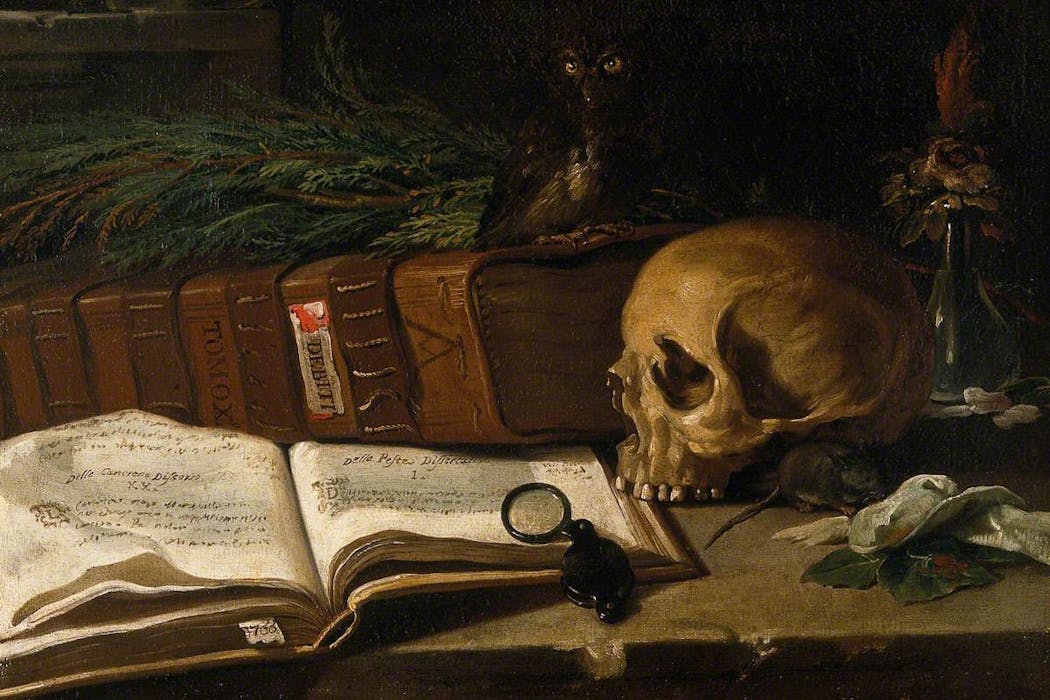
Still life with a ledger, a skull and other objects. Oil painting, 1766. Wellcome Collection

What if the pages of an old book could tell us who touched them, what medicines they made, and even how their bodies responded to treatment?

Renaissance medical recipe books are filled with handwritten notes from readers who tested cures for everything from baldness to toothache. For years, historians have studied these annotations to understand how people experimented with medicine in the past. Our recent research goes a step further. My colleagues and I have developed a way to read not only the words on these pages, but also the invisible biological traces left behind by the people who used them.

Thousands of handwritten manuscripts and printed books survive from Renaissance Europe that record medical recipes used in everyday life. These were not rare or elite volumes. Many were printed medical “bestsellers” that circulated widely, then personalised by readers who added notes in the margins. Which recipes worked best? Which ingredients could be swapped or improved? Far from being static texts, these books were working documents. The Renaissance was an age of medical innovation, shaped by hands-on experimentation and repeated trials.

For the first time, we were able to sample and analyse invisible proteins left behind on the pages of these books by the people who handled them.

This work is a form of biochemical detective work. Every time a 16th-century reader touched a page, they deposited tiny traces of amino acids, the building blocks of proteins. These traces can now be sampled using specialised film diskettes produced by SpringStyle Tech Design, which gently lift material from the surface of paper without damaging it. We sampled printed German medical books from the 16th century now held at The John Rylands Research Institute and Library at The University of Manchester. The protein samples were analysed in laboratories at the Universities of York and Oxford, while the Rylands Imaging Laboratory used advanced imaging techniques to recover faded or obscured text.

Focusing on printed books matters. Because these volumes were produced in multiple copies, we can compare biochemical traces across similar texts, helping us distinguish between what the book prescribed and what individual readers actually did with it.

This combined approach allowed us to recover remarkable information about the people who used these books, the substances they handled and the remedies they prepared. When read alongside archival sources, it offers new insight into how Renaissance medicine worked in everyday life.

On pages recommending specific remedies, we identified protein traces from the ingredients named in the recipes themselves. Watercress, European beech and rosemary appeared alongside instructions for treating hair loss or encouraging the growth of head hair and beards.

This focus on hair is not surprising. With the rise of portraiture and the expanding trade in combs and mirrors, the cultivation of beards and new hairstyles became fashionable in the Renaissance. Hair was highly visible, socially meaningful and deeply connected to ideas of health and masculinity.

Wasteful recipes

Some findings were more startling. Near a recipe proposing an extreme treatment for baldness, we detected traces of human excrement.

This closely reflects Renaissance ideas about hair. In medieval and early modern medical thought, hair was understood as a bodily excretion, grouped with substances such as sweat, faeces and nails. As scholars have bluntly put it, “hair was shit”. From this perspective, using human waste to treat hair was not grotesque but logically consistent.

We also identified proteins from bright yellow flowering plants near recipes for dyeing hair blond. These plants were not listed among the written ingredients. We cannot identify the species with certainty, but their presence suggests readers were experimenting beyond the instructions on the page, guided by colour symbolism and perceived medicinal properties. Here, experimentation becomes visible not just in marginal notes, but in the biological record itself.

Other protein traces point to the use of lizards in haircare remedies. Lizards were classified in Renaissance natural philosophy as poikilothermic animals, meaning their body temperature changes with the environment. Hair growth was believed to depend on internal bodily heat. Increasing heat was thought to stimulate hair growth, while excessive heat could destroy it. The presence of lizard proteins suggests practitioners were actively testing these competing theories by processing animal materials into remedies.

Hippo teeth

Then there is the hippopotamus. We recovered proteins consistent with hippopotamus material on pages discussing dental problems. In the margins, readers complained about foul-smelling teeth, toothache and tooth loss. In Renaissance medicine, hippopotamus bone was believed to strengthen teeth and gums and was sometimes used to make dentures. Its presence suggests that readers in 16th- and 17th-century Germany had access to exotic medical materials traded across long distances.

Our methods combine close historical reading with laboratory analysis, allowing historians to study medical practice in ways that were not previously possible. They bring together forms of evidence that are usually kept separate: texts, bodies and materials.

Perhaps most intriguingly, we also identified proteins with antimicrobial functions, including molecules commonly found in human immune responses, such as those associated with inflammation and defence against bacteria. These proteins help the body fight infection. Their presence suggests that the people handling these books were not only preparing remedies but were themselves experiencing illness or healing, leaving traces of immune activity behind.

In this sense, we can glimpse immune systems reacting to disease and treatment on the pages themselves. We are only beginning to understand what this evidence can reveal, but this work opens up entirely new ways of studying how Renaissance medicine was practised, tested and lived.

The Conversation

This research has been generously funded by a John Rylands Research Institute Pilot Grant 2020–21 (PI Stefan Hanß) and is a result of interdisciplinary conversations that originated at the British Academy-funded event ‘Microscopic Records: The New Interdisciplinarity of Early Modern Studies, c. 1400–1800’ (British Academy Rising Star Engagement Award BARSEA 19190084, PI Stefan Hanß, https://sites.manchester.ac.uk/microscopic-records/).

ref. What Renaissance readers left behind in haircare books – https://theconversation.com/what-renaissance-readers-left-behind-in-haircare-books-271561

We analysed 73,000 articles and found the UK media is divorcing ‘climate change’ from net zero

Source: The Conversation – UK – By James Painter, Research Associate, Reuters Institute, University of Oxford

Zerbor / shutterstock

In October 2024, Conservative leader Kemi Badenoch declared herself a “net zero sceptic”, but “not a climate sceptic”. Most recently she doubled down, announcing plans to scrap the 2030 ban on new petrol cars in a 900-word Sunday Telegraph article that did not mention climate change once.

Badenoch is not an outlier. She’s following a similar script to one increasingly found in the British press.

My new research reveals a surprising trend: the linguistic divorcing of “net zero” from “climate change”. My colleague Will Vowell and I analysed more than 73,000 articles across nine UK media outlets and found that the two terms – once closely linked – are becoming more detached.

In 2018, when our data begins, the link was explicit. In that year, 90% of articles mentioning “net zero” also included the phrase “climate change” or a similar term like “global warming”. By 2024, this figure had fallen to just 42%.

line graph
The reduction in climate change mentions in net zero articles is particularly marked in the Sun, Mail and Express compared to the Guardian.
Painter & Vowell / ECIU, CC BY-SA

We then looked at those articles where net zero appeared in the headline and at least two (other) mentions in the text. This was a more robust measure of whether the article included an important discussion about net zero, rather than a passing mention.

Here there was a similar pattern of a gradual decline. In 2018 – a year before the Conservative government brought a net zero target into law – 100% of net zero discussions also mentioned climate change. That dropped to 75% in 2022 and to 59% in 2024.

This trend was replicated in articles where net zero appeared in the headline along with at least four other mentions in the text. In this category, out of the broadsheet papers, the Times – often regarded as the UK’s paper of record – had the lowest percentage of articles referencing climate change, at 64%. Four articles in 2024 – across the Telegraph, Sunday Telegraph and Express – had as many as eight mentions of net zero, but no mention at all of the climate emergency it is designed to solve.

In 2018-19, there appeared to be a reasonable amount of support in newspapers for the net zero policy. For example, the Daily Mail published an article around the time of the 2019 youth climate strike headlined: “Net zero hero! How being carbon neutral will help the planet”. Fast forward to 2024, and in September the Mail published the headline “Bonkers’ net-zero target could cost 1 MILLION jobs, union chief warns”, which included four mentions of net zero but no mention of climate change.

The rise of ‘response scepticism’

Our new report was commissioned by thinktank Energy and Climate Intelligence Unit (ECIU). Its director Peter Chalkley notes there is a “strong case” that certain papers or editors are driving an agenda to “divide climate change (an issue that the public greatly care about) from net zero (its solution, which is less understood)”.

This is part of a wider trend of “response scepticism” over the past decade in parts of the UK media. I co-authored a report published in early 2025 which found that scepticism of climate science has largely disappeared from opinion pieces and editorials, but criticism of the policies required to tackle climate change is pervasive.

“By removing the scientific and policy context,” argues Chalkley, “net zero risks being reframed – no longer the solution to stopping climate change, but part of a green culture war.”

A confused public

Despite the UK having a net zero target for more than six years, public understanding remains disappointing.

Awareness of the term is high (around 90%), but actual knowledge is low: around 50% say they knew a little, hardly anything or nothing at all about it.

In April 2025, Climate Barometer, an organisation that tracks public opinion on climate change, found 22% of people wrongly thought net zero meant “producing no carbon emissions at all”, a figure which rose to 41% among Reform supporters. The organisation argues that public confusion around the meaning of net zero and its implications for the country reflected attacks on net zero in the media and political debates.

Given these levels of public confusion and misunderstanding, reporters should remind audiences more frequently of why net zero is a necessity. At the very least, a simple statement outlining that scientists view net zero as essential to stopping global warming should be standard practice.


Don’t have time to read about climate change as much as you’d like?

Get a weekly roundup in your inbox instead. Every Wednesday, The Conversation’s environment editor writes Imagine, a short email that goes a little deeper into just one climate issue. Join the 47,000+ readers who’ve subscribed so far.


The Conversation

James Painter receives funding from the Energy and Climate Intelligence Unit. He is a senior visiting fellow at the Grantham Research Institute on Climate Change and the Environment.

ref. We analysed 73,000 articles and found the UK media is divorcing ‘climate change’ from net zero – https://theconversation.com/we-analysed-73-000-articles-and-found-the-uk-media-is-divorcing-climate-change-from-net-zero-272527

England now has a plan to end homelessness – here’s how to test whether it will work

Source: The Conversation – UK – By Michael Sanders, Professor of Public Policy, King’s College London

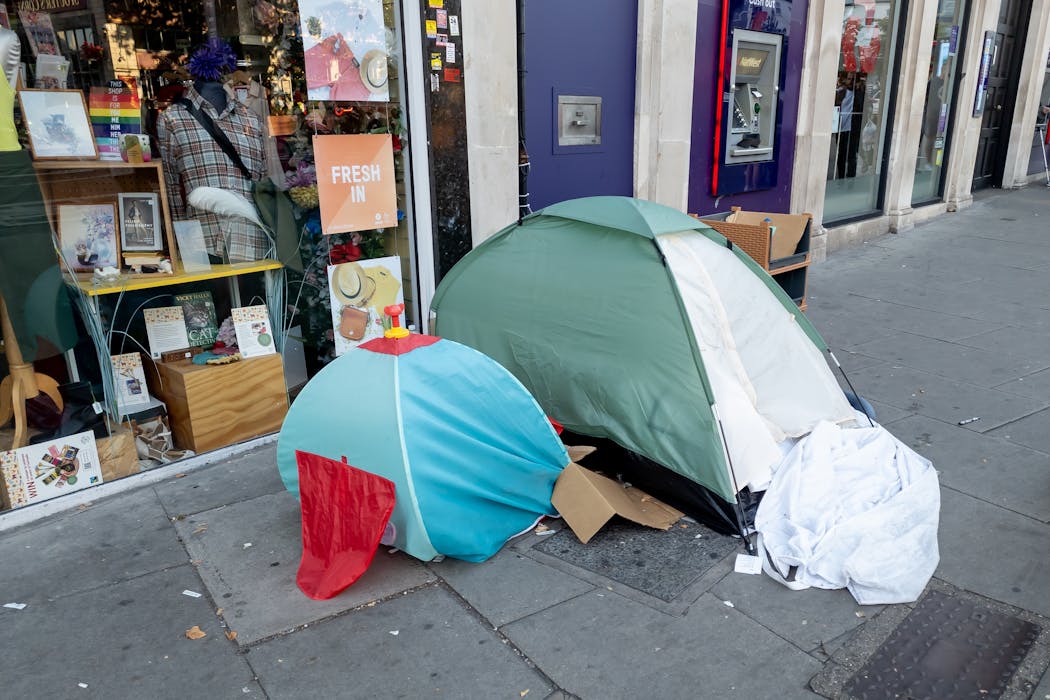
Yau Ming Low/Shutterstock

The UK has proved before that it can end homelessness. The Everyone In scheme during COVID lockdowns accommodated tens of thousands of people in emergency and supported housing, who would otherwise have continued sleeping rough.

But this was only temporary. Nearly six years later, the scale of the challenge is immense. In June 2025, 132,410 households were living in temporary accommodation, almost two-thirds of which were families with children.

The UK government has published a new homelessness strategy for England. The strategy speaks to different forms of homelessness, from rough sleeping to more hidden forms of homelessness, like sofa surfing.

This is a wide-ranging plan, bringing in approaches from different government departments. The £3.5 billion strategy aims to “address the root causes” of homelessness, firstly through a number of universal approaches.

Some of these have already been announced. The plan emphasises the government’s plan to build 1.5 million new homes during this parliament, reforms to renters’ rights, ending the two-child benefit cap and the youth guarantee to get more young people into work or education. It introduces a new commitment to update social housing allocation guidelines, and a legal “duty to collaborate” for public services to address homelessness.

Several more targeted measures look at specific at-risk populations. This includes care leavers, of whom a worrying proportion still go on to experience homelessness. It also includes people leaving institutions including healthcare settings and prisons. These targeted approaches are essential to move from a crisis-based approach to managing homelessness towards a more proactive approach to preventing it.

How do we know what works?

Our research focuses on methods such as randomised trials to evaluate policies across a range of topics, including homelessness. This is why we were pleased to see an emphasis on the government’s “test and learn” approach to technology and AI being applied to the homelessness strategy:

We want to adopt a test and learn approach to evidence, where local areas trial innovative practice, roll this out where it is effective, and subsequently share learning with others.

Given the UK government’s precarious financial situation, it’s important that policies work for the people who need them, without wasting money on untested approaches.

Randomised controlled trials, most common in medicine, are the gold standard method to show simply what the effect of an intervention or policy is. They work by assigning who gets an intervention (such as a vaccine or targeted homelessness support) at random, and comparing those that do to a control group.

A randomised trial in Canada has shown that modest, unconditional cash transfers for people experiencing homelessness can significantly reduce the number of days the average participant spent homeless in a year.

New studies are evaluating whether this approach can have the same kinds of effects in the UK. We are leading the evaluation of one project – administered by the charity Greater Change – which will test how giving people a personalised budget of around £4,000 can help them change their trajectory in life. We are looking forward to having results next summer.

Another trial already underway in the UK involves local councils working with data science company Xantura to give early warnings of households at risk of homelessness. In this trial, households identified by algorithm as being high-risk are randomly assigned either to receive proactive support, or not to. The outcomes of both groups are followed up later.

The evidence for this kind of approach is mixed. There is a burden of proof that companies selling these tools, and governments purchasing them, bear before making their use widespread. Randomised trials, while not perfect, are arguably the most rigorous and efficient way to test them.

Close up hand holding a stack of 20 pound notes
Randomised trials can test the effects of approaches like giving people grants or housing.
Alexey Fedorenko/Shutterstock

Sometimes, randomisation is not possible. But we can still use experimental approaches or evaluations to test the effects of policies.

In recent projects, we’ve seen that two approaches have statistically meaningful effects on reducing homelessness for these young people. These are Staying Put, a policy that allows young people to remain with their foster carers after they turn 18, and Lifelong Links, an approach that supports young people in care to build and maintain relationships with people from their birth families. The government has continued to fund the expansion of these programmes, which the evidence suggests will have substantial effects on reducing homelessness for care leavers.

Of course, research evaluations can and do find when interventions are not successful – or are even actively harmful. For example, we found that a model of “extended families” for young people in foster care actually increased the rate at which they go on to experience homelessness.

It’s a positive sign that the government is embracing testing and learning. But this should mean making use of rigorous methods like randomised trials. Shying away from them risks imperilling the UK’s ability to actually end homelessness.

The Conversation

Michael Sanders receives funding from the Centre for Homelessness Impact.

Julia Ellingwood receives funding from the Centre for Homelessness Impact.

ref. England now has a plan to end homelessness – here’s how to test whether it will work – https://theconversation.com/england-now-has-a-plan-to-end-homelessness-heres-how-to-test-whether-it-will-work-272377

Martin Parr: an astute and uniquely British photographer

Source: The Conversation – UK – By Mark Durden, Emeritus Professor, University of South Wales

The kitsch, the gaudy, the banal, the common, the superficial, the cheap: Martin Parr – who has died at the age of 73 – embraced and celebrated them all in his extraordinary pictures.

Born in Epsom in 1952 to solidly middle-class Methodist parents, Parr’s suburban childhood was dominated by his parents’ church going and passionate interest in ornithology. He was a keen trainspotter. His interest in photography was kindled by his grandfather George Parr, an amateur photographer, with whom Parr spent his childhood holidays in Yorkshire.

“I make serious photographs disguised as entertainment,” he once said, but the very nature of his photography saw some in his profession deny him the respect and acknowledgement he deserved.

His work chimed with elements of pop art and its obsession with consumerism, but in the photography world – certainly within the UK – there still seemed to be a certain cultural snobbery and unease about consciously engaging with this subject matter.

Part of that unease is to do with how the kitsch and the common are, certainly in Britain, bound up in questions of taste and class. Parr’s exhibition and book The Last Resort (1983-1986) brought him important recognition, including a show at London’s Serpentine Gallery, but also much criticism for its harsh portrayal of working-class people holidaymaking in New Brighton, Merseyside.

A life in pictures

Inspired by what was then the new American colour photography and the work of photographers such as Stephen Shore and William Eggleston, as well the British colour photographer John Hinde, Parr’s pictures broke with the more sober and gloomy black and white British documentary photography tradition.

Exploring the life and work of Martin Parr.

Deploying similar colour saturation to the summer holiday postcard, Parr countered its idealism by focusing on scenes of slovenliness, notably through pictures showing the consumption of food – chips, hot dogs, ice creams – with all the ensuing spillage.

Both the beach and lido were crowded and littered, and people seemed oblivious to the mess around them. As a result, some saw such pictures as presenting a degraded vision of the working-class people of this popular northern seaside resort. But despite its critics, Last Resort has remained in print since it was published and is his bestselling book.

The Cost of Living (1986-1989) offered a counterpoint to The Last Resort, concentrating on a more appearance-driven and aspirational culture: the uptight realm of the comfortable middle classes, exemplified through vivid, cutting and critical portraits of people at social gatherings, shopping or keeping fit.

For Small World (1987-1994), his photography took on the bigger subject of worldwide travel. His critical and comical response to tourism often rested upon a witty interplay between the people and the attractions they had come to consume, many of them shown carrying cameras or videos or taking photographs.

Here the comedy is bathetic, as we sense the shortfall between the sublime nature of what the masses have come to see and the plethora of tourist tat that filters that encounter.

The tourists’ clothing also became a recurring focus and point of irony – such as the back of a yellow t-shirt with the single word “Bali”, worn by a tourist as they contemplate Gaudí’s Sagrada Familia in Barcelona, or a man in a loud summer shirt bearing an image of a tropical sunset in the Piazza della Signoria, Florence.

Parr’s remarkable and most significant book, Common Sense (1999) conveyed an apocalyptic vision of humanity’s over-consumption, a global binge presented through a glut of images, all in close up. It is a crazed delirious montage, as if replaying fragments drawn from all his past work, but with the colour saturation racked up.

Common Sense also marked a shift in the form of the photo book in its use of full-bleed images (where the images extend to the edges of the page) throughout, from front cover to back, and the only text, the title, author and publisher imprint. Parr had been a passionate collector of photo books since the beginning of his career and saw the photo book as the ideal way of both presenting and disseminating photographs.

Publishing multi-volumes on the photo book with various authors, his work in this field is an important part of his legacy. His collection of over 12,000 photo books was part gifted to and purchased by the Tate galleries in 2017.

In 2014, he established the Martin Parr Foundation which opened as a dedicated photography space in 2017 in Bristol. As well as providing an archive of his photography, the foundation shows and collects the work of photographers who make work focused on Britain and Ireland. It also seeks to support and promote younger, emerging photographers.

When travelling the world, Parr started having his picture taken by local street and studio photographers, as well as in photo booths. The resulting portraits constitute his most comic book, Autoportrait, (2000; expanded and revised in 2016) with Parr deadpanning amid a carnival of possible and other selves created for him.

Rooted in the passion and joy of the tradition of photographic portraiture, Autoportrait is also an important document of less-feted photographic practices, such as the humble photo booth, as well as a testimony to the creativity and imaginings of others.

It also bears comparison with the collaborative photobook Julie Bullard (2025) for which Parr “documented” scenarios reflecting the creative imaginings of another, this time the artist and filmmaker, Nadia Lee Cohen.

Cohen hired Parr to take pictures of tableaux she created, as she and family members played out a fictional version of the life and death of the glamorous babysitter she idolised as a child in in the 1990s.

Cohen’s stylised and over the top fantasy about a working-class life, was already imbued with Parr’s now distinctive aesthetic. To be asked to photograph her project meant he was in effect also photographing himself. As one of his last significant projects, it seems a beautifully absurd and comic ending to an extraordinary and exceptional artistic life and career.

This article features references to books that have been included for editorial reasons, and may contain links to bookshop.org; if you click on one of the links and go on to buy something, The Conversation UK may earn a commission.


Looking for something good? Cut through the noise with a carefully curated selection of the latest releases, live events and exhibitions, straight to your inbox every fortnight, on Fridays. Sign up here.


The Conversation

Mark Durden does not work for, consult, own shares in or receive funding from any company or organisation that would benefit from this article, and has disclosed no relevant affiliations beyond their academic appointment.

ref. Martin Parr: an astute and uniquely British photographer – https://theconversation.com/martin-parr-an-astute-and-uniquely-british-photographer-272316

Worried about statins? Here’s what the evidence shows

Source: The Conversation – UK – By Dipa Kamdar, Senior Lecturer in Pharmacy Practice, Kingston University

pimpampix/Shutterstock

Few medicines have sparked as much debate as statins. Cardiologists often describe them as life-saving, while some patients remain wary of side effects or uneasy about taking a daily pill.

Statins sit at the intersection of medical treatment and everyday lifestyle because high cholesterol is strongly influenced by factors such as diet, physical activity, weight and smoking. Although statins are prescribed based on clinical evidence, their use often prompts questions about whether cardiovascular risk should be reduced primarily through medication, lifestyle change, or a combination of both.

Statins are a group of drugs that block an enzyme called HMG-CoA reductase. This enzyme plays a central role in the liver’s production of cholesterol. Cholesterol is a fatty substance the body needs to build cell membranes, produce hormones, make vitamin D and generate bile, which helps digest fats.

Cholesterol travels through the bloodstream attached to proteins, forming particles known as lipoproteins. The most familiar are low density lipoprotein (LDL) and high density lipoprotein (HDL).

LDL is often labelled “bad cholesterol” because high levels can lead to fatty build-ups inside arteries, while HDL helps transport excess cholesterol back to the liver. Another important blood fat is triglycerides, which, when elevated, also increase cardiovascular risk.

Cholesterol itself is not harmful. Problems arise when LDL and triglyceride levels remain too high for too long. This can lead to atherosclerosis, a condition in which fatty deposits narrow and stiffen arteries, increasing the risk of heart attacks and strokes. By lowering LDL cholesterol and triglycerides, statins reduce the likelihood of these deposits forming.

Large clinical trials have consistently shown statins to be effective. A major review found that statins significantly reduce the risk of heart attacks and stroke.

The size of the benefit depends on a person’s underlying cardiovascular risk and how much their LDL cholesterol is lowered. Reflecting this evidence, national guidelines recommend statins for primary prevention in people at higher risk who have not yet had cardiovascular disease, and secondary prevention for those with established disease.

Given this strong evidence, why do statins still generate so much hesitation?

Like all medicines, statins have side effects. Common ones include headache, digestive upset and dizziness. More serious but uncommon or rare effects include liver inflammation and muscle problems.

One such condition is myopathy, meaning muscle pain or weakness with raised levels of creatine kinase, an enzyme released when muscle tissue is damaged. In very rare cases, severe muscle breakdown known as rhabdomyolysis can occur.

Large datasets show that most people tolerate statins well. When patients report muscle symptoms while taking statins, there is less than a 10% chance that the statin is actually the cause. Rhabdomyolysis is extremely rare, affecting only a few people per million users. The risk increases at very high doses or when statins are taken alongside medicines that interfere with how they are broken down.

Statins can also cause a small rise in blood glucose, mainly affecting people with prediabetes or diabetes. However, because statins substantially reduce heart attack risk in these groups, the overall benefit outweighs this modest increase. Most side effects are reversible once treatment is stopped, whereas damage from heart attacks or strokes can be permanent.

Drug interactions are another concern. Statins such as simvastatin and atorvastatin are broken down in the liver by enzymes known as CYP enzymes, particularly CYP3A4. When other medicines block these enzymes, statin levels in the blood can rise, increasing the risk of muscle-related side effects.

Important interactions include antifungal medications such as ketoconazole, certain antibiotics like erythromycin, immunosuppressants such as ciclosporin, and some heart drugs including amiodarone and diltiazem.

Even grapefruit can interfere with statin metabolism. It contains chemicals called furanocoumarins, which block CYP3A4 enzymes in the gut, allowing more statin to enter the bloodstream. Not all statins are affected to the same extent, so switching to a different statin could reduce this risk.

While statins are effective, they are not the only tool for managing cholesterol. Lifestyle measures play a central role and are recommended alongside medication. Obesity is a major cardiovascular risk factor.

A review found that combining diet and exercise reduced body weight, improved cholesterol levels and lowered cardiometabolic risk: it reduces factors linked to heart disease and type 2 diabetes.

Dietary changes are particularly important. National guidelines recommend reducing saturated fat intake to help lower LDL cholesterol. Saturated fats are commonly found in butter, fatty meats and processed foods.

Replacing them with unsaturated fats, such as those found in olive oil, nuts and seeds, can improve cholesterol levels. Shifting towards plant-based proteins like beans, lentils and soy may also reduce reliance on red and processed meats.

Fibre intake matters too. Research shows that higher fibre consumption is associated with better cholesterol levels and lower heart disease risk.

A large 2019 review found that people with high fibre intake had a 15 to 30% lower risk of dying from heart disease or developing coronary heart disease. Whole grains, fruits and vegetables provide fibre alongside vitamins and antioxidants that support heart health.

Regular physical activity raises HDL cholesterol and lowers triglycerides. Current guidelines recommend 150 minutes of moderate-intensity exercise per week, but even smaller amounts offer meaningful benefits.

The choice between statins and lifestyle change is not an either-or decision. For people at high risk, including those with previous heart attacks, inherited cholesterol disorders or multiple risk factors, statins are often essential.

For others with mildly raised cholesterol, lifestyle changes may delay or prevent the need for medication. Healthy total cholesterol levels are usually below 5 mmol/L, but targets vary depending on individual risk.

Ultimately, treatment decisions should be personalised, balancing cardiovascular risk, the proven benefits of statins, potential side effects and what lifestyle change is realistically achievable.

Statins have transformed cardiovascular care and saved millions of lives. Yet they remain controversial. Addressing poor diet, physical inactivity and obesity remains central to reducing the burden of heart disease in the long term.

The Conversation

Dipa Kamdar does not work for, consult, own shares in or receive funding from any company or organisation that would benefit from this article, and has disclosed no relevant affiliations beyond their academic appointment.

ref. Worried about statins? Here’s what the evidence shows – https://theconversation.com/worried-about-statins-heres-what-the-evidence-shows-269524