When Elon Musk talks about robotics, he rarely hides the ambition behind the dream.
Tesla’s Optimus is pitched as an all-purpose humanoid robot that can do the heavy lifting on factory floors and free us from drudgery at home. Tesla is targeting a million of these robots in the next decade.
But is Musk likely to succeed? A few years ago, the thought of a friendly, capable household robot belonged in science fiction. We could imagine machines that danced, shifted boxes or played chess, but not ones that understood us well enough to be genuinely helpful. Then came generative artificial intelligence, or gen AI.
Whether your first encounter was with ChatGPT, Gemini or Copilot, many of us felt the same jolt of surprise. Here was a bot that seemed to understand us in a way we didn’t expect. That has made Musk’s dream of a robot companion feel if not close then certainly closer.
Imagine leafing through a catalogue of robots the way we browse for home appliances. If a personal robot still feels too expensive, perhaps we might hire one part time. Maybe a dance instructor that doubles as a therapist. Families could club together to buy a robot for an elderly relative. Some people might even buy one for themselves.
The future Musk describes isn’t just mechanical, it’s emotional.
Why the humanoid shape matters
The idea of robots that look like us can seem creepy and threatening. But there’s also a practical explanation for the drive to make robots that look like us.
A dishwasher is essentially a robot but you have to load it yourself. A humanoid robot with hands and fingers could clear the table, load the dishwasher and then feed the pets too. In other words, engineers create humanoid robots because the world is designed for human bodies.
But the humanoid form also carries an emotional charge. A machine with a face and limbs hints at something more than functionality. It’s a promise of intelligence, empathy or companionship. Optimus taps into that deep cultural imagery. It is part practical engineering, part theatre and part invitation to believe we are close to creating machines that can live alongside us.
There are moments when a personal robot might be genuinely welcoming. Anyone who has been ill, or cared for someone who is, can imagine the appeal of a helper that preserves dignity and independence. Robots, unlike humans, are not born to judge. But there is also a risk in outsourcing too much of our social world to machines.
If a robot is always there to tidy up the mess, practical or emotional, we may lose some of the tolerance and empathy that come from living among other people.
That is where the question of design becomes crucial. In the most dystopian version of life with generative AI-powered, chatty, dexterous robots, we retreat indoors, sealed into our homes and attended to by machines that are endlessly “understanding” and quietly adoring. Convenience is maximised, but something else is lost.
If sociability really does matter – if it is worth a little extra inconvenience to practise being human with other humans rather than only with chatbots – then the challenge becomes a practical one. How do we engineer a future that nudges us towards one another, instead of gently pulling us apart?
One option is to rethink where conversation lies. Rather than building all-purpose, ever-chatty assistants into every corner of our lives, we could distribute AI across devices and limit what those devices talk about. For example, a washing machine might discuss laundry, while a navigation system might discuss routes. But open-ended chatter, the kind that shapes identity, values and relationships, remains something that people do with people.
At a collective level, this kind of design choice could reshape workplaces and shared spaces, turning them back into environments that cultivate human conversation. That is, of course, only possible if people are encouraged to show up in person, and to put their phones away.
The real design challenge is not how to make machines more attentive to us, but how to make them better at guiding us back towards one another
So, it is worth asking what kind of domestic future we are quietly building. Will the robots we invite inside help us connect, or simply keep us company?
Good bots, bad bots
A good bot could help a socially anxious child get to school. It may nudge a lonely teenager towards local activities. Or it may tell a cantankerous old person: “There’s a crime club starting in an hour at the library. We can pick up a paper on the way.”
A bad bot leaves us exactly where we are: increasingly comfortable with a machine and less comfortable with each other.
Musk’s humanoid dream may yet become real. The question is whether machines like Optimus will help us build stronger communities, or quietly erode the human connections we need most.
Berry Billingsley is the Director of AI, Digital and Online Development at Swansea University
The UK has updated its childhood immunisation schedule. For parents who had already mapped out their child’s vaccination appointments in their heads, the announcement might have come as an unwelcome surprise.
The changes include routine protection against chickenpox through the combined MMRV vaccine, the removal of the Hib/MenC vaccine (which helps protect against two of the causes of meningitis and blood poisoning) from the one-year appointment, and a new vaccination visit at 18 months – bringing forward the MMRV vaccine, and adding a different Hib containing vaccine.
If you’re a parent, you might be wondering why the schedule you’d been expecting has suddenly changed. It’s natural to feel uncertain when something that seemed settled becomes unfamiliar. But changes like these are actually a routine part of how vaccination programmes work – and understanding why they happen can be reassuring rather than worrying.
When vaccination schedules stay the same for years, they fade into the background of family life. You know when appointments are due, your health visitor or GP knows the routine, and immunisation becomes just another part of early childhood – like weaning or starting nursery. It’s only when things change that we really notice the system at all.
Why schedules change
Vaccination schedules aren’t meant to stay frozen in time. In the UK, an expert committee called the Joint Committee on Vaccination and Immunisation (JCVI) regularly reviews evidence from clinical trials, safety monitoring, disease tracking and studies of how vaccines perform in real life. When the evidence shows a better way to protect children that is also cost-effective, recommendations are updated.
The addition of chickenpox vaccination is a good example (the “V” in MMRV stands for varicella, the virus that causes chickenpox). Many of us remember having chickenpox as children and might assume it’s always mild. But the evidence shows it can lead to serious complications, such as skin infections, pneumonia or brain swelling, sometime requiring treatment in a hospital. It also causes disruption through school absence and parents having to take time off work.
Delivering chickenpox protection through the combined MMRV vaccine makes practical sense too. Combination vaccines are widely used around the world – MMRV has been standard in Canada, Australia and Germany for years – and are designed to reduce the number of injections and clinic visits without compromising safety or effectiveness.
The new 18-month visit came about for different reasons and shows how one change can ripple through the whole schedule. The manufacturer of the Hib-MenC vaccine (Menitorix), given at one year, told the JCVI it would stop making it for commercial reasons.
The committee looked at the evidence and concluded that a MenC booster is no longer needed in infancy because the UK has a good control of meningococcal C disease, thanks to the MenACWY vaccine. It is given to teenagers, but can protect the whole population through herd immunity.
But children still need continued protection against Haemophilus influenzae type b (Hib), a serious bacterial infection. So an extra dose of the six-in-one vaccine – which protects against diphtheria, tetanus, whooping cough, polio, Hib and hepatitis B – is now given at 18 months.
The new appointment also allows the second MMRV dose to be given earlier, increasing protection against measles, mumps, rubella and chickenpox at a younger age. This matters because of recent outbreaks. Some parts of London have been offering the second MMR dose earlier, between 15 and 18 months, since the early 2000s. This approach led to higher overall uptake by age five compared with later appointments.
Vaccination programmes tend to work best when they’re unremarkable – when they just happen in the background of family life. A new visit, a new vaccine or a new combination brings the schedule back into view and prompts people to look again at a system they’d previously taken for granted.
This isn’t unique to vaccination. Any kind of infrastructure becomes most noticeable when it’s adjusted – think of roadworks or changes to school term dates. In vaccination, these moments can prompt questions about why change is happening, how decisions are made, and what’s different from before. These questions aren’t a sign of mistrust. They show people engaging with health systems exactly as they should.
New vaccines are developed, existing ones are made more effective, and diseases become more or less common. The latest changes to the UK immunisation schedule aren’t exceptional – they’re part of the continuing work needed to keep a complex public health system functioning over time.
Moments of change briefly reveal the work that routine usually hides. They show that vaccination programmes aren’t fixed systems, but ones that are constantly fine-tuned to keep children and adults protected.
Charlie Firth receives funding from the National Institute for Health Research.
Source: The Conversation – UK – By Nicolas Forsans, Professor of Management and Co-director of the Centre for Latin American & Caribbean Studies, University of Essex
The Trump administration has justified the recent capture of Venezuelan leader Nicolás Maduro as a law enforcement operation to dismantle a “narco‑state”. It also claimed it would break Venezuela’s ties to China, Russia and Iran, and put the world’s largest known oil reserves back under US‑friendly control.
This mix of counter‑narcotics, great power rivalry and energy security had already been elevated to a central priority by the administration in its national security strategy. Published in late 2025, the document announced a pledge to “reassert and enforce American preeminence in the western hemisphere” and deny “strategically vital assets” to rival powers.
Donald Trump has referred to this hemispheric project as the “Donroe doctrine”, casting it as a revival of the Monroe doctrine policy of the 19th century through which the US sought to stop European powers from meddling in the Americas. He seems to be seeking to tighten the US grip on Latin America by rewarding loyal governments and punishing defiant ones.
If Venezuela is the first test case of the Donroe doctrine, several other Latin American countries now sit squarely in Washington’s crosshairs. The most immediate target is Cuba, which the US has opposed since 1959 when communist revolutionary Fidel Castro overthrew a US-backed regime there.
Trump and his secretary of state, Marco Rubio, have openly hinted that Cuba could be Washington’s next target. They have described Cuba as “ready to fall” after the loss of Venezuelan oil and have boasted that there is no need for direct intervention because economic collapse will finish the job.
Cuba is enduring its worst crisis since 1959. Blackouts now regularly last up to 20 hours, real wages are collapsing and roughly 1 million Cubans have fled the country since 2021. This is all happening as Venezuelan crude oil is being redirected under US control.
For over two decades, Venezuela has provided Cuba with fuel and financing in exchange for doctors, teachers and security personnel – 32 of whom were killed in the US capture of Maduro, according to the Cuban government. Strangling Cuba’s remaining lifelines may well be enough to topple the government there without US forces needing to fire a single shot.
It is possible that Mexico will also soon come under fire. Mexico has quietly become Cuba’s main oil supplier, shipping roughly 12,000 barrels per day in 2025 to account for about 44% of the island’s crude imports. This is unlikely to please the Trump administration, which has recently renewed its threats to “do something” about Mexican drug cartels.
The raid in Venezuela’s capital, Caracas, took six months of meticulous planning and required an extraordinary amount of resources. So it is unrealistic to expect similar raids on other Latin American countries. However, targeted military strikes cannot be excluded.
Speaking on Fox News’s “Hannity” show on January 8, Trump said: “We are going to start now hitting land with regard to the cartels. The cartels are running Mexico.” He did not provide further details about the plans.
Mexico’s president, Claudia Sheinbaum, is trying to construct protective buffers. She has combined condemnation of the raid on Caracas with intense cooperation with the US on migration and security. This includes a deal for Mexico’s navy to intercept suspected drug-running boats near its coastline before US forces do.
But as part of a strategy that pushes US dominance of Latin America, Trump has already floated classifying Mexico’s cartels as terrorist organisations and the fentanyl they traffic across the border as a weapon of mass destruction. These are legal framings that could be used to justify strikes on Mexican soil in the name of counter-narcotics in the near future.
Trump’s other targets
Colombia, historically Washington’s closest military ally in South America, has flipped from “pillar” to possible target. The country’s president, Gustavo Petro, has been one of the loudest critics of the Venezuela raid. He called it an “abhorrent violation” of Latin American sovereignty committed by “enslavers”, adding that it constituted a “spectacle of death” comparable to Nazi Germany’s 1937 carpet bombing of Guernica in Spain.
Trump, who imposed sanctions on Petro and his family in October, responded by labelling the Colombian president a “sick man who likes making cocaine and selling it to the United States”. He then mused that a Venezuela‑style operation in Colombia “sounds good to me” before a hastily arranged phone call and White House invitation dialled back the immediate threat.
How long the conciliation between the two men lasts remains to be seen. Colombia has entered a heated presidential campaign season in which Trump’s remarks are already being read as an attempt to tilt the race, much as his interventions shaped recent contests in Argentina and Honduras.
Further down the hierarchy, Nicaragua’s government will also have watched events unfold in Venezuela with terror. Long treated in Washington as part of a trilogy of dictatorships with Cuba and Venezuela, Nicaragua features in US indictments against Maduro as a transit point for cocaine flights. Nicaragua was also recently designated by the US as a key drug‑transit country.
The unusually cautious statement on the Venezuela raid by Nicaraguan presidential couple Daniel Ortega and Rosario Murillo, as well as the rapid reinforcement of the presidential compound in the capital Managua, suggest a regime that knows it could be next in line should Trump choose to extend his “narco‑terrorism” narrative.
Trump appears to be turning longstanding US concerns – drugs, migration and interference by other major powers – into a flexible toolbox for coercion in Latin America. Countries that defy Washington or host its rivals risk being framed as security threats, stripped of economic lifelines and, possibly, targeted militarily.
Those that keep their heads down may avoid immediate punishment. But this comes at the price of treating hemispheric dominance as a fact of life rather than a doctrine to be resisted.
Nicolas Forsans does not work for, consult, own shares in or receive funding from any company or organisation that would benefit from this article, and has disclosed no relevant affiliations beyond their academic appointment.
Source: The Conversation – UK – By Nishant Kumar, India Alliance Fellow, National Centre for Biological Science, Bangalore & Department of Biology, University of Oxford
Dasarath Deka / shutterstock
Growing up in rural India, my grandmother would feed the village dog half a chapati and a bowl of milk each afternoon, surely insufficient for its needs. The dog survived by scavenging from nearby homes. Years later, living in Delhi, I encountered street dogs refusing biscuits, overfed by households competing to care for them.
India’s unique mix of religious and cultural values creates a deep tolerance for non-humans and wildlife among rich and poor alike, often rooted in millennia of coexistence. People consciously endure significant risks to coexist with animals. However, this dynamic is shifting as cities grow and their dogs become more territorial in crowded and more littered shared spaces.
India has at least 60 million free-ranging dogs, an estimate more than a decade old. More recent surveys found about 1 million in Delhi alone. Relatedly, India also accounts for more than a third of global rabies deaths.
Unlike most western countries, Indian culture and laws forbid culling. Dogs must instead be caught, sterilised, vaccinated and – crucially – returned to their exact territory. In practice, these mandates are frequently ignored.
Things changed in August 2025. After several children were mauled by street dogs, the country’s supreme court briefly ordered all street dogs in Delhi and the surrounding region be rounded up and placed in shelters or pounds, promising dog-free streets for the first time in decades.
The order was unworkable – there simply aren’t shelters for millions of dogs – and sparked a fierce backlash from animal rights groups. Within two days, the court reversed its decision and reinstated the long-standing sterilisation policy.
Subsequent rulings have narrowed the focus. In November 2025 the court ordered dogs be removed from schools, hospitals and public transport zones nationwide, while adding restrictions on public feeding and encouraging fencing to keep dogs away.
Most recently, on January 7, 2026, it directed authorities to fence and secure all of India’s 1.5 million schools and colleges from dogs – all within just eight weeks. Yet, like the earlier order, the aggressive timeline ignores the infrastructure challenges and is unlikely to significantly reduce the frequency of bites or resulting infection. The court is currently holding hearings with interested parties, as it tries to find a middle ground between mass removal of dogs and animal welfare concerns.
The nation is divided. It seems the state cannot kill these dogs, nor house them, nor control them. The question of what to do with them is one of public safety and animal welfare, but also something deeper: the latest chapter in one of evolution’s most remarkable partnerships.
An experiment in coexistence
Dogs are the only vertebrate species that followed human migration out of Africa into every climate and settlement. While the exact moment of domestication is uncertain, we know that dogs evolved to live alongside humans. But our cross-species ties now face unprecedented challenge of tropical urbanism.
Urban street dogs can be very territorial. thinkpaws.org
In the past few centuries, as dogs earned their way into our homes, humans created over 400 breeds, fine-tuned for companionship, work or aesthetics. This co-evolution matters, as it means dogs are attuned to human cues and form strong attachments to specific people and places. In urban India, where dogs are unowned but aren’t truly wild, that attachment expresses itself as territorial behaviour over a home or someone who feeds them.
India’s unique social-ecological laboratory
India offers an unparalleled window into this relationship. Historically, street dogs served as scavengers. In poorer communities, they still do. But in more prosperous districts, they are now intentionally fed.
Dogs, pigs, cows and humans all coexisting. thinkpaws.org
Preliminary research in Delhi I carried out with my colleague Bharti Sharma reveals dogs organise into packs around specific households where a few committed feeders can meet nearly 100% of their dietary needs. This supports much higher dog densities than scavenging ever could.
The urban collision
This is where ancient coexistence collides with modern urban design. Indian streets are multi-use spaces. In tropical climates, waste pickers and blue-collar workers often operate at night – the very hours when dogs are most territorial, and when the wealthier residents who feed them are asleep.
Dogs have adapted their behaviour – barking, chasing, occasionally biting – in ways that get unintentionally rewarded by feeders but create hazards for others. The statistics are sobering: millions of bites and thousands of rabies deaths each year.
Yet some backlash to the supreme court’s mandates was inevitable. As gentrification changes who gets to decide what urban life should look like, a conflict of values has emerged. Some value shared animal presence, while others prioritise risk elimination.
The path forward
We may have reached “peak mutualism” in India’s cities. Despite daily nuisances everyone suffers – the barking, the chasing – millions still feed these dogs. Yet the same dog that wags its tail at familiar feeders may bite someone new. This is not irrational aggression; it is territorial protection born of deep association with a specific human community.
Western cities culled their street dogs long ago because social priorities were more uniform. India’s diversity means no such consensus exists. It may take another 20 or 30 years before its urban population uniformly sees the presence of territorial dogs as intolerable.
As India urbanises, it must decide whether to maintain spaces for ancient relationships that predate cities themselves, or follow the western path of total management. My grandmother’s half-chapati ritual represented an older compact: minimal investment, peaceful coexistence and mutual benefit. Delhi’s overfed, territory-defending dogs represent a new, more intensified intimacy – and it is unclear whether this serves either species well.
Nishant Kumar receives funding from the DBT/Wellcome Trust India Alliance Fellowship.
He is a DBT/Wellcome Trust India Alliance Fellow hosted at the National Centre for Biological Science, TIFR, Bangalore, India. Department of Biology, University of Oxford is his overseas host for the fellowship. In addition, he is the co-founder and Chief-Scientist of a research think-tank in Delhi, called Thinkpaws: www.Thinkpaws.org.
We live in a very exciting time: answers to some of the oldest questions humanity has conceived are within our grasp. One of these is whether Earth is the only place that harbours life.
In the last 30 years, the question of whether the Sun is unique in hosting a planetary system has been resoundingly answered: we now know of thousands of exoplanets orbiting other stars.
But can we use telescopes to detect whether any of these distant worlds also harbour life? A promising method is to analyse the gases present in the atmospheres of these planets.
We now know of more than 6,000 exoplanets. With so many now catalogued, there are a number of ways to narrow down which worlds are the most promising for biology. Using the planet’s distance from its host star, for example, astronomers can work out its likely temperature.
Earth is the only planet in the Solar System with liquid water oceans on its surface, so mild temperatures are a possible requirement for a habitable planet. Whether a planet has the correct temperature for liquid water is strongly influenced by the presence and nature of the planet’s atmosphere.
Astonishingly, we can identify molecules present in the atmospheres of exoplanets. Quantum mechanics causes each atmospheric chemical to have its own distinct barcode-like pattern, which it leaves on the light passing through it. By collecting starlight that has been filtered through an exoplanet’s atmosphere, telescopes can see the barcodes of the molecules making up that atmosphere.
To take advantage of this, the planet needs to transit – pass in front of – the star from our point of view. This means it only works for a small fraction of known exoplanets.
The strength of the signal depends on the abundance of the molecule in the atmosphere: stronger for the most abundant molecules and gradually weaker as the abundance decreases. This means it is generally easiest to detect the dominant molecules, though this is not always true. Some of the barcodes are intrinsically strong, while others are weak.
For example, Earth’s atmosphere is dominated by diatomic nitrogen (N₂), but this molecule has a feeble barcode compared to the much less abundant diatomic oxygen (O₂), ozone (O₃), carbon dioxide (CO₂) and water (H₂O).
Detecting molecules
The James Webb Space Telescope (JWST) is a large space telescope which collects light at infrared wavelengths. It has been used to probe the atmospheres of a variety of exoplanets.
The detection of molecular imprints in the atmosphere of an exoplanet is not completely straightforward. Different teams of workers can derive different results as a consequence of making slightly different choices in the way they handle the same data. But despite these difficulties, reproducible and robust detections of molecules have been made. Simple molecules with strong barcodes such as methane, carbon dioxide and water have been detected.
Planets larger than Earth but smaller than Neptune – so called sub-Neptunes – are the most common type of known exoplanet. It was for one of these planets, K2-18b, that a bold claim of a detection of a biosignature was made in 2025. The analysis detected dimethyl sulphide, with a claimed less-than-once-chance-in-1,000 that this detection was spurious.
On Earth, dimethyl sulphide is produced by phytoplankton in the oceans, but is rapidly broken down in seawater illuminated by sunlight. As K2-18b may be a
planet completely covered by a water ocean, the detection of dimethyl sulphide in its atmosphere could imply an ongoing supply of it from microbial marine life there.
Re-examination of the K2-18b dimethyl sulphide detection by other researchers casts doubt on this claim. Most significant was the 2025 demonstration by Arizona State University’s Luis Welbanks and colleagues that the choice of molecular barcodes to include in the analysis radically affected the results.
They found that numerous alternatives, not explored in the original paper, provided equally good or better fits to the measured data.
For Earth-sized planets which are presumably rocky, it is quite challenging to detect an atmosphere at all with JWST. However, the future is promising, as a number of planned missions will allow us to learn a lot more about planets which may be similar to the Earth.
Upcoming missions
With a planned launch in 2026, the European Space Agency’s Plato telescope will identify planets far more similar to Earth and suitable for transmission spectroscopy than those we currently know of.
Nasa’s Nancy Grace Roman space telescope, which is set to launch in 2029, will pioneer coronagraphic techniques that allow starlight to be cancelled out so the very much dimmer planets orbiting nearby stars can be studied directly.
The European Space Agency’s Ariel telescope, with a planned launch in 2029, is a dedicated transmission spectroscopy mission, designed to have the capabilities to determine the compositions of exoplanet atmospheres.
Nasa’s Habitable Worlds Observatory (HWO) is currently in the planning stages. This mission will use a coronagraph to study around 25 Earth-like planets, looking for a variety of hallmarks of habitability.
HWO will have broad wavelength coverage from the ultraviolet out to the near-infrared. If a twin of the Earth were orbiting one of HWO’s nearby target stars, the telescope would collect the starlight reflected from the planet. This reflected starlight would include the barcode signatures of diatomic oxygen (O₂) and other gases characteristic of our planet’s atmosphere. It would also reveal a signature of starlight being absorbed by photosynthesising plants: the so-called “vegetation red edge”.
Earth’s surface is divided into land and oceans, which reflect light differently. HWO would be able to reconstruct a low-resolution map of the surface from the changes in the reflected light as continents and oceans rotate in and out of view.
So the future looks very promising. With the spacecraft set to launch in coming years, we might close in on the question of whether Earth is unique in hosting life.
The family’s decision to donate Yarham’s brain to research will help unlock secrets about frontotemporal dementia.ahmetmapush/ Shutterstock
A UK man who is thought to be Britain’s youngest dementia sufferer recently passed away from the disease at only 24 years old. Andre Yarham, from Norfolk in England, was just 22 when he was first diagnosed with dementia.
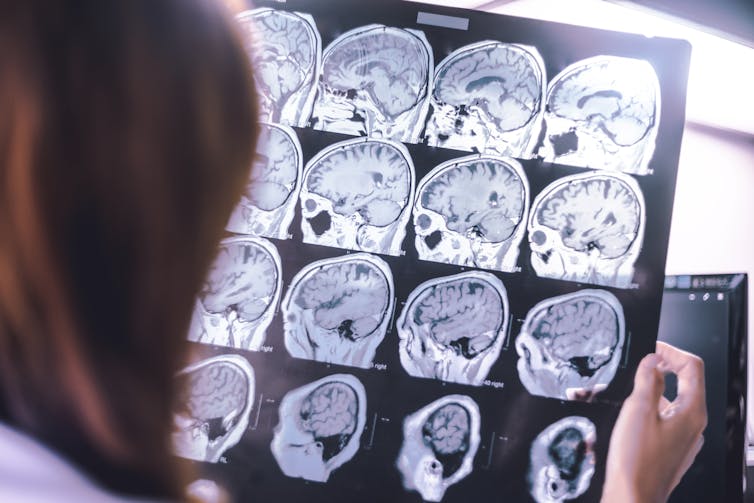
At the age of 24, most brains are still settling into adulthood. But Yarham’s brain looked decades older — resembling the brain of a 70-year-old, according to the MRI scan that helped diagnose him with the disease.
Yarham initially began exhibiting symptoms of dementia in 2022, with family saying he had become increasingly forgetful and would sometimes have a blank expression on his face.
In the final stages of his life, he lost his speech, could no longer care for himself, behaved “inappropriately” and was bound to his wheelchair.
Dementia is usually associated with old age. However, some forms of dementia can strike astonishingly early and move frighteningly fast. Take frontotemporal dementia, for instance. This was the form of dementia that Yarham was diagnosed with.
Unlike Alzheimer’s disease, which tends to affect memory first, frontotemporal dementia attacks the parts of the brain involved in personality, behaviour and language. These regions sit behind the forehead and above the ears in the frontal and temporal lobes.
These areas help us plan, control impulses, understand speech and express ourselves. When they’re damaged, people may change in ways that are deeply distressing for families – becoming withdrawn, impulsive or unable to communicate.
Frontotemporal dementia is a less common form of dementia, thought to account for around one in 20 cases. What makes it especially cruel is that it can appear in young adulthood.
In many cases, frontotemporal dementia has a strong genetic component. Changes in specific genes can disrupt how brain cells handle proteins. Instead of these proteins being broken down and recycled, they clump together inside the neurons (brain cells) – interfering with their ability to function and survive. Over time, affected brain cells stop working and die. As more cells are lost, the brain tissue itself shrinks.
Why this process can sometimes begin so early in life is still not fully understood. However, when a person has a powerful genetic mutation, the disease does not need decades to unfold. Instead, the mutation allows the damage to accelerate and the brain’s usual resilience fails.
Brain scans carried out while Yarham was alive showed striking shrinkage for someone so young. But to compare Yarham’s brain with that of someone in their 70s would be misleading. His brain had not “aged faster” in the usual sense. Instead, large numbers of neurons had been lost in a short period of time because of the disease.
In healthy ageing, the brain changes slowly. Certain regions become a little thinner, but the overall structure remains intact for decades. But in aggressive forms of dementia, whole brain networks collapse at once.
In frontotemporal dementia, the frontal and temporal lobes can shrink dramatically. As these regions deteriorate, people lose the abilities that those areas support – including speech, emotional control and decision-making abilities. This would explain why Yarham lost language so late but so suddenly – and why his need for full-time care escalated so quickly.
Brain donation
Yarham’s family decided to donate his brain to research. This is an extraordinary gift – one that transforms tragedy into hope for others.
Dementia currently has no cure. Once symptoms begin, there’s no way to stop them and treatments which slow symptoms have limited effects. Part of the reason for this is because the brain is vastly complex and still not entirely understood. Every donated brain helps close that gap.
Brains affected by very early dementia are exceptionally rare. Each donated brain allows scientists to study, in fine detail, what went wrong at the level of cells and proteins. Although brain scans can tell us what brain parts have been lost, only donated tissue can reveal why.
Researchers can examine which proteins accumulated, which cell types were most vulnerable and how inflammation and immune responses may have contributed to the damage. That knowledge feeds directly into efforts to develop treatments that slow, stop or even prevent dementia.
The family’s decision to allow scientists to study tissue from such a rare, early-onset case of frontotemporal dementia could help unlock secrets that may guide treatments for generations to come.
As a neuroscientist, I have been asked how something like this can happen to someone so young. The honest answer is that we are only beginning to understand the biology that makes some brains vulnerable from the very start.
Cases like this underline why sustained investment in brain research, and the generosity of people willing to donate tissue, matters so deeply. The 24-year-old’s story is a reminder that dementia is not a single disease, and not a problem confined to old age. Understanding why it happened will be one small step toward making sure it does not happen again.
Rahul Sidhu does not work for, consult, own shares in or receive funding from any company or organisation that would benefit from this article, and has disclosed no relevant affiliations beyond their academic appointment.
Source: The Conversation – in French – By Anthony Fardet, Chargé de recherches HC, UMR 1019 – Unité de Nutrition humaine, Université Clermont Auvergne, Inrae
Manger végétal, vrai et varié et consommer plus de produits issus d’une agriculture régénérant le vivant. Ces quatre objectifs permettent de concilier une alimentation bénéfique pour notre santé comme pour celle des écosystèmes.
Faire ses courses ressemble souvent à un casse-tête. On souhaiterait trouver des produits bon pour la santé, si possible ne venant pas du bout du monde, pas ultratransformés ni cultivés avec force pesticides et engrais chimiques, tout en étant à un prix abordable.
Mais ces enjeux peuvent parfois entrer en contradiction : des produits considérés comme sains ne sont pas toujours issus d’une agriculture de qualité, et inversement. En outre, de bons produits pour la santé et l’environnement ne permettent pas nécessairement d’avoir un régime alimentaire équilibré.
Alors comment sortir de ces dilemmes et aiguiller le consommateur ?
La règle des 4V. Fourni par l’auteur
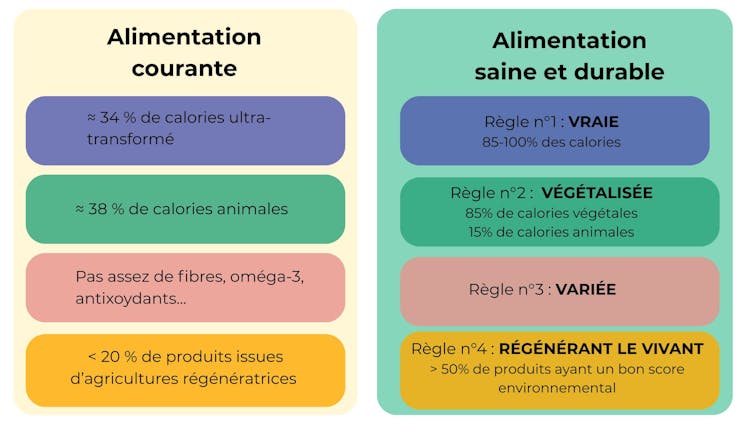
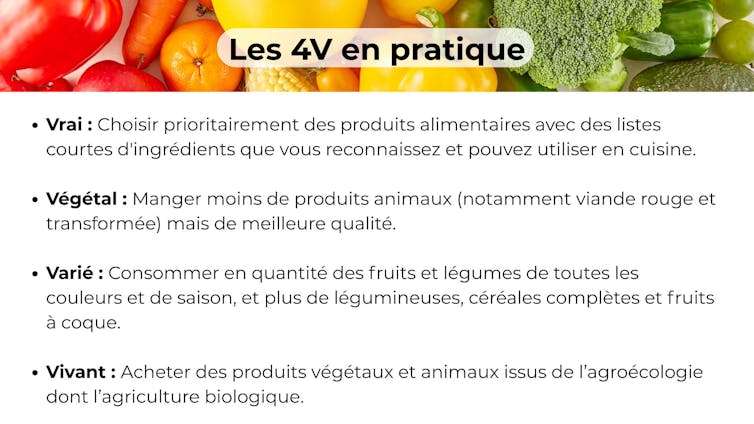
Nous proposons la règle simple des 4V, qui tient compte des modes de production agricoles et de la composition de l’assiette en invitant à une alimentation vraie, végétale, variée et régénérant le vivant.
Manger plus végétal est également meilleur pour la santé. Cela permet aussi une réduction importante de plusieurs impacts environnementaux : réduction de l’empreinte carbone de notre alimentation, car moins d’émissions de gaz à effet de serre (GES) en agriculture ; moindre consommation de ressources (terres, énergie, eau).
Outre la réduction de notre consommation de protéines qui excède en moyenne de 40 % les recommandations, il est proposé de ramener la part des protéines animales à moins de 50 % de l’apport protéique, au lieu de 65 % actuellement. Au final, cela revient à diviser par deux la consommation de viande et un peu celle des produits laitiers, notamment le fromage. L’augmentation de la consommation de protéines végétales provient alors surtout des légumineuses. La végétalisation de l’assiette passe aussi par une consommation accrue de fruits et de légumes peu transformés, de céréales complètes et de fruits à coque.
Manger varié est un atout pour la santé, notamment pour l’équilibre nutritionnel afin d’éviter les déficiences. Cela suppose de diversifier fruits, légumes, céréales complètes, légumineuses et fruits à coque qui sont une source importante de fibres, minéraux, vitamines, oligo-éléments, anti-oxydants et autres phytonutriments bioactifs protecteurs.
Pour cela, il faudrait idéalement consommer de tous les groupes d’aliments tout en variant dans chaque groupe : par exemple, blé, maïs et riz complets pour les céréales. Manger les différents morceaux de viande – en particulier des bovins (par exemple des entrecôtes et pas seulement du steak haché) – est aussi important pour ne pas déstabiliser les filières.
Manger des produits issus d’une agriculture régénérant le vivant permet d’améliorer la densité nutritionnelle des aliments, de réduire l’empreinte environnementale de l’assiette, notamment pour les émissions de GES et d’azote, et aussi d’augmenter les services fournis à la société (séquestration de carbone, épuration de l’eau…).
La regénération du vivant désigne l’ensemble des actions visant à restaurer ou renouveler la fertilité des sols, les cycles de l’eau et de l’azote, la diversité des espèces et la résilience face aux changements climatiques, tout en consommant avec parcimonie les ressources non renouvelables (le gaz qui sert à fabriquer les engrais, le phosphore…). Ainsi, au-delà de la production de nourriture, l’agriculture régénératrice vise à fournir des services à la société, tels que la séquestration du carbone dans les sols, l’augmentation de la densité nutritionnelle des produits.
Types d’agriculture contribuant à la régénération du vivant
L’agriculture conventionnelle, qui vise l’intensification durable en utilisant les technologies pour réduire ses impacts, ne peut cependant pas régénérer le vivant, car elle porte toujours sur des systèmes simplifiés avec un nombre limité de cultures, des sols souvent pauvres en matières organiques, peu d’infrastructures écologiques et de très grandes parcelles.
Cependant, caractériser les modes de culture et d’élevage pour leurs impacts négatifs, mais aussi pour les services qu’ils rendent (séquestration du carbone, densité nutritionnelle des produits) permet d’aller au-delà de la dichotomie usuelle bio/conventionnel.
L’élevage est critiqué, car il introduit une compétition entre feed (nourrir les animaux) et food (nourrir les humains). Cette compétition est bien plus faible pour les vaches, qui mangent de l’herbe, que pour les porcs et les volailles, qui sont nourris avec des graines. Elle est aussi d’autant plus faible que les élevages sont autonomes pour l’énergie et les protéines. Des exemples d’élevage contribuant à la régénération du vivant sont les élevages herbagers et biologiques, dont l’alimentation provient surtout des prairies, ainsi que les élevages Bleu Blanc Cœur pour lesquels l’ajout de lin, graine riche en oméga-3, dans la ration des animaux, a des effets positifs sur leur santé, la nôtre et la planète puisqu’il y a une réduction des émissions de GES en comparaison à des élevages courants.
Il s’agit d’agricultures agroécologiques, telles que l’agriculture biologique, l’agriculture de conservation des sols, s’il y a une réduction effective des pesticides, voire l’agroforesterie.
Des initiatives sont en cours pour évaluer l’impact environnemental des produits agricoles et alimentaires. Elles permettent de qualifier les modes de culture et d’élevage en termes d’impacts sur le climat, la biodiversité, en mobilisant la base de données Agribalyse. Elles tiennent compte aussi des services fournis comme la séquestration du carbone, la contribution à la pollinisation des cultures, comme le montre la recherche scientifique.
À ce jour, deux initiatives diffèrent par la manière de prendre en compte les services et de quantifier les impacts. La méthode à retenir dépendra de leur validation scientifique et opérationnelle.
Par ailleurs, les modes de production en agriculture sont très dépendants des intrants de synthèse (énergie, engrais, pesticides) dont les excès dégradent la qualité des sols, de l’eau, de l’air, la biodiversité ainsi que la densité nutritionnelle en certains micronutriments.
Nous sommes parvenus à un point où nos modes d’alimentation ainsi que les modes de production agricole qui leur sont associés génèrent des coûts cachés estimés à 170 milliards d’euros pour la France. La nécessité de refonder notre système alimentaire est maintenant reconnue par les politiques publiques.
Un cercle vertueux bon pour la santé et l’environnement
Manger varié encourage la diversification des cultures et le soutien aux filières correspondantes. Il en est de même pour manger vrai, car les industriels qui fabriquent des aliments ultratransformés n’ont pas besoin d’une diversité de cultures dans un territoire. Dit autrement, moins on mange vrai, moins on stimule l’agriculture contribuant à régénérer le vivant. Manger varié est également meilleur pour la santé mais aussi pour le vivant.
Par ailleurs, les pratiques agricoles régénératives permettent généralement d’avoir des produits de plus grande densité nutritionnelle. Même si le mode de production de l’agriculture biologique émet souvent plus de GES par kilo de produit que le mode conventionnel, il suffit de consommer un peu moins de viande pour compenser cet effet.
La règle des 4V (Figure 2) permet donc d’embarquer tous les acteurs du système alimentaire, du champ à l’assiette, ainsi que les acteurs de la santé. Ainsi, adhérer simultanément à vrai, végétal, varié a récemment été associé à une réduction de 27 % du risque de cancer colorectal.
Quant au concept de régénération du vivant, il demeure parlant pour tous les maillons de la chaîne. Vivant, varié et végétal s’adressent aux agriculteurs ; vrai concerne les transformateurs et, in fine, le distributeur qui peut offrir ou non du 4V aux consommateurs. Cette règle des 4V permet ainsi de sensibiliser les acteurs du système alimentaire et les consommateurs aux facteurs à l’origine des coûts cachés de l’alimentation, tant pour la santé que l’environnement.
Enfin, un tel indicateur qualitatif et holistique est facile d’appropriation par le plus grand nombre, notamment les consommateurs, tout en constituant un outil d’éducation et de sensibilisation au concept « Une seule santé » pour l’alimentation, comblant le fossé entre sachants et non-sachants.
Anthony Fardet est membre des comités scientifiques/experts de MiamNutrition, The Regenerative Society Foundation, Centre européen d’excellence ERASME Jean Monnet pour la durabilité, Projet Alimentaire Territorial Grand Clermont-PNR Livradois Forez et l’Association Alimentation Durable. Il a été membre du comité scientifique de Siga entre 2017 et 2022.
Michel Duru est membre du conseil scientifique de PADV (Pour une Agriculture Du Vivant)
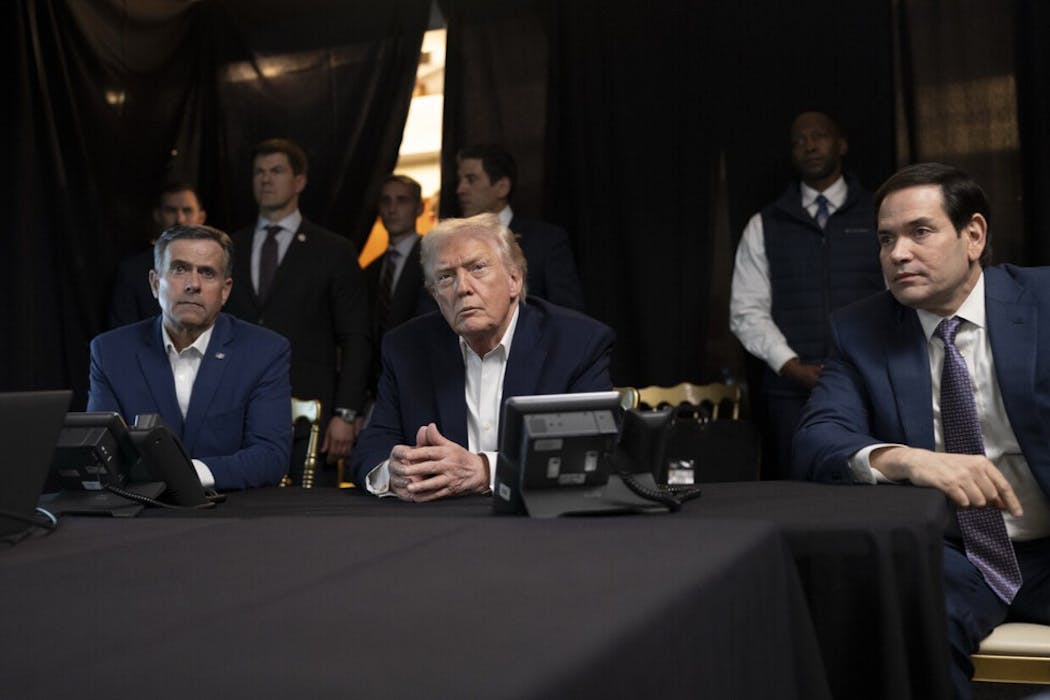
Donald Trump assiste à la capture du dirigeant vénézuélien Nicolas Maduro, entouré du directeur de la CIA John Ratcliffe (à gauche) et du secrétaire d’État Marco Rubio (Mar-a-Lago, Floride, nuit du 2 au 3 janvier 2026).Site officiel de la Maison Blanche
Donald Trump a célébré la nouvelle année en marquant son territoire et en ouvrant la porte à un nouveau partage du monde entre Washington, Moscou et Pékin. L’Europe, tétanisée, prend acte par son silence approbateur de la mort du droit international.
Donald Trump et les hauts responsables de son administration ont salué l’opération « Détermination absolue » – le raid sur Caracas et la capture et l’enlèvement du président vénézuélien Nicolas Maduro, le 3 janvier 2026 – comme un succès militaire exceptionnel. On peut tout aussi aisément affirmer qu’il s’agit d’une violation flagrante et éhontée du droit international, qui marque une nouvelle érosion de ce qui reste de l’ordre international.
Mais la tentation pour la Maison Blanche est désormais de crier victoire et de passer rapidement à d’autres cibles, alors que le monde est encore sous le choc de l’audace dont a fait preuve le président américain en kidnappant un dirigeant étranger en exercice. Les populations et les dirigeants de Cuba (depuis longtemps une obsession pour le secrétaire d’État de Trump Marco Rubio), de Colombie (le plus grand fournisseur de cocaïne des États-Unis) et du Mexique (la principale voie d’entrée du fentanyl aux États-Unis) ont des raisons de s’inquiéter sérieusement pour leur avenir dans un monde trumpien.
Il en va de même pour les Groenlandais, en particulier à la lumière des commentaires de Trump ce week-end selon lesquels les États-Unis « ont besoin du Groenland du point de vue de leur sécurité nationale ». Sans parler du tweet alarmant de Katie Miller, influente membre du mouvement MAGA et épouse de Stephen Miller, l’influent chef de cabinet adjoint de Trump, montrant une carte du Groenland aux couleurs du drapeau américain.
Et ce n’est pas la réaction timide de la plupart des responsables européens qui freinera le président américain dans son élan. Celle-ci est extrêmement déconcertante, car elle révèle que les plus ardents défenseurs du droit international semblent avoir renoncé à prétendre qu’il a encore de l’importance.
La cheffe de la politique étrangère de l’Union européenne (UE), Kaja Kallas a été la première à réagir, avec un message qui commençait par souligner le manque de légitimité de Maduro en tant que président et se terminait par l’expression de sa préoccupation pour les citoyens européens au Venezuela. Elle a du bout des lèvres réussi à ajouter que « les principes du droit international et de la charte des Nations unies doivent être respectés ». Cette dernière partie apparaissait comme une réflexion après coup, ce qui était probablement le cas.
La déclaration commune ultérieure de 26 États membres de l’UE (soit tous les États membres sauf la Hongrie) était tout aussi équivoque et ne condamnait pas explicitement la violation du droit international par Washington.
Le premier ministre britannique Keir Starmer a pour sa part axé sa déclaration sur le fait que « le Royaume-Uni soutient depuis longtemps une transition au Venezuela », qu’il « considère Maduro comme un président illégitime » et qu’il « ne versera pas de larmes sur la fin de son régime ». Avant de conclure en exprimant son souhait d’une « transition sûre et pacifique vers un gouvernement légitime qui reflète la volonté du peuple vénézuélien », l’ancien avocat spécialisé dans les droits humains a brièvement réitéré son « soutien au droit international ».
Le chancelier allemand Friedrich Merz remporte toutefois la palme. Tout en faisant des commentaires similaires sur le défaut de légitimité de Maduro et l’importance d’une transition au Venezuela, il a finalement souligné que l’évaluation juridique de l’opération américaine était complexe et que l’Allemagne « prendrait son temps » pour le faire.
Le point de vue de Moscou et Pékin
Alors que l’Amérique latine était partagée entre enthousiasme et inquiétude, les condamnations les plus virulentes sont venues de Moscou et de Pékin.
Le président russe Vladimir Poutine avait manifesté son soutien à Maduro dès le début du mois de décembre. Dans une déclaration publiée le 3 janvier, le ministère russe des affaires étrangères se contentait initialement d’apporter son soutien aux efforts visant à résoudre la crise « par le dialogue ». Dans des communiqués de presse ultérieurs, la Russie a adopté une position plus ferme, exigeant que Washington « libère le président légitimement élu d’un pays souverain ainsi que son épouse ».
La Chine a également exprimé son inquiétude quant à l’opération américaine, la qualifiant de « violation flagrante du droit international ». Un porte-parole du ministère des affaires étrangères a exhorté Washington à « garantir la sécurité personnelle du président Nicolas Maduro et de son épouse, à les libérer immédiatement, à cesser de renverser le gouvernement du Venezuela et à résoudre les problèmes par le dialogue et la négociation ».
La position de Moscou, en particulier, est bien sûr profondément hypocrite. Certes condamner l’opération américaine comme étant une « violation inacceptable de la souveraineté d’un État indépendant » est peut-être justifié. Mais cela n’est guère crédible au vu de la guerre que Moscou mène depuis dix ans contre l’Ukraine, qui s’est traduite par l’occupation illégale et l’annexion de près de 20 % du territoire ukrainien.
La Chine, quant à elle, peut désormais avoir le beurre et l’argent du beurre à Taïwan, qui, contrairement au Venezuela, n’est pas largement reconnu comme un État souverain et indépendant. Le changement de régime apparaissant de nouveau à l’ordre du jour international comme une entreprise politique légitime, il ne reste plus grand-chose, du point de vue de Pékin, qui pourrait s’opposer à la réunification, si nécessaire par la force.
Les actions de Trump contre le Venezuela n’ont peut-être pas accéléré les plans chinois de réunification par la force, mais elles n’ont guère contribué à les dissuader. Cet épisode va probablement encourager la Chine à montrer plus d’assurance en mer de Chine méridionale.
Le partage du monde
Tout cela laisse présager un nouveau glissement progressif des intérêts des grandes puissances américaine, chinoise et russe, qui souhaitent disposer de sphères d’influence dans lesquelles elles peuvent agir à leur guise. Car si la Chine et la Russie ne peuvent pas faire grand-chose pour leur allié Maduro, désormais destitué, c’est aussi parce qu’il n’existe aucun moyen simple de délimiter où commence une sphère d’influence et où finit une autre.
La perspective d’un partage du monde entre Washington, Moscou et Pékin explique aussi l’absence d’indignation européenne face à l’opération menée par Trump contre le Venezuela. Elle témoigne de sa prise de conscience que l’ère de l’ordre international libre et démocratique est bel et bien révolue. L’Europe n’est pas en position d’adopter une posture qui lui ferait risquer d’être abandonnée par Trump et assignée à la sphère d’influence de Poutine.
Au contraire, les dirigeants européens feront tout leur possible pour passer sous silence leurs divergences avec les États-Unis et tenteront de tirer parti d’une remarque presque anodine faite par Trump à la fin de sa conférence de presse samedi 3 janvier, selon laquelle il n’est « pas fan » de Poutine.
Ce qui importe désormais pour l’Europe, ce ne sont plus les subtilités des règles internationales. Il s’agit dorénavant de garder les États-Unis et leur président imprévisible de son côté, dans l’espoir de pouvoir défendre l’Ukraine et de dissuader la Russie de commettre de nouvelles agressions.
Ces efforts pour accommoder le président américain ne fonctionneront que dans une certaine mesure. La décision de Trump de réaffirmer son ambition d’annexer le Groenland, dont il convoite les vastes ressources minérales essentielles, s’inscrit dans sa vision d’une domination absolue dans l’hémisphère occidental.
Cette renaissance de la doctrine Monroe vieille de deux siècles (rebaptisée par Trump « doctrine Donroe ») a été exposée dans la nouvelle stratégie de sécurité nationale américaine en décembre 2025. Elle ne s’arrête clairement pas au changement de régime au Venezuela.
La stratégie vise à « rétablir les conditions d’une stabilité stratégique sur le continent eurasien » ou à « atténuer le risque de conflit entre la Russie et les États européens ». Mais déstabiliser davantage l’alliance transatlantique en menaçant l’intégrité territoriale du Danemark au sujet du Groenland et en abandonnant peut-être l’Europe et l’Ukraine aux desseins impériaux du Kremlin risque d’avoir l’effet inverse.
De même, si l’incursion au Venezuela encourage les revendications territoriales chinoises en mer de Chine méridionale et éventuellement une action contre Taïwan, elle ne permettra guère d’atteindre l’objectif américain, énoncé dans la stratégie de sécurité nationale, qui consiste à prévenir une confrontation militaire avec son rival géopolitique le plus important.
À l’instar des autres tentatives de changement de régime menées par les États-Unis depuis la fin de la guerre froide, l’action américaine au Venezuela risque d’être une initiative qui isolera le pays et se retournera contre lui. Elle marque le retour de la loi de la jungle, pour laquelle les États-Unis, et une grande partie du reste du monde, finiront par payer un lourd tribut.
La traduction en français de cet article a été assurée par le siteJustice Info.
Stefan Wolff a bénéficié par le passé de subventions du Conseil britannique de recherche sur l’environnement naturel, de l’Institut américain pour la paix, du Conseil britannique de recherche économique et sociale, de la British Academy, du programme « Science pour la paix » de l’OTAN, des programmes-cadres 6 et 7 et Horizon 2020 de l’UE, ainsi que du programme Jean Monnet de l’UE. Il est administrateur et trésorier honoraire de la Political Studies Association du Royaume-Uni et chercheur principal au Foreign Policy Centre de Londres.
The style of that performance is part of the substance, not just its packaging. On Jan. 4, 2026, on ABC’s This Week, that style shifted abruptly for the U.S.
Anchor George Stephanopoulos pressed Secretary of State Marco Rubio to explain President Donald Trump’s declaration that “the United States is going to run Venezuela.” Under what authority, Stephanopoulos asked, could such a claim possibly stand?
Rubio dodged the question. He just said that the United States would enact “a quarantine on their oil.” Venezuela’s economy would remain frozen, unable “to move forward until the conditions that are in the national interest of the United States and the interests of the Venezuelan people are met.”
Rubio’s point presumed authority rather than pausing to justify it. It was a diplomacy of dominance – coercion dressed up as concern. The unspoken assumption was pure wishful thinking: that “national interest” would immediately prevail, flowing smoothly in all directions.
As a historian of the early republic and the author of a biography of George Washington, I’ve been reminded these days of how Washington – amid harsh storms unlike anything the country faces today – forged a vision that treated restraint, not self-justifying unilateralism, as the truest measure of American national interest.
ABC’s George Stephanopoulos interviewed Secretary of State Marco Rubio on Jan. 4, 2026.
The young nation was humiliated before it was strong. George Washington understood that humiliation intimately. Independence had freed America from Britain, but not from the world.
“Would to Heaven we had a navy,” he confessed to the Marquis de Lafayette in 1786, longing for ships “to reform those enemies to mankind, or crush them into nonexistence.” But such a fierce wish never became Washington’s foreign policy. Visibility invited peril; peril required composure.
In 1785, two American merchant vessels – the Maria of Boston and the Dauphin of Philadelphia – were captured by Algerian cruisers. Twenty-one sailors were chained, stripped and sold into slavery. Their families begged the government to pay ransom. Negotiators proposed paying tribute, a kind of protection-in-advance payment system. The price kept rising.
President Washington refused to be rushed by either pity or anger. Paying the extravagant sum, he warned his cabinet in 1789, “might establish a precedent which would always operate and be very burthensome if yielded to.”
Precedent mattered to Washington. A republic must measure not only what it can afford, but what it will be forced to feel tomorrow because of what it pays today.
Washington feared that habit of nearsightedness in foreign affairs precisely because he believed it corrupted empires – and could corrupt republics as well.
Neutrality as ‘emotional discipline’
The storms soon multiplied.
By 1793, Europe was already “pregnant with great events,” Washington wrote to Lafayette. The French Revolution, welcomed at first as a triumph of “The Rights of Man,” slid into terror and general war.
Citizen Genet, the French envoy to the United States, landed in Charleston, South Carolina, and proceeded to enlist American citizens’ help in France’s war with Britain by commissioning privateers in U.S. ports to prey on British ships. Genet did not request permission to do this from Washington.
Gratitude to France – indispensable ally during the Revolution, provider of fleets, soldiers and hard-to-forget loans – clashed with alarm at her new demands. A single misstep could have dragged the United States into another catastrophic conflict.
And yet, Washington responded to Genet not with rashness and bravado but with restraint made public law.
President Washington knew that the road to successful pursuit of national interests was paved with international credibility.
Washington wanted America “to be little heard of in the great world of Politics,” preferring instead “to exchange Commodities & live in peace & amity with all the inhabitants of the earth.”
The first president pitched the republic’s voice toward ordinary people rather than rival powers. He spoke of “inhabitants,” not foreign enemies. He treated restraint – not self-justifying unilateralism – as the truest measure of national interest.
At his presidency’s end, George Washington wrote to fellow statesman Gouverneur Morris, ‘My policy has been, and will continue… to be upon friendly terms with, but independent of, all the nations of the earth.’ Library of Congress
On March 4, 1797, he would leave the presidency. His final creed was simple and devout: “My policy has been, and will continue … to be upon friendly terms with, but independent of, all the nations of the earth.”
For Washington, friendliness was a strategy, not a concession. The republic would treat other nations with civility precisely in order to remain independent of their appetites and quarrels.
Yet foreign policy has never been only a ledger of advantage. It is also a civic mirror: the emotional register of a government that tells citizens what kind of nation is acting in their name, and whether it tries to balance national interest with responsibilities to others.
Washington believed America’s legitimacy abroad depended on patience and respect for the autonomy of others. The current approach to Caracas announces a different imagination: a power that boasts of quarantines, sets conditions – and calls the result partnership.
A republic must still defend its interests. But I believe it should also defend the temperament that made those interests compatible with independence in the first place. Washington’s America learned to stand among stronger powers without demanding to run them.
The question asked on “This Week,” then, is only the beginning.
The deeper question remains whether the United States will continue to perform power with the discipline of a constitutional republic – or surrender that discipline to the easy allure of what only seems to serve national interest, but fails to build credibility or relationships that endure.
Maurizio Valsania does not work for, consult, own shares in or receive funding from any company or organization that would benefit from this article, and has disclosed no relevant affiliations beyond their academic appointment.
Many adults are breathing a sigh of relief as the 6-7 meme fades away as one of the biggest kid-led global fads of 2025.
In case you managed to miss it, 6-7 is a slang term – spoken aloud as “six seven” – accompanied by an arm gesture that mimics someone weighing something in their hands.
For the most part, adults responded with mild annoyance and confusion.
But as media scholarswho studychildren’s culture, we didn’t view the meme with bewilderment or exasperation. Instead, we thought back to our own childhoods on three different continents – and all the secret languages we spoke.
There was Pig Latin. The cool “S” doodled on countless worksheets and bathroom stalls. Forming an L-shape with our thumb and index finger to insult someone. Remixing the words of hand-clapping games from previous generations.
6-7 is only the latest example of these long-standing practices – and though the gesture might not mean much to adults, it says a lot about children’s play, their social lives and their desire for power.
The irresistible allure of 6-7
You can see this longing for power in classic play like spying on adults and in games like “king of the hill.”
A typical school day involves a tight schedule of adult-directed activities; kids have little time or space for agency.
But during those in-between times when children are able to stealthily evade adult surveillance – on playgrounds, on the internet and even when stuck at home during the pandemic – children’s culture can thrive. In these spaces, they can make the rules. They set the terms. And if it confuses adults, all the better.
As 6-7 went viral, teachers complained that random outbursts by their students were interrupting their lessons. Some started avoiding asking any kind of question that might result in an answer of 67. The trend migrated from schools to sports arenas and restaurants: In-N-Out Burger ended up banning the number 67 from their ticket ordering system.
The meaninglessness of 6-7 made it easy to create a sense of inclusion and exclusion – and to annoy adults, who strained to decipher hidden meanings. In the U.S., siblings and friends dressed as the numbers 6-7 for Halloween. And in Australia, it was rumored that houses with 6-7 in their address were going for astronomical prices.
Remixing games and rhymes
Since before World War I, historians have documented children’s use of secret languages like “back slang,” which happens when words are phonetically spoken backwards. And nonsense words and phrases have long proliferated in children’s culture: Recent examples include “booyah,” “skibidi” and “talk to the hand.”
6-7 also coincides with a long history of children revising, adapting and remixing games and rhymes.
For example, in our three countries – the U.S., Australia and South Korea – we’ve encountered endless variations of the game of “tag.” Sometimes the chasers pretend to be the dementors from Harry Potter. Other times the chasers have pretended to be the COVID-19 virus. Or we’ll see them incorporate their immediate surroundings, like designating playground equipment as “home” or “safe.”
Similar games can spread among children around the world. In South Korea, “Mugunghwa kkochi pieotseumnida” – which roughly translates to “The rose of Sharon has bloomed,” a reference to South Korea’s national flower – is similar to the game “Red Light, Green Light” in English-speaking countries. In the game “Hwang-ma!,” South Korean children in the early aughts shouted the word and playfully struck a peer upon seeing a rare, gold-colored car, a game similar to “Punch Buggy” and “Slug Bug” in the U.S. and Australia.
Historically, children have reworked rhymes and clapping games to draw on popular culture of the day. “Georgie Best, Superstar,” sung to the tune of “Jesus Christ Superstar,” was a popular chant on U.K. playgrounds in the 1970s that celebrated the legendary soccer player George Best. And a variation of the clapping game “I went to a Chinese Restaurant” included the lyrics “My name is, Elvis Presley, girls are sexy, Sitting on the back seat, drinking Pepsi.”
Making space for children’s culture
One reason 6-7 became so popular is the low barrier to entry: Saying “6-7” and doing the accompanying hand movement is easy to pick up and translate into different cultural contexts. The simplicity of the meme allowed young Korean children to repeat the phrase in English. And deaf children have participated by signing the meme.
Because the social worlds of children now exist across a range of online spaces, 6-7 has been able to seamlessly spread and evolve. On the gaming platform Roblox, for example, children can create avatars that resemble 6-7 and play games that feature the numbers.
The strange words, nonsensical games and creative play of your childhood might seem ridiculous today. But there’s real value in these hidden worlds.
With or without access to the internet, children will continue to transform language and games to suit their needs – which, yes, includes getting under the skin of adults.
A great deal of attention is given to the omnipresence of digital technologies in children’s lives, but we think it’s worth taking a moment to appreciate the way children are using these technologies to innovate and connect in ways both creative and mundane.
The authors do not work for, consult, own shares in or receive funding from any company or organization that would benefit from this article, and have disclosed no relevant affiliations beyond their academic appointment.