Evidence for link between digital technology use and teenage mental health problems is weak, our large study suggests

Source: The Conversation – UK – By Qiqi Cheng, Quantitative Research Associate, School of Environment, Education and Development, University of Manchester

PeopleImages/Shutterstock

For years, the narrative surrounding teenagers’ use of digital technology has been one of alarm.

Time spent scrolling through TikTok or playing video games is widely seen to be driving the current crisis in youth mental health, fuelling rising rates of anxiety and depression.

But our recent study suggests that this simple story of cause and effect is not supported by the evidence.

After following more than 25,000 young people in Greater Manchester over three school years, we found little evidence that self-reported time spent on social media or frequent gaming causes mental health problems in early-to-mid adolescence. Instead, the relationship between digital technology use and teenagers’ wellbeing is far more nuanced than simple cause and effect.

While many previous studies have looked at a single snapshot in time, we used a longitudinal approach: observing the same young people over an extended period of time. We did this through the #BeeWell programme, which surveys young people annually. We tracked the same pupils across three annual waves, from year eight (when they were aged 12-13) to year nine (aged 13-14) to year ten (aged 14-15).

Another crucial point is that our analysis separated “between-person” effects from “within-person” effects. In other words, rather than just comparing the mental health of heavy users of social media or gaming to that of light users, we looked at whether a specific teenager’s mental health worsened after they started spending more time on social media (or gaming) than they usually did.

Child alone on swing with phone
It’s easy to assume that social media causes low mood.
caseyjadew/Shutterstock

When we applied this rigorous method, the supposed link between digital technology use and later “internalising symptoms” – worry, low mood – largely vanished. For both boys and girls, an increase in time on social media or gaming frequency did not predict a later rise in symptoms.

How teens use social media

A common theory is that how we use social media matters more than how long we spend on it. Some argue that “active” use, like posting photos and chatting, is better than “passive” use, such as endless scrolling.

However, our sensitivity analyses found that even when we distinguished between these two types of online behaviour, the results remained the same. Neither active nor passive social media use was a significant driver of later mental health problems in our sample.

While we found no evidence of digital technology use causing later mental health issues, we did find some interesting differences in how boys and girls navigate their digital lives over time.

Girls who spent more time gaming in one year tended to spend less time on social media the following year. This suggests that for girls, gaming and social media may compete for the same limited free time.

Boys who reported higher levels of internalising symptoms (like low mood) in one year went on to reduce their gaming frequency the next. This suggests boys may lose interest in hobbies they previously enjoyed when their mental health declines. This is known as “anhedonia”.

The gap between headlines and research

If the evidence is so weak, why is the concern so strong? Part of the issue is a reliance on simple correlations. If you find that anxious or depressed teens use more social media, it is easy to assume the social media caused their difficulties.

But it is just as likely that the mental health problems came first, or that a third factor, such as school stress or family difficulties, is driving both. By using a large, diverse sample and controlling for factors like socio-economic background and special educational needs, our study provides a clearer view of the real-world impact (or lack thereof) of teenagers’ digital technology use.

Our findings do not mean that the digital world is without risks. Our study looked at year-on year trends, so it does not rule out the possibility of negative effects of social media or gaming in the shorter-term – such as immediately after use. Furthermore, issues like cyberbullying, sleep disruption or exposure to harmful content remain serious concerns.

However, our findings suggest that limiting the hours spent on consoles and apps or measures such as banning social media for under 16s is unlikely to have an effect on teenagers’ mental health in the long term. Policymakers should take note. Worse, such blanket bans may obscure the real risk factors by offering a simple solution to a complex problem.

Instead, it’s important to look at the broader context of a young person’s life, including the factors that may lead to both increased digital technology use and internalising symptoms. If a teenager is struggling, technology use is rarely the sole culprit. By moving away from the predominant “digital harm” narrative, we can focus on the real, complex factors that drive adolescent wellbeing.

The Conversation

Neil Humphrey receives funding from various bodies including The National Lottery Community Fund to conduct research on young people’s wellbeing

Qiqi Cheng does not work for, consult, own shares in or receive funding from any company or organisation that would benefit from this article, and has disclosed no relevant affiliations beyond their academic appointment.

ref. Evidence for link between digital technology use and teenage mental health problems is weak, our large study suggests – https://theconversation.com/evidence-for-link-between-digital-technology-use-and-teenage-mental-health-problems-is-weak-our-large-study-suggests-273386

Why the world’s central bankers had to speak up against Trump’s attacks on the Fed

Source: The Conversation – Global Perspectives – By John Hawkins, Head, Canberra School of Government, University of Canberra

Central bankers from around the world have issued a joint statement of support for US Federal Reserve Chair Jerome Powell, as he faces a criminal probe on top of mounting pressure from US President Donald Trump to resign early.

It is very unusual for the world’s central bank governors to issue such a statement. But these are very unusual times.

The reason so many senior central bankers – from Australia, Brazil, Canada, Europe, New Zealand, South Africa, South Korea, the United Kingdom and other countries, as well as the central banks’ club the Bank for International Settlements – have spoken up is simple. US interest rate decisions have an impact around the world. They don’t want a dangerous precedent set.

Over the course of my career as an economist, much of it at the Reserve Bank of Australia and the Bank for International Settlements, I have seen independent central banks become the global norm in recent decades.

Allowing central banks to set interest rates to achieve inflation targets has avoided a repeat of the sustained high inflation which broke out in the 1970s.

Returning the setting of monetary policy to a politician, especially one as unpredictable as Trump, is an unwelcome prospect.

What’s happened

Trump has repeatedly attacked the US Federal Reserve (known as the Fed) over many years. He has expressed his desire to remove Powell before his term as chair runs out in May. But legislation says the president can only fire the Fed chair “for cause”, not on a whim. This is generally taken to mean some illegal act.

The Supreme Court is currently hearing a case about whether the president has the power to remove another Fed board member, Lisa Cook.

And this week, Powell revealed he had been served with a subpoena by the US Department of Justice, threatening a criminal indictment relating to his testimony to the Senate banking committee about the US$2.5 billion renovations to the Fed’s historic office buildings.

Trump has denied any involvement in the investigation.

But Powell released a strong statement in defence of himself. He said the reference to the building works was a “pretext” and that the real issue was:

whether the Fed will be able to continue to set interest rates based on evidence and economic conditions – or whether monetary policy will be directed by political pressure or intimidation.

US Federal Reserve Chair Jerome Powell’s statement addressing the investigation.

On Tuesday, more than a dozen of the world’s leading central bankers put out a statement of support:

We stand in full solidarity with the Federal Reserve System and its Chair Jerome H Powell. The independence of central banks is a cornerstone of price, financial and economic stability in the interest of the citizens that we serve. It is therefore critical to preserve that independence, with full respect for the rule of law and democratic accountability.

Another statement of support came from leading US economists – including all the living past chairs of the Fed. This included the legendary central bank “maestro” Alan Greenspan, appointed by Ronald Reagan and reappointed by George HW Bush, Bill Clinton and George W Bush.

This statement warned undermining the independence of the Fed could have “highly negative consequences” for inflation and the functioning of the economy.

Why it matters for global inflation

Trump has said he wants the Fed to lower interest rates dramatically, from the current target range of 3.5–3.75% down to 1%. Most economists think this would lead to a large increase in inflation.

At 2.8% in the US, inflation is already above the Fed’s 2% target. The Fed’s interest rate would normally only drop to 1% during a serious recession.

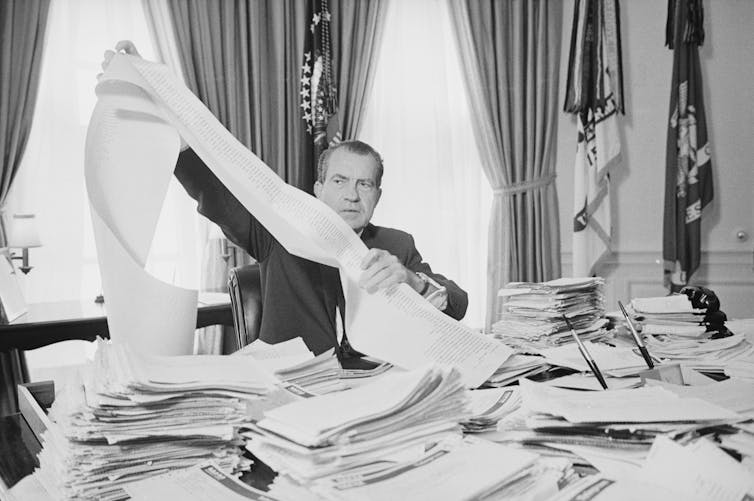
A clear example of the dangers of politicised central banks was when the Fed lowered interest rates before the 1972 presidential election. Many commentators attribute this to pressure from then president Richard Nixon to improve his chances of re-election. This easing of monetary policy contributed to the high inflation of the mid-1970s.

A more recent example comes from Turkey. In the early 2020s, President Recep Tayyip Erdoğan leaned on the country’s central bank to cut interest rates. The result was very high inflation, eventually followed by very high interest rates to try to get inflation back under control.

Trump should be careful what he wishes for

What will happen if Trump is able to appoint a compliant Fed chair, and other board members, and if they actually lower the short-term interest rates they control to 1%? Expected inflation and then actual inflation would rise.

This would lead to higher long-term interest rates.

If Trump gets his way, US voters may face a greater affordability problem in the run-up to the mid-term elections in November. This could then be followed by a recession, as interest rates need to rise markedly to get inflation back down.

And as over a dozen global central bank leaders have just warned us, what happens in the US matters worldwide.

The Conversation

John Hawkins was formerly a senior economist at the Reserve Bank of Australia and the Bank for International Settlements.

ref. Why the world’s central bankers had to speak up against Trump’s attacks on the Fed – https://theconversation.com/why-the-worlds-central-bankers-had-to-speak-up-against-trumps-attacks-on-the-fed-273450

Why Iran can’t afford to shut down the internet forever – even if the world doesn’t act

Source: The Conversation – Global Perspectives – By Dara Conduit, ARC DECRA Fellow, The University of Melbourne

As citizens around the world prepared to welcome the new year, Iranians began taking to the streets to protest their country’s deepening economic crisis. Spurred by the continued devaluation of the Iranian currency against the US dollar, as well as crippling inflation, the unrest is the latest in years of economic pain and protest.

The Iranian regime initially acknowledged the legitimacy of the protesters’ concerns, distributing hopelessly inadequate cash vouchers worth only US$7 to help with the cost of living.

But it’s since taken a much heavier hand. According to the regime’s own figures, as of today, at least 2,000 people have been killed. Protesters bravely continue to take to the streets.

Like clockwork last Thursday, the regime rolled out one of its most potent tools of population control: internet shutdowns. In the six days since, Iranians have been almost entirely cut off from the internet, with alternative means of access, such as smuggled Starlink terminals, proving unreliable because of satellite jamming.

As the world waits to see if US President Donald Trump follows through on his threats of “very strong action” if Iran hangs protesters, the truth is that even without international action, the regime can’t afford to keep Iran’s internet offline indefinitely.


Read more:
The use of military force in Iran could backfire for Washington


Why the regime blocks the internet

The Iranian regime has used internet shutdowns since the Green Movement protests following the disputed 2009 presidential election. They’re a powerful tool that stops citizens from communicating with the outside world and each another.

This limits opposition organising, because people can’t join protests if they don’t know where they are. It also isolates individuals, preventing them from seeing violent crackdowns outside their neighbourhood. Internet shutdowns also obscure the international gaze, allowing the regime to crack down on protesters in the dark.

Shutdowns have become so synonymous with political unrest that the non-government digital rights organisation Article 19 declared in 2020 “protests beget Internet shutdowns in Iran”.

Internet shutdowns are costly

But it would be a mistake to think the Iranian regime has an endless capacity to shut down the internet. Each shutdown comes at a high economic and political cost.

As well as blocking instant messengers and social media sites, internet shutdowns in Iran have often blocked work applications such as Slack, Skype, Google Meet and Jira. These are central to ordinary businesses’ operations.

Similarly, the regime’s efforts to block virtual private networks (VPNs) and secure HTTPS connections can wreak havoc on corporate payment systems, multi-factor authentication and even corporate email.

Global internet monitor Netblocks estimates internet shutdowns cost the Iranian economy more than US$37 million a day. That’s more than US$224 million in the past six days alone.

As I wrote in a recent journal article, we’ve already seen how bad the economic impacts of internet shutdowns can be in Iran.

During the 2022-23 protests following the death-in-custody of the Kurdish-Iranian woman Mahsa “Jina” Amini, internet shutdowns had far-reaching implications.

One source claimed the volume of online payments inside Iran halved in the first two weeks of the protests alone.

Iran has a vibrant e-commerce sector. An estimated 83% of its online businesses use social media platforms such as Instagram, WhatsApp and Telegram to generate sales. All three were blocked during the 2022-23 unrest. A report later found Instagram blocking and periodic internet disruptions in the 17 months after the protests cost the Iranian economy US$1.6 billion.

The regime has been working hard for decades to build a domestic internet that could alleviate some of this damage, but so far it has failed.

The regime’s enormous technology needs – for surveillance, but also to power a modern economy for around 92 million people – has led to the emergence of a large semi-private information and communications (ICT) sector in Iran. This includes internet service providers, cell network operators and a large IT sector.

Just six weeks into the 2022 protests, the cellphone operator RighTel’s chief executive penned an open letter to the ICT minister, Issa Zarepour, complaining the digital crackdown was crippling his business. He noted RighTel had upheld the regime’s “security priorities and requirements” during the shutdowns, and demanded compensation or RighTel may be forced to withdraw from the market.

These demands were echoed in letters privately written (but later leaked) by other communications providers.

These were not natural regime critics. Indeed, internet shutdowns were creating a dangerous dynamic in which even those close to the regime were being alienated, generating a new class of potential protesters who could one day join those marching in the streets.

Why the current shutdown can’t last forever

This is why the current internet shutdown is a risky strategy. While the regime is succeeding in concealing the worst of its bloody crackdown, it risks further provoking the country’s already struggling economic class.

In 2022-23, the shutdowns were implemented in a targeted manner, taking place for the most part in certain cities, or at specific times of day when protests were expected. In contrast, the current shutdown is countrywide.

Only 1% of internet connections in Iran are online today (which is how the supreme leader is still able to freely use X to spout propaganda). This means the economic and political impacts of this current shutdown, if it continues, could easily dwarf those of 2022-23.

Given Iran’s economic woes are the driving force of the current unrest, a sustained internet blackout could motivate more people to take to the streets. The regime is only too aware of this risk.

The Conversation

Dara Conduit receives funding from the Australian Research Council.

ref. Why Iran can’t afford to shut down the internet forever – even if the world doesn’t act – https://theconversation.com/why-iran-cant-afford-to-shut-down-the-internet-forever-even-if-the-world-doesnt-act-273454

The World Trade Organization is on life support. Will Trump’s new rules finish it off?

Source: The Conversation – Global Perspectives – By Jane Kelsey, Emeritus Professor of Law, University of Auckland, Waipapa Taumata Rau

Chip Somodevilla/Getty Images

The United States has now withdrawn from 66 international organisations, conventions and treaties, illegally invaded Venezuela, and promoted an “America First” agenda in its new National Security Strategy.

This all signals the collapse of a global system that has operated for the past 60 years. The old world order – driven by hyper-globalisation and US hegemonic power – is in its death throes, but a new era is yet to be born.

We now face a deepening ideological, strategic and military conflict over what shape it will take. The global “free trade” regime, overseen by the World Trade Organization (WTO), is one such battleground.

Largely designed to serve its strategic and corporate interests, the US now sees the WTO as a liability because of the economic ascendancy of China and a domestic populist backlash against globalisation and free trade.

But US antipathy to the current multilateral trade regime is not exclusive to the Trump administration. America has long resisted binding itself to the trade rules it demands other countries obey.

Congress reserved the power to review US membership when it authorised joining the WTO in 1994. Since then, both Republican and Democrat administrations have undermined its operation by:

  • calling for an end to the Doha Round of negotiations launched in 2001

  • breaking the WTO dispute mechanism by defying rulings that go against it, and refusing to appoint judges to the WTO Appellate Body so it is now moribund (effectively allowing rules to be breached)

  • and starving the WTO’s budget during the latest US review of international organisation memberships.

To date, Trump has not withdrawn the US from the WTO. But his administration seeks instead to reinvent it in a form it believes will restore US geostrategic and economic ascendancy.

Rewriting the rulebook

In December 2025, the newly-arrived US Ambassador to the WTO warned its General Council:

If the WTO does not reform by making tangible improvements in those areas that are central to its mission, it will continue its path toward irrelevancy.

“Reform” in this context means abandoning the cornerstone most-favoured-nation rule that requires all WTO members to be treated equally well, which is the bedrock of multilateralism.

The US wants to reinterpret the WTO’s “security exceptions” (which apply to arms trade, war and United Nations obligations to maintain peace and security) to allow countries absolute sovereignty to decide when the exception applies – effectively neutralising the rules at will.

The WTO would also cease to address issues of “oversupply” and “overcapacity”, “economic security” and “supply chain resilience”, which the US believes have enabled China’s growing economic dominance, leaving the way open for unilateral action outside the WTO.

In the stripped-down WTO, decision-making by consensus would be abandoned and multilateral negotiations replaced by deals that are driven by more powerful players on cherry-picked topics.

Unilateral action is not an idle threat. Trump has imposed arbitrary and erratic tariffs on more than 90 countries for a variety of “national and economic security” reasons, demanding concessions for reducing (not removing) them.

Those demands extend way beyond matters of trade, and impinge deeply on those countries’ own sovereignty. There is nothing the WTO can do.

Weaponising tariffs is also not a new strategy. President Joe Biden maintained the tariffs imposed on China during the first Trump presidency, triggering WTO disputes which remain unresolved.

But Trump’s embrace of raw coercive power strips away any chimera of commitment to multilateralism and the model that has prevailed since the 1980s, or to the development of Third World countries that have been rule-takers in that regime.

Where now for the WTO?

Some more powerful countries have bargained with Trump to reduce the new tariffs. China’s retaliation generated an uneasy one-year truce. Brazil held firm against Trump’s politically-motivated tariffs at considerable economic cost. Australia made a side-deal on critical minerals.

The European Union remains in a standoff over pharmaceutical patents and regulating big tech. India has diversified to survive relatively unscathed, ironically forging closer ties with China.

Less powerful countries are much more vulnerable. Among other obligations, the full texts of “reciprocal trade agreements” with Malaysia and Cambodia, signed in October, require them to:

  • replicate US foreign policy and sanctions on other countries

  • consult the US before negotiating a new free trade agreement with a country that “jeopardises US essential security interests”

  • promise to make potentially crippling investments in and purchases from the US

  • involve the US in regulating inward investment and development of Malaysia’s rare earth elements and critical minerals (Malaysia has large unmined repositories, an alternative to China)

  • and not tax US tech giants, regulate their monopolies or restrict data flows.

If implemented, these agreements risk creating economic, fiscal, social and political chaos in targeted countries, disrupting their deeply integrated supply chains, and requiring they make impossible choices between the US and China.

In return, the 2025 tariffs will be reduced, not reversed, and the US can terminate the deals pretty much at will.

This poses an existential question for WTO members, including New Zealand and Australia, at the 14th ministerial conference in Cameroon in late March: will members submit to US demands in an attempt to keep the WTO on life support?

Or can they use this interregnum to explore alternatives to the hyper-globalisation model whose era has passed?

The Conversation

Jane Kelsey is affiliated with a number of international NGOs that monitor and advise on developments in international trade law and the WTO.

ref. The World Trade Organization is on life support. Will Trump’s new rules finish it off? – https://theconversation.com/the-world-trade-organization-is-on-life-support-will-trumps-new-rules-finish-it-off-273216

Iran’s protests have spread across provinces, despite skepticism and concern among ethnic groups

Source: The Conversation – Global Perspectives – By Shukriya Bradost, Ph.D. Researcher, International Security and Foreign Policy, Virginia Tech

Protester in Punak, Tehran on Jan. 10, 2026. Author-obtained image., CC BY

When Iran’s ongoing protests began in Tehran’s Grand Bazaar on Dec. 28 2025, the government initially treated them as manageable and temporary.

Bazaar merchants have historically been among the most conservative social groups in Iran, deeply embedded in the state’s economic structure and closely connected to political authority. Within the Iranian government itself, there was apparent confidence that their protests were not revolutionary in nature but transactional – a short-lived pressure campaign aimed at stabilizing the collapsing currency and curbing inflation that directly threatened merchants’ livelihoods.

This perception led to an unprecedented development. In his first public response, Iran’s supreme leader Ali Khamenei openly acknowledged the merchants’ protests – the first time he had ever accepted the legitimacy of any demonstration.

He characterized them as part of the traditional alliance between the state and the bazaar, indicating that the government still viewed the unrest as controllable.

But authorities did not anticipate what happened next: The protests spread to over 25 provinces and developed into a nationwide challenge to the government’s survival, met by a violent crackdown in which more than 6,000 protesters have reportedly been killed.

As an expert on Iran’s ethnic groups, I have watched as the unrest has expanded to include minority groups – despite skepticism among these communities over the possible outcome of the unrest and concerns over the plans of some central opposition figures.

As reports emerge of government forces killing thousands, the central question has now shifted from whether the state can suppress the protests to how different regions of Iran interpreted the concept of change – whether it is something achievable within the government or necessitates regime change itself.

Ethnic minorities join the protest

Iran is a country of about 93 million people whose modern state was built around a centralized national identity rather than ethnic pluralism.

But that masks a large and politically significant ethnic minority population. While 51% form the Persian majority, 24% of the country identify as Azeri. Kurds number some 7 million to 15 million, composing roughly 8% to 17% of the total population. And Arabs and Baluch minorities represent 3% and 2% of the population, respectively.

A map highlights different regions
A map of the distribution of Iran’s ethnic groups.
Wikimedia Commons

Since the Pahlavi monarchy’s nation-building project began in 1925, successive governments, both monarchical and then the Islamic Republic, have treated ethnic diversity as a security challenge and repeatedly suppressed demands for political inclusion, language rights and local governance.

The role of Iran’s ethnic minority groups in the current protests has evolved. Initially, minority regions were less prominent than in the last serious wave of protests: the 2022–23 “Women, Life, Freedom” uprising sparked by the death of a Kurdish-Iranian woman named Jina Mahsa Amini.

The Kurdish involvement in the current protests began in the small city of Malekshahi in Ilam province on Jan. 3. A subsequent violent raid by security forces on wounded protesters inside Ilam hospital provoked outrage beyond the local community and attracted international attention.

Protests continued in Ilam, while in nearby Kermanshah province, particularly the impoverished area of Daradrezh, they erupted over economic deprivation and political discrimination.

A strategic approach to protest

Shiite Kurdish communities in Ilam and Kermanshah continue to experience exclusion rooted in their Kurdish identity. That’s despite sharing a Shiite identity with Iran’s ruling establishment in Tehran – a factor that has historically afforded greater access to government than for the Sunni Kurdish population.

Following the killing of protesters in Ilam and Kermanshah, Kurdish political parties issued a joint statement calling for a region-wide strike.

Notably, Kurdish leaders did not call for protests but for strikes alone. During the “Women, Life, Freedom” uprising, the government treated Kurdish cities as security zones – framing the protests as a threat to Iran’s territorial integrity and using that justification to carry out mass killings and executions.

By opting for strikes this time, Kurdish leaders sought to demonstrate solidarity while reducing the risk of large-scale violence and another massacre.

A protester in Tehran on Jan. 10, 2026.
Author-obtained image., CC BY

The result was decisive: Nearly all Kurdish cities shut down.

Baluchestan, in Iran’s southeast, followed Kurdistan a day after. Beginning with Friday prayers on Jan. 9, protests erupted, also driven by long-standing ethnic and religious marginalization there.

Iranian Azerbaijan, an area in the country’s northwest, joined later and more cautiously. This delayed, small protest reflects Azerbaijanis’ current favorable position within Iran’s political, military and economic institutions.

Historically, from the 16th century to 1925, Shiite Azari-Turks dominated the Iranian state, with Azerbaijani functioning as a court language.

The Pahlavi monarchy marked a rupture, banning the Azerbaijani language and curtailing local autonomy. But since 1979, the Islamic Republic has partially restored Azerbaijani influence, allowing clerics to address constituents in their native language and reintegrating Azerbaijan into central government in Tehran. The current supreme leader, Ali Khamenei, is of Azerbaijani descent.

A history of repression

Ethnically based political movements emerged across Iran immediately after the 1979 revolution, which many minority groups had supported in hopes of greater inclusion and rights.

But these movements were quickly suppressed as the Islamic Republic crushed uprisings across Iranian Azerbaijan, Baluchestan, Khuzestan and other peripheral regions.

Kurdistan was the exception, where resistance, military confrontation and state violence, including massacres, continued for several years.

This repression and the impact of the Iran–Iraq War, during which wartime mobilization overshadowed internal grievances, muted ethnic minority demands throughout the 1980s.

But these demands resurfaced in the 1990s, especially sparked by a sense of cultural revival and cross-border identity formation after the Soviet Union’s collapse. In Iranian Kurdistan, a large part of the armed struggle was transformed into a civil struggle, while Peshmerga forces maintained arms and military training across the border in the Kurdistan region of Iraq.

The Iranian government has increasingly viewed this awakening as a strategic threat and has responded by decentralizing security and military authority to enable rapid crackdowns on protests without awaiting approval from Tehran.

Diverging protest demands

This history of repression explains why the protests in Iran now were at least initially more centralized than previous uprisings. Ethnic minority regions are not indifferent to change; they are skeptical of its outcome.

Many Persian-majority urban protesters seek social freedoms, economic recovery and normalization with the West, particularly the United States. But ethnic communities carry additional demands: decentralization of power, recognition of linguistic and cultural rights, and genuine power-sharing within the state.

For over four decades, ethnic minority demands have been labeled as separatist or “terrorist” and met with arrests and executions by the Islamic Republic.

This rhetoric has also influenced major Persian-dominated opposition groups – spanning the ideological spectrum from left to right and operating largely in exile – that perceive ethnic minority demands as a threat to Iran’s territorial integrity.

Fears of the shah’s return

Reza Pahlavi, the exiled son of the last shah of Iran, is positioning himself as the leader of the opposition and a transitional figure. But ethnic communities have reason for concern.

Pahlavi’s office has published a road map for a transitional government that sharply contrasts with his public claims of not seeking to monopolize power. The document envisions Pahlavi as a leader with extraordinary authority. In practice, the concentration of power he proposes under his leadership closely resembles the authority currently exercised by Iran’s supreme leader.

A protester holds aloft a photo of a man with 'King Reza Pahlavi' written above.
Reza Pahlavi, the son of Iran’s late ruler Mohammad Reza Pahlavi, has seen his support surge among protesters, such as those seen here in Germany on Jan. 12, 2026.
John MAcDougall/AFP via Getty Images

For ethnic communities, these implications are particularly troubling. The road map characterizes ethnic-based demands and parties as threats to national security, reinforcing long-standing state narratives rather than departing from them. This explicit stance has deepened skepticism in peripheral regions.

In contrast to Ayatollah Khomeini in 1979, whose revolutionary vision was deliberately vague regarding the future status of ethnic groups, the current opposition leadership project articulates a centralized political order that excludes ethnic inclusion and power-sharing.

For communities whose languages were banned and whose regions were systematically underdeveloped during the Pahlavi monarchy, the resurgence of monarchist slogans in central cities only reinforces fears that any transition driven by centralized narratives will again marginalize Iran’s peripheral regions.

The risk of ignoring provinces

Iran’s protests, therefore, reveal more than resistance to authoritarian rule. They expose a fundamental divide over what political change means – and for whom.

In a country as ethnically diverse as Iran, where millions belong to non-Persian ethnic communities, a durable political order cannot, I believe, be built on centralized power dominated by a single ethnic identity.

Any future transition, whether through reform within the current system or through regime change, will have a better chance of success if it incorporates a political framework that acknowledges and incorporates the demands of all regions and communities. Without such inclusion, trust in the process of change will remain elusive – and hopes for a better future dimmed.

The Conversation

Shukriya Bradost is affiliated with the Middle East Institute.

ref. Iran’s protests have spread across provinces, despite skepticism and concern among ethnic groups – https://theconversation.com/irans-protests-have-spread-across-provinces-despite-skepticism-and-concern-among-ethnic-groups-273276

Why unlocking Venezuelan oil won’t mean much for US energy prices

Source: The Conversation – USA (2) – By Amy Myers Jaffe, Director, Energy, Climate Justice, and Sustainability Lab, and Research Professor, New York University; Tufts University

A sculpture of a hand holding an oil rig stands outside the headquarters of Venezuela’s national oil company. Pedro Mattey/AFP via Getty Images

In the wake of U.S. forces’ arrest of Venezuelan President Nicolás Maduro, U.S. President Donald Trump has said the U.S. is taking over Venezuelan oil production.

In addition, the U.S. has blockaded Venezuelan oil exports for a few weeks and seized tankers that reportedly escaped from the blockade.

To understand what’s happening and what it means for U.S. consumers and the American energy industry, The Conversation U.S. checked in with Amy Myers Jaffe, a research professor at New York University and senior fellow at Tufts University who studies global energy markets and the geopolitics of oil.

What is the state of Venezuela’s oil industry and how did it get to this point?

Venezuela’s oil industry has experienced profound turmoil over its history, including a steady downward spiral beginning in 1998. That’s when a worldwide economic downturn took global oil prices below $10 per barrel at the same time as the Venezuelan public’s growing interest in reasserting local control of the country’s oil industry ushered in populist President Hugo Chávez.

In April 2002, Venezuelans took to the streets to protest the appointment of Chávez loyalists to replace the top brass of the national oil company, Petróleos de Venezuela. The chaos culminated in an attempted coup against Chavez, who managed to retake power in a matter of days. Petróleos de Venezuela’s workers then went out on strike, prompting Chávez to purge close to 20,000 top management and oil workers. That began a brain drain that would last for years.

In 2007, Chávez, standing in front of a banner that read “Full Oil Sovereignty, The Road to Socialism,” took over ExxonMobil’s and ConocoPhillips’ oil-producing assets in Venezuela. The companies had declined to accept new oil contracts at radically less profitable terms than they had in previous years.

After Chávez’s death in 2013, national economic chaos accelerated. By 2018, reports began to surface that roving gangs, as well as some oil workers struggling to survive, were stripping the industry of its valuable materials – computers, copper wiring, and metals and machinery – to sell on the black market.

U.S. sanctions added to the mix over the years, culminating in a drop in Venezuelan oil production to 840,000 barrels a day in 2025, down from the 3.5 million barrels a day it was able to produce in 1997.

A handful of international oil companies remained in the country throughout the turmoil, including U.S.-based Chevron, French-Indonesian firm Maurel and Prom, Spanish firm Repsol, and Italian firm ENI. But the political chaos, sanctions and technical mismanagement of the oil industry have taken a heavy toll.

Some estimates say that the country wouldn’t need a lot of investment to increase production to about 1 million barrels a day by 2027. But other analysts say that immediate investment of as much as $20 billion could only raise Venezuela’s production to 1.5 million barrels a day.

Most of the oil in Venezuela is very heavy oil and requires expensive processing to be able to be refined into usable products. The country’s leaders have claimed to have 300 billion-plus barrels of reserves.

A wide view shows a group of large industrial buildings with a road and other buildings nearby.
The El Palito refinery in Puerto Cabello, Venezuela, is owned by the country’s national oil company.
Jesus Vargas/picture alliance via Getty Images

What effect does Venezuela’s production have on prices that U.S. consumers pay for gasoline, natural gas, gas-fired electricity and other petroleum products?

In general terms, U.S. gasoline prices are influenced by global crude oil market levels. Sudden changes in export rates from major oil-producing countries can alter the trajectory for oil prices.

However, Venezuela’s recent export levels have been relatively small. So the immediate effect of changes in Venezuelan oil export levels is likely to be limited. Overall, the global oil market is oversupplied at the moment, keeping prices relatively low and in danger of falling further, even though China is stockpiling large oil reserves.

Venezuela did not export any natural gas. In the long run, a fuller restoration of Venezuela’s oil and gas industry could mean oil prices will have difficulty rising as high as past peaks in times of volatility and could potentially fall if oil demand begins to peak. And Royal Dutch Shell and Trinidad and Tobago National Gas Company have plans to develop Venezuela’s offshore Dragon natural gas field, adding to an expected glut of liquefied natural gas, often called LNG, in global markets in the coming years.

How much oil is coming to the U.S. now, and how would more imports of Venezuelan oil affect U.S. refiners?

The U.S. Gulf Coast refining center is known for its capability to process heavy, low-quality oil like Venezuela’s into valuable products such as gasoline and diesel. Already, refineries owned by Chevron, Valero and Phillips 66 are bringing in Venezuelan oil.

Before the U.S. seized Maduro, most of Venezuela’s exports were going to China, though about 200,000 barrels a day were coming to the United States under Chevron’s special license.

Two figures watch a large ship move across the water.
An oil tanker approaches a dock in Maracaibo, Venezuela, on Jan. 10, 2026.
Margioni Bermúdez/AFP via Getty Images

Trump has said the U.S. will get between 30 million and 50 million barrels of oil from Venezuela, to be used “to benefit the people” of both countries. That’s about two or three days’ worth of U.S. oil production, and between one and two months’ worth of Venezuelan production. What effects could that have for the U.S. or Venezuela?

Some 20 million to 50 million barrels of Venezuelan crude oil is currently piled up in Venezuela’s storage tanks and ships in the aftermath of the U.S. blockade. Exports needed to resume quickly before storage ran out to prevent oil production facilities from needing to shut down, which could then require lengthy and expensive restart procedures.

The United States has been a major exporter of petroleum products in recent years, reaching 7.7 million barrels a day at the end of 2025.

Processing more Venezuelan oil might help make U.S. Gulf Coast refineries a bit more profitable by making more money on their refined products exports. But since there was no shortage of products in the U.S. market, I don’t expect consumers to see much savings.

But U.S. refineries only have so much capacity to refine heavy oil like Venezuela’s. And they have long-term contracts for oil from other suppliers. So they won’t be able to handle all of those 30 million to 50 million barrels. Some of it will either have to be sold abroad or put in the U.S. strategic petroleum reserve.

How does a potential increase in Venezuelan oil production affect U.S. domestic oil producers?

Over time, the impact of the restoration of Venezuelan oil production on oil prices is hard to predict. That’s because it will likely take a decade or more before Venezuela’s oil production levels could be fully restored. Long-term oil prices are notoriously tricky to forecast.

Generally speaking, U.S. shale production rates and profitability benefit when oil prices are above $50 a barrel, as they have been since 2021. U.S. oil production rose to 13.8 million barrels per day for the week ending Dec. 26, 2025, up slightly from the end of 2024. Forecasts suggest a slight increase in 2026 as well, if oil prices stay relatively flat.

Longer term, all bets are off, since the Organization of the Petroleum Exporting Countries, or OPEC – a group of countries that coordinate global petroleum production and sales – has a history of telling members not to increase production when they add new oil fields, which sometimes leads to so much disagreement that a price war erupts.

The last time Venezuela moved to increase its production significantly, in the 1990s, oil prices sank below $10 a barrel. Major OPEC members like the United Arab Emirates have been expanding capacity in recent years, and others with large reserves like Libya and Iraq aspire to do the same in the coming decade as well. The UAE has been asking the group for permission to increase its production, causing difficulties in the group’s efforts to agree on what their total production and target oil price should be. That could be good news for consumers, if OPEC disunity leads to higher supplies and falling prices.

Some commentators have suggested China could be the biggest loser if shipments of Venezuelan oil shift West and away from discounted sales to China. How does the current situation affect China’s energy security and geostrategic considerations?

China’s oil imports have been averaging about 11 million barrels per day, with about 500,000 to 600,000 of that coming from Venezuela. Iran and Russia are among China’s largest oil suppliers, and both countries’ industries face tightening U.S. sanctions. There is enough oil available on the global market to provide China with what it wants, even if it doesn’t come from Venezuela.

The real question is about China’s overall response to the U.S. intervention in Venezuela. Beijing’s initial reaction to Maduro’s removal was fairly muted. In a Dec. 31, 2025, speech, however, China’s President Xi Jinping said China’s defense capabilities and national strength had “reached new heights” and called for the “reunification of our motherland.” In light of the U.S. intervention in the Americas, China may see a justification to move more aggressively toward Taiwan.

The Conversation

Amy Myers Jaffe does not work for, consult, own shares in or receive funding from any company or organization that would benefit from this article, and has disclosed no relevant affiliations beyond their academic appointment.

ref. Why unlocking Venezuelan oil won’t mean much for US energy prices – https://theconversation.com/why-unlocking-venezuelan-oil-wont-mean-much-for-us-energy-prices-273194

AI could be your next line manager

Source: The Conversation – UK – By Kirk Chang, Professor of Management and Technology, University of East London

Andrey_Popov/Shutterstock

AI is already doing a pretty good job at taking on some of the world’s workload. It has produced academic papers, enhanced space exploration and developed medical treatments.

And AI could soon be used in a managerial role too, making decisions that effect the working lives of human colleagues.

In some ways, this is an expected development. After all, AI is capable of learning, analysing, integrating and producing information.

It outperforms human intelligence in cognition (AI thinks more deeply and more quickly), reasoning (it has a wider scope of analysis and better accuracy) and coordination (it can handle highly complex tasks and process huge amounts of data).

As a result of these professional strengths, AI already has a pretty impressive CV. It has carried out repetitive manual work, intensive tasks on assembly lines and makes risk evaluations in space.

Meanwhile, research confirms that for many of us, AI is already a colleague of sorts, supporting businesses and human workers as they go about their daily tasks.

There are of course also jobs that have been lost, and people who feel justifiably threatened by AI’s increasing presence.

But for many organisations, AI has already proved invaluable. Recent research has shown that AI has increased the efficiency of marketing strategies, improved energy saving, and enhanced problem solving abilities – skills that take humans years of training and experience to match.

AI can also work 24 hours a day, seven days a week. It does not complain and never goes on strike.

Meet the new boss?

But can AI replace human managers? Recent research I was involved in suggests that it can.

We took one of the most important tasks a business can engage in – recruiting the members of its workforce – and entrusted it to an AI system that my colleague and I had developed.

Generally speaking, recruitment is a managerial task, carried out by senior employees or outsourced to specialist firms. But for our project, AI handled the whole recruitment process independently and competently, from selecting candidates to drafting contracts. Using online interviews, questionnaires and filters, over 100 people were offered jobs at an electronic manufacturing plant in China.

Overall, we showed that AI is capable of implementing managerial tasks, at least in the field of recruitment. The success of our project suggests to us that AI could carry out managerial tasks on a much larger scale within the next ten years, supervising, leading and managing human employees.

We also think that AI working at managerial level will first emerge in the tech industry, where it has already been extensively used in operational roles.

People power

But other industries will surely follow. Other research has shown that AI offers businesses much in terms of better performance, financial gain and competitive advantage.

There are downsides too, of course. For all its benefits, AI poses an existential threat to many people’s jobs and careers. And human managers may not be keen to work with technology which impedes on their own decision making freedom – or their status.

Robotic hand pointing.
‘You’re hired.’
Willyam Bradberry/Shutterstock

Nor is AI yet skilled in the kind of relationship building, camaraderie or team spirit which can drive successful organisations.

So while the competition between AI and human colleagues will probably continue to grow in some sectors, people still have valuable strengths which make them attractive as line managers. First, they are are capable of vision, passion and hopes for the future, which provide momentum for social and economic progress and development. AI does not operate in this manner.

Second, AI always needs external – human – power to direct its tasks. For the moment, it cannot manage or reason without the involvement of people.

But some form of AI management is probably heading for many of our offices and work places. It could enhance these places, through pre-programmed reliability and efficiency.

But we need to be ready for it, and to be familiar with its characteristics and functions, rather than fearing or belittling its existence. The more we understand AI, the better we can learn to live with it, even if it is one day tasked with managing our own working lives.

The Conversation

Kirk Chang does not work for, consult, own shares in or receive funding from any company or organisation that would benefit from this article, and has disclosed no relevant affiliations beyond their academic appointment.

ref. AI could be your next line manager – https://theconversation.com/ai-could-be-your-next-line-manager-199937

Will Japan build nuclear weapons? Why China’s concerns are unfounded, for now

Source: The Conversation – UK – By Lewis Eves, Lecturer in the School of Politics and International Relations, University of Nottingham

Tensions are growing in east Asia. The threat of a Chinese attack on Taiwan persists and, in recent weeks, North Korea has been testing its long-range missile capabilities. Russia’s reorientation of ties from Europe towards Asia is also accelerating and the America First rhetoric of Donald Trump is raising questions about the commitment of the US president to his country’s east Asian allies.

In navigating this context, Japan has returned to one of its recurring national debates: whether it should possess nuclear weapons. This debate was reignited in December following comments from an unnamed government security adviser that they believe Japan should have nuclear weapons given the severity of the surrounding security environment.

The Japanese government swiftly reaffirmed its commitment to nuclear non-proliferation. This response was probably, at least in part, intended to prevent relations with China from deteriorating further. China had already condemned any talk of a Japanese nuclear weapons programme, labelling Japan a “troublemaker” that was ignorant of its militaristic history.

Japan doesn’t seem likely to develop nuclear weapons in the short-term. However, the tensions that triggered this episode are not likely to end soon. This raises questions about the feasibility of a Japanese nuclear programme and the sustainability of Japan’s non-nuclear position.

Japan’s nuclear programme

The development of nuclear weapons is a lengthy process that requires years of research and infrastructure development. However, Japan’s extensive nuclear energy programme would shorten the timeline of nuclear weapons development significantly. This is because the infrastructure and expertise required to produce energy-grade nuclear material contributes to the development of more refined weapons-grade material.

In fact, Japan’s energy programme is already producing weapons-grade uranium and plutonium (the primary materials used in nuclear weapons) in its fuel production cycles. It is producing so much that, in 2014, Japan agreed to ship excess material to the US over fears that its storage sites would be targeted by terrorist groups seeking nuclear weapon capabilities.

So a Japanese nuclear arsenal is certainly feasible, with analysts in China predicting that such an arsenal could be developed within just three years.

The Mihama nuclear power station situated next to the sea.
The Mihama nuclear power station in Fukui, central Japan.
Mkaz328 / Shutterstock

However, there are several reasons why Japan is unlikely to develop its own nuclear weapons. First, developing nuclear weapons does not serve Japan’s immediate interests. Maintaining a nuclear weapons programme is expensive, with even the UK’s relatively small nuclear deterrent costing tens of billions of pounds annually. Given Japan’s vast public debt and its other economic challenges, this is money that could be put to use elsewhere.

Second, Japan’s current approach to foreign and security policy is well established and generally effective. This includes a so-called human security approach, through which Japan provides aid to address the underlying humanitarian causes of crises before they can escalate. The approach includes funding global healthcare initiatives to prevent the spread of diseases like malaria and tuberculosis, while fostering positive relations with developing countries.

Meanwhile, Japan has long managed relations with major international powers through economic and diplomatic dialogue and engagement. For its relationship with China, this takes the form of what some researchers have called “hot economics, cold politics”. This approach, which involves using intensive economic cooperation to avoid confrontation over contentious political issues, has been in place for decades and would almost certainly end should Japan pursue a nuclear weapon.

Third, there are constitutional barriers to a Japanese nuclear weapons programme. The “pacifist clause” of Japan’s constitution, Article 9, renounces aggression as a tool of foreign policy.

This does not strictly outlaw a defensive nuclear deterrent. But the act of launching a nuclear weapon, even in retaliation, is itself an offensive action incompatible with international law and human rights. Thus, even if Article 9 is interpreted in such a way that technically allows for nuclear weapons, their use would probably be restricted to a point of redundancy.

Japan’s parliament also passed a national policy known as the three non-nuclear principles in the 1970s. These commit Japan to not possessing, producing or permitting the presence of nuclear weapons in its territory. These principles would need to be overturned by parliament to allow for a nuclear weapons programme. However, this is unlikely given that recent polling indicates around 70% of the Japanese public oppose nuclear weapons.

And fourth, Japan’s nuclear programme would face international legal barriers. In 1970, Japan signed the Nuclear Non-Proliferation Treaty alongside 190 other countries. In signing, Japan agreed to prevent the spread of nuclear weapons and work towards nuclear disarmament. Failing to comply with this treaty could result in significant economic and diplomatic sanctions that would probably offset any security gain from a weapons programme.

A big, book-shaped dummy titled 'Treaty on the prohibition of nuclear weapons' left by peace activists outside a dutch military air base.
A total of 191 countries are party to the Nuclear Non-Proliferation Treaty.
Milos Ruzicka / Shutterstock

These factors make imminent Japanese nuclear weapons very unlikely. But the longer-term prospects are different. Japanese pacifism is slowly eroding, with repeated reinterpretations of Article 9 in recent years to permit more military autonomy.

In 2022, Japan adopted counterstrike capabilities into its defence policy, giving Japanese forces the capacity to launch offensive acts as part of a larger defensive strategy. This could, for example, involve launching missiles at an enemy port that is supplying a hostile fleet. These capabilities set a precedent that might eventually permit nuclear counterstrikes as part of a defensive deterrence programme.

This would still require legal change. However, young Japanese people are less opposed to nuclear weapons than their older counterparts. A 2025 survey found that around a third of Japanese teenagers support the development of a nuclear deterrent, coinciding with an increase in far-right and nationalistic views domestically. This opens the door for the eventual revocation of the non-nuclear principles.

Meanwhile, the Non-Proliferation Treaty is increasingly struggling to control the global spread of nuclear weapons, raising questions of whether it could deter states like Japan from pursuing nuclear weapons in the future. Should attitudes in Japan continue to shift and nuclear non-proliferation continue to struggle, a nuclear-armed Japan is a serious possibility over coming decades.

The Conversation

Lewis Eves does not work for, consult, own shares in or receive funding from any company or organisation that would benefit from this article, and has disclosed no relevant affiliations beyond their academic appointment.

ref. Will Japan build nuclear weapons? Why China’s concerns are unfounded, for now – https://theconversation.com/will-japan-build-nuclear-weapons-why-chinas-concerns-are-unfounded-for-now-272849

Jair Bolsonaro had surgery for his hiccups. How to know when hiccups need medical intervention

Source: The Conversation – UK – By Adam Taylor, Professor of Anatomy, Lancaster University

Jair Bolsonaro. Focus Pics/Shutterstock.com

Brazil’s jailed former president Jair Bolsonaro was recently reported to have undergone three medical treatments to stop a bout of persistent hiccups. While hiccups are usually harmless and short-lived, his case highlights a condition that can, in rare circumstances, become medically significant.

Hiccups are one of the few bodily functions named after the sound they make. The sound is caused by a sudden, involuntary spasm of the diaphragm – a large, dome-shaped muscle that separates the chest from the abdomen and plays an essential role in breathing.

When the diaphragm contracts unexpectedly, air is drawn rapidly into the lungs. At the same time, the vocal cords snap shut, producing the characteristic “hic” sound.

Most people hiccup between two and 60 times per minute. Episodes typically last a few minutes, sometimes a few hours, before resolving on their own. They are usually only a minor irritation.

Doctors become more concerned when hiccups persist. Those lasting longer than 48 hours are classified as “persistent”. If they continue for more than a month, they are described as “intractable hiccups” – a rare and often debilitating condition.

The causes of common, short-term hiccups are usually straightforward. They can be triggered by an overfull stomach, alcoholic or fizzy drinks, very hot or very cold drinks, or emotional states such as anxiety and excitement or stress. These factors irritate or stimulate the nerves involved in the hiccup reflex, briefly disrupting the normal control of breathing.

Given how common hiccups are, it is not surprising that there are countless suggested cures. Some are supported by scientific evidence, while others rely on anecdote and personal experience.

Many of the techniques that appear to work best have one thing in common: they affect how the diaphragm functions. By altering breathing patterns or briefly increasing carbon dioxide levels in the blood, they may help reset the nerves that control the muscle.

Several small studies have examined structured breathing techniques. One approach, called “hiccup-relief using prolonged active inspiration” – slowly breathing in very deeply and holding it to stop diaphragm spasms – showed success in 21 patients. Another technique, called supra-supramaximal inspiration (breathing in even more after you already feel completely full of air) relieved hiccups in six people in a separate study.

A device based on similar principles, using controlled sucking and swallowing to regulate diaphragm activity, demonstrated a nearly 92% success rate in over 200 people.

There are also many commonly cited home remedies, although these often have little or no evidence to support them. They include breathing into a bag, drinking or gargling iced water, pulling the tongue, biting a lemon, eating peanut butter, applying pressure to the eyeballs, rectal massage (yes, really), performing the Valsalva manoeuvre (trying to breathe out against a closed nose and mouth), or attempting to induce a sudden fright. However, for most people, a brief change in breathing or swallowing is enough to interrupt the hiccup reflex.

Woman biting into a lemon.
Most home remedies for hiccups lack evidence.
VikaNorm/Shutterstock.com

One reason hiccups are difficult to study is that they usually resolve quickly. Short episodes are hard to capture in controlled research settings, which limits large-scale studies. As a result, most published studies focus on persistent and intractable cases.

Intractable hiccups are rare, affecting about one in 100,000 people. They occur far more often in men, who account for more than 90% of cases, particularly those over the age of 50. In these people, hiccups can be exhausting and distressing, interfering with eating, sleeping and breathing.

In Bolsonaro’s case, the cause of his latest episode has not been made clear. In June 2021, however, he attributed a previous bout of persistent hiccups to medication prescribed after dental surgery. Although the specific drugs were not disclosed, several medications are known to trigger prolonged hiccups.

Corticosteroids, such as dexamethasone and methylprednisolone, particularly at high doses, are well-recognised triggers.

Unlike food or fizzy drinks, which irritate nerves directly, these drugs affect chemical messengers within the nerve pathways that control the diaphragm. Hiccups have even been reported following corticosteroid injections into the knee or shoulder, which are often given to relieve pain from arthritis.

Benzodiazepines (drugs to treat anxiety and insomnia) can also cause hiccups, sometimes even at low doses. Studies of procedures involving benzodiazepine sedation, such as endoscopy, show that around one in five patients given midazolam develop hiccups, compared with about one in 20 who are not given the drug. The effect is again more common in men.

Some antipsychotic medications, including aripiprazole, have also been linked to hiccups, which often resolve when the drug is stopped. These medications influence the same neurotransmitter systems involved in the hiccup reflex.

Not always benign

Treatment for persistent hiccups usually takes one of two forms: medication or physical procedures. The drugs doctors most often prescribe are baclofen and metoclopramide, which have been tested in small studies comparing them against placebos (dummy pills). If the medication doesn’t work or causes too many side-effects, doctors may consider more invasive treatments.

Bolsonaro underwent a phrenic nerve block, a procedure that temporarily reduces or paralyses the function of the phrenic nerve, which controls the diaphragm. The effect can last for hours, days or up to a few weeks.

Because the phrenic nerve plays a critical role in breathing, the nerves on both sides of the body are rarely blocked at the same time. When used appropriately, the procedure is highly effective.

In more severe cases, or when doctors find out what’s causing the problem, permanent treatments might be needed. These could include destroying the nerve that’s causing the hiccups using heat or freezing, or surgically cutting and sealing off the nerve to stop the signals.

Persistent hiccups after stomach surgery are common. Since Bolsonaro was previously stabbed in the abdomen, this could be playing a role in his hiccup problem.

Damage to the area of the brain responsible for regulating hiccups can also play a role. One well-known example is Charles Osborne who holds the record for the longest continuous bout of hiccups – lasting 68 years from 1922 to 1990.

Research shows they can sometimes be an early symptom of cancers of the oesophagus, colon, kidneys, or conditions affecting the brainstem. Studies have also found that men diagnosed with persistent hiccups have higher rates of certain cancers in the following 12 months.

Thankfully for most people, hiccups remain a harmless inconvenience. However, hiccups that persist for several days without an obvious trigger should be assessed by a doctor.

The Conversation

Adam Taylor does not work for, consult, own shares in or receive funding from any company or organisation that would benefit from this article, and has disclosed no relevant affiliations beyond their academic appointment.

ref. Jair Bolsonaro had surgery for his hiccups. How to know when hiccups need medical intervention – https://theconversation.com/jair-bolsonaro-had-surgery-for-his-hiccups-how-to-know-when-hiccups-need-medical-intervention-272749

The academic study of politics is failing disabled people – with real-world consequences

Source: The Conversation – UK – By David Alexander, Affiliate Researcher, Political & International Studies, University of Glasgow

AnnaStills/Shutterstock

Diversity among students and researchers is a common goal across academia. This has been driven by a desire to increase opportunities for the historically marginalised in higher education – moving away from the straight, white and male personification of academia.

It also comes from a recognition that diversity brings innovation. It enhances the quality of research and teaching. It improves how higher education institutions engage with a diverse student body. Increased representation has affected how academia operates.

This is true in my discipline of political science. As we have worked to expand representation in the profession, we have broadened our understanding of the diversity of politics.

Growing representation in the field has increased our awareness of how different groups engage with politics. These are people often historically discounted in societies and ignored by political science: women, the LGBTQ+ community, people from ethnic minority backgrounds. Increased diversity gives academia invaluable general insight into the organisation of politics.

But disability in politics is in its infancy, as is the representation of the disabled scholar. Underrepresentation will affect any field. In political science, though, this is a particularly hazardous situation. Many of the issues disabled people encounter in society will result from political decision making.

In the UK, 25% of the population is considered to potentially have a disability. This not only includes physical or sensory impairment and neurodiversity, but long-term illness such as HIV, and mental health conditions such as depression.

Disabled students in higher education, from a position of underrepresentation, are also now an expanding group as the sector has made efforts to increase accessibility. Around 18% of UK students report having a disability. Yet only 7% of academics declare a disability in higher education.

Students in lecture theatre
Around one-fifth of UK students report having a disability.
VisualBricks/Shutterstock

Politics can deeply affect the lives of the disabled person. A change in policy may leave them unable to work or contribute to society, creating more barriers in life.

The unease in the disabled community about being represented in the assisted dying debate and the prospective fallout is one key example. Debate has also focused on what cars disabled people should be allowed to drive.

But because political science rarely recognises disability, politics and politicians are provided with little information on the impact of policy. We need more disabled political scientists to increase awareness, and this awareness will help better interrogate political issues around disability. More lived experiences of disability should provide insight, but also help create acknowledgement that the issues exist, from those who may never experience disability. But barriers exist.

Changing research

In my research, I argue that this lack of diversity has been entrenched by the marginalisation of disabled political scientists. We are not present or visible in research positions. At best, we are considered a novelty (as has been said to me on more than one occasion).

We – disabled scholars – are trying to highlight the disabling barriers that prevent career progress. These are usually hidden from non-disabled colleagues, who I believe are unaware of the issues, rather than looking to maintain exclusion.

One such barrier is hidden labour. A disabled scholar must make greater sacrifices to “make it” compared to non-disabled colleagues. This includes, for example, the energy required to access inaccessible teaching spaces, fieldwork travel and overcoming sensory overload or burnout. This effort must be put in to not have aspersions placed on a disabled scholar’s academic capacity. But there is often little or no acknowledgement from universities and other scholars of the barriers that mean this extra work is required.

We may be slowly approaching a turning point in the research of disability in politics. Several scholars are showing disability can provide understanding on how politics operates. Researchers are focusing on issues such as the political representation of the disabled person, and disability’s place within political theory. Others are exploring how disability affects support for political parties.

Research like this on disability is providing understanding of how far assumptions based on the non-disabled person are influential in politics. For instance, it is developing our knowledge about who gets to be represented in politics, and the barriers that exist for disabled people to actively engage in political participation.

There is a small but growing awareness that disability potentially offers a new perspective to frame our understanding of politics. Currently, this understanding is built on the image of the non-disabled person and what they believe politics should look like. The disabled person is an important part of society, but one that has often suffered from political decision making.

Once the disabled political scientist becomes a norm rather than exception, the importance of disability will be more undeniable. We will be better able to address and understand the impact politics has upon disabled people.

The Conversation

David Alexander does not work for, consult, own shares in or receive funding from any company or organisation that would benefit from this article, and has disclosed no relevant affiliations beyond their academic appointment.

ref. The academic study of politics is failing disabled people – with real-world consequences – https://theconversation.com/the-academic-study-of-politics-is-failing-disabled-people-with-real-world-consequences-259222