For decades, dinosaurs, especially the Tyrannosaurus rex, have captured the imaginations of the public and paleontologists alike. In many instances, pop culture has depicted the T. rex as the giant and fearsome hunter that lorded over other dinosaurs.
However, paleontologists have historically disagreed on whether this was actually the case. More recently, scientists have come to the conclusion that, like many modern animals, T. rex was not only an active predator that hunted other dinosaurs for its meals, it also scavenged for its dinner.
What was on the menu? How would a T. rex have caught its food? How did they eat?
Looking at fossils recovered from the same rocks as T. rex, we can say that plant-eating dinosaurs, such as the horned Triceratops or the duck-billedEdmontosaurus, likely comprised a portion of T. rex’s diet. T. rex bite marks on Triceratops and Edmontosaurus bones certainly support this.
However, answering questions about hunting or feeding behaviour is often a lot harder than this. In many cases, it involves some detective work. In some instances, fossilized footprints or bones with bite marks can provide relatively direct evidence of dinosaurs interacting with each other and the environment around them.
However, even with these types of fossils, we are often without answers as to how T. rex would have hunted. A recently published study by paleontologist John Scannella and me on a nearly complete Edmontosaurus skull might finally begin to answer this question.
Bite marks on a skull
On display at the Museum of the Rockies in Bozeman, Mont. is a nearly complete Edmontosaurus skull that provides a fascinating glimpse into T. rex hunting and feeding behaviour. The skull was discovered in 2005 in eastern Montana, on lands managed by the federal Bureau of Land Management.
What’s interesting about this particular Edmontosaurus is that a partial tooth tip penetrates directly through the top of the snout into the animal’s nasal cavity, and there are numerous bite marks on both sides of the skull.
The penetrating nature of the tooth indicates a powerful bite was delivered to its face. The lack of healing around the embedded tooth suggests that it was embedded after the animal died or, potentially, shortly before it died.
CT scans reveal the exact positioning of the tooth within the skull of the Edmontosaurus. Based on its orientation, it appears the tooth broke off when the Edmontosaurus came face-to-face with its attacker.
In modern animals, these types of encounters typically result in the death of the animal being bitten. When you combine this with the lack of healing around the tooth and the amount of force needed for the tooth to become lodged into bone, this suggests the Edmontosaurus was unlikely to have survived the encounter.
Who bit this Edmontosaurus?
Identifying carnivores from bite marks alone is often extremely difficult because the marks rarely preserve information that is specific enough. This is why many bite mark studies often struggle with identifying a specific carnivore. However, carnivorous dinosaur teeth are often more diagnostic, with some teeth being unique to a particular species.
Comparing the shape of the serrations and overall size of the tooth to all carnivorous dinosaurs that lived alongside the Edmontosaurus tells us that a Tyrannosaurus was responsible.
How big was the Tyrannosaurus? We answered this by comparing the size of the serrations on the embedded tooth to the serrations of teeth still attached in the skulls of different Tyrannosaurus individuals paleontologists have unearthed. We found that the tooth would have come from an adult Tyrannosaurus, with a skull about one metre long.
What do these bite marks tell us?
The presence of bite marks on the skull suggests that the Edmontosaurus wasn’t just killed by the Tyrannosaurus. It was eaten too.
Looking at the position of the bite marks provides information about the behaviour of the carnivore that produced them. On the Edmontosaurus skull, the bite marks are located on the right side of the skull, in the region behind the eye, while on the left side bite marks are located along the back third of the bottom jaw.
In duck-billed dinosaurs like the Edmontosaurus the back third of the skull is where most of the major chewing muscles are located and would have been the area with the greatest amount of flesh on the skull after the rest of the soft tissue on the body had been eaten.
Modern carnivores typically eat the parts of a carcass that have the greatest amount of flesh, such as the limbs and internal organs, and gradually work their way to areas with the least amount of flesh, such as the skull and feet.
Because the Edmontosaurus is represented by only the skull, this suggests that the Tyrannosaurus would have removed most of the flesh off the carcass before parts of it became washed away and buried.
To have direct fossil evidence that a dinosaur had likely been killed and then eaten, and to be able to say it was a Tyrannosaurus that killed it, is exceptionally rare. A fossil like this gives us an important glimpse into the potential hunting behaviours of large carnivorous dinosaurs.
Taia Wyenberg-Henzler does not work for, consult, own shares in or receive funding from any company or organisation that would benefit from this article, and has disclosed no relevant affiliations beyond their academic appointment.
Dans le film _Don’t Look Up_ (2021), d’Adam McKay, les humains arrivent à destination (dans un autre système stellaire) quelque 22 740 ans après leur départ.Adam McKay/Hyperobject Industries/Bluegrass Films/Netflix
Pour s’installer autour d’une autre étoile que le Soleil, il faut d’abord la rejoindre. Un groupe de physiciens nous explique qu’accélérer un vaisseau à une vitesse suffisante pour arriver vers l’étoile la plus proche de nous en un temps raisonnable demanderait une énergie comparable à celle consommée par l’humanité entière pendant des siècles, voire des millénaires. La perspective d’aller s’installer en orbite d’Alpha du Centaure peut sembler séduisante, mais elle est hors de portée.
« L’objectif final de mes entreprises est de maximiser l’avenir de notre civilisation, c’est-à-dire de maximiser la probabilité que notre civilisation ait un grand avenir et d’étendre la conscience au-delà de la Terre. SpaceX, par exemple, vise à faire progresser la technologie des fusées au point de pouvoir étendre la vie et la conscience au-delà de la Terre, vers la Lune, vers Mars, et finalement vers d’autres systèmes stellaires. »
Selon lui, l’avenir de l’humanité passe par la conquête de l’espace, jusqu’aux étoiles, afin de devenir une civilisation spatiale.
Cette rhétorique, visant à frapper l’imagination – et qui peut paraître séduisante –, repose pourtant sur une confusion profonde entre exploration spatiale, colonisation du système solaire et traversée interstellaire. Or, si les deux premières sont physiquement réalisables (même si elles sont difficiles, se heurtant à d’autres obstacles que ceux de la physique), la troisième relève très probablement de l’impossibilité pratique, sinon fondamentale.
À quelle distance se trouve le prochain système stellaire ?
Le premier obstacle est celui des distances. Le système de trois étoiles appelé Alpha du Centaure, le plus proche du système solaire et comprenant la plus proche étoile, Proxima, se situe à 4,37 années-lumière, soit la bagatelle de 41 000 milliards de kilomètres.
À titre de comparaison, la sonde Voyager 1, lancée en septembre 1977, est l’objet d’origine humaine le plus lointain. Elle est maintenant située à plus de 25 milliards de kilomètres. Elle poursuit son chemin à environ 17 kilomètres par seconde et devrait atteindre une distance de 1 jour-lumière d’ici environ un an. À ce rythme, Voyager 1 atteindrait la distance équivalente à celle qui nous sépare d’Alpha du Centaure en un peu moins de 77 000 ans !
Pour que le voyage d’une hypothétique sonde se fasse en une durée raisonnable, disons comparable à la durée de vie humaine, il faudrait qu’elle se déplace à une vitesse au moins 1 000 fois supérieure à celle atteinte par Voyager 1. Ainsi, si on imagine un vaisseau de 1 000 tonnes (ce qui serait pourtant bien trop petit pour assurer la survie d’un humain durant la totalité du voyage), lancé vers Alpha du Centaure à une vitesse moyenne égale au dixième de celle de la lumière, en tenant compte de phases d’accélération et de décélération, il mettra environ quarante-cinq ans pour atteindre son objectif.
Combien faut-il d’énergie pour accélérer un vaisseau de taille raisonnable ?
À sa vitesse de croisière, sa seule énergie de mouvement (dite énergie cinétique, égale à la moitié du produit de sa masse par le carré de sa vitesse) atteindra 450 exajoules (1 exajoule correspond à 1018 joules], ce qui est du même ordre de grandeur que la consommation de toute l’humanité en un an (un peu moins de 600 exajoules).
Le second obstacle est donc énergétique. Il faut une énergie considérable pour voyager vite, et les lois de la physique imposent des contraintes drastiques à tout moyen de propulsion.
Prenons un cas d’école, dans le film Avatar (James Cameron, 2009) : le Venture Star est envoyé vers Alpha du Centaure par l’organisation capitaliste qui exploite les ressources minières de Pandora. Lors de la scène d’arrivée, au début du premier film, une voix anonyme annonce aux passagers en train de se réveiller qu’ils viennent de terminer leur voyage de « cinq ans, neuf mois et vingt-deux jours » (qu’ils ont effectué en « sommeil cryogénique », technique fictive, à ne pas confondre avec la « cryonie », c’est-à-dire la résurrection d’un cadavre congelé, technique tout aussi fictive). Autrement dit le Venture Star a parcouru un peu plus de quatre années-lumière en un peu moins de six ans.
Pour estimer l’énergie nécessaire afin de réaliser ce voyage, examinons le Venture Star de l’extérieur, tel qu’il est montré dans cette même scène.
Le vaisseau ISV Venture Star du film Avatar, réalisé par James Cameron et sorti en 2009. Avatar
Première impression : le vaisseau est assez différent de ceux que l’on voit dans les films de science-fiction « classique » comme Star Wars ou Star Trek. Il comprend quatre sections clairement identifiables : un énorme bloc de propulsion avec ses réservoirs sphériques à l’avant, prolongé par une poutre en treillis à l’extrémité de laquelle sont accrochés des modules pour la charge utile et l’équipage, un grand bouclier terminant la structure, à l’extrême opposé du moteur… Manifestement, quelqu’un a réfléchi à la forme du Venture Star.
Or, une analyse détaillée menée par l’un d’entre nous permet de déterminer le plan de vol du Venture Star : elle montre qu’il ne peut être propulsé que par l’énergie formidable dégagée par l’annihilation entre matière et antimatière. Rappelons que, sur le papier, l’efficacité de conversion de l’antimatière en énergie est bien plus considérable que pour la fusion. Problème : l’antimatière n’existe pas à l’état naturel. Il faut non seulement la produire sous forme d’anti-atome en dépensant pour cela une énergie immense, mais aussi résoudre les difficultés inhérentes au stockage de l’antimatière produite.
Au cours de son voyage vers Alpha du Centaure, le Venture Star atteint une vitesse maximale respectable, égale à 65,8 % de la vitesse de la lumière. L’énergie de propulsion nécessaire à ce voyage est au bas mot 130 000 fois supérieure à l’énergie consommée par l’humanité en une année. Ce qui ne prend même pas en compte l’énergie nécessaire aux passagers…
L’humanité dispose-t-elle de tant d’énergie ?
On peut donc gloser à l’envi sur les techniques de propulsion du futur (fusion nucléaire, antimatière ou voiles poussées par des lasers)… En réalité, atteindre un autre système stellaire, même avec de simples sondes, ne sera possible que lorsque nous disposerons d’une quantité d’énergie très supérieure à celle dont l’humanité dispose aujourd’hui.
En d’autres termes, envisager un voyage interstellaire suppose implicitement que l’humanité dispose d’un surplus énergétique colossal, stable et durable, lui permettant d’en consacrer une fraction significative à ces projets durant plusieurs générations.
Or, tout indique l’inverse. La décarbonation, l’adaptation climatique, la stabilisation des systèmes agricoles, hydriques et industriels mobilisent déjà – et mobiliseront durablement – l’essentiel des capacités énergétiques et des ressources matérielles. La limitation de ces dernières entraîne l’humanité du XXIᵉ siècle dans une course à la sobriété, subie ou volontaire.
Comme nous venons de le voir, un projet interstellaire exigerait non pas un surplus marginal, mais un changement d’échelle des quantités d’énergie et de matière utilisées. Un unique vaisseau consommerait à lui seul une quantité d’énergie comparable à celle consommée par le monde entier pendant des millénaires !
La conclusion est alors inéluctable : comme il n’existe pas d’énergie magique, le voyage interstellaire rapide avec une masse conséquente est pour l’instant totalement hors de notre portée énergétique.
Dans son roman Aurora, l’auteur américain Kim Stanley Robinson évoque plausiblement les problèmes techniques considérables que pose un voyage interstellaire. Mais il fait aussi de ce voyage un drame politique en explorant les libertés à sacrifier pour rendre envisageable un vaisseau interstellaire, en interrogeant les réactions aux échecs, les limites de l’acceptable, les risques biologiques liés à l’isolement et à l’imprévu. Sous couvert de science-fiction spatiale, Aurora est aussi une parabole écologique soulignant l’inadaptation fondamentale de l’humain à d’autres planètes et sa vulnérabilité face à une possible vie extraterrestre. C’est aussi la critique d’une génération arrogante qui condamne ses descendants en les projetant vers les étoiles. Aurora est ainsi une œuvre double, à la fois hommage au voyage spatial et réquisitoire contre son usage irréfléchi, recentrant maintenant l’attention sur l’essentiel : le bien-être humain et la préservation de l’habitabilité de notre planète.
Cet article a bénéficié de discussions avec François Briens (économiste et ingénieur systèmes énergétiques), Carine Douarche (physicienne), Aurélien Ficot (formateur et ingénieur sciences environnementales), Jean-Manuel Traimond (auteur et conférencier).
François Graner est membre de l’association “Les amis de la Décroissance”
Emmanuelle Rio a reçu des financements de l’ANR, de l’ESA et du CNES.
Roland Lehoucq ne travaille pas, ne conseille pas, ne possède pas de parts, ne reçoit pas de fonds d’une organisation qui pourrait tirer profit de cet article, et n’a déclaré aucune autre affiliation que son organisme de recherche.
Au sein des conseils intercommunaux, les grandes villes ont plus de pouvoir que les petites. Besançon est présente dans 99,9 % des coalitions nécessaires pour prendre une décision au sein de la Communauté urbaine, au détriment des plus petites communes, telles que Chalèze, village rural d’environ 370 habitants, ici en photo. Hermine de Chalèze, CC BY-SA
En choisissant leur maire les 15 et 22 mars 2026, les électeurs désigneront aussi les conseils des intercommunalités. Bien que méconnus, ces conseils concentrent d’importants pouvoirs sans toutefois garantir une représentation équitable de toutes les communes et de leurs citoyens.
En mars 2026, les Français ne voteront pas seulement pour leurs maires. En effet, ces élections s’appellent officiellement élections municipales et communautaires. Une partie des conseillers municipaux qu’ils éliront siégera également au sein du conseil intercommunal auquel appartient leur commune, une instance souvent méconnue du grand public.
Mais, depuis la loi NOTRe de 2015, les intercommunalités prennent en charge de plus en plus de compétences : transport, développement économique, aménagement du territoire, gestion des déchets, fiscalité locale ou encore transition écologique. Pourtant, leur fonctionnement institutionnel reste largement absent du débat public car méconnu des citoyens.
Une question démocratique essentielle se pose alors : le pouvoir est-il équitablement réparti entre les communes et, surtout, entre les citoyens ?
Une architecture institutionnelle incontournable
Depuis 2014, toutes les communes françaises se doivent d’appartenir à l’une des 1 254 structures intercommunales françaises, appelées établissements publics de coopération intercommunale (EPCI) : communauté de communes, communauté d’agglomération, communauté urbaine ou métropole. La Métropole du Grand Paris, la Métropole de Lyon et la Métropole Aix-Marseille-Provence possèdent leurs propres statuts.
Le nombre de sièges attribués à chaque commune dépend principalement de sa population, selon la règle proportionnelle de la plus forte moyenne. Des ajustements garantissent ensuite que toute commune est au moins représentée par un délégué, et qu’aucune n’occupe plus de la moitié des sièges. Les communes disposent alors d’une petite marge pour modifier la répartition des sièges au sein du conseil, dans le respect du cadre légal.
Les électeurs ne votent pas directement pour les conseils intercommunaux ! Les délégués sont issus des conseils municipaux. Dans les villes de plus de 1 000 habitants, les premiers élus de chaque liste au conseil municipal siègent aussi au conseil intercommunal. La liste arrivée en tête du second tour (ou ayant obtenu 50 % au premier) remporte la moitié des sièges intercommunaux, l’autre moitié étant répartie entre toutes les listes à la proportionnelle. Dans les villes de moins de 1 000 habitants, le maire puis les adjoints dans l’ordre du tableau représentent la ville au conseil intercommunal.
À première vue, ces mécanismes reposent sur un principe simple. Une commune plus peuplée dispose d’un nombre plus élevé de représentants. Toutefois, cette logique démographique ne garantit pas nécessairement une répartition équilibrée du pouvoir décisionnel. Les écarts de population entre communes peuvent conduire à une concentration du pouvoir au sein de quelques communes, au détriment des communes les moins peuplées.
L’effet trompeur de la représentation proportionnelle
Récemment, une base de données originale, couvrant l’ensemble des 1 251 intercommunalités françaises (hors Paris, Lyon, Marseille) et reprenant les données issues des élections municipales de 2020, a permis d’analyser non seulement la répartition des sièges, mais aussi la capacité effective des communes à influencer les décisions collectives. Les résultats sont sans ambiguïté : les règles actuelles, bien qu’inspirées par la proportionnalité démographique, conduisent fréquemment à une surreprésentation structurelle des grandes villes dans les prises de décisions.
Pour comprendre ce décalage, il faut distinguer représentation et pouvoir. Dans une assemblée, avoir des sièges ne suffit pas : encore faut-il être en position de faire basculer une décision. Une commune peut tout à fait avoir un représentant sans jamais être décisive tandis qu’une autre peut se retrouver presque systématiquement nécessaire pour former une coalition gagnante. Le pouvoir dépend donc moins du nombre de sièges que de leur capacité à influencer l’issue des votes.
En effet, dans la Communauté urbaine du Grand Besançon, contrôle 55 sièges sur 123 quand la seconde plus grande ville, Saint-Vit est seulement représenté par 2 délégués. De fait, Besançon regroupe 60 % des 198 250 habitants de la communauté urbaine, quand Saint Vit n’a que 4 945 habitants. Mais la commune de Besançon est présente dans 99,9 % des coalitions nécessaires pour prendre une décision. Il est donc quasiment impossible pour les autres communes de créer une majorité pour prendre une décision sans l’aval des délégués de Besançon.
En théorie des jeux, cette idée est reprise dans le concept d’électeur pivot. C’est l’électeur capable de faire basculer le scrutin en changeant son vote. L’indice de Banzhaf mesure le nombre de fois ou un électeur est pivot sur le nombre de coalitions que l’on peut former. Ainsi, à partir de la répartition des poids de chaque commune, on peut calculer un indicateur de sa capacité réelle à influencer le vote dans le conseil.
Des citoyens inégaux face aux décisions locales
Ces écarts entre pouvoir et représentation, comme dans l’exemple de Besançon, sont fréquents. Dans de nombreux EPCI, les citoyens des communes les plus peuplées ont une probabilité nettement supérieure d’être décisifs lors des votes.
Selon la même étude, les représentants de certaines petites communes peuvent même n’avoir a priori aucun pouvoir ! Ainsi dans la Communauté d’agglomération de la Riviera du Levant (Guadeloupe) la commune de La Désirade ne dispose que d’un délégué quand Le Gosier, Sainte-Anne et Saint-François disposent respectivement de 17, 15 et 8 représentants. Il suffit donc que les représentants de deux grandes villes s’allient pour obtenir la majorité, sans que le vote de La Désirade ne soit jamais décisif ! Neuf cas similaires ont été dénombrés sur les 1 251 EPCI étudiés. La présence de ces communes dans les conseils devient alors essentiellement symbolique, malgré l’impact concret des décisions prises sur leurs habitants.
Des alternatives pour une représentation plus équitable
Cette situation n’est pas une fatalité. Des méthodes alternatives de répartition des sièges, bien identifiées en science politique, permettraient de réduire sensiblement ces inégalités de représentation :
Il faudrait d’abord s’assurer dans la répartition finale des sièges qu’aucune ville n’ait un indice de Banzhaf égal à zéro.
Appliquer une autre méthode pour répartir les délégués entre communes ou encore abaisser de 30 % ou même de 40 % la part de sièges de la grande commune réduirait drastiquement le pouvoir des grandes villes dans les conseils.
Alternativement, demander que les décisions dans les conseils intercommunaux passent avec une majorité de 60 % ou plus. Cela obligerait les grandes villes à bâtir des coalitions plus larges pour diriger les EPCI, au bénéfice de tous. C’est la solution qui a été retenue dans l’Union européenne, où une décision doit être soutenue par 55 % des pays représentant 65 % de la population.
Une solution radicale serait enfin d’organiser un scrutin à part pour l’élection du conseil, à l’échelle de l’intercommunalité. C’est la solution choisie pour la Métropole du Grand Lyon, pour laquelle des élections communautaires à part auront aussi lieu en mars 2026.
Une autre solution proposée par le Sénat est de renforcer le rôle, pour l’instant consultatif, de la conférence des maires au sein des EPCI.
Un débat démocratique à ouvrir ?
S’il est trop tard pour modifier les règles pour les élections municipales et communautaires de 2026, interroger la manière dont le pouvoir est distribué au sein de ces structures revient donc à poser une question démocratique centrale : qui décide réellement au niveau local, et au nom de qui ?
Mettre en lumière ces mécanismes et en débattre publiquement est une condition essentielle pour renforcer la démocratie locale, à l’heure où une part croissante des décisions se joue au-delà du seul cadre communal.
Zineb ABIDI PERIER a reçu des financements de CITIZENS – ANR-22-CE26-0019.
Vincent MERLIN a reçu des financements de CITIZENS-ANR-22-CE26-0019
La démence peut prendre plusieurs formes, et s’exprimer de diverses façons. On en recense actuellement trois variantes. Cependant, une récente étude de cas décrivant un symptôme très inhabituel – la fascination pour le son d’une certaine sorte de moteurs d’avion – pourrait accréditer l’existence, actuellement débattue, d’un quatrième type.
Dans l’imaginaire collectif, le terme « démence » renvoie souvent à l’idée de troubles des fonctions mnésiques, autrement dit de problèmes de mémoire. Cependant, bien que cette dernière soit fréquemment altérée, ce n’est pas systématiquement le cas. En réalité, les démences revêtent des formes variées, et chaque type peut se traduire par un large éventail de symptômes.
Une étude de cas récemment publié par notre équipe a ainsi décrit le tableau clinique d’un homme de 68 ans atteint d’une rare forme de démence qui l’a conduit à développer une fascination pour un type de bruit extrêmement spécifique. Cette observation suggère que des modifications des préférences auditives pourraient constituer une caractéristique clé d’un syndrome de démence qui n’a commencé à être reconnue que récemment.
Qu’appelle-t-on « démence » ?
Le terme « démence » est une appellation générique désignant des troubles cognitifs (autrement dit de la pensée) d’une sévérité telle qu’ils entravent la vie quotidienne. Il existe de nombreux types de tels troubles, au premier rang desquels figure la maladie d’Alzheimer, forme la plus répandue, qui se caractérise par une amnésie et par d’autres altérations cognitives.
La démence fronto-temporale est un autre type de démence qui tend à se manifester avant l’âge de 65 ans. Comme son nom l’indique, cette démence affecte les régions du cerveau situées dans les lobes frontaux et temporaux, qui sont localisées derrière le front et au-dessus des oreilles (chez les personnes atteintes, on constate dans cette région une atrophie des tissus au niveau des circonvolutions des lobes temporaux et frontaux, ndlt).
Ces zones président à des fonctions diverses, notamment la personnalité, le comportement, la résolution de problèmes, la planification, le langage, ainsi que le traitement et la compréhension des sons. Cette forme de démence altère principalement le comportement ou les capacités linguistiques.
On distingue trois variantes principales de la démence fronto-temporale, qui se traduisent chacune par des symptômes distincts : la variante comportementale (altérant la conduite et la personnalité), la variante non fluente (affectant la production de la parole) et la variante sémantique (altérant les connaissances et la compréhension du discours).
Cependant, au-delà de ces trois variantes, certains chercheurs postulent l’existence d’une quatrième forme, ce que semble accréditer notre étude de cas. Ces travaux relatent la situation d’un homme de 68 ans, que nous avons désigné par les initiales « C. P. ».
C. P. a développé un attrait singulier pour le vrombissement des moteurs d’avion de type Spitfire. Son épouse a remarqué ce comportement insolite environ deux ans avant que le diagnostic de démence soit posé.
C. P. résidait à proximité d’un aérodrome, et sa demeure était fréquemment survolée par des avions de collection. Dès qu’il percevait leur vrombissement, il interrompait toute activité pour se précipiter au-dehors, saluant les appareils de la main, les larmes aux yeux. Jamais il n’avait manifesté de telles réactions avant l’apparition de sa pathologie.
Cet attrait pour les bruits de moteur était strictement limité aux Spitfire. Il demeurait de marbre face à d’autres appareils et ne manifestait aucun intérêt général pour l’aviation ou la mécanique. Par ailleurs, le chant des oiseaux ou les voix haut perchées l’irritaient. À cette période, il devint également très exigeant en matière musicale, rejetant les reprises de morceaux au profit des enregistrements originaux.
Quelques années avant l’éclosion de cette passion soudaine pour les Spitfire, l’humeur de C. P. avait changé : il était devenu instable et colérique. Il manifestait aussi une froideur et une apathie croissantes envers son entourage, doublées d’un défaut manifeste d’inhibition ainsi que d’une perte du sens des convenances. À titre d’exemple, il resta indifférent à un décès familial, et prit l’habitude d’interrompre fréquemment ses interlocuteurs – autant d’agissements totalement étrangers à sa personnalité prémorbide.
C. P. perdit également le sens de l’humour, développa une appétence marquée pour le sucre et se focalisa sur la pratique des échecs et des mots fléchés. S’il lui arrivait de ne plus identifier les visages de ses connaissances, il ne rencontrait cependant aucune difficulté à reconnaître les voix au téléphone. C. P. ne présentait aucun trouble de la mémoire épisodique ni du langage.
Environ cinq ans après l’apparition des premiers symptômes, C. P. fut diagnostiqué comme souffrant de la variante comportementale de la démence fronto-temporale. Nous estimons toutefois qu’il présentait en réalité plutôt la quatrième variante, dont l’existence est encore débattue et qui est parfois qualifiée de « variante temporale droite ».
Cette dénomination provient du fait que, dans cette version, l’atrophie tissulaire prédomine dans le lobe temporal droit. Cette région est impliquée dans la conceptualisation et l’interprétation des informations non verbales, tels que les codes sociaux. L’imagerie cérébrale de C. P. révélait la disparition de pans entiers de cette zone.
La variante temporale droite de la démence semble engendrer une intrication de symptômes qui sont habituellement observés dans les variantes comportementale et sémantique. Néanmoins, la définition de ses contours cliniques fait encore l’objet de discussions au sein de la communauté scientifique.
Enseignements sur la démence
Le cas de C. P. est riche d’enseignements. Premièrement, son histoire concourt à la sensibilisation à la démence fronto-temporale. Le manque de connaissances sur cette pathologie est problématique, y compris chez les praticiens, car elle fait fréquemment l’objet d’erreurs de diagnostic, étant confondue avec des troubles psychiatriques ou la maladie d’Alzheimer.
Le récit de C. P. permet également d’affiner la description de la variante temporale droite. Ses symptômes suggèrent que l’émergence de fixations inédites pourrait constituer un marqueur spécifique (« pathognomonique ») de ce syndrome. Son cas illustre en outre la manière dont la démence peut altérer le traitement sensoriel de l’audition.
Le lien entre déficience auditive et démence est déjà solidement établi. Cependant, la nature exacte de cette corrélation demeure équivoque. Contrairement à ce que l’on peut souvent lire dans les médias, il n’est pas absolument certain que la perte d’audition cause la démence ; la relation pourrait être inverse : la démence pourrait induire des modifications auditives. L’histoire de C. P. vient étayer cette thèse, sa passion anormale pour des sons précis n’étant apparue qu’après le début de la maladie.
Les recherches sur la maladie d’Alzheimer corroborent également l’idée que la démence altère l’audition. À titre d’exemple, les déficiences de l’analyse de scènes auditives (autrement dit la capacité à isoler des sons superposés, comme écouter un interlocuteur dans un environnement bruyant) se sont révélées être un symptôme fréquent de cette pathologie.
Enfin, le cas de C. P. démontre que la démence peut bouleverser les sources de plaisir ainsi que la sphère émotionnelle. Les descriptions de cas de démence fronto-temporale ont largement documenté l’existence d’obsessions intenses, d’aversions marquées et de changements de préférences (goût ou dégoût soudain pour certains aliments, musiques ou couleurs par exemple).
Au cours de nos travaux, j’ai eu le privilège de rencontrer C. P. et son épouse, et de recueillir le témoignage de leur parcours face à la maladie. Leur histoire souligne l’impérieuse nécessité de reconnaître la diversité des symptômes de démence afin de favoriser les diagnostics précoces et d’élaborer des protocoles de soins personnalisés.
Lucy Core a bénéficié d’une bourse d’excellence en recherche de l’UCL pendant la réalisation de cette étude de cas et a reçu un financement du Royal National Institute of the Deaf lors de la rédaction de cet article.
Source: The Conversation – in French – By Renata Varga, Maitresse de conférences en sciences de l’information et de la communication, Université de Lille
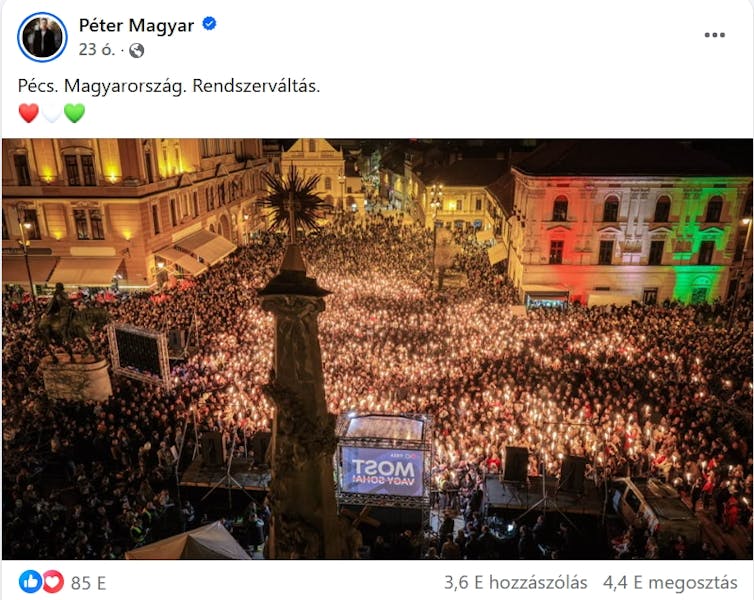
Viktor Orban, 62 ans, premier ministre depuis 2010, fait figure de représentant de l’ancienne génération face au leader du parti pro-européen Tisza, Péter Magyar, de 18 ans son cadet, actuellement en tête dans les sondages malgré la campagne particulièrement véhémente menée à son encontre par l’équipe au pouvoir. L’enjeu des législatives du 12 avril prochain dépasse la seule Hongrie, Orban étant depuis des années le leader du pays de l’UE le plus compréhensif à l’égard de Vladimir Poutine.
À quelques semaines des élections législatives hongroises du 12 avril 2026, la campagne électorale atteint son paroxysme dans un climat de tension palpable. Viktor Orban et son parti, le Fidesz, font face à un rival unique : Péter Magyar, président du parti Tisza (Respect et Liberté), qui surpasse largement le premier ministre dans les intentions de vote.
Selon le dernier sondage de l’institut Medián, Tisza devance le Fidesz de vingt points parmi les électeurs certains de voter et de onze points dans l’ensemble de la population – une situation inédite depuis l’arrivée au pouvoir d’Orban en 2010. On semble donc s’acheminer vers la fin d’une ère en Hongrie.
Péter Magyar, le rival d’Orban
L’entrée en scène de Péter Magyar en 2024, dans un contexte de crise politique et morale, a profondément recomposé les forces partisanes. Aux élections européennes de juin 2024, le parti Tisza a recueilli 29,7 % des suffrages, derrière le Fidesz‑KDNP, arrivé en tête avec 44,6 % des voix. L’opposition de gauche traditionnelle (Coalition démocratique, Parti socialiste, Dialogue) s’est effondrée à 8,2 %, tandis que le parti d’extrême droite Notre patrie a fait son entrée avec 6,7 %. Depuis lors, Magyar, aujourd’hui âgé de 44 ans, mène de front la structuration de son mouvement et une campagne hybride mêlant présence continue sur les réseaux sociaux et mobilisations dans l’espace public. Il a réussi à consolider son leadership auprès des électeurs de l’opposition.
D’abord ignoré, puis raillé par le pouvoir et ses cercles proches, Magyar est désormais pris très au sérieux, sans que le premier ministre ne le reconnaisse publiquement comme un véritable rival. Depuis 2024, les tentatives de déstabilisation à son égard se sont multipliées, visant sa personnalité et sa supposée incapacité à gouverner : il a été accusé de violence domestique à l’encontre de son ex-femme, de manque de maîtrise de soi, d’agressivité et d’instabilité psychologique. Gergely Gulyas, le porte-parole du gouvernement, a franchi une étape en le qualifiant de « mentalement dérangé ».
Loin de l’affaiblir, ces attaques produisent un effet boomerang : elles renforcent son image de résistance face au rouleau compresseur du Fidesz.
En février 2026, une ligne rouge est franchie avec une atteinte manifeste à la vie privée. Une photo énigmatique diffusée anonymement – montrant une chambre d’hôtel au lit défait et accompagnée du message « Coming soon » – a tenu le pays en haleine pendant plusieurs jours. Magyar a finalement affirmé que le pouvoir cherchait à le discréditer à l’aide d’une vidéo intime, tournée à son insu en août 2024, évoquant un « kompromat », c’est-à-dire une méthode de pression à la soviétique éprouvée. L’affaire a suscité une indignation généralisée et n’a pas entamé sa popularité dans les sondages. En même temps, l’attention médiatique a permis de détourner les projecteurs d’un scandale impliquant le gouvernement.
Le faux programme de Tisza : une arme de déstabilisation
Après l’échec des premières attaques ad hominem visant Magyar, le gouvernement a lancé en décembre 2025 une vaste campagne fondée sur un document fictif : un prétendu programme électoral du parti Tisza. Il s’agit d’un document de plus de 600 pages, dont l’analyse a montré qu’il a été généré par IA et qu’il est truffé d’incohérences de forme et de contenu. Peu importe : Orban l’a présenté comme le « programme secret » de son adversaire, et brandi dans ses vidéos diffusées sur TikTok une liasse de pages imprimées comme preuve que Tisza projetterait d’augmenter drastiquement les impôts. Malgré les démentis répétés, les ministres en ont fait un axe central de la campagne pour tenter de le discréditer.
Cette manœuvre intervient dans un contexte où le bilan de seize ans de gouvernance du Fidesz – économie stagnante, inflation élevée, services publics au bord de l’effondrement, scandales gouvernementaux récurrents – peine à convaincre.
Orban demande aux électeurs quatre années supplémentaires pour « achever le travail », avec pour horizon son projet, à l’instar du MAGA de Trump, de « rendre à la Hongrie sa grandeur ». Son ambition, a-t-il expliqué, est de « changer le destin de la Hongrie » pour en faire « le peuple le plus prospère d’Europe centrale ».
Le récit du Fidesz : une vision apocalyptique centrée sur l’Ukraine
Au cœur du discours du Fidesz se déploie un récit anxiogène où la guerre en Ukraine occupe une place centrale. Selon cette narration, l’Union européenne, de concert avec Tisza et le président Zelensky, pousserait la Hongrie dans le conflit, et en cas de victoire de Tisza, les contribuables hongrois financeraient l’effort de guerre tandis que des soldats seraient envoyés au front.
Ce choix binaire – paix sous le Fidesz versus guerre et désintégration nationale sous Tisza – s’appuie sur la proximité revendiquée d’Orban avec Donald Trump, présenté comme garant d’une ligne « pro-paix », contre les « pantins de Bruxelles ».
Dans ce récit de campagne, l’Ukraine, les Ukrainiens et le président Zelensky deviennent des figures de l’ennemi, tandis que Magyar apparaît comme le complice et serviteur de Zelensky, engagé dans un « pacte » contraire aux intérêts hongrois.
Les outils numériques amplifient cette rhétorique émotionnelle. Des vidéos générées par IA diffusent des messages alarmistes : l’une d’entre elles, particulièrement controversée, met en scène une fillette attendant le retour de son père auprès de sa mère en pleurs, suivie de l’image d’un peloton d’exécution où des gradés en uniforme de la Wehrmacht datant des années 1940 s’apprêtent à fusiller des soldats hongrois.
Bien que les bourreaux de ce récit soient censés être russes (puisque l’idée est d’avertir qu’en cas de victoire de Magyar, les Hongrois se retrouveront à guerroyer contre l’armée de Moscou), l’univers iconique et la mise en scène ravivent le traumatisme de la Seconde Guerre mondiale, notamment chez les personnes âgées, cible privilégiée du Fidesz.
Crise pétrolière : une dramatisation stratégique
L’interruption de l’acheminement du pétrole russe vers la Hongrie via l’oléoduc Droujba, endommagé par des frappes russes en Ukraine en janvier 2026, offre une nouvelle occasion de dramatisation. Orban présente cette situation comme des « représailles politiques » de Volodymyr Zelensky, en réponse au blocage hongrois de l’aide européenne et au refus d’exporter du diesel vers l’Ukraine.
Fin février, Orban annonce, sur un ton dramatique, avoir « ordonné le renforcement de la protection des infrastructures énergétiques critiques », évoquant de possibles « actions supplémentaires » ukrainiennes visant à « perturber le système énergétique hongrois ». Le ton s’intensifie rapidement : il qualifie l’incident de « blocus pétrolier », parle de « chantage » des Ukrainiens « capables de tout » et déclare même que la Hongrie est « attaquée ».
Parallèlement, une « pétition nationale 2026 », envoyée par courrier postal à l’ensemble des citoyens – doublée d’une campagne d’affichage 4×4 dans l’espace public – appelle à « dire non au financement de la guerre en Ukraine ». En mobilisant les moyens institutionnels de l’État à des fins électorales et en mettant en avant l’armée, le gouvernement suggère l’existence d’une menace extérieure réelle et imminente.
Les tensions culminent début mars avec la déclaration de Volodymyr Zelensky, excédé par le blocage de l’aide européenne : il évoque la possibilité de « donner les coordonnées de la [personne responsable] à l’armée ukrainienne pour que [leurs] gars l’appellent ». Interprétée comme une menace directe, cette déclaration provoque une crise diplomatique et politique. Orban déclare que les attaques ne visent pas sa personne mais la Hongrie, réaffirmant qu’elles ne sauront le détourner de sa mission de « protéger les familles hongroises ».
Le contre-récit de Tisza
Face aux messages de peur viscérale véhiculés par le Fidesz, Péter Magyar affiche une posture de fermeté en dénonçant toute ingérence étrangère, ukrainienne comme russe, pour défendre la souveraineté hongroise, condamnant fermement la sortie de Zelensky.
Contrairement à Orban, qui ramène la campagne vers la politique extérieure, Magyar se concentre sur la politique intérieure et propose un horizon d’espoir. Plus qu’une simple alternance, il promet un changement de régime politique – retour à l’État de droit, démantèlement de la corruption systémique, réintégration européenne et construction d’un pays fonctionnel. Les élections apparaissent ainsi comme un référendum pour ou contre le système Orban.
Parallèlement, Magyar cultive une image de compétence et de sérieux. En février 2026, après avoir présenté une série d’experts dans les principaux domaines (économie, agriculture, santé, politique sociale, relations internationales), il a dévoilé son programme détaillé, précisant les priorités du gouvernement Tisza en cas de victoire électorale ainsi que les réformes structurelles envisagées. Cette stratégie contraste avec l’approche affective du Fidesz, qui « prend les gens aux tripes » en exacerbant les sentiments négatifs.
Une société polarisée entre craintes et espoir
La société hongroise se trouve aujourd’hui profondément divisée, dans un contexte de polarisation extrême où les électeurs des deux camps semblent vivre dans des réalités parallèles, rendant tout dialogue impossible. Les mensonges et la violence verbale dominent cette campagne, tandis que le premier ministre, se tenant au-dessus de la mêlée, refuse catégoriquement tout débat.
Malgré cette fracture, jamais une élection n’a suscité un tel engouement populaire : les sondages annoncent une participation record, portée par l’espoir d’une alternance chez les électeurs de l’opposition. Cet optimisme reste cependant teinté d’incertitude, liée aux craintes d’interventions étrangères et d’« opérations sous fausse bannière » susceptibles de semer le doute parmi les électeurs encore indécis. Vladimir Poutine et Donald Trump ont exprimé un soutien explicite à Orban. L’incident diplomatique avec l’Ukraine tombe à pic pour alimenter la psychose guerrière du Fidesz, offrant à Orban un argument massue pour les dernières semaines de campagne. Dans ce contexte tendu, Péter Magyar mobilise largement à chaque étape de sa campagne, affichant force et détermination. Son appel – « N’ayez pas peur » –, revêt une résonance particulière : un encouragement à oser un tournant historique.
Renata Varga ne travaille pas, ne conseille pas, ne possède pas de parts, ne reçoit pas de fonds d’une organisation qui pourrait tirer profit de cet article, et n’a déclaré aucune autre affiliation que son organisme de recherche.
Source: The Conversation – Africa – By Suleman Lazarus, Visiting Fellow, Mannheim Centre for Criminology, London School of Economics and Political Science
For a young man growing up in Ghana or Nigeria, few dreams burn brighter than becoming a professional footballer. Icons like Michael Essien (Ghana), Jay-Jay Okocha (Nigeria) and Nwankwo Kanu (Nigeria) didn’t just win trophies. They escaped poverty, provided for their families, and earned the respect of entire communities.
Football, in much of west Africa, isn’t just a sport. It is a promise.
This promise has led to an elaborate trafficking scheme that claims many young, African victims every year. Victims are lured with promises of football trials, academy placements or opportunities in Europe, only to end up in exploitative conditions in Nigeria. They may be confined, stripped of their documents, and forced to solicit money from relatives, while their devices are used in further fraud schemes run by traffickers.
I am a criminologist who has also researched the socio-cultural dynamics of online offending and victimisation for over a decade. In a recently published paper I examined how deceptive football recruitment can be a form of trafficking.
The paper focused on the case of 76 young Ghanaian footballers who were trafficked to Nigeria for fake trials in 2025 (before being rescued). I examined how digital tools, legal loopholes and emotional appeals were used to entrap the victims.
I concluded that this case was unlikely to be exceptional but part of a wider, emerging form of exploitation in which traffickers weaponise young people’s sporting ambitions through digital deception. That conclusion draws not from this case alone, but from a wider body of research showing how football ambitions can be channelled through exploitative recruitment networks, deceptive intermediaries, and precarious migration pathways.
Recruiters used Facebook posts, WhatsApp messages and targeted digital ads to present themselves as legitimate scouts, complete with the language, branding and rituals of real sports agencies.
When the victims arrived, the reality was very different. Their phones and identity documents were confiscated. They were confined to overcrowded compounds and cut off from the outside world. They were then coerced into contacting their own relatives and fabricating stories about training fees and travel costs to extract money from families back home. Their phones – and the trust embedded in their contact lists – were turned into instruments of fraud.
Some were pressured to recruit their peers, turning the scheme into something resembling a coercive multi-level marketing operation. Eventually, authorities intervened and the victims were rescued.
But the damage – financial, psychological and social – had already been done.
Why football makes such effective bait
To understand why this works, you have to understand what football means in this context. For young men with limited access to education or formal employment, football represents a socially sanctioned path out of precarity. Families invest emotionally and financially in these dreams. To be offered a trial with a club in another country is not just an opportunity. It is a validation of everything a family has hoped for.
Traffickers understand this intimately. They don’t need to drag victims across borders by force. They simply need to make an offer that feels too real, and too meaningful, to question. The coercion comes later, once victims are far from home, stripped of documents and dependent on their captors.
Sport-enabled trafficking barely registers in anti-trafficking policy or academic research. Most frameworks still focus on sexual exploitation, domestic servitude and irregular migration to Europe.
Intra-African trafficking, particularly through digital deception and aspirational manipulation, remains largely invisible.
There is also a structural problem. In both Ghana and Nigeria, cybercrime enforcement and anti-trafficking responses operate in separate silos. But this case shows how those two worlds overlap: digital recruitment, physical confinement and coerced online fraud are all part of the same operation.
Treating them as distinct policy problems means traffickers can exploit the gaps between them.
Research shows that some Nigerian cybercriminals move to Ghana to expand and protect their operations. The free-movement protocols of the Economic Community of West African States, designed to promote regional integration, also play an inadvertent role. With minimal border checks between Ghana and Nigeria, traffickers can move victims across borders with ease and near impunity.
What needs to change
Policymakers have been cautious about linking football to trafficking, partly because football is widely seen as a source of hope, prestige and opportunity in many communities. But that reluctance is itself a vulnerability.
Secondly, awareness campaigns need to reach not just young men, but their families – the people who unwittingly provide the emotional and financial fuel that traffickers exploit.
Dr Suleman Lazarus is affiliated with the Police Foundation. This article was written in an independent academic capacity and does not represent the views of the author’s institutional affiliation.
South African-born literary scholar Dennis Walder recently published an evocative life story called Amid the Alien Corn: A Son’s Memoir. In it, he tracks how, even as a child, he became aware that his mother Ruth was withholding something of herself, and her past, from him. This disquiet comes to a head after her death.
The book paints a rich and entertaining description of Walder’s childhood and young adulthood. He grew up near Cape Town in the 1940s and 1950s with his Namibian-born, German-speaking mother and estranged Swiss-born father. But, as you read, this shifts to a single-minded quest to get to the bottom of the contradictory accounts Ruth has given of her past.
After completing a degree at the University of Cape Town in the early 1960s, Walder decided to leave apartheid South Africa, vowing never to return. In 1981, he was nevertheless drawn back to interview renowned playwright Athol Fugard for a book, and to take stock of what was happening in the country.
In fact, Amid the Alien Corn is patterned by departures and returns between South Africa, the UK, Namibia and Germany. It offers fascinating glimpses into the social and political landscapes Walder moved between. In South Africa, there were interactions with members of the almost forgotten African Resistance Movement. There are also vividly described encounters with cultural figures, among them Gibson Kente and Nadine Gordimer.
But it’s his mother that’s at the heart of much of this beautifully written book. As a scholar of South African literature, I was impressed by the complexity it achieves. The reader is drawn into Walder’s search for the truth about Ruth’s life, but he also warns us:
Nostalgia poisons your ability to understand your place in your own narrative, therefore in history too, while drawing you in.
This idea, that emotion-laden memories might hide the truth about one’s life story and its place in history, is what I consider one of the most rewarding aspects of the memoir.
Beyond a memoir
The book’s prologue begins with Walder’s journey to Cape Town in 1992 when he was 50, to bury Ruth. He moves between his own coming-of-age experiences and his attempts to uncover information about Ruth and her parents, who moved to Namibia in the early 1900s from Germany. In the process, Walder makes us aware of how personal histories are connected with wider events.
The cover is dominated by a striking black and white photo of Ruth, who appears to exude self-sufficiency, even determination. She has an enigmatic not-quite smile and holds the viewer’s gaze. This easy first impression is soon unsettled by references to her fragility, her often contradictory accounts of past events. Her “tight smile” indicates a determination to keep words unspoken.
As Walder later reminds us, the French philosopher and scholar Roland Barthes describes family photographs as offering only “fugitive knowledge”. Our interpretations of what we see depicted are unreliable.
At the same time, the title (from English poet John Keats’ Ode to a Nightingale), invokes the biblical Ruth, a figure of exile, loss, displacement and unbelonging.
This sense of unbelonging is shared by an intellectually precocious and sensitive young Walder. He’s uncomfortable in his own skin while growing up in apartheid South Africa and its oppressive race laws.
Family secrets
Walder’s quest to know more about Ruth’s past leads him and his wife Mary MacLeod to the archives and to genealogy researchers who trace family origins in Windhoek, Cape Town, Bad Liebenstein and Berlin.
Without compromising, he grapples with the possibility that his search might uncover his family’s complicity with colonial history.
His task is made all the more difficult by Ruth’s evasiveness. She recalls the family history selectively. She falsely claims her father Albert Liebenstein was an only child, as was she. Like the Stolperstein monuments (literally stones that you stumble across) in German cities to commemorate the places where holocaust victims and survivors last lived, Walder’s pursuit leads to unexpected discoveries and living relatives he hadn’t been aware of.
He notes his unease at the growing sense that Ruth’s memories, as told to him or imagined, are becoming his own, uninvited. Taking on Ruth’s memories is a way of mourning a mother he felt he did not really know or understand.
Ruth’s presence after death lingers in places like the grand Villa Lanwers in Windhoek, owned by her father when he was a successful tradesman. Now listed as a heritage house, it becomes a site of memory he feels it is “a duty not to forget” on her behalf.
His grandmother Margarethe’s grave in Windhoek becomes the site of another burial. The couple place a headstone there in memory of Ruth and her mother and father.
Yet there are also bitter realities here, given that the mass graves of the indigenous Herero and Nama inhabitants executed by German colonisers during the century’s first genocide were not dignified with burial rites.
It would be a spoiler to tell what Walder discovers. But the reason Ruth kept her secret remains unclear by the end. One could speculate that it was to protect her family, or herself, or that she simply tried to erase a personal history that felt too difficult – or even too shameful – to live with.
Whatever the “truth” of her silence may be, the son’s memoir is, if not a record, a memorial to Ruth’s life. But the book’s dedication, “For the Forgotten”, takes in a much wider sweep of humanity, across time and place. It prompts readers to reflect on similar silences within their own and other families.
Miki Flockemann does not work for, consult, own shares in or receive funding from any company or organisation that would benefit from this article, and has disclosed no relevant affiliations beyond their academic appointment.
Source: The Conversation – Africa – By Christian Moretti, Senior Researcher, Paul Scherrer Institute PSI, Swiss Federal Institute of Technology Zurich
The cost of electric vehicles (EVs) has long looked like a barrier to adoption in Africa. Most researchers didn’t expect battery power to become affordable enough to replace petrol or diesel on the continent before 2040.
But falling battery costs, surging global EV production and abundant solar resources are changing that view.
Our new research shows that EVs, particularly when paired with off-grid solar charging, may be cheaper than petrol- or diesel-powered cars in many African countries in the not-so-distant future. However, several factors are still limiting up-take. We argue that financing is a big one.
We are researchers working on energy policy, life-cycle assessment and low-carbon technologies at ETH Zürich and the Paul Scherrer Institute PSI. With African university partners, we’ve spent the past two years examining whether African countries can proceed directly to electric mobility, bypassing older technology. This study came out of the need for context-specific evidence to assess whether EVs can play a meaningful role in the region’s transport future. This could improve local air quality and also transform the emissions trajectory of one of the world’s fastest-growing transport sectors.
The main challenge is not whether electric mobility makes sense technically for the African context – it does – but rather, how to make financing work at scale.
High interest rates, risk premiums and limited access to long-term credit still make electric vehicles unaffordable for most Africans. But in lower-risk countries such as Botswana, Mauritius and South Africa, the financing conditions today are already close to making costs the same for electric and fossil fuel cars.
Our research shows that if an EV is purchased with cash upfront, excluding taxes, in certain scenarios it would be cost-competitive already today.
There is a need for focused research into scalable financing solutions to unlock accelerated growth of EVs in Africa. We outline four potentially relevant points for researchers, African policymakers and international finance institutions.
Financial de-risking alongside indirect public subsidies
Our research looks at the total cost of ownership competitiveness of EVs across 52 African countries in six passenger vehicle segments: small and medium two-wheelers; small, medium, and large four-wheelers; and a minibus segment. We also looked at three timeframes: 2025, 2030 and 2040.
We found that, for more than half the countries examined, financing costs would need to fall by 7-15 percentage points for EVs to reach cost parity with conventional vehicles by 2030. That drop can reduce lifetime financing expenses by thousands of dollars, often enough to shift a vehicle from being unaffordable to firmly within reach.
Technology risk is no longer the problem: EVs are now commercially mature and widely used around the world and increasingly in Africa.
Country-specific risk is more the problem. It reflects several perceived or actual investment risks such as macroeconomic or institutional instability, currency volatility, or unfamiliarity with EV business models among lenders, which results in elevated purchase prices.
Indirect subsidies such as tax or import duty exemptions for EVs are helpful and popular in many African countries.
But to accelerate and sustain EV adoption, countries may also need tools that transfer financial risk from private lenders to public actors. This could lower the overall price of the vehicle.
Among these tools could be credit guarantees, concessional loans and blended finance structures. In practice, this means governments or other public financial institutions would absorb part of the risk associated with EV loans. This would make lenders feel more comfortable to finance EVs. By absorbing some risk, these instruments could lower interest rates to levels that make EVs more affordable – speeding up adoption and shortening the window where public subsidies are needed.
EVs as financial assets
EVs are well suited to de-risking. Cars and charging systems are standardised assets with predictable cash flows. Loans can be bundled and securitised, meaning individual vehicle loans are pooled together and converted into tradable financial products. A similar thing happens with mortgages, but not with most infrastructure projects. In this sense, EV financing could be simpler and more scalable than traditional development finance.
Packaging thousands of small EV loans into investable products could attract pension funds, insurers and impact investors – capital pools far larger than traditional development aid.
Multilateral development banks play a critical role here, not as primary lenders but as market makers. By helping structure financial products, setting standards and offering partial guarantees, they can crowd in private capital at scale.
Public financing to reinforce private sector momentum
Private companies are already proving that electric mobility can work in lower-risk African markets.
In Kenya and Rwanda, firms offering battery-swapping, leasing and pay-as-you-go models for electric two- and three-wheelers are expanding rapidly. These business models reduce up-front costs for consumers and generate operating data that builds confidence among investors.
The opportunity now is to secure public funding to build on these early successes. Private firms can bundle vehicle loans and charging assets into regional portfolios, spreading risk across countries and customer segments. Once these portfolios are established, public actors, like development banks or climate funds, could scale them, particularly in higher-risk markets. They could help to, for example, build pan-African EV financing platforms that channel capital smartly across high and low risk environments.
EV policies and country-specific financing conditions
Financial de-risking efforts for EVs in Africa must be developed along with broader EV policy. Clear, predictable national policy frameworks can reduce investment uncertainty and directly lower financing costs.
Kenya’s National Electric Mobility Policy is a leading example. In addition to offering incentives to increase EV adoption, the policy strengthens regulatory frameworks and supports expansion of charging infrastructure. It encourages local EV manufacturing and assembly too, potentially helping to create opportunities for green economic growth.
This does not mean every country needs aggressive EV mandates tomorrow. Within the continent, there are strong cross-country differences in both financing needs and policy environments for e-mobility. Some countries may require more public intervention than others.
Effective policy measures may include:
temporary import duty exemptions
targeted purchase incentives for lower-income buyers
fuel tax reforms
clear strategies for phasing out high-polluting used vehicles.
Policies should be time-bound and regularly reviewed, avoiding long-term fiscal burdens as EV prices fall naturally.
Targeting incentives towards smaller, mass-market vehicles can also improve equity. This would ensure that public support benefits first-time buyers rather than wealthier households.
The evidence is clear, Africa does not need a technological breakthrough to electrify passenger transport. What it needs is cheaper capital and supportive policy environments for accelerated EV adoption.
Christian Moretti acknowledges funding from the ETH Mobility Initiative.
Bessie Noll acknowledges funding from the ETH Mobility Initiative.
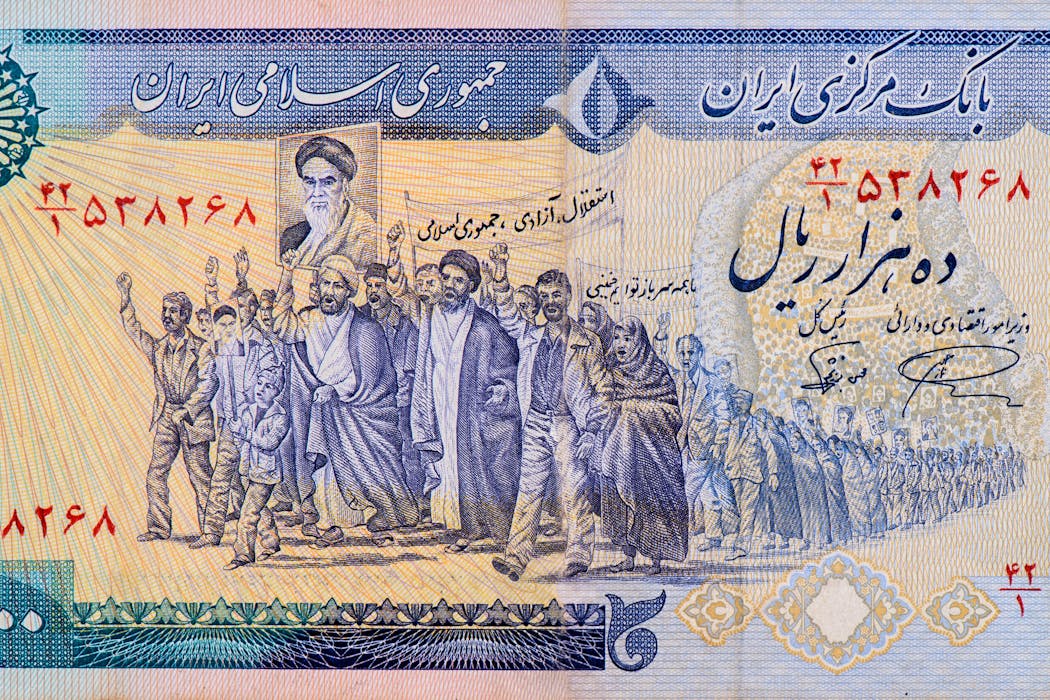
Le billet de 10 000 rials iraniens en 1981 est paré d’illustrations évoquant les manifestations populaires en faveur de l’ayatollah Khomeini en 1979.PrachayaRoekdeethaweesab/Shutterstock
Les inquiétudes associées aujourd’hui à l’envolée des prix de « l’or noir » en raison de la guerre entre les États-Unis, Israël et l’Iran invitent à un retour sur l’épisode du choc pétrolier de 1979. Le shah d’Iran Muhammad Reza Pahlavi est renversé. L’ayatollah Khomeiny proclame la naissance de la République islamique d’Iran. Alors, la parenthèse politique et sociale ouverte en Iran il y a quarante-sept ans va-t-elle se refermer avec un troisième choc pétrolier ?
Ce « second choc pétrolier » est associé aux changements politiques intervenus en Iran à la fin des années 1970. Il constitue un choc dit d’offre, c’est-à-dire une perturbation économique non anticipée qui touche les coûts de production des entreprises, avec pour conséquence une forte inflation et une hausse du chômage.
Si le déclenchement de la guerre du Kippour – par la Syrie et l’Égypte – début octobre 1973 avait été soudain, les troubles sociaux iraniens émergent plus progressivement. Dès mai 1978, des manifestations se déroulent pour contester le régime du Shah d’Iran, mais les prix mondiaux de l’or noir restent stables autour de 12 à 13 dollars le baril.
Le 8 septembre 1978 marque le début de la révolution iranienne, ou révolution islamique, cette journée connue sous le nom de « Vendredi noir ». De nombreuses protestations et grèves perturbent la production pétrolière iranienne qui passe de 6 millions de barils jours à moins de 400 000 entre septembre 1978 et février 1979. L’effet sur les prix est cette fois très significatif, ils bondissent de 50 % sur le dernier trimestre de l’année 1978.
Les évènements s’accélèrent encore début 1979. Le chef de l’état, Muhammad Reza Pahlavi, est contraint de fuir le pays le 16 janvier, après trente-huit ans de règne. Les prix franchissent la barre des 20 dollars. Le retour de l’ayatollah Khomeiny, chef religieux de l’opposition réfugié en Irak puis en France, conduit à la proclamation de la République islamique d’Iran le 1er avril 1979.
Rôle clef de l’Opep
La production iranienne est paralysée et, dans le même temps, les pays de l’Organisation des pays exportateurs de pétrole (Opep) usent de leur pouvoir de marché pour amplifier le mouvement de hausse. Le 28 juin 1979, après une longue réunion à Genève, les treize pays membres de l’organisation annoncent une hausse de plus de 20 % du prix du pétrole. Fin 1979, les prix dépassent les 40 dollars, soit un niveau extrêmement élevé. En effet, 40 dollars de 1979 avaient le même pouvoir d’achats en marchandises et services que 160 dollars aujourd’hui.
Le choc de 1973 avait révélé à l’Opep sa capacité d’influence sur les cours mondiaux. Créée en 1960 à Bagdad à l’initiative de cinq pays – Arabie saoudite, Koweït, Venezuela, Irak et Iran –, l’organisation attire peu à peu de nouveaux pays : le Qatar en 1961, l’Algérie en 1969, Dubaï en 1973 et le Gabon en 1975. Elle organise et contrôle les prix en vue d’accroître ses gains – les pétrodollars – au milieu des années 1970.
Hausse de l’inflation, baisse des marges des entreprises
En matière de conséquences macro-économiques, le choc de 1979 n’est pas l’exacte répétition de celui de 1973. La hausse des prix est moins forte (entre septembre 1973 et janvier 1974, les prix avaient été multipliés par quatre) et davantage étalée dans le temps, même si au départ le niveau des prix est beaucoup plus élevé.
Cours annuel du pétrole entre 1970 et 1980 (en dollars). Finance pour tous
Les mécanismes récessifs d’un choc pétrolier sont assez faciles à identifier. La hausse des prix de l’énergie peut se traduire par une hausse des prix de vente des entreprises et/ou une baisse de ses marges selon le degré de concurrence sur le marché mondial. Comme en 1974-75, la compression des marges des entreprises a freiné l’investissement des entreprises, la demande globale et au final l’activité. Entre 1974 et 1975, le taux de marge des sociétés non financières étaient passés de 29,6 % à 26,6 %, entre 1979 et 1980, il glisse de 26 à 25,3 % seulement.
En 1979, la flambée des prix a accéléré une inflation occidentale déjà forte (à deux chiffres pour beaucoup de pays) et contribué à une prise de conscience de ses dangers. En 1979, le taux d’inflation en France reste de 10,8 % puis 13,6 % en 1980.
Ronald Reagan et Margaret Thatcher
Il est délicat de quantifier l’influence du choc sur l’inflation et la croissance économique car à la même période et en réaction les États-Unis et le Royaume-Uni, bientôt suivis par les autres pays industriels, mettent en œuvre une politique monétaire de grande rigueur. Ce sont les années Ronald Reagan et Margaret Thatcher, élus respectivement le 20 janvier 1981 et le 4 mai 1979. Les pays les plus industrialisés accordent désormais la primauté à l’objectif de stabilité des prix. À long terme, cette stabilité est censée créer un environnement favorable au développement de l’activité économique.
Fin 1979, les États-Unis mettent en œuvre une politique monétaire très restrictive : les tarifications des prêts accordés aux entreprises atteignent 20 % à New York. L’investissement productif et la consommation sont freinés. La valeur du dollar augmente.
Les années 1980-1982 sont marquées par un ralentissement du rythme de la croissance. Pour l’ensemble de l’OCDE, la croissance du PIB atteint 1,9 % en 1980, 1,9 % en 1981 et 0,4 % en 1982, alors qu’elle était supérieure à 4 % entre 1976 et 1979. Partout les taux de chômage grimpent. En France, il passe à 5 %. Bien entendu, ce ralentissement freine la demande de pétrole.
La Norvège et le Mexique, nouveaux producteurs de pétrole
À partir de fin 1981, l’Opep paraît perdre, peu à peu, le contrôle de la formation des prix. Jusqu’en 1985, seules les restrictions volontaires de production appliquées par l’Arabie saoudite parviennent à endiguer le reflux des cours. En 1986, la décision saoudienne de ne plus soutenir les cours en restreignant les quantités est à l’origine d’un contre-choc pétrolier. Les prix s’établissent autour de 10 dollars en 1986 et oscilleront autour de 15 dollars les années suivantes (contre près de 40 dollars en 1979).
Pour l’Europe, les effets sont amplifiés par la dépréciation du dollar à la suite des accords du Plaza en septembre 1985. Par exemple, en 1986, le dollar perd 18 % de sa valeur face au Deutsch Mark. Ce retournement de tendance résulte aussi de l’apparition de nouveaux producteurs en mer du Nord et en Amérique latine, et d’une stratégie d’économie d’énergie engagée en Europe. Au Mexique, les réserves prouvées de pétrole passent de 6,33 milliards de barils en 1975 à 72 milliards en septembre 1981. En Norvège, Johan Sverdrup est un gisement découvert en mer de Nord avec des réserves d’environ 2,7 milliards de barils équivalents pétrole.
La fin des chocs pétroliers ?
Depuis, on a parlé d’un nouveau choc pétrolier à l’été 2008, lorsque le prix du baril a dépassé les 150 dollars. Mais la hausse était cette fois-ci provoquée par une progression de la demande, en particulier de pays émergents dans un contexte de peak oil (on pensait que la production devait chuter du fait d’un épuisement imminent des gisements). Quelques semaines plus tard, la crise des subprimes a fortement réduit la demande et éloigné la menace.
Le marché du pétrole est coutumier des surprises et des contre-pieds en raison de ses caractéristiques en termes d’élasticités, de la complexité des mix énergétiques, des réactions de la demande et des pays exportateurs. Aujourd’hui l’ampleur du choc est tributaire de la durée et de l’intensité du conflit armé. Il peut s’estomper aussi vite qu’il est survenu en cas d’arrêt des opérations, avoir des conséquences récessives fortes s’il dure, car les économies européennes et asiatiques restent dépendantes des énergies fossiles. À ce jour, les pays exportateurs de pétrole gagnants seraient la Russie et les États-Unis.
La parenthèse politique et sociale ouverte en Iran en 1979 va-t-elle ou non se refermer avec un troisième choc pétrolier ?
Bertrand Blancheton ne travaille pas, ne conseille pas, ne possède pas de parts, ne reçoit pas de fonds d’une organisation qui pourrait tirer profit de cet article, et n’a déclaré aucune autre affiliation que son organisme de recherche.
Le référendum local est le seul outil qui permette aux citoyens, à l’échelle locale, de prendre des décisions politiques contraignantes pour leurs représentants. Longtemps marginal, il connaît aujourd’hui un regain d’intérêt, porté par une demande croissante de démocratie directe.
Il s’agit tout d’abord du seul outil prévu par la loi, avec une forme d’initiative indirecte, qui organise la participation citoyenne en dehors des élections. Son existence est non seulement détaillée dans le code des collectivités territoriales, mais il est même sacralisé dans la Constitution depuis 2003. En outre, le référendum local est le seul outil en France qui permet aux citoyens d’avoir un pouvoir de décision capable de contraindre le conseil municipal, ou les autres assemblées locales.
Le fonctionnement du référendum local est simple : il s’agit d’un vote organisé par une collectivité territoriale pour permettre aux habitants de se prononcer sur des décisions relevant de sa compétence.
Un outil de gouvernance traditionnellement peu utilisé
L’usage du référendum local est traditionnellement très rare. Plusieurs raisons expliquent le manque d’attrait de ce dispositif.
Tout d’abord, l’appel au vote des électeurs est utilisé lorsqu’il y a un conflit institutionnel. Par exemple, les conflits entre le président de la République et l’Assemblée nationale ou le Sénat sont à l’origine des référendums initiés par Charles de Gaulle. Or, au niveau local, les maires et leur majorité n’ont pas en face suffisamment de contre-pouvoirs pour qu’il y ait un conflit institutionnel.
Deuxièmement, le coût de l’organisation du référendum revient entièrement à la collectivité qui l’organise. Ce coût pourrait être minimisé en l’organisant en même temps qu’une élection, comme le font les États américains, mais la loi française l’interdit. Pour des collectivités à la marge de manœuvre financière très réduite, l’organisation d’un référendum local peut être très dissuasive.
Troisièmement, le résultat n’est juridiquement valide que si la participation atteint au moins 50 % des électeurs inscrits. Autrement, il reste simplement consultatif. Pour comprendre à quel point cette contrainte est rédhibitoire, il suffit de rappeler que le dernier président de la République élu avec plus de 50 % d’électeurs inscrits était Jacques Chirac en 2002.
Une pratique en hausse depuis 2018
Malgré ces contraintes, la dynamique s’est nettement renforcée après 2018, avec le mouvement des gilets jaunes et sa revendication du Référendum d’initiative citoyenne, ou RIC permettant aux citoyens de proposer, abroger ou soumettre une loi au vote populaire sans passer par l’initiative des autorités politiques.
En 2022, 74 consultations et référendums locaux ont été recensés. En 2023, 55 scrutins ont encore été organisés. Ces chiffres doivent être interprétés avec prudence, car ils ne couvrent pas nécessairement l’ensemble des initiatives locales et n’identifient pas avec précision les référendums locaux. Ils témoignent néanmoins d’une intensification nette par rapport aux années précédentes, même si, rapporté aux 34 875 communes françaises, le phénomène demeure toujours minoritaire.
Le profil des communes qui recourent au référendum local est relativement stable. Les consultations sont plus fréquentes dans les petites et moyennes communes, souvent rurales ou périurbaines, où la proximité entre élus et habitants est plus forte. Dans ces contextes, la participation dépasse parfois celle observée dans les grandes villes.
Les sujets soumis au vote sont généralement très concrets. Il peut s’agir de l’implantation d’éoliennes, de projets commerciaux, d’aménagements routiers, de la création d’équipements publics ou encore de changements d’intercommunalité. Les électeurs sont appelés à se prononcer sur des décisions qui affectent directement leur environnement immédiat.
L’usage du référendum local est par ailleurs transpartisan. Des maires sans étiquette y ont recours aussi bien que des élus issus de partis nationaux. L’instrument ne correspond donc pas à une orientation politique particulière. Il est mobilisé avant tout comme un outil de gestion, de légitimation ou d’arbitrage.
Un rouage dans une demande de démocratie directe
L’usage croissant des référendums est aussi lié à une demande croissante de démocratie directe. La popularité du référendum d’initiative citoyenne (RIC), qui permettrait aux citoyens de soumettre une proposition à référendum dès lors qu’elle recueille le soutien d’un nombre suffisant de signataires, a relancé le débat sur les instruments de démocratie directe en France. Mais le RIC n’est pas reconnu légalement dans l’architecture institutionnelle française.
Dans ce contexte, le guide du RIC local, initialement commandé par la ville de Grenoble, suggère de combiner le référendum local – légalement initié par le maire – avec le droit de pétition, pour simuler un RIC : le maire s’engagerait ainsi à organiser un référendum local toutes les fois qu’un seuil de signature a été atteint.
Sur la base de ce rapport, la ville de Grenoble a ainsi expérimenté en 2016 une votation citoyenne portant sur la tarification des parkings. La municipalité avait toutefois choisi de recourir à une consultation informelle plutôt qu’au référendum local prévu par la loi, dont l’organisation est plus coûteuse et juridiquement plus contraignante. Ce choix a été également celui du dispositif mis en place par le département de la Gironde. À l’inverse, les villes de Poitiers ou de Nancy, se sont engagées sur le déclenchement d’un référendum local suite à des pétitions soutenues, respectivement, par 8 % et 10 % des habitants. Avec ces seuils étant très élevés, toutefois, aucun référendum n’a vu le jour.
Une promesse de campagne sous contrainte
La place de la démocratie directe et du référendum local dans la campagne des municipales de 2026 semble encore plus importante qu’en 2020 grâce non seulement à son succès populaire après les revendications liées au mouvement des gilets jaunes, mais aussi à quelques mouvements qui en font la promotion. Ainsi, l’organisation Solution démocratique, fondée par l’un des coauteurs de cet article, a initié une série de vidéos qui interviewent les maires sortants et des candidats pour mieux connaître leurs intentions en matière de démocratie directe. De son côté, le Portail municipal démocrate apporte une charte et un recensement des communes mettant déjà en place des principes de démocratie directe. Aussi, l’association Clic-Ric pousse les candidats à inscrire dans leur programme des formes de consultations d’initiative citoyenne et le collectif Espoir-Ric pousse même à organiser des « Ric sauvages ». Du côté des partis politiques traditionnels, la France Insoumise considère le référendum d’initiative citoyenne comme une promesse commune de ses candidats, sans pour autant en préciser la portée et les modalités. De même, sans en faire une condition programmatique, de nombreuses listes, notamment écologistes ou socialistes, mais surtout « citoyennes », portent aussi cette revendication.
La démocratie directe est aujourd’hui perçue comme un moyen de dépasser les limites de la gouvernance démocratique actuelle. Bien qu’au niveau municipal, surtout dans un pays centralisé comme la France, elle ne peut exprimer pleinement ses potentialités, les élections locales sont aussi celles où il est le plus facile, pour chaque citoyen, de s’investir en tant que candidat. Le prochain mandat pourrait être l’occasion d’explorer ces pratiques bien connues chez nos voisins suisses ou allemands.
Dans ces pays, les instruments de démocratie directe locale sont depuis longtemps beaucoup plus institutionnalisés. En Suisse, les référendums et initiatives populaires font partie du fonctionnement ordinaire des communes. En Allemagne, plusieurs Länder permettent également aux citoyens de déclencher des référendums locaux à partir d’initiatives populaires.
Raul Magni-Berton a co-fondé les mouvements Solution démocratique et Espoir-RIC. Il a conseillé certaines villes comme Poitiers et Grenoble, ainsi que des députés sur la façon d’introduire la démocratie directe dans la Constitution. Il a reçu des financements de la Commission européenne, en tant que membre de l’Horizon Europe Twin4dem, pour étudier les phénomènes de recul démocratique. Il est membre de l’ANR Plutobias, qui étudie l’influence de l’argent en politique.
Christophe Premat a donné des interviews à l’association objectif RIC en 2020. Il a été membre de l’association Mehr Demokratie en Allemagne de 2006 à 2016 qui promeut l’initiative populaire et le référendum.