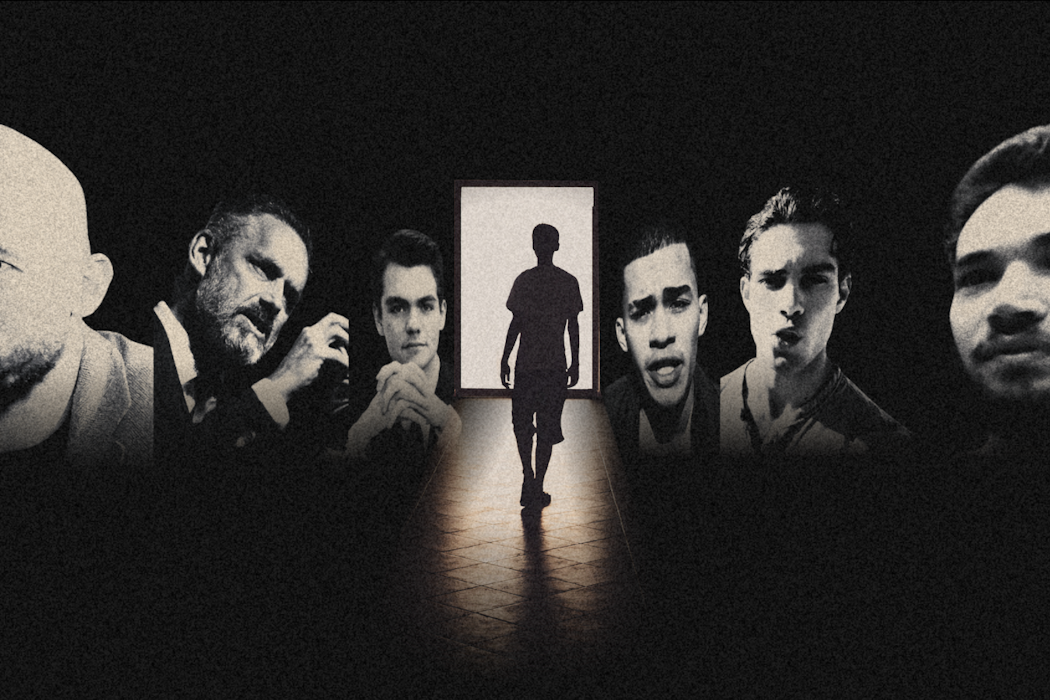
Propulsé par les médias sociaux, le masculinisme sort de l’ombre et trouve un écho dans la sphère publique

Source: The Conversation – in French – By Léa Clermont-Dion, Professeure associée en éducation spécialisée en études féministes, Concordia University

En dix ans, le masculinisme est passé de la marge à la visibilité. Ses discours, amplifiés par les réseaux sociaux, façonnent désormais une partie de l’espace public.


« Cette liste des femmes à abattre est celle de Marc Lépine vue du ciel. » Cette phrase me revient parfois en boucle. Elle date d’il y a dix ans.

Cette assertion n’a rien de banal. Elle provient d’un homme aux affinités idéologiques proches du mouvement incel — les « célibataires involontaires » — appartenant à la grande mouvance masculiniste. Cet individu s’était cru légitime de la prononcer lorsque la romancière Marie-Hélène Poitras et moi avions publié Les Superbes : une enquête sur le succès et les femmes. Le plaidoyer avait le mérite d’être clair : celles que nous avions interviewées dans ce livre méritaient d’être éliminées.

La haine exprimée par cet homme sur le réseau social Twitter (aujourd’hui X) avait mené à une enquête de la Sûreté du Québec, classée sans suite. Ce commentaire annonçait déjà un environnement en ligne hostile.

Comme chercheuse à l’Université Concordia, j’étudie avec mon équipe les cyberviolences fondées sur le genre et la manosphère — cette constellation de forums, de groupes et d’influenceurs unit par une idéologie masculiniste et participant à l’orchestration d’attaques coordonnées sur les réseaux sociaux.


À lire aussi :
« Elle l’a bien cherché » : que disent les incels de la série Adolescence ?


Prolifération des discours masculinistes

Une décennie plus tard, ce commentaire se noierait presque dans la masse des propos masculinistes que nous observons aujourd’hui en ligne tellement ils affluent. Le masculinisme est aussi un vecteur de cyberviolences faites aux femmes tel que démontré par le dernier rapport du Haut Comité sur l’égalité, en France. Doit-on rappeler que, selon une étude majeure publiée par The Economist Intelligence Unit, 85 % des femmes ont vécu de telles violences ?

Depuis la première apparition en ligne de ce type de propos, le masculinisme s’est popularisé. Par exemple, depuis 2016, Andrew Tate est devenu une figure de proue de ce mouvement. Ses vidéos ont été vues plus de 11,4 milliards de fois sur sa page TikTok, notamment par des jeunes de la génération Z. Parmi ses nombreuses déclarations incendiaires, Tate a notamment suggéré de retirer le droit de vote aux femmes parce qu’elles avaient voté en majorité pour Kamala Harris lors de la présidentielle américaine de 2024.

Si ce phénomène est largement répandu, il demeure mal compris. Pour plusieurs, le masculinisme est l’équivalant du féminisme. Il constitue plutôt un contre-mouvement politique qui s’oppose aux avancées des droits des femmes, comme le définissent les chercheurs de l’UQAM Mélissa Blais et Francis Dupuis-Déri, invoquant ce qu’il qualifie de « crise de la masculinité ».

Cette « crise » est analysée par les adeptes de ce mouvement comme un recul des rôles masculins traditionnels dans la société. Les hommes y seraient relégués à des positions subalternes, piétinés par les femmes qui occupent une plus grande place dans les sphères de pouvoir et de l’économie. Ce discours victimaire forme le socle idéologique du masculinisme, qui revendique une réappropriation des privilèges et du pouvoir que les hommes auraient, selon ses partisans, perdu au profit des femmes.


À lire aussi :
Il faut qu’on parle de la manière dont on parle des incels


Plusieurs adeptes du masculinisme usent de cyberviolences sexistes et racistes pour faire entendre leur voix. Cette violence en ligne a été largement documentée, notamment dans Je vous salue salope (2022), le film que j’ai cosigné avec Guylaine Maroist.

L’élection de Trump, un tournant

Que s’est-il passé depuis dix ans ?

D’abord, l’élection de Donald Trump en 2016 a marqué un tournant. Pour la première fois depuis longtemps, la principale puissance mondiale s’est retrouvée dirigée par une figure politique qui banalise l’insulte, la désinformation et des propos ouvertement racistes et sexistes. Le fait qu’une telle figure d’autorité puisse tenir ce type de discours a contribué à légitimer certaines formes de haine, en particulier à l’égard des femmes.

Au cours de son mandat, l’invalidation de Roe v. Wade a aussi constitué un recul majeur des droits reproductifs en retirant la protection constitutionnelle du droit à l’avortement. Plus largement, Trump a cristallisé un moment de fragilisation des droits des femmes. Depuis sa réélection en 2024, plusieurs observateurs s’inquiètent d’une dégradation du climat démocratique américain, notamment à la lumière de politiques migratoires répressives et de la montée d’une rhétorique autoritaire.

Dans ma lecture, le mouvement MAGA s’inscrit dans une dynamique masculiniste, une thèse avancée par l’historien Olivier Bourtin. On y retrouve plusieurs traits typiques de ces discours : un appel au rétablissement d’un ordre traditionnel entre les sexes ; la valorisation de la virilité, de la force et de la domination masculine ; une certaine légitimation de la violence symbolique ou réelle ; et enfin une rhétorique nataliste qui renforce l’assignation des femmes à leur rôle reproductif.

Pourtant, plusieurs cherchent encore à faire croire que le masculinisme serait marginal, réduit à des prises de position individuelles. Cette analyse est contestée par plusieurs chercheurs, dont le politologue Tristan Boursier, chercheur à l’UQO. J’estime que le masculinisme constitue un véritable contre-mouvement politique, dont les discours trouvent désormais un écho croissant jusque dans la sphère publique et politique.

Évolution des plates-formes numériques

Le contexte depuis dix ans s’est aussi transformé par le changement de réglementation des grandes plates-formes numériques. Depuis 2022, des réformes ont été menées sur les plates-formes comme X appartenant à Elon Musk ou celle de Meta détenue par Mark Zuckerberg. Au nom de la liberté d’expression, souvent mal interprétée par les « broligarches » de la Silicon Valley, qui ne cachent plus leur orientation libertarienne, on a affaibli sur ces plates-formes la modération humaine, réhabilité des comptes bannis et affaibli la vérification des faits (fact-checking).


À lire aussi :
‘ Adolescence ’ est une critique poignante de la masculinité toxique chez les jeunes


Cet effritement de l’encadrement a favorisé la profusion de désinformation et la prolifération de propos haineux impunis. La violence masculiniste s’en est ainsi trouvée légitimée, autorisée et popularisée.

Ce n’est pas par hasard que le Haut Comité sur l’égalité en France a tiré la sonnette d’alarme en affirmant dans son dernier rapport que la menace masculiniste était la plus importante à surveiller au pays en matière d’égalité. Des influenceurs comme Andrew Tate comptent aujourd’hui des millions d’abonnés ; ses contenus sont jugés positivement par 23 % des garçons de 15-16 ans et 56 % des jeunes pères (25-34 ans) au Royaume-Uni. Plus de 60 % des vidéos recommandées sur YouTube Shorts et 35 % sur TikTok contiennent des propos toxiques après quelques interactions avec du contenu masculiniste.

D’autre part, une étude menée auprès d’élèves de plusieurs écoles secondaires à Montréal montre que 34 % des jeunes adhèrent aux discours masculinistes.


Déjà des milliers d’abonnés à l’infolettre de La Conversation. Et vous ? Abonnez-vous gratuitement à notre infolettre pour mieux comprendre les grands enjeux contemporains.


Encadrer la haine

Le contexte est préoccupant et mérite d’être urgemment pris en compte par le gouvernement canadien. En 2023, nous déposions à la Chambre des communes, avec Guylaine Maroist, une pétition de 30 000 signatures réclamant une loi contre les contenus haineux en ligne. Elle est restée sans suite.

Depuis, les débats sur l’encadrement des plates-formes numériques polarisent Ottawa. Le projet de loi C-63 sur les préjudices en ligne, déposé en février 2024, vise à contraindre les plates-formes à limiter les contenus nocifs et à créer une Commission de la sécurité numérique dotée de pouvoirs de sanction. Un comité spécial sur l’antiféminisme, auquel j’ai participé, s’est également tenu en décembre dernier à la Chambre des communes.

Quoiqu’il en soit, le masculinisme doit être considéré pour ce qu’il est : non pas une simple opinion parmi d’autres, mais une idéologie politique qui fragilise notre démocratie, les droits des femmes et réifient les cyberviolences.

La Conversation Canada

Léa Clermont-Dion ne travaille pas, ne conseille pas, ne possède pas de parts, ne reçoit pas de fonds d’une organisation qui pourrait tirer profit de cet article, et n’a déclaré aucune autre affiliation que son organisme de recherche.

ref. Propulsé par les médias sociaux, le masculinisme sort de l’ombre et trouve un écho dans la sphère publique – https://theconversation.com/propulse-par-les-medias-sociaux-le-masculinisme-sort-de-lombre-et-trouve-un-echo-dans-la-sphere-publique-276126

Streetlights in Lagos can boost safety and grow the economy. Why not everyone benefits

Source: The Conversation – Africa – By Adewumi Badiora, Senior Lecturer, Department of Urban and Regional Planning, Olabisi Onabanjo University

Nigeria is urbanising at a remarkable speed. Some of the world’s fastest growing cities are in the west African country.

With the current rate of urbanisation, Kano, Ibadan, Abuja and Port Harcourt will surpass the 10 million inhabitants mega city threshold by 2050. According to United Nations estimates, Lagos will be the largest city in the world by 2100, accommodating more than 88 million people, up from the present population of about 25 million.

The rapid urbanisation and other issues, such as climate change, limited public finance and extreme poverty, are putting pressure on the government to provide better basic public infrastructure, especially in informal settlements.

Street lighting is one area of public infrastructure where there is a clear need, and potential, for improvement.

Street lighting plays a crucial role in public safety and security, and it promotes inclusive social and economic development by boosting local commerce, street businesses and community engagement.

Conventional grid-based street lights and other technologies like LED lights powered by solar energy have been installed in parts of Nigeria but are still lacking in many cities.

I have been researching various aspects of urban and community safety in Nigeria, particularly in the country’s south-west. I currently lead the African Cities Research Consortium safety and security domain action research in Lagos.

I co-authored a recent research report about the condition of street lights in Lagos. I interviewed 17 key informants in a bid to understand the provision, challenges, quality and impact of street lighting in Africa’s foremost mega city. Respondents included residents and community associations, state agencies, private sector companies, and nongovernmental agencies.

We found that street light provision by the state has been orientated towards elite neighbourhoods, while households in disadvantaged settlements have less access.

Nevertheless, low-income communities across the city have come together to drive progress. They have enabled residents to achieve some level of street light infrastructure in their neighbourhood by working with the local government, civil society organisations and NGOs.

We argue that solutions will only be found through inclusive engagements that push against established approaches to infrastructure development.

Multiple paybacks of street lighting

Research was conducted in three selected communities: Ilaje-Bariga on the Mainland, Brazilian Quarters on the Island and Ajegunle-Ikorodu in the
peri-urban area. The three communities have either past or ongoing street light projects being delivered via sponsorship or collaboration between the Community Development Association, state or nonstate institutions.

Economic and social benefits were particularly prominent. Residents feel safer going out after dark when streets are well lit, while workers feel safer walking to and from their homes early in the morning and at night.

Businesses on newly lit streets have seen increased revenue as a result of vendors and traders being able to operate for longer after nightfall.

A previous case study established that extending trading times beyond daylight hours could add tens of thousands of working hours daily to the economy.

A respondent commented: “Policing work is now better in the night and we do not need to rely on battery-powered torchlight while on street patrol or checks.”

Another added: “We used to have cases of robbery, but the street light makes everywhere lit like daytime … the hoodlums are no longer able to perpetrate their act.”

Hurdles of street light provisions

Some obstacles remain, however. Our research uncovered many reasons as to why street light projects are not long-lasting or are unsuccessful. Limited budgeting and politically driven procurement are key challenges.

We found that the high costs and limited state budgets mean that certain areas of the city are prioritised and other areas neglected. The ruling class receives more political and economic support.

Across the three communities researched, the average cost of installation of one solar street light pole is US$200-800, compared to US$1,150 for a conventional grid powered streetlight. The difference in operating costs is where the economics of solar powered, compared to conventional, street lighting becomes most compelling.

Politically driven procurement spotlights the need to favour cronies on the selection, awarding and implementation of street light infrastructure. Projects are awarded in favour of individuals (usually party members and not necessarily an expert) in exchange for political support.

The lack of technical expertise at the local and state levels remains a critical barrier, according to our study. This is displayed in poor procurement processes, infrastructure maintenance issues and inefficient use of limited public funds.

Because of corruption, the full value of project allocation is rarely received by suppliers. As one respondent explained: “In most cases, the money allocated for projects does not get to us. There are bottlenecks here and there that will drain off most of the project fund.” This leaves limited capital to deliver quality infrastructure and streetlight projects are poorly delivered or abandoned before completion, for want of funds.

Other street lighting projects are abandoned because succeeding regimes refuse to continue predecessor projects.

There is also the challenge of vandalism and theft involving street light equipment. There have been situations where “area boys” – Lagos street gangs – restricted street light installation and where equipment parts were stolen.

Overcoming the obstacles

The solutions can only be found through inclusive engagements. Our study recommends the following steps:

  • Involve a wide range of players, particularly local communities, in planning and delivering street lighting.

  • Build an enabling environment for private-sector-led renewable solutions and investment in sustainable lighting technologies, such as LED lights.

  • Create a robust regulatory framework to produce sustainable lighting technologies locally.

  • Improve state budget and investment funding for street lighting.

  • Develop capacity in the public sector to plan, design, finance and deliver projects.

  • Support low-income neighbourhoods and informal communities.

  • Separate political, personal interests from good governance and ensure transparency in the procurement process in practice.

So far, the large-scale initiative involving the deployment of over 22,000 solar street lights has engaged with residents in areas like Ikotun, Alausa, Ketu, Kosofe, Marina, Lekki and Surulere. Community feedback on the safety and environmental benefits has been integrated into the project. The project adopted LED lighting, which is more cost effective and energy-efficient.

The Conversation

Adewumi Badiora does not work for, consult, own shares in or receive funding from any company or organisation that would benefit from this article, and has disclosed no relevant affiliations beyond their academic appointment.

ref. Streetlights in Lagos can boost safety and grow the economy. Why not everyone benefits – https://theconversation.com/streetlights-in-lagos-can-boost-safety-and-grow-the-economy-why-not-everyone-benefits-275581

African Union: how does it make a difference in everyday life and what would happen if it didn’t exist?

Source: The Conversation – Africa (2) – By Ulf Engel, Professor, Institute of African Studies, University of Leipzig

The African Union held its 39th Assembly of Heads of State and Government in Addis Ababa, Ethiopia, in February 2026. The two-day assembly produced the usual number of decisions and declarations across African peace and security, trade, governance and development.

Such gatherings, however, can feel distant from the everyday realities of African citizens. They are a showcase of high-level diplomacy that can feel far removed from public life.

Since the Union’s establishment in July 2002, the AU Assembly and the AU Executive Council (the meeting of ministers) have taken more than 2,000 decisions. Usually decisions are prepared by ambassadors to the African Union, and then adopted by the assembly or the executive council.

If one were to go by media reports, the AU would be largely seen as ineffective and irrelevant, a political project driven by elites who are detached from citizens in the 55 member states. But the reality is more multifaceted and complex.

In its 2000 Constitutive Act the AU aimed at becoming a union of and for African people. So have its decisions and processes translated into meaningful change for African people?

Very little is known about how African citizens think about the African Union. In 2025, Afrobarometer, a survey research network, polled thousands of respondents in 30 African countries. Of these, 57% said their country’s interests were recognised in continental affairs. But this doesn’t say anything about how they as citizens feel represented and served by the union. Further, an average of 55% of respondents thought that the AU’s economic and political influence on their own country was positive. This varied between 79% (Liberia) and 30% (Tunisia).

Following conflicts and power grabs across parts of the continent, criticism of the AU’s effectiveness is growing. This is particularly in the vital area of peace and security, which affects millions of people’s lives.

In my view as a researcher of the AU, and a long-standing observer and advisor on its political affairs, peace and security department, I would argue that the AU is making a difference for African citizens. I’ll highlight three areas that are not usually the focus of attention but that make my point.

These are climate change, governance and public health. In my view, these three stand out because each of them really shows how the continental organisation can make a difference for the people.

The AU in people’s lives

1. Climate change

The challenges arising from the consequences of climate change in Africa are enormous and can be observed in many parts of the continent. Just think of the torrential rains and floods in southern Africa in early 2026.

Climate mitigation and adaption are negotiated in global forums. This mainly happens at the annual Conference of the Parties (COP). This is the decision-making body of the United Nations Framework Convention on Climate Change.

Without a common African position – which is developed by the AU – citizens would have no chance of being heard internationally or have their interests addressed. The system is not perfect, but the AU empowers its member states and enables several African NGOs to come into these international processes.

2. Governance

The AU has opened and secured considerable legal opportunities for citizens in the area of governance through the establishment of several institutions and policies. These include the African Commission on Human and Peoples’ Rights (located in Gabon), the African Court on Human and Peoples’ Rights (Tanzania) and the African Peer Review Mechanism (South Africa). These structures allow African citizens to make legal claims. NGOs can shadow report on their governments’ submissions to these bodies. Additionally, civil society organisations can contribute to a country’s governance self-assessment.

In this way, the AU is a driving force in the further development of the rights of its citizens.

It is also driving the Africanisation of international law. This refers to development or co-production of international legal norms and standards.

What’s needed now is for member states to ratify existing legal provisions so citizens can reap the intended rewards.

3. Public health

The establishment of Africa Centres for Disease Control and Prevention (Africa CDC) following the Ebola epidemic in west Africa in 2014-2016 was a turning point for public health in Africa.

During the COVID-19 pandemic in 2020-2022, the Africa CDC enabled member countries to prepare their national health systems to respond better to the pandemic. This was done by, among other things, rolling out a response fund and providing access to health equipment. The gradual build-up of African vaccination capacity after the pandemic would hardly have been possible without a pan-African organisation.

The Africa CDC is now focusing on strengthening public health systems, and building and harmonising disease surveillance systems across countries. It is also developing and implementing emergency preparedness plans for a wide range of diseases, including malaria and tuberculosis.

These are just three out of many more examples that showcase the AU’s impact in everyday life. Others include policies around the free movement of people, free trade, women’s rights and infrastructure development.

These structures demonstrate the usefulness of an organisation that negotiates relations between Africa and the rest of the world, and that also exerts influence within the continent.

What if the AU didn’t exist?

The AU still struggles with numerous challenges, internal tensions and contradictions.

But in the end, member states are the ones that decide how efficient the organisation can be. They also decide how well financed it is to implement the many decisions that member states take at the AU Assembly or Executive Council sessions. Currently, member states’ contributions are capped at US$200 million, which was done to address the economic impacts of COVID-19 but has never been revised. This amount is less than 27% of the AU’s 2026 budget. The remainder is provided by the AU’s international partners, such as the European Union.

Still, the question of what would happen if the AU did not exist does not really arise. It is the body that represents a (particular) vision of pan-African unity and develops common African norms (such as on governance and women rights). It devises practical responses to specific challenges (like health, infrastructure and trade).

Without the AU, the continent would have weaker bargaining power and slower coordination around issues that touch on public life. It offers a way to give 55 countries a common voice in global politics, and to bring together often-conflicting national interests.

In an increasingly volatile global environment, the negotiating and decision-making power of the eight officially recognised regional economic communities alone would not be sufficient for this – even if it sometimes seems as if the distance between the AU headquarters in Addis Ababa and the people of the continent remains great.

The Conversation

Ulf Engel receives funding from the German Federal Ministry of Research, Technology and Space for a research project on African non-military conflict intervention practices (2022-2028).

ref. African Union: how does it make a difference in everyday life and what would happen if it didn’t exist? – https://theconversation.com/african-union-how-does-it-make-a-difference-in-everyday-life-and-what-would-happen-if-it-didnt-exist-276185

Should South Africa use the army to fight gangs? The short answer is no

Source: The Conversation – Africa (2) – By Lindy Heinecken, Professor of Sociology in the Department of Sociology and Social Anthropology., Stellenbosch University

When President Cyril Ramaphosa announced the deployment of the South African National Defence Force to the provinces of Gauteng and the Western Cape in his 2026 State of the Nation Address, he was met with desperate applause by a crime-weary nation. This is largely due to police failure in almost every aspect of their duties in protecting citizens from crime and violence. Hence the call to bring in the army.

But my research in the field of armed forces and society suggests this “show of force” creates a dangerous moral hazard. If the army is always available to “stablise” a hot spot, there’s no pressure on the South African Police Service to root out corruption, improve intelligence-gathering and rebuild community trust.

All three are weak spots in the country’s police service, affecting their ability to deal with criminal and violent crime.

Gang violence – one of the areas the defence force has been called on to control – is the byproduct of systemic neglect such as unemployment, lack of infrastructure and poor education. As long as the structural violence (lack of jobs and infrastructure) and cultural violence (the need for gang identity) remain, the military can only provide a temporary “lid” on the violence. But constantly relying on the military when core governance and policing institutions fail places the country on a dangerous, remilitarised path where military solutions begin to dominate civilian life.

An extensive international comparative study which drew in experts from 26 different countries shows that domestic military use raises concerns about democratic backsliding and extra-judicial abuse of coercive power. It shows most countries avoid using the military internally for coercive law enforcement roles due to these concerns.

The façade of action

South Africans voice the same concerns, yet the South African National Defence Force has increasingly found itself deployed to “safeguard the nation”, which includes combating gang violence.

In the 2019 deployment to the Cape Flats, gang-affected neighbourhoods in Cape Town, the initial presence of troops saw a temporary dip in crime. In 2019, the situation in the Cape Flats was described as “war zone”. In the first six months of 2019 alone, over 1,800 murders were recorded in the Western Cape.

The intervention showed that the South African National Defence Force could stabilise and bring about a “negative peace” by temporarily stopping the shooting and violence, but this was not lasting. Once the troops withdrew, the murder rate surged back to – and in some areas exceeded – pre-deployment levels.

Similar trends have been found in countries such as Brazil, El Salvador and Mexico, where the army is deployed.

An initial visible drop is frequently short-lived. It’s also costly to civil liberties and prone to fragmenting criminal groups into even more violent factions.

Military trained for combat

While the president may order the South African National Defence Force to deploy and the generals can command them into “battle”, troops on the ground express major misgivings.

The views of soldiers were presented to the Joint Standing Committee on Defence in Parliament on 13 February 2026 in Cape Town. These were based on a soon-to-be-published study of the experiences of soldiers on external and internal deployments.

Their responses reveal a deep conflict.

Soldiers overwhelmingly said they believed that this was not what the South African National Defence Force was established for.

My research shows four major challenges.

Firstly, there is inherent conflict between military training and policing roles.

Soldiers are trained to use lethal force, not for the restraint, negotiation and minimum force required in civilian law enforcement.

Secondly, they also lack the necessary “minimum force” tools (body cameras, non-lethal restraints) necessary for urban operations. Instead, they’re equipped with assault rifles like the R4. In dense urban environments like the Cape Flats, using such a weapon creates a massive risk of collateral damage. A single bullet can travel through multiple shack walls or bystanders.

Thirdly, they haven’t been trained in the “soft skills” of policing, such as persuasion and de-escalation. The result is that soldiers often resort to intimidation to maintain control. In the absence of handcuffs or the legal power to process arrests, soldiers sometimes resort to “street justice”. For example, during the COVID-19 lockdown, the public witnessed soldiers forcing citizens to “frog jump” or do push-ups as punishment.

These incidents severely damaged the military’s professional reputation.

Fourth, the mandate and rules of engagement for soldiers are often limited. Criminals and “zama zamas” (illegal artisanal miners – the other area Ramaphosa listed for troop deployment) have morphed into criminal syndicates. These exploit the fact that soldiers are not legally empowered to shoot unless their lives are directly threatened.

This creates a “toothless tiger” effect where the military is present but unable to intervene in active property crimes or smuggling without risking murder charges.

Lastly, these deployments prevent the army from meeting its primary mandate: while soldiers are diverted to “gangbusting”, South Africa’s borders remain porous, allowing criminals and illegal immigrants to flow into the country. The South African Defence Force has few dedicated resources for domestic operations. It has to draw equipment and personnel from other units, which are needed elsewhere.

Currently, the defence force has only 15 companies to protect a land border approximately 4,470km long. This requires at least 22 companies.

In 2023, the president authorised some 3,300 soldiers to be deployed at an estimated cost of roughly R492 million (over US$30 million) against illegal mining across all provinces.

Troops are being used to guard holes in the ground, tying up elite infantry units in static guard duties, causing their primary combat skills to atrophy.

The way forward

If the state continues to use the military internally, the current “one-size-fits-all” combat model must be abandoned. The soldiers themselves suggest a need for a specialised, multi-role component, akin to Italy’s Carabiniere or the United States National Guard, trained specifically for internal security and non-lethal force. This requires a change in military doctrine and the core mandate of the South African National Defence Force.

What this implies is that the military must develop a specific Urban Constabulary Doctrine that integrates human rights frameworks and community-centric policing strategies into its training. This demands a doctrinal pivot. A revision in the military’s core mandate is essential to ensure that soldiers are trained in proportionality, de-escalation and civil-military cooperation, rather than purely kinetic combat operations.

Until then, the goal must be a “task-oriented” approach – intervene, contain, and exit. The details and timeframe of the latest deployment are yet to be confirmed. The military should be a temporary shield, not a permanent crutch for a failing police service. South Africa must stop asking its soldiers to be the police before they lose the pride and dignity that defines a professional army.

The Conversation

Lindy Heinecken does not work for, consult, own shares in or receive funding from any company or organisation that would benefit from this article, and has disclosed no relevant affiliations beyond their academic appointment.

ref. Should South Africa use the army to fight gangs? The short answer is no – https://theconversation.com/should-south-africa-use-the-army-to-fight-gangs-the-short-answer-is-no-276286

Why the ‘Streets of Minneapolis’ have echoed with public support – unlike the campus of Kent State in 1970

Source: The Conversation – USA – By Gregory P. Magarian, Thomas and Karole Green Professor of Law, Washington University in St. Louis

Ohio National Guardsmen on the Kent State University campus prepare to disperse student protesters on May 4, 1970. Troops later opened fire on students, killing four. Howard Ruffner/Getty Images

The president announces an aggressive, controversial policy. Large groups of protesters take to the streets. Government agents open fire and kill protesters.

All of these events, familiar from Minneapolis in 2026, also played out at Ohio’s Kent State University in 1970. In my academic writing about the First Amendment, I have described Kent State as a key moment when the government silenced free speech.

In Minneapolis, free speech has weathered the crisis better, as seen in the protests themselves, the public’s responses – and even the protest songs the two events inspired.

Protests and shootings, then and now

In 1970, President Richard Nixon announced he had expanded the Vietnam War by bombing Cambodia. Student anti-war protests, already fervent, intensified.

In Ohio, Gov. James Rhodes deployed the National Guard to quell protests at Kent State University. Monday, May 4, saw a large midday protest on the main campus commons. Students exercised their First Amendment rights by chanting and shouting at the Guard troops, who dispersed protesters with tear gas before regrouping on a nearby hill.

A video compilation of the deadly events at Kent State University on May 4, 1970.

With the nearest remaining protesters 20 yards from the Guard troops and most more than 60 yards away, 28 guardsmen inexplicably fired on students, killing four students and wounding nine others.

After the killings, the government sought to shift blame to the slain students. Nixon stated: “When dissent turns to violence, it invites tragedy.”

Minneapolis in 2026 presents vivid parallels.

As part of a sweeping campaign to deport undocumented immigrants, President Donald Trump in early January 2026 deployed armed U.S. Immigration and Customs Enforcement and Customs and Border Protection agents to Minneapolis.

Many residents protested, exercising their First Amendment rights by using smartphones and whistles to record and call out what they saw as ICE and CBP abuses. On Jan. 7, 2026, an ICE agent shot and killed activist Renee Good in her car. On Jan. 24, two CBP agents shot and killed protester Alex Pretti on the street.

The government sought to blame Good and Pretti for their own killings.

Different public reactions

After Kent State, amid bitter conservative opposition to student protesters, most Americans blamed the fallen students for their deaths. When students in New York City protested the Kent State shootings, construction workers attacked and beat the students in what became known as the “hard hat riot.” Afterward, Nixon hosted construction union leaders at the White House, where they gave him an honorary hard hat.

A huge crowd of protesters carrying anti-ICE signs.
Protesters march through the streets of downtown Minneapolis on Jan. 25, 2026, one day after federal agents shot dead U.S. citizen Alex Pretti.
Roberto Schmidt/AFP via Getty Images

In contrast, most Americans believe the Trump administration has used excessive force in Minneapolis. Majorities both oppose the federal agents’ actions against protesters and approve of protesting and recording the agents.

The public response to Minneapolis has made a difference. The Trump administration has announced an end to its immigration crackdown in the Twin Cities. Trump has backed off attacks on Good and Pretti. Congressional opposition to ICE funding has grown. Overall public support for Trump and his policies has fallen.

Free speech in protests, recordings and songs

What has caused people to view the killings in Minneapolis so differently from Kent State? One big factor, I believe, is how free speech has shaped the public response.

The Minneapolis protests themselves have sent the public a more focused message than what emerged from the student protests against the Vietnam War.

Anti-war protests in 1970 targeted military action on the other side of the world. Organizers had to plan and coordinate through in-person meetings and word of mouth. Student protesters needed the institutional news media to convey their views to the public.

In contrast, the anti-ICE protests in Minneapolis target government action at the protesters’ doorsteps. Organizers can use local networks and social media to plan, coordinate and communicate directly with the public. The protests have succeeded in deepening public opposition to ICE.

In addition, the American people have witnessed the Minneapolis shootings.

Kent State produced a famous photograph of a surviving student’s anguish but only hazy, chaotic video of the shootings.

In contrast, widely circulated video evidence showed the Minneapolis killings in horrifying detail. Within days of each shooting, news organizations had compiled detailed visual timelines, often based on recordings by protesters and observers, that sharply contradicted government accounts of what happened to Good and Pretti.

Finally, consider two popular protest songs that emerged from Kent State and Minneapolis: Crosby, Stills, Nash & Young’s “Ohio” and Bruce Springsteen’s “Streets of Minneapolis.”

Bruce Springsteen sings ‘Streets of Minneapolis.’

Crosby, Stills, Nash & Young recorded, pressed and released “Ohio” with remarkable speed for 1970. The vinyl single reached record stores and radio stations on June 4, a month after the Kent State shootings. The song peaked at No. 14 on the Billboard chart two months later.

Neil Young’s lyrics described the Kent State events in mythic terms, warning of “tin soldiers” and telling young Americans: “We’re finally on our own.” Young did not describe the shootings in detail. The song does not name Kent State, the National Guard or the fallen students. Instead, it presents the events as symbolic of a broader generational conflict over the Vietnam War.

Springsteen released “Streets of Minneapolis” on Jan. 28, 2026 – just four days after CBP agents killed Pretti. Two days later, the song topped streaming charts worldwide.

The internet and social media let Springsteen document Minneapolis, almost in real time, for a mass audience. Springsteen’s lyrics balance symbolism with specificity, naming not just “King Trump” but also victims Pretti and Good, key Trump officials Stephen Miller and Kristi Noem, main Minneapolis artery Nicollet Avenue, and the protesters’ “whistles and phones,” before fading on a chant of “ICE out!”

Critics offer compelling arguments that 21st-century mass communication degrades social relationships, elections and culture. In Minneapolis, disinformation has muddied crucial facts about the protests and killings.

At the same time, Minneapolis has shown how networked communication can promote free speech. Through focused protests, recordings of government action, and viral popular culture, today’s public can get fuller, clearer information to help critically assess government actions.

The Conversation

Gregory P. Magarian does not work for, consult, own shares in or receive funding from any company or organization that would benefit from this article, and has disclosed no relevant affiliations beyond their academic appointment.

ref. Why the ‘Streets of Minneapolis’ have echoed with public support – unlike the campus of Kent State in 1970 – https://theconversation.com/why-the-streets-of-minneapolis-have-echoed-with-public-support-unlike-the-campus-of-kent-state-in-1970-274917

Last nuclear weapons limits expired – pushing world toward new arms race

Source: The Conversation – USA – By Matthew Bunn, Professor of the Practice of Energy, National Security and Foreign Policy, Harvard Kennedy School

Russian ballistic missiles roll in Red Square during a Victory Day military parade. AP Photo/Alexander Zemlianichenko

For the first time in more than half a century, there are no binding restraints on the buildup of the largest nuclear forces on Earth. The New START treaty expired on Feb. 5, 2026, ending the last agreed limits on U.S. and Russian nuclear forces.

New START limited the number of strategic nuclear weapons the United States and Russia could deploy to 1,550 each. It also limited the missiles and bombers those warheads were loaded on, required on-site inspections and data exchanges, barred interference with satellite monitoring, and established a joint commission to discuss disputes. It did not limit the number of nuclear weapons each side could hold in reserve.

With China rapidly building up its nuclear forces, intense rivalry between the United States, China and Russia, and evolving technologies – from precision conventional weapons to artificial intelligence complicating nuclear balances – there is a real potential of an unpredictable three-way nuclear arms competition.

Such a competition could increase the danger of nuclear conflict, which I believe is higher than it has been in decades.

The security of agreed restraint

While the particular numbers of warheads and delivery vehicles an accord specifies may not make an immense difference, nuclear agreements offer important advantages in four key areas:

  • Predictability, limiting the pressures to build up nuclear arsenals that come from worst-case analysis of what adversaries might build and the destabilization that unexpected new weapons can bring.

  • Transparency, elements such as data exchanges, on-site inspections and limits on interfering with satellite monitoring, giving each side a better ability to understand what is going on with the others’ nuclear forces.

  • Reduced first-strike incentives, from banning or limiting particularly dangerous types of weapons.

  • Improved relations, through the mere fact that the other side is willing to limit the nuclear forces arrayed against you, which undermines the belief that they are implacably bent on your utter destruction. This reduces the intensity of hostility that can drive crises and escalation.

The expiration of the New START treaty upends decades of international nuclear stability.

After 1962’s Cuban missile crisis, President John F. Kennedy realized that relying on nuclear deterrence without any agreed nuclear restraints or risk-reduction measures is just too dangerous. He moved quickly to negotiate the Limited Test Ban Treaty in 1963 and put in place a U.S.-Soviet hotline for crisis communication.

He also launched a series of initiatives that led to reductions in defense spending on both sides, cuts in production of nuclear materials for weapons, and even troop pullbacks in Europe. Every subsequent U.S. president has pursued nuclear arms control accords.

Moreover, the countries that have promised not to get nuclear weapons under the Nuclear Nonproliferation Treaty want to see the nuclear-armed nations living up to their treaty obligation to negotiate in good faith toward nuclear disarmament. As pressure builds for countries to get their own nuclear weapons, maintaining the nonproliferation regime and getting the non-nuclear countries’ votes for stronger nuclear safeguards or export controls is likely to require the nuclear-armed nations to accept at least some constraints of their own.

Critics of arms control point out that Russia has violated many past accords – and the Trump administration has accused both Russia and China of carrying out illicit nuclear tests, though his administration has not offered solid evidence in public so far. But despite these very real issues, key elements of these agreements were implemented, and they “left the United States safer,” as Secretary of State Marco Rubio has noted. More than four-fifths of the nuclear weapons that used to exist in the world have been dismantled.

New limits or buildup?

a miissile breaks the surface of the ocean
The U.S. is developing a new type of cruise missile that can carry a nuclear warhead and, like this Tomahawk, can be launched from submerged submarines.
U.S. Navy via Getty Images

So, what’s next? President Donald Trump ignored Russian President Vladimir Putin’s proposal that both sides stay within the limits of New START while they explored options for new steps. But Trump said he wants to negotiate a “better” deal on fewer nuclear weapons – a deal that would not only limit U.S. and Russian strategic forces but also China’s much smaller but rapidly growing nuclear forces and Russia’s large force of nonstrategic nuclear weapons – that is, ones for battlefield or regional use.

So far, though, no negotiations on follow-on accords are underway, and the administration has not offered to negotiate about any of the U.S. weapons systems that worry Russia and China.

Moreover, there is strong pressure in Washington to build up U.S. nuclear forces rather than reduce them, to deter both Russia and China – while also dealing with the smaller but still dangerous North Korean nuclear force. The United States has many hundreds of nuclear weapons in storage that could be brought out and put on existing missiles, along with empty missile tubes on submarines that could again be filled with missiles. And the U.S. is developing new weapons, such as a nuclear-armed, sea-launched cruise missile.

Constraints and challenges

In my view, the more than 1,500 strategic nuclear weapons the United States already has deployed – with a major modernization underway – provide a sufficient deterrent to aggression. And if the United States begins to build up, Russia will respond in kind, and China may go even further. Once a multisided buildup is underway, its momentum will be more difficult to reverse.

Fortunately, the United States, Russia and China all have strong national interests in avoiding an unrestrained nuclear race, which would leave all of them poorer and no more secure. While the United States has quite a few nuclear weapons in storage, its nuclear modernization is struggling with enormous delays and cost overruns, and its industrial base is simply not prepared for a major nuclear expansion.

Putin is building a war economy that can churn out a lot of weapons – but he knows his economy is a 10th the size of the U.S.’s, and he wants to focus on rebuilding the conventional forces being chewed up in his war on Ukraine, making nuclear competition a bad idea. China has an economy to match the U.S.’s and an unrivaled manufacturing capacity, but it, too, would be worse off if its buildup provokes a U.S. buildup in response and a collapse of nuclear restraints.

Despite these common interests, finding a path to new accords among at least three parties, rather than two, will not be easy. Coalitions in each capital will have to win arguments that an accord is in their nation’s interest at the same time. The parties will have to address in some way the non-nuclear technologies that affect nuclear balances, and technologies such as cyber weapons and artificial intelligence would be hard to count or verify.

U.S. political polarization might make it very difficult to get a two-thirds vote in the Senate to ratify a treaty – though there are many other possible approaches, from reciprocal political commitments to executive agreements.

Famously unpredictable, Trump might still reverse course and agree to some version of Putin’s proposal for a “strategic pause” in which neither the United States nor Russia would build up its nuclear capabilities for the time being, while talks on next steps were underway. That would have the advantage of offering time to explore the options before new nuclear buildups got locked in.

And that would give him more chance of reaching his oft-stated goal of being the one to bring home a deal to reduce nuclear weapons and the dangers they pose.

The Conversation

Matthew Bunn is a member of the Board of Directors of the Arms Control Association; is a member of the Committee on International Security and Arms Control of the National Academy of Sciences; has consulted for several U.S. national laboratories; and has served on the Academic Alliance of U.S. Strategic Command.

ref. Last nuclear weapons limits expired – pushing world toward new arms race – https://theconversation.com/last-nuclear-weapons-limits-expired-pushing-world-toward-new-arms-race-275749

The greatest risk of AI in higher education isn’t cheating – it’s the erosion of learning itself

Source: The Conversation – USA (2) – By Nir Eisikovits, Professor of Philosophy and Director, Applied Ethics Center, UMass Boston

Will AI hollow out the pipeline of students, researchers and faculty that is the basis of today’s universities? Hill Street Studios/DigitalVision via Getty Images

Public debate about artificial intelligence in higher education has largely orbited a familiar worry: cheating. Will students use chatbots to write essays? Can instructors tell? Should universities ban the tech? Embrace it?

These concerns are understandable. But focusing so much on cheating misses the larger transformation already underway, one that extends far beyond student misconduct and even the classroom.

Universities are adopting AI across many areas of institutional life. Some uses are largely invisible, like systems that help allocate resources, flag “at-risk” students, optimize course scheduling or automate routine administrative decisions. Other uses are more noticeable. Students use AI tools to summarize and study, instructors use them to build assignments and syllabuses and researchers use them to write code, scan literature and compress hours of tedious work into minutes.

People may use AI to cheat or skip out on work assignments. But the many uses of AI in higher education, and the changes they portend, beg a much deeper question: As machines become more capable of doing the labor of research and learning, what happens to higher education? What purpose does the university serve?

Over the past eight years, we’ve been studying the moral implications of pervasive engagement with AI as part of a joint research project between the Applied Ethics Center at UMass Boston and the Institute for Ethics and Emerging Technologies. In a recent white paper, we argue that as AI systems become more autonomous, the ethical stakes of AI use in higher ed rise, as do its potential consequences.

As these technologies become better at producing knowledge work – designing classes, writing papers, suggesting experiments and summarizing difficult texts – they don’t just make universities more productive. They risk hollowing out the ecosystem of learning and mentorship upon which these institutions are built, and on which they depend.

Nonautonomous AI

Consider three kinds of AI systems and their respective impacts on university life:

AI-powered software is already being used throughout higher education in admissions review, purchasing, academic advising and institutional risk assessment. These are considered “nonautonomous” systems because they automate tasks, but a person is “in the loop” and using these systems as tools.

These technologies can pose a risk to students’ privacy and data security. They also can be biased. And they often lack sufficient transparency to determine the sources of these problems. Who has access to student data? How are “risk scores” generated? How do we prevent systems from reproducing inequities or treating certain students as problems to be managed?

These questions are serious, but they are not conceptually new, at least within the field of computer science. Universities typically have compliance offices, institutional review boards and governance mechanisms that are designed to help address or mitigate these risks, even if they sometimes fall short of these objectives.

Hybrid AI

Hybrid systems encompass a range of tools, including AI-assisted tutoring chatbots, personalized feedback tools and automated writing support. They often rely on generative AI technologies, especially large language models. While human users set the overall goals, the intermediate steps the system takes to meet them are often not specified.

Hybrid systems are increasingly shaping day-to-day academic work. Students use them as writing companions, tutors, brainstorming partners and on-demand explainers. Faculty use them to generate rubrics, draft lectures and design syllabuses. Researchers use them to summarize papers, comment on drafts, design experiments and generate code.

This is where the “cheating” conversation belongs. With students and faculty alike increasingly leaning on technology for help, it is reasonable to wonder what kinds of learning might get lost along the way. But hybrid systems also raise more complex ethical questions.

A college student in discussion in a classroom
If students rely on generative AI to produce work for their classes, and feedback is also generated by AI, how does that affect the relationship between student and professor?
Eric Lee for The Washington Post via Getty Images

One has to do with transparency. AI chatbots offer natural-language interfaces that make it hard to tell when you’re interacting with a human and when you’re interacting with an automated agent. That can be alienating and distracting for those who interact with them. A student reviewing material for a test should be able to tell if they are talking with their teaching assistant or with a robot. A student reading feedback on a term paper needs to know whether it was written by their instructor. Anything less than complete transparency in such cases will be alienating to everyone involved and will shift the focus of academic interactions from learning to the means or the technology of learning. University of Pittsburgh researchers have shown that these dynamics bring forth feelings of uncertainty, anxiety and distrust for students. These are problematic outcomes.

A second ethical question relates to accountability and intellectual credit. If an instructor uses AI to draft an assignment and a student uses AI to draft a response, who is doing the evaluating, and what exactly is being evaluated? If feedback is partly machine-generated, who is responsible when it misleads, discourages or embeds hidden assumptions? And when AI contributes substantially to research synthesis or writing, universities will need clearer norms around authorship and responsibility – not only for students, but also for faculty.

Finally, there is the critical question of cognitive offloading. AI can reduce drudgery, and that’s not inherently bad. But it can also shift users away from the parts of learning that build competence, such as generating ideas, struggling through confusion, revising a clumsy draft and learning to spot one’s own mistakes.

Autonomous agents

The most consequential changes may come with systems that look less like assistants and more like agents. While truly autonomous technologies remain aspirational, the dream of a researcher “in a box” – an agentic AI system that can perform studies on its own – is becoming increasingly realistic.

A biotech researcher working on a computer in a lab
Growing sophistication and autonomy of technology systems means that scientific research can increasingly be automated, potentially leaving people with fewer opportunities to gain skills practicing research methods.
NurPhoto/Getty Images

Agentic tools are anticipated to “free up time” for work that focuses on more human capacities like empathy and problem-solving. In teaching, this may mean that faculty may still teach in the headline sense, but more of the day-to-day labor of instruction can be handed off to systems optimized for efficiency and scale. Similarly, in research, the trajectory points toward systems that can increasingly automate the research cycle. In some domains, that already looks like robotic laboratories that run continuously, automate large portions of experimentation and even select new tests based on prior results.

At first glance, this may sound like a welcome boost to productivity. But universities are not information factories; they are systems of practice. They rely on a pipeline of graduate students and early-career academics who learn to teach and research by participating in that same work. If autonomous agents absorb more of the “routine” responsibilities that historically served as on-ramps into academic life, the university may keep producing courses and publications while quietly thinning the opportunity structures that sustain expertise over time.

The same dynamic applies to undergraduates, albeit in a different register. When AI systems can supply explanations, drafts, solutions and study plans on demand, the temptation is to offload the most challenging parts of learning. To the industry that is pushing AI into universities, it may seem as if this type of work is “inefficient” and that students will be better off letting a machine handle it. But it is the very nature of that struggle that builds durable understanding. Cognitive psychology has shown that students grow intellectually through doing the work of drafting, revising, failing, trying again, grappling with confusion and revising weak arguments. This is the work of learning how to learn.

Taken together, these developments suggest that the greatest risk posed by automation in higher education is not simply the replacement of particular tasks by machines, but the erosion of the broader ecosystem of practice that has long sustained teaching, research and learning.

An uncomfortable inflection point

So what purpose do universities serve in a world in which knowledge work is increasingly automated?

One possible answer treats the university primarily as an engine for producing credentials and knowledge. There, the core question is output: Are students graduating with degrees? Are papers and discoveries being generated? If autonomous systems can deliver those outputs more efficiently, then the institution has every reason to adopt them.

But another answer treats the university as something more than an output machine, acknowledging that the value of higher education lies partly in the ecosystem itself. This model assigns intrinsic value to the pipeline of opportunities through which novices become experts, the mentorship structures through which judgment and responsibility are cultivated, and the educational design that encourages productive struggle rather than optimizing it away. Here, what matters is not only whether knowledge and degrees are produced, but how they are produced and what kinds of people, capacities and communities are formed in the process. In this version, the university is meant to serve as no less than an ecosystem that reliably forms human expertise and judgment.

In a world where knowledge work itself is increasingly automated, we think universities must ask what higher education owes its students, its early-career scholars and the society it serves. The answers will determine not only how AI is adopted, but also what the modern university becomes.

The Conversation

The Applied Ethics Center at UMass Boston receives funding from the Institute for Ethics and Emerging Technologies. Nir Eisikovits serves as the data ethics advisor to MindGuard, a startup focused on AI integration into companies’ workflow.

Jacob Burley receives funding from The Applied Ethics Center at UMass Boston.

ref. The greatest risk of AI in higher education isn’t cheating – it’s the erosion of learning itself – https://theconversation.com/the-greatest-risk-of-ai-in-higher-education-isnt-cheating-its-the-erosion-of-learning-itself-270243

Do animals have a future on Hollywood sets?

Source: The Conversation – USA (2) – By Cynthia Chris, Professor of Media Studies, City University of New York

Bear trainer Doug Seus plays with Bart the Bear, who’s appeared in over 20 TV shows and films. Jean-Louis Atlan/Sygma via Getty Images

There is a long and storied history of nonhuman actors, from Luke, the dog of silent star Roscoe “Fatty” Arbuckle, to the collies cast in the role of Lassie in film and on television. Bart the Bear racked up over 20 film and TV credits in the 1980s and 1990s, while countless horses have supported period dramas that now saturate streaming services.

But business has not been as good as it used to be for the animal trainers who specialize in renting creatures of all kinds to film and TV productions.

According to The Hollywood Reporter, it’s a trend that’s been building for at least 25 years, and it’s largely due to a mix of activism and technological advances, which I’ve observed in my studies of animals on screen.

Fewer roles to go around

Hollywood’s adoption of visual effects – also referred to as computer generated imagery, or CGI – has had an outsized role in putting many animal actors out of work. Ever since “Jurassic Park” (1993) dared to comingle CGI dinosaurs with human actors, more and more digital animals have appeared alongside humans on screen.

Other factors have accelerated the trend.

The COVID-19 pandemic, the 2023 Hollywood actors and writers strikes and a recent dip in the number of new TV series being greenlit have meant fewer productions and fewer roles to go around, whether they’re written for humans or animals.

But even before these recent events, there were calls for Hollywood to radically reduce its dependence on animal actors.

In 2012, The Hollywood Reporter – the same trade magazine that recently lamented a downturn in animal rentals – published an exposé cataloging incidents in which animals died, were injured or were put at grievous risk on sets. These productions nonetheless went on to carry the famous “No Animals Were Harmed” credit awarded by the American Humane Association, despite the fact that, well, animals were harmed. American Humane maintained that the incidents were tragic but not the result of negligence.

In 2016, PETA released the results of undercover investigations documenting substandard living conditions and untreated medical conditions at Birds & Animals Unlimited, which operates animal training facilities for film and television. In 2024, the organization detailed neglect of animals in the care of Atlanta Film Animals. Both companies denied the allegations.

There are, of course, any number of ways to minimize or avoid using actual animals in film and TV altogether.

“The Rise of the Planet of the Apes” and its sequels have used motion-capture, with humans performing the movements of characters later rendered as chimpanzees, gorillas, bonobos and orangutans.

For Ang Lee’s 2012 production “Life of Pi,” visual effects artists created thousands of virtual animals, while director Darren Aronofsky opted for completely digital animals, supplemented by some practical props, in 2014’s “Noah.”

Bucking high-tech trends, the 2025 horror film “Primate” went old school without reverting to real animals, deploying a movement artist in a costume and prosthetics to play a murderously rabid chimp.

The 2025 horror flick ‘Primate’ doesn’t deploy CGI or an animal actor, but instead uses a costumed human to portray the maniacal ape.

Can CGI numb viewers to animal violence?

What do digital animals, these bestial avatars, make possible?

Undoubtedly, there are trainers who care deeply for their charges and uphold best practices in animal husbandry. But it stands to reason that the fewer captive animals, the better, and recent advances in AI have made visual effects and CGI even more realistic and easier to model.

However, substituting flesh-and-blood animals with those made of pixels seems to have created a canvas for unfettered abuse. Consider the brutal violence of the “Planet of the Apes” reboots, which include hand-to-hand combat, branding and a torturous crucifixion scene.

In the past, the fact that the animals on set were real sometimes curbed filmmakers’ most savage impulses; violence was implied or took place off-screen in family fare like “The Yearling” (1946) and “Old Yeller” (1957). At the same time, camera tricks and props have been used to create scenes of animal cruelty in many films, from “American Psycho” (2000) to “John Wick” (2014).

While the effects of violent media on viewers are notoriously hard to study, some evidence suggests that some audiences can become desensitized to the real-world consequences of unhealthy and violent content. It’s easy to see how this desensitization could extend to watching cruelty toward animals on screen.

Viewers can still sniff out the virtual

A hybrid approach to portraying animals on screen seems to have taken hold, using what one scholar has called – in a reference to on-screen dogs – “composite canine performances.”

The team behind the 2025 version of “Superman,” for example, sought to create a realistic dog, right down to each scruffy patch of fur. But they needed it to defy gravity and other laws of physics. So they incorporated just enough live animal in preproduction to animate a mostly CGI creature, with director James Gunn’s own dog serving as the “model,” or “reference,” for the superdog, Krypto.

Director James Gunn’s dog was used to model the mostly CGI Krypto in 2025’s ‘Superman.’

This technique recalls the methods of Disney animators who were stumped by the challenge of creating the characters for “Bambi” (1942). So they studied animal anatomy, photographed deer in the wild and sketched animals brought into the studio in order to better capture their movements on paper.

But when it comes to live-action films grounded in everyday life, there’s still work on set for real animals. For one, it’s still usually cheaper to deploy the real thing. Moreover, most of the virtual animals on screen simply don’t look realistic enough to allow for the full suspension of disbelief that makes cinema magic.

That’s why in the 2025 adaptation of Helen MacDonald’s memoir, “H Is for Hawk,” filmmakers reportedly employed five goshawks to portray Mabel, the bird adopted by Helen (Claire Foy). And it’s why Academy Award-nominee “Marty Supremefeatured an entire menagerie of live animals, including a horse, a camel, an armadillo, a dog, a rabbit and even a ping-pong playing sea lion. Yes, the sea lion in the scene was real, but the ball wasn’t.

Future opportunities for trainers and their charges appear to rest on just how good visual effects can get. For some animal activists – not to mention the animals that have no say in their work – that day can’t come soon enough.

Moviegoers and animal advocates, meanwhile, might hope for a middle ground: a future in which only ethically treated animals continue to get to appear on the screen.

The Conversation

Cynthia Chris does not work for, consult, own shares in or receive funding from any company or organization that would benefit from this article, and has disclosed no relevant affiliations beyond their academic appointment.

ref. Do animals have a future on Hollywood sets? – https://theconversation.com/do-animals-have-a-future-on-hollywood-sets-273877

‘Learning to be humble meant taming my need to stand out from the group’ – a humility scholar explains how he became more grounded

Source: The Conversation – USA (3) – By Barret Michalec, Research Associate Professor of Nursing and Health Innovation, Arizona State University

A need to be seen as the biggest fish may stem from pride and insecurity. ballyscanlon via Getty Images

“Humble” is not a word my colleagues would use to describe me, especially early in my career.

In fact, when word got around that I was researching humility, I suspect more than a few choked on their coffee.

And even though I have spent over a decade exploring the concept as an attribute and as a practice, it wasn’t until I recently reflected on my own professional challenges that I truly understood how to embrace humility.

I want to share my journey, but first it is important to understand what humility is – and isn’t. It’s been extolled as a virtue for centuries, but it’s often mischaracterized.

In today’s culture, it can be mistaken as a humblebrag, which disguises a boast as modesty – for example, “I really hate talking about myself, but people keep asking how I managed to run a marathon while working full time.” Or it can resemble impostor phenomenon, the persistent experience of feeling intellectually or professionally fraudulent despite clear evidence of competence or success.

But research shows that humble people hold accurate views of their own abilities and achievements. They openly acknowledge their mistakes and limitations and are receptive to new ideas. Overall, they recognize their places within a larger whole and genuinely appreciate the value of others.

Humility doesn’t always earn praise. Sometimes the humble may be seen as meek, subservient or self-abasing.

For instance, many people praised former New Zealand Prime Minister Jacinda Ardern’s empathetic, self-effacing leadership during the COVID-19 pandemic, with an openness and deference to experts. But some critics dismissed it as weak or soft. These negative views show the various ways people “see” humility.

Generally, though, when humility is understood as grounded self-awareness rather than self-erasure, it’s viewed as something worth cultivating and practicing. We see openness, curiosity, acknowledgment of others and a lack of ego in fictional characters like Ted Lasso, hero of the same-titled Apple TV series; Samwise Gamgee in the “Lord of the Rings” books; and Jean-Luc Picard, commander of the USS Enterprise in “Star Trek: The Next Generation.”

Humility is also evident in public figures, such as former President Jimmy Carter, children’s television host Fred Rogers, and Nelson Mandela, the Black nationalist who served as the first Black president of South Africa.

An elderly man in a dark suit stands in front of a church congregation, raising a hand in greeting.
Former U.S. President Jimmy Carter speaks to the congregation at Maranatha Baptist Church before teaching Sunday school in his hometown of Plains, Ga., on April 28, 2019, at age 94. After leaving the White House in 1981, Carter taught Sunday school at the church on a regular basis.
Paul Hennessy/NurPhoto via Getty Images

I’m a sociologist with a focus on medical education and health care providers. At Arizona State University’s Edson College of Nursing and Health Innovation, I explore issues including causes of burnout, elements of team-based care and opportunities for emphasizing the human side of health care. In recent years, my work has focused on humility.

From my research and my own experience, I’ve learned that true humility isn’t self-erasure. It’s a sense of security and confidence that your value doesn’t depend on recognition and that you are just one member of a larger system with a multitude of contributors. By removing the need to dominate, humility fosters openness to collaboration, innovation and an awareness of how the systems around us work.

Still, in a world of Instagram likes and LinkedIn accolades, humility can be the virtue everyone seems to admire but few practice It’s the one we say we want – until it requires us to confront the parts of ourselves that crave affirmation.

Climbing the professional ladder

I tend to stand out in a crowd. I’m 6-foot-4, with close-cropped hair, a heavy beard and tattoos. I also push myself to stand out professionally.

Starting in graduate school, I was determined to make my voice heard and sought after. I pursued nearly every opportunity, committee and position that came my way. No role was too small for me to accept.

I strived to present my work in top-tier journals and at conferences, and I cold-called prominent scholars to propose working together. And I constantly shared my findings and thoughts on social media.

Like many workplaces, the academic world has a set of defined success metrics, such as publications, citations of your work, grant funding and teaching evaluations from students. School culture and leadership influence what each college or university considers more or less valuable among those measures. To advance and get promoted, particularly to get tenure, it’s important to learn at an early stage what one’s department, college or university truly prioritizes.

I wanted to get tenure but also to be seen as an active citizen of academia – energetic, outspoken and unafraid to push boundaries. When my department chair described me as having my hair on fire, I took it as a compliment. I called it “making positive noise.”

Initially, the system rewarded that noise. I earned tenure at the University of Delaware and received departmental, college and national awards. I also was appointed to serve as associate dean and to direct a new research center. I felt validated, visible and valuable.

The sociology department at the University of Delaware had a typical academic culture that’s often summarized as “publish or perish.” The most important measures of scholars’ work were writing, publishing their work in respected journals and having other researchers cite those studies. Securing external funding from government, private companies or foundations was valued but was not as high a priority as publishing.

Screen shot of author Barret Michalec's 2019-2026 citations from his Google Scholar profile.
For many academic researchers, their number of publications and the frequency with which other scholars cite their articles are important measures of professional success.
Barret Michalec

A new beginning that felt like an end

In 2020 I received a new opportunity at Arizona State University, a much larger school that branded itself as a hub of innovation and entrepreneurship. I was offered the chance to direct the Center for Advancing Interprofessional Practice, Education and Research and to step into the shoes of a leader I deeply admired. I arrived expecting to be a big fish in a bigger pond.

I couldn’t have been more wrong.

I showed up imagining there’d be a bit of buzz around my arrival given my time at the University of Delaware. But reality didn’t match the script: no greeting, office or nameplate marked my place when I arrived.

Early conversations with administrators weren’t about my research or teaching visions – the things that I thought set me apart. Instead, I felt they tended to focus on how much external funding I could raise from foundations and government agencies. My new colleagues often spoke in a shorthand of grant-based acronyms when referring to what projects they were working on, a “language” I was woefully unfamiliar with.

To make matters worse, I arrived during COVID-19, with classes either canceled or taught online and faculty members working mainly from home. The hallway chatter, open doors and spontaneous collaboration that I was accustomed to were absent. I began to feel alienated and disoriented as a scholar.

Even after ASU resumed in-person classes in the fall of 2021, I felt like the silence and distance lingered. No students waited for office hours. I struggled to make connections with my colleagues. I eagerly proposed collaborations when really everyone was just trying to find their footing in this new era of education.

My proposals for new classes and curricular programs hit up against institutional barriers I was unaware of. At one point, a college administrator asked, “How do we get you on other people’s grants?” – a question that I took to imply that they felt my research wasn’t strong enough.

It appeared that my colleagues in Edson College were accustomed to these values and spoke the language. I was a stranger in a strange land. Although I was producing some of my best work, measured in terms of publications and citations, I felt no one seemed interested. I had come from an environment where I felt known and valued to one where I seemed to be a nobody.

I felt as though I needed to staple my resume to my forehead and parade around the hallways asserting, like Ron Burgundy in the movie “Anchorman,” “I’m not quite sure how to put this, but … I’m kind of a big deal. People know me.”

Newsman Ron Burgundy gets a cool reception in a new media market in ‘Anchorman.’

The impact of feeling unseen

For people who have built careers by being highly engaged and visible, suddenly feeling unseen can be devastating. In any profession, a fear that you don’t belong at your workplace can be debilitating and make you question your own value.

I sought advice from peers and college leaders, and even hired a professional coach. Things only worsened. Curricular proposals were stalled or turned down. My center was shuttered in a restructuring, although it was meeting its goals and earning international recognition.

At first, I blamed ASU and Edson College for my feelings of disconnection. I thought the leadership structure and style was dysfunctional; that many colleagues were cold, unfriendly and conformist; and that the college’s stated values were inauthentic.

This series of what I came to call “unacknowledgments” sent me into a personal and professional tailspin. Negativity and self-doubt consumed me, and I truly worried that my career was over. Had I been blackballed? Why did it feel as though no one cared?

When the noise turns inward

I had spent years studying empathy – the ability to understand and feel what someone else is feeling – and how to cultivate it among health care professionals and students in order to support more patient-centered care. To that end, at the University of Delaware I had developed a program designed to foster empathy across health professions. It aimed to help students see one another as collaborators, build shared respect and recognize their collective role on the same health care delivery team.

But when I further analyzed the program’s outcomes from my office at ASU, I realized that empathy wasn’t enough. It could help students feel with others, but it didn’t necessarily help them see themselves, or others, differently.

I realized that what I really wanted the students to develop was humility. This step would require them to recognize their limits, accept that they were fallible, see themselves as part of a larger team and value others’ contributions.

That realization changed my research trajectory – and eventually, my professional life.

Medical personnel in protective gear stand around a surgical patient during a procedure.
Health care often involves teams whose members play varying roles. Here, Dr. Akrum Al-Zubaidi performs a bronchoscopy on patient Orlando Carrasco, with the help of his team, from left, Ana Stefan, R.N., Mike Galloway, respiratory therapist, and anesthesiologist Michael Kessler, M.D., on Aug. 7, 2017, at National Jewish Health in Denver, Colo.
Helen H. Richardson/The Denver Post via Getty Images

Research becomes a mirror

Initially, I approached humility solely as a scholar. I examined the history of the concept and gaps in existing research on it, and I analyzed how humility was connected to uncertainty and the impostor phenomenon. I explored how humility could enhance team-based care and developed a new way to define humility among health care professionals in order to promote more collaboration and patient-centeredness.

As my own professional world began to unravel, and as I dived deeper into the concept of humility through my research, something unexpected happened. I realized that humility wasn’t just an idea to study – it was becoming a mirror that made me rethink my own perspective.

Slowly, I began to see how pride and insecurity were entwined in my reactions to my new setting at ASU. I realized that my need to be noticed, and my insistence that others validate my worth, represented my own kind of arrogance.

Perhaps my ambition had been less about contributing and more about gaining external validation. I had lost the selfless wonder and awe that drive scholarly inquiry and curiosity. And now I had to confront what remained when the spotlight dimmed.

Humility, I began to understand, wasn’t just an abstract concept to explore “out there” among others. I needed to hone it internally by thinking beyond myself. By decentering my ego, I realized that I could nurture and sustain curiosity in its own right.

In short, I needed to practice what I was preaching. It wasn’t an easy lesson. I assume that cultivating humility never is.

To that end, I felt that it was essential to develop a program to help build humility “muscles.” In 2024 I developed HIIT for Humility, an online training package for individuals or groups, modeled after the fitness concept of high-intensity interval training. This program provides evidence-based strategies to help users start building “habits of humility,” such as acknowledgment of others and self-awareness.

Just as physical exercise requires consistency to produce results, so does the cultivation of humility. Leaning into HIIT for Humility workouts gradually eased my sense of alienation and defensiveness. I became more appreciative of others, less quick to judge and better able to listen to others’ perspectives. In doing so, I started to feel more confident and secure.

While I still took pride in my work, I began to see that my contributions were not the only ones that mattered. I also found that I could stretch into unfamiliar but necessary tasks, such as working harder to win federal and foundation grants and seeing the value of my colleagues’ contributions to science.

Why am I here?

Only a few years into this process, I can see that ASU and Edson College have unintentionally taught me humility by signaling, often quietly, which contributions are deemed essential and which forms of success carry the most weight. Navigating stalled proposals, shifting priorities and structural reorganizations have required me to recalibrate my ego, expectations and identity.

Not being seen as a “big fish” and being expected to persist without consistent recognition have required me to understand my work as part of a larger system with differing values and, at times, challenging constraints. Shifting to ASU forced me to rethink my identity as a professor and to reevaluate my sense of purpose from the inside out.

A colleague of mine often asks students who he feels are coasting along, “Why are you here?” Lately, I’ve taken that question personally. What is the point of being a professor – writing papers, submitting grant proposals, teaching courses? Why did I choose this path in the first place?

When I feel unseen, unheard or unappreciated, pondering why I’m here helps ground me. For anyone who is struggling to feel visible or valued at work, I strongly recommend considering this simple question.

Over time, I’ve stopped needing to be the big fish in the pond and measuring my worth in titles and awards. I now see that my responsibility as a scholar, teacher and human being is to stay curious, listen more deeply and make space for others’ voices.

Embracing humility, and consistently using my humility muscles, have helped me realize that I’m here to be part of the creative energy of academia, do the work and cultivate curiosity in my students, my peers and myself.

The Conversation

Barret Michalec does not work for, consult, own shares in or receive funding from any company or organization that would benefit from this article, and has disclosed no relevant affiliations beyond their academic appointment.

ref. ‘Learning to be humble meant taming my need to stand out from the group’ – a humility scholar explains how he became more grounded – https://theconversation.com/learning-to-be-humble-meant-taming-my-need-to-stand-out-from-the-group-a-humility-scholar-explains-how-he-became-more-grounded-273402

Why Michelangelo’s ‘Last Judgment’ endures

Source: The Conversation – USA (3) – By Virginia Raguin, Distinguished Professor of Humanities Emerita, College of the Holy Cross

Michelangelo’s 16th-century fresco ‘The Last Judgment.’ Sistine Chapel collection via Wikimedia Commons

Michelangelo’s fresco of “The Last Judgment,” covering the wall behind the altar of the Sistine Chapel in Vatican City, is being restored. The work, which started on Feb. 1, 2026, is expected to continue for three months.

The Sistine Chapel is one of the great masterpieces of Renaissance art. As the setting where the College of Cardinals of the Catholic Church meets to elect a new pope, it was decorated by the most prestigious painters of the day. In 1480, Pope Sixtus IV commissioned Domenico Ghirlandaio, Sandro Botticelli, Pietro Perugino and Cosimo Rosselli to paint the walls. On the south are six scenes of the “Life of Moses,” and across on the north are six scenes of the “Life of Christ.”

In 1508, Pope Julius II commissioned Michelangelo to paint the ceiling. The theme is the Book of Genesis, the first book of the Bible. The images show God creating the world through the story of Noah, who was directed by God to shelter humans and animals on an ark during the great flood. The ceiling’s most famous scene may be “God Creating Adam,” where Adam reaches out his arm to the outstretched arm of God the Father, but their fingers fail to meet.

At the sides, the artist juxtaposed the male Hebrew prophets and the female Greek and Roman sybils who were inspired by the gods to foretell the future. It was completed in 1512; then in 1536, Michelangelo was asked to create a painting for the wall behind the altar. For this immense work of 590 square feet (about square meters), filled with 391 figures, he labored until 1541. He was then nearly 67 years old.

As an art historian, I have been aware how, from the beginning, Michelangelo’s “The Last Judgment” sparked controversy for its bold and heroic portrayal of the male nude.

Many layers of meaning

Michelangelo liked to consider himself primarily a sculptor, expressing himself in variations of the nude male body. Most famous may be the Old Testament figure of David about to slay Goliath, originally made for the Cathedral of Florence.

The artist’s ceiling for the Sistine Chapel had included 20 nude males as supporting figures above the prophets and sibyls. Originally, Michelangelo’s Christ of “The Last Judgment” was entirely nude. A later painter was hired to provide drapery over the loins of Christ and other figures.

“The Last Judgment” scene also contains multiple references to pagan gods and mythology. The image of Christ is inspired by early Christian images showing Christ beardless and youthful, similar to the pagan god of light, Apollo.

A section of a fresco shows a naked man bound by a coiling snake, and donkey's ears, surrounded by beastlike figures.
Group of the damned with Minos, judge of the underworld.
Sistine Chapel Collection, Michelangelo via Wikimedia Commons

At the bottom of the composition is the figure of Charon, a personage from Greek mythology who rowed souls over the river Styx to enter the pagan underworld. Minos, the judge of the underworld, is on the extreme right.

Giorgio Vasari, a fellow artist and historian who knew Michelangelo personally, later recounted the criticism by a senior Vatican official, Biagio da Cesena. The official stated that it was disgraceful that nude figures were exposed so shamefully and that the painting seemed more fit for public baths and taverns.

Michelangelo’s response was to place the face of Biagio on Minos, the judge of the underworld, and give him donkey’s ears, symbolizing stupidity.

A painted scene shows a bearded man holding a knife in one hand and a flayed skin with a human face in the other, while another figure sits just behind him.
A detail of a scene connected to the Apostle Bartholomew in ‘The Last Judgment.’
Sistine Chapel Collection via Wikimedia

Michelangelo included a reference to his own life in a detail connected to the Apostle Bartholomew, who is located to the lower right of Christ. The apostle was believed to have met his martyrdom by being flayed alive. In his right hand, he holds a knife and, in his left, his flayed skin whose face is a distorted portrait of the artist.

Michelangelo thus placed himself among the blessed in heaven, but also made it into a joke.

Thought-provoking imagery

The Last Judgment is a common theme in Christian art. Michelangelo, however, pushes beyond simple illustration to include pagan myths as well as to challenge traditional depiction of a calm, bearded judge. He uses dramatic imagery to provoke deeper thought: After all, how does anyone on Earth know what the saints do in heaven?

In these decisions, Michelangelo displayed his sense of self-confidence to introduce new ideas and his goal to engage the viewer in new ways.

A digital reproduction of the painting will be displayed on a screen for visitors to the Sistine Chapel during this period of restoration. Behind the screen, technicians from the Vatican Museums’ Restoration Laboratory will work to restore the masterpiece.

The Conversation

Virginia Raguin does not work for, consult, own shares in or receive funding from any company or organization that would benefit from this article, and has disclosed no relevant affiliations beyond their academic appointment.

ref. Why Michelangelo’s ‘Last Judgment’ endures – https://theconversation.com/why-michelangelos-last-judgment-endures-275323