The furore over Grok’s sexualised images has begun an AI reckoning

Source: The Conversation – UK – By Dareen Toro, Research Leader, Defence, Security and Justice team, RAND Europe

Controversy over the chatbot Grok escalated rapidly through the early weeks of 2026. The cause was revelations about its alleged ability to generate sexualised images of women and children in response to requests from users on the social media platform X.

This prompted the UK media regulator Ofcom and, subsequently, the European Commission, to launch formal investigations. These developments come at a pivotal moment for digital regulation in the UK and the EU. Governments are moving from aspirational regulatory frameworks to a new phase of active enforcement, particularly with legislation such as the UK’s Online Safety Act.

The central question here is not whether individual failures by social media companies occur, but whether voluntary safeguards – those devised by the social media companies rather than enforced by a regulator – remain sufficient where the risks are foreseeable. These safeguards can include such measures as blocking certain keywords in the user prompts to AI chatbots, for example.

Grok is a test case because of the integration of the AI produced within the X social media platform. X (formerly Twitter) has had longstanding challenges around content moderation, political polarisation and harassment.

Unlike standalone AI tools, Grok operates inside a high velocity social media environment. Controversial responses to user requests can be instantly amplified, stripped of context and repurposed for mass circulation.

In response to the concerns about Grok, X issued a statement saying the company would “continue to have zero tolerance for any forms of child sexual exploitation, non-consensual nudity, and unwanted sexual content”.

The statement added that image creation and the ability to edit images would now only be available to paid subscribers globally. Furthermore, X said it was “working round the clock” to apply additional safeguards and take down problematic and illegal content.

This last assurance – of building in additional safeguards – echoes earlier platform responses to extremist content, sexual abuse material and misinformation. That framing, however, is increasingly being rejected by regulators.

Under the UK’s Online Safety Act (OSA), the EU’s AI Act and codes of practice and the EU Digital Services Act (DSA), platforms are legally required to identify, assess and mitigate foreseeable risks arising from the design and operation of their services.

These obligations extend beyond illegal content. They include harms associated with political polarisation, radicalisation, misinformation and sexualised abuse.

Step by step

Research on online radicalisation and persuasive technologies has long emphasised that harm often emerges cumulatively, through repeated validation, normalisation and adaptive engagement rather than through isolated exposure. It is possible that AI systems like Grok could intensify this dynamic.

In the general sense, there is potential for conversational systems to legitimise false premises, reinforce grievances and adapt responses to users’ ideological or emotional cues.

The risk is not simply that misinformation exists, but that AI systems may materially increase its credibility, durability or reach. Regulators must therefore assess not only individual results from AI, but whether the AI system itself enables escalation, reinforcement or the persistence of harmful interactions over time.

Safeguards used on social media with regard to AI-generated content can include the screening of user prompts, blocking certain keywords and moderating posts. Such measures used alone may be insufficient if the overall social media platform continues to amplify false or polarising narratives indirectly.

Woman working on laptop
Women are disproportionately targeted by sexualised content and the harms are enduring.
Kateryna Ivaskevych

Generative AI alters the enforcement landscape in important ways. Unlike static feeds, conversational AI systems may engage users privately and repeatedly. This makes harm less visible, harder to find evidence for and more difficult to audit using tools designed for posts, shares or recommendations. This poses new challenges for regulators aiming to measure exposure, reinforcement or escalation over time.

These challenges are compounded by practical enforcement constraints, including limited regulator access to interaction logs.

Grok operates in an environment where AI tools can generate sexualised content and deepfakes without consent. In general, women are disproportionately targeted in terms of sexualised content, and the resulting harms are severe and enduring.

These harms frequently intersect with misogyny, extremist narratives and
coordinated misinformation, illustrating the limits of siloed risk assessments that
separate sexual abuse from radicalisation and information integrity.

Ofcom and the European Commission now have the authority not only to impose fines, but to mandate operational changes and restrict services under the OSA, DSA and AI Act.

Grok has become an early test of whether these powers will be used to address
large-scale risks, rather than simply failures to remove content. narrow content takedown failures.

Enforcement, however, cannot stop at national borders. Platforms such as Grok operate globally, while regulatory standards and oversight mechanisms remain fragmented. OECD guidance has already underscored the need for common approaches, particularly for AI systems with significant societal impact.

Some convergence is now beginning to emerge through industry-led safety frameworks such as the one initiated by Open AI, and Anthropic’s articulated risk tiers for advanced models. It is also emerging through the EU AI Act’s classification of high-risk systems and development of voluntary codes of practice.

Grok is not merely a technical glitch, nor just another chatbot controversy. It raises a fundamental question about whether platforms can credibly self-govern where the risks are foreseeable. It also questions whether governments can meaningfully enforce laws designed to protect users, democratic processes and the integrity of information in a fragmented, cross-border digital ecosystem.

The outcome will indicate whether generative AI will be subject to real accountability in practice, or whether it will repeat the cycle of harm, denial and delayed enforcement that we have seen from other social media platforms.

The Conversation

Dareen Toro does not work for, consult, own shares in or receive funding from any company or organisation that would benefit from this article, and has disclosed no relevant affiliations beyond their academic appointment.

ref. The furore over Grok’s sexualised images has begun an AI reckoning – https://theconversation.com/the-furore-over-groks-sexualised-images-has-begun-an-ai-reckoning-275448

How artists are tracking environmental change through poetry, film and sound

Source: The Conversation – UK – By Fiona Brehony, PhD Candidate, Department of Geography and Environmental Studies, The Open University

The Victoria North urban regeneration sits alongside newly flattened land in Manchester, UK. Fiona and Leon Brehony, CC BY-NC-ND

As Elaine, an artist in her 80s, stood at her window in north Manchester, she noticed new apartment blocks dominating the nighttime skyline: “The moon is no longer in view; I have to crane my neck out of the window in order to see it. Or to see the reflection of the moon.”

I have been meeting with the Many Hands Craft Collective – a group of older artists, knitters and poets – most Tuesdays for almost a year. The group has been gathering at the community room in Victoria Square, Manchester, for over a decade.

They have been reflecting on Manchester’s massive building boom as Victoria North – Britain’s largest regeneration project – transforms their neighbourhood with 15,000 new homes. City centre construction is also reshaping skylines they’ve known for decades.

Together, we have created a film tracking how urban regeneration transforms their world. The film explores their relationship with the elements through shifting light, redirected wind and changing rain.

People who have lived here for decades – reading wind patterns, tracking seasonal light, noticing atmospheric shifts – hold memories that city planners cannot see. Residents’ observations also reveal how wildlife experience urban change – birds, insects and nocturnal animals are all affected by altered light and wind.

Construction alters wind, blocks views of the moon and stars, and changes the subtle conditions residents have learned to read over lifetimes. Observations from these artists show that heritage is not just about preserved buildings or recorded rivers, but about the knowledge people carry.

As a film-maker and sound artist, I study the connections between people and the natural world. In 2008, when Manchester City Council rehoused my 82-year-old grandmother after she had lived in the same house for 60 years, she wrote poetry to process her loss.

“Bodies, not walls, carry memories,” she wrote. Her words inspired The Flowering (2020), my first poetic documentary exploring urban regeneration through the memories the body holds. This influenced my research into how cities transform.

In Manchester, the River Irk flows through Victoria North. New riverside properties rise while the river itself needs care. For two centuries it powered mills, was contaminated by dye works, then was eventually culverted (channelled into underground pipes, hidden from view). Yet the river flows on, and so does the memory it carries.

The artists at Many Hands carry intergenerational knowledge about how this urban environment has changed. Our conversations about riverside properties blocking sunlight led the group to reflect on how construction changes light in their own streets. Views of the moon disappeared, high-rise buildings shifted wind and rain, and the sound of water tapping against windows stopped.

My PhD project analysed atmospheric transformations alongside the river itself: how these numerous new buildings and developments change homes as well as waterways.

As climate change forces cities to adapt, observations accumulated over decades – how rain moves through streets, how wind patterns shift, how rivers sound differently with the seasons – could inform climate-responsive urban design. Yet regeneration often displaces the very people who carry this knowledge before it is even recognised.

Materials and memory

To retrace the Irk’s history, we worked with clay and natural materials from the river – silt, stones, industrial brick fragments. An artist called Dot recalled seeing blue pigeons from old dye works, with feathers stained from chemical colours.

As the clay stiffened as it dried, conversations turned to how cities are built. Victorian brick from the 1890s still stands solid, while new apartment exteriors are designed for 20-year lifespans.

Poetry emerged from the conversations: “Sand, soil, silt, leaves, clay, decaying plants, coal and dust, ash chemical waste” and “human hearts holding on to heritage, ours. Made of natural materials, hands, rain, wind, sunlight”. Different perspectives recognise people and rivers as bodies carrying memory through change.

Sound and poetry

As a group, we reconstructed waterwheels to explore how the Irk powered mills. One artist, Jean, suggested recording with hydrophones (special microphones that work underwater) in kitchen sinks. Water through household pipes connected us directly to the river, flowing through our fingertips. Playing hydrophone recordings for the first time, Jean said it sounded like being deaf – without her hearing aids, it was like being underwater.

This revealed a crucial insight: listening is shaped by our bodies. Jean’s deafness meant she heard the river differently, noticing frequencies and vibrations others might miss. Kitchen sink hydrophones create access where it did not exist, bringing culverted, fenced or distant rivers into homes through soundwaves in domestic pipes.

These conversations evolved into Two Worlds, a sound installation created with composer and sound artist Simon Knighton. This piece of sound design informs the film score and explores how people coexist with the environment. The Irk pulsates different rhythms depending on where you listen. Harsh urban concrete or gentler upstream flows are heard differently by each set of ears.

As we wrote poetry together after discussing how some long-forgotten waterways have been buried beneath streets, Rose asked: “What happens to a river when it becomes a road?”

woman holds white fabric with printed words, people sit on chairs in background
Editing poetry and screen-printing words on fabric was part of the collaborative process.
Fiona Brehony, CC BY-NC-ND

Rose’s question lies at the heart of my research: when cities develop, what environmental knowledge disappears?

Manchester has lost multiple rivers to culverting, development and roads. Older residents carry knowledge younger generations never knew existed. As climate change requires us to expose or “daylight” culverted rivers for flood management, these memories could guide restoration.

Many Hands’ Material River, a collection of films and poetry printed onto fabric, is on display within the River Stories exhibition until March 23 2026 in Manchester Histories Hub at Manchester Central Library.


Don’t have time to read about climate change as much as you’d like?

Get a weekly roundup in your inbox instead. Every Wednesday, The Conversation’s environment editor writes Imagine, a short email that goes a little deeper into just one climate issue. Join the 47,000+ readers who’ve subscribed so far.


The Conversation

Fiona Brehony receives funding from Arts and Humanities Research Council (AHRC).

ref. How artists are tracking environmental change through poetry, film and sound – https://theconversation.com/how-artists-are-tracking-environmental-change-through-poetry-film-and-sound-258838

Liverpool’s ‘blue people’: the older adults redefining what ageing looks like

Source: The Conversation – UK – By Krisztina Rudolf, PhD candidate , Liverpool John Moores University

Lucigerma/Shutterstock

Liverpool is not one of the “blue zones” – a term used for regions of the world where people tend to live unusually long lives, such as parts of Sardinia, Okinawa and Ikaria.

Healthy life expectancy in Liverpool is only about 56 years. However, overall life expectancy is much higher there, with many people living into their late 70s and beyond. This means many residents spend their final working years and a large part of retirement managing chronic illness or disability.

Ageing is inevitable but losing independence is not. As a PhD researcher studying muscle ageing, I work with adults in their 70s whose strength, mobility and resilience challenge common assumptions about later life – despite many of them living with long-term health conditions.

Jackie has three prolapsed discs in her spine and osteopenia, a condition where bone density is lower than normal and fracture risk is higher. Norma lives with a stoma following bowel cancer surgery. Mike jokes that his medical notes make him sound like “a wreck”.

But then you see the three of them train together five times a week.

During lockdown, when gyms closed and isolation threatened their health, they converted Mike’s garage into a makeshift training space so they could keep moving and stay independent. “We thought, we’ve got to do something,” Mike told me.

They embrace effort. They run parkrun, climb stairs deliberately, and value the feeling of being challenged – slightly breathless but capable. I think of them as Liverpool’s “blue people”. Their experience suggests that ageing well depends less on where you live, and more on how you live.


Read more:
Small improvements in sleep, physical activity and diet are linked with a longer life


I met them through Research Roasters, a science cafe connecting scientists and the public around health and ageing. They volunteered for studies on muscle health and physical function in later life, and helped shape how they were designed and delivered. They helped refine participant information and consent materials, introduced me to community groups and offered feedback on study design.

Their experiences reflect a core biological reality. Skeletal muscle is not just what helps us move. It is the body’s largest metabolic organ, essential for regulating blood sugar, maintaining body temperature and preserving independence.

Muscle maintenance

Muscle ageing starts earlier than many people realise. From our 30s, strength begins to decline – often faster than muscle size. People can look healthy while their muscle function is deteriorating.

One simple way to glimpse this is through movement. Try standing up from a chair and sitting back down five times as quickly as possible without using your hands. If it feels slow, difficult or unstable, it may signal reduced muscle quality.


Read more:
How low can you go (and still build muscle)? Why strength training matters at any age


This matters because muscle function predicts future health. Poor muscle quality increases fall risk, slows recovery and raises the likelihood of conditions such as type 2 diabetes.

At the microscopic level, muscle quality is shaped by proteins. These generate force, produce energy and repair damage. Unlike genes which remain relatively stable, proteins are constantly renewed. During physical activity, muscles rebuild and reorganise their protein machinery to meet demand. When muscles are not challenged, this renewal slows. The system becomes less responsive and function declines.

In my research, we use “dynamic proteome profiling” to track how thousands of muscle proteins are produced and renewed in older adults. This approach measures how quickly proteins are built, repaired and replaced inside muscle tissue.

Participants complete strength and mobility tests, wear activity monitors and provide small muscle samples, supported by a multidisciplinary team of researchers and clinicians. We analysed thousands of proteins and also grew their muscle stem cells in the lab, to understand how muscle adapts to activity.

The results do not show simple deterioration. Older muscle is different, but remains adaptable. Protein turnover may be slower and some repair processes less efficient, but muscles still respond to activity by building the proteins needed for strength, energy production and resilience.

Even later in life, muscles can adapt when they are used. This helps explain why our participants became stronger and more capable despite existing health conditions. Their experience highlights a crucial point. Ageing is strongly influenced by how muscles are used across the lifespan.

Blue people

Ray’s gym is a community fitness space in Liverpool where many of our participants train regularly. Not a formal research site, it is where the group work out, supporting each other and maintaining the strength and mobility that underpin their independence. The environment encourages effort, personal progress and accountability.

Members are not defined by their age. They are people working towards goals that matter to them – often, simply staying independent and in control of their lives.

This challenges common narratives about blue zones, which emphasise location, diet or lifestyle traditions as the main drivers of longevity. Those factors matter, but they can create the impression that healthy ageing is largely determined by where you live, rather than what you do. Liverpool’s “blue people” suggest something different.


Read more:
People in the world’s ‘blue zones’ live longer – their diet could hold the key to why


Their strength comes not from perfect health but ongoing adaptation. They challenge their muscles and stay engaged with their bodies. Muscle quality is not fixed – it reflects the demands placed on it.

The implications are significant. Healthy ageing does not require relocation to longevity hotspots or adherence to exotic diets. It begins with recognising muscle as the organ that underpins independence, and maintaining it through regular activity.

Research is helping us understand the biology behind this process. New studies and recruitment cycles reflect growing efforts to understand how muscle health can shape independence across the lifespan.

The people taking part are already showing what this looks like in practice. They are not reversing ageing, but they are maintaining capability. In doing so, they offer a realistic and accessible vision of growing older well.

Most of us can become a “blue person” by investing in the organ that most strongly shapes whether we age with independence as well as longevity: muscle.

The Conversation

Krisztina Rudolf does not work for, consult, own shares in or receive funding from any company or organisation that would benefit from this article, and has disclosed no relevant affiliations beyond their academic appointment.

ref. Liverpool’s ‘blue people’: the older adults redefining what ageing looks like – https://theconversation.com/liverpools-blue-people-the-older-adults-redefining-what-ageing-looks-like-276023

If I Had Legs I’d Kick You: Rose Byrne is raw, magnetic and unfiltered as a woman in crisis

Source: The Conversation – UK – By Laura O’Flanagan, PhD Candidate, School of English, Dublin City University

Director Mary Bronstein’s discomfiting new film, If I Had Legs I’d Kick You, is a compelling watch. Centred by a career-defining performance from Rose Byrne that has gained her an Oscar nomination, the film is a dark treatise on motherhood, swirling in blame, shame and an increasing sense of dread.

Byrne’s Linda is an exhausted and perpetually worried mother, wife and therapist harbouring both guilt and resentment. She is looking after her seriously sick child, who is almost never shown on screen. Linda is not a woman unravelling, she is unravelled – the remnant pieces disintegrating in front of our eyes through a series of escalating awful events.

Her life is literally falling apart: her daughter’s health is not improving, her work as a therapist is difficult and unfulfilling, her husband (Christian Slater) is away for work and barely interested. Then the ceiling of her apartment falls in.

Byrne is magnetic, searingly raw and unfiltered as a woman pushed to the edge. She is ferociously committed to her performance and has never been better onscreen. She moves with emotional precision, careful and considered, never slipping into cliched melodrama or histrionics.

Throughout the film, Byrne is shown in close-up – in all interactions, the camera is focused on her. In this way, the director brings the audience fully into Linda’s mind and point of view. Every unsympathetic dismissal (even from her own therapist, a grim-faced Conan O’Brien), every moment of blame, is keenly felt and depicted without apology.

Linda’s daughter’s doctor (played by Bronstein) has an impatient callousness which compounds the anxiety. Linda’s daughter is around ten years of age, and portrayed primarily through sound off-screen: grating, insistent and impossible to ignore. Her cries, her arguing, her screams and the beeping of her medical equipment create an uncomfortable and urgent soundtrack, which draws viewers even further into Linda’s intense and stressful reality.

Even welcome moments of levity are tinged with a darkness which restricts their impact. Linda’s therapy clients provide some light relief, but a pervading heaviness hangs in the air, particularly in disturbing scenes with Caroline (an excellent Danielle Macdonald). An anxious, needy and demanding patient, Caroline is also a struggling mother, like Linda.

An unfortunate incident with a hamster builds in dark hilarity, only for the laughter to curdle. Linda becomes locked in a battle of wills with a motel receptionist (Ivy Wolk), whose jobsworth insistence around the sale of wine is exaggeratedly maddening – and leads to Linda’s unlikely connection with a charming motel employee, James (A$AP Rocky in fine form).

This is an urgent, important and admirable cinematic portrayal of motherhood, but I can’t say I enjoyed watching it. Its treatment of maternal anger and ambivalence without softening the edges is confronting and somewhat triggering. But this may have been Bronstein’s directorial intention.

Modern cinema has become less interested in saccharine, idealised depictions of mothers and more concerned with their inner lives, however messy. Recent films such as Nightbitch and Die My Love forego maternal sentimentality and tidy redemption, instead showing mothers as complex and imperfect human characters raising children.

Based on some of Bronstein’s real-life experiences of caring for a sick child, If I Had Legs I’d Kick you shines a glaring and uncomfortable light on aspects of motherhood which are usually kept in the shadows: the thankless drudgery, the loss of selfhood, and all the resentment and resultant guilt these carry with them.

Linda is drowning in despair and shame, unable to find help, empathy or even a break. Her experience of motherhood is harrowing and messy, and the film dares its audience to confront the strain both of looking after a sick child and of fierce maternal attachment.

Like its depiction of Linda’s life, If I Had Legs I’d Kick You is imperfect and at times overwhelmingly chaotic. At its core, this is a dark and unsettling film which will start conversations about the complexities of motherhood. Byrne’s unrelenting and towering central performance makes it a compelling and unforgettable watch, albeit a challenging one.


Looking for something good? Cut through the noise with a carefully curated selection of the latest releases, live events and exhibitions, straight to your inbox every fortnight, on Fridays. Sign up here.


The Conversation

Laura O’Flanagan does not work for, consult, own shares in or receive funding from any company or organisation that would benefit from this article, and has disclosed no relevant affiliations beyond their academic appointment.

ref. If I Had Legs I’d Kick You: Rose Byrne is raw, magnetic and unfiltered as a woman in crisis – https://theconversation.com/if-i-had-legs-id-kick-you-rose-byrne-is-raw-magnetic-and-unfiltered-as-a-woman-in-crisis-275990

Bones of St Francis of Assisi go on display for the first time – here’s why it took 800 years

Source: The Conversation – UK – By William Crozier, Duns Scotus Assistant Professor of Franciscan Studies, Durham University

St Francis of Assisi, who founded the Franciscan order, is one of Catholicism’s most revered saints. After Christ and the Virgin Mary, he is the most depicted figure within Catholic art, literature and film.

The patron saint of the environment, St Francis is best known for his love of animals and the natural world. Famously, he preached to the birds and referred to all creatures – including the stars and planets – as his beloved “brothers and sisters”.

When Francis died in 1226, fears that his body would be stolen meant that it was placed in an iron cage and buried so deep beneath the basilica in Assisi, Italy, that its whereabouts remained a mystery for 600 years. Aside from his fame for miracles and holiness, and subsequent canonisation in 1228, the reason Francis’s body was hidden was what it contained.

Two years before his death, it is said Francis experienced a vision of a crucified Seraphim (a six-winged angel) which marked his body with the stigmata – the wounds of the crucified Christ. The first recorded case of stigmata, medieval sources tell us that unlike later stigmatics, Francis did not just have holes in his hands and feet, but rather growths resembling nails.

St Francis’s earliest biographer Thomas of Celano wrote: “His hands and his feet seemed to be pierced by nails, the heads of the nails appearing on the insides of his hands and the upper side of his feet, and their points protruding on the other side … [His torso] was scarred as if it had been pierced by a spear, and it often seeped blood.”

Finding the the missing body

Numerous efforts to locate St Francis’s body over the centuries all failed. In 1818, though, excavations deep within the basilica’s foundations finally revealed the iron cage and the simple coffin containing the saint’s bones.

These were examined by ecclesial and scientific authorities which affirmed their authenticity. The last time the bones were examined was in 1978, when they were placed inside a nitrogen-filled perspex box to aid their preservation. An underground chapel was constructed to allow pilgrims to see St Francis’ tomb, though crucially not the bones themselves.

To commemorate the 800th anniversary of his death – known as the transitus – St Francis’s remains will go on extended display for the first time. From February 22 to March 22 2026, the perspex box containing his bones will rest at the foot of the main altar in the basilica in Assisi.

Hundreds of thousands of pilgrims are expected to come and see the bones, with their display opening a year-long series of events – both in Assisi and around the world – honouring the anniversary. The date itself falls on October 4 2026.

The 800th anniversary also marks a moment of national celebration for Italy. Giorgia Meloni welcomed the Vatican’s decision to allow the remains to go on display, noting that, “St Francis is one of the foundational figures of Italian identity”.

St Francis’s Canticle of the Creatures – a hymn which he composed as he lay dying – is one of the earliest works of Italian literature, with the oldest surviving copy being found in a 790-year-old manuscript housed in the Franciscan convent in Assisi.

The legacy of a much-loved saint

St Francis’s teachings have exerted a profound impact on modern Catholicism, particularly its teaching on the environment.

Pope Francis – who took the name in honour of the Italian saint – made the Canticle of the Creatures the cornerstone of his 2015 encyclical Laudato Si. The Catholic church’s first “green encyclical”, it praised the natural world as our “beautiful mother” and affirmed the church’s commitment to promoting environmental justice.

Likewise, a major joint document issued last July by the bishops of Asia, Africa and South America drew heavily on St Francis’s thinking, rejecting what it called the “false solutions” advanced by many western governments to address the climate crisis.

At the press conference marking the document’s publication, one of its authors, the Franciscan Cardinal Jaime Spengler, said: “From the heart of the Amazon, we hear a cry: how can we allow a market without ethical regulations decide the fate of the planet’s most vital ecosystems?”

When St Francis’ bones go on display, they will serve as a powerful reminder not only of his enduring relevance for Catholic spirituality, but also the vital role he has played in helping the contemporary Catholic church to become one of the leading advocates for meaningful climate reform.

The bones of St Francis will be on display at the Basilica of St Francis of Assisi, Umbria, Italy, from February 22 to March 22 2026


Looking for something good? Cut through the noise with a carefully curated selection of the latest releases, live events and exhibitions, straight to your inbox every fortnight, on Fridays. Sign up here.


The Conversation

William Crozier does not work for, consult, own shares in or receive funding from any company or organisation that would benefit from this article, and has disclosed no relevant affiliations beyond their academic appointment.

ref. Bones of St Francis of Assisi go on display for the first time – here’s why it took 800 years – https://theconversation.com/bones-of-st-francis-of-assisi-go-on-display-for-the-first-time-heres-why-it-took-800-years-273600

La Cedeao sans les États du Sahel : comment cette scission met à l’épreuve la libre circulation et la légitimité régionale

Source: The Conversation – in French – By Amanda Bisong, Policy Leader Fellow, School of Transnational Governance, European University Institute

Il y a un an, les nouveaux gouvernements du Niger, du Mali et du Burkina Faso ont officiellement quitté la Communauté économique des États de l’Afrique de l’Ouest (Cedeao) après avoir créé l’Alliance des États du Sahel (AES). Cette décision faisait suite aux tensions diplomatiques liées aux coups d’État militaires dans ces trois pays. À la suite des ces événements, l’organisation les avait suspendus et leur avait imposé de lourdes sanctions.

Les répercussions de la scission de la Cedeao continuent de se faire sentir. Un domaine sera particulièrement touché: la migration et la libre circulation dans la région.

La Cedeao a mis en place plusieurs protocoles de libre circulation. Ils permettent de voyager sans visa. En principe, ils donnent aux citoyens le droit de résider et de s’établir dans la région.

Nos travaux sur la gouvernance migratoire en Afrique de l’Ouest, au niveau régional et dans des contextes particuliers comme le Niger, nous permettent de nous forger une opinion sur l’impact de cette rupture.

Nous soutenons qu’à ce stade, la libre circulation reste possible sur le plan technique. Mais la situation évolue vite. Examiner ces évolutions sous l’angle de la mobilité met en évidence la fragilité institutionnelle plus profonde de la CEDEAO, pourtant créée pour renforcer la coopération entre les États de la région.


Read more:
50 ans de la Cedeao : comment incarner la voix des peuples


La Cedeao sans les États de l’alliance du Sahel

Au niveau régional, les dirigeants ont montré leur engagement continu en faveur de la sauvegarde de la libre circulation. Selon le président de la Commission de la Cedeao, Omar Touray, qui s’est exprimé le jour où le retrait de l’AES est entré en vigueur, « nous restons une communauté, une famille.

Les cartes d’identité nationales et les passeports portant le logo de la Cedeao des citoyens du Burkina Faso, du Mali et du Niger continueront d’être reconnus. Jusqu’à nouvel ordre, il en sera de même pour tous les droits protocolaires liés au droit de circulation, de résidence et d’établissement. Les États de l’Alliance du Sahel, pour leur part, ont offert pour l’instant un accès sans visa à la Cedeao. Mais il ne s’agit là que d’une solution temporaire.

En décembre 2025, le chef militaire burkinabé Ibrahim Traoré a lancé la première carte d’identité biométrique AES au Burkina Faso. Elle est destinée à remplacer les documents de la Cedeao d’ici cinq ans.

En matière de circulation, les choses bougent déjà sur le terrain. Entre des conditions d’entrée plus strictes, de nouveaux modèles de passeports et des systèmes d’identification, les citoyens qui traversent les frontières sont confrontés à une incertitude croissante et à des coûts plus élevés. Pourtant, les mouvements transfrontaliers restent une nécessité pour travailler et subvenir à ses besoins.


Read more:
Confédération du Sahel : risques et défis d’une nouvelle alliance


Malgré les changements induits par le départ des pays de l’AES de la Cedeao, une autre difficulté pèse sur la libre circulation : la politique d’externalisation des frontières de l’Union européenne (UE). Dans l’ensemble de la région, le financement de l’UE pour l’externalisation des frontières se poursuit. L’UE accorde du soutien financier complémentaire pour les infrastructures de contrôle des migrations et des frontières, comme au Sénégal par exemple. Elle soutien aussi divers projets de renforcement des capacités aux frontières en cours.

Il convient de noter que cette tendance a été partiellement inversée par les États de l’AES. Un exemple frappant est l’abrogation de la tristement célèbre loi 2015-36 sur le trafic de migrants au Niger. Bien qu’il s’agisse d’une loi nigérienne, sa mise en œuvre a été fortement soutenue par les projets de renforcement des capacités de l’UE et a effectivement criminalisé un secteur de la mobilité qui existait depuis longtemps. En abrogeant cette loi, le nouveau gouvernement nigérien a mis fin aux effets néfastes de celle-ci sur l’économie, les droits des migrants et la libre circulation dans la région.

Dans l’ensemble, le retrait de l’Alliance du Sahel affecte déjà la mobilité régionale. Au-delà des droits à la libre circulation, le retrait de l’Alliance du Sahel a également des effets très concrets sur le cadre institutionnel de la Cedeao, en termes de légitimité, d’autorité institutionnelle et de protection des droits des migrants.

Légitimité et défis financiers

La Cedeao est confrontée à une crise de légitimité croissante. Le retrait des pays de l’Alliance des États du Sahel a mis en évidence la faiblesse de la Cedeao à réagir aux changements anticonstitutionnels au sein des gouvernements. Les réponses ont souvent été tardives et sélectives, et les sanctions, lorsqu’elles ont été imposées, ont eu des effets néfastes pour les populations locales.

Le départ de ces pays, qui ont tous connu des coups d’État, a confirmé la perception largement répandue d’une application sélective des normes par l’organisation. Cela a alimenté le scepticisme du public.

En outre, l’inefficacité des processus, la faible utilisation des capacités existantes et la mauvaise communication des résultats ont entraîné depuis le début de faibles taux de mise en œuvre des projets et programmes de la Cedeao. Par exemple, plusieurs États membres n’ont pas supprimé l’obligation de séjour de 90 jours, pourtant adoptée en 2014.

Par conséquent, les citoyens ne voient pas les avantages concrets de l’intégration régionale. De nombreux Africains de l’Ouest continuent de la considérer comme un simple « club de chefs d’État ».

Le fossé entre l’organisation et ses citoyens est également dû à la forte dépendance de la Cedeao vis-à-vis des bailleurs de fonds externes. La réduction des contributions des États membres, souvent due au non-paiement de la contribution à la Cedeao, a privé la commission des ressources de base nécessaires. Elle a été contrainte de réduire le nombre de réunions et d’engagements essentiels à la mise en œuvre des politiques. En conséquence, les priorités régionales sont souvent déterminées par les intérêts des bailleurs de fonds plutôt que par les besoins des citoyens.


Read more:
L’Alliance des États du Sahel : un projet confédéraliste en questions


Des améliorations récentes ont été observées, notamment avec l’augmentation des paiements de certains pays tels que le Nigeria. Mais le système de collecte des contributions reste faible et peut être facilement contourné par les États membres. Cette faiblesse a toujours freiné la mise en œuvre des protocoles sur la libre circulation. Elle risque d’en affaiblir davantage l’application.

Enfin, l’éclatement de de la Cedeao entrave également l’accès à la justice, notamment pour les migrants. Un groupe d’associations de défense des droits des migrants a saisi collectivement la Cour de justice de la Cedeao en 2022. Il dénonce notamment les violations des droits des migrants à la libre circulation au Niger. En mars 2025, la Cour a rejeté toutes les affaires concernant le Niger, le Mali et le Burkina Faso.

Que nous réserve l’avenir ?

Les mouvements au sein de la région se poursuivront, car ils répondent à une nécessité économique. Comme nous l’avons montré dans nos recherches précédentes, quelle que soit la législation en vigueur, les migrations se poursuivront. Et les décideurs politiques le savent.

Mais à quel prix pour les migrants et les citoyens ordinaires si ces faiblesses institutionnelles persistent ? La Cedeao doit affronter sa crise de légitimité. Elle doit mettre en œuvre des réformes significatives et renouer avec les réalités de la vie quotidienne en Afrique de l’Ouest. C’est à cette condition qu’elle pourra offrir un cadre solide de protection des migrants et des personnes en déplacement dans la région.

Sans changement décisif, le fossé entre le discours de l’organisation sur une « Cedeao des peuples : paix et prospérité pour tous » et son impact continuera de s’élargir.

The Conversation

Franzisca Zanker bénéficie d’un financement de l’Union européenne (ERC, PolMig, 101161856). Les points de vue et opinions exprimés sont toutefois ceux de l’auteur uniquement et ne reflètent pas nécessairement ceux de l’Union européenne ou du Conseil européen de la recherche. Ni l’Union européenne ni l’autorité octroyant le financement ne peuvent en être tenus responsables.

Leonie Jegen received funding from the Rosa Luxemburg Foundation.

Amanda Bisong does not work for, consult, own shares in or receive funding from any company or organisation that would benefit from this article, and has disclosed no relevant affiliations beyond their academic appointment.

ref. La Cedeao sans les États du Sahel : comment cette scission met à l’épreuve la libre circulation et la légitimité régionale – https://theconversation.com/la-cedeao-sans-les-etats-du-sahel-comment-cette-scission-met-a-lepreuve-la-libre-circulation-et-la-legitimite-regionale-276428

Salomé, danseuse érotique et cruelle dans l’œil des peintres

Source: The Conversation – France (in French) – By Christian-Georges Schwentzel, Professeur d’histoire ancienne, Université de Lorraine

Gustave Moreau, _Salomé dansant devant Hérode_ (1874-1876). Huile sur toile, musée Gustave-Moreau,
Paris. © Grand Palais RMN/René-Gabriel Ojeda.

L’exposition « Salomé, Henner et Moreau face au mythe », au musée national Jean-Jacques-Henner, à Paris, qui se tient du 18 février au 22 juin 2026, présente au public une trentaine de peintures et de dessins figurant la danseuse biblique, incarnation de la séduction féminine.


De courts passages des Évangiles mettent en scène Salomé à l’occasion de la fête d’anniversaire de son grand-oncle, Hérode Antipas, gouverneur, ou tétrarque, de Galilée et de Pérée, au nord et à l’est de la Judée, pour le compte des Romains, vers 29 de notre ère.

La jeune fille « vint exécuter une danse et elle plut à Hérode et à ses convives » raconte l’Évangile selon Marc (Mc 6, 22). Pour qu’elle accepte de se donner en spectacle, Antipas avait promis une forte récompense à sa petite-nièce : « Tout ce que tu me demanderas, je te le donnerai, serait-ce la moitié de mon royaume », lui avait-il assuré.

Une promesse bien excessive. Salomé qui n’a rien d’une innocente jeune fille va en tirer profit. Une fois sa prestation accomplie, elle exige comme salaire « sur un plat, la tête de Jean le Baptiste ». Le prophète, précurseur du Christ pour les chrétiens, est alors décapité sur ordre d’Antipas pour satisfaire la demande de l’adolescente.

L’affiche de l’exposition.

Le récit évangélique est très bref. Il n’en produit pas moins, dans l’esprit des lecteurs, de fortes images mentales, propices à la rêverie. On y trouve trois ingrédients étroitement liés : une jeune fille, une danse, un meurtre.

Ainsi, une princesse qu’on imagine particulièrement charmante, sans quoi son grand-oncle n’aurait pas insisté outre mesure pour la voir danser, est-elle capable, contre toute attente, de provoquer l’exécution d’un saint homme. Cette ambivalence constitue le moteur du fantasme « Salomé » qui associe le désir et la mort.

Bacchante en train de danser, cratère de Derveni, IVᵉ siècle avant notre ère, Musée archéologique de Thessalonique.
Wikimedia, Michael Greenhalgh, CC BY

La bacchante impudique

Plus tard, Saint Augustin (354-430) a contribué à populariser la figure de Salomé, de manière paradoxale, puisque son but était de condamner la femme réputée impudique. En décrivant une danse érotique effrénée, il fixe définitivement ce qui jusque-là n’avait été que suggéré par les Évangiles : « Tantôt, elle se courbe de côté et présente son flanc aux yeux des spectateurs ; tantôt, en présence de ces hommes, elle fait parade de ses seins » (seizième sermon Pour la décollation de saint Jean-Baptiste).

À l’époque où écrit l’auteur, les cultes polythéistes sont encore présents dans l’Empire romain. Augustin se souvient sans doute des images de bacchantes, ces femmes de la mythologie grecque, adeptes de Bacchus ou Dionysos et dépeintes comme des danseuses déchaînées.

Sur un grand vase en bronze doré, découvert à Derveni, dans le nord de la Grèce, aujourd’hui au musée archéologique de Thessalonique, on peut voir une bacchante en délire, dont un sein dénudé bondit par-dessus sa tunique. Les courbes de son corps ne manquent pas d’exciter le satyre, être hybride mi-homme mi-bouc, dont le phallus se dresse à gauche de la danseuse.

Au XVe siècle, le peintre italien Benozzo Gozzoli s’inspire à son tour de ces antiques images, comme le montrent les mouvements du drapé de sa Salomé. Alléché, Hérode Antipas, pose sa main droite sur son cœur, siège du désir amoureux, tandis que, de l’autre, il serre fortement un couteau phallique pointé vers le haut.

Benozzo Gozzoli, La Danse de Salomé, 1461. National Gallery of Art, Washington.
Wikimedia

La danseuse orientale

Au XIXe siècle, la figure de la bacchante antique fusionne avec celle de la danseuse du ventre, alors que le mouvement orientaliste triomphe en Occident dans l’art et la littérature. Gustave Flaubert dans « Hérodias », l’un de ses Trois Contes (1877), joue un rôle majeur dans ce processus d’identification. Pour décrire Salomé, il s’inspire des danseuses égyptiennes Kuchuk Hanem et Azizeh qu’il a rencontrées lors d’un voyage dans la vallée du Nil :

« Les paupières entre-closes, elle se tordait la taille, balançait son ventre avec des ondulations de houle, faisait trembler ses deux seins. »

La Salomé de Flaubert devient le prototype de la danseuse orientale qui va fasciner le public occidental pendant plusieurs décennies.

En 1891, Oscar Wilde, s’inspire de Flaubert dans sa pièce de théâtre Salomé, tout en inventant le thème de la danse des sept voiles, striptease oriental en plusieurs étapes, qui sera mis en musique par Richard Strauss, en 1905.

Gustave Moreau, Salomé dansant devant Hérode. Huile sur toile commencée en 1874. Musée Gustave-Moreau, Paris. Grand Palais.
RMN/René-Gabriel Ojeda

C’est dans ce contexte d’orientalisme occidental, associant érotisme et exotisme, que s’inscrit l’œuvre de Gustave Moreau (1826-1898). S’y ajoute la découverte archéologique de l’Égypte antique et notamment de fresques montrant des banquets, des musiciennes et des danseuses dénudées sur les parois d’antiques tombeaux.

Musiciennes et danseuses égyptiennes, fresque du tombeau de Nébamon, vers 1350 avant notre ère.
Wikimedia

Gustave Moreau réalise plusieurs peintures et dessins figurant Salomé, notamment une Salomé dansant, commencée en 1874 et retouchée jusque dans les années 1890, qui compte parmi des chefs d’œuvres de l’artiste. La princesse, déhanchée, se déshabille de son long drapé bleu ; elle lève le bras gauche, signe qu’elle va commencer sa danse.

L’œil Oudjat, dit l’œil d’Horus, égyptien.
Wikimedia, Jeff Dahl, CC BY

Si son corps est inspiré des Vénus de la sculpture gréco-romaine, avec ses petits seins, ses larges hanches et la blancheur de sa nudité qui évoque le marbre, les motifs qui le couvrent, à la manière de tatouages, font directement référence à l’Égypte pharaonique.

On y trouve des cobras égyptiens, une fleur de lotus, des amulettes en forme d’œil Oudjat, associé au dieu Horus, ou encore un scarabée ailé, symbole de résurrection, et des têtes de bélier qui évoquent Amon.


À lire aussi :
Les prêtresses de l’Égypte ancienne : entre érotisme et religion


La technique de surimpression elle-même a pu être suggérée au peintre par des momies de femmes égyptiennes aux corps tatoués, mises au jour depuis le XIXᵉ siècle dans la vallée du Nil.

Il en résulte une œuvre où, malgré l’effeuillage de la princesse, c’est en fin de compte l’énigme et le mystère qui prédominent.

Jeunesse, beauté et mystère

Dans les années 1890, Jean-Jacques Henner (1829-1905) s’empare à son tour de la séduisante princesse qu’il traite d’une manière très différente de Moreau. Les thèmes de l’Orient et de la danse s’estompent comme des accessoires secondaires aux yeux du peintre.

Variante de 1904. Musée national Jean-Jacques-Henner, Paris.
Isabelle de Lannoy
Jean-Jacques Henner, Salomé, vers 1892. Huile sur toile, collection particulière.
Jean-Yves Lacôte

Henner se concentre sur l’essentiel selon lui : la jeunesse et la beauté charnelle émergeant d’une brume mystérieuse. Il peint une adolescente au regard trouble, longs cheveux et épaules dénudées, tenant contre elle le grand plateau de cuivre, discret élément oriental, sur lequel elle va recevoir la tête du saint décapité. La chair, pâle et brillante de la jeune fille, est mise en valeur par le contraste avec sa tunique de couleur unie, bleue (prototype vers 1892) ou rouge (variante de 1904), et le fond très sombre. La beauté de la chair paraît sortie d’un songe aux contours flous mais terriblement captivants.

Danse « orientale » de Mata Hari, 1910.
Wikimédia

Déhanchements et culture de masse

Dans la seconde moitié du XIXe et au début du XXe siècle, l’apogée du mythe « Salomé » n’en est pas moins limité à une élite cultivée, intellectuelle et bourgeoise, « fin de siècle ». Contrairement à Cléopâtre, autre figure fantasmée héritée de l’Antiquité, elle ne fera que des apparitions très brèves et peu marquantes dans la culture de masse au XXᵉ siècle. Salomé tombe progressivement dans l’oubli.

Le fantasme de l’effeuillage exotique est dissocié de son prototype biblique. La danseuse lascive va triompher auprès du grand public sous d’autres noms, comme Mata Hari, prétendue princesse javanaise adepte du dieu hindou Shiva qui fascine Paris et l’Europe occidentale à la veille de la Première Guerre mondiale. La cruauté de la femme fatale est gommée au profit de ses seuls appâts physiques et érotiques.

Shakira et Beyoncé dans le clip de Beautiful Liar, 2006.
Capture d’écran YouTube/Andr€a, CC BY

En 2006, dans la continuité de ces ondulations sensuelles remontant à l’Égypte pharaonique, Shakira et Beyoncé remportent un succès mondial avec leur clip intitulé Beautiful Liar, qui offre étonnant mélange de RnB et de danse arabe. Les déhanchements rythmés s’accompagnent désormais de paroles féministes : il n’est plus question de la décapitation d’un prophète, mais d’un pervers narcissique que les deux interprètes décident conjointement de bannir de leur existence. Une décision salutaire !

The Conversation

Christian-Georges Schwentzel ne travaille pas, ne conseille pas, ne possède pas de parts, ne reçoit pas de fonds d’une organisation qui pourrait tirer profit de cet article, et n’a déclaré aucune autre affiliation que son organisme de recherche.

ref. Salomé, danseuse érotique et cruelle dans l’œil des peintres – https://theconversation.com/salome-danseuse-erotique-et-cruelle-dans-loeil-des-peintres-274472

Trump has given Iran a ten-day ultimatum – but chances of an agreement look slim

Source: The Conversation – UK – By Sanam Mahoozi, Research Associate, City St George’s, University of London

Donald Trump delivered an ultimatum to Iran at the first board of peace meeting in Washington on February 19. He told Tehran to reach a “meaningful” deal with the US within ten to 15 days or “really bad things” will happen. White House press secretary Karoline Leavitt had earlier said there are many arguments for taking military action in Iran.

These comments came as reports indicated that the latest round of indirect talks between the two countries in Switzerland on February 17 had made at least some headway. Iran’s foreign minister, Abbas Araghchi, emerged from the negotiations hailing what he saw as “good progress”. He added that the US and Iran had reached an understanding on “guiding principles”.

The assessment of US representatives was less positive. Despite acknowledging that “in some ways” the talks went well, US vice-president J.D. Vance said Iran was refusing to acknowledge core US demands. The US wants Iran to dismantle its nuclear programme completely, reduce the number and range of its ballistic missiles and end its support for regional proxy groups.

Following the talks, the US has continued to reinforce its military presence in the Middle East. Cargo planes, fighter jets, refuelling tankers and an aircraft carrier have been moved to the region, with a second aircraft carrier expected to arrive soon. According to the New York Times, the buildup of US forces in the Middle East is now sufficient for Trump to order military action at any moment.

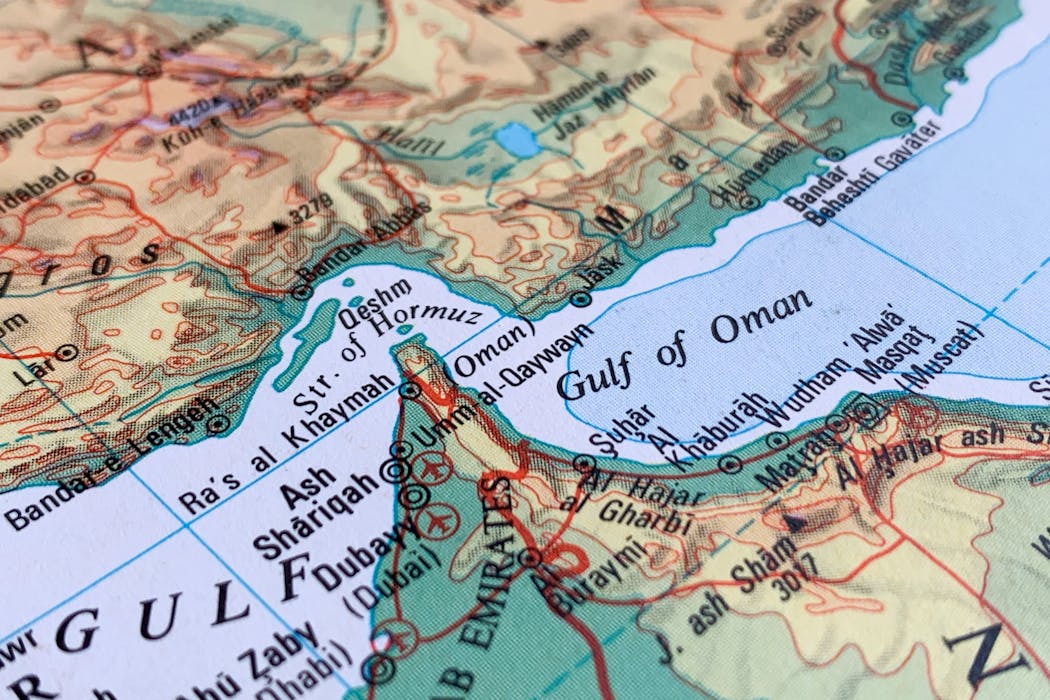
Iran appears to be gearing up for a confrontation. Its military held joint drills with Russia on February 19, days after the Strait of Hormuz was closed temporarily as Iran carried out live-fire exercises. And while emphasising that it “neither seeks tension nor war”, Iran has told the UN that if it were attacked it would consider “all bases, facilities and assets of the hostile force” in the region as “legitimate targets”.

These developments come less than a week after hundreds of thousands of people, largely from the Iranian diaspora, demonstrated in cities worldwide. They did so in solidarity with protesters who took to the streets of Iran in January to demand regime change.

In late December, protests that began over worsening economic conditions quickly spread nationwide in one of the most serious threats to Iran’s political establishment since the Woman, Life, Freedom protest movement of 2022. That protest wave began after the death of a 22-year-old women called Mahsa Amini in police custody.

This time round, the Iranian authorities imposed a near-total internet shutdown, creating a nationwide communications blackout in an effort to suppress the unrest. Human rights groups say thousands of people were killed, while many more were injured, detained or remain missing, in what was one of the most severe crackdowns in Iran’s modern history.

According to local police, around 250,000 people rallied on February 14 in the German city of Munich alone, where world leaders had gathered for Europe’s biggest security conference. Many of those in attendance waved flags bearing the lion and sun emblem of Iran that was used before the Islamic revolution in 1979 ended the Pahlavi dynasty.

Israeli and American flags were also visible at many of the rallies. This has widely been seen as a call for foreign intervention against Iran’s clerical leadership. Trump had raised the prospect of US military action during the unrest, urging the Iranian people to continue protesting and telling them that help was “on its way”. Such action now appears likely.

Brink of war

Iran’s fate is hanging in the balance. The deployment of US military assets to the Middle East suggests Trump may be preparing for imminent military action. However, despite making no secret of his desire to topple the Iranian regime, there is still a chance that Trump settles for a diplomatic agreement with the country’s leadership.

Iranian opposition voices, including exiled crown prince Reza Pahlavi, say such a deal would only prolong the survival of the Islamic Republic rather than address the demands of people in Iran for regime change. In an interview with American political commentator Glenn Beck on February 11, Pahlavi called the negotiations between the US and Iran “another slap in the face of the Iranian people”.

But the prospects that any deal will be reached look slim. The US and Iran remain in fundamental disagreement over Tehran’s nuclear programme and have been unable to reach a deal since the Trump administration withdrew the US from a previous agreement in 2018 that had been negotiated by the Obama administration.

Many people, including the US vice-president, are also sceptical that Iran’s authorities will budge on additional US demands around ballistic missiles and proxy groups like Hamas and Hezbollah – whether or not they are threatened with military action.

Iran’s future is murky. But one thing is for certain: with war or without war, the Iranian people have started a revolution that has extended beyond their country’s borders.

The Conversation

Sanam Mahoozi does not work for, consult, own shares in or receive funding from any company or organisation that would benefit from this article, and has disclosed no relevant affiliations beyond their academic appointment.

ref. Trump has given Iran a ten-day ultimatum – but chances of an agreement look slim – https://theconversation.com/trump-has-given-iran-a-ten-day-ultimatum-but-chances-of-an-agreement-look-slim-276125

How the royal family brand can weather Andrew Mountbatten-Windsor’s arrest

Source: The Conversation – UK – By Pauline Maclaran, Professor of Marketing & Consumer Research, Royal Holloway, University of London

In today’s fast-moving media world, brands are frequently required to respond to scandals that may tarnish perceptions of their products or services. Quick responses to quieten rumours or accept responsibility for missteps are crucial.

This becomes challenging when people themselves are the brand. Their behaviour is much harder to control than a press release. They present feelings and emotions that may disrupt any strategic response to scandal.

Britain’s royal family is a case in point – and with the arrest of Andrew Mountbatten-Windsor, their brand is facing one of its biggest tests of the modern age.

Consumers are known to form deeper, more emotional bonds with human brands than nonhuman ones – such as the passionate fans of Taylor Swift, who identify with her on a personal level. The flipside is that any perceived lapses or failures in judgment may also generate stronger emotions, reflecting more negatively on perceptions of that brand.

For years, the royal family has had to navigate publicity around the former Duke of York. Much of this is related to his long-term relationship with the late financier and convicted child sex offender, Jeffrey Epstein. Mountbatten-Windsor’s arrest under suspicion of misconduct in public office places the rest of the family in a position of protecting the brand from damage by distancing themselves from him.

The arrest follows the US government publication of documents that appear to show Mountbatten-Windsor sharing official information with Epstein during his time as a trade envoy. That period, from 2001-11, was not without scrutiny for the then-prince. But the palace generally kept a low profile in response – following the mantra “never complain, never explain” that was often attributed to the late Queen Elizabeth.

Mountbatten-Windsor stepped down from the trade envoy role in 2011, with the palace issuing a simple statement that, in future, he would “undertake trade engagements if requested”.

In the following years, public pressure mounted on the royal family to be more transparent in many respects, especially concerning Mountbatten-Windsor’s embroilment with Epstein.

The turning point from a low-profile brand management strategy to more overt actions appears to have been Mountbatten-Windsor’s Newsnight interview in November 2019, in which he claimed to have broken off his friendship with Epstein in 2010. He also denied allegations of sexual abuse that had been brought by Epstein victim Virginia Giuffre.

This moment provided a focal point that attracted public outrage. In response, the royal family began to take more decisive action to avoid the brand being contaminated or “infected” by the negativity surrounding the former prince.

Social contagion

The concept of social contagion helps us understand how this works.

According to social contagion theory, people are influenced by those around them. This helps explain how behaviour, attitudes or emotions can spread through a group or society, much like a virus. What you may call “cancel culture” occurs when disapproval and moral condemnation of an individual or group snowballs across social media as people feel compelled to join in.

The reaction to the Newsnight interview – memes, mocking headlines and charities and sponsors distancing themselves from Mountbatten-Windsor – would have made clear to the royal family that their brand was at risk from this social contagion.

Despite the late queen’s reported support for her son, the monarchy began taking formal measures to protect the institution. In November 2019, Mountbatten-Windsor stepped back from public duties “for the foreseeable future”. In January 2022, he was stripped of royal patronages and military titles, as well as the right to use His Royal Highness in any official capacity.

The following month, Mountbatten-Windsor settled out of court with Giuffre for a reported £12 million, with no admission of wrongdoing.


Read more:
Spare: how the soap opera around Prince Harry’s memoir will affect the royal brand


In May 2023, although he attended King Charles III’s coronation, he played no official role and was not included in the procession or royal balcony appearance. Since that time, King Charles and Prince William have made it known they do not want him back in public life.

The full removal of Mountbatten-Windsor’s title of prince in October 2025, following the publication of more Epstein-related documents, solidified his permanent exclusion from public life. Most recently, he has been forced to leave his royal residence and move to a more isolated home on the Sandringham Estate in Norfolk.

Both the king and William issued written statements to distance themselves in light of the newest Epstein files, expressing their “deep concern” for Epstein’s victims. The formality of making written statements signalled the seriousness with which they viewed the events, and also acted as a public record of their distancing from Mountbatten-Windsor. In showing their sympathy for the victims, they were aligning morally with them rather than defending him.

Once a brand is accused of criminal wrongdoing, this potentially escalates a crisis from a minor reputational issue into one that risks a complete breakdown of trust in the brand.

In a statement, the king said “let me state clearly: the law must take its course” and “my family and I will continue in our duty and service to you all”. His reference to “Andrew Mountbatten-Windsor”, as opposed to acknowledging him as his brother, makes clear Mountbatten-Windsor’s ostracisation from the rest of the family.

The royal family appear to have navigated their responses to the potential tarnishing of the monarchy in both official and unofficial ways. They have stripped Mountbatten-Windsor of all official roles and titles, excluded him from public royal events, shown public support for Epstein’s victims, and employed a media management strategy that shifts the focus to other royals.

But polling conducted before the arrest suggests the royal brand is still at risk.

Brands can weather scandals by making fast responses and accepting responsibility. But they may also need to build trust again by proving in the longer term that they have changed. Perhaps the royal family is due for a rebrand.

The Conversation

Pauline Maclaran does not work for, consult, own shares in or receive funding from any company or organisation that would benefit from this article, and has disclosed no relevant affiliations beyond their academic appointment.

ref. How the royal family brand can weather Andrew Mountbatten-Windsor’s arrest – https://theconversation.com/how-the-royal-family-brand-can-weather-andrew-mountbatten-windsors-arrest-276431

Pourquoi les Français font-ils moins d’enfants ? Comprendre la fin d’une exception

Source: The Conversation – France in French (3) – By Sébastien Oliveau, Géographe, directeur de la MSH Paris-Saclay, Université Paris-Saclay; Aix-Marseille Université (AMU)

Statistiquement, ce bébé a aujourd’hui moins de chances d’avoir un petit frère ou une petite sœur qu’il y a une vingtaine d’années. Shalev Cohen/Unsplash, CC BY

Pendant des décennies, la France a fait figure d’exception démographique en Europe, grâce à une fécondité relativement élevée. Or, cette singularité s’efface aujourd’hui à la faveur de transformations des trajectoires de vie, des territoires et des représentations de l’avenir. Derrière les chiffres des naissances, c’est une recomposition silencieuse qui se dessine. Que nous dit-elle de la société française contemporaine ?


En ce début d’année 2026, l’Insee vient de publier une estimation que toute la presse a reprise : la France a connu, en 2025, 645 000 naissances pour 651 000 décès. Cette situation n’est pas une surprise, mais le révélateur d’une dynamique amorcée depuis plus d’une décennie.

Pendant longtemps, la France a constitué une exception en Europe. Par exemple, l’Allemagne connaît un déficit naturel depuis 1970, et l’Italie depuis 1990.

Avec 1,56 enfant par femme en 2025, la France reste plus féconde que la moyenne de l’Union européenne (1,38 enfant par femme en 2023). Mais ce niveau est le plus faible connu par le pays depuis la Première Guerre mondiale.

Une modification structurelle de la dynamique démographique

Ces mesures sont données par l’indicateur conjoncturel de fécondité (ICF) qui estime le nombre d’enfants qu’auraient, en moyenne, les femmes si elles avaient au cours de leur vie fertile les taux de fécondité par âge mesurés une année donnée (on additionne par exemple la fécondité des femmes de chaque groupe d’âge, de 15 à 49 ans, en 2025 pour obtenir un taux de fécondité total conjoncturel en 2025).

Cet indicateur présente l’avantage de pouvoir être calculé en temps réel. L’inconvénient est qu’il ne tient pas compte du calendrier de la fécondité. Si une génération de femmes a des enfants plus tard, il y aura une baisse de l’ICF alors que sa descendance finale (DF) ne diminuera pas nécessairement.

La descendance finale (DF) est un constat : on regarde à la fin de leur vie fertile, combien d’enfants a réellement eu une génération de femmes. C’est donc une mesure réelle, non impactée par le calendrier de la fécondité, mais il faut attendre qu’une génération de femmes ait atteint 50 ans pour la calculer.

L’ICF est donc soumis à des variations annuelles plus fortes que la DF. Ainsi, l’ICF a varié depuis 1980 où il était de 1,94 enfant par femme. On a observé une phase de baisse jusqu’en 1995 avec un minimum de 1,73, puis une hausse jusqu’en 2010 où on a atteint 2,03. À partir de 2014, s’amorce une baisse très rapide jusqu’à 1,56 en 2025.

La DF a été relativement stable : elle a varié entre 2 et 2,1 enfants par femme pour les générations 1960, 1970 ou 1980. Il est trop tôt pour pouvoir calculer la DF de la génération 1990, mais elle sera probablement plus faible.

Des enfants de plus en plus tard

Les Françaises ont leurs enfants de plus en plus tard. Cette évolution a commencé vers la fin des années 1960. L’âge moyen des mères à la maternité s’est encore retardé à 29,6 ans en 2005, puis à 31,2 ans en 2025.

Le fait d’avoir des enfants de plus en plus tard, en lien avec la baisse de la fertilité des femmes après 30 ans, joue aussi sur la DF. Ainsi, 87 % des femmes de la génération 1930 (les mères du baby-boom) ont eu au moins un enfant. Ce chiffre tombe à 80 % pour la génération 1970 et il s’approche de 75 % pour celles de 1980.

Une nouvelle géographie de la fécondité

Tout au long du XXᵉ siècle, les déterminants de la fécondité étaient sociaux et étaient représentés par une courbe en U. Les Françaises les plus fécondes étaient celles issues des catégories socioprofessionnelles les plus aisées et les plus modestes. Les Françaises les moins fécondes étant issues des classes sociales moyennes (employés et des professions intermédiaires).

La fécondité en France (2006-2019)

La Fécondité en France 2006-2019
La fécondité en France (2006-2019).
Fourni par l’auteur

Un « croissant fertile » au nord se caractérisait par une fécondité historiquement plus élevée que celle du Sud, encore perceptible en 2010. Cette singularité tenait à la structure sociale et culturelle de la population : majoritairement issue des classes populaires et ouvrières, plus fortement marquée par le catholicisme et des valeurs traditionnelles, dans un Nord alors très industrialisé.

Mais ces quinze dernières années, le croissant fertile tend à s’effacer, avec une baisse de la fécondité sur l’ensemble du territoire. Seules des poches de plus forte de fécondité relative persistent, d’une part, à l’est de la Bretagne et dans les Pays de la Loire, où perdurent des normes familiales plus traditionnelles, et, d’autre part, dans la périphérie francilienne et la vallée du Rhône, espaces marqués par une plus forte présence des classes populaires.

Certaines régions de fécondité traditionnellement forte, comme le Nord, le Pas-de-Calais et la Lorraine, ont un recul marqué des familles nombreuses et désormais une fécondité comparable à la moyenne nationale. Cela pourrait s’expliquer par un recul des valeurs traditionnelles de la famille, mais surtout par le déclin industriel et l’incertitude économique (chômage, précarité), qui sont des facteurs documentés de réduction de la fécondité ces quinze dernières années (en France et ailleurs en Europe).

Enfin, le vieillissement des mères à la maternité est généralisé, même s’il est plus marqué dans le sud de la France et les métropoles.

Le désir d’enfants baisse

Le désir d’enfant renvoie à deux notions distinctes. Le nombre d’enfants souhaités est la réponse à la question de savoir combien les personnes souhaitent avoir d’enfants. Traditionnellement, les femmes expriment un désir d’enfants légèrement supérieur à celui des hommes. Le désir d’enfants réalisé est complémentaire (il s’agit de la DF).

En les comparant, le nombre d’enfants souhaité est toujours supérieur au désir d’enfants réalisé, car une partie des femmes a moins d’enfants que souhaité pour des raisons diverses : infertilité, rupture d’union, difficultés économiques. Ces contraintes (économiques, sociales, biologiques) limitent la capacité des individus à concrétiser leurs intentions reproductives et participe à l’abaissement de la fécondité.

Le désir d’enfant a changé de dimension. Aujourd’hui, les couples stables souhaitent généralement avoir un ou deux enfants. Il y a vingt-cinq ans, c’était plutôt deux ou trois. Le refus d’avoir des enfants a progressé mais il est encore marginal, passant de 5 à 12 %.

Quelques hypothèses

Cette baisse du désir d’enfants est nouvelle en France et on peut émettre quelques hypothèses, impactant conjointement le désir d’enfants et sa réalisation, en plus des facteurs démographiques.

Tout d’abord, si l’élévation du niveau d’éducation et l’essor de l’activité professionnelle féminine ont fortement contribué à la baisse de la fécondité à la fin du XXᵉ siècle, cet effet semble aujourd’hui largement épuisé. La massification de l’enseignement supérieur et l’ancrage durable du travail féminin constituent désormais un cadre stabilisé, qui ne permet plus, à lui seul, de rendre compte du recul récent de la fécondité.

La crainte de l’avenir semble être la raison primordiale. Le contexte économique difficile s’associe à une baisse de la fécondité, comme l’ont montré les études en Europe, par exemple avec la crise de 2008. Dans toutes les enquêtes, les jeunes adultes expriment leurs angoisses face au changement climatique, au contexte géopolitique, à l’incertitude économique et sociale. La crise climatique joue probablement, mais à la marge. D’ailleurs, le refus d’enfants est encore très minoritaire. Dans le détail, c’est plutôt un comportement des jeunes des grandes villes, ayant fait des études supérieures, pour lesquels ne pas avoir d’enfant serait un geste « écologique ».

Si l’évolution des représentations de la famille et des changements normatifs participent à ce mouvement de baisse de la fécondité chez les jeunes femmes, on peut aussi y voir des difficultés accrues à trouver un équilibre entre famille et travail dans un contexte de précarisation de l’emploi. En effet, l’emploi et ses modalités jouent probablement un rôle. Si le chômage a baissé en France depuis une petite dizaine d’années, la nature des emplois a changé. Le premier emploi stable arrive souvent après plusieurs contrats précaires, donc plus tard.

Le logement joue également un rôle. La France ne propose pas suffisamment de logements par rapport à la croissance du nombre de ménages. Cela induit une augmentation forte des prix à la location et à l’achat, et une pénurie de logements disponibles, en particulier dans les grandes villes. Beaucoup de jeunes actifs vivent encore dans le ménage parental ou en colocation.

Quel avenir pour la fécondité en France ?

Ces facteurs pourraient accroître l’écart entre nombre d’enfants idéal et réalisé. On peut penser que les risques évoqués sont désormais perçus comme des contraintes de long terme pour les jeunes générations. Une fois intériorisées, elles sont désormais suffisamment fortes pour changer les normes et représentations de la famille, qui influencent le désir d’enfant lui-même.

La France est probablement à un tournant démographique, amorcé il y a une dizaine d’années : l’accroissement naturel est devenu un déficit. La baisse du désir d’enfants chez les jeunes générations nous dit clairement que cela devrait être une tendance durable.

Jusqu’à la fin de la décennie, on peut s’attendre à un indicateur conjoncturel de fécondité probablement inférieur à 1,7. Il ne devrait cependant pas baisser en dessous de 1,3, le désir d’enfants étant encore présent. Cela signifie que le déficit naturel s’installera probablement dans la durée. En ce sens, la France est devenue un pays européen comme les autres puisque c’est le cas dans la presque totalité des pays de l’Union européenne.

The Conversation

Sylvie Dubuc a reçu des financements du LABoratoire d’EXcellence iPOPs

Francois-Olivier Seys et Sébastien Oliveau ne travaillent pas, ne conseillent pas, ne possèdent pas de parts, ne reçoivent pas de fonds d’une organisation qui pourrait tirer profit de cet article, et n’ont déclaré aucune autre affiliation que leur poste universitaire.

ref. Pourquoi les Français font-ils moins d’enfants ? Comprendre la fin d’une exception – https://theconversation.com/pourquoi-les-francais-font-ils-moins-denfants-comprendre-la-fin-dune-exception-274521