Approximately one month into the Iran war, public opinion on both sides of the Atlantic is decidedly opposed to this conflict. A recent CBS/YouGov poll shows that 60% of the public oppose military action against Iran, as do a similar percentage in the UK: 59%.
As a political scientist who studies public attitudes about foreign policy and the use of force, my research addresses an important question: under what conditions do people support military action? Based on this research, the widespread opposition to American military action against Iran is completely understandable, as the action lacks the usual foundations for support from domestic as well as international audiences.
Decades of research in political science show that broad support for use of the military rests on three key pillars: purpose, likelihood of success and legitimacy. When these elements are present, support can be high. It can even be maintained in the face of significant costs, both financial and in terms of lives lost. When they are absent, support tends to be weak, polarised and prone to erosion.
At present, these key ingredients are missing.
What’s the objective?
First and foremost, the Trump administration’s strategic rationale remains poorly articulated. Public support for military action is strongly tied to policy goals. When citizens believe force is being used to prevent a clear and immediate danger, they are far more likely to support it. But the US has not made the case that Iran was close to achieving a nuclear weapon – or posed other imminent threats for that matter. The CBS/YouGov poll confirmed that the public does not believe the rationale for war has been convincingly articulated – by a count of 68% to 32%.
In the first few days of the bombing, US president Donald Trump strongly advocated regime change as a reason for the war. But among voters there is little appetite to change another country’s domestic politics. A majority thinks this is not important, although now it has started, a small majority of respondents (53%) felt it would be a mistake to leave the regime in power. It’s a big political risk though – American voters don’t have to cast their memories back far to think of unsuccessful regime change missions.
What does winning look like?
The ambiguity surrounding mission goals complicates the second key element: what constitutes success? Airstrikes can damage nuclear facilities or disrupt Iran’s ballistic weapons programme. But they can’t eliminate the scientific knowledge or technical know-how which will enable to regime to rebuild. And, clearly, if previous strikes were as decisive as the US president, Donald Trump, has claimed, the current action would be unnecessary. The rest of the world knows that too.
The same question about what qualifies as success also applies to regime change. Killing the leadership is one thing, but creating a stable government that breaks from the Islamic revolution and protects American interests is quite another. The essential nature of politics is that there are competing factions, which will want to build or maintain governmental structures that advantage those interests. The the type of government Iran might adopt under a regime change scenario – and which faction(s) will control the levers of domestic power – are two dramatic unknowns.
Any plan to completely disempower the Islamic Revolutionary Guard Corps (IRGC) would risk a re-run of the disastrous de-Baathification strategy after the 2003 invasion of Iraq. Leaving the IRGC even partially in power leaves the civilian population at continued risk and would hardly make it easier to achieve American aims – whatever they may be. As we’re still seeing in Libya, a power struggle between factions is unlikely to produce the sort of result the region – and the wider world – want to see.
Is this a legitimate war?
Finally, there are severe concerns regarding the legitimacy of the war. Citizens rely on cues from their political leaders and institutions to inform their view about the use of force. The Trump administration had not made a sustained case for the need for military action before the war, nor has it secured Congressional authorisation or bipartisan support. There is no clear domestic consensus supporting the use of force.
Not only is there no clear signal of legitimacy domestically, the same is true internationally. Multilateral backing — especially through institutions such as the United Nations security council — has historically played an important legitimising role (especially to reassure domestic audiences who want a second opinion). This is is absent here – in fact, key US allies have expressed their opposition. The UK’s prime minister, Keir Starmer, has declared military action against Iran is “not our war”, language remarkably similar to that of Germany’s defence minister, Boris Pistorius. Having foregone building international support prior to the use of force, the US is now struggling for support from allies — particularly when it comes to protecting shipping through the Strait of Hormuz.
None of this means the operation will be uniformly unpopular. Partisan attachment is also important: those who back the administration are likely to view the operation more favourably. Accordingly, a majority of Republicans (84%) support the action, though there is a strong divide between Maga (92%) and non-Maga (70%) Republicans.
Meanwhile, Democrats (92%) and independents (69%) overwhelmingly disapprove of the conflict, so domestic support for the conflict is extremely narrow. The factors that sustain backing beyond a president’s core supporters — perceived necessity with clear strategic goals, confidence in eventual success of the mission, and legitimacy conferred by domestic or international institutions — are conspicuously absent.
Over time, events on the ground may change how the public views the conflict. Iranian efforts to expand the scope of conflict – particularly when directed at US allies – could swing support towards the American action. Or, a unified Iranian opposition could quickly coalesce on who and what replaces the Islamic Republic government. These are just two possibilities seen through rose-tinted spectacles – frankly, developments that complicate America’s position seem just as likely.
Without significant changes in clarity of goal, verifiable indicators of success, or signals of legitimacy from persuasive actors outside the administration, support will diminish. But the consequences are graver than the domestic popularity of an American military operation. Sidelining institutional constraints – such as Congressional authorisation and international institutions – erodes limits on the use of force.
When the US ignores these constraints, it invites other countries to do the same, resulting in a more unstable and insecure world.
Jason Reifler has received funding for research examining public opinion about foreign policy and the use of military force from the Economic and Social Research Council (UK), Volkswagen Stiftung, and National Science Foundation (US).
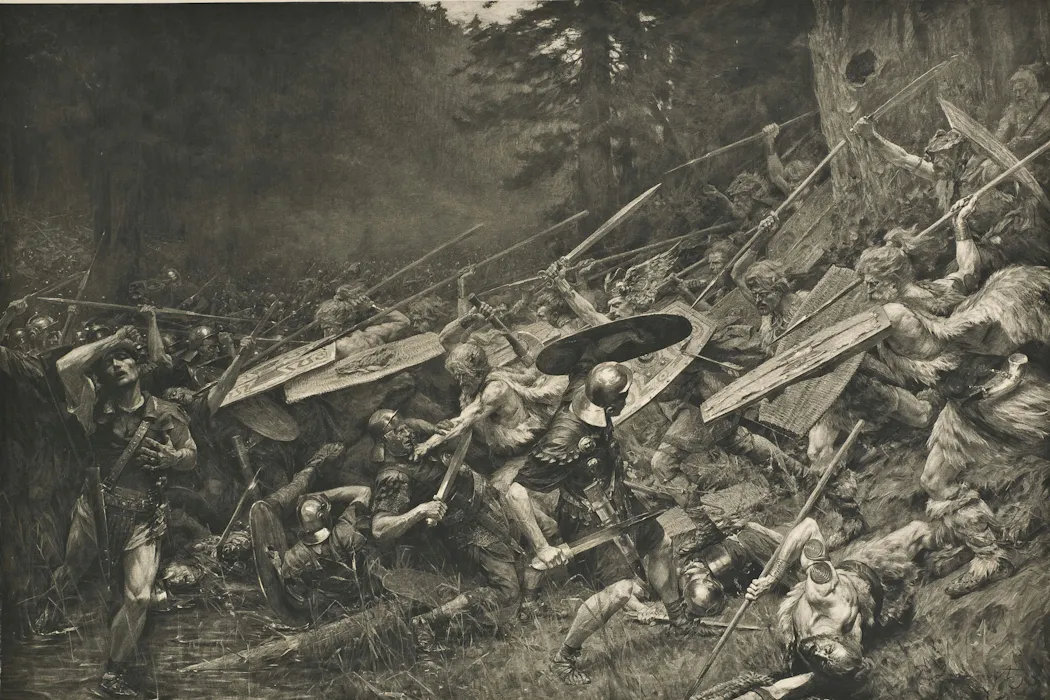
*Furor teutonicus* représente la bataille de Teutobourg, en l’an 9 de notre ère. Dans une forêt de l’Allemagne actuelle, trois légions romaines tombent dans une embuscade mise en place par une coalition de tribus germaniques et sont massacrées. Paja Jovanović, 1888
La guerre asymétrique, formule devenue omniprésente depuis quelques décennies dans les analyses des conflits contemporains, est en réalité un phénomène aussi ancien que la guerre elle-même. Partout, toujours, des belligérants moins puissants que leurs adversaires ont cherché à employer les moyens les plus variés pour venir à bout de leurs ennemis plus nombreux et mieux équipés.
L’asymétrie fait désormais partie du vocabulaire des états-majors et des autorités politiques engagées sur des théâtres extérieurs. Les publications sur le sujet se sont également fortement multipliées depuis quelques années, et la guerre menée par les États-Unis et Israël contre l’Iran a confirmé, depuis février 2026, l’importance de ce phénomène.
Le terme est désormais tellement utilisé qu’on en oublierait presque qu’il était, il y a encore quelques années, totalement inconnu du grand public, et à peine mentionné dans les cercles d’experts. La situation a fortement changé avec ce que de nombreux observateurs qualifient de période post-guerre froide, née sur les ruines du World Trade Center en septembre 2001, et en marge de la guerre contre le terrorisme et des conflits de basse intensité opposant des puissances à des acteurs beaucoup plus faibles, qu’ils soient étatiques ou non.
Pourtant, ce type de conflit est bien plus ancien que les interventions des forces des États-Unis et de leurs alliés en Afghanistan en 2001 et en Irak en 2003.
Définition de la guerre asymétrique
Étymologiquement inscrite dans la négation, l’asymétrie est indissociable de la symétrie, mais aussi de la dissymétrie, moins souvent évoquée, dont elle se distingue cependant assez nettement. La symétrie caractérise la « juste proportion », notamment en matière d’architecture. Ainsi, la symétrie suppose au moins deux éléments pouvant être comparés. L’asymétrie est l’absence volontaire de symétrie, et la dissymétrie est un défaut de symétrie – généralement par erreur, mais cela peut être volontaire dans certains cas. Dans ces conditions, l’asymétrie semble plus catégorique que la dissymétrie, car la « juste proportion » y est absente et ne peut pas être corrigée.
Au niveau stratégique, la symétrie est perçue comme le combat à armes égales ; la dissymétrie est la recherche par l’un des combattants d’une supériorité qualitative et/ou quantitative (on parle ici de « stratégie du fort au faible ») ; et l’asymétrie correspond à la démarche inverse, qui consiste à exploiter toutes les faiblesses de l’adversaire pour être le plus nuisible possible.
En s’appuyant sur le constat d’un déséquilibre capacitaire, l’asymétrie est donc une stratégie du faible au fort qui consiste à refuser les règles du combat imposées par l’adversaire et à contourner ses forces, rendant ainsi toutes les opérations totalement imprévisibles.
Cela suppose à la fois l’utilisation de forces non prévues à cet effet et surtout insoupçonnables (comme les civils) ; d’armes contre lesquelles les moyens de défense ne sont pas toujours adaptés (dernièrement, les drones) ; de méthodes situées hors du cadre de la guerre conventionnelle (guérilla, terrorisme) ; de lieux d’affrontement imprévisibles (centres-villes, lieux publics) ; et de l’effet de surprise, cette dernière caractéristique étant sans doute la plus importante, car elle permet de réduire le déséquilibre entre les belligérants.
Employant des moyens techniquement simples, l’asymétrie peut ainsi être assimilée à l’« arme du pauvre », dans la mesure où elle permet à de multiples acteurs ne disposant que de moyens très limités d’avoir une capacité de nuisance totalement disproportionnée.
Il est également possible que des acteurs puissants optent délibérément pour une stratégie de guerre asymétrique, confondant même ce concept avec celui de « génie militaire », comme si celui-ci supposait finalement le triomphe au-delà de toutes les espérances, le niveau des forces engagées étant très faible en comparaison aux résultats obtenus. Dès lors qu’elle peut être privilégiée par le faible comme par le fort, la guerre asymétrique est ainsi une ruse déployée à une échelle pouvant varier.
Alternative par défaut ou par choix à une confrontation frontale dite traditionnelle, et réponse à la recherche de dissymétrie par les puissants, la guerre asymétrique se généralise. Compte tenu de l’improbabilité de guerres entre les grandes puissances et de l’implication quasi systématique de ces dernières dans des confrontations entre des acteurs plus faibles, la question de savoir si tous les conflits contemporains sont par nature des guerres asymétriques mérite a minima d’être posée.
La stratégie du faible au fort
La notion de guerre asymétrique trouve dans l’histoire de multiples exemples de sa mise en application, tant au niveau stratégique que tactique.
Sur tous les continents, de nombreux cas nous permettent de vérifier en grandeur nature les résultats obtenus par le choix de l’asymétrie dans des conflits armés. Détail important, il convient de noter que les moyens asymétriques ont été utilisés à la fois par des États et par des groupes non étatiques, quelle que soit leur importance. Mais une chose est certaine : l’asymétrie n’est pas un fait nouveau.
Les empires ne purent s’y soustraire – les barbares qui pillèrent Rome et les révoltés à plusieurs époques dans l’histoire de Chine disposaient de moyens nettement inférieurs à ceux de leurs adversaires – et certaines grandes batailles offrirent même l’occasion aux faibles de vaincre les forts là où les rapports de force ne leur laissaient a priori pas la moindre chance – la victoire écrasante des Anglais sur la chevalerie française à Azincourt en 1415 est sans doute l’exemple le plus significatif, mais il n’est pas isolé.
De manière répétitive et sur des théâtres très différents, on relève la même équation : là où les empires, les royaumes les plus riches et les plus puissants ont voulu exploiter leur supériorité pour s’imposer durablement, leurs adversaires ont développé par défaut des stratagèmes leur permettant de contourner les moyens de cette puissance. C’est ainsi que, tout au long de l’histoire, se sont mises en place des guerres asymétriques, les adversaires étant au final rarement au même niveau.
Seules les batailles du XIXᵉ siècle, inaugurées lors des campagnes napoléoniennes et organisées sur les bases définies par Carl von Clausewitz (introduisant le concept de victoire écrasante en opposition aux « guerres en dentelle » des XVIIᵉ et XVIIIᵉ siècles), et plus encore la Première Guerre mondiale ont été l’occasion d’assister à des guerres réellement symétriques, dans lesquelles les belligérants étaient de force presque égale et ne devaient leur victoire qu’à des circonstances particulières et/ou au génie tactique de leurs généraux. Parfois, ces batailles s’éternisaient, aucun des combattants n’étant en mesure de prendre le dessus, les tactiques et les moyens utilisés étant, approximativement, les mêmes de part et d’autre.
Les déséquilibres capacitaires hérités de la révolution industrielle, des guerres de colonisation et de la décolonisation marquèrent le retour de l’opposition du fort au faible (guerre dissymétrique), et l’utilisation par ce dernier de stratégies de contournement avec des résultats parfois surprenants pour y répondre (guerre asymétrique).
Les guerres d’Algérie et du Vietnam, la résistance à l’occupation soviétique de l’Afghanistan, l’opération en Somalie, la guerre de Tchétchénie ou encore la campagne menée au Kosovo – ou plus exactement les tactiques de camouflage et de leurres observées sur le terrain dans les rangs des forces serbes – sont des exemples plus récents de guerre asymétrique. Cette manière de faire la guerre est contraire aux règles chevaleresques au Moyen Âge, au respect des conventions sociales pendant les siècles modernes, et à une certaine idée de l’éthique et du droit de la guerre dans les périodes plus récentes. En clair, la guerre asymétrique fut longtemps diabolisée et assimilée en Occident à des pratiques indignes des États.
De la Bible aux Mongols, en passant par Sun Tzu
Dans la tradition occidentale, l’origine mythologique de l’asymétrie est cependant plus glorifiante, et peut être attribuée à l’épisode biblique du jeune David, triomphant du Philistin Goliath aux abords de Jérusalem. Face à un géant, disposant par ailleurs d’armes puissantes, le jeune berger s’est servi de son génie pour éviter le combat, utilisant une simple fronde et frappant mortellement son adversaire à la tête. Le rapport de force était totalement déséquilibré, et c’est pourtant le plus faible qui a triomphé. La Bible mentionne que, « ainsi, avec une fronde et une pierre, David fut plus fort que le Philistin ; il le terrassa et lui ôta la vie, sans avoir d’épée à la main ».
Ce combat symbolise la victoire de la bravoure face aux moyens, et de l’intelligence face à la force physique. Dès lors, les fidèles comprennent que, si la cause qu’ils défendent est juste, peu importe les moyens dont ils disposent, ils pourront parvenir à leurs fins pour vaincre leurs adversaires. Pour devenir roi, plus besoin d’être puissant, du moins au vu des critères traditionnels. Seuls comptent le génie et l’aptitude à vaincre n’importe quel type d’adversaire. L’asymétrie est ainsi perçue comme un moyen de récompenser les mérites quand la force brute ne le permet pas, mais elle n’est pas considérée comme un choix stratégique.
Tandis que l’asymétrie correspondait, dans la civilisation occidentale, à une intervention divine offrant la ruse au jeune David, s’est développée en Asie orientale une véritable pensée stratégique proposant l’asymétrie comme moyen de guerre. Au VIᵉ siècle avant notre ère, une époque où la Chine traversait la période chaotique dite des « royaumes combattants », Sun Tzu s’est penché sur les meilleurs stratagèmes permettant de limiter ses propres dégâts, tout en multipliant ceux de l’adversaire, même si celui-ci est plus fort. Sa pensée – dont l’objectif est de faire croire à l’adversaire qu’il maîtrise la situation de manière à pouvoir le duper plus facilement – s’est répandue en Asie orientale, puis progressivement dans le reste du monde.
Après l’œuvre de Sun Tzu, de nombreux autres théoriciens chinois se lancèrent dans la rédaction d’études sur la guerre. Shang Yang, contemporain de Sun Tzu, et sa guerre défensive, ou Sima Qian (fin du IIᵉ siècle avant notre ère) et ses biographies des généraux marquèrent ainsi l’histoire de la guerre dans la civilisation chinoise, avec la nécessité de miser sur les stratégies de contournement quand les conditions de la victoire ne sont pas remplies.
Pour les théoriciens chinois de la guerre, si la victoire reste l’objectif ultime, comme en Occident, les moyens pour y parvenir sont multiples, et passent notamment par la patience et l’analyse rigoureuse des forces et des faiblesses de l’adversaire. Dès lors, même le faible a ses chances contre le fort, à condition de savoir refuser le combat quand celui-ci est perdu d’avance, et de porter ses attaques au bon moment et au bon endroit.
Sun Tzu fut également l’un des premiers stratèges à s’interroger sur « ce qu’il faut avoir prévu avant le combat », faisant des préparatifs et du renseignement l’une des clés de la victoire. Pour lui, un général doit savoir cinq choses avant de s’engager dans la bataille : 1) savoir s’il peut combattre et quand il faut cesser ; 2) savoir s’il faut engager peu ou beaucoup ; 3) savoir gré aux simples soldats autant qu’aux officiers ; 4) savoir mettre à profit toutes les circonstances ; 5) savoir que le souverain approuve tout ce qui est fait pour son service et sa gloire.
Ces différentes recommandations sont particulièrement entendues des acteurs asymétriques, qui comprennent qu’elles doivent impérativement être remplies, d’abord dans un but de survie, et le cas échéant afin de remporter le combat.
L’islam des premiers temps fut de son côté également caractérisé par la stratégie indirecte d’un peuple disposant de moyens rudimentaires, mais parvenant rapidement à vaincre ses adversaires et à étendre son influence. Les Mongols, face à un empire chinois infiniment plus peuplé et nettement plus avancé, mais aussi les Ottomans et les peuples d’Afrique, notamment face aux conquérants occidentaux, développèrent également des stratégies asymétriques avec des résultats spectaculaires.
De la guérilla aux conflits contemporains
C’est avec la guérilla et les théories qui y sont associées puis, plus récemment, avec le terrorisme transnational dont les puissances firent les frais que la guerre asymétrique est progressivement revenue en vogue en Occident.
De l’Espagne dominée par l’empire napoléonien à Che Guevara, en passant par Lawrence d’Arabie ou Mao Zedong, les moyens de guerre proposés dans le cadre de la guérilla sont totalement asymétriques. C’est en s’infiltrant au sein même des territoires adverses qu’ils obtiennent des succès, pas en s’attaquant frontalement à des forces armées supérieures en nombre et en matériel.
La guérilla s’est immédiatement imposée comme l’arme du faible, voire de l’inculte en matière militaire, face au soldat professionnel bien armé, bien entraîné et mené par un général instruit. La guérilla fut aussi et surtout théorisée, sur la base des expériences et des testaments de ces acteurs. Le plus célèbre de ces « nouveaux testaments » de l’asymétrie est incontestablement la Guerre de guérilla, écrit par Che Guevara en 1959, dans lequel est démontré qu’une armée populaire peut battre une armée régulière, quels que soient les moyens dont les « combattants de la liberté » disposent. Guevara considérait qu’il n’est pas nécessaire de s’appuyer sur une large base, mais qu’un petit foyer ou un petit groupe d’idéalistes en armes, établi loin des villes, peut entraîner l’adhésion de tous les mécontents et des révolutionnaires.
Le terrorisme peut-il de son côté être considéré comme une manifestation de guerre asymétrique ? Indiscutablement, l’invisibilité et le caractère imprévisible des attaques terroristes sont asymétriques, car ils se caractérisent par la faiblesse des moyens engagés. Le terrorisme transnational apparaît ainsi comme le degré ultime de la guerre asymétrique, car il s’intègre à l’intérieur même des sociétés qu’il combat, ce qui le rend d’autant plus difficile à détecter et à prévenir.
Le terrorisme transnational et le risque qu’il fait peser sur la sécurité dans les sociétés contemporaines fut à l’origine du regain d’intérêt pour les guerres asymétriques, et c’est sans surprise que, après 2001, ce concept a fait une entrée fracassante dans les réflexions des états-majors, au point d’inspirer des innovations stratégiques, comme la contre-insurrection déployée en Irak, avec des résultats mitigés mais qui confirment une nécessaire adaptation du fort aux pratiques du faible.
Un type de guerre qui n’est pas près de disparaître
La fin de la bipolarité a ouvert le champ à des formes de conflits restées relativement silencieuses tout au long du XXᵉ siècle, dans sa deuxième partie surtout, opposant des adversaires aux moyens limités, soit des États faibles, soit des acteurs non étatiques, et consacrant ainsi ce que certains analystes qualifièrent de « retournement du monde ». Ce regain de violence a poussé Washington, seule superpuissance rescapée de la guerre froide, à s’interroger sur les menaces dont les États-Unis (et par extension le « monde » dans son ensemble) pourraient désormais faire l’objet.
Dans un contexte marqué par une remise en cause de plus en plus prononcée de la puissance américaine, tant dans ses aspects politico-diplomatiques que militaires (les expériences de l’Irak et de l’Afghanistan ont renforcé ce phénomène), la guerre asymétrique semble avoir de beaux jours devant elle et impacte ainsi considérablement les conflits contemporains. Le cas de l’opération menée par Israël et les États-Unis en Iran vient le confirmer.
Barthélémy Courmont ne travaille pas, ne conseille pas, ne possède pas de parts, ne reçoit pas de fonds d’une organisation qui pourrait tirer profit de cet article, et n’a déclaré aucune autre affiliation que son organisme de recherche.
You’re scheduled for surgery next week. You’ve likely looked up your surgeon’s credentials, years of experience and perhaps even patient reviews. You want reassurance that your surgeon has steady hands, deep expertise and a thorough command of the procedure. Technical skills feels like the thing that matters most.
But there’s another question most patients never think to ask: How well does your surgeon lead a team?
It might sound like an odd thing to consider, but in the operating room, surgery is rarely a solo act. Surgeons work alongside anesthesiologists, nurses and medical residents who must co-ordinate closely, often under intense pressure, to deliver care.
When something unexpected happens and the team needs to pivot quickly, how a surgeon leads matters in ways most patients rarely see or even think about.
Despite decades of evidence showing the benefits of inspiring, people-focused leadership, those qualities alone were not enough in complex, high-stakes operations where conditions can change rapidly.
Two different leadership styles
Leadership researchers have long distinguished between two main approaches to leading teams: transformational and directive leadership.
Transformational leadership is people-focused, meaning it emphasizes inspiration, building trust, encouraging open communication and helping people feel valued and motivated.
Directive leadership is task-focused. It involves giving clear instructions, co-ordinating actions, enforcing procedures and ensuring everyone knows their role in real time.
Transformational leadership has been widely studied and positively linked with better team performance, stronger morale and improved outcomes across many workplace settings. As a result, it is often examined on its own as a driver of effective leadership.
But our research suggests the picture is more complicated in environments where the stakes are high.
Complexity changes everything
Not all surgeries are alike.
Some procedures are relatively routine and predictable. An appendectomy, for example, typically follows established protocols with predictable demands and roles. In these situations, everyone on the team knows what to do and when to do it.
But surgeries don’t always go according to plan.
A routine surgery can suddenly become complicated if a patient becomes unstable, while more complex procedures may involve unexpected challenges from the start.
In these moments, the usual script may no longer be enough to guide the team. This is when leadership becomes far more important.
Situational leadership
To make sense of this, we drew on a concept from psychology called situational strength — how much a situation provides information about appropriate or desirable behaviour.
Routine surgeries are considered “strong situations.” Protocols, prior training, roles and expectations are so clear that the situation itself largely guides behaviour with little-to-no leadership required.
More complex or unpredictable surgeries can create “weak situations.” Protocols may not fully cover what’s unfolding. Roles become ambiguous and prior training no longer suffices. The team needs real-time guidance on what to prioritize, who should act and how to co-ordinate under pressure.
In these moments, leadership becomes critical precisely because the situation no longer provides all the answers.
Our research found that during these high-complexity moments, the benefits of transformational leadership only emerged when it was combined with directive leadership.
When surgeons paired people-focused leadership with task-focused leadership, their teams reported feeling significantly safer about speaking up, raising concerns and flagging problems as they arose, otherwise known as psychological safety.
More reported errors can signal better care
One of the more counter-intuitive findings involved surgical errors. Teams that reported higher psychological safety actually had more observed errors during surgery, not fewer.
At first glance, that sounds like worse performance. In reality, it may signal the opposite.
And our data support this interpretation: teams with higher psychological safety had fewer severe complications after patients were discharged. More errors caught earlier and corrected in the operating room meant better outcomes beyond it.
But a closer look reveals that many programs focus on developing a single leadership style or approach rather than helping surgeons learn how to flexibly combine different leadership behaviours as situations change.
Our findings suggest this flexibility matters.
This has implications well beyond the operating room. Financial trading floors, emergency response teams, military units and any environment where conditions shift rapidly and errors carry serious consequences all share the same basic challenge for leaders.
The leaders who perform best in these environments don’t master one leadership style. Rather, they learn to combine and adapt approaches when it matters most.
Steve Granger receives funding from the Social Sciences and Humanities Research Council of Canada.
Julian Barling receives funding from the Social Sciences and Humanities Research Council of Canada, and the Borden Chair of Leader at the Smith School of Business.
Michaela Scanlon receives funding from the Social Sciences and Humanities Research Council of Canada.
Nick Turner receives research funding from Cenovus Energy Inc., Haskayne School of Business’s Future Fund, and the Social Sciences and Humanities Research Council of Canada (SSHRC).
Conservative Leader Pierre Poilievre, head of Canada’s official opposition, recently became the first Canadian political leader to appear on the controversial Joe Rogan Experience podcast.
Poilievre had been asked to sit for an interview with Rogan amid the federal election campaign in April 2025, but was reportedly advised by his team to pass since Rogan was, and remains, a polarizing and contentious figure. Nonetheless, Rogan’s podcast is one of the world’s longest running, averaging 11 million listeners per episode and ranked No. 1 globally on Spotify in 2025.
Whether his efforts worked remains to be seen, but could there be unintended consequences to Poilievre’s appearance on the podcast? Did he spread any harmful disinformation about Canada and North America to a massive audience that, while possibly popular among his base, could be detrimental to Canadians in general?
Our findings show that manosphere influencers spread toxic content about marginalized populations, including dangerous misinformation about health, politics, immigration and the environment. The Joe Rogan Experience is part of this ecosystem.
While recent coverage of the podcast episode in news media has focused on tariffs, Canada-U.S. relations and a shared love of fitness, we found misinformation on immigration, the health and environmental consequences of Alberta’s oilsands, seed oils, safer drug supply measures and the causes of inflation.
1. Immigration
Poilievre, citing no evidence, told Rogan that Canada admits one million immigrants per year.
But information from the Canadian government website shows that targets for temporary residents — students and work visa holders — make up 385,000 people for 2026, while permanent resident targets are at 380,000 people. Combined, that’s significantly fewer than the number cited by Poilievre.
Inflating immigration numbers is a known rhetorical tactic in far-right online spaces, where it functions to fuel anxieties about demographic change. Repeating it on a platform with millions of listeners legitimizes a distortion that creates division and harms racialized communities.
Canada’s immigration system is not without criticism and immigrants often face challenges. (Unsplash)
2. Oilsands
Poilievre told Rogan that Alberta’s oilsands have very few health or environmental consequences, stating that it has “no impact to groundwater … no impact to the environment” and that people who live near the oilsands are “very healthy.”
But a 2024 report on the Athabasca oilsands released by scientists at the University of British Columbia suggest significant environmental and health impacts from the oilsands, meaning that, at best, Poilievre oversold the safety of oil development. His characterizations don’t reflect scientific research and they sideline those most affected.
One of Rogan’s favourite topics is health and diet, so it wasn’t surprising to hear him discuss seed oils with Poilievre. They talked about how beef tallow or butter is better for people’s health than foods made from seed oils.
Canada is also the largest exporter of canola oil in the world, so when Poilievre failed to push back against Rogan’s health misinformation, he tacitly supported an idea that harms the very trade he was purportedly aiming to bolster with his appearance on the podcast.
Poilievre told Rogan that inflation during and following the COVID-19 pandemic was a direct result of the previous Liberal government’s actions. He said:
“Like back during COVID when all these governments were printing money and all the politicians and bankers said ‘Oh, this is great. Well, look at all this money we get to spend.’ I’d walk around communities and I’d have like mechanics say, you know, we’re going to have inflation. And I would say, yeah, it makes sense to me… And sure enough, all that money filtered into the economy, bid up all the goods we buy, and everybody got smoked with higher prices.”
Does it matter if Poilievre is spreading misinformation about Canada on Rogan’s podcast? We believe it does.
Poilievre aspires to become prime minister and should aim to lead the country in ways that benefit all Canadians, including canola farmers, immigrants, people who use drugs and the communities that are currently polluted by oil development.
Making false accusations about drug-related crime or unmitigated drug trafficking reinforces the case for greater governmental oversight of citizens. It also justifies, to some extent, the false narratives cited by the U.S. in its retaliatory actions against Canada, including tariffs.
By promoting politically expedient misinformation on a show like Joe Rogan’s, Poilievre risks eroding Canadians’ shared understanding of public health, environmental challenges and social cohesion — all issues he should be working to address.
At a time when democratic communication is strained by misinformation and deepening polarization, Canadians should expect better from their political leaders, regardless of party.
Jaigris Hodson receives funding from the Social Sciences and Humanities Research Council of Canada
Brianna I. Wiens receives funding from the Social Sciences and Humanities Research Council of Canada.
Nick Ruest receives funding from the Social Sciences and Humanities Research Council of Canada.
Shana MacDonald receives funding from the Social Sciences and Humanities Research Council of Canada.
Source: The Conversation – in French – By Octave Moreau, Doctorant au laboratoire Histoire Territoires Mémoires (Histémé), Université de Caen Normandie
En Ukraine, en Palestine ou dans le golfe Persique, la guerre aérienne est au centre des conflits contemporains. Expérimentée lors de la Grande Guerre et dans les colonies puis systématisée, sans succès, lors de la Seconde Guerre mondiale afin d’y mettre rapidement fin en faisant chuter les régimes bombardés, l’arme aérienne a cependant toujours été pensée comme une arme de destruction contre les populations civiles.
Depuis le 28 février 2026 et le déclenchement de la guerre israélo-américaine contre l’Iran, les populations civiles sont les premières victimes du conflit. Le bilan s’élève déjà, a minima, à 2 000 personnes tuées, dont quelque 150 écolières de la ville de Minab, dans le sud du pays.
Cette situation n’est pas une exception. En effet, les conflits de ces dernières années – notamment en Ukraine et en Palestine – sont avant tout des guerres aériennes. À rebours de la rhétorique militariste qui affirme que les bombardements sont de plus en plus « précis », ces conflits s’inscrivent dans l’histoire de la guerre aérienne où ce sont, en premier lieu, les civils qui sont tués par les bombes.
Une arme de destruction massive pour la paix universelle ?
L’aéronef tel que dessiné et imaginé par Francesco Lana de Terzi. Wikimédia
L’imaginaire qui entoure l’arme aérienne est, historiquement, celui d’une arme de destruction massive, pouvant raser des villes et anéantir des populations entières. En 1670, par exemple, Francesco Lana de Terzi, un jésuite et naturaliste italien, alors qu’il proposait un projet d’aéronef sur le modèle d’un bateau volant, met en garde ses contemporains sur les capacités de destruction d’une telle machine.
La montgolfière de 1783 des frères Montgolfier. Wikimedia
Un siècle plus tard, l’invention des frères Montgolfier permet à l’être humain de s’élever dans le ciel. Dans la foule, Heyne, un lieutenant du génie prussien, est impressionné par les capacités militaires qu’offre la montgolfière, mais il est persuadé que, comme tous les pays belligérants seront soumis au même risque de destruction, « on va s’entendre rapidement sur des règles empêchant l’utilisation des aérostats comme instruments de terreur ».
Au XIXᵉ siècle, les progrès de l’aviation – la montgolfière s’avère finalement trop compliquée à diriger pour pouvoir bombarder – font naître l’espoir d’une paix universelle. En effet, certains intellectuels, comme Victor Hugo par exemple, croient que l’aviation permettra de mettre en relation les différents peuples de la planète et rendra obsolète la guerre, puisque tous les pays auront la capacité de détruire et pourront être détruits par l’arme aérienne. Cette doctrine s’apparente à la pax atomica qui allait régir la seconde moitié du XXᵉ siècle.
Cet imaginaire est renforcé, à la fin du XIXᵉ et au début du XXᵉ siècle, par la publication de nombreux ouvrages futuristes où la paix universelle n’est atteinte qu’après des guerres aériennes internationales contre des peuples considérés comme « inférieurs ». C’est par exemple le cas dans The Last War or the Triumph of the English Tongue (1898), de Samuel W. Odell, où les États-Unis bombardent, avec « un feu qui ne peut être éteint », les populations non anglophones afin de créer les États-Unis du monde et garantir « la paix éternelle ».
Les premiers bombardements et le tournant de la Grande Guerre
Loin de garantir une paix universelle, le premier bombardement de l’histoire apportera la démonstration que l’arme aérienne permet la pleine réalisation de la guerre totale.
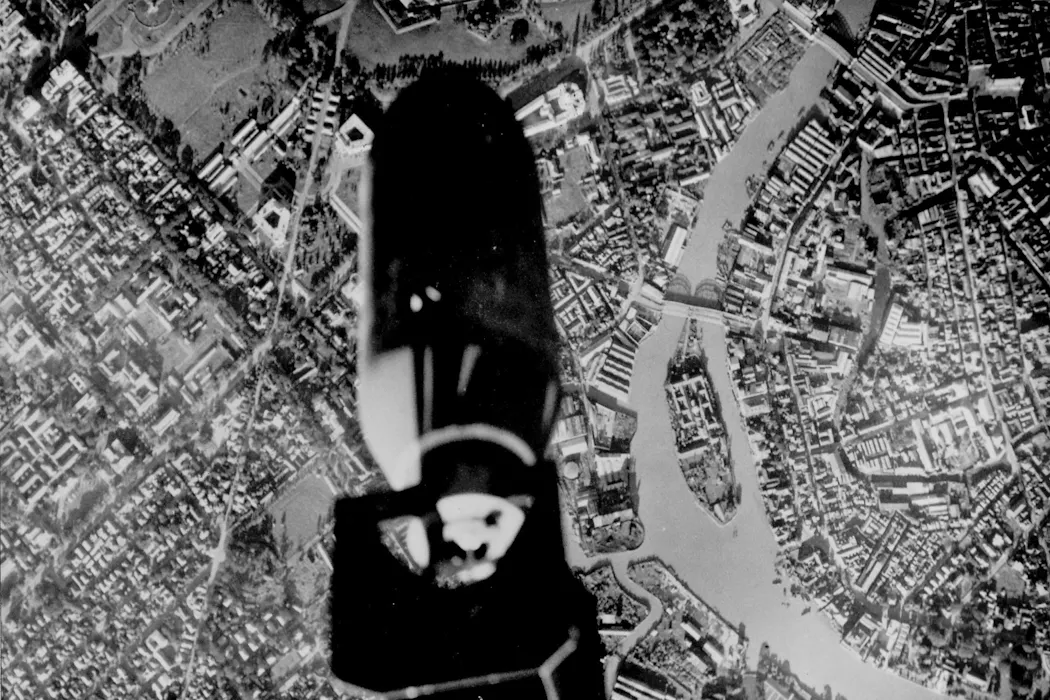
Le 1er novembre 1911, Guilio Gavotti, chargé d’une mission de reconnaissance, décide de se munir d’une bombe et de la larguer sur l’oasis d’Aïn Zara, où, la veille, il avait repéré un attroupement de combattants. Toutefois, au-delà d’être un lieu de rassemblement potentiel pour insurgés, la petite oasis, située à une quinzaine de kilomètres de Tripoli, est surtout un système économique et social, un lieu de vie pour la population civile. Dès lors, en plus d’inscrire dans le réel une nouvelle arme pour faire la guerre, Gavotti instaure également un nouveau type de cible : une cible hybride où se mêlent indistinctement les objectifs militaires et la population civile.
Durant la Grande Guerre, l’aviation s’impose progressivement comme une arme indispensable. D’abord outil de reconnaissance, elle permet également d’attaquer des cibles au-delà du front : des infrastructures militaires, mais également les villes comme Paris, Rouen, Londres…
Le 1er avril 1918, au Royaume-Uni, est créée la première force aérienne indépendante : la Royal Air Force (RAF). Cependant, dès la fin de la « Der des ders », la RAF doit prouver son utilité, garante de son indépendance. C’est ainsi que, après le traumatisme de la guerre des tranchées, l’aviation se présente comme une arme capable de préserver la vie des soldats… au détriment de celles des civils. Elle doit donc permettre à la couronne britannique de maintenir l’ordre dans ses colonies sans avoir besoin d’envoyer des troupes au sol, grâce à des opérations de « police bombing ». C’est cette doctrine qui est encore en vigueur aujourd’hui lorsque des États (les États-Unis ou Israël, par exemple) veulent maintenir ou imposer leur ordre international sans risquer la vie de leurs soldats.
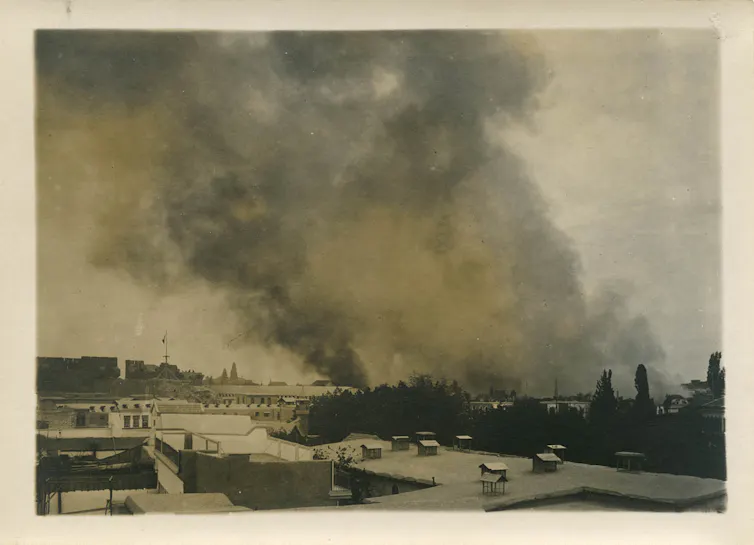
Durant l’entre-deux-guerres, les forces coloniales, ne pouvant atteindre directement les insurgés qui se dissimulaient facilement dans la nature, visent les espaces socio-économiques des populations colonisées pour annihiler la contestation. Le 18 octobre 1925, par exemple, en réponse à l’insurrection syrienne contre l’empire colonial, l’aviation française bombarde les quartiers musulmans de Damas. Ces différents éléments illustrent également la dimension structurellement raciste de l’arme aérienne qui est d’abord massivement utilisée contre les populations considérées comme « non civilisées » et pouvant donc être bombardées.
Depuis la première convention de La Haye de 1899, signée à l’issue de la première Conférence pour la paix, les populations civiles européennes sont effectivement, en théorie, protégées contre le risque de bombardements. Toutefois, les puissances coloniales refusent que l’arme aérienne soit définitivement interdite afin de ne pas entraver leur capacité d’innovation militaire. Les bombardements aériens sont ainsi considérés comme légitimes – y compris lorsqu’ils atteignent des civils – uniquement s’ils sont dirigés contre un objectif militaire.
En plus de préserver la vie des soldats au détriment de celles des civils, la puissance de l’arme aérienne repose sur un – supposé (car il n’est confirmé par aucune étude scientifique) – facteur psychologique. En effet, selon Hugh Trenchard, fondateur de la RAF et théoricien de la guerre aérienne, « l’effet moral d’un bombardement est vingt fois plus important que les effets matériels ». Il espère même que les bombardements pousseront les populations à se révolter et à renverser leur gouvernement. Dès lors, ce postulat – qui structure encore aujourd’hui la guerre aérienne – nécessite de bombarder les villes et donc les civils.
Cette certitude est renforcée par Giulo Douhet, théoricien de l’arme aérienne, qui affirme en 1921 dans la Guerre de l’air, que « par sa capacité de destruction quasiment illimitée, elle peut décider à elle seule de l’issue d’une guerre », reprenant l’imaginaire qui entoure l’arme aérienne depuis sa genèse. C’est ainsi que, afin de rester en adéquation avec le droit international, les forces aériennes élargissent progressivement la notion d’« objectif militaire » à des villes entières – et donc aux civils.
Le bilan de la Seconde Guerre mondiale et l’ère des missiles
À partir de la fin des années 1930, la guerre aérienne devient une réalité pour les Européens. Les bombardements se multiplient durant la guerre d’Espagne (Durango, Guernica, Barcelone), puis surtout pendant la Seconde Guerre mondiale.
Les stratèges aériens, aussi bien de la Luftwaffe que de la RAF ou de l’United States Army Air Forces (USAAF) – qui ont massivement investi dans des appareils lourds quadrimoteurs –, sont persuadés que les bombardements permettront de briser le moral de la population et de rapidement remporter la guerre. Ils attaquent ainsi directement les villes. Celles-ci deviennent, au cours du conflit, des objectifs militaires, ce qui permet aux militaires d’affirmer qu’ils effectuent des attaques de précision.
Les différentes campagnes de bombardements (Blitz sur le Royaume-Uni ou raids alliés sur l’Europe occupée) sont, cependant, un échec absolu. Le moral de la population n’a jamais été brisé par les attaques aériennes et les productions économiques n’ont jamais été ralenties, y compris au plus fort des bombardements. Ce sont pourtant plus de 600 000 civils qui sont tués par les bombes en Europe. À la fin de la guerre, il est rapidement fait le constat que les bombardements ont été « la plus grande erreur stratégique de la guerre ».
Lors du procès de Nuremberg, les Alliés retirent mêmes les condamnations concernant les bombardements nazis afin que le droit international ne restreigne pas l’utilisation de l’arme aérienne. Face au triste bilan de l’offensive aérienne, les militaires considèrent alors que les bombardements ont été un échec, car leur capacité de destruction n’était tout simplement pas assez élevée. Dès lors, les attaques atomiques, couplées aux vols des premiers missiles, font rentrer l’arme aérienne dans une nouvelle ère.
Toutefois, pour les civils, l’expérience de la violence de la guerre aérienne forme un continuum. Ainsi, les Normands, alors qu’ils ont été massivement bombardés entre l’été 1940 et septembre 1944 par les forces aériennes alliées, relient leur expérience aux différents bombardements des conflits contemporains.
C’est, par exemple, le cas d’Henri Bernard qui, en 1947, comparait le bombardement allié de Saint-Lô (Manche) dont il avait été témoin à celui de Guernica par la Luftwaffe. En 1994, lors du 50e anniversaire du Débarquement et de la Libération, Jean Quellien, éminent spécialiste du 6 juin 1944, introduisait les veillées du Mémorial de Caen en expliquant que les Caennais, qui avaient vécu les attaques aériennes de 1944, étaient particulièrement sensibles au sort des habitants plongés dans le siège de Sarajevo. Enfin, ces dernières années, dans le cadre de notre thèse, nous avons pu constater que les témoins des bombardements alliés en Normandie faisaient systématiquement le rapprochement de leur expérience avec celles des civils ukrainiens, palestiniens et aujourd’hui iraniens.
En effet, d’un point de vue matériel, l’expérience de la guerre aérienne – qu’elle soit orchestrée à base de bombardiers quadrimoteurs, de missiles de croisière ou de drones – est relativement similaire pour les civils. L’incertitude de l’attaque propre aux bombardements aériens ; le bruit de l’alarme, des appareils et des bombes ; l’expérience de l’abri dans les caves, les métros, les théâtres, les écoles ; la saturation des sens lors de l’explosion ; l’odeur du soufre et du brûlé ; les espaces de la quotidienneté qui deviennent des ruines ; et enfin, l’expérience de la mort est similaire face aux bombes de 1937 à Guernica ou celles de 2026 à Minab.
Définir des objectifs légitimes « après » les frappes aériennes
En somme, les pertes civiles ne sont jamais des « dommages collatéraux ». Au contraire, par définition, l’arme aérienne est une arme de destruction ayant vocation à détruire des cibles où des civils sont massivement présents.
Les militaires sont, de plus, persuadés – à tort – que l’arme aérienne peut briser le moral de la population et permettre de renverser des régimes. C’était l’espoir des dirigeants alliés contre le Troisième Reich ; c’est aujourd’hui l’espoir de Donald Trump en Iran. Or, les bombardements permettent surtout de préserver la vie des soldats en détruisant partiellement des objectifs, nécessitant toujours de nouvelles opérations, au détriment de la vie des civils.
Dès lors, si l’arme aérienne est aujourd’hui, d’un point de vue technique, beaucoup plus puissante qu’au début du XXᵉ siècle, la rhétorique militariste, afin de légitimer son utilisation en garantissant des bombardements de précision, redessine surtout les objectifs militaires après les frappes.
C’est ainsi que, à en croire les communiqués israéliens, les hôpitaux de la bande de Gaza abritaient des quartiers généraux du Hamas, et que l’école iranienne de Minab sera probablement présentée, à terme, comme un important centre de commandement des gardiens de la révolution. Quant aux populations civiles, elles demeurent structurellement les principales victimes de la guerre aérienne.
Octave Moreau ne travaille pas, ne conseille pas, ne possède pas de parts, ne reçoit pas de fonds d’une organisation qui pourrait tirer profit de cet article, et n’a déclaré aucune autre affiliation que son organisme de recherche.
Source: The Conversation – in French – By Barthélémy Courmont, Directeur du master Histoire — Relations internationales, Institut catholique de Lille (ICL)
*Furor teutonicus* représente la bataille de Teutobourg, en l’an 9 de notre ère. Dans une forêt de l’Allemagne actuelle, trois légions romaines tombent dans une embuscade mise en place par une coalition de tribus germaniques et sont massacrées. Paja Jovanović, 1888
La guerre asymétrique, formule devenue omniprésente depuis quelques décennies dans les analyses des conflits contemporains, est en réalité un phénomène aussi ancien que la guerre elle-même. Partout, toujours, des belligérants moins puissants que leurs adversaires ont cherché à employer les moyens les plus variés pour venir à bout de leurs ennemis plus nombreux et mieux équipés.
L’asymétrie fait désormais partie du vocabulaire des états-majors et des autorités politiques engagées sur des théâtres extérieurs. Les publications sur le sujet se sont également fortement multipliées depuis quelques années, et la guerre menée par les États-Unis et Israël contre l’Iran a confirmé, depuis février 2026, l’importance de ce phénomène.
Le terme est désormais tellement utilisé qu’on en oublierait presque qu’il était, il y a encore quelques années, totalement inconnu du grand public, et à peine mentionné dans les cercles d’experts. La situation a fortement changé avec ce que de nombreux observateurs qualifient de période post-guerre froide, née sur les ruines du World Trade Center en septembre 2001, et en marge de la guerre contre le terrorisme et des conflits de basse intensité opposant des puissances à des acteurs beaucoup plus faibles, qu’ils soient étatiques ou non.
Pourtant, ce type de conflit est bien plus ancien que les interventions des forces des États-Unis et de leurs alliés en Afghanistan en 2001 et en Irak en 2003.
Définition de la guerre asymétrique
Étymologiquement inscrite dans la négation, l’asymétrie est indissociable de la symétrie, mais aussi de la dissymétrie, moins souvent évoquée, dont elle se distingue cependant assez nettement. La symétrie caractérise la « juste proportion », notamment en matière d’architecture. Ainsi, la symétrie suppose au moins deux éléments pouvant être comparés. L’asymétrie est l’absence volontaire de symétrie, et la dissymétrie est un défaut de symétrie – généralement par erreur, mais cela peut être volontaire dans certains cas. Dans ces conditions, l’asymétrie semble plus catégorique que la dissymétrie, car la « juste proportion » y est absente et ne peut pas être corrigée.
Au niveau stratégique, la symétrie est perçue comme le combat à armes égales ; la dissymétrie est la recherche par l’un des combattants d’une supériorité qualitative et/ou quantitative (on parle ici de « stratégie du fort au faible ») ; et l’asymétrie correspond à la démarche inverse, qui consiste à exploiter toutes les faiblesses de l’adversaire pour être le plus nuisible possible.
En s’appuyant sur le constat d’un déséquilibre capacitaire, l’asymétrie est donc une stratégie du faible au fort qui consiste à refuser les règles du combat imposées par l’adversaire et à contourner ses forces, rendant ainsi toutes les opérations totalement imprévisibles.
Cela suppose à la fois l’utilisation de forces non prévues à cet effet et surtout insoupçonnables (comme les civils) ; d’armes contre lesquelles les moyens de défense ne sont pas toujours adaptés (dernièrement, les drones) ; de méthodes situées hors du cadre de la guerre conventionnelle (guérilla, terrorisme) ; de lieux d’affrontement imprévisibles (centres-villes, lieux publics) ; et de l’effet de surprise, cette dernière caractéristique étant sans doute la plus importante, car elle permet de réduire le déséquilibre entre les belligérants.
Employant des moyens techniquement simples, l’asymétrie peut ainsi être assimilée à l’« arme du pauvre », dans la mesure où elle permet à de multiples acteurs ne disposant que de moyens très limités d’avoir une capacité de nuisance totalement disproportionnée.
Il est également possible que des acteurs puissants optent délibérément pour une stratégie de guerre asymétrique, confondant même ce concept avec celui de « génie militaire », comme si celui-ci supposait finalement le triomphe au-delà de toutes les espérances, le niveau des forces engagées étant très faible en comparaison aux résultats obtenus. Dès lors qu’elle peut être privilégiée par le faible comme par le fort, la guerre asymétrique est ainsi une ruse déployée à une échelle pouvant varier.
Alternative par défaut ou par choix à une confrontation frontale dite traditionnelle, et réponse à la recherche de dissymétrie par les puissants, la guerre asymétrique se généralise. Compte tenu de l’improbabilité de guerres entre les grandes puissances et de l’implication quasi systématique de ces dernières dans des confrontations entre des acteurs plus faibles, la question de savoir si tous les conflits contemporains sont par nature des guerres asymétriques mérite a minima d’être posée.
La stratégie du faible au fort
La notion de guerre asymétrique trouve dans l’histoire de multiples exemples de sa mise en application, tant au niveau stratégique que tactique.
Sur tous les continents, de nombreux cas nous permettent de vérifier en grandeur nature les résultats obtenus par le choix de l’asymétrie dans des conflits armés. Détail important, il convient de noter que les moyens asymétriques ont été utilisés à la fois par des États et par des groupes non étatiques, quelle que soit leur importance. Mais une chose est certaine : l’asymétrie n’est pas un fait nouveau.
Les empires ne purent s’y soustraire – les barbares qui pillèrent Rome et les révoltés à plusieurs époques dans l’histoire de Chine disposaient de moyens nettement inférieurs à ceux de leurs adversaires – et certaines grandes batailles offrirent même l’occasion aux faibles de vaincre les forts là où les rapports de force ne leur laissaient a priori pas la moindre chance – la victoire écrasante des Anglais sur la chevalerie française à Azincourt en 1415 est sans doute l’exemple le plus significatif, mais il n’est pas isolé.
De manière répétitive et sur des théâtres très différents, on relève la même équation : là où les empires, les royaumes les plus riches et les plus puissants ont voulu exploiter leur supériorité pour s’imposer durablement, leurs adversaires ont développé par défaut des stratagèmes leur permettant de contourner les moyens de cette puissance. C’est ainsi que, tout au long de l’histoire, se sont mises en place des guerres asymétriques, les adversaires étant au final rarement au même niveau.
Seules les batailles du XIXᵉ siècle, inaugurées lors des campagnes napoléoniennes et organisées sur les bases définies par Carl von Clausewitz (introduisant le concept de victoire écrasante en opposition aux « guerres en dentelle » des XVIIᵉ et XVIIIᵉ siècles), et plus encore la Première Guerre mondiale ont été l’occasion d’assister à des guerres réellement symétriques, dans lesquelles les belligérants étaient de force presque égale et ne devaient leur victoire qu’à des circonstances particulières et/ou au génie tactique de leurs généraux. Parfois, ces batailles s’éternisaient, aucun des combattants n’étant en mesure de prendre le dessus, les tactiques et les moyens utilisés étant, approximativement, les mêmes de part et d’autre.
Les déséquilibres capacitaires hérités de la révolution industrielle, des guerres de colonisation et de la décolonisation marquèrent le retour de l’opposition du fort au faible (guerre dissymétrique), et l’utilisation par ce dernier de stratégies de contournement avec des résultats parfois surprenants pour y répondre (guerre asymétrique).
Les guerres d’Algérie et du Vietnam, la résistance à l’occupation soviétique de l’Afghanistan, l’opération en Somalie, la guerre de Tchétchénie ou encore la campagne menée au Kosovo – ou plus exactement les tactiques de camouflage et de leurres observées sur le terrain dans les rangs des forces serbes – sont des exemples plus récents de guerre asymétrique. Cette manière de faire la guerre est contraire aux règles chevaleresques au Moyen Âge, au respect des conventions sociales pendant les siècles modernes, et à une certaine idée de l’éthique et du droit de la guerre dans les périodes plus récentes. En clair, la guerre asymétrique fut longtemps diabolisée et assimilée en Occident à des pratiques indignes des États.
De la Bible aux Mongols, en passant par Sun Tzu
Dans la tradition occidentale, l’origine mythologique de l’asymétrie est cependant plus glorifiante, et peut être attribuée à l’épisode biblique du jeune David, triomphant du Philistin Goliath aux abords de Jérusalem. Face à un géant, disposant par ailleurs d’armes puissantes, le jeune berger s’est servi de son génie pour éviter le combat, utilisant une simple fronde et frappant mortellement son adversaire à la tête. Le rapport de force était totalement déséquilibré, et c’est pourtant le plus faible qui a triomphé. La Bible mentionne que, « ainsi, avec une fronde et une pierre, David fut plus fort que le Philistin ; il le terrassa et lui ôta la vie, sans avoir d’épée à la main ».
Ce combat symbolise la victoire de la bravoure face aux moyens, et de l’intelligence face à la force physique. Dès lors, les fidèles comprennent que, si la cause qu’ils défendent est juste, peu importe les moyens dont ils disposent, ils pourront parvenir à leurs fins pour vaincre leurs adversaires. Pour devenir roi, plus besoin d’être puissant, du moins au vu des critères traditionnels. Seuls comptent le génie et l’aptitude à vaincre n’importe quel type d’adversaire. L’asymétrie est ainsi perçue comme un moyen de récompenser les mérites quand la force brute ne le permet pas, mais elle n’est pas considérée comme un choix stratégique.
Tandis que l’asymétrie correspondait, dans la civilisation occidentale, à une intervention divine offrant la ruse au jeune David, s’est développée en Asie orientale une véritable pensée stratégique proposant l’asymétrie comme moyen de guerre. Au VIᵉ siècle avant notre ère, une époque où la Chine traversait la période chaotique dite des « royaumes combattants », Sun Tzu s’est penché sur les meilleurs stratagèmes permettant de limiter ses propres dégâts, tout en multipliant ceux de l’adversaire, même si celui-ci est plus fort. Sa pensée – dont l’objectif est de faire croire à l’adversaire qu’il maîtrise la situation de manière à pouvoir le duper plus facilement – s’est répandue en Asie orientale, puis progressivement dans le reste du monde.
Après l’œuvre de Sun Tzu, de nombreux autres théoriciens chinois se lancèrent dans la rédaction d’études sur la guerre. Shang Yang, contemporain de Sun Tzu, et sa guerre défensive, ou Sima Qian (fin du IIᵉ siècle avant notre ère) et ses biographies des généraux marquèrent ainsi l’histoire de la guerre dans la civilisation chinoise, avec la nécessité de miser sur les stratégies de contournement quand les conditions de la victoire ne sont pas remplies.
Pour les théoriciens chinois de la guerre, si la victoire reste l’objectif ultime, comme en Occident, les moyens pour y parvenir sont multiples, et passent notamment par la patience et l’analyse rigoureuse des forces et des faiblesses de l’adversaire. Dès lors, même le faible a ses chances contre le fort, à condition de savoir refuser le combat quand celui-ci est perdu d’avance, et de porter ses attaques au bon moment et au bon endroit.
Sun Tzu fut également l’un des premiers stratèges à s’interroger sur « ce qu’il faut avoir prévu avant le combat », faisant des préparatifs et du renseignement l’une des clés de la victoire. Pour lui, un général doit savoir cinq choses avant de s’engager dans la bataille : 1) savoir s’il peut combattre et quand il faut cesser ; 2) savoir s’il faut engager peu ou beaucoup ; 3) savoir gré aux simples soldats autant qu’aux officiers ; 4) savoir mettre à profit toutes les circonstances ; 5) savoir que le souverain approuve tout ce qui est fait pour son service et sa gloire.
Ces différentes recommandations sont particulièrement entendues des acteurs asymétriques, qui comprennent qu’elles doivent impérativement être remplies, d’abord dans un but de survie, et le cas échéant afin de remporter le combat.
L’islam des premiers temps fut de son côté également caractérisé par la stratégie indirecte d’un peuple disposant de moyens rudimentaires, mais parvenant rapidement à vaincre ses adversaires et à étendre son influence. Les Mongols, face à un empire chinois infiniment plus peuplé et nettement plus avancé, mais aussi les Ottomans et les peuples d’Afrique, notamment face aux conquérants occidentaux, développèrent également des stratégies asymétriques avec des résultats spectaculaires.
De la guérilla aux conflits contemporains
C’est avec la guérilla et les théories qui y sont associées puis, plus récemment, avec le terrorisme transnational dont les puissances firent les frais que la guerre asymétrique est progressivement revenue en vogue en Occident.
De l’Espagne dominée par l’empire napoléonien à Che Guevara, en passant par Lawrence d’Arabie ou Mao Zedong, les moyens de guerre proposés dans le cadre de la guérilla sont totalement asymétriques. C’est en s’infiltrant au sein même des territoires adverses qu’ils obtiennent des succès, pas en s’attaquant frontalement à des forces armées supérieures en nombre et en matériel.
La guérilla s’est immédiatement imposée comme l’arme du faible, voire de l’inculte en matière militaire, face au soldat professionnel bien armé, bien entraîné et mené par un général instruit. La guérilla fut aussi et surtout théorisée, sur la base des expériences et des testaments de ces acteurs. Le plus célèbre de ces « nouveaux testaments » de l’asymétrie est incontestablement la Guerre de guérilla, écrit par Che Guevara en 1959, dans lequel est démontré qu’une armée populaire peut battre une armée régulière, quels que soient les moyens dont les « combattants de la liberté » disposent. Guevara considérait qu’il n’est pas nécessaire de s’appuyer sur une large base, mais qu’un petit foyer ou un petit groupe d’idéalistes en armes, établi loin des villes, peut entraîner l’adhésion de tous les mécontents et des révolutionnaires.
Le terrorisme peut-il de son côté être considéré comme une manifestation de guerre asymétrique ? Indiscutablement, l’invisibilité et le caractère imprévisible des attaques terroristes sont asymétriques, car ils se caractérisent par la faiblesse des moyens engagés. Le terrorisme transnational apparaît ainsi comme le degré ultime de la guerre asymétrique, car il s’intègre à l’intérieur même des sociétés qu’il combat, ce qui le rend d’autant plus difficile à détecter et à prévenir.
Le terrorisme transnational et le risque qu’il fait peser sur la sécurité dans les sociétés contemporaines fut à l’origine du regain d’intérêt pour les guerres asymétriques, et c’est sans surprise que, après 2001, ce concept a fait une entrée fracassante dans les réflexions des états-majors, au point d’inspirer des innovations stratégiques, comme la contre-insurrection déployée en Irak, avec des résultats mitigés mais qui confirment une nécessaire adaptation du fort aux pratiques du faible.
Un type de guerre qui n’est pas près de disparaître
La fin de la bipolarité a ouvert le champ à des formes de conflits restées relativement silencieuses tout au long du XXᵉ siècle, dans sa deuxième partie surtout, opposant des adversaires aux moyens limités, soit des États faibles, soit des acteurs non étatiques, et consacrant ainsi ce que certains analystes qualifièrent de « retournement du monde ». Ce regain de violence a poussé Washington, seule superpuissance rescapée de la guerre froide, à s’interroger sur les menaces dont les États-Unis (et par extension le « monde » dans son ensemble) pourraient désormais faire l’objet.
Dans un contexte marqué par une remise en cause de plus en plus prononcée de la puissance américaine, tant dans ses aspects politico-diplomatiques que militaires (les expériences de l’Irak et de l’Afghanistan ont renforcé ce phénomène), la guerre asymétrique semble avoir de beaux jours devant elle et impacte ainsi considérablement les conflits contemporains. Le cas de l’opération menée par Israël et les États-Unis en Iran vient le confirmer.
Barthélémy Courmont ne travaille pas, ne conseille pas, ne possède pas de parts, ne reçoit pas de fonds d’une organisation qui pourrait tirer profit de cet article, et n’a déclaré aucune autre affiliation que son organisme de recherche.
Source: The Conversation – in French – By Fabien Théofilakis, Maître de conférences, histoire contemporaine, Université Paris 1 Panthéon-Sorbonne
Du 20 novembre 1945 au 1er octobre 1946, 24 des principaux responsables du régime nazi allemand étaient jugés pour crimes contre la paix, crimes de guerre et crimes contre l’humanité à Nuremberg. Moment fondateur pour la justice internationale, ce procès a aussi fait entrer l’image dans le prétoire, en l’utilisant comme un outil central pour confondre les accusés. Mais l’enregistrement du procès pose un autre enjeu, celui de produire des archives pour l’avenir.
Les lumières s’éteignent dans le prétoire, ce 29 novembre 1945, à Nuremberg (Allemagne). La salle n’est bientôt plus éclairée que par l’écran placé face au public, dans l’axe de la presse, sur lequel sont projetés des films réalisés par les Alliés montrant les atrocités nazies.
Cette scène, qui a contribué à faire naître une mémoire visuelle de ce que l’on n’appelle pas encore la Shoah, constitue l’un des moments forts du film Nuremberg (2025), qui retrace le défi qu’a représenté le Tribunal militaire international (TMI) à travers l’affrontement psychologique entre Hermann Göring et le psychiatre américain Douglas Kelley, chargé par l’armée américaine de déterminer si les dirigeants nazis étaient aptes à être jugés.
Le film la recrée en intégrant les images historiques des camps de concentration, tels Ohrdruf, Dachau ou Bergen-Belsen, devenues depuis des références majeures de la mémoire du nazisme. Ces images montrant des survivants squelettiques et des amas de corps nus eurent un immense impact, comme le donne à voir la production hollywoodienne.
Bande-annonce du film de James Vanderbilt Nuremberg, sorti en 2025.
Mais ce moment spectaculaire n’est pas la seule manière dont le film de James Vanderbilt rappelle le rôle de l’image à Nuremberg et le précédent que ce procès a constitué. Car le procès de Nuremberg, il y a 80 ans, ne s’est pas seulement appuyé sur des documents et des témoignages : il a aussi fait entrer l’image dans le prétoire, posant une question nouvelle : filmer un procès permet-il d’écrire l’histoire ? Quelle valeur accorder à ces images judiciaires ?
Derrière cette interrogation se trouvent plusieurs enjeux : montrer les crimes, produire des archives pour l’avenir, mais aussi comprendre ce que l’image révèle – ou parfois dissimule – de la justice.
Un procès pour l’histoire, des images pour les générations futures
Le procès de Nuremberg (1945-1946) constitue un moment fondateur pour la justice internationale. Pour la première fois, les dirigeants d’un régime sont jugés par un tribunal international ; pour la première fois, les crimes contre la paix, le crime de guerre et les crimes contre l’humanité sont des chefs d’inculpation. Mais ce procès est aussi pensé comme un événement public, comme le souligne la déclaration du procureur Robert H. Jackson en ouverture, le 21 novembre 1945 :
« Les méfaits que nous avons à condamner et à punir font preuve d’une telle vilenie et ont été si nuisibles que la civilisation ne pouvait se permettre de passer outre, parce qu’elle ne pourrait continuer à exister si jamais ils devaient se répéter. […] Ce que ces hommes représentent, nous allons vous le dévoiler avec patience et modération, nous allons vous donner des preuves irréfutables des actes inqualifiables qu’ils ont commis. »
Les débats doivent être donc publics, connus de tous et faire mémoire.
L’image devient alors un instrument essentiel pour faire comprendre l’ampleur des crimes nazis à la population allemande comme l’opinion internationale. Cette volonté d’inscrire la justice dans l’histoire explique l’importance accordée au filmage du procès, soit environ deux cents heures réalisées par quatre caméras. Diffusé dans les actualités cinématographiques au cinéma, il marque les contemporains et inspirent l’idée de conserver certains procès pour la mémoire collective. À Nuremberg, l’objectif n’est pas seulement de juger les accusés, mais de documenter un moment historique, transformant le procès en événement pédagogique.
Avec le recul, ces images ont permis de créer des archives pour l’avenir. La documentation écrite d’un procès – comptes rendus, dossiers, jugements –, pour essentielle qu’elle soit, ne restitue pas toute l’audience. Les images permettent de conserver ce que les textes ne montrent pas : les gestes, les silences, les regards, les réactions de la salle. Ces captations restituent ainsi la dramaturgie du tribunal et les interactions entre ses acteurs. Elles révèlent parfois des stratégies de défense ou des dynamiques invisibles dans les archives écrites. Dès lors, l’image devient un indice qui invite à explorer ce qui se passe hors champ. L’image transforme le procès en source historique, ce qui permet à Nuremberg de paraître si authentique.
Toutefois, filmer un procès ne consiste pas seulement à enregistrer ce qui se passe tant la position de la caméra modifie la perception même de l’événement. Une image est en effet toujours le résultat d’un point de vue qui répond à certaines questions préalables (Où placer la caméra ? Qui filmer des juges, des témoins et/ou des accusés ?). Regarder le procès de Nuremberg, quatre-vingts ans après sa tenue, invite à lire ses images comme le récit d’un projet à la fois judiciaire et politique qui se veut l’une des premières interprétations du nazisme et de ses crimes.
L’image comme preuve judiciaire et ressort dramatique
À Nuremberg, l’image fut d’abord produite dans le prétoire alors que, fin 1945, les débats juridiques et l’abondance de documents écrits risquent de lasser le grand public. Le procureur américain Robert H. Jackson comprend que la preuve documentaire ne suffit pas. Les crimes nazis sont d’une telle ampleur que beaucoup pourraient les considérer comme exagérés ou relever de la propagande. L’image devient alors un outil central pour confondre les accusés.
Les procureurs américains décident alors d’avancer l’utilisation du film comme preuve, innovation majeure du procès. Des images tournées lors de l’ouverture des camps de concentration à l’Ouest et des centres de mise à mort à l’Est par les armées alliées sont projetées dans la salle d’audience. Cette pratique transforme profondément la manière d’administrer la preuve à côté des quelque 5 000 documents écrits tant les images produisent un choc visuel incontestable.
Le procès de Nuremberg (RTS Archives, 2023).
La configuration même de la salle d’audience est pensée pour cette démonstration visuelle : derrière la barre des témoins est installé un écran de cinéma, qui ne fait pas face aux juges, mais au public, à la presse internationale et, au-delà, à l’opinion mondiale. Une rangée de néons est également installée au-dessus du banc des accusés afin de rendre visibles leurs réactions.
Américains, puis Soviétiques projettent leurs productions documentaires : d’abord Nazi Concentration Camps, documentaire composé d’images tournées par l’US Army lors de la libération de l’Allemagne ; puis, le 19 février 1946, Film Documents on the Atrocities of the German-Fascist Invaders, réalisation de l’Armée rouge, notamment sur les crimes commis contre les populations soviétiques.
Cette stratégie répond à un problème précis : l’ampleur des crimes nazis dépasse l’imagination. L’image permet donc de les rendre visibles. Elle participe également à la légitimation du tribunal lui-même et renforce le rôle pédagogique du TMI.
Une influence durable sur la justice contemporaine
En France, le ministre de la justice Robert Badinter fait adopter une loi en 1985 – révisée en 2010 – qui autorise l’enregistrement audiovisuel de procès à caractère historique. Aujourd’hui encore, la question de filmer les procès continue de susciter des débats.
Certains y voient un moyen de préserver la mémoire des événements historiques ; d’autres s’inquiètent des effets possibles de la médiatisation (la justice pourrait-elle devenir un spectacle ?), notamment en Allemagne où le filmage n’est pas autorisé.
Ces interrogations montrent que le filmage des procès ne relève pas seulement de la technique, mais touche au cœur du fonctionnement démocratique. C’est sans doute un héritage de Nuremberg : la justice juge certes le passé, mais elle produit aussi les images qui permettront de s’en souvenir.
Fabien Théofilakis ne travaille pas, ne conseille pas, ne possède pas de parts, ne reçoit pas de fonds d’une organisation qui pourrait tirer profit de cet article, et n’a déclaré aucune autre affiliation que son organisme de recherche.
Source: The Conversation – in French – By Justine Audebrand, Chercheuse associée au Laboratoire de médiévistique occidentale de Paris (UMR 8589), post-doctorante à l’Institut Historique Allemand, Université Paris 1 Panthéon-Sorbonne
Moins étudiées par les historiens que les liens parentaux ou conjugaux, les relations entre frères et sœurs étaient un élément structurant des sociétés du haut Moyen Âge. Au-delà de rivalités et d’enjeux de patrimoine, des proximités émotionnelles fortes pouvaient se tisser dès l’enfance et durer tout au long de la vie.
Loin de délaisser leurs enfants, comme l’ont véhiculé certains stéréotypes, les parents du Moyen Âge s’investissaient dans leur éducation. Cette attention a des conséquences sur les autres membres de la famille : les liens forgés entre les enfants perdurent bien souvent tout au long de la vie, et jusque dans la mort.
Si les relations entre frères et sœurs sont sous-tendues par des enjeux de pouvoir dans les groupes aristocratiques, elles relèvent aussi de la sphère affective et peuvent être intenses, constituant même un idéal pour certains, dans la première moitié du Moyen Âge.
Des liens forgés dans l’enfance
Comme aujourd’hui, c’est dans l’enfance que se forment les liens adelphiques. Cet adjectif, formé sur le grec adelphos (né de la même matrice), est préféré à « fraternel » par les historiens de la famille, car il permet d’inclure pleinement les filles. La plupart du temps, les enfants grandissent en partie ensemble, au moins jusqu’à 7 ans, et sans qu’il y ait forcément de distinction entre les sexes : c’est le cas, semble-t-il, des fils et filles du futur empereur Charlemagne (768-814).
En cas de décès des parents, on essaie de faire en sorte de ne pas séparer frères et sœurs, qui peuvent alors rejoindre la maison d’un parent ou un monastère. Bien sûr, ces tendances ne sont qu’un choix parmi d’autres : passées les premières années, certains enfants sont aussi élevés loin de leur famille, soit dans une institution religieuse, soit en « fosterage » chez un parent.
La cohabitation forge probablement un lien durable, y compris entre des enfants issus d’unions différentes, car les remariages sont alors fréquents.
Mais les rivalités enfantines existent aussi. Les sources en parlent très peu, mais on peut parfois les reconstituer à partir de bribes. Ainsi, le biographe du roi anglo-saxon Alfred le Grand (871-899) raconte que sa mère les aurait mis en concurrence, ses frères et lui, pour apprendre par cœur un livre de poésie. Cette concurrence est annonciatrice de conflits ultérieurs entre eux, une fois adultes.
Des solidarités tout au long de la vie
Pour autant, si l’on regarde hors des familles royales, dans lesquelles les rivalités sont exacerbées, ce sont bien souvent les solidarités qui sont mises en avant dans les sources. L’amour fraternel (au masculin) constitue un idéal dans les sociétés chrétiennes, sans doute parce qu’il est le vecteur d’une idée d’aide et d’harmonie.
Les sources sont truffées d’exemples d’adultes qui entretiennent des relations étroites avec leurs frères et leurs sœurs. Pour les hommes entrés en religion, la sœur est même la seule femme au-dessus de tout soupçon, et il n’est pas rare de voir des évêques ou des moines continuer de voir leur sœur. L’exemple paradigmatique est celui de Benoît de Nursie (480-547) qui, selon le pape Grégoire le Grand (qui écrit au début des années 590), aurait consenti à rendre visite à sa sœur Scolastique une fois par an. Un jour, Scolastique supplie son frère de rester plus longtemps. Son vœu est exaucé par la volonté divine puisqu’un violent orage contraint Benoît à passer la nuit chez sa sœur. Dans ce récit, l’amour de la sœur pour son frère et la volonté de perpétuer le lien adelphique malgré les vœux monastiques sont considérés comme des éléments normaux et positifs.
Dans le même temps, l’exemple de Benoît et Scolastique illustre aussi les inégalités de genre qui existent dans toute société patriarcale. Dans plusieurs Vies de saintes femmes, l’amour inconditionnel de la sainte pour son frère – idéalement aussi saint – est mis en évidence. C’est aussi parce que le frère constitue un soutien important.
Ainsi, lorsque Baudouin est assassiné dans la seconde moitié des années 670, sa sœur Anstrude, abbesse de Saint-Jean de Laon, se lamente aussi bien de la perte de son frère que de celle de son protecteur. Cela s’applique particulièrement aux nonnes, mais les femmes laïques peuvent aussi se tourner vers leur frère en cas de besoin, soit au moment du veuvage soit en cas de conflit conjugal.
L’étroitesse de ce lien peut même se manifester au plan politique. Plusieurs rois du Xᵉ siècle, comme Athelstan (924-939) en Angleterre ou le souverain germanique Otton III (983-1002), célibataires, demandent en certaines occasions à une de leurs sœurs de jouer le rôle de la reine. Ainsi, Sophie, aînée d’Otton, l’accompagne lors de son couronnement impérial à Rome et elle intercède fréquemment pour des aristocrates auprès de son frère.
Cette substitution n’est, bien sûr, que purement cérémonielle et politique, et en aucun cas charnelle. À vrai dire, les cas d’inceste adelphique sont quasiment inexistants dans la documentation antérieure à l’An Mil. Cela ne veut pas dire que cela n’existe pas, mais plutôt que les auteurs du clergé survalorisent la relation adelphique et ne parle pas de ces phénomènes.
Face à la mort… et au-delà
La mort d’un membre de la famille constitue toujours un moment de crise qui permet, en creux, de révéler la force du lien adelphique. Lorsque les textes mettent en scène de longues périodes d’agonie avant le décès, les frères et sœurs sont souvent des figures récurrentes de soutien : l’archevêque Drogon de Metz assiste son frère, l’empereur Louis le Pieux, dans ses derniers instants en 840, et l’auteur du texte qui relate ces faits insiste sur le lien fraternel entre les deux hommes, et non sur les fonctions politiques de Drogon à la cour impériale.
Dans ce cadre, les frères et les sœurs (lorsqu’elles sont veuves ou nonnes) apparaissent comme des garants de la continuité familiale en recueillant les dernières volontés du mourant.
Les réactions à la mort traduisent aussi la puissance du lien adelphique ainsi que ses modalités : les sources d’avant l’An Mil ne décrivent presque jamais les deuils consécutifs à la mort des sœurs, ce sont presque toujours les frères que l’on met en avant. Le rôle des femmes, quant à lui, est celui de l’entretien de la mémoire des défunts, en particulier de leurs frères. Il est plus rare que les sources nous renseignent sur la perpétuation de la mémoire des sœurs, mais d’émouvants exemples existent.
Ainsi, au tout début du Xᵉ siècle, l’aristocrate anglaise Ælfflæd fait rédiger son testament, qui reprend une partie des dispositions de celui de sa sœur Æthelflæd. Leurs deux testaments sont copiés d’une même main, sur un même parchemin, peut-être commandé par Ælfflæd elle-même. Ces deux sœurs matérialisent ainsi leur proximité, tant émotionnelle que patrimoniale, pour les siècles à venir.
Justine Audebrand ne travaille pas, ne conseille pas, ne possède pas de parts, ne reçoit pas de fonds d’une organisation qui pourrait tirer profit de cet article, et n’a déclaré aucune autre affiliation que son organisme de recherche.
Source: The Conversation – USA (3) – By Eranda Jayawickreme, Professor of Psychology & Senior Research Fellow, Program for Leadership and Character, Wake Forest University
Traditional dancers perform in front of the Buddhist Temple of the Tooth, celebrating the Buddhist festival of Esala Perahera, in Kandy, Sri Lanka, on Aug. 8, 2025.Ishara S. Kodikara/AFP via Getty Images
I grew up in Sri Lanka. Much of my adolescence was spent in Kandy, a city built around a lake, set amid the lush tea plantations of the hill country. Its northern shore houses the Temple of the Tooth, one of Buddhism’s most sacred sites. Each year, it came alive with drummers, dancers and elephants parading through the streets in a “perahera,” or procession, honoring the Buddha’s relic.
But Buddhism was only one part of Kandy’s mosaic of religious life. I went to a high school where students from different religious and ethnic backgrounds got along easily. Within walking distance stood Buddhist temples, Christian churches, brightly colored Hindu temples, or “kovils,” and Muslim mosques whose call to prayer echoed across the city multiple times a day. Religious observances filled the calendar; Sri Lanka has more holidays than almost any other country.
Our own home was a glimpse into the island’s diversity. I attended both churches and temples with ease. My mother regularly visited a Hindu kovil with a close friend – though she was Catholic and my father was Buddhist. Her family had emigrated from Kerala, the southwestern tip of India, at the turn of the 20th century. His was Sinhalese, Sri Lanka’s largest ethnic group.
I grew up during Sri Lanka’s civil war, which consumed the country from 1983 to 2009. The brutal conflict was fought between the Sinhalese-majority government and the Liberation Tigers of Tamil Eelam, a separatist group fighting to create an independent state for the Tamil minority. An estimated 80,000-100,000 people lost their lives, and the war divided the country along religious and ethnic lines. Meanwhile, a separate insurrection led by the Janatha Vimukthi Peramuna, a Marxist political party, tore through the southern part of the country in the late 1980s, killing tens of thousands of people.
As a child, I did not possess the vocabulary to describe my own personal experience during this tumultuous time. All I knew was that some people withdrew into their own groups and vilified Sri Lankans who were different from them. Others worked hard to maintain relationships. Ordinary people in extraordinary circumstances could still choose connection over anger.
Those experiences sparked enduring interest in a question that animates my work as a personality psychologist. What allows people to live together across deep religious differences, without sliding into hostility or dehumanization? What helps them commit to pluralism?
Over time, I have come to believe that pluralism requires more than laws and institutions, although such structures are important. It is a moral commitment: a virtue that we each have a responsibility to cultivate.
What pluralism is
The phrase “pluralism” is often used loosely. Sometimes it simply refers to diversity: people of many religions or ethnicities living in one society.
This can look quite ordinary: a Buddhist teacher attending a Christian colleague’s church wedding out of respect, or a Muslim shopkeeper and a Buddhist neighbor debating over tea, disagreeing sharply, but chatting again the following day. Many of the shopkeepers my family relied on every week were either Tamil or Muslim. One of my tutors – a Muslim man who had worked for the Sri Lankan foreign service in his youth – would sit with me over lessons and then linger to talk with me about politics, culture and the country.
Pluralism lives in these repeated, small acts: decisions to sustain relationships with people whose deepest convictions differ from your own. And it begins with tolerance.
True tolerance cannot exist without disapproval. If I fully agree with your beliefs, I do not need to tolerate them. Tolerance begins when you encounter a view or practice that you find mistaken, troubling or even morally wrong and choose not to interfere with it – because you recognize coercion is not the appropriate response.
Pluralism moves beyond tolerance. It’s not just permitting someone’s beliefs; it’s trying to understand them and getting to know them. This is not the absence of conviction. It is the determination to live out one’s deepest convictions within a shared civic space, and to treat other people not as a threat but as key contributors to the community.
It can help to think about pluralism as a continuum. At the opposite end is hate: “I do not accept your existence.” Next is indifference: “I do not care what you believe.” Indifference is followed by tolerance as patience or forbearance: “I disapprove, but I will not interfere.”
The deeper form of tolerance is based in respect: “I affirm your humanity, even while disagreeing.” Finally, the last space on the spectrum is what scholars label relational or covenantal pluralism: “I’m committed to our connection, even though we disagree.”
Historically, religious conflict often centered on theological disputes: questions about doctrine, salvation or authority. Enlightenment thinkers such as John Locke, Immanuel Kant and Jean-Jacques Rousseau grappled with a shared question: How can diverse societies hold together in the face of such differences?
One answer was that societies needed some form of shared civic framework to bind citizens. Two centuries later, the sociologist Robert Bellah argued that Americans had developed just such a framework: a “civil religion” of shared symbols, narratives and moral commitments – such as the American flag, the Constitution and Memorial Day – that transcended particular faiths while sustaining a sense of common purpose.
Often, though, religious pluralism is less about theological differences themselves. Instead, conflict frequently erupts over social and political differences emerging from foundational values and identities.
Sri Lanka provides vivid examples of this disagreement. Article 9 of the country’s constitution grants Buddhism the “foremost place” among religions. Many religious minorities feel that provision writes a hierarchy into law, granting special privileges to the majority religion.
Or think about the consequences of the devastating 2019 Easter bombings – coordinated attacks on churches and hotels in three Sri Lankan cities by members of the Islamist militant group National Thowheeth Jama’ath.
A relative of a victim of the Easter bombings prays at their burial site in Negombo, Sri Lanka, on April 28, 2019. AP Photo/Manish Swarup
The resulting wave of anti-Muslim sentiment was not really driven by theological differences but questions about identity, trust and political power. Social media misinformation and opportunistic political rhetoric cast Muslims as outsiders threatening a Sinhala-Buddhist national identity. The question at stake was not which religion was true but who “truly” belonged to the nation.
If societies cannot sustain engagement across differences, shared civic life becomes impossible. This challenge, in my view, is not only institutional but also personal: What habits of mind allow religious pluralism to flourish?
Psychology of disagreement
On a personal level, pluralism begins in a moment of objection. You hear a belief that conflicts with your own. You see a religious symbol you find troubling. You run into a policy grounded in values that you reject. Our first reaction is often intuitive and emotional: irritation, aversion, anger, discomfort. Moral psychology suggests that such reactions feel automatic, confirming our sense that our view is the obvious truth.
What matters is what happens next. Some people quickly dismiss ideas they don’t like, shutting down curiosity. Others pause to reflect: asking why they reacted as they did, what the other person might value, and whether broader principles like freedom of conscience or fairness should guide their response.
This is a hard standard to live up to and one which I’ve struggled with myself. In the wake of the Easter bombings, I found myself growing impatient with Sri Lankans who continued to defend the actions of the government, even as it was detaining about 2,000 Muslims, often on thin evidence; banning women’s religious head coverings; and pardoning the ultranationalist monk most associated with anti-Muslim mob violence. I sometimes caught myself doing exactly what I study, reducing complex people to the worst version of their position. I stopped asking what they were trying to protect or what fears were driving their stance.
It took deliberate effort to step back and try to understand their perspective charitably, even while continuing to disagree. I had to reflect on the fact that for Sinhalese Buddhists carrying the memory of decades of Tamil separatist violence, the government’s response in the wake of the bombings could seem like a way to take the country’s security seriously. The tragedy was that this fear of violence was directed at an entire community, rather than the fringe actors who had committed the crime.
A Muslim woman takes part in a remembrance ceremony in front of St. Anthony’s Church in Colombo, Sri Lanka, on May 21, 2019, a month after a series of deadly Easter Sunday blasts. Ishara S. Kodikara/AFP via Getty Images
Reflection does not guarantee tolerance; we may still conclude that a belief is too harmful to accept. But it could also lead to a “principled allowance,” which is what makes tolerance possible: deciding that others have a right to hold or express views we dislike.
From there, the path can diverge again. Some people settle for a minimal “live-and-let-live” coexistence, while others move toward deeper dialogue and cooperation.
In other words, pluralism is not a single decision. It’s a series of steps to uphold a relationship, shaped by virtues such as humility, empathy, patience, fairness and courage. We can strongly disagree with someone but still ask: What does this belief mean to them?
That said, I still wrestle with where the boundaries of pluralism lie. What about when someone’s convictions lead to clear harm to vulnerable people? I do not have a clean answer. Over the years, though, I’ve come to believe that the difficulty of the question is not a reason to abandon the commitment. Committing to pluralism is a sign of character – one that can be strengthened by practicing particular virtues.
Which virtues support pluralism?
One is intellectual humility: recognizing the limits of our knowledge. It does not mean abandoning conviction. It means acknowledging the possibility that we’re wrong.
Studies suggest that intellectual humility is associated with openness to opposing viewpoints, attempting to understand how another person sees the world. When combined with curiosity, it moves beyond strategic tolerance toward fostering genuine relationships.
Another key virtue is empathy – but a specific kind of empathy. As an emotion, empathy can be biased; it may pull us toward people who look like us, feel close to us, or whose suffering resonates with our own experience. Another form of empathy, though, is perspective-taking: trying to understand another person’s thoughts, feelings or point of view. Studies have found that perspective-taking can reduce prejudice against people with different views.
Similarly, the virtue of curiosity can help reframe disagreement. Instead of seeing difference as a threat to our own identity, it becomes an opportunity to learn. Higher levels of curiosity have been found to both increase people’s motivation to learn and reduce their desire to distant themselves from people with different views.
Pluralism is challenging when emotions run high. That means another virtue it requires is self-regulation, the ability to reflect before reacting. Without it, moral disagreement can quickly descend into condemnation.
Tamil war survivors pray for family members during a commemoration ceremony in Mullaitivu, Sri Lanka, on May 18, 2024. Buddhika Weerasinghe/Getty Images
Finally, pluralism takes courage. People sometimes confuse pluralism with moral relativism: the view that right and wrong are just matters of opinion, with no universal moral foundation. Pluralism doesn’t mean giving up your values, but it requires bravery to discuss them openly with people who strongly disagree.
It is still early, but the emerging picture is consistent with what I observed as a child: that the people around me who maintained friendships across ethnic and religious lines were not people without convictions. They were people who had cultivated specific habits of mind that made that pluralism possible, despite blowback from others within their own community.
Putting it into practice
One practical way to build these habits is to practice what some researchers call an “ideological Turing test.” The rule is straightforward: Before you criticize someone’s position, you first have to explain it so accurately and charitably that they would recognize themselves in your summary. They would say, “Yes, that’s what I believe.”
Doing this well is hard. You have to get curious about what the other person is actually trying to protect, what they fear, what trade-offs they’re willing to live with, and what experiences might have shaped their perspective in the first place. This exercise quietly changes the aim of the conversation: Instead of trying to defeat the other person, you try to understand them.
The process also tends to trigger intellectual humility, because when we make a serious attempt to represent opposing views fairly, we may notice faults in our own thinking. None of this requires agreement, but it does reduce our tendency to caricature the other side.
Pluralism can also be strengthened by reframing our sense of “we.” In polarized environments, “we” tends to shrink until it names only the people who pray, vote and live exactly like us. Pluralism pushes in the opposite direction: It asks us to include fellow citizens whose deepest convictions diverge from our own. Community is a shared civic fate – the responsibilities, institutions and hopes we share, despite enduring disagreement.
Many times over the years, I have thought of a story my father told me, a vivid example of “we.” In 1983, Tamil militants killed 13 government soldiers, and anti-Tamil riots swept across the country. Sinhalese mobs attacked Tamil homes, businesses and neighborhoods in what became known as Black July – days of violence orchestrated by the government that killed thousands of Tamils and displaced many more. The riots are widely regarded as the spark that turned simmering tensions into a full-scale civil war.
A woman holds a portrait of her missing relatives during a protest by Tamils demanding justice for their loved ones near mass graves in Jaffna, Sri Lanka, on July 26, 2025. AFP via Getty Images
My grandparents and uncle were living in Kandy. When violence reached their area, they hid Tamil neighbors in their home, sheltering them from the mobs outside. My father said it was a split-second decision, motivated by the recognition that the people next door were their neighbors rather than members of a different ethnic and religious group.
Their actions required courage and a moral clarity that cut against the chaos of the moment. This clarity doesn’t appear out of nowhere; it emerges from habits practiced long before the moment of crisis arrives.
To build that courage in ourselves, we can also build habits of praise, noticing and naming when others are respectful to people across a divide. Virtues grow where they are socially reinforced. Each person can build accountability by committing with a friend or colleague to one concrete practice of pluralism: asking clarifying questions before responding, summarizing an opposing view before critiquing it, or pausing before posting an incendiary comment online.
Thinking back to my childhood, I remember the evening in 1993 when neighbors gathered outside after news that Sri Lanka’s president at the time, Ranasinghe Premadasa, had been assassinated. We could hear faraway fireworks lit by others who were rejoicing in his passing. And yet we stood together quietly.
The silence of the people around us did not erase our differences; the sound of the fireworks in the distance was a callous reminder of the disagreements that did exist. But to me, our neighbors’ silence affirmed something deeper: that our disagreements did not cancel our shared humanity.
In an era when religious and moral differences often feel like threats to identity, cultivating an individual ethic of pluralism may be one of the most critical civic tasks before us. Pluralism is not who we are by default. But it can be who we become – slowly, deliberately and together.
Eranda Jayawickreme receives funding from the Templeton Religion Trust (grant ID TRT-2024-33487). He is a member of the Labour Party (UK).
Many people use drugs including paracetamol on a regular basis to treat headaches. But only part of each drug is taken into the bloodstream, while the rest is released into the wastewater through our urine when we go to the toilet.
Paracetamol is an ingredient in the tablet. Most of the paracetamol is absorbed into the blood. Around 5% of the paracetamol is immediately excreted in urine in its original form.
Over around 24 hours, up to 95% of one dose of paracetamol – including the amount that was previously absorbed into the blood stream – is excreted in urine, after being degraded in the liver.
Mainly as a result of this physical process, paracetamol is increasingly being detected in rivers around the world. In the UK, maximum concentrations around 1 microgram per litre have been measured in the River Thames and in different estuaries. Similar levels were found in rivers and lakes of other European countries, including Serbia and Spain.
In the Nairobi river in Kenya, paracetamol concentrations have reached up to 16 micrograms per litre, which is high enough to cause cellular damage in water organisms such as clams. In Asian surface waters, high paracetamol levels have been reported as well.
And even though 81% of wastewater in the EU is collected and treated in municipal wastewater treatment plants, these facilities are not yet equipped to deal with micropollutants such as paracetamol. The prefix “micro” refers to the concentrations these substances can reach in the environment, and these are typically comparable to the size of a sugar cube in an Olympic swimming pool.
In humans, an overdose of paracetamol can lead to serious liver damage. Once in the environment, the drug does not suddenly lose its effect. Water organisms tend to be more sensitive to pharmaceuticals than humans. Liver toxicity has also been observed in certain fish species after three weeks of exposure to paracetamol at concentrations below 1 microgram per litre. In another study, even a few micrograms per litre led to malformations of fish embryos and reduced their survival rate by 90%.
Wastewater is one of the major ways through which micropollutants can enter the environment. However, private households are not the only source of micropollutants in the wastewater stream – they can also come from hospitals, where medications are used in much higher quantities.
These can end up in the hospital wastewater, which often goes into the same sewer pipes that households are connected to (and some industries as well), and is transported to municipal wastewater treatment plants. In Oslo, wastewater coming from two hospitals was responsible for 12% of the paracetamol input into the local wastewater treatment works – the highest share among the 20 tested pharmaceuticals. A more extensive study from the US also found that paracetamol was the most prevalent pharmaceutical in hospital wastewater and, even after a high degree of removal in wastewater treatment plants, still posed a high ecological risk.
For that reason, many hospitals are now being encouraged to install some kind of on-site pre-treatment for their wastewater before it goes into the sewers. The other option is to treat it in separate plants, which might be hard if they are already connected to the municipal sewage network.
Given the increasing pharmaceutical consumption, the concentrations of micropollutants in wastewater, including paracetamol, are on the rise. Insufficient wastewater treatment could therefore lead to increasing levels in the environment. However, the concentrations of paracetamol in surface water have decreased since the late 90s due to advances in wastewater treatment.
Where does your sewage go?
In some European countries, such as Sweden and Ireland, a large portion (up to around 80%) of drinking water is sourced from lakes and rivers. Protecting our freshwater resources is essential in order to keep using them.
How can we clean up?
The EU is now working on introducing treatment at wastewater treatment plants to tackle levels of paracetamol and other medicines in the water supply. Large treatment works will need to upgrade their facilities by 2045.
Several techniques could be used for this. One is ozonation. You might know ozone from the atmospheric ozone layer, where it fulfils the role of shielding humans from UV light and thereby protecting cells from damage. But using its ability to readily react with other molecules, ozone can be used to treat wastewater.
This process doesn’t tackle all micropollutants equally. Paracetamol belongs to those substances that are easily removed with ozone, while others, such as the blood pressure medication irbesartan, require more ozone to be degraded fully. Unfortunately, there are also micropollutants that can’t be tackled with ozonation at all, such as the “forever chemicals” Pfas.
During ozonation, ozone doesn’t only react with micropollutants, but also with natural organic molecules in the wastewater, which means that higher ozone doses are required to clean the water. More ozone is required to remove micropollutants from wastewater than from pure water (for instance tap water), because there are other elements in wastewater that also react with ozone, while tap water is already “clean”. This process is called “ozone-scavenging” and can result in increased costs for wastewater treatment plants.
Another issue is that ozonation can sometimes even increase toxicity in the wastewater. Because by reacting with ozone, the micropollutants are technically not removed, but degraded. The molecule of a degraded micropollutant looks slightly different and can have a higher toxicity than the original molecule (at least in some cases). But ozonation can be used in combination with other treatments.
Toxicity here does not primarily refer to humans, but it can harm organisms in the environment such as algae, microbes, crustaceans, or fish, leaving them unable to swim or making them infertile in some cases. Although, if micropollutants were to pass through drinking water treatment in high enough levels, it could also have serious health implications for humans.
Pharmaceutical consumption trends show that people take more medications than ever before, and the pharmaceutical industry is rapidly growing. So it is becoming increasingly important to tackle micropollutant levels in our wastewater and upgrade wastewater treatment plants to keep our water clean.
Isabell Fritz receives funding from The Swedish Research Council (Vetenskapsrådet) and Formas – a Swedish Research Council for Sustainable Development.