Source: The Conversation – Canada – By James Horncastle, Assistant Professor and Edward and Emily McWhinney Professor in International Relations, Simon Fraser University
Many analystsfeared the war in Iran waged by the United States and Israel would have disastrous consequences for Ukraine.
A range of issues resulting from the conflict have in fact hurt Ukraine. But the biggest consequence of the war, both globally and for Ukraine, has been its impact on oil.
Money, and the economy more broadly, are known as the sinews of war. In Russia, oil revenues are the sinews that power the Russian economy and the country’s military more broadly.
The war in the Middle East, as expected, disrupted global oil supplies and caused a significant uptick in the price of oil. The U.S. lifted restrictions on countries like India that buy Russian oil to alleviate pressure on key allies. In many respects, this chain of events has been the perfect storm to advance Russian interests.
But even though shifting international attention is to Ukraine’s disadvantage, a key aspect of warfare is that all participants generally play a role in its outcome.
Ukraine, rather than idling, has increased its targeting of Russia’s energy infrastructure during the war in Iran.
Ukrainian officials, in fact, were quite explicit about this approach after Donald Trump once again lifted sanctions on Russian oil, striking Russian oil refineries within hours of the president’s announcement.
The Ukrainian attacks have prevented Russia from effectively exploiting higher oil prices — and its own war effort in Ukraine is facing a sustained challenge as well.
Surviving the winter
Both Russia and Ukraine have long sought to undermine the each other by attacking infrastructure. Russia, in particular, has become noteworthy for attacking civilian infrastructure in an effort to break the will of the Ukrainian people.
But the damage has given Ukraine an opportunity, allowing it to determine what attacks create the biggest challenges for its repair and reconstruction teams.
These lessons are now being weaponized against Russia. After determining what Russian attacks most damaged its own energy infrastructure, Ukraine is returning the favour via its strikes on Russia.
Tech evangelists have oversold the efficacy of drones in direct combat operations. But Ukraine has developed drone technology to make up for shortages of artillery ammunition.
Drones may have limited impact at the battlefront due to drone countermeasures, but their long range makes them highly effective against softer targets — like Russia’s energy infrastructure.
The rising price of oil, as well as an absence of international attention because of the Middle East conflict, created a scenario that many feared would provide Russia with a free hand in Ukraine.
Russia, after all, already possesses significant material advantages over Ukraine. But it faces a major challenge: the morale of both Ukrainians and Russians.
For the Ukrainians, the war against Russia is existential. In Russia’s case, despite Putin’s efforts to label the war a necessity, it’s more a threat to his government than to the Russian people.
The health of a nation’s economy is critical to the success of any country at war. For Russia, the economy is even more vital because of the Ukraine war’s aforementioned weakness in purpose. With a strong economy, the Russian government is better able to sell the war both abroad and domestically.
Putin has tried to offset the cost of the war on the Russian people by outsourcing the conflict, including using Iranian drones and North Korean soldiers.
Russia has also recruited soldiers globally with the promise of wealth, particularly from the GlobalSouth.
This type of outsourcing minimizes the direct impact on the Russian people. But it also requires money.
Impact of Ukrainian attacks
Ukraine has proven remarkably effective at targeting Russia’s energy infrastructure. Using cheap drones, as well as domestically developed missiles, Ukraine’s campaign against Russian energy is bearing fruit.
Ukrainian strikes initially reached a scale where more than 40 per cent of Russia’s oil industry was disrupted. This took place as Russia’s budget deficit had already exceeded its forecast for 2026.
Ukraine’s strikes have been so successful that allied countries have requested Ukrainians roll them back due to the ongoing war in Iran. Ukraine’s Volodymyr Zelenskyy, however, has rejected such appeals.
Ukraine needs outside support to keep fighting, but international backing has not proven decisive. Continuing to undermine the Russian economy, however, has the potential to yield decisive results.
James Horncastle does not work for, consult, own shares in or receive funding from any company or organisation that would benefit from this article, and has disclosed no relevant affiliations beyond their academic appointment.
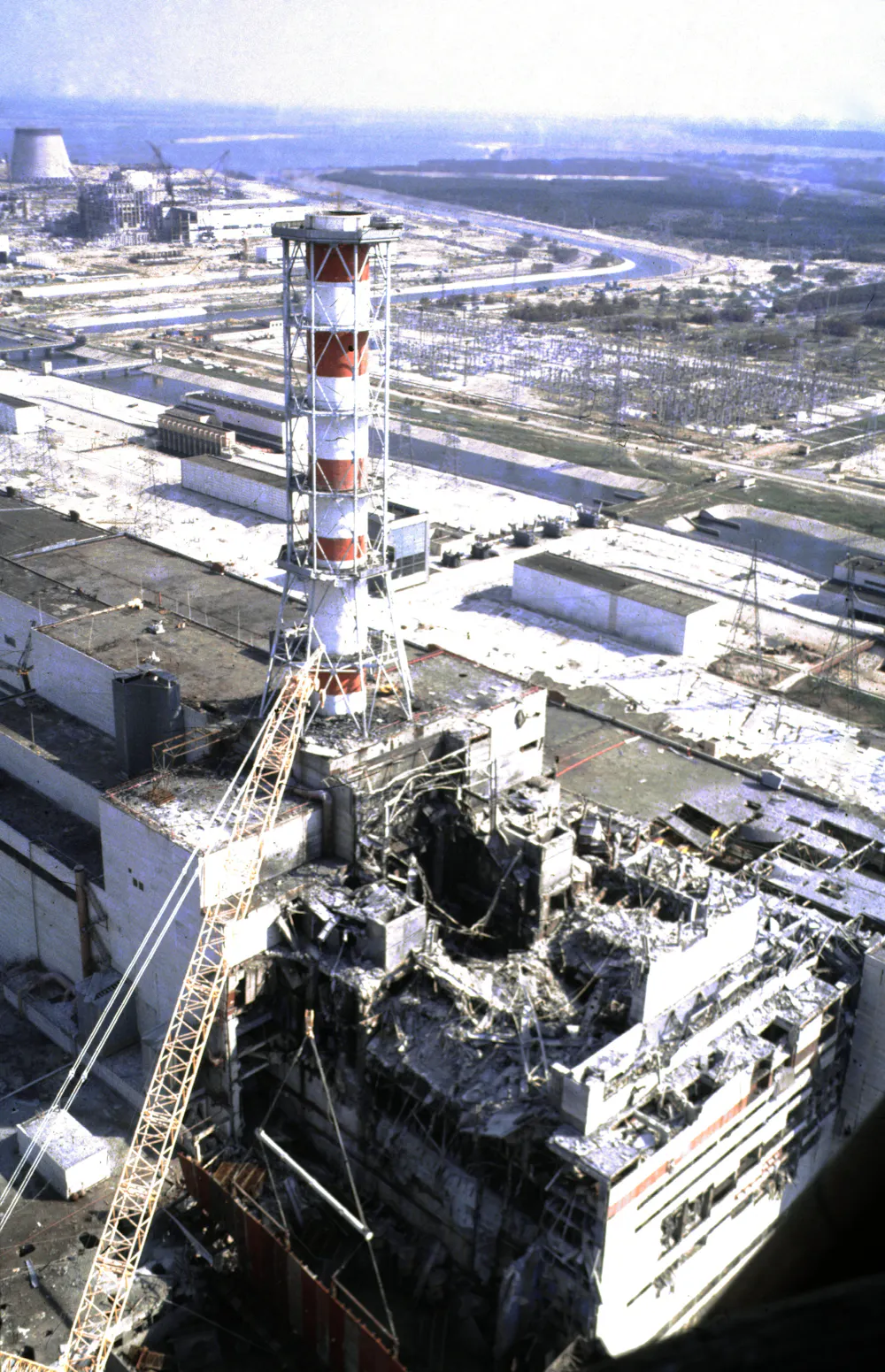
On April 26, 1986, Soviet engineers at the Chernobyl nuclear power plant were conducting a safety test. Doomed by a fatal design flaw and pushed to the limit by human negligence, reactor 4 exploded amid an attempted shutdown during a routine procedure, setting off a chain of events that ultimately released radioactive material hundreds of times greater than that of the atomic bomb dropped on Hiroshima.
Although the accident occurred north of Kyiv, Ukraine, near the border with Belarus, radioactive fallout was soon detected throughout northern and central Europe. Yet the Soviets did what they could to prevent the spread of information that would reveal the true horror of what had occurred.
For decades, researchers, political leaders and advocacy groups have worked to uncover the story of the explosion. While science has allowed us to understand the circumstances of the explosion itself, it has taken much more work to uncover the layers of mismanagement, negligence and misinformation that resulted in human suffering, ecological disaster and economic damage.
One of the problems is that many of the official Soviet records of the event, such as the KGB files, are located in Moscow and are inaccessible to all but a few Russian government agencies.
But there is a partial workaround: Because East Germany was a Soviet satellite state and not a full member of the Soviet Union, official documents remained in the country after the fall of the Berlin Wall. In 1991, after the reunification of Germany, the German government passed a law allowing for the declassification of certain files from the Stasi, East Germany’s secret police and intelligence service. These files can now give us further insight into the mismanagement of Chernobyl, since the East German Stasi and the Soviet KGB were in communication on the matter.
I have spent the past three years reading Stasi files and researching the creation of misinformation in the former Eastern bloc, meeting with Stasi archivists in Berlin and viewing the original archival rooms in the former Stasi headquarters.
Looking at formerly top secret communication between the KGB and Stasi, it is clear that despite publicly insisting everything was under control, both intelligence agencies knew the explosion was absolutely devastating. They kept detailed records of hospitalizations, casualties, damaged crops, contaminated livestock and radiation levels.
But only the very top officials in East Germany and the Soviet Union had access to these numbers. The main fear for both the KGB and Stasi was not the radiation that would harm affected populations but the damage done to their respective countries’ reputations.
Controlling the message
Handling the press was a top priority.
In the Soviet Union, top government officials created their own briefings for the media to be published at precise dates and times. In a set of classified documents that one government official bravely saved and later published, the concreteness with which the lies were devised is apparent. It documents Mikhail Gorbachev, then-leader of the Soviet Union, saying in a Politburo meeting with top government officials: “When we inform the public, we should say that the power plant was being renovated at the time, so it doesn’t reflect badly on our reactor equipment.”
Later in the same meeting, another senior Soviet official, Nikolai Ryzhkov, suggests that the group prepare three different press releases: one for the Soviet people, one for the satellite states and another for Europe, the U.S. and Canada.
In East Germany, the Stasi reports mirrored this messaging. Although top officials are briefed on the presence of radioactive contaminants, the formerly classified Stasi files reiterate that the public is to be told that “absolutely no danger” is present. East German media, controlled by the state, then disseminated this information to the public.
The problem for the East German state was that by the mid-1980s, a lot of people were able to pick up Western TV and radio signals. Many recognized that their own government wasn’t telling them the truth. However, they also knew that Western media would take any chance they got to disparage the Eastern bloc. The result was that many people knew that they weren’t being told the truth, but they weren’t sure exactly what the truth was.
Much of the East German and Soviet propaganda at that time was designed to confuse and cast doubt, not necessarily to fully persuade. The idea was that enough conflicting information would tire people out.
Downplaying economic concerns
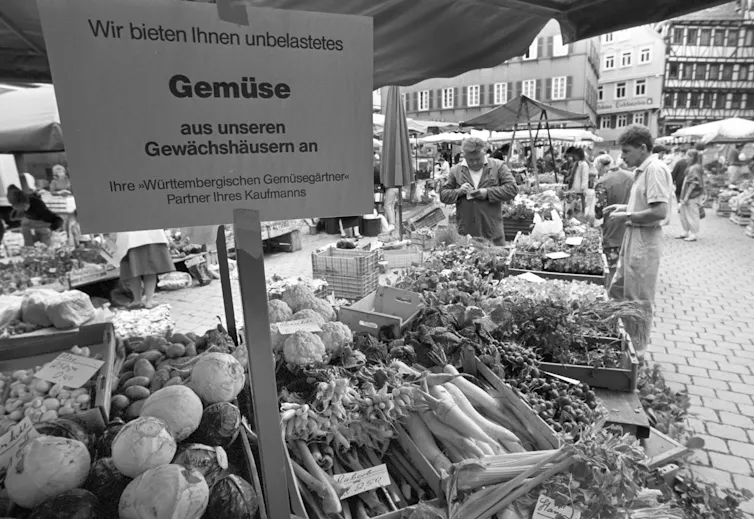
One of the Stasi’s major concerns following the disaster was the economic damage that was sure to affect East Germany. Once people began to learn of the radioactive fallout over much of Europe, they grew fearful of their own produce and dairy products.
Children began refusing to drink milk at school, while people frequently asked produce vendors whether their products were grown in a greenhouse or outdoors. On the whole, people stopped buying many of these products.
With an excess of these goods, the East German government needed to devise a plan to continue to make money off potentially contaminated goods. The Stasi’s solution was to increase export of these goods to West Germany.
In the formerly classified files, Stasi officials claim that exports would spread out the consumption of radioactive products, so that no one would consume unsafe levels of contaminated meat and produce.
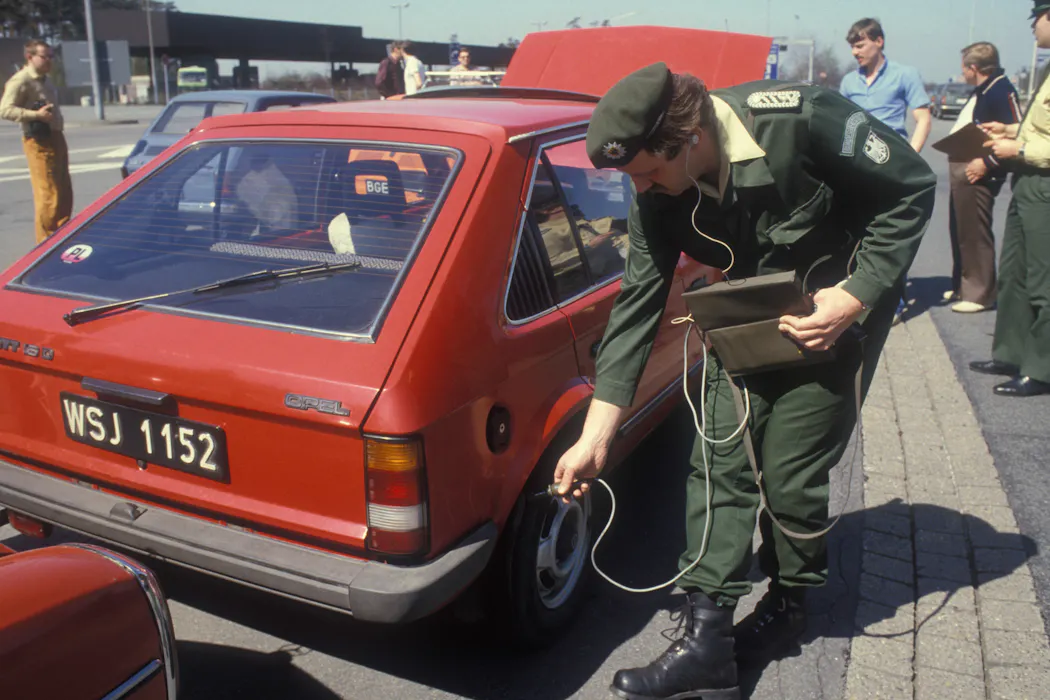
The problem for the East Germans was that West Germany quickly amended their regulations for border crossings from East to West. Vehicles emitting certain levels of radiation were no longer allowed across the border. As a response, the lower-ranking Stasi workers were required to clean radioactive vehicles themselves. In doing so, the state was knowingly risking the health and safety of its own officials.
The East German food export plan was modeled on a similar one proposed by the Soviet government. The Soviet strategy, however, was not to export contaminated goods abroad but rather to send contaminated meat products to “the majority of regions” in the Soviet Union “except for Moscow.”
How disinformation proved an Achilles’ Heel
When the Stasi was founded in 1950, many of its employees genuinely believed in the East German cause.
Having witnessed the horrors of Nazi Germany, many older Stasi workers saw the East German state as the answer to creating a just and equitable society. By the 1980s, however, this sentiment had grown rare. Instead, many Stasi workers viewed their jobs as means to a decent income and privileged government treatment.
As a result, many Stasi workers had grown disillusioned and dispassionate.
It was little surprise, then, that the Stasi put up little resistance when protesters stormed their headquarters in 1990, months after the Berlin Wall fell. While there are many factors in the demise of the communist bloc, the way the East German and Soviet governments handled the aftermath of Chernobyl contributed greatly to the growing popular sentiment against each regime.
In East Germany, the disinformation campaign after the nuclear disaster only strengthened the message that the state did not have its people’s best interests in mind and that it was willing to sacrifice their health and well-being in order to maintain a certain image.
Lauren Cassidy does not work for, consult, own shares in or receive funding from any company or organization that would benefit from this article, and has disclosed no relevant affiliations beyond their academic appointment.
But what exactly is a Pyrrhic victory? And is the U.S. really heading toward one in Iran?
1 king, 2 battles and a rueful remark
Most people use the phrase “Pyrrhic victory” to mean a win that costs more than it was worth to obtain it. That’s close enough – but it leaves out a crucial part of the story that makes the concept worth using.
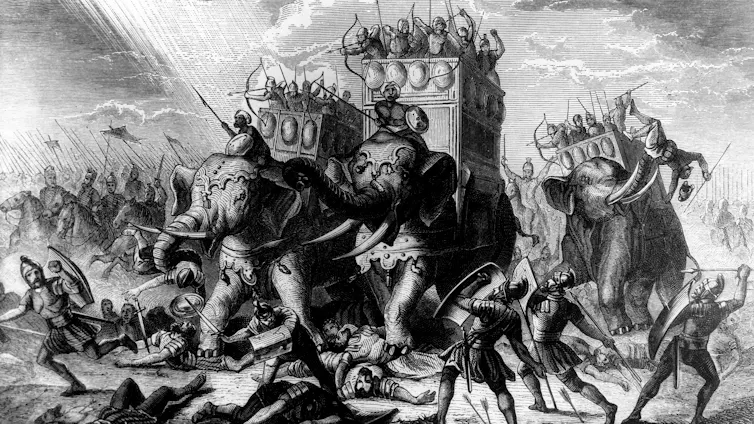
Let’s go back to the beginning. In 280 B.C., Pyrrhus, the king of the ancient Greek kingdom Epirus, crossed into what is now southern Italy to fight Rome. He won major battles at Heraclea and then again at Asculum the following year.
But both victories hurt Pyrrhus. His officer corps was getting chewed up, and his best troops came from a small kingdom far from the fighting. They could not be replaced on anything like Rome’s scale.
After Asculum, he is said to have uttered, “If we are victorious in one more battle with the Romans, we shall be utterly ruined.” Plutarch wrote it down for posterity, and the line outlived everything else known about the campaign.
The problem wasn’t that Pyrrhus paid a high price for victory. Rather, it was that every victory shifted the balance against him.
A war can be costly without being “Pyrrhic.” If you come out of a battle clearly stronger than the opponent, then whatever the bill, something real was gained. The Pyrrhic case is when the side that claims victory is, in fact, in a weaker position than when the fighting started.
From Baghdad to Tripoli …
So how does that all relate to U.S. conflicts in the 21st century?
Iraq in 2003 is the obvious starting point. U.S. and coalition forces dismantled Saddam Hussein’s regime in just three weeks. On its own terms, the operation worked. But it also collapsed the Iraqi state in the process: army gone, ministries hollowed out and police absent.
Saddam’s Iraq also functioned as one of the main checks on Iranian power in the Persian Gulf. Not by design, and not in any cooperative sense, but as a rival that kept Tehran boxed in. Removing Saddam cleared space for Iran to exert regional influence not enjoyed since 1979.
The current war in Iran does not make sense without that shift. The U.S. went into Iraq to eliminate one purported threat – and ended up amplifying another.
The U.S. intervention in Libya in 2011, as part of a NATO force, looked cleaner. The air campaign was short, Libyan leader and longtime thorn in the side of Washington Moammar Gadhafi was dead within eight months – killed by his own countrymen. NATO had set out to protect civilians and remove a regime, and it did both.
The problem was what came next. Libya was Gadhafi’s state, and there was no real plan for a post-Gadhafi Libya. After he fell, what was left was division: militias, competing governments and an arms stockpile that flooded south into the Sahel region of North Africa and fueled conflicts that rage to this day.
Elsewhere, governments drew a blunt conclusion: Complying with demands to dismantle weapons of mass destruction programs, as Gadhafi had done, does not enhance security. In fact, it may have the opposite effect.
Both Libya and Iraq were, in this sense, “Pyrrhic victories” – battlefield triumphs that left the U.S. in a worse overall strategic situation than before.
… and on to Iran?
It is too soon to confidently pass judgment on where the war in Iran sits among these other wars.
But the outlines are visible. Iran’s Supreme Leader Ali Khamenei is gone, and the country’s missile forces and naval assets have taken heavy damage.
Washington has declared victory, and by its own metrics there is an argument for that.
An Iranian woman passes in front of a pro-government political mural on April 12, 2026, in Tehran, Iran. Majid Saeedi/Getty Images
But on the other side of the ledger, Iran still largely holds the Strait of Hormuz – with leverage it did not exercise before the war.
The issue of Iran’s nuclear program – one of the many stated drivers of the U.S. campaign – now seems less likely to be resolved than before: A state that has absorbed this level of punishment has stronger reasons to want a deterrent, not weaker ones.
Getting the concept right
So, is Trump following the route of Pyrrhus? A Pyrrhic victory is not just a painful one – it is a victory that leaves one worse off against the same opponent. The question that tends to get skipped when the fighting stops is what, exactly, winning changed.
Pyrrhus had his answer after Asculum. Looking at the Strait of Hormuz, the oil markets, the stalled talks in Islamabad, and an Iran with even more reason to pursue a nuclear deterrent, perhaps Trump will soon have his.
Andrew Latham does not work for, consult, own shares in or receive funding from any company or organization that would benefit from this article, and has disclosed no relevant affiliations beyond their academic appointment.
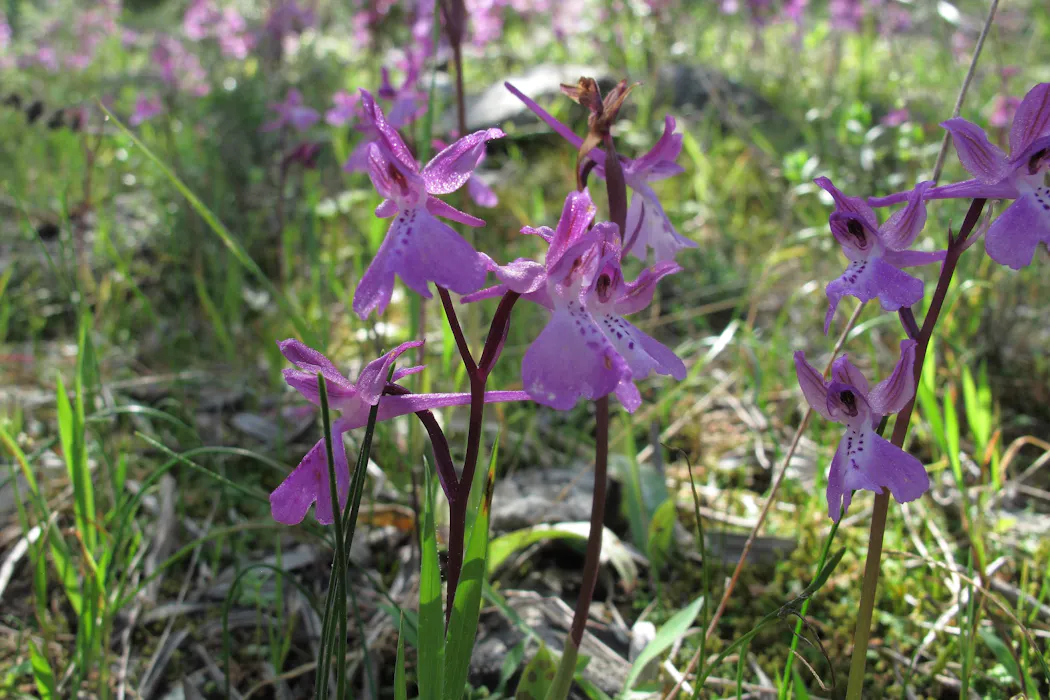
Anatolian orchid (_Orchis anatolica_).Susanne Masters, CC BY-NC-ND
Each spring, the meadows and hillsides of the Mediterranean draw tourists to admire flowering orchids. But in some regions, these astonishing blooms are steadily declining – or at risk of disappearing altogether.
Collection for trade is depleting these wild orchids. It’s not their flowers but their tubers that have most value. Tubers are underground storage organs that sustain plant growth and development. Harvesting them effectively kills the plant.
International trade in orchids is strictly regulated, although national regulations vary. Lack of monitoring makes it difficult to assess the scale of trade, but it is probably much higher than officially reported.
Orchid tubers have been collected from the wild in the eastern Mediterranean region – from Greece to Turkey – for centuries. Dried and powdered, they are the defining ingredient of both a hot drink called salep and maraş dondurma, a type of ice-cream.
Today, salep is not only available at local herbal shops and supermarkets. It is sold globally and online, causing salep harvests and sales to expand across a larger region than ever before. In combination with other threats such as climate change and habitat loss, this growing trade threatens to eradicate orchid populations.
Tubers on sale at a herbal shop at Urmieh bazaar in Iran. Abdolbaset Ghorbani, CC BY-NC-SA
Using historical collections of salep kept in museums plus samples from current trade, our new study has mapped the species of orchid collected for its production, and their regions of origin, over the last two centuries.
By extracting and sequencing their DNA, we showed that the market for salep is not just growing – it is transforming. More and more species are being harvested across larger regions and during longer harvesting seasons.
From the early 19th century to the mid-20th century, salep was made predominantly from early purple orchid (Orchis mascula). Now, a broader mixture of orchids is used, including green-winged orchid (Anacamptis morio) and early marsh orchid (Dactylorhiza incarnata).
Green winged orchid Anacamptis morio. Susanne Masters, CC BY-NC-ND
But early purple orchid is still collected for salep in Eastern Iran – a region where salep is not traditionally consumed and where orchid tuber collecting is a relatively new business. This shows that a preference for salep made from orchids and not substitutes persists. However, orchids are now harder to find, partly due to increased demand and possibly declining abundance of these flowers in the wild. As a result, the frontier of salep trade has been pushed eastward into new territories.
“In Iran, orchid harvesting is mainly for export purposes,” explains Abdolbaset Ghorbani, a researcher at Uppsala University and co-author on our study.
During fieldwork in Iran, he noticed that orchid tubers are not commonly known as salep but rather “mountain potatoes”. “This name was coined by locals in the northeast, as orchid tuber harvesting was new to them and most people were not familiar with salep or its uses.”
Our findings mirror patterns observed in Greece, where salep is now harvested less by local communities and increasingly sourced from outside the country.
At the same time, in areas where salep consumption is common, it is increasingly supplied through other means. People are not only turning to different species of orchid, but they are doing so at lower elevations than the traditionally harvested mountain species – possibly to make a wider repertoire of substitutes more accessible.
Abolbaset Ghorbani doing fieldwork in Iran. Hugo de Boer, CC BY-NC-ND
The risk of extinction that more intensive harvesting brings to these orchids can be seen in their tuber size. By measuring more than a thousand tubers collected over two centuries, we discovered that the size of salep tubers has been steadily declining, regardless of the species concerned. A reduction in harvested body or organ size is a classic symptom of overexploitation, and can be an early warning signal of population collapse.
Ghorbani notes that dwindling orchid populations may lead to a further shift in collection efforts: “I think that now, after some years, as orchids have become scarce in the region, the trade has also decreased.”
He adds that it is also possible that collectors have started moving into new areas, such as protected nature reserves, to collect orchid tubers: “Perhaps harvesting has expanded even further east into central Asian countries that have not yet been exploited, in order to meet the demand for tubers.”
If this trend persists, orchid blooms may become a rare sight not just across the eastern Mediterranean region, but parts of Asia as well.
Measuring tubers in the lab. Hugo de Boer, CC BY-NC-ND
Putting protection in place
To protect orchids from the risks of overexploitation and trade, orchid material should not be internationally traded without permits. However, trade regulations are poorly enforced and don’t address the problem of domestic trade. Increased compliance with international trade regulations is therefore necessary to curb the salep trade, but can only be a partial solution.
Other measures are necessary to satisfy the growing demand for salep. Consumers could turn from wild to cultivated sources, a practice still in its infancy but with a promising outlook for sustainable production of salep.
Sustainable standards such as FairWild can guide the legal harvest of small amounts salep that do not harm orchid survival. Both options depend on increased consumer awareness and the right market incentives.
As the trade and extinction of edible orchids is a global problem, effective solutions require international coordination. Global initiatives such as the Illegal Plant Trade Coalition can help disseminate knowledge of the risks of unrestricted harvest and trade, and promote existing alternatives.
Such efforts will not only serve to protect the precious sight of flowering orchids in spring, but also the treasures they keep underground – and the traditions they support.
Susanne Masters is affiliated with IUCN SSC Orchid Specialist Group.
Margret Veltman has received funding from the European Union Horizon 2020 research and innovation programme under grant agreement no. 765000
Margret Veltman is affiliated with the IUCN SSC Orchid Specialist Group.
As conflict intensifies in the Middle East, energy markets swing wildly and the cost of living keeps climbing, a pressing question is emerging for anyone who is tied in to the fluctuating energy and food markets: how do we build resilience?
Big political and economic solutions still matter. But they take time. Increasingly, attention is turning closer to home, and to communities themselves.
Among these, intentional communities – once seen as niche – stand out as an increasingly viable option. Intentional communities are groups of people that share land and resources collectively. They can include cohousing and housing cooperatives as well as other projects. These communities do not constitute an escape from the world, but a way of coping with it. In some cases, they are already softening the shocks of global instability.
One of the most visible consequences of conflict in the Middle East is felt in energy bills at home. Disruptions to oil and gas supply chains push up fuel prices. That ripples through everything like transport, food and heating. In the UK, households feel it quickly.
But some intentional communities are less exposed. They have changed how they produce and use energy. At Bridport Cohousing in Dorset, residents share heating systems and generate solar power. On the Isle of Eigg in the Scottish Inner Hebrides, the entire island runs on a community-owned electricity system powered by wind, water and sun.
Of course, these systems don’t make communities immune to wider pressures. But they can cushion the blow by lowering bills and reducing dependence on volatile global markets.
Rising energy prices feed directly into food, housing and everyday costs. For many households, the pressure is relentless. Intentional communities respond differently. They pool resources. Food is often bought in bulk or grown collectively. Meals are shared. Housing is organised cooperatively, which can help to bring down rents and mortgages.
While pooling resources doesn’t eliminate costs, it can spread them. And that makes a difference, especially for those on tight or fixed incomes.
Social resilience in uncertain times
Resilience isn’t just financial. Intentional communities can also help buffer the psychological and social effects of living in times of conflict or uncertainty.
The pandemic offered a glimpse of this. While many people experienced isolation, collaborative housing communities often mobilised quickly because support networks were already in place.
A 2023 study of 18 intentional communities in England and Wales found they were able to quickly build on their existing and well-established social infrastructure. Regular contact, shared decision-making and mutual support helped people cope. In uncertain times, that kind of connection matters. It reduces isolation and makes crises easier to navigate.
One example was an older women’s cohousing group near London who set up online movie and book review clubs, as well as regularly sharing homegrown food from their communal allotment.
The Isle of Eigg survives only on renewable energy.
Disrupted fuel supplies – as we have seen in the recent closure of the Strait of Hormuz – can have cascading effects on agricultural production and food distribution. This can lead to price increases and occasional shortages.
Many intentional communities try to buffer against this by growing their own food. Small-scale farming, permaculture and community gardens are common.
For example, the Redfield community in north Buckinghamshire grow much of their own food, as well as keeping chickens, a small flock of sheep and bees on their 17 acres of land. This increases self-sufficiency, meaning they are less exposed to global disruptions. It also builds skills – knowledge that often spreads beyond the community itself through friends, family and even courses on growing, permaculture and self sufficiency.
None of this makes intentional communities self-contained utopias. They still rely on wider systems. Renewable energy infrastructure requires investment, for example. Skills and resources are uneven, which means that no community is fully insulated from global crises. But that may not be the point.
What sets these communities apart is not independence, but adaptability. They spread risk and diversify how needs are met in terms of energy, food, housing and care. And systems that are more diverse tend to be more resilient.
Intentional communities are, in effect, testing grounds. They show what happens when people reorganise everyday life around cooperation rather than individual consumption. Some of their ideas, like shared ownership, local energy and community food networks are already spreading beyond them into local and national government policy, builders and architects and wider community groups.
Kirsten Stevens-Wood does not work for, consult, own shares in or receive funding from any company or organisation that would benefit from this article, and has disclosed no relevant affiliations beyond their academic appointment.
Source: The Conversation – in French – By Christopher Wiley, Head of Music and Media; School of Arts, Humanities and Creative Industries, University of Surrey
Et si une œuvre disparue depuis près d’un siècle pouvait être recréée à partir d’un simple enregistrement ? C’est le pari qu’a relevé un chercheur en ressuscitant Hot Potatoes, une fanfare méconnue de la compositrice britannique Ethel Smyth.
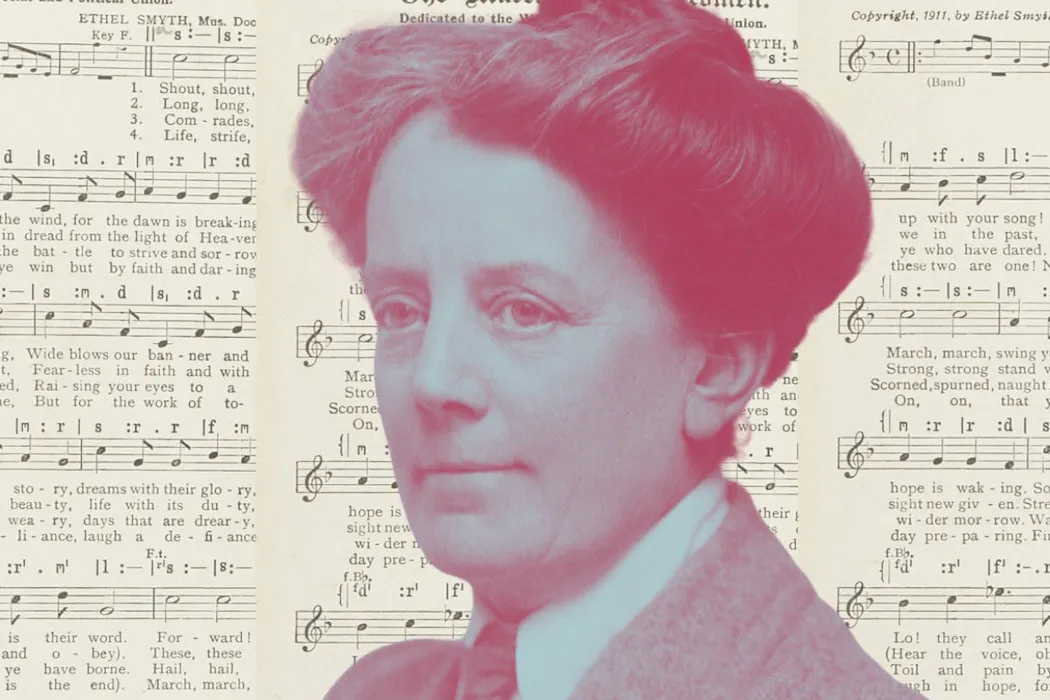
Comme une voix venue d’outre-tombe, une pièce méconnue du patrimoine culturel du Surrey (au sud-est de l’Angleterre, ndlr) a retenti à nouveau : une courte fanfare cérémonielle pour cuivres composée par Dame Ethel Smyth (1858-1944).
Plutôt que de commander une œuvre nouvelle, j’ai choisi de faire revivre une pièce oubliée : la fanfare Hot Potatoes de Smyth. J’ai retenu cette compositrice en raison de ses liens étroits avec la région et avec la recherche universitaire.
En 1930, huit des compositeurs britanniques les plus en vue de l’époque furent en effet sollicités pour écrire de courtes fanfares destinées au Musicians’ Benevolent Fund. Chacune durait environ une minute.
La dernière pièce de la série fut écrite par Smyth. Elle s’inspirait d’un appel de clairon militaire, officiellement intitulé Men’s Meal (Second call). Ce signal indiquait aux soldats qu’ils pouvaient venir chercher leurs rations. Il est plus connu sous le nom familier de Hot Potatoes ou « patates chaudes ». Les soldats y avaient ajouté des paroles humoristiques pour en retenir le sens : « Oh, pick ‘em up, pick ‘em up, hot potatoes… » (« Oh, ramassez-les, ramassez-les, les patates chaudes… »)
Pourtant, on sait très peu de choses sur sa fanfare Hot Potatoes, peut-être la dernière pièce qu’elle ait jamais écrite, si ce n’est son instrumentation d’origine : quatre trompettes, quatre trombones et des percussions. Elle est rarement mentionnée dans la littérature consacrée à Smyth.
Composée alors qu’elle avait plus de 70 ans, qu’elle souffrait de graves troubles de l’audition et que les plus grands succès de sa carrière étaient derrière elle, la partition a longtemps été considérée comme perdue. Pendant des années, on a ainsi supposé que l’œuvre ne pourrait plus jamais être jouée.
Cette pièce devait avoir une signification particulière pour Smyth. Elle connaissait les fanfares militaires depuis l’enfance, son père ayant atteint le grade de major général dans l’armée britannique. Elle reprit d’ailleurs ces appels de clairon dans sa propre musique : le thème de Hot Potatoes était déjà apparu dans l’ouverture de son dernier opéra, Entente cordiale, dont on a célébré l’an dernier le centenaire de la première représentation.
Si l’utilisation de Hot Potatoes n’est pas explicitement mentionnée dans la partition vocale publiée de l’opéra, un exemplaire d’archive aujourd’hui conservé dans la Beecham Collection de l’Université de Sheffield comporte une annotation manuscrite de Smyth elle-même indiquant son origine.
La fanfare de Smyth, du passé au présent
La fanfare Hot Potatoes de Smyth ainsi que les autres pièces de la série furent jouées par des élèves de la Royal Military School of Music (les musiciens de Kneller Hall) sous la direction du capitaine H. E. Adkins à l’occasion du dîner annuel du Musicians’ Benevolent Fund, organisé le 8 mai 1930 au Savoy Hotel de Londres – date qui coïncide, par hasard, avec celle de la mort de Smyth, quatorze ans plus tard. Le concert fut retransmis à la radio sur le programme national de la BBC.
Les fanfares furent rejouées à quelques reprises lors de cet événement annuel, notamment le jour de la Sainte-Cécile, le 22 novembre 1932. En juin de la même année, elles avaient aussi été enregistrées par le même ensemble pour une publication chez His Master’s Voice (HMV, « La voix de son maître ») prévue à la fin de l’année. Mais ensuite, toute trace de l’œuvre disparut.
Cependant, l’enregistrement HMV des fanfares m’a fourni suffisamment d’informations pour transcrire et arranger la pièce de Smyth pour les étudiants de la fanfare de cuivres de l’Université du Surrey. Je me suis appuyé sur ma connaissance plus large de l’œuvre de la compositrice, qui s’est révélée précieuse pour identifier et reproduire certaines de ses particularités musicales.
Plutôt qu’une transcription fidèle, j’ai modifié l’orchestration – même si, en clin d’œil à la version originale, j’ai conservé quatre parties distinctes de trompette – ainsi que la tonalité de la pièce. J’ai même entièrement recomposé une mesure.
Certains détails étaient tout simplement trop difficiles à distinguer sur l’enregistrement, tandis que d’autres se prêtaient naturellement à l’enrichissement (et j’étais convaincu qu’il y avait au moins une fausse note). Ce projet montre néanmoins les possibilités créatives qu’offre la redécouverte de musiques que l’on croyait perdues, et l’intérêt de remettre en lumière des œuvres d’artistes longtemps négligés.
De manière tout à fait appropriée, puisque la cérémonie d’installation du professeur Jarvis était un événement officiel de l’université, j’ai dirigé le Brass Ensemble (fanfare de cuivres) depuis le balcon sud de la cathédrale, vêtu de ma toge doctorale – comme le faisait Smyth elle-même lorsqu’elle dirigeait. J’espère que cette redécouverte de la fanfare Hot Potatoes de Smyth donnera désormais lieu à de nouvelles interprétations.
Christopher Wiley ne travaille pas, ne conseille pas, ne possède pas de parts, ne reçoit pas de fonds d’une organisation qui pourrait tirer profit de cet article, et n’a déclaré aucune autre affiliation que son organisme de recherche.
Un médaillon en forme de cœur portant les initiales d’Henri VIII et de Catherine d’Aragon vient d’entrer dans les collections du British Museum. Au-delà de sa valeur exceptionnelle, ce bijou pourrait éclairer les premières années, encore heureuses, d’un mariage qui allait bouleverser l’histoire religieuse de l’Angleterre.
Henri VIII, roi d’Angleterre et d’Irlande de 1509 à 1547, n’est pas resté dans les annales comme un mari aimant. Tout écolier anglais peut d’ailleurs réciter le sort peu enviable de la plupart de ses six épouses grâce à la comptine, « Divorced, beheaded, died, divorced, beheaded, survived » (« Divorcée, décapitée, morte, divorcée, décapitée, survivante »). Mais si la fin de ses relations est célèbre, on en sait beaucoup moins sur Henri lorsqu’il était amoureux.
Aujourd’hui, un bijou rare, découvert par un amateur à l’aide d’un détecteur de métaux et acquis par le British Museum pour les collections nationales, pourrait nous amener à reconsidérer la réputation brutale du roi.
Le bijou
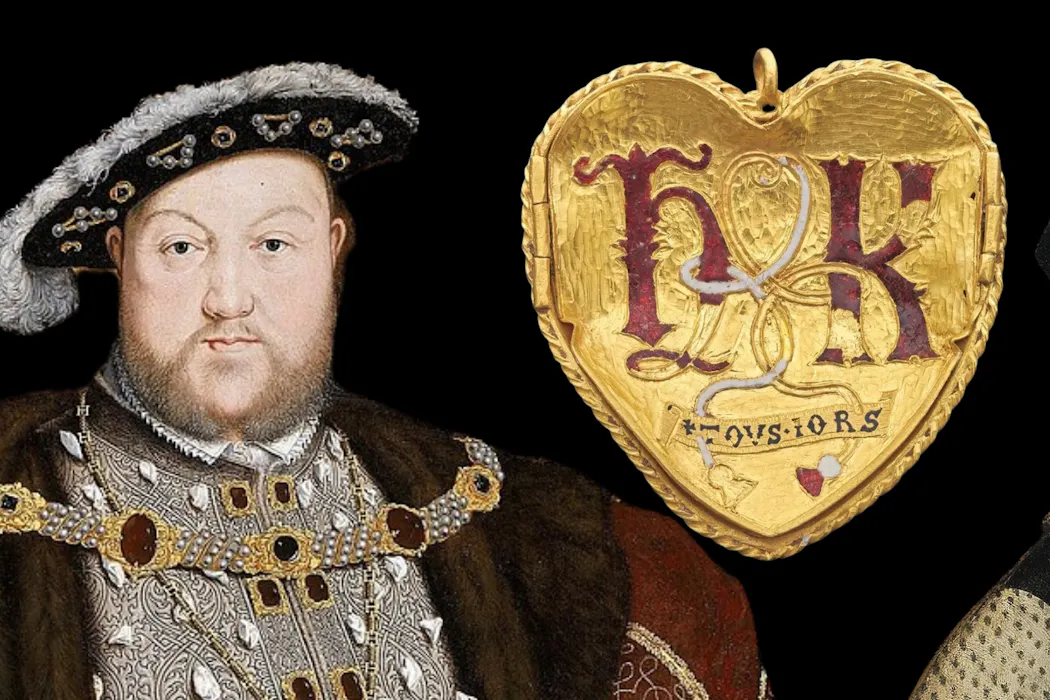
Le bijou est un médaillon en forme de cœur, façonné en or et décoré d’émail rouge, attaché à une chaîne en or massif. Sur sa face figurent les lettres H et K, entrelacées avec les tiges d’une rose Tudor et d’une grenade, symbole de la famille royale espagnole de Catherine. Il est donc raisonnable d’en déduire que ce remarquable bijou était directement lié à Henri et à la première de ses épouses, Catherine d’Aragon.
Catherine fut au cœur du premier divorce d’Henri, et sans doute du plus retentissant, celui qui précipita la rupture de l’Angleterre avec la papauté romaine et la transformation religieuse que nous appelons aujourd’hui la Réforme. À bien des égards, Catherine fut aussi l’épouse qui subit le plus durement la cruauté personnelle du roi. Bien qu’elle n’ait pas été exécutée, elle fut pratiquement assignée à résidence, et passa une grande partie de ce temps séparée de son unique enfant survivant, Marie Tudor.
Si ce bijou appartenait bien à Henri et à Catherine, il pourrait constituer un indice précieux d’un tout autre moment de leur relation – et révéler une facette du caractère du roi que sa conduite, par ailleurs tristement célèbre, a complètement éclipsée.
À la fin du Moyen Âge et à la Renaissance, les monogrammes – c’est-à-dire l’entrelacement des initiales de deux personnes – étaient souvent créés pour symboliser un lien personnel, un mariage, des fiançailles ou même une liaison secrète. Sous les lettres entrelacées du médaillon figure en français le mot « Toujo(u)rs » – un choix naturel pour un serment entre amoureux. Ici, les lettres renvoient très probablement à Henri et à Catherine.
Les décorations du médaillon confirment ce lien royal. Le symbole de la grenade fit son entrée dans la vie publique anglaise après l’union des deux familles par le mariage d’Henri. Les décorations du couronnement du roi et de la reine, à peine deux semaines après le mariage, associaient la rose Tudor à des grenades dorées. Une gravure sur bois publiée pour marquer l’événement sous le titre A Joyful Meditation to All England montrait Henri et Catherine recevant leurs couronnes sous un double dais formé par la fleur et le fruit.
Les comptes des textiles commandés pour la maison royale mentionnent des dizaines de pièces différentes – tapisseries d’ameublement, tentures murales et livrées portées par les serviteurs – toutes ornées de manière bien visible de la rose et de la grenade dans leur décor.
Des motifs de dévotion
La décoration du pendentif en forme de cœur trouve des échos dans une grande variété d’objets décrits dans les inventaires de la maison d’Henri. On y trouve notamment la description d’une bourse en satin cramoisi, d’un étui à peigne en argent et d’une coupe sur pied, tous marqués de la même manière pour le roi et sa reine. Ces listes mentionnent également plusieurs colliers – désignés par le terme archaïque carkeynes – ornés de pendentifs en forme de cœur. L’un d’eux, de couleur bleue, porte lui aussi l’inscription « H K ».
Henri dépensait des sommes considérables pour des meubles et des objets d’apparat somptueux, réalisés sur mesure, mais les bijoux constituaient sa plus grande passion. Les inventaires de ses bijoux et de sa vaisselle précieuse (objets d’art en or, en vermeil et en argent) établis peu après sa mort en janvier 1547 recensent près de 4 000 pièces individuelles.
Les bijoux comptaient parmi les grandes passions d’Henri VIII. Portrait de Hans Holbein le Jeune (vers 1497-1543). Thyssen-Bornemisza Museum
Ce pendentif Tudor en forme de cœur est un exemple frappant de ce niveau d’investissement. Le médaillon lui-même est façonné en or 24 carats ; la large chaîne retrouvée avec lui est lourde et longue – plus de 40 centimètres. Ensemble, ils représentent 317 grammes de métal précieux. Il n’est donc pas étonnant que le British Museum l’ait acquis pour 3,5 millions de livres (un peu plus de 4 millions d’euros).
Les comptes de sa garde-robe – qui consignent l’achat de pièces décoratives pour la maison royale – montrent clairement qu’Henri s’intéressait personnellement aux matériaux et au design de nombre de ces objets. Des dessins de bijoux réalisés par Hans Holbein, l’artiste allemand actif à la cour d’Henri dans les années 1530 et au début des années 1540, pourraient provenir d’un recueil de modèles destiné à orienter, ou à illustrer, l’évolution des goûts du roi. Il achetait ou faisait réaliser ces pièces non seulement pour sa propre maison, mais aussi comme cadeaux – souvent offerts à l’occasion du Nouvel An – à des membres de sa famille ou à des favoris de la cour.
Cela pourrait bien être l’origine du pendentif en forme de cœur. Depuis sa découverte, on l’a souvent associé au grand faste organisé par Henri dans le Pas-de-Calais en 1520, le fameux Camp du Drap d’or. Henri, Catherine et leur cour y mirent en scène une rencontre cérémonielle avec le roi de France, François Ier. De très nombreux objets provenant des résidences et des chapelles royales furent alors transportés de l’autre côté de la Manche pour décorer le palais de toile et les tentes dressés pour l’occasion.
Un message personnel
Mais je suis convaincu que le message transmis par ce bijou n’est pas politique, mais profondément personnel. Ce « Toujours » semble être l’expression d’un attachement profond et sincère. Une autre hypothèse, avancée par le British Museum lui-même, est que le pendentif aurait été réalisé pour marquer les fiançailles, en octobre 1518, de l’unique enfant survivante de Catherine, la princesse Marie, alors âgée de 2 ans, avec l’héritier du trône de France, François de France, âgé de 8 mois.
Mais, compte tenu de la présence d’objets au design très similaire dans la maison royale peu après le mariage et le couronnement, il est possible que ce pendentif remonte plutôt aux premières années de la relation entre Henri et Catherine. Au début, la reine et le roi étaient inséparables. Cinq mois après le mariage, elle était enceinte. Elle le fut à nouveau chaque année de 1510 à 1513. L’une de ces grossesses donna naissance à un fils, nommé Henri, en janvier 1511. Il vécut un peu moins de 2 mois.
À la fin de l’été de cette même année, le roi et la reine entreprirent une tournée à travers la vallée de la Tamise, puis jusque dans les Midlands de l’Ouest, qui s’acheva à Warwick. C’est dans un champ du Warwickshire que le prospecteur amateur Charlie Clarke mit au jour le pendentif en forme de cœur en 2019.
Se pourrait-il qu’un bijou offert à Catherine à l’occasion de la naissance de l’héritier mâle tant attendu d’Henri ait été emporté avec la suite royale – comme tant de leurs bijoux personnels l’étaient – lors de ce déplacement vers le Warwickshire ? Cette hypothèse confère au médaillon une dimension qui tient alors non seulement du romantisme, mais aussi de la tragédie. Peut-être, en effet, Catherine s’est-elle alors séparée d’un présent qui était déjà, en quelque sorte, un memento mori de son fils disparu.
I’m standing in a deconsecrated church in Lambeth, London, now home to the Garden Museum. It has a warm and pleasant atmosphere, undeniably a church, yet far removed from its original purpose. On this quiet Friday morning, I met with Emma House, the lead curator of the exhibition Seeds of Exchange. We wandered around the exhibit, which is deceptively small for the scale of its story, crossing continents, cultures, languages and time.
Seeds of Exchange: Canton and London in the 1700s tells a story that is both local and global. It centres on a short-lived but remarkable collaboration between an English botanist and his Chinese counterparts. Together, they documented the plant life of Canton (modern-day Guangzhou) at a time when global trade, science and empires were becoming deeply entangled.
As a botanist I love plants – but this story is not only about them. It is about how knowledge moves, and who gets to shape it.
A meeting point of worlds
The late 18th century was a period of carefully controlled contact between China and Europe. Trade with the outside world in China was tightly regulated through licensed Chinese merchant guilds. Foreign traders could only operate during part of the year.
Into this system stepped John Bradby Blake, an employee of the British East India Company in the early 18th century.
Like many of his contemporaries, he was not simply a passive participant in imperial trade. The East India Company allowed its agents a degree of personal enterprise, and Blake – having suffered substantial financial losses in tea speculation – turned to botany as both scientific pursuit and potential commercial opportunity.
His project was ambitious: to catalogue Chinese plants in what he envisioned as a Compleat Chinensis (Complete Chinese). Between 1766 and his death in 1773, he commissioned over 150 botanical paintings, documenting many now familiar plant species, ranging from citrus fruits and camellias to turmeric and jackfruit.
What makes this project particularly striking is that it was not a solitary European endeavour. Blake relied heavily on local expertise, as he did not know the flora and did not speak Mandarin.
Mak Sau, a Chinese artist about whom we know very little, produced detailed botanical paintings that form the heart of this exhibition. These works are scientific documents, capturing colour and structure with fantastic precision. But they are also superb works of art and form a historically important collection of early botanically accurate watercolour paintings in China.
Local knowledge also helped identify species that Blake himself struggled to classify. Whang At Tong, Blake’s Chinese counterpart, was a merchant operating within the Canton system. He facilitated the exchange of materials, knowledge and, eventually, the transport of Blake’s collection back to Britain. The endeavour was, in many ways, a shared intellectual enterprise. Yet it unfolded within an unequal system shaped by imperial trade and economic ambition.
Plants, profit and empire
Many of the plants depicted in Seeds of Exchange hint at the economic motivations behind Blake’s work. Tea, citrus species, indigo and medicinal plants all had clear commercial value. Others carried horticultural interest that would later shape European gardens.
Blake cultivated plants in his own Canton garden, experimenting with germination and growth and sending seeds back to Britain. These botanical exchanges contributed, in small but significant ways, to breaking China’s monopoly on certain crops – particularly tea.
Yet the paintings also reveal a more complex botanical landscape. Some species, such as chilli peppers and watermelon, were themselves recent arrivals to China (from South America and Africa respectively).
Even in the 18th century, plant distributions were already shaped by centuries of movement across continents. Today, the movement of plants across the world is on a monumental scale, driven by crops and horticulture. The exhibition quietly reminds us that “native” and “foreign” are often more fluid categories than we assume.
Blake’s death in 1773 brought the project to an abrupt halt. He never completed his Compleat Chinensis, and his work might easily have faded into obscurity. Instead, Whang At Tong transported the collection to London, where it entered elite scientific circles. He is one of the earliest recorded Chinese people to have come to the UK. He met figures such as Joseph Banks, a central figure in British botany, and even sat for a portrait by Joshua Reynolds – a rare moment of cultural visibility for a Chinese visitor in 18th-century Britain. The Reynolds painting is in the exhibit, and exquisitely done.
Despite this, the botanical paintings themselves were never fully integrated into British science. Seeds were sent to Kew, but the visual and documentary archive remained largely unused. Over time, the collection became physically divided. One portion, consisting of manuscripts and herbals (historical books describing the properties of plants), ended up, remarkably, in Canterbury Cathedral. Another, including many of the paintings, passed through the art market before being acquired by the Oak Spring Garden Foundation in Virginia in the 20th century.
Reuniting the past
Seeds of Exchange marks the first time these materials have been brought back together in over two centuries. Seen together, the paintings, herbals, notebooks and maps reveal a network of knowledge production that was collaborative, cross-cultural and contingent. Recent research indicates that Blake mainly used texts by European authors for identification, however the exhibition shows Chinese floras which were used in the work, highlighting the depth of local contribution.
The exhibition also sits within a broader historical context. The Garden Museum itself stands on land once associated with early botanical collectors such as the Tradescant family, whose 17th-century “cabinet of curiosities” helped lay the foundations of modern museums. From these early collections to Blake’s Canton project, the gathering and classification of plants has long been tied to exploration, trade and power.
What, then, does this exhibition tell us today? At one level, it is a fascinating story of early globalisation. But it also prompts deeper questions about authorship and recognition. Projects like Blake’s were often framed as European achievements, even when they depended heavily on local knowledge and labour.
Seeds of Exchange highlights that scientific knowledge has almost always been co-produced, even if the historical record has not always acknowledged this. In an era when museums and collections are increasingly reexamining their collections and histories, this matters.
Like the plants it documents, the knowledge this exhibition represents has travelled, adapted and taken root in new contexts – and we are still tracing its origins more than two centuries on.
Max Carter-Brown does not work for, consult, own shares in or receive funding from any company or organisation that would benefit from this article, and has disclosed no relevant affiliations beyond their academic appointment.
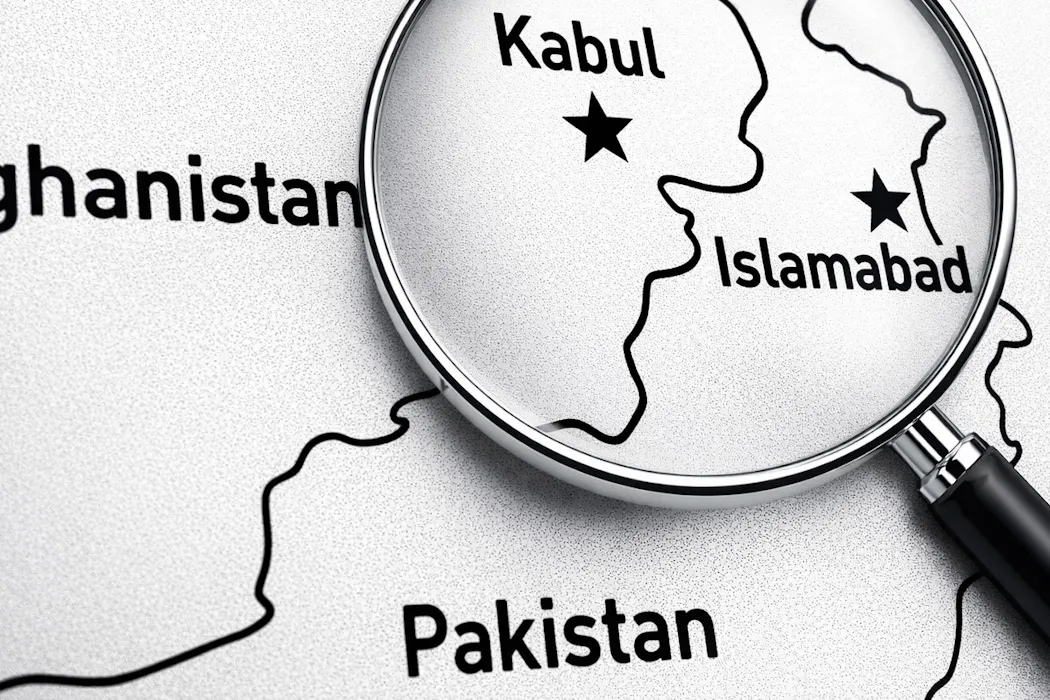
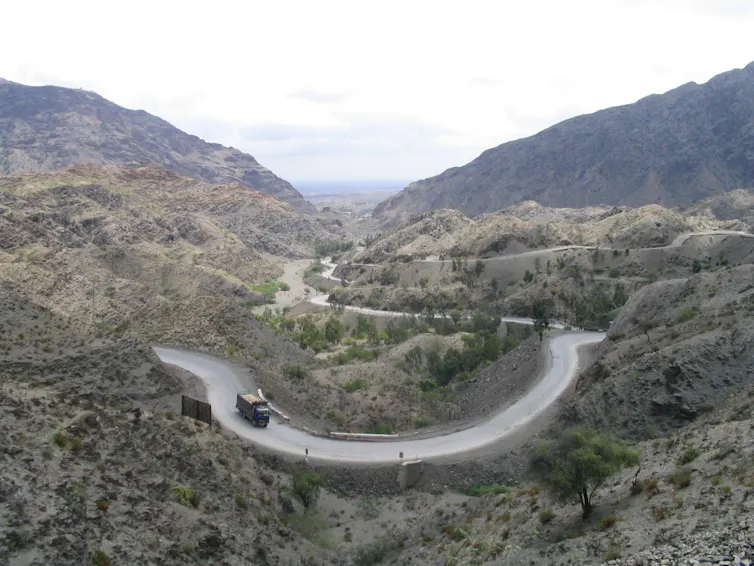
Coup de projecteur sur la frontière afghano-pakistanaise, où de nouveaux heurts se sont produits au début de l’année 2026. R. Colavitti, Fourni par l’auteur
La guerre qui a éclaté le 21 février 2026 entre l’Afghanistan et le Pakistan s’inscrit dans la continuité d’un conflit ancien, dont les principales racines remontent à l’époque coloniale et à la délimitation en 1893 de la frontière commune, la fameuse « ligne Durand ».
Au XIXᵉ siècle, le « Grand Jeu » oppose en Asie centrale l’Empire russe, dont le contrôle s’étend jusqu’à l’ancien Turkestan – en terres turkmènes, ouzbèkes et tadjikes – à la couronne britannique, dont la frontière occidentale du British Raj (les Indes britanniques) inclut le fleuve Indus, dans l’actuel Pakistan.
Entre ces deux zones, l’émirat d’Afghanistan était déjà un État souverain, en partie tribal, multi-ethnique à dominante pachtoune et multi-confessionnel à majorité musulmane sunnite.
Une zone tampon entre Empire russe et British Raj
Pour les Britanniques, l’Afghanistan représentait une zone tampon face au risque expansionniste russe. Ils cherchèrent donc à s’en emparer par la force à trois reprises : entre 1839 et 1842, entre 1878 et 1880, puis entre mai et août 1919.
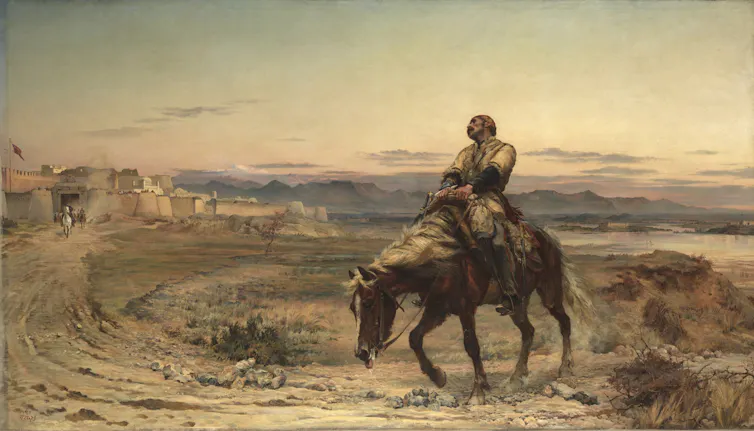
La première guerre (1839-1842) fut remportée par les Afghans sous la direction de Dost Mohammed Khan à la suite de la bataille de Gandamak, en janvier 1842. Les troupes britanniques engagées, ainsi que leurs supplétifs indiens, furent décimés. Seul le docteur William Brydon, chirurgien des armées, survécut et parvint à s’enfuir à dos de cheval pour rapporter son récit aux autorités postées à Jalalabad, dans la province de Nangarhar.
Vestiges d’une armée, peint par Elizabeth Thompson en 1879, représente William Brydon, exténué, revenant du désastre de Gandamak.
La deuxième guerre (1878-1880) fut celle de la revanche. Le Congrès de Berlin de juillet 1878 a été marqué par un rapport de force diplomatique entre l’Empire russe et la couronne britannique pour contrôler les Balkans et l’accès oriental à la Méditerranée. À sa suite, en vue de maintenir une influence en Asie centrale, des émissaires russes furent envoyés à Kaboul auprès de Sher Ali Khan (le fils de Dost Mohammed Khan), ce qui suscita une réaction immédiate de Lord Lytton, vice-roi (britannique) des Indes, qui craignait une collusion russo-afghane. En septembre 1878, Lytton envoya sa propre mission diplomatique dirigée par Neville Bowles Chamberlain à Kaboul, mais celle-ci fut bloquée par les forces afghanes dans la passe de Khyber. L’émir, endeuillé par le décès récent de son jeune fils le prince Abdullah Jan, n’entendait pas faire affront aux Russes en accueillant une représentation britannique qu’il percevait comme colonialiste.
Lytton formula alors un ultimatum : l’Afghanistan devait accepter d’accueillir sa représentation avant novembre 1878, sans quoi il lancerait une offensive. Sans réponse dans ce délai, le conflit éclata et, cette fois, les Britanniques l’emportèrent. Ils obtinrent alors le contrôle de Peshawar (en zone pachtoune) et de Quetta (au Baloutchistan), aux confins des territoires respectifs des belligérants. Cet avantage fut officialisé par le traité de Gandamak, signé le 26 mai 1879 par Louis Cavagnari, représentant britannique, et Mohammad Yaqub Khan (le fils de Sher Ali Khan, décédé à Mazar-e-Sharif dans sa fuite vers la frontière russe).
Deux mois plus tard, en juillet 1879, Cavagnari était installé comme représentant permanent à Kaboul. Mais le Bala Hissar (« Château d’en haut »), siège de l’ambassade britannique, fut rapidement assiégé puis incendié par des mutins afghans réclamant leur solde, le 3 septembre 1879. Cavagnari et l’ensemble de sa représentation furent assassinés.
La réaction de Lytton ne se fit pas attendre. Les troupes britanniques, dirigées par Frederick Roberts, prirent alors Kaboul. Mohammad Yaqub Khan abdiqua le 12 octobre 1879 et s’exila en Inde.
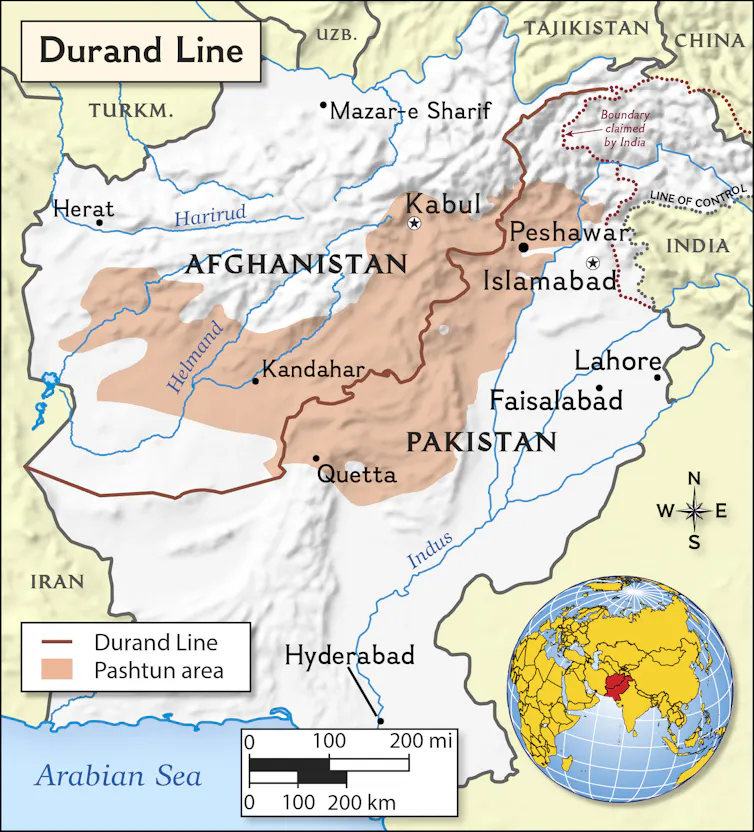
Une guerre civile sous occupation militaire s’ensuivit et les Britanniques soutinrent l’avènement au pouvoir d’Abdur Rahman Khan (neveu de Sher Ali Khan). Celui-ci acceptait, en effet, d’abandonner sa politique extérieure en échange du retrait des troupes et de garanties de conserver le contrôle des affaires intérieures. C’est dans ce contexte que l’Afghanistan et le British Raj furent séparés par une frontière de 2 430 kilomètres, en vertu de l’accord bilatéral du 12 novembre 1893 conclu entre l’émir et Sir Henry Mortimer Durand : la fameuse « ligne Durand », qui sépare encore aujourd’hui l’Afghanistan du Pakistan, était établie. Elle coupait durablement en deux les populations pachtounes au nord et, dans une moindre mesure, baloutches au sud.
La troisième guerre anglo-afghane, entre mai et août 1919, fut déclenchée par le projet afghan de reprise du contrôle territorial des régions tribales. D’abord limité au village de Bagh (dans la région d’Abbottabad), ce projet menaçait de s’étendre rapidement à Peshawar où Amanullah Khan, qui dirigeait alors l’Afghanistan, espérait un soulèvement populaire.
Les Britanniques reprirent le contrôle étendu de la frontière et bombardèrent Kaboul mais, craignant un nouvel enlisement au lendemain du premier conflit mondial, ils conclurent rapidement le traité d’armistice de Rawalpindi, le 8 août 1919, et l’amendèrent le 22 novembre 1921. Ils reconnurent alors la souveraineté afghane dans les limites de la ligne Durand et renoncèrent à étendre leur contrôle territorial. Un soulèvement populaire au Waziristan (côté britannique) n’y fit rien : la frontière était désormais intangible.
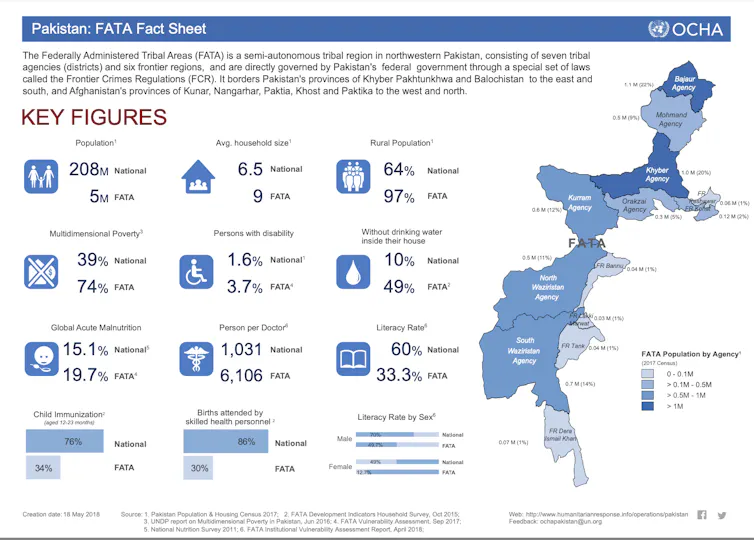
Du point de vue afghan, les zones tribales pachtounes sous administration fédérale pakistanaise Federally Administered Tribal Areas (FATA), regroupées autour de sept « agences » (Bajaur, Khyber, Kurram, Mohmand, Oraksai, Waziristan du Nord et Waziristan du Sud) et rattachées depuis 2018 à la province de Khyber Pakhtunkhwa, se situent dans le prolongement naturel du territoire national et constituent un passage obligé sur l’axe Kaboul-Jalalabad-Peshawar.
Zones tribales sous administration fédérale (FATA) en 2018/Bureau des Nations unies pour la coordination des affaires humanitaires. OCHA
Malgré la longueur de la frontière, les points de passage officiels sont rares, le transit de personnes étant souvent informel (comme à Ghulam Khan dans le Waziristan du Nord, Angoor Adda dans le Waziristan du Sud ou Karlachi dans l’agence de Kurram). Au Baloutchistan, les grandes villes sont peu nombreuses et les territoires relativement arides : Chaman (au Pakistan), ville voisine de Spin Boldak (côté afghan, dans la province de Kandahar) est le principal poste-frontière de cette zone.
Mais c’est Torkham, au nord, dans la passe de Khyber, qui est de loin le plus fréquenté par les camions et les voyageurs. C’est ainsi une route commerciale vitale pour l’Afghanistan. La région y est montagneuse : la voie de circulation routière est sinueuse, tandis que le passage pédestre des caravanes traditionnelles s’opère à proximité. Le franchissement de la frontière par transport ferroviaire n’est plus permis, la ligne, désormais vétuste, datant de 1925.
Dans L’Usage du monde (1963), l’écrivain-voyageur genevois Nicolas Bouvier relate ainsi son passage en ces lieux, le 5 décembre 1954 :
« Après un an et demi de voyage, j’ai atteint le pied de la passe. La lumière touchait la base des monts Suleiman et le fortin de la douane afghane noyé dans un bouquet de saules qui brillaient comme écailles au soleil. Pas d’uniformes sur la route barrée par un léger portail de bois. Monté jusqu’au bureau. J’ai enjambé les chèvres étendues sur le seuil et passé la porte. Le poste sentait le thym, l’arnica, et bourdonnait de guêpes. L’éclat bleu des revolvers accrochés contre le mur avait beaucoup de gaieté. Assis droit à une table derrière une bouteille d’encre violette, un officier me faisait face. Ses yeux […] étaient clos. À chaque inspiration j’entendais craquer le cuir neuf de son ceinturon. Il dormait. Sans doute un ouzbek de Bactriane, aussi étranger que moi ici. J’ai laissé mon passeport sur la table et suis allé déjeuner. Je n’étais pas pressé. On ne l’est pas quand il s’agit de quitter un pays pareil. »
Depuis lors, et tout le long de la frontière, le transport routier de marchandises s’est déployé quotidiennement, l’économie afghane étant particulièrement dépendante du commerce avec son voisin.
Pour le Pakistan, une « frontière-barrière »
Côté pakistanais, la frontière a fait l’objet de contrôles accrus et de fermetures périodiques (à l’occasion de la rupture des relations diplomatiques entre les deux États dans les années 1960 ou lors de l’invasion de l’Afghanistan par l’Union soviétique dans les années 1980) ainsi que de réouvertures temporaires (lors de la première prise de pouvoir des talibans en Afghanistan dans les années 1990), jusqu’à devenir une barrière de plus en plus difficilement franchissable.
Au lendemain du 11 septembre 2001, le gouvernement pakistanais a ainsi entendu empêcher l’infiltration sur son territoire des combattants d’Al-Qaida et des talibans fuyant l’offensive de la coalition occidentale. En 2003, puis en 2006-2007 et en 2008, des tensions diplomatiques bilatérales accompagnées d’affrontements endémiques ont conduit à la fermeture temporaire des postes-frontières stratégiques de Chaman et de Torkham, à la mise en place de contrôles biométriques et à la construction de tronçons de barrières contrôlées militairement.
Si la lutte contre le terrorisme était présentée comme l’objectif principal, il s’agissait aussi pour Islamabad d’empêcher le narcotrafic et, de manière moins assumée, de stopper l’afflux de déplacés afghans fuyant la guerre entre la coalition occidentale et les talibans, voire de faciliter leur retour forcé.
Après le retrait des troupes occidentales d’Afghanistan et la reprise du pouvoir par les talibans durant l’été 2021, la tension n’a cessé de croître jusqu’à la déclaration d’une « guerre ouverte » par Khawaja Asif, le ministre pakistanais de la défense, le 26 février 2026. En cause, les talibans pakistanais du mouvement Tehrik-e Taliban Pakistan (TTP), soutenus par les talibans afghans et les terroristes de l’État islamique au Khorassan, EI-K. Un attentat suicide revendiqué par l’État islamique (EI) puis imputé par le Pakistan au TTP et à l’EI-K, le 6 février 2026, avait visé la mosquée chiite Khadija Tul Kubra de Tarlai Kalan, au sud-est d’Islamabad, et fait plus d’une trentaine de morts.
En représailles, à compter du 21 février 2026, le Pakistan a bombardé plusieurs sites réputés abriter des factions terroristes, notamment dans la province de Nangarhar. Après que l’Afghanistan eut à son tour attaqué des postes-frontières, le Pakistan a alors lancé, le 26 février 2026, l’opération « Ghazab Lil-Haq » (« Fureur juste »), frappé Kaboul le lendemain, par la voie aérienne, ainsi que Kandahar, lieu de résidence du chef spirituel des talibans, le mollah Haibatullah Akhundzada, et les provinces de Nangarhar, Paktia, Paktika ou Laghman. Depuis lors, les échanges de tirs n’ont pas cessé.
Si les cibles officielles sont des camps retranchés du TTP, la Mission d’assistance des Nations unies en Afghanistan (Manua) et les organisations non gouvernementales (notamment Amnesty International) ont recensé plusieurs centaines de morts (combattants et civils) et des milliers de déplacés. Une frappe sur un centre de réhabilitation pour toxicomanes (dans l’enceinte de l’ancien camp Phoenix) à Kaboul, le 16 mars 2026, aurait ainsi fait 143 morts auxquels s’ajoutent les 76 victimes civiles déjà répertoriées en Afghanistan. Cette frappe aurait été effectuée en réaction au décès de quatre civils, la veille, dans le district de Bajaur, et d’un enfant, le 8 mars, dans le Waziristan du Nord, après des tirs de mortier en provenance d’Afghanistan.
Romélien Colavitti est assesseur à la Cour nationale du droit d’asile. Les propos tenus dans cet article sont personnels et n’engagent pas l’institution.
Derrière la polémique entre le président Trump et le pape Léon XIV se rejoue une question ancienne : qui peut parler au nom de Dieu, et qui fixe les limites du pouvoir ?
Aux États-Unis, l’inquiétude suscitée par l’escalade verbale entre le président Donald Trump et le pape Léon XIV se propage à une vitesse remarquable, du New York Times au Daily Beast et jusqu’aux chaînes de télévision locales. Depuis le début de la guerre en Iran, le pape a appelé à plusieurs reprises à la paix au Moyen-Orient, affirmant que « Dieu ne bénit aucun conflit » et met en garde contre « l’illusion de toute-puissance » qui alimente la guerre.
Le 12 avril 2026, dans une longue publication sur son réseau social, Donald Trump a tourné en dérision Léon XIV, l’estimant « FAIBLE face à la criminalité et désastreux en matière de politique étrangère » et lui enjoignant de « se concentrer sur le fait d’être un grand pape, pas un homme politique ». Sur son compte Truth Social, un portrait du président états-unien, réalisé par IA, où il apparaît, semblable au Christ, en train de guérir un homme, a été publié puis supprimé.
Au cœur de cette querelle publique se trouve une question ancienne : un chef religieux peut-il contester le pouvoir politique, en particulier celui du dirigeant de l’un des pays les plus puissants du monde ?
Pour beaucoup, la sortie de Donald Trump contre le pape Léon XIV est choquante. Mais les conflits entre papes et dirigeants ne sont pas une anomalie : ils constituent une caractéristique durable de l’histoire occidentale. Chaque fois que des responsables politiques habillent leur pouvoir d’un langage sacré ou que des dirigeants religieux dénoncent publiquement la violence politique, ils rejouent des débats vieux de plus d’un millénaire.
Ces affrontements ne sont pas seulement symboliques : ils portent sur la question de savoir qui détient l’autorité ultime sur les humains, sur les âmes – et, en fin de compte, sur l’histoire elle-même.
Deux pouvoirs, étroitement liés
Dès ses premiers siècles, le christianisme est intimement lié au politique. L’empereur romain Constantin Ier en autorise la pratique dans l’Empire en 313. Il préside ensuite le concile de Nicée, une assemblée théologique majeure, brouillant la frontière entre pouvoir politique et autorité spirituelle.
Au Vᵉ siècle, le pape Gélase Ier formule une vision concurrente : le monde serait gouverné par deux pouvoirs, sacerdotal et royal. En dernière instance, soutient-il, l’autorité spirituelle l’emporte sur le pouvoir politique, car elle promet le salut éternel. La théorie de Gélase ne résout pas la tension entre les deux, mais elle pose un cadre durable pour la pensée politique chrétienne.
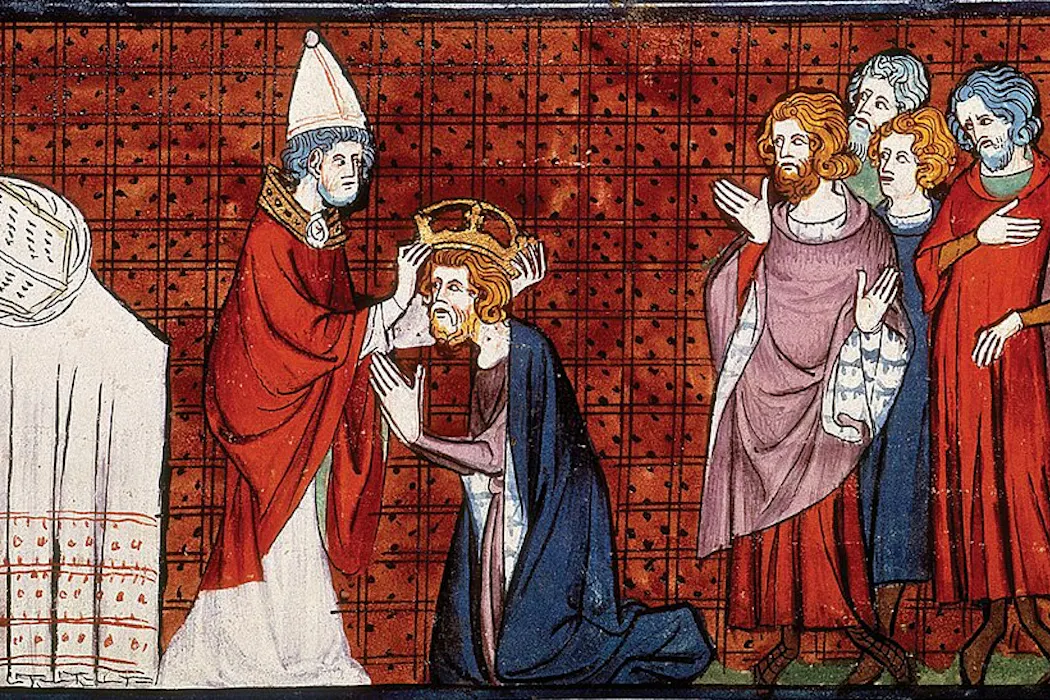
La relation entre ces deux pouvoirs connaît un tournant décisif en l’an 800, lorsque le pape Léon III couronne Charlemagne empereur, le jour de Noël. Cet acte n’est pas seulement cérémoniel : il implique que l’autorité impériale en Occident provient de l’Église et que la légitimité politique nécessite l’aval du pape.
Ce couronnement fait suite à des années d’instabilité politique à Rome et à une dépendance croissante de la papauté envers les Francs pour sa protection militaire. Après son élection en 795, Léon III est attaqué par ses opposants et trouve refuge à la cour de Charlemagne. Le roi revient à Rome à ses côtés et y réaffirme sa légitimité. En retour, Léon III couronne Charlemagne. Par ce geste, il affirme son propre rôle de faiseur d’empereurs tandis que Charlemagne acquiert une aura sacrée.
Ce moment reconfigure profondément la théologie politique médiévale. Il incite les souverains à se considérer comme les garants à la fois de l’ordre politique et de l’orthodoxie religieuse tandis que les papes passent du rôle de conseillers spirituels à celui d’acteurs engagés dans le gouvernement séculier.
Il en résulte un paradoxe : les rois invoquent Dieu pour sanctifier la conquête, comme Charlemagne lors de ses guerres brutales contre les Saxons, mais, dans le même temps, l’Église entend contenir la violence, encourageant les guerres justes et menaçant les comportements violents de sanctions spirituelles.
La querelle des Investitures
Au XIᵉ siècle, cependant, la papauté cherche de plus en plus à s’affranchir de la domination séculière. En particulier, les papes veulent nommer eux-mêmes les évêques, plutôt que de laisser faire la noblesse ou le roi.
Ce conflit éclate avec la querelle des Investitures, l’un des affrontements les plus décisifs du Moyen Âge, et pose des bases essentielles pour la Magna Carta, premier texte à soumettre le pouvoir royal à la loi. Ces deux épisodes répondent à une même question fondamentale : qui a le droit de conférer l’autorité, et quelles limites s’imposent au pouvoir politique ?
Une gravure sur bois représente un roi au Moyen Âge investissant un évêque des insignes de sa fonction, notamment la crosse, son bâton pastoral. Philip Van Ness Myers/ReneeWrites via Wikimedia Commons, CC BY
Il ne s’agit pas seulement d’administration ecclésiastique, mais bien de la souveraineté elle-même. Les évêques sont de grands propriétaires fonciers et des acteurs politiques de premier plan ; contrôler leur nomination revient à contrôler leur richesse, leur fidélité et le gouvernement. En cherchant à nommer les évêques, les papes affirment que l’autorité spirituelle relève exclusivement de l’Église, contestant l’idée que les rois exercent un pouvoir sans limite. Il s’agit d’une tentative décisive de dissocier la légitimité spirituelle du contrôle royal et d’imposer des contraintes morales à des souverains qui se réclament d’une autorité divine.
La querelle des Investitures se prolonge pendant plusieurs décennies. Finalement, en 1122, le pape Calixte II et l’empereur Henri V signent le concordat de Worms.
L’accord reconnaît au pape le droit de nommer les évêques et de leur conférer leur autorité spirituelle. L’empereur, de son côté, les « investit » de leurs « temporalités » : c’est-à-dire des pouvoirs temporels attachés à leur charge, tels que les terres, les revenus, la juridiction et les pouvoirs de contrainte.
Contenir le pouvoir du roi
Un siècle plus tard, la Magna Carta poursuit un objectif parallèle.
Son contexte immédiat se trouve dans le conflit autour du nouvel archevêque de Canterbury, que le pape Innocent III avait nommé en 1207. Le roi Jean sans Terre s’y oppose, poussant le pape à l’excommunier et à jeter l’interdit sur l’Angleterre, ce qui signifie que les Anglais ne peuvent plus participer aux sacrements de l’Église.
Pour apaiser les tensions, Jean sans Terre remet en 1213 le royaume d’Angleterre au pape Innocent III, et transforme le pays en un fief pontifical. En échange, il obtient l’approbation papale de mener une guerre contre la France. Mais cet arrangement suscite une profonde colère chez les barons anglais, qui se retrouvent désormais soumis non seulement à leur roi, mais aussi à l’autorité du saint-père. À Bouvines (1214), Jean fait face aux barons rebelles sur son propre territoire.
Le résultat est la Magna Carta, la « Grande Charte ». Imposée au roi par la force des armes, elle affirme qu’il est lui-même soumis à la loi. Elle limite l’autorité royale en matière de fiscalité, de justice et de châtiment, et proclame notamment qu’aucun homme libre ne peut être emprisonné ni privé de ses droits sans un jugement légal.
Jean sans Terre fait alors appel au pape Innocent III, qui annule la charte peu après sa promulgation. Malgré ce revers, la Magna Carta survit : le fils de Jean, Henri III, la réédite à plusieurs reprises, sa version définitive étant mise en œuvre en 1225.
Prendre du recul
À cette aune historique, l’affrontement entre Donald Trump et le pape Léon XIV apparaît moins surprenant. Lorsqu’un président mobilise un langage ou des images sacrées pour justifier la violence, et qu’un pape répond en niant toute caution divine, ils rejouent un affrontement aussi ancien que la chrétienté médiévale : qui peut parler au nom de Dieu, et qui peut fixer des limites au pouvoir ?
Le monde médiéval n’a pas résolu cette tension, mais il a appris à vivre avec en fragmentant l’autorité : d’abord entre l’Église et la couronne, puis entre les souverains et la loi. Ce qui inquiète aujourd’hui, c’est la facilité avec laquelle des dirigeants modernes recourent encore au langage religieux pour échapper aux contraintes et à la fragilité apparente des institutions censées les contenir.
Joëlle Rollo-Koster ne travaille pas, ne conseille pas, ne possède pas de parts, ne reçoit pas de fonds d’une organisation qui pourrait tirer profit de cet article, et n’a déclaré aucune autre affiliation que son organisme de recherche.
















.jpg)