Judging by a slew of recent corporate announcements, your next “co-worker” might be an artificial intelligence agent – doing the work of an assistant, job scheduler, morning debriefer, learning coach and more.
JPMorgan Chase, the largest U.S. bank, describes a clear vision for a new world of omnipresent AI agents: “Every employee will have their own personalized AI assistant; every process is powered by AI agents, and every client experience has an AI concierge.”
In brick-and-mortar retail, Walmart is already implementing its vision around agents, which involves support of customers, in-store employees and other business areas, with supervisor agents assigning tasks to subagents much like managers oversee employees.
What these and many other large organizations realize is that agents don’t just answer questions, like an AI-powered search engine or simple chatbot. They complete real work by planning tasks, taking actions and checking results to achieve a goal.
But there’s a problem. Companies in industries ranging from finance and tech to logistics and legal are rapidly embracing the promise of AI agents. But the flesh-and-blood workers they’re meant to assist – and sometimes replace – are struggling to adapt, hurting morale and productivity in the process.
First, learn how the agents you’re working with operate, including what they do well, where they fall short and how to catch mistakes.
Second, lean into your fundamentally human strengths. These are things agents can’t replicate. Doing so can also help you sustain your own health and well-being.
Rise of the AI agents
AI agents began entering the workforce in 2025 – mainly in tech, finance and customer service – as the next stage of the generative AI revolution. But in 2026, the AI-powered automators are increasingly being deployed in other areas, such as legal and compliance, supply chain management, research and development, healthcare services and retail.
One example is global transportation giant FedEx, which is planning an entire AI agent workforce for its logistic network. The company plans to create “manager agents,” “audit agents” and “worker agents” to create a trail of accountability for their actions, according to The Wall Street Journal.
The theme of agents working together is echoed by North American food service company Gordon Food Service, which is using cross-team agents to reshape its product sourcing strategy.
It’s all driven by economics, with 88% of early corporate adopters reporting a return on investment on at least one use of an AI agent, according to a Google survey of senior business leaders.
Retail giant Amazon says customers who engage with its Rufus AI agent while shopping are 60% more likely to make a purchase compared with those who don’t get help from Rufus. Overall, Rufus is expected to generate over $10 billion in additional annual sales for Amazon, compared with a baseline without Rufus.
Anticipating gains from agents, global consultancy McKinsey already has 25,000 agents doing various tasks. It plans to have as many AI agents as human workers by 2027.
And new model releases, such as Anthropic’s Mythos, will expand what is possible and likely accelerate agent deployment.
‘The AI rollout is here.’
Agents still can’t do it alone
A 2023 study I conducted found that AI has the capacity to simulate human capabilities such as cognition, decision-making, creativity and collaboration with people and other agents. The simulation is imperfect, however, so agents need support.
For example, agents are resourceful and relentless. They try repeatedly until they get results, without the loss of motivation humans sometimes experience. But they can also behave unpredictably, even taking harmful actions, such as deleting emails or conducting a smear campaign. And research illustrates that agents can be easily tricked into bad behavior, such as overcorrecting when told not to do something, being persuaded by human appeals to urgency and simple manipulation tricks.
Agents can be quirky too, using odd emojis in formal business writing or responding cynically when you just want the facts. And unlike humans, agents lack emotion, self-awareness or intent. When they fail, such as by pursuing misaligned goals, it’s not personal any more than an espresso machine can break out of spite.
In short, agents can act in unpredictable ways, and it’s difficult to know when that will happen. Managing this uncertainty is a new task for employees, and it comes at a time when many employers have heightened expectations of productivity gains from adopting AI agents.
The bottom line is that if you understand how your agent behaves, you’ll be able to be more productive working with them, be in a better position to avoid risks and be more valued yourself.
Get to know your agent
So what do you do if your boss suddenly tells you you’ll be working with an AI agent from now on?
Just like you would with a new human colleague, the first thing you should do is get to know it. In essence, you need to learn how to collaborate with agents effectively, how to evaluate their performance, what makes them tick and associated ethical implications.
And then jump right in. Give the agent a task and observe how it responds. Try different approaches and pay attention to its output quality, behavior and style. Focus on three essentials:
Clarity of intent: Define exactly what to do in clear instructions, what information your agent needs, the role your agent is performing, limitations on behavior, and what success looks like for the task.
Evaluate results against clear criteria.
Guide the agent during the task by answering questions as they arise.
Overall, this will help you effectively use and critically evaluate AI agents.
Leaning into your humanness
Your agent deskmate still needs you – and your humanness – to be effective.
There’s a growing understanding that in a world of ubiquitous agents, certain skills, such as analyzing information, are becoming less important, while other skills, such as interpersonal and communication skills, are increasing in importance. Think about it: No AI agent can read a room like a human can and pick up on the vibe.
But making the switch will not be easy. It will require psychological work.
Researcher Tomas Chamorro-Premuzic suggests connecting with others as only humans can do, and unlocking your curiosity, while your agent handles the drudgery. In other words, focus on qualities that AI agents don’t have, such as the ability to pick up on nonverbal cues, deliver a pitch with a human touch, manage conflict and build relationships. These skills are the glue that holds human teams together.
AI agents are likely to become a significant part of the workplace. But how and how fast that will happen is unknown.
To make the best of it, learn how to work effectively with agents and embrace your own humanness. This way, you’ll be in a better position to make informed decisions about how to interact with humans and agents alike.
Nigel Melville consults for organizations in the area of AI, owns shares in several tech companies that provide AI services, and has received grants from IT leadership organizations to conduct research on AI in organizations. He does not own shares in any companies that focus on agentic AI.
Homicides across 35 major American cities fell 21% in 2025, amounting to 922 fewer people killed. Robberies dropped 23%. Gun assaults declined 22%. Carjackings plummeted 43%.
As a scholar focused on how policy decisions and structural conditions shape crime in marginalized communities, I see a pattern forming that could put these historic gains at serious risk.
The cuts stretched across the public safety landscape: community violence intervention, victim services, law enforcement training, juvenile justice, offender reentry and criminal justice research.
Then-Attorney General Pam Bondi described the cancellations as eliminating “wasteful grants.” The White House argued that the grant programs had been “funding DEI and cultural Marxism” rather than helping to keep Americans safe.
In rural Oregon, a DOJ grant had allowed the Union County district attorney to hire an investigator who, after a few years of probing a 43-year-old cold case involving the killing of a 21-year-old woman, finally developed some leads. When the money was cut, the investigation stopped.
Funding cliffs
The funding cuts couldn’t have come at a worse time. States and local jurisdictions were already facing looming cuts, as billions of dollars provided by President Joe Biden’s COVID recovery plan run out on Dec. 31, 2026.
Many local governments had used that money to build violence prevention programs from the ground up: employing community-based mediators, launching youth employment initiatives and expanding behavioral health teams.
And now? A double funding cliff with the sudden cancellation of DOJ grants, paired with the expiration of COVID recovery money.
In Chicago, this cliff has already forced a 43% cut to the city’s domestic violence prevention budget for 2026 – even as its share of domestic-related homicides rose 13% over the previous year.
Larger and more targeted
Criminology research helps explain the particular risks of abrupt disinvestment. Emory sociology professor Robert Agnew’s General Strain Theory identifies a direct relationship between increased strain – economic pressure, blocked opportunities, the withdrawal of institutional support – and higher risks of criminal behavior.
Researchers warn that cuts to violence prevention programs are likely to lead to increases in gun crime. Jeremy Hogan/Getty Images
Historical precedent reinforces the concern. In 2013, federal across-the-board spending cuts eliminated services for more than 955,000 crime victims in a single year. The capacity of the FBI and related agencies was slashed by the equivalent of more than 1,000 agents.
Between 2014 and 2016, the violent crime rate climbed 7%.
The 2025 cuts are substantially larger and more targeted, and have devastated some groups.
Equal Justice USA, a national organization working to end the death penalty and reduce violence through community-based interventions, shut down in August 2025 after losing more than $3 million in DOJ grants.
“What shocked me the most … was what feels like the utter cruelty of it,” said Adam Rosenberg, who runs the center, referring to the cancellation of the funds.
As of April 2026, the DOJ has not paid out $200 million in approved grants to assist victims of domestic violence, sexual assault and human trafficking.
This comes after the department last year allowed more than 100 grants for human trafficking survivors to expire, affecting more than 5,000 victims, despite Congress allocating $88 million for these services.
Community members trained in conflict mediation help extinguish tensions before they turn lethal. Youth programs provide alternatives to street economies. Forensic labs process the evidence that solves cases. Reentry programs keep people from cycling back through the system. With each serving a distinct function, together they form the infrastructure of public safety.
As funding for crime prevention from two main sources runs out, whether progress continues depends on what happens next.
Andrea Hagan does not work for, consult, own shares in or receive funding from any company or organization that would benefit from this article, and has disclosed no relevant affiliations beyond their academic appointment.
In 2009, a nearly all-white jury convicted him of robbery and double murder. Broadnax’s lawyers believed the initial rejection of all Black candidates from the jury pool was unconstitutional. They also believed it was unconstitutional that prosecutors used 40 pages of Broadnax’s handwritten lyrics, which they characterized as “gangsta rap” that doubled as a “self-admission” of Broadnax’s criminal “mentality.”
The lyrics shown to the jury were not introduced during the phase of the trial that determined Broadnax’s guilt for robbery and murder. They were presented only during the sentencing phase, when the jury considered whether he should receive the death penalty.
In 2025, I published “Being Dope: Hip Hop and Theory through Mixtape Memoir.” The book uses prose and lyrics to explore common misconceptions about rap and rappers. Along with the way lyrics continue to be used to demonize people inside and outside the courtroom – in ways that no other art form has to contend with – I highlight how “rap” is often used as shorthand for violence, drugs and criminality.
When rap lyrics become death sentences
In 2019, Erik Nielson, a scholar whose work focuses on the use of rap music as evidence in criminal trials, co-wrote “Rap on Trial” with legal scholar Andrea Dennis. In the book, Nielson and Dennis highlight a pattern of prosecutors treating rap lyrics as confessions or evidence of motive, even though they’re typically fictional or exaggerated. Meanwhile, even though other art forms routinely involve characters, lyrics or imagery that depicts violence, they’re rarely used as evidence of guilt in the courtroom.
It includes some well-known cases, but most of the entries in the database involve people who are not well known as rappers.
For instance, during the closing arguments in the trial of Dominique Green, Texas prosecutors read aloud graphic lyrics from a Geto Boys song. Green hadn’t written the lyrics, and there was no clear connection between him and the song. Critics like Nielsen say the move was intended to shape how the jury perceived Green, who was sentenced to death in 1994 and executed in 2004.
Broadnax met a similar fate. While high on PCP and marijuana, he’d initially confessed to the killings of Stephen Swan and Matthew Butler in the Dallas suburbs in 2008. He later retracted his confession. In March 2026, Broadnax’s cousin and co-defendant, Demarius Cummings, signed a sworn statement admitting to pulling the trigger to kill Swan and Butler. Cummings had been tried separately and had already received life without parole.
Cummings said that he initially went along with Broadnax’s confession, but after 17 years – and learning in February 2026 that his cousin would be executed – he felt compelled to correct his previous statements.
Despite a flurry of last-minute appeals and amicus briefs, the state executed Broadnax.
From ‘Jim Crow’ to ‘authentically’ Black
In my view, the willingness of courts to accept rap lyrics as evidence emerges from popular entertainment’s long-standing deployment of negative stereotypes about Black people.
In the U.S., minstrel shows were among the first widely popular forms of mass entertainment. Performers were often white people who donned blackface to mock Black people through song, dance and slapstick comedy. Characters like Thomas Rice’s “Jim Crow” employed tropes of Black people as buffoonish, lazy and lascivious – stereotypes that underpinned the racist legal code of segregation that came to be known as Jim Crow laws.
Alongside legal segregation, separate and unequal categories emerged for Black music. In 1920, Mamie Smith released “Crazy Blues,” the first commercial blues recording by a Black artist. Recordings like Smith’s were cordoned off into their own separate category, called “race records.” In 1942, Billboard began charting another invented category that it dubbed the “Harlem Hit Parade.” Black music would go on to be called, at various points, “rhythm and blues,” “soul” and “urban contemporary” into the 1970s.
These genres helped market this music as “authentically” Black. I use quotes because I argue that these genres have always reflected the audience’s listening practices and expectations, as much as anything real or unique about Black people.
A boogeyman for America’s ills
By the 1980s and 1990s, rap music was likewise pigeonholed as a “Black” genre. And “gangsta rap” soon emerged as a subgenre that became, for some listeners, an effective stand-in for all the purported ills that plagued Black communities.
N.W.A. rapped about police brutality, violence and poverty, among other topics. Tracks like “F— Tha Police” were lyrically provocative and confrontational.
MC Ren and Eazy-E of N.W.A. perform during a show in Milwaukee in June 1989. Raymond Boyd/Getty Images
When Milt Ahlerich, an assistant director at the FBI, sent a letter to N.W.A.’s record label warning that the track could lead to disrespect and violence against law enforcement, the troupe saw a marketing opportunity, going on to brag that they were “the world’s most dangerous group.” And many audiences went on to interpret their tracks as documentary evidence of everyday Black life. In fact, I argue that this broader interpretation of rap music led, at least in part, to the eagerness with which the public initially supported the so-called “war on drugs,” which ended up disproportionately targeting Black communities in places like Decatur, Illinois, where I grew up.
Even when artists go to great pains to distinguish their art, many audiences simply want to believe all rap music and rap artists were doing and saying the same things. Their unwillingness to engage beyond the surface means a refusal to examine rap’s layered explorations of life, pride and pain, described through lyrical humor, social commentary and witty wordplay.
As Rolling Stone journalist Ed Kiersh wrote in 1986, “To much of white America, rap means mayhem and bloodletting.”
‘Being Dope’ is personal
For me, this is personal. I have been a rapper all of my professional life. In “Being Dope,” I write about teaching high school in Springfield, Illinois, where a local radio host used my music to try to paint me as unprofessional or worse, and called for me to be fired over it.
I decided to pursue a Ph.D. and study the rhetorical appeal of rap music. I wrote a rap album as my dissertation, and after becoming a professor of hip-hop, I published the first-ever peer-reviewed album with an academic press.
Rap has many functions. It’s a daily practice undertaken by ordinary people, not just the ones who aim to be famous. When I discuss the public perception of rappers, I highlight how I continue to grapple with the uneasiness my identity as a rapper can elicit in other people. I also focus on the stories of friends and family members, as well as people like Willie McCoy, Eric Reason and Jordan Davis – Black Americans whose deaths were blamed on rap music, a form of scapegoating I call “rapwashing.”
So when I see “rap” or “rapper” in a headline to imply guilt or provoke negative associations, I’m reminded of the truth in Kiersh’s statement. It’s even more troubling when rap lyrics are used to help deliver a death sentence.
Gangsta rap’s effectiveness as a prosecutorial tool, like the minstrel shows before it, depends on audiences mistaking caricature for authenticity, and hinges on hearing artistic expression as documentary evidence of criminal actions. Using gangsta rap to justify state-sanctioned executions only extends the dark legacy of Jim Crow into the present.
A.D. Carson does not work for, consult, own shares in or receive funding from any company or organization that would benefit from this article, and has disclosed no relevant affiliations beyond their academic appointment.
Four humans recently looped around the Moon. Their vessel, an Artemis capsule, was a thin metal shell whose life-support system kept them alive: it provided a carefully balanced atmosphere, a closed water loop, a finite supply of food and a means for disposing human waste. The life support was not optional. It was a necessity.
Consider this: not once in the history of human spaceflight has an astronaut been known to tamper with their life support system. No one has ever decided to vent some oxygen for fun. No one has argued for a personal right to increase their CO₂ output. Sabotage is unthinkable – socially intolerable. Their fellow crew members and mission control would intervene immediately.
Now consider Earth.
We are doing to our planetary life support what no astronaut has done to theirs. We are damaging it – venting carbon, acidifying the oceans, stripping topsoil and collapsing biodiversity – not maliciously, but with a shrug. It is legal. It is profitable. And in most circles, it is entirely socially acceptable.
The Victorian novelist George Eliot would have understood why. In Middlemarch, she showed us a town that preferred a satisfying, simple myth (that a charismatic quack can cure ills) over difficult, complex truths (the role of germs, statistics, slow systematic change). Humans, she argued, do not naturally reach for what is true. We reach for what is near, simple and emotionally rewarding.
Climate science is the anti-myth. It is delayed, diffuse, impersonal and global. It asks us to change behaviour today for a benefit that will arrive decades away, elsewhere on the planet, for people we will never meet.
The Artemis crew members live by a different narrative. They are guided by a simple, undeniable truth. That they are in a small, fragile vessel. The life support is essential. Damaging it is not an option.
Often people don’t treat planet Earth as a precious life support system. Gorodenkoff/Shutterstock
Earth is a vessel too. It is just larger, its support systems less visible, and the consequences of damage slower to arrive. As the economist Kenneth Boulding argued 60 years ago, we must learn to see our planet as a closed system – not an open frontier.
What narrative could protect Earth like it protects astronauts?
Not a policy paper. Not a carbon tax (though we need those). A story.
We have candidate myths already. None is perfect, but each is more powerful than the cold scientific facts.
The one pane of glass narrative outlines that Earth is not a planet we live on. It is a pressurised cabin with a single irreplaceable window. Every tonne of CO₂ scratches a crack in that glass. You wouldn’t hammer the Artemis capsule window. Why do it here?
The blood of the body myth portrays the biosphere not as nature but as the collective and extended organ system of humanity. Deforesting the Amazon and burning oil are not business as usual, they are acts of self-harm.
The crew of the damned narrative hinges on the concept that you are not a consumer. You are a temporary tenant on a multi-generational voyage. Nature and the previous shift built the vessel. The next shift will inherit it. To degrade Earth’s systems is to defile the ancestors and curse the children. That is not a crime. It is a sin that will outlast your name.
None of these stories will work if they remain metaphors. They become common sense only when they are visibly, socially and economically enforced – when a CEO who opens a new coal mine is treated with the same universal horror as an astronaut reaching for the oxygen valve.
Imagine every human decision – personal, professional, political – tested against one simple question: “If we were in a capsule looping around the Moon, would this be a safe use of our shared life support?”
Repeated sufficiently, the right conclusion would become habitual. For those resisting, the rest of the crew would intervene. On Earth, there is no mission control – only us.
Chris Rapley does not work for, consult, own shares in or receive funding from any company or organisation that would benefit from this article, and has disclosed no relevant affiliations beyond their academic appointment.
Source: The Conversation – in French – By Krisztina Ilko, Junior Research Fellow, Queens’ College and Affiliated Lecturer at the Faculty of History, University of Cambridge
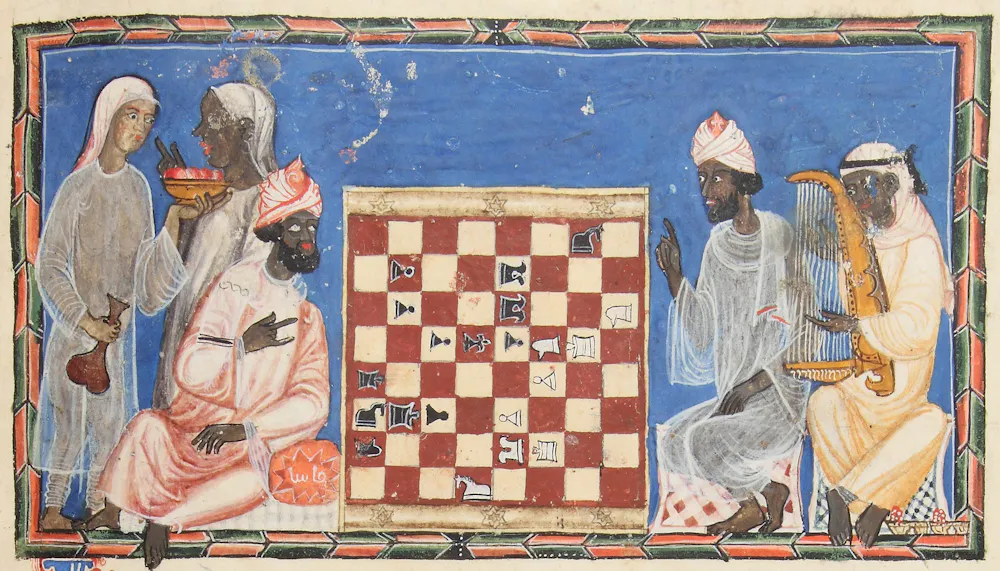
La présence d’un joueur à la peau noire sur cette illustration du _Libro del axedrez, dados e tablas_ montre en quoi les échecs échappaient aux normes de représentation de l’époque. « Libro del axedrez, dados e tablas »
Dans certains manuscrits médiévaux, des joueurs noirs et blancs s’affrontent sur l’échiquier dans un cadre d’égalité. Une iconographie surprenante qui montre comment les échecs pouvaient incarner un espace où la logique l’emportait sur les hiérarchies raciales.
Dans l’imaginaire médiéval européen, les représentations de la différence raciale étaient souvent très tranchées. Les personnes noires apparaissaient soit comme des figures exotiques et prestigieuses – saints ou souverains riches comme la reine de Saba –, soit comme des personnages dominés, jugés inférieurs aux chrétiens blancs. Pourtant, comme le montrent mes recherches, le jeu d’échecs offrait un autre regard : un espace où les joueurs pouvaient s’affronter d’égal à égal, quelle que soit leur couleur de peau.
Des éléments tirés du Libro de los juegos, sous-titré Libro de Axedrez, Dados e Tablas (Livre des échecs, des dés et des tables), un manuel de jeux réalisé pour le roi Alphonse X le Sage à Séville en 1283, ont renforcé cette idée. Le manuscrit contient 103 problèmes d’échecs, chacun accompagné d’un texte indiquant le vainqueur et d’une illustration. Ces images représentent une grande diversité de personnages, allant d’hommes juifs à des femmes musulmanes. On y voit aussi des joueurs asiatiques, blancs et noirs.
L’une des illustrations les plus frappantes montre un joueur noir et un joueur à la peau pâle face à face de part et d’autre d’un échiquier. Ce dernier a la tête rasée, signe qu’il est un clerc érudit. Pourtant, malgré ce marqueur d’intelligence, le texte indique que le joueur noir l’emportera. Dans ce « jeu de logique », la victoire revient à celui qui démontre les meilleures capacités stratégiques. Ce qui compte avant tout, c’est la puissance intellectuelle du joueur. Comme l’explique le Libro de los juegos, les échecs incarnent la sagesse, et ceux qui les étudient acquièrent la capacité de vaincre les autres.
Une autre image du manuscrit montre cinq personnages noirs entourant l’échiquier. Dans la culture visuelle médiévale occidentale, les scènes ne représentant que des figures noires sont rares et généralement associées à des connotations négatives. Ici, au contraire, elles apparaissent dans un cadre hautement intellectuel et dans une atmosphère qui semble conviviale.
« Libro de los Juegos »
Si le jeu d’échecs n’a pas fait disparaître les normes sociales dominantes en matière de préjugé racial, il a néanmoins offert aux joueurs un espace pour les remettre en question dans son propre univers ludique.
La représentation des échecs comme une rencontre entre des personnes de couleurs de peau différentes ne se limitait pas à l’Europe. Le Livre des rois ou Shâhnâmeh, poème épique retraçant l’histoire des Iraniens depuis la création du monde jusqu’à la conquête islamique, raconte ainsi l’introduction du jeu en Iran.
Selon le Shâhnâmeh, un roi indien – dont le nom n’est pas précisé – envoya une ambassade au roi sassanide avec un échiquier et un défi : en comprendre les règles ou payer un tribut. Heureusement pour le souverain, son conseiller Būzurjmihr parvint à résoudre l’énigme. Une copie du poème datant du XIVᵉ siècle situe cette scène dans un décor mongol de la fin du Moyen Âge. On y voit Būzurjmihr, à la peau plus claire, face à l’émissaire indien à la peau plus sombre.
Certains chercheurs ont soutenu que la peau sombre de ce dernier et ses « vêtements amples » visaient à souligner sa défaite. Mais plusieurs indices suggèrent une autre lecture. Sa tunique « ample » est richement ornée de dorures, contrairement à la simple robe bleue de Būzurjmihr, pourtant le plus haut diplomate de la cour. Sa peau plus foncée renvoie certes à ses origines étrangères, mais ne fait guère de lui un personnage négatif. Il apparaît au contraire comme le champion du rajah indien : celui qui transmet le jeu de logique et se présente comme le dépositaire d’un savoir indien très convoité.
Les pièces d’échecs elles-mêmes
Outre les représentations de parties d’échecs, les perceptions médiévales de la « race » peuvent aussi être étudiées à travers les pièces du jeu elles-mêmes.
Les échecs se sont diffusés à travers l’Afro-Eurasie à partir de l’Inde du VIᵉ siècle vers le reste du monde connu. Jeu de guerre, les échecs reposent sur des pièces censées représenter des soldats. Mais, au fil de leur diffusion, la forme de ces pièces a évolué, reflétant les sociétés qui les ont produites.
Par exemple, un roi d’échecs aux longs cheveux, fabriqué à Mansura ou à Multan (dans l’actuel Pakistan) au IXᵉ ou au Xᵉ siècle, reflète les idéaux de la royauté indienne. Les célèbres pièces d’échecs de Lewis, découvertes dans les Hébrides extérieures en Écosse, mais probablement sculptées en Norvège, sont quant à elles souvent considérées comme les représentations les plus emblématiques d’un jeu d’échecs médiéval. Dans cette perspective, elles ne constituent pourtant qu’un témoignage relativement tardif et géographiquement périphérique d’une tradition bien plus ancienne.
Les échecs médiévaux n’étaient pas aussi noirs et blancs que le jeu moderne. Certains échiquiers étaient blanc et rouge, ou encore bleu et or. Néanmoins, les cases alternées, tout comme les pièces elles-mêmes, étaient distinguées par des couleurs contrastées. Cela permettait de projeter sur le jeu des idées liées à la couleur de peau et aux perceptions raciales.
Un poème du XIIIᵉ siècle explique que les pièces d’échecs « sont les gens de ce monde, tirés d’un même sac, comme d’un ventre maternel, puis placés en divers endroits de ce monde ». Les pièces pouvaient ainsi représenter les différents peuples du globe. Mais l’issue de leurs affrontements sur l’échiquier restait déterminée par les règles de la logique, et non par la couleur de leur peau. Les échecs incarnaient ainsi un « monde juste », où l’intellect, plutôt que la religion ou la race, primait.
Krisztina Ilko a reçu des financements de The British Academy.
Linus Pauling was one of the most brilliant scientists of the 20th century. He won two Nobel prizes and transformed our understanding of chemical bonds and the structure of proteins. Late in his career, though, he became famous for something very different: a passionate belief that very high doses of vitamin C could help people with cancer. Many doctors scoffed. When Pauling himself later died of cancer aged 93, he was held up as a classic case of the “halo effect”: being a genius in one field doesn’t guarantee wisdom in another.
Half a century on, the story looks more complicated. Pauling was wrong in important ways, but he was not entirely wrong. Modern research is giving vitamin C a second look in cancer, and it turns out that under certain conditions it can behave less like a gentle vitamin and more like a drug.
Pauling’s vitamin C story began in the 1970s, when he teamed up with the Scottish doctor Ewan Cameron and gave patients with advanced, incurable cancer very large amounts of vitamin C – first as a drip into a vein, then as tablets. Compared with similar patients who did not get vitamin C, they reported that the vitamin‑treated group lived longer and felt better. For some, they suggested, survival could be several times longer.
Two large trials, run by the Mayo Clinic, a leading non-profit medical centre in the US, then put this to the test. The results were clear: there was no benefit.
Patients who took vitamin C pills lived no longer than those who didn’t. For most oncologists, that was the end of the matter. Vitamin C was filed away with other “alternative” remedies, and Pauling’s late-career crusade was widely seen as a sad mistake.
What neither trial’s critics nor defenders noticed at the time: Pauling and Cameron had started with vitamin C into a vein; the Mayo Clinic trials used tablets only. That matters because the gut can only absorb so much vitamin C. Once you reach a modest daily dose, the body simply stops taking in much more. Swallow as many tablets as you like, and the level of vitamin C in your blood levels off.
By contrast, a drip into a vein can raise blood levels to tens or even hundreds of times higher than tablets ever could. At those extreme levels, vitamin C starts to behavedifferentlyinside the body.
At everyday levels, vitamin C acts as an antioxidant: it mops up harmful molecules and protects our cells. At very high levels, especially around tumours, it can flip roles.
In laboratory studies, high-dose vitamin C helps generate hydrogen peroxide, a reactive substance that can damage cells. Cancer cells seem especially vulnerable because they are already under stress. They grow rapidly, often in areas with poor blood supply, and produce lots of reactive molecules of their own. Their internal “cleanup” systems are stretched thin.
Add a sudden pulse of hydrogen peroxide and many cancer cells tip over the edge: their DNA and energy machinery are damaged and they die. Normal cells, which are under less strain and have better defences, are more likely to survive. In this way, very high doses of vitamin C behave less like a daily supplement and more like a weak, selective chemotherapy drug. Crucially, the doses needed for this effect cannot be reached with tablets.
What the latest evidence shows
In people, the evidence is still early and mixed. Small trials have given high-dose vitamin C through a vein to patients with hard-to-treat cancers such as ovarian, pancreatic or brain tumours. So far, many patients can receive large doses several times a week without serious side-effects. Problems can occur, especially in people with poor kidney function or rare inherited conditions, which is why this is not a harmless wellness drip to be sold on the high street.
A few studies suggest that adding vitamin C infusions to chemotherapy may help some patients live a little longer or help with side-effects, but other studies show no clear benefit. The trials are small and varied, so we cannot draw firm conclusions.
One consistent signal is quality of life: patients given vitamin C alongside chemotherapy often report less fatigue, less pain and fewer side-effects, such as nausea. For someone with advanced cancer, that matters, even if it is not the sweeping cure Pauling once promised.
Lab work also hints at subtler roles. Vitamin C is involved in enzymes that influence how our DNA is “marked” and read, and in how cells divide and respond to low oxygen – important in cancer behaviour.
In some experiments, high vitamin C levels make cancer cells grow less aggressively and make them more sensitive to treatment. There are even early suggestions that vitamin C may help the immune system recognise and attack tumours, though this remains speculative.
Partly right
So, was Pauling right after all? The fairest answer is that he was partly right, for reasons he did not fully understand, and he exaggerated the promise. He was wrong to promote vitamin C tablets as a powerful cure for cancer. Large, careful trials have not found that swallowing high-dose vitamin C helps people with established cancer live longer. He was also wrong to present vitamin C as a near-universal remedy for many illnesses.
But he was not entirely wrong to suspect that vitamin C might have a special role in cancer treatment. He sensed, long before we could prove it, that very high doses given into a vein would behave quite differently from ordinary supplements.
Modern research has confirmed that intravenous vitamin C reaches much higher levels in the blood and has distinct biological effects. What we do not yet have are large, definitiverandomised trials showing that high-dose intravenous vitamin C clearly prolongs life for most cancer patients. Until we do, it should be seen as experimental – promising enough to study, but not proven enough to replace standard therapies. Any use belongs in clinical trials or in carefully supervised medical settings, not in clinics selling expensive “immune boosts”.
The “vitamins in cancer” story continues to evolve. If the story of vitamin C and cancer teaches us anything, it is that science rarely moves in straight lines. A bold idea, some flawed early studies, a fierce backlash – and then, years later, a quieter, more careful return to the question.
Pauling may never be fully vindicated, but neither was he simply deluded. In his enthusiasm, he may have glimpsed a sliver of truth long before the rest of us knew how to look for it.
Justin Stebbing does not work for, consult, own shares in or receive funding from any company or organisation that would benefit from this article, and has disclosed no relevant affiliations beyond their academic appointment.
Source: The Conversation – UK – By Giulia De Togni, Chancellor’s Fellow, School of Population Health Sciences, University of Edinburgh
The robot pauses at the edge of the room as an engineer checks its sensors. Then, with a soft mechanical hum, this humanoid machine begins to move. It lifts a mannequin from a bed, slowly and carefully. The engineers hold their breath.
I am in a robotics lab in Tokyo, Japan, as part of my Wellcome research fellowship. The engineers have repeated this test hundreds of times over several weeks, with mixed results.
Japan has one of the world’s oldest populations, and a strained health and care workforce. It has also long been the global leader in the development and deployment of care robots.
Government-led initiatives such as Society 5.0 and Moonshot promote a “super-smart” society in which, by 2050, robots could be integrated into everyday life. One early example is the impending trial of humanoid baggage handlers at Tokyo’s Haneda airport.
In a care sector that is globally under pressure, different types of robot – from humanoid and pet-like “companions” to more straightforward mechanical aids – could prove useful. Some help lift people, reducing physical strain on care workers. Others remind a patient to take medication, support rehabilitation exercises, and monitor their vitals.
However, my research shows there is still a big gap between staged robotic demonstrations and everyday reality.
Uniquely human skills
Many of the robots I observed were tested in carefully controlled environments. Floors were cleared, lighting was adjusted, engineers stood nearby ready to step in. In some cases, the robots’ actions were partly, if not entirely, controlled from a distance.
In contrast, real care environments are busy, unpredictable and crowded. People move suddenly. Their needs change from moment to moment. Technologies that work well in labs still struggle in these settings.
A carer can notice a change in someone’s mood and adjust how they speak. They can offer comfort without being asked. These are uniquely human skills. As one family caregiver put it: “The promise of robotic care is practical, but the experience of care is emotional – that’s where the tension lies.”
Video: Reuters.
Some family carers and professional careworkers welcomed the idea of robotic assistance, especially for physically demanding tasks like lifting. Others worried that too much reliance on machines could make care feel impersonal.
“To some older adults, these technologies are helpful tools,” said one careworker. “To others, they feel confusing, frustrating – a glimpse of a future they never asked for.”
Such perspectives are often missing from media narratives that focus on robot success stories. In Japan, these are shaped by government strategies and economic priorities. Innovation is never neutral, reflecting political agendas about how society should respond to ageing and labour shortages.
The challenges over care that societies face are not only technical but social, ethical and cultural. They raise questions about what care should be, how it is valued, and what kind of future we want. “Among families and caregivers, hope and hesitation sit side by side,” a technology developer told me. “Efficiency is often welcome, but not at the cost of losing the human touch.”
The future for care?
While Japan has been successful in exporting socially assistive robots such as Paro (a therapeutic robotic that resembles a baby seal) and the humanoid Pepper, China is rapidly expanding the market with more affordable, mass-produced technologies and humanoid innovation.
However, we are still a long way from the vision of care robots feeding, washing and otherwise supporting people in the way human carers do every day. Participants in my research, including technology developers, all agreed that robots should never fully replace human carers.
Technologies that assist with lifting, mobility and routine monitoring are the most likely to become widely used and ethically and socially accepted. In these areas, robots can complement human care rather than try to replace it.
Care is, at its core, a deeply human activity, not just a series of programmable tasks. It relies on relationships, trust and mutual understanding. Robots may support these processes, but they cannot replace them.
Additionally, some technologies are likely to remain expensive, available mainly to well-funded care homes or private users. This raises issues about access to good-quality care.
Care robot developments in Japan show what can be achieved through sustained investment and political support. But they also shed light on the large amount of work needed to ensure responsible research and innovation practices in this area.
The real question is not just what robots can do. It is what kind of care we want in the future – and how technology can support it without deepening inequalities, limiting access to good-quality care, and losing the power of human touch.
Giulia De Togni received funding from the Wellcome Trust. She is affiliated with the University of Edinburgh.
Sir David Attenborough has mastered the craft of storytelling. He has undoubtedly inspired generations of people around the globe to love and care for the natural world. And in doing so, he’s become one of the most recognisable – and most trusted – faces on our screens.
Now, he’s celebrating his 100th birthday and a lifetime of wildlife filmmaking. As part of The Conversation UK’s climate storytelling strand, four experts critique how he has influenced everything from conservation and documentary production to the communication of the biggest story of all – climate change.
Scientific insight
Ben Garrod, science broadcaster and Professor of Evolutionary Biology and Science Engagement at the University of East Anglia, has presented alongside Attenborough in several landmark documentaries. Here he reflects on Attenborough’s passion for furthering our scientific understanding of the natural world.
I once sat on a remote beach with Attenborough, near the very tip of South America. I can still clearly remember the warmth of the rounded, flat stones beneath me. We sat only a metre or so apart. We’d just spent the morning filming the excavation of the largest dinosaur ever discovered.
Over lunch, Attenborough had recalled we were close to a beach he’d filmed at years before, where grey whale mothers drew in close to shore with their calves to rub against the stone in the shallows to exfoliate their skin. As luck would have it, it was the perfect time of year and before long, there we were watching a mother and calf just a few metres offshore.
Facts and figures bubbled out of Attenborough excitedly, not at all like the calm and more measured way we’re all so used to. For those few minutes, he was childlike in his wonder and excitement at the scene in front of us and I marvelled at how he has not only maintained that love for the natural world for so long but how he has always so passionately shared it with the rest of us.
For a century now, Attenborough’s life has been intimately interwoven not only with humanity’s growing scientific understanding of the natural world but also its
accelerating loss. Spanning over 70 years, Attenborough has been our most trusted and prolific mediator between scientific knowledge and the public.
His early landmark BBC series Life on Earth: A Natural History (1979) did something few academic texts ever could. It made the complexity of evolutionary biology accessible. Across his work, natural selection, adaptation, ecology and behaviour are not presented as intangible concepts but as organic processes shaping form, function and ultimately survival across the natural world.
In doing so, Attenborough helped normalise evolutionary thinking for hundreds of millions of viewers worldwide, embedding complex scientific principles into popular culture, right in our living rooms.
Sir David Attenborough and Professor Ben Garrod spending a day at Norfolk Wildlife Trust.
Central to his work has been a commitment to scientific accuracy. Attenborough’s
programmes have been developed in close collaboration with academics and field
researchers, ensuring narratives about animal behaviour, ecosystems and
biodiversity reflect current evidence.
This relationship between science and storytelling has been crucial because rather than dumbing down complexity, Attenborough’s “everyday” approach demonstrates audiences can engage with content that could all too easily be written off as belonging to more academic and scientifically literate viewers.
The Insights section is committed to high-quality longform journalism. Our editors work with academics from many different backgrounds who are tackling a wide range of societal and scientific challenges.
Yet the tone of his work has changed. His early documentaries were
characterised by a sense of abundance and discovery. Over time, as scientific
evidence for biodiversity loss and climate change mounted, his work shifted
accordingly. More recently, his documentaries increasingly shine a light on
human impact, habitat destruction and extinction risk. This evolution of change in his own tone mirrors the science itself, highlighting Attenborough’s credibility as a communicator willing to adjust his message as the evidence demands.
Attenborough’s contribution to conservation has not come through activism alone. Research shows that an emotional connection to nature precedes any behavioural change. Attenborough has actively helped build the public conditions necessary for conservation policy and action by fostering wonder, curiosity and empathy for the natural world. His influence can be traced in the generations of scientists, conservationists and educators who cite his programmes as formative experiences.
For many, particularly those without access to wild spaces, Attenborough’s work provides an opportunity and gateway to encounter wild animals and remote ecosystems but also local habitats, helping give us all access to the wonder he perceives in the world around him.
As he turns 100, Attenborough’s legacy is surely inseparable from the global environmental challenges we now face. He has helped society understand not only how life evolved, but, more importantly, why it matters that we protect it now. In an era defined by ecological crisis, his work reminds us that scientific knowledge is most powerful when it connects people to the living world so strongly, it compels us to care enough to protect it, so that we might carry on his legacy and, just like him, act as stewards.
Natural history filmmaking
Jean-Baptiste Gouyon, Professor of Science Communication at the UCL Department of Science and Technology Studies, explains the impact Attenborough has had on natural history television.
In the early 1950s, television was taking off across Britain, but the BBC was still finding its visual voice. Its controller, Cecil McGivern, warned in June 1952 that there was “far too much emphasis…on the spoken word and far too little on the thing seen”. Most early television producers had come from BBC radio and initially made programmes that resembled radio with pictures.
Into this world stepped a young David Attenborough, unencumbered by a career in sound, ready to invent a new language for television and, in the process, reshape natural history filmmaking. At 26, he earned his first natural history credit as producer of The Coelacanth (1953), a 20-minute programme prompted by the capture of a live coelacanth “living fossil” fish off Madagascar.
Eschewing sensationalism, Attenborough tied the story to Darwin’s theory of evolution. This use of wildlife programmes to communicate scientific ideas became his trademark.
The programme blended prerecorded footage with live studio sequences featuring evolutionary biologist Julian Huxley, who used the coelacanth to illustrate life’s transition from sea to land.
With the Zoo Quest series (1954), Attenborough began reshaping wildlife television. For these programmes, he travelled to exotic places with staff from the London Zoo to capture animals for the collection. Each episode relied on prerecorded film linked by live studio sequences, allowing tighter narrative control. The hero in the films, shot by Charles Lagus, was Attenborough himself, who back in London also presented the studio sequences. By assuming all the roles of hero, producer, narrator and presenter, Attenborough became the central performer in the story.
From then on, Attenborough’s fluid on-screen performances gained him much acclaim. A very hard worker, he put much effort in producing highly detailed scripts, which left little to chance. Indeed, by the early 1960s, he had all but lost faith in live television, writing to a BBC colleague:
Zoo Quest was one of Attenborough’s early documentary series.
To begin with I got a tremendous kick out of the excitement of putting out programmes live. But it wore off after a bit and really, except for challenging interviews with lots of ‘immediacy’, I’m for film or some other sort of controlled recording process every time. It is so maddening to miss an effect because of some small mechanical hitch, as so often happens live.
Consistently high ratings encouraged others to emulate his method, and live formats became less fashionable. Film-based production also allowed programmes to be stockpiled, repeated and sold, supporting a more sustainable business model.
After Attenborough moved into BBC management in 1965, his goal was to turn natural history television into a science communication genre. He argued that it was “important” to move away from programmes that simply showcased the beauty of nature and instead engage viewers “to examine in a serious and critical way new trends and ideas in zoology”. Returning to hands-on programme-making a decade later, he embedded this vision in his magnum opus, Life on Earth (1979).
Attenborough looks back on filming Life On Earth.
In the early 1950s, when Attenborough joined the BBC, natural history television had been mostly conceived of as a specialist genre catering for amateur naturalists to share in the aesthetic and emotional enjoyment of nature. By the 1980s, he had helped transform it into one of the most popular genres of TV programming and a powerful conduit for science communication. This influence continues in his later work, including Planet Earth II, Blue Planet II and Our Planet, which combine cinematic storytelling with urgent environmental themes.
As he celebrates his 100th birthday, Attenborough’s legacy endures, defining natural history television as one of the most powerful forms of science communication and inspiring generations to look at the living world with wonder and understanding.
Communicating research
Saffron O’Neill researches climate communication and public engagement. She explains the ways Attenborough has shaped climate communication techniques across the world.
Attenborough is one of the few voices on climate change that almost everyone is willing to listen to. Over seven decades, his work has transformed how scientific knowledge is communicated, combining advances in broadcasting with powerful storytelling.
My colleague, PhD researcher Kate Holden, is exploring how young people engage with marine sustainability through online video, from traditional nature documentaries to YouTubers like MrBeast. Attenborough still stands out as an expert young people take seriously.
Part of his appeal lies in his willingness to meet audiences where they are, adapting to changing media habits. He joined Instagram in 2020 (breaking the Guinness World Record for the fastest time to reach one million followers) and has collaborated with Netflix to stream shows.
In recent years Attenborough has worked on programmes for more modern platforms, including Netflix.
Attenborough has shown the power of the media to shape how we see the natural world. Although there is little evidence for the appealing notion that watching a documentary like Blue Planet II directly drives behavioural change (such as reducing peoples’ plastic consumption), nature documentaries can certainly drive both public and policy interest via increased media attention.
Engaging the public on climate and nature requires moving beyond a simple notion of “getting the message across” and towards recognising the complexity and power of storytelling. For this, Attenborough’s success is an invaluable model.
His programmes combine top-class storytelling with pioneering technology. The visual appeal of his richly crafted documentaries is matched by compelling stories about little-known species. His work forms a substantial archive of success – many of the most popular TV programmes of all time are his nature documentaries.
In a highly cited paper from 2007, a team led by environmental social scientist Irene Lorenzoni defined engagement with climate change. They claimed that: “It is not enough for people to know about climate change in order to be engaged; they also need to care about it, be motivated and able to take action.”
Early Attenborough programming focused on increasing peoples’ knowledge about the natural world and as part of this, implicitly providing a reason to care about it. Increasingly though, he has moved to a more explicit stance about the climate emergency and our moral and ethical duty to act. An analysis of Attenborough’s use of language carried out in the late 2010s demonstrates this. It shows how he now uses emotional appeals to action. During an appearance on the Outrage + Optimism podcast he said: “we have an obligation on our shoulders and it would be to our deep eternal shame if we fail to acknowledge that.”
When a communicator like activist Greta Thunberg makes an appeal to morality, it can polarise audiences. Attenborough’s broad popularity makes his message reach wider audiences. His trustworthiness, storytelling mastery and innovative use of technology helps explain why he continues to have such a lasting impact on science and environmental communication, seven decades after his first broadcast.
Speaking up about climate change
Chloe Brimicombe, Climate Scientist at the University of Oxford, explores whether Attenborough’s on-screen attention to the climate crisis could have started earlier.
In his early documentaries, Attenborough focused on the wonder of the natural world.
However, in recent years his beliefs changed with the science and more of his films started to cover climate change directly. For example, Climate Change: The Facts in 2019 and Perfect Planet 2021.
Attenborough’s works are part of the culture of the UK and the world. In my own life Attenborough’s works have always been present. During my undergraduate degree at Aberystwyth University, I was shown Frozen Planet in a lecture about glaciers and ice sheets because my lecturer was featured in the series. That moment stuck with me as I started my career as a climate scientist.
During my PhD in environmental sciences at the University of Reading, my fellow researchers were all big fans of Attenborough and of what could be achieved through the power of documentary film-making. In 2025, I was lucky enough to attend the film premier of Ocean with David Attenborough, something I consider a once-in-a-lifetime opportunity.
As well as inspiring audiences with awe and wonder, documentaries can be an important way to communicate what is happening to our changing climate. They reach audiences that might not otherwise engage on the subject. Documentary making has drawn critique for focusing on a producer’s interest instead of capturing the scientific background behind a certain issue.
This has led to schemes such as the Wellcome Trust Public Engagement Scheme being setup to help bring scientists and documentary makers together.
In Attenborough’s A Life on Our Planet (2020), he talks about the changes he has seen in the natural environment and his concern for the future of the planet. In the film Ocean with David Attenborough, the 2025 premier took place just before the UN’s ocean summit in Nice, France. This helped lead to real policy discussions and changes. That includes supporting the global ocean’s treaty, a landmark international agreement which creates a network of protected ocean sanctuaries.
Attenborough may have been late in communicating specifically on climate change. But, in recent years he has changed to being a strong advocate. Now, it’s time to make sure that message is heard and acted upon so that the world’s wonders remain for many generations to come.
The climate crisis has a communications problem. How do we tell stories that move people – not just to fear the future, but to imagine and build a better one? This article is part of Climate Storytelling, a series exploring how arts and science can join forces to spark understanding, hope and action.
Chloe BrimicombeI is part-funded by the ESRC research council and she is a heat ambassador for shade the UK.
Jean-Baptiste Gouyon received funding from The Leverhulme Trust and the AHRC
Saffron O’Neill receives funding from the ESRC (UKRI3360 and ES/W00805X/1). She also receives funding for C3DS (Centre for Climate Communication and Data Science) from the Children’s Investment Fund Foundation (grant: 2210–08101) and the University of Exeter. The funders had no role in the conceptualization, design, data collection, analysis, decision to publish, or preparation of the manuscript and therefore the findings and conclusions are those of the author and do not necessarily reflect the positions or policies of the funders.
Ben Garrod does not work for, consult, own shares in or receive funding from any company or organisation that would benefit from this article, and has disclosed no relevant affiliations beyond their academic appointment.
En 1976, les Hommes du président, d’Alan J. Pakula, dépeignait un idéal-type du travail journalistique : enquête minutieuse de longue haleine, rapport objectif des faits, refus d’imposer un point de vue aux lecteurs. Le contexte était très différent d’aujourd’hui, des journaux tels que le Washington Post étant à l’époque des institutions unanimement respectées. Cinquante ans plus tard, la confiance du grand public à l’égard de la presse s’est largement érodée, du fait d’un ensemble de facteurs, au premier rang desquels la quête du profit et des clics…
Les Hommes du président, grand classique du cinéma américain, est sorti il y a cinquante ans, en avril 1976 aux États-Unis.
Le film, porté par Robert Redford et Dustin Hoffman, est une adaptation du best-seller éponyme de Bob Woodward et Carl Bernstein, paru deux ans plus tôt (en français, les Fous du président), détaillant la longue enquête des deux journalistes du Washington Post sur le scandale du Watergate, qui a profondément et durablement ébranlé la confiance des Américains dans leur gouvernement.
Rappelons le contexte : le 17 juin 1972, des hommes commandités par le Comité pour la réélection du président républicain Richard Nixon (élu une première fois en 1968, il allait être réélu quelques mois plus tard, en novembre 1972) sont surpris en train de s’introduire par effraction dans le siège national du Parti démocrate, situé dans l’immeuble du Watergate, à Washington. L’enquête aboutira à la démission du président en 1974 et à l’incarcération de plusieurs membres de son administration.
Quand l’Amérique faisait encore confiance aux médias
Certaines formules employées dans le livre puis dans le film sont entrées dans le langage courant : « Deep Throat » (littéralement « Gorge profonde ») pour désigner les sources secrètes ; l’expression « Follow the money » (« Suivez l’argent ») ; et, bien sûr, l’ajout du suffixe -gate à la fin d’un mot pour désigner un scandale.
Les Hommes du président reste sans doute le film le plus célèbre jamais consacré au journalisme, et a significativement façonné la perception de la profession par le grand public.
À le revoir aujourd’hui, on découvre une Amérique où les médias jouissaient d’une réelle confiance. À l’époque, une large majorité d’Américains estimaient que si une information était publiée par le Washington Post ou le New York Times, c’est qu’elle était véridique. Le contraste est frappant avec la situation actuelle, quand la méfiance envers les médias n’a jamais été aussi grande aux États-Unis.
Si Woodward et Bernstein ont réussi à mener leur enquête à bien, c’est aussi parce qu’ils ont bénéficié d’un luxe aujourd’hui disparu : le rythme de l’actualité était, en ce temps, bien plus lent qu’aujourd’hui. Les journaux n’étaient imprimés qu’une à deux fois par jour – de quoi laisser aux journalistes un temps précieux pour vérifier leurs sources, consulter des archives et discuter de leur travail avec leurs collègues.
Et, surtout, s’ils avaient des doutes sur un article qu’ils étaient en train de rédiger, il leur était plus facile de le mettre de côté et d’y revenir le lendemain. Le cycle de l’information actuel – qui fonctionne 24 heures sur 24 – rend cela beaucoup plus difficile : la rapidité prime sur l’exactitude, et la course effrénée pour être le premier à sortir le scoop peut inciter à publier des articles avant qu’ils soient tout à fait au point.
Le modèle économique n’est plus le même non plus. De nombreux journaux locaux appartenaient à des familles implantées dans leurs villes depuis plusieurs générations et, souvent, fortement impliquées dans la vie de leur communauté au sens large. En 1974, le Washington Post avait à sa tête Katherine Graham, dont le père, Eugene Meyer, avait acheté le journal en 1933 et l’avait dirigé jusqu’en 1946, quand il passa les rênes à l’époux de sa fille, Philip Graham ; Katherine avait repris la fonction après le décès de Philip en 1963.
Bien sûr, il y avait déjà des magnats de la presse tel William Randolph Hearst, dont la vie inspira Citizen Kane (1946), d’Orson Welles. Mais même les patrons plus puissants évoluaient dans un écosystème où la crédibilité était absolument essentielle pour le succès d’un journal. Les recettes provenaient des ventes et de la publicité, ce qui donnait aux journalistes le temps nécessaire pour travailler minutieusement sur un article donné.
Aujourd’hui, en revanche, l’accent est mis avant tout sur la « course aux clics », et on voit se multiplier des articles composés de listes ou dotés de titres racoleurs, conçus pour susciter le plus grand nombre possible de partages sur les réseaux sociaux.
Comment la presse façonnait les priorités de l’opinion publique
Au début des années 1970, la presse participait tout autant – si ce n’est plus – que la télévision à définir les priorités du pays. Des commentateurs et des chroniqueurs vedettes, comme Walter Winchell, étaient déjà des célébrités, mais du fait du succès des Hommes du président, les journalistes d’investigation sont à leur tour entrés en pleine lumière. Cette nouvelle donne a eu un revers : elle a pu encourager une approche du reportage davantage axée sur l’ego des auteurs, où le récit du journaliste-héros prenait le pas sur l’enquête.
Par ailleurs, à l’époque, les médias se focalisaient bien plus sur l’idée de rapporter l’actualité que sur celle de la créer. Aujourd’hui, de nombreuses plateformes médiatiques se revendiquant explicitement du journalisme d’investigation considèrent que leur rôle est de définir les priorités du grand public. Les médias plus traditionnels dénoncent à cet égard un militantisme idéologique envahissant.
Les Hommes du président semble adopter le point de vue selon lequel les médias ont pour mission de rapporter les faits, à charge ensuite pour le grand public de décider comment il convient de les interpréter. Toutefois, le film lui-même contredit déjà cette position. Woodward et Bernstein ne se sont pas contentés de relater les faits : ils ont mené le débat. Cinquante ans plus tard, la question de savoir si la presse doit être un miroir tendu au pouvoir ou une force qui façonne activement l’action politique reste d’actualité.
« Network », contemporain prémonitoire des « Hommes du président »
1976 a également vu la sortie de Network. Main basse sur la télévision, qui mettait en scène l’histoire d’un présentateur (joué par Peter Finch) victime d’une crise de nerfs en direct, qui devient alors « le prophète fou des ondes », exhortant son public à hurler par la fenêtre : « Je suis furieux et je n’en peux plus ! »
Dans le film, la chaîne de télévision appartient à un conglomérat aux intérêts tentaculaires. Woodward et Bernstein sont des professionnels qui font ce que le métier exige, ils travaillent sans animosité, dans le seul objectif de révéler la vérité sur le complot du Watergate, et non de faire chuter Nixon ; Network, en revanche, dépeint un monde où le profit écrase tout, où médias et politiques sont en guerre permanente – et où les journalistes cherchent moins à informer qu’à attiser la colère du grand public.
Cinquante ans plus tard, la question n’est pas de savoir quel film avait vu juste (tout porte à croire que c’est Network). Il s’agit plutôt de savoir si le monde célébré par les Hommes du président était déjà en train de disparaître, alors même que le public et la critique en faisaient l’éloge.
Matthew Mokhefi-Ashton ne travaille pas, ne conseille pas, ne possède pas de parts, ne reçoit pas de fonds d’une organisation qui pourrait tirer profit de cet article, et n’a déclaré aucune autre affiliation que son organisme de recherche.
Mosaïque représentant l’enlèvement d’Europe, Byblos, époque romaine, fin II<sup>e</sup> - début III<sup>e</sup> siècle, 222 x 243 cm. Ministère de la culture/Direction générale des antiquités du Liban.
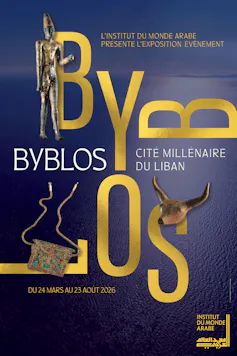
L’exposition « Byblos, cité millénaire du Liban », à l’Institut du monde arabe (IMA), à Paris, du 24 mars au 23 août 2026, était prévue pour l’automne 2024. Mais elle avait été déprogrammée en raison de la guerre au Liban. C’est finalement en pleine nouvelle guerre qu’elle vient d’être inaugurée, les objets précieux ayant réussi à sortir à temps du pays bombardé.
Byblos, à une quarantaine de kilomètres au nord de Beyrouth, était en Méditerranée orientale « la cité portuaire la plus puissante à l’âge du bronze », rappelle Élodie Bouffard, commissaire et responsable des expositions à l’Institut du monde arabe (IMA). Un véritable carrefour commercial entre l’Orient, l’Égypte, l’Anatolie et même la Crète minoenne.
Le site a été fouillé à partir de la seconde moitié du XIXe siècle, révélant d’inestimables trésors (bijoux, statuettes, vaisselle d’or et d’argent, armes d’apparat…) dont une partie est exposée à Paris. Le parcours historique proposé permet aussi de dresser un bilan archéologique très précis des recherches menées pendant plus de cent cinquante ans, jusqu’aux travaux récents de Tania Zaven, commissaire scientifique de l’exposition et directrice du site de Byblos.
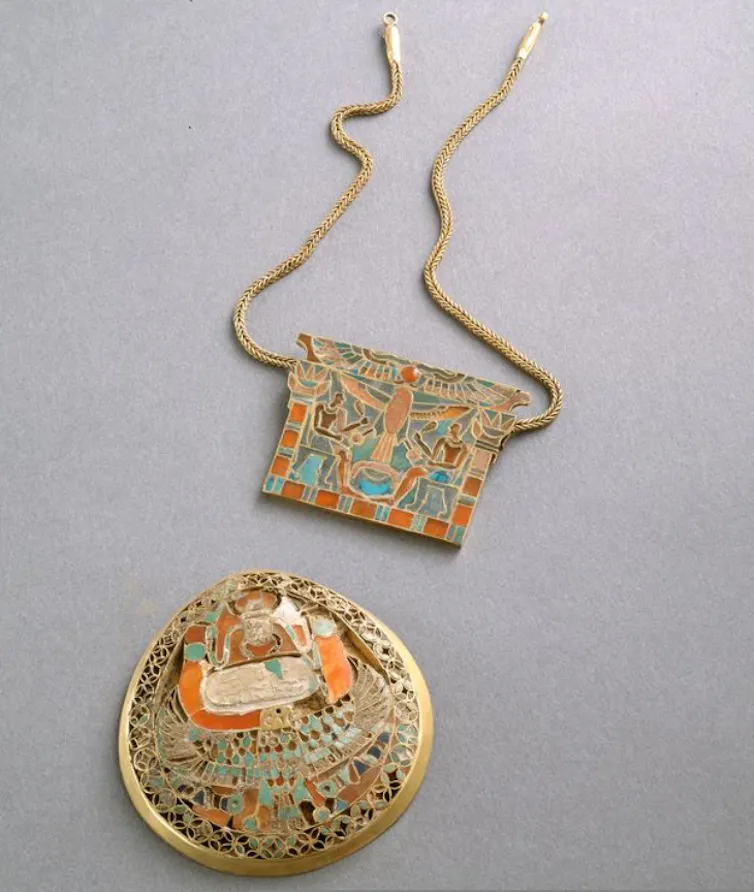
Collier à pendentif en forme de « pylône » dont le décor montre une double représentation de pharaon assis de part et d’autre d’un faucon et pendentif en forme de coquille au nom de roi Yapi-Shemou-Abi. Byblos, nécropole royale (tombe II), âge du Bronze moyen. Or et pierres semi-précieuses. Beyrouth, ministère de la culture/direction générale des antiquités du Liban. Photo : Philippe Maillard
Byblos et les pharaons
Ce sont les échanges économiques avec l’Égypte qui permettent à la cité-État de connaître son premier essor dans les années 2800-2750 avant notre ère, comme le suggère un vase en pierre au nom de Khâsekhemouy, pharaon de la IIe dynastie, découvert à Byblos.
Le port de la ville, au cœur de la région qui sera nommée Phénicie par les Grecs, deux mille ans plus tard, se trouve au débouché maritime de plusieurs grandes routes commerciales qui convoient le lapis-lazuli depuis l’Asie centrale (Afghanistan actuel) ou encore l’argent provenant d’Anatolie (Turquie). La population locale y ajoute ses propres ressources, notamment le bois de cèdre et autres conifères que les pharaons se procurent pour fabriquer de luxueux navires ou des cercueils.
Les relations avec l’Égypte s’intensifient au cours de l’Ancien Empire (vers 2750-2250 avant notre ère), époque des pharaons bâtisseurs des grandes pyramides. Parmi les trésors de la reine Hétephérès, mère de Khéops, découverts dans son tombeau à Gizeh, on compte des bijoux en argent incrustés de pierres qui ont sans nul doute transité par Byblos, après avoir parcouru quelques milliers de kilomètres.
Mais c’est dans la première moitié du deuxième millénaire (vers 1900-1600 avant notre ère) que la cité commerciale connaît son apogée. Elle est alors la plaque tournante des échanges entre Orient et Occident, comme en témoigne une jarre crétoise à bec verseur, dans le style dit « de Camarès », mise au jour à Byblos. Au même moment, les pharaons égyptiens de la XIIe dynastie (vers 1974-1781 avant notre ère) envoient aux souverains de la cité de magnifiques bijoux sur lesquels leurs noms sont inscrits en hiéroglyphes dans des cartouches.
C’est aussi de cette époque glorieuse que date le temple dit « aux obélisques », car il est orné de nombreuses aiguilles de pierre dont la forme est empruntée à l’art égyptien. La civilisation pharaonique paraît extrêmement prestigieuse aux yeux des souverains et de l’élite. Les rois Abichemou et Ipchemouabi (ou Yapi-Shemou-Abi) possèdent des objets de luxe produits dans la vallée du Nil ou fabriqués localement en style égyptien. De magnifiques bijoux « égyptisants » en or, ornés de pierres multicolores ont été découverts dans la nécropole royale.
Le degré de soumission des rois de Byblos aux pharaons oscille, au fil de siècles, entre alliance et vassalité, selon la période et la puissance effective de l’empire égyptien.
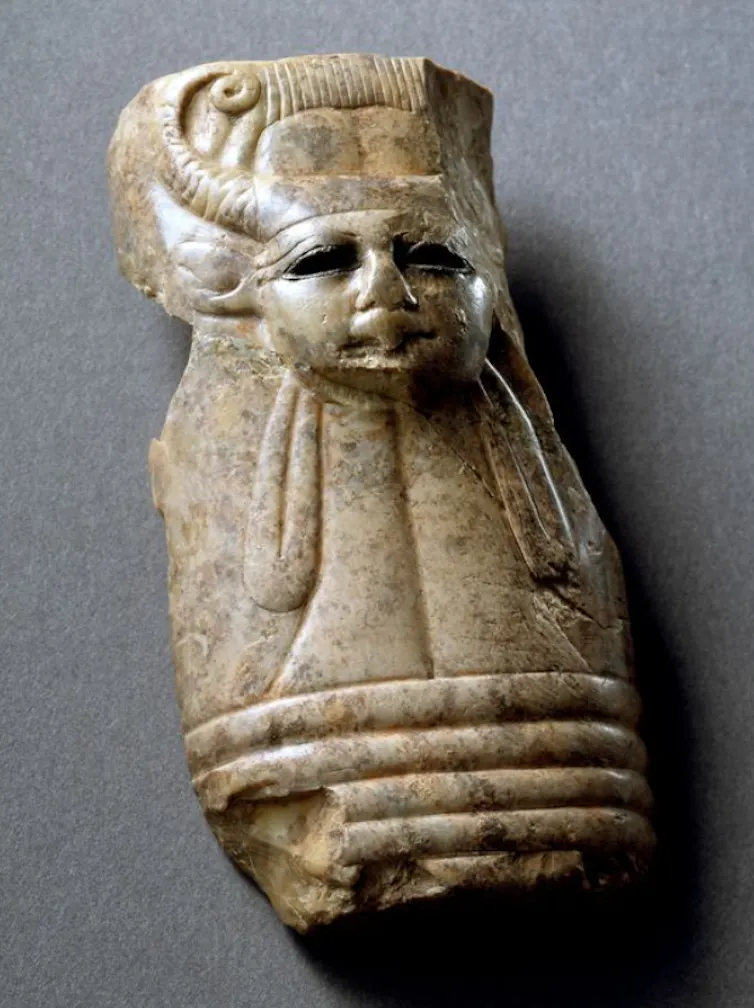
Plaquette décorée du visage de la déesse Hathor sur un pilier. Byblos, âge du Bronze moyen. Ivoire. Beyrouth, ministère de la culture/direction générale des antiquités du Liban. Photo : Philippe Maillard
Le périple d’Ounamon
À la fin du Nouvel Empire, au XIe siècle avant notre ère, l’Égypte se divise en deux royaumes : l’un au sud, l’autre au nord. Le rayonnement du pays est amoindri par cette scission politique. C’est ce que traduit bien un récit égyptien racontant l’expédition d’Ounamon, envoyé à Byblos par le grand prêtre du dieu Amon de Thèbes, en Haute-Égypte. Ounamon est chargé d’aller chercher du bois pour permettre la reconstruction de la barque sacrée qui sert à transporter la statue de culte du dieu égyptien.
Ounamon emporte avec lui une cargaison de métal précieux. De l’argent qui sert alors de monnaie d’échange sous la forme de petits lingots. Mais, au cours d’une escale, l’Égyptien se fait voler son argent. Il poursuit néanmoins sa navigation vers Byblos. Reçu par le roi de la cité, il tente de le persuader de faire don de bois à l’Égypte comme s’il s’agissait d’un tribut. Mais le souverain refuse et rappelle les règles élémentaires du commerce qui sont fondées sur un échange réciproque.
La fin du récit est perdue, mais il est clair que l’Égypte n’a plus alors le statut de grande puissance. Le dernier pharaon dont le nom a été retrouvé à Byblos est Osorkon II (vers 865-830 avant notre ère). D’autres empires vont désormais prendre le relais des pharaons : les Assyriens, les Babyloniens, puis les Perses, jusqu’à ce que le conquérant gréco-macédonien Alexandre le Grand s’empare à son tour de la Phénicie, en 332 avant notre ère.
Byblos passe ensuite sous la domination des Ptolémées, successeurs d’Alexandre en Égypte, puis des Séleucides, autre dynastie gréco-macédonienne, et, enfin, des Romains.
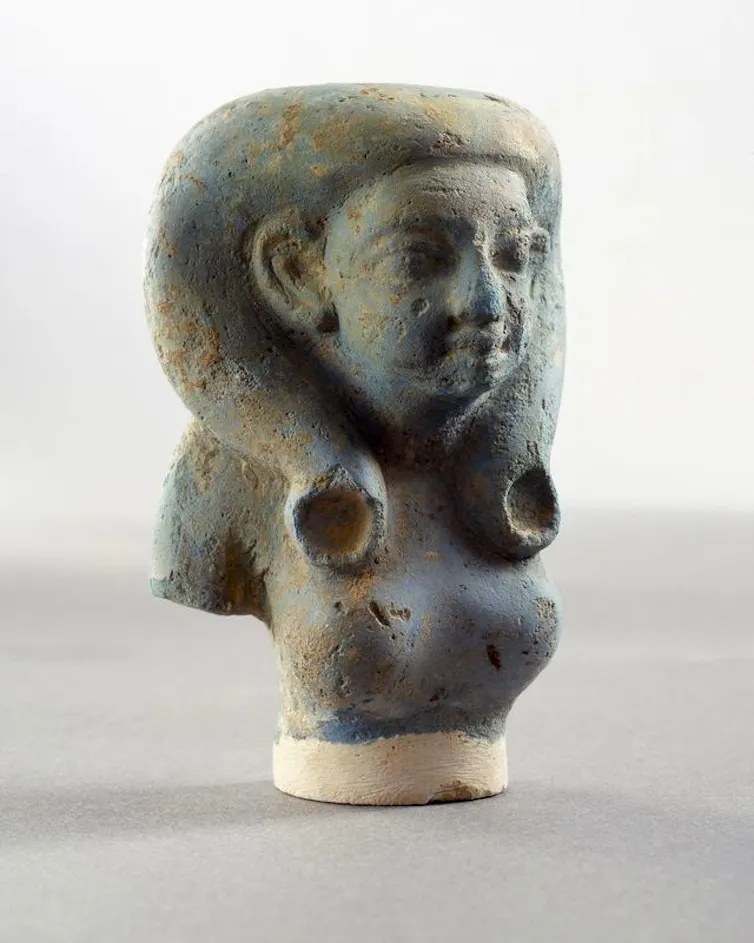
Buste de la déesse Hathor. Byblos, temple aux Obélisques, âge du Bronze moyen. Beyrouth, ministère de la culture/direction générale des antiquités du Liban. Photo : Philippe Maillard
La Dame de Byblos
Les relations économiques entre Byblos et l’Égypte sont accompagnées d’échanges culturels et religieux. Les rois de Byblos rendaient un culte à une grande déesse nommée Baalat Gebal, c’est-à-dire « la Dame de Byblos ». Elle était considérée par les Égyptiens comme l’équivalent de la déesse Hathor, liée à la maternité, à la joie et à la fertilité.
À l’âge du Bronze, la Dame de Byblos est figurée suivant les codes de l’art égyptien, coiffée d’une lourde perruque ou arborant des cornes de vache.
Le roi de Byblos, élu de la déesse
Le souverain de Byblos joue le rôle d’intermédiaire entre la Baalat Gebal et ses sujets. Il est censé avoir été intronisé par la Dame. Au Vᵉ siècle avant notre ère, le roi Yehawmilk affirme ainsi, sur une stèle :
« Je suis Yehawmilk, roi de Byblos […], moi que la Dame de Byblos a fait roi de Byblos. »
Cependant, malgré cette affirmation de son droit divin, il ne semble pas avoir régné en souverain absolu. Il devait, au moins en certaines occasions, consulter un Conseil des Anciens, sorte d’assemblée législative, connue par des inscriptions.
La fonction royale disparaîtra après la conquête de la ville par Alexandre le Grand, en 332 avant notre ère. Byblos se mue alors en cité de type grec, ou polis, avec un corps civique, un Conseil et des magistrats élus.
Figurines divines. Byblos, temple aux Obélisques, âge du Bronze. Bronze et feuille d’or. Beyrouth, ministère de la culture/direction générale des antiquités du Liban. Photo : Philippe Maillard
Isis est partie à la recherche du corps de son époux, Osiris, assassiné par son frère, Seth. Le criminel a placé la dépouille dans un coffre qu’il a jeté dans le Nil. Le fleuve l’a emporté jusqu’à la mer Méditerranée, puis les flots l’ont poussé jusque sur les côtes du Proche-Orient, près de Byblos où il a échoué. Sur le rivage, un arbrisseau s’est mis à pousser, recouvrant complètement le cercueil d’Osiris.
Le roi de Byblos, séduit par le bel arbre si soudainement apparu, ordonne de le couper pour en faire une colonne qu’il dresse dans son palais. C’est alors qu’Isis débarque à Byblos. Elle obtient du roi qu’il lui livre le tronc de bois. La déesse va pouvoir prendre possession du corps de son époux qu’elle ramène en Égypte. Plus tard, elle parviendra à s’unir à lui, par une opération magique, et accouchera d’un fils, Horus, qui renversera l’usurpateur Seth et deviendra le nouveau pharaon légitime.
Il est intéressant de remarquer que Byblos constitue l’une des étapes des pérégrinations d’Isis à la recherche de son époux. La déesse égyptienne a été assimilée à la fois à Hathor et à la Dame de Byblos, tandis qu’Osiris est vu comme l’équivalent d’Adonis, grand dieu phénicien.
Le culte d’Adonis
Le culte d’Adonis est bien attesté à l’époque romaine, du Ier au IIIᵉ siècle. Les habitants de Byblos célèbrent alors la résurrection du dieu. Ils se rendent en procession chaque année dans un sanctuaire édifié dans la montagne, à plus de 1000 mètres d’altitude, à proximité d’une source sacrée nommée Afqa, au milieu d’une nature fraîche et luxuriante.
Au regard de l’actualité, la visite de cette lumineuse exposition laisse un goût de paradis perdu. Mais elle suscite aussi l’espoir que le Liban, antique Phénicie dont le nom évoque le Phénix, cet oiseau mythologique immortel, parvienne à renaître de ses cendres.
L’affiche de l’exposition « Byblos, cité millénaire du Liban », IMA, Paris, 24 mars-23 août 2026. IMA
Christian-Georges Schwentzel ne travaille pas, ne conseille pas, ne possède pas de parts, ne reçoit pas de fonds d’une organisation qui pourrait tirer profit de cet article, et n’a déclaré aucune autre affiliation que son organisme de recherche.