NATO would survive a US withdrawal. But what kind of alliance would it become?

Source: The Conversation – Global Perspectives – By Gorana Grgić, Head of Global Security, Center for Security Studies, Swiss Federal Institute of Technology Zurich; University of Sydney

As NATO counts down to its annual summit in Turkey in July, the alliance is facing perhaps the biggest challenge in its history – what a potential future without the United States, or US security guarantees, would look like.

In recent weeks, the Trump administration has taken a series of steps widely interpreted in European capitals as retaliation for allies’ reluctance to more strongly support the US position in the Iran war. It has announced the withdrawal of 5,000 troops out of Germany, halted the deployment of 4,000 troops to Poland and even reportedly considered moves to suspend Spain from the alliance.

Europe was already uneasy about Washington’s broader strategic intentions. Increasingly, NATO allies are realising they can no longer depend on the United States for their security and will have to shoulder far greater responsibility themselves.

NATO 3.0

US President Donald Trump’s narrow understanding of the value of alliances has long been known. Now, his vision for a new NATO is coming into view.

At a NATO defence minister meeting in February, the US under secretary of defence for policy, Elbridge Colby, introduced the idea of “NATO 3.0”. This would entail Europeans assuming a much larger role in conventional deterrence. The US, meanwhile, would prioritise strategic competition with China and supporting European security more selectively and from greater distance.

NATO Secretary General Mark Rutte and Elbridge Colby speaking at NATO in February.

At the same time, the White House has reportedly been pushing to roll back decades of NATO’s mission expansion and keep Ukraine and NATO’s four Indo-Pacific partners (Japan, South Korea, Australia and New Zealand) out of the annual summit in July.

This reflects a broader transformation in US strategic thinking. NATO is no longer viewed as a political community and a pillar of the liberal international order. Increasingly, it is seen as a narrower military arrangement whose value depends on whether Europeans can shoulder more of the burden themselves and remain compliant with Trump’s agenda.

In this new paradigm, the United States is not simply asking European allies to spend more. It is telling Europe to do more with less American hardware, a looser political alignment, and fewer guarantees.

Plus, there’s a deeper problem: the erosion of trust within the alliance and the assumptions that have underpinned NATO’s deterrence posture for decades.

The result is a “Europeanised NATO” emerging by necessity rather than design. What such an alliance would actually look like remains unclear.

A focus on collective defence

One thing is certain: one single country won’t simply replace the United States as alliance leader. No European power possesses the capabilities, resources or political legitimacy to fill that role alone. Instead, leadership will likely come from the most capable states acting together.

That trend is already visible in “Europe’s minilateral moment”. The E3 group (Britain, France and Germany) and newer E5 coalition (with Italy and Poland), for example, have begun accelerating coordination among Europe’s leading military powers.

These arrangements are not alternatives to NATO. Rather, they may become the mechanisms through which a stronger European focus inside NATO is organised.

But this is where the uncertainties begin. A more Europeanised NATO is far from guaranteed to become a more cohesive NATO. The alliance has long struggled with the strategic cacophony of its 32 members, driven by divergent threat perceptions, regional priorities and strategic cultures. As American leadership recedes, those differences may become even sharper and harder to manage.

A more Europeanised alliance is, at least initially, likely to narrow its focus on collective defence and deterrence to counter Russia’s militarism and its ongoing war against Ukraine.

The broader agenda that expanded after the Cold War to include crisis management and cooperative security may increasingly become secondary. This included efforts to address global security challenges (such as supporting capacity building in countries affected by violent conflict), counter-terrorism operations, and enhancing energy and maritime security.

Yet, many NATO allies, particularly those on NATO’s southern flank, continue to argue that crisis management and cooperative security must remain core alliance functions. For countries facing instability across North Africa and the Middle East, migration pressures, terrorism and maritime insecurity, NATO cannot be concerned only with Russia.

NATO’s cooperative security partnerships in the Indo-Pacific are also increasingly important, even though they are no longer openly supported by the US administration.

Cooperation with Japan, South Korea, Australia and New Zealand (known as the IP4) has emerged as perhaps NATO’s most promising cooperative-security framework, precisely because it strengthens the alliance’s core deterrence mission.

Unlike many earlier partnership initiatives, this is tied directly to defence-industrial cooperation, technological resilience, security of supply chains for defence-critical materials, and strategic signalling.

The new reality

The “new NATO” is by no means a settled compact. It is an alliance caught between competing visions, profoundly uncertain political commitments from erstwhile supporters, and unresolved strategic questions.

Europe is moving towards greater responsibility for its security, but without a clear consensus on what greater strategic autonomy ultimately means.

The central question facing NATO today is not whether the alliance survives. It almost certainly will in some form, as one should never underestimate the binding power of bureaucracies.

The real question is what kind of alliance emerges and how credible it remains. Will it be a narrower military pact laser-focused on continental defence? Or a broader political-security community capable of managing the full spectrum of crises affecting Europe?

The Conversation

Gorana Grgić was previously a recipient of research and teaching funding from NATO.

– ref. NATO would survive a US withdrawal. But what kind of alliance would it become? – https://theconversation.com/nato-would-survive-a-us-withdrawal-but-what-kind-of-alliance-would-it-become-282723
Ebola strain spreading in Congo and Uganda has no approved vaccine

Source: The Conversation – USA (3) – By Klinger Soares Faico Filho, Professor da Disciplina de Clínica Médica e Medicina Laboratorial, Universidade Federal de São Paulo (UNIFESP)

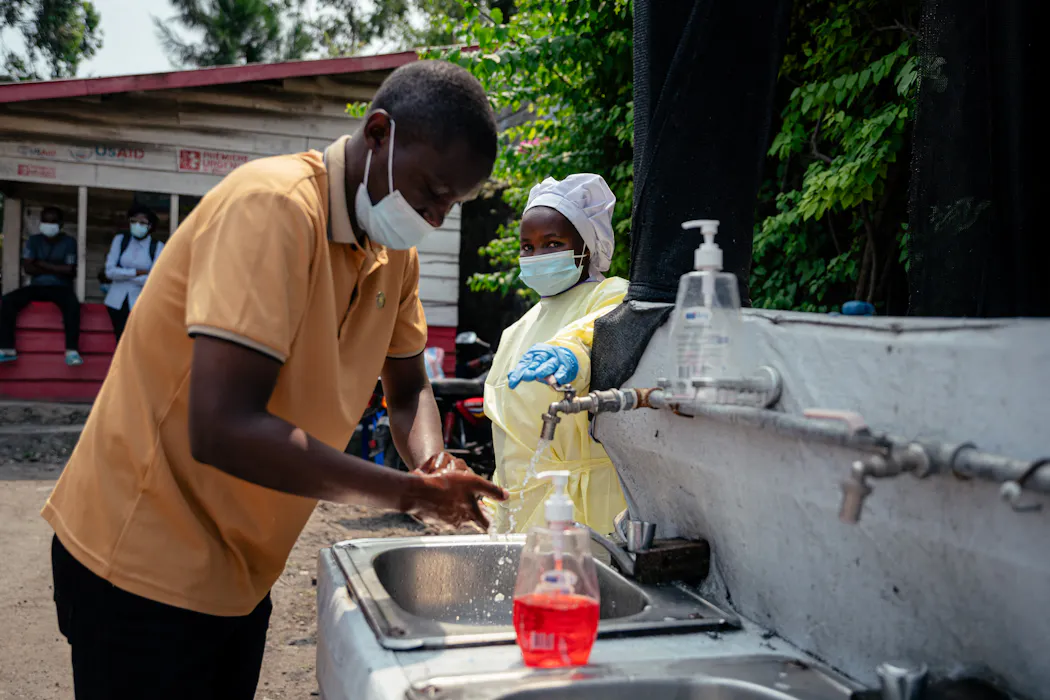
A man washes his hands before being screened to enter Kyeshero Hospital in Goma, Congo, on May 18, 2026. Jospin Mwisha/AFP via Getty Images

As a deadly outbreak of Ebola virus spreads in the Democratic Republic of Congo and Uganda, the U.S. Centers for Disease Control and Prevention said on May 17, 2026, that it is transferring “a small number of Americans” who were in Congo and who were exposed to the virus.

Some of these exposures are classified as high-risk, and among them is an American doctor who has been evacuated to Germany, health officials said.

On May 18, the U.S. also announced a ban on people who have recently traveled to Ebola-affected countries from entering the country.

The World Health Organization declared the outbreak to be an international health emergency on May 17. However, the CDC says the risk to the United States remains low.

As an infectious disease scientist who has studied multiple epidemics around the world, I agree that this reassurance is justified. But one key aspect of this outbreak is highly concerning: There is more than one Ebola virus, and this outbreak is caused by one for which the world has no vaccine.

On May 17, 2026, the World Health Organization declared the Ebola outbreak a “public health emergency of international concern.”

A familiar name, an unfamiliar virus

First identified in 1976, Ebola viruses have caused dozens of outbreaks across Africa.

The group of viruses that cause the disease, called orthoebolaviruses, consists of six known species, but three cause most large outbreaks: Zaire, Sudan and Bundibugyo. The tools the world developed over the past decade – the licensed vaccine Ervebo and monoclonal antibody treatments – were designed against the Zaire species, which is by far the most common.

The current outbreak, by contrast, is caused by the Bundibugyo virus, first identified in 2007 in Uganda. It is only the third documented Bundibugyo outbreak on record – and the largest.

There are no approved vaccines or therapeutics for the Bundibugyo virus. That’s because its genetic makeup differs significantly from other orthoebolaviruses. When the Bundibugyo virus was first described, scientists warned that this divergence would complicate efforts to design diagnostics and vaccines against it. An immune response to the Zaire species, elicited by a vaccine, is unlikely to protect against Bundibugyo.

An outbreak that grew in the dark

The most worrying feature about the current outbreak is not the virus itself but how large it already was when it was recognized.

It took the WHO until May 15 to identify the Bundibugyo strain as the cause of the outbreak. By May 16, the health organization had identified 246 suspected cases and 80 deaths in the DRC’s Ituri province. Recent Zaire outbreaks were often declared with only a handful of community deaths.

One reason for the delay is technical: The rapid field tests used for screening are calibrated for the Zaire species and often miss Bundibugyo. Early samples in this outbreak tested negative for Ebola; only genomic sequencing at a reference laboratory in Kinshasa identified the species. An outbreak that spreads invisibly is far harder to contain because contact tracing is always one step behind.

Geography compounds the danger – and explains why the WHO moved so fast after identifying the cause of the outbreak to declare it an emergency. Ituri has porous borders with Uganda and South Sudan as well as a highly mobile population. It is also in the grip of a humanitarian and security crisis due to prolonged armed conflict in eastern Congo.

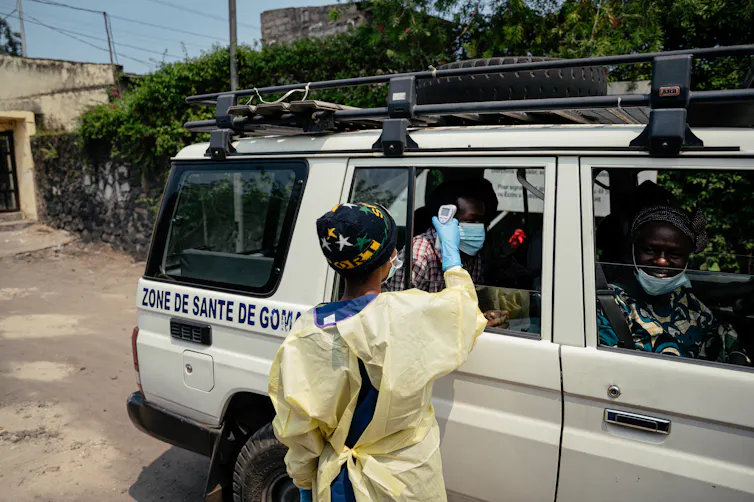
A person in protective gear checks the temperature of people in a white van.
A visitor has their temperature checked at a checkpoint before entering Kyeshero Hospital in Goma, Congo, on May 18, 2026.
Jospin Mwisha/AFP via Getty Images

The outbreak’s hot spots include mining towns with constant worker turnover, and cases have already reached Kampala, Uganda’s capital city, where more than 1.5 million people are connected to the world by an international airport. That is the international community’s central fear: not the remote village, but the virus reaching dense, highly connected urban hubs from which it can travel along trade and air routes across borders.

An outbreak that stays rural can be contained; one that reaches the transit network – as seems to be the case now – becomes everyone’s problem.

How Ebola spreads – and why health workers’ risk is high

There is also a less intuitive route. After recovery, the virus can persist for months in sites such as the testes, eyes and central nervous system, which infectious disease experts call “immune-privileged” sites. This means they don’t tend to experience strong responses from the immune system when they are invaded by foreign substances.

For the Zaire species, this has produced documented cases of sexual transmission from male survivors whose blood had long since cleared the virus. This is why the WHO now advises male survivors to abstain from sex or use condoms until semen tests negative twice.

How far this applies to Bundibugyo is not yet established, but it is one more reason that a “contained” outbreak is rarely the end of the story.

A revealing detail of the current outbreak: Among the first identified cases were four health workers, who died within days. This points to transmission inside health facilities, a classic pattern when protective equipment and infection control fall short.

What this outbreak is really testing

With no specific vaccine or antiviral, the response depends entirely on classic public health measures: early detection, case isolation, contact tracing, safe burials, infection control and community engagement. These work, but they are labor-intensive and fragile in a conflict zone.

The encouraging news is that early supportive care – fluids and blood-pressure and oxygen management – saves lives even without a targeted drug. Experimental Bundibugyo vaccines have also shown promise in primates, though they are not yet proved in humans.

There is a final point that should resonate in the United States: Some epidemiologists have raised the question of whether cuts to global health programs contributed to the delay in this outbreak’s detection. Whatever the answer, the lesson is the same: With the existing Ebola vaccine, the world built a narrow defense against one species of a virus that comes in several.

The Americans now being flown out of Congo are a reminder that in an interconnected world, no outbreak is ever entirely someone else’s problem.

The Conversation

Klinger Soares Faico Filho is the founder and editor in chief of InfectoCast, a medical education platform on infectious diseases based in Brazil offering a podcast, courses, a subscription-based app, events, and content aimed at healthcare professionalsInfectoCast had no role in the preparation, review, or publication of this article

– ref. Ebola strain spreading in Congo and Uganda has no approved vaccine – https://theconversation.com/ebola-strain-spreading-in-congo-and-uganda-has-no-approved-vaccine-283221

Battleground state with few combatants – why Pennsylvania’s primaries lack competition

Source: The Conversation – USA – By Kristin Kanthak, Associate Professor of Political Science, University of Pittsburgh

Pennsylvania is only 1 of 13 American states that holds closed primary elections. REBECCA DROKE/AFP Collection via Getty Images

At a time when hard-fought primary elections in Georgia, Kentucky and Indiana and Ohio are making national news, perennial battleground Pennsylvania seems to be nodding through one of the sleepiest primary seasons in a long time.

I’m an associate professor of political science at the University of Pittsburgh. My research focuses on how political institutions like political parties and state and local governments affect political representation.

In statewide races, only the Republican lieutenant governor slot is contested, a race between GOP-endorsed attorney Jason Richey and newcomer John Ventre. In the state Senate, less than a third of incumbents drew a challenger. Only 21 of the 203 state Assembly seats see an incumbent facing an in-party challenge. So why does Pennsylvania, usually a hotbed of political strife, appear to be sitting this midterm primary season out?

Uncontested primaries are normal

According to political scientists Shigeo Hirano and James M. Snyder Jr., uncontested primaries, and uncontested elections in general, are normal – and can even be a good thing. They argue it’s because high quality candidates do not tend to draw a challenge. This means that an uncontested primary signifies the district has no potential candidates who both want the job and think they can win against the incumbent.

The biggest reason challengers stay home is because of a well-dug-in incumbent, and Pennsylvania had plenty of those this cycle. Unlike in Indiana, no wave of anti-establishment energy is giving long-shot challengers a fighting chance.

A man in a suit stands in front of a microphone outside.
Pennsylvania Rep. Brian Fitzpatrick, a Republican, protested against the government shutdown in January 2026.
Mark Makela/Stringer Collection via Getty Images

Interestingly, the moderate Trump foe and incumbent Brian Fitzpatrick, a Republican state representative from Bucks County, managed to avoid a primary challenge this year. Fitzpatrick was one of only two Republicans to vote against the H.R. 1 Act – also known as President Donald J. Trump’s “One Big Beautiful Bill.”

The only other dissenting vote came from Kentucky’s Thomas Massie — and the President responded by personally recruiting a primary challenger to run against him.

Why Pennsylvania’s Fitzpatrick got a pass

So how did Fitzpatrick manage to avoid Trump’s notice? It helps to compare his political fortunes with Massie’s.

Massie’s district is solidly red. He typically wins at least 60% of his general election vote. In 2024, no Democrat even ran against him.

Fitzpatrick, on the other hand, hails from a decidedly “purple” district where the vote could go in either party’s direction. He rarely wins more than 55% of the vote, and is perennially on the list of the most at-risk Republican incumbents.

In other words, in a midterm election in which Republicans face strong competition and fear losing the House of Representatives, Republicans need Fitzpatrick more than they need Massie. Without Fitzpatrick, his district is much more likely to fall in the Democratic column. Without Massie, Republicans can still expect to keep the seat red.

Pennsylvania parties hold the key

Pennsylvania incumbents have mostly been able to avoid finding themselves part of a larger conflict.

Some of the most contested primaries this election cycle stem from disputes centered on President Trump’s push for Republican-led states to redraw their congressional district lines. But the Commonwealth of Pennsylvania, with its closely divided state legislature, is not going to change its electoral map anytime soon. So the Commonwealth was left out of partisan gerrymandering disputes.

Pennsylvania remains one of only 13 American states that holds closed primary elections. That means voters must already be registered as party members to vote in that party’s primary. In an open, or even semi-open, primary state like Michigan and Iowa, potential challengers can try to win a primary election by relying on new voters choosing to align with the party only for that election day, or even for that specific election.

Three young women hold signs about voting while standing outside.
In order to vote in Pennsylvania’s primary on May 19, 2026, voters must already be registered as members within their party.
ANGELA WEISS/AFP Collection via Getty Images

A closed party system gives party regulars, and the party organization itself, enormous sway over who gets nominated. Potential candidates in closed-party states are much better off working within the party organization and waiting for an incumbent to step down before throwing their hats in the ring.

Pennsylvania is a closed-party state and a swing state. In an election cycle in which political parties from West Virginia’s Republicans to California’s Democrats seem to be turning on their own members, Democrats and Republicans in the Commonwealth of Pennsylvania have managed to keep their parties more unified.

The desire for party fealty is strong, but not as strong as the need to win in the general election. Pennsylvania parties are powerful, and they are staying cautious until November. An uncontested primary, in other words, isn’t a sign of apathy. In Pennsylvania, it’s strategy.

The Conversation

Kristin Kanthak does not work for, consult, own shares in or receive funding from any company or organization that would benefit from this article, and has disclosed no relevant affiliations beyond their academic appointment.

– ref. Battleground state with few combatants – why Pennsylvania’s primaries lack competition – https://theconversation.com/battleground-state-with-few-combatants-why-pennsylvanias-primaries-lack-competition-283219

Hurricane forecasts have improved dramatically, saving lives, but federal cuts threaten to stretch NOAA to the breaking point

Source: The Conversation – USA (2) – By Brian Tang, Professor of Atmospheric Science, University at Albany, State University of New York

One of NOAA’s WP-3D Orion hurricane hunters, dubbed Miss Piggy, flies over Tropical Storm Idalia on Aug. 28, 2023. Nick Underwood/NOAA

The 2026 Atlantic hurricane season starts June 1, and while a developing El Niño might result in a tamer season than in the past few years, all it takes is one big storm hitting a populated area to make it a bad hurricane season.

Every year, Americans rely on accurate forecasts when hurricanes might be developing to know when to stock up on supplies, prepare for power outages or evacuate.

Those forecasts have improved dramatically in recent decades, but the improvements can’t be taken for granted. Over the past year, federal funding cuts and job losses in the very programs that are helping make Americans safer from extreme weather threaten to stall progress and stretch forecasting resources to the breaking point.

How storm tracks have improved.
Hurricane track forecasts have become more accurate over the past three decades. For example, recent forecasts showing where a storm is expected to be in 96 hours have been, on average, about as accurate as a 24-hour track forecast was in the early 1990s. That gives people more time to evacuate. The lines show how many miles off the National Hurricane Center’s official storm tracks were.
National Hurricane Center

I am an atmospheric scientist whose research focuses on hurricanes, including how and why they intensify or weaken. I also work with scientists at the National Atmospheric and Oceanic Administration, NOAA, to analyze observations collected by reconnaissance aircraft and evaluate computer model forecasts of hurricanes.

Here’s what forecasters rely on during hurricane season and why investing in science, forecasting technologies and the people who run them matters.

Flying through hurricanes

To have the best chance of an accurate hurricane forecast, computer models and meteorologists need to know about the location, intensity and structure of a hurricane, along with the environment that surrounds it. Satellites are crucial for tracking storms from above, but many details can be collected only inside the storm, where satellites can’t see.

That’s why NOAA relies on “hurricane hunters” – a group of skilled pilots and scientists who fly through storms all season long to collect storm data, which is quickly transmitted to forecasters and computer models.

A scientists in a flight suit sits at a computer in an airplane talking on a headset.
Flight Director Quinn Kalen at his work station during a flight into Hurricane Lee on Sept. 8, 2023.
Lt Cmdr Utama/NOAA Corps
A radar screen with an airplane in the center of a storm circulation.
A radar display shows NOAA’s Miss Piggy hurricane hunter aircraft in the center of Tropical Storm Idalia on Aug. 28, 2023.
Nick Underwood/NOAA

When storms are developing, the U.S. Air Force Reserve and NOAA conduct several hurricane hunter flights per day to provide the most up-to-date storm information. During these missions, the crews often fly directly into the storm, through screaming winds and heavy rain, to release instrument packages called dropsondes.

The dropsonde is a feat of science and engineering, able to accurately measure the temperature, humidity, wind and pressure in hostile conditions. This data is radioed back to the aircraft. From there, it is processed and transmitted to NOAA, where forecasters analyze it and computer models use it to initialize forecasts.

A NOAA scientist explains how hurricane forecasters use dropsondes.

I and many hurricane scientists have used dropsonde data collected over the years to build a better understanding of how hurricanes behave. A recent study showed that computer model forecasts of hurricane tracks were up to 24% more accurate when they included dropsonde data than those that didn’t.

Simulating hurricanes

A big reason hurricane forecasts have gotten better has been federal investments in computer models that can simulate these storms.

In 2008 the U.S. government funded the NOAA Hurricane Forecast Improvement Project, leading to substantial advancements in computer modeling and forecast accuracy. Computer models got better at incorporating the observations gathered by aircraft, showing air movements and rain bands in greater detail.

A radar showing a hurricane's swirling form.
A HAFS radar forecast shows Hurricane Melissa as it approaches Jamaica in October 2025. The HAFS model performed well in forecasting the intensification and extreme strength of the Category 5 storm in the days leading up to its landfall in Jamaica.
NOAA/AOML/HRD

The flagship NOAA hurricane model is now the Hurricane Analysis and Forecast System, which does a better job of predicting rapid intensification, among other things, than its predecessors.

When storms rapidly intensify, as several have done in recent years, they can pose an acute risk to coastal communities. More accurate forecasts give people and communities better information to decide how to prepare and when they need to evacuate. Improvements since 2007 have resulted in an estimated US$2 billion in savings per hurricane landfall and many lives saved.

That’s a huge return on investment. In 2024, NOAA’s entire budget was $6.7 billion.

Keeping an eye on the storms ahead

There are some exciting developments ahead in hurricane observations and modeling.

NOAA in 2024 ordered two new aircraft, expected to be delivered by 2030, to begin replacing its aging hurricane hunter fleet so fights and their data collection can continue.

Private companies working with NOAA have deployed and tested autonomous drones – both in the air and sail drones on the ocean surface – that can collect data in areas where quality observations are hard to get.

Additionally, artificial intelligence weather models have emerged, such as Google DeepMind, which made a big splash as the most accurate forecast model of the 2025 hurricane season.

Some lingering dark clouds

Despite these promising developments, a different storm is eroding the bedrock upon which the national weather forecast enterprise sits.

Cuts in funding and staffing have stressed NOAA’s ability to collect critical observations. Last year, retired NOAA scientists volunteered to staff hurricane hunter reconnaissance flights so the missions could still be flown.

Debris and damage homes across a town with the Gulf waters in the background.
Knowing when to evacuate is crucial. Hurricane Helene made a mess in Horseshoe Beach, Fla., on Sept. 28, 2024. The storm was blamed for at least 250 deaths across six states.
Chandan Khanna/AFP via Getty Images

The Trump administration proposed cutting NOAA’s budget by more than a quarter, including dismantling its Office of Oceanic and Atmospheric Research. Congress rejected many of the administration’s proposed budget cuts, ultimately approving a $6.1 billion budget in March 2026, still down from the previous budget.

The National Center for Atmospheric Research, which led the development of computer models and dropsonde technology, has also been targeted by the Trump administration to be dismantled. The American Meteorological Society warns this decision “will harm meteorological research and innovation in the United States with severe consequences to current and future efforts of the weather enterprise to protect life, property, and the nation’s economy.”

I worry about the funding and staff cuts stressing systems that keep scientific progress marching forward and warn Americans about hazardous weather. Losing staff and support raises the risk of critical failures, such as delayed severe weather warnings and broken equipment causing new blind spots when storms threaten. In the long run, failing to invest risks stagnation or even reversing the hard-fought progress the U.S. has made in advancing weather prediction.

With coastal populations and development expanding over the past few decades, and storms becoming stronger, the vulnerability of the U.S. to costly, damaging hurricanes has increased dramatically. It is more important than ever that public investment in hurricane science and forecasting continue.

The Conversation

Brian Tang receives funding from the National Science Foundation, the National Aeronautics and Space Administration, and the Center for Western Weather and Water Extremes. He has research collaborations with the National Oceanic and Atmospheric Administration’s Hurricane Research Division. He is a member of the American Meteorological Society.

– ref. Hurricane forecasts have improved dramatically, saving lives, but federal cuts threaten to stretch NOAA to the breaking point – https://theconversation.com/hurricane-forecasts-have-improved-dramatically-saving-lives-but-federal-cuts-threaten-to-stretch-noaa-to-the-breaking-point-280242

Chelsea football club must find its feet after a very expensive Premier League season

Source: The Conversation – UK – By Christina Philippou, Associate Professor in Accounting and Sport Finance, University of Portsmouth

photoyh/Shutterstock

Chelsea FC losing the 2026 FA Cup final 1-0 to Manchester City will have been disappointing for the club’s fans. But perhaps the result was not hugely surprising, as the London club hasn’t had a brilliant season on the pitch.

Off the pitch, you could argue it’s been even worse.

Moments of anguish have included the expensive sacking in April 2026 of manager Liam Rosenior after just 106 days in the job. He was the side’s fifth manager (or head coach) in three years.

A month before that, Chelsea was fined over £10 million by the Premier League for breaching financial regulations – the biggest fine the league has ever imposed.

Added to (or taken away from) this, Chelsea then also posted the largest ever pre-tax financial loss in Premier League history. This amounted to £262.2 million in the 2024-25 season.

Not all of these events can be blamed on the club’s current owners, the US consortium known as BlueCo. Previously owned by Russian oligarch Roman Abramovich, Chelsea was sold in 2022 as a “distressed asset”, meaning that it needed to be sold quickly (and probably not for its full worth). This was because Abramovich’s assets had been frozen over his links to Vladimir Putin following Russia’s full-scale invasion of Ukraine.

When the new owners bought the club, they started combing through the financial books and found evidence of breaches of Premier League regulations which the club itself reported.

Part of this related to just over £47 million worth of undisclosed payments to unregistered agents and others as part of their plans to buy in new players. According to league rules, all payments relating to transfers need to go through the club books for reasons of fairness.

Leaving tens of millions of pounds out of the records means that the club shows fewer expenses than it should. This in turn could potentially shield it from breaking the league’s “profitability and sustainability” (PSR) rules, which are designed to force clubs into being financially sound businesses.

Those rules mean that clubs are allowed to build up footballing losses of no more than £105 million over a three-year period. Given Chelsea have been making losses for years, correctly recording expenses would increase those losses and potentially put them in breach of the PSR rules.

A fine of £10.75m is no small matter. It brings Chelsea closer to the PSR limit for the coming year, leaving more belt-tightening around spending decisions.

At the time, the club said in a statement: “From the outset of this process, the club has treated these matters with the utmost seriousness, providing full cooperation to all relevant regulators.”

But it is not just Chelsea that is affected. Football is a highly interconnected industry.

While clubs compete against each other, they are also very dependent on each other for matches (otherwise there would be nothing to watch and no tickets to sell) and for players. They also often suffer losses, with cash flow issues and other financial problems common. So having a competitor spend more than they should can negatively affect other clubs.

Football blues

Chelsea have also led the way in doing clever things within accounting rules, which others have followed. In 2023, the club started offering new players very long-term contracts which allowed them to spread their declared costs over a longer period.

So for example, a player bought for £90 million might be given a nine-year contract, meaning the annual cost can be recorded as £10 million.

This can help a club to stay within within PSR boundaries. But it also comes with financial risk (with big spending and time commitments), so to avoid other clubs following suit, both Uefa and the Premier League have now limited (to five) the number of years that can be used in the spending calculation.


Read more:
Why American investors are pouring money into European football


Chelsea also effectively sold its women’s team to itself by switching ownership to Chelsea’s parent company for almost £200 million. This shows up as a decent profit for Chelsea, providing another benefit in terms of staying within PSR boundaries. The idea caught on, with Aston Villa and Everton doing the same thing before the Premier League closed this loophole too.

So from a financial perspective it will be interesting to see what tactics Chelsea comes up with next. The fans though will surely be more interested in the tactics chosen by the club’s latest signing, manager Xabi Alonso. And if he gets the club winning again, they’ll happily write off this season’s considerable losses.

The Conversation

Christina Philippou does not work for, consult, own shares in or receive funding from any company or organisation that would benefit from this article, and has disclosed no relevant affiliations beyond their academic appointment.

– ref. Chelsea football club must find its feet after a very expensive Premier League season – https://theconversation.com/chelsea-football-club-must-find-its-feet-after-a-very-expensive-premier-league-season-278690

Even if the UK changes prime minister, voters now expect to hear the language of populism

Source: The Conversation – UK – By Stephen Coleman, Emeritus Professor of Political Communication, University of Leeds

Beyond the high drama surrounding the Makerfield by-election and the contest to be the UK prime minister lies a more fundamental battle. It is the struggle between the incremental pragmatism of mainstream politics and the magical thinking of populism.

The great catchword of recent UK politics has been “change”. Brexit, it was said, would change the country’s declining position in the world. Boris Johnson said after his landslide electoral victory in 2019 that he was going to take on “the problems that no government has had the guts to tackle before”.

Labour’s 2024 election manifesto, entitled “Change”, declared that a Starmer-led government would “stop the chaos, turn the page, and start to rebuild our country”.


Read more:
English local elections 2026: a story of a new kind of politics


But people have different ideas of what change means and how fast it can happen.
In a world full of entrenched, unequal social structures and complex, intractable
global problems, change is inevitably a long-term project. But voters tend not to be in the business of long-term evaluation.

Similarly, they are not impressed by graphs showing that the UK economy is currently the fastest-growing in the G7 or that waiting times for NHS treatment in England are at their lowest level in more than three years.

There are undoubtedly better ways of communicating long-term change and
identifying quick wins than the current government has adopted. However, the real battle is not between rival tellers of the mainstream narrative, but between two completely different conceptions of change. Remembering this will be crucial for Andy Burnham when he takes on Reform UK in the Makerfield by-election in his bid to return to Westminster to challenge Keir Starmer for the leadership of the Labour party and his job as prime minister.

Feelings over facts

Populist leaders are successful not because they have more convincing policies for house-building, ending child poverty or realising energy security. The change they offer appeals to visceral feelings rather than material needs. “Imagine how you will feel on the day that we come to power,” they say. “Think of how shattered all of those people who have ignored you, talked down to you, taken your jobs and pushed ahead of you in the queue for services will feel.”

Populists such as Reform UK (according to current polls the most likely party to win the next UK general election) are less interested in setting out a policy programme than in connecting with voters’ raw nerves.

That is why the most crucial lesson for Labour from the 2026 local elections
was not their devastating defeat, but the unstoppable surge of Reform’s appeal to
voters that threatened to leave them in the margins in the next general election.
Labour’s reflex response was to look at deposing its leader. And possibly at least one of Starmer’s rivals for the job would be more effective at taking on this new form of political opposition.

More important, however, is to be clear what is involved in taking on
populism. A new prime minister will be faced with exactly the same challenges as
the current one and will not be able to deliver transformative change simply by force of an appealing personality.

Europe will still be involved in its longest war since 1945. The US will continue to be an unreliable partner. The climate emergency will go on wreaking havoc. Social care for an ageing population will remain a massive challenge. National debt will still limit the capacity for public investment. Regional disparities and indefensible social inequalities will still exist.

andy burnham holding a microphone and addressing an audience.
Graphs aren’t enough – Andy Burnham will have to show that he can speak to voters’ fears and frustrations.
R Heilig/Shutterstock

All of these challenges and more will result in sections of the electorate feeling alienated and disappointed – the very sentiments upon which populism depends.

The big question for whoever is going to be prime minister in the next three years is not just about policy and delivery (although it is also very much about that), but about offering an alternative to the psychic appeal of populism. That will entail adopting a three-point strategy.

First, politicians need to acknowledge the depth of disappointment felt by people whose parents and grandparents had once believed that the government was there to look after them in times of need. The prime minister should declare an urgent mission to build an infrastructure of cradle-to-grave care, which exists not to tell people how they should be feeling, but to be democratically accountable to their needs and priorities as individuals and communities.

Second, there is a need for a complete overhaul of political language, led by the prime minister’s example, eschewing the lexicon of technocratic cliche and adopting the conversational tone of speaking with rather than speaking at people.

Third, there is a need for boldness in calling out the ugly sentiments of populism and appealing explicitly to the more generous, positive feelings and beliefs of the majority that are too often excluded from the domain of hardheaded politics.

A new prime minister will need to be imaginative in demonstrating that populists are not the only ones who can appeal to people’s deepest apprehensions and desires. And they will have to show that politics can be more like an inclusive conversation than a PowerPoint presentation. In that case, then perhaps the recent soap opera will not be as inconsequential as many people perceive it to be.

The Conversation

Stephen Coleman does not work for, consult, own shares in or receive funding from any company or organisation that would benefit from this article, and has disclosed no relevant affiliations beyond their academic appointment.

– ref. Even if the UK changes prime minister, voters now expect to hear the language of populism – https://theconversation.com/even-if-the-uk-changes-prime-minister-voters-now-expect-to-hear-the-language-of-populism-283088

Ancient tooth proteins suggest ‘Homo erectus’ may have left a genetic legacy in people today

Source: The Conversation – UK – By Sally Christine Reynolds, Associate Professor in Hominin Palaeoecology, Bournemouth University

For most of the 20th century, the model of human origins was a tree: with the trunk dividing into branches, and then twigs. Each species of human relative (hominin) was a neat, single branch.

As an undergraduate, I was taught that Homo sapiens was one of these branches that emerged in Africa, spread across the world, and displaced every archaic human it encountered.

Neanderthals, Homo erectus, and other ancient relatives were evolutionary dead ends – unfortunate cousins who left no descendants. In the 30 years since I left university, those early lessons are now radically revised.

That neat replacement story is now comprehensively wrong, largely thanks to studies like the one published in Nature this week by Qiaomei Fu from the Chinese Academy of Sciences and colleagues. The paper achieves something that would have seemed impossible a decade ago: it recovers meaningful biological information from H. erectus fossils far too old for DNA.

Instead of genetic sequences, the team extracted ancient proteins from the enamel of six teeth from three Chinese sites – Zhoukoudian (which, in the early 20th century, produced fossil remains known as “Peking Man”), Hexian and Sunjiadong – all dating to around 400,000 years ago.

Homo erectus is widely regarded as the first hominin to leave Africa; the evidence suggests this species had moved into Eurasia nearly two million years ago. It remains the most geographically widespread human ancestor that ever lived. The new study indicates that Homo erectus exchanged genes (probably through interbreeding) with Denisovans in East Asia roughly 400,000 years ago.

The study suggests that some of that genetic legacy, it now appears, was passed on to living people in the Philippines, Papua New Guinea, and across south-east Asia.

Tooth enamel is the hardest tissue in the body, and its proteins survive long after DNA has degraded beyond recovery. What the team found in those proteins is striking. All six specimens share a previously unknown amino acid variant – a tiny molecular signature, a single letter changed in the protein sequence, never seen in any other hominin alive or dead.

This variant clusters these east Asian H. erectus into a distinct group, confirming their identity and settling a long-running debate about whether the unusual Hexian fossils were H. erectus at all. A second variant they share, however, is not unique to H. erectus.

A statue at the Zhoukoudian site, where the Peking Man fossils were discovered.
beibaoke / Shutterstock

It also appears in Denisovans – a mysterious archaic (non-Homo sapiens) human group known mainly from a cave in Siberia. The corresponding genetic variant turns up in living people at frequencies of 21% in the Philippines and about 1% in India, distributed in a pattern that matches what we’d expect if it entered modern humans via Denisovan ancestry.

The most reasonable interpretation is that H. erectus populations in east Asia passed this variant to Denisovans through interbreeding, and Denisovans later passed it on to the ancestors of modern south-east Asians and Oceanians. This transfer of genetic material from one species to another is known as introgression.

The lineage we once thought was a dead end has, it turns out, left a small but detectable trace in living human genomes – a molecular thread connecting a Peking Man tooth to living people in Asia.

A pattern repeated

But the significance of today’s paper extends well beyond the specific variant or the specific populations involved. What it really shows is that interbreeding between archaic human lineages was not exceptional. It was routine.

Every major hominin lineage we have been able to examine genomically shows admixture. Modern humans outside Africa carry roughly 2% Neanderthal DNA. Papuans and Aboriginal Australians carry an additional 2–5% Denisovan ancestry.

West African populations carry genetic signatures from an unidentified archaic lineage. Even Denisovans themselves, as today’s study adds further weight to, received gene flow from something older and more diverged — likely H. erectus.

The Harbin skull, discovered in north-east China, was recently identified as a probable Denisovan.
Fu et al. Cell, CC BY-SA

A 2019 review in the American Journal of Physical Anthropology documents at least three distinct introgression events from Denisovan-like populations into south-east Asian and Oceanic ancestors alone, some occurring as recently as 20,000 years ago. The picture is not one of clean lineages but of a tangled web of contact and exchange extending across millions of years.

The implications are far-reaching. Our genomes are not the product of a single unbroken lineage emerging from Africa. They are mosaics, assembled from contributions by multiple archaic groups, each adapted to its own regional environment.

Some of the Denisovan-derived variants in Papuan genomes, for instance, appear to influence immune function. The H. erectus-derived variant identified today has unknown functional consequences – that remains an open question – but the precedent from other gene variants that have introgressed (genes that have passed from one species into another) suggests that adaptation to new environments may have been part of the story.

Ghost populations

Perhaps most intriguing is what the new paper implies about all the populations we cannot yet study. H. erectus survived in Indonesia until perhaps 100,000 years ago. Homo floresiensis, the diminutive “hobbit” species, was present on Flores when modern humans arrived. Another human lineage, Homo luzonensis, occupied the Philippines.

None of these populations have yielded DNA, and until today none had yielded any molecular data at all. Were they also absorbed, at least partially, into the human populations that replaced them? The genomic evidence from living people has not, so far, detected their signal clearly – but the tools available until recently were blunt instruments.

The proteomic approach demonstrated in today’s paper offers a way forward. If proteins can be recovered from H. erectus enamel at 400,000 years, the same approach applied to floresiensis or luzonensis material might finally reveal whether those lineages, too, contributed something to the humans who came after them.

The old metaphor of a tree – a single trunk branching into distinct species – has been quietly replaced in the scientific literature. It might be better to consider the process as a braided river, with many channels running partly together and partly apart, exchanging water continuously.

This new study is one more confirmation that when ancient human populations disappeared, they left traces of themselves behind.

The Conversation

Sally Christine Reynolds does not work for, consult, own shares in or receive funding from any company or organisation that would benefit from this article, and has disclosed no relevant affiliations beyond their academic appointment.

– ref. Ancient tooth proteins suggest ‘Homo erectus’ may have left a genetic legacy in people today – https://theconversation.com/ancient-tooth-proteins-suggest-homo-erectus-may-have-left-a-genetic-legacy-in-people-today-282785

Why indie sleaze feels nostalgic – even for people who never lived it

Source: The Conversation – UK – By Lucy Bennett, Lecturer in Popular Music, Digital Culture and Fandom, Cardiff University

Scrolling through social media, it feels as though “indie sleaze” never went away. Grainy flash photography, smudged eyeliner and a soundtrack of early 2000s indie music are once again dominating feeds.

This revival is more of a reworking than a straightforward comeback. Today’s indie sleaze – exemplified in the music video for Charli XCX’s new track, Rock Music – is an algorithmically curated version of a once messy, participatory subculture. Its renewed appeal seems to lie partly in this aesthetic of imperfection, partly in its connection to earlier digital platforms and partly in what it evokes – a specific cultural moment associated with pre-social media digital life.

The original “indie sleaze” moment emerged in the early-mid 2000s, connecting with music, fashion, nightlife and online culture. It coalesced around a wide mix of genres, including electro and “indie” rock, particularly bands from New York such as The Strokes and Yeah Yeah Yeahs, and in the UK The Libertines, Long Blondes, Arctic Monkeys and Franz Ferdinand. However, it was it more than just the music – the visuals and lifestyle played a core part.


No one’s 20s and 30s look the same. You might be saving for a mortgage or just struggling to pay rent. You could be swiping dating apps, or trying to understand childcare. No matter your current challenges, our Quarter Life series has articles to share in the group chat, or just to remind you that you’re not alone.

Read more from Quarter Life:


Equally important were the digital platforms that enabled new forms of fan participation and visibility. Sites like MySpace, LiveJournal and later Tumblr, allowed fans, bloggers and photographers to document and curate the scene in real time.

These platforms operated differently from today’s social media environment. They were less centralised or driven by algorithm recommendation, allowing different music scenes to emerge more gradually and at times unevenly across networks of different users.

Rock Song by Charli XCX taps into indie sleaze nostalgia.

As media researcher Henry Jenkins has argued, spaces like these foster forms of participatory culture, in which audiences actively shape and circulate media, often connecting with their own personal pleasures. Indie sleaze deeply connects with this, being a scene produced as much through fan practices such as blogging, photographing and sharing, as through the music itself.

What’s changed

The current revival can be traced back to a viral TikTok trend forecast in 2021, which predicted that the scene would be returning and gave it its specific name and coherence. Nobody was describing the scene as “indie sleaze” during its original heyday.

Since then, TikTok “indie sleaze” content has circulated through recognisable formats such as “get ready with me” videos styled for nights out or themed parties, slideshows of grainy flash photography, makeup tutorials and nostalgic edits imagining early 2000s club culture.

This is supplemented by accounts such as the curated @indiesleaze on Instagram, which highlights the importance of earlier platforms such as Flickr in documenting the scene. It allows followers to contrast the media we had then and its dynamics, with what we have now.

What stands out about this revival is its relationship to nostalgia. Many of the TikTok users producing indie sleaze content now were too young to have experienced the original scene. Instead, they engage with it through fragments such as archived images, music playlists and viral videos that reconstruct the past as a particular aesthetic and feeling. As a result, what circulates is not the lived reality of mid 2000s nightlife, but a stylised and selective memory of it.

For some music fans, this nostalgia is about a different experience of digital culture – one that feels less dominated by platforms, filters, AI and algorithms. For those who lived through indie sleaze, this revival may also produce a different kind of nostalgia that rests on memory.

On platforms like TikTok, “indie sleaze” has become a template that others can engage in through a set of visual cues and references that can be easily reproduced and widely circulated. This suggests that it is precisely indie sleaze’s messiness that makes it appealing and draws some people in. Its grain, blur and imperfection offer such a stark contrast to the polished, filter heavy and increasingly AI-mediated environments that characterise much of our contemporary social media.

There is also a sense of irony here. While indie sleaze is often appealing because of its rawness and imperfection, some of these visuals are now recreated through the very technologies they seem to resist. Filters and editing apps can add effects to smartphone images, digitally reproducing the look of older cameras and online photography. In this sense, the messiness associated with indie sleaze is no longer entirely spontaneous, but increasingly stylised for social media platforms.

Similar dynamics were at play in the reception of Charli XCX’s Brat album in 2025, which also resonated with audiences through its deliberately bold, messy, self aware aesthetic.


Read more:
Brat by Charli XCX is a work of contemporary imagist poetry – and a reclamation of ‘bratty’ women’s art


Music is often used by fans to connect to another time, whether through memory, or imagined pasts, bringing a sense of these moments into the present. In this sense, the return of indie sleaze is not simply a revival of a past musical movement, but a nostalgic reworking of it in the present.

As I have explored in previous research with Rafal Zaborowski on the resurgence of Kate Bush on TikTok, such revivals are often shaped by the logics of the platforms through which they circulate, connecting with forms of affect or nostalgia. What emerges then is not a faithful reconstruction or revival, but instead a version of the past that is made visible, shareable and open to reinterpretation in new ways and to new generations.

Ultimately this revival tells us as much about the present as it does about the past, raising broader insights about how digital platforms are reshaping not just what music fans remember, but the ways in which those memories are formed and shared.

The Conversation

Lucy Bennett does not work for, consult, own shares in or receive funding from any company or organisation that would benefit from this article, and has disclosed no relevant affiliations beyond their academic appointment.

– ref. Why indie sleaze feels nostalgic – even for people who never lived it – https://theconversation.com/why-indie-sleaze-feels-nostalgic-even-for-people-who-never-lived-it-282542

Drug shortages continue to be a problem in the UK – yet strengthening supply chains alone won’t solve this issue

Source: The Conversation – UK – By Emilia Vann Yaroson, Assistant Professor in Operations and Supply Chain Management, University of Sheffield

Zhenny-zhenny/ Shutterstock

The UK continues to experience shortages of many common prescription drugs, despite efforts to strengthen supply chains.

Drugs for ADHD, epilepsy, GLP-1s for type 2 diabetes and weight loss, as well as ramipril (which is used to treat high blood pressure and heart failure), have all faced supply shortages since the end of last year or beginning of this year.

As products become unavailable, pressure increases across the system to secure alternatives. If patients do not receive treatment promptly and consistently, their quality of life can suffer.

Medicine supply shortages pose a significant threat to the UK’s public health. And, as a recent government inquiry revealed, the UK’s current medicine supply chain is very vulnerable to disruptions.

Making supply chains more resilient would normally have been the best strategy for ensuring the UK can maintain supplies of medicine and recover quickly when problems do occur. But growing global and supply chain pressures mean medicine shortages are likely to continue unless deeper system weaknesses are addressed.

Why shortages keep happening

Medicine supply chains are global, highly regulated and complex. Challenges such as factory maintenance, transport delays or rising demand in other countries can quickly affect medicine supplies in the UK.

Recent disruptions, such as the Iran conflict, have raised concerns about future medicines security. The war has already driven up the cost of some prescription drugs by 30%. This is largely due to the jump in gas and diesel prices, making manufacturing and shipping more costly.

The rising cost of raw materials and energy can also contribute to increasing drug costs for patients and healthcare systems.

The supply and demand for medicines can fluctuate as well depending on disease prevalence, access to diagnosis, market pricing and people’s ability to pay. For instance, ongoing HRT shortages have partly been blamed on increased demand for the drug following GP consultations.

It can therefore be challenging to ensure a constant supply of medication. But this is not just a UK issue – it’s a worldwide problem.

The UK competes globally for access to medicines and critical ingredients. Approximately 80% of the medicines used to treat UK patients are non-branded or “generics”. These are mainly manufactured in China and India. Generics are clinically effective but less expensive than branded drugs, so there’s a heavy reliance on them internationally.

China and India are also the primary manufacturers of many basic pharmaceutical ingredients. This increases global reliance on these countries. Manufacturing problems or transport delays in these countries can quickly reduce worldwide access to medicines.

Community pharmacies, which buy the medicines dispensed to patients in the UK, are directly affected by drug shortages. When medicines are not available and demand exceeds supply, market prices can rise quickly. These independent businesses may therefore be financially challenged by drug prices.

Although the Department of Health & Social Care (DHSC) has agreed prices and will refund pharmacies for the medicines they buy, the pharmacies can still make a loss on the purchases – and DHSC payments are always in arrears.

Patients usually access their medications through their local community pharmacy. But in the past five years, more than 1,000 community pharmacies have closed in the UK. Some of the causes of these closures are directly related to drug supplies, including medicine reimbursement and pressure due to shortages. Closing local community pharmacies puts pressure on the remaining pharmacies to maintain stock.

If patients cannot access their medicines, it can trigger panic orders and stockpiling, which may place even greater pressure on already fragile supply chains and waste. In some cases, these shortages also create opportunities for counterfeit medicines to infiltrate the market, as desperate patients seek alternative sources to meet their needs.

A person's hand holding three orange prescription medicines vials which are empty.
Shortages can trigger panic and stockpiling.
Diomedes Cordero Acevedo/ Shutterstock

Low medicine prices have also been cited as a key reason for suppliers leaving the market or companies such as AstraZeneca reducing UK investment.

A lack of timely and informative communication about prescription drug shortages can lead to patient concerns, providers panicking and trading opportunism. Patients do not know why they can’t access their medicines or how long the situation will last.

What can we do?

There are calls from within the sector for earlier signalling of supply issues and changes in demand. This would give UK suppliers more time to find alternative medicines, plan production schedules, reduce delays and disruption and hopefully better prevent medicine shortages.

Effective and timely communication is also needed to support providers in doing their jobs and allay patient concerns.

Focusing on the pricing of medicines and its wider impact on our healthcare system is another important factor. The UK Life Sciences Sector Plan aims to support the sector and attract investors to strengthen local medicine production and reduce the impact of medicine shortages.

Educating stakeholders can help reduce medicine shortages by improving awareness, coordination and responsible behaviour across the supply chain. Educating community pharmacists and patients of the causes and impact of medicine shortages is also key. This can reduce panic orders, unnecessary stockpiling of medicines and prevent counterfeit or unregulated products entering the market.

The UK government should also collaborate more extensively with European partners by sourcing products from trusted or geographically close countries. This would not only promote stronger relationships but also create direct access to alternate medicine supply sources.

The current market leaders benefit from economies of scale and scope, however. More local and distributed manufacture may be stable but expensive. Key ingredients still often have single (or few) sources.

Improving supply resilience is essential for maintaining the availability of prescription drugs and reducing service pressures. But it isn’t the only strategy the UK government should rely on. Appreciation of the role of the patient and the provider as recipients is important in managing the impact and continuity of supply issues.

For patients experiencing shortages, it’s important you don’t panic buy and stockpile items, and continue ordering your prescription only when needed. Your pharmacist can also give you advice on what to do if your usual medicine is not in stock.

The Conversation

Liz Breen is affiliated with the House of Lords Public Select Committee Medicines Security Inquiry as a Specialist Advisor. She received funding from the House of Lords.

Emilia Vann Yaroson and Jonathan Silcock do not work for, consult, own shares in or receive funding from any company or organisation that would benefit from this article, and have disclosed no relevant affiliations beyond their academic appointment.

– ref. Drug shortages continue to be a problem in the UK – yet strengthening supply chains alone won’t solve this issue – https://theconversation.com/drug-shortages-continue-to-be-a-problem-in-the-uk-yet-strengthening-supply-chains-alone-wont-solve-this-issue-282682

Eurovision 2026 : les Européens « unis par la musique », vraiment ?

Source: The Conversation – in French – By Florent Parmentier, Secrétaire général du CEVIPOF. Enseignant, Sciences Po

Par-delà la victoire surprise de la candidate bulgare Dara et les chiffres d’audience toujours massifs, la 70ᵉ édition du concours Eurovision, le « plus grand événement musical en direct du monde », aura reflété les tensions qui traversent actuellement le continent.


Pour sa 70ᵉ édition, célébrée à la Stadthalle de Vienne (Autriche) et organisée par l’ÖRF, le groupe audiovisuel public autrichien, le concours Eurovision a, une fois encore, été profondément marqué par la géopolitique européenne et les dynamiques internationales.

Depuis sept décennies maintenant, ce concours se proclame apolitique, par la lettre (son règlement) et par l’esprit (promotion d’une forme d’unité européenne et pacifisme post-1945). Pourtant, c’est aussi un champ de frictions politiques, culturelles et médiatiques entre des imaginaires et des États, où nombre d’acteurs entendent se saisir de la visibilité de l’événement afin de promouvoir leurs priorités politiques et leurs valeurs.

Prendre un peu de recul est nécessaire pour évaluer la portée de l’édition 2026, loin du vacarme des polémiques et de la transe d’un spectacle télévisé de plus de trois heures pour la seule finale. Désormais installé dans le paysage médiatique international mondial, « l’événement monstre » (selon l’expression de l’historien Pierre Nora) que constitue l’Eurovision donne la mesure de la géopolitique actuelle.

Longévité du concours, concurrence des récits

Le rassemblement viennois a souligné combien l’Eurovision est devenu un rituel médiatique et symbolique continental : il a réuni des dizaines de millions de téléspectateurs, et drainé vers Vienne des dizaines de milliers de spectateurs, de fans, de touristes et de professionnels. Si l’édition 2026 a pu rencontrer un tel succès malgré le boycott de cinq pays – l’Espagne, l’Irlande, l’Islande, les Pays-Bas et la Slovénie –, c’est que cette grand-messe musicale, séculière et commerciale rencontre une tendance profonde de la géopolitique contemporaine : le besoin de jalons collectifs et la lutte des narratifs.

En effet, les relations internationales sont désormais dominées par une succession ininterrompue de sommets, expositions, concours, commémorations, défilés, qui sont autant de jalons collectifs car fortement médiatisés. Le calendrier mondial est scandé par ces événements. Mais il est aussi marqué par les affrontements auxquels ces événements donnent lieu : en faire partie ou non, telle est la question.

La charge géopolitique extra-européenne

Le bilan géopolitique de l’Eurovision 2026 ne saurait être complet s’il ne comprenait son lot de polémiques, fugaces ou fondamentales.

Cette année, la principale polémique a porté sur la participation au concours de Noam Bettan, candidat franco-israélien porté par la KAN, l’audiovisuel public de Tel-Aviv. Sa présence avait suscité des débats acharnés et mené au boycott des cinq pays sus-cités au nom de la condamnation de la politique du gouvernement Nétanyahou à l’égard des Palestiniens. Le 11 mai, à la veille du début du concours, le New York Times a d’ailleurs publié une longue analyse consacrée à la façon dont Israël utilisait l’Eurovision comme un outil de soft power.

Le premier ministre Pedro Sanchez a affirmé que l’Espagne était « du bon côté de l’Histoire » en boycottant l’édition de cette année au nom du respect du droit international et des droits de l’homme. Rappelons que les polémiques sur la participation d’Israël au concours (le pays a été admis en 1973) sont récurrentes au sein de l’UER depuis des années. Elles ont enflé avec l’exclusion de la Russie et de la Biélorussie en 2022, et été considérablement amplifiées par les opérations militaires destructrices et meurtrières de l’armée israélienne à Gaza menées en représailles des massacres commis par le Hamas, le 7 octobre 2023. Depuis lors, plusieurs groupes audiovisuels ont agité le spectre du boycott, et cinq d’entre eux ont mis cette fois cette menace à exécution – une rupture avec les éditions 2024 et 2025 qui n’avaient pas connu de boycott, alors même que la guerre à Gaza était plus intense.

Ce ne fut pas la seule polémique ayant marqué l’édition 2026. Quelques heures avant la finale du 16 juin, le patron de l’Eurovision, le Britannique Martin Green, a évoqué un possible retour de la Russie au concours. Ce jugement choque à Kiev et chez ses soutiens, alors même que Moscou a été exclu depuis 2022, organise son propre concours, l’Intervision, et continue de bombarder massivement l’Ukraine.

Par ailleurs, si depuis 2013 la Turquie ne participe plus à l’Eurovision, qu’elle juge « immorale » car certains musiciens affichent explicitement leur appartenance à la communauté LGBTQIA+, elle a été irritée par la chanson du groupe croate Lelek, qui a mis en lumière le sicanje, une tradition remontant à l’époque de l’occupation ottomane : les jeunes femmes catholiques de Croatie et de Bosnie-Herzégovine se faisaient alors souvent tatouer les mains et le visage pour ne pas être prises de force en concubines par des militaires ottomans.

Polyphonie en hymne à la diversité

À plusieurs égards, l’Eurovision 2026 a également illustré les accords et désaccords de l’Europe actuelle.

Une Europe qui est restée unie lorsqu’il a fallu exclure la Russie en 2022, mais qui s’avère divisée en ce qui concerne le sort d’Israël, redessinant la carte du concours. C’est aussi une Europe qui s’interroge sur l’équilibre entre souveraineté culturelle et mondialisation : si la gagnante bulgare a concouru en anglais, 60 % des pays ont chanté dans leur langue en 2026, y compris dans l’Europe nordique qui présente généralement des candidats chantant en anglais, contre seulement 24 % en 2016.

Classiquement, on a retrouvé une Europe avec un certain nombre d’invariants dans sa géographie affective, traversée par les proximités géographiques et les diasporas : le jury chypriote a voté pour la Grèce et réciproquement, la Suède a voté pour la Finlande, le Monténégro pour la Serbie, la Norvège pour le Danemark, l’Albanie pour l’Italie. Tout juste pourra-t-on s’étonner, pour un concours qui a vu la victoire du groupe ABBA en 1974 avec Waterloo, des douze points attribués par le jury britannique à la candidate française Monroe.

Le bon classement (deuxième place) du candidat présenté par Israël démontre, une fois encore, que la politique n’explique pas tous les palmarès du concours : le groupe audiovisuel israélien KAN présente régulièrement d’excellents artistes, des chansons attrayantes et des chorégraphies qui suscitent l’intérêt. En outre, par-delà le boycott de certains pays, certaines autres opinions publiques ont manifesté leur sympathie pour Israël. Dans les votes en faveur de Noam Bettan, la part des soutiens artistiques et politiques est difficile à évaluer, sans même parler des soupçons de manipulation en sa faveur dans plusieurs États. Là encore, politique, technique, marketing et chorégraphies se sont mêlés.

Enfin, et c’est peut-être plus surprenant, on perçoit une Europe qui peut vivre une crise en son sein, mais continuer d’exercer une certaine attractivité au-delà de ses frontières, comme en témoigne l’expansion en novembre prochain du concours à l’Asie une première. L’Eurovision s’est même étendue aux antipodes avec l’Australie, membre affiliée de l’Union européenne de radio-télévision (UER) et participante depuis une dizaine d’années, et le Canada s’interroge sérieusement sur sa participation.

En dépit de tout, l’historien et prospectiviste israélien Yuval Noah Harari, détracteur de Benyamin Nétanyahou, rappelle combien ce modèle peut être nécessaire aujourd’hui :

« Aujourd’hui, alors que des forces politiques remettent en cause de nombreuses institutions internationales et que des technologies telles que les réseaux sociaux et l’intelligence artificielle menacent de pousser les gens à s’éloigner les uns des autres au lieu de les rapprocher, l’Eurovision offre un rappel d’une vision très différente de l’avenir. »

The Conversation

Les auteurs ne travaillent pas, ne conseillent pas, ne possèdent pas de parts, ne reçoivent pas de fonds d’une organisation qui pourrait tirer profit de cet article, et n’ont déclaré aucune autre affiliation que leur organisme de recherche.

– ref. Eurovision 2026 : les Européens « unis par la musique », vraiment ? – https://theconversation.com/eurovision-2026-les-europeens-unis-par-la-musique-vraiment-283128