Peut-on se fier aux informations sur le climat ? Comment et pourquoi les acteurs puissants induisent le public en erreur

Source: The Conversation – in French – By Semahat Ece Elbeyi, Postdoctoral fellow in the Department of Communication, University of Copenhagen

Il y a dix ans, le monde s’est engagé à maintenir le réchauffement climatique bien en dessous de 2 °C (et si possible à moins de 1,5 °C) par rapport à l’ère préindustrielle. Pour y parvenir, les pays devaient réduire considérablement les émissions de gaz à effet de serre d’ici 2030 et mettre fin à toutes les émissions de gaz à effet de serre d’origine humaine d’ici 2050. C’est à ce moment-là que 195 pays ont signé l’Accord de Paris, le traité mondial juridiquement contraignant sur le climat.

Dix ans plus tard, cependant, la crise climatique est plus urgente que jamais. Selon les Nations unies :

La première période de 12 mois a dépassé en moyenne 1,5 °C. Cette période s’étendait de février 2023 à janvier 2024, à cause du phénomène El Niño. Pendant cette période, la température moyenne mondiale était estimée à 1,52 °C au-dessus du niveau entre 1850 et 1900.

Il existe un décalage entre les politiques annoncées et les pratiques réelles, et nous avons voulu en comprendre les raisons.

Nous sommes des chercheurs en médias et communication spécialisés dans la communication environnementale. Récemment, nous avons rejoint une équipe de 14 chercheurs qui ont enquêté sur la désinformation relative au changement climatique pour le Panel international sur l’environnement informentionnel.

Notre équipe a réalisé l’étude la plus complète à ce jour sur la recherche scientifique relative à la mésinformation et la désinformation en matière de climat. La mésinformation climatique consiste à faire des déclarations erronées sur le changement climatique et à diffuser des informations incorrectes. La désinformation climatique consiste à diffuser délibérément de fausses informations. Par exemple certaines entreprises font du “greenwashing” (écoblanchiment, verdissage): elles prétendent à tort que leurs produits sont écologiques pour mieux les vendre.

Nous avons examiné 300 études publiées entre 2015 et 2025, toutes axées sur la désinformation climatique. Notre étude montre que la réponse humaine à la crise climatique est entravée et retardée par la production et la diffusion d’informations trompeuses.

Nous avons identifié les principaux responsables : des acteurs puissants, notamment les compagnies pétrolières, des partis populistes, ou même certains États.

Pourtant, les citoyens ont besoin d’informations fiables sur le climat.
C’est indispensable pour pouvoir agir et limiter le réchauffement.
Sans une information juste, nous ne pourrons pas faire les bons choix, ni pour notre avenir, ni pour la planète.

Comment nous avons identifié ceux qui manipulent l’opinion

Depuis des décennies, la science du climat documente l’aggravation de la crise climatique et les solutions pour y remédier. Les Nations unies affirment que l’accès à l’information sur le changement climatique est un droit humain. Elle a même défini un ensemble de principes mondiaux visant à garantir l’intégrité des informations accessibles au public sur le changement climatique.

Pourtant, notre étude montre que des informations trompeuses aggravent la crise climatique.

Notre étude s’est penchée sur cinq questions simples : qui dit quoi, sur quel canal, à qui et avec quels effets ?

Voici ce que nous avons découvert :

  • Qui ? : Les principaux responsables de la désinformation sur le climat sont de puissants acteurs économiques et politiques. Il s’agit des entreprises du secteur des énergies fossiles, des partis politiques, des gouvernements et certains États. Ils forment des alliances opaques, sans contrôle public, avec des think tanks bien financés, comme The Heartland Institute aux États-Unis, qui conteste activement la science du climat.

  • Quoi? : Le déni de la réalité du changement climatique est remplacé par un scepticisme stratégique. Celui-ci tente de minimiser la gravité du changement climatique en prétendant que ses conséquences pour l’humanité ne sont pas si graves. Il en résulte un retard dans la mise en œuvre des mesures d’atténuation du changement climatique visant à limiter les émissions de carbone des pays. Les efforts d’adaptation, en particulier la préparation aux phénomènes météorologiques extrêmes, sont insuffisants. Pire encore, les solutions scientifiques éprouvées depuis des décennies par la science du climat sont remises en question.

  • Par quel canal? : Les médias traditionnels (journaux, chaînes de télévision) et les réseaux sociaux diffusent des informations fausses et trompeuses sur le changement climatique. Les rapports sur la durabilité des entreprises constituent un autre vecteur de communication tout aussi important. En effet, ces documents sont souvent utilisés pour faire du greenwashing en présentant des entreprises sous un jour favorable, alors qu’elles sont conscientes de leur impact sur le climat mais choisissent de le cacher.

  • À qui? : Tout le monde est visé par la désinformation. Mais les élus, les fonctionnaires et les autres décideurs sont des cibles privilégiées, car ils sont des maillons essentiels de la chaîne de communication qui influencent les décisions et les actions.

Par exemple, des think tanks transmettent leurs notes à des cadres intermédiaires, qui relayent ensuite des conseils biaisés aux responsables politiques.

  • Avec quels effets? : Cette désinformation fausse les perceptions du public et influence les politiques publiques. Les théories du complot, en particulier, sapent la confiance envers la science du climat et les institutions chargées de la traduire en décisions. Il en résulte une inaction et une aggravation de la crise climatique.

Ce qu’il faut faire maintenant

Pour être positive, notre étude a identifié plusieurs leviers d’action pour améliorer la compréhension du public et renforcer la réponse politique face au changement climatique.

1) Législation : des lois sont nécessaires pour garantir que des informations précises, cohérentes, fiables et transparentes sur le changement climatique soient mises à la disposition du public et des décideurs politiques. Par exemple, les entreprises privées et les institutions publiques devraient être tenues par la loi de rendre compte de leur empreinte carbone de manière standardisée. Les plateformes numériques et les médias devraient aussi être tenus de signaler clairement les contenus trompeurs sur le climat diffusés en ligne.

2) Poursuites judiciaires : celles-ci doivent être engagées contre les entreprises qui se livrent à du greenwashing et à d’autres pratiques trompeuses. Par exemple, des poursuites ont été engagées pour désinformation dans le cadre de fraudes à la consommation.

3) Coalitions de volontaires : des mouvements doivent être créés au-delà des frontières et entre les secteurs privé, public et civil. Celles-ci peuvent contrebalancer les alliances entre les puissants intérêts économiques et politiques. Le groupe mondial d’organisations militantes Climate Action Against Disinformation en est une illustration. Ces coalitions doivent s’appuyer sur les connaissances locales et encourager la participation des citoyens à la base

4) L’éducation doit élargir et approfondir les connaissances scientifiques et médiatiques des citoyens et des décideurs politiques. L’éducation est une source d’autonomisation et d’espoir pour l’avenir.

5) Notre étude n’a trouvé qu’une seule étude portant sur l’ensemble du continent africain. Il est urgent que des chercheurs africains mènent davantage de recherches sur la désinformation climatique en Afrique.

Le Brésil accueillera la conférence annuelle sur le changement climatique, la COP30, en novembre 2025. Le pays a lancé une Initiative mondiale pour l’intégrité de l’information sur les changement climatiques. Il s’agit d’une première étape pour combler les lacunes actuelles en matière de connaissances sur la crise mondiale de l’intégrité de l’information.

La réponse à la crise climatique et à la désinformation climatique doit venir des responsables politiques, des scientifiques et des citoyens.

Entre 2025 et 2050, nous disposons dune courte fenêtre de temps pour éviter une catastrophe mondiale pour l’humanité et la biodiversité.

Des informations climatiques précises et exploitables sont indispensables pour répondre à la crise climatique et la résoudre.

The Conversation

Semahat Ece Elbeyi bénéficie d’un financement du Conseil européen de la recherche et est consultante scientifique auprès du Panel international sur l’environnement informationnel.

Klaus Bruhn Jensen bénéficie d’un financement du Conseil européen de la recherche et est affilié au Panel international sur l’environnement informationnel.

– ref. Peut-on se fier aux informations sur le climat ? Comment et pourquoi les acteurs puissants induisent le public en erreur – https://theconversation.com/peut-on-se-fier-aux-informations-sur-le-climat-comment-et-pourquoi-les-acteurs-puissants-induisent-le-public-en-erreur-261014

UNESCO grants World Heritage status to Khmer Rouge atrocity sites – paving the way for other sites of conflict

Source: The Conversation – Global Perspectives – By Rachel Hughes, Associate Professor of Geography, The University of Melbourne

A series of atrocity sites of the Khmer Rouge regime in Cambodia have been formally entered onto the World Heritage list, as part of the 47th session of the World Heritage Committee.

This is not only important for Cambodia, but also raises important questions for atrocity sites in Australia.

Before this, the World Heritage list only recognised seven “sites of memory” associated with recent conflicts, which UNESCO defines as “events having occurred from the turn of the 20th century” under its criterion vi. These sat within a broader list of more than 950 cultural sites.

In recent years, experts have intensely debated the question of whether a site associated with recent conflict could, or should, be nominated and evaluated for World Heritage status. Some argue such listings would contradict the objectives of UNESCO and its spirit of peace, which was part of the specialised agency’s mandate after the destruction of two world wars.

Sites associated with recent conflicts can be divisive. For instance, when Japan nominated the Hiroshima Peace Memorial, both China and the United States objected and eventually disassociated from the decision. The US argued the nomination lacked “historical perspective” on the events that led to the bomb’s use. Meanwhile, China argued listing the property would not be conducive for peace as other Asian countries and peoples had suffered at the hands of the Japanese during WWII.

Heritage inscriptions risk reinforcing societal divisions if they conserve a particular memory in a one-sided way.

Nonetheless, the World Heritage Committee decided in 2023 to no longer preclude such sites for inscription. This was done partly in recognition of how these sites may “serve the peace-building mission of UNESCO”.

Shortly after, three listing were added: the ESMA Museum and Site of Memory, a former clandestine centre for detention, torture and extermination in Argentina; memorial sites of the Rwandan genocide at Nyamata, Murambi, Gisozi and Bisesero; and funerary and memory sites of the first world war in Belgium and France.

A number of legacy sites associated with Nelson Mandela’s human rights struggle in South Africa were also added last year.

Atrocities of the Khmer Rouge

The recently inscribed Cambodian Memorial Sites include prisons S-21 (now known as Tuol Sleng Genocide Museum) and M-13, as well as the execution site Choeung Ek.

These sites were nominated for their value in showing the development of extreme mass violence in relation to the security system of the Khmer Rouge in 1975–79. They also have value as places of memorialisation, peace and learning.

The Khmer Rouge developed its methods of disappearance, incarceration and torture of suspected “enemies” during the civil conflict of 1970–75. It established a system of local-level security centres in so-called “liberated” areas.

One of these centres was known as M-13, a small, well-hidden prison in the country’s rural southwest. A man named Kaing Guek Eav – also called Duch – was responsible for prisoners at M-13.

Shortly after the entire country fell to the Khmer Rouge in April 1975, Duch was assigned to lead the headquarters of the regime’s security system: a large detention and torture centre known as S-21.

Under his instruction, tens of thousands of people were detained in inhumane conditions, tortured and interrogated. Many detainees were later taken to the outskirts of the city to be brutally killed and buried in pits at a place called Choeung Ek.

The sites operated until early 1979, when the Khmer Rouge was forced from power.

The S-21 facility and the mass graves at Choeung Ek have long been memorialised as the Tuol Sleng Genocide Museum and the Choeung Ek Genocidal Centre.

However, the former M-13 site shows few visual clues to its prior use, and has only recently been investigated by an international team led by Cambodian archaeologist and museum director Hang Nisay. The site is on an island in a small river that forms the boundary between the Kampong Chhnang and Kampong Speu provinces.

Further research, site protection and memorialisation activities will now be supported, with help from locals.

From repression to reflection

The Cambodian memorial sites have been recognised as holding “outstanding universal value” for the way they evidence one of the 20th century’s worst atrocities, and are now places of memory.

In its nomination dossier for these sites, Cambodia drew on findings from the Khmer Rouge Tribunal to verify and link the conflict and the sites.

In 2010, the tribunal found Duch guilty of crimes against humanity and grave breaches of the Geneva Conventions. Duch was sentenced to 30 years in prison (which eventually turned into life imprisonment). He died in 2020.

While courts such as the International Criminal Court have previously examined the destruction of heritage as an international crime, drawing on legal findings to assert heritage status is an unusual inverse. It raises important questions about the legacies of former UN-supported tribunals and the ongoing implications of their findings.

The recent listings also raise questions for Australia, which has many sites of documented mass killing associated with colonisation and the frontier wars that lasted into the 20th century.

Might Australia nominate any of these atrocity sites in the future? And could other processes such as truth-telling, reparation and redress support (or be supported by) such nominations?

The Conversation

Rachel Hughes has consulted to UNESCO Cambodia.

Maria Elander does not work for, consult, own shares in or receive funding from any company or organisation that would benefit from this article, and has disclosed no relevant affiliations beyond their academic appointment.

– ref. UNESCO grants World Heritage status to Khmer Rouge atrocity sites – paving the way for other sites of conflict – https://theconversation.com/unesco-grants-world-heritage-status-to-khmer-rouge-atrocity-sites-paving-the-way-for-other-sites-of-conflict-260923

Many fish are social, but pesticides are pushing them apart

Source: The Conversation – Global Perspectives – By Kyle Morrison, PhD Candidate in Ecology and Evolutionary Biology, UNSW Sydney

Kazakov Maksim, Shutterstock

Scientists have detected pesticides in rivers, lakes and oceans worldwide. So what are these pesticides doing to the fish?

Long before pesticides reach lethal doses, they can disrupt hormones, impair brain function and change fish behaviour. Many of these behaviours are essential for healthy ecosystems.

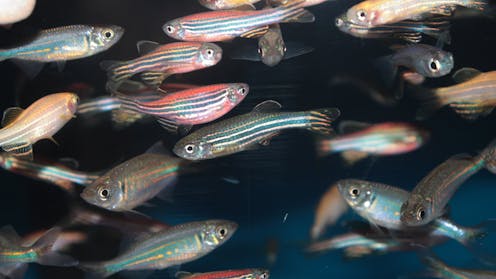
In a new study, my colleagues and I found that pesticides affect many different behaviours in fish. Overall, the chemical pesticides make fish less sociable and interactive. They spend less time gathering in groups, become less protective of their territory, and make fewer attempts to mate.

Imagine the ocean without the vibrant schools of fish we’ve come to love – only isolated swimmers drifting about. Quietly, ecosystems begin to unravel, long before mass die-offs hit the news.

A variety of fish above healthy coral reef in the Coral Triangle.
Healthy reef ecosystems feature fish swimming together and socialising.
Mike Workman, Shutterstock

Fish are living and dying in polluted water

Australia is a major producer and user of pesticides, with more than 11,000 approved chemical products routinely used in agricultural and domestic settings. Remarkably, some of these chemicals remain approved in Australia despite being banned in other regions such as the European Union due to safety concerns.

When a tractor or plane sprays pesticides onto crops, it creates a mist of chemicals in the air to kill crop pests. After heavy rain, these chemicals can flow into roadside drains, filter through soil, and slowly move into rivers, lakes and oceans.

Fish swim in this diluted chemical mixture. They can absorb pesticides through their gills or eat contaminated prey.

At high concentrations, mass fish deaths can result, such as those repeatedly observed in the Menindee Lakes. However, doses in the wild often aren’t lethal and more subtle effects can occur. Scientists call these “sub-lethal” effects.

One commonly investigated sub-lethal effect is a change in behaviour – in other words, a change in the way a fish interacts with its surrounding environment.

Our previous research has found most experiments have looked at the impacts on fish in isolation, measuring things such as how far or how fast they swim when pesticides are present.

But fish aren’t solitary — they form groups, defend territory and find mates. These behaviours keep aquatic ecosystems stable. So this time we studied how pesticides affect these crucial social behaviours.

Pesticide exposure makes fish less social

Our study extracted and analysed data from 37 experiments conducted around the world. Together, these tested the impacts of 31 different pesticides on the social behaviour of 11 different fish species.

The evidence suggests pesticides make fish less social, and this finding is consistent across species. Courtship was the most severely impacted behaviour – the process fish use to find and attract mates. This is particularly alarming because successful courtship is essential for healthy fish populations and ecosystem stability.

Next, we found pesticides such as the herbicide glyphosate, which can disrupt brain function and hormone levels had the strongest impacts on fish social behaviours. This raises important questions about how brain function and hormones drive fish social behaviour, which could be tested by scientists in the future.

For example, scientists could test how much a change in testosterone relates to a change in territory defence. Looking at these relationships between what’s going on inside the body mechanisms and outward behaviour will help us better understand the complex impacts of pesticides.

We also identified gaps in the current studies. Most existing studies focus on a limited number of easy-to-study “model species” such as zebrafish, medaka and guppies. They also often use pesticide dosages and durations that may not reflect real-world realities.

Addressing these gaps by including a range of species and environmentally relevant dosages is crucial to understanding how pesticides affect fish in the wild.

A large group of convict surgeonfish on the reef in French Polynesia
One of the experiments in our study involved convict surgeonfish, which gather in large groups or ‘shoals’.
Damsea, Shutterstock

Behaviour is a blind spot in regulation

Regulatory authorities should begin to recognise behaviour as a reliable and important indicator of pesticide safety. This can help them catch pesticide pollution early, before mass deaths occur.

Scientists play a crucial role too. By following the same methods, scientists can produce comparable results. A standardised method then provides regulators the evidence needed to confidently assess pesticide risks.

Together, regulatory authorities and scientists can find a way to use behavioural studies to help inform policy decisions. This will help to prevent mass deaths and catch pesticide impacts early on.

Leave no stone unturned in restoring our waters

Rivers, lakes, oceans and reefs are bearing the brunt of an ever-growing human footprint.

So far, much of the spotlight has focused on reducing carbon emissions and managing overfishing — and rightly so. But there’s another, quieter threat drifting beneath the surface: the chemicals we use.

Pesticides used on farms and in gardens are being detected everywhere, even iconic ecosystems such as the Great Barrier Reef. As we have shown, these pesticides can have disturbing effects even at low concentrations.

Now is the time to cut pesticide use and reduce runoff. Through switching to less toxic chemicals and introducing better regulations, we can reduce the damage. If we act with urgency, we can limit the impacts pesticides have on our planet.

The Conversation

Kyle Morrison does not work for, consult, own shares in or receive funding from any company or organisation that would benefit from this article, and has disclosed no relevant affiliations beyond their academic appointment.

– ref. Many fish are social, but pesticides are pushing them apart – https://theconversation.com/many-fish-are-social-but-pesticides-are-pushing-them-apart-256230

Don’t blame toxic masculinity for online misogyny – the manosphere is hurting men too

Source: The Conversation – Global Perspectives – By Kate Cantrell, Senior Lecturer – Writing, Editing, and Publishing, University of Southern Queensland

“Imagine her tenderly pressing her soft lips against yours”, writes one incel on Reddit, before concluding, “you will never get to experience this because your skeleton is too small or the bones in your face are not the right shape”.

In his debut book, The Male Complaint, Simon Copland escorts his readers through the manosphere and into the minds of its inhabitants. He illustrates how boys and men who are “terrifyingly normal” become attracted to the manosphere’s grim logic – and the cognitive distortions of anti-feminist influencers like Andrew Tate and Jordan Peterson.

While mainstream debates often cite toxic masculinity as the cause of online misogyny, Copland, a writer and researcher at the Australian National University, shifts the blame to a deeper cultural malaise. It’s caused, he argues, by the cruel optimism of the manosphere, the multiple social and economic crises of late-stage capitalism and a collective nihilistic misery in which complaint becomes futile and destruction “the only way out”.


Review: The Male Complaint – Simon Copland (Polity)


The manosphere is a network of loosely related blogs and forums devoted to “men’s interests” – sites like The Rational Male, Game Global and the subreddits ForeverAlone, TheRedPill and MensRights. These online communities, separate in their specific beliefs, are united by their misogynistic ideas – and anti-women and anti-diversity sentiments.

They’re also united by the growing tendency of the men in these communities towards nihilistic violence: not only against others, but also against themselves.

In The Male Complaint, Copland relays his dismay at discovering “a constant stream” of suicide notes on Reddit, including a subreddit, IncelGraveyard, which catalogues close to 100 suicide notes and letters posted by self-identified incels.

Since I was a kid I was fed up with ‘Don’t worry, it will get better’, ‘You will find someone’ […] it’s not even that I want a SO (significant other) anymore. Women are awful. People are awful. I have no friends.

For Copland, the violence incels inflict on themselves is a form of passive nihilism. Incels “don’t just express disgust and despair at the world, but in themselves – their looks, body, lives, personality, intelligence, and more”.

Who’s in the manosphere?

The manosphere includes men’s rights activists, pick-up artists and “Men Going Their Own Way” (male separatists who avoid contact with women altogether). And of course, incels: men who believe they are unable to find a romantic or sexual partner due to their perceived genetic inferiority and oppression.

Incels also blame their problems on women’s alleged hypergamy: the theory women seek out partners of higher social or economic status and therefore marry “up”. Put another way, hypergamy, a concept rooted in evolutionary psychology, is the belief “women are hard-wired to be gold diggers”.

Rollo Tomassi, the so-called “godfather of the manosphere”, complains on his blog that “women love opportunistically”, while “men believe that love matters for the sake of it”.

According to Tomassi, the “cruel reality” of modern dating is that men are romantics who are “forced to be realists”, while women are realists whose use “romanticisms to effect their imperatives”. Tomassi complains:

Our girlfriends, our wives, daughters and even our mothers are all incapable of idealized love […] By order of degrees, hypergamy will define who a woman loves and who she will not, depending upon her own opportunities and capacity to attract it.

Ten years ago, these communities were largely regarded as fringe groups. Today, their ideology has infiltrated the mainstream.

On Sunday, ABC TV’s Compass reported that misogyny is on the rise in Australian classrooms, with female teachers sharing their experiences of sexual assault and harassment on school grounds – ranging from boys writing stories about gang raping their teachers to masturbating “over them” in the bathrooms. One student even pretended to stab his pregnant teacher as a “joke”.

A 2025 report published by UN Women shows 53% of women have experienced some form of technology-facilitated, gender-based violence. The dark side of digitalisation disproportionately affects young women aged between 18 and 24, LGBTQI+ women, women who are divorced or who live in the city, and women who participate in online gaming.

‘Biologically bad’?

Copland argues that simplified critiques of toxic masculinity minimise the problem of male violence. They fail to consider the context and history of gendered behaviour, assuming toxic traits are somehow innate and unique to men, rather than the product of social expectations and relations.

This, in turn, promotes the idea that male violence derives from something “biologically bad” in the nature of masculinity itself. As Copland explains, “this is embedded in the term ‘toxic’, which makes it sound like men’s bodies have become diseased or infected”.

Blaming toxic masculinity for digital misogyny also embraces a form of smug politics in which disaffected men are dismissed as degenerates who are fundamentally different to “us” (meaning the activist left and leftist elites). They are “cellar dwellers”, “subhuman freaks”, or “virgin losers” who need to be either enlightened or locked up. “We”, on the other hand, are educated, progressive, superior.

This kind of rhetoric, as Copland explains, is unhelpful. It does not create the conditions for changing the opinions, narratives and futures of manosphere men because it does not allow people to understand their complaints and where those concerns come from – even if we do not agree with them.

Belittling attitudes and demeaning discourses alienate men who already feel socially isolated. This pushes those men further to the fringes – into the hands of “manfluencers” who claim to understand.

‘Not having love becomes everything’

The manosphere, Copland observes, is not “an aberration that is different and distinct from the rest of the world”, nor is it a community that exists solely on the “dark corners of the web”.

Rather, the manosphere, as an echo chamber, enables and encourages what Copland calls “the male complaint”: a sense of collective pain or “injury” so intrinsic to the group’s identity, it cannot be redressed.

As injured subjects who believe their problems are caused through no fault of their own, manosphere men cannot mend the “wound” they believe society has inflicted upon them. Their “marginalisation” and injured status are the lens through which they view themselves and the world.

In the Men Going Their Own Way (MGTOW) community, for example, some men talk about the movement as a hospital where “physicians of the male soul” use different “methods of healing” to treat the “illness of gynocentric-induced disease weighing them down”. These methods include “self-improvement” strategies that are designed to build men’s power and wealth: purchasing gym equipment, investing in the stock market, even abstaining from pornography and sex.

Others in the MGTOW community are vocally anti-victim: “You can live an extraordinary life,” one man says to another, “but you’re wasting your time on complaints and negativity”.

Even when they disagree, though, manosphere men frame women and feminism as the enemy. In this way, the machinery of the manosphere capitalises on men’s discontent, reflects that messaging back to them and displaces their anger and hurt onto an easy scapegoat.

As Copland observes, it is easier for men to blame women for their unhappiness than it is to blame the complex systems of capitalism: “if love and sex is everything, then not having love becomes everything as well”.

Blackpilled incels, lookism and anonymity

This preoccupation with intimacy is central to the incel community. It is exemplified by the various artefacts Copland embeds in his book – memes and posts from the manosphere itself.

Blackpilled incels are a subgroup of incels who believe their access to romantic and sexual relationships is doomed because of “lookism”: the belief women choose sexual partners based solely on their physical features.

Blackpilled ideology attributes romantic failure to genetically unalterable aspects of the human body, such as one’s height or skull shape. Some blackpilled incels, who call themselves wristcels, even blame their lack of sexual success on the width of their wrists.

This logic is countered by research that demonstrates men, in fact, show stronger preferences for physical attractiveness than women, with women tending to prioritise education level and earning potential.

On Reddit, incels often imagine and bitterly dismiss the potential for love and intimacy because of their looks.
Ohsineon/Pexels

The manosphere, however, amplifies this type of thinking and filters out information that challenges these ideas and opinions, increasing group polarisation. Despite its promise of solidarity, the manosphere isolates boys and men, and ultimately distances them from their wider community. This segregation results in a deep sense of alienation – these boys and men become stuck in a perpetual cycle of ideological reinforcement.

The manosphere thrives on anonymity, writes Copland, which only reinforces the idea it is not designed to foster deep relationships or connections.

No silver bullets

The sense of community the manosphere claims to offer is a sham; its alienating structures do not offer boys and men genuine belonging and connection, or real solutions to their problems.

“From one day to the next, the ability to communicate depends on the whims of hidden engineers,” writes media studies professor Mark Andrejevic of online networks more broadly. The manosphere, like other virtual constructs, is subject to manipulation by those who control the infrastructure and the rules of engagement.

More than this, the manosphere does not provide an alternative to complaint. When complaint is the only option, writes Copland, nihilism and violence are the inevitable result.

When nothing matters, there are no consequences to anything, including violence […] Manosphere men do not look to convince others, but rather seek their destruction. Destruction is the outlet they find to deal with their complaint.

That’s what makes the manosphere so dangerous.

‘Popular boys must be punished’

In 2014, 22-year-old Elliot Rodger, a British-American college student, embarked on an hours-long stabbing and shooting spree in the university town of Isla Vista, California, killing six and injuring 14. On the morning of May 23 – the “Day of Retribution” – Rodger emailed a 140-page “manifesto” to his family, friends and therapists. He also uploaded several YouTube videos in which he lamented his inability to find a girlfriend, the “hedonistic pleasures” of his peers and his painful existence of “loneliness, rejection, and unfilled desires”.

In his memoir-manifesto, Rodger – the supposed “patron saint of inceldom” – explains the motive for his violence:

I had nothing left to live for but revenge. Women must be punished for their crimes of rejecting such a magnificent gentleman as myself. All of those popular boys must be punished for enjoying heavenly lives and having sex with all the girls while I had to suffer in lonely virginity.

Four years later, in April 2018, Alek Minassian, a self-described incel, drove a rented van onto a busy sidewalk in Toronto, killing 11 (nine of them women) and injuring many more. On Facebook, Minassian explained that his actions were part of the “incel rebellion” led by the “Supreme Gentleman Elliot Rodger”. Later, Minassian told police, “I feel like I accomplished my mission”.

Rodger, too, ended his final YouTube video with a similar message: “If I can’t have you girls, I will destroy you”.

In his book, Copland even draws a parallel between the Westfield Bondi Junction attack and the explanation for attacker Joel Cauchi’s violence, put forward by his father just two days after the attack: “To you, he is a monster. To me, he was a very sick boy […] he wanted a girlfriend and he’s got no social skills and he was frustrated out of his brain”.

In fact, Cauchi suffered from treatment-resistant schizophrenia and had been unmedicated at the time of the attack: “after almost two decades of treatment, Cauchi had no regular psychiatrist, was not on any medications to treat his schizophrenia and had no family living nearby”. The multifaceted causes of Cauchi’s crime are more complex than misogynistic violence.

Indeed, the pieces of the manosphere puzzle, when put together, reveal a sobering image of the male complaint. However, they demonstrate misogyny is bad for everyone – not just women and girls.

As Copland concludes:

The manosphere promises men that it can make their lives better […] But it really cannot deliver. The promises it offers are not real, and in many cases make things worse […] This is how cruel optimism works, always offering, but never delivering.

‘It’s the combinations’

Recent evidence suggests there is no single route to radicalisation, and no single cause of violent extremism. Rather, complex interactions between push, pull, and personal factors are the root causes of male violence.

The Netflix sensation Adolescence – the harrowing story of a 13-year-old boy who is arrested and charged with murder – is powered by a single question: why did Jamie kill Katie?

In attempting to answer this question, critics and fans have offered a range of explanations: bullying, low self-esteem, emotional dysregulation, obsession with love and sex, deprivation of love and sex, the manosphere. The real answer is less obvious and infinitely more complex. It can be found in a simple line of dialogue, spoken at the end of the series by Jamie’s sister.

“It’s the combinations,” Lisa says. “Combinations are everything.”

In this moment, Lisa is justifying her outfit to her parents as they await Jamie’s trial. But subtextually, her statement doubles as the most likely explanation for his actions. And it’s the closest explanation for why some boys and men commit extreme acts of violence: the combinations.


If this article has raised issues for you, or if you’re concerned about someone you know, call Lifeline on 13 11 14.

The Conversation

Kate Cantrell does not work for, consult, own shares in or receive funding from any company or organisation that would benefit from this article, and has disclosed no relevant affiliations beyond their academic appointment.

– ref. Don’t blame toxic masculinity for online misogyny – the manosphere is hurting men too – https://theconversation.com/dont-blame-toxic-masculinity-for-online-misogyny-the-manosphere-is-hurting-men-too-254802

ABC’s and CBS’s settlements with Trump are a dangerous step toward the commander in chief becoming the editor-in-chief

Source: The Conversation – USA – By Michael J. Socolow, Professor of Communication and Journalism, University of Maine

Will settlements by news companies with President Donald Trump turn journalists into puppets? MARHARYTA MARKO/iStock Getty Images Plus

It was a surrender widely foreseen. For months, rumors abounded that Paramount would eventually settle the seemingly frivolous lawsuit brought by President Donald Trump concerning editorial decisions in the production of a CBS interview with Democratic presidential nominee Kamala Harris in 2024.

On July 2, 2025, those rumors proved true: The settlement between Paramount and Trump’s legal team resulted in CBS’s parent company agreeing to pay $16 million to the future Donald Trump Library – the $16 million included Trump’s legal fees – in exchange for ending the lawsuit. Despite the opinion of many media law scholars and practicing attorneys who considered the lawsuit meritless, Shari Redstone, the largest shareholder of Paramount, yielded to Trump.

Redstone had been trying to sell Paramount to Skydance Media since July 2024, but the transaction was delayed by issues involving government approval.

Specifically, when the Trump administration assumed power in January 2025, the new Federal Communications Commission had no legal obligation to facilitate, without scrutiny, the transfer of the CBS network’s broadcast licenses for its owned-and-operated TV stations to new ownership.

The FCC, under newly installed Republican Chairman Brendan Carr, was fully aware of the issues in the legal conflict between Trump and CBS at the time Paramount needed FCC approval for the license transfers. Without a settlement, the Paramount-Skydance deal remained in jeopardy.

Until it wasn’t.

At that point, Paramount joined Disney in implicitly apologizing for journalism produced by their TV news divisions.

Earlier in 2025, Disney had settled a different Trump lawsuit with ABC News in exchange for a $15 million donation to the future Trump Library. That lawsuit involved a dispute over the wording of the actions for which Trump was found liable in a civil lawsuit brought by E. Jean Carroll.

GOP presidential nominee Donald Trump said the CBS interview with Democratic nominee Kamala Harris was ‘fraudulent interference with an election.’

It’s not certain what the ABC and CBS settlements portend, but many are predicting they will produce a “chilling effect” within the network news divisions. Such an outcome would arise from fear of new litigation, and it would install a form of internal self-censorship that would influence network journalists when deciding whether the pursuit of investigative stories involving the Trump administration would be worth the risk.

Trump has apparently succeeded where earlier presidents failed.

Presidential pressure

From Jimmy Carter trying to get CBS anchor Walter Cronkite to stop ending his evening newscasts with the number of days American hostages were being held in Iran to Richard Nixon’s administration threatening the broadcast licenses of The Washington Post’s TV stations to weaken Watergate reporting, previous presidents sought to apply editorial pressure on broadcast journalists.

But in the cases of Carter and Nixon, it didn’t work. The broadcast networks’ focus on both Watergate and the Iran hostage crisis remained unrelenting.

Nor were Nixon and Carter the first presidents seeking to influence, and possibly control, network news.

President Lyndon Johnson, who owned local TV and radio stations in Austin, Texas, regularly complained to his old friend, CBS President Frank Stanton, about what he perceived as biased TV coverage. Johnson was so furious with the CBS and NBC reporting from Vietnam, he once argued that their newscasts seemed “controlled by the Vietcong.”

Yet none of these earlier presidents won millions from the corporations that aired ethical news reporting in the public interest.

Before Trump, these conflicts mostly occurred backstage and informally, allowing the broadcasters to sidestep the damage to their credibility should any surrender to White House administrations be made public. In a “Reporter’s Notebook” on the CBS Evening News the night of the Trump settlement, anchor John Dickerson summarized the new dilemma succinctly: “Can you hold power to account when you’ve paid it millions? Can an audience trust you when it thinks you’ve traded away that trust?”

“The audience will decide that,” Dickerson continued, concluding: “Our job is to show up to honor what we witness on behalf of the people we witness it for.”

During the Iran hostage crisis, CBS News anchor Walter Cronkite ended every broadcast with the number of days the hostages had been held captive.

Holding power to account

There’s an adage in TV news: “You’re only as good as your last show.”

Soon, SkyDance Media will assume control over the Paramount properties, and the new CBS will be on the airwaves.

When the licenses for KCBS in Los Angeles, WCBS in New York and the other CBS-owned-and-operated stations are transferred, we’ll learn the long-term legacy of corporate capitulation. But for now, it remains too early to judge tomorrow’s newscasts.

As a scholar of broadcast journalism and a former broadcast journalist, I recommend evaluating programs like “60 Minutes” and the “CBS Evening News” on the record they will compile over the next three years – and the record they compiled over the past 50. The same goes for “ABC World News Tonight” and other ABC News programs.

A major complicating factor for the Paramount-Skydance deal was the fact that “60 Minutes” has, over the past six months, broken major scoops embarrassing to the Trump administration, which led to additional scrutiny by its corporate ownership. Judged by its reporting in the first half of 2025, “60 Minutes” has upheld its record of critical and independent reporting in the public interest.

If audience members want to see ethical, independent and professional broadcast journalism that holds power to account, then it’s the audience’s responsibility to tune it in. The only way to learn the consequences of these settlements is by watching future programming rather than dismissing it beforehand.

The journalists working at ABC News and CBS News understand the legacy of their organizations, and they are also aware of how their owners have cast suspicion on the news divisions’ professionalism and credibility. As Dickerson asserted, they plan to “show up” regardless of the stain, and I’d bet they’re more motivated to redeem their reputations than we expect.

I don’t think reporters, editors and producers plan to let Donald Trump become their editor-in-chief over the next three years. But we’ll only know by watching.

The Conversation

Michael Socolow’s father, Sanford Socolow, worked for CBS News from 1956 to 1988.

– ref. ABC’s and CBS’s settlements with Trump are a dangerous step toward the commander in chief becoming the editor-in-chief – https://theconversation.com/abcs-and-cbss-settlements-with-trump-are-a-dangerous-step-toward-the-commander-in-chief-becoming-the-editor-in-chief-261006

School lunches, the French way: It’s not just about nutrition, but togetherness and ‘bon appetit’

Source: The Conversation – Canada – By Rachel Engler-Stringer, Professor, Department of Community Health and Epidemiology, University of Saskatchewan

This spring, as part of a sabbatical project, I had the privilege of visiting school food programs and meeting with school food researchers in six cities in France, England and Scotland.

I got to eat school lunches, visit central kitchens in two cities where meals are prepared for thousands of children, visit school kitchens and discuss school food with the countries’ leading experts.

This visit intersects with my research with colleagues on promising food programs across Canada. This research offers insights for consideration as regions navigate the federal government’s first National School Food Program and National School Food Policy.

Government announcements about the program and policy were followed by negotiations with the provinces and territories, all of which have since signed agreements for a portion of the funding.

In most parts of Canada, officials are just beginning to plan for new approaches to school food (with a few exceptions especially in Atlantic Canada where school food programs have been transforming much more quickly).

Based on my research about international food programs, here are four key things Canadians should pay attention to:

1) In Canada we need to shift from thinking of school lunches as a safety net for kids living in poverty to thinking about them as benefiting the health and well-being of children and their families. In France, this shift in thinking is particularly clear.

School lunches in France are about teaching children about food and culture and all kids are encouraged to eat together with an adult facilitator who teaches them about the components of the meal and creates a family-meal context at each table. By contrast, if you ask many parents in Canada what school meals are for, they will tell you they are for kids living in poverty to make sure they have food to eat at school.

If Canada wants a national school food program that achieves the benefits of the best programs in the world in the areas of education, well-being and on the economy, we need to think of school meals as supporting young people to be the best students they can be.

2) One important benefit of school food programs globally is to encourage picky eaters to try new foods due to the social pressure of all kids eating the same foods together. In three cities in France I visited, and one in England, school lunches look like home-cooked meals. One main dish with meat is served (and in England, a vegetarian alternative), and kids can choose if and how much of the side vegetables and fruit to take.

In Canada, following a similar practice — one main and a vegetarian alternative when meat is served — might work well. But it’s also important that in developing a menu, the cultural diversity of Canadian school communities is reflected in the food on offer.

In the other two locations in England and Scotland, kids choose from multiple main dishes — something that adds cost to the program and does less to encourage kids to try new foods, given one choice is always something basic like a cheese sandwich.

Kids need to have some autonomy when it comes to eating, but school food programs should not be facilitating eating the same food every day. Nor should school food programs aspire to a model where broad choice is afforded from a large menu.

3) With care, planning and sufficient resources, centralized kitchens can prepare thousands of servings of a main dish daily. The French central kitchens I visited prepare 6,000 to 10,000 servings a day of high-quality food following strict food safety protocols.

I ate two simple yet delicious meals cooked in municipally owned central kitchens. In the three cities in France where I visited, they used central kitchens where main dishes were prepared and chilled to be delivered for heating at the school level. Central kitchens also delivered the salads and sides (like chopped veggies, bread, cheese and fruit) and dressings.

In the small school kitchens, the salads were dressed, and the cheese and fruit were cut for service.

The central kitchens were also used in at least one city to prepare food for daycares and for seniors who were home-bound — something to consider for Canadian cities.

Centralizing kitchens can reduce costs and provide a way for high-quality food to be produced from basic ingredients without commercial kitchens in every school capable of preparing meals for hundreds of children at a time.

4) When designed with requirements for purchasing foods from local farmers and other Canadian producers, school food programs can benefit the agricultural sector and multiply their benefits to communities beyond direct school food jobs. In France, for example, there are specific percentages to be purchased from local and sustainable sources. Percentage requirements for local and sustainable purchasing should be enacted now in Canada as its program establishes itself, perhaps beginning with 20 per cent and growing over time.

I have many more reflections from my visits, both positive and negative, but the four I have discussed are important for Canada to learn from as it begins to design the National School Food Program to meet the needs of diverse communities from coast to coast to coast.

The Conversation

Rachel Engler-Stringer receives funding from the Canadian Institutes for Health Research, the Social Sciences and Humanities Research Council of Canada, the Public Health Agency of Canada and received a University of Saskatchewan International Travel Award for program visits. She sits on the Steering Committee of the Coalition for Healthy School Food.

– ref. School lunches, the French way: It’s not just about nutrition, but togetherness and ‘bon appetit’ – https://theconversation.com/school-lunches-the-french-way-its-not-just-about-nutrition-but-togetherness-and-bon-appetit-259832

Over €10 billion has now been pledged for Ukraine’s recovery. It’s nowhere near enough

Source: The Conversation – UK – By Stefan Wolff, Professor of International Security, University of Birmingham

Clearly angered by the intensification of Russia’s air campaign against Ukraine, Donald Trump has pivoted from the suspension of US military assistance to Ukraine to promising its resumption. Russia’s strikes on major cities killed more civilians in June than have died in any single previous month, according to UN figures.

Over the past two weeks, the US president has made several disparaging comments about his relationship with Vladimir Putin, including on July 13 that the Russian president “talks nice and then he bombs everybody in the evening”.

Not only will the US resume delivery of long-promised Patriot air defence missiles, Trump is now also reported to be considering a whole new plan to arm Ukraine, including with offensive capabilities. And he has talked about imposing new sanctions on Putin’s regime.


Get your news from actual experts, straight to your inbox. Sign up to our daily newsletter to receive all The Conversation UK’s latest coverage of news and research, from politics and business to the arts and sciences.


This is the background against which the eighth Ukraine Recovery Conference took place in Rome on July 10 and 11. The event, attended by many western leaders and senior business executives, was an important reminder that while the war against Ukraine will be decided on the battlefield, peace will only be won as the result of rebuilding Ukraine’s economy and society.

Ending the war anytime soon and on terms favourable to Kyiv will require an enormous effort by Ukrainians and their European allies. But the country’s recovery afterwards will be no less challenging.

According to the World Bank’s latest assessment, at the end of 2024 Ukraine’s recovery needs over the next decade stood at US$524 billion (£388 billion). And with every month the war continues, these needs are increasing. Ukraine’s three hardest-hit sectors are housing, transport and energy infrastructure, which between them account for around 60% of all damage.

At the same time, the International Monetary Fund (IMF) provided a relatively positive assessment of Ukraine’s overall economic situation at the end of June, forecasting growth of between 2% and 3% for 2025 – likely to grow to over 4% in 2026 and 2027. But the IMF also cautioned that this trajectory – and the country’s macroeconomic stability more generally – will remain heavily dependent on external support.

Taking into account a new €2.3 billion package from the EU, consisting of €1.8 billion of loan guarantees and €580 million of grants, the cumulative pledge of over €10 billion (£8.7 billion) made by countries attending the Ukraine recovery conference is both encouraging and sobering.

It is encouraging in the sense that Ukraine’s international partners remain committed to the country’s social and economic needs, not merely its ability to resist Russia on the battlefield.

But it is also sobering that even these eye-watering sums of public money are still only a fraction of Ukraine’s needs. Even if the EU manages to mobilise its overall target of €40 billion for Ukraine’s recovery, by attracting additional contributions from other donors and the private sector, this would be less than 8% of Ukraine’s projected recovery needs as of the end of 2024.

As the war continues and more of the (diminishing) public funding is directed towards defence expenditure by Kyiv’s western partners, this gap is likely to grow.

Overcoming the trauma of war

Money is not the only challenge for Ukraine recovery efforts. Rebuilding the country is not simply about undoing the physical damage.

The social impact of Russia’s aggression is hard to overstate. Ukraine has been deeply traumatised as a society since the beginning of Russia’s full-scale invasion in February 2022.

Generally reliable Ukrainian casualty counts – some 12,000 civilians and 43,000 troops killed since February 2022 – are still likely to underestimate the true number of people who have died as a direct consequence of the Russian aggression. And each of these will have left behind family members struggling to cope with their loss. In addition, there are hundreds of thousands of war veterans.

Even before the full-scale invasion of Ukraine, there were nearly half a million veterans from the “frozen” conflict that followed Russia’s annexation of Crimea and incursion into eastern Ukraine. By the end of 2024, this number had more than doubled to around 1 million. Most of them have complex social, economic, medical and psychological needs that will have to be considered as part of a society-wide recovery effort.

Returning refugees

According to data from the UN refugee agency (UNHCR), there are also some 7 million refugees from Ukraine and 3.7 million internally displaced people (IDPs). This is equivalent to one quarter of the country’s population. The financial needs of UNHCR’s operations in Ukraine are estimated at $800 million in 2025, of which only 27% was funded as of the end of April.

Once the fighting in Ukraine ends, refugees are likely to return in greater numbers. Their return will provide a boost to the country’s economic growth by strengthening its labour force and bringing with them skills and, potentially, investment. But like many IDPs and veterans, they may not be able to return to their places of origin, either because these are not inhabitable or remain under Russian occupation.

Some returnees are likely to be viewed with suspicion or resentment by those Ukrainians who stayed behind and fought. Tensions with Ukrainians who survived the Russian occupation in areas that Kyiv may recover in a peace deal are also likely, given Ukraine’s harsh anti-collaboration laws.

As a consequence, reintegration – in the sense of rebuilding and sustaining the country’s social cohesion – will be a massive challenge, requiring as much, if not more, of Ukraine’s partners’ attention and financial support as physical reconstruction and the transition from a war to a peace-time economy.

Given the mismatch between what is needed and what has been provided for Ukraine’s recovery, one may well be sceptical about the value of the annual Ukraine recovery conferences. But, to the credit of their organisers and attendees, they recognise that the foundations for post-war recovery need to be built before the war ends. The non-military challenges of war and peace must not fall by the wayside amid an exclusive focus on battlefield dynamics.

The Conversation

Stefan Wolff is a past recipient of grant funding from the Natural Environment Research Council of the UK, the United States Institute of Peace, the Economic and Social Research Council of the UK, the British Academy, the NATO Science for Peace Programme, the EU Framework Programmes 6 and 7 and Horizon 2020, as well as the EU’s Jean Monnet Programme. He is a Trustee and Honorary Treasurer of the Political Studies Association of the UK and a Senior Research Fellow at the Foreign Policy Centre in London.

– ref. Over €10 billion has now been pledged for Ukraine’s recovery. It’s nowhere near enough – https://theconversation.com/over-10-billion-has-now-been-pledged-for-ukraines-recovery-its-nowhere-near-enough-260936

How soup might soothe symptoms and support recovery from colds and flu – new research

Source: The Conversation – UK – By Sandra Lucas, Senior Lecturer, School of Health Sciences, University of the West of Scotland

New Africa/Shutterstock

For generations, chicken soup has been a go-to remedy for people feeling under the weather. It holds a cherished place in many cultures as a comforting treatment for colds and flu. But is there any real science behind the idea that soup can help us recover from respiratory infections?

Alongside colleagues, I conducted a systematic review to explore this question, which examined the scientific evidence on the role of soup in managing acute respiratory tract infections, such as the common cold, influenza and COVID-19.

Out of more than 10,000 records, we identified four high-quality studies involving 342 participants. These studies tested a variety of soups, including traditional chicken broth, barley soup and herbal vegetable blends. While still early-stage, the evidence was promising.


Get your news from actual experts, straight to your inbox. Sign up to our daily newsletter to receive all The Conversation UK’s latest coverage of news and research, from politics and business to the arts and sciences.


One study found that people who ate soup recovered up to 2.5 days faster than those who didn’t. Symptoms such as nasal congestion, sore throat and fatigue were milder. Some participants also showed reduced levels of inflammation-related markers: substances in the blood that rise when the immune system is fighting an infection.

Specifically, levels of IL-6 and TNF-α – two proteins that help trigger inflammation – were lower in those who consumed soup. This suggests that soup may help calm an overactive immune response, potentially making symptoms less severe and recovery more comfortable.

However, none of the studies examined how consuming soup influenced everyday outcomes of acute respiratory tract infections, such as whether people took fewer days off work or were less likely to end up in hospital. That’s a major gap in the evidence, and one that future research needs to address.

There are several reasons soup may help. It’s warm, hydrating and typically nutrient-rich. Ingredients like garlic, onion, ginger and leafy greens have anti-inflammatory, antimicrobial, and immune-supportive properties. The warmth can also help loosen mucus, soothe sore throats and promote overall comfort during illness.

Not just nourishment

There’s also a strong cultural and behavioural aspect to food-based self-care: when people use food not just for nourishment, but as an intentional part of managing illness and promoting recovery.

In many households, food becomes medicine not only because of its ingredients, but because it symbolises care, routine and reassurance.

My previous research found that parents, in particular often turn to traditional remedies, like soup, as a first line of defence when illness strikes, often well before seeking professional medical advice.

This reflects a growing interest in home remedies and the importance of culturally familiar treatments: remedies that feel safe, trusted and emotionally resonant because they’re part of a person’s upbringing or community norms. These kinds of treatments can increase confidence and comfort when self-managing illness at home.

Food-based self-care may become increasingly important as pressure on healthcare systems continues to grow. With rising concerns about antimicrobial resistance, overstretched services, and lingering trauma from global pandemics, simple, evidence-informed home treatments can play a crucial role.

They help people manage mild illness, reduce unnecessary antibiotic use and avoid placing additional strain on GPs or emergency departments for minor ailments that can be safely treated at home. Even a simple phone message about the common cold – “Most common colds get better in a few days and don’t need treatment from your GP” – has been shown to reduce appointment demand by 21%, highlighting how low-cost, home-based care could ease pressure across the system.

The Local Government Association (LGA) reports that GPs handle approximately 57 million cases of minor conditions such as coughs and colds annually, costing the NHS over £2 billion a year. It argues that educating people about effective self-care could help save GPs an hour a day on average.

Soup fits the bill

So chicken soup is easy to prepare, affordable, safe for most people and widely recognised as a comforting, familiar home remedy for minor illness.

Still, our review highlighted a clear need for more research. Future studies could examine standardised soup recipes and investigate whether particular combinations of nutrients or herbs work best: does chicken soup have the same effect as barley broth or vegetable potage? Is there a difference if it’s homemade versus canned?

Just as importantly, future research needs to measure meaningful outcomes: how quickly people return to work or school, how well they sleep during illness, how they rate their comfort and energy levels, for example.

Soup isn’t a replacement for medicine. But alongside rest, fluids and paracetamol, it might offer a simple way to ease symptoms and help people feel better.

The Conversation

Sandra Lucas does not work for, consult, own shares in or receive funding from any company or organisation that would benefit from this article, and has disclosed no relevant affiliations beyond their academic appointment.

– ref. How soup might soothe symptoms and support recovery from colds and flu – new research – https://theconversation.com/how-soup-might-soothe-symptoms-and-support-recovery-from-colds-and-flu-new-research-260960

Horseflies and wasps and jellyfish – how to stay safe from stings and bites this summer

Source: The Conversation – UK – By Dan Baumgardt, Senior Lecturer, School of Physiology, Pharmacology and Neuroscience, University of Bristol

Anna Kuzmenko/Shutterstock

Despite the glorious arrival of summer, there’s definitely a sting in the season’s tail – quite literally. Even in the UK, it’s not just sunburn we need to watch out for. From nettles to jellyfish, summer brings a full cast of prickly, buzzing, biting villains.

My own back patio is armed with an arsenal of citronella candles and incense sticks to fend them off – not just a lifestyle choice, but a survival strategy for someone as jumpy as me around insects.

Let’s break down the main culprits.


Get your news from actual experts, straight to your inbox. Sign up to our daily newsletter to receive all The Conversation UK’s latest coverage of news and research, from politics and business to the arts and sciences.


Plant-based stings: nettles

First up, the humble but mighty common nettle, which thrives in hedgerows and gardens, often reaching impressive heights of up to two metres by midsummer. Their sting comes from tiny hairs called trichomes, which inject histamine and other irritants into the skin as a form of defence.

Histamine causes the classic signs of inflammation: redness, swelling, heat and pain – all of which are evident in the raised, red rash known as urticaria (or hives). Unsurprisingly, the Latin name for the nettle family is urtica, meaning “to sting.”

And what about that old remedy of rubbing a dock leaf on the sting? Honestly, good luck identifying one among the 200-plus species. While the sap might offer a mild soothing effect, there’s no strong evidence of an active compound that reduces symptoms.

If it works for you, great, but calamine lotion or over-the-counter antihistamines are far more reliable. And use some form of protection in the first place – if you’re clearing them from your garden, or foraging to make nettle pesto, wear gloves and proceed carefully.

Insects: bees, wasps and horseflies

As temperatures rise, so do the number of stinging insects like bees and wasps, not to mention the dreaded horseflies. While most don’t sting unless provoked (a mantra I repeat to myself regularly), when they do, it can be unpleasant.

Most stings cause local irritation – simple pain relief and antihistamines usually do the trick here. But sometimes, either the original sting or subsequent scratching can cause infections.

Cellulitis is a deeper skin infection that can spread quickly if untreated. While milder cases may clear up with oral antibiotics, some infections can be serious – even life threatening – and require hospital care.

If a sting site or the surrounding skin becomes red, warm, painful or swollen, seek urgent medical advice. And if you feel unwell with symptoms like fevers, chills or a racing heart, treat it as an emergency.

Insect stings can also trigger anaphylaxis, a life-threatening allergic reaction. In the UK, stings account for around ten deaths per year: a small, but very sobering figure. Always take anaphylactic symptoms like facial swelling, difficulty breathing or dizziness seriously – and call 999 immediately.

Ticks: small bites, big risks

Tick bites are also more common in summer, thanks to more exposed skin and time spent in tall grass or woodlands. Ticks are tiny – often smaller than a poppy seed – and can be easily missed until they become engorged with blood.

They’re usually harmless, but some ticks carry diseases like Lyme disease, a bacterial infection that can cause fatigue, joint pain and, if untreated, serious complications affecting the nervous system or heart.

Ticks can also spread tick-borne encephalitis, a viral infection that can lead to inflammation of the brain, though it’s very rare in the UK. Watch out for the telltale bullseye rash and flu-like symptoms after a bite – and seek urgent medical advice if they appear.

To remove a tick, use fine-tipped tweezers, gripping as close to the skin as possible and pulling steadily. Don’t twist. You want the whole tick out, legs and all. And don’t squeeze its body, as this can force potentially infected fluids into your bloodstream, raising the risk of conditions like Lyme disease, among others.

Marine stings: jellyfish and friends

And finally, the unexpected seaside sting. Coastal waters can play host to a range of jellyfish, from the mildly irritating to the impressively painful.

Most UK species cause minor rashes, but be wary of the lion’s mane and the occasional (though rare) portuguese men o’war – not technically a jellyfish, but still best avoided.

Even jellyfish washed up on shore can sting, sometimes for days. If stung, rinse the area with seawater (not fresh water), or soak in warm water. Avoid rubbing or using urine – yes, that scene in Friends is not medically sound. Peeing on a jellyfish sting can make things worse by triggering more venom release from stuck tentacles.

If tentacles are still stuck to the skin, use tweezers or the edge of a credit card to remove them gently. Don’t use your bare hand – you could end up stinging that too.

And like insect stings, jellyfish can rarely trigger anaphylactic shock. If someone shows symptoms, don’t hesitate to seek emergency help.

From the garden to the seaside, summer has plenty of sting — but being prepared can make all the difference. Whether it’s nettles, bees or ticks, the best approach is prevention (think gloves, repellent and awareness), followed by prompt treatment if needed.

Use calamine or antihistamines for rashes, and tweezers for tick or jellyfish tentacle removal. Keep a close eye out for signs of infection or allergic reaction and always seek medical advice if something doesn’t feel right.

The Conversation

Dan Baumgardt does not work for, consult, own shares in or receive funding from any company or organisation that would benefit from this article, and has disclosed no relevant affiliations beyond their academic appointment.

– ref. Horseflies and wasps and jellyfish – how to stay safe from stings and bites this summer – https://theconversation.com/horseflies-and-wasps-and-jellyfish-how-to-stay-safe-from-stings-and-bites-this-summer-260670

Donor-egg pregnancies may come with higher rates of serious complications – here’s what you need to know

Source: The Conversation – UK – By Catherine Meads, Professor of Health, Anglia Ruskin University

takasu/Shutterstock

More women than ever are carrying babies conceived with someone else’s egg – but few are told that this might carry greater health risks.

Pregnancies involving an embryo that doesn’t share the pregnant woman’s DNA are becoming more common. For many, it’s a path to parenthood that would otherwise be closed.

But emerging evidence suggests that these pregnancies may come with higher rates of complications, including pre-eclampsia, gestational diabetes and preterm birth, and that women are often not given the full picture before treatment.


Get your news from actual experts, straight to your inbox. Sign up to our daily newsletter to receive all The Conversation UK’s latest coverage of news and research, from politics and business to the arts and sciences.


As the fertility industry expands and diversifies, it’s time to ask whether patients are being adequately informed about the risks of carrying another woman’s egg – and whether more caution is needed in how these options are presented.

There are three situations in which a woman may carry another woman’s egg in her uterus.

The most common is when a woman cannot produce her own eggs but has a functioning uterus. In this case, donor eggs and in-vitro fertilisation (IVF) offer the only route to pregnancy.

The other two situations involve fertile women carrying a donated egg on behalf of someone else. This happens in cases of gestational surrogacy, where a surrogate carries a baby genetically unrelated to her, or in reciprocal IVF, also known as ROPA or co-IVF. In the latter, one woman in a same-sex couple (or a trans man) donates her egg to her partner, so that both have a biological connection to the child.

In IVF, fertilisation occurs outside the body and the resulting embryo is transferred into the uterus. But what happens when the egg in the uterus has no genetic similarity to the woman carrying it? Could this cause complications for her or the baby?

To answer that question, we need to compare outcomes in these situations to pregnancies where the egg shares approximately 50% of the mother’s DNA, either through natural conception or own-egg IVF. Early evidence suggests that having someone else’s egg in the uterus is associated with a higher risk of obstetric complications, including pre-eclampsia, gestational diabetes and preterm birth.

There are three key comparisons to make. First, donor-egg IVF v own-egg IVF. For infertile women using donor eggs, the most relevant comparison is IVF with their own eggs.

Second, gestational v traditional surrogacy. In gestational surrogacy, the surrogate carries a donor egg, while in traditional surrogacy, she uses her own. Outcomes can also be compared with the surrogate’s previous natural pregnancies.

Third, reciprocal IVF v own-egg IVF. In same-sex couples, reciprocal IVF can be compared to own-egg IVF to assess risks.

A review of 11 studies comparing donor-egg IVF to own-egg IVF found that donor-egg pregnancies had significantly higher rates of hypertensive disorders in the mother, as well as preterm birth and babies that were small for their gestational age.

A separate review focusing on pre-eclampsia in singleton IVF pregnancies found the condition occurred in 11.2% of donor-egg pregnancies, compared to 3.9% of own-egg pregnancies.

For women who can only become pregnant using a donor egg, these risks may be worth accepting. But it’s important that women are made aware of the potential complications, especially if carrying twins, which further increases risks.

Gestational surrogacy

With colleagues, I conducted a review of eight studies. The research suggests that gestational surrogacy (donor egg) is linked to higher rates of hypertensive disorders and gestational diabetes compared to traditional surrogacy (surrogate’s own egg) or previous natural pregnancies.

So why is gestational surrogacy often favoured by clinicians and intended parents alike? For some doctors, it can offer greater medical and ethical clarity; for some parents, it can reduce legal and emotional complications. A common assumption is that genetically related surrogates may be more likely to want to keep the baby – but research shows this is not the case. Surrogates rarely seek to retain custody, regardless of genetic connection.

Evidence on reciprocal IVF is even more limited. A 2022 study of 21 women who underwent reciprocal IVF found that hypertensive disorders occurred in 23.8%, compared to 12.9% of the 62 heterosexual women using their own egg, and gestational diabetes occurred in 9.5% v 1.6%.

The only study directly comparing reciprocal IVF to own-egg IVF in same-sex female couples is an unpublished conference abstract, which found a higher miscarriage rate (19% v 14%), but reported no maternal or infant outcomes.

Despite limited data, fertility companies often market gestational surrogacy and reciprocal IVF as reasonably safe options. However, much of the research comes from clinicians affiliated with fertility clinics.

Crucially, there is still no strong evidence showing that fertile women carrying another woman’s egg have better outcomes than infertile women undergoing the same. But a lack of evidence is not the same as evidence of safety.

In some cases, pregnancy using one’s own egg may still be possible. For example, fertile women in same-sex couples may only need sperm donation to conceive naturally, rather than going through IVF.

Women deserve full, unbiased information about the risks. That includes knowing that carrying someone else’s egg may increase the likelihood of pregnancy complications. They can then make informed decisions about whether the potential benefits outweigh the risks.

The Conversation

Catherine Meads does not work for, consult, own shares in or receive funding from any company or organisation that would benefit from this article, and has disclosed no relevant affiliations beyond their academic appointment.

– ref. Donor-egg pregnancies may come with higher rates of serious complications – here’s what you need to know – https://theconversation.com/donor-egg-pregnancies-may-come-with-higher-rates-of-serious-complications-heres-what-you-need-to-know-259855