How cloves might help relieve pain and inflammation

Source: The Conversation – UK – By Dipa Kamdar, Senior Lecturer in Pharmacy Practice, Kingston University

Jamaan/Shutterstock

Cloves have long been a staple in kitchens and traditional medicine cabinets. Known for their warm, spicy flavour, they’re typically found whole or ground, and as clove oil or extract. But beyond their culinary charm, cloves are gaining scientific attention from researchers and clinicians for their potent analgesic (painkiller) properties. But could this humble spice rival ibuprofen or other commonly used painkillers?

Cloves, the aromatic flower buds of the Syzygium aromaticum tree, are native to Indonesia and widely used in global cuisines, especially in spice blends and festive dishes. Medicinally, they’re most commonly used in the form of clove oil. It contains eugenol, a compound with well-documented anaesthetic and anti-inflammatory effects.

Eugenol, the main active compound in cloves, is a naturally occurring plant chemical that works in multiple ways. It blocks certain chemicals and nerve responses that cause pain, including histamine – a chemical involved in immune responses, inflammation and allergic reactions – and noradrenaline, a neurotransmitter and hormone that can heighten pain sensitivity during stress.

Eugenol also inhibits the production of prostaglandins – substances that trigger inflammation and contribute to pain and swelling. This is the same biological pathway targeted by anti-inflammatory painkillers like ibuprofen. Because of these anti-inflammatory effects, eugenol could, in theory, be useful for conditions such as arthritis, although human evidence is limited. In an animal study, eugenol improved limb function in rats with osteoarthritis.

While research into its use for joint pain is still in early stages, most of the solid human evidence for cloves comes from dentistry.

Clove extracts are used in balms or diluted oils for muscle aches, brewed into teas for headaches, and applied as oil for toothache. Cloves have been a go-to dental remedy since at least the 13th century. Clove oil remains available in pharmacies for temporary toothache relief in adults and children over two years.

Studies suggest cloves may provide pain relief comparable to some conventional painkillers and topical anaesthetics. In dentistry, topical anaesthetics such as lidocaine or benzocaine are applied to the surface of the gums or skin to numb an area before treatment. They work by blocking pain signals from nerves near the surface – a mechanism thought to be similar to that of eugenol.

In paediatric dentistry, researchers compared clove oil, lidocaine gel and ice cones applied to injection sites in the mouth. Clove oil emerged as the most effective in reducing pain and anxiety among children, suggesting it could be a natural, cost-effective and well-accepted option to improve dental experiences. Another clinical trial in adults found clove gel to be as effective as benzocaine gel in minimising pain from dental injections, with no significant difference in pain scores.

These findings are supported by broader reviews, which show that topical clove preparations consistently outperform placebo treatments. In dental procedures, clove oil and gels not only reduce pain but also offer antiseptic and anti-inflammatory effects.

Beyond dentistry

There’s also evidence for using cloves in other types of pain relief. In one clinical trial, combining topical clove oil with lidocaine significantly reduced pain at episiotomy sites (the small surgical cuts made between the vagina and anus during childbirth to help deliver the baby) compared with lidocaine alone. These results suggest that clove oil may enhance the effectiveness of standard anaesthetics.

Cloves may also offer a range of other potential health benefits. Laboratory and animal studies indicate that eugenol and isoeugenol – a closely related plant compound with similar aroma and antimicrobial effects – have anti-inflammatory and antibacterial properties, inhibiting bacteria such as E. coli and Staphylococcus aureus.

Animal models suggest cloves may help protect the liver from damage and support its detoxification processes. Certain compounds, including nigricin (a naturally occurring clove constituent that appears to influence how cells handle sugar), have been linked to improved insulin sensitivity and glucose uptake, raising the possibility of better blood sugar control.

Eugenol has also shown cytotoxic effects (meaning it can kill or damage certain cells) against specific cancer cell lines in laboratory studies. However, these are early-stage findings, and no clinical trials in humans have yet confirmed its effectiveness or safety as a cancer treatment.

Side effects

While cloves are generally safe in culinary doses, concentrated forms such as clove oil should be used with caution.

Bottle of clove oil next to dried cloves
Ingesting larger amounts of clove oil or high-dose extracts can cause serious side effects.
Wirestock Creators/Shutterstock

In the mouth, clove oil may cause blistering, swelling, or lip irritation, and on the skin it can trigger burning sensations or rashes. Eugenol can be toxic in high amounts, and allergic reactions, though rare, are possible. Swallowing clove oil should be avoided, though small amounts used for toothache are generally harmless. Ingesting larger amounts of clove oil or high-dose extracts can cause serious side effects such as seizures and liver damage. High doses may also interfere with blood clotting, so anyone taking anticoagulants like warfarin should exercise caution. Animal studies have shown eugenol can lower blood sugar, so people with diabetes on insulin should monitor their levels closely.

Cloves may never replace ibuprofen across the board, but their proven effectiveness for topical and dental pain, combined with a suite of other possible health benefits, makes them a compelling natural option. For now, they remain best suited as a complementary remedy – but one with a long history, promising science and a rightful place in both the spice rack and the medicine cabinet.

The Conversation

Dipa Kamdar does not work for, consult, own shares in or receive funding from any company or organisation that would benefit from this article, and has disclosed no relevant affiliations beyond their academic appointment.

ref. How cloves might help relieve pain and inflammation – https://theconversation.com/how-cloves-might-help-relieve-pain-and-inflammation-262767

Five pieces of sleep advice that could be making your insomnia worse – a sleep therapist explains

Source: The Conversation – UK – By Kirsty Vant, Doctoral Researcher, Department of Psychology, Royal Holloway University of London

Shisu Ka/Shutterstock

We all know how much better we feel after a good night’s sleep. Science backs this up: high-quality sleep boosts cardiovascular health, immune function, brain health and emotional wellbeing. Unsurprisingly, many people are keen to improve their sleep – and “sleep hygiene” has become a go-to strategy.

Sleep hygiene refers to the habits and environmental factors that promote good sleep, such as keeping a regular bedtime, avoiding screens before bed, and cutting back on caffeine. These are sensible tips for healthy sleepers. But for people with insomnia, some sleep hygiene practices can backfire – reinforcing sleeplessness rather than resolving it.

As a sleep therapist, I’ve seen how good intentions can sometimes make things worse. Here are five common sleep hygiene strategies that may do more harm than good for people struggling with insomnia.

1. Spending more time in bed

When sleep isn’t coming easily, it’s tempting to go to bed earlier or lie in later, hoping to “catch up”. But this strategy often backfires. The more time you spend in bed awake, the more you weaken the mental association between bed and sleep – and strengthen the link between bed and frustration.

Instead, try restricting your time in bed. Go to bed a little later and wake up at the same time each morning. This strengthens sleep pressure – your body’s natural drive to sleep – and helps restore the bed as a cue for sleep, not wakefulness.

2. Strictly avoiding screens

We’re often told to ditch screens before bed because the blue light they emit suppresses melatonin, a hormone that helps regulate sleep. But this advice may be overly simplistic.

In reality, people with insomnia may reach for their phones because they can’t sleep – not the other way around. Lying in the dark with nothing to occupy your mind can create the perfect storm for anxiety and overthinking, both of which fuel insomnia.

Rather than banning screens entirely, consider using them strategically. Choose calming, non-stimulating content, use night-mode settings, and avoid scrolling mindlessly. A quiet podcast or gentle documentary can be just the right distraction to help you relax.

3. Cutting out caffeine completely

Caffeine blocks adenosine, a neurotransmitter that makes us feel sleepy. But not everyone processes caffeine the same way – genetics play a role in how quickly we metabolise it.

Some people may find a morning coffee helps them shake off sleep inertia (the grogginess you feel upon waking) and get active, which can support a healthy sleep-wake rhythm. If you’re sensitive to caffeine, it’s wise to avoid it later in the day – but cutting it out altogether isn’t always necessary. Understanding your individual response is key.

4. Trying too hard to ‘optimise’ sleep

The global “sleep economy” – encompassing everything from wearable trackers to specialised mattresses and “sleep-promoting” sprays – is worth over £400 billion. While many of these products may be well-meaning, they can contribute to a modern condition known as orthosomnia: anxiety driven by trying to perfect your sleep.

It’s important to remember that sleep is an autonomic function, like digestion or blood pressure. While we can influence sleep through healthy habits, we can’t force it to happen. Becoming obsessed with sleep quality can paradoxically make it worse. Sometimes, the best approach is to care less about sleep – and let your body do what it’s designed to do.

5. Expecting the same amount of sleep each night

Healthy sleep isn’t a fixed number of hours – it’s dynamic and responsive to our lives. Factors like stress, physical health, age, environment, and even parenting responsibilities all affect sleep. For example, human infants need to feed every few hours, and adult sleep patterns adapt to meet that need. Flexibility in our sleep has always been a survival trait.

Expecting rigid consistency from your sleep sets up unrealistic expectations. Some nights will be better than others – and that’s normal.

In my years as a sleep therapist, I’ve noticed how sleep privilege – the ability and opportunity to sleep well – can distort conversations around sleep. Telling someone with insomnia to “just switch off” is like telling someone with an eating disorder to “just eat healthy”. It oversimplifies a complex issue.

Perhaps the most damaging belief baked into sleep hygiene culture is the idea that sleep is entirely within our control – and that poor sleepers must be doing something wrong.

If you’re struggling with sleep, there are evidence-based treatments beyond sleep hygiene. Cognitive Behavioural Therapy for Insomnia (CBT-I) is the gold standard psychological intervention. New medications are also available, such as orexin receptor antagonists (suvorexant, lemborexant and daridorexant, for example) – drugs that block the brain’s wake-promoting orexin system to help you fall and stay asleep .

Insomnia is common and treatable – and no, it’s not your fault.

The Conversation

Kirsty Vant undertook consultancy work in 2024 from AGB Pharma who manufacture melatonin for use in children with ADHD.

ref. Five pieces of sleep advice that could be making your insomnia worse – a sleep therapist explains – https://theconversation.com/five-pieces-of-sleep-advice-that-could-be-making-your-insomnia-worse-a-sleep-therapist-explains-261682

Les femmes dans la finance : déconstruire les stéréotypes pour faire progresser l’égalité

Source: The Conversation – France (in French) – By Gunther Capelle-Blancard, Professeur d’économie (Centre d’Economie de la Sorbonne et Paris School of Business), Université Paris 1 Panthéon-Sorbonne

Le secteur de la finance s’est largement féminisé. Mais, à mesure que l’on monte dans la hiérarchie, les hommes continuent d’être majoritaires. Ces inégalités prennent naissance dans des préjugés – parfois dès le foyer. Est-il possible de les combattre efficacement ? Comment ?


Longtemps, la finance a été considérée comme un bastion masculin. Et si les temps changent, les représentations peinent à évoluer. Golden boys, traders arrogants, dirigeants technocrates : les figures dominantes de l’imaginaire financier restent quasi exclusivement masculines. Or, dans la réalité, la majorité des salariés du secteur bancaire sont… des femmes ! Mais cette majorité est trompeuse. À mesure que l’on grimpe dans la hiérarchie ou que les postes deviennent plus rémunérateurs et stratégiques, leur part décroît nettement. Aucune femme, à ce jour, n’a dirigé de grande banque française.

Dans un contexte où des voix conservatrices s’élèvent, notamment aux États-Unis, contre les politiques de diversité sur fond de croisade antiwokisme, il importe de continuer à documenter, interroger et à comprendre les mécanismes comportementaux, culturels et institutionnels complexes qui façonnent les trajectoires socioéconomiques et, partant, les inégalités de genre.

Des différences souvent mal comprises

Les différences d’attitudes, de préférences et de valeurs entre les femmes et les hommes sont largement exagérées. Il serait temps d’en finir avec cette fable selon laquelle les hommes viendraient de Mars et les femmes de Vénus. Qu’il s’agisse de leur rapport à l’argent, de leur goût pour le risque et la compétition ou de leur volonté de pouvoir, les différences entre hommes et femmes sont souvent faibles, variables et fortement contextuelles. Et surtout, elles sont socialement construites.

Ces différences sont amplifiées par la prégnance de stéréotypes qui finissent par être intégrés, tant par les femmes que par les hommes. Il en résulte des inégalités persistantes au détriment des femmes en matière d’épargne, d’accès aux crédits et de participation sur les marchés boursiers. Les femmes pâtissent aussi lourdement des préjugés dans leur carrière et sont peu nombreuses à occuper les postes les plus prestigieux et les plus rémunérateurs. Et lorsque les femmes finissent par briser ce « plafond de verre », c’est souvent en adoptant des « codes réputés masculins » (en matière de prise de risque, par exemple) – ce qui remet d’ailleurs en cause certains récits sans doute trop simplistes autour des effets vertueux d’une féminisation des instances financières.


À lire aussi :
Financement participatif : les créatrices d’entreprise mieux traitées par le grand public que par les professionnels ?


Des stéréotypes qui viennent du foyer

Ces différences se nourrissent des préjugés qui prennent naissance dans les foyers. Ainsi, pendant longtemps, c’est le mari qui s’occupait de gérer le budget du ménage. Ce n’est plus le cas aujourd’hui : les enquêtes montrent au contraire que ce rôle est désormais dévolu majoritairement aux épouses. On en sait toutefois peu sur la gestion de l’argent au sein des couples.

À partir d’une base de données issue d’une banque française regroupant plus de 7 000 couples, on peut analyser la manière dont chacun des partenaires s’auto-évalue en matière de connaissances financières. Fait marquant, un biais de genre est observé dans la perception de ses propres compétences financières puisque la recherche montre que les femmes se sous-estiment plus souvent que les hommes. Pourtant, lorsque les conjoints sont présents ensemble au moment de l’évaluation, l’écart tend à se réduire de 18,7 %.

Ce phénomène suggère que la dynamique du couple peut atténuer ou renforcer les biais de genre. Et plus les couples sont engagés financièrement (épargne, investissement), plus l’écart de confiance tend à s’accentuer au détriment des femmes. Ces écarts ne sont pas anodins : ils conditionnent les prises de décision et les arbitrages patrimoniaux, et il peuvent renforcer les déséquilibres au sein du couple.

Une loi pour quels résultats ?

La finance, ce n’est pas que la gestion des comptes et du budget au sein des ménages. C’est aussi (et surtout) un secteur économique structurant, où les postes les plus stratégiques sont encore largement occupés par des hommes.

En France, la loi Copé-Zimmermann (2011) a imposé un quota de femmes dans les conseils d’administration, dans et hors du secteur financier, suivie plus récemment par la loi Rixain (2021) sur les comités exécutifs. Ces dispositifs ont eu des effets réels. Les conseils d’administration sont, à l’heure actuelle, à quasi-parité en matière de genre et la France est le leader en la matière. Il apparaît, en outre, aujourd’hui, que la loi de 2011 a eu un effet sur la performance extrafinancière des entreprises, qui s’expliquerait par la montée en puissance de femmes ayant eu des parcours professionnels souvent en prise avec les enjeux environnementaux et sociaux.

Si les quotas garantissent donc en général une quasi-parité dans les conseils d’administration (en termes de sièges), ils n’épuisent cependant pas la question des inégalités de genre à la tête des grandes entreprises. En particulier, la hiérarchie au sein même des conseils (présidences, comités stratégiques, etc.) reste très genrée et reproduit les stéréotypes conventionnels, les femmes accédant moins souvent aux fonctions les plus influentes.

Interroger les règles du jeu

Finalement, les inégalités observées ne traduisent pas des différences innées de compétences ou d’appétence pour la finance, mais bien des différences de socialisation, d’éducation et, consécutivement, de trajectoires. Les travaux issus de la recherche expérimentale et des enquêtes institutionnelles convergent : les écarts existent, mais ils sont amplifiés par les structures et les normes sociales. En d’autres termes, il ne suffit pas d’ouvrir les portes de la finance aux femmes. Il faut aussi interroger les règles du jeu, les modèles dominants, et les représentations qui pèsent sur les parcours.

Ainsi, et par exemple, il apparaît clairement aujourd’hui que les quotas à la tête des entreprises, pour importants qu’ils soient, ne suffiront pas à résorber les inégalités de genre aux niveaux inférieurs, à tous niveaux de qualification : le rôle et la prégnance des stéréotypes indiquent que la clé est dans une dynamique bottom up (plus que top down), conduisant les femmes à se projeter pleinement dans l’univers de la finance et des postes à responsabilités, et les hommes à se départir de leurs croyances en la matière. Bref, c’est à la base qu’il faut maintenant agir : dans les écoles, dans les familles, dans les institutions.


Les auteurs de cet article ont supervisé le numéro de la Revue d’économie financière d’avril 2025, « Femmes et finance ».

The Conversation

Antoine Rebérioux a reçu des financements de l’Agence Nationale de la Recherche (ANR).

Gunther Capelle-Blancard et Marie-Hélène Broihanne ne travaillent pas, ne conseillent pas, ne possèdent pas de parts, ne reçoivent pas de fonds d’une organisation qui pourrait tirer profit de cet article, et n’ont déclaré aucune autre affiliation que leur poste universitaire.

ref. Les femmes dans la finance : déconstruire les stéréotypes pour faire progresser l’égalité – https://theconversation.com/les-femmes-dans-la-finance-deconstruire-les-stereotypes-pour-faire-progresser-legalite-257589

Israel’s call-up of 130,000 reservists raises legal risks for dual citizens and their home countries

Source: The Conversation – Global Perspectives – By Shannon Bosch, Associate Professor (Law), Edith Cowan University

Senior Israeli Defence Force (IDF) officials have announced that around 130,000 reservists will take part in Israel’s planned military operation to take over Gaza City. Fighting is expected to continue well into 2026.

The first set of 40,000–50,000 reservists are due to show up for duty on September 2.

Our research, to be published in a forthcoming book, shows the call-up plans raise significant legal issues for countries that permit their dual-Israeli nationals to serve in the IDF — whether through voluntary enlistment programs such as Mahal and Garin Tzabar, or compulsory reserve duty.

Compulsory service and dual citizenship

Under Israeli law, every citizen or permanent resident must serve in the IDF for between 18 to 36 months (based on their age, marital status and gender), followed by ten years of reserve duty.

Dual citizens living abroad are not exempt and are expected to settle their conscription status through Israeli consulates and embassies.

Following the October 7 2023 Hamas attacks, Israel expanded compulsory service to three years, boosting the IDF to 169,500 active troops and 465,000 reservists.

While many reservists are currently residents in Israel, significant numbers also live overseas.

What the ICJ and UN experts have said

In July 2024, the International Court of Justice (ICJ) handed down an advisory opinion on the legal consequences of Israel’s occupation of Palestinian territory. The court advised that all UN member states are obligated to refrain from providing assistance to Israel in maintaining the occupation.

This came after the ICJ had already issued a preliminary ruling saying Palestinians in Gaza had a plausible right to protection from genocide in Gaza.

In response to the ICJ’s July 2024 opinion, 40 independent UN experts advised that states should be taking steps to prevent their dual Israeli citizenship from serving in the IDF to avoid being potentially complicit in war crimes or crimes against humanity.

And earlier this year, an independent international commission established by the UN Human Rights Council urged UN member states to investigate and prosecute those accused of committing crimes in Gaza, either under their own domestic laws or using universal jurisdiction.

These opinions and reports have intensified the debate over the legal obligations of states that allow their dual Israeli nationals to enlist in the IDF.

How other countries view serving in foreign armies

The countries with the largest Jewish populations have done little to restrict IDF recruitment.

The United States, France, Canada, Germany and the United Kingdom all have laws against foreign enlistment. However, they allow IDF recruitment through exemptions, treaties or permissive interpretations of the laws.

Australian law prohibits citizens from engaging in foreign conflicts as mercenaries, but permits enlistment in foreign armies. Recruiting Australians to join a foreign military, that aligns with Australia’s defence or international interests may be permitted by the Attorney General, but the Criminal Code Act of 1995 does however prohibit Australian nationals entering foreign military zones where a designated terrorist organisation is engaged.

South Africa has a law against its citizens fighting in foreign wars without permission. It has also explicitly threatened to prosecute those who join the IDF. Yet, enforcement has been rare and selective. .

Civil society mobilisation

In Canada, the Royal Canadian Mounted Police confirmed in June it was investigating possible war crimes in Gaza. Many believed this was targeted at dual national IDF reservists.

In May 2024, the Hind Rajab Foundation, a Palestinian advocacy group based in Belgium, submitted a dossier of evidence to the International Criminal Court alleging war crimes committed by some
1,000 IDF soldiers, including a number of dual citizens.

A related group also filed a complaint with the ICC about dual Dutch-Israeli soldiers allegedly committing war crimes in Gaza.

And in April 2025, UK advocacy groups submitted a dossier to the Metropolitan Police war crimes team targeting ten British nationals for alleged war crimes and crimes against humanity in the war.

Meanwhile, in Australia, a legal group called the Australian Centre for International Justice has been monitoring about 20 dual nationals who have served in the IDF.

In response to the group, the government urged Australians seeking to serve in foreign armies to “carefully consider their legal obligations and ensure their conduct does not constitute a criminal offence”.

Obligations of countries

All ten countries we surveyed — the US, UK, Canada, France, Germany, Australia, Brazil, Argentina, Russia and South Africa — are parties to the Geneva Conventions, the Convention against Torture, and the Genocide Convention. These treaties impose obligations on members to not only punish violations, but prevent them.

Israel’s mobilisation of 130,000 reservists dramatically increases the potential that more dual nationals will be drawn into operations that have been condemned by the UN and ICJ as unlawful.

For dual citizens, the risks are profound. Not only can they be involved in a protracted conflict, but they can also be potentially exposed to future prosecution for grave crimes.

For states, the stakes are just as high – silence and inaction may amount to complicity in genocide. The question now is whether governments will uphold their obligations and effectively warn their citizens about fighting in Gaza, and investigate and prosecute them, where necessary.

The Conversation

The authors do not work for, consult, own shares in or receive funding from any company or organisation that would benefit from this article, and have disclosed no relevant affiliations beyond their academic appointment.

ref. Israel’s call-up of 130,000 reservists raises legal risks for dual citizens and their home countries – https://theconversation.com/israels-call-up-of-130-000-reservists-raises-legal-risks-for-dual-citizens-and-their-home-countries-263783

Medicinal cannabis is most often prescribed for pain, anxiety and sleep. Here’s what the evidence says

Source: The Conversation – Global Perspectives – By Suzanne Nielsen, Professor and Deputy Director, Monash Addiction Research Centre, Monash University

Vilin Visuals/Getty Images

Medicinal cannabis use has increased rapidly in recent years in Australia. Since access pathways were expanded in 2016, more than 700,000 prescription approvals have been issued.

The vast majority of medicinal cannabis products on the market have not been registered on the Australian Register of Therapeutic Goods. But medical practitioners can apply to the Therapeutic Goods Administration (TGA) for approval to prescribe them to patients.

Data shows the three most common conditions for which scripts are approved are chronic pain, anxiety and sleep disorders.

Although many patients report benefits, professional bodies and regulators have raised concerns about whether prescribing is outpacing the evidence.

So what does the evidence actually say? Does medicinal cannabis work for the conditions for which it’s most commonly prescribed?

Medicinal cannabis for pain

Medicinal cannabis refers to cannabis products that are legally prescribed to treat a medical condition. This can be the plant itself, or natural compounds extracted from the plant. Some compounds similar to or the same as those found in cannabis (for example, dronabinol and nabilone) are made in a lab.

Two of the most common compounds in the plant are THC (tetrahydrocannabinol) and CBD (cannabidiol), known as cannabinoids.

These are commonly found at various concentrations in medicinal cannabis products which come in forms including oils, capsules, dried flower (used in a vaporiser), sprays and gummies.

Chronic pain is the most common reason for medicinal cannabis use. But as we’ve written in a previous article, research shows only modest benefits, with limited improvements in pain and physical functioning.

The TGA says there’s limited evidence medicinal cannabis provides clinically significant pain relief for many conditions, and should only be tried if other standard therapies haven’t helped.

Does medicinal cannabis work for anxiety?

Beside chronic pain, a growing number of people are now turning to medicinal cannabis for anxiety.

Multiple reviews have examined whether it works for this purpose and have come to similar conclusions. For THC-based products the evidence is mixed, with some patients finding relief, while others report their symptoms are worse.

There is emerging evidence for CBD, however it’s too soon to recommend medical cannabis as a first-line treatment for anxiety. So far, studies of CBD in anxiety have been small, only measured effects under experimental conditions designed to induce stress, had no comparison group, or only tested a one-off dose. Because of these limitations, the studies can’t tell us if CBD is effective for ongoing anxiety management.

A recent review found CBD had positive effects on anxiety, but these effects were seen in studies deemed to have problems with their methods, and not in studies that were more rigorously designed and conducted.

Similarly, a small Australian study (with no control group) demonstrated positive effects of CBD in young people with anxiety who had already tried other treatments. However, the authors stated more rigorous trials were still needed.

What’s more, there are recent case reports of acute psychosis arising from medicinal cannabis use. Taken together with the ambiguous evidence, the role for cannabinoids for anxiety remains far from clear.

How about sleep disorders?

The evidence for cannabis in the treatment of sleep disorders and insomnia is perhaps even more limited, with neither CBD or THC having shown clear benefits reducing the number of awakenings or time spent awake during the night, or improved sleep quality. That said, some people do report they have fewer symptoms of insomnia when using medicinal cannabis.

Similar to anxiety, many of the studies have major weaknesses in their study design which make it difficult to draw strong conclusions. There are also few studies that compare medicinal cannabis to proven treatments for sleep disorders and insomnia. This makes it hard to make recommendations for treatment based on the current research evidence.

THC can make you drowsy, and in the short term, may help people fall asleep, or feel like they’re getting more sleep. But there are some important downsides to consider, too.

For example, if you take medicinal cannabis regularly to fall asleep your body can get used to it, making it harder to fall asleep without it. In the long term, medicinal cannabis can also affect the amounts of light and deep sleep a person will have, which can result in poorer sleep quality.


Read more:
Cannabinoid products may reduce total sleep time in adults with insomnia: new study


There is good evidence for some conditions

Some of the strongest evidence for medicinal cannabis products are for rare forms of epilepsy that don’t respond to existing treatments, and for treating symptoms associated with multiple sclerosis.

The only TGA-approved medicinal cannabis products are for these conditions.

There’s also evidence medicinal cannabis can help with chemotherapy-induced nausea and vomiting. Though as newer medications with fewer side effects are now available, medicinal cannabis products are not considered first-line treatments.

Risks and side effects

Common side effects with THC in the short term include drowsiness, anxiety, dry mouth, nausea, vomiting and appetite changes. For some people, these effects reduce over time.

Some people with preexisting health conditions such as schizophrenia, psychosis or heart conditions may be more prone to experiencing side effects.

An estimated one in four people using medical cannabis meet the criteria for dependence (known as cannabis use disorder). In the longer term, dependence appears more common with medical use, particularly when combined with non-medical use.

If you are suffering with anxiety, sleep problems or chronic pain, and are wondering what treatments might be most effective for you, speak to your regular GP.

The Conversation

Suzanne Nielsen receives funding from the Australian National Health and Medical Research Council, and has previously received funding from Worksafe and the Therapeutic Goods Administration to provide independent evidence reviews on medical cannabis. She is the president-elect of the Australasian Society for Professionals on Alcohol and other Drugs.

Myfanwy Graham receives funding from the Australian National Health and Medical Research Council, alongside government and university institutes. Myfanwy has served as a consultant for the UNODC, WHO and NASEM. She is an appointed member of the Therapeutic Goods Administration’s Medicinal Cannabis Expert Working Group. This article does not represent the views of the TGA or the Expert Working Group.

ref. Medicinal cannabis is most often prescribed for pain, anxiety and sleep. Here’s what the evidence says – https://theconversation.com/medicinal-cannabis-is-most-often-prescribed-for-pain-anxiety-and-sleep-heres-what-the-evidence-says-262429

Israel’s killing of journalists follows a pattern of silencing Palestinian media that stretches back to 1967

Source: The Conversation – Global Perspectives – By Maha Nassar, Associate Professor in the School of Middle Eastern and North African Studies, University of Arizona

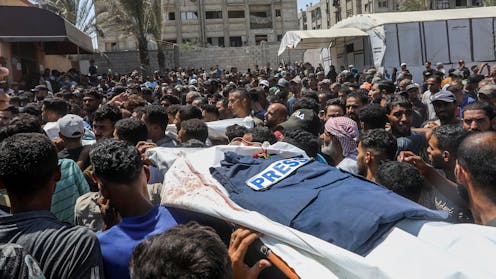
A funeral ceremony takes place in the courtyard of Nasser Hospital in Gaza following the deaths of five journalists on Aug. 25, 2025. Abed Rahim Khatib/Anadolu via Getty Images

Five journalists were among the 22 people killed on Aug. 25, 2025, in Israeli strikes on the Nasser Hospital in the Gaza Strip. Following global condemnation, the office of Israeli Prime Minister Benjamin Netanyahu issued a statement saying Israel “values the work of journalists.” But the numbers tell a different story.

Those deaths bring the total number of journalists killed in Gaza in almost two years of war to 192. The Committee to Protect Journalists, which collates that data, accuses Israel of “engaging in the deadliest and most deliberate effort to kill and silence journalists” that the U.S.-based nonprofit has ever seen. “Palestinian journalists are being threatened, directly targeted and murdered by Israeli forces, and are arbitrarily detained and tortured in retaliation for their work,” the committee added.

As a scholar of modern Palestinian history, I see the current killing of reporters, photographers and other media professionals in Gaza as part of a longer history of Israeli attempts to silence Palestinian journalists. This history stretches back to at least 1967, when Israel militarily occupied the Palestinian territories of the West Bank, East Jerusalem and the Gaza Strip following the Six-Day War.

Beyond the humanitarian toll, what makes matters even more drastic now is that, with Israeli restrictions on foreign media entering Gaza, local Palestinian journalists are the only people who can bear witness to the death and destruction taking place – and report it to a wider world. Indeed, nearly all of the nearly 200 journalists killed since Oct. 7, 2023, have been Palestinian.

A decades-long process in the making

From the first days of the occupation in 1967, Israel has tried to keep a tight grip on media reporting, building a legal and military architecture that aimed to control and censor Palestinian journalism.

In August 1967, the army issued Military Order 101, effectively criminalizing “political” assembly and “propagandistic” publications in the occupied territories.

Yet despite such restrictions, local journalism persisted and grew. By the early 1980s, Palestinians in the occupied territories were publishing three dailies, five weeklies and four magazines. The most popular publications circulated up to 15,000 copies.

But all Palestinian publications were subject to Israeli military censorship. Every night, editors were forced to submit two copies of everything they planned to print to Israeli censors. That included articles, photos, ads, weather reports and even crossword puzzles.

Anything the Israeli censor deemed to be “of political significance” had to be removed prior to publication. Editors who violated these terms, or who were accused of belonging to Palestinian political groups, could be detained or deported. These practices have echoes today with Israel often accusing the journalists it kills of being Hamas operatives.

Censorship regimes

Objecting to these and many other restrictions, Palestinians launched the first intifada, or uprising, against the Israeli occupation in December 1987. During the uprising’s first year, Israeli forces reportedly jailed 47 Palestinian reporters, temporarily banned eight local and regional newspapers, permanently revoked the licenses of two magazines and closed four press service offices.

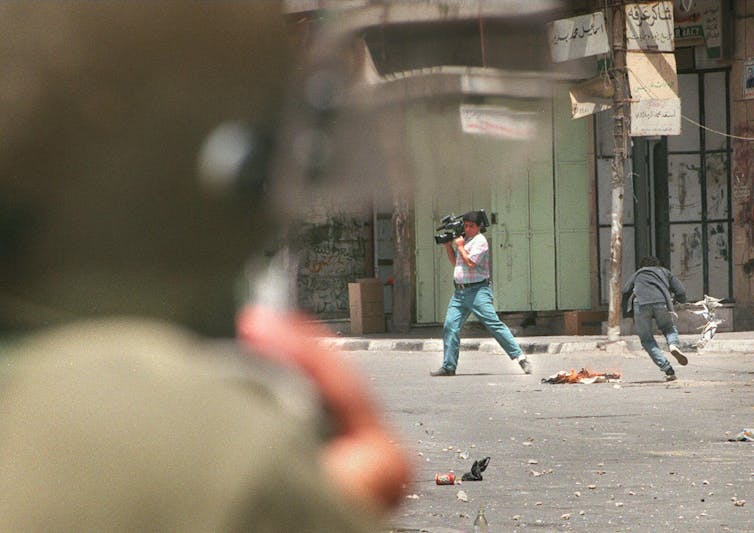
A man is seen in a street holding a video camera.
Reuters TV journalist Mazen Dana runs as he is hit by rubber-jacketed metal bullets fired by Israeli soldiers as he films a youth burning an Israeli flag in 1997.
Hossam Abu Alan/AFP via Getty Images

While intended to be a show of force, most Palestinians saw the restrictions as evidence that Israel was afraid of Palestinians reporting on their own conditions.

Many people hoped that the Oslo Accords – a series of negotiations between Israel and the Palestinian Liberation Organization that formally launched in 1993 – would lead to greater press freedoms. But it was not to be the case.

Israeli authorities continued to enforce military censorship on what they deemed to be “security topics.” They also revoked the press cards of reporters who did not stay in line and assaulted and harassed journalists reporting from the ground.

Meanwhile, the newly established Palestinian Authority, set up as part of the Oslo process to partially govern Palestinian territories on what was meant to be a temporary basis, built a censorship regime of its own. It, too, arrested, suspended and closed news outlets it deemed too critical of its actions.

Shootings and impunity

By the 2000s, Israel’s attacks on journalists in the West Bank and Gaza Strip grew deadlier. Israeli forces fatally shot Palestinian photographer Imad Abu Zahra in Jenin in the West Bank in 2002, British filmmaker James Miller in Rafah in 2003 and Reuters cameraman Fadel Shana in Gaza in 2008.

Since 2008, as battles between Israeli forces and Palestinian militant groups have grown fiercer, journalists have worked under even deadlier conditions. Yet even during unarmed demonstrations, journalists have faced deadly Israeli force. In 2018, during the mass unarmed protests in Gaza known as the Great March of Return, Israeli forces shot and killed Palestinian journalists Yaser Murtaja and Ahmed Abu Hussein. Both were wearing “PRESS” vests when they were shot. In addition, at least 115 journalists were wounded while covering the protests, which lasted six months.

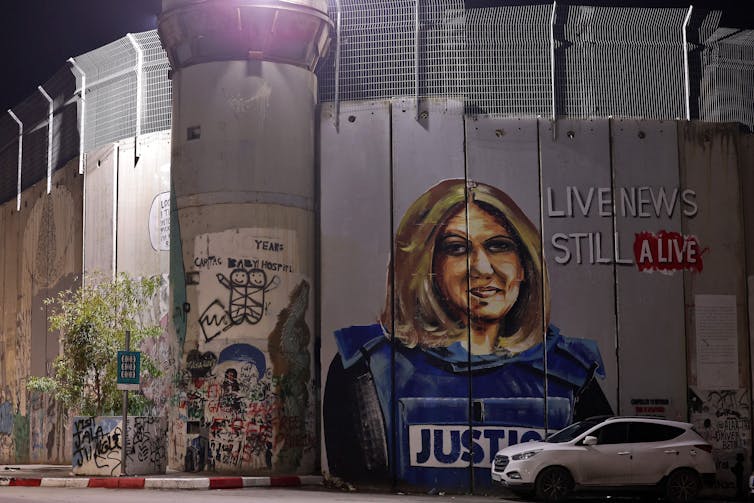
The deadly force has not been limited to Palestinians in Gaza. In May 2022, Palestinian American journalist Shireen Abu Akleh was killed in the Jenin refugee camp. One of the most famous Palestinian reporters at the time, Abu Akleh’s death drew hundreds of thousands of mourners, while Israeli police beat pallbearers at her funeral service.

Legitimate military targets?

International humanitarian law makes clear that journalists are civilians and therefore cannot be targeted during combat. That includes war correspondents who are covering war while under the protection of an armed group.

For their part, Israeli officials argue that they do not target journalists. They say that their strikes are aimed at legitimate military objectives, often asserting that Hamas embeds itself in civilian buildings or that some of the journalists killed were militants.

But such allegations are often made without independently verifiable evidence. Israel alleged that Murtaja, the journalist killed in Gaza in 2018, was a militant, but provided no proof.

The image of a woman with a flak jacket with 'justice' written on it is seen on a wall
A mural of slain U.S.-Palestinian correspondent Shireen Abu Akleh on a section of Israel’s separation fence between Jerusalem and the city of Bethlehem in the occupied West Bank.
Ahmad Gharabli/AFP via Getty Images

In the case of Abu Akleh, Israeli officials initially claimed that she may have been killed by Palestinian militants. They eventually admitted there was a “high possibility” that Israeli forces killed Abu Akleh, but claimed that the killing was accidental and therefore the government would not press charges. A recent documentary refutes that claim and identifies the Israeli soldier alleged to have killed Abu Akleh intentionally.

Culture of impunity

Even prior to the deadly Hamas-led attacks on Israel on Oct. 7, 2023, the picture emerging was that of impunity for Israeli forces who killed journalists – by accident or by design. A May 2023 report from the Committee to Protect Journalists concluded that Israel engaged in a “deadly pattern” of lethal force against journalists and failed to hold perpetrators accountable.

Since October 2023, journalists in Gaza have faced even deadlier conditions. Israel continues to ban international news agencies from reporting inside the Gaza Strip. As a result, local Palestinian journalists are often the only ones on the ground.

Aside from the deadly conditions, they contend with Israeli smears against their work and threats against their families.

Palestinian journalists there often run toward bombardments when others run away. As a result, they are sometimes killed in “double-tap” strikes, where Israeli air and drone strikes return to an area that has just been struck, killing rescue workers and the journalists covering them.

All this has led to an unbearable personal toll for those continuing to report from within Gaza. On Oct. 25, 2023, Al Jazeera’s Gaza bureau chief, Wael al-Dahdouh, was reporting live on air when he learned that an Israeli airstrike had killed his wife, two children and grandson. He returned on air the next day.

And the killing has not eased up. On Aug. 10, 2025, Israeli forces killed Anas al-Sharif in Gaza City, another prominent Al Jazeera correspondent who had stayed on the streets through months of bombardment. Five of his fellow journalists were also killed in the same airstrike.

The Aug. 25 strike on Nasser Hospital is just the latest in this deadly pattern.

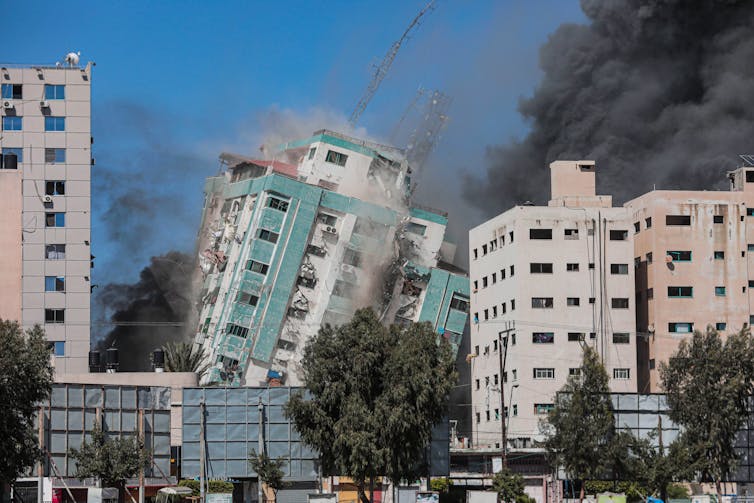
A building is seen toppling to the ground with thick black smoke around it.
The Jala Tower, home to media outlets, collapses after an Israeli airstrike in Gaza on May 15, 2021.
Momen Faiz/NurPhoto via Getty Images

Among the five journalists killed in that attack were freelancers working for Reuters and The Associated Press – two international media outlets frustrated by Israel’s refusal to allow its journalists into Gaza to document the war.

Despite the danger, global newsrooms have repeatedly urged Israel to open Gaza to independent media, and a coalition of 27 countries recently pressed for access in Gaza.

Israel continues to refuse these requests. As such, Palestinian journalists remain the primary witnesses of Israel’s relentless assault on Gaza. And they are increasingly killed as they do so. The question remains whether the international community will hold Israel to account.

The Conversation

Maha Nassar does not work for, consult, own shares in or receive funding from any company or organization that would benefit from this article, and has disclosed no relevant affiliations beyond their academic appointment.

ref. Israel’s killing of journalists follows a pattern of silencing Palestinian media that stretches back to 1967 – https://theconversation.com/israels-killing-of-journalists-follows-a-pattern-of-silencing-palestinian-media-that-stretches-back-to-1967-263891

Sean Feucht au Québec : la décision d’annuler ses concerts est contre-productive

Source: The Conversation – in French – By Frédéric Dejean, Professeur en sciences des religions, Université du Québec à Montréal (UQAM)

Le chanteur évangélique et pro-Trump Sean Feucht a fait irruption dans l’actualité québécoise cet été. Un concert annulé, une amende, et une polémique : l’affaire relance le débat sur la liberté religieuse.

Sean Feucht, chanteur évangélique américain et fervent soutien de Donald Trump, est aussi connu pour ses prises de position controversées contre la communauté LGBTQ+ et le droit à l’avortement, souvent exprimées sur ses réseaux sociaux. Jusqu’à récemment inconnu du grand public québécois, il a gagné en notoriété cet été après l’annulation de dernière minute de son concert prévu à Québec le 25 juillet, dans la foulée de la controverse.

La Ville de Montréal a emboîté le pas en interdisant à son tour la tenue d’un spectacle allant « à l’encontre des valeurs d’inclusion, de solidarité et de respect prônées à Montréal », a dit la porte-parole de l’administration de Valérie Plante.

Qu’à ce la ne tienne, une église évangélique de Montréal a quand même organisé un événement avec Feucht, déclenchant une manifestation réunissant partisans et opposants. Feucht a largement relayé ces controverses sur ses réseaux sociaux, dénonçant une atteinte à la liberté religieuse. L’église s’est quand à elle vue infliger une amende de 2500 $ par la Ville de Montréal, car elle ne détenait pas de permis pour organiser un tel événement.

Cochercheur au sein de la Chaire de recherche France-Québec sur les enjeux contemporains de la liberté d’expression, je poursuis actuellement une enquête sur le prosélytisme évangélique dans les transports en commun et l’espace public montréalais. J’ai développé dans ce cadre la notion d’« effet Sainte Blandine », en référence à cette esclave chrétienne de la ville de Lyon (Lugdunum à l’époque), qui a été martyrisée en juillet 177 et qui, dans la tradition catholique, constitue un symbole de résistance face aux persécutions.

L’historiographie du christianisme primitif a montré que les persécutions n’ont pas du tout eu pour effet de freiner la diffusion du christianisme. Au contraire, les martyrs sont devenus des modèles vénérés capables de susciter la ferveur religieuse.

L’« effet Sainte Blandine » : la foi renforcée dans l’adversité

Par l’expression d’« effet Sainte Blandine » je désigne des situations où la marginalisation sociale des personnes croyantes renforce leurs convictions et affermit en elles la certitude de la justesse de leur cause.

Prenons un exemple : lors d’une séquence d’observation d’une personne qui évangélisait à une station de métro de Montréal, j’ai eu l’occasion d’entendre des propos assez virulents de la part d’usagers qui interrompaient le prêche par des propos injurieux. Discutant avec elle de ces moments de tension, je lui ai demandé si de telles réactions pouvaient la conduire à cesser d’évangéliser. Elle m’a simplement répondu que ceux qui réagissaient de la sorte étaient « conduits par le diable » et qu’il était donc d’autant plus nécessaire de continuer.

Ce petit exemple fait écho à l’ouvrage classique en psychologie sociale L’échec d’une prophétie, ouvrage dans lequel Leon Festinger montrait comment l’individu surmonte la situation d’échec par un travail de rationalisation.

C’est bien le même « effet Sainte Blandine » à l’œuvre lors de la controverse autour de Sean Feucht qui affirmait sur son compte Instagram en date du 23 juillet :

Je n’ai pas ressenti un tel niveau de résistance depuis un bon moment, pas depuis 2020. […] C’est toujours le même stratagème du diable. Il veut que le peuple de Dieu se taise, reste chez lui, remette son masque et garde le silence.


À lire aussi :
Des Églises « technos » qui s’adaptent en temps de pandémie


La pandémie comme catalyseur de notoriété et de discours

La référence à la pandémie de Covid-19 n’est pas fortuite. C’est en effet à cette occasion que Sean Feucht a vu croître sa notoriété, plus précisément quand il a initié le mouvement « #LetUsWorship » qui se voulait une réponse aux restrictions sur les rassemblements pour des raisons sanitaires. Il a déployé alors une rhétorique victimaire assez classique, mais très efficace : la liberté religieuse aurait été injustement confisquée par des responsables politiques qui instrumentaliseraient l’urgence sanitaire à des fins idéologiques.

Les événements de cet été ont donné lieu à une exploitation assez similaire de la part de Feucht puisque dans une vidéo sur Instagram en date du 25 juillet, il évoquait également la liberté religieuse bafouée par les élus du Québec : « Mais cette liberté est en ce moment même menacée au Canada », écrivait-il aussi.

Loin de se résigner, il invitait les chrétiens à se mobiliser (« We need to take a stand in this nation ») de trois façons : par la prière, par la signature d’une pétition et par la participation au concert de Montréal. Cet appel a été relayé et amplifié par des responsables chrétiens québécois.

Ainsi, Emmanuel Ouellet, un jeune pasteur montréalais qui s’est fait connaître l’an dernier par l’organisation de l’évènement « Revival Montreal », a publié sur Instagram une vidéo dans laquelle il affirmait :

la guerre est ouverte, il n’y a plus aucun doute, il est temps pour les chrétiens de sortir la tête du sable […] J’invite tous les chrétiens à se joindre à nous afin d’invoquer la puissance du Saint Esprit afin que Dieu se révèle à nos élus.

Un récit de persécution chrétienne au Québec

Pour bien comprendre le sens donné à cet événement par un certain nombre de chrétiens évangéliques, il est indispensable de le replacer dans un récit plus large qui se développe au Québec, au moins depuis la pandémie, selon lequel la liberté religieuse, en particulier celle des personnes chrétiennes, serait systématiquement attaquée. Par exemple, les Églises montréalaises Good News Chapel ou Nouvelles Création avaient résisté aux mesures sanitaires liées à la Covid-19.

Plus récemment, cette perception d’hostilité s’est exprimée dans l’émission Le Panel proposée par la chaîne chrétienne Théovox, où l’animateur dénonçait « une culture d’annulation ou antichrétienne » et des gestes perçus comme des tentatives d’effacement de la foi dans l’espace public. Il évoquait notamment deux cas : la résiliation, fin 2024, d’un contrat de location entre la Commission scolaire de Montréal et l’Église évangélique La Chapelle, qui y tenait des cultes, ou encore l’annulation au printemps 2023 d’un événement anti-avortement, jugé incompatible avec les valeurs d’égalité par le gouvernement.


Déjà des milliers d’abonnés à l’infolettre de La Conversation. Et vous ? Abonnez-vous gratuitement à notre infolettre pour mieux comprendre les grands enjeux contemporains.


Pour ces raisons « l’Église » (terme utilisé dans le monde évangélique pour désigner les personnes chrétiennes) doit sortir de sa réserve et faire entendre sa voix dans le débat public.

Analysée à travers la lunette de l’« effet Sainte Blandine », la controverse entourant la venue de Sean Feucht montre comment certaines décisions politiques peuvent, paradoxalement, renforcer la mobilisation qu’elles cherchent à freiner.

Alors qu’il s’agissait de dénoncer des valeurs négatives portées par Feucht, ce dernier a non seulement adroitement réactivé une rhétorique ayant fait ses preuves en endossant le rôle de victime, mais a en plus fourni des éléments qui alimentent le récit d’un Québec en guerre contre le christianisme.

La Conversation Canada

Frédéric Dejean a reçu des financements du FRQSC

ref. Sean Feucht au Québec : la décision d’annuler ses concerts est contre-productive – https://theconversation.com/sean-feucht-au-quebec-la-decision-dannuler-ses-concerts-est-contre-productive-263389

Hurricane Katrina: 3 painful lessons for emergency management are increasingly important 20 years later

Source: The Conversation – USA (2) – By Eric Kevin Stern, Professor of Political Science, Department of Emergency Management and Homeland Security, University at Albany, State University of New York

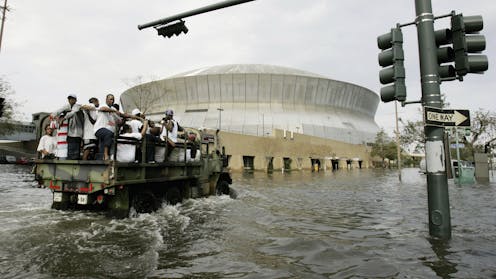
National Guard trucks carry rescued residents through floodwaters to the Superdome on Aug. 30, 2005, a day after Hurricane Katrina hit in New Orleans. AP Photo/Eric Gay

Hurricane Katrina looms large in the history of American emergency management, both for what went wrong as the disaster unfolded and for the policy changes it triggered.

As the nation looks back on the disaster 20 years later, I believe as a crisis and emergency management specialist that it is more important than ever to remember Katrina’s lessons to avoid repeating past mistakes.

When Katrina hit New Orleans on Aug. 29, 2005, its storm surge broke through levees protecting the city. Water quickly poured into low-lying neighborhoods, flooding houses up to their rooftops and inundating an estimated 80% of the city. People who could not evacuate before the storm and were lucky enough to escape to their roofs were stranded for days in some cases.

Once the water had receded and the death toll counted, it became clear that nearly 1,400 people had died as a result of this devastating storm. The hurricane did more than $100 billion in damage, equivalent to about US$170 billion today when adjusted for inflation.

A helicopter hovers above a rooftop with people on it.
Helicopters rescue stranded residents from rooftops on Sept. 1, 2005, three days after the hurricane.
AP Photo/David J. Phillip

While there were many unsung heroes during Katrina, the tragic missteps and missed opportunities at all levels of government emergency management are what no emergency manager ever wants to repeat. The response failed in many areas, from broken communications among federal, state and local agencies to the reported horrors in the Superdome as 16,000 evacuees faced failed generators, poor security, dwindling supplies and overflowing toilets.

Three lessons from Katrina stand out today as the Trump administration talks about dismantling the Federal Emergency Management Agency and putting more responsibility for disaster management on local and state agencies.

1. Emergency response is only as strong as the weakest links

FEMA took the brunt of the criticism after Hurricane Katrina. However, serious analyses of what went wrong recognize that good disaster response requires effective governance at all levels.

Before FEMA could spend significant money to deploy people and aid, the state of Louisiana had to request a presidential disaster declaration. However, tensions between the state and federal governments reportedly delayed President George W. Bush’s approval, according to a Senate committee report assessing the response. The committee also found that New Orleans Mayor Ray Nagin’s decision to first issue a voluntary evacuation and not issue a mandatory order until a day before the storm cost precious time.

A police officer points at someone while talking to people on a  downtown street.
New Orleans Police Superintendent Eddie Compass tells people in front of the New Orleans Convention Center on Sept. 2, 2005, that they will get food and water. A heavily armed military convoy arrived in hurricane-devastated New Orleans that day, four days after the hurricane, with urgently needed supplies.
Robert Sullivan/AFP via Getty Images

Once the storm hit, communication and coordination fell apart.

Vehicles badly needed for the disaster response were damaged by the storm. Problems with communication systems and a breakdown in situation reporting from local law enforcement and rescue services left state and federal government decision-makers flying blind, without up-to-date reports of conditions on the ground. Media reports of a “war zone” in New Orleans exaggerated the extent of public disorder and threats to responders. That further delayed the arrival of federal military and National Guard assistance – and hindered some local efforts – because it required additional precautions for coping with a hostile security environment.

As challenging as the information environment was during Hurricane Katrina, it is more difficult now. Social media, hyper-partisanship and deliberate misinformation attempts complicate emergency response and recovery efforts.

If the federal government now proposes to push more responsibility for disaster relief to the state and local levels, emergency managers at those levels will be taking on highly complex disasters in a potentially toxic information environment with less support.

States, counties and cities vary greatly in their readiness to shoulder this responsibility.

2. Leave no one behind

An enduring image of Hurricane Katrina was the plight of residents who lacked transportation and took shelter at the New Orleans Superdome, where conditions quickly deteriorated.

Another was the harrowing tales of gravely ill patients and exhausted medical staff stranded at Memorial Medical Center for five days without power as temperatures rose and the lower floors flooded.

A man carries a smaller man from a boat to dry land while people wait in the boat behind him on a flooded city street.
A volunteer who used his boat to rescue several residents from a flooded east side New Orleans neighborhood carries a man who could not walk to safety on Aug. 31, 2005, two days after the storm.
AP Photo/Eric Gay

These extreme predicaments and the deaths of people trapped in flooding homes in the Lower Ninth Ward were powerful reminders of the vulnerability of many low-income, elderly and ill residents who were unable to get out ahead of the disaster.

A few years after Katrina, Obama administration FEMA Administrator Craig Fugate and his team placed a new focus on forging a “whole community” emergency management strategy. It is designed to include marginalized populations in emergency planning and ensure that those who aren’t able to evacuate due to disability or financial limitations are not forgotten during disasters.

Government guidance now states that emergency mass care shelters be in buildings that people who have trouble walking can navigate easily. Emergency information is typically distributed in multiple languages, accessible for people with impaired hearing or vision, and written in ways adapted to the cultures and circumstances of minority groups.

Three older women in portable chairs look for arriving transportation. Many more people crowd the curb around them.
Hurricane Katrina victims wait for transportation at the convention center in New Orleans on Sept. 1, 2005.
AP Photo/Eric Gay

However, many of these advances are in jeopardy today as the Trump administration seeks to eliminate initiatives that might be considered DEI – diversity, equity and inclusion. The misery and death caused by Hurricane Katrina should serve as vivid reminders of why many existing emergency management programs emphasize the needs of socially vulnerable populations.

3. Professional emergency management is essential

The face of the federal government’s shortcomings in responding to Hurricane Katrina was then-FEMA Administrator Michael Brown. Initially, he was publicly praised by President Bush, who declared: “Brownie, you’re doing a heck of a job!”

But Brown was not a professional emergency manager. His prior on-the-job experience in the role did not prove sufficient in this extreme situation. As the problems with the response to Katrina became increasingly evident, Brown proved unable to provide effective leadership in the crisis and was forced out.

A man in party rolled up shirt sleeves points to a map while President George W. Bush stands listening nearby with his arms crossed.
FEMA Administrator Michael Brown, center, updates President George W. Bush, left, on the aftermath of Hurricane Katrina on Sept. 2, 2005.
Jim Watson/AFP via Getty Images

Part of the legislative legacy of Katrina is the Post-Katrina Emergency Management Reform Act of 2006. It requires that FEMA chief administrators have extensive knowledge of emergency management and substantial relevant executive leadership experience. All of the subsequent confirmed heads of FEMA were once state emergency management directors or had been in charge of emergency management in major cities.

However, those requirements do not always apply to acting administrators. In his second term, President Donald Trump has had two acting FEMA administrators – Cameron Hamilton and David Richardson. Both lacked prior experience managing major disasters on a statewide or comparable basis. Hamilton was abruptly fired after suggesting to Congress that FEMA should not be eliminated. Richardson’s leadership was quickly tested during the Texas flash flood tragedy on July 4, 2025, that killed more than 135 people.

The shortcomings of the response to Hurricane Katrina also led to wider adoption of the National Incident Management System, which helps all levels of government, nongovernmental organizations and the private sector work together in an emergency.

If more responsibility for emergency management devolves to states in the future, they will need to cultivate the ability to coordinate and collaborate effectively to respond to disasters.

Looking ahead

Leaders and organizations such as FEMA have learned from crises such as Hurricane Katrina.

However, political priorities come and go, staff turns over, and generations pass the torch to their successors. Leaders and organizations can forget critical lessons from the past.

As efforts to reform – and possibly rebalance – the U.S. emergency management system continue during the Trump administration, it is essential to remember and heed the costly lessons of Hurricane Katrina.

The Conversation

Eric Stern has recently received funding from DHS Science and Technology for an extreme weather informatics project and from NOAA for work on extreme heat events. He has lectured at the National Emergency Management Executive Academy and many similar programs around the country and the world.

ref. Hurricane Katrina: 3 painful lessons for emergency management are increasingly important 20 years later – https://theconversation.com/hurricane-katrina-3-painful-lessons-for-emergency-management-are-increasingly-important-20-years-later-260907

The rise of humanlike chatbots detracts from developing AI for the human good

Source: The Conversation – Canada – By Mark Daley, Professor & Chief AI Officer, Western University

Grok is a generative artificial intelligence (genAI) chatbot by xAI that, according to Elon Musk, is “the smartest AI in the world.” Grok’s latest upgrade is Ani, a porn-enabled anime girlfriend, recently joined by a boyfriend informed by Twilight and 50 Shades of Grey.

This summer, both xAI and OpenAI launched updated versions of their chatbots. Each touted improved performance, but more notably, new personalities. xAI introduced Ani; OpenAI rolled out a colder-by-default GPT-5 with four personas to replace its unfailingly sycophantic GPT-4o model.

Similar to claims made by Google DeepMind and Anthropic, both companies insist they’re building AI to “benefit all humanity” and “advance human comprehension.” Anthropic claims, at least rhetorically, to be doing so responsibly. But their design choices suggest otherwise.

Instead of equipping every person with an AI assistant — a research collaborator with PhD-level intelligence — some of today’s leaders have released anthropomorphized AI systems that operate first as friends, lovers and therapists.


Read more:
More people are considering AI lovers, and we shouldn’t judge


As researchers and experts in AI policy and impact, we argue that what’s being sold as scientific infrastructure increasingly resembles science fiction gone awry. These chatbots are engineered not as tools for discovery, but as companions designed to foster para-social, non-reciprocal bonds.

Human/non-human

The core problem is anthropomorphism: the projection of human traits onto non-human entities. As cognitive scientist Pascal Boyer explains, our minds are tuned to interpret even minimal cues in social terms. What once aided our ancestors’ survival now fuels AI companies by capturing the minds of their users.

a hand holding a smartphone showing ChatGPT on the screen
AI companies claim to work towards equipping every person with an AI-assistant.
(Matheus Bertelli/Pexels), CC BY

When machines speak, gesture or simulate emotion, they trigger those same evolved instincts such that, instead of recognizing it as a machine, users perceive it like a human.

Nonetheless, AI companies have pushed on, building systems that exploit these biases. The justification is that this makes interaction feel seamless and intuitive. However, the consequences that result can render anthropomorphic design deceptive and dishonest.

Consequences of anthropomorphic design

In its mildest form, anthropomorphic design prompts users to respond as if there were another human on the other side of the exchange, and can be as simple as saying “thank you.”

The stakes grow higher when anthropomorphism leads users to believe the system is conscious: that it feels pain, reciprocates affection or understands their problems. Although new research reveals that it’s possible the criteria for consciousness may be met in the future, false attributions of consciousness and emotion have led to some extreme outcomes, such as leading users to marry their AI companions.

However, anthropomorphic design does not always inspire love. For others it has led to self-harm or harming others after forming unhealthy attachments.

Some users even behave as though AI could be humiliated or manipulated, lashing out abusively as if it were a human target. Recognizing this, Anthropic, the first company to hire an AI welfare expert, has given its Claude models the unusual capacity to end such conversations.

Across this spectrum, anthropomorphic design pulls users away from leveraging AI’s true capabilities, forcing us to confront the urgent question of whether anthropomorphism constitutes a design flaw — or more critically, a crisis.

De-anthropomorphizing AI

The obvious solution seems to be stripping AI systems of their humanity. American philosopher and cognitive scientist Daniel Dennett argued that this may be humanity’s only hope. But such a solution is far from simple because the anthropomorphization of these systems has already led users to form deep emotional attachments.

When OpenAI replaced GPT-4o with GPT-5 as the default in ChatGPT, some users expressed genuine distress and genuinely mourned the loss of 4o. However, what they mourned was the loss of its prior speech patterns and the way it used language.

a bust with the top half showing a paper saying loading
A public installation in Paris by the artist Rero.
(Mathias Reding/Unsplash), CC BY

This is what makes anthropomorphism such a problematic design model. As a result of the impressive language abilities of these systems, users attribute mentality to them — and their engineered personas exploit this further.

Instead of seeing the machine for what it is — impressively competent but not human — users read into its speech patterns. While AI pioneer Geoffrey Hinton warns that these systems may be dangerously competent, something much more insidious seems to result from the fact these systems are anthropomorphized.


Read more:
A neuroscientist explains why it’s impossible for AI to ‘understand’ language


Flaw in the design

AI companies are increasingly catering to people’s AI companion desires, whether sexbot or therapist.

Anthropomorphism is what makes these systems dangerous today because humans have intentionally built them to mimic us and exploit our instincts. If AI consciousness proves impossible, these design choices will be the cause of human suffering.

But in a hypothetical world in which AI does attain consciousness, our choice to force it into a human-shaped mind — for our own convenience and entertainment, replicated across the world’s data centres — may invent an entirely new kind, and scale, of suffering.


Read more:
Increasingly sophisticated AI systems can perform empathy, but their use in mental health care raises ethical questions


The real danger of anthropomorphic AI isn’t some near or distant future where machines take over. The danger is here, now, and hiding in the illusion that these systems are like us.

This is not the model that will “benefit all humanity” (as OpenAI promises) or “help us understand the universe” (as xAI’s Elon Musk claims). For the sake of social and scientific good, we must resist anthropomorphic design and begin the work of de-anthropomorphizing AI.

The Conversation

Mark Daley receives funding from NSERC, SSHRC and Schmidt Initiative for Long Covid.

Carson Johnston is supported in part by funding from the Social Sciences and Humanities Research Council.

ref. The rise of humanlike chatbots detracts from developing AI for the human good – https://theconversation.com/the-rise-of-humanlike-chatbots-detracts-from-developing-ai-for-the-human-good-261787

New age-gating laws aimed at making the internet safer actually threaten free speech

Source: The Conversation – Canada – By Neil McArthur, Director, Centre for Professional and Applied Ethics, University of Manitoba

The United Kingdom recently launched a broad system of age verification that requires any platforms that host pornography or other “harmful” content to ensure their users are 18 or older.

Around the world, large swathes of the open web are being replaced by walled gardens. In June, the U.S. Supreme Court upheld the constitutionality of Texas’s age restriction law. Twenty-one other states have similar laws in place, and more have been proposed.

Australia restricts young people’s access not just to specific websites, but to all social media, and it will soon extend this to search engines.


Read more:
Australia is banning social media for teens. Should Canada do the same?


In Canada, Bill S-209, which would require age verification for adult websites, could soon become law. It is at the reporting stage in Parliament, the final stage before it comes to a vote.

The spread of these age-gating laws is a disaster for free speech, privacy and the future of the internet itself. It is not too late to take a stand against them.

CBC News reports on internet age restrictions.

Think about the children

The basic purpose of these laws is admirable enough. We all want to protect children from harm. But we need to ask two questions. First, do they actually accomplish their goal? And second, do the benefits of these laws outweigh the costs?

We should be clear on one thing at the outset. Proponents of the laws sometimes talk about protecting children from exploitation. But age-gating does nothing to address the problem of child pornography. It restricts access based on the age of the user, not the age of the person depicted. And almost all child-abuse material is already on the dark web or on other sites that do not adhere to any laws.

When it comes to restricting young people’s access, the reality is that age gates are easily bypassed by a determined user. A recent Australian survey showed that almost a quarter of teens routinely get around age barriers.

The simplest circumvention method is through the use of a virtual private network to hide a user’s location. These are easy to set up and many are free. However, young people can also, depending on the verification technology being used, upload an adult’s credentials or use simple tricks to fool facial recognition systems.

A massive cost

Even if some young people are circumventing the blocks, many are not, and so age verification will reduce the exposure some young people have to banned material. But this modest victory comes at a massive cost.

First of all, these laws place the burden on adults who are trying to access material they have a right to see. We are, in the name of protecting children, sleepwalking into a dystopian vision of the internet where every user must flash their papers before being allowed to go online.

To verify their age, people have to upload photos of their government-issued identification without knowing if their data is secure. Often, it won’t be.

One major age-verification service left users’ data, including their legal identification, exposed for more than a year.

Second, these laws define harmful material so vaguely that it is impossible for content producers to predict when they will fall afoul of them. This affects not just the producers of explicit content, but the internet as a whole. Smaller websites in particular cannot afford to hire lawyers to vet all of their content, or to fight for their rights if they’re charged.

It’s easier just to block access to everyone in an age-gated jurisdiction, which many sites have already started doing, or to shut down entirely.

Third, the laws make the state the arbiter of what young people can read and see. But what is appropriate to a particular user is highly individual. It depends on their age and their emotional maturity. And inevitably, censorship gives governments the power to impose their own moral agendas.

Not surprisingly, some American states have used their age-gate laws to censor material related to abortion, sexual health and LGBTQ identity.


Read more:
Is childproofing the internet constitutional? A tech law expert draws out the issues


Russell Vought, at the time the vice president of a conservative lobbying organization and currently the head of the U.S. Office of Management and Budget, was caught last year on a hidden camera admitting that age-verification laws were meant as a move towards banning pornography altogether.

In 1997, the U.S. Supreme Court found an early age-restriction law, the Communications Decency Act, unconstitutional. Explaining the court’s unanimous decision, Justice John Paul Stevens wrote that the law “threaten[ed] to torch a large segment of the internet community” and declared that “the interest in encouraging freedom of expression in a democratic society outweighs any theoretical but unproven benefit of censorship.”

Though a more conservative Supreme Court has set aside this precedent, Stevens’ prescient words remain as true today as ever.

Parental involvement

There is a better alternative to age-gating, one that places the power where it belongs: in the hands of parents. Many devices, including those made by Apple and Google, already offer parental controls. While not perfect, they are both less intrusive and harder to circumvent than online age verification systems.

These measures place data security in the hands of a small number of trusted companies and remove the need for constant age verification when accessing different websites. These controls could be mandatory for all mobile devices and computer operating systems.

This is a crucial moment for the internet. The walls are coming up fast, and if we do not stop them now, they will be hard to tear down.

The Conversation

Neil McArthur does not work for, consult, own shares in or receive funding from any company or organisation that would benefit from this article, and has disclosed no relevant affiliations beyond their academic appointment.

ref. New age-gating laws aimed at making the internet safer actually threaten free speech – https://theconversation.com/new-age-gating-laws-aimed-at-making-the-internet-safer-actually-threaten-free-speech-263401