In my youth, I spent an unreasonable amount of time questioning why A-level chemistry was a prerequisite for medical school. Why was it as essential as biology? Why did I need to learn about electrons and entropy? The penny finally dropped when my rather brilliant teachers turned my attention towards the periodic table.
Every single atom in our bodies can be found in the periodic table – from chlorine to chromium, magnesium to manganese. In fact, just six elements make up about 98.5% of our body mass: 65% oxygen, 18% carbon, 10% hydrogen, 3% nitrogen, 1.5% calcium, and just over 1% phosphorus. The remaining 1.5% is made up of trace elements – potassium, sulphur, iron, zinc, copper, and many others – all of which play crucial roles in keeping us alive.
It might be more accurate to describe ourselves as oxygen-based life forms, rather than carbon-based.
The final 1% consists of trace elements. Though they’re present in smaller amounts, they’re no less essential. Many of them come from our diet, which is why we’re advised to balance our meals with sufficient vitamins and minerals.
But what exactly should we be eating to fulfil these requirements – and can you have too much of a good thing?
Calcium
Crucial for healthy bones and teeth, calcium is abundant in dairy products, nuts and leafy greens. It also plays a vital role in nerve and muscle function. When the body is deficient in calcium, numbness, muscle twitching and even seizures may ensue. Dietary supplementation with calcium or vitamin D, which aids calcium absorption, becomes necessary.
However, too much calcium can be just as harmful. In people with cancer, tuberculosis or an overactive parathyroid gland, levels can rise too high, causing kidney stones, depression and abnormal heart rhythms.
Dangers of high calcium levels, The Doctors.
Phosphorus
Phosphorus – the same element used in the striking surface of matchboxes – is fundamental to life. It’s a key component of DNA, the blueprint of our being, and of adenosine triphosphate (ATP), the molecule that stores and delivers energy in cells.
From the same periodic group as calcium, magnesium plays a role in muscle and nerve function, and contributes to bone health. You’ll find it in plant-based foods like beans and grains.
Magnesium supplements are widely available, but most people don’t need them. Some people are at a greater risk of magnesium deficiency, including those with chronic alcoholism or malabsorption disorders.
Sodium and potassium share a role in electrical activity within neurons and muscle cells, including those in the heart. Sodium also regulates fluid balance within the body.
The body maintains these minerals within a tight range to ensure optimal function. Too much sodium or potassium can be extremely dangerous. In fact, the traditional lethal injection protocol in the US involved an intravenous dose of potassium to stop the heart.
High potassium (hyperkalemia) – symptoms and causes | National Kidney Foundation.
Deficiencies of sodium and potassium can cause multiple symptoms, including muscle weakness, confusion and other neurological symptoms.
Dietary sources of potassium include bananas and potatoes. For sodium and chloride (the latter also being involved in fluid regulation and stomach acid production), the most familiar source is table salt. We do need some, but no more than 6g a day. High salt intake is linked to high blood pressure and cardiovascular disease.
Sulphur
The smell of sulphur (or more precisely, sulphur-containing compounds) will be familiar to anyone who remembers the acrid odour of school chemistry labs: think rotten eggs, overcooked cabbage and bad breath. Unsurprisingly, cabbage, garlic and onions are rich in sulphur.
Sulphur is found in certain amino acids (protein building blocks) and is essential for growth and development. A diet with lean protein and vegetables usually provides everything you need.
Trace minerals
So far, we’ve looked at macrominerals, those needed in larger quantities. But the trace minerals, needed in smaller amounts, are no less vital.
Take iron, crucial for the production of red blood cells, which carry oxygen throughout the body. Iron deficiency (common in children, menstruating women and people with restrictive diets) can cause anaemia, plus symptoms like fatigue, dizziness and shortness of breath. Iron is plentiful in red meat, legumes and green vegetables.
Other essential trace elements include zinc, which supports immune function, wound healing and cell growth and iodine, needed for the production of thyroid hormones, which both regulate metabolism. Selenium, rich in Brazil nuts, acts as an antioxidant and supports reproductive and thyroid health, while fluoride helps strengthen tooth enamel and prevent decay.
You’ll also find manganese, chromium and copper in the body, all playing key physiological roles. Manganese supports bone development and helps the body metabolise amino acids and carbohydrates. Chromium is involved in glucose regulation through enhancing insulin action. Copper has many varied roles, including iron metabolism, and the maintenance of healthy connective and nervous tissue.
You might even find trace amounts of arsenic, lead or gold in the body – and not just in dental work. These elements are not beneficial. They are toxic rather than therapeutic. Lead can accumulate in bones and organs, interfering with nervous system function. Arsenic, depending on the form, can be carcinogenic and disrupt cellular respiration – the process cells use to convert oxygen and nutrients into energy – essentially poisoning the cell’s energy supply.
So, the periodic table is not just a baffling grid of letters and numbers. It’s a map of you, and the body’s delicate balance between minerals that can be both essential in the right doses, and dangerous in the wrong amounts.
Dan Baumgardt does not work for, consult, own shares in or receive funding from any company or organisation that would benefit from this article, and has disclosed no relevant affiliations beyond their academic appointment.
Des travaux de recherches émergents s’intéressent aux liens entre, d’une part, les dépenses énergétiques du corps humain et, d’autre part, la longévité ou encore la survenue de certaines pathologies. Une bonne gestion de l’énergie dont dispose l’organisme – par le sommeil, par la pratique d’une activité physique comme le yoga et par les interactions sociales – pourrait avoir un impact positif sur la santé.
L’énergie est l’élément vital pour la vie de l’être humain. Elle alimente toutes les réactions cellulaires nécessaires à notre bon fonctionnement, pour faire battre notre cœur, respirer, penser ou bouger.
L’énergie transformée de la nourriture que l’on mange en molécules d’ATP au sein de nos cellules provient d’organites appelés mitochondries.
Les mitochondries sont principalement connues pour leur capacité à fournir l’énergie mais elles participent également à d’autres processus essentiels tels que la production d’hormones ou la mort cellulaire.
Une approche énergétique du fonctionnement du corps humain
En 1988, le professeur Doug Wallace a découvert que les mitochondries jouaient un rôle central dans la santé humaine et il a suggéré d’orienter les recherches scientifiques vers l’étude de leur fonctionnement pour mieux comprendre l’étiologie de nombreuses maladies. En effet, une incapacité à produire suffisamment d’énergie ne permet pas à nos cellules de fonctionner correctement.
Fondée sur cette approche énergétique du fonctionnement du corps humain, unethéorieémergente soutient que nous disposerions d’un budget énergétique limité que notre corps répartirait en fonction de ses priorités.
Répartition de l’énergie et santé, une théorie émergente
Trois grands types de besoins énergétiques sont identifiés :
les besoins vitaux, indispensables à la survie, représentent une dépense énergétique fixe. Ils permettent de faire battre le cœur et de respirer …
les besoins couvrant toutes les actions ponctuelles, qui ont pour effet de produire un stress sur notre organisme. Ces besoins peuvent être liés à différents types de stress tels qu’un effort physique ou une situation de stress psychologique. Par exemple, lors d’une situation stressante psychologiquement, notre corps augmente sa fréquence cardiaque ou sa sudation. Or, toutes ces réponses ont un coût ;
En temps normal, et en moyenne, les besoins vitaux représenteraient 60 % des besoins énergétiques d’une personne au repos, ceux liés à l’entretien du corps 30 % et les 10 % restant seraient dédiés aux réponses à un stress. Cette répartition suivrait une hiérarchie inspirée de la pyramide de Maslow. On couvre d’abord les besoins vitaux ; puis, si on a les ressources nécessaires, on couvre ceux liés au stress, et enfin ceux associés à l’entretien de notre corps.
Notre budget n’est pas extensible à l’infini. Dans certaines situations, notre organisme peut être amené à faire des choix. Une ressource énergétique insuffisante met en compétition les besoins et il est possible qu’il n’y ait plus assez d’énergie pour maintenir ses fonctions vitales.
Selon ce modèle, le coût énergétique de la réponse de l’organisme pour lutter contre un virus, lors d’une infection comme le Covid, peut dépasser notre capacité. Dans les cas graves, cela vient amputer notre budget associé aux fonctions vitales entraînant la mort de la personne.
Dépense énergétique et longévité
Heureusement, notre organisme est capable d’ajuster sa production d’énergie et sa gestion. Il est ainsi capable de répondre à des besoins importants sur de courtes périodes. Par exemple, lors d’un exercice physique, le corps est capable de multiplier jusqu’à 20 fois sa production d’énergie de repos. Mais suite à cet effort, un temps de récupération sera nécessaire. L’alternance de périodes d’hypermétabolisme (activité) et d’hypométabolisme (repos) est essentielle pour maintenir l’intégrité du corps humain.
À l’inverse, une période de stress prolongée empêchera le corps de se réparer correctement. Une cellule qui n’a pas suffisamment d’énergie réduira sa capacité entretenir ses composants et se traduira par une accumulation de dommages. L’augmentation de ces dommages favorise les dysfonctionnements et peut conduire au développement de pathologies chroniques qui, en retour, réduisent l’espérance de vie.
Une étude états-unienne menée pendant quarante ans a, ainsi, mis en évidence que les personnes ayant une dépense énergétique au repos élevée présentaient un risque de mortalité jusqu’à 1,5 fois plus élevé que celles ayant une dépense énergétique plus faible. Ce résultat, soutenu par une autre étude, suggère qu’un rythme métabolique trop élevé peut raccourcir la vie… comme une chandelle qui brûlerait trop vite.
Notre mode de vie et ses effets délétères
Nos modes de vie modernes sont caractérisés par l’augmentation du stress, le manque de sommeil ou l’obésité qui perturbent l’allocation de notre énergie et favorisent le risque de développer des pathologies ou le vieillissement.
Par exemple, en réponse à une situation de stress psychosocial, notre corps produit une quantité importantes d’hormones qui nous permettent de répondre à la situation. Mais ces hormones coûtent de l’énergie, et ont donc pour effet d’accroître les besoins énergétiques.
Il est possible d’agir pour mieux répartir notre énergie et pour préserver notre santé. Une bonne santé requière de consacrer suffisamment d’énergie à nos processus d’entretien pour nous permettre de vieillir en bonne santé.
Plusieurs stratégies ont démontré leur efficacité pour réduire notre demande énergétique de repos et ainsi libérer de l’énergie et la rendre disponible pour l’entretien de nos cellules :
Un sommeil adéquat permet de réduire notre métabolisme de repos. Quelques heures de sommeil permettent de compenser des coûts énergétiques élevés.
La pratique d’activité de relaxation ou de méditation limite le stress et la consommation d’énergie. Par exemple, la pratique régulière du yoga est associée à une diminution de la consommation d’énergie au repos.
Maintenir des interactions sociales et éviter l’isolement favorise la diminution de notre consommation d’énergie au repos. Une méta-analyse portant sur plus d’un million de personnes a mis en évidence le fait que l’isolement social augmente le risque de mortalité.
Des travaux de recherches émergents s’intéressent aux liens entre, d’une part, les dépenses énergétiques du corps humain et, d’autre part, la longévité ou encore la survenue de certaines pathologies. Une bonne gestion de l’énergie dont dispose l’organisme – par le sommeil, par la pratique d’une activité physique comme le yoga et par les interactions sociales – pourrait avoir un impact positif sur la santé.
L’énergie est l’élément vital pour la vie de l’être humain. Elle alimente toutes les réactions cellulaires nécessaires à notre bon fonctionnement, pour faire battre notre cœur, respirer, penser ou bouger.
L’énergie transformée de la nourriture que l’on mange en molécules d’ATP au sein de nos cellules provient d’organites appelés mitochondries.
Les mitochondries sont principalement connues pour leur capacité à fournir l’énergie mais elles participent également à d’autres processus essentiels tels que la production d’hormones ou la mort cellulaire.
Une approche énergétique du fonctionnement du corps humain
En 1988, le professeur Doug Wallace a découvert que les mitochondries jouaient un rôle central dans la santé humaine et il a suggéré d’orienter les recherches scientifiques vers l’étude de leur fonctionnement pour mieux comprendre l’étiologie de nombreuses maladies. En effet, une incapacité à produire suffisamment d’énergie ne permet pas à nos cellules de fonctionner correctement.
Fondée sur cette approche énergétique du fonctionnement du corps humain, unethéorieémergente soutient que nous disposerions d’un budget énergétique limité que notre corps répartirait en fonction de ses priorités.
Répartition de l’énergie et santé, une théorie émergente
Trois grands types de besoins énergétiques sont identifiés :
les besoins vitaux, indispensables à la survie, représentent une dépense énergétique fixe. Ils permettent de faire battre le cœur et de respirer …
les besoins couvrant toutes les actions ponctuelles, qui ont pour effet de produire un stress sur notre organisme. Ces besoins peuvent être liés à différents types de stress tels qu’un effort physique ou une situation de stress psychologique. Par exemple, lors d’une situation stressante psychologiquement, notre corps augmente sa fréquence cardiaque ou sa sudation. Or, toutes ces réponses ont un coût ;
En temps normal, et en moyenne, les besoins vitaux représenteraient 60 % des besoins énergétiques d’une personne au repos, ceux liés à l’entretien du corps 30 % et les 10 % restant seraient dédiés aux réponses à un stress. Cette répartition suivrait une hiérarchie inspirée de la pyramide de Maslow. On couvre d’abord les besoins vitaux ; puis, si on a les ressources nécessaires, on couvre ceux liés au stress, et enfin ceux associés à l’entretien de notre corps.
Notre budget n’est pas extensible à l’infini. Dans certaines situations, notre organisme peut être amené à faire des choix. Une ressource énergétique insuffisante met en compétition les besoins et il est possible qu’il n’y ait plus assez d’énergie pour maintenir ses fonctions vitales.
Selon ce modèle, le coût énergétique de la réponse de l’organisme pour lutter contre un virus, lors d’une infection comme le Covid, peut dépasser notre capacité. Dans les cas graves, cela vient amputer notre budget associé aux fonctions vitales entraînant la mort de la personne.
Dépense énergétique et longévité
Heureusement, notre organisme est capable d’ajuster sa production d’énergie et sa gestion. Il est ainsi capable de répondre à des besoins importants sur de courtes périodes. Par exemple, lors d’un exercice physique, le corps est capable de multiplier jusqu’à 20 fois sa production d’énergie de repos. Mais suite à cet effort, un temps de récupération sera nécessaire. L’alternance de périodes d’hypermétabolisme (activité) et d’hypométabolisme (repos) est essentielle pour maintenir l’intégrité du corps humain.
À l’inverse, une période de stress prolongée empêchera le corps de se réparer correctement. Une cellule qui n’a pas suffisamment d’énergie réduira sa capacité entretenir ses composants et se traduira par une accumulation de dommages. L’augmentation de ces dommages favorise les dysfonctionnements et peut conduire au développement de pathologies chroniques qui, en retour, réduisent l’espérance de vie.
Une étude états-unienne menée pendant quarante ans a, ainsi, mis en évidence que les personnes ayant une dépense énergétique au repos élevée présentaient un risque de mortalité jusqu’à 1,5 fois plus élevé que celles ayant une dépense énergétique plus faible. Ce résultat, soutenu par une autre étude, suggère qu’un rythme métabolique trop élevé peut raccourcir la vie… comme une chandelle qui brûlerait trop vite.
Notre mode de vie et ses effets délétères
Nos modes de vie modernes sont caractérisés par l’augmentation du stress, le manque de sommeil ou l’obésité qui perturbent l’allocation de notre énergie et favorisent le risque de développer des pathologies ou le vieillissement.
Par exemple, en réponse à une situation de stress psychosocial, notre corps produit une quantité importantes d’hormones qui nous permettent de répondre à la situation. Mais ces hormones coûtent de l’énergie, et ont donc pour effet d’accroître les besoins énergétiques.
Il est possible d’agir pour mieux répartir notre énergie et pour préserver notre santé. Une bonne santé requière de consacrer suffisamment d’énergie à nos processus d’entretien pour nous permettre de vieillir en bonne santé.
Plusieurs stratégies ont démontré leur efficacité pour réduire notre demande énergétique de repos et ainsi libérer de l’énergie et la rendre disponible pour l’entretien de nos cellules :
Un sommeil adéquat permet de réduire notre métabolisme de repos. Quelques heures de sommeil permettent de compenser des coûts énergétiques élevés.
La pratique d’activité de relaxation ou de méditation limite le stress et la consommation d’énergie. Par exemple, la pratique régulière du yoga est associée à une diminution de la consommation d’énergie au repos.
Maintenir des interactions sociales et éviter l’isolement favorise la diminution de notre consommation d’énergie au repos. Une méta-analyse portant sur plus d’un million de personnes a mis en évidence le fait que l’isolement social augmente le risque de mortalité.
Source: The Conversation – in French – By Nicolas Mathevon, Professeur (Neurosciences & bioacoustique – Université de Saint-Etienne, Ecole Pratique des Hautes Etudes – PSL & Institut universitaire de France), Université Jean Monnet, Saint-Étienne
Le son déchire le silence de la nuit : un sanglot étouffé, puis un hoquet, qui dégénère rapidement en un vagissement aigu et frénétique. Pour tout parent, soignant ou soignante, c’est un appel à l’action familier et urgent. Mais un appel à quoi ? Le bébé a-t-il faim ? A-t-il mal ? Se sent-il seul ? Ou est-il simplement inconfortable ? Ces cris peuvent-ils être compris instinctivement par les parents ?
En tant que bioacousticien, j’ai passé des années à étudier les communications sonores des animaux : des cris des bébés crocodiles, encore dans leurs œufs incitant leur mère à creuser le nid, aux cris des oiseaux diamants mandarins, permettant la reconnaissance au sein du couple. Alors que nous comprenons de mieux en mieux comment et pourquoi les animaux non humains communiquent par des sons, les vocalisations humaines non verbales sont encore peu étudiées. J’ai ainsi été surpris de découvrir, en tournant mon attention vers notre propre espèce, que les pleurs des bébés humains recelaient autant, sinon plus, de mystère.
Pourtant, les pleurs causent parfois bien des soucis aux parents et aux autres personnes qui s’occupent d’un bébé. Au-delà de ces soucis du quotidien, les pleurs de nourrisson peuvent entraîner, chez des personnes qui se sentent dépassées par la situation, une perte du contrôle d’elles-mêmes et être à l’origine du syndrome du bébé secoué (SBS), une maltraitance aux conséquences, dans certains cas, fatales pour l’enfant.
Depuis plus d’une décennie, mes collègues et moi, à l’Université et au CHU de Saint-Étienne, enregistrons des bébés, appliquons les outils de l’analyse des sons, et menons des expériences psychoacoustiques et de neuro-imagerie. Nos découvertes remettent en question nos croyances les plus établies et offrent un nouveau cadre, fondé sur des preuves, pour comprendre cette forme fondamentale de communication humaine.
Première constatation, et peut-être l’une des plus importantes : il est impossible de déterminer la cause d’un pleur de bébé uniquement à partir de sa sonorité.
Démystifier le « langage des pleurs »
De nombreux parents subissent une pression immense pour devenir des « experts et expertes en pleurs », et toute une industrie a vu le jour pour capitaliser sur cette anxiété. Applications, appareils et programmes de formation coûteux promettent toutes et tous de traduire les pleurs des bébés en besoins spécifiques : « J’ai faim », « Change ma couche », « Je suis fatigué·e ».
Nos recherches, cependant, démontrent que ces affirmations sont sans fondement.
Pour tester cela scientifiquement, nous avons entrepris une étude à grande échelle. Nous avons placé des enregistreurs automatiques dans les chambres de 24 bébés, enregistrant en continu pendant deux jours à plusieurs reprises au cours de leurs quatre premiers mois. Nous avons ainsi constitué une énorme base de données de 3 600 heures d’enregistrement contenant près de 40 000 « syllabes » de pleurs (les unités composant les pleurs).
Les parents, dévoués, ont scrupuleusement noté l’action qui avait réussi à calmer le bébé, nous donnant une « cause » pour chaque pleur : la faim (calmée par un biberon), l’inconfort (calmé par un changement de couche) ou l’isolement (calmé par le fait d’être pris dans les bras). Nous avons ensuite utilisé des algorithmes d’apprentissage automatique, entraînant une intelligence artificielle (IA) sur les propriétés acoustiques de ces milliers de pleurs pour voir si elle pouvait apprendre à en identifier la cause. S’il existait un « pleur de faim » ou un « pleur d’inconfort » distinct, l’IA aurait dû être capable de le détecter.
Le résultat fut un échec retentissant. Le taux de réussite de l’IA n’était que de 36 % – à peine supérieur aux 33 % qu’elle obtiendrait par pur hasard. Pour nous assurer qu’il ne s’agissait pas seulement d’une limite technologique, nous avons répété l’expérience avec des auditeurs et des auditrices humaines. Nous avons demandé à des parents et non-parents, d’abord, de s’entraîner sur les pleurs d’un bébé spécifique, comme le ferait un parent dans la vie réelle, puis d’identifier la cause de nouveaux pleurs du même bébé. Ils n’ont pas fait mieux, avec un score de seulement 35 %. La signature acoustique d’un pleur de faim n’est pas plus distincte de celle d’un pleur d’inconfort.
Cela ne signifie pas que les parents ne peuvent pas comprendre les besoins de leur bébé. Cela signifie simplement que le pleur en lui-même n’est pas un dictionnaire. Le pleur est le signal d’alarme. C’est votre connaissance du contexte essentiel qui vous permet de le décoder. « La dernière tétée remonte à trois heures, il a probablement faim. » « Sa couche semblait pleine. » « Il est seul dans son berceau depuis un moment. » Vous êtes le détective ; le pleur est simplement l’alerte initiale, indifférenciée.
Ce que les pleurs nous disent vraiment
Si les pleurs ne signalent pas leur cause, quelle information transmettent-ils de manière fiable ? Nos recherches montrent qu’ils véhiculent deux informations importantes.
La première est une information statique : l’identité vocale du bébé. Tout comme chaque adulte a une voix distincte, chaque bébé a une signature de pleur unique, principalement déterminée par la fréquence fondamentale (la hauteur) de son pleur. C’est le produit de son anatomie individuelle – la taille de son larynx et de ses cordes vocales. C’est pourquoi vous pouvez reconnaître le pleur de votre bébé au milieu d’une nurserie. Cette signature est présente dès la naissance et change lentement au cours du temps avec la croissance du bébé.
Fait intéressant, si les pleurs des bébés ont une signature individuelle, ils n’ont pas de signature sexuelle. Les larynx des bébés filles et garçons sont de la même taille. Pourtant, comme nous l’avons montré dans une autre étude, les adultes attribuent systématiquement les pleurs aigus aux filles et les pleurs graves aux garçons, projetant leur connaissance des voix adultes sur les nourrissons.
La seconde information est dynamique : le niveau de détresse du bébé. C’est le message le plus important encodé dans un pleur, et il est transmis non pas tant par la hauteur (aiguë ou grave) ou le volume (faible ou fort), mais par une caractéristique que nous appelons la « rugosité acoustique ». Un pleur d’inconfort simple, comme avoir un peu froid après le bain, est relativement harmonieux et mélodique. Les cordes vocales vibrent de manière régulière et stable.
Pleur d’inconfort d’un bébé (il ne signale pas de problème grave) Nicolas Mathevon272 ko(download)
Mais un pleur de douleur réelle, comme nous l’avons enregistré lors de séances de vaccination, est radicalement différent. Il devient chaotique, rêche et grinçant.
Pleurs d’un bébé après une vaccination. Nicolas Mathevon293 ko(download)
Le stress de la douleur pousse le bébé à forcer plus d’air à travers ses cordes vocales, les faisant vibrer de manière désorganisée et non linéaire. Pensez à la différence entre une note pure jouée à la flûte et le son rauque et chaotique qu’elle produit quand on souffle trop fort. Cette rugosité, un ensemble de phénomènes acoustiques incluant le chaos et des sauts de fréquence soudains, est un signal universel et indubitable de détresse.
Un « ouin-ouin » mélodieux signifie « Je suis un peu contrarié », tandis qu’un « RRRÂÂÂhh » rauque et dur signifie : « Il y a urgence ! »
L’« instinct maternel » n’est qu’un mythe
Alors, qui est le plus à même de décoder ces signaux complexes ? Le mythe tenace de l’« instinct maternel » suggère que les mères sont biologiquement programmées pour cette tâche. Nos travaux démentent cette idée. Un instinct, comme le comportement figé d’une oie qui ramène un œuf égaré en le roulant jusqu’à son nid, est un programme inné et automatique. Comprendre les pleurs n’a rien à voir avec cela.
Dans l’une de nos études clés, nous avons testé la capacité des mères et des pères à identifier le pleur de leur propre bébé parmi une sélection d’autres. Nous n’avons trouvé absolument aucune différence de performance entre elles et eux. Le seul facteur déterminant était le temps passé avec le bébé. Les pères qui passaient autant de temps avec leurs nourrissons que les mères étaient tout aussi compétents. La capacité à décoder les pleurs n’est pas innée ; elle s’acquiert par l’exposition.
Nous l’avons confirmé dans des études avec des non-parents. Nous avons constaté que des adultes sans enfants pouvaient apprendre à reconnaître la voix d’un bébé spécifique après l’avoir entendue pendant moins de soixante secondes. Et celles et ceux qui avaient une expérience préalable de la garde d’enfants, comme le baby-sitting ou l’éducation de frères et sœurs plus jeunes, étaient significativement meilleurs pour identifier les pleurs de douleur d’un bébé que celles et ceux qui n’avaient aucune expérience.
Tout cela a un sens sur le plan évolutif. Les êtres humains sont une espèce à reproduction coopérative. Contrairement à de nombreux primates où la mère a une relation quasi exclusive avec son petit, les bébés humains ont historiquement été pris en charge par un réseau d’individus : pères, grands-parents, frères et sœurs et autres membres de la communauté. Dans certaines sociétés, comme les !Kung d’Afrique australe, un bébé peut avoir jusqu’à 14 soignants et soignantes différentes. Un « instinct » câblé et exclusivement maternel serait un profond désavantage pour une espèce qui repose sur le travail d’équipe.
Le cerveau face aux pleurs : l’expérience reconfigure tout
Nos recherches en neurosciences révèlent comment fonctionne ce processus d’apprentissage. Lorsque nous entendons un bébé pleurer, tout un réseau de régions cérébrales, appelé le « connectome cérébral des pleurs de bébé », entre en action. Grâce à l’imagerie à résonance magnétique fonctionnelle (IRMf), nous avons observé que les pleurs activent dans le cerveau les centres auditifs, le réseau de l’empathie (nous permettant de ressentir l’émotion de l’autre), le réseau miroir (nous aidant à nous mettre à la place de l’autre) ainsi que des zones impliquées dans la régulation des émotions et la prise de décision.
De manière intéressante, cette réponse n’est pas la même pour tout le monde. En comparant l’activité cérébrale des parents et des non-parents, nous avons constaté que si le cerveau de chacun réagit, le « cerveau parental » est différent. L’expérience avec un bébé renforce et spécialise ces réseaux neuronaux. Par exemple, le cerveau des parents montre une plus grande activation dans les régions associées à la planification et à l’exécution d’une réponse, tandis que les non-parents montrent une réaction émotionnelle et empathique plus brute, non tempérée. Les parents passent de la simple sensation de détresse à la résolution active de problèmes.
De plus, nous avons constaté que les niveaux individuels d’empathie – et non le genre – étaient le prédicteur le plus puissant de l’intensité d’activation du réseau de « vigilance parentale » du cerveau. S’occuper d’un enfant est une compétence qui se perfectionne avec la pratique, et elle remodèle physiquement le cerveau de toute personne dévouée, qu’elle ait ou non un lien de parenté avec le bébé.
De la gestion du stress à la coopération
Comprendre la science des pleurs n’est pas un simple exercice de recherche fondamentale ; cela a de profondes implications dans le monde réel. Les pleurs incessants, en particulier ceux liés aux coliques du nourrisson (qui touchent jusqu’à un quart des bébés), sont une source majeure de stress parental, de privation de sommeil et d’épuisement. Cet épuisement peut mener à un sentiment d’échec et, dans les pires cas, être un déclencheur du syndrome du bébé secoué, une forme de maltraitance tragique et évitable.
Le fait de savoir que vous n’êtes pas censé·e « comprendre de manière innée » ce que signifie un pleur peut être incroyablement libérateur. Cela lève le fardeau de la culpabilité et vous permet de vous concentrer sur la tâche pratique : vérifier le contexte, évaluer le niveau de détresse (le cri est-il rugueux ou mélodique ?) et essayer des solutions.
Plus important encore, la science met en lumière la plus grande force de notre espèce : la coopération. Les pleurs insupportables deviennent supportables lorsque le bébé peut être confié à un ou une partenaire, un grand-parent ou une amie pour une pause bien méritée.
Alors, la prochaine fois que vous entendrez le pleur perçant de votre bébé dans la nuit, souvenez-vous de ce qu’est vraiment cette vocalisation : non pas un test de vos capacités innées ou un jugement sur vos compétences parentales, mais une alarme simple et puissante, modulée par le degré d’inconfort ou de détresse ressenti par votre enfant.
C’est un signal façonné par l’évolution, interprétable non par un mystérieux instinct, mais par un cerveau humain attentionné, attentif et expérimenté. Et si vous vous sentez dépassé·e, la réponse la plus scientifiquement fondée et la plus appropriée sur le plan évolutif est de demander de l’aide.
Le projet « Les pleurs du bébé : Une approche intégrée – BABYCRY » est soutenu par l’Agence nationale de la recherche (ANR) qui finance en France la recherche sur projets, au titre de France 2030 (référence ANR-23-RHUS-0009). L’ANR a pour mission de soutenir et de promouvoir le développement de recherches fondamentales et finalisées dans toutes les disciplines, et de renforcer le dialogue entre science et société. Pour en savoir plus, consultez le site de l’ANR.
Nicolas Mathevon a reçu des financements de l’ANR, IUF, Fondation des Mutuelles AXA.
Source: The Conversation – in French – By Ibrahima Dabo, Docteur en science politique (relations internationales, Russie), Université Paris-Panthéon-Assas
Depuis plusieurs années, la Russie accentue sans cesse sa présence en Afrique, mêlant coopération économique, influence culturelle, stratégie informationnelle et réseaux paramilitaires, dans un contexte de concurrence accrue avec les puissances occidentales.
Les deux sommets russo-africains tenus à Sotchi en 2019 et à Saint-Pétersbourg en 2023 ont permis à la Russie de matérialiser son retour sur le continent africain dans un contexte marqué par une guerre d’influence sans précédent.
Le soft power, au cœur de la stratégie russe en Afrique
La diplomatie d’influence russe en Afrique est portée par plusieurs acteurs, ayant des missions très précises. Les versions africaines des médias Sputnik et RT contribuent au renforcement de la diffusion sur le continent de la vision russe de la politique internationale. Parallèlement, l’Agence fédérale Rossotroudnitchestvo (« Coopération russe ») et la Fondation Russkiy Mir (« Monde russe »), deux outils relativement méconnus, jouent un rôle non négligeable dans le rayonnement culturel russe dans le monde et particulièrement en Afrique.
Depuis le début des années 2000, Moscou marque progressivement son retour sur la scène internationale. La restauration et la réaffirmation du statut de grande puissance mondiale sont des éléments centraux de la politique du régime poutinien. Cette politique vise à redonner à la Russie un rang comparable à celui qui était détenu par l’URSS durant la guerre froide. En effet, l’effondrement de l’Union soviétique et la fin de la guerre froide avaient considérablement réduit le poids russe dans le monde et notamment en Afrique, où l’URSS exerçait une influence notable jusqu’au début des années 1990.
Le terme soft power – « miagkaia sila », emprunté au politologue américain Joseph Nye – a été repris à leur compte par les autorités russes dans le but de mettre en place des structures visant à rétablir l’image de Moscou à l’international. Dans ses différents concepts de politique étrangère, l’État russe accorde une importance particulière au soft power. C’est précisément dans cette optique qu’ont été créées Russkiy Mir et Rossotroudnitchestvo. Il s’agit d’accroître l’attractivité de la Russie dans le monde, à commencer par les pays où le Kremlin a des intérêts stratégiques.
« Rossotroudnitchestvo » ou la coopération à la russe
L’Agence fédérale Rossotroudnitchestvo – de son nom complet Agence fédérale pour la Communauté des États indépendants, les compatriotes vivant à l’étranger et la coopération humanitaire internationale –, créée en 2008 par le président Dmitri Medvedev (2008-2012), est aujourd’hui l’instrument principal de la politique d’influence culturelle et humanitaire du Kremlin.
L’Agence, qui dépend du ministère russe des affaires étrangères, prend la suite du Centre russe pour la coopération scientifique et culturelle internationale, connu sous le nom de « Roszaroubjtsentr » créé sous ce nom en 1994, mais dont l’histoire remonte à 1925, année de la fondation de la Société de l’union pour les relations culturelles avec les pays étrangers (VOKS). Olga Kameneva, sœur de Trotski et épouse de Kamenev, en a été la première présidente. En 1958, l’Union des sociétés soviétiques pour l’amitié et les relations culturelles avec les pays étrangers (SSOD) remplace le VOKS. Le but de ces institutions soviétiques était, comme l’indiquaient leurs dénominations, de développer la coopération culturelle entre l’URSS et les pays étrangers.
Rossotroudnitchestvo réalise ses missions par le truchement des Maisons russes de la science et de la culture à l’étranger. À l’instar des modèles comme l’Alliance française, le British Council et surtout des Instituts Confucius, la Russie mise sur l’implantation de centres culturels. Ceux-ci étaient déjà présents dans de nombreux pays africains avant l’invasion de l’Ukraine : au Maroc, en Tunisie, en Tanzanie, en Zambie, en République du Congo et en Éthiopie.
Durant l’année 2022, après le début de l’invasion à grande échelle de l’Ukraine, l’ouverture de nouvelles Maisons russes a été annoncée en Algérie, en Égypte, au Soudan, au Mali, au Burkina Faso, en Sierra Leone, en Angola et bien sûr en République centrafricaine, devenue l’une des vitrines de l’influence russe en Afrique.
L’une des principales missions des Maisons russes en Afrique consiste à promouvoir la langue et la culture russes. Ces centres culturels organisent régulièrement des évènements éducatifs et culturels mettant en valeur des moments marquants de l’histoire et de la culture russes, tels que l’anniversaire du célèbre poète Alexandre Pouchkine ou la commémoration de la fête de la Victoire du 9 mai. Des cours de langue russe y sont aussi dispensés.
Rossotroudnitchestvo soutient ces initiatives en fournissant des manuels et des ressources pédagogiques, facilitant ainsi l’enseignement du russe. En ce sens, les Maisons russes constituent des instruments essentiels de la diplomatie culturelle et éducative de la Russie en Afrique.
Tout comme l’Agence fédérale, la Fondation Russkiy Mir collabore avec les Maisons russes et contribue à la promotion de la langue et de la culture russes en Afrique, notamment en organisant des formations pour les enseignants de russe afin de renforcer l’enseignement de la langue sur le continent. Dans le cadre de cette mission, la Fondation travaille en partenariat avec Rossotroudnitchestvo et l’Institut d’État de la langue russe (Institut Pouchkine).
Au-delà du domaine éducatif et culturel, Rossotroudnitchestvo a aussi un volet humanitaire. L’un des domaines les plus importants de la coopération humanitaire concerne le domaine scientifique et technique. Par exemple, le 1er novembre 2023, Rossotroudnitchestvo a lancé sur le continent africain une faculté préparatoire pour les futurs étudiants des universités russes venant d’Éthiopie, de Tanzanie et de Zambie. En République du Congo, Rossotroudnitchestvo organise des formations continues pour le personnel médical congolais.
En outre, l’Agence fédérale soutient le projet international « SputnikPro », dédié aux journalistes et aux étudiants. Son objectif officiel est de promouvoir l’échange d’expériences avec des journalistes étrangers, le développement de la communication internationale dans les médias et les liens interculturels entre les journalistes.
Objectifs géopolitiques
La dégradation spectaculaire des relations russo-occidentales depuis le déclenchement de l’invasion à grande échelle de l’Ukraine a poussé la Russie à se tourner davantage vers l’Afrique. Au-delà de ses instruments de soft power, le Kremlin compte également sur ses médias internationaux et sur les réseaux liés au groupe Wagner pour renforcer son influence sur le continent africain.
Les opérations d’influence informationnelles occupent une place centrale dans la stratégie russe de reconquête du continent. Depuis quelques années, Moscou mène des opérations d’influence informationnelles en Afrique dans le but d’affaiblir la présence occidentale. Ces différentes opérations d’influence sont portées par les organes russes d’information RT et Sputnik ainsi que par les réseaux liés au groupe Wagner. Ces opérations ont contribué à l’amenuisement de l’influence française sur le continent, particulièrement au Sahel.
Depuis la mort du patron de Wagner, Evguéni Prigojine, une nouvelle structure paramilitaire, Africa Corps, a pris le relais. Les actions des structures russes en Afrique sont souvent très imbriquées. En République centrafricaine, c’est un proche de Prigojine, Dmitri Sytyi, qui est le chef de la Maison russe. Ce dernier occupe aussi un poste clé dans la société Lobaye Invest, affiliée au groupe de Prigojine.
Une présence qui sert l’agenda stratégique russe
Les différentes entités russes présentes en Afrique déroulent l’agenda du Kremlin. La présence des médias internationaux russes RT et Sputnik est caractérisée par le dénigrement de la politique africaine des Occidentaux. Les thèmes touchant l’avenir du franc CFA, les bases françaises, la colonisation et le néocolonialisme sont abordés de façon récurrente dans le but de susciter un sentiment d’hostilité à l’égard de la France. Le discours et le narratif du Kremlin sont repris par les militants pro-russes sur les réseaux sociaux.
C’est la raison pour laquelle il n’est pas surprenant de voir lors des manifestations le drapeau russe brandi à Bangui, à Bamako à Ouagadougou et à Niamey.
Dans un monde de plus en plus marqué par la guerre d’influence et les rivalités géopolitiques, la Russie est consciente de l’importance majeure qu’ont prise les instruments de diplomatie publique et de soft power. En Afrique, elle semble, pour l’instant, progresser en de nombreux points du continent…
Ibrahima Dabo ne travaille pas, ne conseille pas, ne possède pas de parts, ne reçoit pas de fonds d’une organisation qui pourrait tirer profit de cet article, et n’a déclaré aucune autre affiliation que son organisme de recherche.
En plus de la puissance militaire, les États peuvent désormais compter sur de nouveaux outils pour exercer leur puissance. On connaissait le « soft power », qui exploite l’attractivité du pays qui l’exerce. Il faudra désormais compter avec le « sharp power », mobilisant les outils de la manipulation et de la désinformation.
« Le fort fait ce qu’il peut faire, et le faible subit ce qu’il doit subir. » C’est ce qu’écrivait Thucydide dans son Histoire de la guerre du Péloponnèse » : cette observation lucide de l’historien grec reste d’actualité. Mais dans le monde actuel, la puissance ne se manifeste pas toujours sous la forme d’une armée nombreuse ou d’une flotte de porte-avions. Les moyens par lesquels la puissance s’exprime se sont diversifiés, devenant plus subtils, plus complexes et souvent plus dangereux.
Il devient ainsi insuffisant de parler du pouvoir en termes purement militaires ou économiques. Il faudrait plutôt en distinguer trois formes, qui se recoupent mais restent distinctes : le « hard power », le « soft power » et le « sharp power » – en français, « pouvoir dur », « pouvoir doux » et « pouvoir tranchant ».
Ces trois catégories de pouvoir sont plus que de simples concepts académiques. Ce sont des outils concrets, à la disposition des dirigeants, qui permettent respectivement de contraindre, de séduire ou de manipuler les populations et les gouvernements étrangers, dans le but d’influencer leurs choix. Ils sont parfois mobilisés de concert, mais s’opposent souvent dans les faits.
Exiger ou persuader ?
Le « hard power » est probablement la plus connue des trois formes de puissance, et celle sur laquelle les gouvernements se sont appuyés pendant la majeure partie de leur histoire. Il désigne la capacité à contraindre par la force ou la pression économique, et se traduit par l’utilisation de chars, de sanctions, de navires de guerre et de menaces.
Mais la coercition seule permet rarement d’exercer une influence durable. C’est là qu’intervient le « soft power ». Ce concept, popularisé par le politologue états-unien Joseph Nye, fait référence à la capacité de séduire plutôt que de contraindre. Il fait jouer la crédibilité, la légitimité et l’attrait culturel d’une puissance.
Pour rendre cette notion plus concrète, on peut penser au prestige mondial des universités américaines, à la portée inégalée des médias anglophones ou encore à l’attrait qu’exercent les normes juridiques, politiques ou la culture occidentales. Le « soft power » persuade ainsi en proposant un modèle enviable, que d’autres pays sont susceptibles de vouloir imiter.
Le pouvoir par la désinformation
Cependant, dans le contexte actuel, le « soft power » perd du terrain. Il repose en effet sur l’autorité morale de la puissance qui l’exerce, dont la légitimité est de plus en plus remise en question par les gouvernements du monde entier qui s’appuyaient auparavant sur le « soft power ».
Les États-Unis, qui restent une puissance culturelle incontournable, exportent aujourd’hui non seulement des séries télévisées prestigieuses et des innovations technologiques, mais aussi une polarisation et une instabilité politique chroniques. Les efforts de la Chine pour cultiver son « soft power » à travers les instituts Confucius et les offensives de communication culturelle sont constamment limités dans leur efficacité par les réflexes autoritaires du pays.
Les valeurs autrefois considérées comme attrayantes sont ainsi désormais perçues, à tort ou à raison, comme hypocrites et creuses. Cela a ouvert la voie à un troisième concept : le « sharp power ». Celui-ci fonctionne comme un négatif du « soft power ». Inventé par le National Endowment for Democracy en 2017, le terme vise à décrire la manière dont les États – autoritaires en particulier, mais pas exclusivement – exploitent l’ouverture politique des démocraties pour les manipuler de l’intérieur.
Le « sharp power » ne contraint pas, ne séduit pas non plus… mais il trompe. Il s’appuie ainsi sur la désinformation, les réseaux d’influence, les cyberattaques et la corruption utilisée comme arme stratégique. Il ne cherche pas à gagner votre admiration, mais à semer dans la population confusion, division et doute.
Le « sharp power » consiste ainsi à façonner les discours dans les sociétés étrangères sans jamais avoir à tirer un coup de feu ni à conclure d’accord commercial. Contrairement au « hard power », il passe souvent inaperçu, jusqu’à ce que ses objectifs soient atteints et que le mal soit fait.
Comment faire face au « sharp power » ?
Le paysage diplomatique actuel est rendu particulièrement difficile à lire par le fait que ces formes de pouvoir ne sont pas clairement séparées, mais s’entremêlent. L’initiative chinoise des Nouvelles routes de la soie combine ainsi le « hard » et le « soft power », tout en s’appuyant discrètement sur des tactiques de « sharp power » pour faire pression sur ses détracteurs et pour réduire au silence les dissidents. La Russie, qui ne dispose pas du poids économique ni de l’attrait culturel des États-Unis ou de la Chine, a dû apprendre à maîtriser le « sharp power », et l’utilise désormais pour déstabiliser, distraire et diviser ses adversaires géopolitiques.
Cette situation crée un dilemme stratégique pour les démocraties libérales, qui jouissent toujours pour l’instant d’un statut dominant en matière de « hard power » et d’un « soft power » résiduel lié à l’attractivité de leur modèle. Elles sont cependant vulnérables aux outils du « sharp power » et sont de plus en plus tentées de l’utiliser elles-mêmes. Au risque, en essayant de répondre à la manipulation par la manipulation, de vider de leur substance leurs propres institutions et valeurs.
Andrew Latham ne travaille pas, ne conseille pas, ne possède pas de parts, ne reçoit pas de fonds d’une organisation qui pourrait tirer profit de cet article, et n’a déclaré aucune autre affiliation que son organisme de recherche.
Source: The Conversation – in French – By Sonia Le Gouriellec, Maîtresse de conférence en science politique à l’Université catholique de Lille, Institut catholique de Lille (ICL)
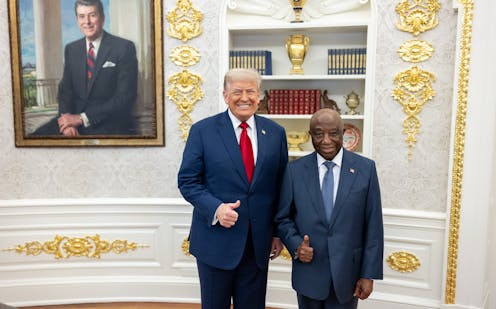
« Où avez-vous appris à parler un si bon anglais ? » La question de Donald Trump au président libérien Joseph Boakai, posée pendant une rencontre à Washington, en juillet 2025, a provoqué une onde de choc au Liberia – pays dont l’anglais est la langue officielle –, et dans le monde. Derrière cette remarque jugée condescendante, c’est tout un système de représentations biaisées relatives au continent africain qui refait surface.
Oublier que le Liberia est anglophone, et qu’il partage une histoire fondatrice avec les États-Unis, c’est révéler un aveuglement symptomatique d’un regard occidental figé sur l’Afrique. Un regard qui reste souvent prisonnier de stéréotypes anciens : l’Afrique comme continent sans histoire, replié sur lui-même, condamné à la pauvreté ou privé de rationalité politique.
« L’Afrique » : au-delà delà des représentations réifiantes, un continent à l’histoire millénaire
Or, le continent n’est pas « hors de l’histoire ». Des empires puissants comme ceux du Ghana ou du Mali ont rayonné bien avant l’arrivée des Européens. Durant la période précoloniale, le continent a connu de grandes civilisations, puissantes, organisées et connectées au reste du monde.
C’est le cas emblématique de l’Empire du Ghana (aussi appelé Wagadou), fondé dès le IIIe siècle de notre ère par le peuple soninké, et qui atteignit son apogée au XIe siècle. Bien qu’il n’ait aucun lien géographique avec le Ghana moderne, cet empire dominait une large partie de l’actuel Sahel (Sénégal, Mali, Mauritanie, Niger).
L’Empire tirait sa prospérité de ses richesses aurifères, de sa maîtrise du travail du fer, de son organisation politique structurée (avec ministres, gouverneurs, et armée hiérarchisée) et d’un système de succession matrilinéaire particulièrement avancé pour son époque. Il était aussi relié au reste du monde par les routes commerciales transsahariennes, qui permettaient des échanges avec le Maghreb, le monde arabe et même au-delà.
L’idée reçue selon laquelle les Africains seraient de simples récepteurs de la modernité continue pourtant de nourrir un regard paternaliste. Or, les sociétés africaines ont été actrices de l’histoire globale, connectées par le commerce, la religion et la diplomatie à l’Europe, au Moyen-Orient ou à l’Asie, bien avant la colonisation.
Après le déclin du Ghana au XIIe siècle, l’Empire du Mali prend le relais et marque profondément les mémoires. Il atteint son apogée sous le règne du légendaire Mansa Moussa (1312–1332 ou 1337). Ce souverain, souvent considéré comme l’un des hommes les plus riches de l’histoire mondiale, doit sa fortune à la production d’or du Mali, à une époque où la majeure partie de l’or circulant dans le monde méditerranéen venait d’Afrique de l’Ouest.
Le commentaire de Trump ne serait qu’un « faux-pas » si le contexte n’était pas aussi lourd de symboles. Il rappelle combien les voix africaines sont encore perçues à travers un prisme d’exotisme ou de surprise, comme si l’intelligence, la maîtrise linguistique ou la culture ne pouvaient s’exprimer depuis le continent africain, qu’à titre exceptionnel.
On a souvent présenté les sociétés africaines comme sans écriture, sans passé, sans rationalité politique. La colonisation s’est construite sur cette base, en prétendant « civiliser » des peuples jugés naturellement inférieurs. Le sociologue portugais Boaventura de Sousa Santos qualifie cette pratique d’« épistémicide », au sens d’une élimination des formes de connaissances et des pratiques sociales indigènes, pratique déjà à l’œuvre dans les colonies.
Des pays producteurs et acteurs de leur politique
Le continent regorge de dynamiques citoyennes, d’expressions démocratiques et de formes d’organisation politique qui témoignent d’une réelle vitalité. Les Africains ne sont pas « apolitiques », comme certains discours le laissent entendre, mais ils participent activement à la vie publique, souvent en dehors des cadres formels ou des institutions étatiques affaiblies.
Les sociétés civiles jouent un rôle crucial dans cette rationalité politique : syndicats, mouvements étudiants, ONG locales, journalistes, artistes engagés, activistes numériques, autant de forces qui questionnent le pouvoir, dénoncent la corruption ou défendent les droits humains. Ce sont souvent ces acteurs qui portent les aspirations démocratiques face à des élites perçues comme déconnectées des réalités sociales.
On observe également l’importance des mouvements citoyens panafricains, comme ont pu l’être « Y’en a marre » au Sénégal ou « Balai citoyen » au Burkina Faso, qui incarnent une nouvelle génération politique, plus horizontale, inventive, et en rupture avec les pratiques clientélistes héritées des États postcoloniaux.
Dans un contexte où la jeunesse africaine est de plus en plus éduquée, connectée et exigeante, la légitimité politique se redéfinit en dehors des seules élections : elle s’ancre désormais dans la capacité des pouvoirs à répondre aux besoins réels des populations, à incarner une vision partagée et à dialoguer avec une société civile de plus en plus structurée et influente.
Ainsi, les modèles occidentaux de démocratie représentative ne s’exportent pas mécaniquement, et leur transposition sans adaptation a souvent produit des systèmes hybrides, où les élections cohabitent avec des pratiques autoritaires, clientélistes ou militarisées. Pourtant, cela ne signifie pas l’absence de vie politique ou de recherche de légitimité. Bien au contraire : les sociétés africaines inventent d’autres formes de participation, de contestation et de redevabilité, ancrées dans leurs contextes sociaux et historiques.
Rompre avec l’idée d’une Afrique « naturellement en retard »
Enfin, les Afriques sont le théâtre de multiples innovations qui démentent l’idée reçue selon laquelle le continent serait condamné à n’être qu’un réceptacle de modernité importée.
Historiquement, des centres de savoir comme l’Université de Sankoré à Tombouctou, dès le Moyen Âge, rassemblaient des milliers d’ouvrages manuscrits en astronomie, mathématiques, droit, théologie. Cette institution accueillait des érudits venus de tout le monde islamique, rivalisant avec les grandes universités européennes de l’époque.
Dans l’Afrique contemporaine, cette dynamique créative et technologique se poursuit avec une intensité croissante. Le Kenya est devenu un symbole d’innovation grâce à M-Pesa, un service pionnier de transfert d’argent par mobile, lancé en 2007 par Safaricom et fondé sur une technologie développée localement. Il a permis à des millions de personnes non bancarisées d’accéder aux services financiers, transformant le quotidien économique de nombreux foyers.
Ce succès a été suivi par une vague de start-ups africaines, notamment au Nigeria, au Sénégal ou au Maroc, qui lèvent aujourd’hui des centaines de millions de dollars dans des domaines aussi variés que le numérique, l’agritech, la santé ou l’intelligence artificielle. Des pays comme l’Égypte, l’Afrique du Sud et le Kenya sont devenus de véritables pôles d’innovation, même si l’écosystème reste encore fragilisé par un manque d’infrastructures et d’accès au financement.
L’innovation est aussi culturelle. Le cinéma nigérian Nollywood, deuxième industrie cinématographique mondiale en volume, illustre la puissance d’une création populaire locales. Il en va de même pour l’essor de l’afrofuturisme : en mêlant science-fiction, héritage culturel africain et critique du colonialisme, il propose une réinvention des imaginaires africains, loin des stéréotypes misérabilistes. Le film Black Panther, avec son royaume fictif du Wakanda jamais colonisé et technologiquement avancé, a marqué une rupture dans les représentations populaires, en valorisant une Afrique puissante, moderne et autonome.
Ces exemples rappellent que la créativité n’est ni marginale ni récente, mais structurelle. Pourtant, elle continue d’être perçue à travers un filtre de surprise ou d’exception : comme si l’innovation sur le continent ne pouvait être que l’exception qui confirme la règle, et non la manifestation d’un dynamisme profond.
La « surprise » de Donald Trump, que nous avons narrée au début de cet article, devant un président africain anglophone, est l’écho de cette idée absurde selon laquelle « les Africains n’ont pas d’histoire », ou seraient « naturellement en retard ».
En réalité, comme nous le montrons dans Afriques : Idées reçues sur un continent composite, il s’agit moins d’un manque de connaissances que d’un refus d’écouter les récits africains dans leur pluralité. Il est urgent de déconstruire ces visions. Cela commence par un travail d’éducation, d’histoire et d’écoute. Car ce n’est pas l’Afrique qui est « en retard », mais bien certaines perceptions qui peinent à se mettre à jour. Le véritable enjeu n’est pas tant de corriger une bourde diplomatique que de reconsidérer en profondeur nos cadres de pensée.
Sonia Le Gouriellec ne travaille pas, ne conseille pas, ne possède pas de parts, ne reçoit pas de fonds d’une organisation qui pourrait tirer profit de cet article, et n’a déclaré aucune autre affiliation que son organisme de recherche.
L’Opéra Boualem-Bessaïh d’Alger a été financé par la Chine, pour un montant de 30 millions d’euros, et inauguré en 2016.Sino/Opéra d’Alger
La présence d’opéras importés par les Occidentaux en Afrique du Nord et le regain d’intérêt pour ceux-ci depuis une vingtaine d’années raconte l’histoire complexe d’un art, vecteur d’influence culturelle, en cours d’intégration dans les sociétés et les politiques publiques autochtones.
La diffusion de l’opéra en Afrique du Nord s’inscrit au départ dans des logiques de domination culturelle. Durant la période coloniale, l’opéra est majoritairement un art importé, cloisonné et réservé aux élites européennes. Cette dynamique laisse progressivement la place à un transfert artistique combiné à la création de liens diplomatiques. En Algérie, comme en Tunisie ou au Maroc, les trajectoires de l’opéra sont liées à l’histoire coloniale, révèlent des échanges transméditerranéens et mettent en lumière certaines recompositions identitaires qui ont vu le jour après les indépendances. Initialement outil de légitimation propre aux puissances coloniales, cet art a progressivement intégré des éléments de la culture locale pour devenir, aujourd’hui, un instrument de soft power et de rayonnement international.
L’Algérie, du territoire lyrique colonial hiérarchisé au nouveau modèle culturel
En 1830, alors que l’Algérie possède déjà une riche tradition musicale et théâtrale, la colonisation ouvre une phase d’intégration avec l’espace culturel français. L’installation d’infrastructures lyriques dans la capitale comme dans des villes moyennes répond à l’objectif explicite des autorités coloniales de reproduire des formes de sociabilité et de distinction culturelle et sociale présentes dans la métropole.
La construction de théâtres à Alger, à Oran ou à Constantine, inscrit la forme artistique sur le territoire avec une programmation offrant opéras, opérettes et concerts symphoniques. Un public composé de fonctionnaires, de militaires, de commerçants et de notables vient s’y distraire. L’armée joue un rôle structurant, ses musiciens formant le socle d’orchestres permanents ou ponctuels.
Un aménagement du territoire lyrique hiérarchisé voit le jour comprenant des maisons d’opéra dans les grands centres urbains alors que des tournées desservent des villes secondaires. Les populations autochtones sont presque totalement exclues de ce territoire lyrique occidental importé, en raison de barrières linguistiques (œuvres chantées en italien ou en français), de différences esthétiques sur le plan musical et d’une distance sociale qui touche aussi certains pieds-noirs…
Après l’indépendance de 1962, l’Algérie conserve le bâti hérité de la colonisation et notamment l’ex-Opéra d’Alger, rebaptisé Théâtre national algérien. Le monument accueille alors des pièces de théâtre, même si quelques activités lyriques sporadiques restent programmées. L’Orchestre symphonique national remplace les ensembles musicaux français tandis que la musique andalouse et des formes traditionnelles conservent leur place dans la vie musicale, voire se développent.
L’ère contemporaine voit le réveil d’un intérêt pour l’opéra, désormais associé à la diplomatie culturelle. Inauguré en 2016, le nouvel opéra d’Alger marque ainsi une rupture dans la perception de l’art lyrique en Algérie. Financé par la Chine pour un montant de 30 millions d’euros et considéré comme une vitrine artistique par le pouvoir algérien, il accueille en résidence l’Orchestre symphonique, le Ballet national et l’Ensemble de musique andalouse. La programmation combine répertoire lyrique occidental, créations locales en lien avec des traditions séculaires, alors que s’instituent des échanges avec de grandes maisons d’opéra de renommée internationale, comme Milan ou Le Caire. L’opéra devient ainsi un outil diplomatique intégrant la culture dans les relations bilatérales.
Tunisie : de l’influence égyptienne au réseau d’art lyrique panarabe
Sous protectorat français à partir de 1881, la Tunisie présente un paysage lyrique diversifié abritant des traditions musicales autochtones sur lesquelles l’opéra occidental vient se surimposer. Riche d’une population issue d’horizons culturels variés, le territoire lyrique tunisien devient un lieu de confluence entre répertoires italiens, français et égyptiens.
Le Théâtre municipal de Tunis, construit dans un style italien, accueille des troupes venues de toute l’Europe pour le plaisir d’un public colonial assorti de diplomates et d’une minorité de Tunisiens formant une élite occidentalisée. En parallèle, une tradition lyrique arabe se développe grâce à des troupes, en provenance d’Égypte, qui proposent des œuvres associant chant, théâtre et poésie, jouées le plus souvent dans des espaces alternatifs, souvent temporaires. Les infrastructures coloniales restent vouées à l’opéra et, plus généralement, à la musique occidentale si bien que la coexistence des deux traditions reste marquée par un cloisonnement institutionnel et social.
Les premières décennies de postindépendance sont celles d’un début de patrimonialisation. En Tunisie, le Théâtre municipal de Tunis demeure le principal lieu de représentations lyriques. De surcroît, on note l’apparition des années 1980 aux années 2000 de festivals, tels que l’Octobre musical de Carthage, qui accueillent des productions européennes et arabes. Des coopérations bilatérales avec l’Italie et avec la France permettent ensuite, dans les années 2010, l’émergence de jeunes chanteurs tunisiens bien que la structuration d’une saison lyrique nationale soit encore embryonnaire.
Ces initiatives portent leurs fruits. Le Théâtre de l’Opéra de Tunis développe désormais des coproductions de haut niveau comme Archipel (menée avec le Conservatoire national supérieur de musique et de danse [CNSMD] de Paris et l’Institut français de Tunisie). Par ailleurs, le projet « Les voix de l’Opéra de Tunis » vise à former une nouvelle génération de chanteurs et à créer une saison lyrique nationale. L’inauguration, en 2018, d’une cité de la culture comptant une grande salle de 1 800 places consacrée à l’opéra marque la volonté du pouvoir politique d’inscrire cet art dans le paysage culturel tunisien.
Au Maroc, de l’implantation intermittente à la volonté d’excellence lyrique
Au Maroc, durant le protectorat français (1912-1956), l’art lyrique est marqué par des initiatives ponctuelles plutôt que par une implantation structurée sur le territoire comme cela a pu être le cas en Algérie.
L’inauguration en 1915 d’un opéra-comique à Casablanca, à l’occasion de l’Exposition franco-marocaine, symbolise la volonté pour la France d’affirmer son prestige culturel, tout en répondant à une demande de divertissement émanant des colons français. Les infrastructures sont souvent provisoires (on note l’utilisation de théâtres en bois) et la programmation reste destinée à un public européen (un théâtre populaire marocain préexistait). Entre 1920 et 1950, Casablanca accueille des artistes lyriques de renom – à l’image de Lili Pons ou Ninon Vallin – qui viennent interpréter un répertoire essentiellement européen et chanté en français ou en italien.
À Rabat, le Théâtre national Mohammed-V devient, en 1962, la scène marocaine de référence pour l’accueil de compagnies internationales. Quelques expériences d’adaptation linguistique voient le jour, bien que restant marginales. L’opéra demeure encore perçu comme un art importé, associé à un symbole de prestige, plutôt qu’ancré dans la création locale.
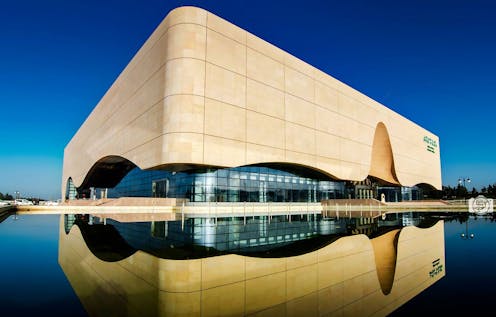
Mais la volonté d’excellence lyrique du Maroc se matérialise avec la création du Grand Théâtre de Rabat et de ses 1 800 places, inauguré en octobre 2024. Conçu par l’architecte anglo-irakienne Zaha Hadid, s’inscrivant dans un projet phare de requalification urbaine, il se veut à la fois un incubateur de talents marocains et une scène internationale. Sous l’impulsion du baryton David Serero, ce projet lyrique d’envergure se caractérise par la volonté de promouvoir un répertoire Made in Morocco, associant des œuvres occidentales en langue originale et des créations ou adaptations en darija, forme d’arabe dialectal marocain.
Par ailleurs, un travail de médiation en direction de la jeunesse est mené, montrant la volonté d’ouvrir cet art à un public plus large. Ce lieu symbolise la volonté du Maroc de s’affirmer comme une référence culturelle africaine et arabe de premier plan en matière d’art lyrique.
L’histoire et la géographie de l’opéra en Afrique du Nord mettent en lumière la plasticité des formes artistiques lorsqu’elles traversent des contextes politiques et culturels différents.
Importé comme un outil de domination symbolique, l’art lyrique a d’abord servi à reproduire les hiérarchies sociales coloniales avant de devenir, dans certains cas, un espace d’expérimentation identitaire et de projection internationale. Aujourd’hui, les grandes institutions lyriques d’Alger, de Tunis ou de Rabat s’inscrivent dans des stratégies où la culture est mobilisée comme ressource de prestige, de diplomatie et de développement urbain, confirmant que l’opéra, loin d’être un simple divertissement, demeure un acteur à part entière des relations internationales.
Frédéric Lamantia ne travaille pas, ne conseille pas, ne possède pas de parts, ne reçoit pas de fonds d’une organisation qui pourrait tirer profit de cet article, et n’a déclaré aucune autre affiliation que son organisme de recherche.
Depuis 1990, les pertes assurées liées aux catastrophes naturelles croissent de 5 % à 7 % par an – 137 milliards de dollars états-uniens, en 2024, et une tendance à 145 milliards, en 2025.Lucian Coman/Shutterstock
Tempêtes qui se répètent, primes qui s’envolent, retraits d’assureurs : à l’heure du dérèglement climatique, une question se pose : qui règlera, in fine, la note ?
Des mutuelles ouvrières du XIXe siècle, créées pour amortir les coups durs du développement industriel, aux logiques actionnariales des multinationales contemporaines, l’assurance a toujours reflété les grands risques de son époque.
Désormais sous la pression d’événements climatiques à la fréquence et à la sévérité inédites, le secteur affronte une équation nouvelle : comment rester solvable et socialement légitime lorsque la sinistralité (montants payés par une compagnie d’assurance pour des sinistres) croît plus vite que les primes (encaissées) ? Entre flambée des tarifs, exclusions de garanties et menace d’inassurabilité de territoires entiers, comment la solidarité assurantielle doit-elle se réinventer ?
Chacun pour tous, et tous pour chacun
Avant d’être une industrie financière pesant des milliards d’euros, l’assurance est née comme un simple pot commun : des membres cotisent, les sinistrés piochent, et le surplus (s’il existe) revient aux sociétaires. Des organismes de solidarité et d’assurance mutuelle créés dans le cadre de la Hanse (la Ligue hanséatique, réseau de villes marchandes d’Europe du Nord entre le XIIIᵉ et le XVIIᵉ siècle) jusqu’aux guildes médiévales, ces associations de personnes exerçant le même métier ou la même activité, la logique est déjà celle d’un risk-pooling, un partage de risque, à somme nulle. Chacun paie pour tous, et tous pour chacun.
Dans les guildes du Moyen Âge, en Europe, chaque maître artisan versait un droit annuel qui finançait la reconstruction de l’atelier détruit par l’incendie ou le soutien de la veuve en cas de décès. Pour l’historien de l’économie Patrick Wallis, c’est la première caisse de secours structurée. Les chartes danoises de 1256, qui imposent une « aide feu » (ou brandstød) obligatoire après sinistre, en offrent un parfait exemple, comme le montre le chercheur en politique sociale Bernard Harris.
Le principe traverse les siècles. Au XIXe, les sociétés de secours mutuel instaurent la ristourne, quand la sinistralité s’avère plus clémente que prévu. Aujourd’hui encore, près d’un assuré sur deux en incendies, accidents et risques divers (IARD) adhère à une mutuelle dont il est copropriétaire statutaire.
L’équation financière reste fragile : lorsque le climat transforme l’aléa en quasi-certitude, la prime n’est plus un simple « partage de gâteau » mais une avance de plus en plus volumineuse sur des dépenses futures. Le groupe Swiss Re a calculé que, depuis 1990, les pertes assurées liées aux catastrophes naturelles croissent de 5 % à 7 % par an – 137 milliards de dollars états-uniens en 2024, la tendance est à 145 milliards de dollars en 2025 (respectivement 118 milliards et 125 milliards d’euros).
Le modèle mutualiste, fondé sur la rareté relative du sinistre et la diversification géographique, se voit contraint de réinventer sa solidarité si la fréquence double et la gravité explose… sous peine de basculer vers une segmentation aussi fine que celle des assureurs capitalistiques.
Tarification solidaire et optimisation actionnariale
À partir des années 1990, la financiarisation injecte un nouvel impératif : la prime doit couvrir les sinistres, financer le marketing, rémunérer les fonds propres et, à l’occasion, servir de variable d’ajustement pour les objectifs trimestriels. L’optimisation tarifaire, popularisée sous le vocable de price optimisation, décortique des milliers de variables de comportements (nombre de clics avant signature, inertie bancaire, horaires de connexion) afin d’estimer le prix de réserve individuel, soit le prix minimum qu’un vendeur est prêt à accepter, ou qu’un acheteur est prêt à payer, lors d’une transaction.
Autrement dit, on estime non plus seulement la prime la plus « juste » actuariellement (l’actuaire étant l’expert en gestion des risques), au sens que lui donnait Kenneth Arrow en 1963, mais aussi la prime la plus élevée que l’assuré est prêt à payer. La prime juste étant le coût moyen attendu des sinistres, le montant que l’assureur pense payer l’an prochain pour des risques similaires.
L’Institut des actuaires australiens dénonce, dans son rapport The Price of Loyalty, une pénalisation systématique des clients fidèles, assimilée à un impôt sur la confiance. Au Royaume-Uni, le régulateur Financial Conduct Authorities (FCA) a frappé fort. Depuis le 1er janvier 2022, la cotation à la reconduction doit être identique à celle d’un nouveau client à risque égal ; l’autorité évalue à 4,2 milliards de livres l’économie réalisée pour les ménages sur dix ans.
Cette bataille réglementaire va bien au-delà du prix. En reléguant la logique de mutualisation au second plan, l’optimisation comportementale renforce les indicateurs socioéconomiques indirects – comme l’âge, la fracture numérique ou la stabilité résidentielle –, qui finissent par peser davantage que le risque technique pur dans la détermination du tarif.
Désormais l’assureur a accès à des data lakes (données brutes) privés, où l’assuré ignore ce qui rend sa prime plus chère. Par nature, les contrats restent rétifs à toute comparaison simplifiée. L’un affiche une franchise de 2 000 euros, l’autre un plafond d’indemnisation plus bas ou des exclusions reléguées dans de minuscules clauses, de sorte qu’il faut un examen quasi juridique pour aligner réellement les offres, comme le soulignait un rapport de la Commission européenne.
Refus d’un dossier sur deux
La montée des événements extrêmes illustre brutalement ces dérives. En Australie, trois phénomènes climatiques dans la première moitié de l’année 2025, dont le cyclone Alfred, ont généré 1,8 milliard de dollars australiens (AUD), soit 1 milliard d’euros, de demandes d’indemnisation. L’Insurance Council prévient que les primes habitation verront des augmentations à deux chiffres et certains contrats pourraient atteindre 30 000 dollars autraliens par an (ou 16 600 euros par an) dans les zones les plus exposées.
Aux États-Unis, la Californie cumule résiliations et refus de prise en charge. Un rapport mentionné par le Los Angeles Times montre que trois grands assureurs ont décliné près d’un dossier sur deux en 2023. Une action collective accuse de collusion 25 compagnies d’assurance dans le but de pousser les sinistrés vers le FAIR Plan, pool d’assureurs de dernier ressort aux garanties réduites.
Vers l’« inassurabilité » systémique
Le phénomène n’est pas marginal. Les assureurs réduisent leur exposition. Les assureurs états-uniens State Farm et Allstate ont cessé d’émettre de nouvelles polices en Californie, dès 2023. En Floride, parce qu’il intervient lorsque aucun assureur privé n’accepte de couvrir un logement à un prix raisonnable, l’assureur public de dernier ressort Citizens a vu son portefeuille grossir jusqu’à environ 1,4 million de polices au pic de la crise, puis repasser sous le million, fin 2024, grâce aux transferts (takeouts) vers des acteurs privés – un progrès réel, qui révèle toutefois un marché encore fragile. Au niveau mondial, Swiss Re compte 181 milliards de dollars états-uniens de pertes 2024 restées à la charge des victimes ou des États, soit 57 % du total.
Face à ces écarts de protection croissants, les assureurs réduisent leur exposition. Cette contraction de l’offre rejaillit sur la finance immobilière : l’économiste Bill Green rappelle dans une lettre au Financial Times que la moindre défaillance d’assurance provoque, en quelques semaines, l’annulation des prêts hypothécaires censée sécuriser la classe moyenne états-unienne. Lorsque les assureurs se retirent ou lorsque la prime devient inabordable, c’est la valeur foncière qui s’effondre et, avec elle, la stabilité de tout un pan du système bancaire local.
Refonder le contrat social du risque
Des pistes se dessinent néanmoins. Le Center for American Progress propose la création de fonds de résilience cofinancés par les primes et par l’État fédéral, afin de financer digues, toitures renforcées et relocalisations dans les zones à très haut risque.
En Europe, la France conserve un régime CatNat fondé sur une surprime obligatoire uniforme – 20 % en 2025 – pour un risque réassuré par la Caisse centrale de réassurance (CCR). Ce mécanisme garantit une indemnisation illimitée tout en mutualisant les catastrophes sur l’ensemble du territoire national. Combinés à une tarification incitative (franchise modulée selon les mesures de prévention), ces dispositifs peuvent préserver l’assurabilité sans faire exploser les primes individuelles.
Reste à traiter l’amont : limiter l’exposition en gelant les permis dans les zones inconstructibles, conditionner le financement bancaire à la compatibilité climat et pérenniser, à l’échelle nationale, une surtaxe de prévention climatique progressive qui financerait les adaptations structurelles tout en lissant les chocs tarifaires.
À ce prix, l’assurance redeviendrait un bien commun : ni pur produit financier ni simple pot commun, mais une infrastructure essentielle où la société, et non plus le seul assureur, choisit sciemment la part de la facture climatique qu’elle accepte de supporter.
Cet article a été rédigé avec Laurence Barry, co-titulaire de la Chaire PARI (Programme de recherche pour l’appréhension des risques et des incertitudes).
Arthur Charpentier est membre (fellow) de l’Institut Louis Bachelier. Il a reçu des financements du CRSNG (NSERC) de 2019 à 2025, du Fond AXA Pour la Recherche de 2020 à 2022, puis de la Fondation SCOR pour la Science de 2023 à 2026.
Dans un contexte de tensions sur l’approvisionnement en ressources minérales stratégiques, le débat sur la réouverture des mines en France et en Europe est passé au premier plan. Mais pas de prospection et d’exploitation minière sans géologie ! La place de cette science dans nos sociétés est tout aussi centrale pour tirer parti des ressources précieuses qu’abrite le sous-sol, explique le président de la Société géologique de France.
Depuis la naissance de la métallurgie, l’humain extrait du sous-sol les ressources dont il a besoin. Ces activités minières se heurtent aujourd’hui à des injonctions paradoxales :
D’un côté, les sciences de la Terre et du climat nous enseignent la finitude des ressources naturelles – les conséquences délétères de leur utilisation sur notre environnement.
Dans le même temps, les conflits géopolitiques, les crises sanitaires et les tensions commerciales d’aujourd’hui révèlent crûment notre dépendance à ces ressources du sous-sol.
En effet, accroître la souveraineté européenne impose de relocaliser en partie l’exploitation du sous-sol, tout en garantissant une gestion la plus durable possible. Ces questions ne sont pas seulement économiques et politiques, mais en premier lieu géologiques.
La géologie moderne est née en Europe et en Amérique du Nord parce que le développement des sociétés des XVIIIe et XIXe siècles demandait de comprendre la nature et l’agencement des différentes roches dans le sous-sol pour les prospecter et en extraire les ressources.
Grand pays charbonnier, la France a exploité de nombreux gisements métalliques, qui ont à la fois fait la richesse des régions concernées et laissé des pollutions chimiques ou géotechniques sur le long terme.
Le sous-sol, premier fournisseur de ressources pour tous nos usages
Les roches, minéraux et métaux fournis par les carrières et par les mines sont à la base de tout ce que nous fabriquons et utilisons au cours de notre vie.
À commencer par l’énergie que nous utilisons, qui reste en majeure partie issue de l’exploitation du sous-sol. Plus de 60 % du mix énergétique français provient encore des énergies fossiles et plus de 80 % de l’électricité est d’origine nucléaire – et donc produite à partir d’uranium. Ces ressources sont presque entièrement importées.
Les énergies renouvelables éoliennes et solaires consomment elles aussi des ressources. Il y a, d’abord, les besoins en ciment pour les éoliennes, consommateur de grandes quantités de calcaire ou de marne (type de calcaire argileux) et de granulats, et dont la production est énergivore et émettrice de dioxyde de CO2. La construction des panneaux solaires et des éoliennes nécessite également du fer, du cuivre, de la silice et des terres rares, sans parler du carburant nécessaire aux engins pour les construire puis pour en assurer la maintenance.
Les éoliennes nécessitent d’importantes quantités de ciment, et donc de calcaire ou de marne. Pexels.com
Sans ressources du sous-sol, nous n’aurions ni routes, ni véhicules, ni hôpitaux, pas d’agriculture, pas d’écoles, pas de maisons, pas d’eau au robinet, pas d’électricité ni de chaleur et, bien sûr, pas d’ordinateurs ni de téléphones portables. Le numérique, le télétravail, le streaming et l’IA générative rendent cette question encore plus prégnante.
De nouvelles ressources et nouveaux gisements à découvrir
Reste que la richesse d’un territoire en métaux et matériaux utiles dépend essentiellement de son histoire géologique. La plupart des gisements se forment à grande profondeur, là où règnent des conditions de pression et de température élevées et où circulent des fluides chauds. Ils sont ensuite ramenés à la surface par l’érosion ou par la tectonique des plaques.
Cristaux de stibine (Sb2S3), à base d’antimoine, provenant de la mine d’Ouche, près de Massiac (Cantal). P.-C. Guiollard
Le cœur ancien des continents, Afrique, Canada, Russie, Australie, ou encore la Cordillère des Andes – tectoniquement active – en est riche. En Europe occidentale, ces conditions géologiques ne sont remplies que sur de plus petites surfaces.
Par exemple, la France possède a priori des réserves de cuivre de plus faibles dimensions, mais des réserves importantes de tungstène, d’antimoine, d’or, de lithium ou de germanium.
Cependant, notre connaissance des mécanismes géologiques menant à la concentration des métaux a beaucoup progressé au cours des dernières décennies. Il est probable que de nouveaux gisements puissent être découverts, si l’on se donne la peine de les chercher. Le programme PEPR Sous-Sol Bien Commun et le nouvel inventaire des ressources minérales de la France lancé par le BRGM vont dans ce sens.
En ce qui concerne les ressources énergétiques du sous-sol, le potentiel géothermique de la France devrait lui aussi être revu, à. la suite des progrès dans la compréhension de la structure thermique de la Terre et de la circulation de l’eau en profondeur. Le principal intérêt de la géothermie est qu’il s’agit d’une source d’énergie inépuisable.
Schéma d’une plateforme expérimentale de géothermie. BRGM/Girelle Prod
Au-delà de la prospection de nouvelles ressources minières, nous devons donc développer plus activement la géothermie sur l’ensemble du territoire national, et cela sous toutes ses facettes : basse, moyenne et haute température. Pour cela, une montée en compétences sur toute la chaîne de valeur, de la compréhension géologique aux techniques de géothermie, est indispensable.
Un débat qui impose de mieux former citoyens et décideurs
L’exploitation du sous-sol et la transformation des minerais en usine soulèvent des enjeux économiques, environnementaux et sociaux majeurs. Nous ne pouvons plus faire l’autruche en utilisant à profusion des ressources extraites dans des pays tiers sans nous soucier de notre dépendance et des conséquences environnementales et sociales là où les législations ne sont pas aussi strictes qu’en Europe.
Ces questions, qui appellent à des arbitrages complexes, demandent des débats sereins, qui ne pourront avoir lieu que si nous avons tous accès à un socle minimal de connaissances, tant géologiques qu’environnementales. Il y a donc urgence à mieux former nos concitoyens et nos dirigeants, d’abord à l’école, puis tout au long de la vie.
Pourtant, les sciences de la Terre trouvent à l’heure actuelle de moins en moins leur place au collège et au lycée. Étudier la géologie est pourtant crucial pour comprendre la formation des montagnes et des océans, les mécanismes des volcans et des séismes ou, encore, pour comprendre comment la tectonique des plaques a orienté l’évolution du vivant. Autant de sujets passionnants qui sont à même de motiver nos jeunes concitoyens.
Investir dans la recherche, un choix stratégique
Investir dans la recherche en sciences de la Terre est tout aussi essentiel.
Les dépenses de la France en recherche fondamentale aujourd’hui restent très insuffisantes au vu des enjeux actuels. La France, malgré un niveau élevé de dépenses publiques, consacre seulement 0,3 % de son PIB à la recherche fondamentale, soit deux fois moins que la moyenne européenne.
C’est pourtant grâce à la recherche, fondamentale comme appliquée, que l’on pourra concevoir des solutions durables pour économiser les ressources naturelles, développer l’écoconception, diminuer les empreintes de nos activités (eau, sol, métaux, matériaux, énergie, climat…).
Mais avant de se prononcer pour ou contre l’exploitation des ressources de notre sous-sol (métaux, roches, minéraux, énergies), il est essentiel de s’interroger sur nos modes de consommation et sur ce dont nous avons réellement besoin. Dans ce contexte, alors que l’Union européenne cherche à mieux encadrer et à valoriser les métaux, un débat national s’impose. La Société géologique de France, que je représente à travers ce texte, est prête à y participer activement.
Laurent Jolivet est président de la Société géologique de France. Les membres du conseil d’administration de la Société géologique de France ont également participé à l’écriture de cet article.
Jolivet Laurent est professeur émérite à Sorbonne Université et président de la Société Géologique de France. Il a reçu des financements de l’Agence Nationale de la Recherche, du CNRS-INSU, de l’European Research Council, de Total. Il a été membre du Comité Scientifique du BRGM et président du conseil scientifique du Référentiel Géologique de la France.