Zack Polanski becomes Green party leader – what happens next?

Source: The Conversation – UK – By Louise Thompson, Senior Lecturer in Politics, University of Manchester

Zack Polanski is the new leader of the Green party in England and Wales after winning a leadership election promising a programme of “eco-populism”. Polanski beat incumbent leader Adrian Ramsay and his partner on the ticket, Ellie Chowns.

It’s been just over a year since the party celebrated its best ever results in the most recent general election. In July 2024, it doubled its vote share and quadrupled its representation in the House of Commons to four MPs.

The same election saw terrible results for the Conservatives and even for Labour, despite its win, raising questions about whether two-party politics was well and truly over. Since then, as professor John Curtice has vividly described, things have started to look even shakier.

This year’s local election saw a “record-breaking” fragmentation of the vote in which less than a quarter of local council seats went to the two main parties. The Greens now hold over 800 seats in more than 170 different councils, adding to their electoral portfolio – which also includes two members of the House of Lords and three London Assembly members.

While Polanski will be celebrating today, party members will look to him to raise their electoral fortunes even further. The electoral challenge for the Greens in England and Wales is two-pronged.

First, the party needs to maintain its position in the seats it has already secured. Its four MPs have fairly comfortable majorities, the smallest being Chowns’ 5,800 majority in North Herefordshire. Second, and perhaps most importantly, it needs to maximise its success in the 40 constituencies where it came second. All but one of these constituencies were won by Labour, which makes Labour voters the prime targets.

My research has shown how the Green party has followed a policy of “total engagement” in recent years. It takes its parliamentary work very seriously, using any and every opportunity to get its message across, even in lower-priority policy areas.

The goal here is to build credibility with the electorate. Small parties tend to want voters to think they are bigger than they are, so they can present themselves as realistic contenders for taking on the heavy work and responsibility of government. Caroline Lucas did a fantastic job of this, punching well above her weight as the party’s only MP between 2010 and 2024.

Together, the Green MPs have made over 380 contributions in the House of Commons. Chowns in particular has been a prolific backbencher, making 161 contributions, while the previous co-leaders Carla Denyer and Ramsay have been much quieter.

With Polanski sitting in the London Assembly rather than the House of Commons, this will inevitably change. The four Green MPs will collectively have more time on their hands and, with the right direction from their new leader, will have the space to be more strategic in their parliamentary activities.

Outsiders

But the Greens have always acted as something of an atypical party too, keeping one foot outside Westminster. Lucas was regularly involved in activism, joining protesters campaigning against tuition fee increases and fracking and to support refugees, to name just a few. She was even arrested in 2013 after joining a protest against energy firm Cuadrilla in Sussex (she was later cleared of all charges in court).

The new Green MPs have continued in this vein, with Sian Berry joining a peaceful protest against far-right agitators in Brighton last year and Chowns pressing the government to water down anti-protest laws.

The new leadership will need to decide whether this strategy enhances their electoral appeal. Does it highlight the Greens’ distinctiveness from the establishment parties, or does it imply they aren’t responsible enough to manage being a party of significant size? The answer depends on who you ask. Polanski has participated in several protests in the past, so chances are this activism will continue to be a core feature of Green party politics.

An added complication for the Greens is that two other parties are also chasing left-leaning voters. One of these is Reform UK. Although associated with rightwing views on social issues, the party came second in many Labour seats in 2024 and needs to appeal to both sides of the political spectrum.

This may explain why the Greens have focused their efforts on highlighting Reform’s failures. Berry, for instance, recently challenged Nigel Farage and his colleagues to publish a log of all their meetings since entering the Commons, arguing that it would be in the public interest.

The other outside threat is Jeremy Corbyn and Zarah Sultana’s new and currently nameless party of the left. While we know little about this party’s policy platform right now, it seems to be veering towards a similarly bottom-up democratic model of organisation which has long been favoured by the Greens – possibly even with co-leaders.

The challenge for the Greens will be to better establish their niche on the left, to ensure they capture voters who are disillusioned with Keir Starmer’s wobbly start. Part of the solution could be to focus on a handful of key policy areas which go beyond the Green party’s niche of environmental issues. At the moment, its MPs take something of a scattergun approach in the Commons, contributing on everything from local buses and universal credit to Ukraine and the Middle East.

Some of the most recent questions asked during Prime Minister’s Questions by Greens hint at the options they might pursue. Ramsay has pushed for a wealth tax on the super rich, and an end to the two-child benefit cap. Both Corbyn and Sultana have, of course, been outspoken on these issues in the past.

If the Greens can’t forge a different path to this new left party, they may have no choice but to consider an electoral pact to avoid splitting the anti-Labour vote right down the middle.

The Conversation

Louise Thompson has previously received funding from the ESRC for research on small political parties.

ref. Zack Polanski becomes Green party leader – what happens next? – https://theconversation.com/zack-polanski-becomes-green-party-leader-what-happens-next-262846

À la ménopause, savez-vous que le risque cardiovasculaire augmente ? L’activité physique peut aider

Source: The Conversation – France in French (3) – By Carina Enea, Maitresse de Conférences en physiologie de l’exercice – Faculté des Sciences du Sport, Université de Poitiers

La ménopause représente une période critique à partir de laquelle le risque cardiovasculaire (AVC, infarctus du myocarde…) augmente. Mais beaucoup de femmes l’ignorent. En prévention, une activité physique régulière peut se révéler bénéfique.


En France, les maladies cardiovasculaires représentent la première cause de mortalité chez les femmes, bien loin devant le cancer du sein.

Chaque année, elles emportent plus de 75 000 femmes, les décès par accidents vasculaires cérébraux (AVC) étant les plus fréquents. Pourtant, ces risques demeurent largement sous-estimés, tant par les femmes elles-mêmes que par une partie du corps médical.

L’une des périodes les plus critiques dans l’évolution du risque cardiovasculaire chez les femmes est la périménopause (période pendant laquelle les règles commencent à devenir irrégulières), ainsi que les années qui suivent la ménopause (arrêt des règles depuis plus de douze mois) et que l’on nomme « postménopause ».

Périménopause et postménopause, fenêtres de vulnérabilité cardiométabolique majeure

Trop souvent réduites à leurs symptômes les plus connus (bouffées de chaleur, troubles du sommeil, irritabilité), ces périodes sont en réalité des fenêtres de vulnérabilité cardiométabolique majeure pour les femmes.

En effet, les œstrogènes (hormones principalement produites par les ovaires) ont un effet protecteur sur le système cardiovasculaire et leur déclin progressif dès la périménopause impacte directement la santé cardiovasculaire. Conséquence : la pression artérielle tend à s’élever, le profil lipidique se détériore, la résistance à l’insuline (une hormone impliquée dans la régulation de la glycémie, ndlr) augmente, et la graisse abdominale s’installe plus facilement.

Autant de changements défavorables qui augmentent à moyen terme le risque d’événements cardiovasculaires chez les femmes.

Malgré l’importance du sujet, les femmes restent encore aujourd’hui sous-représentées dans les études cliniques portant sur les maladies cardiovasculaires et cérébrovasculaires. Ainsi, selon une étude récente publiée dans la revue scientifique Neurology, les femmes ne représentent qu’un tiers des participants dans les essais cliniques sur les AVC, ce qui limite la compréhension de cette pathologie chez elles et l’efficacité des stratégies de prévention et de traitement.

Le dispositif « Mon bilan prévention » à partir de 45 ans

La prévention du risque cardiovasculaire chez les femmes reste encore trop souvent tardive, alors que la ménopause devrait constituer un moment clé pour effectuer un bilan de santé global.

Ce besoin a, d’ailleurs, été souligné dans le Plan interministériel pour l’égalité entre les femmes et les hommes 2023-2027 qui intègre, pour la première fois, un objectif spécifique de prévention cardiovasculaire féminine, notamment à travers l’initiative « Mon bilan prévention ». Ce dispositif, destiné aux femmes à partir de 45 ans, viserait à détecter précocement les facteurs de risque cardiovasculaire, en tenant compte des spécificités liées au sexe et à l’âge.

C’est également une des propositions phares du rapport de la mission parlementaire sur la ménopause en France, publié en avril 2025, qui recommande explicitement d’inscrire la ménopause comme un moment stratégique pour renforcer la prévention cardiométabolique chez les femmes.

Des outils conçus pour les hommes, qui sous-évaluent le risque des femmes

Néanmoins, les outils actuellement utilisés pour estimer le risque cardiovasculaire reposent majoritairement sur des cohortes masculines. Ils ne prennent pas suffisamment en compte des facteurs spécifiques aux femmes, tels que la ménopause précoce, les symptômes vasomoteurs sévères (bouffées de chaleur, sueurs nocturnes), ou encore certains antécédents obstétricaux (prééclampsie, diabète gestationnel) ou gynécologiques (endométriose, syndrome des ovaires polykystiques).


À lire aussi :
Syndrome des ovaires polykystiques SOPK : une piste impliquant l’hormone œstradiol pour mieux comprendre cette maladie


Plus grave, les femmes sont plus sensibles que les hommes à plusieurs facteurs de risque traditionnels, comme l’hypertension artérielle, le diabète ou le tabagisme. Ces biais de conception des outils d’évaluation mènent à une sous-estimation du risque réel chez les femmes, ce qui peut entraîner des retards de diagnostic et de prise en charge.

Une récente initiative française, les « Bus du cœur des femmes », a d’ailleurs proposé un dépistage gratuit auprès de 4 300 femmes (âge médian : 54 ans), issues de 20 villes françaises, en prenant en compte ces différents facteurs de risque.

Les données récoltées montrent que plus de 70 % d’entre elles n’avaient jamais eu de consultation de prévention du risque cardiovasculaire au préalable, alors que 90,2 % présentaient au moins deux facteurs de risque cardiométabolique et 48,9 % des antécédents obstétricaux et/ou gynécologiques.

L’exercice physique : une intervention non médicamenteuse aux multiples bénéfices

En prévention, l’activité physique régulière peut se révéler extrêmement précieuse si elle est pratiquée conformément aux recommandations (cf. l’infographie de l’Observatoire national de l’activité physique et de la sédentarité [Onaps], ci-dessous).

Ses bénéfices sont multiples : amélioration de la composition corporelle (augmentation de la masse musculaire, réduction de la graisse abdominale), optimisation du profil lipidique sanguin, diminution de l’inflammation chronique de bas grade (mécanisme physiopathologique intracellulaire qui se développe à bas bruit, ndlr) et soutien à la santé mentale, notamment par la réduction des symptômes anxieux et dépressifs.

Nos travaux de recherche ont ainsi montré que les femmes ménopausées très actives physiquement n’ont pas de marqueurs de santé cardiométabolique altérés, contrairement à ce qui est généralement observé chez les femmes inactives (qui ne respectent pas les recommandations). Par ailleurs, certaines études suggèrent que l’activité physique régulière pourrait également atténuer les symptômes vasomoteurs, tels que les bouffées de chaleur ou les sueurs nocturnes, bien que ces effets restent à confirmer par des recherches complémentaires.

Les bénéfices du renforcement musculaire

Au sein du laboratoire Mobilité, vieillissement et exercice, nous avons également cherché à déterminer les modalités d’exercice les plus efficaces pour préserver la santé cardiovasculaire et les performances cognitives. Nos résultats indiquent que les exercices de renforcement musculaire, comme le gainage, la méthode Pilates ou les séances de type cuisses-abdos-fessiers, s’avèrent particulièrement bénéfiques pour la régulation de la pression artérielle, plus encore que les activités (dites « d’endurance ») qui sollicitent davantage le système cardiorespiratoire, comme la course à pied ou le vélo.

Les exercices de renforcement musculaire permettent notamment une réduction significative de la pression artérielle nocturne, un facteur de protection reconnu contre les événements cardiovasculaires.

Sur le plan cognitif, si l’effet immédiat de l’exercice sur les performances est relativement limité, nos données révèlent une augmentation de l’oxygénation du cortex préfrontal, une région clé pour la mémoire, l’attention et les fonctions exécutives. Cet effet est d’autant plus marqué chez les femmes présentant une bonne condition cardiorespiratoire, ce qui souligne l’importance d’un entraînement régulier et bien ciblé pour préserver la santé cérébrale à cette étape de la vie.

Ainsi, chez les femmes très actives (c’est-à-dire qui dépassent les recommandations), la ménopause ne s’accompagne pas d’une baisse des performances cognitives globales.

Prendre en compte les symptômes pour mieux prescrire l’activité physique

Autre enseignement important de ces études : les femmes présentant des symptômes vasomoteurs modérés à sévères tireraient un bénéfice accru de l’activité physique et notamment des exercices de renforcement musculaire. En effet, leur pression artérielle nocturne baisse de façon plus marquée après ce type d’exercices.

De plus, ces femmes ont tendance à moins pratiquer d’activité physique de loisir que celles dont les symptômes sont légers ou absents, un constat qui renforce la nécessité d’un accompagnement ciblé.

Vers une médecine préventive adaptée aux femmes

Nos résultats soulignent l’importance de repenser la prévention cardiovasculaire chez les femmes à la ménopause : elle ne peut plus se limiter à des messages généraux. Il s’agit d’intégrer pleinement l’activité physique comme un outil thérapeutique à part entière, avec une prescription adaptée au statut hormonal, mais également au profil symptomatique de chaque femme.

La ménopause ne devrait plus être considérée comme une étape dite « hormonale », mais comme une chance unique de prévention et de dépistage du risque cardiovasculaire des femmes.

L’exercice physique, simple, efficace et accessible, pourrait en être le pilier.


Pour aller plus loin :
Écoutez le podcast
Bienvenue en Ménopausamie de l’association DisDameDonc.

The Conversation

Carina ENEA a reçu des financements de l’Université de Poitiers (financement UP-SQUARED), de la Chaire Sport Santé de l’Université de Poitiers et de la Région Nouvelle Aquitaine.

Morgane Le Bourvellec a reçu des financements de la Chaire Sport Santé de l’Université de Poitiers et de La Région Nouvelle Aquitaine.

Nathalie Delpech a reçu des financements de la Chaire Sport Santé de l’Université de Poitiers et de la Région Nouvelle-Aquitaine

ref. À la ménopause, savez-vous que le risque cardiovasculaire augmente ? L’activité physique peut aider – https://theconversation.com/a-la-menopause-savez-vous-que-le-risque-cardiovasculaire-augmente-lactivite-physique-peut-aider-263379

Donald Trump was once India’s best friend. How did it all go wrong?

Source: The Conversation – Global Perspectives – By Ian Hall, Professor of International Relations, Griffith University

Just months into President Donald Trump’s second term in office, one of the United States’ most important strategic partnerships is in crisis.

Relations between the US and India are at their lowest ebb in a quarter of a century. Things are so bad that Indian Prime Minister Narendra Modi has reportedly refused to accept calls from Trump for more than two months.

In recent days, Trump labelled trade ties with India a “totally one-sided disaster” and a report emerged that he is no longer planning to visit India later this year for a summit of the Quad partners (India, the US, Australia and Japan).

So bad, so quickly

Things were not meant to happen this way. Many in New Delhi were delighted when Trump won the election last year. Modi congratulated his “friend” on X, along with pictures of the two embracing and holding hands.

India’s foreign minister, S. Jaishankar, told journalists that while other countries might be “nervous” about Trump’s return, India was not.

Feeling confident, Modi went to Washington to meet Trump days after his return to office. The encounter did not go well.

On the eve of the meeting, Modi was embarrassed by distressing images of Indian nationals, handcuffed and shackled, being deported from the US on a military aircraft.

In the Oval Office, he promised to buy more US arms, oil and gas, and asked that Trump not impose punitive tariffs on India. Modi failed to get that commitment.

A few weeks later, Trump announced India would be hit with a 27% tariff – far higher than the 10% imposed on China – unless it could negotiate something better.

Crisis in Kashmir

Begrudgingly, New Delhi began to talk trade. US Vice President JD Vance visited India in late April and both sides made positive noises about a deal. But while Vance was in town, India was engulfed in a new crisis.

On April 22, terrorists killed 26 people – mostly Hindu tourists – in Kashmir, long the site of simmering conflict between India and Pakistan. The Modi government pledged to respond with force, as it had done in the past after similar incidents.

On May 7, India bombed what it claimed were militant camps in Pakistan and Pakistan-administered Kashmir. A rapidly escalating, unpredictable conflict followed, as both sides used drones and missiles to attack one another.

Alarmed, governments around the world urged the two nuclear-armed states to end hostilities before matters got out of control. Early in the morning on May 10, they did, and agreed to a ceasefire.

Trump anoints himself peacemaker

Before either the Indian or Pakistani governments had a chance to say anything, Trump stepped in to take credit.

On social media, he announced both sides had agreed a deal. The next day he claimed they would soon sit down with him as mediator and find a solution to the Kashmir conflict.

Islamabad was jubilant at this outcome. New Delhi, meanwhile, was furious.

India’s longstanding view is that the Kashmir dispute must be settled bilaterally, without third-party involvement. The US has accepted this position for more than 20 years. Now it appeared Trump was taking a different view.

This put Modi in a bind. Keen to maintain a mutually beneficial partnership and avoid punitive tariffs, he did not wish to upset Trump.

But he could not acknowledge Trump’s claims without setting aside a fundamental principle of Indian policy. So, Modi called Washington and explained he would not accept mediation over Kashmir.

The final straw

Meanwhile, Pakistan saw an opportunity to win favour in Washington and drive a wedge between the US and India.

Recognising that Trump covets a Nobel Peace Prize, Islamabad nominated him for his supposed role in ending the conflict.

Enthused, Trump called Modi on June 17 and asked him to do the same. Worse still, Trump requested Modi stop in Washington on the way back from the G7 summit in Canada, and meet with Pakistan’s military chief, Asim Munir.

According to a recent report, that was the final straw for Modi. He flatly refused both requests. The two men reportedly haven’t spoken since.

Piqued, Trump responded by punishing India for continuing to buy Russian oil by lifting its tariff rate to 50% and postponing trade talks.

New Delhi’s dilemma

Trump’s actions have ordinary Indians seething and demanding action, but the Modi government does not have good options.

Giving in to coercion would make Modi – dubbed by political opponents “Narender Surrender” – look weak. Yet, no other major power can offer India what it needs in terms of markets, investment, technology, weapons and diplomatic support.

With US-India relations strained, New Delhi has been working hard to stabilise its relationship with China, which has been tense since bloody border clashes between the two in 2020.

Modi went to China for the first time in seven years on August 31 to further that aim, shaking hands with President Xi Jinping. But although Xi emphasised the need for amicable ties – he said the “elephant and dragon should dance together” – there is little trust between India and China at present.

Modi has more faith in Russia. In China, Modi and Russian President Vladimir Putin reportedly spoke for nearly an hour in Putin’s limousine. And Modi will host the Russian leader for more talks in India later this year. However, Russia remains a pariah in Europe, with limited means to help.

Other countries, like Japan, where Modi stopped off on his way to China, could also help India navigate the current crisis. But they do not have the clout to resolve it.

Unless Modi can find a way to win Trump back, India’s next few years could be very difficult.

The Conversation

Ian Hall has received funding from the Australian Research Council, Department of Defence, and Ministry of Foreign Affairs of Japan. He is an honorary Academic Fellow of the Australia India Institute.

ref. Donald Trump was once India’s best friend. How did it all go wrong? – https://theconversation.com/donald-trump-was-once-indias-best-friend-how-did-it-all-go-wrong-264272

Trump’s tariffs are headed to the US Supreme Court, prolonging the chaos on trade

Source: The Conversation – Global Perspectives – By Felicity Deane, Professor of Trade Law and Taxation, Queensland University of Technology

Trading partners of the United States are facing a fresh period of uncertainty after a US federal appeals court ruled President Donald Trump’s “reciprocal” tariffs were illegal.

In a 7-4 majority, the judges ruled Trump had exceeded his power by invoking emergency powers to impose tariffs of “unlimited duration on nearly all goods from nearly every country in the world”, upholding an earlier court decision.

The ruling will throw into disarray the strategies of trading partners still in negotiations with the US, who may decide to wait and see the outcome of the legal battle.

Although there are different options available to challenge the decision, Trump has made it clear the next stop will be the Supreme Court.

The US Court of Appeals for the Federal Circuit said the tariffs would remain in place until October 14, to allow time for further appeals.

The power to tax rests with Congress

The ruling tested the limits of executive power under the International Emergency Economic Powers Act (IEEPA) from 1977. Trump is the first president to use this act to impose tariffs, setting the stage for a test of executive power. At least for now, it is a test the administration appears to have failed. The judges rejected Trump’s interpretation, which they said would place no limit on the president to raise revenue without any authorisation from Congress.

Citing Article 1, section 8, of the US Constitution, the majority judgement unequivocally stated that “tariffs are a tax” and the power to tax under the Constitution rests with Congress.

In upholding an earlier decision by the Court of International Trade, the appeals court majority noted:

if the President can declare an emergency to cut the deficit by raising taxes in whatever way he wishes, not much remains of Congressional authority over taxation.

The tariffs are still in place

There were two important outcomes from this latest decision. First, the “liberation day” tariffs are (currently) deemed illegal. Second, these “illegal” tariffs will temporarily stay in place to allow for the appeal options to be explored.

Revenue will continue to be collected under the executive orders in question. Should the tariffs be deemed illegal on appeal, that revenue may need to be returned.

This ruling does not apply to all tariffs. It doesn’t cover specific sector tariffs such as those on aluminium and steel. However, other tariffs imposed during the first Trump presidency have already been ruled illegal under World Trade Organization rules and are currently the subject of appeal under the multilateral dispute settlement system.

The latest ruling would not reverse the decision to suspend the de minimis exception that caused global postage chaos. However, if the ruling is upheld, the rate of tariffs on low-value goods would revert back to pre-“liberation day” percentages. In many instances, this would mean back to zero.

What about the deals?

Trading partners initially responded with panic to the unveiling of Trump’s chaotic tariff agenda in April. There was a rush to meet with the president and make so-called deals. So what should governments of trading partners do now?

The most logical response might be to wait out the US legal process, because there may be no point in making deals if the tariffs are upheld to be illegal.

Unfortunately, this means continued uncertainty for business. On one hand, the courts may determine the tariffs are unlawful and must therefore be revoked. But Congress could subsequently move to reimpose tariffs with fresh legislation, or Trump could try other legal avenues.

The Constitution vs loyalty to Trump

If the administration does decide to appeal to the Supreme Court, the important test will not necessarily be about tariffs but whether the US Constitution will continue to support the separation of powers.

The appeals court decision argues the IEEPA does not support the introduction of tariffs of the magnitude of the “liberation day” tariffs. What the IEEPA does allow is for the president to “regulate […] importation”. However, the court suggested this phrase is nothing more than

a wafer-thin reed on which to rest such sweeping power.

Although the appeals court noted that such arguments have been rejected by the Supreme Court in the past, we will have to wait and see whether it is a “wafer-thin reed” that will become doctrine.

The Supreme Court has a conservative majority, with six of nine judges appointed by Republicans, including three in Trump’s first term.

The Supreme Court has already granted the president immunity from prosecution in some circumstances. If the majority decides to allow these widespread and indefinite tariffs, they may be one step closer to creating an American monarch.

The Conversation

Felicity Deane does not work for, consult, own shares in or receive funding from any company or organisation that would benefit from this article, and has disclosed no relevant affiliations beyond their academic appointment.

ref. Trump’s tariffs are headed to the US Supreme Court, prolonging the chaos on trade – https://theconversation.com/trumps-tariffs-are-headed-to-the-us-supreme-court-prolonging-the-chaos-on-trade-264249

China may not invade Taiwan, but rather blockade it. How would this work, and could it be effective?

Source: The Conversation – Global Perspectives – By Claudio Bozzi, Lecturer in Law, Deakin University

US officials believe Chinese President Xi Xinping has set a deadline for his military to be capable of invading Taiwan by 2027 – the centennial anniversary of the founding of the People’s Liberation Army (PLA).

US Secretary of Defense Pete Hegseth mentioned this date at a security conference in Singapore in May, warning of the “imminent threat” China poses to Taiwan.

The PLA has invested heavily in expanding and modernising its operations in recent years. Since 2015, it has built the world’s largest navy and coast guard.

But rather than threaten an invasion of Taiwan, China seems increasingly likely to pressure the self-governing, democratically ruled island with an extended blockade to force it to capitulate.

In preparation for such a possible action, China has developed a new command structure enabling it to coordinate its air, sea and land-based weapons systems to enact a strategy of lianhe fengkong (联合封控), or joint blockade. This would effectively cut Taiwan off from the outside world.

In late July, the Centre for Strategic and International Studies (CSIS) produced a report on 26 simulated war games it conducted to determine what a Chinese blockade of Taiwan would look like.

Taiwan’s natural gas supplies were predicted to run out after ten days of a blockade. Coal and oil supplies would run out in a matter of weeks. If Taiwan’s electricity was reduced to 20% of its pre-blockade levels, all manufacturing would cease. Casualties were expected to be in the thousands.

Taiwan is particularly vulnerable to a blockade. It relies more than any other developed nation on port calls relative to the size of its economy. Its biggest ports are on its west coast, facing mainland China. The island also has limited emergency food and fuel reserves.


What is a blockade under the law?

Imposing a naval blockade during armed conflict is an established right under customary international law. Blockades are not illegal per se, but they must comply with the laws of war. It’s a complicated and controversial area of the law.

To be legal, a blockade must first be effective. That is, the blockading power must maintain a force that prevents access to the enemy’s coast.

Other nations must be notified of the instigation of the blockade and its geographical extent.

A blockade must be enforced impartially against all vessels, except neutral vessels in distress. Any vessel breaching the blockade would be subject to being stopped, captured or fired upon.

Lastly, a blockade cannot prevent access to neutral ports or the delivery of humanitarian assistance to civilians.

Blockade strategies

China may use one of several blockade strategies against Taiwan. In contrast to an invasion, blockades can be scaled up or back, or reversed, depending on the unfolding security situation.

For instance, China may attack merchant shipping vessels seeking to enter Taiwanese waters to deliver essential cargo, coercing Taiwan to submit to China’s takeover. This is known as a kinetic blockade.

Alternatively, it may implement its preferred strategy of “winning without fighting”. Given the sheer size of its navy, coastguard and maritime militia, China could simply encircle the island and block access to its ports.

This could isolate Taiwan from the global economy to the point of forcing it to surrender, or weaken it sufficiently to enable an invasion, without engaging in open hostilities. This is a non-kinetic blockade.

Other ways of impeding naval passage

China may also use measures that fall short of a blockade, but have similar effects. It has passed a suite of domestic laws that legitimise military and non-military aggression of this kind.

For example, the navy or coast guard may:

  • lay mines in the sea without declaring a formal blockade
  • establish maritime danger or exclusion zones for foreign ships, and
  • intercept, detain and regulate foreign vessels.

These tactics would only be effective because China’s domestic laws have exploited ambiguities in jurisdiction over its surrounding waters.

For example, China has passed laws requiring notification from foreign vessels if they enter waters it considers its own and under its control, and allowing its ships to alter or suspend maritime traffic for security or military purposes.

Those powers, however, are inconsistent with international law. China, for example, considers the Taiwan Strait as Chinese territory. Under the UN Convention on the Law of the Sea, however, the strait is considered international waters, which enables freedom of navigation for all vessels.

Also, creating an unstable security environment around Taiwan (similar to what Houthi forces have done in the Red Sea), or threatening penalties and sanctions for failing to comply, may in effect be tantamount to a blockade.

How to counter a blockade

It is not clear how other nations would respond to a Chinese invasion or blockade.

In recent years, China has attempted to project its naval power by establishing no-go zones in its neighbourhood, such as turning the South China Sea into its own fortified waters.

One way to oppose China, then, would be a counter-blockade. This would entail allied naval forces, likely led by the United States, closing the choke points, such as the Malacca Strait, on which Chinese seaborne trade with global markets depends.

However, counter-blockades are problematic, too. The impact on the world economy would be huge, as a blockade of the Malacca Strait, for example, could impact all trade between Asia and the rest of the world. China has also stockpiled domestic resources and expanded its land-based trade routes in recent years.

The best option, then, might be supporting Taiwan to survive a long blockade, forcing China to back down.

This means helping Taiwan become more resilient by increasing its food, fuel and medicine stockpiles, developing robust communication and cyber defences, and strengthening its port and energy infrastructure.

If the US built up its naval capacity in the Pacific, it could also use frigates to escort convoys of merchant ships to break a Chinese blockade, though the CSIS war games indicated this could come at a considerable cost of lives and ships – and increase the potential for all-out war.

The Conversation

Claudio Bozzi does not work for, consult, own shares in or receive funding from any company or organisation that would benefit from this article, and has disclosed no relevant affiliations beyond their academic appointment.

ref. China may not invade Taiwan, but rather blockade it. How would this work, and could it be effective? – https://theconversation.com/china-may-not-invade-taiwan-but-rather-blockade-it-how-would-this-work-and-could-it-be-effective-257731

What chaos at the US CDC could mean for the rest of the world

Source: The Conversation – Global Perspectives – By Michael Toole, Associate Principal Research Fellow, Burnet Institute

Ever since Robert F Kennedy (RFK) Jr was appointed United States Secretary of Health and Human Services, the Centers for Disease Control and Prevention (CDC) has been under pressure to abandon its traditional evidence-based approach to public health in America and across the world.

That pressure came to a head last week with the sacking of recently appointed CDC director Susan Monarez. According to her lawyers, the longtime government scientist, who had been in the role less than a month, was targeted after she refused to “rubber-stamp unscientific, reckless directives”.

Monarez will be replaced by Jim O’Neill, deputy director of the Department of Health and Human Services. Critics note he has no medical or scientific training.

On the same day as Monarez’s firing, three senior officials resigned. They included the CDC’s chief medical officer, and two others with leadership roles in areas including vaccines and emerging diseases.

I worked at the CDC between 1986 and 1995. Almost all of my work was with activities overseas.

While the CDC is a key institution overseeing and funding public health in the US, it’s also instrumental in global health. Consequently, turmoil at the CDC could have an impact not just in the US, but around the world.

Vaccine scepticism: a threat to public health

Soon after the inauguration of US President Donald Trump for the second time in January 2025, threats to American public health became clear. RFK Jr was confirmed as the Secretary of Health and Human Services in February, with authority over the CDC.

By April, 25% of CDC staff had been fired and its contract spending was cut by 35%. Cancelled CDC programs included those focused on the prevention of lead poisoning in children, environmental health, and sexually transmitted infections including HIV.

Notably, RFK Jr has a long history of vaccine scepticism.

In 2019–20, more than 5,700 people became infected when a measles outbreak ravaged the island nation of Samoa. Some 83 people died, most of them children.

In the lead up, a number of ads spread vaccine misinformation on Facebook, sowing doubt about safety of the measles vaccine. Some were found to have been funded by Children’s Health Defense, an organisation founded by RFK Jr.

RFK Jr’s department has dismissed and replaced the 17 expert members of the Advisory Committee on Immunization Practices with eight new people – a number of whom have reportedly expressed anti-vaccination views.

During RFK Jr’s tenure so far, his department has:

RFK Jr is arguably the most important figure overseeing health in the US. It’s difficult to overestimate the harm his actions will do to vaccine confidence and uptake in America and around the world.

A long history of international aid

While the CDC had long provided advice to the World Health Organization (WHO) on malaria control, the first major overseas initiative was as an active partner in the WHO’s successful global smallpox eradication program. Along with the Soviet Union, the CDC initially focused on West Africa in the 1960s and then India and Bangladesh in the 1970s.

The CDC’s first international emergency health response occurred during the Biafra conflict, which led to widespread famine in the Eastern part of Nigeria. In 1968, at the request of the International Committee of the Red Cross, the CDC mobilised staff to monitor nutrition and design programs to combat malnutrition.

The agency’s largest ever overseas intervention began in March 2014 when an Ebola outbreak occurred in Guinea, Sierra Leone and Liberia. By July 2015, the CDC had allocated 3,000 staff to Ebola, with 1,200 on the ground in West Africa, including neighbouring countries such as Nigeria and Senegal. CDC staff provided technical advice on strengthening laboratory diagnosis, contact tracing and surveillance.

Following the Ebola outbreak, the Global Health Security Agenda was established as a coordinated epidemic preparedness initiative with members from more than 60 countries, United Nations agencies and non-governmental organisations. The Obama administration funded US involvement generously with the CDC leading US contributions.

Threats to global health

The first sign of a US withdrawal from global health came soon after Trump’s inauguration when he signed executive orders cancelling US membership of the WHO and suspending all US foreign development assistance.

This led to the cancellation of large programs to prevent and treat HIV and AIDS, malaria, tuberculosis and hepatitis.

Soon after, CDC officials were ordered to cease all communications with the WHO, leading to CDC experts leaving global advisory committees, among other things.

The dismantling of the US Agency for International Development (USAID) has led to a loss of 83% of its programs and the cancellation of 5,200 contracts. This has stymied its ability to effectively deliver lifesaving aid, including in countries devastated by conflict and famine, such as Sudan. One study predicted the cuts in USAID funding could lead to 14 million extra deaths by 2030.

Budget and staff cuts have seriously reduced the CDC’s capacity to engage in global initiatives. For example, the Maternal and Child Health Branch was shut down and all 22 staff terminated. This branch helped low- and middle-income countries implement programs to prevent HIV in pregnant women and their babies.

The loss of financial resources and a large number of expert staff means the agency faces an uncertain future. Interference in its procedures to develop science-based health policies will gravely affect its ability to carry out its mandate both domestically and globally. The CDC has lost the trust of the American people and is no longer regarded as the preeminent public health agency in the world.

Governments, research institutes and health development agencies around the world must unite to decry this loss of global health expertise. Millions of lives depend on forceful action.

The Conversation

Michael Toole receives funding from the National Health and Medical Research Council. He worked for the US CDC between 1986 and 1995. The content of this article represents the views of the author and not those of the Burnet Institute.

ref. What chaos at the US CDC could mean for the rest of the world – https://theconversation.com/what-chaos-at-the-us-cdc-could-mean-for-the-rest-of-the-world-264188

80 years since the end of World War II, a dangerous legacy lingers in the Pacific

Source: The Conversation – Global Perspectives – By Stacey Pizzino, Lecturer, School of Public Health, The University of Queensland

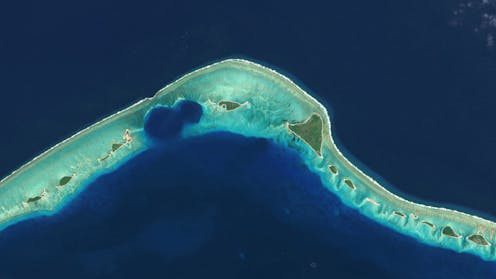
Aerial view of Enewetak Atoll showing nuclear test craters. Gallo Images/Orbital Horizon/Copernicus Sentinel Data 2021

On September 2, 1945, the second world war ended when Japan officially surrendered. Today, on the 80th anniversary, the physical legacy of the conflict remains etched into land and sea.

Nowhere is this more evident than in the Pacific. There, fierce battles left behind sunken warships, aircraft and unexploded bombs. These remnants are not only historical artefacts but toxic time capsules.

They leak fuel, heavy metals and other hazardous substances into fragile ecosystems, threatening biodiversity and, potentially, human health.

This problem is a reminder of the enduring environmental harms of conflict. Toxic remnants of war can damage ecosystems and communities long after the fighting stops.

The Pacific as a dumping ground

World War II in the Pacific involved four years of conflict between Japan and Allied forces. The war began in the region in December 1941 when Japan attacked a United States naval base at Pearl Harbour, Hawaii.

The Pacific conflict included the Battle of the Coral Sea, the Battle of Midway and the Guadalcanal campaign in the Solomon Islands.

Pacific islands became staging grounds for battles. Weapons were stockpiled and hazardous material discarded. Ships and aircraft were sunk. When the war ended, much of this material was simply left behind.

Among the remains are an estimated 3,800 wrecks still lying on the Pacific Ocean floor.

An environmental hazard

As remnants of war degrade, they often leach toxic pollutants into nearby waters and soils. These can build up in marine life, enter the food chain and pose serious risks to both biodiversity.

At Palau, a WWII Japanese ship sank in Koror Harbour and became known as the Helmet Wreck. It contains Japanese depth charges leaking acid into surrounding waters.

Researchers have shown the long-term environmental impacts in the Baltic Sea of unexploded WWII ordnance – bombs, shells and grenades that failed to detonate. An estimated 3000kg of dissolved ammunition chemicals have been found.

Coral reefs and mangroves, which are vital for coastal protection, are especially vulnerable to both chemical exposure and physical damage.

For example, researchers examined the effects off Puerto Rico of unexploded ordnance. They found nearby sea animals contained potentially toxic compounds leaking from the ordnance, which meant the substances had entered the food web.

Human communities on high alert

Unexploded ordnance continues to endanger communities. Just last year, for example, more than 200 bombs were found buried beneath a school in the Solomon Islands.

In places such as Palau, Papua New Guinea and the Solomon Islands, these dangers are unearthed regularly. They can be found by farmers working their land, children playing or fisherman working.

Buried bombs, sunken ships and downed aircraft often contain fuel and heavy metals. This includes lead and cadmium which can interfere with the body’s hormone system and cause serious health issues.

Research into the human health impacts of war remains is limited – especially in the Pacific. But existing studies suggest exposure is linked to serious consequences.

For example, parental exposure to wartime contaminants has been linked to birth defects in Gaza and Vietnam.

And a study of Britsh Army ammunition technicians released earlier this year found significantly higher rates of bladder cancer than the general population. This suggests occupational exposure to explosive compounds may pose long-term health risks.

Climate change is increasing the risk

As Earth’s climate warms, extreme weather events are worsening and seas are rising. This is exacerbating the dangers posed by wartime remnants.

For example Cyclone Pam, in March 2015, exposed unexploded WWII ordnance in Kiribati and Tuvalu. Further investigations revealed remnants including high explosive projectiles, mortars and 5,300 rounds of ammunition.

In 2020, a visiting fisherman found an unexploded bomb near Lord Howe Island. Then-Environment Minister Sussan Ley suggested the device may have been shifted by a cyclone or ocean currents.

Similarly, floods and landslides can move these hazards over significant distances, increasing uncertainty around their locations and complicating clearance efforts.

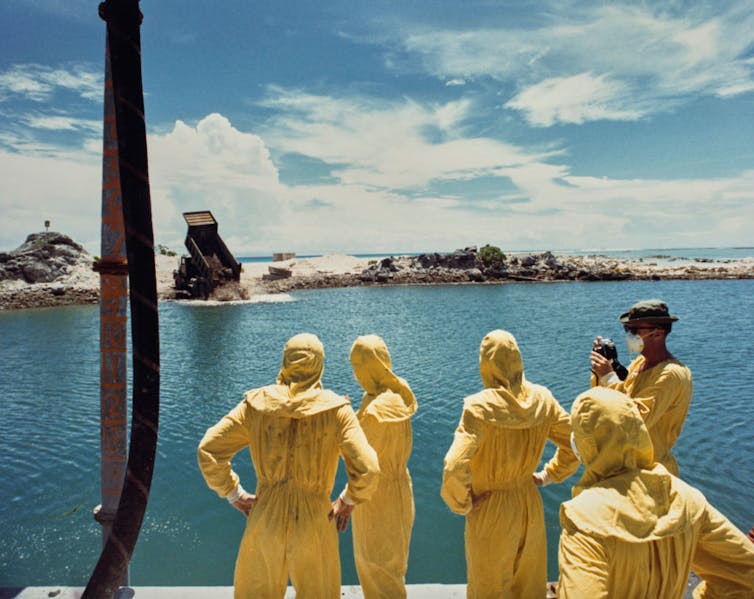
Rising sea levels are threatening to breach one of the Pacific’s most toxic legacies – the Runit Dome in the Marshall Islands. This concrete structure was built in the late 1970s to contain radioactive waste from US nuclear testing decades earlier.

Research shows extreme storms could increase radioactive sediments in the area to up to 84 times higher than normal. There are also concerns cracks in the dome’s surface could lead to contamination of surrounding waters.

Five people in yellow protective clothing stand near the water.
In this 1978 photo from Runit Island, military personnel in protective clothing watch as concrete and soil is used to cover up a crater left by the US after it conducted nuclear tests decades earlier.
Department of Defense/US Army/FPG/Archive Photos/Getty Images

Reflecting on war’s toxic legacy

Despite the risks to people and health in the Pacific, remediation has been slow. The 80th anniversary of WWII offers an opportunity to reflect on the toxic legacy of war – and to act.

The scale of the problem demands coordinated, well-funded action. The work should not just remove dangerous materials, but restore damaged ecosystems and monitor long-term health impacts.

Some support has been offered. It includes Operation Render Safe, a program to remove war remnants led by the Australian Defence Force. But more is needed.

Regional partners – including Australia, New Zealand, Japan and the United States – have a chance to lead. This means investing in environmental cleanup, supporting affected communities and acknowledging historical responsibility.

It also means listening to Pacific voices, who have long called for greater attention to the war’s toxic legacy. Their knowledge, resilience and lived experience must be central to any response.


The authors acknowledge Nixon Panda for his contribution to this article.

The Conversation

The authors do not work for, consult, own shares in or receive funding from any company or organisation that would benefit from this article, and have disclosed no relevant affiliations beyond their academic appointment.

ref. 80 years since the end of World War II, a dangerous legacy lingers in the Pacific – https://theconversation.com/80-years-since-the-end-of-world-war-ii-a-dangerous-legacy-lingers-in-the-pacific-264127

How to save global cancer research from Trump’s cuts

Source: The Conversation – UK – By Michael Head, Senior Research Fellow in Global Health, University of Southampton

ImagePixel/Shutterstock.com

Cancer kills one in five people globally. Yet, except for a one-off increase in 2021, the flow of money for cancer research has trended downward every year since 2016.

Our new analysis of more than 100,000 public and philanthropic grants reveals where research funding is being allocated. There are very likely to be reductions in funding from the US under the Trump government. So it’s important to understand how other groups of countries, such as the Commonwealth, can address this shortfall.

The Commonwealth is a network of 56 nations. Membership includes high-income countries such as the UK, Canada and Australia, and lower-income members in Africa and the Caribbean. Together, its members account for over 14% of cases of common cancers globally in 2020 – a share projected to rise to 17% by 2050.

Survival rates vary dramatically, from under 5% five-year survival in some lower-income countries to 60% in wealthier countries. Understanding how research funding flows within this diverse group offers a roadmap for fairer investment and opportunities for international collaboration. This can also help address the likely funding gaps from the US.

As a part of the Lancet Oncology Commission for Cancer in the Commonwealth, we and partners across several institutions took the most comprehensive look to date at global cancer research investment (2016–23). We mapped over 107,955 awards worth US$51.4 billion (£38.1 billion), categorising each project by cancer type, type of research and funder. We then used global and Commonwealth-wide network maps to reveal which countries were central to awarded grants, publications, clinical trials and patents, and which countries remained peripheral.

Our analysis showed that laboratory studies received 76% of funding (US$39 billion), while clinical trials drew just 7.3% (US$3.7 billion).

Breast cancer accounted for 10.3% of the funds (US$5.3 billion), and blood cancers accounted for 9% (US$4.7 billion). Despite their central role in treatment, surgery research was the focus of only 1.7% (US$0.8 billion) and radiotherapy 3.1% (US$1.6 billion).

Lower-income countries received less than 0.1% of total grants, highlighting a stark mismatch between cancer burden and research capacity.

Funders’ heavy focus on laboratory science potentially starves the late-stage trials and implementation research that translate discoveries into patient care.

The small amount of investment in surgery and radiotherapy research risks slowing advances in methods that already save lives today. Equally, the near-absence of funding led by lower-income countries perpetuates a cycle where countries with the greatest projected rise in cancer cases have the least capacity to respond.

Within the Commonwealth, the UK, Australia and Canada dominate both in terms of providing and receiving grant funding. These three countries serve as hubs for collaboration – linking lower-income countries to the US and EU.

In contrast, collaboration among lower-income Commonwealth countries on developing new drugs and technology remains weak, suggesting untapped potential in turning lab discoveries into new treatments and products across a wider breadth of countries.

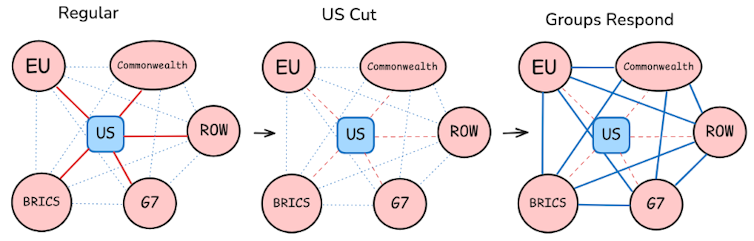
With an unpredictable president in the White House, it’s vital to understand how other groups of countries can address the likely gaps. To this end, we illustrated below the effect of a potential funding cut from the US, and then measured the effort required for each group of countries to compensate for a hypothetical 50% cut of the US funding.

Global collaboration networks before (left) and after (middle) the US funding cut, and how each group of countries can compensate for the cut (right).
CC BY-NC-SA

Cutting US funding will significantly weaken international collaboration ties, which makes sharing ideas and skills harder. Yet, as shown in the table below, each group has sufficient stock of domestic grants where turning only a small proportion into cross-border grants is enough to restore the collaboration level. That is, the EU to raise its share from 4.18% to 4.48%, non-US G7 countries from 1.11% to 1.20%, the rest of the world from 1.63% to 1.89%, the Commonwealth from 0.66% to 0.69%, and Brics (Brazil, Russia, India, China and South Africa) from 0.49% to 0.99%.

Group domestic international int_pct int_pct_target compensation
EU 5224 228 4.18% 4.48% 16
BRICS 4198 20 0.49% 0.99% 21
G7_no_US 18720 210 1.11% 1.20% 17
CW 7028 47 0.66% 0.96% 21
ROW 8114 135 1.63% 1.89% 21
Total grants per group and the extra cross-border grants needed to rebuild collaboration levels. Column ‘domestic’ is the number of grants carried out entirely within one country. Column ‘international’ (‘int_pct’) is the number (and percentage) of grants involving partners in more than one country. Column ‘int_pct_target’ is the share of international grants each group needs to reach the same level of research-link strength as before the funding cut. Column ‘compensation’ is how many additional cross-border grants each group must add to get back to the original level of research-link strength.

The numbers tell a straightforward story. When the US cuts cancer research funding, it breaks connections among researchers worldwide. This makes it harder for scientists to share discoveries and learn from each other – ultimately hurting cancer patients everywhere.

But other countries can step up to fill this gap. The table shows that each group of countries already funds plenty of domestic research. They just need to redirect a small portion of these existing grants to include international partners. This would restore the global research network to its previous strength.

This is an opportunity for governments to work together and take the lead on cancer research when the US steps back.

Four practical steps could make this happen.

  1. Match funding to where cancer hits hardest. Review current grants to ensure money goes to the deadliest cancers and the countries with the worst survival rates.
  2. Create research hubs in poorer countries. Build centres of excellence in lower-income Commonwealth countries that can train researchers, share data and run clinical trials.
  3. Fund surgery and radiotherapy research. These treatments save lives today, but get barely any research money. They deserve dedicated funding streams.
  4. Help researchers turn discoveries into treatments. Create programmes that help scientists in all Commonwealth countries – not just wealthy ones – patent their discoveries and develop them into actual medicines.

Looking ahead

Cancer kills nearly 10 million people each year, with over 20 million new cases diagnosed. By 2050, deaths are estimated to reach 18 million. The numbers are getting worse, not better.

The Commonwealth’s wealthy countries – the UK, Canada and Australia – could serve as bridges, connecting researchers across rich and poor nations. Done right, this could reshape how the world fights cancer, ensuring no country gets left behind simply because they lack resources.

The Conversation

Michael Head has previously received funding from the Bill & Melinda Gates Foundation, Research England and the UK Department for International Development, and currently receives funding from the UK Medical Research Foundation, and UK Research and Innovation

Markus Brede receives funding from UK Research and Innovation and has previously received funding from the Royal Society and the Alan Turing Institute.

Anbang Du does not work for, consult, own shares in or receive funding from any company or organisation that would benefit from this article, and has disclosed no relevant affiliations beyond their academic appointment.

ref. How to save global cancer research from Trump’s cuts – https://theconversation.com/how-to-save-global-cancer-research-from-trumps-cuts-258642

Research shows English children’s wellbeing drops when they start secondary school – here’s why

Source: The Conversation – UK – By Paty Paliokosta, Associate Professor of Special and Inclusive Education, Kingston University

Rawpixel.com/Shutterstock

For many pupils, the move to secondary school is a moment of anticipation – new friends, new subjects, and a growing sense of independence. But research in England shows this transition often comes with a hidden cost: a sharp and lasting decline in wellbeing.

Data from a 2024-2025 survey carried out by education support and research company ImpactEd Group with over 80,000 pupils shows a drop in children’s wellbeing between year six – the last year of primary school – and year eight.

This report found that enjoyment of school plummets, feelings of safety decline, and belief that their efforts will lead to success (known as self-efficacy) drops significantly. Children receiving free school meals were also less likely to say they enjoyed school, with this gap continuing to widen into secondary school.

This isn’t just adolescent growing pains. Secondary school pupils in the UK are more miserable than their European peers. Data from the Pisa programme, which assesses student achievement and wellbeing internationally, shows that in 2022 the UK’s 15-year-olds had the lowest average life satisfaction in Europe.

It’s a systemic problem – but one that can be changed.

Difficult transitions

Moving to secondary school involves much more than a change of location. Pupils must adapt to new teachers, routines, academic demands and social dynamics. And this takes place while they are going through puberty, one of the most intense periods of emotional and neurological development.

Research on school transitions stresses that success depends not only on a child’s “readiness,” but also on the school system’s capacity to support them.

Unfortunately, many schools prioritise performance metrics over relationships. This may leave many pupils – particularly those who are neurodivergent, have special educational needs, or who come from minoritised backgrounds – feeling disconnected and unsupported. This can deeply affect their wellbeing.

One major barrier to belonging is the use of zero-tolerance behaviour policies. These strict approaches to discipline – silent corridors, isolation booths, high-stakes punishments such as suspensions – are becoming more common in large secondaries and academies. Advocates have claimed these policies create firm boundaries in schools. But for many pupils, especially those with ADHD, autism, or a history of trauma, they may instead create anxiety, alienation and disengagement from school.

Children with special educational needs are excluded from school at some of the highest rates in the country. According to the Children and Young People’s Mental Health Coalition, a collaborative network of over 300 organisations including mental health organisations and youth support services, many of these children are not “misbehaving,” but expressing unmet emotional and mental health needs. Punitive responses frequently worsen their difficulties.

Pupils on stairs at school
The environment of secondary school can be very different to that of primary education.
Rawpixel.com/Shutterstock

Schools that adopt behaviour policies that focus on emotional literacy and building trust have reported success in building a caring environment.

A hidden curriculum

While these challenges affect many students, working-class pupils often face a more acute and entrenched form of educational alienation. A deeper look into the structure of secondary education in England reveals systemic inequalities that shape how different children experience school.

According to Professor Diane Reay, a leading expert on education and social class, the British school system continues to fail working-class children. Her research suggests that schools in disadvantaged areas are more likely to feature rigid discipline, “teaching to the test,” and a narrow, fact-heavy curriculum. In such spaces, there is little room for creativity, critical thinking, or personal expression.

Instead of feeling seen and valued, many working-class students may experience school as a place of constant control and low expectations. They are more likely to encounter deficit narratives: being told what they lack, rather than having their strengths recognised or nurtured.

This dynamic plays out most starkly during the transition to secondary school. Pupils from working-class backgrounds often enter year seven already disadvantaged – socially, economically, and in terms of cultural capital. This means that in unfamiliar settings where middle-class norms dominate, they may not speak the “right” way, dress the “right” way, or know the unspoken rules. These students frequently find themselves on the outside looking in.

Beyond class, issues of race and cultural background also play a key role in how pupils experience school. Students from minority backgrounds often also encounter what researchers refer to as the “hidden curriculum”.

This is a set of unspoken norms that reflect white, middle-class values, and which they may be unfamiliar with. This affects everything from which stories are told in the curriculum to how the behaviour of students is interpreted by teachers.

The year-seven dip is not inevitable. But reversing it requires more than tweaks to transition plans or behaviour policies. It demands a fundamental shift in how we understand inclusion, belonging and educational success. Schools need to put policies in place that help students feel safe, connected and empowered to manage conflict. And they should recognise that working-class and marginalised pupils face systemic barriers, and commit to dismantling them.

The Conversation

Dr Paty Paliokosta is an Associate Professor in Inclusive Education and leads the Inclusion and Social Justice SIG at Kingston University, London. She co-leads the National SENCO Advocacy Network.

ref. Research shows English children’s wellbeing drops when they start secondary school – here’s why – https://theconversation.com/research-shows-english-childrens-wellbeing-drops-when-they-start-secondary-school-heres-why-260737

The Thursday Murder Club: everything is eclipsed by the cakes in this sanitised Netflix adaptation

Source: The Conversation – UK – By Andrew Dix, Senior Lecturer in American Literature and Film, Loughborough University

In his essay Decline of the English Murder, the writer George Orwell evokes the pleasure to be had in reading about killing. After a good meal (including pudding), you are in the mood to read: “the sofa cushions are soft underneath you, the fire is well alight, the air is warm.” And what is it, in “these blissful circumstances”, that you want to read about? “Naturally,” says Orwell, “a murder”.

Substitute Orwell’s fires for contemporary radiators, and he might be describing the millions of readers in our own moment who have turned contentedly to stories of killing in the Thursday Murder Club books by Richard Osman. Comprising 2020’s title novel and three follow-ups (a fourth, The Impossible Fortune, is due in late September), these murder mysteries set in an idyllic retirement village in Kent have proved phenomenally successful.

Why have so many people, including some not previously invested in crime fiction, been drawn to these novels? It is not as if the series has been scrubbed free of potentially off-putting material. The Thursday Murder Club itself, for example, features not only two new killings for the quartet of older investigators to unravel, but memories of brutal gangland executions and a tragic suicide.

Such content, however, rarely ruffles The Thursday Murder Club’s smooth storytelling. The relaxed narrative voice, replicating Osman’s register as a genial quiz show host on TV, makes difficult things manageable. So, too, do the novel’s copious references to cakes: whenever a murder threatens to become too much, there is always a lemon drizzle or Viennese whirl to soothe.

Now The Thursday Murder Club has been adapted for the screen, enjoying a short cinema release before its streaming on Netflix. This adaptation has Hollywood heft behind it: produced by Amblin Entertainment (Steven Spielberg’s company), directed by Chris Columbus (veteran of Home Alone, Mrs Doubtfire and two instalments of the Harry Potter franchise), and with music by Thomas Newman (whose other composing credits include the Bond films Skyfall and Spectre).

If anything, Osman’s already sugared original has been further sweetened in its transit to the screen. The novel’s gangland subplot, for example, is shaved down to a few hints; and a doomed love affair that in the book precipitates suicide has been erased entirely. While some condensing is inevitable in transposing a 400-page novel to a two-hour film, the excisions made by Columbus and the co-screenwriters Katy Brand and Suzanne Heathcote are in the interests not only of economy, but of sanitisation for still further mass-market appeal.

One of the delights offered by Osman’s original is its knowing references to other crime fiction. In a suggestive scene, the investigators talk about their own favourites in the genre. Patricia Highsmith says one; Ian Rankin says another; Mark Billingham says a third. Here they evoke kinds of crime fiction entirely distinct from the novel in which they are situated as characters.

Columbus’s film doesn’t carry across such mischievous allusiveness. Given its medium, however, it can enlist visual pleasures unachievable by the print-bound Osman.

In the 1980s, film theorist Tom Gunning coined the term “cinema of attractions”. This he offered as a way of characterising films that suspend or downplay the storytelling itself and seek instead to engage audiences by other means, such as spectacle that is unusual, beautiful or amusing.

Gunning had especially in mind work produced in cinema’s inaugural decade from 1895 onwards, when a film’s running time was limited, allowing no scope for narrative development. But his idea is fruitful in thinking about filmmaking of later periods, too. If it offers us a framework for considering the Marvel Cinematic Universe – all those standalone CGI effects like the look of the villain Thanos or the rendering of otherworldly environments – it is also apt in reviewing the new Thursday Murder Club.

The film engages in some narrative business, of course, offering a set of murders for investigation and solution. Who killed two of the figures behind upsetting plans to bulldoze the retirement village in favour of an event centre? Whose body is the unexpected extra one found in a tomb in the graveyard adjoining the complex?

Arguably, however, the storytelling here is relatively uninvolving and peripheral to the film’s chief effects. Many viewers are likely to be absorbed instead by the abundant display of British and Irish acting royalty: in particular, Helen Mirren as resourceful former secret agent Elizabeth (“I have a wide portfolio of skills”), Pierce Brosnan as retired union leader Ron who is itching for new campaigns, and Ben Kingsley as suave former psychologist Ibrahim.

And then, as in Osman’s novel, there are the cakes.

Reviewing recipe books, the writer Angela Carter referred to the “awesome voluptuousness” taken on by food whenever it is photographed in that genre. Carter’s description fits perfectly the cakes we see in Columbus’s film. Indeed, the Victoria sponge and the coffee and walnut cake made by the fourth investigator Joyce (Celia Imrie) have a prodigious depth, a lavish creaminess, that threaten to act even these British stars off the screen.


Looking for something good? Cut through the noise with a carefully curated selection of the latest releases, live events and exhibitions, straight to your inbox every fortnight, on Fridays. Sign up here.


The Conversation

Andrew Dix does not work for, consult, own shares in or receive funding from any company or organisation that would benefit from this article, and has disclosed no relevant affiliations beyond their academic appointment.

ref. The Thursday Murder Club: everything is eclipsed by the cakes in this sanitised Netflix adaptation – https://theconversation.com/the-thursday-murder-club-everything-is-eclipsed-by-the-cakes-in-this-sanitised-netflix-adaptation-264228