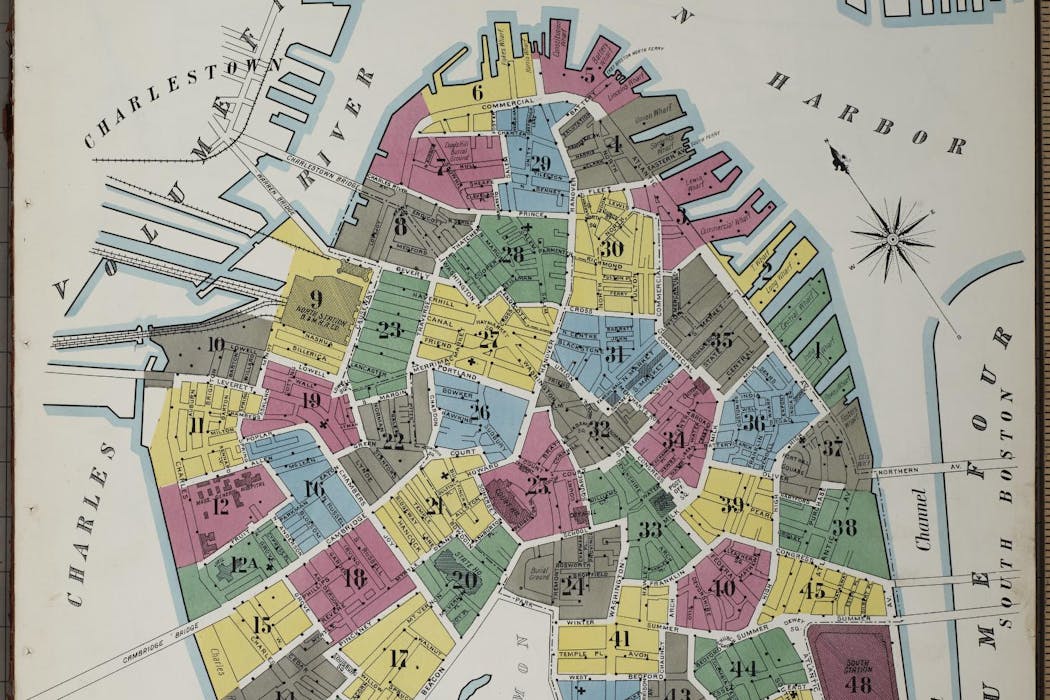
Imagine a map that allows you to see what your neighborhood looked like a century ago in immense detail. What you’re thinking of is probably very much like the fire insurance maps produced from the 1860s to the 1970s for insurance companies to identify potential fire risks.
Often referred to as Sanborn maps, after the Sanborn Map Co. that produced them, fire insurance maps were created for every city in the United States with a population greater than 1,000 people. Over a century, more than 50,000 editions of these maps were produced, comprising over 700,000 map sheets – many of which have been scanned and are publicly accessible through the Library of Congress.
1917 Sanborn map of The Hill at the University of Tennessee, Knoxville. Library of Congress
Genealogists, historic preservationists, historians and urban planners commonly use these maps to understand past urban landscapes. But as a critical cartographer interested in how maps shape how people understand the world, I see these maps differently.
Fire insurance maps supply more than just detailed insights into how neighborhoods looked decades ago. Needing to turn a profit, insurers sought to minimize the amount of risk they underwrote or charged higher premiums to account for risk. These maps provide important clues into how insurance companies understood how risk was distributed across cities, revealing costly biases.
Mapping fire risk
Before zoning and land-use planning, American cities frequently mixed industrial, commercial and residential buildings in the same block. Insurance agents used the immense detail of fire insurance maps to determine whether a property was too risky to underwrite, often weighing the demographics of the neighborhoods with the flammability of the buildings in the neighborhood.
For example, an Atlanta neighborhood called Lightning was a Black, working-class district composed of a mixture of rail yards, noxious industries and residences in 1911. The neighborhood was also an immense fire hazard. Atlanta’s primary trash incinerator stood less than 150 feet from two massive natural gas storage tanks, while two gas processing plants manufactured specialized fuels just feet from homes.
Underwriters would use information from fire insurance maps to understand the local landscape. In these maps, colors correspond to the building’s construction material: pink indicates brick, while yellow indicates wood. Lightning was primarily made from wood, placing the entire neighborhood at risk if a fire broke out.
Fire insurance maps and discrimination
At the same time, fire insurance maps also highlight the social landscape of the neighborhood.
Many buildings in the Lightning fire insurance map are labeled “F.B.,” which stands for “female boarding,” a euphemism for brothels. While brothels were not a fire risk themselves, this code indicated the alleged moral hazard of a neighborhood, or the likelihood that property owners would allow riskier activities to occur on their property that could cost insurers more.
1911 Sanborn map of the Lightning neighborhood of Atlanta, Ga. It’s now Mercedes-Benz Stadium, home to the Atlanta Falcons of the National Football League and the Atlanta United FC of Major League Soccer. Library of Congress
From this one map, an underwriter could quickly see that Lightning was an extremely risky place to insure. Along with disinvestment from fire insurers, marginalized communities like Lightning also experienced other forms of systemic discrimination. Scholars have documented racial discrimination in car, life and health insurance underwriting.
Although fire insurance maps are no longer used in the insurance industry, they provide researchers one way of seeing how discrimination in fire insurance and urban planning manifested in the United States during the 20th century.
Jack Swab does not work for, consult, own shares in or receive funding from any company or organization that would benefit from this article, and has disclosed no relevant affiliations beyond their academic appointment.
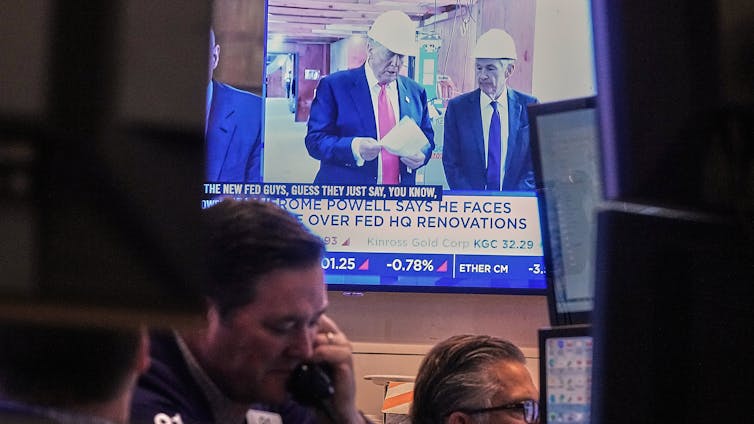
The Department of Justice’s decision to open a criminal investigation into Federal Reserve chair Jerome Powell has reignited concern over the independence of the central bank.
But how unique are such apparent attempts to undermine the central bank’s authority? And what would be the consequences of chipping away at Fed independence? To understand what’s at stake, The Conversation turned to Cristina Bodea, a Michigan State University professor who has been studying central bank best practices for more than two decades.
How unique is this moment in American history?
It is unique in the sense that we haven’t seen a Fed chair criminally investigated ever.
But if we go back in history to the Nixon and Reagan years, presidents have put a lot of pressure on Fed chairs when economic conditions were bad – more precisely, there was high unemployment and high inflation.
In more recent history, Fed chairs and the U.S. Federal Reserve have enjoyed bipartisan support in being independent.
Why are central banks independent, and what is at stake?
Independence comes in two forms: legal and in practice. In the recent past, the laws governing central banks have tended to favor an arms-length relationship in which experts in these institutions look at the economic data and make interest rate decisions based on their mandate. If their mandate includes low inflation, they’re supposed to adjust interest rates based on their data so that they can achieve their goal in the medium term.
Legal independence means that the law governing the institution allows them to do this without politicians interfering in day-to-day operations. This does not mean that the institution is not accountable. The Fed is accountable to Congress, and the people who run the Fed are appointed by the president and voted on by the Senate
Then, there is the de facto independence. Because laws are debatable, what happens in practice can differ from the law, and there isn’t an application of the law to each and every instance in which an institution makes a decision.
In the past 30 years, the U.S. Federal Reserve has been more independent than the law suggests because there was a clear bipartisan consensus to not politicize the institution so that it could safeguard the country’s price environment and employment outcomes, without taking into account elections, electoral cycles and who is or isn’t in the White House.
Why do politicians seek to interfere with this independence?
Monetary policy is a fairly powerful tool, meaning that it can have fairly large and quick effects on outcomes. So, politicians would like to use it; the short-term political gains might include cheaper credit and somewhat more employment.
But it’s kind of a double-edged sword because politicians cannot fool people repeatedly. Along with people expecting politicians to use and misuse monetary policy comes inflation as well as an expectation of inflation. If people expect inflation rates to increase, they will adjust their expectations, and employment will only increase if your inflation expectations are stable.
It makes very little sense to put pressure on the Fed in the way that the current administration is – like a full-on assault, an attempt to take over the institution. The institution is useful. If you have an institution that is not a credible inflation fighter, it will actually not be able to stabilize employment either.
What are the stakes here for the American consumer?
The concern is inflation. Currently, data is ambiguous about the right monetary policy, and there are debates within the Fed about the right course of action. But there is no full-blown financial crisis or unemployment crisis.
Interest rates should not be lowered by 3 percentage points under these circumstances, as Trump has urged. Fairly drastic measures should be reserved for fairly drastic circumstances, and I don’t think we are in fairly drastic circumstances. If low interest rates are employed at this moment, you’re basically using all your ammunition on a moment that doesn’t seem to warrant using it.
We are at an uncertain juncture: There are risks to employment, tariffs can further damage the labor market, there is an affordability crisis. There could be an actual financial crisis in the future.
Lowering interest rates now would make the Fed’s interest rate instrument incapable of working should there be a true crisis in the near future.
Traders digest news of Federal Reserve Chair Jerome Powell’s comments over a criminal investigation. AP Photo/Richard Drew
Have we seen the independence of central banks under attack in other countries, or is this uniquely American?
This is not uniquely American, and has happened in countries like Turkey, Venezuela and Argentina. Central bank independence globally has been under attack, but not in democracies or in countries that claim to have strong institutions and rule of law.
Cristina Bodea does not work for, consult, own shares in or receive funding from any company or organization that would benefit from this article, and has disclosed no relevant affiliations beyond their academic appointment.
What is below Earth, since space is present in every direction? – Purvi, age 17, India
If you’ve seen illustrations or models of the solar system, maybe you noticed that all the planets orbit the Sun in more or less the same plane, traveling in the same direction.
But what is above and below that plane? And why are the planets’ orbits aligned like this, in a flat pancake, rather than each one traveling in a completely different plane?
I’m a planetary scientist who works with robotic spacecraft, such as rovers and orbiters. When my colleagues and I send them out to explore our solar system, it’s important for us to understand the 3D map of our space neighborhood.
Which way is ‘down’?
Earth’s gravity has a lot to do with what people think is up and what is down. Things fall down toward the ground, but that direction depends on where you are.
Imagine you’re standing somewhere in North America and point downward. If you extend a line from your fingertip all the way through the Earth, that line would point in the direction of “up” to someone on a boat in the southern Indian Ocean.
In the bigger picture, “down” could be defined as being below the plane of the solar system, which is known as the ecliptic. By convention, we say that above the plane is where the planets are seen to orbit counterclockwise around the Sun, and from below they are seen to orbit clockwise.
Even more flavors of ‘down’
Is there anything special about the direction of down relative to the ecliptic? To answer that, we need to zoom out even farther. Our solar system is centered on the Sun, which is just one of about 100 billion stars in our galaxy, the Milky Way.
Each of these stars, and their associated planets, are all orbiting around the center of the Milky Way, just like the planets orbit their stars, but on a much longer time scale. And just as the planets in our solar system are not in random orbits, stars in the Milky Way orbit the center of the galaxy close to a plane, which is called the galactic plane.
This plane is not oriented the same way as our solar system’s ecliptic. In fact, the angle between the two planes is about 60 degrees.
A side view of galaxy NGC 4217 taken by the Hubble Space Telescope shows how all the stars and their planetary systems lie on one plane. NASA Goddard, CC BY
Going another step back, the Milky Way is part of a cluster of galaxies known the the Local Group, and – you can see where this is going – these galaxies mostly fall within another plane, called the supergalactic plane. The supergalactic plane is almost perpendicular to the galactic plane, with an angle between the two planes of about 84.5 degrees.
How these bodies end up traveling paths that are close to the same plane has to do with how they formed in the first place.
Collapse of the solar nebula
The material that would ultimately compose the Sun and the planets of the solar system started out as a diffuse and very extensive cloud of gas and dust called the solar nebula. Every particle within the solar nebula had a tiny amount of mass. Because any mass exerts gravitational force, these particles were attracted to each other, though only very weakly.
The particles in the solar nebula started out moving very slowly. But over a long time, the mutual attraction these particles felt thanks to gravity caused the cloud to start to draw inward on itself, shrinking.
There would have also been some very slight overall rotation to the solar nebula, maybe thanks to the gravitational tug of a passing star. As the cloud collapsed, this rotation would have increased in speed, just like a spinning figure skater spins faster and faster as they draw their arms in toward their body.
Watch how the cloud’s particles collided and eventually clumped.
As the cloud continued shrinking, the individual particles grew closer to each other and had more and more interactions affecting their motion, both because of gravity and collisions between them. These interactions caused individual particles in orbits that were tilted far from the direction of the overall rotation of the cloud to reorient their orbits.
For example, if a particle coming down through the orbital plane slammed into a particle coming up through that plane, the interaction would tend to cancel out that vertical motion and reorient their orbits into the plane.
On much bigger scales, similar sorts of interactions are probably what ended up confining most of the stars that make up the Milky Way into the galactic plane, and most of the galaxies that make up the Local Group into the supergalactic plane.
The orientations of the ecliptic, galactic and supergalactic planes all go back to the initial random rotation direction of the clouds they formed from.
So what’s below the Earth?
So there’s not really anything special about the direction we define as “down” relative to the Earth, other than the fact that there’s not much orbiting the Sun in that direction.
If you go far enough in that direction, you’ll eventually find other stars with their own planetary systems orbiting in completely different orientations. And if you go even farther, you might encounter other galaxies with their own planes of rotation.
This question highlights one of my favorite aspects of astronomy: It puts everything in perspective. If you asked a hundred people on your street, “Which way is down?” every one of them would point in the same direction. But imagine you asked that question of people all over the Earth, or of intelligent life forms in other planetary systems or even other galaxies. They’d all point in different directions.
Hello, curious kids! Do you have a question you’d like an expert to answer? Ask an adult to send your question to CuriousKidsUS@theconversation.com. Please tell us your name, age and the city where you live.
And since curiosity has no age limit – adults, let us know what you’re wondering, too. We won’t be able to answer every question, but we will do our best.
Jeff Moersch receives funding from NASA an the U.S. National Science Foundation.
Source: The Conversation – USA – By Kathy Kiely, Professor and Lee Hills Chair of Free Press Studies, University of Missouri-Columbia
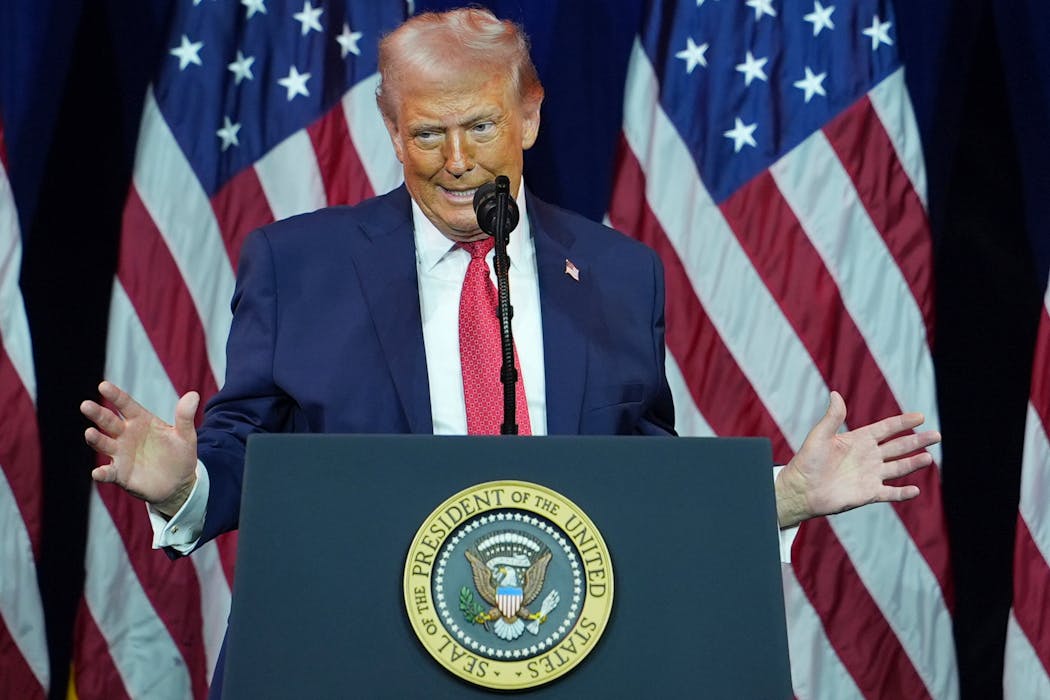
President Donald Trump, who has been involved in thousands of lawsuits, has made news outlets a particular target for litigation this year.AP Photo/Evan Vucci
In December 2025, President Donald Trump filed a US$10 billion lawsuit against the BBC in a federal court in Florida. It was only the latest in a long series of high-dollar legal challenges Trump has brought against prominent media organizations, including ABC, CBS, The New York Times and The Wall Street Journal, among others.
Trump has won some sizable settlements in cases legal scholars had dismissed as largely lacking in merit. But as mediascholars, we believe prevailing in court is not necessarily his primary goal. Instead, Trump appears to use lawsuits as a strategic weapon designed to silence his enemies and critics – who sometimes seem to be one and the same in his eyes.
Trump has always been litigious. Over the course of his life, he has been involved in more than 4,000 lawsuits. Many of these involved Trump suing for defamation over perceived threats to his reputation. Relatively few, however, have been successful, if success is defined as prevailing in courts of law.
But using litigation as a tool for intimidation can produce other results that can count as victory. We are concerned that the president may be using the courts as a tool not to correct the record but to muzzle potential watchdogs and deprive the public of the facts they need to hold him accountable.
Winning major settlements
Trump claims the BBC attempted to interfere with the 2024 election by misrepresenting statements he’d made. As with Trump’s other defamation suits, the odds appear long against the president winning his case against the British broadcaster in court.
Just after Trump’s election in 2024, ABC, whose parent company is Disney, promised to make a $15 million contribution to the Trump presidential library to settle a defamation suit many experts said had dubious merit.
Those two defamation suits were filed while Trump was still a presidential candidate. Weeks after winning reelection, Trump sued The Des Moines Register for publishing a preelection poll that suggested he might lose the swing state of Iowa. Instead, he carried the state by 13 percentage points.
Paramount Global agreed to pay $16 million to settle a lawsuit Trump had filed complaining that a CBS News interview with Kamala Harris had been misleadingly edited. AP Photo/Jacquelyn Martin
Trump could have just gloated over his victory, as President Harry Truman did when he famously posed holding the Chicago Tribune’s “Dewey Beats Truman” headline the day after his reelection. Instead, Trump went to court, accusing The Des Moines Register and its pollster, J. Ann Selzer, of violating Iowa’s consumer protection laws by fraudulently deceiving consumers and campaign donors.
Even if Trump loses this suit, he has inflicted expensive litigation costs on a news organization.
The considerable costs of defense
From the 1960s until the late 1990s, leading media outlets, rich from advertising dollars, could afford to hire lawyers to defend against governmental overreach and protect their role in the U.S.’s democratic order. Those fights led to Supreme Court decisions shielding media outlets from most libel complaints and government censorship prior to publication.
But the rise of the internet and then social media led to the collapse of the economic model supporting traditional news production. As audiences and advertisers have fled traditional media outlets, including newspapers and broadcasters, the money to hire lawyers to defend against expensive defamation suits or fight for access to government information is much harder to find.
If even media giants such as ABC and CBS are settling rather than fighting, what local news editor is going to assign a story that might trigger a presidential lawsuit? That’s why Trump’s suit against The Des Moines Register is such an ominous development.
Giving up without a fight
What’s disheartening about the media giants’ capitulation is that they are at risk of squandering the protections afforded by the Constitution and the courts.
In medieval England, criticizing the king or peers of the realm was a crime. But early in U.S. history, attempts to enforce seditious libel laws by the British government and later by President John Adams and the Federalist-controlled Congress generated public outcry and rebuke. This was based in part on the understanding that in a democracy the people must be free to criticize those who govern them, a principle enshrined in the First Amendment.
The Supreme Court ratified this understanding of press freedom in its 1964 decision New York Times v. Sullivan. In a resounding victory for free expression, the justices held that government officials cannot prevail in defamation cases unless there is clear and convincing proof that their critics knowingly or recklessly disregarded the truth. Careless errors are not enough.
Trump addressed supporters on Jan. 6, 2021, prior to their march to Capitol Hill. The question of whether he incited them to riot is at the heart of his lawsuit against the BBC. AP Photo/Jacquelyn Martin
Under these protections, even Trump’s case against the BBC – where the network has admitted an ethical lapse – is not a certain winner, especially since the contested content didn’t air in Florida, where the lawsuit was filed.
Although Trump claims the BBC’s misleading edits implied that he directly incited protesters to storm the Capitol on Jan. 6, 2021, the network can argue in court that the inaccuracy is only technical, given that Trump truly did give a firebrand speech that was widely criticized as at least indirectly leading to the violence that followed . If the edited version of Trump’s speech is not appreciably more harmful to Trump’s reputation than his actual speech, Trump’s defamation claim would likely fail.
Trump is the first U.S. president to use the weight of his office to extract private settlements from news outlets tasked with holding him accountable. Ostensibly, these suits are to recover monetary damages for harm to his reputation, but they are part of a broader attack on what Trump perceives as hostile media coverage.
New limits from states
Some of Trump’s targets are fighting back.
One is the Pulitzer Prize Board, the defendant in yet another Trump defamation suit – in this case, over the awards the board gave for reporting on Russian interference in the 2016 presidential election.
In December 2025, the Pulitzer Prize Board asked the judge in the case to force the president to hand over tax and medical records to prove that he had suffered the financial and emotional harm he is claiming.
Another key development: Most states have enacted anti-SLAPP laws. SLAPP stands for “strategic lawsuits against public participation,” referring to cases filed to intimidate and discourage public criticism. Thirty-eight states, plus the District of Columbia, now have anti-SLAPP laws in place. It’s probably not a coincidence that Trump filed the latest iteration of his suit against The Des Moines Register on June 30, which happened to be one day before Iowa’s anti-SLAPP law took effect.
These state laws allow targets of SLAPPs to get early resolutions of meritless suits and can force people found to have filed such suits to pick up their targets’ legal bills.
Without such tools protecting First Amendment rights – and media organizations taking steps themselves to defend such rights – dissent might be characterized as a “deceptive trade practice,” and speech is no longer truly free.
Lyrissa Barnett Lidsky is affiliated with the Florida First Amendment Foundation.
Kathy Kiely does not work for, consult, own shares in or receive funding from any company or organization that would benefit from this article, and has disclosed no relevant affiliations beyond their academic appointment.
The next day, the U.S. seized two tankers bound from Venezuela for other markets – less than a month after it seized two others it said were transporting Venezuelan oil.
Long-term plans go much further. Trump envisions major U.S. oil companies, such as Chevron and ExxonMobil, to invest some US$100 billion into reviving Venezuela’s struggling industry, with the investing companies reimbursed through future production. So far, neither Venezuelan authorities nor U.S. oil companies have said whether they’re willing to do this.
Trump’s “Venezuela took our oil, we’re taking it back” rationale apparently references the South American nation’s initial nationalization of its oil industry in 1976, plus a wave of expropriations in 2007 under Venezuelan President Hugo Chávez.
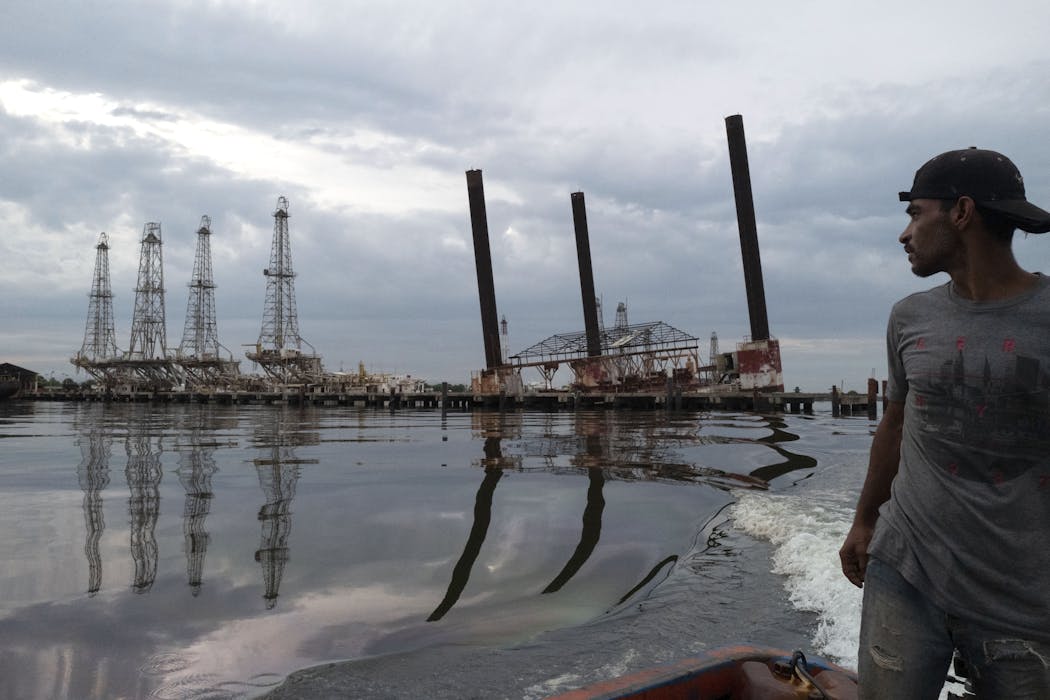
U.S. oil companies played a big role in launching and sustaining Venezuela’s oil boom, starting in the 1910s. Companies such as Standard Oil, a predecessor of ExxonMobil, and Gulf Oil, which eventually became part of Chevron, invested heavily in exploration, drilling and infrastructure, transforming Venezuela into a major global supplier.
Contracts from that era often blurred lines between reserve ownership and production rights. Venezuela legally retained subsoil ownership but granted or sold broad concessions to foreign operators, such as Royal Dutch-Shell. That effectively gave control of reserves and production to the oil companies, but not forever.
This ambiguity likely has played a role in Trump alleging outright theft through nationalization, a claim that holds little grounding in the historical precedent of how Venezuela and other nations have managed ownership of their natural reserves.
Nationalization can involve the outright expropriation of facilities and reserves – with or without compensation – or the renegotiation of oil production contracts. Alternatively, a government may get a bigger stake in the joint ventures it already has with foreign oil companies.
While privately owned oil companies primarily are accountable to their shareholders and focus mainly on maximizing profits, most government-run oil companies have other priorities too. These might include pumping revenue into safety net programs, domestic energy security, the development of other industries and military spending.
Sometimes those other goals take so much money out of the oil company’s orbit that they interfere with operational efficiency and reinvestment, slowing growth or even reducing production capacity. That’s what happened in Venezuela, where oil production has fallen sharply since 2002.
But other Latin American countries have also nationalized their oil industries with better results.
Mexico’s experience
In Mexico, President Lázaro Cárdenas’ 1938 expropriation of foreign oil assets – primarily from U.S. and British companies – was the region’s first such assertion of economic independence.
Amid labor disputes and perceived exploitation, 17 privately owned companies were nationalized, creating Petróleos Mexicanos as Mexico’s government-run oil monopoly. Mexicans celebrate the formation of this company, known as Pemex, every year on March 18 as a symbol of national sovereignty.
Despite initial boycotts and diplomatic strain, Mexico eventually compensated the foreign companies that lost their property. But it isolated its oil sector from international capital and technology for decades.
By 2018, political backlash around a perceived loss of sovereignty and uneven benefits led to a policy reversal. Oil output continues to shrink; it now stands at 1.8 million barrels per day.
Mexico’s experience underscores how oil nationalization can foster self-reliance while hindering production.
Mexican President Andres Manuel Lopez Obrador, left, delivers a speech on the 86th anniversary of the nationalization of oil on March 18, 2024. Rodrigo Oropeza/AFP via Getty Images
From the start, Petrobras had a monopoly over all Brazilian oil exploration and production. The government expanded the company’s scope when it nationalized all privately owned refineries by 1964.
Brazil’s oil nationalization was part of the country’s broader effort to develop its own industrial capacity and reduce its dependence on foreign oil.
Petrobras has changed significantly since its founding, especially after President Fernando Henrique Cardoso signed an oil deregulation law in 1997. It’s now a state-controlled company, in which investors may buy and sell shares. The government has forged many partnerships with private oil companies, drawing foreign investment.
This strategy succeeded. Production has quadrupled from 0.8 million barrels per day in 1997 to 3.4 million in 2024.
Venezuela’s oil nationalization, by contrast, shifted from cooperation with foreign oil companies to confrontation with them.
President Carlos Andrés Pérez first nationalized Venezuela’s oil industry in 1976, creating Petróleos de Venezuela, S.A. Foreign companies received compensation of about 25% for losing their assets. Many transitioned into service providers or formed joint ventures with the new company, PDVSA.
In 2003, after a strike briefly but severely slashed national output, Chávez consolidated control over the oil industry. He purged PDVSA of his critics, replacing managers who had expertise with his political allies, and fired over 18,000 employees.
Venezuela expropriated operating assets, converted contracts held by private companies into PDVSA-controlled joint ventures and made sharp and unpredictable increases in the taxes and royalties foreign oil companies had to pay.
Foreign oil companies suffered from chronic payment delays, along with restrictive foreign exchange rules and new laws that weakened contract enforcement and made it harder for companies to use arbitration to resolve disputes.
In 2007, Chávez forced foreign oil companies partnering with PDVSA to renegotiate their agreements, leading to the partial nationalization of their stakes in those ventures.
The government also reclassified vast oil deposits as “proven” at a time when global oil prices were very high, rendering their exploration and production more economically viable. That change tripled this self-reported and never-verified estimate of Venezuela’s proven oil reserves to approximately 300 billion barrels.
Conditions get worse under Maduro
Venezuelan oil output further declined while Maduro served as president, falling to 665,000 barrels per day in 2021. Since then, production has recovered somewhat, rebounding to about 1.1 million barrels per day by late 2025 – about one-third of its historic high.
Many hurdles are in the way of the industry’s recovery, including ongoing and potentially future legal disputes, geopolitical risks and the need for massive investments. Returning Venezuela’s oil production to its peak of 3 million barrels per day could cost more than $180 billion.
As Brazil’s experience suggests, governmental control over oil production and sales is not inherently bad for a country’s economic welfare.
Norway is an even stronger example. That oil-rich Nordic country has evaded what some scholars call the “resource curse” by treating the oil that its nationally owned company, now called Equinor, has produced as a source of lasting wealth for the Norwegian people.
Revenue from the Norwegian government’s 67% stake in Equinor has accumulated in a sovereign wealth fund worth more than $2 trillion and helped Norway diversify its economy.
As the Venezuelan government regroups following Maduro’s removal, there’s much it can learn from other countries that have managed to maintain more stability alongside state-controlled oil production.
A college degree was once seen as the golden ticket to landing a well-paying job. But many people are increasingly questioning the value of a four-year degree amid the rising cost of college.
Almost two-thirds of registered voters said in an October 2025 NBC News poll that a four-year college degree isn’t worth the cost – marking an increase from 40% of registered voters who said that college wasn’t worth the cost in June 2013.
Caroline Field Levander, the vice president for global strategy and an English professor at Rice University, argues in her December 2025 book “Invent Ed” that people have lost sight of two factors that made universities great to begin with: invention and creativity.
Amy Lieberman, education editor at The Conversation U.S., spoke with Levander to break down the benefits of going to college and university – and how schools can better demonstrate their enduring value.
How can we measure the value of a college degree?
College graduates earn substantially more than people who do not have a college degree.
The average high school graduate over a 40-year career earns US$1.6 million, according to 2021 findings by the Georgetown University Center on Education and Workforce. The average college graduate, over this same 40-year time frame, earns $2.8 million. That $1.2 million difference amounts to around $30,000 more salary per year.
People who earn a degree more advanced than a bachelor’s, on average, earn $4 million over 30 years, making the lifetime earning difference $2.4 million between these graduates and people with just a high school diploma.
College graduates are also better protected against job loss, and they weather job disruption cycles better than high school graduates.
Do any of these benefits extend beyond individual students?
In addition to the substantial financial benefits college graduates experience, colleges and universities are major employers in their communities – and not just professors and administrators. Higher education institutions employ every trade and kind of worker, from construction workers to police, to name a few.
Universities are crucial to developing and strengthening the U.S. economy in other ways. The discoveries that faculty and researchers make in laboratories lead to new products, businesses and ideas that drive the U.S. economy and support the country’s financial health.
Researchers at the University of Texas Southwestern did important work in helping to discover statins, while scientists at the University of Pennsylvania developed the mRNA vaccine. The list of inventions that started at universities goes on and on.
Some people are questioning the value of a degree. What role can universities play in reassuring them of their relevance?
Discovery and invention have traditionally been the focus of many graduate programs and faculty research, while undergraduate college educations tend to focus on ensuring that students are able to successfully enter the workforce after graduation.
Undergraduate students need to gain competency in a field in order to contribute to society and advance knowledge.
But I believe universities need to teach something else that is equally valuable: They also need to build creative capacity and an inventive mindset into undergraduate education, as a fundamental return on the investment in education.
Employers report that creativity is the top job skill needed today. The IBM Institute for Business Value, for example, concluded in 2023 that creativity is the must-have skill for employee success in the era of generative AI.
Creativity and innovation are both likely to become increasingly important for young people entering the workplace, especially as AI continues to grow. Andriy Onufriyenko/iStock/Getty Images
What can faculty and students easily do to encourage creativity and innovation?
Professors can build what I call a “growth mindset” in the classroom by focusing on success over time, rather than the quick correct answer. Faculty members can ask themselves as they go into every class, “Am I encouraging a growth mindset or a fixed mindset in these students?” And they can use that answer to guide how they are teaching.
Students could also consider committing to trying new courses in areas where they haven’t already been successful. They could approach their college experience with the idea that grades aren’t the only marker of success. And I think they could benefit from developing thoughtful ways to describe their journey to future employers. Simple practices like keeping a creativity notebook where they record the newest ideas they have, among many others that I describe in my new book, will help.
And university leaders need to open the aperture of how we define our own success and our university’s success so that it includes creative capability building as part of the undergraduate curriculum.
Caroline Levander does not work for, consult, own shares in or receive funding from any company or organization that would benefit from this article, and has disclosed no relevant affiliations beyond their academic appointment.
Studies have linked ultraprocessed foods to poor health outcomes, but such foods make up about half the calories of a typical American diet.Kobus Louw/E+ via Getty Images
Older adults can dramatically reduce the amount of ultraprocessed foods they eat while keeping a familiar, balanced diet – and this shift leads to improvements across several key markers related to how the body regulates appetite and metabolism. That’s the main finding of a new study my colleagues and I published in the journal Clinical Nutrition.
Ultraprocessed foods are made using industrial techniques and ingredients that aren’t typically used in home cooking. They often contain additives such as emulsifiers, flavorings, colors and preservatives. Common examples include packaged snacks, ready-to-eat meals and some processed meats. Studies have linked diets high in ultraprocessed foods to poorer health outcomes.
My team and I enrolled Americans ages 65 and older in our study, many of whom were overweight or had metabolic risk factors such as insulin resistance or high cholesterol. Participants followed two diets low in ultraprocessed foods for eight weeks each. One included lean red meat (pork); the other was vegetarian with milk and eggs. For two weeks in between, participants returned to their usual diets.
A total of 43 people began the dietary intervention, and 36 completed the full study.
In both diets, ultraprocessed foods made up less than 15% of the total calories – a significant reduction from the typical American diet, where more than 50% of total calories comes from ultraprocessed foods. The diets were designed to be realistic for everyday eating, and participants were not instructed to restrict calories, lose weight or change their physical activity.
We prepared, portioned and provided all meals and snacks for the study. Both diets emphasized minimally processed ingredients and aligned with the 2020-2025 Dietary Guidelines for Americans, the U.S. government’s nutrient-based recommendations for healthy eating, while providing similar calories and amounts of key nutrients.
We compared how participants fared while eating their habitual diets with how they responded to the two diets that were low in ultraprocessed foods. During the periods when participants ate fewer ultraprocessed foods, they naturally consumed fewer calories and lost weight, including total and abdominal body fat. Beyond weight loss, they also showed meaningful improvements in insulin sensitivity, healthier cholesterol levels, fewer signs of inflammation and favorable changes in hormones that help regulate appetite and metabolism.
These improvements were similar whether participants followed the meat-based or the vegetarian diet.
Why it matters
Ultraprocessed foods make up more than half the calories consumed by most U.S. adults. Although these foods are convenient and widely available, studies that track people’s diets over time increasingly link them with obesity and age-related chronic diseases such as Type 2 diabetes and heart disease. With older adults making up a growing share of the global population, strategies that preserve metabolic health could support healthy aging.
Most previous feeding studies testing how ultraprocessed foods affect people’s health haven’t reflected real-world eating, especially among Americans. For example, some studies have compared diets made up almost entirely of ultraprocessed foods with diets that contain little to none at all.
Our study aimed to more closely approximate people’s experience while still closely tracking the foods they consumed. It is the first to show that for older adults a realistic reduction in ultraprocessed foods, outside the lab, has measurable health benefits beyond just losing weight. For older adults especially, maintaining metabolic health helps preserve mobility, independence and quality of life.
What’s still unknown
Our study was small, reflecting the complexity of studies in which researchers tightly control what participants eat. It was not designed to show whether the metabolic improvements we observed can prevent or delay diseases such as diabetes or heart disease over time. Larger, longer studies will be needed to answer that.
On the practical side, it’s still unclear whether people can cut back on ultraprocessed foods in their daily lives without structured support, and what strategies would make it easier to do so. It’s also not fully understood which aspects of processing – for example, additives, emulsifiers or extrusion – matter more for health.
Answering these questions could help manufacturers produce foods that are healthier but still convenient – and make it easier for people to choose healthier food options.
The Research Brief is a short take on interesting academic work.
Moul Dey receives funding from the National Pork Board, the U.S. Department of Agriculture, and the National Institute of Food and Agriculture (Hatch project).
Elements of Christian reconstructionist thought appear in parts of the Christian homeschooling movement. Forest Trail Academy, CC BY-NC
Christian Reconstructionism is a theological and political movement within conservative Protestantism that argues society should be governed by biblical principles, including the application of biblical law to both personal and public life.
It was born from the ideas of theologian R. J. Rushdoony, an influential Armenian-American Calvinist philosopher, theologian and author. In his 1973 book, “The Institutes of Biblical Law,” Rushdoony argued that Old Testament laws should still apply to modern society. He supported the death penalty not only for murder but also for offenses listed in the text such as adultery, blasphemy, homosexuality, witchcraft and idolatry.
The movement helped knit together a network of theologians, activists and political thinkers who shared a belief that Christians are called to “take dominion” over society and exercise authority over civil society, law and culture.
These ideas continue to resonate across many areas of American religious and political life.
Origins of Christian Reconstructionism
Rushdoony’s ideas were born from a radical interpretation of Reformed Christianity – a branch of Protestant Christianity that follows the teachings of John Calvin and other reformers. It emphasizes God’s authority, the Bible as the ultimate guide and salvation through God’s grace rather than human effort.
Rushdoony’s ideas led him to found The Chalcedon Foundation in 1965, a think tank and publishing house promoting Christian Reconstructionism. It served as the movement’s main hub, producing books, position papers, articles and educational materials on applying biblical law to modern society.
It helped train Greg Bahnsen, an Orthodox Presbyterian theologian, and Gary North, a Christian reconstructionist writer and historian, both of whom went on to take key leadership roles in the movement.
At the heart of reconstructionism lies the conviction that politics, economics, education and culture are all arenas where divine authority should reign. Secular democracy, they argued, was inherently unstable, a system built on human opinion rather than divine truth.
These ideas were, and remain, deeply controversial. Many theologians, including conservatives within the Reformed tradition, rejected Rushdoony’s argument that ancient Israel’s civil laws should apply in modern states.
Christian dominionism and different networks
Nonetheless, reconstructionist ideas grew as people who more broadly believed in dominionism began to align with it. Dominionism is a broader ideology advocating Christian influence over culture and politics without requiring literal enforcement of biblical law.
The broad network of those who believe in Christian dominionism includes several approaches: Rushdoony’s reconstructionism, which provides the theological foundation, and charismatic kingdom theology.
Charismatic kingdom theology, which emerged in Pentecostal and charismatic circles, teaches that believers – empowered by the Holy Spirit – should shape politics, culture and society before Christ’s return.
Unlike reconstructionism, it emphasizes prophecy and spiritual authority rather than formal biblical law; it seeks influence over institutions such as government, education and culture.
Taken together, I argue that these strands have reinforced one another, creating a larger movement of thinkers and activists than any single approach could achieve alone.
From reconstructionism to the New Apostolic Reformation
Christian reconstructionist and dominionist ideas gained wider popularity through C. Peter Wagner, a leading charismatic theologian who helped shape the New Apostolic Reformation, or NAR, by adapting elements of Christian Reconstructionism. NAR is a charismatic movement that builds on dominionist ideas by emphasizing the use of spiritual gifts and apostolic leadership to shape society.
Wagner emphasized spiritual warfare, prophecy and modern apostles taking control of seven key areas – family, church, government, education, media, business and the arts – to reshape society under biblical authority. This is known as the “Seven Mountains Mandate.”
Wagner’s dominion theology, however, adapts Christian Reconstructionism to a charismatic context, transforming the goal of a Christian society into a spiritually driven movement aimed at influencing culture and governments worldwide.
Doug Wilson and homeschooling
Another key bridge between reconstructionism and contemporary dominionist thought is Doug Wilson, a pastor and author in Moscow, Idaho.
Doug Wilson, a pastor and author in Idaho, Moscow. Liesbeth Powers/Moscow-Pullman Daily News, CC BY
He has promoted Christian schools, traditional family roles and living out a “Christian worldview” in everyday life, bringing reconstructionist ideas into new areas of society.
Through his writings, teaching and leadership within the Communion of Reformed Evangelical Churches – the CREC – network, Wilson encourages a vision of society shaped by Christian values, connecting reconstructionist thought to contemporary cultural engagement.
Wilson’s publishing house, Canon Press, and his classical school movement have brought these ideas into thousands of Christian homes and classrooms across the U.S. His local congregation – the Christ Church in Moscow, Idaho – numbers around 1,300.
The Christian homeschooling movement offers parents a curriculum steeped in reformed theology and resistance to secular education.
Enduring influence
Some critics warn that the fusion of dominionist and reconstructionist theology with political action can weaken pluralism and democratic norms by pressuring laws and policies to reflect a single religious worldview. They argue that even moderated forms of these visions challenge the separation of church and state. They risk undermining the rights of religious minorities, nonreligious citizens and others who do not share the movement’s beliefs.
Supporters frame their mission as the renewal of a moral society, one in which divine authority provides the foundation for human flourishing.
Even among those unfamiliar with Rushdoony, the political and theological patterns he helped shape remain visible in modern evangelical activism and the ongoing debates over religion’s place in American public life.
Art Jipson does not work for, consult, own shares in or receive funding from any company or organization that would benefit from this article, and has disclosed no relevant affiliations beyond their academic appointment.
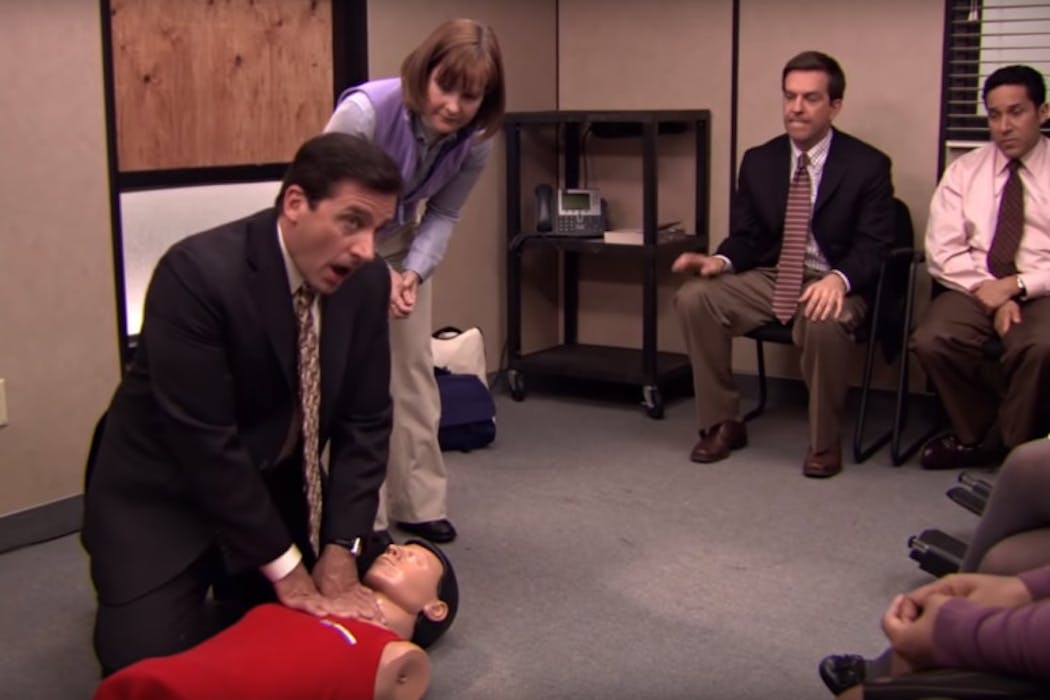
Television characters who experience cardiac arrest outside a hospital are more likely to receive CPR than people in real life. But the CPR on these shows often depicts outdated practices and inaccuracies about who is most likely to experience cardiac arrest and where, according to newly published research from my team at the University of Pittsburgh.
During the CPR training we held at Pittsburgh area middle schools and college athletic programs, participants frequently asked whether they should check for a pulse or give rescue breaths. Many mentioned seeing CPR on television shows like “Grey’s Anatomy.” While these are steps that medical professionals do when giving traditional CPR, hands-only CPR is an effective version recommended for untrained bystanders. After determining the person needs help and the scene is safe, hands-only CPR has just two steps: Calling 911 and giving hard and fast chest compressions.
Hands-on CPR takes just two steps.
As someone who researches how medical topics on screen influence viewers, this piqued my curiosity. I wondered whether participants asked about checking a pulse or giving breaths in part because they saw these practices on screen.
However, we hadn’t found any studies examining how seeing CPR on screen influences viewers. While previous studies on in-hospital cardiac arrest and CPR found inaccuracies with chest compression technique and survival rates in media, none had looked at portrayals of cardiac arrest that occur outside of hospitals and CPR conducted by a lay rescuer.
Performing CPR on TV
My team searched the Internet Movie Database to identify episodes in American TV shows that depict out-of-hospital cardiac arrest or hands-only CPR. We limited our results to episodes released after 2008 – the year the American Heart Association first endorsed hands-only CPR. Of the 169 episodes that fit our criteria, we documented the sociodemographic characteristics of the character experiencing cardiac arrest and the primary witnesses, as well as whether, how and where hands-only CPR was administered.
On a positive note, we found that over 58% of on-screen characters who experienced cardiac arrest outside a hospital had a layperson perform CPR. But in real life, less than 40% of people who suffer cardiac arrest outside a hospital receive CPR. Seeing such high rates of CPR being performed on screen could motivate viewers to act, as in the case of a 12-year-old boy who saved a life in 2023 using the CPR techniques he saw on “Stranger Things.”
However, less than 30% of episodes showed hands-only CPR being performed correctly. Almost 50% of episodes showed characters giving rescue breaths, and 43% of episodes had characters checking for a pulse. While we didn’t directly assess whether these episodes influence how viewers behave, based on our observations while conducting CPR training, it’s clear that these depictions may mislead viewers about how to administer hands-only CPR.
Who gets CPR and where on screen
Our findings also raise concern that how cardiac arrest is depicted on TV may mislead viewers about where cardiac emergencies happen and who may need CPR the most.
Of the on-screen cardiac arrests that didn’t occur at a hospital, we found that only 20% happened at home. In real life, over 80% of nonhospital-based cardiac arrests occur at home.
Additionally, those experiencing cardiac arrest on screen were younger than those in real life, with over 50% of characters under age 40. In real life, the average age is about 62.
Lastly, we found that almost 65% of the people receiving hands-only CPR and 73% of rescuers performing CPR were white and male. This is consistent with real-world statistics, where people of color and women who experience cardiac arrest outside the hospital are less likely to receive CPR from a layperson.
Accurate TV to save lives
The American Heart Association’s 2025 guidelines for CPR and emergency cardiovascular care emphasized the need to help the general public envision themselves performing hands-only CPR and improve CPR education to ensure all people who need CPR receive it.
Our team is working to understand what viewers take away from TV depictions of CPR, with the goal of collaborating with public health and medical professionals to improve how CPR is portrayed in Hollywood.
Previous research has shown that entertainment narratives have the power to inspire altruistic behavior, and news reports have documented instances of people who perform CPR after seeing it on screen. Similarly, I believe scripted, compelling television may be a powerful, cost-effective way to improve CPR education and ultimately save lives.
Beth Hoffman receives funding from the University of Pittsburgh and the National Institutes of Health. She also consults with Hollywood, Health & Society.
Exoplanets are worlds that orbit other stars. They are very difficult to observe because – seen from Earth – they appear as extremely faint dots right next to their host stars, which are millions to billions of times brighter and drown out the light reflected by the planets. The Pandora telescope will join and complement NASA’s James Webb Space Telescope in studying these faraway planets and the stars they orbit.
I am an astronomy professor at the University of Arizona who specializes in studies of planets around other stars and astrobiology. I am a co-investigator of Pandora and leading its exoplanet science working group. We built Pandora to shatter a barrier – to understand and remove a source of noise in the data – that limits our ability to study small exoplanets in detail and search for life on them.
Observing exoplanets
Astronomers have a trick to study exoplanet atmospheres. By observing the planets as they orbit in front of their host stars, we can study starlight that filters through their atmospheres.
These planetary transit observations are similar to holding a glass of red wine up to a candle: The light filtering through will show fine details that reveal the quality of the wine. By analyzing starlight filtered through the planets’ atmospheres, astronomers can find evidence for water vapor, hydrogen, clouds and even search for evidence of life. Researchers improved transit observations in 2002, opening an exciting window to new worlds.
When a planet passes in front of its star, astronomers can measure the dip in brightness, and see how the light filtering through the planet’s atmosphere changes.
For a while, it seemed to work perfectly. But, starting from 2007, astronomers noted that starspots – cooler, active regions on the stars – may disturb the transit measurements.
In 2018 and 2019, then-Ph.D. student Benjamin V. Rackham, astrophysicist Mark Giampapa and I published a series of studies showing how darker starspots and brighter, magnetically active stellar regions can seriously mislead exoplanets measurements. We dubbed this problem “the transit light source effect.”
Most stars are spotted, active and change continuously. Ben, Mark and I showed that these changes alter the signals from exoplanets. To make things worse, some stars also have water vapor in their upper layers – often more prominent in starspots than outside of them. That and other gases can confuse astronomers, who may think that they found water vapor in the planet.
In our papers – published three years before the 2021 launch of the James Webb Space Telescope – we predicted that the Webb cannot reach its full potential. We sounded the alarm bell. Astronomers realized that we were trying to judge our wine in light of flickering, unstable candles.
The birth of Pandora
For me, Pandora began with an intriguing email from NASA in 2018. Two prominent scientists from NASA’s Goddard Space Flight Center, Elisa Quintana and Tom Barclay, asked to chat. They had an unusual plan: They wanted to build a space telescope very quickly to help tackle stellar contamination – in time to assist Webb. This was an exciting idea, but also very challenging. Space telescopes are very complex, and not something that you would normally want to put together in a rush.
Pandora breaks with NASA’s conventional model. We proposed and built Pandora faster and at a significantly lower cost than is typical for NASA missions. Our approach meant keeping the mission simple and accepting somewhat higher risks.
What makes Pandora special?
Pandora is smaller and cannot collect as much light as its bigger brother Webb. But Pandora will do what Webb cannot: It will be able to patiently observe stars to understand how their complex atmospheres change.
By staring at a star for 24 hours with visible and infrared cameras, it will measure subtle changes in the star’s brightness and colors. When active regions in the star rotate in and out of view, and starspots form, evolve and dissipate, Pandora will record them. While Webb very rarely returns to the same planet in the same instrument configuration and almost never monitors their host stars, Pandora will revisit its target stars 10 times over a year, spending over 200 hours on each of them.
NASA’s Pandora mission will revolutionize the study of exoplanet atmospheres.
With that information, our Pandora team will be able to figure out how the changes in the stars affect the observed planetary transits. Like Webb, Pandora will observe the planetary transit events, too. By combining data from Pandora and Webb, our team will be able to understand what exoplanet atmospheres are made of in more detail than ever before.
After the successful launch, Pandora is now circling Earth about every 90 minutes. Pandora’s systems and functions are now being tested thoroughly by Blue Canyon Technologies, Pandora’s primary builder.
About a week after launch, control of the spacecraft will transition to the University of Arizona’sMulti-Mission Operation Center in Tucson, Arizona. Then the work of our science teams begins in earnest and we will begin capturing starlight filtered through the atmospheres of other worlds – and see them with a new, steady eye.
Daniel Apai is a professor of astronomy, planetary sciences and optical science at the University of Arizona. He receives funding from NASA.