Source: The Conversation – USA (2) – By Emily Hodgson Anderson, Professor of English and Dean of Undergraduate Education, USC Dornsife College of Letters, Arts and Sciences
In February 2023, a little more than a year after the launch of ChatGPT, Vanderbilt University sent an email to its student body in the wake of a fatal campus shooting at Michigan State.
“The recent Michigan shootings are a tragic reminder of the importance of taking care of each other,” the email read in part. In tiny type at the bottom of the message, a disclaimer appeared: “paraphrased from OpenAI’s ChatGPT.”
Students immediately objected.
“There is a sick and twisted irony to making a computer write your message about community and togetherness because you can’t be bothered to reflect on it yourself,” one senior wrote.
A Vanderbilt apology email quickly followed. The university launched a professionalism and ethics investigation. One associate dean couched the misstep as a result of learning pains tied to the adoption of new technology.
Chatbots have spawned a host of ethical questions about writing assistance for teachers, students and authors.
But similar debates about ghostwriting have been taking place for over a century, revealing a persistent discomfort with the idea that the words we read might not belong to the person whose name is attached to them.
Outsourcing authorship
Ghostwriting, a paid arrangement in which one person writes under another’s name, has existed for over a century.
The term seems to have first appeared in the English language in a 1908 newspaper article, which I encountered while researching my forthcoming book, “Ghostwriting: A Secret History, from God to A.I.” The story appeared in the Daily Star, in Lincoln, Nebraska, and describes an anonymous writer who earned US$5,000 to help a high-society woman write a book.
Today, ghostwriting usually involves collaborations between professional writers and celebrities or professionals who otherwise wouldn’t have the time, skill or connections to write a book.
On publication of the manuscript, the ghostwriter is typically named, albeit obliquely – perhaps identified as a friend or consultant in the acknowledgments section. In some instances, the ghostwriter’s name appears alongside the credited author’s on the cover. Either way, the client assumes ownership of the ghostwriter’s work.
An ethical gray area
And yet when I type “the practice of one person writing in another person’s name” into Google, the search engine doesn’t spit out “ghostwriting.”
My first hit is “pseudonym” or “alias.” “Plagiarism,” “libel” and “slander” aren’t far behind. A 1953 article titled “Ghost Writing and History” that appeared in The American Scholar also points out that in the mid-20th century, “forgery” – falsely imitating another’s work with the intent to deceive – and “ghostwriting” could be used interchangeably by scholars.
In other words, even when consensual and compensated, ghostwriting has some relatives that are ethically suspect. And maybe that’s why many clients obscure the fact that they’ve used a ghostwriter, and why responses to ghostwritten works often reflect uneasiness with the practice.
“You should be ashamed,” read one social media post, written in response to Millie Bobby Brown’s 2023 debut novel, which she co-wrote with a ghostwriter. “[The ghostwriter’s] name should be on the cover. She was the one who actually wrote the book.”
The discomfort goes both ways: “I feel so guilty and ashamed whenever I use a ghostwriter now because I feel people will think I’m lying,” an anonymous poster on Reddit admitted.
Both the criticism and self-flagellation imply that the act of claiming another person’s words can render these words deceitful, even if the words have been paid for and the content is true.
“I meant to try (to write the book myself),” Goldberg writes. “And when it turned out I couldn’t quite pull it off … I looked for help.”
Goldberg frames the assistance of ghostwriting as something she deserved after overcoming obstacles as a Black woman. But Goldberg also has financial resources available that others looking for writing assistance usually don’t. High-end ghostwriters collect in the mid-six figures for their services; Prince Harry’s ghostwriter, J.R. Moehringer, supposedly scored a $1 million advance.
Cue chatbots. Generative AI promises to be the ghostwriter for the masses, so much so that ghostwriter Josh Lisec explained to me how, in the future, ghostwriting will need to be marketed as a boutique service for elites if it is to survive.
Naming names
Whether you’re paying for a ghostwriter or using a free chatbot, “assistance” or “collaboration” on intellectual and artistic work is not automatically unethical.
Editors have long made a career out of helping authors shape their writing. Visual artists have long employed studio assistants. Television shows only get written collaboratively in writers’ rooms.
And yet, accepting assistance on intellectual or artistic work can raise legitimate questions, particularly with regards to how that assistance is acknowledged and how much assistance can be accepted while still calling a project “ours.”
In the late 19th century, for example, one sculptor went to court to rebut a claim that his assistant – whom the press referred to as a “ghost” – had completed sculptures for which the sculptor took credit. The judge announced that an artist could accept, with integrity, a certain amount of mechanical assistance. But he added that there was a threshold when artistic assistance became “dishonest.” The judge made the accused sculptor craft a bust in real time to prove his skill.
French sculptor Auguste Rodin observes his assistants as they make plaster casts of his works. Corbis/Getty Images
Similarly, most educators find it more ethical when their students turn to ChatGPT for editing assistance but much less so when they use it to generate a document from scratch.
The same policies that govern appropriate A.I. use also come up in ghostwriting contracts. The ghostwriter signs a “warranty of originality” that promises the author that the ghostwriter has – via platforms such as iThenticate – fact-checked and plagiarism-checked their work.
When inaccuracies do crop up, ghostwriters often take the fall.
Former Department of Homeland Security Secretary Kristi Noem blamed her ghostwriter for indicating in her memoir that she had met North Korean dictator Kim Jong Un. Physician David Agus, who teaches at the University of Southern California Keck School of Medicine, held his ghostwriter responsible for the many instances of plagiarism that were identified in his popular science books.
Ghostwriters willingly provide assistance and accept responsibility for the originality of what they write. Scholars have permission to use generative AI, provided they properly cite its use.
And yet when Vanderbilt administrators advertised that their email had been written with the assistance of ChatGPT, students and faculty pushed back.
University policies and book contracts may offer veils of legitimacy and shields from legal liability. But in the end, readers still seem to want the words they’re reading to come from the mind of the person whose name is on the byline.
Emily Hodgson Anderson does not work for, consult, own shares in or receive funding from any company or organization that would benefit from this article, and has disclosed no relevant affiliations beyond their academic appointment.
Source: The Conversation – USA – By Iain Boyd, Director of the Center for National Security Initiatives and Professor of Aerospace Engineering Sciences, University of Colorado Boulder
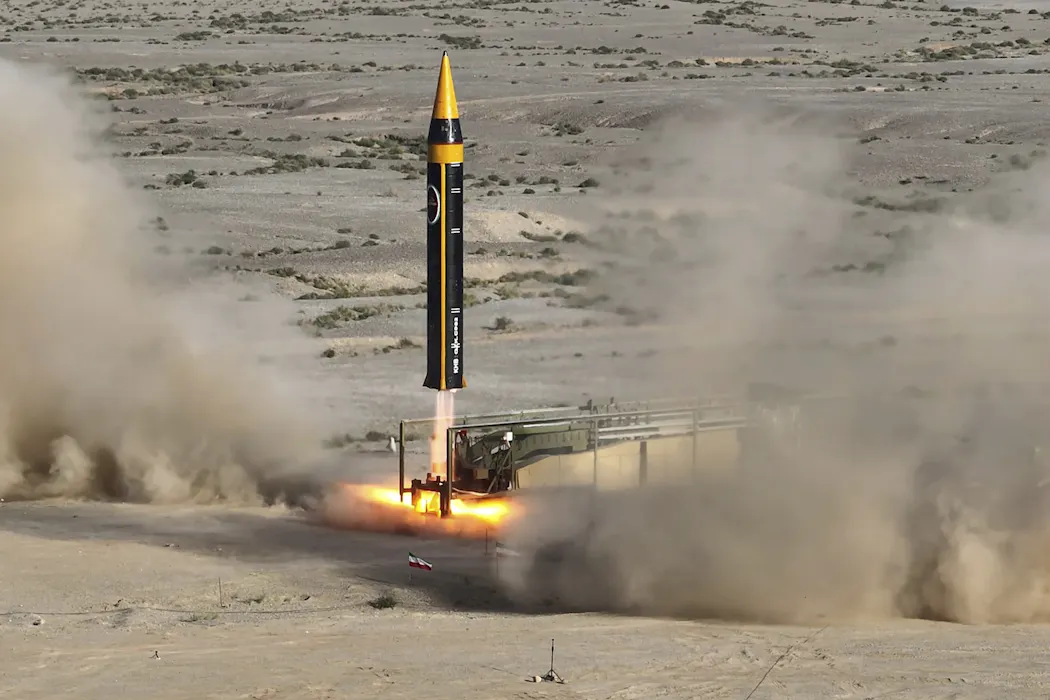
Iran launched two missiles, possibly modified versions of this Khorramshahr ballistic missile, at the island of Diego Garcia.Iranian Defense Ministry via AP
Iran fired two ballistic missiles on March 20, 2026, at the Indian Ocean island of Diego Garcia, which hosts a strategically important joint U.S.-U.K. military base, according to U.S., U.K. and Israeli officials. One missile broke apart during flight, and the other appears to have been destroyed by U.S. missile defenses.
Diego Garcia is about 2,500 miles (4,000 kilometers) from Iran, which is about twice as far as the top range Iran has declared that its ballistic missiles have. Parts of Western Europe, Asia and Africa lie within a 2,500-mile (4,000-km) radius of Iran, raising concerns about the vulnerability of these areas.
However, there’s no evidence that Iran has developed a new type of missile or that it can otherwise hit targets at the longer range. Iran most likely modified an existing type of missile, but increasing a missile’s range poses significant challenges.
Ballistic missile basics
A ballistic missile is launched on a rocket and, after separating from it, subsequently flies mostly under the influence of gravity to its destination. The name refers to the characteristic arc of projectiles whose trajectories are largely shaped by gravity. The range of these missiles is determined by the size of the rocket.
Short-range ballistic missiles can fly about 300 to 600 miles (500 to 1,000 km) and can be launched from mobile trucks. They are used for destroying key defensive infrastructure such as radars.
Medium-range ballistic missiles have ranges of about 600 to 1,800 miles (1,000 to 3,000 km). They are used to attack more strategic targets such as command and control centers where military leaders coordinate operations. Intermediate-range ballistic missiles operate over about 1,800 to 3,400 miles (3,000 to 5,500 km), putting much larger geographical regions at risk.
Intercontinental ballistic missiles, or ICBMs, have a range of about 3,100 to 6,200 miles (5,000 to 10,000 km), making it possible to strike targets over an enormous area. These very long-range weapons require multiple rocket stages. They fly very high, exiting the atmosphere and entering into space, before arcing back toward Earth.
At the height of the Cold War, both the Soviet Union and the United States had thousands of ICBMs armed with nuclear warheads aimed at each other. Each weapon could obliterate an entire city, and nuclear-armed ICBMs have been the basis of mutually assured destruction in which both sides were deterred from ever using the missiles.
The ranges of these missiles – up to 500 miles (800 km) – are insufficient for Iran to use them against Israel directly because the closest distance between the two countries is about 550 miles (900 km). However, Iranian-backed militias have deployed these weapons in neighboring countries, such as Lebanon and Syria, and have launched them from there in attacks against Israel.
Iran has also developed intermediate-range ballistic missiles such as the Shahab-3, Sejjil and Khorramshahr weapons. These missiles have ranges of up to 1,250 miles (2,000 km), which means they can reach Israel directly from Iran.
Harder to go farther
Scaling up from short range to medium range to intermediate requires larger and larger rockets, which presents a number of increasingly difficult technical challenges. Larger rockets create more dynamic vibrations that the missile structure and all its components must survive. This requires an advanced manufacturing and testing infrastructure.
The size of the rocket also determines how much payload the missile can deliver. This challenge is very well-illustrated by the enormous Saturn V rocket that took astronauts to the Moon. Of the total launch mass, less than 2% was delivered to the lunar surface, with propellant taking up almost all the remaining mass.
ICBMs also have a small payload mass, and this in part explains why militaries more often load them with nuclear warheads than conventional chemical explosives. Pound for pound, nuclear warheads produce much larger effects. It is usually not worth the very high cost of sending an ICBM many thousands of miles just to blow up a single building.
Finally, maintaining control of the missile and hitting a target with sufficient accuracy becomes increasingly more difficult as range is extended. Missile navigation systems based on gyroscopes have slight errors that increase with time, and GPS-guided missiles can be jammed.
Limits on Iran’s reach
Having successfully launched satellites into space using two-stage rockets, however, perhaps it is not too surprising that Iran has been able to build on those successes to achieve longer ranges for its missiles. The simplest modification to extend a missile’s range is to reduce its payload.
In the Iranian attack on Diego Garcia, however, one of the missiles failed in flight and the other appeared to have been destroyed by U.S. defenses. The missile failure may indicate that Iran is attempting to operate these systems at distances they are not reliably capable of.
The apparent ability of the U.S. to defend against the second missile suggests that the Iranian intermediate range ballistic missiles do not pose a significant military threat. This conclusion is further supported by the earlier high-volume attack by Iran in December 2025 when it launched hundreds of missiles and drones in a concerted raid against Israel. Almost all were shot down by a combination of Israeli and U.S. defenses.
Surprising but not so threatening
Ultimately, while Iran’s long-range attack on Diego Garcia caught the world off guard, it was likely intended more for its psychological and political effects than for posing a real military threat.
It is worth noting that an additional challenge with fielding intermediate-range ballistic missiles is the cost, which scales with the size of the rocket required. A two-stage rocket that can fly 2,500 miles (4,000 km) is probably one of the most expensive weapons that Iran possesses: It is therefore unlikely to have many of them. When launched in small salvos, these missiles are highly susceptible to the sophisticated air defense systems of the U.S. and its allies.
Still, the attack has certainly gotten the attention of the world and may increase pressure for diplomatic approaches to end the conflict with Iran quickly.
Iain Boyd receives funding from the U.S. Department of Defense and Lockheed Martin Corporation.
Source: The Conversation – USA (3) – By Eranda Jayawickreme, Professor of Psychology & Senior Research Fellow, Program for Leadership and Character, Wake Forest University
Traditional dancers perform in front of the Buddhist Temple of the Tooth, celebrating the Buddhist festival of Esala Perahera, in Kandy, Sri Lanka, on Aug. 8, 2025.Ishara S. Kodikara/AFP via Getty Images
I grew up in Sri Lanka. Much of my adolescence was spent in Kandy, a city built around a lake, set amid the lush tea plantations of the hill country. Its northern shore houses the Temple of the Tooth, one of Buddhism’s most sacred sites. Each year, it came alive with drummers, dancers and elephants parading through the streets in a “perahera,” or procession, honoring the Buddha’s relic.
But Buddhism was only one part of Kandy’s mosaic of religious life. I went to a high school where students from different religious and ethnic backgrounds got along easily. Within walking distance stood Buddhist temples, Christian churches, brightly colored Hindu temples, or “kovils,” and Muslim mosques whose call to prayer echoed across the city multiple times a day. Religious observances filled the calendar; Sri Lanka has more holidays than almost any other country.
Our own home was a glimpse into the island’s diversity. I attended both churches and temples with ease. My mother regularly visited a Hindu kovil with a close friend – though she was Catholic and my father was Buddhist. Her family had emigrated from Kerala, the southwestern tip of India, at the turn of the 20th century. His was Sinhalese, Sri Lanka’s largest ethnic group.
I grew up during Sri Lanka’s civil war, which consumed the country from 1983 to 2009. The brutal conflict was fought between the Sinhalese-majority government and the Liberation Tigers of Tamil Eelam, a separatist group fighting to create an independent state for the Tamil minority. An estimated 80,000-100,000 people lost their lives, and the war divided the country along religious and ethnic lines. Meanwhile, a separate insurrection led by the Janatha Vimukthi Peramuna, a Marxist political party, tore through the southern part of the country in the late 1980s, killing tens of thousands of people.
As a child, I did not possess the vocabulary to describe my own personal experience during this tumultuous time. All I knew was that some people withdrew into their own groups and vilified Sri Lankans who were different from them. Others worked hard to maintain relationships. Ordinary people in extraordinary circumstances could still choose connection over anger.
Those experiences sparked enduring interest in a question that animates my work as a personality psychologist. What allows people to live together across deep religious differences, without sliding into hostility or dehumanization? What helps them commit to pluralism?
Over time, I have come to believe that pluralism requires more than laws and institutions, although such structures are important. It is a moral commitment: a virtue that we each have a responsibility to cultivate.
What pluralism is
The phrase “pluralism” is often used loosely. Sometimes it simply refers to diversity: people of many religions or ethnicities living in one society.
This can look quite ordinary: a Buddhist teacher attending a Christian colleague’s church wedding out of respect, or a Muslim shopkeeper and a Buddhist neighbor debating over tea, disagreeing sharply, but chatting again the following day. Many of the shopkeepers my family relied on every week were either Tamil or Muslim. One of my tutors – a Muslim man who had worked for the Sri Lankan foreign service in his youth – would sit with me over lessons and then linger to talk with me about politics, culture and the country.
Pluralism lives in these repeated, small acts: decisions to sustain relationships with people whose deepest convictions differ from your own. And it begins with tolerance.
True tolerance cannot exist without disapproval. If I fully agree with your beliefs, I do not need to tolerate them. Tolerance begins when you encounter a view or practice that you find mistaken, troubling or even morally wrong and choose not to interfere with it – because you recognize coercion is not the appropriate response.
Pluralism moves beyond tolerance. It’s not just permitting someone’s beliefs; it’s trying to understand them and getting to know them. This is not the absence of conviction. It is the determination to live out one’s deepest convictions within a shared civic space, and to treat other people not as a threat but as key contributors to the community.
It can help to think about pluralism as a continuum. At the opposite end is hate: “I do not accept your existence.” Next is indifference: “I do not care what you believe.” Indifference is followed by tolerance as patience or forbearance: “I disapprove, but I will not interfere.”
The deeper form of tolerance is based in respect: “I affirm your humanity, even while disagreeing.” Finally, the last space on the spectrum is what scholars label relational or covenantal pluralism: “I’m committed to our connection, even though we disagree.”
Historically, religious conflict often centered on theological disputes: questions about doctrine, salvation or authority. Enlightenment thinkers such as John Locke, Immanuel Kant and Jean-Jacques Rousseau grappled with a shared question: How can diverse societies hold together in the face of such differences?
One answer was that societies needed some form of shared civic framework to bind citizens. Two centuries later, the sociologist Robert Bellah argued that Americans had developed just such a framework: a “civil religion” of shared symbols, narratives and moral commitments – such as the American flag, the Constitution and Memorial Day – that transcended particular faiths while sustaining a sense of common purpose.
Often, though, religious pluralism is less about theological differences themselves. Instead, conflict frequently erupts over social and political differences emerging from foundational values and identities.
Sri Lanka provides vivid examples of this disagreement. Article 9 of the country’s constitution grants Buddhism the “foremost place” among religions. Many religious minorities feel that provision writes a hierarchy into law, granting special privileges to the majority religion.
Or think about the consequences of the devastating 2019 Easter bombings – coordinated attacks on churches and hotels in three Sri Lankan cities by members of the Islamist militant group National Thowheeth Jama’ath.
A relative of a victim of the Easter bombings prays at their burial site in Negombo, Sri Lanka, on April 28, 2019. AP Photo/Manish Swarup
The resulting wave of anti-Muslim sentiment was not really driven by theological differences but questions about identity, trust and political power. Social media misinformation and opportunistic political rhetoric cast Muslims as outsiders threatening a Sinhala-Buddhist national identity. The question at stake was not which religion was true but who “truly” belonged to the nation.
If societies cannot sustain engagement across differences, shared civic life becomes impossible. This challenge, in my view, is not only institutional but also personal: What habits of mind allow religious pluralism to flourish?
Psychology of disagreement
On a personal level, pluralism begins in a moment of objection. You hear a belief that conflicts with your own. You see a religious symbol you find troubling. You run into a policy grounded in values that you reject. Our first reaction is often intuitive and emotional: irritation, aversion, anger, discomfort. Moral psychology suggests that such reactions feel automatic, confirming our sense that our view is the obvious truth.
What matters is what happens next. Some people quickly dismiss ideas they don’t like, shutting down curiosity. Others pause to reflect: asking why they reacted as they did, what the other person might value, and whether broader principles like freedom of conscience or fairness should guide their response.
This is a hard standard to live up to and one which I’ve struggled with myself. In the wake of the Easter bombings, I found myself growing impatient with Sri Lankans who continued to defend the actions of the government, even as it was detaining about 2,000 Muslims, often on thin evidence; banning women’s religious head coverings; and pardoning the ultranationalist monk most associated with anti-Muslim mob violence. I sometimes caught myself doing exactly what I study, reducing complex people to the worst version of their position. I stopped asking what they were trying to protect or what fears were driving their stance.
It took deliberate effort to step back and try to understand their perspective charitably, even while continuing to disagree. I had to reflect on the fact that for Sinhalese Buddhists carrying the memory of decades of Tamil separatist violence, the government’s response in the wake of the bombings could seem like a way to take the country’s security seriously. The tragedy was that this fear of violence was directed at an entire community, rather than the fringe actors who had committed the crime.
A Muslim woman takes part in a remembrance ceremony in front of St. Anthony’s Church in Colombo, Sri Lanka, on May 21, 2019, a month after a series of deadly Easter Sunday blasts. Ishara S. Kodikara/AFP via Getty Images
Reflection does not guarantee tolerance; we may still conclude that a belief is too harmful to accept. But it could also lead to a “principled allowance,” which is what makes tolerance possible: deciding that others have a right to hold or express views we dislike.
From there, the path can diverge again. Some people settle for a minimal “live-and-let-live” coexistence, while others move toward deeper dialogue and cooperation.
In other words, pluralism is not a single decision. It’s a series of steps to uphold a relationship, shaped by virtues such as humility, empathy, patience, fairness and courage. We can strongly disagree with someone but still ask: What does this belief mean to them?
That said, I still wrestle with where the boundaries of pluralism lie. What about when someone’s convictions lead to clear harm to vulnerable people? I do not have a clean answer. Over the years, though, I’ve come to believe that the difficulty of the question is not a reason to abandon the commitment. Committing to pluralism is a sign of character – one that can be strengthened by practicing particular virtues.
Which virtues support pluralism?
One is intellectual humility: recognizing the limits of our knowledge. It does not mean abandoning conviction. It means acknowledging the possibility that we’re wrong.
Studies suggest that intellectual humility is associated with openness to opposing viewpoints, attempting to understand how another person sees the world. When combined with curiosity, it moves beyond strategic tolerance toward fostering genuine relationships.
Another key virtue is empathy – but a specific kind of empathy. As an emotion, empathy can be biased; it may pull us toward people who look like us, feel close to us, or whose suffering resonates with our own experience. Another form of empathy, though, is perspective-taking: trying to understand another person’s thoughts, feelings or point of view. Studies have found that perspective-taking can reduce prejudice against people with different views.
Similarly, the virtue of curiosity can help reframe disagreement. Instead of seeing difference as a threat to our own identity, it becomes an opportunity to learn. Higher levels of curiosity have been found to both increase people’s motivation to learn and reduce their desire to distant themselves from people with different views.
Pluralism is challenging when emotions run high. That means another virtue it requires is self-regulation, the ability to reflect before reacting. Without it, moral disagreement can quickly descend into condemnation.
Tamil war survivors pray for family members during a commemoration ceremony in Mullaitivu, Sri Lanka, on May 18, 2024. Buddhika Weerasinghe/Getty Images
Finally, pluralism takes courage. People sometimes confuse pluralism with moral relativism: the view that right and wrong are just matters of opinion, with no universal moral foundation. Pluralism doesn’t mean giving up your values, but it requires bravery to discuss them openly with people who strongly disagree.
It is still early, but the emerging picture is consistent with what I observed as a child: that the people around me who maintained friendships across ethnic and religious lines were not people without convictions. They were people who had cultivated specific habits of mind that made that pluralism possible, despite blowback from others within their own community.
Putting it into practice
One practical way to build these habits is to practice what some researchers call an “ideological Turing test.” The rule is straightforward: Before you criticize someone’s position, you first have to explain it so accurately and charitably that they would recognize themselves in your summary. They would say, “Yes, that’s what I believe.”
Doing this well is hard. You have to get curious about what the other person is actually trying to protect, what they fear, what trade-offs they’re willing to live with, and what experiences might have shaped their perspective in the first place. This exercise quietly changes the aim of the conversation: Instead of trying to defeat the other person, you try to understand them.
The process also tends to trigger intellectual humility, because when we make a serious attempt to represent opposing views fairly, we may notice faults in our own thinking. None of this requires agreement, but it does reduce our tendency to caricature the other side.
Pluralism can also be strengthened by reframing our sense of “we.” In polarized environments, “we” tends to shrink until it names only the people who pray, vote and live exactly like us. Pluralism pushes in the opposite direction: It asks us to include fellow citizens whose deepest convictions diverge from our own. Community is a shared civic fate – the responsibilities, institutions and hopes we share, despite enduring disagreement.
Many times over the years, I have thought of a story my father told me, a vivid example of “we.” In 1983, Tamil militants killed 13 government soldiers, and anti-Tamil riots swept across the country. Sinhalese mobs attacked Tamil homes, businesses and neighborhoods in what became known as Black July – days of violence orchestrated by the government that killed thousands of Tamils and displaced many more. The riots are widely regarded as the spark that turned simmering tensions into a full-scale civil war.
A woman holds a portrait of her missing relatives during a protest by Tamils demanding justice for their loved ones near mass graves in Jaffna, Sri Lanka, on July 26, 2025. AFP via Getty Images
My grandparents and uncle were living in Kandy. When violence reached their area, they hid Tamil neighbors in their home, sheltering them from the mobs outside. My father said it was a split-second decision, motivated by the recognition that the people next door were their neighbors rather than members of a different ethnic and religious group.
Their actions required courage and a moral clarity that cut against the chaos of the moment. This clarity doesn’t appear out of nowhere; it emerges from habits practiced long before the moment of crisis arrives.
To build that courage in ourselves, we can also build habits of praise, noticing and naming when others are respectful to people across a divide. Virtues grow where they are socially reinforced. Each person can build accountability by committing with a friend or colleague to one concrete practice of pluralism: asking clarifying questions before responding, summarizing an opposing view before critiquing it, or pausing before posting an incendiary comment online.
Thinking back to my childhood, I remember the evening in 1993 when neighbors gathered outside after news that Sri Lanka’s president at the time, Ranasinghe Premadasa, had been assassinated. We could hear faraway fireworks lit by others who were rejoicing in his passing. And yet we stood together quietly.
The silence of the people around us did not erase our differences; the sound of the fireworks in the distance was a callous reminder of the disagreements that did exist. But to me, our neighbors’ silence affirmed something deeper: that our disagreements did not cancel our shared humanity.
In an era when religious and moral differences often feel like threats to identity, cultivating an individual ethic of pluralism may be one of the most critical civic tasks before us. Pluralism is not who we are by default. But it can be who we become – slowly, deliberately and together.
Eranda Jayawickreme receives funding from the Templeton Religion Trust (grant ID TRT-2024-33487). He is a member of the Labour Party (UK).
Source: The Conversation – USA – By Alejandro Hortal-Sánchez, Visiting Assistant Professor of Philosophy, Wake Forest University; University of North Carolina – Greensboro
A classic example of a nudge is making the healthy choices easier to grab in a cafeteria.Maskot via Getty Images
Twelve-year-old Jaysen Carr died in July 2025. While he swam in Lake Murray, a reservoir a few miles from Columbia, South Carolina, Naegleria fowleri – a rare amoeba found in warm fresh water – entered through his nose, causing a rapidly fatal brain infection.
Each year in the United States, drowning causes roughly 4,500 deaths, while infections from brain-eating amoebas typically number only two or three. Yet the vividness of these rare deaths powerfully shapes how people perceive and respond to risk. After a 2025 amoeba-related death made headlines in Iowa, for example, open-water swimmers began questioning whether lakes were safe, even as health officials emphasized how rare such infections remain.
Is it irrational to avoid swimming in lakes on hot summer days? How rational is it to fear flying? How many people worry about contaminants in their drinking water yet never think twice about skipping sunscreen, despite skin cancer being the most common, and largely preventable, cancer in the United States?
These reactions raise a deeper question: What does it mean to call a response “rational” or “irrational”? These are the kinds of ideas I explore in my research on behavioral public policy. How do the assumptions scientists make about human rationality shape the tools governments use to improve social welfare?
When mistakes aren’t really mistakes
Behavioral economists, following Daniel Kahneman, emphasize how heuristics – the mental shortcuts or rules of thumb people use to make quick decisions – produce systematic biases or predictable errors in judgment. From this perspective, these biases born from shortcuts lead people to make choices that do not serve their own interests or stated preferences.
Evolutionary psychologists such as Gerd Gigerenzer instead see those same shortcuts as adaptive responses to uncertainty. Rather than errors, they’re efficient strategies shaped by the environments in which human reasoning actually evolved.
These two perspectives are in disagreement about what counts as rational – and why that matters for policy.
Consider a few familiar examples. Frame the same medical procedure as having a 90% survival rate rather than a 10% mortality rate and patients respond very differently. Set one option as the default – whether in organ donation, retirement savings or privacy settings – and most people stick with it simply because opting out takes effort.
From a behavioral economics perspective, these are clear cases of bias: judgments shaped by framing, whatever feels most vivid, or inertia rather than careful deliberation.
From an evolutionary perspective, however, the picture changes. In complex environments with limited time, information and attention, relying on defaults or whatever feels most vivid or familiar can be an efficient way to decide without becoming overwhelmed. What looks like a mistake when judged against idealized models of rational choice may instead be a sensible response to real-world uncertainty.
This perspective helps explain why small changes in choice environments – nudges such as placing salad bars directly in cafeteria serving lines or listing vegetarian options first on menus – can significantly shift behavior without forcing anyone to choose differently. In other words, nudges work precisely because they align with, not fight against, the shortcuts people already use, making the desired behavior the path of least resistance.
Behavioral economists defend nudges as tools for correcting cognitive biases. Gigerenzer criticizes them as ethically problematic and argues that public policy should emphasize education over subtle choice manipulation.
If human rationality is seen as deeply flawed, nudges appear attractive because they make better decisions easier without demanding reflection.
If, instead, rationality is viewed as adaptive and teachable, policy should focus on strengthening people’s capacity to learn, adapt and decide for themselves.
Rationality isn’t just one thing
From bestselling books such as behavioral economist Dan Ariely’s “Predictably Irrational” to the worldwide expansion of behavioral “nudge” units in government, many contemporary developments suggest that people are poor decision-makers. Struggles with retirement savings, health, weight loss and environmental protection seem to confirm that view.
And yet, as a species, humans have been extraordinarily successful – adapting to diverse environments, building complex societies and accumulating knowledge across generations.
My claim is that this apparent contradiction dissolves once you recognize that rationality is not a single thing. Human beings can be both rational and irrational, depending on the scientific lens in use. From a behavioral economics perspective, many decisions appear biased and suboptimal. From an ecological or evolutionary perspective, those same decisions can look adaptive, efficient and sensible given the environments in which they are made.
At this point, the disagreement is not merely empirical but conceptual. People often assume that “rationality” names a single property of human behavior, when in fact its meaning depends on the scientific framework being applied.
Consider love. In neuroscience, love appears as patterns of brain activity and hormones. In psychology, it is studied through attachment and emotion. In sociology, it takes the form of social bonds and norms.
None of these accounts is wrong – but none captures love in full. I suggest rationality works in much the same way.
The danger arises when one perspective is treated as the whole story. Reducing love entirely to brain chemistry, or rationality entirely to cognitive biases, treats a partial explanation as a complete one. Scientific disciplines illuminate different aspects of complex phenomena, but none has a monopoly on their meaning.
Forgetting this carries a cost: We risk drawing overly narrow conclusions – about human behavior, intelligence or public policy – by mistaking the limits of a single framework for the limits of human rationality itself.
Seen this way, fear of rare brain-eating amoebas, of flying, or of tap water is not simply a failure of reason. Such reactions may appear irrational under one standard yet reflect a form of rationality adapted to uncertainty, vivid impressions and limited information.
What ultimately matters is not labeling people as rational or irrational, but being explicit about which conception of rationality is at work – and why. That choice, in turn, shapes whether public policy aims to nudge behavior, educate citizens or redesign environments so that human reasoning can operate at its best.
Alejandro Hortal-Sánchez does not work for, consult, own shares in or receive funding from any company or organization that would benefit from this article, and has disclosed no relevant affiliations beyond their academic appointment.
Source: The Conversation – USA – By Adeel Khalid, Professor of Industrial & Systems Engineering, Kennesaw State University
An AI system can analyze data from a drone to detect people in a forest – and determine what condition they’re in.Adeel Khalid
A combination of infrared imaging, thermal imaging and color cameras on an uncrewed drone, along with an AI system to interpret the data, can help emergency responders and search-and-rescue teams locate, identify and track people who have gone missing in the wilderness. The experimental system helps responders pinpoint where a missing person is and determine whether they are hurt or even alive.
People who get lost or hurt while exploring nature can become stranded for days. Rescue teams often use drones to look for the person or signs of their whereabouts. The small drone my colleagues and I built at my lab at Kennesaw State University flies autonomously using a grid search pattern. It sends live video and images to a ground station operated by the rescue team.
When the AI system finds a person, it analyzes images to determine whether the individual is upright or lying on the ground. It segments parts of the person’s body, identifying the person’s head and the body’s position. It then zeroes in on the forehead. It extracts forehead temperature readings, pixel by pixel, from the imaging data to estimate forehead temperature. We have two papers detailing these findings accepted for the American Institute of Aeronautics and Astronautics Aviation Forum 2026 conference.
Our AI model then assesses whether the person is conscious or unconscious and identifies abnormal temperatures that could indicate heat stress, hypothermia or other physical complications, or death – all vital information for a search-and-rescue team.
In field trials we have conducted, the system has provided consistent temperature readings of the heads of volunteers from our research team who have walked out into a variety of environments, under different conditions.
Why it matters
It is critical to get accurate and timely information on the whereabouts of a missing person. The likelihood that the person will survive decreases steeply as time passes.
An AI-enhanced drone can make search-and-rescue operations significantly more efficient than sending teams of people out into the environment to search on foot, especially in poor weather conditions or under thick foliage. Rescuers who know whether a person is conscious or unconscious can also better gear up for what they need to do to retrieve the person and administer aid. Our technology could save lives.
What other research is being done
Search-and-rescue personnel use various kinds of drones, but the machines often lack the ability to positively identify humans, especially under thick foliage, in bad weather or when the person is lying down or unconscious. The AI-based technology we have developed overcomes those challenges.
Better sensors that are very lightweight, that can function at night or in rain, and can see more clearly through thick foliage could further improve our drone and drones used by others. Researchers are devising AI-powered sound recognition for detecting screams for help, advanced thermal imaging for better nighttime vision and autonomous drones that could act as first responders.
Also under development are drones that can carry heavy payloads, such as flotation devices, fly for up to 14 hours or perform real-time mapping of the ground below.
What’s next
One of our next steps is to have multiple drones fly together and autonomously coordinate search-and-rescue operations among themselves. This will allow the technology to cover a much larger area, perhaps hundreds of square miles.
We are also designing a large drone that can carry up to 110 pounds (50 kilograms) of payload and stay aloft for an hour.
The Research Brief is a short take on interesting academic work.
Adeel Khalid receives funding from the Office of Research at Kennesaw State University.
Imagine a world without internet, email, streaming services or social media. Imagine having to write letters or call everyone on a rotary dial phone to communicate. Imagine having to drive to a store to buy anything and everything. Unthinkable, right?
You can thank fiber optics for all these conveniences and more. And while you’re at it, wish the fiber a happy 60th birthday in 2026.
As a materials scientist who has worked with fiber optics for over 30 years, I’ve seen how useful they are, and how scientists are working to improve them.
What are fiber optics?
Fiber optics are hair-thin strands of glass that confine and carry light. Information encoded on that light is how we communicate, watch movies, buy things and stay connected.
To carry information over long distances, the fiber must be extraordinarily clear. The magic behind an optical fiber’s transparency is a combination of material science and manufacturing. As the light journeys along the fiber, little by little, some scatters off the glass molecules themselves and is lost. In modern fiber optics, this loss is so small that light can travel hundreds of miles and still be seen.
Carrying information in the form of light over long distances requires the fiber to act like a mirror. This way it can bounce those bits of light around corners when the fiber is bent, as it might be when strung like electrical wire inside a building.
Optical fibers comprise an inner core surrounded by an outer layer called a cladding, both made from glass. Protective plastic layers surround these glass parts and keep the fiber remarkably strong. The core glass is made from a material that has a slightly higher refractive index than the cladding.
You can think of the refractive indexlike density. A denser material has more atoms or molecules for its size, so it takes the light longer to travel through it. The refractive index measures this slowing of light inside a material.
In such a design, light undergoes “total internal reflection,” bouncing off the core-clad interface. A remarkable feature of this phenomenon is that the glasses comprising both the core and clad are transparent, but when sandwiched together, light impinging on that interface at certain angles reflects off like a perfect mirror. So how are these special types of glass made?
Fiber optics use total internal reflection to carry light over long distances.
A simple science
In the age of quantum technologies and AI, sometimes sophistication comes best from simplicity.
The optical fibers that wire our world are predominantly made from silicon dioxide, which also makes up beach sand. However, while chemically the same, beach sand is made up of tiny crystals of quartz that have been pulverized by geological weathering and the pounding of ocean waves. These natural origins riddle beach sand with impurities that can absorb light.
Manufacturers create fiber optic silicon dioxide, called silica, by chemically reacting gases that contain silicon with oxygen, leading to an ultrapure glass. This is all done using a process called chemical vapor deposition, where the reacted gases create layers of glass that build into the form of a rod. Typically, pure silica is used for the layers that make up the core and cladding, though to get a higher refractive index in the core, researchers add small amounts of other glass components to the silica. The finished rod is called a “blank” or “preform.”
That rod, containing both core and clad, is then heated and pulled into a thin fiber. Think of pulling on a wad of gum in your mouth – that thin strand is like the fiber, except scientists slowly lower the big preform into the furnace and pull out the small fiber quickly.
Another beauty of glass is that it controllably softens with temperature. This permits us scientists to reliably pull fiber from the preform rod that already has the core and clad built into it.
Billions of miles of fiber optics have been made for global communications, and it all conforms to a diameter of 125 micrometers – one millionth of a meter – with a tolerance typically less than about one micrometer.
That level of material purity and manufacturing control makes fiber optics a modern marvel. But fiber optics haven’t always been this advanced – it took time to get to this level of purity and control.
The trivergence
Three events took place within roughly a 10-year span that paved the way for today’s fiber optics.
In 1960, physicist Ted Maiman developed the laser by building on its 1950s predecessor, the maser. In 1966, 60 years ago, experiments by engineers George Hockham and Charles Kao tested the transparency of various materials along with some light-guiding structures. They determined that a glass fiber could, in theory, carry light over the span of at least a kilometer.
While that distance might not sound too good today, other communication systems at the time were losing far more signal strength.
The trick was to make the glass clean enough. With this finding, Hockham and Kao started a global race to make optical fiber that exceeded this level of transparency.
By 1970, scientists from Corning Inc. used chemical vapor deposition to make a fiber breaking Kao’s mark. With both these highly transparent fibers and more mature lasers to create light pulses, long-distance optical communication was born.
From 1970 to today, the clarity of fiber has continued to improve, becoming over 100 times clearer now and allowing networks to connect the world. For “groundbreaking achievements concerning the transmission of light in fibers for optical communication,” Charles Kao was awarded the 2009 Nobel Prize in physics.
Through the looking glass
Glass lets a lot of visible light through – you can tell by looking out your window. But interestingly, it is even clearer at colors, called wavelengths, that are invisible to the human eye. Fiber optics used in communication networks operate at a wavelength of light of about 1.55 micrometers, between 50 and 100 times smaller than a human hair. At this infrared wavelength, the interaction of the light with the silica glass is disappearingly small.
Billions of miles of fiber optics have been made since the 1970s and installed globally for communications. But the technology’s small size and weight, coupled with its high strength, flexibility and transparency, make fiber optics useful for many other applications.
Today, fiber optics are used as sensors for geologic events, such as earthquakes, as monitors for infrastructure, including bridges, roads and buildings, and as conduits for imaging and laser treatments inside the body. Optical fibers are also used as the source of light within the fiber lasers employed worldwide for machining, manufacturing, defense and security – to name just a few.
It’s remarkable how something that hardly interacts with light can underpin most of our human interactions. Fiber optics use light you can’t see to enable things most people cannot live without.
John Ballato receives funding from numerous federal funding organizations including the National Science Foundation and US Department of Defense.
Source: The Conversation – USA – By Gregory F. Treverton, Professor of Practice in International Relations, USC Dornsife College of Letters, Arts and Sciences
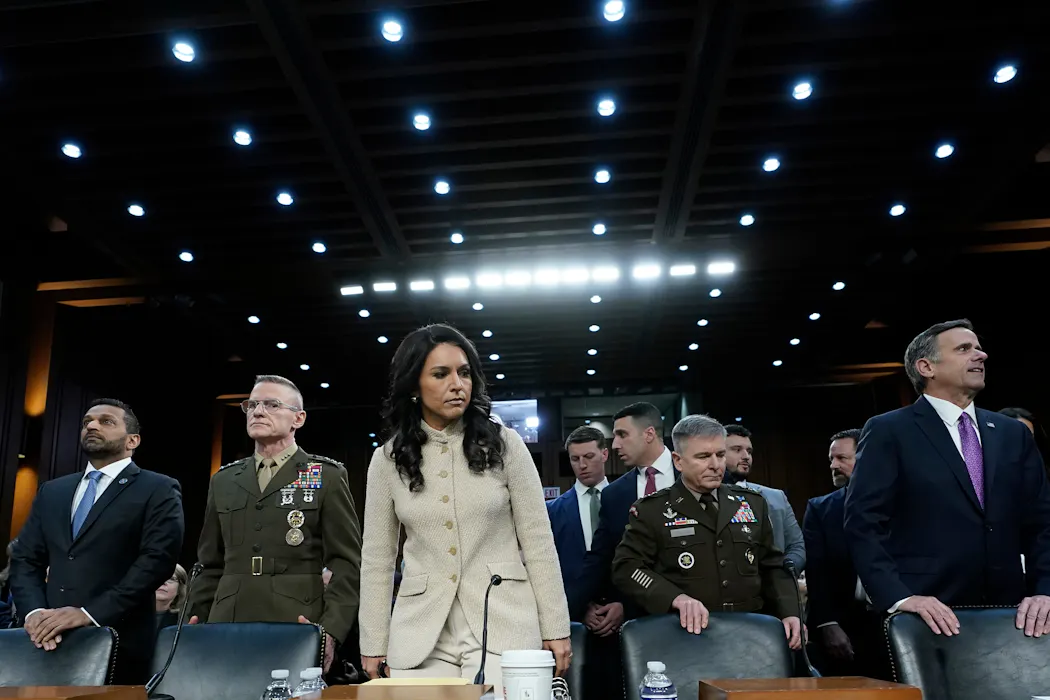
Director of National Intelligence Tulsi Gabbard, center, acting Commander of U.S. Cyber Command William Hartman and CIA Director John Ratcliffe, right, stand before the Senate Committee on Intelligence on Capitol Hill on March 18, 2026.AP Photo/Jose Luis Magana
The administration’s inconsistent rationale for waging war was laid bare on March 18, 2026, when Tulsi Gabbard, the director of national intelligence, testified before the Senate Intelligence Committee and declined to say whether her agency had made an estimate of if and when Iran would threaten the U.S. mainland.
“It is not the intelligence community’s responsibility to determine what is and is not an imminent threat,” Gabbard said.
The statement was especially odd given that the briefing’s subject was the U.S. intelligence community’s latest global threat assessment. It’s clear to me that neither Gabbard nor other members of the intelligence community were part of Trump’s decision-making about going to war.
Besides serving as chair of the National Intelligence Council in the Barack Obama administration, I was a staff member of the National Security Council in the Jimmy Carter administration. I know that this apparent lack of a coordinated policy on Iran is a far cry from the war preparation and planning done during previous presidential administrations.
National Security Council
Typically, the National Security Council, which consists of the Cabinet secretaries of the national security agencies, does its work through its committees, including the Deputies Committee, which is made up of the top deputies in those departments. The Deputies Committee reviews plans and assesses options, usually presenting a recommendation to the principals, including the president.
In that sense, the National Security Council is seen within an administration as the honest broker, especially in balancing the roles of the two main foreign affairs departments: the State Department and the Defense Department.
To be sure, different administrations have used the National Security Council in different ways.
President Dwight Eisenhower created the modern National Security Council. His was an elaborate structure, with groups for both assessing options and overseeing implementation. It reflected his wartime experience, with careful staffing from a general staff whose responsibilities ranged from operations and logistics to intelligence and plans.
Other administrations have favored less formal arrangements. John F. Kennedy, for instance, kept discussions with the National Security Council secret during the 1962 Cuban missile crisis. But all the National Security Council stakeholders were represented, and Kennedy reached out to consult outside expertise on the Soviet Union.
President Barack Obama and Vice President Joe Biden walk away from the lectern after Obama announced a nuclear deal with Iran on July 14, 2015. AP Photo/Andrew Harnik, Pool
Lyndon Johnson made Tuesday lunches his forum for debating decisions about U.S. involvement in Vietnam. Beginning with just his secretaries of state and defense, the lunches became a National Security Council meeting but in less formal circumstances. The CIA director, the chair of the Joint Chiefs of Staff and the press secretary were later added to the group.
In the Obama administration, the National Intelligence Council I chaired supplied the intelligence support to the Deputies Committee. We provided a steady stream of intelligence assessments across various subjects. Those included pro-democracy protests during the Arab Spring in the 2010s to Russia’s annexation of Crimea in 2014 and the 2015 Iran nuclear deal.
The intelligence assessments provided the information – about where wars stood and what may come next – used for discussion among the deputies. They were discussions informed by experts on the Deputies Committee and from staff on the National Security Council who specialized in the region or military affairs.
Since White Houses always want to pretend they are cheaper than they are, most staff with the National Security Council are seconded – or loaned for free – from one of the agencies. The process saves the White House money. But it also provides it with invaluable in-house expertise and exposes those seconded officials to presidential policymaking.
A friend and colleague who served as under secretary of defense quipped that every time he saw a State Department counterpart coming to a Deputies Committee meeting, he knew what was coming in substance: a request for a military solution to a geopolitical problem.
His stock answer: “Yes, we can do that, but it’ll require 100,000 soldiers and cost US$10 billion.” That answer was his quip, but the Deputies Committee provided a forum for arguing about the merits of the case.
The Trump administration in January 2025 outlined the National Security Council structure in familiar terms. But the Joint Chiefs of Staff chairman and director of national intelligence, both a regular presence in debates in previous administrations, were made situational rather than regular members. They would attend as needed, not automatically.
This photo provided by the White House shows President Donald Trump talking with White House chief of staff Susie Wiles as Secretary of State Marco Rubio listens at Mar-a-Lago during Operation Epic Fury on Feb. 28, 2026. Daniel Torok/The White House via AP
“In your Cabinet with the vice president, secretary of state, what is it like, what are the dynamics when you have a big decision like Iran or Venezuela?” Kilmeade asked. “Are people speaking up and speaking their minds?”
Trump’s answer spoke volumes.
“They do,” the president said. “I let them speak their mind, and they do. And we have some differences, but they, they never end up being much. I convince them all to, let’s do it my way.”
Perhaps this casual approach to national security from the Trump administration should not surprise Americans after “Signalgate” – when administration officials in 2025 used the messaging app Signal rather than secure government modes to discuss U.S. military strikes on Yemen and inadvertently included a journalist in the communications.
But when lives are at stake, not to mention Americans’ pocketbooks and the global economy, I think the nation deserves better. Conducting a war requires a hard-headed process for assessing progress and evaluating next steps. In other administrations, the National Security Council would have provided that.
Gregory F. Treverton does not work for, consult, own shares in or receive funding from any company or organization that would benefit from this article, and has disclosed no relevant affiliations beyond their academic appointment.
With the war in Iran a topic on everyone’s lips, you might have noticed an inconsistency in the way that nation’s name is said, varying between a more native-like “Ih-ron” pronunciation and a more Americanized “Ih-ran” one.
An everyday listener might just chalk this up as being the result of regional differences or the version we learned growing up, like the alternate ways Americans have of saying “data” or “roof.”
But as a linguist who studies what our accents reveal about our histories and social identities, I know that the way we pronounce things often gives off clues about who we are and what we believe in.
That appears to be the case with these two distinct pronunciations.
President Donald Trump’s Feb. 28, 2026, statement on the commencement of U.S. strikes against Iran.
The sound of politics
It’s probably not a big surprise to learn that listeners often hear certain words or accents as indicating someone’s political inclinations.
That’s because people are primed to notice patterns that mark group membership – be it a style of clothes or pronouncing “fire” more like “far.” Once they notice these patterns, people then tend to assign whatever traits are believed to characterize that group to the sounds of their speech.
For instance, researchers examined how people perceived potential political candidates with a Southern vs. non-Southern American accent. They wrote in 2018 that they discovered listeners perceived Southern-sounding politicians as more likely to be conservative and to hold right-leaning views on issues such as gun rights and abortion. All that from hearing someone pronounce “pin” like “pen” or say “bah bah” for “bye.”
This suggests that even a small difference in the way a vowel is pronounced can suggest a lot more about political ideology than you might imagine, even if that suggestion is not always accurate.
Nationalism and names
Going back to the question of what drives variation in the pronunciation of Iran, a linguistic study examining politics and pronunciation during the Iraq War offers some insight.
In analyzing 2007 House of Representatives debates about sending more U.S. troops to Iraq, linguists found that a congress member’s political party affiliation was the strongest predictor of how the “a” vowel in Iraq was pronounced.
Republicans preferred the anglicized short “a” pronunciation closer to “ear-RACK,” while Democrats preferred a more “ah”-like one, as in “ear-ROCK.” The authors suggest that the Democratic preference, approximating a more native pronunciation, was motivated by greater multicultural sensitivity.
The pronunciation of the “i” vowel also exhibited a more anglicized option, as in “EYE-rack/rock,” which was also examined. Unlike the “a” vowel, a more “eye”-like pronunciation by itself did not significantly correlate with partisanship.
President George Bush’s 2003 Oval Office address announcing the U.S. invasion of Iraq.
Two later studies, in 2011 and 2018, of everyday speakers who were asked to pronounce Iraq in nonpolitical contexts discovered no significant difference by political affiliation. The biggest predictor favoring an “ear-ROCK” pronunciation was that a person spoke multiple languages, as the “ah” vowel sound is more frequent in languages commonly spoken in the U.S., such as Spanish, French and Italian.
Despite not directly patterning with politics, when people in the 2018 study were questioned explicitly about how saying “ear-RACK” or “ear-ROCK” tied into political views, the “ah” pronunciation of the vowel was indeed heard as linked with liberalism, an association particularly strong for those who used “ah” and were liberal themselves.
This suggests that people might have picked up on this pattern from hearing politicians. They were aware of the fact that this vowel variation had become, in relevant contexts, symbolic of liberal vs. conservative stances.
Respect and pronunciation
In looking more generally at the pronunciation of borrowed words written with the letter “a,” like that of “pasta” or “tobacco,” linguist Charles Boberg suggests that Americans generally follow two possible paths, either pronouncing it with the short “a” like in “bat” or with the “ah” like in “father.”
Boberg suggests that attitudinal factors play a role in the choice between the two. Since many Americans associate the “ah” pronunciation with more education and sophistication, given its connection to upper-crust British use in words like “bath” or “aunt,” there has been an increasing tendency for Americans to use “ah” in words borrowed since World War II, as with “origami” or “nacho.”
But in looking at variability in the pronunciation of Iraq, other linguists hypothesized that the “ah” vowel is only heard as more sophisticated when a source language is held in high esteem – as with the British-derived “ah” in “aunt” – or when those speaking foreign languages are well regarded.
In contrast, when there is less respect for a people or a place, the choice of an Americanized vowel rather than the more accurate native one might be preferred. This attitude difference may well explain much of the variation in politicians’ pronunciation of Iraq – and possibly Iran.
Not surprisingly, in their study of congressional variation in pronunciation of Iraq, these researchers found that, beyond party affiliation, the politician’s war stance – for or against sending additional troops – was a significant determinant of which vowel was used. If they used the “ear-RACK” pronunciation, they were more likely to favor sending more troops to the country.
Iran-born Ali Tabibnejad, who now lives in the U.S., gives instructions on the proper way to say Iran.
Trump and ‘I-ran’
While there is, as of yet, no similar study comparing politicians and their pronunciation of Iran, it is interesting to note that both President Donald Trump and Vice President JD Vance say the name in the more anglicized fashion, using the same vowel as in “ear-RACK” – that is, as “Ih-RAN” not “Ih-RON.”
Considering the highly contested nature of this war, this presidential preference for the anglicized version of the name may be driven by a similar politicized positioning to that found for the pronunciation of Iraq. Trump and Vance may be underscoring their “pro-America” focus by creating a linguistic and ideological distance with the named nation and its speakers.
A similar linguistic contrast was made during the Vietnam War, when “VietNAM” was commonly pronounced as having the same short “a” sound as in “bat,” including from the lips of President Lyndon B. Johnson. Now, years later, the “VietNOM” pronunciation dominates, and the “NAM” version is virtually absent in those born in more recent eras.
In the same way, Americans might eventually find a linguistic middle ground in the current pronunciation debate over Iran. But it might be a while before peace in the Middle East prevails long enough to give the next generation a linguistic clean slate.
Valerie M. Fridland does not work for, consult, own shares in or receive funding from any company or organization that would benefit from this article, and has disclosed no relevant affiliations beyond their academic appointment.
Mahseer swim in the Ramganga River, a major tributary of the Ganges River in South Asia.Zeb Hogan
Hidden beneath the surface of the world’s rivers, some of Earth’s great animal movements unfold – migrations that rival, in sheer biomass, the famous mass movements of zebra and wildebeest across the Serengeti.
For centuries, fish migrations were as predictable as the seasons. Salmon, sturgeon, giant catfish and many other species moved through rivers in vast numbers, guided by rising water, flood pulses and evolved biological cues.
These species are extraordinarily diverse, ranging from beluga sturgeon – massive fish that can live for more than a century and produce the world’s most prized caviar – to giant river carp, tropical eels, gold-flecked shad and goliath catfish, all of which travel to survive, in some cases over hundreds or even thousands of miles.
The author, Zeb Hogan, holds a goonch underwater in the Ramganga River in northern India. The giant catfish was tagged and released to study its migration. Rob Taylor
For most migratory fish, movement is not optional; it is how they survive. When dams block routes, when fishing intensifies at migratory bottlenecks and when floodplains and spawning grounds are cut off or degraded, most migratory fish do not simply go somewhere else. They cannot. First the migration thins, then it falters. In some rivers, especially those blocked by dams, it disappears altogether.
A new global assessment I led for the March 2026 international meeting of parties to the Convention on the Conservation of Migratory Species of Wild Animals provides the clearest picture yet of this decline – and what’s needed to stop it.
My co-authors and I reviewed more than 15,000 species of freshwater fish, identified which of them migrate, and assessed their conservation status, or risk of extinction. We then focused on migratory species with declining populations and identified those where countries will have to work together to help them recover and thrive.
The giant barb (Catlocarpio siamensis) is Cambodia’s national fish. Its populations have fallen dramatically as they lose habitat and face overfishing. Zeb Hogan
The results are sobering.
We identified 325 migratory freshwater fish species as candidates for coordinated international conservation actions under the Convention on Migratory Species treaty. Many of the largest species, the giants that make the longest and most dramatic journeys, are in the most trouble. Among migratory fish already listed under the Convention on Migratory Species, 97% are at risk of extinction. In Asia, populations of migratory freshwater megafish have declined by over 95% since 1970.
The disappearing giants of the Mekong
For the past 25 years, I have studied the world’s largest freshwater fish as a biologist at the University of Nevada, Reno; host of Nat Geo Wild’s Monster Fish documentary series; and the Convention on Migratory Species councilor for freshwater fish.
One of these extraordinary animals, the Mekong giant catfish, grows to more than 650 pounds. It once migrated hundreds of miles along the Mekong River, supporting fisheries and cultural traditions across the region. Today it is critically endangered because dams are blocking its route to spawning grounds and overfishing at migration bottlenecks is killing the large adults that the population depends on.
This Mekong giant catfish was tagged and released as part of a long-term partnership between the Cambodian Fisheries Administration, scientists and local communities. Zeb Hogan
In Cambodia, small migratory fish known as trey riel are so significant that they gave their name to the national currency. In South Asia, one migratory shad, the hilsa, is so culturally important that it is sometimes given as a wedding gift, wrapped in ornate cloth and adorned with flowers.
Migrations of these fish, like migrations of buffalo on the American plains once did, shape ecosystems, livelihoods and culture. In the Mekong Basin alone, fisheries produce over 2 million metric tons of food each year, helping to feed tens of millions of people. When these fish disappear, people suffer.
Long migrations under threat
Declines are unfolding in other great river systems as well.
In the Amazon, some of the largest catfish on Earth migrate across much of the continent. The dorado, or gilded catfish, can reach six and a half feet (2 meters) in length and complete a migration of more than 6,000 miles (10,000 kilometers) between Andean headwaters and coastal nurseries, the longest freshwater fish migration ever recorded.
At Teotônio Rapids between Bolivia and Brazil, fishers once hung from wooden scaffolding above turbulent waters to spear dorado as they surged upstream – until the rapids were flooded by new dams. Altered river flows, barriers and overfishing are increasingly disrupting these journeys, and dorado populations in upstream Bolivia have plummeted.
The epic journey of the dorado catfish.
Across the Northern Hemisphere, migratory fish such as salmon, sturgeon and shad have suffered major losses because rivers have been dammed and polluted, while many populations were heavily overfished.
In the Columbia River basin, dam construction transformed an immense river system into a series of dams and reservoirs and blocked fish from large parts of their historical range.
In South Asia, fish such as mahseer, goonch catfish and hilsa are also declining under pressure from dams, overharvesting, sand mining, pollution and habitat loss, even as they remain central to fisheries and river cultures across the Ganges, Brahmaputra and Indus basins.
This is increasingly an international problem. More than 250 rivers and lakes worldwide cross national borders, and about 47% of Earth’s land surface lies within shared river basins. Yet freshwater fish are still too often managed at a local or national scale, as if rivers and fish movements stop at political boundaries.
That is why international agreements matter. The Convention on Migratory Species is the only global treaty specifically designed to encourage countries to work together to conserve migratory animals.
Wallago catfish are in decline in the Mekong River Basin, largely because of overfishing and habitat loss. Courtesy of Zeb Hogan
For freshwater fish, cooperation can begin with something as simple as countries sharing data and can extend to coordinated actions to reduce overharvesting, protect floodplains and spawning grounds, and keep rivers connected. The most fundamental solution is to manage rivers as connected ecological systems rather than as isolated national waterways.
Of the 325 species we identified as priorities, many could be considered for listing under the convention. Listing does not automatically save a fish, but it provides a mechanism to enable countries to coordinate monitoring, management and conservation across borders. That matters because freshwater fish remain underrepresented in international conservation policy, despite the scale of their decline.
We found that the river basins where international cooperation is now most urgently needed include the Amazon and La Plata-Paraná in South America, the Danube in Europe, the Mekong in Asia, the Nile in Africa and the Ganges-Brahmaputra in South Asia.
North America’s salmon are one example of fish whose migrations have been impeded by dams. Roger Tabor/USFWS
How to bring back migratory fish
Restoring migratory fish populations means keeping healthy rivers free-flowing, reconnecting rivers fragmented by dams and channelization, improving fisheries management, protecting floodplains and wetlands, and restoring habitats that have been drained, cleared or isolated by development.
There are examples of success. In Washington state, dam removals on the Elwha and White Salmon rivers reopened habitat that had been inaccessible for migrating fish for about a century, allowing Chinook, coho, steelhead and lamprey to return.
Restoring salmon on the Elwha River in Washington state.
The world’s great fish migrations have not disappeared everywhere, but they are fading. This new assessment offers a clearer picture of where international cooperation is most urgently needed. It is up to humanity to protect these extraordinary aquatic animals, which support millions of people enrich their lives, and make the world a more wondrous place.
Zeb Hogan receives funding from private foundations, nonprofit organizations, and state and federal government grants. He is employed by the University of Nevada, Reno and serves in a volunteer capacity as the COP-appointed Councilor for Freshwater Fish for the Convention on Migratory Species.
Imagine you’re a server at a busy restaurant that requires you to wear a form-fitting, polyester shirt as part of the uniform. When a hot flash hits, you are a sweaty mess. You really wish your employer would let you wear a cotton T-shirt instead.
If you live in Philadelphia, relief is on the way.
Beginning Jan. 1, 2027, the city of Philadelphia will prohibit discrimination on the basis of menstruation, perimenopause and menopause, and it will require employers to provide reasonable accommodations to employees for needs related to these conditions.
Recently, I’ve taken up strength training, protein shakes and needlepoint. I’m clearly leaning into my identity as a woman over 50.
I believe the Philadelphia ordinance is a model for other cities and states to provide relief for workers suffering from symptoms of hormonal cycles and changes while balancing the needs of employers.
Women’s health advocates have brought attention to the lack of training for medical professionals on the issues girls and women face resulting from menstruation, perimenopause and menopause.
In 2022, for example, a national survey of 145 OB-GYN residency program directors found that fewer than one-third of programs included curriculum on menopause. This is despite the fact that every single woman, if she lives long enough, will go through it.
To address this gap, in July 2025 Rhode Island became the first state to prohibit discrimination on the basis of menopause. Rhode Island also requires employers to provide reasonable accommodations to employees experiencing menopause-related symptoms.
The Philadelphia City Council said: “Hold my weighted vest.”
In addition, the City Council amended Section 9-1128, which requires employers to provide reasonable accommodations for needs related to pregnancy, childbirth or a related medical condition. That list now also includes “symptoms of menstruation, perimenopause or menopause” – provided the employee requests the accommodation and it does not cause an undue hardship for the employer.
Experts in medicine and public health and described the physical and emotional symptoms women and girls may face during these life stages. These symptoms include abdominal or pelvic cramping, fatigue, mood changes, headaches, irregular menstrual cycles, hot flashes, sleep disturbances and cognitive changes.
One expert noted that 23% of women who are experiencing perimenopause have symptoms severe enough to “.”
Employers will not have to accommodate every symptom, only those that “substantially interfere with an employee’s ability to perform one or more job functions.” Although the new ordinance does not define “susbtantially interfere,” the intent is to require accommodations when a worker cannot perform some part of her job – for instance, if period pain is so high that a retail worker cannot stand for their shift, or if hot flashes prevent a food service worker from staying in the kitchen.
Clear and explicit protections
In light of existing antidiscrimination laws, why is such a targeted law necessary?
Federal, state and local laws also prohibit employers from discriminating against people with disabilities and require reasonable accommodations to allow them to perform the essential functions of the job.
Further, people seeking protection under the Americans with Disabilities Act for menstruation complications such as endometriosis, which occurs when tissue grows outside of the uterus and often causes severe pain during menstrual cycles, face an uphill battle. Instead of requiring employees who experience these sorts of symptoms to fit their cases into other statutes, Philadelphia’s new ordinance makes protection clear and explicit.
Reasonable accommodations
During a hearing on the proposed legislation, council member Nina Ahmad, who introduced the bill, noted that the accommodations envisioned are not costly. She and other council members gave : access to bathrooms and drinking water, brief flexible breaks, breathable uniforms, temperature control to manage hot flashes, fans or ventilation, ability to layer clothing, stocked period products and brief scheduling flexibility.
The type of accommodations necessary will change depending on the employee’s industry. Many women who experience symptoms already can decide what they wear to work, when they take a bathroom break and maybe even whether to work remotely. However, for workers in retail and service, or other workplaces with strict break policies, the ability to request a bathroom break or to drink water during a shift could significantly ease symptoms.
Just as the accommodations required will differ by job and industry, the employer’s ability to demonstrate undue hardship will also differ. Under the Philadelphia Code, undue hardship is an individualized assessment that considers such factors as the cost of the accommodations, the size of the workforce and the employer’s financial resources.
The devil is in the details, of course, but come January 2027, relief should be on the way for workers who are just trying to do their jobs while suffering from symptoms caused by menstruation, perimenopause and menopause.
Ann Juliano does not work for, consult, own shares in or receive funding from any company or organization that would benefit from this article, and has disclosed no relevant affiliations beyond their academic appointment.