Who invented the light bulb?

Source: The Conversation – USA – By Ernest Freeberg, Professor of History, University of Tennessee

Eureka, what an idea! TU IS/iStock/Getty Images Plus

Curious Kids is a series for children of all ages. If you have a question you’d like an expert to answer, send it to CuriousKidsUS@theconversation.com.


Who invented the light bulb? – Preben, age 5, New York City


When people name the most important inventions in history, light bulbs are usually on the list. They were much safer than earlier light sources, and they made more activities, for both work and play, possible after the Sun went down.

More than a century after its invention, illustrators still use a lit bulb to symbolize a great idea. Credit typically goes to inventor and entrepreneur Thomas Edison, who created the first commercial light and power system in the United States.

But as a historian and author of a book about how electric lighting changed the U.S., I know that the actual story is more complicated and interesting. It shows that complex inventions are not created by a single genius, no matter how talented he or she may be, but by many creative minds and hands working on the same problem.

Thomas Edison didn’t invent the basic design of the incandescent light bulb, but he made it reliable and commercially viable.

Making light − and delivering it

In the 1870s, Edison raced against other inventors to find a way of producing light from electric current. Americans were keen to give up their gas and kerosene lamps for something that promised to be cleaner and safer. Candles offered little light and posed a fire hazard. Some customers in cities had brighter gas lamps, but they were expensive, hard to operate and polluted the air.

When Edison began working on the challenge, he learned from many other inventors’ ideas and failed experiments. They all were trying to figure out how to send a current through a thin carbon thread encased in glass, making it hot enough to glow without burning out.

In England, for example, chemist Joseph Swan patented an incandescent bulb and lit his own house in 1878. Then in 1881, at a great exhibition on electricity in Paris, Edison and several other inventors demonstrated their light bulbs.

Edison’s version proved to be the brightest and longest-lasting. In 1882 he connected it to a full working system that lit up dozens of homes and offices in downtown Manhattan.

But Edison’s bulb was just one piece of a much more complicated system that included an efficient dynamo – the powerful machine that generated electricity – plus a network of underground wires and new types of lamps. Edison also created the meter, a device that measured how much electricity each household used, so that he could tell how much to charge his customers.

Edison’s invention wasn’t just a science experiment – it was a commercial product that many people proved eager to buy.

Inventing an invention factory

As I show in my book, Edison did not solve these many technical challenges on his own.

At his farmhouse laboratory in Menlo Park, New Jersey, Edison hired a team of skilled technicians and trained scientists, and he filled his lab with every possible tool and material. He liked to boast that he had only a fourth grade education, but he knew enough to recruit men who had the skills he lacked. Edison also convinced banker J.P. Morgan and other investors to provide financial backing to pay for his experiments and bring them to market.

Historians often say that Edison’s greatest invention was this collaborative workshop, which he called an “invention factory.” It was capable of launching amazing new machines on a regular basis. Edison set the agenda for its work – a role that earned him the nickname “the wizard of Menlo Park.”

Here was the beginning of what we now call “research and development” – the network of universities and laboratories that produce technological breakthroughs today, ranging from lifesaving vaccines to the internet, as well as many improvements in the electric lights we use now.

Sparking an electric revolution

Many people found creative ways to use Edison’s light bulb. Factory owners and office managers installed electric light to extend the workday past sunset. Others used it for fun purposes, such as movie marquees, amusement parks, store windows, Christmas trees and evening baseball games.

Theater directors and photographers adapted the light to their arts. Doctors used small bulbs to peer inside the body during surgery. Architects and city planners, sign-makers and deep-sea explorers adapted the new light for all kinds of specialized uses. Through their actions, humanity’s relationship to day and night was reinvented – often in ways that Edison never could have anticipated.

Today people take for granted that they can have all the light they need at the flick of a switch. But that luxury requires a network of power stations, transmission lines and utility poles, managed by teams of trained engineers and electricians. To deliver it, electric power companies grew into an industry monitored by insurance companies and public utility regulators.

Edison’s first fragile light bulbs were just one early step in the electric revolution that has helped create today’s richly illuminated world.


Hello, curious kids! Do you have a question you’d like an expert to answer? Ask an adult to send your question to CuriousKidsUS@theconversation.com. Please tell us your name, age and the city where you live.

And since curiosity has no age limit – adults, let us know what you’re wondering, too. We won’t be able to answer every question, but we will do our best.

The Conversation

Ernest Freeberg does not work for, consult, own shares in or receive funding from any company or organization that would benefit from this article, and has disclosed no relevant affiliations beyond their academic appointment.

ref. Who invented the light bulb? – https://theconversation.com/who-invented-the-light-bulb-255822


Ending taxes on home sales would benefit the wealthiest households most – part of a larger pattern in Trump tax plans

Source: The Conversation – USA (2) – By Beverly Moran, Professor Emerita of Law, Vanderbilt University

Not long after U.S. housing prices reached a record high this summer – the median existing home went for US$435,000 in June – President Donald Trump said that he was considering a plan to make home sales tax-free.

Supporters of the idea, introduced by U.S. Rep. Marjorie Taylor Greene as the No Tax on Home Sales Act in July, say it would benefit working families by eliminating all taxes on the sales of family homes.

But most Americans who sell their homes already do so tax-free. And the households that would gain most under Trump’s proposals are those with the most valuable real estate.

As a legal scholar who studies how taxes affect racial and economic inequality, I see this proposal as part of a familiar pattern: measures advertised as relief for ordinary families that mostly benefit the well-off.

Most families already sell their homes tax-free

Right now, according to the Internal Revenue Code, a single person pays no tax on the first $250,000 in gain from a home sale, while married people can exclude $500,000. All told, about 90% of home sales generate less than $500,000 in gains, so the overwhelming majority of sellers already owe no tax.

The minority who would see new benefits from the proposed tax change are those with more than $500,000 in appreciation – typically owners of high-priced homes in hot real estate markets. Yale’s Budget Lab estimated the average benefit for these tax-free sales was $100,000 per qualifying seller.

Homeownership itself isn’t equally distributed across the U.S. population. About 44% of Black Americans are homeowners, compared with 74% of white Americans. That racial gap has only widened over the past 10 years. Similarly, single women – particularly but not exclusively women of color – face additional barriers.

A broader trend of upward wealth transference

Though still just a proposal, the tax-free home sales bill is part of a broader set of Republican tax plans that would have regressive effects – that is, where the vast majority of benefits go to high-income people and very few to low-income people – under a pro-worker banner.

Trump floated the tax-free home sales idea less than three weeks after he signed a large package of tax and spending measures in July 2025. That bill generated strong public criticism because of its emphasis on tax savings for the rich at the expense of almost a trillion dollars in cuts for federally funded health care for the poor and disabled.

The home sales idea follows the same script – and echoes the distributional pattern established by his 2017 Tax Cuts and Jobs Act. That tax reform increased racial wealth and income disparities and provided 80% of its benefits to corporations and high-income individuals. In fact, my research shows that white households received more than twice as many tax cuts as Black households from that law.

The same dynamic plays out in this new tax-fueled housing policy. Eliminating capital gains taxes on home sales would primarily benefit the 29 million homeowners who already have substantial equity – a group that skews heavily white, male and upper middle class. Meanwhile, America’s millions of renters, disproportionately people of color and women, would receive no benefit while potentially losing access to social programs Congress must cut to fund these tax breaks.

The Conversation

Beverly Moran is a senior fellow at the Roosevelt Institute, and Paulus Endowment senior tax fellow at Boston College.

ref. Ending taxes on home sales would benefit the wealthiest households most – part of a larger pattern in Trump tax plans – https://theconversation.com/ending-taxes-on-home-sales-would-benefit-the-wealthiest-households-most-part-of-a-larger-pattern-in-trump-tax-plans-264959

A staircase in a small, decorative arts museum tells a harrowing story of terror, abuse and enslavement

Source: The Conversation – USA (2) – By Susanna Ashton, Professor of English, Clemson University

A monument to survival and perseverance has survived, by happenstance, to share its stories today. Courtesy of the Museum of Early Southern Decorative Arts (MESDA) at Old Salem

From the ages of 12 to about 22, Harriet Jacobs lived under the watch of her enslaver, a wealthy physician named James Norcom Sr. During that decade, as Jacobs grew from a child to a young woman, Norcom psychologically and physically terrorized her.

Once, when she was a teenager, he threw her down the stairs of his Edenton, North Carolina house. He swore it would never happen again. But as Jacobs later wrote, “I knew that he would forget his promise.”

Jacobs’ injuries took weeks to heal. Even after they did, she made sure nobody would forget what happened by including this harrowing moment in her 1861 autobiographical novel, “Incidents in the Life of a Slave Girl, Written by Herself,” one of the most important testimonies of captivity and survival ever written.

In July 2025, we stumbled across the staircase during a visit to the Museum of Early Southern Decorative Arts in Winston-Salem, North Carolina, an institution known for its preeminent collections of paintings, pottery, furniture and fine exhibits on Southern artisans and early American craft.

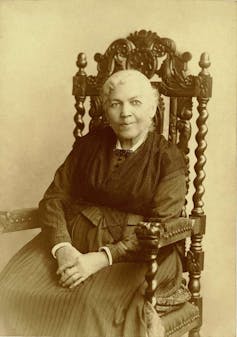
Elderly mulatto woman sitting in a large wooden chair with exquisite carvings.
A portrait of Harriet Jacobs taken in 1894, three years before her death.
Journal of the Civil War Era

We’d gone there to see a table that belonged to a formerly enslaved writer named Samuel “Aleckson” Williams. But our attention was ultimately drawn several rooms away from the table, where we encountered woodwork – including the staircase Jacobs had written about – from the house where Norcom had enslaved her.

As scholars of 19th-century U.S. literature who regularly teach Jacobs’ “Incidents,” we were stunned to realize that the staircase had survived.

It caught us even more off guard because Jacobs’ life has been receiving a lot of attention from scholars. For decades, Jacobs’ book was read as a work of fiction, if it was even remembered at all. But in recent years, historians have recovered her papers and confirmed a number of biographical details. In 2024, a narrative written by her brother, John Jacobs, was republished.

For us, the experience highlighted the importance of these small, regional museums. The staircase hadn’t originally been salvaged due to its connection to Jacobs. But it had nonetheless been conserved and cared for, which allowed new meanings to slowly emerge.

A daring escape

In 1964, the Jacobs staircase – along with a door, a mantle and paneling – were taken from Norcom’s house in Edenton not because of their connection to Jacobs or her enslaver, but because of their significance to Revolutionary-era craftsmanship.

We weren’t the first to realize the staircase’s connection to Jacobs. Roughly 15 years ago, curator Robert Leath brought it to the attention of Anthony Parent, a history professor at Wake Forest University. Parent publicized the story of these material objects through local outreach and some scholarship.

But like many histories that emerge from unexpected places, the story of the staircase hasn’t gained much traction in broader conversations among Jacobs scholars, much less in popular memory and national history.

Across “Incidents,” Jacobs chronicles many moments of physical and psychological abuse. But the assault on the stairs stands out among the many acts of terror she endured.

“He had pitched me down stairs in a fit of passion,” she writes, “and the injury I received was so serious that I was unable to turn myself in bed for many days.”

Jacobs eventually fled her bondage and exchanged her life in captivity under Norcom for a life of quasi-freedom: She spent seven years hiding in a nearby attic. Eventually she made her way to the North, where she claimed her freedom and published her book.

Rediscovered in the 1970s, Jacobs’ story was so astonishing that some readers doubted its autobiographical accuracy. But historian Jean Yellin was able to verify many aspects of her narrative, including the fact that she had hidden in an attic for seven years.

Yellin’s revelations of Jacobs’ life and work – in addition to the harrowing experiences of other women held in captivity – helped change the way Americans have been able to learn about how women, both enslaved and free, survive coercion and sexual violence.

Hidden in plain sight

At the Museum of Early Southern Decorative Arts, the staircase appears in between two separate galleries. On the wall along the steps to the first landing, a framed photograph of Harriet Jacobs and a framed copy of the first edition of “Incidents” hang. Though visitors are allowed to ascend the stairs, they don’t lead anywhere. In the next room are the mantel and wood paneling from the Norcom house.

The museum’s website doesn’t include a write-up of the Jacobs staircase, nor does it showcase an image of the impressive installation, although it’s cataloged with care – and, thanks in part to Parent’s advocacy, generations of students have visited the museum to see what survives of Jacobs’ house.

The museum staff recounted the story of the staircase to us in the course of a conversation about Williams. They, too, believe that the stories behind objects have a way of enduring, even as the importance and meaning of artifacts change over time.

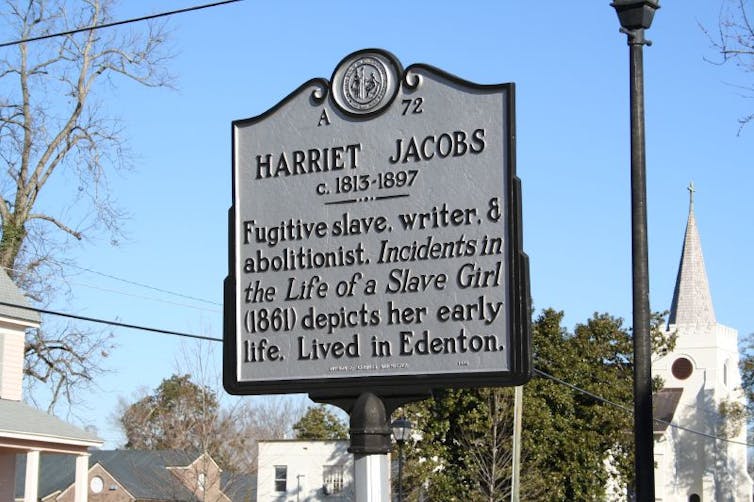
A sign reading 'Harriet Jacobs: fugitive slave, writer, and abolitionist. 'Incidents in the Life of a Slave Girl' depicts her early life. Lived in Edenton.'
Harriet Jacobs was enslaved in Edenton, N.C., as an adolescent.
Jed Record/flickr, CC BY

Stories that unfold in surprising ways

The installation at the Museum of Early Southern Decorative Arts demonstrates the power of regional museums to preserve artifacts whose stories unfold over generations – whose meaning may not rest on the reasons they are salvaged, purchased or preserved, and whose significance might seem to be an accident in hindsight. These stories matter, even – and especially – when they played a role in the most violent chapters in U.S. history.

Jacobs’ staircase was valuable when it was acquired; it was understood then as an example of fine 18th-century craftsmanship, and that’s a story worth preserving and learning. And yet its story now has more chapters that enrich the narrative.

As the Trump administration is reassessing “troubling” ideological content at the Smithsonian and elsewhere – slashing grants and budgets and even advocating for the removal or reconstruction of exhibits that tell difficult stories – we think it’s important to look anew at how museums preserve objects and the acts of survival they carry forward.

This isn’t a story of discovery and recovery. Instead, our experience simply demonstrates why museums, archives and libraries matter. These institutions require space to play the long game, in ways no one can anticipate, so they can continue doing what they do best: collect, preserve, document and curate.

In doing so, they allow stories like Jacobs’ to unfold in remarkable and utterly unforeseeable ways.

The Conversation

The authors do not work for, consult, own shares in or receive funding from any company or organization that would benefit from this article, and have disclosed no relevant affiliations beyond their academic appointment.

ref. A staircase in a small, decorative arts museum tells a harrowing story of terror, abuse and enslavement – https://theconversation.com/a-staircase-in-a-small-decorative-arts-museum-tells-a-harrowing-story-of-terror-abuse-and-enslavement-263976

How Dorothea Tanning’s ‘Birthday’ painting challenged male-dominated surrealism

Source: The Conversation – USA (2) – By Sally Jane Brown, Curator, West Virginia University

Do the seemingly endless doorways represent a woman trapped in domesticity or infinite ways out? Philadelphia Museum of Art

When American artist Dorothea Tanning painted “Birthday” in 1942, she announced her arrival – an artistic birth, as she later described it – into the surrealist movement.

Surrealism is an avant-garde art and literary movement that began in Paris in the 1920s and sought to unleash the unconscious mind. Women artists within the movement often drew on its dreamlike language to counter male surrealists’ idealized and objectifying portrayals of women, reclaiming their own agency and identity.

The movement’s centennial will be celebrated during the Philadelphia Museum of Art’s “Dreamworld: Surrealism at 100” exhibition, which opens Nov. 8, 2025, and runs through Feb. 16, 2026.

As an artist, writer and curator who focuses on feminism in art history, I’m excited to see Tanning’s “Birthday” displayed in Philadelphia alongside works by canonical male surrealists such as Salvador Dalí and Joan Miró. This juxtaposition invites viewers to reexamine surrealism through the contributions of women like Tanning, as well as Leonora Carrington and perhaps Remedios Varo.

These women brought radical innovations to the movement. Their depictions of female experiences of sexual awakening, domestic entrapment and psychic resistance added new depth to the dreamscapes envisioned by their male contemporaries.

A steady, unseductive gaze

Vertical oil painting of woman with fantastical creature at her feet in the foreground and a series of open doors in the background
‘Birthday,’ painted by American surrealist Dorothea Tanning in 1942.
Philadelphia Museum of Art

In “Birthday,” the artist paints herself bare-chested and wearing an elaborate skirt composed of flowing, vinelike forms that intertwine with female figures, evoking an organic world somewhere between vegetation and the sea. She stands tall in a corridor lined with doors that seem to recede endlessly. Is she trapped in domesticity, or do the doors represent infinite ways out? She stares off, seemingly at the painter, not the viewer. At her feet is a fantastical winged feline creature, its presence both companionable and uncanny.

The composition has many hallmarks of surrealism, including dream logic – the strange, flowing and often illogical progression of images reflecting the unpredictable nature of dreams – metamorphosis and psychic ambiguity. Psychic ambiguity refers to an open-ended emotional or psychological meaning. It invites multiple interpretations and exudes the complexity of the subconscious.

But what distinguishes “Birthday,” in my view, is its insistence on agency.

Many surrealist artists cast women as muses or dream figures conjured for the male gaze. Tanning, however, places herself at the center. Her steady, unseductive gaze confronts the viewer and demands recognition of her authorship.

French writer and poet André Breton’s 1924 “Manifesto of Surrealism” urged artists to liberate thought from rational constraint. Breton aimed to access the unconscious through dream and automatism, a surrealist technique of creating art without conscious control, allowing spontaneous expression from the subconscious mind, free from rational thought or aesthetic rules.

A fascinating array of doors

Beyond her self-portrait, “Birthday” depicts a seemingly unending series of doorways. Tanning wrote about taking inspiration from her New York apartment:

“I had been struck, one day, by a fascinating array of doors – hall, kitchen, bathroom, studio – crowded together, soliciting my attention with their antic planes, light, shadows, imminent openings and shuttings. From there it was an easy leap to a dream of countless doors.”

The “dream of countless doors” could represent the perpetual potential for change and renewal, or the ability to leave doors open for the imagination, or opportunities beyond domesticity for women.

Tanning refused to be confined by the label of “woman artist,” even as her work bore feminist depth. Nonetheless, her paintings modeled a form of self-determination that continues to resonate in the work of contemporary artists such as South African photographer Zanele Muholi and American mixed-media artist Mickalene Thomas.

Ultimately, “Birthday” is not just a surrealist self-portrait; it is a threshold work. It situates the artist between known and unknown, rational and subconscious, constraint and liberation. For Tanning, it marked her own artistic birth. For viewers today, it marks a reminder that self-representation is not static but always in motion, transforming.

Read more of our stories about Philadelphia and Pennsylvania, or sign up for our Philadelphia newsletter.

The Conversation

Sally Jane Brown does not work for, consult, own shares in or receive funding from any company or organization that would benefit from this article, and has disclosed no relevant affiliations beyond their academic appointment.

ref. How Dorothea Tanning’s ‘Birthday’ painting challenged male-dominated surrealism – https://theconversation.com/how-dorothea-tannings-birthday-painting-challenged-male-dominated-surrealism-264958

Why a study claiming vaccines cause chronic illness is severely flawed – a biostatistician explains the biases and unsupported conclusions

Source: The Conversation – USA (3) – By Jeffrey Morris, Professor of Public Health and Preventive Medicine, University of Pennsylvania

Biases in designing a study can weaken how well the evidence supports the conclusion. FatCamera/E+ via Getty Images

At a Senate hearing on Sept. 9, 2025, on the corruption of science, witnesses presented an unpublished study that made a big assertion.

They claimed that the study, soon to be featured in a highly publicized film called “An Inconvenient Study,” expected out in early October 2025, provides landmark evidence that vaccines raise the risk of chronic diseases in childhood.

The study was conducted in 2020 by researchers at Henry Ford Health, a health care network in Detroit and southeast Michigan. Before the Sept. 9 hearing the study was not publicly available, but it became part of the public record after the hearing and is now posted on the Senate committee website.

At the hearing, Aaron Siri, a lawyer who specializes in vaccine lawsuits and acts as a legal adviser to Secretary of Health and Human Services Robert F. Kennedy Jr., said the study was never published because the authors feared being fired for finding evidence supporting the health risks of vaccines. His rhetoric made the study sound definitive.

As the head of biostatistics at the University of Pennsylvania’s Perelman School of Medicine, when I encounter new scientific claims, I always start with the question “Could this be true?” Then, I evaluate the evidence.

I can say definitively that the study by Henry Ford Health researchers has serious design problems that keep it from revealing much about whether vaccines affect children’s long-term health. In fact, a spokesperson at Henry Ford Health told journalists seeking comment on the study that it “was not published because it did not meet the rigorous scientific standards we demand as a premier medical research institution.”

The study’s weaknesses illustrate several key principles of biostatistics.

Study participants and conclusions

The researchers examined the medical records of about 18,500 children born between 2000 and 2016 within the Henry Ford Health network. According to the records, roughly 16,500 children had received at least one vaccine and about 2,000 were completely unvaccinated.

The authors compared the two groups on a wide set of outcomes. These included conditions that affect the immune system, such as asthma, allergies and autoimmune disorders. They also included neurodevelopmental outcomes such as attention-deficit/hyperactivity disorder, or ADHD, autism and speech and seizure disorders, as well as learning, intellectual, behavioral and motor disabilities.

A group of kindergarten-age kids in a classroom
Many diagnoses of common childhood conditions like asthma and ADHD occur after children start school.
Ariel Skelley/DigitalVision via Getty Images

Their headline result was that vaccinated children had 2.5 times the rate of “any selected chronic disease,” with 3 to 6 times higher rates for some specific conditions. They did not find that vaccinated children had higher rates of autism.

The study’s summary states it found that “vaccine exposure in children was associated with increased risk of developing a chronic health disorder.” That wording is strong, but it is not well supported given the weaknesses of the paper.

Timeline logic

To study long-term diseases in children, it’s crucial to track their health until the ages when these problems usually show up. Many conditions in the study, like asthma, ADHD, learning problems and behavior issues, are mostly diagnosed after age 5, once kids are in school. If kids are not followed that long, many cases will be missed.

However, that’s what happened here, especially for children in the unvaccinated group.

About 25% of unvaccinated children in the study were tracked until they were less than 6 months old, 50% until they were less than 15 months old, and only 25% were tracked past age 3. That’s too short to catch most of these conditions. Vaccinated kids, however, were followed much longer, with 75% followed past 15 months of age, 50% past 2.7 years of age and 25% past 5.7 years of age.

The longer timeline gave the vaccinated kids many more chances to have diagnoses recorded in their Henry Ford medical records compared with the nonvaccinated group. The study includes no explanation for this difference.

When one group is watched longer and into the ages when problems are usually found, they will almost always look sicker on paper, even if the real risks are the same. In statistics, this is called surveillance bias.

The primary methods used in the paper were not sufficient to adjust for this surveillance bias. The authors tried new analyses using only kids followed beyond age 1, 3 or 5. But vaccinated kids were still tracked longer, with more reaching the ages when diagnoses are made, so those efforts did not fix this bias.

More opportunities to be diagnosed

Not all cases of chronic disease are written down in the Henry Ford records. Kids who go to a Henry Ford doctor more often get more checkups, more tests and more chances for their diseases to be found and recorded in the Henry Ford system. Increased doctor visits has been shown to increase the chance of diagnosing chronic conditions, including autism, ADHD, asthma, developmental disorders and learning disabilities.

If people in one group see doctors more often than people in another, those people may look like they have higher disease rates even if their true health is the same across both groups. In statistics, this is called detection bias.

In the Henry Ford system, vaccinated kids averaged about seven visits per year, while unvaccinated kids had only about two. That gave the vaccinated kids many more chances to be diagnosed. The authors tried leaving out kids with zero visits, but this did not fix the detection bias, since vaccinated kids still had far more visits.

Another issue is that the study doesn’t show which kids actually used Henry Ford for their main care. Many babies are seen at the hospital for birth and early visits, but then go elsewhere for routine care. If that happens, later diagnoses would not appear in the Henry Ford records. The short follow-up for many children suggests a lot may have left the system after infancy, hiding diagnoses made outside Henry Ford.

Apples and oranges

Big differences between the groups of vaccinated and unvaccinated children can make it hard to know if vaccines really caused any differences in chronic disease. This is because of a statistical concept called confounding.

The two groups were not alike from birth. They differed in characteristics like sex, race, birth weight, being born early and the mother experiencing birth complications – all factors linked to later effects on health. The study made some adjustments for these, but left out many other important risks, such as:

• Whether families live in urban, suburban or rural areas.

• Family income, health insurance and resources.

• Environmental exposures such as air and water pollution, which were concerns in Detroit at that time.

Many factors can affect how often a child visits a health care provider.

These factors can affect both the chance of getting vaccinated and the chance of having health problems. They also change how often families visit Henry Ford clinics, which affects what shows up in the records.

When too many measured and unmeasured differences line up, as they do here, the study is unable to fully separate cause from effect.

Bottom line

The Henry Ford data could be helpful if the study followed both groups of kids to the same ages and took into account differences in health care use and background risks.

But as written, the study’s main comparisons are tilted. The follow-up time was short and uneven, kids had unequal chances for diagnosis, and the two groups were very different in ways that matter. The methods used did not adequately fix these problems. Because of this, the differences reported in the study do not show that vaccines cause chronic disease.

Good science asks tough questions and uses methods strong enough to answer them. This study falls short, and it is being presented as stronger evidence than its design really allows.

The Conversation

Jeffrey Morris receives funding from the National Institute of Health and the Annenberg Public Policy Center

ref. Why a study claiming vaccines cause chronic illness is severely flawed – a biostatistician explains the biases and unsupported conclusions – https://theconversation.com/why-a-study-claiming-vaccines-cause-chronic-illness-is-severely-flawed-a-biostatistician-explains-the-biases-and-unsupported-conclusions-265470

Trump’s targeting of ‘enemies’ like James Comey echoes FBI’s dark history of mass surveillance, dirty tricks and perversion of justice under J. Edgar Hoover

Source: The Conversation – USA – By Betty Medsger, Professor Emeritus of Journalism, San Francisco State University

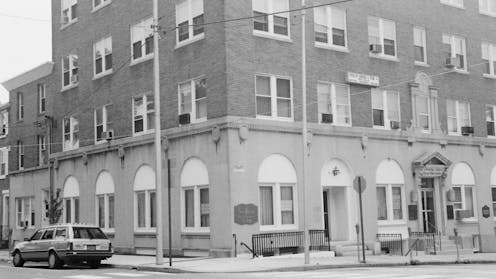
The building in Media, Penn. where burglars in 1971 found evidence of decades of FBI abuses against citizens. Betty Medsger

As a candidate last year, Donald Trump promised retribution against his perceived enemies. As president, he is doing that.

At the Department of Justice, a “Weaponization Working Group” has a long list of Trump’s perceived enemies to investigate. And on the evening of Sept. 25, 2025, former FBI Director – and one of Trump’s prime targets – James Comey was indicted by a grand jury at the behest of a Trump loyalist, his former personal lawyer who was appointed a prosecutor less than a week before and who pushed for the charges against the advice of career prosecutors who said there was no basis for bringing them. The charges came after Trump publicly urged the Department of Justice to indict his adversaries, saying, “We can’t delay any longer, it’s killing our reputation and credibility.”

At the FBI, director Kash Patel has conducted a political purge, firing the highest officials at the bureau and thousands of FBI agents who investigated alleged crimes by Trump as well as investigated participants in the Jan. 6, 2021, U.S. Capitol riots.

It marks the first time since J. Edgar Hoover’s 48-year reign as FBI director that the FBI has targeted massive numbers of people perceived to be political enemies.

Trump’s recent fury showed how much he expects top officials in federal law enforcement to carry out his retribution.

He was enraged when Erik S. Siebert, the U.S. attorney for the Eastern District of Virginia, decided there was insufficient evidence to charge two people Trump regards as enemies: Comey and New York Attorney General Letitia James.

I want him out,” Trump angrily told reporters on Sept. 19, 2025. Siebert resigned, although Trump claimed he had fired him.

Trump’s most recent demands for retribution came soon after top adviser Stephen Miller’s vow to prosecute leftists in the “vast domestic terror movement” – that the administration blames, without evidence, for Charlie Kirk’s assassination – using “every resource we have.”

As the director of the FBI, Patel will likely be in charge of the investigations of perceived enemies generated by the Department of Justice and the White House. He already has sacrificed the bureau’s independence, making it essentially an arm of the White House.

This isn’t the first time an FBI director has been driven by a desire to suppress the rights of people perceived to be political enemies. Hoover, director until his death in 1972, operated a secret FBI within the FBI that he used to destroy people and organizations whose political opinions he opposed.

A man with a beard and glasses and dark hair standing and appearing to almost be praying.
FBI Director Kash Patel reacts to Donald Trump’s address to a joint session of Congress at the U.S. Capitol on March 4, 2025.
AP Photo/Ben Curtis

A burglary’s revelations

Hoover’s secret FBI was revealed, beginning in 1971, when a group of people called the Citizens Commission to Investigate the FBI broke into an FBI office and removed files.

This group suspected Hoover’s FBI was illegally suppressing dissent. Given Hoover’s enormous power, they thought it was unlikely any government agency would investigate the FBI. They decided documentary evidence was needed to convince the public that suppression of dissent – what they considered a crime against democracy – was taking place.

A blue historical marker on a pole outside of a building, that commemorates 'FBI OFFICE BURGLARY.'
A historical marker commemorates the site of the burglary that exposed COINTELPRO.
Betty Medsger

In my book “The Burglary: The Discovery of J. Edgar Hoover’s Secret FBI,” I describe how these eight people decided to risk imprisonment and break into the FBI’s office in Media, Pennsylvania.

The files they stole and made public confirmed the FBI was suppressing dissent. But they revealed much more: Hoover’s secret FBI and the startling crimes he had committed. These secret operations had become so extensive that they eventually diminished the bureau’s capacity to carry out its core mission: law enforcement.

Hoover, one of the most admired and powerful officials in the country, had secretly conducted a wide array of operations directed against people whose political opinions he opposed.

The files revealed that agents were instructed to “enhance paranoia” and make activists think there was an FBI agent “behind every mailbox.” Questioning Vietnam war policy could cause anyone, even a U.S. senator, Democrat J. William Fulbright of Arkansas, to be placed under FBI surveillance.

It was the revelation of Hoover’s worst operations, COINTELPRO – what Hoover called The Counter Intelligence Program – that made Americans demand investigation and reform of the FBI. Until the mid-1970s, there had never been oversight of the FBI and little coverage of the FBI by journalists, except for laudatory stories.

A video chronicle about the 1971 break-in at an FBI office in Media, Pa., that uncovered vast FBI abuses.

‘Almost beyond belief’

The COINTELPRO operations ranged from crude to cruel to murderous.

Antiwar activists were given oranges injected with powerful laxatives. Agents hired prostitutes known to have venereal disease to infect campus antiwar leaders.

Many of the COINTELPRO operations were almost beyond belief:

· The project conducted against the entire University of California system lasted more than 30 years. Hundreds of agents and informants were assigned in 1960 to spy on each of Berkeley’s 5,365 faculty members by reading their mail, observing them and searching for derogatory information – “illicit love affairs, homosexuality, sexual perversion, excessive drinking, other instances of conduct reflecting mental instability.”

· An informant trained to give perjured testimony led to the murder conviction of Black Panther Geronimo Pratt, a decorated Vietnam War veteran. He served 27 years in prison for a murder he did not commit. He was exonerated in 1997 when a judge found that the FBI concealed evidence that would have proved Pratt’s innocence.

· The bureau spied for years on Martin Luther King Jr. After it was announced King would receive the 1964 Nobel Peace Prize, Hoover approved a particularly sinister plan that was designed to cause King to commit suicide.

A letter to 'KING' urging him to commit suicide, calling him 'filthy, abnormal, fraudulent.'
A letter sent anonymously by the FBI to Martin Luther King Jr. in 1964 urging him to commit suicide.
Wikipedia

· What one historian called Hoover’s “savage hatred” of Black people led to the FBI’s worst operation, a collaboration with the Chicago police that resulted in the killing of Chicago Black Panther Fred Hampton, shot dead by police as he slept. An FBI informant had been hired to ingratiate himself with Hampton. He came to know Hampton and the apartment very well. He drew a map of the apartment for the police on which he located “Fred’s bed.” After the killing, Hoover thanked the informant for his role in this successful operation. Enclosed in his letter was a cash bonus.

· Actress Jean Seberg was the victim of a 1970 COINTELPRO operation. In a memo, Hoover wrote that she had donated to the Panthers and “should be neutralized.” Seberg was pregnant, and the plot, approved personally by Hoover – as many COINTELPRO plots were – called for the FBI to tell a gossip columnist that a Black Panther was the father. Agents gave the false rumor to a Los Angeles Times gossip columnist. Without using Seberg’s name, the columnist’s story made it unmistakable that she was writing about Seberg. Three days later, Seberg gave birth prematurely to a stillborn white baby girl. Every year on the anniversary of her dead baby’s birth, Seberg attempted suicide. She succeeded in August 1979.

There was wide public interest in these revelations about COINTELPRO, many of which emerged in 1975 during hearings conducted by the Church Committee, the Senate committee chaired by Sen. Frank Church, an Idaho Democrat.

At this first-ever congressional investigation of the FBI and other intelligence agencies, former FBI officials testified under oath about bureau policies under Hoover.

One of them, William Sullivan, who had helped carry out the plots against King, was asked whether officials considered the legal and ethical issues involved in their operations. He responded:

“Never once did I hear anybody, including myself, raise the questions: ‘Is this course of action which we have agreed upon lawful? Is it legal? Is it ethical or moral?’ We never gave any thought to that line of questioning because we were just pragmatic. The one thing we were concerned about: will this course of action work, will it get us what we want.”

Ethical? Legal?

The future of the new FBI under Patel and Trump is unclear, especially in light of the president’s known tolerance for lawlessness, even violence. His gifts of clemency and pardons to Jan. 6 rioters are evidence of that.

As for Patel, fired FBI Officials stated in their recent lawsuit over those dismissals that Patel had told one of them it was “likely illegal” to fire agents because of the cases they had worked on, but that he was powerless to resist Trump’s demands.

The recent statements from both Trump and top aide Miller suggest the FBI’s independence, and broader constitutional requirements that the administration remain faithful to the law, are meaningless to them. They suggest that, like Hoover, they would criminalize dissent.

What will happen at the FBI after the internal purge ends? Will retribution fever wane? Will Patel refocus on the bureau’s chief mission, law enforcement? And will the questions asked in Congress in 1975, as the bureau was being forced to reject Hoover’s worst practices, be asked now: Is what we are doing ethical? Is it legal?

This story has been updated to include the indictment of James Comey, former head of the FBI.

The Conversation

Betty Medsger does not work for, consult, own shares in or receive funding from any company or organization that would benefit from this article, and has disclosed no relevant affiliations beyond their academic appointment.

ref. Trump’s targeting of ‘enemies’ like James Comey echoes FBI’s dark history of mass surveillance, dirty tricks and perversion of justice under J. Edgar Hoover – https://theconversation.com/trumps-targeting-of-enemies-like-james-comey-echoes-fbis-dark-history-of-mass-surveillance-dirty-tricks-and-perversion-of-justice-under-j-edgar-hoover-265364

Calling in the animal drug detectives − helping veterinarians help beluga whales, goats and all creatures big and small

Source: The Conversation – USA – By Sherry Cox, Clinical Professor of Biomedical and Diagnostic Sciences, University of Tennessee

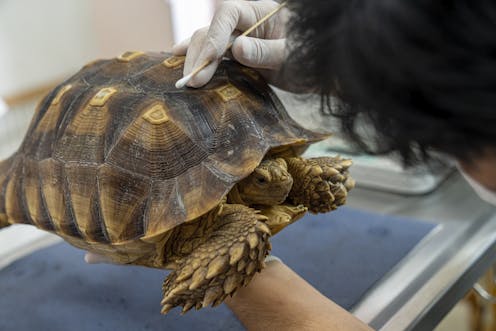
How do you measure the concentration of a drug in a tortoise shell? Thirawatana Phaisalratana/iStock via Getty Images Plus

In my work as a veterinary pharmacologist, I never know exactly what I’m going to get when I open my email. It could be a request from a veterinarian asking my team to determine the concentration of a drug to treat the shell of a turtle infected with fungal disease. Or it could be an inquiry from a researcher wondering whether we can help them figure out the dose of antacid they should give goats and sheep with ulcers.

In one email, a veterinarian wanted to know whether we could determine the concentration of an extended-release antibiotic in tigers to determine how to best treat them. Figuring this out would make the difference between trying to give a sick tiger a pill every 12 hours – a difficult task – or a shot once a month.

At our veterinary pharmacology lab, my colleagues and I analyze drug levels in animals from zoos and aquariums nationwide, from tiny mice to majestic elephants and from penguins to farm animals. Whether it’s a dolphin with an infection or a tiger in pain, we help veterinarians determine the right treatment, including how much medicine is best for each animal.

Here’s a peek behind the scenes to experience a day in the life of a veterinary pharmacologist, and what it takes to ensure these creatures get the care they need to thrive.

Beluga milk and antibiotics

One day, I received an email from an aquarium asking whether my team and I could determine the concentration of an antibiotic in milk – specifically beluga whale milk.

Beluga whales live in cold waters throughout the Arctic and are extremely sociable mammals that hunt and migrate together in pods. They are recognized for their distinctive white color and are known as the “canaries of the sea” for the wide variety of sounds they make. Whales like the beluga are at the top of the food chain and play an important role in the overall health of the marine environment. However, these animals are threatened by extinction. There are roughly 150,000 beluga whales left in the world today, and certain populations are considered endangered.

Close-up of a person cupping the open mouth of a beluga whale calf
Beluga whales are threatened by extinction.
Erin Hooley/AP Photo

The aquarium reached out to us as part of their research on the factors threatening the sustainability of belugas in the wild and what steps can be taken to protect them. The team there works with animals both in human care and in their natural habitats to improve husbandry methods, understanding of the underwater world and the conservation of aquatic life.

We agreed to try to extract the drug from the milk. However, we first needed a sample of whale’s milk. So, the first question: How do you get milk from a whale? Through my decades of working in this field, my team has studied samples from a wide range of species, but this was the first time someone asked us to analyze whale’s milk.

Unfortunately, I never did find out how they actually got the sample. But I cannot imagine it was easy. The sample we received reminded us of a thick buttermilk, very clumpy with a little bit of a blue tint.

The milk sample they gave us came from a whale with an infection who was also nursing a calf. The veterinarians wanted to know whether the antibiotic was crossing into the milk, indicating that the calf may have been exposed to the drug.

Each chemical compound requires its own unique process to extract from a particular sample type. This extraction can range from one to 15 steps and can take from one to six hours to perform. After we devised a method and procedure to extract the antibiotic from milk, we set to analyzing the sample.

We found the presence of drug in the sample, which meant the nursing calf was getting exposed to antibiotic from its mother’s milk. This posed health risks to the calf, including disruption to its gut microbiome that could lead to a weakened immune system, increased susceptibility to infections and antibiotic resistance.

Making a treatment plan

Now that the aquarium knew the beluga milk contained the antibiotic, it could devise a treatment plan. Beluga calves are dependent on nursing for the first year of life until their teeth emerge. So stopping the calf from drinking its mother’s milk wasn’t an option.

When prescribing antibiotics, a veterinarian needs to carefully consider the potential risks and benefits to both the nursing mother and her offspring. The goal is to provide effective treatment for the parent while minimizing the risk of harm to the offspring.

Person wearing white lab coat and nitrile gloves handling lab equipment.
A member of the team at the veterinary pharmacology lab at the University of Tennessee analyzes samples.
Sherry Cox, CC BY-NC-SA

In order to determine whether the nursing calf was at risk, the veterinarian wanted to determine the concentration of antibiotic in the calf.

To measure how much antibiotic the calf was ingesting from the milk, the aquarium sent us a plasma sample from the calf to analyze. While we did find measurable amounts of the drug in the sample, there was not enough to cause harm to the calf.

With this information, the veterinarian decided to continue to give the mother the antibiotic. The veterinarian gave our team samples from both the mother and the calf to continue monitoring the drug concentrations.

Effectively treating animals

For many animals, there is limited information available to guide clinicians when deciding treatment plans. Many dosage regimens are extrapolated from animals with different physiologies and metabolisms compared to the animal receiving the drug. What might cure one species might kill another.

Evaluating how safe and effective a drug is for a particular species is essential to not only properly treat and prevent disease but also to relieve pain. The research we do provides needed information on appropriate doses in vulnerable species for which there is no scientific data available.

I find the work we do rewarding because we provide information to so many veterinarians to help them take care of remarkable creatures great and small.

The Conversation

Sherry Cox does not work for, consult, own shares in or receive funding from any company or organization that would benefit from this article, and has disclosed no relevant affiliations beyond their academic appointment.

ref. Calling in the animal drug detectives − helping veterinarians help beluga whales, goats and all creatures big and small – https://theconversation.com/calling-in-the-animal-drug-detectives-helping-veterinarians-help-beluga-whales-goats-and-all-creatures-big-and-small-265430

How sea star wasting disease transformed the West Coast’s ecology and economy

Source: The Conversation – USA (2) – By Rebecca Vega Thurber, Professor of Ecology Evolution and Marine Biology; Director of the Marine Science Institute, University of California, Santa Barbara

A sunflower sea star may be about to snack on some sea urchins in California. Brent Durand/Moment via Getty Images

Before 2013, divers on North America’s west coast rarely saw purple sea urchins. The spiky animals, which are voracious kelp eaters,- were a favorite food of the coast’s iconic sunflower sea stars. The giant sea stars, recognizable for their many arms, kept the urchin population in check, with the help of sea otters, lobsters and some large fishes.

That balance allowed the local kelp forests to flourish, providing food and protection for young fish and other sea life.

Then, in 2013, recreational divers began noticing gruesomely dissolving sea star corpses and living sea stars that were writhing and twisting, their arms dropping and literally walking away. It was the beginning of a sea star wasting disease outbreak that would nearly wipe out all the sunflower sea stars along the coast.

Their disappearance, combined with a massive marine heat wave called “the blob,” set off a cascade of catastrophic ecological changes that turned these kelp biodiverse hot spots into vast sea urchin barrens, devoid of almost any other species.

A sea floor landscape of sea urchins and not much else.
Urchin barrens are the result of losing a main sea urchin predator off California.
Brandon Doheny

This disaster also encouraged human innovation, however. The result has brought an unexpected boost for the local fisheries and restaurants through the development of a new culinary delight, and questions about how best to help kelp forests, and the US$500 billion in economic value they provide, recover for the future.

Losing sea stars disrupted an entire ecosystem

I am the director of the Marine Science Institute in Santa Barbara, California, one of the areas severely hit by the loss of sea stars.

From sea star wasting disease, more than 90% of the sunflower sea stars died along the entirety of North America’s west coast, from Baja to Alaska. In only the first five years of the outbreak, sea star wasting disease become one of the largest epidemics to hit a marine species. By 2017, sunflower sea stars, Pycnopodia helianthoide, were rarely found south of Washington state.

For over a decade, the cause of the devastation was a mystery, until recently, when my colleagues traced sea star wasting disease to a highly infectious vibrio bacteria. Today, sea star wasting disease has spread widely, even as far as Antarctica.

Discovering the cause of sea star wasting disease. Hakai Institute.

As sea stars disappeared, the purple sea urchin population exploded, increasing an astonishing 10,000% from 2014 to 2022.

The urchins ate through kelp forests. The resulting loss of kelp canopy and the understory foliage below it reverberated across the whole ecosystem, affecting the tiniest of zooplankton and giants like gray whales, all of which are linked in the complex kelp forest food web of who eats who.

Large stalks of kelp sea grass rising from the sea floor with fish swimming nearby.
Kelp forests provide food for many species and safety for young fish.
Katie Davis

Ecological cascades – a succession of changes across an ecosystem when habitats are disturbed – can occur when critical populations disappear or change in other significant ways.

Removing the kelp alters light levels below, leading to changes such as turf algae growth in place of filter-feeding invertebrates such as clams and scallops. Turf algae also make it harder for kelp to regrow, exacerbating the problem.

The loss of kelp also resulted in fewer mysids, a zooplankton that relies on kelp for habitat and which makes up a majority of gray whales’ diets. Thus, as urchin populations went up and kelp disappeared, gray whales also had less food.

How California learned to embrace the urchin

The loss of sunflower sea stars to wasting disease has not only altered the kelp ecosystem, but it has also altered the landscape of Pacific fisheries, potentially forever.

When I started research on purple sea urchins in 2001, there were not enough specimens in the whole of the Monterey Bay for me to collect and use for my studies. In fact, I had to order my animals from an East Coast distributor.

Mostly there were red sea urchins, Strongylocentrotus fransiscanus, highly prized for their large and delicious gonads and sold as “uni” to American and Asian markets.

But with the recent purple sea urchin boom, Strongylocentrotus purpuratus, a new and unexpected market on the west coast has blossomed – taking these kelp killers out of the sea and onto plates in restaurants around America.

An urchin split open on a dinner plate with uni inside
Sea urchin on the menu in Japan. The orange-yellow uni are the creature’s gonads.
Sung Ming Whang/Flickr, CC BY

This pivot from reds to purple urchins by fishers and the aquaculture industry took time and creativity. Purple sea urchins tend to be small and lack the rich gonads that make the reds so profitable. To adjust their flavor, texture and size, innovators turned to harvesting these animals from the sea by hand and then moving them to land-based facilities – called “urchin ranches” – where they fatten up by eating seaweeds.

The results have been remarkable. In Santa Barbara, a thriving industry now raises these animals for the culinary market, where the artisanal urchins go for $8 to $10 a pop. In one example, an abalone aquaculture program used its expertise and facility to profit from this new abundance.

Innovative ways to solve kelp decline

You might be asking yourself if we can just eat our way out of this crisis.

It’s not a new idea. The invasion of Pacific lionfish into Florida coasts, the Gulf of Mexico and parts of the Caribbean was slowed down by local divers and recreational fishing groups teaming up to hunt and then market lionfish to restaurants.

It is unlikely that purple sea urchin ranching will make much of a dent in the population, but numerous projects are currently aimed at both recovering kelp forests and keeping the monetary benefits of the urchin boom flowing to the local economy simultaneously. The ingenuity to flip a bad outcome into a productive local aquaculture industry has been so popular that even state agencies are now funding local innovators to expand purple urchin ranching, assisting both the local environment and the local economy.

Two dozen sea stars on the sea floor and not much else.
Purple sea urchins have taken over stretches of sea floor off California and ate down the kelp, leaving little behind.
Ed Bierman via Wikimedia Commons, CC BY

Scientists, state agencies and conservation groups are working on sunflower sea star restoration efforts and kelp recovery programs, and are considering other ways to reduce the urchin population.

One option is to increase otter populations in places like Northern California and Oregon, where they were once abundant. Otters can eat upward of 10,000 urchins per year. But the approach is controversial in Southern California. A similar conservation effort failed before, and there are concerns about the effects a bigger otter population would have on local fisheries, including the now-depleted black abalone.

So where do we go from here?

As the world’s appetite for farmed seafood has expanded, groups like Urchinomics and their investors are using this edible calamity to promote kelp restoration, create jobs and boost local economies.

In a way, sea star wasting disease and the precipitous kelp declines inadvertently created a mutually beneficial alignment of conservation, local artisanal fishing and land-based aquaculture.

A seafloor view with several species.
A sunflower star (blue) with other sea stars (orange) and a sea anemone off the central California coast.
Ed Bierman via Wikimedia Commons, CC BY

In the long term, additional marine heat waves, like the one occurring in 2025, and their associated marine diseases and subsequent habitat losses, require global actions to reduce climate change. Future outbreaks like sea star wasting disease are almost certain to emerge.

Yet, it has also been found that some of the harms of urchin population growth can be lessened when sections of ocean are protected. For example, in some California marine protected areas where urchin predator diversity was high, the impacts of sea star wasting disease and its ecological cascade were reduced. In other words, in areas where there was limited fishing, as sea star numbers dropped, the urchin population was at least partially kept in check by those legally protected predators.

This finding suggests that along with global carbon reductions, local conservation and human innovations – like those bringing purple uni to our plates – can help prevent some ecological cascades that harm our increasingly threatened marine resources.

The Conversation

Rebecca Vega Thurber does not work for, consult, own shares in or receive funding from any company or organization that would benefit from this article, and has disclosed no relevant affiliations beyond their academic appointment.

ref. How sea star wasting disease transformed the West Coast’s ecology and economy – https://theconversation.com/how-sea-star-wasting-disease-transformed-the-west-coasts-ecology-and-economy-263253

Why aren’t companies speeding up investment? A new theory offers an answer to an economic paradox

Source: The Conversation – USA (2) – By David Ikenberry, Professor of Finance, Leeds School of Business, University of Colorado Boulder

For years, I’ve puzzled over a question that seems to defy common sense: If stock markets are hitting records and tech innovation seems endless, why aren’t companies pouring money back into new projects?

Yes, they’re still investing – but the pace of business spending is slower than you’d expect, especially outside of AI.

And if you’ve noticed headlines about sluggish business spending even as corporate profits soar, you’re not alone. It’s a puzzle that’s confounded economists, policymakers and investors for decades. Back in 1975, U.S. public companies reinvested an average of 25 cents for every dollar on their balance sheets. Today, that figure is closer to 12 cents.

In other words, corporate America is flush with cash, but it’s surprisingly stingy about reinvesting in its own future. What happened?

I’m an economist, and my colleague Gustavo Grullon and I recently published a study in the Journal of Finance that turns the field’s conventional wisdom on its head. Our research suggests the issue isn’t cautious executives or jittery markets – it’s about how economists have historically measured companies’ incentives to invest in the first place.

Asking the wrong Q

For decades, economists have relied on a simple but appealing ratio – Tobin’s Q, named after the famous economist James Tobin – to gauge whether companies should ramp up investment.

They calculate this by dividing a company’s market value – what it would take to purchase the firm outright with cash – by its replacement value, or how much it would cost to rebuild the company from scratch. The result is called “Q.” The higher the Q, the theory goes, the more incentive executives have to invest.

But reality hasn’t conformed to fit the theory. Over the past half-century, Tobin’s Q has gone up, yet investment rates have gone down sharply.

Why the disconnect? Our research points to one key culprit: excess capacity. Many U.S. companies already have more factories, machines or service capability than they can use. By not correcting for this issue, the traditional Tobin’s Q will overstate the incentive that companies have to grow.

To see this, consider a commercial real estate company that owns a portfolio of office buildings. In recent years, with the rise of e-commerce and remote work, many of their properties have been running well below capacity. Now suppose a few new tenants start paying rent and begin absorbing a portion of that empty space. Stock prices will rise in response to seeing these new cash flows, which in turn will lead Q to rise.

Traditionally, this increase in Q would suggest that it’s a good time to invest in new buildings – but the reality is quite different with idle capacity still in the system. Why pour money into building another office tower if existing ones still have empty floors?

This key idea is that what matters isn’t the average value of all assets – it’s the marginal value of adding one more dollar of investment. And because capacity utilization has been steadily eroding over the past half-century, many firms see little reason to invest.

That last point may come as a surprise, but the U.S. economy, with all its factories and offices, isn’t nearly as abuzz with activity as it was after, say, World War II. Today, many sectors operate well below full throttle. This growing slack in the system over time helps explain why companies have pulled back on their rate of investment, even as profits and market values climb.

Why has capacity utilization fallen so much over the past half-century? It’s not entirely clear, but what economists call “structural economic rigidities” – things such as regulatory hurdles, labor market frictions or shifts in cost structure – seem to be part of the answer. These factors can drag businesses into a state of chronic underuse, especially after recessions.

Why it matters

This isn’t just an academic debate. The implications are profound, whether you closely follow Wall Street or just enjoy armchair economic policy debates. For one thing, this dynamic might help explain why tax cuts haven’t spurred investment the way supporters have hoped.

Take the 2017 Tax Cuts and Jobs Act, which slashed the top corporate tax rate from 35% to 21% and introduced full expensing for equipment investments. Supporters promised a wave of new investment.

But when my colleague and I looked at the numbers, we found the opposite. In the four years before the tax cuts, publicly traded U.S. firms had an aggregate investment rate, including intangibles, of 13.9%. In the four years after the tax cut, the average investment rate fell to 12.4% – in other words, no evidence of a bump.

Where did those liberated cash flows go? Instead of plowing this newfound cash after the tax cuts into new projects, many companies funneled it into stock buybacks and dividends.

In retrospect, this makes sense. If a company has excess capacity, the incentive to invest should be more muted, even if new machines are suddenly cheaper thanks to tax breaks. If the demand isn’t there, why buy them?

Even with the most generous tax incentives, the core challenge remains: You can’t force-feed investment into an economy already swimming in excess capacity. If companies don’t see real, scalable demand, tax breaks alone aren’t likely to unlock a new era of business spending.

That doesn’t mean tax policy doesn’t matter – it does, especially for smaller firms with real growth prospects. But for the large, well-established firms that make up the lion’s share of the economy, the bigger challenge is demand. Rather than trying to stimulate even more investment, policymakers should prioritize understanding why demand is sagging relative to supply and reducing economic rigidities where they can. That way, the capacity generated by new investment has somewhere useful to go.

The Conversation

David Ikenberry does not work for, consult, own shares in or receive funding from any company or organization that would benefit from this article, and has disclosed no relevant affiliations beyond their academic appointment.

ref. Why aren’t companies speeding up investment? A new theory offers an answer to an economic paradox – https://theconversation.com/why-arent-companies-speeding-up-investment-a-new-theory-offers-an-answer-to-an-economic-paradox-260661

Charlie Kirk and the making of an AI-generated martyr

Source: The Conversation – USA (2) – By Art Jipson, Associate Professor of Sociology, University of Dayton

A makeshift memorial for Charlie Kirk outside the headquarters of Turning Point USA in Phoenix. Joe Raedle/Getty Images

An AI-generated image of Charlie Kirk embracing Jesus. Another of Kirk posing with angel wings and halo. Then there’s the one of Kirk standing with George Floyd at the gates of heaven.

When prominent political or cultural figures die in the U.S., the remembrance of their life often veers into hagiography. And that’s what’s been happening since the gruesome killing of conservative activist and Turning Point USA co-founder Charlie Kirk.

The word hagiography comes from the Christian tradition of writing about saints’ lives, but the practice often spills into secular politics and media, falling under the umbrella of what’s called, in sociology, the “sacralization of politics.” Assassinations and violent deaths, in particular, tend to be interpreted in sacred terms: The person becomes a secular martyr who made a heroic sacrifice. They are portrayed as morally righteous and spiritually pure.

This is, to some degree, a natural part of mourning. But taking a closer look at why this happens – and how the internet accelerates it – offers some important insights into politics in the U.S. today.

From presidents to protest leaders

The construction of Ronald Reagan’s postpresidential image is a prime example of this process.

After his presidency, Republican leaders steadily polished his memory into a symbol of conservative triumph, downplaying scandals such as Iran-Contra or Reagan’s early skepticism of civil rights. Today, Reagan is remembered less as a complex politician and more as a saint of free markets and patriotism.

Among liberals, Martin Luther King Jr. experienced a comparable transformation, though it took a different form. King’s critiques of capitalism, militarism and structural racism are often downplayed in most mainstream remembrances, leaving behind a softer image of peaceful dreamer. The annual holiday, scores of street renamings and public murals honor him, but they also tame his legacy into a universally palatable story of unity.

Even more contested figures such as John F. Kennedy or Abraham Lincoln show the same pattern. Their assassinations were followed by waves of mourning that elevated them into near-mythic status.

Decades after Kennedy’s death, his portrait hung in the homes of many American Catholics, often adjacent to religious iconography such as Virgin Mary statuettes. Lincoln, meanwhile, became a kind of civic saint: His memorial in Washington, D.C., looks like a temple, with words from his speeches etched into the walls.

Why it happens and what it means

The hagiography of public figures serves several purposes. It taps into deep human needs, helping grieving communities manage loss by providing moral clarity in the face of chaos.

It also allows political movements to consolidate power by sanctifying their leaders and discouraging dissent. And it reassures followers that their cause is righteous – even cosmic.

In a polarized environment, the elevation of a figure into a saint does more than honor the individual. It turns a political struggle into a sacred one. If you see someone as a martyr, then opposition to their movement is not merely disagreement, it is desecration. In this sense, hagiography is not simply about remembering the dead: It mobilizes the living.

But there are risks. Once someone is framed as a saint, criticism becomes taboo. The more sacralized a figure, the harder it becomes to discuss their flaws, mistakes or controversial actions. Hagiography flattens history and narrows democratic debate.

After Queen Elizabeth II’s death in 2022, for example, public mourning in the U.K. and abroad quickly elevated her legacy into a symbol of stability and continuity, with mass tributes, viral imagery and global ceremonies transforming a complex reign into a simplified story of devotion and service.

It also fuels polarization. If one side’s leader is a martyr, then the other side must be villainous. The framing is simple but powerful.

Older man wearing white hate and red dress shirt holds two banners featuring the image of a young man in a suit superimposed over Jesus Christ.
A supporter of Charlie Kirk holds banners outside State Farm Stadium in Glendale, Ariz., during Kirk’s public memorial service on Sept. 21, 2025.
Andrew Caballero-Reynolds/AFP via Getty Images

In Kirk’s case, many of his supporters described him as a truth seeker whose death underscored a deeper moral message. At Kirk’s memorial service in Arizona, President Donald Trump called him a “martyr for American freedom.” On social media, Turning Point USA and Kirk’s official X account described him as “America’s greatest martyr to free speech.”

In doing so, they elevated his death as symbolic of larger battles over censorship. By emphasizing the fact that he died while simply speaking, they also reinforced the idea that liberals and the left are more likely to resort to violence to silence their ideological enemies, even as evidence shows otherwise.

The digital supercharge

Treating public figures like saints is not new, but the speed and scale of the process is. Over the past two decades, social media has turned hagiography from a slow cultural drift into a rapid-fire production cycle.

Memes, livestreams and hashtags now allow anyone to canonize someone they admire. When NBA Hall-of-Famer Kobe Bryant died in 2020, social media was flooded within hours with devotional images, murals and video compilations that cast him as more than an athlete: He became a spiritual icon of perseverance.

Similarly, after Ruth Bader Ginsburg’s death, the “Notorious RBG” meme ecosystem instantly expanded to include digital portraits and merchandise that cast her as a saintly defender of justice.

The same dynamics surrounded Charlie Kirk. Within hours of his assassination, memes appeared of Kirk draped in an American flag, being carried by Jesus.

In the days after his death, AI-generated audio clips of Kirk styled as “sermons” began circulating online, while supporters shared Bible verses that they claimed matched the exact timing of his passing. Together, these acts cast his death in religious terms: It wasn’t just a political assassination – it was a moment of spiritual significance.

Such clips and verses spread effortlessly across social media, where narratives about public figures can solidify within hours, often before facts are confirmed, leaving little room for nuance or investigation.

Easy-to-create memes and videos also enable ordinary users to participate in a sacralization process, making it more of a grassroots effort than something that’s imposed from the top down.

In other words, digital culture transforms what was once the slow work of monuments and textbooks into a living, flexible folk religion of culture and politics.

Toward clearer politics

Hagiography will not disappear. It meets emotional and political needs too effectively. But acknowledging its patterns helps citizens and journalists resist its distortions. The task is not to deny grief or admiration but to preserve space for nuance and accountability.

In the U.S., where religion, culture and politics frequently intertwine, recognizing that sainthood in politics is always constructed – and often strategic – can better allow people to honor loss without letting mythmaking dictate the terms of public life.

The Conversation

Art Jipson does not work for, consult, own shares in or receive funding from any company or organization that would benefit from this article, and has disclosed no relevant affiliations beyond their academic appointment.

ref. Charlie Kirk and the making of an AI-generated martyr – https://theconversation.com/charlie-kirk-and-the-making-of-an-ai-generated-martyr-265834