The three big challenges facing Ukraine when the war ends

Source: The Conversation – UK – By Olena Borodyna, Senior Geopolitical Risks Advisor, ODI Global

Russia’s war in Ukraine is now in its fifth year and, despite the growing impatience of Donald Trump, a breakthrough in peace talks looks a long way off. Yet even when the fighting does end, it will not represent a conclusion. Rather, it will mark the start of a considerable new challenge: reconstruction.

The crucial questions are not only how much reconstruction will cost, but also how it can be financed and whether Ukraine will have the skilled workforce needed to carry it out. Millions of Ukrainian citizens have left the country since the start of the 2022 invasion.

A further test will be whether Europe, which became Ukraine’s largest provider of military and financial assistance in 2025, can maintain the political unity needed to see reconstruction financing through in the long term.

1. Closing the funding gap

Ukraine’s reconstruction needs are enormous. According to figures released by the World Bank on February 23, the total cost of reconstruction and recovery in Ukraine will be around US$588 billion (£435 billion) over the next decade. This will only rise as the war drags on.

In an attempt to meet this figure, Ukraine and its allies are seeking to mobilise private capital. This has involved Ukraine’s parliament adopting a new public-private partnership law in June 2025 to incentivise private-sector participation in the reconstruction of economic sectors such as energy and transportation.

A war-risk insurance mechanism was also rolled out that year. Supported by the European Bank for Reconstruction and Development, it provides private companies that invest in Ukraine’s reconstruction with protection against war-related damages.

However, irrespective of these developments, the level of investment in Ukraine is likely to fall far short of what the country requires. In 2024, Ukraine attracted roughly US$3 billion of foreign direct investment, with reinvested profits making up the largest proportion. Data published by Ukraine’s central bank suggests this figure will drop in 2025.

A foreign investor sentiment survey from 2025 found that only 49% of members of the Global Business for Ukraine and the European Business Association, two groups of international companies focused on supporting and rebuilding Ukraine’s economy, are actually investing in the country. Nearly 70% of those surveyed cited the volatile security situation, which is likely to continue after the war, as the main barrier to investment.

Nearly 50% of those surveyed pointed to corruption, policy uncertainty and weak institutional capacity as barriers, while 34% voiced concerns about the strength of the rule of law. These are governance challenges that predate Russia’s 2022 invasion.

Ukraine’s ability to attract more private investment after the war will thus not only depend on the terms of the peace deal. It will also depend on how effectively the country manages to strengthen its institutions.

Private capital will play a role in Ukraine’s reconstruction. But its flows are far from guaranteed. So the donors and financial institutions that have sustained Ukraine throughout the war, such as the World Bank, International Monetary Fund and the European Investment Bank, will probably have to play a leading role in financing Ukraine’s longer-term recovery.

2. Encouraging Ukrainians to return

Nearly 6 million Ukrainians remain displaced abroad as a result of the war. There is no guarantee that these people, many of whom have spent years integrating into the labour markets and education systems of their host countries, will choose to return to Ukraine when the hostilities end.

Labour shortages, both skilled and unskilled, are one of the key challenges currently facing companies in Ukraine. And foreign investors have also cited labour availability as an important factor influencing their decision about whether to invest in the country’s reconstruction.

Encouraging Ukrainians to return voluntarily will require more than patriotic appeals: it will depend on there being viable employment prospects, functioning public services and credible security guarantees in place to prevent a resumption in the conflict.
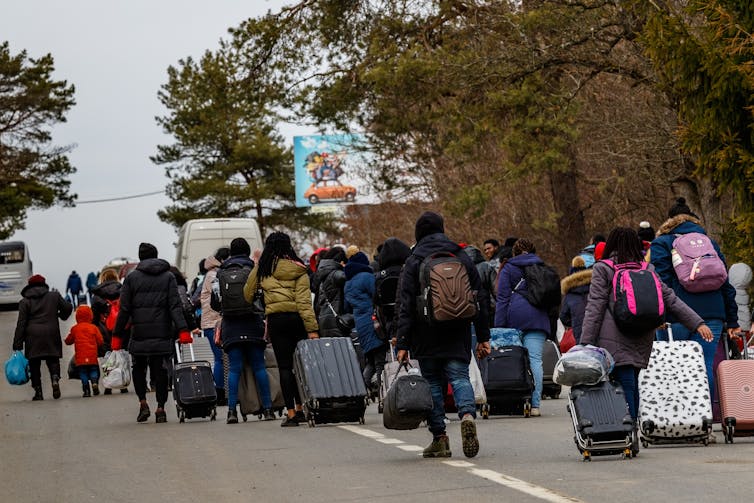
Ukrainian refugees carry their belongings as they approach the Slovakian border.
Ukrainian refugees approach the border with Slovakia in the early days of Russia’s full-scale invasion.
Yanosh Nemesh / Shutterstock

The Ukrainian government has begun taking steps to maintain connectivity with the diaspora. This has included opening so-called “unity hubs” aimed at sustaining ties with the refugees and facilitating their voluntary return. One such hub opened in Berlin in 2025.

Ukraine’s authorities are also developing a portal designed to connect refugees with employment and business opportunities at home. However, these initiatives remain in their early stages and uptake remains to be seen.

Without the return of refugees, Ukraine risks developing a structural skills deficit. Such a shortfall could deter private investment in the country’s reconstruction and lead to a reliance on external labour.

3. European political commitment

There is also a political dimension to the challenges associated with reconstructing Ukraine. Sustaining long-term support for the country’s reconstruction may become more complicated amid shifting political dynamics across Europe.

The consensus among European countries on supporting Ukraine has largely held. But upcoming parliamentary and presidential elections in France, Italy, Denmark and elsewhere in 2026 and 2027 could shift the balance of power in key allied countries.

The elections are, at the very least, likely to absorb political attention and divert focus from unresolved questions. These include questions around the use of frozen Russian assets to finance Ukraine’s reconstruction, where agreement remains elusive.

Signs of fracture are also beginning to emerge. The EU has looked to push through a €90 billion loan to cover Ukraine’s needs for 2026 and 2027. Three countries – Slovakia, the Czech Republic and Hungary – abstained from the deal over the closure of an important oil pipeline in Ukraine. And Hungary now appears to be holding up the loan.

Reconstruction will be a test of political endurance as much as financial capacity. The question that will arise after any peace deal is reached is not only how to fund Ukraine’s recovery, but whether its allies can sustain the political consensus required to do so over time.

The Conversation

Olena Borodyna does not work for, consult, own shares in or receive funding from any company or organisation that would benefit from this article, and has disclosed no relevant affiliations beyond their academic appointment.

ref. The three big challenges facing Ukraine when the war ends – https://theconversation.com/the-three-big-challenges-facing-ukraine-when-the-war-ends-276214
The unintended consequences of decarbonising steelworks

Source: The Conversation – UK – By Steffan James, PhD Candidate, Sustainable Supply Chains, Cardiff University

cwales/Shutterstock

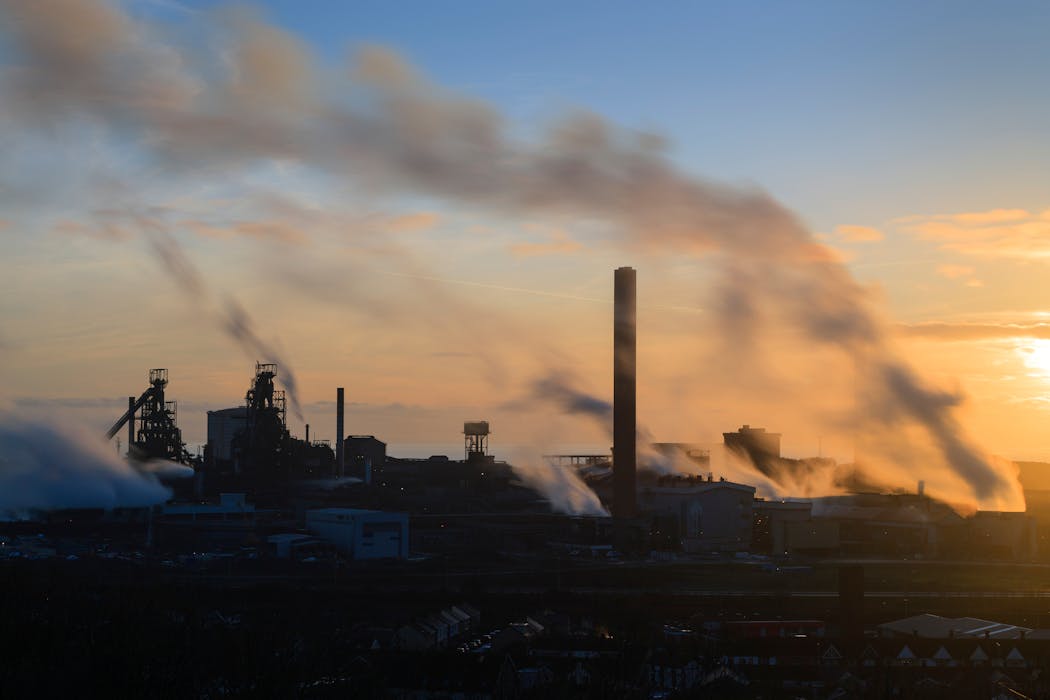
For more than a century, Port Talbot in Wales has been dominated by its steelworks. The daily lives of residents have been shaped by this industry. Shifts have set the traffic, sirens marked time, at night the furnaces lit the sky orange. Steel wasn’t just an industry. It was the rhythm of this place.

Where outsiders saw towers, smoke and steel, locals told me in interviews that they saw pride, beauty and belonging.

In 2023, the multinational corporation Tata Steel announced it would replace Port Talbot’s coal-fired blast furnaces with an electric arc furnace. The news felt inevitable after years of uncertainty. The promise of £1.25 billion of investment was cautiously welcomed when total closure was the other option. It would save 2,000 jobs, but another 2,000 would go. The shift was framed as a step toward a greener future.

Since that announcement, my PhD research has tracked the consequences of the action, conducting multiple rounds of interviews with a broad range of people to monitor unintended, or unanticipated, consequences as they arise.

Steel sits at the centre of overlapping, nested systems – from local communities to the national economy and global markets. Altering one part of a system sends tremors through the rest. Systems scientists describe this dynamic as panarchy: a concept from ecology that explains how interconnected systems operate at different scales and timescales, so change propagates unevenly and often in unexpected ways.

With this approach, focusing only on emissions risks a kind of carbon tunnel vision. Judging success by a single metric misses how one decision ripples into livelihoods, culture, mental health and identity.

Immediate surprises

When the blast furnaces shut, the change was immediate. The noise stopped. The air cleared. Residents told me how their windows were clean and when they left washing outside to dry, it no longer came in dusted grey. Families who had lived with industrial pollution for decades spoke of tangible relief.

In the short term, the local economy saw unexpected positive ripples. Redundancy payments and government transition grants meant more money circulating locally for a time and gave people the capital to try new ventures, from pizza making to dog walking. So far, 85 new businesses have been created.

painting of steelworks
Painting of the steelworks by artist and former steelworker Peter Cronin.
Peter Cronin, CC BY-NC-ND

Creativity became a way to process change, loss and pride all at once. Schoolchildren painted murals beneath the motorway as they imagined a different future for Port Talbot. Artists captured the towering cranes on the beach before they made way for the new electric arc furnace. The town hosted Urdd Eisteddfod, Europe’s largest youth cultural festival and people celebrated.

But not everyone experienced these changes in the same way, or at the same time. After the immediate change came quieter, more troubling effects which emerged more slowly. Steelmaking wasn’t just a job. Many former steelworkers told me of the pride, dignity and identity it gave them. When the furnaces closed, loss of purpose, stress and depression followed in ways that don’t show up in emissions data or balance sheets.

The local economy shifted again too. The short-term boost from redundancy money faded. Businesses that relied on a large, stable workforce began to feel the loss. The town entered an uncertain medium-term phase, where opportunity and fragility coexisted.

colourful murals on concrete pillars
Murals of Port Talbot’s past, present and future imagined by The Steeltown Storybook: Children’s Chapter.
Emily Adams, CC BY-NC-ND


Read more:
Port Talbot, one year on: steelworks closure shows why public is losing trust in net zero


A slow shift

Ecosystems don’t change overnight; they slowly reorganise over decades as conditions change. Port Talbot’s coast is a good example of a novel urban-industrial ecosystem, where industry has helped shape the conditions that wildlife now uses.

Alongside the steelworks, Eglwys Nunydd Reservoir – built to serve the site and designated a Site of Special Scientific Interest for its birdlife – sits alongside sand dunes that support nationally rare plants such as sea stock.

Because of this long coexistence of nature and steel, moving to an electric arc furnace won’t instantly restore or erase what’s there, but will gradually reshape the local ecology as species and habitats adjust.

The new electric arc furnace will cut the steelworks’ carbon emissions by about 90% – around 8% of the UK’s industrial total.

But the global picture is more complicated. As Tata shuts the blast furnaces in Wales, it is building a new one in Kalinganagar, India. Even before the announcement about Port Talbot was made, unions warned that this could export emissions rather than reduce them, shifting the carbon cost of transition thousands of miles away. Even the most modern blast furnaces still emit far more carbon than electric arc furnaces.


Read more:
Net zero will transform Britain’s economy – our map reveals the most vulnerable places


steel protest banner
Striking steelworkers banner warning of unintended but not unanticipated consequences.
Steffan James, CC BY-NC-ND

Beyond Port Talbot

Heavy industry must change if emissions are to fall fast enough. But in places like Port Talbot, that change lands unevenly. Some residents see opportunity, others feel loss. Versions of this story are unfolding worldwide, wherever climate policy meets heavy industry.

Decarbonisation isn’t a quick technical fix, but a complex social, economic and ecological transformation whose success depends on how well we understand them. Complex effects ripple out over time at different scales.

Job losses are immediate. Ecosystems adapt more slowly. Consequences on our warming planet will take decades to become apparent. Achieving a just transition from carbon involves looking beyond single metrics to account for how change ripples through interconnected systems over time.


Don’t have time to read about climate change as much as you’d like?

Get a weekly roundup in your inbox instead. Every Wednesday, The Conversation’s environment editor writes Imagine, a short email that goes a little deeper into just one climate issue. Join the 47,000+ readers who’ve subscribed so far.


The Conversation

Steffan James does not work for, consult, own shares in or receive funding from any company or organisation that would benefit from this article, and has disclosed no relevant affiliations beyond their academic appointment.

ref. The unintended consequences of decarbonising steelworks – https://theconversation.com/the-unintended-consequences-of-decarbonising-steelworks-275045

How Peter Mandelson went from US ambassador to arrested over misconduct claims

Source: The Conversation – UK – By Sam Power, Lecturer in Politics, University of Bristol

Peter Mandelson was released on bail this week after being arrested on suspicion of misconduct in public office. Coming just days after the arrest of Andrew Mountbatten-Windsor, the images of the former US ambassador being led away by police will likely stick with viewers for some time.

The political ramifications of Mandelson’s appointment as ambassador to the US continue to reflect badly on Keir Starmer’s political judgment. While this is a story that will likely run and run, it is worth taking stock of how we got here.

December 19 2024: Mandelson appointed US ambassador

When Starmer chose Mandelson as ambassador, the general reaction was that it was a risk. The BBC pointed to his friendship with the late financier and sex offender Jeffrey Epstein, and described him as “not a baggage-free choice”. This baggage, if being friends with a known paedophile was not enough, included having to resign from government twice during the New Labour years.

Matthew Lynn, in the Telegraph, went further, arguing that he would make a “terrible” ambassador because he was both “damaged goods” and “put politely … accident prone”. For balance, Tom Harris (also in the Telegraph) described Mandelson as a “political genius” and “the right man to deal with Trump”.

This was, ultimately, the gamble taken by Starmer and his team. They appointed a known associate of Epstein with a dubious ethical track record, but who was – as a Downing Street source told the BBC in February 2025 – “supremely political” and a “brilliant operator”.

May 8 2025: Front and centre of UK-US trade deal

“Cometh the hour, cometh the Mandelson”, read the Guardian headline the day after the UK and the US agreed to a trade deal. A deal which, not for nothing, may well have been unpicked by Trump’s response to the Supreme Court ruling his tariffs unconstitutional. The Times said that Mandelson had “proven the doubters wrong”, and called him the “Trump whisperer”.

This was the moment, as I previously outlined in the Conversation, of supreme triumph. And it was widely seen, across the political spectrum, as vindication of the risk Starmer took.

September 8 2025: Birthday messages to Epstein released, Mandelson fired

The wheels came off with the release, by a US congressional panel, of a 238-page scrapbook given to Epstein for his 50th birthday. In it, Mandelson’s multi-page message to Epstein described him as his “best pal”. Mandelson said that he regretted “very, very deeply indeed, carrying on that association with him for far longer than I should have done”.

Starmer was initially supportive of Mandelson in the Commons, but sacked him after newly surfaced emails showed that he had sent supportive messages to Epstein when he faced charges of soliciting a minor in 2008. The BBC later reported that Number 10 and Foreign Office officials were aware of these emails prior to Starmer’s defence of Mandelson at prime minister’s questions, but that Starmer himself was not aware of the contents.

January 30 2026: Further Epstein files released

The release of further information about the close relationship between Mandelson and Epstein pointed to potential criminality. The emails, published by US officials, suggest that Mandelson passed privileged and market-sensitive information to Epstein during the fallout of the financial crisis. This led to the police investigation for misconduct in public office. Mandelson’s position, according to the BBC, is that he has not acted in any way criminally and that he was not motivated by financial gain.


Read more:
Mandelson and the financial crash: why the Epstein allegations are so shocking


February 4 2026: MPs approve the release of documents

A House of Commons debate was held surrounding the release of files related to the appointment of Mandelson as US ambassador. Starmer initially suggested that files which could damage diplomatic relations or national security would be exempt from release. However, after an intervention from Angela Rayner, the government agreed to include a cross-party parliamentary committee in the process. The BBC has subsequently reported that these documents could number over 100,000.

February 23 2026: Mandelson arrested

Mandelson was arrested Monday night on suspicion of misconduct in public office, and released on bail Tuesday morning. Mandelson has claimed that his arrest was based on the “complete fiction” that he was a flight risk and planning to flee to the British Virgin Islands (which have an extradition agreement with the UK). It has now emerged that Commons Speaker Lindsay Hoyle passed information to the police ahead of the arrest.

What happens now?

Misconduct in public office is notoriously difficult to prosecute and tends to rely on a three stage test: that the accused must have been acting in an official capacity at the time of the alleged offence, that they wilfully misconducted themselves and that that conduct falls “so far below acceptable standards that it amounts to an abuse of the public’s trust”.

Legal experts suggest that the latter is an incredibly high bar. In this instance it might well be the case that simply leaking information does not meet that bar, and that the police will need to show some kind of material gain or beneficial exchange. Either way, Mandelson will ultimately be required to return to a police station when he will either be charged, have his bail extended or face no further action.

Further questions, naturally, will also be asked of Starmer’s judgement. A Cabinet Office due diligence report into Mandelson’s appointment is reportedly expected as early as next week. The document is said to have warned of the “reputational risk” of making him ambassador.

If this is the case, it could reignite conversations about Starmer’s leadership and a potentially bruising night in the Gorton and Denton byelection on Thursday won’t help. Though Starmer’s replacement in most circles is now being discussed as a matter of when, not if.

In the end, Starmer is learning the hard way – just as Boris Johnson did before him – that standards matter in British politics. It is not enough, as Starmer did when he updated the ministerial code, to just talk a big game. One cannot say that “restoring trust in politics is the great test of our era” and then do very little to actually address the root cause of that trust.

The Conversation

Sam Power has received funding from the Economic and Social Research Council and the Engineering and Physical Sciences Research Council.

ref. How Peter Mandelson went from US ambassador to arrested over misconduct claims – https://theconversation.com/how-peter-mandelson-went-from-us-ambassador-to-arrested-over-misconduct-claims-276787

Send reform: will the government’s plans work for children, parents and teachers? Experts react

Source: The Conversation – UK – By Charlotte Haines Lyon, Associate Professor: Education, York St John University

Rawpixel.com/Shutterstock

The government has published its delayed proposals for education reform in England, which include significant changes to how the special educational needs and disabilities (Send) system operates. Our panel of education experts have been scrutinising the plans, which have been anxiously anticipated by many teachers and parents.

A fundamental shift in support

Paty Paliokosta, Associate Professor of Special and Inclusive Education, Kingston University

The government is proposing a gradual but fundamental shift in how the system uses education, health and care plans (EHCPs). EHCPs will remain, but far fewer children are expected to receive them. The first children with an existing EHCP to move to the new system would be pupils at the end of primary, secondary and post-16 in the academic year 2029-2030.

Instead, most support is intended to take place through a strengthened universal offer (support available to all children) and several layers of extra provision, only one of which will include an EHCP. The aim is to reduce the pressures that have made EHCPs the perceived, default route for help and promote a universally inclusive approach. This will succeed if the new layers are credible, consistent and properly resourced.

The introduction of nationally defined specialist provision packages marks a major change. These will determine the support available to children with the most complex needs and will form the basis of future EHCPs. Alongside this, individual support plans will outline day‑to‑day provision for all children receiving extra help, co‑produced with families.

In principle, this could create a more coherent system, based on inclusive values, which is very welcome. In practice, this needs to reflect on capacity. Schools cannot deliver more without the time, training and specialist expertise that have been in chronic short supply.

The proposal to reassess children’s entitlements to support at ages 11 and 16 is especially significant. These are critical transition points already associated with anxiety, academic pressure and identity changes.

Unless reassessment is handled with sensitivity – and backed by genuine specialist involvement – it risks introducing uncertainty precisely when stability is most needed. For many families, reassessment may feel like a potential removal of support, despite this not being the intention.

The open government consultation on the proposals is therefore crucial. It must test not only the design of these reforms but their real‑world viability. If the new layers of support do not arrive before EHCP access is tightened, families will simply experience another cycle of promises unsupported by provision. The system cannot afford another misfire.

Ending the postcode lottery

Jonathan Glazzard, Rosalind Hollis Professor of Education for Social Justice, University of Hull

The government hopes to end the postcode lottery of support and restore families’ confidence in the special educational needs and disabilities system. New national inclusion standards will set out the support that should be available in every mainstream setting. Statutory individual support plans will include key information about the child’s needs and the day-to-day provision in place to address these for all pupils with Send.

All staff will benefit from national Send training, supported by record investment of over £200 million. £1.6 billion will enable schools, colleges and early years settings to deliver an improved inclusion offer. In addition, £3.7 billion will be invested to make buildings more accessible, create more special school places and develop inclusion bases in mainstream schools.

£1.8 billion will be allocated to fund an “experts at hand” service to improve access to speech and language therapists, educational psychologists and occupational therapists in mainstream schools.

In total the government plans to invest £7 billion more on Send, and core funding for schools and Send is expected to increase annually.

There is much to consider but on the surface the investment and vision look promising. There is a clear commitment to inclusive mainstream education, a determination to improve outcomes for children with Send and a desire to “call time” on a broken Send system.

Children walking down staircase at school
The government’s plan will increase provision for children with special educational needs and disabilities in mainstream schools.
Rawpixel.com/Shutterstock

Mainstream inclusion lacks specialist support

Johny Daniel, Associate Professor, School of Education, Durham University

The government’s investment in mainstream inclusion is welcome and long overdue. Increased spending on Send support and on expertise beyond school, signal genuine intent to identify and meet pupils’ additional needs earlier and more consistently.

However, the specialist provision model outlined in the policy appears oriented primarily around health, sensory and complex cognitive needs. There is little attention to specific learning difficulties, one of the largest special educational needs categories. It is not clear that children with specific learning difficulties would meet the threshold for the specialist provision planned, and yet no specialist teaching workforce is proposed to support them.

The proposed reforms’ reliance on teaching assistants to support children with special educational needs is particularly concerning. The government’s policy document cites headteacher perceptions of teaching assistant effectiveness as justification. However, observational research consistently shows that teaching assistants lack the expertise to deliver structured interventions for pupils with additional needs.

What is missing is investment in specialist teachers embedded within mainstream schools, professionals trained to provide targeted support for academic learning and social-emotional needs. Without this, children with specific learning difficulties risk remaining underserved, even within a better-funded system.

Relationships between families and schools

Charlotte Haines Lyon, Associate Professor: Education, York St John University

The government openly acknowledges parental disengagement with the education system and its roots in a breakdown of trust. This comes from negative experiences of the education system, poverty and the failure of Send provision. This is a more honest starting point than much policy of the last decade and is genuinely welcome.

At surface level, there is much to appreciate in the rhetoric. The government explicitly states its ambition to move from “a broken social contract to families as partners”. However, on closer examination the proposals offer less partnership than the language used suggests.

What it actually sets out is a list of expectations about how parents should behave — around attendance, behaviour, communication and engagement with learning at home. While these expectations may seem reasonable, genuine partnership is built through dialogue and the slow rebuilding of trust, not through the imposition of standards.

This matters particularly because those most targeted by these expectations are precisely the families who have had greatest reason to distrust schools. These are white working-class families, those in persistent poverty and families whose children have been failed by the Send system.

The government has acknowledged this distrust but then responded to it with the threat of mandated engagement “where it is lacking”. This is not only contradictory, but risks deepening the very distrust it seeks to repair.

At first glance, the focus on the relationship between families and schools echoes the groundbreaking 1967 Plowden report, which introduced parents’ evenings and written reports as mechanisms of institutional accountability to families. But the comparison reveals a significant shift in direction.

Plowden directed its obligations toward schools and local authorities. These proposals reverse that dynamic. It is parents who are now expected to open up to schools, to be accountable to them, and ultimately to face compulsion if they do not comply. The direction of obligation has fundamentally changed.

The Conversation

Paty Paliokosta co-leads the National SENCO Advocacy Network and sits on the National Executive Committee of SEA.

Charlotte Haines Lyon, Johny Daniel, and Jonathan Glazzard do not work for, consult, own shares in or receive funding from any company or organisation that would benefit from this article, and have disclosed no relevant affiliations beyond their academic appointment.

ref. Send reform: will the government’s plans work for children, parents and teachers? Experts react – https://theconversation.com/send-reform-will-the-governments-plans-work-for-children-parents-and-teachers-experts-react-276660

Net zero will transform Britain’s economy – our map reveals the most vulnerable places

Source: The Conversation – UK – By Ed Atkins, Senior Lecturer, School of Geographical Sciences, University of Bristol

Here’s an uncomfortable truth: even as Britain makes the welcome transition to net zero, some communities will lose jobs and face economic disruption. And the places most exposed are overwhelmingly the same places that were hit hardest by the wave of industrial job losses in the 1980s.

That’s the striking pattern revealed by our new research mapping vulnerability across all 365 local authorities in Great Britain. Many places already struggling after decades of industrial decline are poised to face disproportionately sharp economic shocks as decarbonisation reshapes the employment landscape.

Our research shows this pattern clearly: many of the highest-risk areas sit within what are often called “older industrial towns”. They include the boroughs of Kirklees (largest town Huddersfield) and Sandwell (West Bromwich), along with Wakefield, Rotherham, Walsall, Barnsley and Doncaster.

These communities were once anchored by industries such as steel, chemicals, heavy manufacturing and mining. As those sectors contracted from the 1980s onward, these places experienced deep job losses and long-term economic scarring.

Today, the same areas remain heavily reliant on manufacturing sectors that are once again undergoing radical change – this time driven by climate policy, alongside globalisation, tariffs and high energy costs. In these places, decarbonisation is colliding with existing economic forces, raising the risk of further job losses and industrial decline.

Why old industrial towns are at the sharp end

To map this exposure, we created a net-zero vulnerability index, a tool designed to identify which local economies are most exposed to job losses, restructuring and industrial change triggered by decarbonisation. We draw on measures of economic complexity (how diverse and adaptable a local economy is), relatedness (the ease with which industries can evolve into new ones), reliance on at-risk sectors, and working-age population.

A map of the net-zero vulnerability index:

A higher score indicates greater risk (shaded light green or yellow). Data can be arranged by: LAD, local authority districts; PCON, Westminster constituencies; LEP, local enterprise partnerships; CA, combined authorities. (Source: Tom Cantellow, Ed Atkins, Sean Fox)

What the index shows is not simply that these old industrial towns have carbon-intensive jobs. It shows that many have low economic complexity — meaning their local economies tend to be based on a small number of sectors and workers’ skills are less easily transferable to emerging industries.

For example, in North Lincolnshire, 25% of the working population are employed in manufacturing, compared to a national average of 7%, and often in chemicals or cement production or other high emissions industries. A reliance on these industries risks residents becoming locked into carbon-heavy work, and limits the diversity of skills needed to transition to newer and more green industries.

Places you might not expect

The findings also highlight less obvious cases. Rural and coastal authorities such as Shropshire, East Suffolk and Dorset rank highly because their economies rely on low-paid, less complex sectors — including hospitality, retail and seasonal work — which offer limited resilience to broader shocks. If workers need to adapt quickly to new green jobs, these labour markets offer fewer pathways.

packed Weymouth Beach on a hot day
Workers in Dorset might struggle to find new green jobs.
Andrew Harker / shutterstock

Meanwhile, major hubs traditionally seen as vulnerable — Aberdeen, for example — do not rank as highly as public debate might suggest. That’s partly because the risks of oil-and-gas decline are distributed across commuting patterns and supply chains, and partly because the region has already begun diversifying into offshore wind and energy services.

Discussions of economic shocks often focus on headline job losses. Our index instead looks at the proportion of working people in each area who are exposed, highlighting where disruption will have a greater impact on the local economy.

This distinction matters because an area can have highly vulnerable industries yet employ relatively few people in them. By analysing industrial risk alongside workforce exposure, we identify places where the scale of potential disruption — not just its intensity — is greatest.

The result is a list of 32 local authorities most in need of support to navigate the transition. Most sit in England’s Midlands and north, along with several in Wales and Scotland. What unites them is not current emissions levels, but long-standing economic fragility.

An uneven playing field

Net zero will bring vast economic benefits to many. Yet, our work exposes a crucial tension at the heart of the net-zero transition: its impacts play out in a landscape already shaped by 40 years of uneven growth. Many communities identified as vulnerable have been grappling with low wages, declining opportunities and outflows of young talent for decades.

Net-zero policies are not causing these challenges, but they risk intensifying them if they ignore the geography of vulnerability. This helps explain why climate policy has become politically contentious in some regions.

Wakefield Theatre Royal and Opera House
Wakefield in West Yorkshire is joint top of the net zero vulnerability index.
Go My Media / shutterstock

Overall, the British public still supports the goal of net zero, but there is often far less support for the policies needed to get there. Capitalising on this tension, Reform has pledged to scrap “net stupid zero” policies and suggested the revival of coal mines, while the Conservatives have vowed to do away with the 2050 net zero emissions target, claiming it is impossible “without a serious drop in our living standards or by bankrupting us”.

At the core of the anti-net zero message is how “green” policies will make people and communities poorer. Such claims have an important resonance in the wake of a cost-of-living crisis, spikes in energy bills, and an increased sense of economic precarity for many – particularly in already-struggling regions.

Continued public support for net zero depends on acknowledging where its costs will fall. Confronting these risks is essential to making climate policy more durable.

What next?

The net zero transition can create new, secure, well-paid jobs and help the UK establish itself as a “clean energy superpower”. But without targeted intervention, the benefits and costs will always be shared unevenly.

Our research highlights a clear opportunity: many of the most vulnerable local authorities sit within parts of the UK which have devolved powers over skills, transport and local economic strategy. Devolved governments in Scotland and Wales, and regional bodies such as the Greater Manchester Authority can play key roles by funding retraining, improving infrastructure, and creating new types of jobs for those who will be negatively affected by net zero.

Our net zero vulnerability index gives policymakers a map of where support is most urgently needed. The challenge now is to use it — to ensure the transition to a green economy becomes a story of national renewal rather than a replay of uneven decline.


Don’t have time to read about climate change as much as you’d like?

Get a weekly roundup in your inbox instead. Every Wednesday, The Conversation’s environment editor writes Imagine, a short email that goes a little deeper into just one climate issue. Join the 47,000+ readers who’ve subscribed so far.


The Conversation

Ed Atkins receives funding from UKRI.

Sean Fox does not work for, consult, own shares in or receive funding from any company or organisation that would benefit from this article, and has disclosed no relevant affiliations beyond their academic appointment.

ref. Net zero will transform Britain’s economy – our map reveals the most vulnerable places – https://theconversation.com/net-zero-will-transform-britains-economy-our-map-reveals-the-most-vulnerable-places-275604

Everything can be a bet now – the rise and risks of prediction markets

Source: The Conversation – UK – By Sarah Mills, Professor of Human Geography, Loughborough University

The final result in November’s New York City mayoral election was more like 51% for Zohran Mamdani and 41% for Andrew Cuomo. rblfmr/Shutterstock

Yes or no? It’s a simple question that now drives more than US$13 billion (£9.7 billion) a month on prediction markets – companies like Polymarket, PredictIt and Kalshi.

These firms run digital platforms that use blockchain technology to let anonymous users gamble on uncertainty and place “predictions” rather than bets. Users can buy a yes or no “event contract” on anything from strikes on Iran to the most popular show on Netflix and the return of Jesus.

Politics and popular culture have merged, with reports that Kalshi and others are becoming a new “stock market for trends” in the so-called “attention economy”. Everything is now monetised.

However, several incidents have brought the politics of prediction markets into sharp relief. These include large volumes of predictions (or bets) placed in the hours before election results in Portugal, the presidential coup in Venezuela, and in Israel, where two people have been charged on suspicion of using classified information to place bets about military actions.

In the US, where Polymarket has its headquarters, the platform has been controversial since its launch a few years ago. The website has been blocked there for most of its short life, including during the country’s 2024 presidential election. But it recently relaunched in its home country – with President Donald Trump’s support. The president’s son, Donald Trump Jr, serves in advisory roles at both Polymarket and Kalshi.

One advertising slogan for Kalshi states: “The world’s gone mad, trade it”. However, not all the world can trade.

As a geographer, I’m fascinated by how online gambling is now a global game, in many cases bypassing national legislation on gambling laws via VPNs. My latest project charts how traditional political gambling – through licensed bookmakers or online gambling companies – is now simultaneously bordered and borderless. National laws on gambling remain important, but there is increasing fluidity with the rise of VPNs and digital platforms. This trend is creeping into prediction markets too.

Polymarket is banned or geo-blocked in several countries including the UK, France and Belgium due to regulatory and licensing challenges (and now Portugal after the election incident). And its blockchain technology and use of cryptocurrency are complex and hard to regulate. The space between gambling and gaming is proving to be a grey area for many countries to legislate in.

Even if countries don’t allow their citizens to access prediction markets, the world is still betting on those nations and their next election or leadership contest. This could be the future of election betting – and possibly the future of geopolitics – if world events can be influenced by prediction market activity.

Insider dealing?

One of the key questions in the debate is whether this is gambling. Or is it simply users drawing on their expertise, perhaps more akin to playing the stock market? There have been suggestions that prediction markets offer a loophole for gambling restrictions. The controversies all come down to whether there is insider information, a very serious legal minefield and especially in the context of military or classified information.

Increasingly, viewers see prediction market “odds” appearing on the rolling coverage or infographics of major US news channels such as CNN and CNBC. These are not pollsters’ or even bookmakers’ odds, but rather the current yes or no trends. So is this really data, or just vibes?

The increasing professionalisation of prediction markets embedded into news infrastructures is significant. Indeed, people have argued that the websites of prediction markets themselves are now consumed like live news channels. As a result, these platforms are driving huge amounts of revenue, with Polymarket alone valued at US$9 billion (£6.7 billion) in October 2025. There are forecasts that together these platforms will reach a trillion dollars in trading volume by 2030.

Polymarket is trying to increase awareness of its brand.

The rise in prediction markets raises critical questions for the future of democracy. In order to ensure that trust and democracy can be upheld in the era of prediction markets, regulations and safeguards must be strengthened for an industry that is now both bordered and borderless.

One of Polymarket’s advertising slogans invites users to “answer some of the world’s biggest questions”. Perhaps the single biggest question concerns the political and ethical implications of predicting the future for money in this way.

The Conversation

Sarah Mills has received funding from The British Academy, ESRC, AHRC, Royal Geographical Society and DCMS.

ref. Everything can be a bet now – the rise and risks of prediction markets – https://theconversation.com/everything-can-be-a-bet-now-the-rise-and-risks-of-prediction-markets-276464

Want to understand Honoré de Balzac? Try Dungeons & Dragons instead of literary theory

Source: The Conversation – UK – By Harsh Trivedi, Teaching Associate French, School of Languages, Arts and Societies., University of Sheffield

Louis-Auguste Bisson/Canva, CC BY-SA

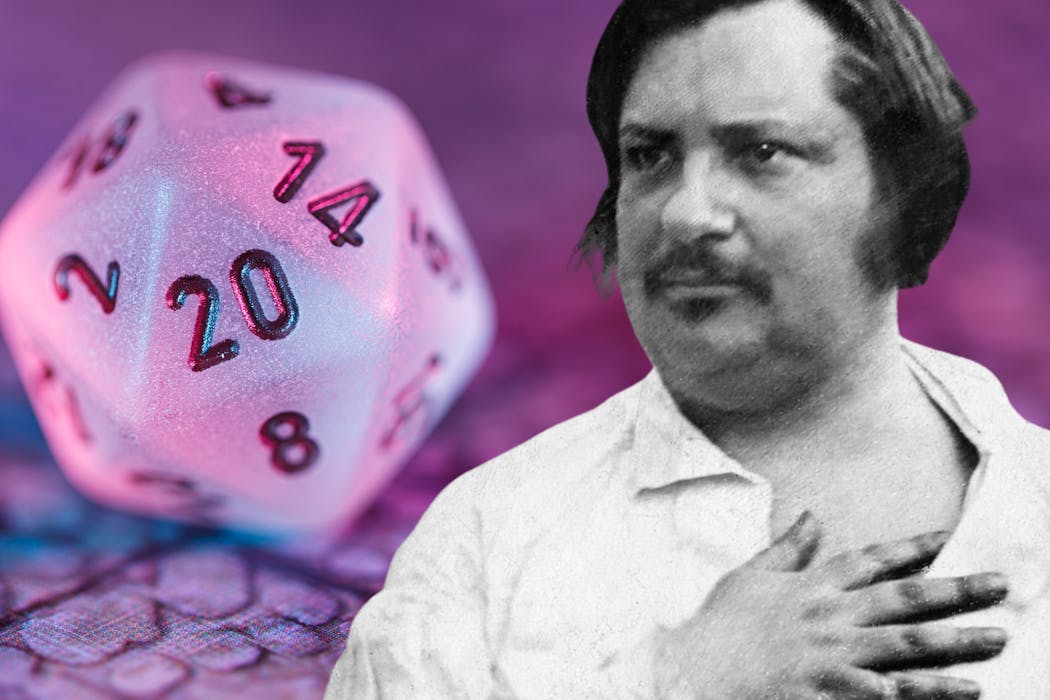
Most people think originality comes from endless freedom. The role playing game Dungeons & Dragons suggests the opposite. It gives players a small number of races, classes and backgrounds and somehow produces characters that feel endlessly distinct. A half-elf paladin might be an immediately recognisable type, yet no two half-elf paladins ever feel the same once play begins. This is because identity in Dungeons & Dragons is not created by escaping structure, but by working through it.

Nineteenth-century readers encountered something strikingly similar in the novels of the French novelist Honoré de Balzac. His vast fictional project, The Human Comedy (1829-1848) is built on a limited repertoire of social “types” that recur as characters across nearly 100 novels and short stories.

There are provincial newcomers arriving in Paris (Father Goriot, 1835), ambitious social climbers seeking rapid ascent, journalists willing to trade principles for influence (Lost Illusions, 1837-1843), dandies whose elegance masks insecurity (The Splendours and Miseries of Courtesans, 1838-1847), courtesans navigating power through intimacy (Cousin Betty, 1846), speculators driven by risk (The Firm of Nucingen, 1837), and the many “30-year-old women” seeking to break out of provincial monotony (The Muse of the Department, 1843). These figures are immediately legible, yet the characters who emerge from them feel uncannily alive. Far from producing stereotypes, Balzac’s work generates individuality through combination, overlap and circumstance.


This article is part of Rethinking the Classics. The stories in this series offer insightful new ways to think about and interpret classic books and artworks. This is the canon – with a twist.


Balzac was explicit about his “typological” method. In the preface to An Historical Mystery (1841), he defines a “type” as a character who “summarises in himself certain characteristic traits of all those who more or less resemble him; he is the model of the genre”. Such a figure is not a stereotype but a point of condensation, gathering shared traits without erasing individuality.

The Hungarian philosopher Georg Lukács later developed this insight, claiming that Balzac’s characters synthesise the individual and the universal. He argued that they embody broad social forces such as ambition, speculation, artistic aspiration and political calculation, while remaining fully embedded within their social world.

What makes Dungeons & Dragons an especially useful lens here is that character creation does not stop with race and class. Players must also roll a 20-sided dice for attributes such as strength, dexterity, constitution, intelligence, wisdom and charisma. These values introduce chance into the system and ensure that no character ever perfectly conforms to an ideal model. Two characters can share the same class and background yet differ radically because one lacks charisma, another has fragile constitution, or a third possesses unexpectedly high intelligence. Chance does not undermine the system. It activates it.

A Dungeons & Dragons character sheet.
Dodotone/Shutterstock

Balzac understood this logic perfectly and made it explicit in the preface to The Human Comedy where he sets out the philosophy and structure of the entire project.
Reflecting on how fiction produces lifelike characters, he wrote that “chance is the greatest novelist in the world; to be prolific, one need only study it”.

For Balzac, social types alone are never enough. What gives life to his characters is the way fixed positions collide with contingency, accidents, misjudgements and missed opportunities. A career turns on a chance encounter (Lost Illusions). A reputation collapses because of a rumour (Cousin Bette). A letter arrives too late (Eugénie Grandet, 1833). An ordinary life is overturned by a pact with supernatural forces (The Wild Ass’s Skin, 1831). These elements do not cancel typology; they work through it.

Seen across The Human Comedy, Balzac’s characters do not exist as isolated portraits but as part of a vast and carefully organised system. Figures recur across novels, reappear in new contexts, and are reframed by shifting social and historical pressures. A journalist encountered early in the corpus returns later compromised or triumphant. A provincial social climber resurfaces as a hardened social operator. A writer becomes a commercial failure or an institutional success. This recurrence is not repetition for its own sake. It is how individuality is forged.

A painting of Balzac in a dressing gown
A portrait of Balzac by Louis Boulanger (1836).
Musée des Beaux-Arts de Tours

The contrast between the characters Lucien de Rubempré and Eugène de Rastignac makes this logic especially clear. Both enter Paris as provincial newcomers (in Lost Illusions and Father Goriot). Both are ambitious, socially alert and acutely aware that success depends on visibility, patronage and strategic alliances.

Typologically, they occupy a similar position within Balzac’s social universe as aspiring provincial social climbers. Yet their trajectories diverge dramatically. Rastignac learns to read the system accurately and adapts himself to it with increasing success. Lucien mistakes recognition for belonging and talent for protection. Their difference emerges from how similar components interact with chance over time.

This pattern repeats throughout Balzac’s work. In each case, the type remains legible, but the personal trajectory is never fixed in advance. This is a crucial difference from other large-scale cyclical works of the 19th century, most notably Émile Zola’s Rougon-Macquart (1871-1893), where characters are ultimately governed by heredity and biological determinism. Balzac’s world is structured, but it is not closed. His characters are shaped by chance and choice, not locked into destiny by bloodlines.

Thinking about Balzac through Dungeons & Dragons helps make visible a logic of character creation that is often taken for granted.

Great novelists do not produce individuality by abandoning structure, but by working through it. Balzac’s insight was to recognise that social life is already organised into roles, hierarchies and expectations, and that fiction becomes most powerful when it shows how people navigate (and sometimes rebel against) these constraints.

The Human Comedy begins with a finite set of social types and generates endless variation through combination, chance, and choice. Far from limiting his characters, Balzac’s typology is precisely what allows them to feel so enduringly alive.


Looking for something good? Cut through the noise with a carefully curated selection of the latest releases, live events and exhibitions, straight to your inbox every fortnight, on Fridays. Sign up here.


This article features references to books that have been included for editorial reasons, and may contain links to bookshop.org. If you click on one of the links and go on to buy something from bookshop.org The Conversation UK may earn a commission.

The Conversation

Harsh Trivedi does not work for, consult, own shares in or receive funding from any company or organisation that would benefit from this article, and has disclosed no relevant affiliations beyond their academic appointment.

ref. Want to understand Honoré de Balzac? Try Dungeons & Dragons instead of literary theory – https://theconversation.com/want-to-understand-honore-de-balzac-try-dungeons-and-dragons-instead-of-literary-theory-274688

The worse your mental health problem, the less sympathy you get – why?

Source: The Conversation – UK – By Robin Bailey, Assistant Professor in Clinical Psychology, University of Cambridge

SewCreamStudio/Shutterstock.com

Some mental health conditions, such as anxiety, depression and ADHD, have become more accepted in society. People can now talk about them at work, at home and online and often be met with understanding.

This change matters. It makes it easier to ask for help and harder for employers and institutions to pretend mental health problems do not exist.

Public sympathy is uneven. Some conditions are widely understood, while others are still judged harshly.

As some conditions become familiar, they set the template for what mental illness is supposed to look like. Presentations that do not fit that picture are more likely to be perceived differently.

The recent Baftas Tourette’s incident showed how quickly behaviour can be moralised when it breaks a social rule.

Research on Tourette stigma finds public understanding is often limited and stereotypes continue to shape how the condition is perceived. Tics can be mistaken for deliberate misbehaviour, especially when they are seen as offensive or involve taboo words or racial slurs.

Schizophrenia, bipolar disorder and some personality disorders, including borderline and narcissistic personality disorder, tend to attract less empathy and more suspicion. A big part of the difference is familiarity, whether the behaviour fits a story people already understand. When it does not uncertainty can tip into fear.

Fear is the driver

That difference shows up in research. In a study testing stigma across nine diagnoses – measured by how much people wanted to keep their distance from someone with each condition – depression and anxiety drew the least stigma, while schizophrenia and personality disorder drew the most. Across diagnoses, fear was the most consistent driver of stigma.

Part of the sympathy gap can be recognition. People often sense something is wrong without knowing what to call it. When experiences or behaviour cannot be named, it becomes easier to explain it as “mad, bad, or dangerous”.

A cross-cultural study asked people to read short vignettes and name the condition. Around seven in ten correctly identified ADHD, but only around a third correctly identified bipolar disorder.

That is where the hierarchy of sympathy does its damage. Anxiety and depression can be recognised as suffering.

Other presentations are morally reinterpreted as defective personality. Mood swings are seen as selfishness, suspicion as nastiness, hearing voices as dangerousness and rapid shifts between closeness and anger as manipulation.

Personality disorder labels are especially vulnerable to this moralising. They are often heard not as descriptions of distress but as verdicts on character.

Borderline personality disorder, for example, is often misread as attention-seeking or manipulation rather than recognised as a pattern of intense fear, instability and emotional pain. That misreading can contribute to people being dismissed, not taken seriously, or even denied care.

A woman sitting on her own while a group of people her own age chat happily in the background.
People with personality disorders can be viewed as having a defective personality.
fizkes/Shutterstock.com

Narcissistic personality disorder is routinely stigmatised and used as shorthand for cruelty or selfishness. Clinically, it is typically conceptualised as a rigid coping style that can mask underlying insecurity and fragility.

This split shows up online. A study analysing tweets about several mental and physical health conditions found mental health terms were more likely to be used in stigmatising or trivialising ways, and schizophrenia was the most stigmatised mental health condition examined.

On social media, anxiety and ADHD are more likely to be met with sympathy, but “psychotic” is used as an insult, and “bipolar” as a joke about someone whose mood has changed.

Personality disorder terms get used similarly: “narcissist” becomes a throwaway label for a bad relationship, and “borderline” a smear for being too much. Diagnosis turns into name calling.

Trivialisation and stigma are different, but they converge. They turn illness into a social weapon and make it easier to respond with ridicule or fear than with care.

The term “trauma” adds another twist. When distress is framed as trauma, it often attracts more sympathy because it fits a clear story something bad happened, and the person is suffering – for example, surviving a natural disaster.

But public attitudes are more complicated. A multi-study paper found many people still hold negative views of trauma survivors, including beliefs that they are permanently damaged, unpredictable, or dangerous.

Many diagnoses that attract suspicion, including psychotic disorders and some personality disorders, are also strongly linked to trauma histories. The difference is not just cause. It is whether the label makes distress look like an understandable injury, or a frightening personality.

There are parallels in physical health too, where severe illness can equate to more sympathy. Cancer, stroke or dementia are often seen as serious and largely outside a person’s control, so they attract support.

But blame changes the picture. When illness is seen as linked to behaviour, such as smoking, sympathy can fade.

In mental health, the pattern can look reversed. The most severe conditions, including psychotic disorders and some personality disorders, are often treated as if they reflect character or choice, even though they are strongly linked to factors beyond control such as biology and development. People who have the least control over their symptoms often receive the least sympathy.

Much has been done to raise awareness. But until empathy and understanding extend to forms of distress that are often perceived as frightening, disruptive, or hard to make sense of, the hierarchy will persist.

The Conversation

Robin Bailey does not work for, consult, own shares in or receive funding from any company or organisation that would benefit from this article, and has disclosed no relevant affiliations beyond their academic appointment.

ref. The worse your mental health problem, the less sympathy you get – why? – https://theconversation.com/the-worse-your-mental-health-problem-the-less-sympathy-you-get-why-274651

Smartphone photos may be misleading doctors and putting patients at risk – new research

Source: The Conversation – UK – By Rebecca Payne, Clinical Senior Lecturer, Bangor University

shutterstock fizkes/Shutterstock

It’s an increasingly common scenario. You fill in an online form to request an appointment with a doctor, and back comes a link asking you to upload a photo of your ailment. You pick up your phone, a couple of clicks and it’s sent. While you wait for a call back, your GP is studying your image.

But do you look pixelated? Have the colours been adjusted? Has the phone erased a rash or smoothed your skin? Does the doctor see you as you really are, or as your phone camera thinks you should be?

New research from our team suggests the answer is often the latter. Smartphone cameras and software routinely alter images in ways that can mislead doctors, and in some cases, put patients at risk of misdiagnosis.

Remote consultations are now routine in many health systems. No longer an emergency pandemic stopgap, general practice is increasingly offered in a “hybrid” way, with patients receiving care in different ways, some in person, many remotely.

Across Australia, North America and parts of Scandinavia, video appointments are commonplace. In the UK, patients are often asked to upload photos through online platforms. Photos are used to diagnose conditions such as eczema or warts, assess responses to treatment and assess how unwell someone appears, informing decisions about if, and how urgently, they need to be seen in person.

For many people it’s a quick and convenient way to receive care, reducing travel times and avoiding time spent waiting for a call to be answered or hanging around in a germ-packed doctor’s waiting room.

Doctor working with laptop computer in medical setting.
Smartphones were not designed for the purposes of medical accuracy.
everything possible/Shutterstock

Safety incidents in remote consultations remain relatively rare. But previous research by members of our team showed doctors sometimes miss important clinical signs, leading to misdiagnosis or delayed care. Examples include mistaking a malignant skin lesion for something benign, or failing to recognise colour changes, like jaundice or the blue tinge of low oxygen levels (cyanosis).

Doctors often blame themselves when this happens. Our latest research suggests something else is at play. We found that automatic image processing and compression on smartphones can distort clinically important visual information. Colour signals shift. Fine detail disappears. Subtle changes in the skin become harder to detect.

In other words, it isn’t just human error. It’s the technology.

Smartphones are designed to make photos look good, not to preserve medical accuracy. They automatically adjust exposure, balance colours, sharpen edges and compress files. These features are perfect for social media, but problematic for healthcare.

Lighting conditions in people’s homes add another layer of uncertainty. So does the quality of the screen at the doctor’s end. Night-mode settings, poor quality displays and poor calibration can all change how an image appears. Together, these factors can make people look healthier than they really are, flatten rashes, soften swelling or alter the colour of lesions.

Some patients are particularly vulnerable. We already know that some medical devices, such as pulse oximeters, perform less accurately in people with darker skin. Image distortion risks compounding those inequities as those with darker skin are more likely to have clinical findings missed.

Other cases where findings may be missed are where clinical findings are subtle, or when AI-based filters are used. People with lower digital literacy, or those who struggle to communicate their symptoms clearly, are also at greater risk when something is overlooked.

So, what can be done?

As patients, there are simple steps that help. Turn off filters. Use good lighting, daylight if possible. Check that the photo resembles what you actually see before sending it. Include a written description alongside the image. And if it seems your doctor is seeing something different from you, say so.

Medical teams also need to be aware of the limits of patient-generated images. That means checking back: “I can’t see any changes here. Are you noticing something different?” And when there’s doubt, arranging an in-person review.

Screens should be large enough and of sufficient quality. Night-mode settings should be switched off. Image uncertainty should be treated like any other clinical uncertainty.

But is it fair to leave all this to patients and already stretched medical teams? There’s a strong case for wider change. Smartphones could include a dedicated healthcare mode that disables filters and warns users when image quality is too poor for clinical decisions. Video platforms and upload systems could flag inadequate lighting, low resolution or excessive compression before images are sent.

As digital consultations become embedded in everyday care, image quality needs to be treated as part of patient safety infrastructure, not just a technical detail. Smartphones were built to make us look good. Medicine requires something different: accuracy.

If the health service is going to rely on smartphone cameras for clinical decisions, how those cameras are designed, regulated and used may need a rethink. Because convenience should never come at the cost of care.

The Conversation

Rebecca Payne receives funding from a University of Oxford Clarendon-Reuben Scholarship and works on a project funded by Health and Care Research Wales

Zengbo Wang does not work for, consult, own shares in or receive funding from any company or organisation that would benefit from this article, and has disclosed no relevant affiliations beyond their academic appointment.

ref. Smartphone photos may be misleading doctors and putting patients at risk – new research – https://theconversation.com/smartphone-photos-may-be-misleading-doctors-and-putting-patients-at-risk-new-research-276119

Elite gymnasts are no longer retiring after pregnancy – sport science needs to catch up

Source: The Conversation – UK – By Gabriella Penitente, Senior Lecturer in Sport and Exercise Science, Sheffield Hallam University

When Olympian Alice Kinsella talks about returning to elite competition after giving birth, she isn’t simply planning a comeback; she’s pushing into territory that gymnastics has rarely explored.

Increasingly, athletes are returning to training and competition after childbirth, often sooner, stronger and with greater public visibility. This challenges the long-held expectation that women must retire to have a family. Although this shift is now becoming well established in several sports, such as long-distance running and team sports, others remain constrained by narrow ideas about when peak performance should occur.

Women’s artistic gymnastics sits at the sharp end of this debate. For much of the modern Olympic era, the sport became synonymous with “little pixies”:
exceptionally young champions, lightweight bodies and careers that peaked
early then ended quickly.

Over the past 20 years, the age at which gymnasts reach peak performance has slowly risen from teenage years to early 20s, bringing elite success into overlap with the years many women plan to have children. When these timelines overlap, athletes may feel pressured to choose between motherhood and peak performance. This is because research in gymnastics has not yet properly studied what happens to the body during and after pregnancy. That imbalance highlights a wider gender gap that has shaped sports science.

As gymnasts themselves begin to stay in the sport longer, return after maternity leave and challenge these assumptions, science has a responsibility to respond.

We still don’t know what it takes to return to elite performance in sports like gymnastics, where power, precision and impact tolerance are non-negotiable.

Unlike endurance sports, where training load can often be increased gradually, gymnastics requires athletes to perform highly technical skills under significant mechanical stress and to face substantial psychological demands related to fear regulation and confidence.

In elite gymnastics, the margin for error is tiny. Performance depends on strength, fine coordination and the ability to control the body under extreme physical and psychological demands. Even small changes in how a gymnast moves or lands can dramatically affect performance and increase the risk of injury.

Gymnasts generate a spring-like push in a fraction of a second through their feet and hands, striking the vault with forces of up to three times their body weight. Then, they land with 15-20 times body weight through their legs and spine, all while balancing on a beam no wider than a smartphone.

They make danger look graceful. In fact, even though gymnastics has no physical contact, almost all elite gymnasts (90%) are injured each season, putting gymnastics in the same risk range as football.

When mothers fly

Pregnancy-related changes in body mass distribution, joint loading and neuromuscular control influence how gymnasts land, generate force and regulate movement. For example, changes in core and pelvic stability can alter how forces are absorbed during landing, while small shifts in balance or timing can affect take-off accuracy and rotation in flight. These changes can affect injury risk, confidence and technical consistency.

In 2018, the International Olympic Committee published for the first time guidance on returning to exercise after pregnancy, but it offers little insight into how performance-critical capacities are rebuilt.

In artistic gymnastics, examples of return post-pregnancy have historically been rare and often overlooked. One of the earliest and most striking cases is Uzbekistani artistic gymnast Oksana Chusovitina. She gave birth to her son in 1999 at age 24 and returned less than a year later to compete at the Sydney 2000 Olympic Games. In the years following childbirth, she won World Championship gold on vault in 2003 and went on to compete internationally for more than two decades. Chusovitina showed how narrow gymnastics’ ideas about age were, but for years she was treated as a one-off.

Real change began in the mid-to-late 2010s. Gymnasts stayed in competitive career longer and average ages rose. Changes to the International Gymnastics Federation, which governs competitions in all disciplines of gymnastics, code of points rewarded experience. Between 2003 and 2016, elite female gymnasts became an average 3.3 years older, shifting from about 17 years old to 20–21. Gymnasts like Simone Biles (US, 28), Rebeca Andrade (Brazil, 26), Becky Downie (UK, 34) and Ellie Black (Canada, 30), to name a few, were winning medals in their late 20s and early 30s.

British Olympian Alice Kinsella represents something new. Her planned return after childbirth isn’t just about coming back. It’s about how she’s doing it, with structured scientific support, tracked as part of an academic case study. Kinsella’s approach turns a risky return into something that can be understood, supported and repeated by other gymnasts.

Not all attempts have been successful. Aliya Mustafina, a Russian double Olympic champion, gave birth to her daughter in 2017 at the age of 24 and returned to competition within 16 months, aiming to re-establish herself at the highest level during the next Olympic cycle. Despite her experience and determination, persistent injuries limited her ability to compete, and she ultimately retired in 2021. There is no evidence these injuries were caused by pregnancy, but her experience shows how fragile post-pregnancy pathways in gymnastics still are.

More recently, gymnast Jade Barbosa provides further evidence of this shift. A three-time Olympian and a member of Brazil’s historic bronze-medal winning team at the Paris 2024 Olympic Games, Barbosa welcomed her first child in late 2025. During pregnancy, she publicly shared aspects of her training and has stated her intention to return to competition.

These stories show that attitudes are changing. More gymnasts are pushing back against the idea that they have to choose between performing at their best and becoming a mother.

Why this matters

For years, performance research has focused mostly on men, partly because women’s bodies change more over time due to hormonal fluctuations, making results harder to compare. Pregnancy and recovery after birth add further challenges, alongside ethical concerns and limited funding. That is why case studies like the one planned around Kinsella are vital.

Elite sport influences how people think about women’s bodies. If returning to sport after having a baby is always described as exceptional, it can make staying active after childbirth seem unrealistic for most women.

If post-pregnancy return becomes normal rather than exceptional, the timeline of female performance changes permanently, and so do the expectations placed on women in sport.

The Conversation

Gabriella Penitente does not work for, consult, own shares in or receive funding from any company or organisation that would benefit from this article, and has disclosed no relevant affiliations beyond their academic appointment.

ref. Elite gymnasts are no longer retiring after pregnancy – sport science needs to catch up – https://theconversation.com/elite-gymnasts-are-no-longer-retiring-after-pregnancy-sport-science-needs-to-catch-up-275167