Dreaming in Colour: dreamlike images and uneasy visions flood London’s Opera Gallery

Source: The Conversation – UK – By Pippa Catterall, Professor of History and Policy, University of Westminster

Dreaming in Colour, a new exhibition at the Opera Gallery in London, revisits the surrealists of the previous century, more in homage than imitation.

I suspect few of the emerging artists included here – and certainly none of those I spoke to on opening morning – would consciously describe themselves as surrealists. Yet the surrealist aspiration to evoke a sense of the marvellous and mysterious in the everyday is certainly present.

Take Sretenko (2025-2026) by the Spain-based Russian artist Sasha Zimulin, a vivid landscape of his home suburb of Moscow. In this piece, Zimulin conjures up not the sight of the city, but its ambience, and the feelings stirred in someone standing on the edge of the scene.

He is one of 25 international artists showcasing new works in this exhibition. These works are complemented by the inclusion of a range of historic pieces by figures such as Picasso and Ron Arad. Some of them, notably Chagall’s Multicoloured Clown (1974), certainly reflect the exhibition’s theme. Yet there is no attempt to place these in dialogue with the newer works on which I will concentrate here.

The artists on show

Probably the most consciously surreal work is that which also most directly addresses the exhibition’s theme: Dreaming of the Taste of Colour (2025) by the Dutch artist Arjen. This offers an exuberant expression of synaesthesia – a neurological phenomenon where stimulation of one sense triggers an experience in another sense that isn’t being directly stimulated, such as the sensation of tasting colour.

Exhibited nearby are the two paintings included from the Warsaw-born, Paris-based artist Oh de Laval. Taste has often been foregrounded in her work, as has the influence of Francis Bacon. The latter is palpable here, both in the colour palette used in Untitled (2025) and in the act of violation, minutely captured in a tear.

As with surrealism, the artists exhibited here use a range of styles and artistic language. For instance, Break in the Clouds (2025) by US-based Salvadorian artist Daniella Portillo typifies her emotional engagement with landscapes rendered almost abstract by her use of colour and form.

More consciously abstract are pieces such as Paraiso #33 and Paraiso #34 by American-born, Spain-based Adrián Navarro. The ironic titles add to their disturbing allusions to the familiar in unfamiliar settings.

This unsettling quality is also marked in the more figurative work in the exhibition. Mexican-American artist Anna Ortiz is known for her consciously surreal landscapes evocative of the erased pre-Columbian past, here reflected in the dream-like Jaguar Reflejado (2025). A similar uneasiness is also present in the contribution of London-based May Watson. She specialises in vibrant and humorous art of the everyday, but here is apparently Busy Dreaming (2025) of a shark, albeit one playfully surrounded by multicoloured balls.

Balls also feature prominently in Red Composition with Butter (2025) by Canadian-born, Los Angeles-based Andy Dixon. This voluptuous image reimagines the historic depiction of the reclining female nude, although this juxtaposition instead seems to ironically recollect seedy sex scenes from the movie Last Tango in Paris (1972).

There are several filmic references. Spanish artist Xevi Sola defines his work as being like “filming a horror movie using relaxing pastel colours”. His work sits squarely within a surrealist tradition in its efforts to provoke a Jungian exploration of the darkest areas of consciousness. Yet here he moves away from the collage-based approach of previous works. Instead, Backstage I (2024) and Backstage II (2024) disturb by depicting awkwardly adjacent figures, with one staring unnervingly straight out of the canvas at the viewer.

Eshu (2025) by the Brazilian artist Gustavo Nazareno is more subtly subversive. He has become rightly celebrated for lush, powerful depictions of Black bodies in works that challenge the canon of western portraiture and religious art. Black spirituality, dignity and beauty are all powerfully evoked in this richly textured painting.

Another artist who subverts historic images is London-based Greek artist Niovi Kafantari. Her work, He Was Already Leaving (2026) reverses the gaze in Titian’s Venus and Adonis (1553-1554) to focus not the energy of the hunter, but the protecting arms flung around him.

A different kind of subversion is presented in I’m Free Tuesday (2025) by Brazilian-American Jonni Cheatwood. He is noted for using a diverse range of materials and images, yet this is a more muted piece in which the colours of the food on the table recur in the faces of the diners. Capturing mood in the visage is also a feature of several other works here, not least those by Geneva-based Cameroonian artist Maurice Mboa and Nigerian portraitist Collins Obijiaku.

Not all of these works are colourful, particularly the sombre architectural forms of Misty Days (2025) by Spanish artist Borja Colom. Yet that certainly has a dreamlike quality.

Nor are all these works necessarily surreal. Some, such as Conjura (2024) by Spanish artist Miguel Sainz Ojeda, also draw on influences such as street art to create an image that is fantastical and disquieting.

This suggests that another theme of the exhibition is magical realism. More often seen as a literary or cinematic genre, magical realism is nonetheless invoked here in the filmic atmosphere and implicit storytelling embedded in many of these works.

In art, magical realism provides a haunting and distorting perspective that challenges our perceptions. This is most conspicuously the case in Hitchcock’s Glass (2025) by Italian artist Mattia Barbalaco.

Brilliantly hung to maximum effect as you descend to the lower ground floor, this luminous painting recreates both a scene from Hitchcock’s 1941 thriller Suspicion and conveys the suspenseful, unsettling quality of dreams.

Dreaming in Colour is at London’s Opera Gallery until April 6

The Conversation

Pippa Catterall does not work for, consult, own shares in or receive funding from any company or organisation that would benefit from this article, and has disclosed no relevant affiliations beyond their academic appointment.

ref. Dreaming in Colour: dreamlike images and uneasy visions flood London’s Opera Gallery – https://theconversation.com/dreaming-in-colour-dreamlike-images-and-uneasy-visions-flood-londons-opera-gallery-277921
Why sepsis is becoming harder to treat in Europe

Source: The Conversation – UK – By Steven W. Kerrigan, Professor of Precision Therapeutics, School of Pharmacy and Biomolecular Sciences, RCSI University of Medicine and Health Sciences

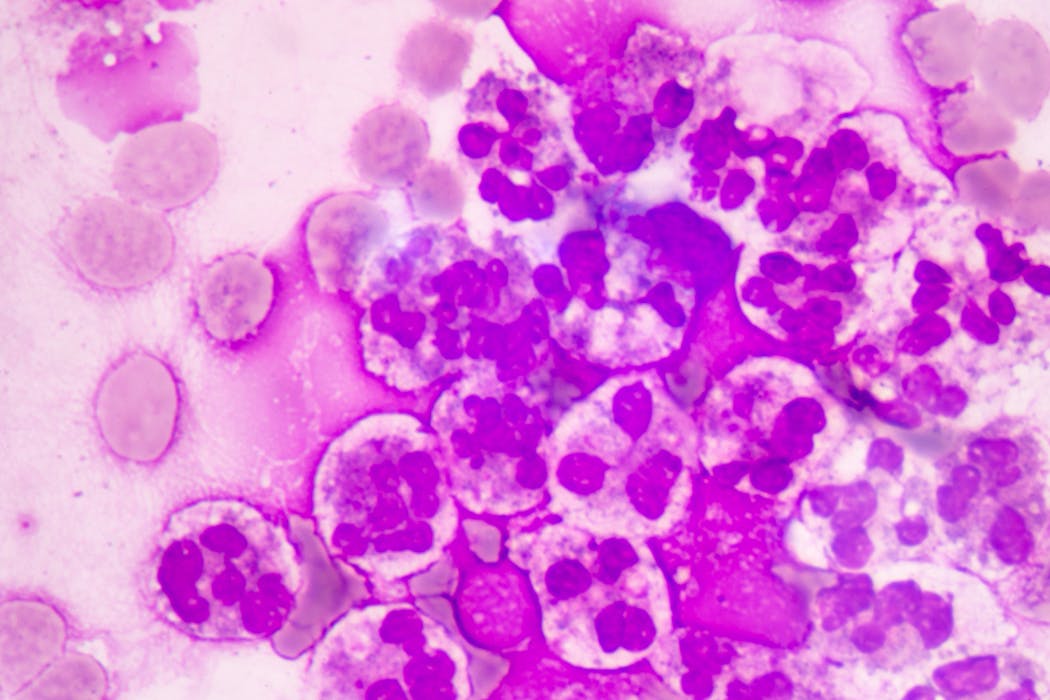
Microscope image of neutrophils, immune cells that respond to infection. Severe infections can trigger sepsis if the body’s inflammatory response becomes uncontrolled. S.Toey/Shutterstock

Sepsis moves fast. A patient can arrive at hospital with what appears to be a routine infection and, within hours, develop organ failure. Survival often depends on how quickly treatment begins.

Across Europe, doctors are seeing increasingly complex cases. Populations are ageing and more people are living with chronic illness. At the same time, antimicrobial resistance, when bacteria no longer respond to antibiotics, is making infections harder to treat. Together, these pressures are reshaping the landscape of sepsis.

Globally, sepsis affects tens of millions of people every year and is linked to an estimated 11 million deaths. In Europe, it remains one of the leading causes of death in hospital. As antibiotics become less reliable, the window for effective treatment narrows.

Older adults are more vulnerable to infection and less able to recover once organs begin to fail. Many also live with conditions such as diabetes, heart disease or kidney disease, which increase the likelihood of complications.

Antimicrobial resistance makes treatment more complicated. When first-line antibiotics fail, doctors may have to switch to broader or more powerful drugs. That process can take time, and delays of even a few hours can affect survival.

Sepsis is often the tipping point. It occurs when infection overwhelms the body’s defences and triggers a damaging inflammatory response. As resistant bacteria become more common, managing sepsis becomes more challenging.

Early treatment saves lives. But speed does not depend only on individual clinicians. It also depends on how well health systems are organised to recognise deterioration and respond quickly.

Why sepsis is hard to diagnose

Unlike a heart attack or stroke, sepsis does not have a single test that confirms it immediately. There is no scan or blood marker that provides a clear yes or no answer in the early stages.

Instead, doctors and nurses rely on patterns. Changes in breathing, blood pressure, heart rate, temperature and blood tests can all signal that something is wrong. But these signs overlap with many other conditions, which makes early recognition difficult, particularly in busy emergency departments or hospital wards.

Because of this uncertainty, hospitals need clear escalation systems that define when staff must call for senior review, when antibiotics should be given and how quickly patients must be reassessed. Hospitals that implement these systems are more likely to avoid dangerous delays. Monitoring how quickly treatment is delivered, and publicly reporting that data, can also reveal where systems are failing.

Guidelines alone are not enough. What matters is whether they are applied consistently and whether performance is measured.

What Europe is doing, and where gaps remain

European countries differ widely in how they organise their response to sepsis.

Switzerland has developed a national action plan linking public awareness, hospital standards and research. France has incorporated sepsis into broader patient safety and infection control strategies that combine training, clinical guidance and surveillance. Sweden has introduced structured treatment pathways across regions, supported by clear indicators to track performance.

What these examples share is coordination. There are defined standards, ways of measuring performance and systems for reviewing outcomes.

In other countries, sepsis is addressed within broader infection or hospital quality programmes without a clearly defined national plan. Protocols may exist, but reporting and accountability are often unclear. As antimicrobial resistance increases and populations age, that gap becomes more significant.

Experience beyond Europe also shows what coordinated systems can achieve. In New York state, hospitals were required to introduce standardised sepsis protocols and report how quickly patients received treatment. Later evaluations found improvements in compliance and reductions in mortality. The lesson was not simply about regulation, but about clarity, transparency and follow-through.

Ireland has introduced several measures aimed at improving sepsis care. The country has a National Clinical Programme for Sepsis, updated clinical guidelines and routine audit in acute hospitals, where the most seriously ill patients are treated. Public awareness campaigns have been launched and staff training is mandatory. A new five-year strategy has also been signalled.

These steps are important. The next challenge is consistency. Are standards applied in the same way across hospitals? Are outcomes tracked and reported in a way that allows trends to be monitored over time? Are sepsis initiatives clearly linked to plans addressing antimicrobial resistance?

These questions are not unique to Ireland. They apply across Europe.

A key moment for sepsis

From July to December 2026, Ireland will hold the rotating presidency of the Council of the European Union. Countries in this role cannot pass laws on their own. But they can shape the agenda and influence which issues receive attention.

Sepsis intersects directly with several major European health priorities, including antimicrobial resistance, cross-border health threats and the resilience of healthcare systems. Raising the profile of sepsis during the presidency would not require immediate legislation. It could encourage shared standards, better data comparison and closer cooperation between member states.

Issues highlighted at European level often influence research funding, policy coordination and political priorities in the years that follow.

Sepsis exposes how well health systems recognise serious illness and respond under pressure. It reflects the growing challenges posed by ageing populations, increasing medical complexity and antibiotic resistance.

Across Europe, efforts to improve sepsis care are already under way. The coming years will determine how well those efforts are coordinated and sustained. Infections will continue to evolve, and so will the pressures on hospitals. The real question is whether health systems are prepared to respond when minutes matter most.

The Conversation

Steven W. Kerrigan does not work for, consult, own shares in or receive funding from any company or organisation that would benefit from this article, and has disclosed no relevant affiliations beyond their academic appointment.

ref. Why sepsis is becoming harder to treat in Europe – https://theconversation.com/why-sepsis-is-becoming-harder-to-treat-in-europe-277293

Hedgehogs can hear high-frequency ultrasound – that knowledge could help save them

Source: The Conversation – UK – By Sophie Lund Rasmussen, Research fellow in Ecology and Conservation, University of Oxford

The hedgehog is one of Europe’s most familiar and well-loved wild mammals. Many people encounter them in gardens, hear their snuffling at dusk, or glimpse their spiny shapes moving through the night.

But sadly, across Europe, hedgehog populations are shrinking rapidly. The European hedgehog is now listed as “near threatened” on the International Union for Conversation of Nature red list for Europe. Understanding why this is happening – and what can realistically be done to halt or reverse it – has become an urgent priority.

My team’s new research shows that hedgehogs can hear high-frequency ultrasound. With this knowledge, it could be possible to design sound-based deterrents that target hedgehogs specifically, without disturbing people or their pets. In theory, ultrasonic signals could warn hedgehogs away from approaching vehicles or keep them clear of dangerous machines in the future.

This is significant because one of the greatest threats to hedgehogs comes from road traffic. Cars are estimated to kill huge numbers of hedgehogs across Europe every year, with some studies suggesting that up to one in three of these animals may die on roads annually.

Hedgehogs are simply not built for modern infrastructure. Their primary defence strategy evolved to escape natural predators that see movement in the dark. They freeze, assess the threat, and then either flee or curl into a tight ball of spines. Against a fast-moving vehicle, this strategy is fatal.

David Attenborough talks about ways to help hedgehogs survive.

Roads also fragment landscapes, making it harder for hedgehogs to find food, mates and new habitats. When this is combined with barriers such as massive fences, intensively managed agriculture and gardens, and widespread use of machinery such as garden strimmers and robotic lawn mowers, it becomes clear that the problem is not hedgehog behaviour. It is the environment humans have created.

Could sound offer a solution?

For years, I kept returning to the same question: could humans somehow warn hedgehogs before danger arrives? Could we deter them from roads and machines in a way that does not disturb people?

To explore that possibility, I had to start with a surprisingly basic question: what can hedgehogs actually hear?

I assembled a multidisciplinary team including experts specialising in imaging, bioacoustics (studying what animals hear), animal behaviour, hedgehog ecology, animal experiments and hedgehog anaesthesia.

Using high-resolution micro-CT scans of a hedgehog that had been put to death at a wildlife rescue centre for welfare reasons, the team built a three-dimensional model of the middle and inner ear.

The model showed that hedgehogs have very small, dense middle-ear bones and a partly fused joint between the eardrum and the first of these bones. This makes the whole chain of bones stiffer, helping it pass very high-pitched sounds efficiently – a hallmark of animals, such as echolocating bats, that can hear ultrasound.

The scans also revealed that hedgehogs have a small stapes (the smallest middle-ear bone that connects the chain of ear bones to the inner ear’s fluid-filled cochlea). A smaller, lighter stapes can vibrate more quickly, enabling it to transmit high-frequency sound waves. The cochlea was also found to be relatively short and compact, enabling it to better process ultrasonic vibrations.

Ultrasound refers to sound frequencies above 20kHz, beyond the upper limit of human hearing. But anatomy alone is not proof. To confirm what hedgehogs could actually hear, we needed direct measurements. But how does one measure hedgehog hearing?

Measuring hedgehog hearing

We tested the hearing of 20 European hedgehogs using Auditory Brainstem Response recordings. Under brief anaesthesia, small electrode needles placed just under the skin of the hedgehogs, measured their brain activity while they were soundly asleep. During this time, we played sounds across a wide range of frequencies and pulses, and if the hedgehogs could hear it, their brain activity would indicate this. They were fit and ready for release back into the wild the night after their tests.

The results were striking. Hedgehogs heard sounds from around 4kHz up to at least 85kHz, with peak sensitivity around 40kHz – well into the ultrasonic range. Hedgehogs can therefore hear sounds that humans, dogs and cats cannot. This could be a game changer for hedgehog conservation.

This would, in theory, make it possible for scientists to use ultrasonic signals to warn hedgehogs away from approaching vehicles or keep them clear of potentially dangerous machines.

Many questions remain though. Which sounds are effective? Do hedgehogs become used to specific noises and start ignoring them? How far do ultrasonic signals travel?

Further research is now needed to design effective and beneficial sound repellents for hedgehogs, but this is a significant step forward. Perhaps the car industry could help fund this important research?


Don’t have time to read about climate change as much as you’d like?

Get a weekly roundup in your inbox instead. Every Wednesday, The Conversation’s environment editor writes Imagine, a short email that goes a little deeper into just one climate issue. Join the 47,000+ readers who’ve subscribed so far.


The Conversation

Sophie Lund Rasmussen does not work for, consult, own shares in or receive funding from any company or organisation that would benefit from this article, and has disclosed no relevant affiliations beyond their academic appointment.

ref. Hedgehogs can hear high-frequency ultrasound – that knowledge could help save them – https://theconversation.com/hedgehogs-can-hear-high-frequency-ultrasound-that-knowledge-could-help-save-them-275255

Who profits from war with Iran? Understanding that will be key to resolving the conflict

Source: The Conversation – UK – By Jagannadha Pawan Tamvada, Professor of Entrepreneurship, Kingston University

When US and Israeli forces launched airstrikes on Iran, the shock waves were felt far beyond the region. As the conflict escalates, understanding who benefits from this crisis might be as important as counting its costs.

The timing could hardly be worse for the UK economy. Official forecasts for GDP growth in 2026 had already been downgraded to 1.1% before a single missile was fired. Predictions that inflation might dip now look optimistic; and expectations of an interest rate cut on March 19 have fallen sharply.

The energy shock is immediate. Tanker traffic in the strait of Hormuz has fallen by around 90%. Qatar, the world’s second largest exporter of liquefied natural gas, halted production indefinitely. Although the UK sources little gas directly from the Gulf, energy markets are global so UK households could see more than £500 added to their annual bills.

Beyond energy, UK stocks have fallen, the pound has come under pressure and the UK government’s £23.6 billion fiscal headroom could erode rapidly.

For defence stocks, however, the picture is different. London-based BAE Systems surged around 6% on the first day of the conflict. And the American defence industry seems determined to quadruple production of some weapons.

Peace benefits ordinary citizens, small businesses, global supply chains and the planet’s climate trajectory. The beneficiaries of war are more concentrated.

One of the most uncomfortable truths about this conflict is that while it inflicts pain on some, it creates windfalls for others. In my co-authored research, we call this the “paradox of incentives”. Determining who benefits is essential to understanding why wars persist long after it may seem rational to stop.

Defence contractors and the arms economy

On Wall Street, defence firms including Lockheed Martin, Northrop Grumman and RTX rose between 4% and 6% on the first day of the strikes. The three firms’ combined shareholder gain on that one day was US$25–30 billion (£18.7-£22.5 billion).

In Israel, Elbit Systems briefly became the country’s most valuable listed company, with its shares up 45% since January. In Europe and the UK, defence stocks surged against a falling FTSE 100.

The rally ‘round the flag effect

Wars may also be good for incumbent politicians in the short term. Before the strikes began, the fallout from the release of the Epstein files was reverberating globally, and piling scrutiny on to many with connections to the White House. Within hours of the first strikes, web searches for the Epstein files collapsed.

But perhaps the most counterintuitive application of the paradox concerns Iran itself. The Islamic Revolutionary Guard Corps (IRGC) controls up to half of Iran’s oil exports. Its engineering arm, Khatam al-Anbiya, has become one of the largest contractors in the country, controlling construction, telecoms, agriculture and energy.

Economic sanctions designed to weaken Tehran have actually entrenched the power structures they were meant to erode. As foreign firms exited and domestic companies struggled, IRGC-linked entities used access to informal trade routes, currency controls and security networks to expand their dominance.

At the same time, according to the World Bank, close to 10 million ordinary Iranians fell into poverty between 2011 and 2020 as the sanctions tightened.

The energy windfall

The oil and gas price shock is already providing a windfall in unexpected places. The US could benefit as Europe’s reliance on American energy exports, accelerated by the Ukraine war, grows even more.

For the Gulf petrostates, the picture is nuanced. Saudi Arabia and the UAE together hold a huge share of the world’s spare production capacity. They face real costs from the conflict, but their exposure to the Hormuz closure is lower than neighbours Kuwait, Qatar and Iraq. Both countries built bypass pipelines specifically to export oil without transitting the Strait.

And for Russia, the war diverts price-sensitive buyers such as India and China away from competing suppliers in the Gulf.

The green transition

Higher oil and gas prices make new fossil fuel extraction more commercially attractive. The same crisis that bolsters the case for renewables also makes fossil fuels more profitable. This could slow the transition by redirecting attention back towards oil and gas.

generic diesel and petrol pumps in a filling station forecourt.
Higher profits from fossil fuels could stall the green transition.
Irene Miller/Shutterstock

In our research, we argue that breaking the paradox of incentives is possible. But it would require the financial interests of powerful actors like those mentioned above to become aligned with solutions. In the context of this conflict, that principle points towards four routes.

The first would be a windfall tax on companies benefiting exceptionally from wars. The UK already has a precedent: its energy profits levy hits oil and gas profits above a set threshold until 2030. Although this levy has come under fire recently, there is a strong case for extending its principles to defence contractors whose share prices and profits surge during conflicts.

For oil-producing nations, a release of emergency stocks coordinated by the International Energy Agency (IEA) could cap price spikes. This happened in 2022 when IEA member countries released 60 million barrels from strategic reserves. The G7 nations have now said they “stand ready” to do this.

On the political side, democratic accountability, independent economic institutions and a free press all narrow the window within which leaders can exploit wartime popularity. These things can’t always be changed from the outside however, and underline the need for robust domestic institutions.

The green transition paradox is perhaps the hardest to address in the short term, but it is also where the fix is clearest. It has been argued that the more dependent economies become on the profits of war through arms exports, fossil fuel revenues or defence procurement, the harder it becomes to divert funding and attention to climate issues.

The solution is not to stop countries defending themselves – but to ensure that the transition to a green and secure energy system proceeds, precisely because of crises like this one.

The costs of this war are already being counted in energy markets. Before long, they will show up in national and household budgets. What makes this crisis particularly hard to resolve is the paradox at its heart: the actors best placed to end it are among those with the most to gain from its continuation.

The Conversation

Jagannadha Pawan Tamvada does not work for, consult, own shares in or receive funding from any company or organisation that would benefit from this article, and has disclosed no relevant affiliations beyond their academic appointment.

ref. Who profits from war with Iran? Understanding that will be key to resolving the conflict – https://theconversation.com/who-profits-from-war-with-iran-understanding-that-will-be-key-to-resolving-the-conflict-277889

Glasgow fire: how treasured buildings influence our sense of belonging and connection

Source: The Conversation – UK – By Sarah Kerr, Lecturer in Archaeology and Radical Humanities, University College Cork

For many Glaswegians, the fire that has destroyed the Union Corner building next to Glasgow Central station is an unsettling reminder of fires that obliterated the city’s famous School of Art, first in 2014 and then again in 2018 while undergoing restoration.

Central Station is the busiest in Scotland with 25 million visitors a year. Even more pass by its grand gated entrance, bordered by a number of Victorian-era buildings like Union Corner. Built in the mid-19th century where Union Street and Gordon Street meet, the building’s famous dome (behind which brightly lit adverts acted as a beacon guiding people to the station beneath) and Victorian façade on Union Street have collapsed.

The fire will have obvious economic consequences for the city, particularly through the loss of businesses caught in and close to the fire. But the emotional effect of the fire will be felt by the city’s residents and visitors, particularly if the building lies in ruins indefinitely.

The value of built heritage and losing a building that is part of the fabric and history of a place extends beyond economic effects to something more emotional. This threat to different communities’ sense of place and cultural identity could be a catalyst for collective action.

A sense of belonging

Our built heritage has a considerable influence upon those who view and experience it. It can generate joy and even improve mental health. It also contributes to our sense of place; that is, our emotional attachment to a landscape such as an urban area. It derives from the character and distinctiveness of a place, which people perceive, in part, through buildings. As the fabric of the city, buildings and their environment act as a stage upon which social and cultural networks are made and reinforced.

Similarly, cultural identity is an implicit feeling emerging from the sense of belonging to a particular culture. It is multi-faceted and dynamic, drawing on the past while remaining permeable to the present. It can be considered a historical reservoir, created from representations of a shared past, amongst numerous other factors.

Continuity of cultural identity may rely on material continuity of the place. These important yet implicit aspects of daily life are affected when changes occur to the built fabric of a landscape, such as the loss of Glasgow’s historic buildings.

Glaswegians have faced this before in recent memory. Directly opposite Union Corner is the ornate C’a d’Oro building, built in 1872 to emulate the grandeur of the original building in Venice. It was destroyed by fire in 1987, rebuilt and reopened just three years later.

A strong desire persists among Glasgow’s citizens to see the Art School (known affectionately as “the Mack”) rebuilt again, but renovation is yet to start thanks to a series of ongoing wrangles. The time lag of restoration in Glasgow is further evident at the Egyptian Halls, a category A-listed building, also on Union Street. It faces an uncertain future after lying empty for 30 years.

Public outcry and support

The sense of place created through built heritage often extends beyond the local community. The National Museum of Brazil in Rio de Janeiro went on fire in 2018, destroying not only the early 19th-century building but nearly all of the artefacts and documents it housed. An immeasurable loss that led to global outcry, it was likened to the burning of the library of Alexandria in 48BC. There were immediate calls for the restoration of the building and it is due to reopen in the next year.

A few months later, in 2019, Notre Dame cathedral in Paris was severely damaged by fire. Just like the Mack in Glasgow, this occurred during restorative works. The emotional connection to the historic building resulted in international outpouring of support, as well as financial aid from donors in 150 countries, which saw €750m (£650m) raised in ten days.

The connection between built heritage and cultural identity was evident in the decision – which was not uncontroversial – to rebuild the cathedral in line with 19th-century ideas of the medieval period. This envisioning dictated the cathedral’s first major restoration in 1844 under architect Eugène Viollet-le-Duc.

Designated a UNESCO (United Nations Educational, Scientific and Cultural Organization) World Heritage Site, it was this version of the 800-year-old building with which most people were familiar and emotionally connected. It was therefore favoured over modern reimaginings or indeed interpretations focusing on other periods of the building’s long existence.


Read more:
Notre-Dame reopens in Paris 5 years after fire – its reconstruction preserves the past and illuminates France’s modern ambitions


The public demand to restore The National Museum of Brazil and Notre Dame was not driven by the economic potential of the heritage assets. Rather, a collective sense of place was profoundly affected, which transformed into action. This is seen on a smaller scale when the climate crisis causes incremental damage to built heritage.

Preservation and conservation are almost constantly called for despite growing acknowledgement that not all built heritage can be saved in the face of the climate crisis. There have been attempts to save structures before they are lost, such as the dismantling and removal of the Cruester Burnt Mound structure, a Bronze-age building on the Shetland island of Bressay, into the local heritage centre.

This collective action can extend from heritage preservation to focus on the cause of the initial problem. Greater awareness about the inevitable loss of late medieval castles in West Cork, Ireland, has instigated climate action among the local community.

This powerful yet unquantifiable sense of place and its connection to cultural identity can be a catalyst for positive action, particularly when supported by those with the power to enact and accelerate change. The full effect of the fire in Glasgow is yet to be realised, but the city’s experience of previous fires has demonstrated that collective action will likely emerge from the ashes.

The Conversation

Sarah Kerr does not work for, consult, own shares in or receive funding from any company or organisation that would benefit from this article, and has disclosed no relevant affiliations beyond their academic appointment.

ref. Glasgow fire: how treasured buildings influence our sense of belonging and connection – https://theconversation.com/glasgow-fire-how-treasured-buildings-influence-our-sense-of-belonging-and-connection-277982

How a grassroots UK campaign sparked a multi-billion-dollar exit from public fossil fuel finance

Source: The Conversation – UK – By Freddie Daley, Research Associate, Centre for Global Political Economy, University of Sussex

In 2021, dozens of governments quietly agreed to stop using public money to finance fossil fuel projects overseas.

Their pledge – now known as the Clean Energy Transition Partnership (CETP) – has helped drive a 78% reduction in public finance for fossil fuel projects among signatory countries.

What makes this especially striking is where the idea came from: a grassroots campaign in the UK initially targeting the government’s export credit agency.

With governments withdrawing from climate commitments, and some administrations – most notably Trump’s – tying them to security and trade deals, international climate cooperation is increasingly fragile. Yet the CETP stands out as a genuine success among a litany of failed international climate initiatives. My new research set out to understand what made it such a success.

Climate policy (and campaigning) is messy

Many assume that international climate commitments emerge from polite diplomatic negotiations, with small changes accumulating over time. The reality is far messier. Domestic and international climate policy is fiercely contested and victories are only ever provisional, with each settlement shaping the terrain for the next battle.

My research, based on interviews with campaigners and policymakers, shows that the partnership came about through a series of political confrontations – “battle-settlement events” in the academic lingo – moments when activists, governments and institutions clashed and new compromises emerged.

The CETP traces back to a UK grassroots campaign from 2017 onwards led by environmental and human rights campaign organisations including Global Witness and Oil Change International, partly inspired by a parallel European push targeting the European Investment Bank over its fossil fuel financing.

Campaigners initially pushed for a full fossil fuel phase out. However, they soon switched to a more strategic target: UK Export Finance (UKEF). They saw this as a more achievable battle that would provoke less resistance from industry and politicians.

UKEF is a government agency that helps UK companies sell goods and services abroad. It provides loans, guarantees or insurance to reduce the financial risk of exporting.

Campaigners built up evidence and pushed parliament to investigate. The resulting 2019 House of Commons committee report found that 96% of UK Export Finance’s energy sector support went to fossil fuel projects, predominantly in low- and middle-income countries, and called for a halt by 2021. Despite these damning findings, Theresa May’s government initially refused to budge.

So campaigners upped the ante. They drew attention to the contradiction between the UK’s climate leadership rhetoric and its public funding of fossil fuel projects linked to conflict and displacement overseas. Former UN secretary-general Ban Ki-moon weighed in to urge the UK to “recalibrate its export finance policy”, while activists from the climate campaign group Extinction Rebellion covered the Treasury in red paint to symbolise its claims the government was complicit in violence and suffering. People I interviewed who were involved at the time said this created “insurmountable pressure” on the government to act.

The Cop spotlight

The announcement in August 2019 that Glasgow would host a major UN climate summit transformed the campaign. The summit, known as Cop26, became an opportunity to both expose the gap between UK climate ambition and its export policy, and to use any domestic win as a launchpad for coordinated international action.

The government felt it too. The then prime minister, Boris Johnson, wanted to use the summit to cement his image as a climate-friendly conservative, and a restructured “Cop Unit” within the Cabinet Office had genuine agency to develop ambitious policy ideas and secure buy-in across government.

Though Cop26 was delayed until 2021 due to COVID, this gave campaigners more time to build internal support and sustain the narrative that the UK government was a “climate hypocrite” in reputable outlets like the Financial Times and The Times. Johnson’s government eventually conceded, announcing a unilateral ban on public finance for overseas fossil fuel projects in December 2020. Given that his government was simultaneously consumed by Brexit and internal power struggles, it was a massive achievement.

Glasgow and beyond

With the UK ban secured, attention turned to getting other countries on board. The Cop Unit used the UK’s diplomatic relationships to convince other governments to make similar commitments at Cop26, pointing to the UK ban as proof of concept.

person holds 'don't cop out' placard
Protesters outside the UN climate summit in Glasgow, November 2021.
Toby Parkes / shutterstock

On the conference floor, campaigners and UK officials played ambitious governments off each other in a spirit of friendly competition. Those I interviewed for my research noted that some countries signed up before fully understanding what was required, causing some delegations to get a shock when they realised.

As the summit closed, 34 countries and five public finance institutions signed the Glasgow Statement on aligning international public finance with climate change goals. Signatories to this statement, which would go on to become the CETP, included major fossil fuel funders like Canada and the US.

Walking the talk

Then came the hard part. Keeping up momentum meant regular meetings with signatories to troubleshoot implementation, while domestically the initiative had to survive an attempt by Liz Truss’s short-lived government to kill it altogether. That threat was repelled, and arguably strengthened the initiative by reinforcing signatories’ commitment.

Implementation remains uneven. Most signatories have ended or curtailed fossil fuel finance, and the CETP has cut between US$11.3 billion (8.4 billion) and US$16.3 billion in annual public finance to fossil fuel production.

But the critical counterpart – scaling up public finance for clean energy – has lagged badly. The CETP’s own data shows clean energy financing actually fell between 2022 and 2023. The US has since exited under Trump and some signatories, including Italy and Switzerland, are still way behind on both stopping fossil finance and scaling up finance for renewables.

Yet the CETP’s impact is real. It has redirected tens of billions away from projects that would have locked in fossil fuel infrastructure for decades, and demonstrated that coordinated civil society pressure can shift both domestic policy and international norms. In a political environment where climate ambition is being systematically dismantled, that matters.

The partnership’s future is uncertain. But its journey – from a small UK campaign targeting export finance to a global coalition of governments – shows that domestic activism can still lead to ambitious and durable policy change.

The Conversation

Freddie Daley does not work for, consult, own shares in or receive funding from any company or organisation that would benefit from this article, and has disclosed no relevant affiliations beyond their academic appointment.

ref. How a grassroots UK campaign sparked a multi-billion-dollar exit from public fossil fuel finance – https://theconversation.com/how-a-grassroots-uk-campaign-sparked-a-multi-billion-dollar-exit-from-public-fossil-fuel-finance-277850

Nine years to diagnosis: the challenge of spotting inflammatory arthritis and the role of first contact physiotherapists

Source: The Conversation – UK – By Sarah Golding, Postgraduate MSK Lecturer, School of Sport, Rehabilitation and Exercise Sciences, University of Essex

Dragana Gordic/Shutterstock

Joint pain is often dismissed as ageing, overuse or a minor injury. But for some people it is the first sign of inflammatory arthritis, a group of immune-driven conditions that can damage joints and other organs if not treated promptly.

Inflammatory arthritis can take years to diagnose and receive treatment, with some forms taking an average of nine years. During that time, persistent inflammation can lead to irreversible joint damage, fatigue and reduced mobility.

Although there is no cure, advances in medication over the past 15 years mean many people can live full and active lives. Outcomes are best when treatment begins quickly, ideally within the first three months, often described as a critical “window of opportunity”.

Inflammatory arthritis is less common than osteoarthritis and is managed in different ways. It occurs when the immune system mistakenly attacks the body’s own tissues, particularly the lining of joints. The exact cause is often unclear.

It can begin at any age, including in childhood, and often starts in the hands and feet. Some forms affect just the spine and pelvis. Other parts of the body such as the skin, eyes, heart and lungs may also be involved. Joints can become swollen, warm and tender, and many people experience morning stiffness that lasts for hours and improves with movement rather than rest.

Early symptoms can be subtle and easy to overlook. Stiffness may be blamed on sleep, swelling on overuse and fatigue on stress or ageing. This can contribute to delays in referral and specialist assessment.

How inflammatory arthritis differs from osteoarthritis

Osteoarthritis is different. It is strongly associated with age and most often affects people from midlife onwards, particularly in the knees, hands and hips. It usually develops gradually and becomes more common with advancing age.

Inflammatory arthritis, by contrast, is driven by the immune system and often causes prolonged morning stiffness, visible swelling and fatigue that do not improve with rest or simple activity. Although osteoarthritis is far more common globally, affecting more than 600 million people, over 18 million people live with rheumatoid arthritis, the most widely recognised form of inflammatory disease.

Despite these differences, early-stage arthritis can be difficult for healthcare professionals to distinguish. Symptoms often overlap, and no single test confirms the diagnosis. Blood tests and imaging can support assessment, but results are not always definitive. Because treatment varies depending on the type of arthritis, accurate and timely diagnosis is essential.

Medications for inflammatory arthritis aim to control the immune response and reduce inflammation. These include steroids, which are generally not suitable for long-term use, and disease-modifying anti-rheumatic drugs (DMARDs). When introduced promptly under specialist care, these treatments can reduce symptoms and slow disease progression. Some people reach remission: inflammation is well controlled and symptoms are minimal or absent. A small proportion are even able to stop medication under specialist supervision.

Treatment for osteoarthritis focuses on managing pain and improving function. There are currently no medications that reverse the condition or target its underlying cause. Paracetamol, anti-inflammatory drugs such as ibuprofen, and steroid injections may help relieve symptoms. Non-drug approaches are important for both inflammatory arthritis and osteoarthritis. These include exercise, walking aids where needed, heat and cold therapies and some complementary approaches. Lifestyle also plays a key role. Maintaining a healthy weight, stopping smoking and staying physically active can all improve outcomes.

Why early assessment matters – and who to see first

Reaching specialist care quickly can make a significant difference. In the UK, new roles in primary care are helping people be assessed sooner. First contact physiotherapists (FCPs) working in GP surgeries can recognise early symptoms of inflammatory arthritis and refer patients to rheumatology specialists to begin appropriate treatment. They assess people with joint and muscle problems, request tests where appropriate and provide advice on treatment and long-term outlook. If specialist care is needed, they arrange referral directly.

First contact physiotherapists have been part of UK primary care for more than a decade. Evidence suggests the role is safe, cost effective and beneficial to patients, with patients reporting high satisfaction and doctors expressing confidence in physiotherapists’ expertise.

Arthritis is a leading cause of pain, stiffness and disability worldwide. For people with inflammatory forms of the disease, delayed recognition remains one of the biggest barriers to effective treatment. Symptoms can resemble more common joint problems, slowing referral to specialist care at the point when treatment would be most effective.

If you notice persistent joint swelling, warmth or morning stiffness that lasts more than an hour or improves with movement, assessment is important. There are UK-based websites that include symptom checkers to help people understand when to seek advice. Many GP surgeries in the UK offer appointments with first contact physiotherapists, which can usually be requested directly.

Joint pain is common and often harmless. But when symptoms persist, involve visible swelling, or do not behave like typical “wear and tear”, they should not be ignored. Prompt assessment and appropriate referral give people the best chance of protecting their joints, preserving mobility and maintaining quality of life.

The Conversation

Sarah Golding does not work for, consult, own shares in or receive funding from any company or organisation that would benefit from this article, and has disclosed no relevant affiliations beyond their academic appointment.

ref. Nine years to diagnosis: the challenge of spotting inflammatory arthritis and the role of first contact physiotherapists – https://theconversation.com/nine-years-to-diagnosis-the-challenge-of-spotting-inflammatory-arthritis-and-the-role-of-first-contact-physiotherapists-276026

How driverless vehicles can be made safer for deaf and hard of hearing people

Source: The Conversation – UK – By Wenge Xu, Senior Lecturer in Human-Computer Interaction, School of Computing, Birmingham City University

Self-driving cars are very much a reality and no longer a vision from science fiction. In the UK, automated vehicles (AVs) such as self-driving shuttles are already being tested on public roads.

Self-driving taxi services are expected to launch in 2026, and the Automated Vehicles Act is scheduled for implementation in 2027. This act establishes the legal groundwork for driverless cars to operate on Britain’s roads.

As these vehicles move from research labs to our streets, one question becomes critical: how will they communicate safely with the people around them? Researchers and designers have proposed installing equipment on the vehicles called external human–machine interfaces. These are designed to help driverless vehicles signal their behaviour to pedestrians and other road users (cyclists, wheelchair users and human drivers).

The driverless vehicles would employ pulsing lights around the vehicle, text displays showing the car’s intentions, and auditory cues that announce forthcoming actions, such as “I’m stopping” or a truck-like reversing sound.

However, much of this research still overlooks people with disabilities, including pedestrians with hearing loss. When accessibility isn’t built in from the start, the resulting designs often fail. So how can this be improved?

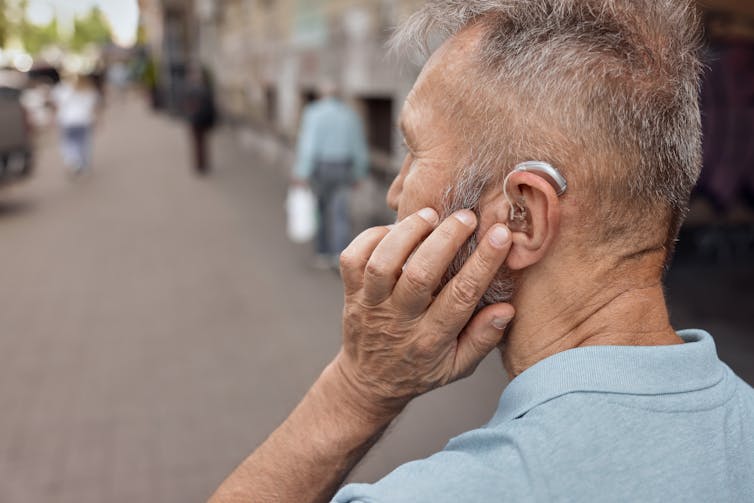
There are many examples of where current driverless vehicles fall short. Text-only displays may appear universal, but they can be less accessible for people whose primary language is sign language. They are also inacessible to blind people. Auditory cues, such as hums or droning sounds, could help the blind, but are difficult or impossible to detect for many people with hearing loss – even those with hearing aids.

Speech-based cues, meant to help people with low vision, can unintentionally introduce new risks. Hearing loss can distort speech, so a message like “I’m stopped” may be heard only as “stop” – completely altering its meaning.

One size fits all

Driverless vehicles are not inherently unsafe for deaf and hard of hearing people – the challenge lies in a design process that assumes a universal, one-size-fits-all approach. Historically, communication interfaces in regular vehicles have been built with an assumed “typical” hearing pedestrian in mind.

When accessibility becomes an afterthought, communication becomes unreliable, and the systems meant to increase safety may end up excluding the people who need them most. Technology alone cannot solve this problem.

Man with hearing aid
Cars could use lights and text to signal their ‘intentions’ to deaf people.
Peakstock / Shutterstock

Only thoughtful, inclusive design can. Our research shows that combining visual (pulsing lights and a text display) and audio (speech) cues can significantly increase trust and support safer decisions for pedestrians in general. But much more development is needed to ensure these communication interfaces are equitable for all people with special needs.

This gap between technological promise and lived experience reflects a broader pattern. Even though the Automated Vehicles Act aims to improve accessibility, most research in this area in this area still neglects people with special needs, including those with hearing loss.

If we want driverless vehicles to create more accessible streets – and not merely introduce new barriers – then people with special needs must be included in research, design and policy from the beginning.

Drawing on a series of user studies, we offer several practical recommendations to guide industry, researchers and policymakers toward a safer, more inclusive driverless car ecosystem.

Manufacturers should include diverse populations in the design and evaluation of their vehicles. We found that pedestrians with hearing loss may experience external human–machine interfaces differently from hearing people. Designers cannot fully anticipate the potential risks unless they inclusively involve user testing groups.

People need to understand not just that a vehicle exists, but what it intends to do. Displaying the vehicle’s “state”, such as “stopped”, and transitions, such as “slowing down”, helps pedestrians accurately judge the situation and feel more assured.

Combining audio and visual cues increases trust, acceptance and perceived safety. No single mode of communication is effective for everyone, but together, they offer back-ups and clarity.

Relying on just one type of visual cue is risky – lights, text or icons can fail in certain conditions. Providing combined visual information helps ensure that if one fails, another still supports pedestrian understanding.

Urban soundscapes can interfere with with audio cues, especially for pedestrians with hearing loss. Studying external human–machine interfaces in realistic environments is essential for ensuring they work when it matters.

Vehicle manufacturers must work with hearing aid and cochlear implant manufacturers to help ensure that audio cues are distinguishable, rather than confusing.

In many cases, barriers to inclusion arise not from technology itself, but from a lack of awareness or consultation. When people with special needs are excluded from design decisions, systems are built on assumptions rather than lived experience.

When they are actively involved, however, we are a step towards an inclusive and equitable future. Driverless vehicles have the potential to make our roads safer for everyone. But that future depends on purposeful, inclusive design choices today.

If developers, policymakers and researchers commit to engaging with deaf and hard of hearing people, along with others, we can help create streets that are safer, more accessible and more equitable for all.

The Conversation

Wenge Xu does not work for, consult, own shares in or receive funding from any company or organisation that would benefit from this article, and has disclosed no relevant affiliations beyond their academic appointment.

ref. How driverless vehicles can be made safer for deaf and hard of hearing people – https://theconversation.com/how-driverless-vehicles-can-be-made-safer-for-deaf-and-hard-of-hearing-people-277648

Women Without Men: a novella that tells the history of Iran through women’s bodies

Source: The Conversation – UK – By Sahar Maranlou, Lecturer in Law and Socio-legal Studies, Royal Holloway, University of London

Women Without Men by Shahrnush Parsipur is an innovative feminist story set in Iran. The story follows five women and the circumstances that make them leave their lives to start anew in a garden on the outskirts of Tehran.

Written in the late 1970s, it was immediately banned on publication. Shortly after, Parsipur was arrested and jailed for her frank and defiant portrayal of women’s sexuality. This groundbreaking book is now available for the first time in English, translated by Faridoun Farrokh.

Set against the backdrop of the 1953 CIA-backed coup in Iran, the story deliberately shifts the lens of history away from the big politics to focus on its impact on intimate, gendered spaces. In doing so, Parsipur frames national upheaval as something lived and inscribed upon women’s bodies and interior lives.

The novel insists that authoritarianism doesn’t begin in the halls of power; it begins in the household within layered patriarchal systems that confine women’s autonomy. Parsipur’s blending of realism and magical elements unsettles conventional narrative authority and mirrors the instability of a society in crisis. The personal and the political are inseparable: women’s silences, desires and acts of refusal become subtle yet radical forms of resistance.

What makes this novel enduring is its refusal to separate the personal from the political. The magical elements are not decorative; they expose emotion that realism alone cannot capture. The garden the women flee to is not an escape from reality, but a feminist space where reality is reimagined.

The novel has sadly taken on an urgency and relevance in the face of the the US and Israel’s war on Iran. It reminds readers that foreign intervention often intensifies internal authoritarianism. By revisiting the legacy of the 1953 coup, the book encourages readers to see today’s crisis not as an isolated eruption. Instead, it is part of a deeper historical continuum, shaped by external intervention and power structures within Iranian society.

Through intimate storytelling, Parsipur invites readers to confront the cultural assumptions that have shaped women’s lives for generations. To read Women Without Men is to enter a layered narrative that is at once poetic, historical and contemporary. It bears to witness how deeply gender norms are embedded in everyday life, and how quietly, yet powerfully, women resist them.

Sexuality

In Women Without Men, virginity is an ideological construct by which a woman’s worth is regulated. Through the characters of Faezeh and Munis, we see how chastity functions as a mechanism of control long before any formal punishment is imposed.

Faezeh embodies internalised patriarchy, believing a woman’s honour depends entirely on social perception and reputation to survive. When she and Munis are sexually assaulted, the violence is overshadowed by shame.

The metaphor “watering the earth”, used by a man to describe sexual penetration, is chilling because it recasts violation as something natural and productive. It depicts a woman as if she were soil to be cultivated, rather than a person with agency.

By framing assault in agricultural terms, patriarchal language erases harm and presents male entitlement as biological inevitability, while placing the burden of “dishonour” on the woman’s body. This symbolic logic mirrors the broader Iranian legal and social framework in which virginity carries material and moral weight, reinforcing the idea that women’s bodies are sites of regulation rather than autonomy.

The Iranian Civil Code of 1931 codified male guardianship and authority in marriage and family matters. In this context, virginity becomes not only a cultural expectation but part of a larger system in which women’s bodies are governed by both family and state.

Zarrinkolah’s narrative offers one of the most unsettling critiques of patriarchal objectification in Women Without Men. Zarrinkolah is a prostitute who begins to see all of her clients as headless men. It is an attempt to “cure” this condition through an act of purification that leads her to abandon prostitution.

Zarrinkolah’s journey isn’t a simple redemption, but a reconfiguration of subjectivity. By shifting from being seen as nothing more than a body to recognising herself as a person with her own thoughts, emotions and agency, she disrupts the cultural logic that renders women’s bodies interchangeable and morally policed. Her withdrawal from prostitution is not a return to purity, but a refusal of the system that defined her solely through male consumption.

The stillness of marriage

Farrokhlaqa’s story reveals the psychological and social confinement of marriage. Her marriage was a “32-year-old habit of not moving”. Patriarchal expectations have infected her, and she has become self-policing. She does not need to be actively restrained; she restrains herself. However, she no longer experiences her lack of freedom as oppression but as natural and inevitable.

Her response to widowhood is not retreat but a shift from passivity to agency. She purchases the garden, transforming inherited wealth into spatial autonomy, creating space for “women without men”. Her liberation is, therefore, negotiated by unlearning the stillness marriage imposed. Through her, Parsipur suggests that domestic patriarchy is sustained not only by law but by cultural perceptions that normalise women’s obedience to husbands.

The garden functions as a feminist counter-public sphere outside patriarchal governance. Within its walls, women work, speak and rest without male supervision. Iranian women’s groups have created similar spaces of solidarity, which were fragile yet transformative. They demonstrated that collective awareness could exist even within repressive conditions before and after the Islamic Revolution.

Parsipur does not allow the garden to become utopia, however. The women do not remain there, most return to Tehran and reenter life. Liberation cannot survive in isolation from society, Parsipur tells us. This narrative choice mirrors Iranian women’s rights history: reforms have emerged through resistance, reversal, and renewed struggle – not through escape.

Women Without Men is not simply a novel about five women seeking refuge in a garden. It is about freedom, embodiment and the struggle for equal dignity. Shahrnush Parsipur gives us women who question, transform, challenge and resist.

This article features references to books that have been included for editorial reasons, and may contain links to bookshop.org. If you click on one of the links and go on to buy something from bookshop.org The Conversation UK may earn a commission.

The Conversation

Sahar Maranlou does not work for, consult, own shares in or receive funding from any company or organisation that would benefit from this article, and has disclosed no relevant affiliations beyond their academic appointment.

ref. Women Without Men: a novella that tells the history of Iran through women’s bodies – https://theconversation.com/women-without-men-a-novella-that-tells-the-history-of-iran-through-womens-bodies-276250

Home secretary says asylum overhaul is rooted in ‘Labour values’ – what are those values?

Source: The Conversation – UK – By Erica Consterdine, Senior Lecturer in Public Policy, Lancaster University

House of Commons/Flickr, CC BY-NC-ND

The home secretary, Shabana Mahmood, says that her plans to overhaul the asylum system are rooted in “Labour values”. The proposals include removing government support for some asylum seekers and limiting initial refugee status from five years to 30 months.

In a Guardian op-ed, Mahmood wrote that these values, uniting working-class communities, social reformers and immigrants are:

First, a belief in fairness: recognising that the dice are loaded against working-class communities. Second, tolerance towards others, that very British desire to live and let live. Third, a quiet but determined patriotism, for a country that is forever changing while something ineffable always endures.

But immigration has long been a topic where Labour’s values clash with one another.

The protectionist roots of the trade union movement saw foreign labour as a threat to undercutting wages and job displacement. Historically, unions adopted a highly restrictive position on immigration. At the same time, the inclusive principles of equality and representation of the working class (of which many racial minorities were part) complicated this picture.

This tension was evident in the postwar period. Labour in office presented a mix of policies including anti-discrimination race relations reforms, along with restrictive immigration legislation such as the 1968 Commonwealth Immigrants Act, which sought to to block entry for Kenyan Asians despite their formal status as UK citizens.

Labour’s dilemma has long been how to defend the working class within a capitalist system. The solution to this intractable problem has always been to dampen class conflict by promoting national unity.

This has meant that patriotism and social reform have gone hand in hand, creating divisions between “deserving” and “non-deserving”. The question of who deserves welfare and support has long been part of border control. The very first immigration act, the 1905 Aliens Act, authorised the deportation of those in receipt of poor relief. Today, the condition of “no recourse to public funds” is placed on most visas.

The government’s newest proposals place a strong emphasis on deservingness through the language of “earning” a right to stay in the UK. They place new conditions on settlement, and require refugees to prove their need for sanctuary again and again.

New Labour

The equation changed dramatically under New Labour. Tony Blair’s government leant into Thatcherite neoliberalism, valuing labour market flexibility as a counter-inflationary measure. Coupled with belief in the benefits of globalisation, the Labour government enacted one of the most expansive economic immigration programmes, historically and comparatively across Europe.

The policy fit with the package of multicultural nationalism New Labour was selling. But this was an economic calculation, not a values-based one. The divisions of deserving and undeserving continued, with a discourse of “bogus” asylum seekers and a regressive policy to match: expanding immigration detention, replacing monetary support with vouchers and reducing appeal rights.

With Ukip beating the anti-migrant drum, the saliency of migration spiked. Many believed the government ultimately lost office partly on the basis of their immigration record.

Enter Blue Labour, a faction that claimed Labour was, at the heart, culturally conservative on many areas including immigration. Ed Miliband, then leader, pivoted towards a fairly logical policy for Labour within this paradigm. This policy framed exploitation as the driver of migrant labour demands, and proposed making it illegal for employers to undercut wages by exploiting workers. However, this approach didn’t cut through to voters, and was troubled by gaffes such as the “controls on immigration” mugs.

Fearing the electoral threat of Ukip, the Conservatives campaigned in 2010 on a pledge to reduce net migration. This pledge became the net migration policy, and a bipartisan consensus was formed to reduce immigration.

Jeremy Corbyn’s policy was, like Miliband’s, truer to Labour values. But it was not necessarily the inclusive picture in practice. Appealing to socialist state management and harking back to postwar consensus, Corbyn advanced the call to move Britain away from a liberal labour market, with less dependence on low-paid migrant labour.


Read more:
Why Jeremy Corbyn can’t seem to solve Labour’s immigration conundrum


Corbyn espoused a rhetoric of multicultural and inclusive politics. But his Euroscepticism was always fuelled by a rejection of neoliberal markets – of which EU mobility, he saw, was contributing. As he explained in 2017, Corbyn was against the “wholesale importation of underpaid workers from central Europe in order to destroy conditions in the construction industry”. Brexit politics dogged Labour and cut across this tension, and the party has struggled to form a coherent policy ever since.

In opposition, Labour’s policy looked potentially promising. Ahead of the 2024 election, Keir Starmer touted plans to look at immigration holistically with labour market policy. Yet since entering office, Labour’s policy and rhetoric has lurched further to the right.

A hand putting a stamp into a passport
Under the government’s proposals, refugees will need to repeatedly prove their need for protection.
AlpakaVideo/Shutterstock

The values of postwar Labour’s protectionism would see the door closed to many, but would enhance rights of those that can come legally and address the structural problems of the UK labour market. Blair’s neoliberal managed migration was designed to take advantage of global wage disparities, but channelled a more positive message on migration.

The new proposals do neither. Mahmood says they are rooted in fairness – but for whom? A policy that pulls the rug from beneath long-term residents and refugees trying to build a life in the UK legally and legitimately is not fair to them. When the home secretary talks of fairness, she appears to only be referring to what the party believes citizens regard as fair, claiming that without stricter migration control, they lose trust in government.

The fallacy of that position is that immigration controls can and do bleed into citizenship regimes. The recent border controls imposed on dual citizens demonstrate this starkly, as does the crackdown on illegal immigration in the US, which has seen citizens detained by Immigration and Customs Enforcement. Perhaps Britons think more regressive policies on migrants are fair, but opinions may change if citizens are affected.

The Conversation

Erica Consterdine does not work for, consult, own shares in or receive funding from any company or organisation that would benefit from this article, and has disclosed no relevant affiliations beyond their academic appointment.

ref. Home secretary says asylum overhaul is rooted in ‘Labour values’ – what are those values? – https://theconversation.com/home-secretary-says-asylum-overhaul-is-rooted-in-labour-values-what-are-those-values-277710