US attacks on Cuban medical missions risk damaging healthcare for poor people in developing countries

Source: The Conversation – UK – By Helen Yaffe, Lecturer in Economic and Social History, University of Glasgow
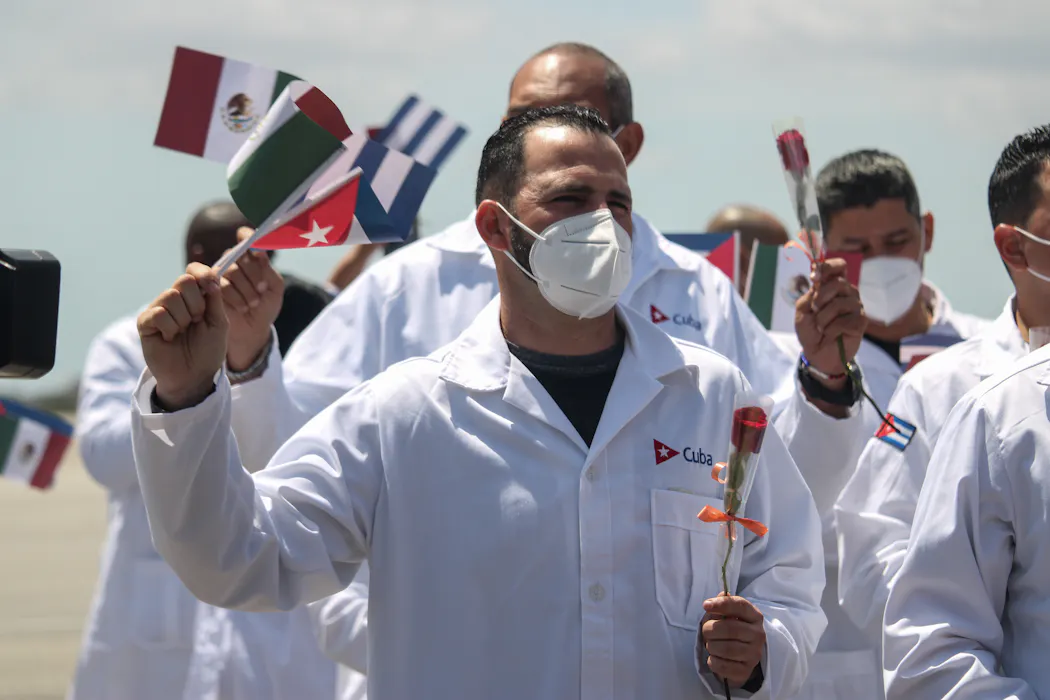
Cuban doctors who worked in Mexico during the height of the COVID pandemic return to Havana. Yandry_kw/Shutterstock

There were tearful scenes in the central American nation of Honduras on February 23, as locals said goodbye to the Cuban healthcare professionals who had been treating them for free for around two years. It came after the Honduran government abruptly ended the Cuban medical mission under pressure from the administration of the US president, Donald Trump.

That same day, a “sensitive” US State Department memo was sent to the secretary of state, Marco Rubio. It discussed the US strategy to sabotage Cuba’s medical internationalism, which has been an integral part of the island nation’s foreign policy since 1960. In recent years it has also become a key pillar of its economy.

The US has imposed unilateral sanctions on Cuba for more than 60 years. These prevent Cuba from engaging in “normal” international trade – for example, third parties cannot sell goods to Cuba if 10% of their components are from US companies or subsidiaries. And Cuba cannot export goods to the US. On top of that, the US blockade severely restricts Cuba’s access to the international financial system.

In this context, the export of medical professionals has become vital to the Cuban economy. For decades the Cuban government sent medical missions around the world as a donation to developing nations. But over the past two decades, it has developed cooperation agreements under which governments or local authorities pay the Cuban government for the medical services of its healthcare professionals.

Attacking that revenue looks to be a key component of the US push for regime change in Cuba by the end of the year. This is alongside the total oil blockade imposed by Trump’s executive order on January 29, which has now caused multiple national blackouts that have left the entire island in the dark.

It is a policy of carrots and sticks. Countries kicking out Cuban medics are offered US support for “infrastructure modernisation” – things like telemedicine and virtual training. A year earlier, Rubio had announced visa restrictions for current and former officials and their families from anywhere in the world who took part in Cuban programmes.

By mid-March this year, neighbouring governments fell into line. Guatemala, Paraguay, the Bahamas, Guyana and Jamaica terminated Cuban medical missions, ending decades of cooperation. In Guatemala, more than 400 Cuban healthcare professionals, most of them doctors, are serving indigenous communities under a three decades-long partnership. The last doctors will leave by the end of the year.

Cuban doctors leaving Honduras in February 2026.

The US government’s attack on Cuban medical internationalism is not new. It began in 2006, the year after the oil-for-doctors programme between Cuba and Venezuela transformed the export of healthcare professionals into Cuba’s greatest revenue source.

US policy sought to eliminate this income and undermine the prestige the programmes earned the island. The then US president, George W Bush, set up the Cuban Medical Professional Parole (CMPP) Program, encouraging Cuban medics abroad to abandon missions and defect to the US. The programme was ended only in 2017, in Barack Obama’s final days as president.

Despite this, and reflecting the deficit in healthcare globally, Cuba’s earnings from the export of healthcare services rose. Revenues in 2018 (the first year Cuba published separate data for health services) were US$6.4 billion (£4.8 billion). Trump’s first administration developed policies, and funding, to sabotage these programmes.

Cuba’s bill of health

It also devised a new justification for doing this. The US government could not openly demand that countries sacrifice the health and wellbeing of their populations just to deny Cuba revenue. So instead, it accused Cuba of human trafficking and equated its healthcare professionals to slaves.

Anyone who has spoken to Cuban participants – as I have – knows the overseas service contracts they sign provide them with their regular Cuban salary, plus extra remuneration from the host country. They are guaranteed holidays and contact with families.

Even with tens of thousands of medical workers overseas, the state’s investment in healthcare and medical training means that the Cuban population has the highest ratio of doctors per person in the world. In 2022, it was said to have nine doctors and nine nurses for every 1,000 citizens. In the US, there are 2.6 doctors per 1,000 citizens and in the UK the figure is 3.2.

For many Cuban healthcare professionals, it signifies the fulfilment of an internationalist duty; for others a way to travel or increase their income. The Cuban government takes the lion’s share of revenues and puts them back into Cuba’s universal free public healthcare provision and medical training.

But under Trump’s second administration, Rubio, the son of Cuban migrants who left the island during the Batista dictatorship, has spearheaded a renewed attack on the island’s international medical programmes. The recent State Department memo stated that Cuban medical brigades were a key source of “hard cash” for the regime.

The four forms of Cuban medical internationalism practices established in the 1960s are:

  1. emergency medical brigades overseas
  2. treatment of foreign patients in Cuba
  3. training foreign students as healthcare professionals, and,
  4. establishment of public healthcare facilities overseas.

This contribution to developing nations has often been ignored or censored. But it translates into millions of lives saved and improved globally every year. Sabotaging medical internationalism would devastate Cuba. But it would also leave millions of people around the world without the vital medical attention that they had previously enjoyed.

The Conversation

Helen Yaffe does not work for, consult, own shares in or receive funding from any company or organisation that would benefit from this article, and has disclosed no relevant affiliations beyond their academic appointment.

ref. US attacks on Cuban medical missions risk damaging healthcare for poor people in developing countries – https://theconversation.com/us-attacks-on-cuban-medical-missions-risk-damaging-healthcare-for-poor-people-in-developing-countries-278748

Why the damage to Qatar’s gas infrastructure could push costs higher for years to come

Source: The Conversation – UK – By Adi Imsirovic, Lecturer in Energy Systems, University of Oxford

Qatar’s Ras Laffan “energy city” was hit by Iranian strikes. PaPicasso/Shutterstock

On March 19, Ras Laffan, the largest liquified natural gas (LNG) terminal in the world, supplying one-fifth of the world’s super-chilled fuel, was hit by Iranian missiles and drones. The Qatari terminal suffered substantial damage in the strikes – fires were raging across the gas-to-liquids facility within the complex, which covers 295 square kilometres – the size of a large city.

Investments worth tens if not hundreds of millions of dollars disappeared into thin air. Damage was estimated to be so extensive that QatarEnergy’s CEO, Saad Sherida al-Kaabi, said the company may have to declare a “force majeure” (non-fulfilment of orders due to circumstances outside their control) on long-term contracts. He said this could affect LNG supplies to Italy, Belgium, Korea and China “for up to five years”.

Similar to oil, gas exports from the Persian Gulf supplied about 20% of world demand. But gas (mostly methane) is a very different fuel from crude oil. To move it in liquified form, methane must be chilled to below -162°C.

But at these temperatures steel becomes brittle and shatters. So storing and transporting LNG in ships is expensive and very energy-intensive. Liquefaction and transportation of methane can easily consume 15% of the initial natural gas extracted.

It also means that the infrastructure that enables a highly flammable and explosive fuel to be handled at these extreme conditions has to be complex and consequently very expensive. Ras Laffan, for example, was built over decades and in several phases, costing tens of billions of dollars.

No quick fix

Interestingly, Qatar’s North Field and Iran’s South Pars gas field are part of the same massive geological structure, separated only by a maritime border in the Persian Gulf. Together, they form the world’s largest natural gas field.

So, Iran and Qatar are essentially exploiting the same gas reservoir the same way two people would use straws to drink from the same bottle. The US president, Donald Trump, now appears to have retreated from his threats to blow up “the entirety” of the Iranian gas field – but this geological fact had always made his comments quite ridiculous.

While Qatar exports most of its production, Iran uses the bulk of its gas domestically (although some exports go via pipeline to Turkey and Iraq).

But the damage to the complex has been done, and it affects some 17% of the country’s LNG infrastructure. Repairing it will take a long time, precisely because of the complexity of LNG projects.

The plant must be warmed up slowly before repairs and cooled down slowly after. Rapid temperature changes can cause pipes to bend or even snap. And parts of the plant are bulky and hard to transport. The main heat exchangers can be more than 50 metres long, and compressors, turbines and liquefaction trains can easily weigh 5,000 metric tonnes. Storage tanks must be built of special alloys with double walls and customised insulation.

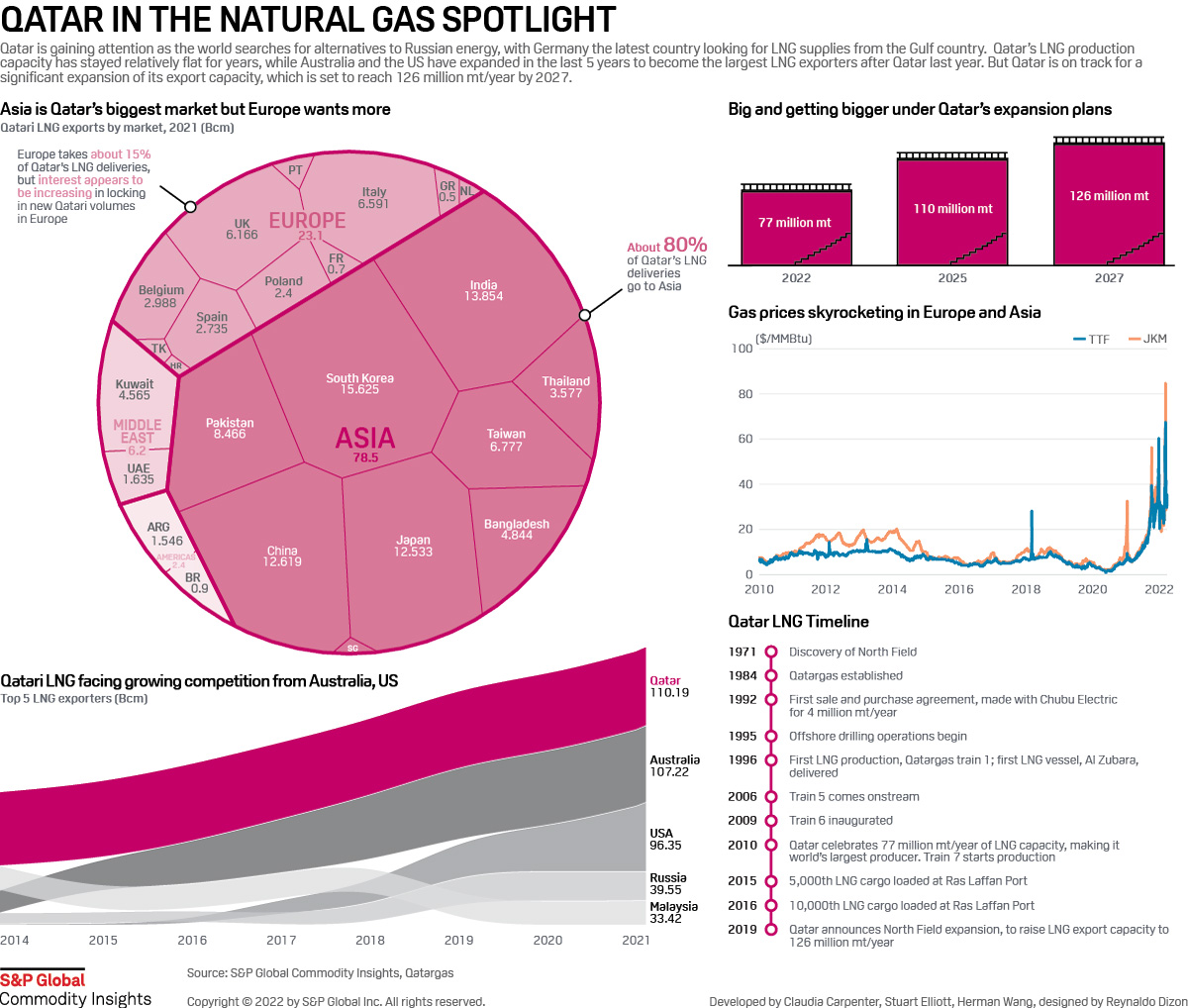
In other words, gas is very different to oil. Recent events have shown just how vulnerable the LNG supplies from the Gulf region are. They are going to affect Asia most, as about three-quarters of Qatar’s LNG ends up there – particularly China, India, Taiwan, South Korea and Pakistan, as well as others.

Most of the rest ends up in Europe – Italy, Belgium, Poland and a small amount to the UK (the UK imported only about 1% of its supply from Qatar last year). The majority of the UK’s imports come from its own UK production in the North Sea and imports from Norway and the US.

However, LNG is a part of the global energy market and the shortfall in production will result in higher prices globally. Gas will end up with the highest bidder, while some nations will probably go back to using coal. This may especially be the case with India, Pakistan, Bangladesh and a few other Asian countries that are very sensitive to high fuel prices.

Some European countries may even see coal as a cheaper option. Following the events in the Gulf, this “spark spread” (the profit margin from gas-fired electricity generation) has fallen, narrowing the gap in Europe with the “dark spread” (profit from generating power using coal).

The benchmark for European gas prices, the Dutch Title Transfer Facility, has more than doubled since mid-January. Coal prices have picked up due to higher demand, but not as much. Unlike oil, the LNG shortage has turned from a logistical problem – the closure of the strait of Hormuz – into a structural one. The damage to the Qatari production facility may take several years to repair. This means that gas prices – already high – are likely to remain elevated for some time.

The Conversation

Adi Imsirovic does not work for, consult, own shares in or receive funding from any company or organisation that would benefit from this article, and has disclosed no relevant affiliations beyond their academic appointment.

ref. Why the damage to Qatar’s gas infrastructure could push costs higher for years to come – https://theconversation.com/why-the-damage-to-qatars-gas-infrastructure-could-push-costs-higher-for-years-to-come-278943

Saturday Night Live UK’s first episode was a ratings success and had some shining moments that prove it can work

Source: The Conversation – UK – By Tom Hemingway, Teaching Fellow in Film and Television Studies, University of Warwick

An air of scepticism greeted the announcement last year that the American sketch comedy show Saturday Night Live (SNL) would get a UK counterpart.

Critics of the news brought up the incompatibility of British and American humour as a major issue, as well as the lack of big-name British comedians who could potentially work on the show. The latter concern seems to misunderstand the fact that the likes of Chevy Chase and Gilda Radner were plucked out of relative obscurity in 1975 to star in the first season of the original US version.

As a scholar in television comedy, I believe the only way SNL UK could work on its own terms is to allow a new crop of British talent to create their own group dynamic and to rely on the original version of the show in format only. Based on the first episode alone, it seems like they have achieved this with ease.

The most interesting thing about the first episode of SNL UK is how it sought to teach UK audiences how SNL typically works and what they can expect. Former US SNL comedian Tina Fey was selected to host the debut episode, effectively acting as a representative for the institution and fuelling further speculation about her potential takeover of the US show when SNL creator and producer, Lorne Michaels, eventually decides to retire.

In her successful opening monologue, Fey explained the show’s format, mentioning its sketch comedy, musical performances and the fact it was a live broadcast where things can go wrong. Fey’s monologue also included three celebrity cameos – another common feature of the show – from British TV stalwart Graham Norton and actors Michael Cera and Nicola Coughlan. Norton’s inclusion was smartly executed, providing UK viewers with a familiar face right at the start of the show.

The back-and-forth between Norton and Fey involved him quizzing her on various aspects of British comedy and culture more broadly. Along the way, Fey performed impressions from Monty Python, Fawlty Towers and Eastenders. Once again, British comedy culture, plus all of the weird stuff which seeps into the collective consciousness (“Nothing beats a Jet 2 holiday”, “What a sad little life, Jane”), was leaned on in the opener.

The sketches also helped teach the viewer how the show works on a moment-to-moment basis. For instance, the camera frequently tracked backwards once a sketch was complete to show the makeshift set, behind-the-scenes crew members and the live studio audience watching.

Wet Leg were the first British band to take the SNL UK stage, performing two songs from their recent album Moisturizer. Like the US version, the sound quality for these performances was somewhat muddled and poorly mixed, but the band’s energy carried them through.

As is often the case with SNL, not everything worked. David Attenborough’s Last Supper sketch ran too long, involving nearly every cast member playing a famous historical figure – ranging from Al Nash’s Winston Churchill to Emma Sidi’s Cilla Black. George Fouracres delivered a rather weak Attenborough impression. However, his version of the prime minister, Keir Starmer, during the political “cold open” (a topical live sketch that begins each episode) was well-received and will no doubt become a permanent fixture on the programme over the next few years.

Fouracres’ weirdest moment came during the 45 Seconds with Fouracres sketch. The sketch began with Fouracres frantically singing “what kind of Irish is your grandad?” direct to camera, followed by him speaking in various, sometimes unintelligible, Irish accents. This was reminiscent of early SNL sketches and was a clear direct descendent of the surreal humour found in Vic Reeves and Bob Mortimer’s Shooting Stars, an often surreal and absurd British panel show from the 1990s. As the show continues and grows in confidence, pushing further in this direction would be welcome.

Along with Fouracres, Jack Shep (with his lip-biting Princess Di) and Hammed Animashaun made the biggest impressions, appearing in nearly every sketch.

Other highlights included the very first Weekend Update segment with Ania Magliano and Paddy Young. Update is the longest-running recurring sketch in SNL history and comments on current news events with cast members playing the role of news anchors. The first UK version featured a prop joke about helium shortages due to the conflict around the strait of Hormuz which was so well executed, I won’t ruin it here.

It also can’t be overstated how much difference a few swear words can make. It’s common knowledge in comedy that a carefully timed “fuck” can double your laughs. In the case of this week’s episode, the same could be said for a carefully timed “cunt”. Due to a more relaxed approach to late-night programming, this is one of the major ways in which the UK version can differentiate itself from its occasionally tame US forebear. It will be interesting to see just how far this can be pushed in future episodes.

The first episode reached 226,000 viewers in its 10pm slot on Sky One, a number which is likely to increase as people watch on catch-up services later in the week. Sky One received a bigger audience share than Channel 4 in the same timeslot, which is a resounding success for a programme broadcast on a subscription-based television service. Time will tell whether this initial curiosity will sustain into longer-term engagement and enthusiasm. But for now, the stars and writers can rest easy knowing that the first episode exceeded all expectations and has the potential to begin a new era in British comedy. See you on Saturday night.

The Conversation

Tom Hemingway does not work for, consult, own shares in or receive funding from any company or organisation that would benefit from this article, and has disclosed no relevant affiliations beyond their academic appointment.

ref. Saturday Night Live UK’s first episode was a ratings success and had some shining moments that prove it can work – https://theconversation.com/saturday-night-live-uks-first-episode-was-a-ratings-success-and-had-some-shining-moments-that-prove-it-can-work-279021

Einstein’s theories fuel the drama in Project Hail Mary

Source: The Conversation – UK – By Ed Macaulay, Lecturer in Physics and Data Science, Queen Mary University of London

The science fiction film Project Hail Mary brilliantly uses authentic science to underscore the human drama and narrative tension of the story.

Based on the novel by Andy Weir, the story revolves around an effort to save the Earth – threatened by an alien organism that is consuming the Sun. By combining real science, compelling characters and a gripping narrative, the filmmakers have crafted a science fiction odyssey that might just inspire a whole new generation of scientists.

The story begins with the main protagonist, Ryland Grace (Ryan Gosling), waking from a coma in a sealed lab with no windows. Affected by amnesia, the novel describes how he nevertheless applies his knowledge of high-school physics to deduce that gravity in the lab is 50% greater than on the surface of the Earth. He concludes that he must either be in a constantly accelerating spaceship, or on the surface of another planet.

This opening scene perfectly illustrates a concept that Einstein described in 1907 as his “happiest thought”. Einstein realised that while a person is in perfect free-fall, they don’t directly experience the effects of gravity themselves. This is the state of weightlessness experienced by astronauts in orbit – in a perpetual state of free-fall about the Earth.

By the same token, Einstein realised that this inertial experience of acceleration is also perfectly equivalent to the force of gravity. As Grace discovers, there’s no way to distinguish the two. This principle of equivalence was the essential insight that Einstein needed to describe gravity as the effects of warped space-time in his general theory of relativity.

Grace soon discovers that, not only is his increased sensation of gravity due to the constant acceleration of the spacecraft Hail Mary, he’s rapidly approaching the vicinity of the star Tau Ceti, some 11.9 light-years from Earth. To date, the fastest that humans have ever travelled was on the Apollo 10 mission, which reached nearly 25,000 miles per hour – or about seven miles per second.

That may sound fast, but at that speed, it would take about 320,000 years to reach Tau Ceti. But Grace nevertheless finds himself there well within the course of a human lifetime. To understand how, we have to turn to some of the most fascinating results from Einstein’s theory of relativity.

A famous equation

A capable sports car might accelerate from 0 to 60mph in a time of 2.7 seconds. This is the same rate at which an object falls to the ground due to the effects of Earth’s gravity: 1g of acceleration. The 1.5g of the Hail Mary spacecraft corresponds to a 0-60mph time of 1.8 seconds; clearly rapid, but a comparable rate to a modern hypercar.

Official trailer for Project Hail Mary.

The difference is that even the highest performance cars can maintain that acceleration for only a few seconds. The Hail Mary accelerates at that rate for eight and a half months, reaching a maximum speed of 92% of the speed of light, or about 165,000 miles per second; about 25,000 times faster than Apollo 10. So how could the Hail Mary sustain this acceleration for so long?

The answer lies in Einstein’s most famous equation: E=mc². The Hail Mary is fuelled with huge tanks of astrophage – the fictional microorganisms in the story that feed off the Sun and can convert matter to pure energy. The astrophage provides the continuous thrust required to reach almost the speed of light. But it takes light itself 11.9 years to reach Tau Ceti, so even at 92% of the speed of light, how could Grace experience the journey in less than half that time?

The ultimate speed limit

Relativity is clear that nothing can travel faster than the speed of light. At a constant speed of 92% of the speed of light, it would take the Hail Mary 12.9 years to reach Tau Ceti. However, one of the essential principles of relativity is that the speed of light is an absolute constant for all observers.

To keep the speed of light constant for all observers, Einstein realised that our intuitive expectations about time and space would have to be modified at relativistic speeds. To put it another way, some very weird stuff happens when travelling close to the speed of light.

If we assume that the Hail Mary is 40 metres long, an observer watching the ship fly by at 92% of the speed of light would observe the ship to be less than 16 metres in length. If we assume that Ryland Grace is the same height as his onscreen counterpart Ryan Gosling, he would appear to an external observer to be only 72 cm tall.

However, one of Einstein’s key insights from relativity is that anyone moving at a perfectly constant speed can consider themselves at rest, and everything else in the universe as moving towards them. If Grace is flying towards the distant star with a constant speed of 92% the speed of light, we can equally say that the Hail Mary is at rest, and that Tau Ceti is approaching the ship at close to light speed.

This can play with our perceptions. From the perspective of an external observer, at 92% the speed of light, the Hail Mary would appear to be length contracted by a factor of 2.55, but from the perspective of the Hail Mary, the ship is still its original length, and all other distances in the same direction appear to be contracted by this same amount.

Whereas the “rest-frame” distance to Tau Ceti remains 11.9 light-years, from the perspective of the Hail Mary, the distance is less than 4.7 light-years. At a constant speed of 92% the speed of light, the Hail Mary would arrive in about five years. This doesn’t mean that Tau Ceti is physically closer – only that from Grace’s point of view the distance is contracted. An observer tracking the mission back on Earth would still find that the journey took 12.9 years. While everyone would agree on the speed of the Hail Mary, the time and distance involved depend on the point of view of the observer.

By embracing the genuine principles of relativity, the filmmakers have crafted a science fiction masterpiece with a foundation in authentic physics. Far from detracting from the story, Weir’s masterful skill of weaving real science together with a riveting plot helps to underscore the emotional stakes of the narrative.

Science fiction is one of the few avenues through which concepts from relativity and astrophysics enter the mainstream public discourse. By brilliantly engaging with these concepts as part of such a compelling story, Project Hail Mary may just inspire a whole new generation to study these subjects, and perhaps even make new discoveries of their own.

The Conversation

Ed Macaulay does not work for, consult, own shares in or receive funding from any company or organisation that would benefit from this article, and has disclosed no relevant affiliations beyond their academic appointment.

ref. Einstein’s theories fuel the drama in Project Hail Mary – https://theconversation.com/einsteins-theories-fuel-the-drama-in-project-hail-mary-278470

Testing newborns for spinal muscular atrophy – screening programme begins in Scotland

Source: The Conversation – UK – By Lyndsay Murray, Senior Lecturer, Anatomy, University of Edinburgh

Juan Carlos Alonso Lopez/Shutterstock.com

Scotland has become the first UK nation to screen all newborn babies for spinal muscular atrophy. Here is what you need to know.

What is spinal muscular atrophy and how does it affect babies?

Spinal muscular atrophy is a motor neurone disease that starts during infancy. There are different types of SMA, which vary in how severely they affect the child. The most severe type of SMA is, sadly, the most common. Untreated, babies with the most severe types of SMA would not be expected to live to their second birthday.

The disease happens because the body can’t make enough of a protein needed to keep the nerves that control muscles alive. As these nerve cells are lost, muscles become weak, making it hard for babies or children to move, swallow or breathe.

How common is SMA in the UK, and why is it considered a serious condition?

SMA is classed as a “rare” condition. However, for a rare condition, it is quite common. It affects around one in 14,000 births in the UK each year. Each month, around four babies with SMA are born in the UK. It is considered serious as, untreated, babies and children would die or experience serious lifelong disability.

What is the heel prick test?

The heel prick test (also called a “blood spot test”) is already routinely performed on babies born in the UK. During this test, a small sample of blood is taken and it is used to screen for a variety of genetic diseases.

If SMA is caught at birth, can it be cured?

There is no cure for SMA, but there are treatments that aim to fix the underlying genetic problem. The treatments for SMA are much more effective when given as early as possible. When treatment is delayed, it can still be beneficial. However, children may still have difficulty standing or walking, and experience lifelong difficulties with basic functions such as breathing and eating. However, with early treatment, any remaining difficulties are likely to be milder.

Little Mix singer Jesy Nelson campaigned for the introduction of the test.
Featureflash Photo Agency/Shutterstock.com

How could adding SMA to routine newborn screening change children’s lives?

The ability to detect SMA in newborns means diagnosis can happen before symptoms appear. Without screening, it may take months to reach a diagnosis.

With screening, SMA can be identified within the first week of life, allowing treatment to begin soon after. If therapy is started early enough, some children may never develop obvious symptoms and can reach milestones such as sitting, crawling and walking at the same pace as their peers.

The early window matters because motor neurons – the nerve cells that control muscle movement – are rapidly lost in SMA and cannot be replaced. Starting treatment as soon as possible helps preserve these cells, slowing or even halting disease progression. The more motor neurons that remain, the better the outcome for the child.

Have other countries implemented SMA screening?

Yes. For instance, the first state in the US started screening for SMA in 2017. All 50 states in the US were screening for SMA by 2024, as were most European countries. There is a huge body of evidence that earlier treatment leads to better outcomes.

How has medical progress changed life expectancy and quality of life for children with SMA?

Medical progress has revolutionised life for people with SMA and their families. In the past, a diagnosis of SMA usually meant a very short life expectancy, or lifelong profound disability, with a high reliance on caregivers for even the most basic bodily functions.

Treatments for SMA have given huge hope to the SMA community. The treatments have the capacity to stop the progression of the disease, allowing many children who would previously not have survived to live longer, and preventing further decline in muscle strength for those living with the disease.

Could this lead to screening for more rare genetic conditions in newborns?

SMA has been added to newborn screening because effective treatments are now available. The technology behind these treatments could also be adapted to tackle other genetic conditions in the future. There is a great deal to learn from progress in SMA, from how these therapies were developed to how screening programmes were successfully introduced.

The Conversation

Lyndsay Murray receives funding from Cure SMA, the SMA Foundation, Muscular Dystrophy UK, Motor Neuron Disease Scotland and the Anatomical Society.

ref. Testing newborns for spinal muscular atrophy – screening programme begins in Scotland – https://theconversation.com/testing-newborns-for-spinal-muscular-atrophy-screening-programme-begins-in-scotland-279005

Your voice, your typing, your sleep – what workplace wellbeing apps are really analysing

Source: The Conversation – UK – By Mohammad Hossein Amirhosseini, Associate Professor, Computer Science and Digital Technologies, University of East London

dotshock/Shutterstock.com

A workplace wellbeing app might seem like a simple and helpful tool – a mood check-in, some stress management advice, or a chatbot asking how your week has gone. But behind that supportive language, some systems are also quietly analysing your voice, writing style and digital behaviour for signs of psychological distress.

These tools are already on the market – aimed at workplaces, universities and healthcare. They are framed as early-intervention systems that promise to cut costs and identify problems before they become serious. Unfortunately, companies are under no obligation to report using them, so data about how widespread they are is lacking.

The basic idea behind these tools is that behaviour leaves patterns. Artificial intelligence (AI) systems trained on large datasets learn to recognise signals associated with particular mental health conditions, and when similar signals appear in new data, the system produces a probability estimate.

For many people, the surprising part is how much ordinary behaviour can reveal. Voice recordings can pick up changes in rhythm, pitch and hesitation. Language models can analyse word choice and emotional tone. Smartphone data has also been explored as a way of tracking changes in sleep, movement and social interaction – all without the person doing anything out of the ordinary.

But detecting a statistical signal is very different from identifying a genuine problem. Human behaviour is deeply contextual. Someone may speak slowly because they are tired, nervous or communicating in a second language. Reduced online activity might simply reflect a busy week.

Even well-designed systems will make mistakes. A person who is genuinely struggling may not show the behavioural patterns the system was trained to recognise, while someone else may be incorrectly flagged as being in distress.

The pressure to develop these tools is real. The World Health Organization estimates that depression and anxiety cost the global economy US$1 trillion (£800 million) a year in lost productivity. Universities report rising demand for counselling, and employers are dealing with burnout and stress-related absence. Automated early-warning systems can seem like an attractive answer.

A tired employee sleeping at his desk.
Employers are dealing with burnout.
PeopleImages/Shutterstock.com

When wellbeing becomes surveillance

But this technology can change something fundamental about how mental health is understood. Traditionally, mental health is assessed through conversations between a person and a therapist, where context matters enormously. These systems work differently, inferring psychological states from behavioural traces that were never intended to communicate emotional information.

Once those inferences are made, they can influence decisions well beyond healthcare. Assessments of someone’s emotional state could shape workplace programmes, student support systems or insurance models, affecting how institutions judge a person’s reliability or suitability for a role. In effect, psychological states become a new kind of data.

There are particular risks for some groups. Neurodivergent people often communicate in ways that differ from the norms assumed by many datasets. Someone speaking in a second language may pause more frequently, producing speech patterns an algorithm could misinterpret. A person going through grief or illness may display signals that resemble those associated with mental health conditions – without actually having one.

Used carefully by healthcare professionals, these tools could have genuine value – helping therapists spot early warning signs of deteriorating mental health. But the same capability looks very different when deployed across a workplace or university without people’s knowledge.

At a minimum, people should know when these tools are being used, what data is being analysed and whether the system has been independently tested. A claim that software can detect distress is not, on its own, enough.

The Conversation

Mohammad Hossein Amirhosseini does not work for, consult, own shares in or receive funding from any company or organisation that would benefit from this article, and has disclosed no relevant affiliations beyond their academic appointment.

ref. Your voice, your typing, your sleep – what workplace wellbeing apps are really analysing – https://theconversation.com/your-voice-your-typing-your-sleep-what-workplace-wellbeing-apps-are-really-analysing-277692

Will ending short prison sentences fix prison overcrowding? What an expert thinks

Source: The Conversation – UK – By Jake Phillips, Associate professor, University of Cambridge

AnnaStills/Shutterstock

The UK’s latest law on sentencing came into force on March 22. Among other changes, the new law means that, in England and Wales, people who would previously have been sent to prison for short sentences will instead serve those sentences in the community.

This means they will need to attend appointments with probation, do certain rehabilitative activities and may also be restricted from doing certain things or going to certain areas. They might also be required to do a set number of hours of community service.

The new law requires courts to avoid imposing custodial sentences of less than 12 months, except in exceptional circumstances. It also extends the maximum sentence that can be suspended from two years to three. This gives judges discretion to suspend sentences for more serious offences that would previously have required immediate custody.

Possession with intent to supply class A drugs (where a guilty plea can reduce a starting-point sentence to three years); street robbery; the most serious forms of controlling and coercive behaviour; and a third conviction for domestic burglary could now all, in theory, be suspended.

At the end of 2025, there were around 3,500 people serving a prison sentence of less than 12 months in England and Wales. Around 44% of all prison sentences are shorter than 12 months. They tend to be imposed for offences such as shoplifting, common assault or breaches of restraining orders.

People given short sentences have the highest reoffending rates when compared to other sentences. Evidence from Scotland, where a similar legal approach has been in place since 2019, has found that people released from a short sentence are reconvicted nearly twice as often as those sentenced to serve a community sentence.

Short sentences mean that people lose access to families, employment and housing, but they do not allow prisons enough time to provide the support that people need prior to release. As such, they account for more than half of all recalls to prison following release, and have contributed to increases in the prison population in recent years.

People serving short sentences typically have acute and unaddressed needs, such as housing instability, substance misuse and mental health concerns. And evidence shows that people sentenced for similar offences are more likely to offend after a short prison sentence than if they had been given a community sanction.

The changes are intended to alleviate pressure on the prison estate by reducing the number of people given immediate custody. Prisons in England and Wales have been working at capacity for years.

These new powers should also prevent the need for emergency early release schemes, which have failed in the past. Both Conservative and Labour governments have introduced emergency early release schemes in recent years. Under a scheme run by the previous Conservative government from 2023-24, 42% of people released were recalled to custody. This was partly due to an inability to plan for their release, and a shortage of support services such as accommodation.

We do not yet have recall data for the scheme introduced by the Labour government in 2024, which allows people to be released 40% of the way through their sentence. But overall recall rates have remained high.

With the new law in force, we should see a relatively quick decline in the number of people sentenced to custody. A steady reduction in the prison population should follow.

It is also worth highlighting that expanding the use of community sanctions can backfire, resulting instead in unintended net-widening: more people drawn into the penal system overall, rather than just reducing the number of people in prison. This could happen if judges begin to give more suspended sentences to those who would otherwise have been given a fine or community order. They may also sentence people to longer in prison to avoid the requirement to suspend the sentence – what criminologists call up-tariffing.


Read more:
How a doubling of sentence lengths helped pack England’s prisons to the rafters


Although broadly positive, these changes are not necessarily a silver bullet for the well-documented prisons crisis. For one thing, the reforms will result in more work for the probation service, which is already under pressure. In recent inspection reports, the probation inspectorate has described the service as having “too few staff, with too little experience and training, managing too many cases”.

Introducing more people with higher risk profiles into probation narrows the margin for error considerably. The service has been planning for these changes – by reducing the extent to which people at the end of their sentences are supervised – but how well it copes with these increased numbers remains to be seen.

If probation fails to cope, we may see more people breaching their orders. When this happens, their custodial sanction is activated, and they are swiftly put in custody to serve their sentence.

The effect on crime

There is also the question of whether the act will affect crime levels, which have been decreasing in recent decades. Criminological evidence has repeatedly shown that changing the seriousness of a punishment does not deter people from offending. What is much more important is the perception of whether one is likely to be caught, and the speed with which one might be punished.

In reality, most people who are about to commit an offence – especially those for which shorter custodial sentences are imposed – are not thinking about what sentence they may or may not receive at some undetermined point in the future.

Sentencing severity is a blunt tool for dealing with crime, especially given the complex reasons behind why people offend. The impact on crime will depend on other parts of the criminal justice system. Police performance, court backlogs and the nature of high-volume offending such as shoplifting and online fraud will all have much more immediate effects on crime levels than tinkering around the edges of sentencing.

Short sentences achieve very little beyond disrupting peoples’ lives and relationships and making it more difficult to find housing and employment, both of which are strongly correlated with re-offending rates. If probation copes with the additional workload, if recall rates do not skyrocket, and judges and magistrates stick to the ask, then the reforms could result in a more sustainable prison system that causes less harm than it currently does – that should be better for everyone.

The Conversation

Jake Phillips does not work for, consult, own shares in or receive funding from any company or organisation that would benefit from this article, and has disclosed no relevant affiliations beyond their academic appointment.

ref. Will ending short prison sentences fix prison overcrowding? What an expert thinks – https://theconversation.com/will-ending-short-prison-sentences-fix-prison-overcrowding-what-an-expert-thinks-278927

Why ‘deaths of despair’ are higher in former coal mining communities

Source: The Conversation – UK – By Christopher Saville, Clinical Senior Lecturer, School of Psychology and Sport Science, Bangor University

Life expectancy in the UK has risen dramatically since the Industrial Revolution. For more than a century, people lived increasingly long and healthy lives. But around the turn of the millennium, that progress began to slow.

In 2015, economists Anne Case and Angus Deaton published a landmark study showing something unexpected. From the late 1990s onwards, death rates among middle-aged white Americans without university degrees had started to rise. Three causes of death were driving the trend: suicide, drug overdoses and alcohol-related disease. Case and Deaton called these “deaths of despair” and they have been a topic of research in public health ever since.

Although deaths of despair were originally thought to be a specifically American problem, researchers have been concerned that similar patterns exist elsewhere. New research from my colleague Eurwen Williams and myself suggests they do. And in England and Wales, they are particularly common in one type of place: former coal mining communities.

Coal once powered the UK’s economy. At its peak in 1920, the industry employed more than 5% of the entire UK workforce. Mining shaped towns and villages across England, Wales and Scotland. Work was hard, but it provided stable employment and strong communities. That began to change in the late 20th century.

Competition from imported coal, the shift to oil and gas, and political conflict between miners and government accelerated the industry’s decline. The confrontation reached its peak during the 1984 to 1985 miners’ strike against the government of Margaret Thatcher.

Within a generation, most mines had closed. For many coalfield communities, the economic shock was profound. Jobs disappeared. Local economies struggled to recover. And many areas have never fully recovered. We wanted to understand whether this long economic transition has left a lasting mark on public health.

For our study we examined whether deaths of despair are more common in former coal mining areas than elsewhere. To do this, we linked death registration data from the Office for National Statistics with historical records of coal mines and the dates they closed. This allowed us to compare mortality rates between areas with a history of coal mining and those without.

We analysed deaths between 2015 and 2023 and looked specifically at three causes – suicide, alcohol-related deaths and drug poisoning. What we found was striking.

Across England and Wales, deaths of despair were consistently higher in communities that once relied on coal mining. Alcohol-related deaths were particularly elevated. In some coalfield areas, they were between 27% and 52% higher than in places without a mining history.

Drug poisoning deaths were also much more common, running 23% to 53% higher than elsewhere. While suicide rates were higher too, the difference was smaller, roughly 7% to 19% higher. Perhaps most striking was the fact that these patterns appeared even in places where coal mining ended more than 50 years ago.

More than just poverty

At first glance, it may seem obvious why this happens. Former coalfield areas tend to be poorer than other parts of the country. Poverty is closely linked to poorer health.

But when we adjusted our analysis to account for differences in deprivation, something interesting happened. The gaps became smaller but they didn’t disappear.

Former coal mining communities still had significantly higher rates of alcohol-related deaths and drug poisoning. Suicide rates also remained elevated in areas where mines closed more recently. In other words, poverty alone cannot explain the pattern. Something deeper appears to be at work.

The legacy of industrial decline can shape communities in ways that standard economic measures struggle to capture. The loss of stable employment, the weakening of social institutions and long-term uncertainty about the future can all leave lasting effects. These pressures may contribute to the kinds of distress that lead to deaths of despair.

A wider pattern of health inquality

Our findings fit with a growing body of research on health in former coalfield communities. Previous studies have found higher rates of mental health problems in these areas. Others have identified other public health issues, including greater use of anabolic steroids and lower uptake of COVID-19 vaccines.

Taken together, these studies suggest the effects of deindustrialisation can persist for decades. Coal may be gone, but the consequences remain.

The decline of coal is one of the clearest examples in modern Britain of how economic transitions can reshape communities. It shows how the effects of industrial change can outlive the industries themselves.

Many economists believe the world may be entering another major economic shift. Advances in artificial intelligence are already beginning to reshape parts of the labour market.

History suggests these transitions need to be managed carefully. For decades, the UK has often relied on markets to absorb economic shocks, with limited industrial strategy to support the places most affected. But our findings highlight what can happen when communities face large economic changes without timely support.

The story of Britain’s coalfields is not just about the past. It is a reminder that economic transitions leave deep marks on people and places. And if we want to avoid repeating those mistakes, we need to learn from them.

The Conversation

Christopher Saville has received funding from the British Academy, for work on coalfield health.

ref. Why ‘deaths of despair’ are higher in former coal mining communities – https://theconversation.com/why-deaths-of-despair-are-higher-in-former-coal-mining-communities-278173

Dusking is a trend aimed at helping people switch off at the end of the day. How does it work?

Source: The Conversation – UK – By Jenny Hall, Associate Professor in Tourism and Events, York St John University

Ramon Martinez/Shutterstock

At the end of the day, as the sky begins to darken, many people instinctively retreat indoors, turn on the lights and miss the arrival of dusk.

A small but growing movement suggests people can benefit from doing the opposite: stepping outside and observing the slow transition from day to night. This practice, often described as “dusking”, involves watching the light start to disappear, noticing the changing colours of the sky, the emergence of evening sounds, and the quiet rhythms that mark the close of the day.

This practice is rooted in historical traditions found in places as diverse as the Netherlands and parts of Africa. The idea has recently been revived by artist Lucy Wright and by Dutch poet Marjolijn van Heemstra among others.

Wright performs a style of Morris dance that encourages participants “to dance the old sun down”, drawing attention to the moment when daylight fades.

Van Heemstra describes dusking as taking time to simply watch the sunset and the gradual fading of light as a way of reconnecting with natural rhythms. In a world dominated by relentless digital stimulation, she believes that taking time to look at the sky can help restore awareness of our surroundings. She now organises regular dusking events across the Netherlands. “All you need is a chair and a view,” she said.

Across cultures, dusk marks the shift from activity to rest, from work to home, and from light to darkness; a boundary where social rhythms change. These in-between moments can invite reflection on the environment.

Across many cultures, dusk has also been associated with uncertainty and imagination. The fading of light has long been linked to folklore, ghost stories and childhood fears of the dark, moments when the familiar landscape becomes slightly unfamiliar.

When the sun goes down

Dusk also marks a particular point in the daily rhythm of the natural world. Many species become active during this transitional period, including bats leaving their roosts to hunt, while moths and other nocturnal insects begin to fly, and mammals such as deer, foxes, and hedgehogs emerge to forage. Biologists often study dawn and dusk because animal behaviour shifts notably during these times of the day.

The idea behind dusking aligns with studies indicating that briefly focusing on natural surroundings can enhance wellbeing and relaxation. Simply observing changes in light, sound, and atmosphere may also encourage a shift from the constant hustle of the work day to winding down, potentially moving people towards sleep.

Music inspired by the dusking movement.

Sounds of twilight

In our research, carried out in the North York Moors National Park, participants said that while walking at twilight, or in darkness, they became more aware of natural smells and sounds. The group noticed the transitions from daytime birdsong, with the robin last to tweet, to nighttime animal sounds and the hoot of an owl. These moments frequently produced quiet reflection.

In the last century, the places where people can experience darkness have reduced dramatically because of increasing artificial light glow from homes and office buildings. Now only 10% of the people living in the western hemisphere experience places with dark skies, where there is no, or little, artificial light. And the number of people who can see the Milky Way is reducing all the time.

Previous generations were more accustomed to navigating in low light, using their senses to move through landscapes after sunset. Today, this sensory knowledge has become increasingly rare in our artificially illuminated world.

Artificial lighting frequently masks the subtle environmental cues that once dictated the rhythm of everyday life. Noticing dusk, even briefly, can bring those rhythms back into focus.

The sky darkens, the air cools, birds shift their calls, and the world moves quietly toward night.

To quote the 18th-century poet Thomas Gray: “Now fades the glimmering landscape on the sight. And all the air a solemn stillness holds.”

Of course, watching the sunset is hardly a new idea as Gray’s poem shows, but one it seems we may have forgotten to value to our detriment.

The Conversation

The authors do not work for, consult, own shares in or receive funding from any company or organisation that would benefit from this article, and have disclosed no relevant affiliations beyond their academic appointment.

ref. Dusking is a trend aimed at helping people switch off at the end of the day. How does it work? – https://theconversation.com/dusking-is-a-trend-aimed-at-helping-people-switch-off-at-the-end-of-the-day-how-does-it-work-277814

Couples share 30% of their gut bacteria. Here’s how that may affect health

Source: The Conversation – UK – By Conor Meehan, Associate Professor of Microbial Bioinformatics, Nottingham Trent University

Living with your partner can influence the microbiome. PeopleImages/ Shutterstock

When living with a partner, you might be sharing more than just the same home, lifestyle and interests. You might also share various microscopic organisms residing on and in you.

This community of microorganisms, which consists of mainly bacteria, viruses and fungi, is known collectively as the human microbiome. The various microbiomes found throughout the body all play an important role in health.

From birth, the human microbiome is shaped by our interactions with our mother, who introduces diverse microorganisms that build our immune and digestive systems. As we get older, social interactions with our close community continue influencing this delicate ecosystem.

The people we live with have huge influence on what microbes we have in our microbiome. In fact, it’s thought that partners share around 30% of their resident microbes in the gut alone.

But it isn’t just the microbes in your gut that may be similar to your partner. The microbes in many other parts of the body may also be shared with your loved one – and this could potentially affect your health.

Gut microbiome

Diet and lifestyle are thought to have the greatest influence on the gut microbiome’s make-up. But studies on couples have found that living with your partner can also influence the microbiome.

Couples living together may share 13% to 30% of their gut bacteria. This was true even when diet (which many couples share) was factored out.
Research also shows that couples who live together have greater microbial diversity compared to people who live alone.

This is good news for couples who co-habitate, as a more diverse gut microbiome is correlated with lower risk of irritable bowel syndrome, cardiovascular diseases and potentially high blood sugar.

But it might not all be good news. Research shows that some of the bacterial species couples share can have varying effects on health.

Take the bacteria from the Ruminococcus family. While some species of Ruminoccocus benefit health, others have been linked to negative health outcomes, including diabetes and irritable bowel syndrome.

So these bacteria may not always offer the same benefits in different demographics. This highlights the complexity of resident gut bacteria and their health impacts.

Oral microbiome

Sharing an oral microbiome with our partners might seem obvious considering we regularly exchange saliva when we kiss. A ten-second kiss alone can exchange up to 80 million bacteria. The more kisses a couple shares, the more shared salivary bacteria they will have.

Although most of these bacteria will quickly pass through our mouth and into our gut when we swallow saliva, research show that couples actually share many of the same longer-term tongue microbes that form the foundation of the oral microbiome. Research even suggests that 38% of the oral microbiome is shared in couples living together – compared to only 3% in couples who don’t live together.

Sharing this proportion of your oral microbiome could have many potential health effects.

A healthy oral microbiome is important for protecting against tooth decay and it has anti-inflammatory properties. Some researchers also suggest the oral microbiome’s health effects may extend as far as the gut and nervous system.

But some of the bacteria that couples tend to share may also have potentially harmful health effects.

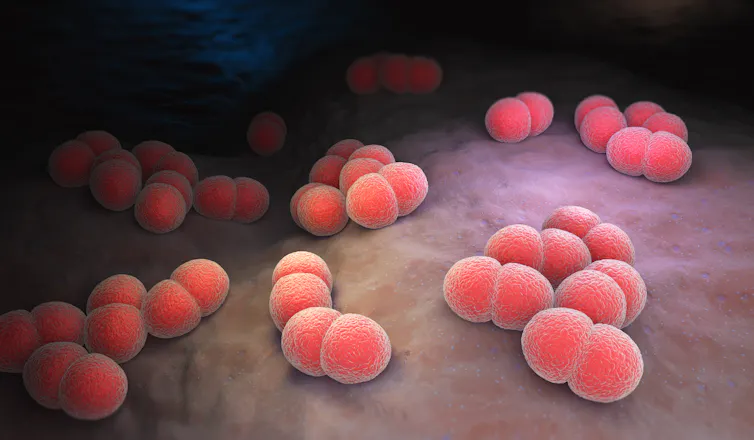
Couples are more likely to have similar numbers of the bacteria Neisseria in their gut compared to single people. Neisseria can reside in the mouth for long periods of without causing disease.

A digital rendering of the Neisseria bacteria.
Some types of Neisseria can be harmful, while others are helpful.
Tatiana Shepeleva/ Shutterstock

Some Neisseria bacteria can be harmful and may cause meningitis. Yet some Neisseria bacteria actually fight against these meningitis-causing species, stopping them from overgrowing and causing harm.

So while you may want to avoid kissing someone when they’re poorly for obvious reasons, it turns out that a kiss even when you’re healthy can transfer all sorts of bacteria between the two of you.

More research is needed to really understand what overall effect sharing these bacteria with your partner has on health.

Skin microbiome

The skin microbiome is the most unique and personalised microbiome, tailored to each person. It’s even sometimes referred to as our microbial fingerprint.

Being the most exposed microbiome, the skin microbiome has evolved to be adaptable to external factors such as the climate and cosmetic products. No matter what, these bacteria work hard to remain at an equilibrium.

Close contact with our partners – and even pets – has a huge influence on what bacteria live on our skin. After comparing the gut and oral microbiome, researchers found the skin microbiome to be the most similar among couples.

It isn’t just the bacteria on your arms or hands that are shared, either. Research shows that couples shared 35% of the bacteria living on their feet, and around 17.5% of the bacteria on their eyelids.

You may not even need to touch your partner to have the same skin bacteria as them. Factors such as sleeping in the same bed and walking on similar surfaces are thought to explain why such a large proportion of our skin microbiome is similar.

This is because humans naturally shed bacteria in a similar way as dogs shed fur. We leave traces of our bacteria on everything we touch – and we also easily pick up bacteria from our environments.

The shared effect of living together on the skin microbiome is so great that researchers were able to use computer models to accurately predict 86% of cohabiting couples based off of their individual bacterial samples alone.

But while it’s clear that couples share much of the same skin microbiome, the health effect that this has is not currently known.

While sharing bacteria with your partner may sound alarming, there’s often no cause for concern. Bacteria teach our bodies how to fight infections, they help us digest foods and even produce key nutrients. The bacteria we share with our partners are often harmless and sometimes benefit our health rather than hindering it.

The Conversation

Janelle Mwerinde is doing a PhD in skin microbiology sponsored by and affiliated with the Walgreens Boots Alliance.

Conor Meehan does not work for, consult, own shares in or receive funding from any company or organisation that would benefit from this article, and has disclosed no relevant affiliations beyond their academic appointment.

ref. Couples share 30% of their gut bacteria. Here’s how that may affect health – https://theconversation.com/couples-share-30-of-their-gut-bacteria-heres-how-that-may-affect-health-276342