A brief history of denim – and why the ‘perfect pair’ of jeans remains elusive

Source: The Conversation – UK – By Rose Marroncelli, Lecturer, Nottingham Trent University
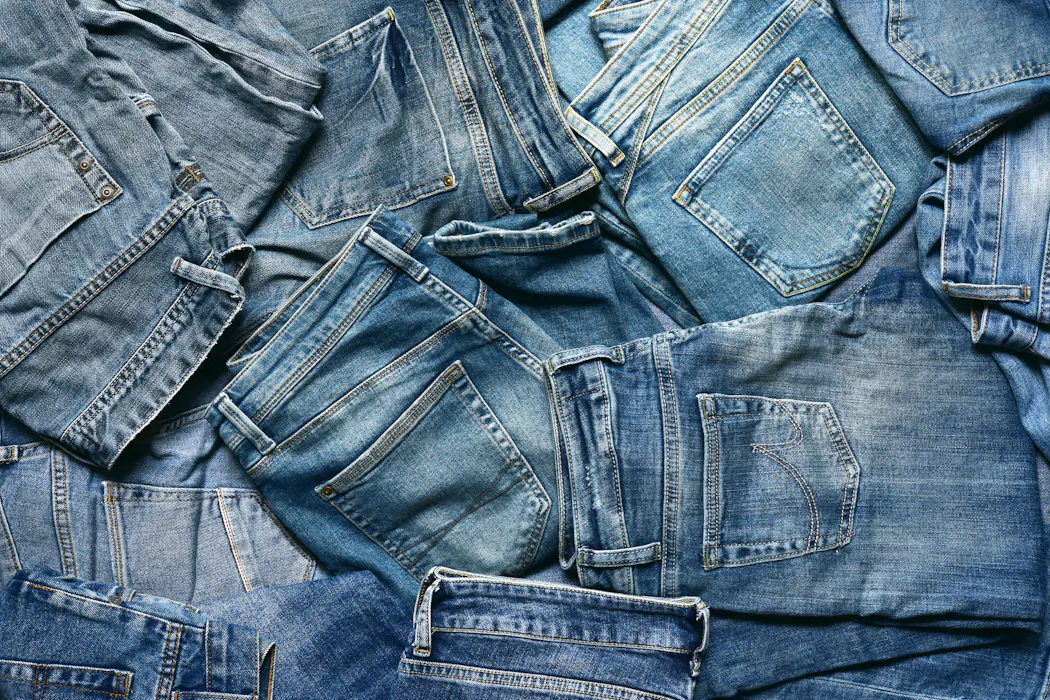
Liliya Kandrashevich/Shutterstock

Denim is present in practically every country in the world and is widely adopted as one of the most common forms of everyday attire. Its appeal spans generations and social groups: jeans are worn worldwide by those who follow fashion and those who do not, by people seeking to stand out and by those who prefer to blend in. However, many of us have never found the perfect pair.

Although denim has been produced since the 16th century, its association with American culture and durable workwear emerged during the Californian gold rush of the 1850s. It was during this time that Levi’s – now arguably the most recognisable denim brand – was established.

Levi Strauss, an immigrant entrepreneur who arrived in California from Bavaria in the 1850s, opened a dry goods business catering to miners. One of his customers, the tailor Jacob Davis, developed the innovative use of metal rivets to reinforce stress points in work trousers, making them more durable. Strauss and Davis jointly patented this technique, and the Levi’s brand was born.

Blue jeans were originally a seen as symbol of labourers (like the miners) and they also gained a strong association with cowboys. In the decades that followed, denim jeans evolved from practical workwear into one of the most iconic and enduring symbols of global fashion and culture. Film stars such as Marlon Brando and James Dean popularised the jeans and t-shirt look to a young generation in the 1950s. These films personified motorcycle-loving nonconformists, and 1950s Hollywood embraced denim as the garment of rebellion.

Today, the cultural significance of denim jeans has moved beyond early associations with workwear, the cowboy and the teenage rebel, to become a staple worn by people of all ages and backgrounds.

Finding the perfect pair

Denim jeans are often seen as a problematic fashion product in terms of sustainability, because their production leaves a considerable environmental footprint.

Cheap prices on the high street can encourage consumers to treat denim products as short-term items, reducing their lifespan. Cotton, which is commonly the main fabric for denim, is incredibly water intensive; the production of one pair of jeans uses approximately 7,500 litres of water.

Different components involved in the making of a single pair of jeans, such as denim, thread, cotton and buttons, can originate from different countries all over the world. This raises questions regarding the environmental costs involved in the production process. Further issues include that jeans are often not made from single fibre materials and therefore cannot be recycled.

Woman wearing all denim
Denim is a popular fabric around the world.
Andrii Nekrasov

Adding to sustainability concerns, at the consumer level, the perfect pair of jeans remains an elusive concept. But in a recently published book chapter, I explain that the perfect pair of jeans is elusive for a reason. Jeans have to be correct for the individual wearer in terms of comfort, social and personal identity, and also the complexity of fit.

Previous reports have focused on women’s struggle to find jeans that fit and are flattering. The inability to find the perfect pair of jeans may encourage overconsumption, due to repeated purchasing based on poor fit.

My research shows that this is an issue which applies to all genders. The men I spoke to noted how they resented paying a higher price for brands like Levi’s, so spent less by purchasing cheap, high street alternatives. This attitude can lead to overconsumption, as low price points achieved through low-quality production often compromise product longevity.

This demonstrates the perpetuating cycle of fast fashion, driven by cheap, low-quality production, and contradicts the original purpose of jeans of being highly durable and having longevity. The combination of highly environmentally damaging production processes with overconsumption results in even greater environmental harm.

Retailers can make efforts to reduce the trend of overconsumption with better fitting garments. However, fit is a complex issue for retailers as well as consumers. For the retailer, producing jeans in a wide range of sizes and styles is often not cost effective, and complex sizing systems can also confuse the consumer.

Technology could provide future solutions to improving the accuracy of fit. Personalised virtual fitting, made possible through improvements in 3D human shape recognition, could ensure improved fit for the consumer. This would benefit online shoppers, although the technology does remain in its infancy, and is yet to be adopted by major online fashion retailers. Virtual fitting rooms also cannot replicate the feeling of denim next to the skin, so although the fit may be perfect, comfort could be compromised.

Ultimately, the enduring challenge of finding the “perfect pair” of jeans highlights not only the garment’s cultural significance but also the opportunity for the fashion industry – and consumers – to move toward more sustainable, better-fitting and more thoughtfully designed denim for the future.

The Conversation

Rose Marroncelli does not work for, consult, own shares in or receive funding from any company or organisation that would benefit from this article, and has disclosed no relevant affiliations beyond their academic appointment.

ref. A brief history of denim – and why the ‘perfect pair’ of jeans remains elusive – https://theconversation.com/a-brief-history-of-denim-and-why-the-perfect-pair-of-jeans-remains-elusive-276118


Iran war lacks strategy, goals, legitimacy and support – in the US and around the world

Source: The Conversation – UK – By Jason Reifler, Professor of Political Science, University of Southampton

Approximately one month into the Iran war, public opinion on both sides of the Atlantic is decidedly opposed to this conflict. A recent CBS/YouGov poll shows that 60% of the public oppose military action against Iran, as do a similar percentage in the UK: 59%.

As a political scientist who studies public attitudes about foreign policy and the use of force, my research addresses an important question: under what conditions do people support military action? Based on this research, the widespread opposition to American military action against Iran is completely understandable, as the action lacks the usual foundations for support from domestic as well as international audiences.

Decades of research in political science show that broad support for use of the military rests on three key pillars: purpose, likelihood of success and legitimacy. When these elements are present, support can be high. It can even be maintained in the face of significant costs, both financial and in terms of lives lost. When they are absent, support tends to be weak, polarised and prone to erosion.

At present, these key ingredients are missing.

What’s the objective?

First and foremost, the Trump administration’s strategic rationale remains poorly articulated. Public support for military action is strongly tied to policy goals. When citizens believe force is being used to prevent a clear and immediate danger, they are far more likely to support it. But the US has not made the case that Iran was close to achieving a nuclear weapon – or posed other imminent threats for that matter. The CBS/YouGov poll confirmed that the public does not believe the rationale for war has been convincingly articulated – by a count of 68% to 32%.

In the first few days of the bombing, US president Donald Trump strongly advocated regime change as a reason for the war. But among voters there is little appetite to change another country’s domestic politics. A majority thinks this is not important, although now it has started, a small majority of respondents (53%) felt it would be a mistake to leave the regime in power. It’s a big political risk though – American voters don’t have to cast their memories back far to think of unsuccessful regime change missions.

What does winning look like?

The ambiguity surrounding mission goals complicates the second key element: what constitutes success? Airstrikes can damage nuclear facilities or disrupt Iran’s ballistic weapons programme. But they can’t eliminate the scientific knowledge or technical know-how which will enable to regime to rebuild. And, clearly, if previous strikes were as decisive as the US president, Donald Trump, has claimed, the current action would be unnecessary. The rest of the world knows that too.

The same question about what qualifies as success also applies to regime change. Killing the leadership is one thing, but creating a stable government that breaks from the Islamic revolution and protects American interests is quite another. The essential nature of politics is that there are competing factions, which will want to build or maintain governmental structures that advantage those interests. The the type of government Iran might adopt under a regime change scenario – and which faction(s) will control the levers of domestic power – are two dramatic unknowns.

Any plan to completely disempower the Islamic Revolutionary Guard Corps (IRGC) would risk a re-run of the disastrous de-Baathification strategy after the 2003 invasion of Iraq. Leaving the IRGC even partially in power leaves the civilian population at continued risk and would hardly make it easier to achieve American aims – whatever they may be. As we’re still seeing in Libya, a power struggle between factions is unlikely to produce the sort of result the region – and the wider world – want to see.

Is this a legitimate war?

Finally, there are severe concerns regarding the legitimacy of the war. Citizens rely on cues from their political leaders and institutions to inform their view about the use of force. The Trump administration had not made a sustained case for the need for military action before the war, nor has it secured Congressional authorisation or bipartisan support. There is no clear domestic consensus supporting the use of force.

Not only is there no clear signal of legitimacy domestically, the same is true internationally. Multilateral backing — especially through institutions such as the United Nations security council — has historically played an important legitimising role (especially to reassure domestic audiences who want a second opinion). This is is absent here – in fact, key US allies have expressed their opposition. The UK’s prime minister, Keir Starmer, has declared military action against Iran is “not our war”, language remarkably similar to that of Germany’s defence minister, Boris Pistorius. Having foregone building international support prior to the use of force, the US is now struggling for support from allies — particularly when it comes to protecting shipping through the Strait of Hormuz.

None of this means the operation will be uniformly unpopular. Partisan attachment is also important: those who back the administration are likely to view the operation more favourably. Accordingly, a majority of Republicans (84%) support the action, though there is a strong divide between Maga (92%) and non-Maga (70%) Republicans.

Meanwhile, Democrats (92%) and independents (69%) overwhelmingly disapprove of the conflict, so domestic support for the conflict is extremely narrow. The factors that sustain backing beyond a president’s core supporters — perceived necessity with clear strategic goals, confidence in eventual success of the mission, and legitimacy conferred by domestic or international institutions — are conspicuously absent.

Over time, events on the ground may change how the public views the conflict. Iranian efforts to expand the scope of conflict – particularly when directed at US allies – could swing support towards the American action. Or, a unified Iranian opposition could quickly coalesce on who and what replaces the Islamic Republic government. These are just two possibilities seen through rose-tinted spectacles – frankly, developments that complicate America’s position seem just as likely.

Without significant changes in clarity of goal, verifiable indicators of success, or signals of legitimacy from persuasive actors outside the administration, support will diminish. But the consequences are graver than the domestic popularity of an American military operation. Sidelining institutional constraints – such as Congressional authorisation and international institutions – erodes limits on the use of force.

When the US ignores these constraints, it invites other countries to do the same, resulting in a more unstable and insecure world.

The Conversation

Jason Reifler has received funding for research examining public opinion about foreign policy and the use of military force from the Economic and Social Research Council (UK), Volkswagen Stiftung, and National Science Foundation (US).

ref. Iran war lacks strategy, goals, legitimacy and support – in the US and around the world – https://theconversation.com/iran-war-lacks-strategy-goals-legitimacy-and-support-in-the-us-and-around-the-world-279114

We are flushing paracetamol down the toilet and into our water supply – here’s how it could be removed

Source: The Conversation – UK – By Isabell Fritz, PhD student in Water and Environmental Engineering, Lund University

winnond/Shutterstock

Many people use drugs including paracetamol on a regular basis to treat headaches. But only part of each drug is taken into the bloodstream, while the rest is released into the wastewater through our urine when we go to the toilet.

Paracetamol is an ingredient in the tablet. Most of the paracetamol is absorbed into the blood. Around 5% of the paracetamol is immediately excreted in urine in its original form.

Over around 24 hours, up to 95% of one dose of paracetamol – including the amount that was previously absorbed into the blood stream – is excreted in urine, after being degraded in the liver.

Mainly as a result of this physical process, paracetamol is increasingly being detected in rivers around the world. In the UK, maximum concentrations around 1 microgram per litre have been measured in the River Thames and in different estuaries. Similar levels were found in rivers and lakes of other European countries, including Serbia and Spain.

In the Nairobi river in Kenya, paracetamol concentrations have reached up to 16 micrograms per litre, which is high enough to cause cellular damage in water organisms such as clams. In Asian surface waters, high paracetamol levels have been reported as well.

And even though 81% of wastewater in the EU is collected and treated in municipal wastewater treatment plants, these facilities are not yet equipped to deal with micropollutants such as paracetamol. The prefix “micro” refers to the concentrations these substances can reach in the environment, and these are typically comparable to the size of a sugar cube in an Olympic swimming pool.

In humans, an overdose of paracetamol can lead to serious liver damage. Once in the environment, the drug does not suddenly lose its effect. Water organisms tend to be more sensitive to pharmaceuticals than humans. Liver toxicity has also been observed in certain fish species after three weeks of exposure to paracetamol at concentrations below 1 microgram per litre. In another study, even a few micrograms per litre led to malformations of fish embryos and reduced their survival rate by 90%.

Wastewater is one of the major ways through which micropollutants can enter the environment. However, private households are not the only source of micropollutants in the wastewater stream – they can also come from hospitals, where medications are used in much higher quantities.

These can end up in the hospital wastewater, which often goes into the same sewer pipes that households are connected to (and some industries as well), and is transported to municipal wastewater treatment plants. In Oslo, wastewater coming from two hospitals was responsible for 12% of the paracetamol input into the local wastewater treatment works – the highest share among the 20 tested pharmaceuticals. A more extensive study from the US also found that paracetamol was the most prevalent pharmaceutical in hospital wastewater and, even after a high degree of removal in wastewater treatment plants, still posed a high ecological risk.

For that reason, many hospitals are now being encouraged to install some kind of on-site pre-treatment for their wastewater before it goes into the sewers. The other option is to treat it in separate plants, which might be hard if they are already connected to the municipal sewage network.

Given the increasing pharmaceutical consumption, the concentrations of micropollutants in wastewater, including paracetamol, are on the rise. Insufficient wastewater treatment could therefore lead to increasing levels in the environment. However, the concentrations of paracetamol in surface water have decreased since the late 90s due to advances in wastewater treatment.

Where does your sewage go?

In some European countries, such as Sweden and Ireland, a large portion (up to around 80%) of drinking water is sourced from lakes and rivers. Protecting our freshwater resources is essential in order to keep using them.

How can we clean up?

The EU is now working on introducing treatment at wastewater treatment plants to tackle levels of paracetamol and other medicines in the water supply. Large treatment works will need to upgrade their facilities by 2045.

Several techniques could be used for this. One is ozonation. You might know ozone from the atmospheric ozone layer, where it fulfils the role of shielding humans from UV light and thereby protecting cells from damage. But using its ability to readily react with other molecules, ozone can be used to treat wastewater.

This process doesn’t tackle all micropollutants equally. Paracetamol belongs to those substances that are easily removed with ozone, while others, such as the blood pressure medication irbesartan, require more ozone to be degraded fully. Unfortunately, there are also micropollutants that can’t be tackled with ozonation at all, such as the “forever chemicals” Pfas.

During ozonation, ozone doesn’t only react with micropollutants, but also with natural organic molecules in the wastewater, which means that higher ozone doses are required to clean the water. More ozone is required to remove micropollutants from wastewater than from pure water (for instance tap water), because there are other elements in wastewater that also react with ozone, while tap water is already “clean”. This process is called “ozone-scavenging” and can result in increased costs for wastewater treatment plants.

Another issue is that ozonation can sometimes even increase toxicity in the wastewater. Because by reacting with ozone, the micropollutants are technically not removed, but degraded. The molecule of a degraded micropollutant looks slightly different and can have a higher toxicity than the original molecule (at least in some cases). But ozonation can be used in combination with other treatments.

Toxicity here does not primarily refer to humans, but it can harm organisms in the environment such as algae, microbes, crustaceans, or fish, leaving them unable to swim or making them infertile in some cases. Although, if micropollutants were to pass through drinking water treatment in high enough levels, it could also have serious health implications for humans.

Pharmaceutical consumption trends show that people take more medications than ever before, and the pharmaceutical industry is rapidly growing. So it is becoming increasingly important to tackle micropollutant levels in our wastewater and upgrade wastewater treatment plants to keep our water clean.

The Conversation

Isabell Fritz receives funding from The Swedish Research Council (Vetenskapsrådet) and Formas – a Swedish Research Council for Sustainable Development.

ref. We are flushing paracetamol down the toilet and into our water supply – here’s how it could be removed – https://theconversation.com/we-are-flushing-paracetamol-down-the-toilet-and-into-our-water-supply-heres-how-it-could-be-removed-271454

Local election results show the hurdles along the path to power for French far right

Source: The Conversation – UK – By Timothy Peace, Senior Lecturer in Politics, University of Glasgow

Despite achieving historic scores and taking control of over 60 municipalities in the French local elections, the far-right Rassemblement National (National Rally, RN) will be disappointed by its failure to make a breakthrough in the larger towns and cities. The headlines coming out of France after the second round of elections on March 22 tell of the resilience of the mainstream centre left and centre right, whose candidates held on to every major city hall in the country.

The two parties that dominate France’s political extremes – the far-right RN, led by Marine le Pen and Jordan Bardella, and Jean-Luc Mélenchon’s far-left La France Insoumise (France Unbowed, LFI) – made some gains in smaller towns. But they failed to capture a single one of the large cities.

This matters because France goes to the polls again in 2027 to elect its next president. The local elections were widely seen as a dress rehearsal – and the results expose the limits of both parties’ strategies. For the RN, the failure to break through in cities such as Marseille and Toulon — combined with the refusal of the centre-right Les Républicains (LR) to enter into alliances with RN candidates — shows that, for the far right, the path to the Élysée Palace remains highly complicated.

For LFI, a similar inability to translate national prominence into local power raises questions about Mélenchon’s capacity to unite the left ahead of next year’s presidential campaign.

For the RN, the dream result would have been a win in Marseille. Capturing France’s second city would have been a massive statement of intent. After the first round of the local elections on March 16, however, a victory in the port city seemed unlikely – especially after the refusal of the centre-right candidate, Martine Vassal, to enter into any alliance with the RN.

A French TV presenter in front of a screen showing headlines after March municipal elections.
‘Le grande confusion’: all sides have claimed victory, but there are no real pointers ahead of next year’s presidential election.
France 24 screenshot.

Vassal’s decision is emblematic of one of the big lessons of these elections: the centre-right LR has resisted the temptation to ally itself with the far right, even where doing so might have delivered local power. The centre-left mayor of Marseille, Benoît Payan, drew his own red line, refusing to merge his electoral list with LFI. He still held on to his job comfortably, winning 54% in the second round, well ahead of the RN’s Franck Allisio on 40%. The double refusal in Marseille – the centre right rejecting the far right, the centre left rejecting the radical left – encapsulates the resilience of the political mainstream in France’s major cities.

Battle for credibility

While taking Marseille was always going to be a long shot, the RN had invested heavily in winning back another important port city on the south coast: Toulon. This is the city where in 1995 the party, then called the Front National (FN) and led by Marine Le Pen’s late father, Jean-Marie, made a historic breakthrough, taking control of the council. This was the first time the far right had captured a major French city since the second world war.

But the FN mayor, Jean-Marie Le Chevallier, endured a disastrous time in office. He fell out with his own city councillors and in 1999 ended up quitting the party after a spat with Le Pen (père). The failure to manage Toulon city council (Le Chevallier scored less than 8% when he was up for reelection in 2001) became an albatross around the party’s neck for many years to come.

As we have argued in our research on the RN in local government, overcoming this reputation for incompetence has been an important goal for all the party’s mayors elected since 2014. Recapturing Toulon would have been highly symbolic. But the RN candidate (and current MP) Laure Lavalette, despite leading after the first round, eventually fell short with 48% in the runoff against centre-right incumbent Josée Massi.

The result shows the enduring power of the front républicain: the tactical alliance of voters from across the political spectrum to keep out the far right.

Nevertheless, RN supporters could console themselves with some important victories in smaller towns across the south including Carcassonne, Menton and Orange – another municipality originally captured by the party in 1995. The RN also held on to the vast majority of the towns it was already governing, several of which it won outright in the first round. This includes Perpignan, still the largest town run by the party. In these established strongholds, RN mayors have worked to normalise the party’s reputation and professionalise its approach to local governance.

The success of this strategy is shown by the re-election of the longstanding mayor of Hénin-Beaumont, Steeve Briois, with a commanding 78% of the vote in the first round. His success seems to have had a kind of “coattail effect” across the former coal mining basin in France’s far north – with RN victories in a number of neighbouring towns. The consolidation of a solid block of RN-run municipalities in northern France, alongside those in its traditional heartland of the south-east, is one of the most striking outcomes of these elections.

Signs of things to come?

Yet arguably the most significant result for the far right came in a battle between former allies on the centre right. In Nice, France’s fifth-largest city, Éric Ciotti – who broke with the centre-right LR in 2024 to ally himself with the RN ahead of the legislative elections – defeated his former mentor, the outgoing mayor Christian Estrosi.

Ciotti’s victory raises an uncomfortable question for LR. Even as the party nationally held the line against allying with the far right, one of its most prominent former figures has demonstrated that crossing that line can be electorally rewarding. Whether Ciotti’s path remains an isolated case or becomes a template for other ambitious centre-right politicians will be one of the key dynamics to watch as the 2027 presidential campaign takes shape.

These local elections confirm that the RN’s road to the Élysée runs through a France that is not yet willing to hand over the keys. However, the cracks in the adherence of some significant political figures to the front républicain, cracks which became visible in Nice, even if not yet spreading to voters at large, suggest that “not yet” may not necessarily mean “never”.

The Conversation

Timothy Peace has received funding from the British Academy, the Economic and Social Research Council and the Royal Society of Edinburgh.

Fred Paxton receives funding from the Leverhulme Trust as an Early Career Fellow (2024-27).

ref. Local election results show the hurdles along the path to power for French far right – https://theconversation.com/local-election-results-show-the-hurdles-along-the-path-to-power-for-french-far-right-279016

Collagen supplements can help your skin and joints, large new study finds

Source: The Conversation – UK – By Heba Ghazal, Senior Lecturer, Pharmacy, Kingston University

insta photos/Shutterstock.com

Collagen supplements have become one of the bestselling products in the wellness industry, promising everything from smoother skin to stronger joints. But do they actually work?

A major new review of the evidence – pulling together data from 113 clinical trials – suggests that, for some health outcomes, the answer is probably yes. But as ever with nutrition science, the full picture is more complicated.

Collagen is a protein the body makes naturally. It gives skin its structure and elasticity, supports bones and muscles, helps wounds heal and plays a role in protecting organs. The problem is that production slows as we age, which is why so many people turn to supplements to top it up.

Not all collagen is the same, though. The collagen found naturally in food may be less well absorbed than the smaller forms used in most supplements. These hydrolysed forms – where the protein has been broken down into shorter chains called peptides – are thought to pass more readily into the bloodstream and making it easier for the body to transport these fragments to tissues where they may have biological effects, potentially supporting skin, joint and muscle health.

The new review examined research published up to March 2025, drawing on 16 systematic reviews that between them included nearly 8,000 participants. The overall picture was cautiously positive.

Collagen supplementation was linked to moderate improvements in muscle health and reduced pain in people with osteoarthritis. There were also improvements in skin elasticity and hydration – though these benefits built up gradually, suggesting that taking collagen consistently over a longer period matters more than a short-term burst.

Some of the findings were less clearcut. Results for skin elasticity and hydration shifted depending on when the studies were conducted, with newer research showing lower improvements in elasticity but greater improvements in hydration. That inconsistency is worth noting – it suggests the science is still settling.

The quality of the research itself is also worth scrutinising. The studies used a wide variety of methods, doses and ways of measuring outcomes, which makes direct comparisons difficult.

Fifteen out of the 16 reviews included were rated as low or critically low quality – not necessarily because the supplements don’t work, but because of methodological problems such as studies not being registered in advance and poor reporting on potential biases. Many trials were also short and included few participants, which limits what we can reliably conclude about long-term effects.

Not all collagen is equal

Part of the problem is that collagen supplements vary enormously. Some are derived from animals, such as cows, pigs and chickens, and others come from marine sources, including fish, jellyfish and shellfish. There are even so-called “vegan” collagen alternatives. Some studies used oral supplements, while others tested collagen dressings applied to the skin.

The way collagen is processed also affects the size and composition of the peptides in the final product, which in turn influences how it behaves and is absorbed in the body. Lumping all these different products together in a single analysis risks obscuring as much as it reveals.

Various collagen supplements against a pink background.
Collagen supplements vary a lot.
New Africa/Shutterstock.com

Individual differences matter too. Factors such as sun exposure, smoking, sleep quality, environment and hormone levels all affect how skin ages and how it might respond to supplementation. If studies fail to account for these variables, it becomes very difficult to know whether any observed changes are genuinely due to the collagen or simply reflect differences in participants’ lifestyles.

This review adds to a growing body of evidence suggesting collagen supplements are not simply expensive placebos. There appear to be real, if modest, benefits – particularly for skin hydration, joint pain and muscle health.

The research base still has significant gaps. Without more rigorous, standardised studies, it remains genuinely difficult to say what is driving those benefits, or who is most likely to see them. Studies need to clearly specify the type of collagen used, the dose, how it was delivered and the characteristics of the people taking it.

The Conversation

Heba Ghazal does not work for, consult, own shares in or receive funding from any company or organisation that would benefit from this article, and has disclosed no relevant affiliations beyond their academic appointment.

ref. Collagen supplements can help your skin and joints, large new study finds – https://theconversation.com/collagen-supplements-can-help-your-skin-and-joints-large-new-study-finds-278632

This Mediterranean-style diet could keep your brain sharp as you age – new study

Source: The Conversation – UK – By Eef Hogervorst, Professor of Biological Psychology, Loughborough University

luigi giordano/Shutterstock.com

The Mediterranean diet – rich in olive oil, fish, vegetables and legumes – has long been linked to better heart health. Growing evidence suggests it may also help support brain health as we age, with a brain-focused variation of the diet drawing increasing scientific attention.

It is called the Mind diet. The name stands for Mediterranean-Dash Intervention for Neurodegenerative Delay – though what matters more than the acronym is what it actually involves: plenty of green vegetables, beans, whole grains, nuts, berries, poultry and fish, with olive oil as the main cooking fat, and limited amounts of red meat, butter, cheese, fried food and sweets. It combines the most brain-friendly elements of two well-studied eating patterns: the traditional Mediterranean diet and the Dash diet, which was originally developed to lower blood pressure.

A recent analysis from the long-running Framingham heart study examined the diets of adults aged 60 and over and assessed how these dietary patterns were associated with brain scan data collected later in the study. Those who followed the Mind diet most closely tended to have more grey matter – the tissue associated with memory and decision-making – and showed less overall loss of brain volume over time.

Both findings point in the same direction: that this way of eating may help keep the brain in better shape as we get older.

This is not the first study to suggest a link between diet and dementia risk. An earlier analysis combining 12 observational studies found an overall reduction in dementia risk of between 15 and 22% among people who followed Mediterranean-style diets, with the Mind diet showing the strongest effect of the three patterns studied. That is a meaningful difference, even if it cannot be taken as proof that diet alone is responsible.

Within the Framingham study, berries and poultry stood out as particularly beneficial for grey matter. This fits with what other research has suggested. Blueberries, for instance, have been the subject of several small trials, with one recent study finding improvements in memory even in people already showing early signs of memory problems.

Since red and processed meat have been linked to higher dementia risk in other studies, replacing them with chicken may be part of why poultry appears beneficial.

A factory worker putting sausages in a container.
Processed meat is linked to a higher dementia risk.
sergey kolesnikov/Shutterstock.com

Some of the findings were less straightforward. Fried food, as expected, was associated with worse outcomes. But whole grains, generally considered one of the healthier staples, produced a surprisingly weak result.

The reasons are unclear, though large amounts of bread and pasta – even wholegrain varieties – may raise blood sugar enough to offset some of the benefits. The evidence on whole grains and brain health remains mixed, and this is one area where more research is needed.

It is also worth noting who, in the Framingham study, was most likely to follow the Mind diet. They tended to be women, non-smokers, well-educated, and less likely to be overweight or to have diabetes, high blood pressure or heart disease. All of these factors are independently associated with better brain health, which makes it genuinely difficult to untangle how much of the benefit comes from the diet itself, and how much from the broader lifestyle it tends to accompany.

What the science can and can’t tell us

This is the central challenge facing all research in this area. Most of the studies are observational, meaning they track what people eat and what happens to them over time, rather than randomly assigning people to follow a particular diet and measuring the results.

Observational studies can show associations, but they cannot prove cause and effect. Self-reported diet data is also unreliable at the best of times – and particularly so among people whose memory is already beginning to fail.

The few trials that have actually put the Mind diet to the test have produced mixed results. One small three-month study found no improvement in memory or thinking skills, though participants did report better mood and quality of life.

Another trial found improvements in both brain scans and mental performance, but the participants were obese middle-aged women who also lost weight during the study, making it hard to know how much the diet itself contributed. Three months is also a short window in which to expect measurable changes in brain structure, and longer trials may yet tell a different story.

None of this means the Mind diet is not worth following. The broader evidence – across multiple studies and populations – consistently points in the same direction, and there is little downside to eating more vegetables, berries, fish and olive oil.

But diet is only one piece of a much larger picture. Not smoking, staying active, keeping blood pressure and blood sugar under control, and maintaining social connections all appear to matter at least as much when it comes to keeping the brain healthy in later life.

The Mind diet is not a cure for dementia, and it would be misleading to present it as one. What the evidence does suggest is that the food choices we make over decades – not just in later life, but across adulthood – may quietly shape the health of our brains in ways that only become visible much later. That is not a guarantee, but it is a reasonable basis for eating well.

The Conversation

Eef Hogervorst previously acted as consultant for Proctor and Gamble to review nutritional supplements and dementia risk/memory impairment. She received funding from ARUK, ISPF and ESRC to investigate (nutritional) risk factors for dementia. She also received PhD funding from DMT, Loughborough University and Universitas Indonesia She is a Chartered Psychologist with the BPS and holds an active BPS membership. She acted as expert on dementia risk and hormone treatment for NICE (2024) and ESHRE (2016) Guidelines.

ref. This Mediterranean-style diet could keep your brain sharp as you age – new study – https://theconversation.com/this-mediterranean-style-diet-could-keep-your-brain-sharp-as-you-age-new-study-278461

Netflix’s new Pride and Prejudice features Harewood House as Pemberley – here’s what the estate reveals about Austen’s world

Source: The Conversation – UK – By Robert W Jones, Professor of Eighteenth-Century Studies, University of Leeds

It is a truth, though not one universally acknowledged, that a country house possessed of spacious grounds must be in want of a large fortune. A film or television company might offer one, or at least an honourable provision.

The forthcoming marriage of Harewood House in west Yorkshire to Netflix, is much like any other in this respect. The union will produce a new version of Pride and Prejudice by Jane Austen (from whose work I have been very obviously scrumping), to be released later this year. Harewood will become Pemberley, Mr Darcy’s famously enticing home. Yorkshire will pose as Derbyshire.

Harewood is a grand house. Whether it is too grand for Pemberley is hard to say. In the book, Mr Darcy’s annual income of £10,000 is a huge sum. But the house might be contested in other ways too.

The estate has been the seat of the Lascelles family since 1738, when the Gawthorpe and Harewood Castle estates were acquired with money gained in the West Indies, from owning enslaved people, plantations, ships, warehouses and their associated goods and crops (as the estate’s website explains). The current owners, aware of the implications of the source of their inheritance, are among the cofounders of the Heirs of Slavery group, which advocates for compensation to address the ongoing consequences of slavery.

Harewood House appears as Pemberley in the teaser trailer for Netflix’s Pride and Prejudice.

Built between 1759 and 1771, the house boasts interiors designed by fashionable architect Robert Adam and furniture by Thomas Chippendale. Its serious art collection features Sir Joshua Reynolds, J.M.W Turner, Thomas Gainsborough and Sir Thomas Lawrence. Reynolds’s painting Mrs Hale as Euphrosyne (1762-64) graces, as she should, the splendid Adam-designed music room.


Read more:
Austen and Turner: A Country House Encounter captures the spirit of two great geniuses, born 250 years ago


Historian Mark Girouard’s classic study Life in an English County House: A Social and Architectural History (1978) still helpfully explains places like Harewood. He writes that these houses served several functions; business and work for much of the time, though the labour that sustained its splendours occurred in the Caribbean. They were also spaces intended for leisure and diverse forms of public and private sociability. Each activity was allocated (if imperfectly) different spaces within the house.

The music room at Harewood House has a piano, grand chandelier and ornate paintings on its walls.
The music room at Harewood House.
Michael D Beckwith/Wiki Commons, CC BY-SA

More recent studies academic studies, such as Karen Lipsedge’s Domestic Space in the British Eighteenth-Century Novel (2012) have developed this interest, explaining how space and gender interconnect. The music room at Harewood, with Mrs Hale as its central focus, would have held a special function in this respect.

Visiting Pemberley

Great houses like Harewood were designed to receive and impress guests. Any visitor would have needed to negotiate the shifting codes of privacy and publicity that might be in play (they were never static).


Read more:
Netflix to remake Pride and Prejudice – why Jane Austen novels make perfect period adaptations


The further into a house you were allowed, the more you entered a private realm where distinctions of rank might be in abeyance. In Pride and Prejudice the awful Lady Catherine de Bourgh knows this, doesn’t care and ploughs on. She enters the intimate space of the Bennet family’s drawing room where she expects to be accorded all respective and deference. Brilliantly, she isn’t. But she cannot be refused either and is guided to the more public realm of the garden.

Lady Catherine’s unwelcome visit as dramatised in the 1995 Pride and Prejudice.

In their Georgian heydays great houses like Harewood would have received many inveigling visitors, though they were not all like the bumptious, bungling de Bourgh. It is in this capacity that Pemberley is encountered in Pride and Prejudice, though its eligible but prideful owner (Darcy) has made the house intriguing long before.

Elizabeth and her aunt and uncle, the Gardiners, take their tour of the Derbyshire at the opening of the third volume of the novel. Elizabeth is still composing herself after the horrors of Darcy’s proposal and the revelations of his letter, detailing Mr Wickham’s atrocious conduct with its obvious implications for her young sister. As soon as Elizabeth sees the house and its grounds, she is taken with it and reflects: “To be mistress of Pemberley might be something.”

While the house is praised repeatedly in the novel, it is the views from Pemberley, not the “fine carpets and satin curtains” (which any house might have) which appear to attract Elizabeth most. There are several references to windows, and what can be seen from them in these scenes.

A tour of Harewood House.

If Darcy is redeemed in Elizabeth’s eyes at Pemberley, it is partly because he proves himself to be a good landlord. The change in Austen scholarship, especially since the last Pride and Prejudice adaptation, has been tremendous. Elizabeth has appeared more and more independent, less easily impressed by Darcy. Her perspective is now seen as far more important than all his trees, however much they convey his status.

Harewood and its prospects have changed too since Austen’s day. The landscape has altered. From some of Harewood’s windows you can still see what remains of Lancelot “Capability” Brown’s improvements: his clumps of trees and the great lake he introduced. But the Victorians removed a great deal.

What will the new Elizabeth see from Harewood — and what, in turn, will the viewer see? How might the new Darcy delight and interest his guest? Not by plunging into the lake surely. And from which window might Elizabeth finally catch that brilliant view?

The Conversation

Robert W Jones does not work for, consult, own shares in or receive funding from any company or organisation that would benefit from this article, and has disclosed no relevant affiliations beyond their academic appointment.

ref. Netflix’s new Pride and Prejudice features Harewood House as Pemberley – here’s what the estate reveals about Austen’s world – https://theconversation.com/netflixs-new-pride-and-prejudice-features-harewood-house-as-pemberley-heres-what-the-estate-reveals-about-austens-world-277786

The mathematical crimes of the Young Sherlock Holmes series

Source: The Conversation – UK – By Kit Yates, Professor of Mathematical Biology and Public Engagement, University of Bath

Warning this article contains spoilers about the new Amazon Prime series Young Sherlock.

I’ve read the whole Sherlock Holmes canon multiple times over. I love how Holmes uses analytical reasoning to unravel problems that look mysterious, but ultimately prove to have simple explanations. So I was excited when I saw Guy Ritchie’s Young Sherlock appear on Amazon Prime. My excitement was quickly tempered when I started watching, though.

A key part of the plot relies on mathematics. Holmes first meets his sidekick Moriarty (yes, he is working together with his future adversary) at the blackboard after a maths lecture at Oxford. Despite some mistakes in the dialogue, the maths on the blackboard is interesting enough. It is finding the solutions to the equation x5 + x4 + x3 + x2 + x + 1 = 0. As shown nicely in this video, the equation has five solutions.

In the maths many of us will have learned at school, we are taught that a positive times a positive makes a positive and that a negative times a negative also makes a positive. For example, 3 times 3 equals 9, but -3 times -3 also equals 9. Squaring a number (when you multiply a number by itself) should always give a positive result. The reverse operation – finding the number(s) you multiply together to give a positive number – is called taking the square root. The two square roots of 9 are 3 and -3, since when you square either of these numbers you get the answer 9.


Read more:
Taking a leap of faith into imaginary numbers opens new doors in the real world through complex analysis


If we want to take the square root of -1, say, then we need to venture into the realm of imaginary numbers. Imaginary numbers are the square roots of negative numbers. Mathematicians defined the imaginary number i to be the square root of -1 (technically -1 has two square roots i and -i). The square roots of other negative numbers are multiples of i. The square roots of -9, for example are 3i and -3i. Some of the solutions from the equation on the blackboard involve imaginary numbers (this will turn out to be an important plot point).

Mathematical blunders

It’s plausible that the equation on the blackboard might appear in an early first year undergraduate tutorial. Something approaching a passable solution is given, but in excruciating detail (the sort of detail you wouldn’t use at school, let alone in a maths degree at Oxford). And there are mistakes in the maths.

Towards the end of the lecture, the professor sets the students homework to find all the solutions to the equation, even though they are already written on the board (although incorrectly). Despite this, the end of the scene sees Sherlock spending some time trying to think of the solutions before Moriarty comes up and shows him two of the five solutions (as if they were the only ones). Moriarty too writes these down incorrectly, but in a different way to the incorrectness already on the board.

As Moriarty writes down the complex solution (complex means the answer contains both real and imaginary numbers) he says “These solutions, they’re not real. They’re imaginary.” which we can allow (although technically he means complex).

What we can’t forgive is Moriarty going on to say, “That means even if you can’t see the target, you can still shoot for it.” Which is nonsense, even as a metaphor. Complex numbers aren’t targets you can’t see, but well-defined, mainstream (even in the 1870s) mathematical quantities and there’s no sense in which you “aim at” a complex solution to an equation.

Death by numbers

In the last episode, Holmes and his team are battling to halt the distribution of a deadly chemical weapon known as the “creeping death”. They find a scrap of paper in a secret room which they say is the “equation for creating the creeping death.”

I was expecting to see some complex chemical reaction formulae sketched on the page, but when it’s held up to the camera, we see instead a mathematical equation: z3 + 4 z2 – 10 z + 12 = 0.

What does this have to do with the chemical process for creating the deadly nerve agent?

Nothing, it turns out. Or at least nothing I can imagine. In fact it’s a device to allow Holmes and Moriarty to hark back to that moment in the lecture theatre when they first met. What follows goes beyond artistic license into the realm of gibberish.

“If we have the positive equation”, they say, “then we can come up with the negative. And thus create a compound to neutralise the threat of creeping death.” Perhaps they meant “positive solution”, because equations themselves aren’t positive or negative. Either way, the idea that this simple mathematical equation or its solutions are the secret formula for making a weapon of mass destruction doesn’t make sense. There’s no context, no sense in which this equation could be the secret recipe for creating the nerve agent.

Moriarty points out that they have a problem. “This equation is not finished.” By this I think he means that the three solutions to the equation are not written out explicitly.

One solution, z = – 6 is given. And it’s correct. The rest of the scrap of paper contains a reformulation of the equation (a factorisation), which shows that the remaining solutions can be found by solving a quadratic equation: z2 – 2 z + 2 = 0.

A quadratic equation is just an equation built around a squared term (in this case z2), which has two solutions. The formula for the solutions may be familiar to GCSE students (normally aged 15 to 17 years old). For a general quadratic equation: a z2 + b z + c = 0, the two solutions are given below.

Yet, we are supposed to believe that, despite having supposedly solved a far more complicated equation than this in the first episode, Moriarty can’t find the solution to this much simpler equation. So stumped is Moriarty – the future maths professor – that he spends precious time, as a bomb is about to detonate, searching for a piece of paper with this missing solution. He almost loses his life when he could have just used a GCSE-level formula.

The piece of paper he eventually finds contains an incorrect statement of the quadratic formula alongside some nonsensical text, although the solutions are at least correct: z = 1 + i and z = 1 – i (where i, remember, is the imaginary number).

I appreciate my dissection of the maths is high-grade nerdery. Most people will have watched the series without pausing it like I did to look at the maths and probably won’t have noticed. But, if maths is going to be a pivotal plot point in your blockbuster series, then you’ll probably want to make sure you get it right.

The Conversation

Kit Yates does not work for, consult, own shares in or receive funding from any company or organisation that would benefit from this article, and has disclosed no relevant affiliations beyond their academic appointment.

ref. The mathematical crimes of the Young Sherlock Holmes series – https://theconversation.com/the-mathematical-crimes-of-the-young-sherlock-holmes-series-278812

Why social media bans won’t make parenting teenagers easier

Source: The Conversation – UK – By Tim Fowler, Associate Professor in Political Theory, University of Bristol

Dmitrij Galacewicz/Shutterstock

Countries around the world, including France, Spain and Malaysia, are planning to following Australia in enacting a ban on young people using social media. And now the UK is considering moving in the same direction.

These bans have emerged out of concerns about the effects of social media on children’s mental health, and increasing attempts to regulate teenage life. The UK recently brought in a “lifetime” smoking ban for anyone aged 15 or younger.

The potential ban on social media use is often explicitly justified by the support of parents. When announcing her party’s support for the measure, Conservative leader Kemi Badenoch said she knew “as a parent” that a ban was needed. It is seen as common sense that parents are leading proponents of these bans.

Bans offer two core promises to parents. They offer protection from the perceived harms of social media, and greater simplicity in managing day-to-day life. Rather than parents having to negotiate their child’s social media, parents may believe that once a ban is in place, they can simply say to their children that this behaviour is not allowed.

Official sanction can be used by parents as evidence that society views children’s use of social media as unacceptable. But in order to fulfil these promises, bans would need to be highly effective and socially endorsed. There are strong reasons to think this won’t be the case.

Teenage rebellion

Far from being passive, teenagers are technologically literate, socially networked and highly motivated. Recent UK experience with age verification for certain websites shows how quickly workarounds spread.

Since the passing of the Online Safety Act, the UK has seen a huge surge in downloads of virtual private networks (VPNs). These allow users to register as being from a different country to the one they are physically in. Teenagers may be able to use VPNs to bypass the bans.

They can also circumvent parental controls in less technologically savvy ways. This might mean buying a burner phone from a friend to access social media outside of their parents’ evening restrictions. Anecdotally, there are similar accounts of school children finding workarounds to avoid the increasingly prevalent “pouches” that restrict access to smartphones during the school day.

The larger lesson here is that by forcing behaviour to become covert, parents can often lose oversight of what their children are doing.

These examples are not too different to traditional tricks to get around social bans, like having a fake ID or getting an older friend to purchase cigarettes or alcohol. If parents reflect on their own experiences of teenage life, it may be evident why the act of banning does not eliminate this behaviour – and may even increase its attraction.

Girl unhappily handing over phone
Bans don’t stop prohibited teenage behaviour.
NDAB Creativity/Shutterstock

Even more importantly, as we also know in relation to alcohol or sexual activity, just because it is prohibited doesn’t take away the necessity of parents having conversations with their children about these topics.

Parents know that even if they harshly sanction their children for underage drinking, their child’s peers may have parents who turn a blind eye, condone alcohol, or supply it themselves. This means that getting teenagers to think about their use is essential – and the same holds true for social media.

Whether there is a ban or not, prohibited teenage behaviour continues. Navigating these risks is an unavoidable part of parenting adolescents.

As we have argued, parenting should be seen less as about achieving specified outcomes, and more as about valuing the individual relationship.

Putting the relationship between parent and child centre-stage means recognising there are different positions on the use and value of social media, and managing those differences successfully.

While digital life is novel and frankly scary to some parents, seeing the issue in a wider context of teenage life – sometimes risky, contested and hidden – makes these new issues more explicable to older generations.

Just as parenting requires understanding why a young person might choose to drink, have sex or use drugs, the case of social media also depends on understanding teenagers’ (online) worlds. This means engaging with the value and benefits of social media, and gaining some understanding of what platforms are being used and their content.

This is not to say that more effective regulation is impossible, just as legal regulation is important for other dangers that children and teenagers face. However, such regulation will not – and cannot – take away parents’ involvement, and its related challenges.

The Conversation

Funding provided by Economic and Social Research Council (ES/W002639/1) for Centre for Socio-Digital Futures ESRC Centre for Sociodigital Futures | Research | University of Bristol

Tim Fowler does not work for, consult, own shares in or receive funding from any company or organisation that would benefit from this article, and has disclosed no relevant affiliations beyond their academic appointment.

ref. Why social media bans won’t make parenting teenagers easier – https://theconversation.com/why-social-media-bans-wont-make-parenting-teenagers-easier-275263

How the words that Iran and America use about each other paved the way for conflict

Source: The Conversation – UK – By Trang Chu, Associate Fellow, Saïd Business School, University of Oxford

The conflict between the US – and its partner Israel – and Iran was nearly half a century in the making. Many explanations have been offered: strategic miscalculation, nuclear brinkmanship, regional rivalry and the failure of deterrence of Iran’s nuclear programme. But there is also the nature of the language through which each side has come to perceive the other.

Over 47 years, the language on each side has progressively hardened from assessments of behaviour into verdicts about the moral nature of each side’s adversary. It not only describes the enemy, but actively participates in creating it.

The language of American enmity towards Iran did not begin as a full moral verdict. In the 1980s and 1990s, Iran’s clerical leadership appeared in western media and policy discourse as the “mad mullahs”. It was a label that personalised the conflict and cast Iranian leaders as irrational rather than simply hostile. By the 1990s, the “rogue state” frame took hold, still defining Iran by its behaviour rather than its nature: a rogue, in principle, could change course.

A significant shift occurred in January 2002 when George W. Bush designated Iran as part of the “axis of evil”. His speechwriter David Frum later recalled drafting “axis of hatred”, but Bush insisted on using “evil” instead. This choice was unsurprising, as Bush’s was widely seen a “faith-based” presidency, influenced by deeply internalised evangelical Christianity.

By February 2026, the vocabulary had reached its most extreme register. Donald Trump described Iran’s supreme leader, Ayatollah Ali Khamenei, as “one of the most evil people in history”, killed along with “his gang of bloodthirsty THUGS”. In a video posted on his Truth Social, Trump explained the collapse of negotiations by stating that Iran’s leaders “just wanted to practise evil”. The Israeli prime minister, Benjamin Netanyahu, invoked the Book of Esther, equating the Iranian leadership with Haman — the inherently evil villain of Jewish scripture. He framed the operation as the fulfilment of a 2,500-year moral obligation.

Iran had its own vocabulary, with roots that were theological before becoming political. The designation of America by the Islamic Republic’s first supreme leader, Ayatollah Ruhollah Khomeini as the “Great Satan” drew on the Quranic figure of shaitan ar-rajim (accursed one/outcast devil). It eventually became a category through which American actions – the 1953 coup and decades of support for the deposed shah — were interpreted. The term also served a domestic purpose: the Great Satan depicted any Iranian advocate of rapprochement as a collaborator with Satan. This made moderation seem less like a policy dispute and more like a form of moral treason.

When Bush named Iran in his axis of evil, a parallel mechanism emerged on the other side. Political analysts found Iranian elites overwhelmingly viewed the designation as a boon for conservative factions in Iran – the metaphor appearing to reinforce the intransigence it claimed to criticise. Over the following two decades, Tehran increasingly framed its regional alignment as an axis of resistance: a loosely connected network of allied movements presented not as acts of aggression but as heroic solidarity against a cosmic aggressor.

What stands out across this arc is a pattern of accumulation. Each new label — Great Satan, mad mullahs, rogue state, axis of evil, axis of resistance — added another layer to the adversary’s story, making it progressively more resistant to revision. Both sides converged on the same device, each attributing a corrupted moral nature to the other, an entity whose soul was the central issue.

A soul to condemn

National anthropomorphism — the metaphorical attribution of human traits to a nation-state — is a common feature of political language. “Mother Russia”, “Uncle Sam”, and “Homeland-Mother China” each give the country a face, a will and a singular identity that can be addressed, celebrated or defended. Such figures allow citizens to experience attachment, obligation and hurt as if directed toward a single person.

However, labels such as “Great Satan”, “the Global Arrogance”, “mad mullahs”, and “gang of bloodthirsty thugs” serve a fundamentally different purpose. They moralise and condemn a nation’s soul itself. The moment a nation is characterised as evil rather than as an adversary, it drifts out of the realm of diplomacy altogether.

The framings were not just hostile but asymmetrical, with clear geopolitical implications. Iran’s language depicted the US as untrustworthy yet highly capable – powerful, calculating, world‑devouring. This portrays an adversary whose strengths you resent and feel compelled to match. It carries an emotional logic of envy in the technical sense – a rivalrous resentment towards an opponent you tacitly admit is formidable. Seen through such a lens, Iran’s nuclear ambitions appear less as pure aggression and more as an effort to close a capability gap with an opponent whose strength its own rhetoric acknowledges.

The US framing attributes untrustworthiness and malevolent incompetence to Iran. They are a country of mad mullahs, a rogue state, a gang of bloodthirsty thugs whose leaders “just wanted to practise evil”. This does not sketch a formidable rival – it conjures something menacing in intent yet incapable of reason, operating below the threshold of rational calculation. Groups framed in this manner tend to elicit contempt. An enemy framed as contemptuous is less likely to register as an adversary that can be deterred and more likely to appear as a problem to be removed.

Its members cease to exist as reasoning agents. Their stated aims are no longer believed, their experiences no longer imagined and their inner life no longer granted as grounds for negotiation.

When that perception becomes embedded within political leadership, the arguments for engagement with the adversary start to disintegrate.

What the words have led to

The US-Israeli strikes happened in the middle of active diplomacy, not after its failure. Iran had proposed a pause on enrichment and zero stockpiling. But within a framework that had spent 47 years defining Iran’s nature rather than its behaviour as the key issue, no such proposal could be seen as genuine by Washington. When a nation’s nature is repeatedly portrayed as irredeemably evil, what it does at the negotiating table becomes insignificant. The nature precedes the behaviour, and no behaviour can change it.


Read more:
Iran has been attacked by US and Israel when peace was within reach


To each side, the identity judgements of nearly half a century have become almost a self-fulfilling prophecy. Each side will interpret what follows as confirmation of what it has always believed. That is what 47 years of presupposed moral condemnation can become: a frame so absolute and impenetrable that the violence it accompanies becomes a vindication.

The Conversation

The authors do not work for, consult, own shares in or receive funding from any company or organisation that would benefit from this article, and have disclosed no relevant affiliations beyond their academic appointment.

ref. How the words that Iran and America use about each other paved the way for conflict – https://theconversation.com/how-the-words-that-iran-and-america-use-about-each-other-paved-the-way-for-conflict-279015